


Abstract
Pest insect-associated microbes display great phenotypic and genotypic diversity, with many members inhabiting broader ecological niche. Several of these bacteria are ubiquitous in nature and contribute to fruit spoilage. When microbes occur in both environmental niches and insect hosts, their ability to adapt to diverse substrates may facilitate their ecological success. This study focuses on characterization of the metabolic capability of three bacterial isolates belonging to the genera Acetobacter and Pantoea associated with Drosophila suzukii collected in the Netherlands. Carbon utilization patterns and tolerance to environmental stressors were assessed under varying conditions of salinity, pH, and antibiotics. The isolates differed in their metabolic profiles but collectively demonstrated the capacity to utilize a wide range of carbon sources. In addition, they exhibited tolerance towards different chemicals including salt and antibiotics. The metabolic flexibility of bacteria associated with D. suzukii may facilitate their persistence within fruit environments and contribute to host ecology. Overall, this study provides functional insight into insect-associated bacteria and underscores the importance of metabolic characterization in understanding their ecological significance.
1. Introduction
The invasive fruit fly Drosophila suzukii is a major agricultural pest of ripening soft- and stone-fruit crops and reportedly possess a broad host range [1]. Unlike most other drosophilids that prefer to breed on overripe or decaying fruit, the D. suzukii females have evolved to possess strong, sclerotized and serrated ovipositors that allow them to penetrate intact, ripening fruits. This morphological adaptation facilitates oviposition right under the fruit surface, where eggs are deposited directly into the pulp. Following oviposition, larval development progresses within the fruit, leading to tissue breakdown, microbial colonization and ultimately fruit spoilage [2].
The damage caused by oviposition, combined with larval feeding activity, promotes secondary infections and fruit rots. As infestation progresses, affected fruits become unmarketable and subsequently unsuitable for commercial sale. Because D. suzukii targets fruits prior to harvest, infestations often remain asymptomatic until symptoms become visible, complicating monitoring and timely intervention. The pest’s ability to exploit a wide range of cultivated hosts—such as cherries, strawberries, raspberries, black berries, blueberries, grapes, elderberries, stone fruits—further amplifies its economic impact across diverse production systems [3].
Due to its invasive nature, broad host range, and its capability to attack the ripening fruits before harvest, this pest insect represents a persistent threat to global horticultural systems. Their invasion gives rise to substantial economic losses. These arise directly from larval feeding damage and indirectly from increased management costs such as monitoring, chemical control applications, and post-harvest sorting. An estimated annual economic loss of approximately $550 million has been reported across the United States and South America due to damage caused by this pest [4]. These losses reflect both reduced marketable yield and increased production expenditures associated with pest management. Understanding its ecology and interactions with other macro- or microorganisms would be essential for developing sustainable and effective biological management strategies.
Microbial community dynamics of D. suzukii are complex [5]. In Europe, bacteria belonging to the family Acetobacteriaceae and Enterobacteriaceae are commonly associated with D. suzukii, with many of these bacteria also acting as plant pathogens and causal agent of fruit spoilage [5,6]. Specifically, a number of these bacterial members tend to have broad substrate range allowing them to adapt across varying environments.
The way by which microbes utilize resources could also greatly impact the host metabolism, their adaptation in different resource pools and subsequently their invasion success. Ripening fruits contain sugars and sugar alcohols of both dietary and non-dietary nature and sometimes may negatively affect the flies in dose-dependent manner [7]. Under such circumstance, a pest’s resident microbes may help mitigate any negative effect by metabolizing these compounds. Members of Acetobacteriaceae family occupy habitats rich in sugars and sugar alcohols [8]. Species of Pantoea also exhibit variable biochemical traits in terms of carbon utilization [9]. In general, both these bacteria show variations in tolerating different antibiotics [9,10]. Bacteria associated with D. suzukii may employ diverse metabolic strategies and perhaps help the flies exploit different ecological niches [11]. Therefore, tracking the exact pathways and delineation of host metabolic strategy on different substrates would be essential to understand the D. suzukii–microbiota relationship. Furthermore, on the one hand while the pest microbiota influence their niche invasion by promoting fitness and aiding the host in invading, on the other hand some of their microbial members could also parallelly damage the crops causing significant economic loss. Therefore, studying their metabolic fingerprints and their susceptibility to different compounds of environmental relevance could provide insights into the phenotypic properties of the microbes as a foundational step in exploiting them as biocontrol agents.
This study investigates the metabolic profiles of three bacterial isolates from the family Acetobacteriaceae and Enterobacteriaceae, which were associated with the frugivorous pest. These three bacterial isolates associate consistently with D. suzukii and act as major fruit spoilage agents [5,12]. For this, the Biolog GEN III plates were used to test their carbon utilization patterns with a focus on sugar and sugar alcohol metabolism. Some of the sugars and sugar alcohols often reflect the compounds present in ripening fruits or in insecticides. Furthermore, tolerance towards different conditions such as pH, salt, and antibiotics were also assessed in this study.
2. Materials and Methods
Bacterial origin and metabolic characterization: Out of the three bacterial strains, taxa closest to Acetobacter LMG32670 and Pantoea sp. 77 were isolated from female flies emerging from cherry while the one closest to bacteria Pantoea agglomerans 20 had its origin in females of elderberries in The Netherlands (Table 1).
Table 1.
Information related to the bacterial isolates from D. suzukii flies. Source fruit is the infested fruit from which the emerging flies were collected for bacterial isolation. Location type is the collection site of these infested fruits.
The Biolog microtiter plates (Biolog, Inc., Hayward, CA, USA) were used in duplicates to generate a metabolic fingerprint of the types of functional groups that these three bacterial isolates could use. These plates contain carbon substrates belonging to different types of functional groups, commonly used by aerobic bacteria. In addition, these plates also contain a number of different salts, pH as well as antibiotics to measure the bacteria’s susceptibility to these compounds. The bacterial utilization of these substrates results in colour change that is used as a probe to capture the carbon utilization of each strain. Biolog GEN III plates and dye IF-B were used according to manufacturer’s protocol, and colour change was measured at 590 nm using a plate reader (Tecan, Redwood City, CA, USA). Briefly, overnight grown cultures were centrifuged at 6000 RPM for 2 min. To the cell pellets, saline was added in order to wash off the residual medium using the centrifugation technique of 6000 RPM-2 min thrice. In the last step, saline was added again and incubated in a shaker incubator at 28 °C and 180 RPM to starve off the bacterial cells for 2 h 30 min. A volume of 100 µL of the total suspension with a final OD of 0.03 was used. Next, OD at 590 nm was measured using the Tecan Plate reader (USA). This was counted as the 0 h reading. Following this ODs were measured at several time points up to 70 h. The growth kinetic curves were then used along with the R package growthcurver (Sprouffske and Wagner 2016 [13]) for calculating the area under the curve (AUC) of the different substrates at all time points.
Statistical analysis: Differences in utilization pattern of the chemical groups were tested using Kruskal–Wallis test at a significance level of 0.05. Post-hoc analysis using Dunn test was performed to identify those groups contributing towards the observed differences (at p-value < 0.01 or p-value < 0.001). Additionally, effect size was estimated using rstatix package to determine the magnitude in the observed differences.
3. Results
3.1. Carbon Source Utilization
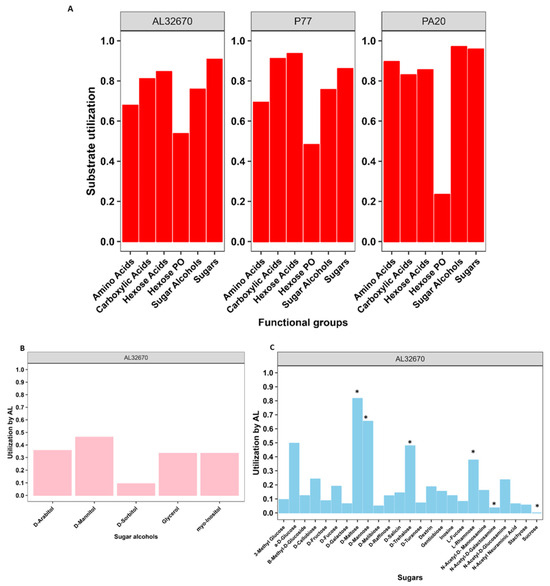
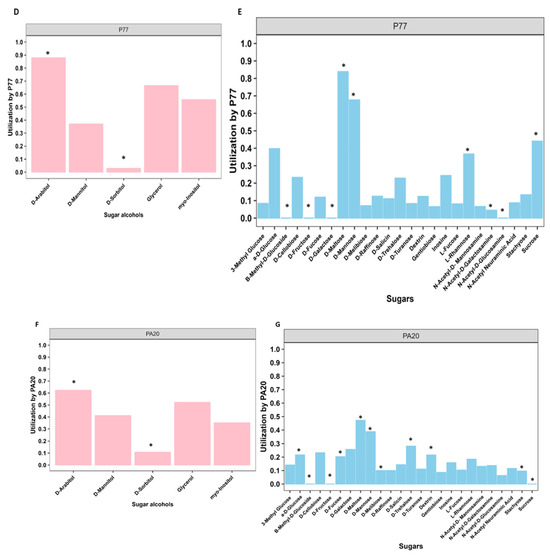
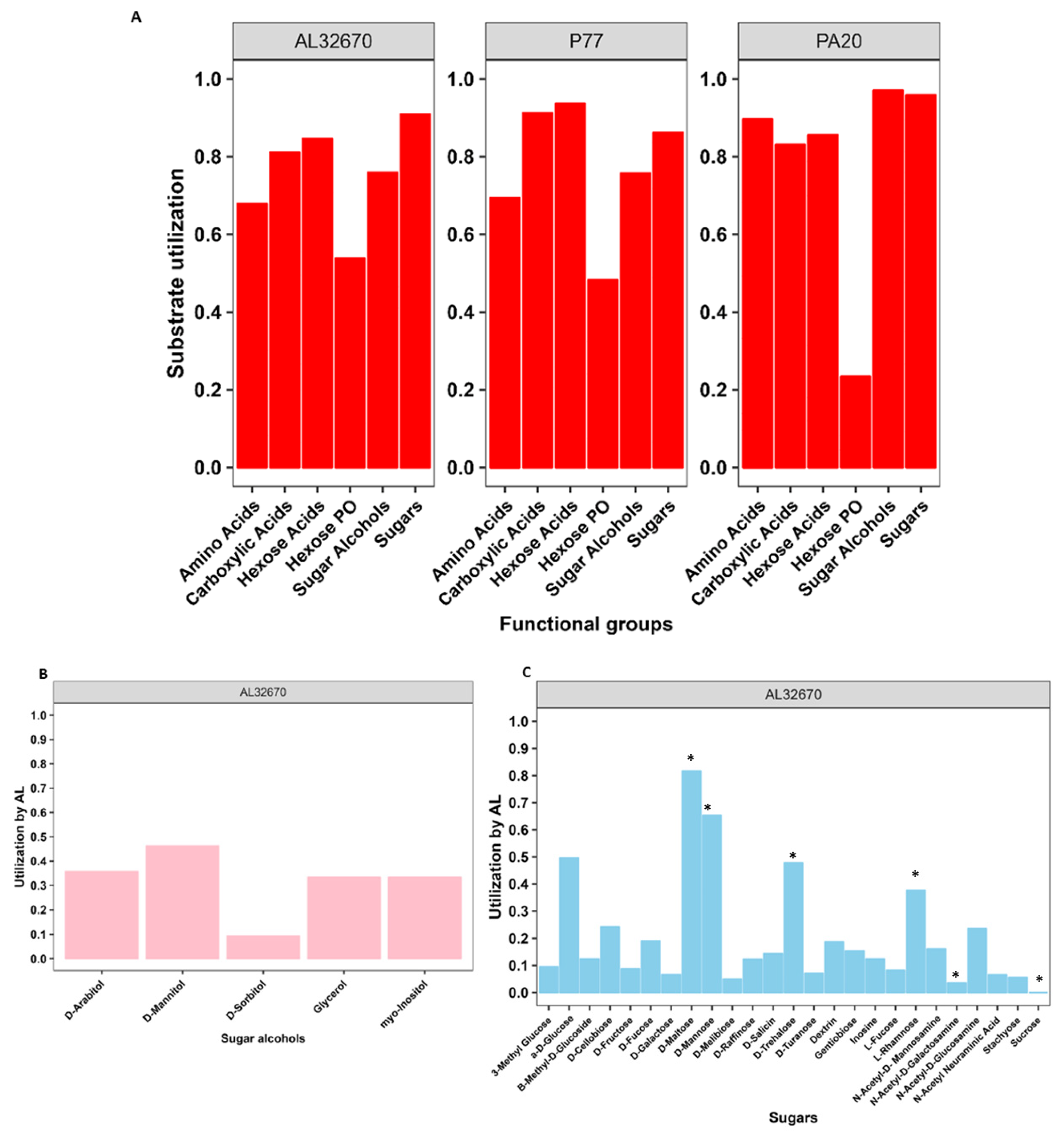
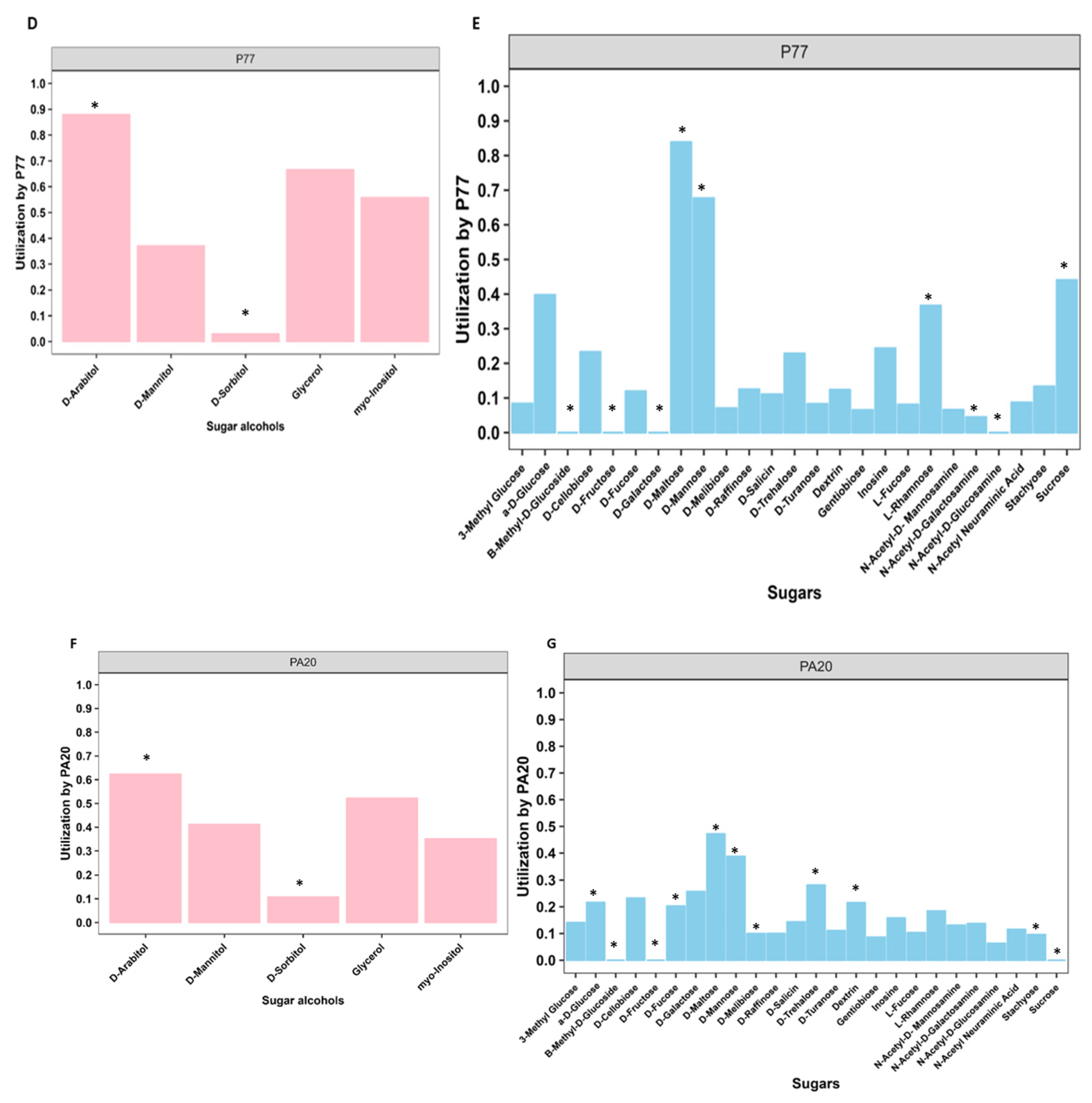
Overall, the three isolates exhibited differential patterns towards utilization of the diverse carbon sources of different functional groups (Kruskal–Wallis test, chi-squared = 33.957, df = 5, p < 0.001; Figure 1A) with a medium effect size (eta-squared = 0.680). While the three strains were capable of metabolizing diverse sugar alcohols, sorbitol was the least used (Figure 1A). D-mannitol was the highest utilized sugar alcohol by AL32670, while arabitol was most utilized by P77 and PA20 (Figure 1B,D,F). Among the sugars, maltose and mannose were the highest utilized by all three strains (Figure 1C,E,G). For bacteria AL32570 and P77, N-acetyl-D-galactosamine was among the least metabolized sugar, with N-acetyl-D-glucosamine being the least used by PA20. Furthermore, sucrose remained unused, with glucose, maltose, mannose, trehalose, rhamnose and N-acetyl-D-glucosamine being better used by AL32670. Four sugars were unused by P77, namely 3-Methyl Glucoside, fructose, galactose, and NAG. Additionally, strain PA20 did not use three sugars, namely fructose, 3-Methyl Glucoside, and sucrose.
Figure 1.
General overview of diverse utilization patterns of key functional groups by the three bacterial isolates Acetobacter sp. LMG32670 (AL), Pantoea sp. 77 (P77), and Pantoea agglomerans 20 (PA20), with effect size: 0.680 (A). Diversity of assimilation of sugar alcohols and sugars by AL32670 (B,C), P77 (D,E), and PA20 (F,G). Statistical significance included only for p-value < 0.001 and labelled as *.
3.2. Salt, pH and Antibiotic Tolerance
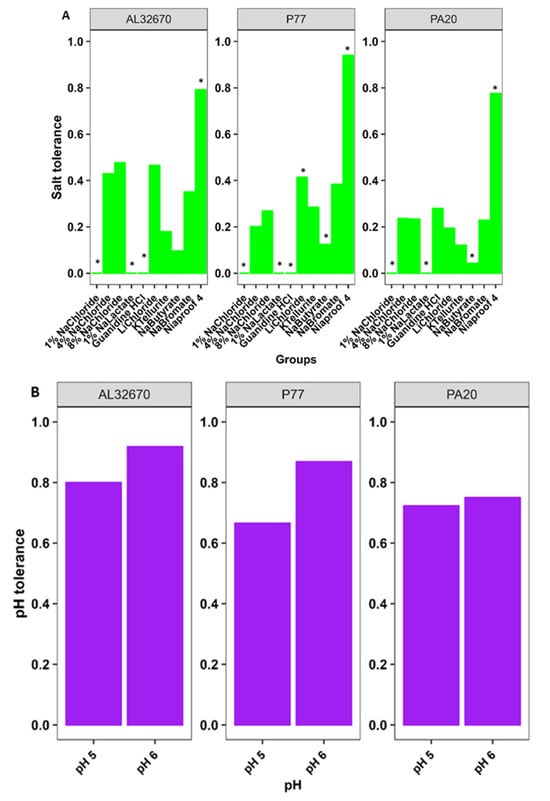
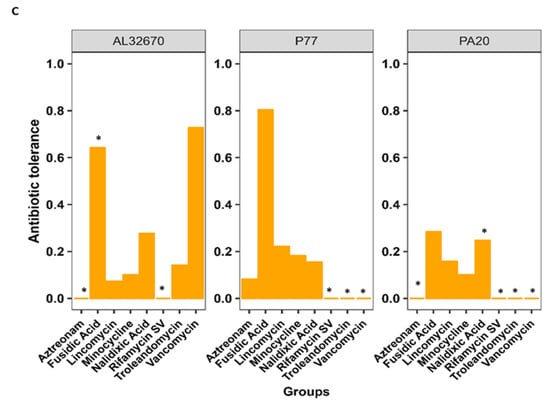
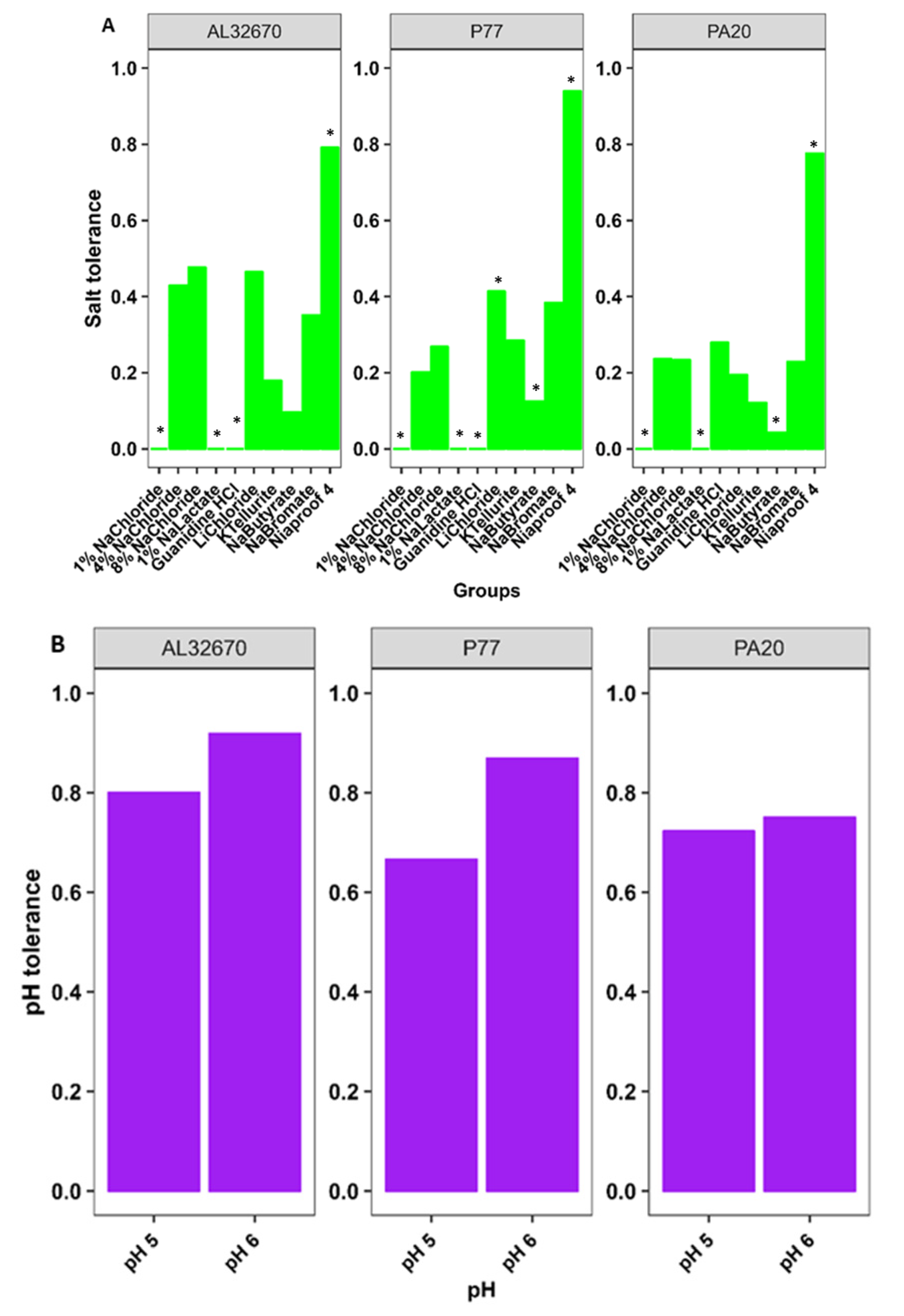
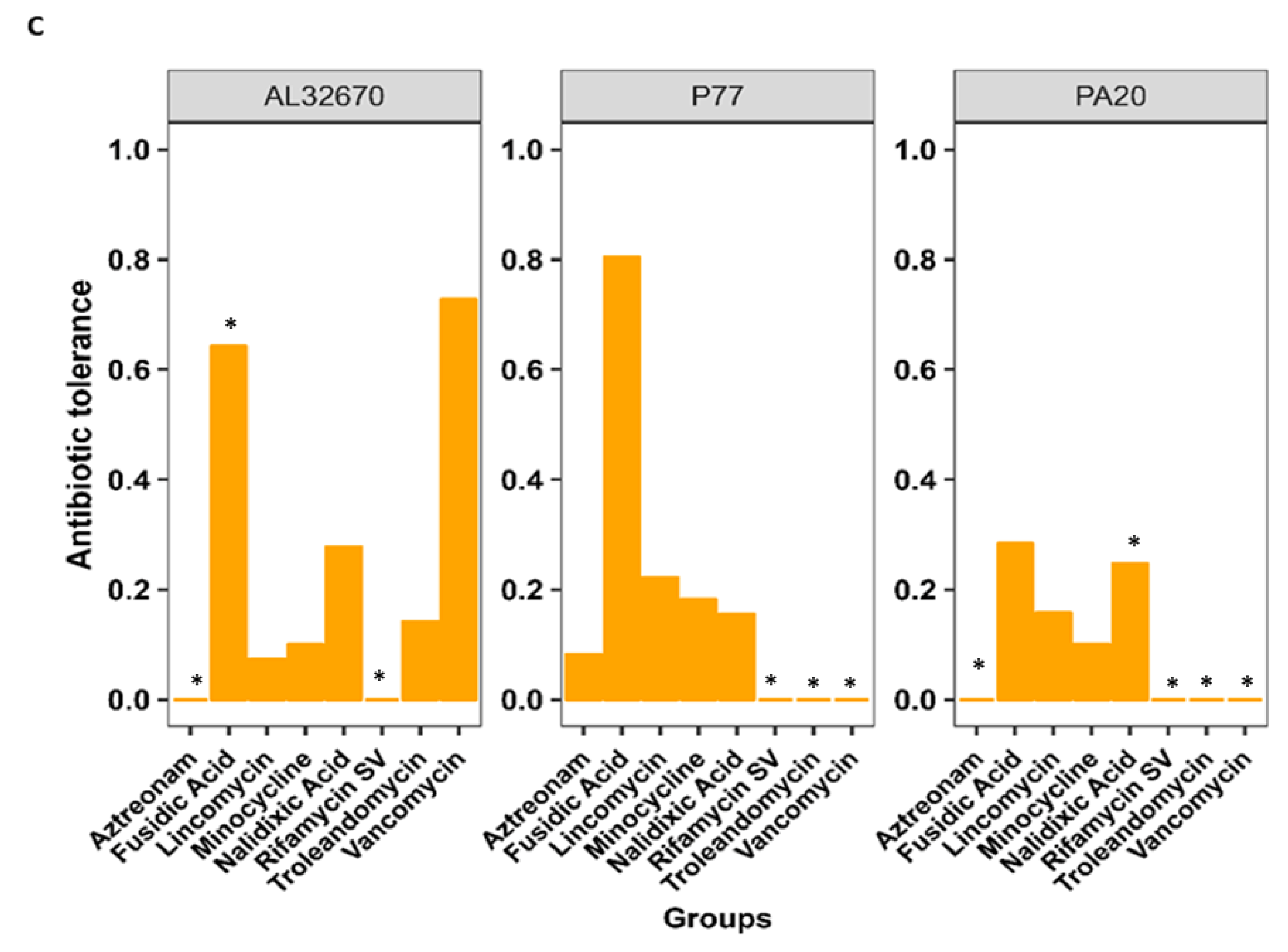
Tolerance of the three bacteria towards salts differed according to contents (Kruskal–Wallis test, chi-squared = 38.543, df = 9, p < 0.001; Figure 2A) with a large effect size (eta-squared = 0.591). Tolerance towards Niaproof4 was the highest and towards sodium butyrate was the lowest in all the three strains. Sodium chloride and sodium lactate were not tolerated by all three bacteria; guanidine chloride salts were only being well tolerated by PA20. Responses of the three strains towards the two pH were significantly different (Kruskal–Wallis test, chi-squared = 5.0256, df = 1, p < 0.024; Figure 2B), with a large effect size (eta-squared = 0.403), but groups contributing to the difference could not be detected. All three isolates seemed to grow better at pH 6. Antibiotic susceptibility of the three strains varied significantly across the different antibiotics (Kruskal–Wallis test, chi-squared = 20.979, df = 7, p < 0.003; Figure 2C) with a large effect size (eta-squared = 0.349). Antibiotics tolerated by AL32670, P77, and PA20 were six, five, and four respectively. Antibiotic Aztreonam and Rifamycin SV were not tolerated by the strain AL32670. In addition to Aztreonam and Rifamycin SV, Troleandomycin and Vancomycin completely suppressed the growth of strain PA20. Aztreonam did not completely suppress the growth of the strain P77, with complete inhibition occurring for antibiotics Rifamycin SV, Troleandomycin and Vancomycin.
Figure 2.
Tolerance potential of the three bacteria AL32670, P77, and PA20 towards different types of salts (effect size 0.591) (A), pH (effect size 0.403) (B), and antibiotics (effect size 0.349) (C). Statistical significance included only for p-value < 0.05 for salts and p-value < 0.001 for antibiotics and labelled as *.
4. Discussion
In this study, the three selected microbial isolates of Acetobacter and Pantoea differed in both their carbon utilization patterns, and in their tolerance towards salts and antibiotics. Each isolate had a unique profile, while there were also similarities in the compounds that they metabolized. Bacteria Acetobacter may pose variable impacts on D. suzukii and are symbiotic partners for many insect pests [14]. Similarly, Pantoea enhances host development and their presence is linked with degradation of plant metabolites that could indirectly allow the development of larvae [5,9,15,16]. Their effect on the development of D. suzukii is less studied though. Several bacteria utilize sorbitol, a key component in ripening fruits. However, their utilization may be repressed in presence of other sugars—mainly glucose [17]. Moreover, in the field conditions, whether the D. suzukii microbiota utilize sorbitol remains unclear. Hexose phosphates are carbon intermediates formed as a result of bacterial utilization of sugars in order to harness energy [18]. Arabitol is reportedly metabolized by select few bacteria as well as mannose is utilized by numerous bacteria; however, much of the host-microbiota relevant information for these compounds remains unclear [19,20]. While maltose is consistently used by several bacteria, few pathogens depend on this sugar for their rapid proliferation [21].
A pest’s resident microbiomes can help their host in adapting to different substrates in multiple ways such as by detoxifying secondary metabolites, by tolerating any harsh environment, or even by acquiring nutrients from a nutritionally restricted environment [22,23,24,25]. The resident microbes tend to metabolize a wide range of substrates potentially implying that they might have some advantage over other microbial counterparts when occupying a particular niche [26] (Gurung et al. unpublished and under review).
Substrate utilization can be specific to isolates, where phylogenetically different bacteria assimilate carbon sources differentially. In addition, substrate metabolism could also represent the niche-specific use of thos bacteria that are taxonomically close [27]. Moreover, factors such as origin, strain diversity and gene transfers could also influence the susceptibility or resistance of the bacterial strains against different antibiotics or salts [28]. In our work, the sampling was conducted from areas that did not use any chemical products. There is a possibility that their antibiotic or salt tolerance could be because of gene transfer. When proliferation and survival of insect-associated bacteria enable them to tolerate different conditions, this also makes them potential biocontrol candidates in either improving the beneficial insects or increasing the killing efficiency of the pest insects often via genetic modifications.
The ability of these bacteria to metabolize sugars and sugar alcohols common in ripening fruits—such as sorbitol and maltose—indicates that they may facilitate larval development by transforming plant-derived compounds into more accessible nutrients. Targeting these metabolic pathways offers a promising strategy for pest suppression. For example, disrupting key bacterial functions through selective antimicrobial agents, adding competitive microbial inoculants, or bacteriophage tools could impair host development subsequently reducing pest fitness. In addition, understanding substrate preferences may allow the development of lure-and-kill systems, where microbial metabolites or specific carbon sources enhance bait efficacy [29,30,31].
The observed tolerance to environmental stressors further expands their adaptive potential. Competitive displacement strategies could introduce metabolically superior but non-beneficial strains to destabilize the resident microbiome. Because substrate metabolism and resistance traits vary among isolates, careful strain selection would enable precise microbial interventions tailored to soft-fruit crop systems [32].
5. Conclusions
Concluding, the bacteria’s metabolic plasticity suggest that they may contribute to the fly’s ability to exploit diverse nutritional niches across different ripening fruits, implying their adaptive potential within different fruit-based niches. The ability to assimilate the different substrates and withstand variable conditions suggests potential roles in fruit spoilage dynamics and in shaping host–microbe interactions. Therefore, this study provides insights into insect–microbe–plant interactions and highlights the ecological relevance of metabolically versatile, insect-associated bacteria. Finally, exploiting the functional diversity of insect-associated bacteria offers a microbiome-focused pathway toward sustainable pest management and innovative biocontrol solutions.
Author Contributions
Conceptualization, methods writing and reviewing: K.G.; supervision and reviewing: B.W. All authors have read and agreed to the published version of the manuscript.
Funding
K.G. was supported by Adaptive Life fellowship 2016-17, University of Groningen.
Institutional Review Board Statement
Not applicable.
Informed Consent Statement
Not applicable.
Data Availability Statement
Data available on request from the authors.
Conflicts of Interest
The authors declare no conflicts of interest.
References
- Wong, W.H.; Firlej, A.; Perlman, S.J.; Hueppelsheuser, T.; Moreau, D.; Renkema, J.M.; Girod, P.; Acheampong, S.; Moffat, C.E.; Brodeur, J.; et al. Drosophila suzukii (Matsumura), Spotted-wing Drosophila/Drosophile à ailes tachetées (Diptera: Drosophilidae). In Biological Control Programmes in Canada, 2013–2023; CABI: Oxfordshire, UK, 2024; pp. 220–231. [Google Scholar]
- Stacconi, V.R. Drosophila suzukii (spotted wing drosophila). In CABI Compendium; CABI: Oxfordshire, UK, 2022. [Google Scholar]
- Tait, G.; Mermer, S.; Stockton, D.; Lee, J.; Avosani, S.; Abrieux, A.; Anfora, G.; Beers, E.; Biondi, A.; Burrack, H.; et al. Drosophila suzukii (Diptera: Drosophilidae): A decade of research towards a sustainable integrated pest management program. J. Econ. Entomol. 2021, 114, 1950–1974. [Google Scholar] [PubMed]
- Nair, R.R.; Peterson, A.T. Mapping the global distribution of invasive pest Drosophila suzukii and parasitoid Leptopilina japonica: Implications for biological control. PeerJ 2023, 11, e15222. [Google Scholar] [CrossRef] [Scilit] [PubMed]
- Gurung, K.; Vink, S.N.; Salles, J.F.; Wertheim, B. More persistent bacterial than fungal associations in the microbiota of a pest insect. J. Pest Sci. 2023, 96, 785–796. [Google Scholar] [CrossRef] [Scilit]
- Martinez-Sañudo, I.; Simonato, M.; Squartini, A.; Mori, N.; Marri, L.; Mazzon, L. Metagenomic analysis reveals changes of the Drosophila suzukii microbiota in the newly colonized regions. Insect Sci. 2018, 25, 833–846. [Google Scholar] [CrossRef] [Scilit] [PubMed]
- Choi, M.Y.; Tang, S.B.; Ahn, S.J.; Amarasekare, K.G.; Shearer, P.; Lee, J.C. Effect of non-nutritive sugars to decrease the survivorship of spotted wing drosophila, Drosophila suzukii. J. Insect Physiol. 2017, 99, 86–94. [Google Scholar] [CrossRef] [Scilit]
- Mamlouk, D.; Gullo, M. Acetic acid bacteria: Physiology and carbon sources oxidation. Indian J. Microbiol. 2013, 53, 377–384. [Google Scholar] [CrossRef] [Scilit]
- Jin, G.; Kim, Y. Pantoea bacteria isolated from three thrips (Frankliniella occidentalis, Frankliniella intonsa, and Thrips tabaci) in Korea and their symbiotic roles in host insect development. J. Microbiol. Biotechnol. 2023, 33, 745–752. [Google Scholar] [CrossRef] [Scilit] [PubMed]
- Cepec, E.; Trček, J. Antimicrobial resistance of Acetobacter and Komagataeibacter species originating from vinegars. Int. J. Environ. Res. Public Health 2022, 19, 463. [Google Scholar]
- Nawirska-Olszańska, A.; Oziembłowski, M.; Brandova, P.; Czaplicka, M. Comparison of the chemical composition of selected varieties of elderberry with wild growing elderberry. Molecules 2022, 27, 5050. [Google Scholar] [CrossRef] [Scilit]
- Lin, Q.; Zhai, Y.; Chen, H.; Qin, D.; Zheng, L.; Gao, H. Analyses of the gut bacteriomes of four important Drosophila pests. Can. Entomol. 2021, 153, 757–773. [Google Scholar] [CrossRef] [Scilit]
- Sprouffske, K.; Wagner, A. Growth curver: An R package for obtaining interpretable metrics from microbial growth curves. BMC Bioinform. 2016, 17, 172. [Google Scholar] [CrossRef] [Scilit]
- Crotti, E.; Chouaia, B.; Alma, A.; Favia, G.; Bandi, C.; Bourtzis, K.; Daffonchio, D. Acetic acid bacteria as symbionts of insects. In Acetic Acid Bacteria: Ecology and Physiology; Springer: Tokyo, Japan, 2016; pp. 121–142. [Google Scholar]
- Ayyanath, M.M.; Zurowski, C.L.; Scott, I.M.; Lowery, D.T.; Watson, M.C.; O’Gorman, D.T.; MacKenzie, K.E.; Úrbez-Torres, J.R. Relationship between Drosophila suzukii and postharvest disorders of sweet cherry (Prunus avium). Phytobiomes 2018, 2, 42–50. [Google Scholar]
- Wang, Y.; Tang, J.; Chen, Y.; Chen, S.; Chen, S.; Yu, X.; Wan, C.; Xiang, G.; Chen, Y.; Li, Q. The Ecological–Evolutionary Game of the Insect Gut Microbiome: Environmental Drivers, Host Regulation, and Prospects for Cross-Cutting Applications. Vet. Sci. 2025, 12, 866. [Google Scholar] [CrossRef] [Scilit] [PubMed]
- Slee, A.M.; Tanzer, J.M. The repressible metabolism of sorbitol (D-glucitol) by intact cells of the oral plaque-forming bacterium Streptococcus mutans. Arch. Oral Biol. 1983, 28, 839–845. [Google Scholar] [CrossRef] [Scilit] [PubMed]
- Park, J.Y.; Kim, J.W.; Moon, B.Y.; Lee, J.; Fortin, Y.J.; Austin, F.W.; Yang, S.-J.; Seo, K.S. Characterization of a novel two-component regulatory system, HptRS, the regulator for the hexose phosphate transport system in Staphylococcus aureus. Infect. Immun. 2015, 83, 1620–1628. [Google Scholar] [CrossRef] [Scilit]
- Sun, T.; Altenbuchner, J. Characterization of a mannose utilization system in Bacillus subtilis. J. Bacteriol. 2010, 192, 2128–2139. [Google Scholar] [CrossRef] [Scilit]
- López, M.G.; Irla, M.; Brito, L.F.; Wendisch, V.F. Characterization of D-arabitol as newly discovered carbon source of Bacillus methanolicus. Front. Microbiol. 2019, 10, 1725. [Google Scholar] [CrossRef] [Scilit]
- Almeida, A.P.C.; Gonçalves, L.F.; da Silva, R.C.R.M.; Parente, A.F.A.; de Campos, T.A. The Influence of Carbohydrates on the Virulence Potential of Klebsiella variicola Isolates. Int. J. Microbiol. 2025, 2025, 5403408. [Google Scholar] [CrossRef] [Scilit]
- Gurung, K.; Wertheim, B.; Falcao Salles, J. The microbiome of pest insects: It is not just bacteria. Entomol. Exp. Appl. 2019, 167, 156–170. [Google Scholar] [CrossRef] [Scilit]
- Zhao, M.; Lin, X.; Guo, X. The role of insect symbiotic bacteria in metabolizing phytochemicals and agrochemicals. Insects 2022, 13, 583. [Google Scholar] [CrossRef] [Scilit]
- Xia, X.; Wang, Q.; Gurr, G.M.; Vasseur, L.; Han, S.; You, M. Gut bacteria mediated adaptation of diamondback moth, Plutella xylostella, to secondary metabolites of host plants. Msystems 2023, 8, e00826-23. [Google Scholar] [CrossRef] [Scilit]
- Shang, L.H.; Cai, X.Y.; Li, X.J.; Wang, Y.Z.; Wang, J.D.; Hou, Y.M. Role of Gut Bacteria in Enhancing Host Adaptation of Tuta absoluta to Different Host Plants. Insects 2024, 15, 795. [Google Scholar] [CrossRef] [Scilit] [PubMed]
- Feng, W.; Liu, F. Metabolic interactions underlying phyllosphere microbiota assembly. ISME J. 2025, 19, wraf155. [Google Scholar] [CrossRef] [Scilit] [PubMed]
- Murakami, R.; Yoshida, K.; Sakanaka, M.; Urashima, T.; Xiao, J.Z.; Katayama, T.; Odamaki, T. Preferential sugar utilization by bifidobacterial species. Microbiome Res. Rep. 2023, 2, 31. [Google Scholar] [CrossRef] [Scilit] [PubMed]
- Muteeb, G.; Rehman, M.T.; Shahwan, M.; Aatif, M. Origin of antibiotics and antibiotic resistance, and their impacts on drug development: A narrative review. Pharmaceuticals 2023, 16, 1615. [Google Scholar] [CrossRef] [Scilit]
- Sato, A.; Yew, J.Y.; Takahashi, A. Effect of acetic acid bacteria colonization on oviposition and feeding site choice in Drosophila suzukii and its related species. microPubl. Biol. 2024, 2024. [Google Scholar] [CrossRef] [Scilit]
- Alem, K.; Dagnew, M.; Gizachew, M.; Gelaw, B.; Moges, F. Environmental Antimicrobial Resistance: Key Drivers, Hotspots, Innovative Strategies, and Challenges in the Fight Against Superbugs. MicrobiologyOpen 2025, 14, e70067. [Google Scholar] [CrossRef] [Scilit]
- Rai, R.; Rai, M.N. Tackling bacterial diseases in crops: Current and emerging management strategies. Phytopathol. Res. 2025, 7, 58. [Google Scholar] [CrossRef] [Scilit]
- Albright, M.B.; Louca, S.; Winkler, D.E.; Feeser, K.L.; Haig, S.J.; Whiteson, K.L.; Emerson, J.B.; Dunbar, J. Solutions in microbiome engineering: Prioritizing barriers to organism establishment. ISME J. 2022, 16, 331–338. [Google Scholar] [CrossRef] [Scilit]

Disclaimer/Publisher’s Note: The statements, opinions and data contained in all publications are solely those of the individual author(s) and contributor(s) and not of MDPI and/or the editor(s). MDPI and/or the editor(s) disclaim responsibility for any injury to people or property resulting from any ideas, methods, instructions or products referred to in the content. |
© 2026 by the authors. Licensee MDPI, Basel, Switzerland. This article is an open access article distributed under the terms and conditions of the Creative Commons Attribution (CC BY) license.