


Abstract
The rise in antimicrobial-resistant Neisseria gonorrhoeae (NG) strains poses major challenges to gonorrhea treatment worldwide. Ceftriaxone remains the first-line antibiotic therapy; however, emerging resistance, particularly driven by the mosaic penA 60.001 allele, necessitates vigilant surveillance. This study assesses the antimicrobial susceptibility patterns of NG isolates in the northwestern region of Croatia and evaluates the correlation between phenotypic susceptibility testing for extended-spectrum cephalosporins (ESC) and genotypic detection of the penA 60.001 allele. A total of 39 clinical NG-positive specimens by a multiplex PCR panel for urogenital infections were collected between 1 July 2022, and 30 June 2024. Phenotypic antimicrobial susceptibility testing was performed using the Etest method. Genotypic detection of ceftriaxone resistance determinants was performed using a multiplex nested PCR assay. All NG isolates were susceptible to ceftriaxone and cefixime. High resistance rates were observed for ciprofloxacin (70.6%), tetracycline (44.1%), and azithromycin (20.6%). Mutations in the penA gene associated with decreased susceptibility to ceftriaxone were detected in three samples, although phenotypic resistance was not observed. The high resistance rates to ciprofloxacin, tetracycline, and azithromycin limit their use for empirical therapy in Croatia. While ceftriaxone remains effective, the detection of penA mutations highlights the need for ongoing surveillance.
1. Introduction
Neisseria gonorrhoeae (NG) is the second most common sexually transmitted bacterial agent worldwide. Due to its fastidious growth requirements, culture-based diagnosis is often challenging, and molecular methods are increasingly adopted in clinical practice. These techniques not only provide rapid results but also enable the simultaneous detection of other pervasive sexually transmitted pathogens, particularly Mycoplasma genitalium (MG), Chlamydia trachomatis (CT) and Trichomonas vaginalis (TV).
The current mainstay of gonorrhea treatment is extended-spectrum cephalosporins (ESC), most notably ceftriaxone, administered either as monotherapy or as a part of dual therapy with azithromycin or doxycycline. However, the rise in antimicrobial resistance in NG poses a critical public health threat.
Resistance to ESC has been reported sporadically in several countries, but since 2017, ceftriaxone-resistant strains have become a growing concern [1]. Resistance to cephalosporins in NG arises from a complex interplay of genetic mechanisms involving multiple genes, including penA, penB, mtrR, and ponA. Of particular concern is the FC428 clone, first identified in Japan [2]. This clone harbors the mosaic penA allele designated as penA-60.001, which encodes specific mutations, including A311V and T483S. These amino acid substitutions alter the structure of penicillin-binding protein 2 (PBP2), reducing its affinity for extended-spectrum cephalosporins and thereby diminishing the bactericidal activity of ceftriaxone [3]. Unlike earlier sporadic ceftriaxone-resistant isolates, which often displayed reduced fitness, FC428 offsets fitness costs, enabling its sustained transmission [4].
Given the clinical and epidemiological implications of ESC resistant strains, particularly the FC428 clone, the development and implementation of rapid molecular methods for ESC resistance detection directly from patient samples is essential. These tools can guide individual treatment decisions and strengthen surveillance strategies aimed at preventing the further spread of resistant gonococcal clones.
In this study, we aimed to investigate antimicrobial resistance trends among NG isolates collected from men in Zagreb County over a two-year period and to compare these findings with molecular detection of the penA-60.001 allele directly from clinical samples, currently the most concerning mechanism associated with ceftriaxone resistance worldwide.
2. Materials and Methods
2.1. Study Design and Sample Collection
This study was conducted at the Public Health Institute “Dr. Andrija Štampar”, which serves as the National Reference Centre for sexually transmitted infection (STI) diagnostics under the Croatian Ministry of Health. Samples were collected over a two-year period, from 1 July 2022 to 30 June 2024, from male patients referred by their primary care physicians for sexually transmitted infection (STI) testing—including both symptomatic and asymptomatic individuals. This study included only male patients based on epidemiological considerations. In Croatia, NG infection in females is rare, and the majority of isolates are recovered from symptomatic men presenting with urethritis. As the primary objective of this study was to assess antimicrobial susceptibility patterns rather than disease prevalence across clinical entities, male patients were selected as the study cohort.
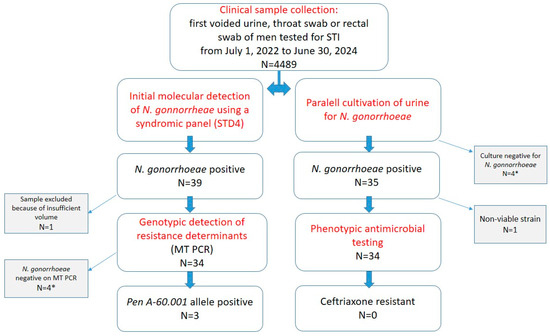
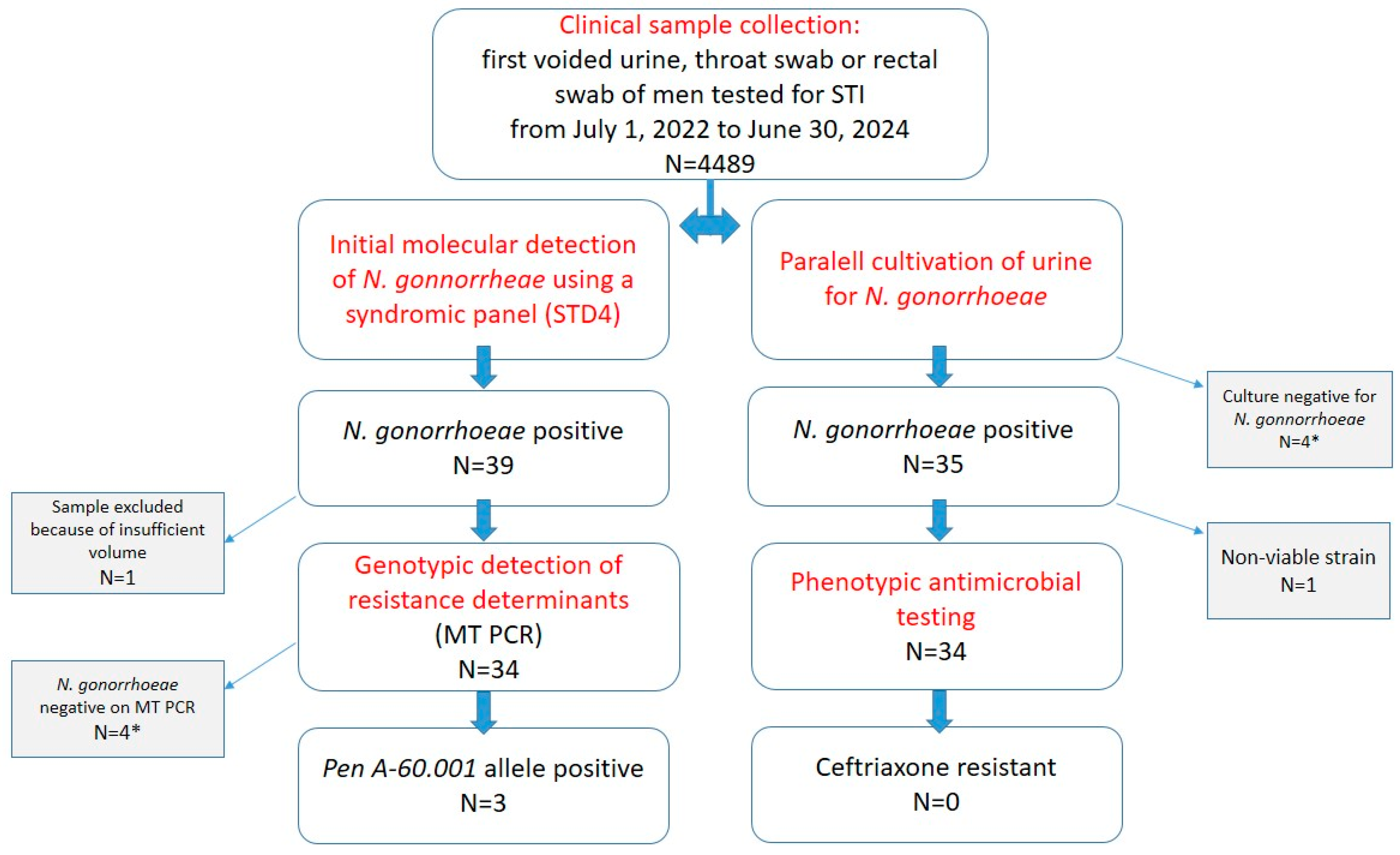
Specimens consisted of first-void urine, pharyngeal swabs, and rectal swabs, selected based on the suspected site of infection (as determined by the referring physicians). Clinical specimens were collected following standard protocols, including Croatian national standard guidelines for urogenital diagnostics [5] and the protocols recommended by the manufacturer, to ensure specimen integrity and analytical accuracy. All samples were aliquoted directly from the original collection containers after collection and stored at −80 °C until processing. The database was retrospectively reviewed for samples positive for NG, as determined by molecular testing, which were subsequently included in further analyses. The conceptual framework for this study is illustrated in Figure 1.
Figure 1.
Conceptual framework of the research. STD4-multiplex PCR syndromic panel, MT PCR-multiplex tandem PCR. * Note: All samples that were negative by culture were also negative when tested with the MT PCR assay for Neisseria gonorrhoeae.
2.2. Neisseria Gonorrhoeae Detection
2.2.1. Molecular Detection of Neisseria gonorrhoeae
Samples from patients referred for STI testing were routinely analyzed upon receipt using a molecular multiplex syndromic panel ELITe InGenius® STI PLUS ELITe MGB® Kit (ELITechGroup S.p.a., Torino, Italy) (hereafter referred to as the STD4 panel), a multiplex real-time PCR assay designed to detect four common sexually transmitted pathogens: NG, CT, MG and TV. This is a fully automated, integrated multiplex real-time PCR system that integrates nucleic acid extraction and amplification within the same manufacturer-provided platform. DNA extraction from clinical specimens and real-time PCR amplification were performed using the proprietary extraction and amplification reagents supplied as part of the kit, strictly following the manufacturer’s instructions. Target genes of pathogens included in this kit are listed in Table 1.
Table 1.
Target genes of pathogens included in STI PLUS ELITe MGB® Kit.
2.2.2. Cultivation and Phenotypic Antimicrobial Testing
Additionally, all specimens underwent microscopic examination for leukocytes and culture for NG. For cultivation, samples were inoculated onto chocolate agar plates and incubated at 35–37 °C in an atmosphere enriched with 5–10% CO2 for 24–72 h [6]. To suppress commensal urethral flora, a disk impregnated with colistin and vancomycin was applied, allowing the growth of NG in the zone surrounding the disk. Species identification was confirmed using matrix-assisted laser desorption/ionization-time of flight (MALDI-TOF) mass spectrometry (Vitek MS, bioMérieux, Marcy-l’Étoile, France).
Phenotypic antimicrobial susceptibility testing [7] of NG isolates was performed using the Etest method (bioMérieux, Marcy-l’Étoile, France) and the cefinase test. Etests were conducted in accordance with the manufacturer’s instructions. Bacterial suspensions were adjusted to a turbidity equivalent of a 0.5 McFarland standard. Minimum inhibitory concentrations (MICs) were determined by assessing growth inhibition in agar dilution assays or by identifying the point of intersection between the inhibition ellipse and the Etest strip. Plates were incubated at 35 °C in an atmosphere containing 5% CO2 for 18–24 h.
The Etest was used to determine susceptibility to benzylpenicillin (as a surrogate for ampicillin and amoxicillin resistance), ceftriaxone, cefixime, ciprofloxacin, tetracycline, and azithromycin. MIC values for these six antimicrobial agents were interpreted according to the guidelines of the European Committee on Antimicrobial Susceptibility Testing (EUCAST). Susceptibility to amoxicillin/ampicillin was inferred from the benzylpenicillin MIC and chromogenic test for beta lactamase, as described in EUCAST clinical breakpoint guidelines. For azithromycin, EUCAST has not established a clinical breakpoint for NG, and therefore, MIC results cannot be interpreted in terms of clinical susceptibility or resistance categories. In accordance with EUCAST recommendations for antimicrobial resistance surveillance, the epidemiological cut-off value (ECOFF) was applied instead to distinguish wild-type isolates from those with acquired resistance mechanisms. To identify acquired resistance to azithromycin, an epidemiological cutoff value (ECOFF) of 1 mg/L was applied; isolates with MICs at or below this threshold were classified as wild type [8].
2.2.3. Genotypic Detection of Ceftriaxone Resistance Determinants
The samples that tested positive for NG by molecular methods were retrieved from −80 °C storage, thawed, and subjected to DNA extraction using the Nucleic Acid Extraction Kit and the Generotex 96 automated system (Xi’an TianLong Science and Technology Co., Ltd., Xi’an, China). Following extraction, samples were analyzed using multiplex tandem polymerase chain reaction (MT-PCR) technology performed on the High-Plex 24 System (AusDiagnostics, Mascot, NSW, Australia). The assay is designed to detect multiple sexually transmitted pathogens: NG, CT (including lymphogranuloma venereum or LGV serovar), MG, and TV. The assay also includes primers targeting Mycoplasma hominis (MH), Ureaplasma parvum (UP) (serovars 1, 3, 6, and 14), and Ureaplasma urealyticum (UU) (serovars 2, 4, 5, and 7–13).
NG is detected through amplification of the opaJ and opaH genes, which encode outer membrane proteins specific to the bacterium [9]. Additionally, it includes primers targeting the penA-60.001 allele and the A311V mutation, a resistance marker characteristic of the FC428 clone, which is linked to reduced susceptibility to ceftriaxone. Each run included positive and negative controls to validate the assay’s performance. Data analysis was performed using the manufacturer’s proprietary software, and results were interpreted according to the provided guidelines. The MT PCR assay is not a conventional quantitative PCR; however, it provides a relative estimate of the target pathogen load by comparison with an arbitrary, artificial internal control (SPIKE). Molecular target concentrations are expressed as arbitrary units (Intensity), calculated relative to the SPIKE control, which amplifies a known amount of target molecules. Accordingly, results are reported as intensity levels ranging from 1 to 5, reflecting relative target abundance rather than absolute quantification. Based on comparison of the semi-quantitative intensity of the FC428 ceftriaxone resistance marker with the intensities of the opaJ/opaH targets, the software provides a prediction of ceftriaxone susceptibility, reported as “sensitivity indicated” by the software. The exact mathematical formula and algorithm used by the AUS software Ver.1.12.15. to calculate ceftriaxone sensitivity are not publicly disclosed as they are proprietary and protected by the manufacturer.
2.3. Ethical Approval
This study received approval from the Ethics Committee of the Teaching Institute of Public Health “Dr. Andrija Štampar” [Class: 053-01/23-01/1, Number: 251-758-24-27]. Given the anonymity of the patient identities, written informed consent from participants was not required.
3. Results
Over a two-year period, 4489 samples from 3801 male patients were analyzed for four sexually transmitted pathogens using multiplex PCR, with all specimens concurrently subjected to cultivation. Among these, 39 samples tested positive for NG by the molecular STD4 panel: 37 first-void urine samples, one pharyngeal swab, and one rectal swab. Each of the 39 isolates originated from a different patient. Cultivation on chocolate agar confirmed NG growth in 35 of these 39 specimens.
Of the 39 STD4-positive specimens, 30 contained only NG, while 9 showed co-infection with CT. For downstream testing, 38 of the 39 positive specimens were evaluated with the MT PCR method (one sample was excluded due to insufficient volume). NG was detected in 34 of these 38 samples, while 4 tested negative with MT PCR despite being STD4-positive, which was consistent with culture results.
The MT PCR identified CT in the same nine co-infected specimens reported by the STD4 panel, demonstrating complete concordance between the two assays for CT detection. However, discordance was observed for MG: the MT PCR assay detected MG in three NG co-infected specimens, whereas the STD4 panel did not identify MG in any sample. Additionally, the MT PCR assay detected pathogens not included in the STD4 panel: UU in three specimens and MH/UP in three specimens. Neither assay detected TV in any sample.
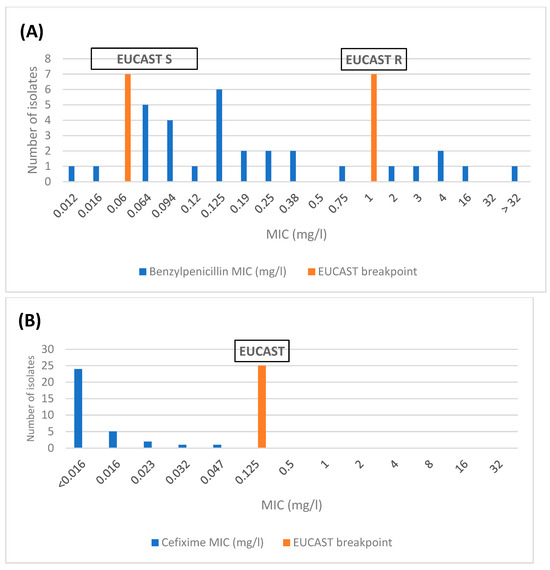
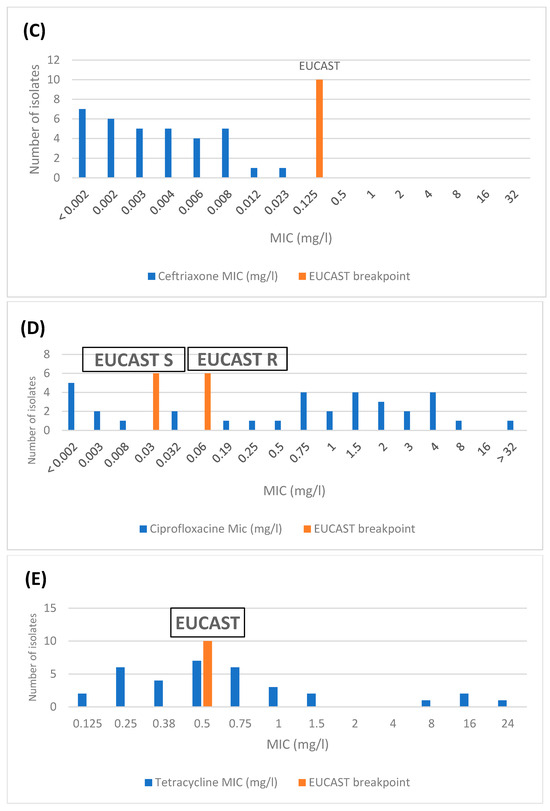
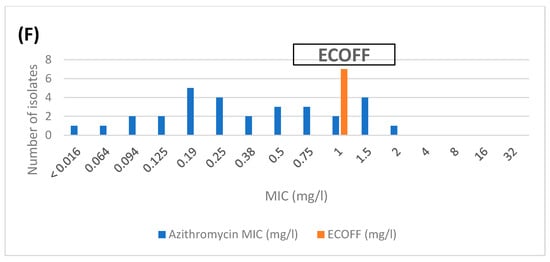
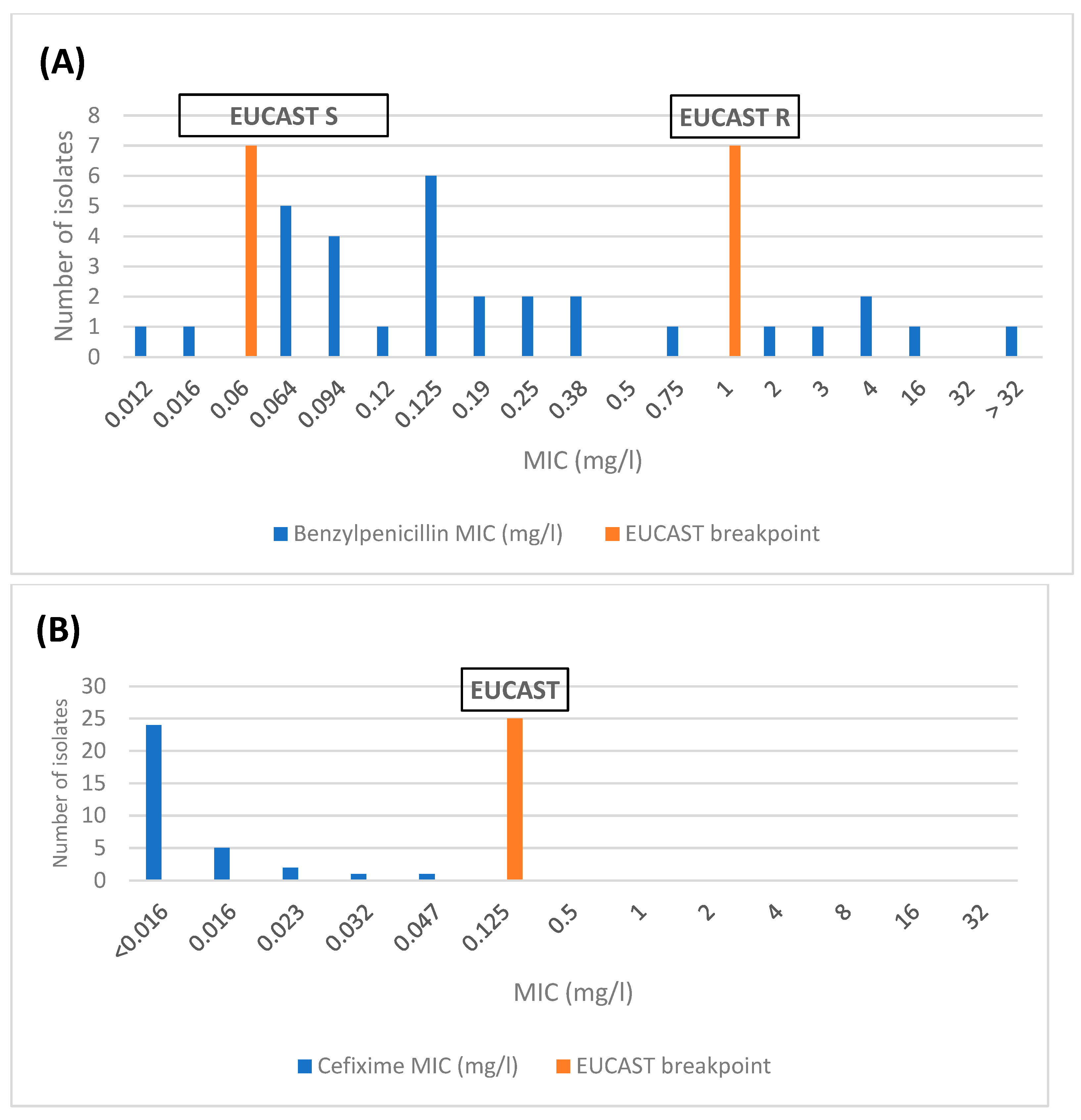
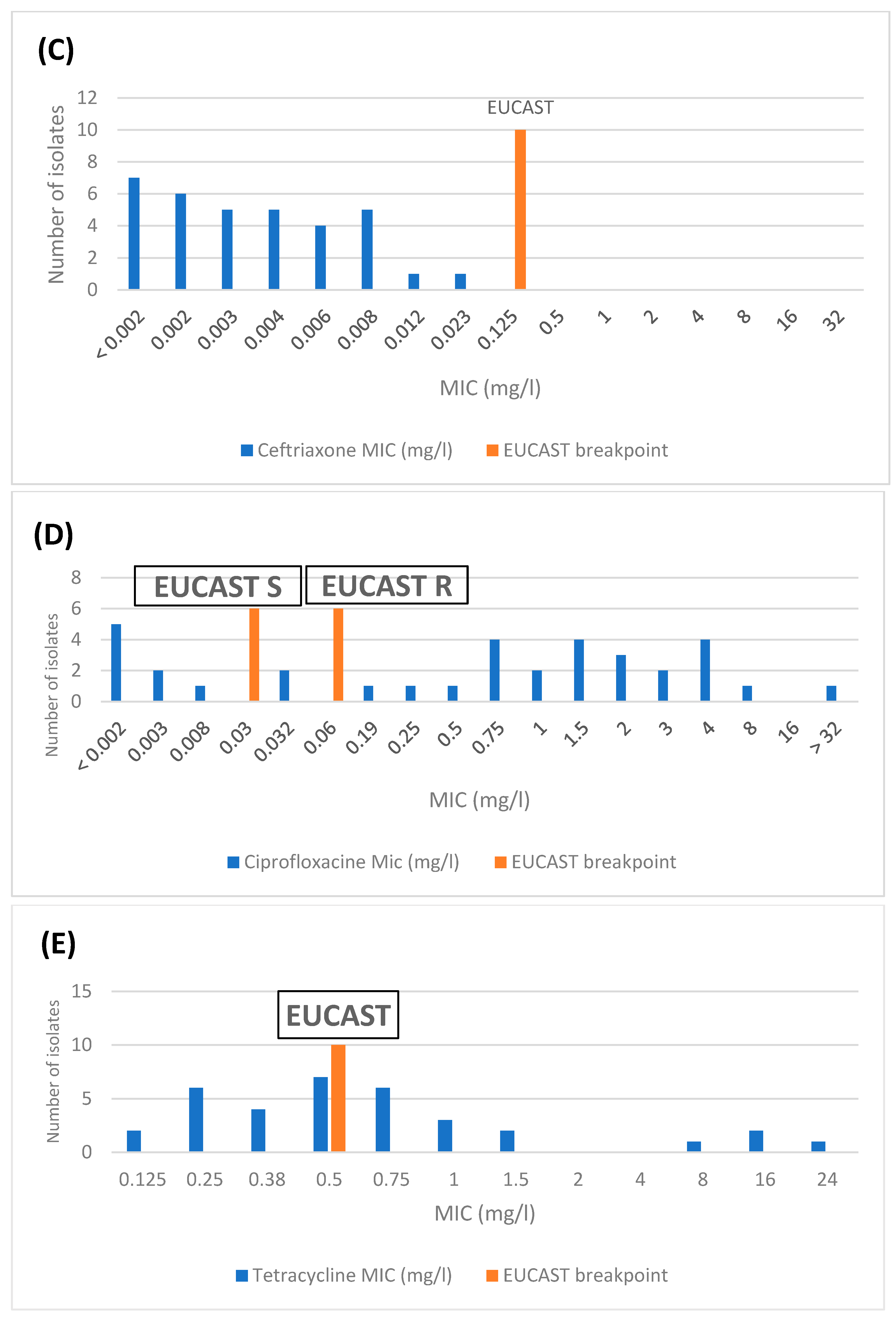
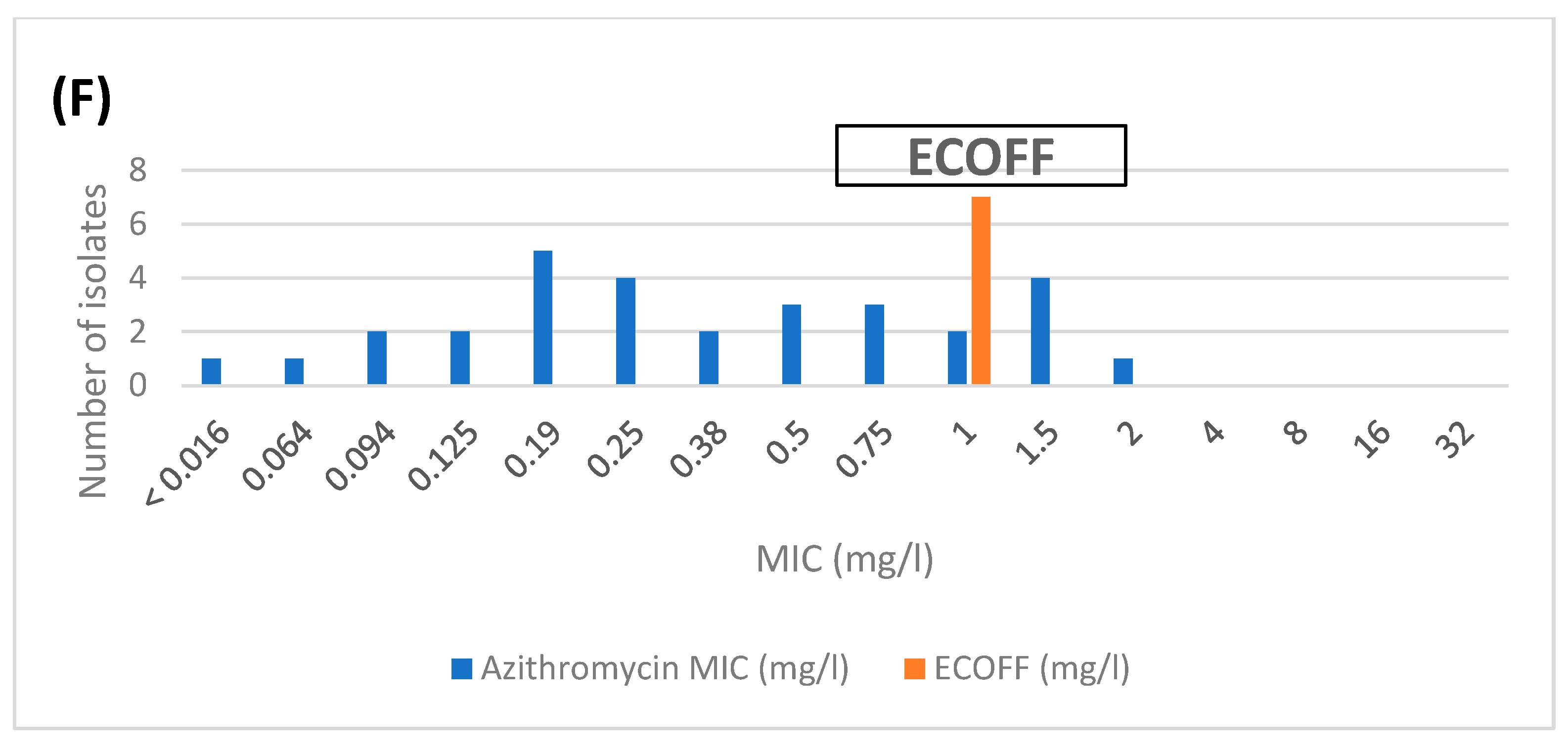
Phenotypic antibiotic susceptibility testing was successfully performed on 34 culture-positive isolates. One isolate, obtained from a first-void urine specimen, was non-viable and therefore excluded for phenotypic testing. Among the tested isolates, 24/34 (70.6%) were resistant to ciprofloxacin, 15/34 (44.1%) were resistant to tetracycline, and 7/34 (20.6%) exhibited reduced susceptibility to azithromycin. All isolates were susceptible to third-generation cephalosporins, including ceftriaxone and cefixime. The results of phenotypic antimicrobial testing are summarized in Table 2, while Figure 2A–F illustrate the MIC distributions for the tested antibiotics, sourced from the laboratory database, with EUCAST clinical breakpoints clearly indicated.
Table 2.
Results of phenotypic antimicrobial susceptibility testing of Neisseria gonorrhoeae isolates.
Figure 2.
(A–F) Distribution of Minimal Inhibitory Concentrations (MIC) for tested antimicrobials. (A) Benzylpenicillin tested with Etest method (EUCAST Clinical Breakpoints: S ≤ 0.06 mg/L, R > 1 mg/L). (B) Cefixime tested with Etest method (EUCAST Clinical Breakpoint: S ≤ 0.125 mg/L, R > 0.125 mg/L). (C) Ceftriaxone tested with Etest method (EUCAST Clinical Breakpoint: S ≤ 0.125 mg/L, R > 0.125 mg/L). (D) Ciprofloxacine tested with Etest method (EUCAST Clinical Breakpoint: S ≤ 0.03 mg/L, R > 0.06 mg/L). (E) Tetracycline tested with Etest method (EUCAST Clinical Breakpoint: S ≤ 0.5 mg/L, R > 0.5 mg/L). (F) Azithromycin tested with Etest method. In accordance with EUCAST guidelines, an ECOFF value of 1 mg/L was applied to distinguish wild-type strains from those with acquired resistance mechanisms.
All strains exhibited phenotypic susceptibility to ceftriaxone and were classified as sensitive based on molecular susceptibility testing methods using the MT PCR assay, which was fully concordant with the phenotypic results.
However, molecular analysis of the strains in this study revealed the presence of the mosaic penA-60.001 gene in three NG-positive specimens. The assay indicated that the levels of these resistance determinants were insufficient to confer phenotypic resistance, which was consistent with the phenotypic susceptibility results. The phenotypic characteristics of these three isolates and results of molecular testing using both methods are summarized in Table 3.
Table 3.
Phenotypic profiles of strains with detected penA allele.
4. Discussion
NG is a challenging pathogen to culture and is therefore increasingly diagnosed using molecular methods. Beyond improved sensitivity and shorter turnaround times, a key advantage of these techniques is their ability to simultaneously detect other sexually transmitted pathogens, particularly MG and CT, which are essentially uncultivable and for which molecular methods remain the primary reliable diagnostic option. TV also benefits from molecular detection because of its limited stability during transport. Our study emphasizes the utility of molecular methods in identifying co-infections with these pathogens while also demonstrating differences in the assay sensitivity, most notably for M. genitalium. These differences were expected, given that the AUSDiagnostics MT-PCR assay is a type of nested PCR (multiplex tandem PCR), which is inherently more sensitive than the single-step multiplex real-time PCR used in the STD4 panel. Additionally, the exact gene target(s) of the MT-PCR assay are not publicly disclosed, although it is reported to detect all known M. genitalium strains, suggesting that a conserved housekeeping gene is targeted. In contrast, the STD4 panel targets the 23S rRNA gene. Methodological differences in amplification strategy and target selection may contribute to the observed discrepancies between the assays. These differences are particularly relevant near the limit of detection and should be considered when interpreting molecular results in the context of clinical presentation and guideline-based management of M. genitalium infections.
Next, data from this study provide valuable insights into the antimicrobial resistance patterns of NG in the northwestern region of Croatia and highlight the importance of comprehensive diagnostic approaches in managing sexually transmitted infections. All NG isolates from this study were susceptible to ceftriaxone and cefixime, consistent with the European Centre for Disease Prevention and Control (ECDC) surveillance data, which indicates that resistance to ceftriaxone remains rare across Europe [10]. In contrast, high resistance rates were observed for ciprofloxacin (65.9%), tetracycline (44.1%), and azithromycin (25.6%). According to the ECDC Euro-GASP surveillance report for 2019, Croatia recorded the highest proportion of NG strains with azithromycin MICs above the ECOFF in Europe (55.6%; 5/9), although this finding should be interpreted with caution due to the small number of tested isolates. The same report documented a substantial increase in ciprofloxacin resistance in Europe, rising from 47.2% in 2016 to 57.4% [11].
Ceftriaxone remains the cornerstone of gonorrhea treatment owing to its high efficacy and persistently low resistance rates [12]. Sporadic ceftriaxone-resistant NG strains have been documented in multiple European countries, notably the clonally expanding FC428 lineage, which has been detected in Denmark, France, Ireland, the UK, Asia, Australia, Canada, and China [13,14,15]. In 2022, an XDR strain discovered in Austria exhibited both ceftriaxone resistance and high-level azithromycin resistance [16]. Of particular concern are high-level azithromycin-resistant strains from an Asian genomic sublineage that may acquire ceftriaxone resistance via mosaic penA-60.001, raising the possibility that sustained spread of such strains could compromise current treatment options [16,17].
Preventing the spread of resistance to ceftriaxone is critical as it is currently the last reliable option for empirical treatment. However, the emergence of ceftriaxone-resistant strains raises concerns about its empirical use and highlights the need for reliable molecular markers for detecting resistance directly from clinical samples. Molecular assays have the potential to confirm resistance several days earlier than phenotypic testing or whole genome sequencing (WGS), enabling prompt public health interventions to limit the spread of resistant infections. Therefore, further efforts to develop such assays are of paramount importance [18].
NG is highly recombinogenic and naturally competent, enabling the uptake and incorporation of DNA from related commensal species [19]. Recent studies have highlighted the pharynx as an important hidden reservoir for NG, where infections often remain asymptomatic. Pharyngeal gonococcal infections are less accessible to antibiotic treatment, as cephalosporins achieve lower concentrations in saliva, particularly when administered orally, such as cefixime [20]. The co-existence of commensal Neisseria species in the oropharynx, combined with frequent exposure to antibiotics, facilitates the horizontal transfer of resistance genes and provides a conducive environment for the emergence and development of antimicrobial resistance [21]. Together, these factors underscore the pharynx not only as a silent reservoir, but also as a critical site for the evolution and dissemination of resistant gonococcal strains. Commensal Neisseria species inhabiting the oropharynx are frequently exposed to antimicrobial agents, making them prone to developing resistance-associated mutations, and serving as reservoirs for resistance determinants, including mosaic penA sequences [22,23].
Resistance to cephalosporins in NG arises from a complex interplay of genetic mechanisms involving multiple genes, including penA, penB, mtrR, and ponA. Among these, mutations in the penA gene, which encodes penicillin-binding protein 2, play a pivotal role. Mosaic regions acquired through recombination with other Neisseria species further contribute to reduced susceptibility to ceftriaxone [24].
Additionally, mutations in penB (which encodes the PorB outer membrane porin and reduces antibiotic permeability at G120 and A121), mtrR (which represses the mtr efflux pump operon and whose mutations or deletions lead to efflux pump overexpression), and ponA (encoding penicillin-binding protein 1, where mutations like L421P reduce binding affinity) further complicate resistance mechanisms [25].
These genetic mutations make prediction of resistance phenotypes challenging but provide valuable targets for molecular diagnostics. The study by Lin et al. underscores the importance of combining these genetic markers with penA mosaicism to improve diagnostic sensitivity and specificity, thereby supporting the development of effective assays for global application [22]. NG strains with a ceftriaxone MIC of 0.5 mg/L have sporadically appeared across various continents for years, though they only began spreading in 2015 [26]. One of the ceftriaxone-resistant strains (MIC = 0.5 mg/L) detected across multiple countries and continents was FC428, isolated in Japan in 2015. Recently, strains with ceftriaxone MIC values ≥ 0.5 mg/L have been most frequently reported in Asian countries [27]. In Europe, a decline in the reported incidence of ceftriaxone-resistant NG strains has been observed since 2009 [28]. More recently, Sánchez-Busó L and colleagues reported that among 2375 NG strains collected from 26 European countries in 2018, one ceftriaxone-resistant isolate (MIC = 0.5 mg/L) closely related to FC428 and 36 cefixime-resistant isolates (MICs ranging from 0.25 to 2 mg/L) were identified [29].
The MT PCR assay used in this study has primers designed against the penA-60.001 allele and the A311V mutation. Resistance status is predicted by comparing the relative concentration of the FC428-ceftriaxone marker (calculated by the MT PCR Results software ver.1.12.15with the specific NG markers opaJ and opaH. All strains included in this study were marked as ceftriaxone sensitivity indicated, which aligns with the phenotypic MIC profile of included strains. However, in three specimens, penA mutations associated with decreased susceptibility to ceftriaxone were detected but resistance was not indicated by software analysis. Although phenotypic resistance was not observed in these isolates, the presence of these mutations warrants further investigation. NG was confirmed in all three samples through culture using the MALDI-TOF identification method, as well as by another molecular method targeting a different gene (piv NG in the STD4 panel). These results raise concerns that the detected sequence may indeed be part of the NG genome. The phenotypic profile of these strains reveals higher MICs for cefixime, which, while still above the EUCAST clinical breakpoint, are significantly higher than the MICs of other strains without detected resistance markers. Unemo and colleagues hypothesize that certain penA mutations could serve as early indicators of emerging resistance, though they may not immediately lead to phenotypic resistance detectable by standard methods [30]. Interestingly, in 2023, Swedish authors have reported spread of the mosaic penA-60.001 allele to a more antimicrobial susceptible genomic lineage, originally characterized by NG isolates highly susceptible to ceftriaxone. They found the SE690 clone, an isolate belonging to lineage B and genetically very distant from clone FC428, speculated that this clone may have emerged through a single horizontal gene transfer event of a 2859 bp sequence from commensal Neisseria species, and showed that NG species has the ability to develop ceftriaxone resistance through a single occurrence of such event, which poses a public health concern [31]. Moreover, it is notable that all three isolates carrying penA-60.001 were also resistant to ciprofloxacin. In Gram-negative bacteria, co-resistance to fluoroquinolones and β-lactams is frequently plasmid-mediated; however, NG exhibits a distinct genetic and evolutionary context, with chromosomal mutations and homologous recombination playing central roles in the acquisition of resistance. Evidence from previous studies indicates that selective pressure from antimicrobial use can promote co-selection of resistance determinants, even in the absence of plasmid-mediated mechanisms. In this context, point mutations in the penA gene conferring decreased susceptibility to cephalosporins may emerge alongside mutations in the gyrA and parC genes associated with fluoroquinolone resistance, reflecting the cumulative impact of antibiotic exposure. Recombination events, which are common in NG, may further accelerate the dissemination of resistance alleles across lineages. Although the isolates in our study remain phenotypically susceptible to cephalosporins, the presence of penA-60.001 in combination with ciprofloxacin resistance could represent an early warning signal, with potential epidemiological and evolutionary implications, including a risk of rapid emergence of multidrug-resistant strains under selective pressure. Continuous surveillance integrating phenotypic and genomic data is therefore essential to monitor these patterns and inform timely public health interventions [32].
Additional investigation, for example, using WGS, of the suspected strains is required to clarify whether the MT PCR results stem from cross-reactivity, nonspecific primer binding, or from genuine horizontal gene transfer in these strains. Ongoing monitoring through molecular methods is crucial to ensure timely epidemiological preparedness if such strains arise.
This study has several limitations, including a relatively small sample size and the focus on a specific geographic region, which may affect the generalizability of the findings. Furthermore, the absence of comprehensive clinical data, including treatment history, patient adherence and possible treatment failures, limits the ability to directly link laboratory results with clinical outcomes. Furthermore, in our study, susceptibility testing was performed using the Etest method rather than agar dilution. Although both EUCAST and CLSI recognize the Etest as an acceptable approach, agar dilution remains the reference standard; however, this method is impractical for routine diagnostics and not widely available. Previous studies have demonstrated good overall agreement between MIC values obtained by the Etest and those determined by agar dilution [33]. Nonetheless, the study reported that isolates with MICs near the breakpoint may pose challenges, as results may differ by up to two dilutions. Such discrepancies can lead to major errors in clinical practice and underscore the need for ongoing efforts to develop practical and reliable susceptibility testing methods for NG [34].
5. Conclusions
Our study reveals a concerning antimicrobial resistance pattern in Neisseria gonnorrhoeae isolates in the northwestern region of Croatia, particularly to ciprofloxacin, tetracycline and azithromycin, thereby limiting their use for empirical therapy. While all isolates remained susceptible to ceftriaxone and cefixime, unexplained molecular detection of genetic markers associated with decreased susceptibility to ceftriaxone underscores the need for ongoing surveillance. Integrating both phenotypic and genotypic testing in routine clinical practice is crucial to enhance the detection of emerging resistance and to inform more effective treatment strategies. Vigilant monitoring and responsible antibiotic stewardship are essential to prevent the spread of resistant strains and ensure the sustained effectiveness of current gonorrhea treatment options.
Author Contributions
Conceptualization, S.L.-S., M.M. and J.V.; methodology, S.L.-S. and M.M.; statistical analysis, M.M. and M.B.; investigation, M.M., M.B., T.B., L.V., S.L.-S., T.M. and J.K.; data curation, M.M., J.K., M.B. and T.M.; writing—original draft preparation, M.M., T.B. and L.V.; writing—review and editing, S.L.-S., M.M. and J.V.; visualization, M.M. and S.L.-S.; supervision, J.V. All authors have read and agreed to the published version of the manuscript.
Funding
This research received no external funding.
Institutional Review Board Statement
The study was conducted in accordance with the Declaration of Helsinki and approved by the Ethics Committee of the Teaching Institute of Public Health “Dr. Andrija Štampar” Class: 053-01/23-01/1, Number: 251-758-24-27].
Informed Consent Statement
Patient consent was waived due to the retrospective and anonymous nature of the study.
Data Availability Statement
The original dataset is available upon reasonable request from the corresponding author.
Acknowledgments
We thank the staff of the microbiology laboratory at the Public Health Institute “Dr. Andrija Štampar” for their technical assistance and dedication to this study.
Conflicts of Interest
The authors declare no conflicts of interest.
Abbreviations
The following abbreviations are used in this manuscript:
| CT | Chlamydia trachomatis |
| ECOFF | Epidemiological Cut-Off Value |
| ESC | Extended-Spectrum Cephalosporins |
| EUCAST | European Committee on Antimicrobial Susceptibility Testing |
| FVU | First Void Urine |
| LGV | Lymphogranuloma Venereum |
| MH | Mycoplasma hominis |
| MG | Mycoplasma genitalium |
| MIC | Minimal Inhibitory Concentration |
| MT PCR | Multiplex Tandem Polymerase Chain Reaction |
| NG | Neisseria gonorrhoeae |
| PCR | Polymerase Chain Reaction |
| STI | Sexually Transmitted Infection |
| TV | Trichomonas vaginalis |
| UP | Ureaplasma parvum |
| UU | Ureaplasma urealyticum |
| WGS | Whole Genome Sequencing |
| XDR | Extensively Drug Resistant |
References
- Suay-García, B.; Pérez-Gracia, M.T. Drug-Resistant Neisseria Gonorrhoeae: Latest Developments. Eur. J. Clin. Microbiol. Infect. Dis. 2017, 36, 1065–1071. [Google Scholar] [CrossRef] [Scilit] [PubMed]
- Nakayama, S.; Shimuta, K.; Furubayashi, K.; Kawahata, T.; Unemo, M.; Ohnishi, M. New Ceftriaxone- and Multidrug-Resistant Neisseria gonorrhoeae Strain with a Novel Mosaic PenA Gene Isolated in Japan. Antimicrob. Agents Chemother. 2016, 60, 4339–4341. [Google Scholar] [CrossRef] [Scilit] [PubMed]
- Ohnishi, M.; Saika, T.; Hoshina, S.; Iwasaku, K.; Nakayama, S.; Watanabe, H.; Kitawaki, J. Ceftriaxone-Resistant Neisseria gonorrhoeae, Japan. Emerg. Infect. Dis. 2011, 17, 148–149. [Google Scholar] [CrossRef] [Scilit] [PubMed]
- Kanesaka, I.; Ohno, A.; Katsuse, A.K.; Takahashi, H.; Kobayashi, I. The Emergence of the Ceftriaxone-Resistant Neisseria gonorrhoeae FC428 Clone by Transfer of Resistance from an Oral Neisseria subflava Reservoir of Resistance. J. Antimicrob. Chemother. 2022, 77, 364–373. [Google Scholar] [CrossRef] [Scilit]
- Tonkić, M.; Sušić, E.; Goić-Barišić, I.; Kaliterna, V.; Tambić-Andrašević, A. Bacteriological Diagnosis of Urinary and Sexual Infections: Guidelines for Microbiological Diagnosis of the Croatian Society for Clinical Microbiology. Available online: https://www.croris.hr/crosbi/publikacija/rad-ostalo/780699 (accessed on 30 December 2025).
- Garcia, L.S. Clinical Microbiology Procedures Handbook, 3rd ed.; Gudielines for Preformance of Genital Cultures; Wiley: Hoboken, NJ, USA, 2022; Volume 1. [Google Scholar] [CrossRef] [Scilit]
- Liu, H.; Taylor, T.H.; Pettus, K.; Trees, D. Assessment of Etest as an Alternative to Agar Dilution for Antimicrobial Susceptibility Testing of Neisseria gonorrhoeae. J. Clin. Microbiol. 2014, 52, 1435–1440. [Google Scholar] [CrossRef] [Scilit]
- The European Committee on Antimicrobial Susceptibility Testing EUCAST: Clinical Breakpoint Tables. Available online: https://www.eucast.org/bacteria/clinical-breakpoints-and-interpretation/clinical-breakpoint-tables/ (accessed on 23 December 2025).
- Verma, R.; Sood, S.; Bala, M.; Mahajan, N.; Kapil, A.; Sharma, V.K.; Pandey, R.M.; Samantaray, J.C. Evaluation of an Opa Gene-Based Nucleic Acid Amplification Test for Detection of Neisseria Gonorrhoeae in Urogenital Samples in North India. Epidemiol. Infect. 2012, 140, 2110–2116. [Google Scholar] [CrossRef] [Scilit]
- European Centre for Disease Prevention and Control Gonorrhoea. Annual Epdemiological Report for 2022; European Centre for Disease Prevention and Control Gonorrhoea: Stockholm, Sweden, 2022. [Google Scholar]
- Day, M.J.; Jacobsson, S.; Spiteri, G.; Kulishev, C.; Sajedi, N.; Woodford, N.; Blumel, B.; van der Werf, M.J.; Amato-Gauci, A.J.; Unemo, M.; et al. Significant Increase in Azithromycin “Resistance” and Susceptibility to Ceftriaxone and Cefixime in Neisseria gonorrhoeae Isolates in 26 European Countries, 2019. BMC Infect. Dis. 2022, 22, 524. [Google Scholar] [CrossRef] [Scilit]
- Barbee, L.A.; St. Cyr, S.B. Management of Neisseria Gonorrhoeae in the United States: Summary of Evidence From the Development of the 2020 Gonorrhea Treatment Recommendations and the 2021 Centers for Disease Control and Prevention Sexually Transmitted Infection Treatment Guidelines. Clin. Infect. Dis. 2022, 74, S95–S111. [Google Scholar] [CrossRef] [Scilit]
- Eyre, D.W.; Sanderson, N.D.; Lord, E.; Regisford-Reimmer, N.; Chau, K.; Barker, L.; Morgan, M.; Newnham, R.; Golparian, D.; Unemo, M.; et al. Gonorrhoea Treatment Failure Caused by a Neisseria gonorrhoeae Strain with Combined Ceftriaxone and High-Level Azithromycin Resistance, England, February 2018. Euro Surveill 2018, 23, 1800323. [Google Scholar] [CrossRef] [Scilit]
- Golparian, D.; Shafer, W.M.; Ohnishi, M.; Unemo, M. Importance of Multidrug Efflux Pumps in the Antimicrobial Resistance Property of Clinical Multidrug-Resistant Isolates of Neisseria gonorrhoeae. Antimicrob. Agents Chemother. 2014, 58, 3556–3559. [Google Scholar] [CrossRef] [Scilit]
- Golparian, D.; Rose, L.; Lynam, A.; Mohamed, A.; Bercot, B.; Ohnishi, M.; Crowley, B.; Unemo, M. Multidrug-Resistant Neisseria gonorrhoeae Isolate, Belonging to the Internationally Spreading Japanese FC428 Clone, with Ceftriaxone Resistance and Intermediate Resistance to Azithromycin, Ireland, August 2018. Euro Surveill 2018, 23, 1800617. [Google Scholar] [CrossRef] [Scilit]
- Pleininger, S.; Indra, A.; Golparian, D.; Heger, F.; Schindler, S.; Jacobsson, S.; Heidler, S.; Unemo, M. Extensively Drug-Resistant (XDR) Neisseria gonorrhoeae Causing Possible Gonorrhoea Treatment Failure with Ceftriaxone plus Azithromycin in Austria, April 2022. Euro Surveill 2022, 27, 2200455. [Google Scholar] [CrossRef] [Scilit]
- Maubaret, C.; Caméléna, F.; Mrimèche, M.; Braille, A.; Liberge, M.; Mainardis, M.; Guillaume, C.; Noel, F.; Bébéar, C.; Molina, J.M.; et al. Two Cases of Extensively Drug-Resistant (XDR) Neisseria gonorrhoeae Infection Combining Ceftriaxone-Resistance and High-Level Azithromycin Resistance, France, November 2022 and May 2023. Euro Surveill 2023, 28, 2300456. [Google Scholar] [CrossRef] [Scilit]
- Day, M.J.; Boampong, D.; Pitt, R.; Bari, A.; Rebec, M.; Saunders, J.; Fifer, H.; Mbisa, J.L.; Cole, M.J. Molecular Detection of Ceftriaxone Resistance in Neisseria gonorrhoeae Clinical Specimens: A Tool for Public Health Control. Sex. Transm. Infect. 2024, 100, 454–456. [Google Scholar] [CrossRef] [Scilit]
- Goytia, M.; Wadsworth, C.B. Canary in the Coal Mine: How Resistance Surveillance in Commensals Could Help Curb the Spread of AMR in Pathogenic Neisseria. mBio 2022, 13, e01991-22. [Google Scholar] [CrossRef] [Scilit]
- Yang, K.J.; Kojima, N.; Bristow, C.C.; Klausner, J.D. Effectiveness of Cefixime for the Treatment of Neisseria gonorrhoeae Infection at 3 Anatomic Sites: A Systematic Review and Meta-Analysis. Sex. Transm. Dis. 2023, 50, 131–137. [Google Scholar] [CrossRef] [Scilit]
- Unitt, A.; Maiden, M.; Harrison, O. Characterizing the Diversity and Commensal Origins of PenA Mosaicism in the Genus Neisseria. Microb. Genom. 2024, 10, 001209. [Google Scholar] [CrossRef] [Scilit] [PubMed]
- Miari, V.F.; Bonnin, W.; Smith, I.K.G.; Horney, M.F.; Saint-Geris, S.J.; Stabler, R.A. Carriage and Antimicrobial Susceptibility of Commensal Neisseria Species from the Human Oropharynx. Sci. Rep. 2024, 14, 25017. [Google Scholar] [CrossRef] [Scilit] [PubMed]
- Igawa, G.; Yamagishi, Y.; Lee, K.I.; Dorin, M.; Shimuta, K.; Suematsu, H.; Nakayama, S.I.; Mikamo, H.; Unemo, M.; Ohnishia, M. Neisseria Cinerea with High Ceftriaxone MIC Is a Source of Ceftriaxone and Cefixime Resistance-Mediating PenA Sequences in Neisseria Gonorrhoeae. Antimicrob Agents Chemother 2018, 62, 10-1128. [Google Scholar] [CrossRef] [Scilit]
- Allan-Blitz, L.T.; Adamson, P.C.; Klausner, J.D. Resistance-Guided Therapy for Neisseria gonorrhoeae. Clin. Infect. Dis. 2022, 75, 1655–1660. [Google Scholar] [CrossRef] [Scilit] [PubMed]
- Lin, E.Y.; Adamson, P.C.; Deng, X.; Klausner, J.D. Establishing Novel Molecular Algorithms to Predict Decreased Susceptibility to Ceftriaxone in Neisseria gonorrhoeae Strains. J. Infect. Dis. 2021, 223, 1232–1240. [Google Scholar] [CrossRef] [Scilit]
- Mlynarczyk-Bonikowska, B.; Kowalewski, C.; Krolak-Ulinska, A.; Marusza, W. Molecular Mechanisms of Drug Resistance and Epidemiology of Multidrug-Resistant Variants of Neisseria gonorrhoeae. Int. J. Mol. Sci. 2022, 23, 10499. [Google Scholar] [CrossRef] [Scilit] [PubMed]
- Maatouk, I.; Vumbugwa, P.; Cherdtrakulkiat, T.; Heng, L.S.; Hoffman, I.; Palaypayon, N.; Kakooza, F.; Kittiyaowamarn, R.; Kyambadde, P.; Lahra, M.M.; et al. Antimicrobial Resistance in Neisseria gonorrhoeae in Nine Sentinel Countries within the World Health Organization Enhanced Gonococcal Antimicrobial Surveillance Programme (EGASP), 2023: A Retrospective Observational Study. Lancet Reg. Health West. Pac. 2025, 61, 101663. [Google Scholar] [CrossRef] [Scilit]
- Hadad, R.; Golparian, D.; Velicko, I.; Ohlsson, A.K.; Lindroth, Y.; Ericson, E.L.; Fredlund, H.; Engstrand, L.; Unemo, M. First National Genomic Epidemiological Study of Neisseria gonorrhoeae Strains Spreading Across Sweden in 2016. Front. Microbiol. 2022, 12, 820998. [Google Scholar] [CrossRef] [Scilit]
- Sánchez-Busó, L.; Cole, M.J.; Spiteri, G.; Day, M.; Jacobsson, S.; Golparian, D.; Sajedi, N.; Yeats, C.A.; Abudahab, K.; Underwood, A.; et al. Europe-Wide Expansion and Eradication of Multidrug-Resistant Neisseria gonorrhoeae Lineages: A Genomic Surveillance Study. Lancet Microbe 2022, 3, e452–e463. [Google Scholar] [CrossRef] [Scilit]
- Unemo, M.; Shafer, W.M. Antimicrobial Resistance in Neisseria gonorrhoeae in the 21st Century: Past, Evolution, and Future. Clin. Microbiol. Rev. 2014, 27, 587–613. [Google Scholar] [CrossRef] [Scilit]
- Golparian, D.; Vestberg, N.; Södersten, W.; Jacobsson, S.; Ohnishi, M.; Fang, H.; Bhattarai, K.H.; Unemo, M. Multidrug-Resistant Neisseria gonorrhoeae Isolate SE690: Mosaic PenA-60.001 Gene Causing Ceftriaxone Resistance Internationally Has Spread to the More Antimicrobial-Susceptible Genomic Lineage, Sweden, September 2022. Euro Surveill 2023, 28, 2300125. [Google Scholar] [CrossRef] [Scilit]
- Yahara, K.; Ma, K.C.; Mortimer, T.D.; Shimuta, K.; Nakayama, S.-I.; Hirabayashi, A.; Suzuki, M.; Jinnai, M.; Ohya, H.; Kuroki, T.; et al. Emergence and Evolution of Antimicrobial Resistance Genes and Mutations in Neisseria gonorrhoeae. Genome Med. 2021, 13, 51. [Google Scholar] [CrossRef] [Scilit] [PubMed]
- Kuipers, J.E.; Seidel, L.; Garnier, N.E.; Khursigara, C.M. Neisseria gonorrhoeae Antimicrobial Susceptibility Testing: Application of Traditional Agar Dilution to a High-Throughput 96-Well Microtiter Assay. Microbiol. Spectr. 2025, 13, e0324924. [Google Scholar] [CrossRef] [Scilit]
- Desjardins, M.; Lefebvre, B.; Lavallée, C.; Labbé, A.C.; Mauffrey, F.; Martin, I.; Longtin, J.; Fortin, C. Gradient Diffusion Susceptibility Testing for Neisseria gonorrhoeae: An Accurate Alternative to Agar Dilution in High-MIC Strains? Access Microbiol. 2020, 2, e000116. [Google Scholar] [CrossRef] [Scilit] [PubMed]

Disclaimer/Publisher’s Note: The statements, opinions and data contained in all publications are solely those of the individual author(s) and contributor(s) and not of MDPI and/or the editor(s). MDPI and/or the editor(s) disclaim responsibility for any injury to people or property resulting from any ideas, methods, instructions or products referred to in the content. |
© 2026 by the authors. Licensee MDPI, Basel, Switzerland. This article is an open access article distributed under the terms and conditions of the Creative Commons Attribution (CC BY) license.