


Abstract
Thermal energy storage plays a crucial role in meeting human energy demands and is particularly essential for many solar energy applications. Among the various storage methods, phase change materials (PCMs) have attracted significant attention because their thermal performance can be greatly influenced by the material properties, physical characteristics, and the geometry of the encapsulating container. In this paper, the melting process of phase change materials (PCMs) within an elliptical enclosure using the finite volume method is analyzed. Gallium is selected as a PCM with a low Prandtl number. A physical model employing the enthalpy porosity formulation is elaborated to describe the coupling between natural convection and the melting process of PCMs. Numerical simulations are performed to examine the influence of the aspect ratio (n = b/a), ranging from 1 to 4, and inclination angles from 0° to 90° of the elliptical enclosure on the melting process. It has been found that the use of the elliptical capsule can reduce the melting process time. For a Rayleigh number of , the melting time decreases as the aspect ratio increases from 1 (circle) to 4. The horizontal orientation (θ = 0°) is found to be the most efficient, with a melting rate higher than that observed for inclined positions (30°, 45°, 60°, and 90°). For a low Rayleigh number of , the inclination angle has an imperceptible effect on the phase change. Empirical correlations are proposed to relate the Nusselt number to the Rayleigh number, with coefficients adapted to different Fourier numbers and geometric parameters.
1. Introduction
In recent years, latent heat thermal energy storage systems have garnered significant attention for many applications related to renewable energy, due to the time gap between demand and supply of renewable sources of energy as environmentally friendly and sustainable resources, especially when there is a large amount of energy to be stored, such as solar energy storage and refrigeration systems. Over the past few years, heat transfer issues related to the melting of phase change materials (PCMs) have garnered particular attention due to their widespread use in various applications, including solar energy systems and wind energy [1,2,3], heating and cooling systems [4,5], thermal energy storage, and industrial processes [6,7,8,9,10,11].
Despite their advantages, PCM-based thermal energy storage systems are limited by the low thermal conductivity of most phase change materials, resulting in slow charging and discharging rates. In addition, the final stages of melting are often prolonged due to weak heat transfer within the storage unit [12]. To address these limitations, various enhancement techniques have been proposed [13], including fins [14,15], heat pipes [16], cascaded multi-PCM arrangements [17], encapsulation [18], nanoparticles [19], porous media [20], and hybrid methods. These approaches have been shown to improve heat transfer and reduce melting and solidification times.
Besides thermal conductivity enhancement techniques, the melting behavior of phase change materials (PCMs) is primarily governed by buoyancy-driven natural convection within the liquid phase. Numerous experimental and numerical studies have examined this phenomenon in different enclosure geometries, including rectangular, cylindrical, and spherical cavities [21,22,23,24]. These investigations have consistently shown that heat transfer is dominated by thermal conduction during the initial stages of melting, whereas natural convection progressively becomes the controlling mechanism as the liquid fraction increases [25,26,27,28,29]. The strength of this convection is typically characterized by the Rayleigh number and is strongly dependent on both the thermophysical properties of the PCM and the geometry of the enclosure. As a result, the container shape and its dimensions play a decisive role in shaping the flow structures, heat transfer behavior, and overall melting dynamics. In this framework, significant efforts have been devoted to improving the thermal performance of PCM-based storage systems through geometric optimization. The enclosure geometry and its orientation have been identified as key parameters influencing heat transfer rates as well as melting and solidification times [30,31,32].
Many studies have investigated the use of elliptical enclosures and have reported enhanced heat transfer performance compared to classical configurations by promoting stronger natural convection and more favorable flow development within the liquid PCM. Alaraji et al. [33] examined the melting and solidification characteristics of RT-26 in an LHTES (latent heat thermal energy storage system) configuration incorporating an elliptical inner tube. It was observed that increasing the tube eccentricity led to a prolongation of the total cooling time. Nevertheless, the thermal efficiency of the heat exchanger increased by 27%, 49%, and 58%, respectively, as the eccentricity was raised from 0.02 to 0.04 and 0.06. Alnakeeb et al. [34] performed a two-dimensional axisymmetric numerical study to analyze the melting enhancement of PCM in a double-tube latent heat thermal energy storage system incorporating an inner elliptical tube. Their investigation emphasized the role of geometric optimization, including eccentricity, aspect ratio, and inclination angle of the inner tube. The results demonstrated that increasing eccentricity significantly accelerated the melting process, leading to substantial improvements in the average melting rate compared to the concentric configuration. Furthermore, the orientation of the elliptical tube was found to influence the melting behavior, with the vertical position providing superior thermal performance. These findings underline the importance of geometrical design in enhancing natural convection and overall melting efficiency in PCM-based storage systems. Chandran et al. [35] performed a two-dimensional numerical study on the melting behavior of PCM in a latent heat thermal energy storage system incorporating an elliptic HTF tube inside a cylindrical shell. Using the enthalpy-porosity method, they analyzed the transition from conduction-dominated heat transfer at the early stages to a convection-driven regime as melting progressed. Their results showed that geometric parameters significantly affect melting performance: reducing the distance between the heat source and the outer shell increased the melting time by 73.2%, while variations in tube geometry and angular spacing led to changes of 31.1% and 38.9%, respectively. Additionally, an artificial neural network model was developed to predict the melting time accurately. Izadi et al. [36] numerically analyzed the melting behavior of PCM charging in an insulated enclosure with varying designs, including the aspect ratio of elliptical heaters and their placements. The finite element simulations demonstrated that the fastest charging was achieved by dual bottom heaters, whereas a single bottom or central heater optimized flow and heat transfer control. Additionally, vertical elliptical heaters outperformed circular ones in charging efficiency. Shin et al. [37] investigated the heat transport of a flexible elliptical PCM capsule using both numerical and experimental methods. The findings revealed that the upward and downward motion of solid PCM in elliptical capsules can double the heat transfer rate compared to spherical capsules. Furthermore, improving capsule geometry has been widely recognized as a useful method for accelerating melting. The thermal behavior of PCM in an elliptical cell with different wall heat fluxes and different orientations of the capsule was examined by Dhaidan [38]. According to the findings, using an elliptical cross-section instead of a circular shape improves the melting rate. Furthermore, the horizontal elliptical surface takes 7.71% longer to melt than the vertical surface. A recent numerical study by Sayoud et al. [39]. investigated the melting behavior of PCM in a latent heat storage unit equipped with elliptical heat transfer fluid pipes. Their results showed that the orientation of elliptical geometry significantly influences natural convection patterns and melting performance, with lower inclination angles leading to faster and more uniform melting. These findings further highlight the potential of elliptical configurations for enhancing heat transfer in PCM-based thermal energy storage systems.
The literature reviewed above shows that elliptical enclosures can enhance heat transfer and accelerate PCM melting by promoting natural convection. However, most previous studies have focused on organic PCMs and on the optimization of storage systems through geometric modifications such as eccentricity, orientation, and heater configuration. Although these investigations demonstrated the benefits of elliptical geometries, the melting behavior of low-Prandtl-number PCMs in elliptical capsules remains largely unexplored. In particular, the combined effects of enclosure aspect ratio and inclination angle on the natural convection characteristics and melting dynamics of gallium have not been systematically investigated.
Gallium is particularly interesting because, despite its high thermal conductivity, natural convection plays a dominant role during melting. Therefore, the present study numerically investigates the melting process of gallium in elliptical capsules with different aspect ratios and inclination angles using the enthalpy-porosity method within a finite-volume framework. The novelty of this work lies in the systematic analysis of the coupled effects of aspect ratio and enclosure inclination on the natural convection, melting behavior, and heat transfer characteristics of a low-Prandtl-number PCM. The study also provides quantitative correlations relating the Nusselt number to the Rayleigh number for different geometric configurations.
2. Physical Model and Basic Equations
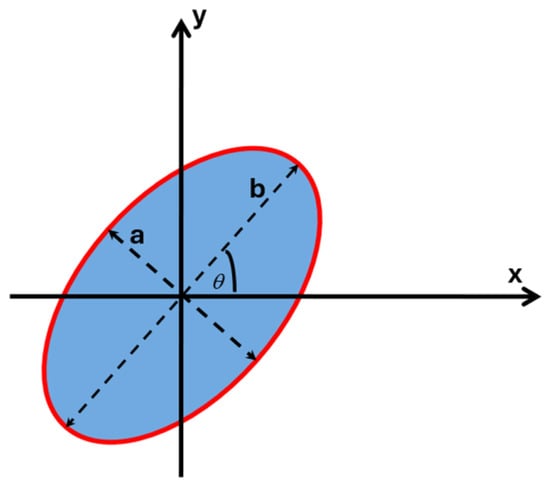
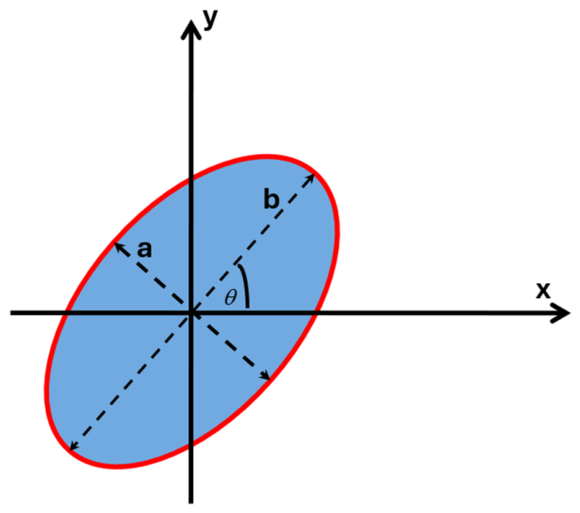
In this study, the elliptical capsule is filled with PCM in a solid state (see Figure 1) initially at a temperature lower than the melting temperature . At time , the wall temperature of the elliptical capsule is elevated to a recommended temperature °C greater than the melting temperature . The physical properties of gallium are presented in Table 1.
Figure 1.
Schematics of the melting process in an elliptical capsule.
Table 1.
Physical properties of pure Gallium.
The heat transfer during the melting process of PCM inside the ellipse can be investigated by using the conservation equations for mass, momentum, and energy. Succeeding in their formulation, the conservation equations, assuming a Newtonian fluid, two-dimensional, laminar, and incompressible flow, can be written in their integral form as:
Equation (2) includes a source term for the PCM, in which the first part describes the Boussinesq approximation, and the second part represents the Carman–Kozeny equation [40]:
Parameter A is defined in a way that makes certain zero velocity in solid cells and normal liquid flow in liquid cells, where is a small numerical constant to prevent division by zero, and C is a constant indicating the morphology of the interface liquid–solid, set to . The source term in the energy equation is solved by using the Voller approach [41]. Equations (1)–(3) are performed and resolved by using our house code. The computational method to investigate the melting process was approved elsewhere and will not be given here [28,29].
In this paper, a numerical study was carried out using 155,000 elements, and the time step of was found to be acceptable to provide accurate results. The grid size and the time step were selected after careful analysis of the autonomy of the results with respect to these parameters. The convergence is verified at each time step, with the convergence criterion of for all variables.
3. Model Validation
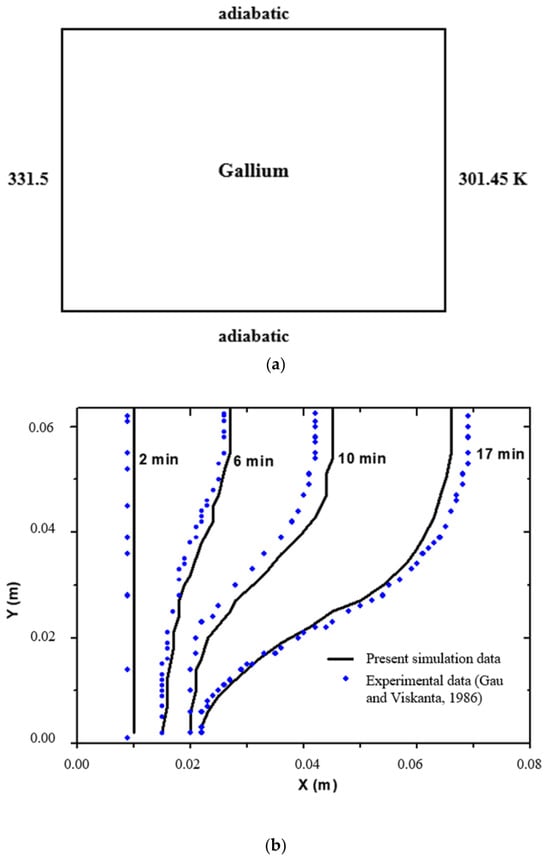
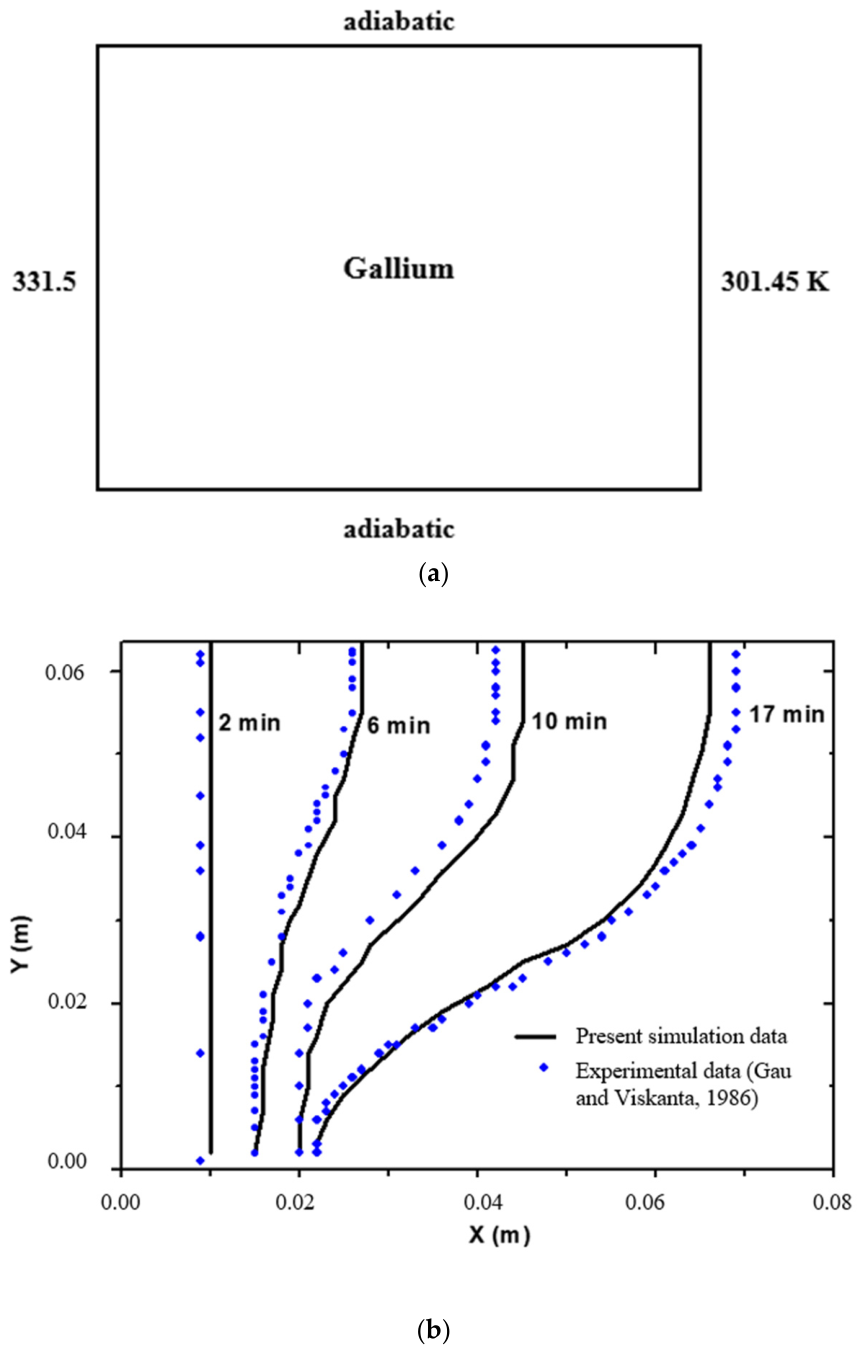
Before addressing the problem in this study, we validated our numerical model. Since the governing equations and numerical methodology are independent of the cavity shape, validation using the well-established benchmark of natural convection in a rectangular cavity ensures the accuracy of the solver before its application to the elliptical enclosure. Indeed, we compared our numerical simulations with the experimental results of Gau and Viskanta [42]. The problem addressed by these authors is an experimental study of the melting of a PCM (Gallium) under natural convection in a rectangular cavity with a width of 6.35 cm and a length of 8.89 cm. For the boundary conditions, a hot temperature of 331.5 K is imposed on the left wall, and a temperature of 301.45 K on the right wall; the horizontal walls are assumed to be adiabatic. Figure 2 compares the melt front from experimental data with simulation results obtained under the same conditions as in Gau and Viskanta [42].
Figure 2.
Validation of the numerical model: (a) schematic of the rectangular cavity used for model validation; (b) variation of the melt front for different times (simulation and experimental values [42]).
To quantitatively assess the agreement between the numerical and experimental interfaces, several horizontal positions were selected along the cavity height. At the prescribed , the corresponding solid–liquid interface locations obtained from the numerical model and from the experimental data were extracted and directly compared. The discrepancy between both datasets was quantified using the root mean square error (RMSE) and the mean relative error (MRE), which were computed as follows:
The comparison between numerical and experimental solid–liquid interface positions during melting (Figure 2b) shows good overall agreement throughout the process. The numerical model accurately captures the evolution of the interface, with low RMSE values (1.05–2.57 mm), as reported in Table 2, indicating limited absolute deviation. The MRE decreases with time from 13.18% to 3.13%, with a slight intermediate variation at 10 min (6.52%), as detailed in Table 2. This behavior is mainly attributed to the higher sensitivity of early-stage melting when the interface is still weakly developed, while later stages benefit from a more stable comparison. Overall, the results in Figure 2 and Table 2 confirm the reliability of the numerical model in predicting the melting front evolution.
Table 2.
Error assessment between the proposed model and experimental data.
4. Results and Discussion
The elliptical capsule considered in this study is shown in Figure 1. The capsule has minor and major axes and . is the inclination angle of the capsule. The aspect ratio of the elliptical capsule can be defined as: . An ellipse with an aspect ratio of 1 is a circle, while 1 is for elliptical capsules.
The surface curve of the elliptical capsule can be described by the following equation:
Four aspect ratios are studied, n = 1, 2, 3, and 4. To ensure conservation of mass of the PCM in all the studied configurations, the cross-sectional area of each ellipse is maintained constant. The characteristics of the flow and temperature fields are examined by exploring the effect of the aspect ratio and the inclination angle on the melting process in the elliptical enclosure.
4.1. Effect of Aspect Ratio
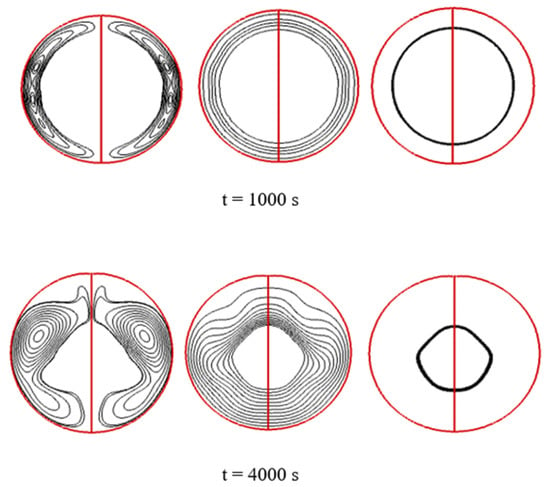
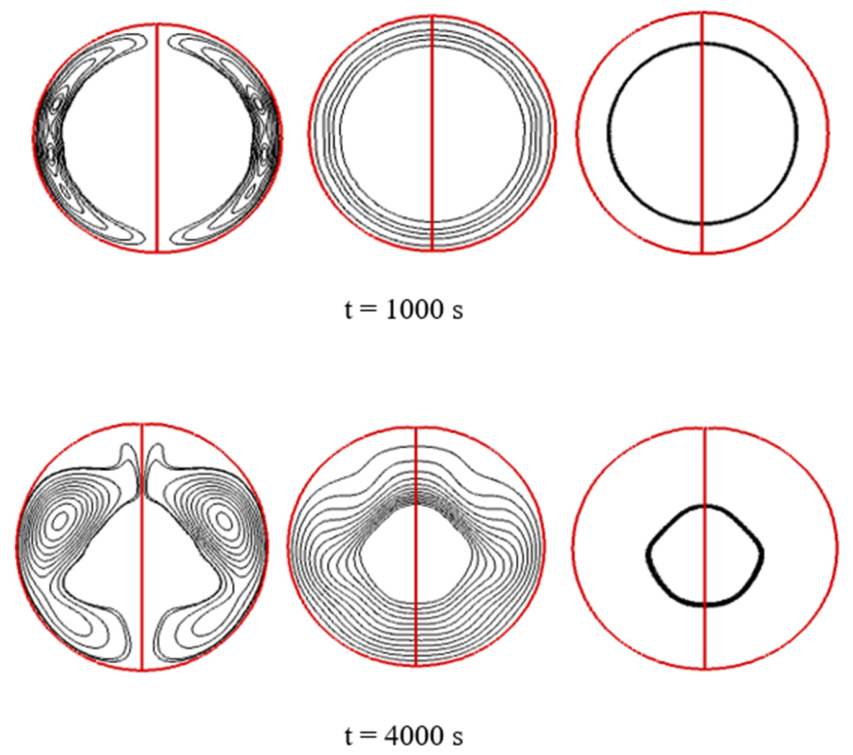
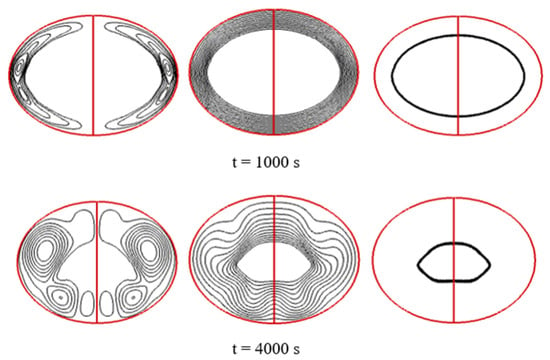
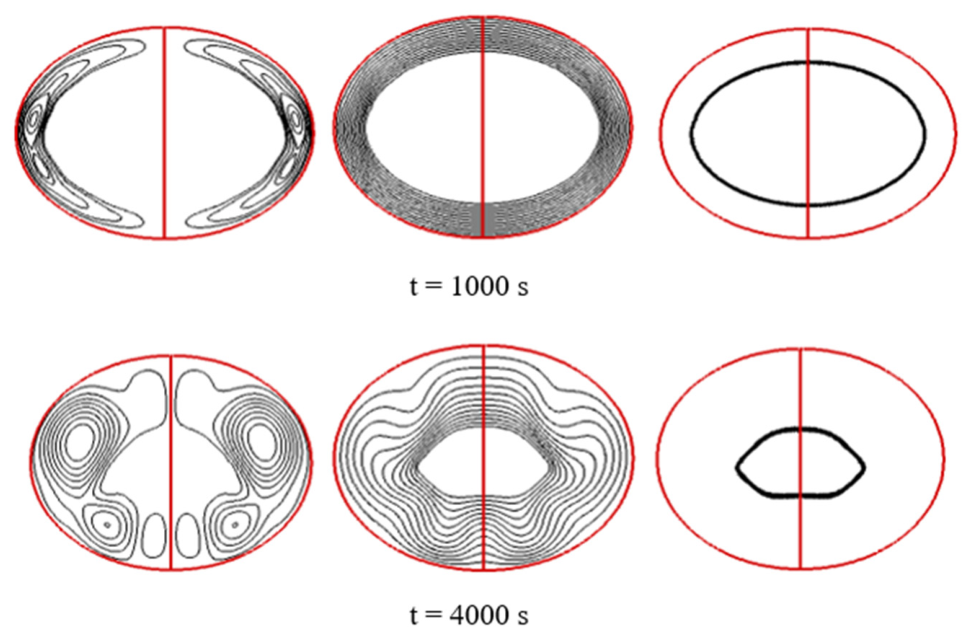
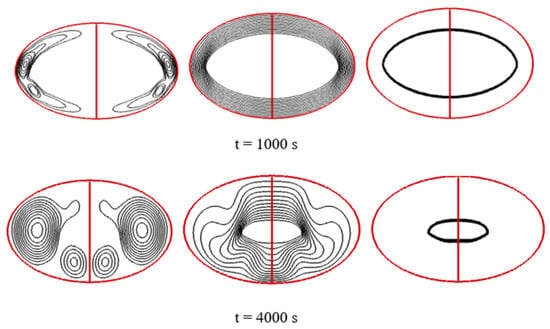
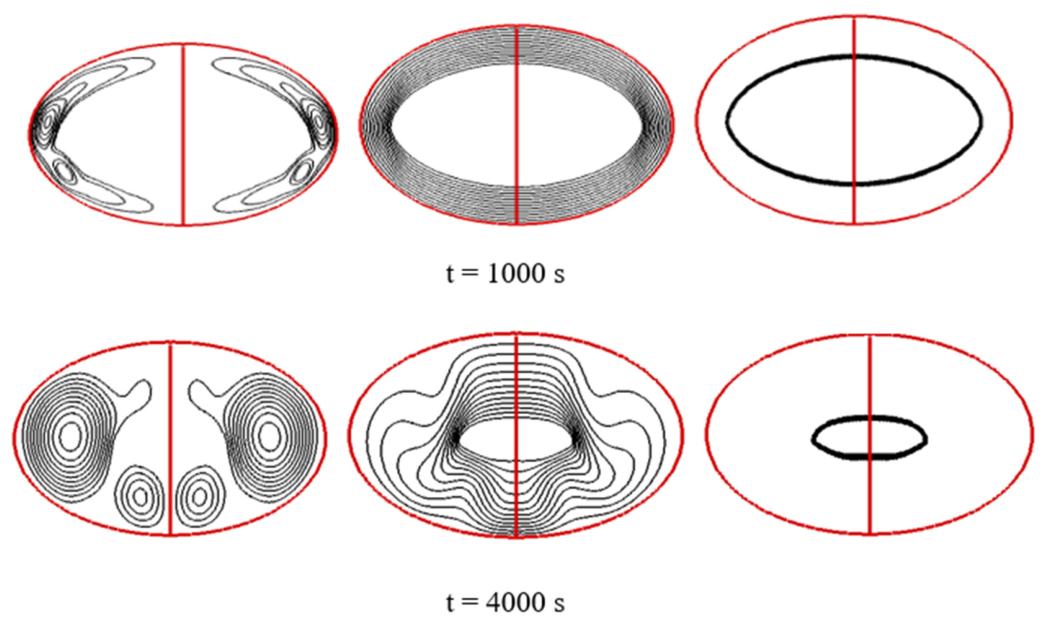
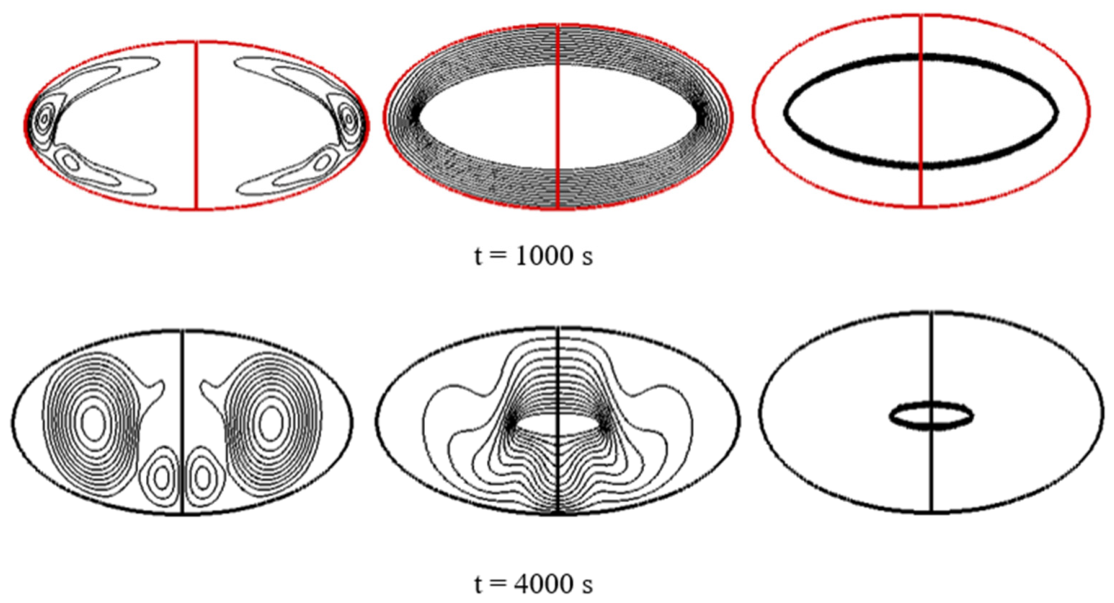
Figure 3, Figure 4, Figure 5 and Figure 6 present the melting process in the horizontal elliptical cavity (θ = 0°) for four aspect ratios (n = 1, 2, 3, and 4). The Rayleigh number is fixed at . In the early stages, the thickness of the liquid zone is practically uniform across the radius direction of the elliptical capsule, as seen in Figure 3, Figure 4, Figure 5 and Figure 6. Since the thickness of the liquid region is very small, conduction is probably the principal heat transfer mechanism within the capsule. After this period, natural convection flow has an increasing influence on the physics of the system.
Figure 3.
Streamlines, temperature contours and interfaces of liquid–solid at times 1000 s and 4000 s (n = 1; inclination angle = 0°; Ra = 104).
Figure 4.
Streamlines, temperature contours and interfaces of liquid–solid at times 1000 s and 4000 s (n = 2; inclination angle = 0°; Ra = 104).
Figure 5.
Streamlines, temperature contours and interfaces of liquid–solid at times 1000 s and 4000 s (n = 3; inclination angle = 0°; Ra = 104).
Figure 6.
Streamlines, temperature contours and interfaces of liquid–solid at times 1000 s and 4000 s (n = 4; inclination angle = 0°; Ra = 104).
It is interesting to point out that when the Rayleigh number is small , natural convection almost plays no significant role in the melting process. The contours of the temperature rest concentrically, and the liquid–solid interface at different angular locations is moving forward nearly at the same rate.
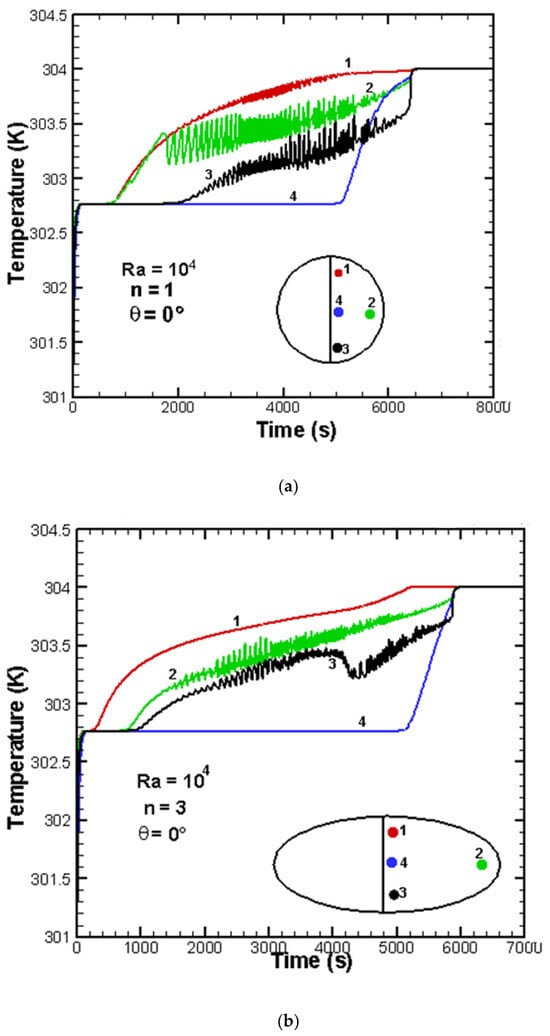
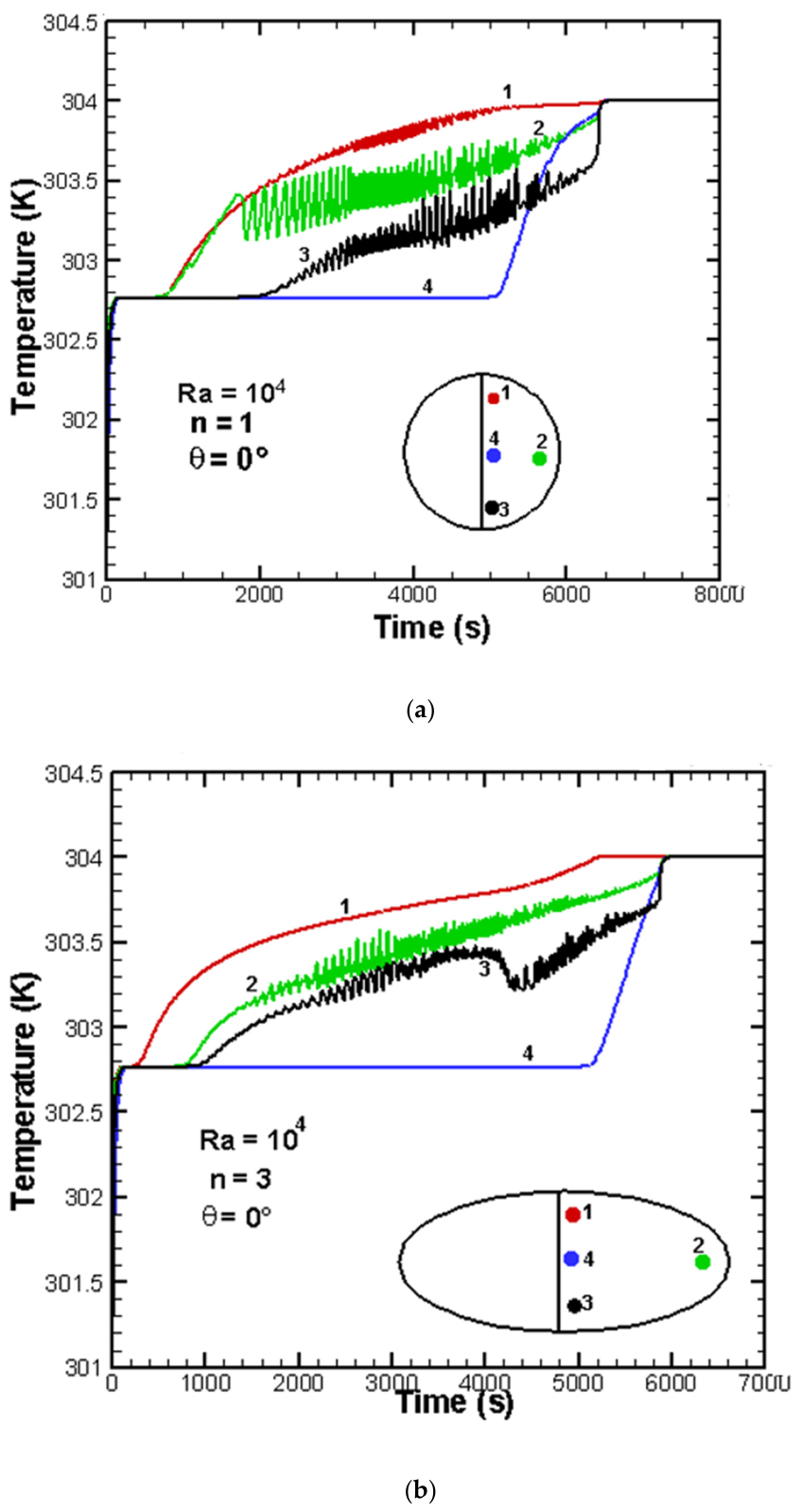
Figure 7 illustrates the temperature variation at various points inside the capsule for two aspect ratios (n = 1 (see Figure 7a) and n = 3 (see Figure 7b)). We note that within the capsule, the PCM includes three zones: solid zone, phase change zone, and liquid zone. We remark that when the temperature of each point inside the capsule is below the melting temperature, heat is transferred only by conduction through solid PCM. When the temperature of the capsule wall achieves the melting temperature, the melting process of PCM will begin. Once the solid–liquid interface passes each point, it can be observed that there will be a sudden increase in the PCM temperature at these points.
Figure 7.
Temperature at various points inside the capsule with inclination angle = 0°; Ra = 104 ((a) for n = 1) and ((b) for n = 3).
Due to the stable nature of the liquid zone that includes point 1, no intense convective movement that would produce disorganized temperature readings is observed. During the melting process, some temperature oscillations are noticed in the temperature histories at points 2 and 3. These oscillations indicate the existence of disorganized and vortical flow structures in the liquid region at points 2 and 3. Point 4, which is placed at the center of the capsule, is the final point at which the temperature readings started to rise above the fusion temperature of the PCM.
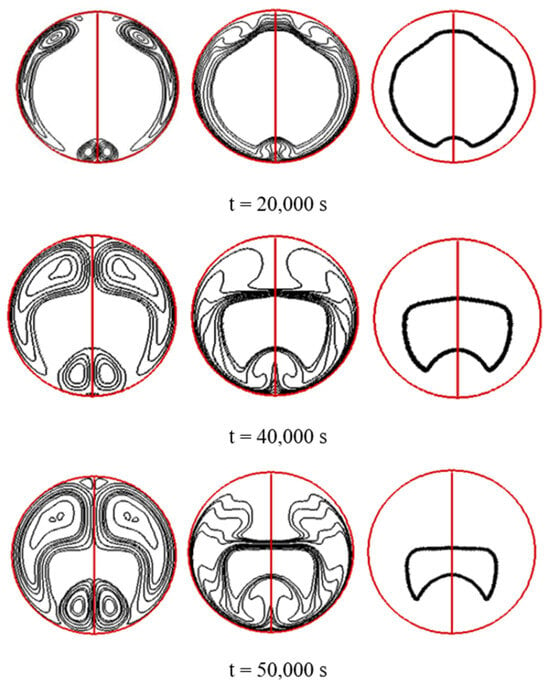
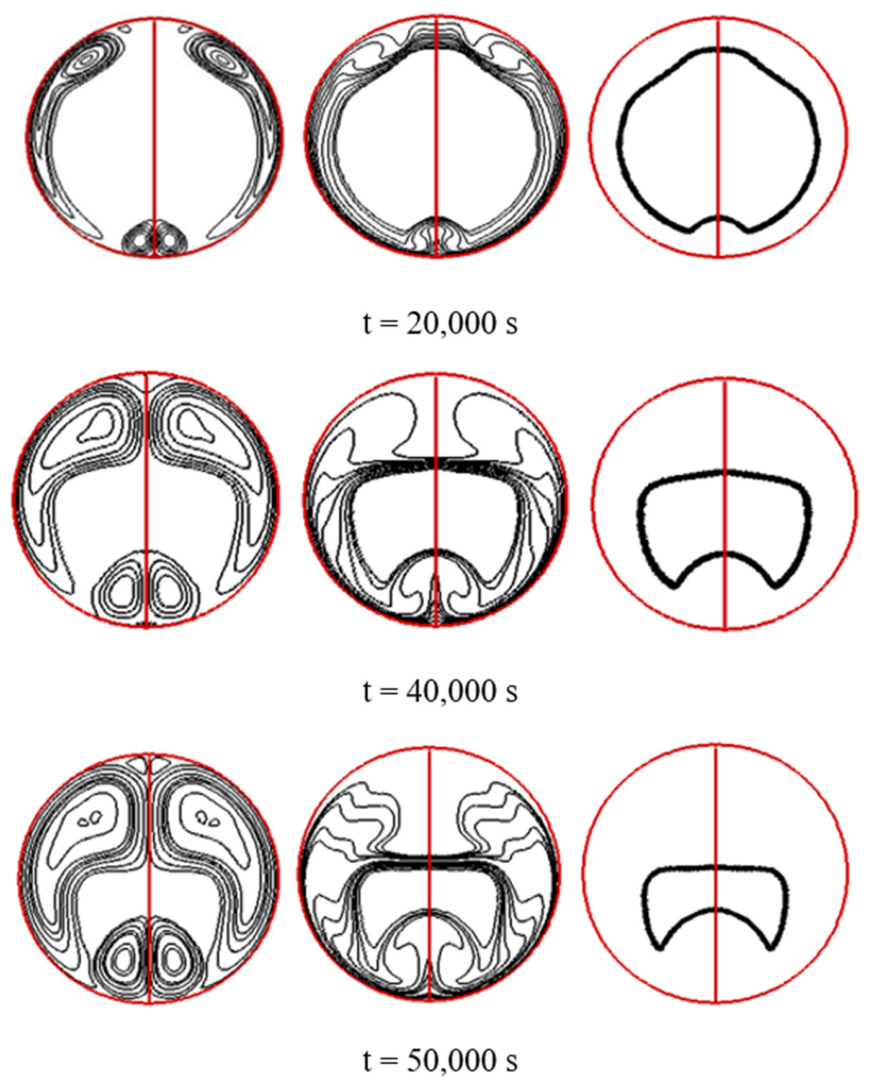
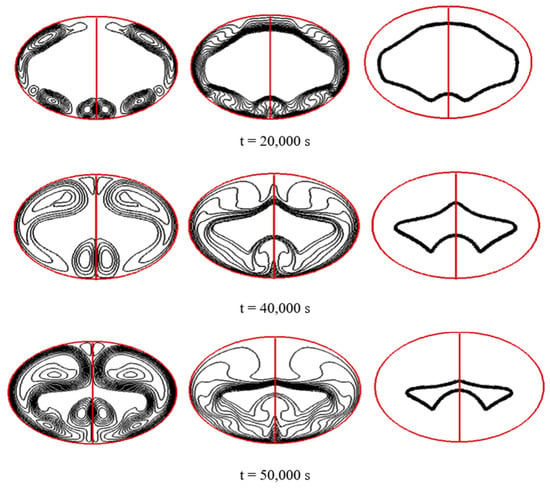
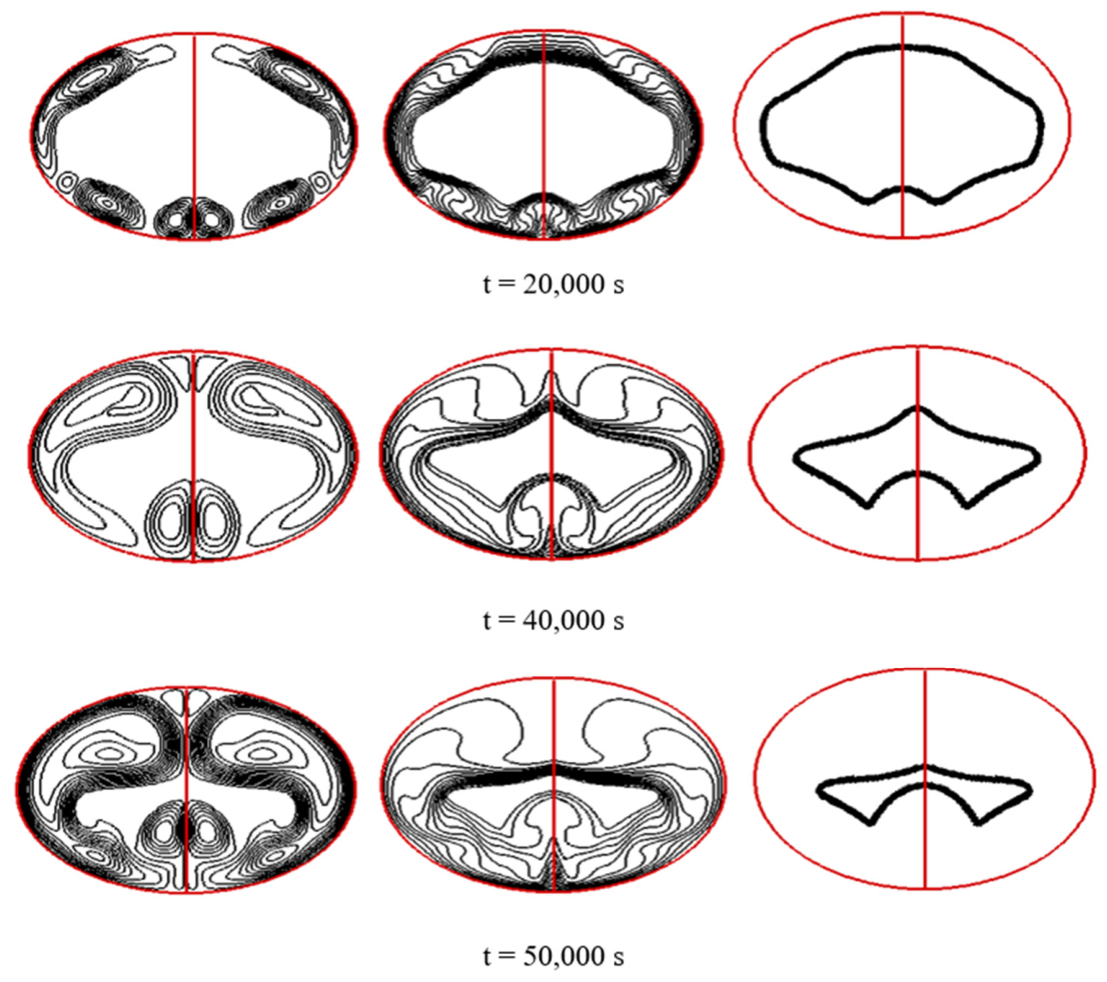
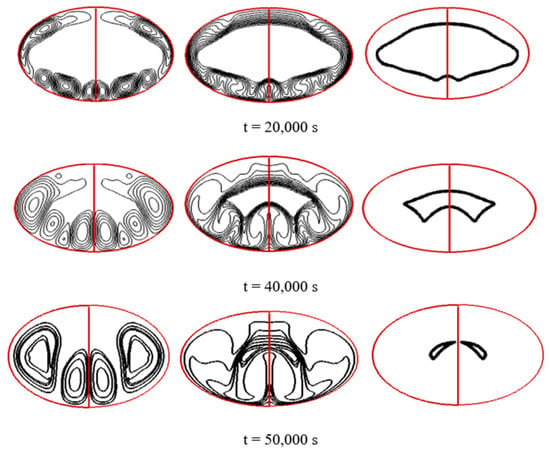
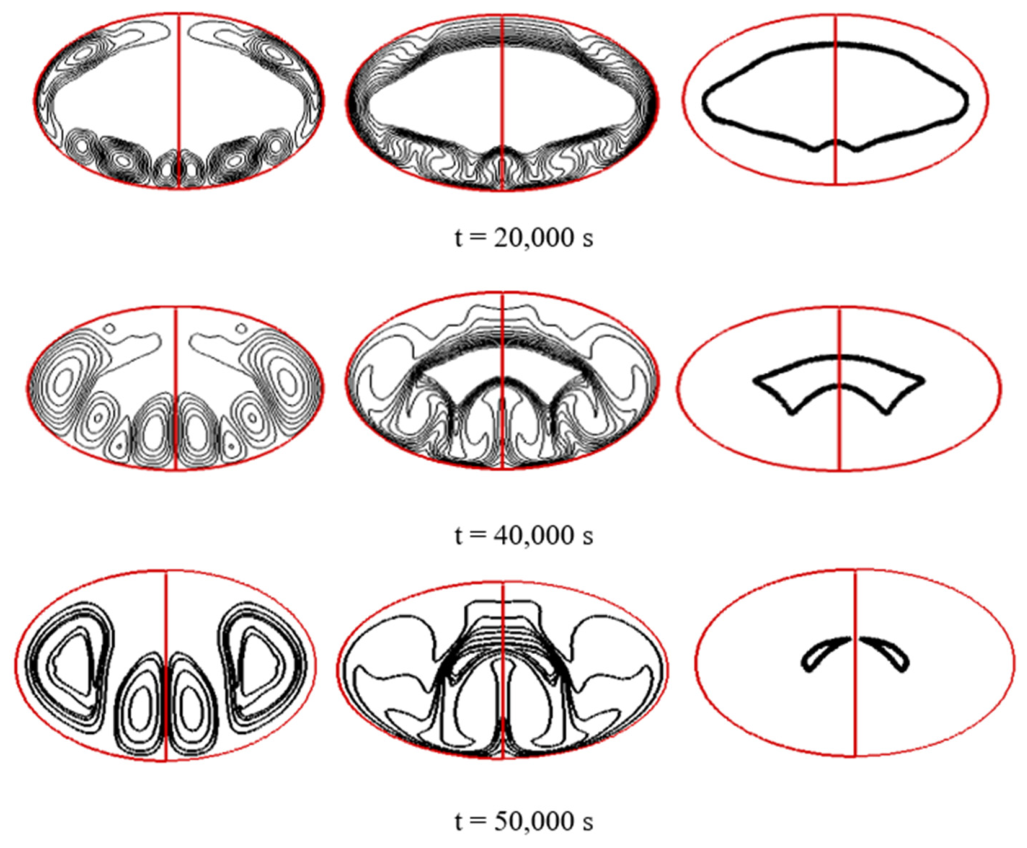
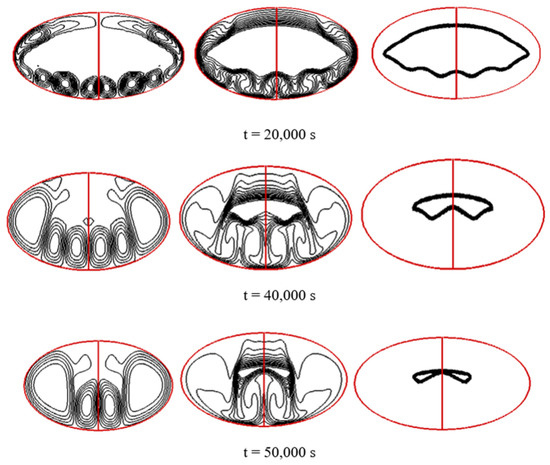
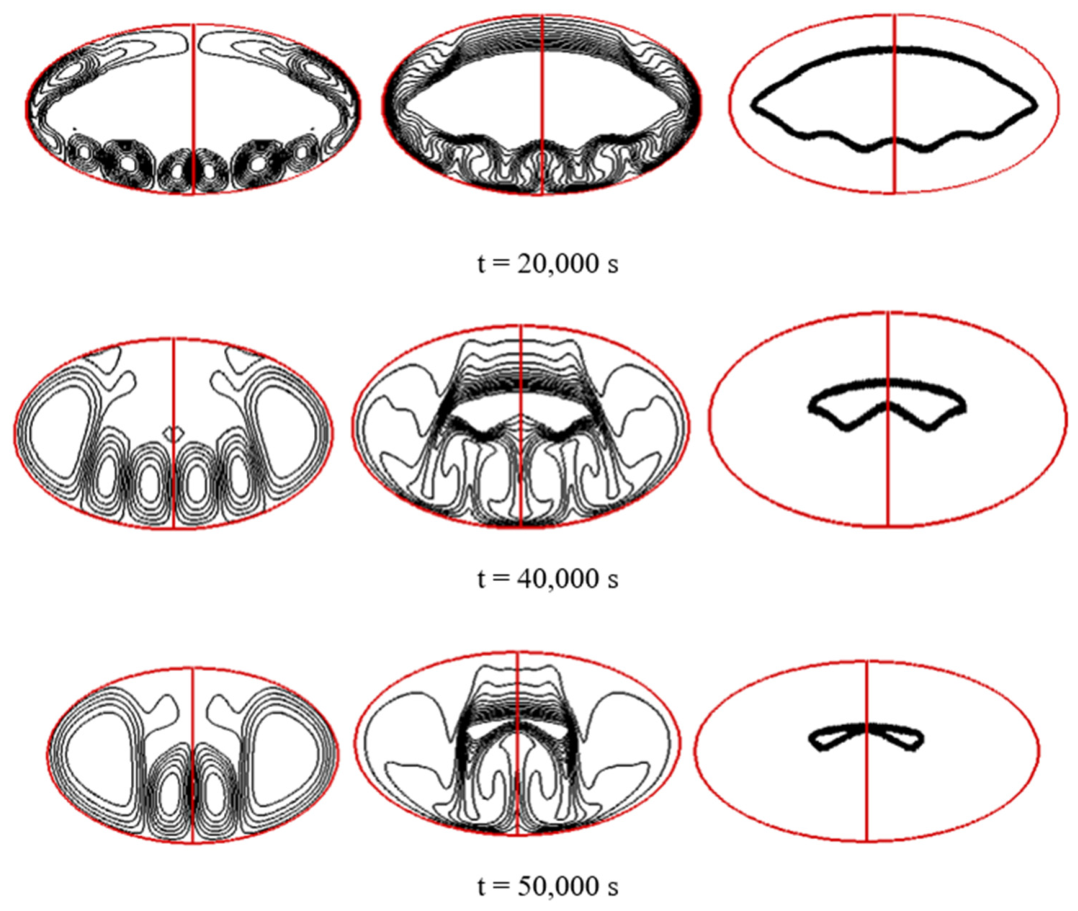
The flow behavior during the melting process for four aspect ratios (n = 1, 2, 3, and 4) is given in Figure 8, Figure 9, Figure 10 and Figure 11 for . After the conduction governing phase, the complex shape of the fluid dynamics is characterized by multi-cellular flow arrangements. The number and the dimension of the cells are conditional on the amount of the liquid within the capsule. Natural convection takes place inside the elliptical capsule because of the hot liquid PCM rising along the wall of the capsule while the cold liquid in the center moves down the capsule to take the place of the hot fluid. This generates an unsteady fluid circulation within the capsule. Therefore, the higher region of the PCM melts more rapidly than the lower one. As the amount of liquid PCM increases inside the capsule, the number of rolls diminish. When the liquid tops up approximately half of the elliptical capsule, two counter-rotating rolls are obtained in the lower zone of the capsule. This situation is almost identical to the Bénard convection due to the thermal instability because the solid–liquid interface and the bottom wall of the capsule can be approached to form two flat surfaces when the liquid gap between these two plates is reduced enough. We can also notice that the flow in the liquid zone remains in a stable condition. The Bénard convection presents an organized behavior without being influenced by the bottom flow. So, the fluctuation of the lower part of the PCM can be interpreted by the temperature oscillation in this region and the accelerated melting due to the perforation of multi-cellular roll structures.
Figure 8.
Streamlines, temperature contours and interfaces of liquid–solid at times 20,000 s, 40,000 s and 50,000 s (n = 1; inclination angle = 0°; Ra = 106).
Figure 9.
Streamlines, temperature contours and interfaces of liquid–solid at times 20,000 s, 40,000 s and 50,000 s (n = 2; inclination angle = 0°; Ra = 106).
Figure 10.
Streamlines, temperature contours and interfaces of liquid–solid at times 20,000 s, 40,000 s and 50,000 s (n = 3; inclination angle = 0°; Ra = 106).
Figure 11.
Streamlines, temperature contours and interfaces of liquid–solid at times 20,000 s, 40,000 s and 50,000 s (n = 4; inclination angle = 0°; Ra = 106).
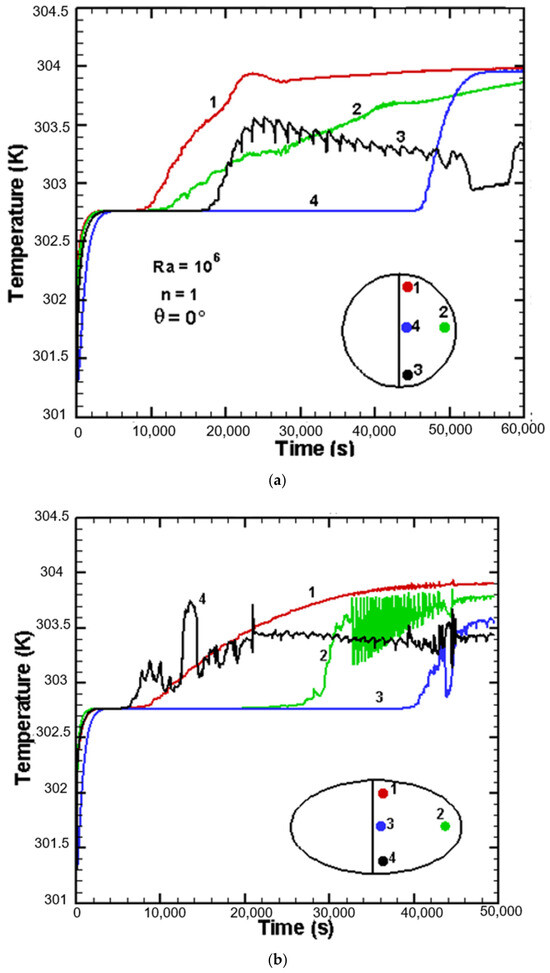
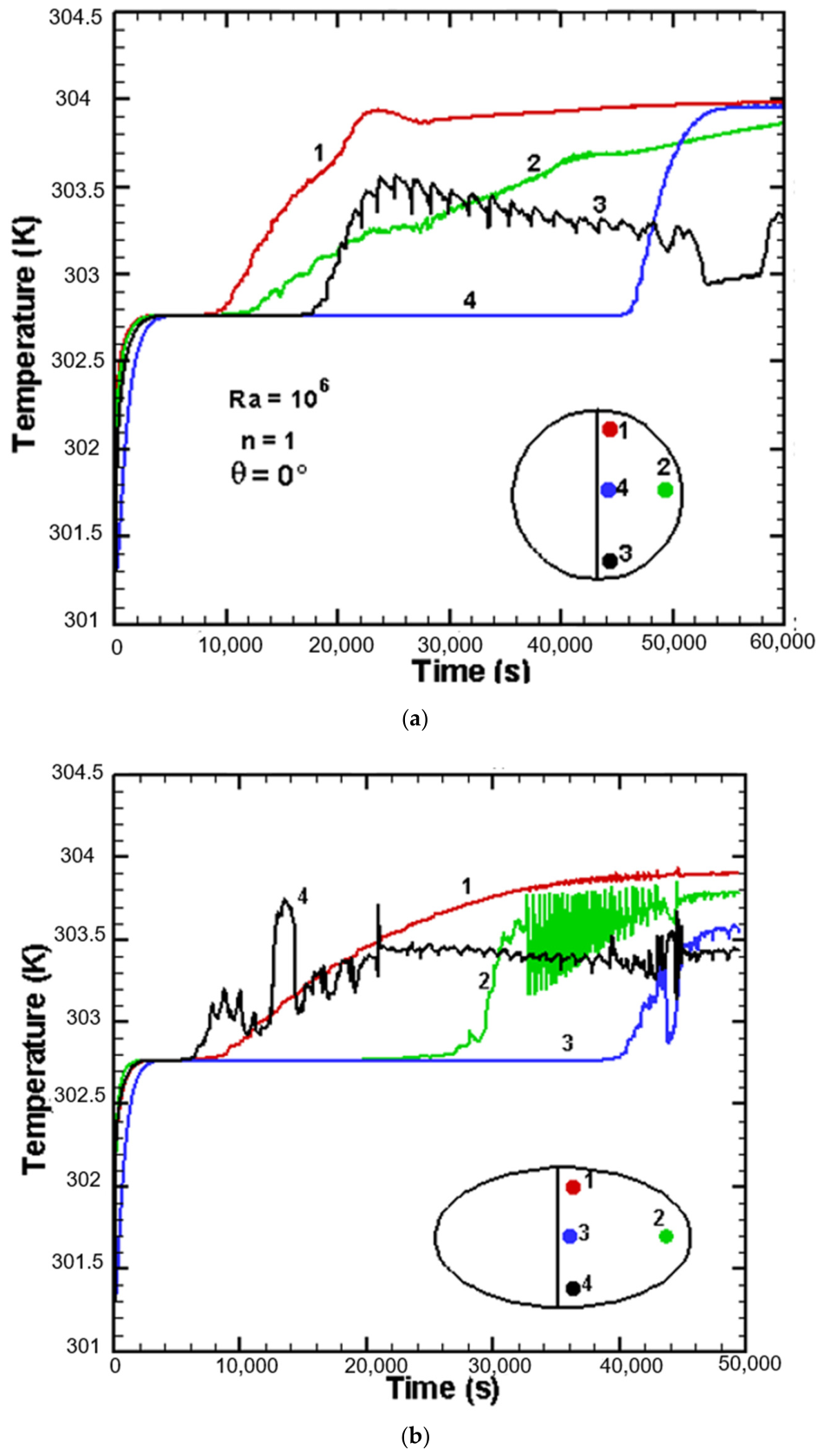
Figure 12 illustrates the temperature variation of the PCM at various points within the elliptical enclosure for two aspect ratios (n = 1 (see Figure 12a) and n = 3 (see Figure 12b)). We note that during the phase change process, some temperature oscillations are noticed in temperature histories at points 2 and 3. These oscillations assert the formation of an unsteady fluid layer that reinforces disorganized oscillations of the PCM temperature and is responsible for the fluctuation of the interface liquid–solid at the bottom part of the capsule. Due to the steady nature of the liquid at the top region (point 1) within the capsule, no vigorous convective movement that would generate the oscillation of the PCM temperature readings is observed.
Figure 12.
Temperature at various points inside the capsule with inclination angle = 0°; Ra = 106 ((a) for n = 1) and ((b) for n = 3).
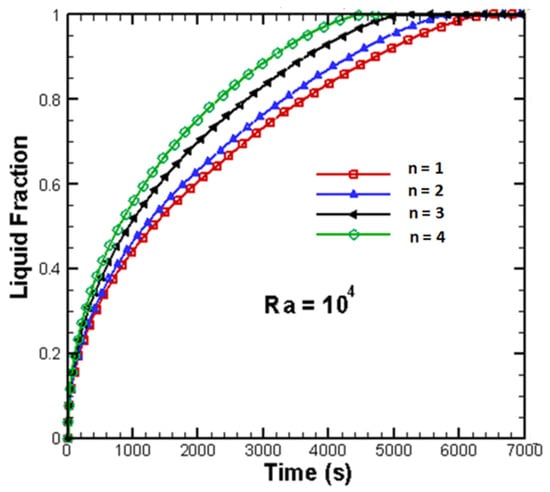
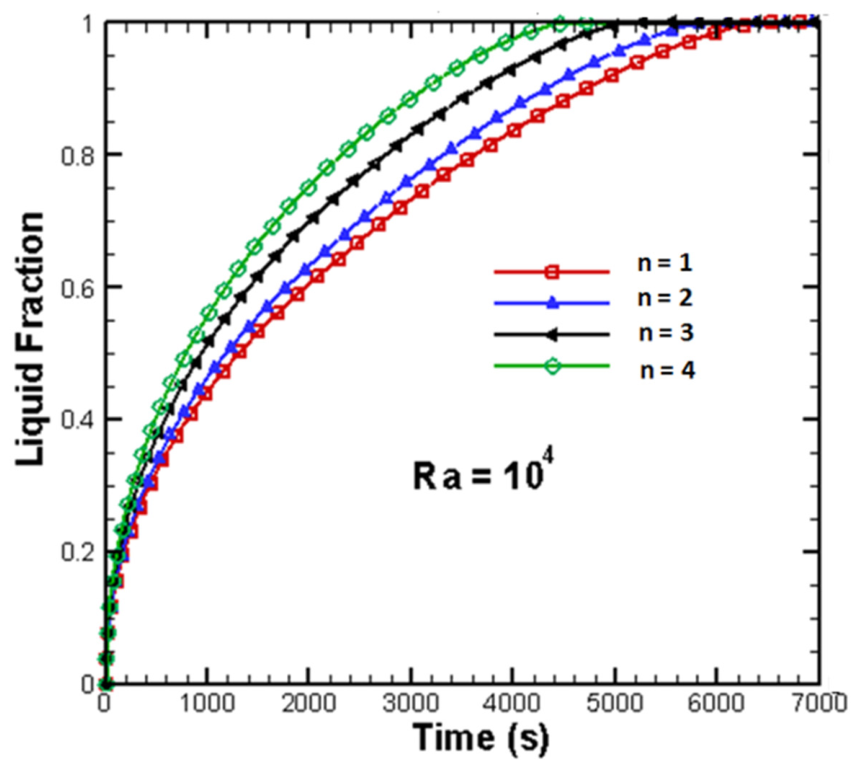
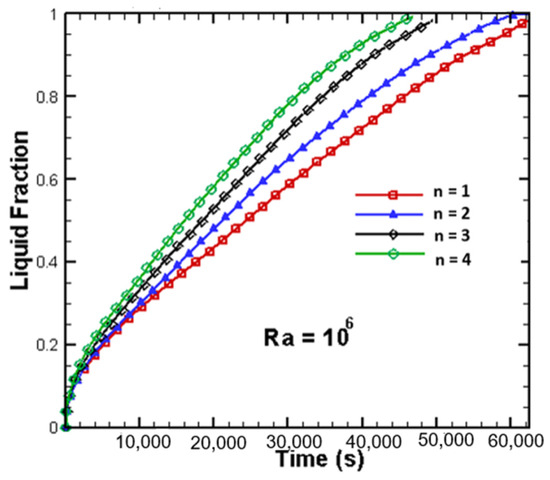
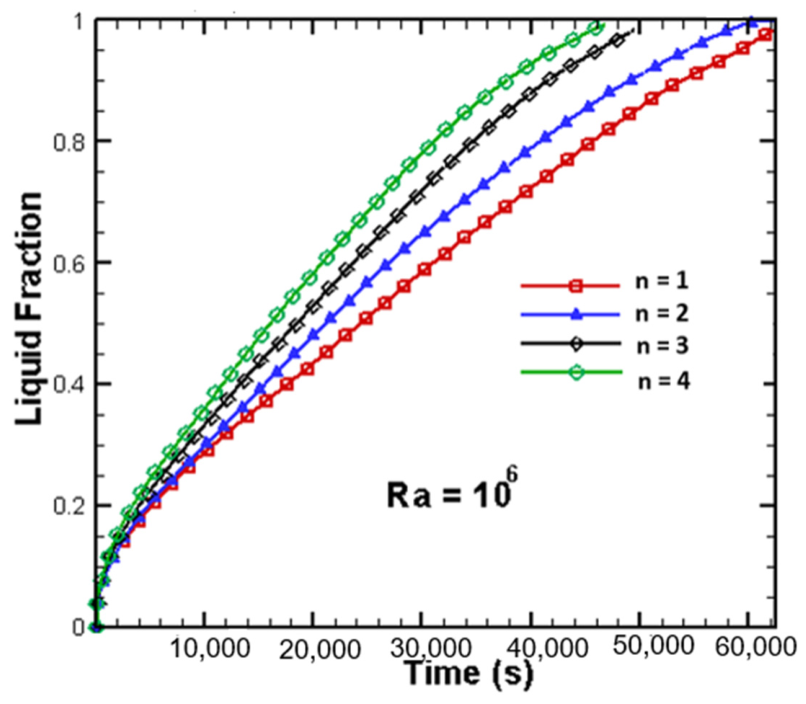
Figure 13 and Figure 14 show the variation in the liquid fraction of the PCM in the elliptical capsule versus time for different aspect ratio (n = 1, 2, 3, and 4) for Ra = 104 and Ra = 106. From this plot, one can determine both the melting rate (slope of the tangent line at a given time) and the average melting rate (ratio of current liquid fraction and time). Figure 13 and Figure 14 indicate that increasing the aspect ratio increases the melting rate of the PCM. We can also notice that the melting time decreases by increasing the aspect ratio of the elliptical enclosure. As a result, the ellipse’s ratio can be employed to control the melting process in elliptical capsules.
Figure 13.
Comparison of the liquid fraction variations versus time for different aspect ratios (inclination angle = 0°; Ra = 104).
Figure 14.
Comparison of the liquid fraction variations versus time for different aspect ratios (inclination angle = 0°; Ra = 106).
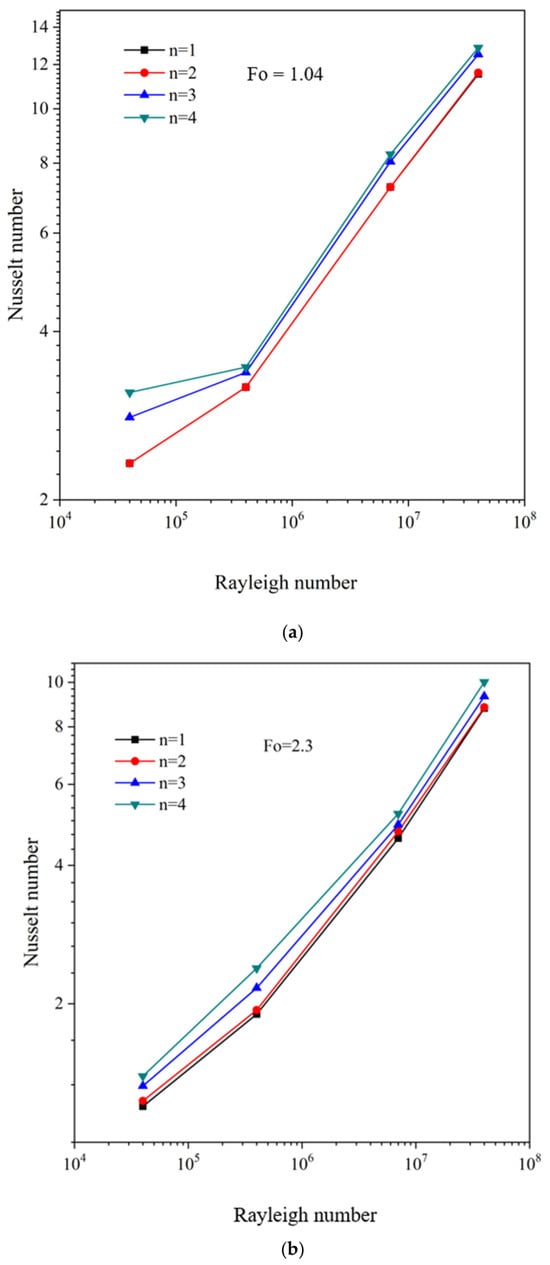
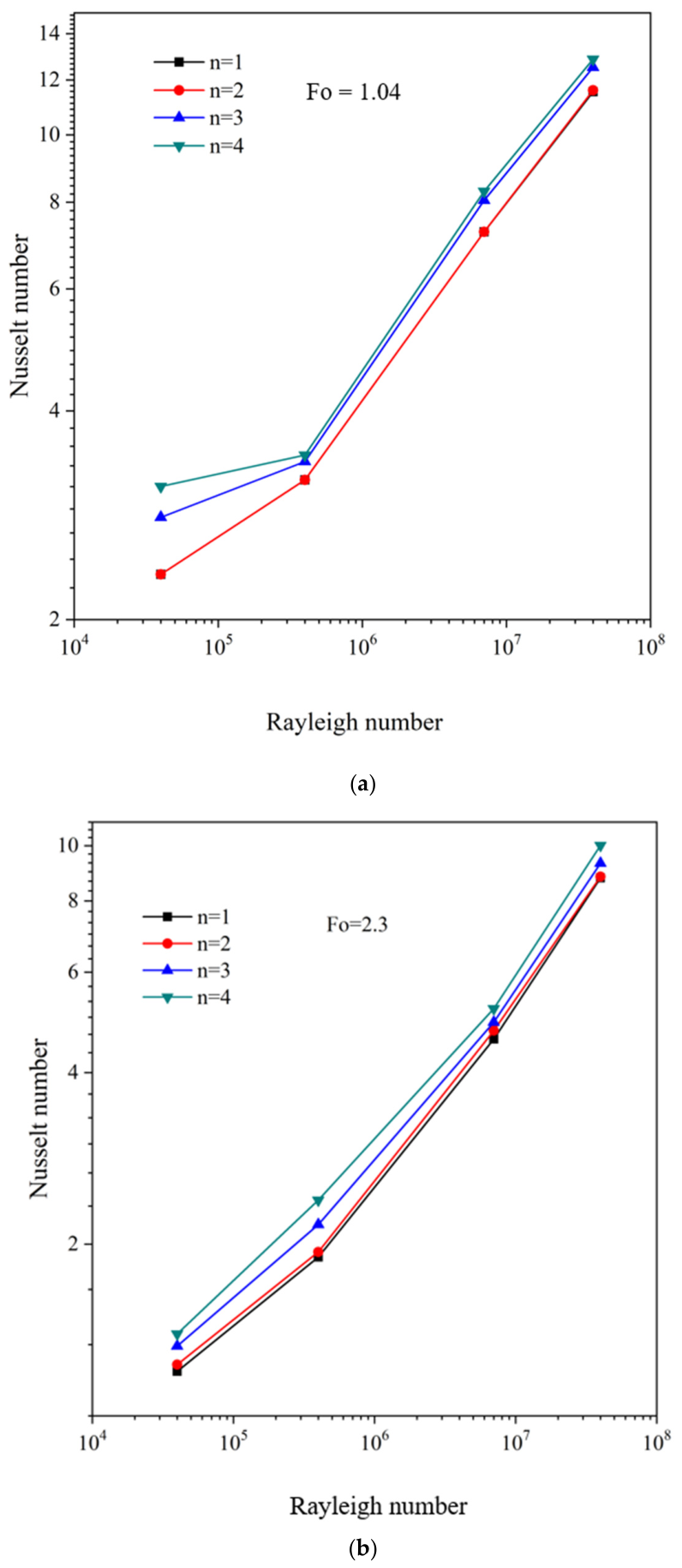
Figure 15a,b present a log–log variation in the time-averaged Nusselt number as a function of the Rayleigh number for different aspect ratios at two distinct Fourier numbers, within the range . As expected, the Nusselt number increases with increasing Rayleigh number, reflecting enhanced natural convection within the capsule.
Figure 15.
Nusselt versus Rayleigh number for different aspect ratios, inclination angle = 0°, ((a) Fourier number Fo = 1.04; (b) Fourier number Fo = 2.3).
The influence of the aspect ratio is found to depend on its magnitude. For low aspect ratios (n = 1 and n = 2), the Nusselt number curves are nearly superimposed, indicating that the geometric effect on heat transfer is negligible in this range. This behavior consists of streamline patterns, which show similar flow structures characterized by symmetric convection cells and comparable thermal gradients, as shown in Figure 3 and Figure 4.
However, for higher aspect ratios (n ≥ 3), the Nusselt number increases significantly with n, due to the intensification of convective motion and the resulting enhancement of heat transfer.
A nonlinear regression analysis was performed to establish an empirical correlation between the Nusselt and Rayleigh numbers. The correlation is expressed as:
where Nu is the time-averaged Nusselt number, and Ra is the Rayleigh number. The coefficients and are listed in Table 3a,b. For n = 1 and n = 2, a single correlation is proposed due to their similar thermal behavior.
Table 3.
(a) The coefficients a and b for the equation for different aspect ratios (inclination angle = 0°, Fourier number Fo = 1.04); (b) the coefficients a and b for the equation for different aspect ratios (inclination angle = 0°, Fourier number Fo = 2.3).
The empirical correlations were established separately for each aspect ratio using four numerical data points corresponding to four Rayleigh numbers within the investigated range. The regression analysis was performed using OriginPro 2025b software, and the resulting coefficients of determination (R2) ranged from 0.938 to 0.991, confirming the good quality of the proposed power-law correlations.
4.2. Effect of Inclination Angle
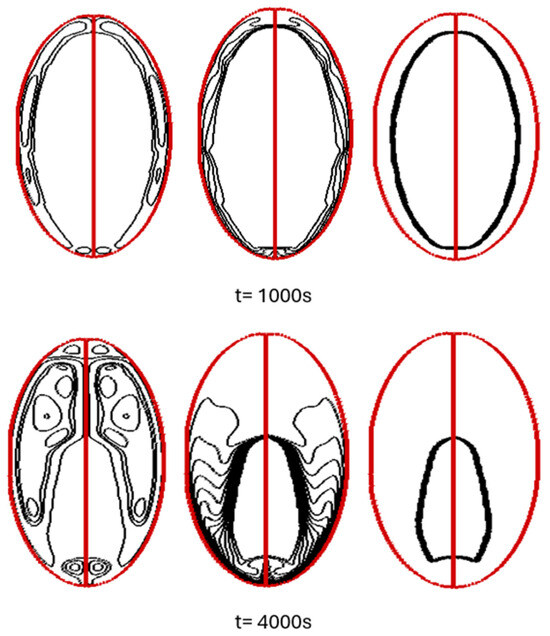
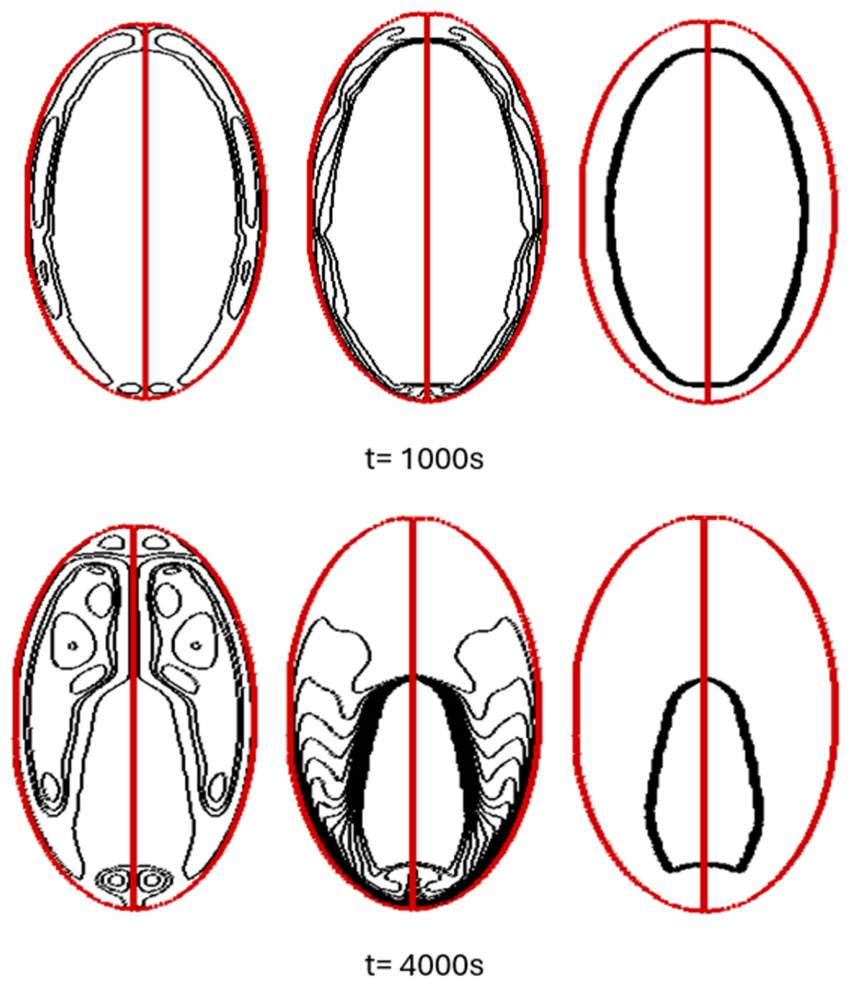
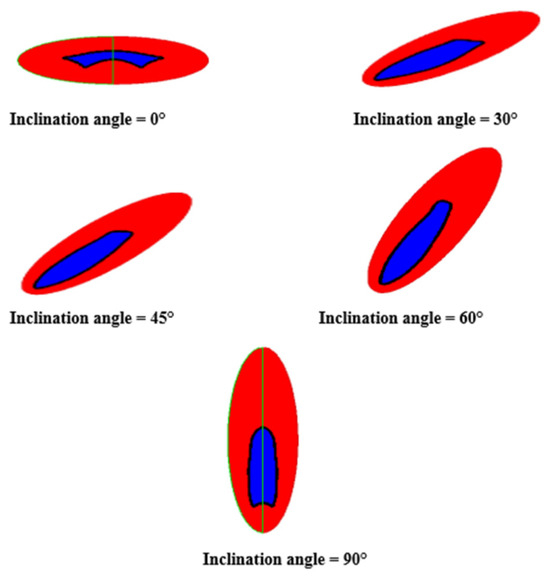
The influence of the angle of inclination of the ellipse on the thermal behavior of the PCM during melting is also investigated. Figure 16 presents the flow behavior during the melting process for the inclination angle 90° and for aspect ratio n = 4. We note that for this inclination angle at the beginning of the melting, heat transfer in the liquid region is essentially controlled by conduction, and the liquid–solid interface mimics the wall’s profile. This mode of heat transfer succeeds since the viscous force resists the movement of the liquid, during which the solid–liquid interface remains almost regular and parallel to the capsule wall. However, as melting advances, the PCM melts rapidly near the top of the solid–liquid interface, and the elliptical capsule expands, and convection takes over conduction. As the fluid moves down along the solid–liquid interface, heat is transmitted to the melting front, and the liquid cools. Consequently, the melting rate at the lower zone of the capsule is notably lower than that at the top region.
Figure 16.
Streamlines, temperature contours and interfaces of liquid–solid at times 1000 s and 4000 s (n = 4; inclination angle = 90°; Ra = 104).
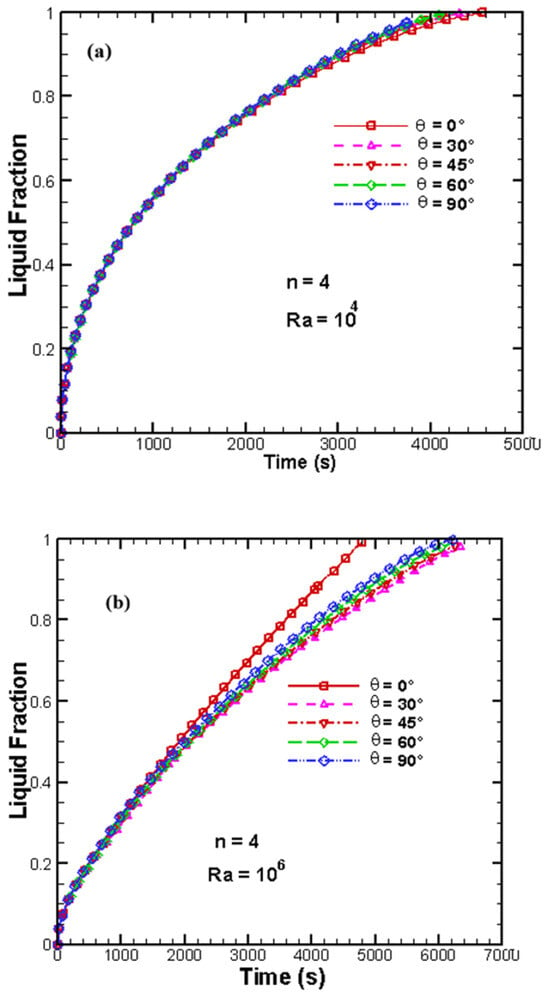
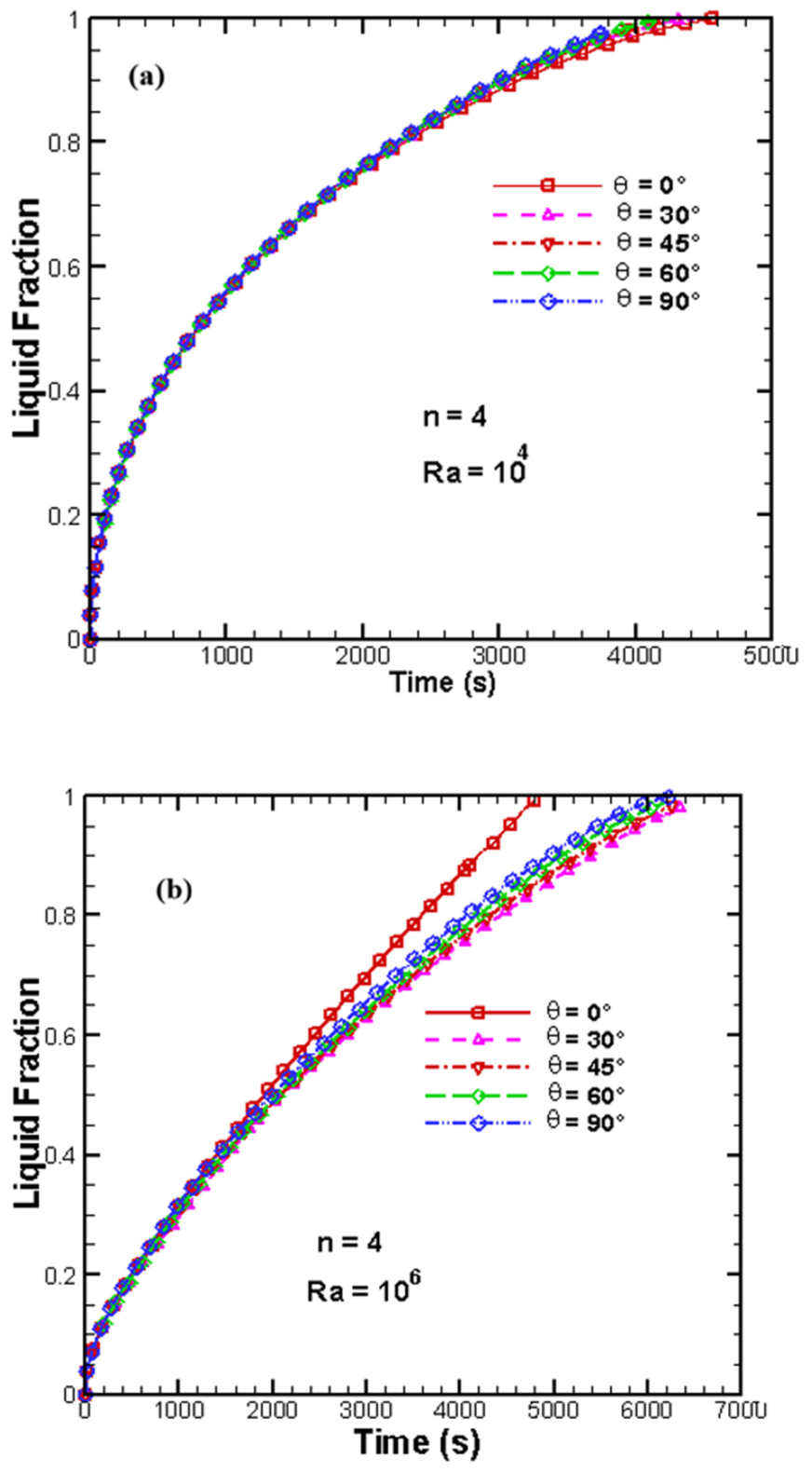
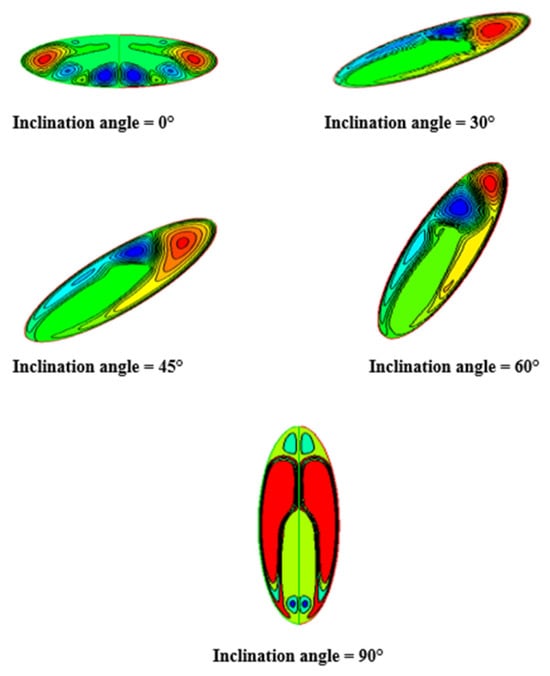
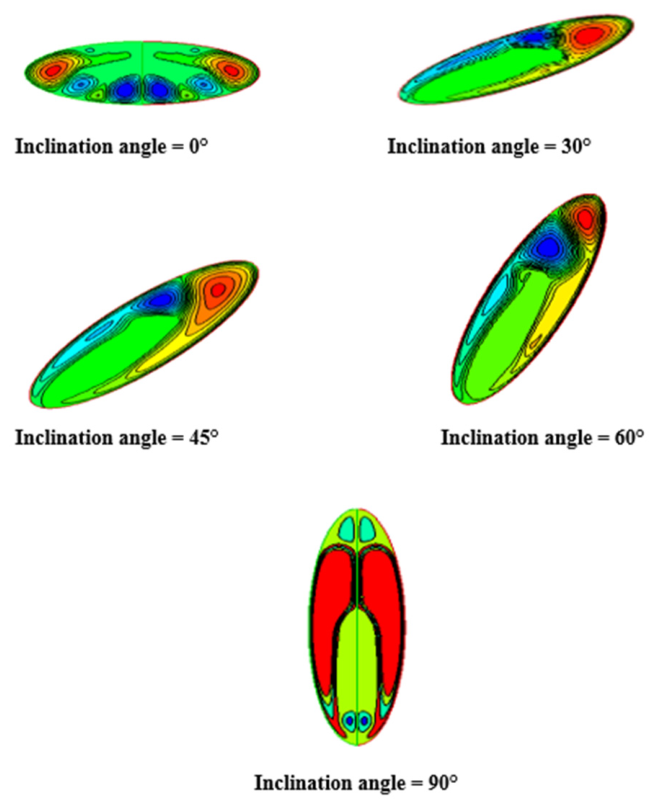
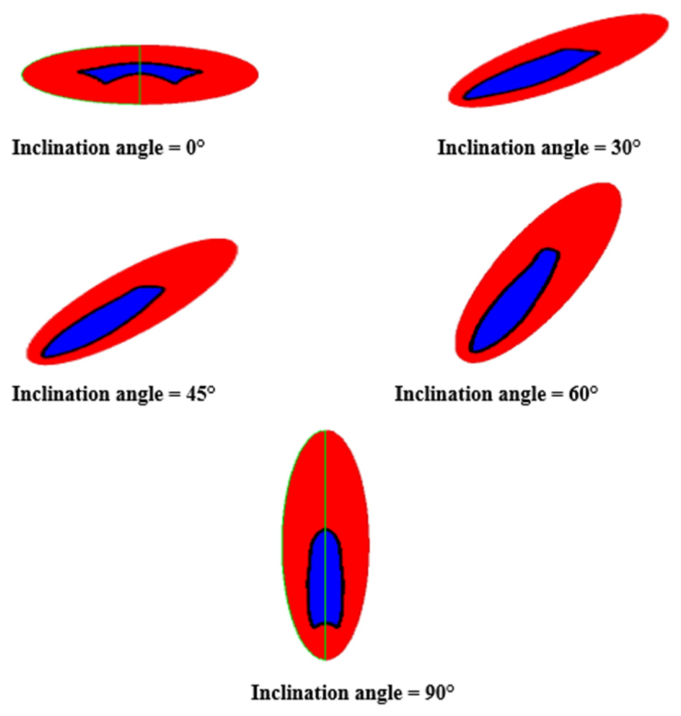
Figure 17a,b present the variation in the liquid fraction of the PCM in the elliptical cavity versus time for various inclination angles and two Rayleigh numbers (Ra = 104 and Ra = 106). Figure 17a shows that the inclination angle of the elliptical capsule has an imperceptible impact on the melting process when the Rayleigh number is small. This can be explained by the fact that when the Rayleigh number is small, natural convection almost has no impact on the phase change process inside the capsule. However, Figure 17b indicates that the PCM within the ellipse with inclination angle 0° melts more rapidly than for PCM in the ellipses with inclination angles 30°, 45°, 60°, and 90°. This result can be explained by the impact of the natural convection mechanism on the melting process inside the capsule ellipses (see Figure 18 and Figure 19). This behavior is attributed to the stronger buoyancy-driven convection developed in the horizontal ellipse, which enhances heat transport from the heated wall to the solid–liquid interface. In inclined configurations, the flow structure becomes less effective in distributing heat within the molten PCM, leading to a lower melting rate.
Figure 17.
Comparison of the liquid fraction variations versus time for different inclination angles: (a) Ra = 104; (b) Ra = 106.
Figure 18.
Streamlines at time 4000 s (n = 4; Ra = 106) for different inclination angles.
Figure 19.
Interfaces of liquid–solid at time 4000 s (n = 4; Ra = 106) for different inclination angles.
We note that when conduction is dominant inside the capsule, the variation in the liquid fraction over time does not seem to vary by changing the angle of inclination (see Figure 17b). It is interesting to note that for the horizontal ellipse, the liquid fraction varies linearly with time until the completion of the melting process, but for the 30°, 45°, 60°, and 90° angles of inclination, the variation in the liquid fraction deviates from a linear trend, and the melting rate declines as the inclination angle is decreased. This is caused by the decrease in the intensity of natural convection inside the ellipse as the angle of inclination decreases from 90° to 30°. We can also conclude that, in a horizontal position, the heat transfer rate of a low-Prandtl-number PCM is not affected by the thickness of the molten layer during melting.
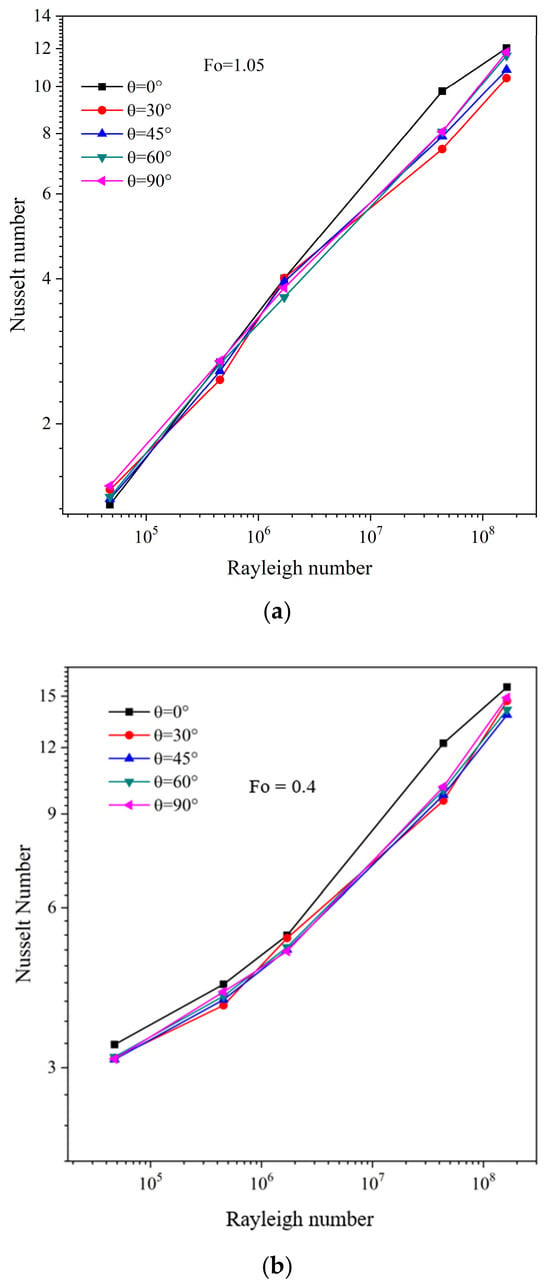
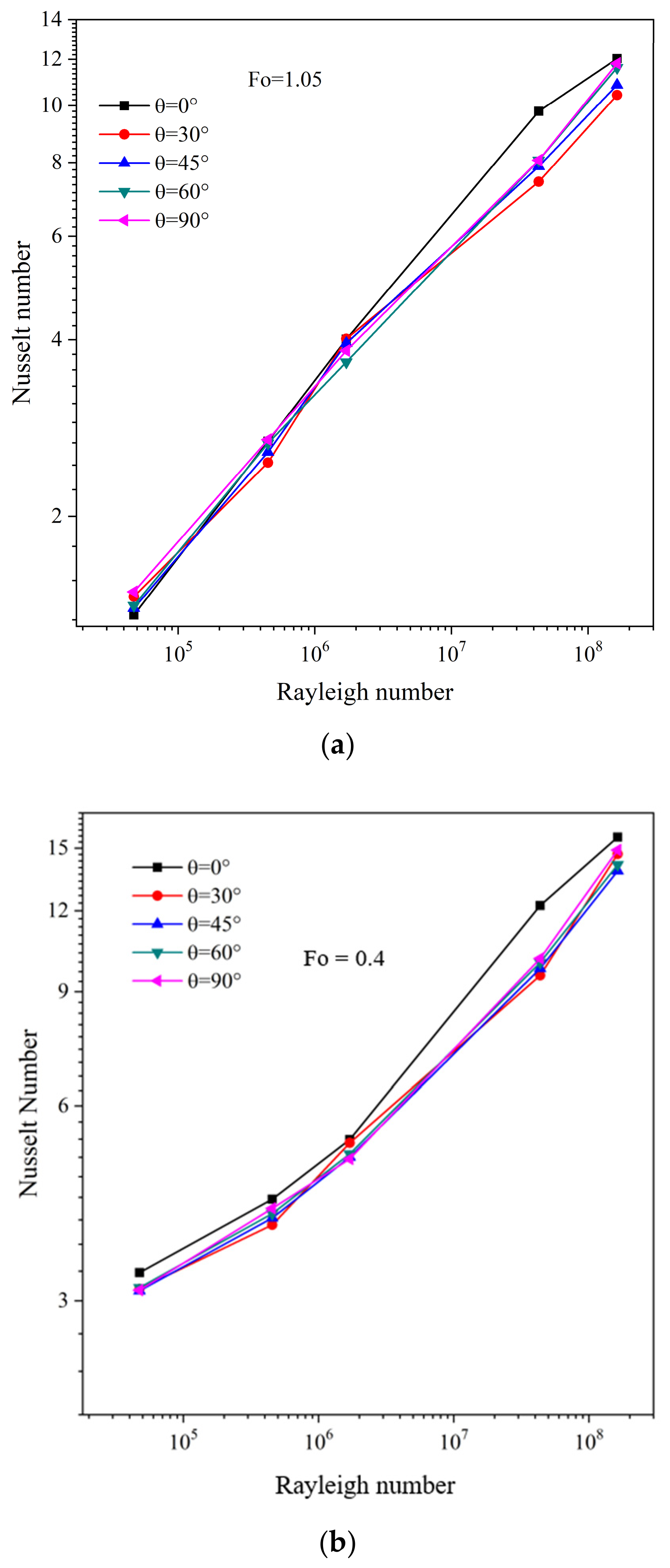
Figure 20a,b show the variation in the Nusselt number within the range for different inclination angles and for two Fourier numbers. We notice an increase in the Nusselt number with an increase in the Rayleigh number for various inclination angles. As was reported previously, the heat transfer for the inclination angle of 0° is greater than for the other angles. This result is attributed to natural convection due to the appearance of Rayleigh–Bénard cells in this situation.
Figure 20.
Nusselt versus Rayleigh number for different inclination angles for n = 4 ((a) Fo = 0.4; (b) Fo = 1.05).
A nonlinear regression analysis was performed to find an empirical correlation between the Nusselt and Rayleigh numbers for different inclination angles. These results can also be presented using the following correlation:
where a and b are the coefficients of Equation (9) and are given in Table 4a,b.
Table 4.
(a). The coefficients a and b for the equation for different inclination angles (n = 4, Fourier number Fo = 0.4); (b). the coefficients a and b for the equation for different inclination angles (n = 4, Fourier number Fo = 1.05).
The empirical correlations for the different inclination angles (θ = 0°, 30°, 45°, 60°, and 90°) were established using five numerical data points within the investigated range. The regression analysis was performed using the Origin software, and the resulting coefficients of determination (R2) ranged from 0.966 to 0.999, indicating an excellent agreement between the numerical data and the proposed power-law correlations.
5. Conclusions
In the present study, the coupling between natural convection and the melting process inside an elliptical enclosure has been investigated for various values of aspect ratio and inclination angle of the ellipse. A physical model based on a finite volume method and an enthalpy porosity formulation is used to investigate the heat transfer during solid–liquid phase change inside the ellipse. The results indicate that the use of the elliptical capsule can reduce the melting process time. The study reveals the following key outcomes:
- Increasing the aspect ratio (n) from 1 to 4 accelerates the melting process, demonstrating that elliptical geometries are more efficient than circular ones for thermal energy storage. For a Rayleigh number of , the melting rate increases progressively with the aspect ratio (n).
- The horizontal ellipse (θ = 0°) provides the best thermal performance. At , the melting rate for the horizontal position is superior to that for inclined angles (30°, 45°, 60°, and 90°) due to the onset of unsteady multi-cellular flow structures (Rayleigh–Bénard convection). At a lower Rayleigh number (), the influence of the inclination angle is negligible.
- The time-averaged Nusselt number increases with both the Rayleigh number and the aspect ratio, following established empirical correlations of the form . The results show that the coefficient rises with increasing aspect ratio, particularly for the horizontal ellipse, while the exponent remains largely invariant. The horizontal orientation consistently yields the highest Nusselt numbers, confirming its thermal superiority over inclined configurations.
- In conclusion, the study demonstrates that optimizing the aspect ratio and orientation of elliptical capsules can significantly control and enhance the melting process, providing valuable design guidelines for latent heat thermal energy storage systems.
Author Contributions
Conceptualization, H.Z. and T.E.R.; methodology, H.Z. and A.E.O.; formal analysis, H.Z. and T.E.R.; investigation, H.Z. and A.E.O.; data curation, H.Z.; writing—original draft preparation, A.E.O.; writing—review and editing, H.Z. and T.E.R.; visualization, H.Z.; supervision, H.Z. and T.E.R.; project administration, A.E.O. and H.Z. All authors have read and agreed to the published version of the manuscript.
Funding
This research received no external funding.
Data Availability Statement
The original contributions presented in this study are included in the article. Further inquiries can be directed to the corresponding author.
Conflicts of Interest
The authors declare no conflicts of interest.
List of Symbols and Abbreviations
| Nomenclature | |
| a | Minor ax |
| b | Major ax |
| n | |
| C | |
| f | Liquid fraction |
| The acceleration of the gravity vector | |
| Nu | Nusselt number |
| P | Pressure (Pa) |
| Ra | Rayleigh number |
| S | |
| T | Temperature (°C) |
| t | Time (s) |
| V | |
| x | Coordinate |
| Greek symbols | |
| The viscous stress tensor | |
| Subscripts | |
| Initial | |
| Melting | |
| Heating | |
References
- Vasudevan, G.; Muthuvairavan, G.; Suraparaju, S.K.; Yadav, A.; Samykano, M.; Natarajan, S.K. Exploring the role of phase change materials in low-temperature solar thermal applications: An extensive overview with challenges and opportunities. Environ. Sci. Pollut. Res. 2025, 32, 8801–8833. [Google Scholar] [CrossRef] [Scilit] [PubMed]
- Poudhar, A.; Ghosh, A. Phase change materials for energy efficiency in photovoltaic systems and buildings: A review. J. Build. Eng. 2025, 104, 112360. [Google Scholar] [CrossRef] [Scilit]
- Duzcan, A.; Kara, Y.A. Optimization of a multi-generation renewable energy supply system for a net-zero energy building with PCM-integrated Trombe wall. J. Energy Storage 2025, 134, 117966. [Google Scholar] [CrossRef] [Scilit]
- Rashid, F.L.; Hussein, A.K.; Al-Obaidi, M.A.; Alshammari, B.M.; Ali, B.; Hajlaoui, R.; Boudabous, M.M.; Kolsi, L. A review of radiant heating and cooling systems incorporating phase change materials. J. Therm. Anal. Calorim. 2024, 149, 7891–7917. [Google Scholar] [CrossRef] [Scilit]
- Ouhammou, B.; El Rhafiki, T.; Lamrani, B.; Zeraouli, Y.; Kousksou, T. Phase-change materials for storing heat extracted from heat pump condensers. J. Energy Storage 2023, 74, 109301. [Google Scholar] [CrossRef] [Scilit]
- Martínez, F.R.; Borri, E.; Kala, S.M.; Ushak, S.; Cabeza, L.F. Phase change materials for thermal energy storage in industrial applications. Heliyon 2025, 11, e41025. [Google Scholar] [CrossRef] [Scilit] [PubMed]
- Shahzad, M.; Ali, R.; Li, M. Phase change materials for low-temperature cold chain logistics: Advances, challenges, and eco-friendly solutions. Renew. Sustain. Energy Rev. 2026, 230, 116700. [Google Scholar] [CrossRef] [Scilit]
- Li, W.; Li, S.-G.; Guan, S.; Wang, Y.; Zhang, X.; Liu, X. Numerical study on melt fraction during melting of phase change material inside a sphere. Int. J. Hydrogen Energy 2017, 42, 18232–18239. [Google Scholar] [CrossRef] [Scilit]
- Kousksou, T.; Bruel, P.; Jamil, A.; El Rhafiki, T.; Zeraouli, Y. Energy storage: Applications and challenges. Sol. Energy Mater. Sol. Cells 2014, 120, 59–80. [Google Scholar] [CrossRef] [Scilit]
- Sharma, A.; Shukla, A.; Chen, C.R.; Wu, T.-N. Development of phase change materials (PCMs) for low temperature energy storage applications. Sustain. Energy Technol. Assess. 2014, 7, 17–21. [Google Scholar] [CrossRef] [Scilit]
- Thambidurai, M.; Panchabikesan, K.; Ramalingam, V. Review on phase change material based free cooling of buildings—The way toward sustainability. J. Energy Storage 2015, 4, 74–88. [Google Scholar] [CrossRef] [Scilit]
- Boumaza, B.; Laouer, A.; Teggar, M.; Agagna, B.; Ismail, K.A.R.; Arıcı, M. Effect of heating tube arrangement on nano-enhanced thermal energy storage. Energy Ecol. Environ. 2023, 8, 570–585. [Google Scholar] [CrossRef] [Scilit]
- Bouhezza, A.; Laouer, A.; Ismail, K.A.; Faraji, H.; Khuda, M.A.; Teggar, M.; Lino, F.A.; Henríquez, J.R.; Rodríguez, D. Effective techniques for performance improvement of phase change material applications: A review. J. Energy Storage 2025, 105, 114671. [Google Scholar] [CrossRef] [Scilit]
- Zhang, X.; Cui, W.; Yang, S.; Wu, Z.; Xiong, Z.; Zhang, S. Influence of inclined non-uniform fins on the melting of phase change materials under constant-power heating condition. Energies 2025, 18, 1733. [Google Scholar] [CrossRef] [Scilit]
- Kamkari, B.; Groulx, D. Experimental investigation of melting behaviour of phase change material in finned rectangular enclosures under different inclination angles. Exp. Therm. Fluid Sci. 2018, 97, 94–108. [Google Scholar] [CrossRef] [Scilit]
- Szymanski, P.; Paluch, R. Experimental investigation on heat pipes supported by soy wax and lauric acid for electronics cooling. J. Energy Storage 2024, 83, 110813. [Google Scholar] [CrossRef] [Scilit]
- Mozafari, M.; Lee, A.; Cheng, S. Simultaneous energy storage and recovery in triplex-tube heat exchanger using multiple phase change materials with nanoparticles. J. Energy Storage 2022, 49, 104164. [Google Scholar] [CrossRef] [Scilit]
- Mousavi, S.B.; Adib, M.; Soltani, M.; Razmi, A.R.; Nathwani, J. Transient thermodynamic modeling and economic analysis of an adiabatic compressed air energy storage (A-CAES) based on cascade packed bed thermal energy storage with encapsulated phase change materials. Energy Conver. Manag. 2021, 243, 114379. [Google Scholar] [CrossRef] [Scilit]
- Boukani, N.H.; Dadvand, A.; Chamkha, A.J. Melting of a Nano-enhanced Phase Change Material (NePCM) in partially-filled horizontal elliptical capsules with different aspect ratios. Int. J. Mech. Sci. 2018, 149, 164–177. [Google Scholar] [CrossRef] [Scilit]
- Sweidan, A.H.; Heider, Y.; Markert, B. Modeling of PCM-based enhanced latent heat storage systems using a phase-field-porous media approach. Contin. Mech. Thermodyn. 2020, 32, 861–882. [Google Scholar] [CrossRef] [Scilit]
- Dhaidan, N.S. Nanostructures assisted melting of phase change materials in various cavities. Appl. Therm. Eng. 2017, 111, 193–212. [Google Scholar] [CrossRef] [Scilit]
- Regin, A.F.; Solanki, S.C.; Saini, J.S. Heat transfer characteristics of thermal energy storage using PCM capsules: A review. Renew. Sustain. Energy Rev. 2008, 12, 2438–2458. [Google Scholar] [CrossRef] [Scilit]
- Kant, K.; Shukla, A.; Sharma, A.; Biwole, P.H. Melting and solidification behaviour of phase change materials with cyclic heating and cooling. J. Energy Storage 2018, 15, 274–282. [Google Scholar] [CrossRef] [Scilit]
- Guerrero, A.H.; Aceves, S.; Cabrera-Ruiz, E.; Romero-Mendez, R. Effect of cell geometry on the freezing and melting processes inside a thermal energy storage cell. J. Energy Resour. Technol. 2005, 127, 95–102. [Google Scholar] [CrossRef] [Scilit]
- Khodadadi, J.M.; Zhang, Y. Effects of buoyancy-driven convection on melting within spherical containers. Int. J. Heat Mass Transf. 2001, 44, 1605–1618. [Google Scholar] [CrossRef] [Scilit]
- Liu, C.; Groulx, D. Experimental study of the phase change heat transfer inside a horizontal cylindrical latent heat energy storage system. Int. J. Therm. Sci. 2014, 82, 100–110. [Google Scholar] [CrossRef] [Scilit]
- Gong, Z.X.; Mujumdar, A.S. Flow and heat transfer convection-dominated melting in a rectangular cavity heat from below. Int. J. Heat Mass Transf. 1998, 41, 2573–2580. [Google Scholar] [CrossRef] [Scilit]
- Kousksou, T.; Mahdaoui, M.; Ahmed, A.; Msaad, A.A. Melting over a wavy surface in a rectangular cavity heated from below. Energy 2014, 64, 212–219. [Google Scholar] [CrossRef] [Scilit]
- Mahdaoui, M.; Kousksou, T.; Blancher, S.; Msaad, A.A.; El Rhafiki, T.; Mouqallid, M. A numerical analysis of solid–liquid phase change heat transfer around a horizontal cylinder. Appl. Math. Model. 2014, 38, 1101–1110. [Google Scholar] [CrossRef] [Scilit]
- Kıyak, B.; Oztop, H.F.; Ertam, F.; Aksoy, I.G. An intelligent approach to investigate the effects of container orientation for PCM melting based on an XGBoost regression model. Eng. Anal. Bound. Elem. 2024, 161, 202–213. [Google Scholar] [CrossRef] [Scilit]
- Panisilvam, J.; Wang, P.C.; Tay, N.H.S. Numerical validation and assessment of vertical and horizontal latent heat energy storage system during a melting process. J. Energy Storage 2023, 72, 108267. [Google Scholar] [CrossRef] [Scilit]
- Jain, S.; Kumar, K.R.; Rakshit, D.; Premachandran, B.; Reddy, K.S. Influence of the storage orientation and shell shape on the melting dynamics of shell and tube-type cascade latent heat storage. Appl. Therm. Eng. 2023, 231, 120923. [Google Scholar] [CrossRef] [Scilit]
- Alaraji, A.; Alhussein, H.; Asadi, Z.; Ganji, D.D. Investigation of heat energy storage of RT26 organic materials in circular and elliptical heat exchangers in melting and solidification process. Case Stud. Therm. Eng. 2021, 28, 101432. [Google Scholar] [CrossRef] [Scilit]
- Alnakeeb, M.A.; Galal, W.M.; Youssef, M.E.; Sorour, M.M. Melting characteristics of concentric and eccentric inner elliptic tube in double tube latent heat energy storage unit. Alex. Eng. J. 2023, 73, 443–460. [Google Scholar] [CrossRef] [Scilit]
- Chandran, K.N.; Jeong, Y.S.; Kim, H.G.; Min, J.K.; Ha, M.Y. Investigation of the thermal exchange mechanism of PCM melting process in an LHTES with elliptic tube configurations inside a cylindrical shell. J. Energy Storage 2024, 76, 109838. [Google Scholar] [CrossRef] [Scilit]
- Izadi, M.; Alshuraiaan, B.; Sheremet, M.; Galal, A.M. Melting process of a phase change material using single and double elliptic charger applied in thermal storage for building application: A numerical study on effect of position and aspect ratio. J. Energy Storage 2023, 72, 108482. [Google Scholar] [CrossRef] [Scilit]
- Shin, D.H.; Park, J.; Choi, S.H.; Ko, H.S.; Karng, S.W.; Shin, Y. A new type of heat storage system using the motion of phase change materials in an elliptical-shaped capsule. Energy Convers. Manag. 2019, 182, 508–519. [Google Scholar] [CrossRef] [Scilit]
- Dhaidan, N.S. Thermal performance of constrained melting of PCM inside an elliptical capsule of two orientations. Iran. J. Sci. Technol. Trans. Mech. Eng. 2021, 45, 515–521. [Google Scholar] [CrossRef] [Scilit]
- Sayoud, N.; Yüksel, A.; Laouer, A.; Teggar, M.; Arıcı, M.; Brihi, N. Numerical investigation of thermal energy storage characteristics of dual phase change material in double elliptic pipe. Int. Commun. Heat Mass Transf. 2025, 164, 108921. [Google Scholar] [CrossRef] [Scilit]
- Hannoun, N.; Alexiades, V.; Mai, T.Z. A reference solution for phase change with convection. Int. J. Numer. Methods Fluids 2005, 48, 1283–1308. [Google Scholar] [CrossRef] [Scilit]
- Voller, V. Fast implicit finite-difference method for the analysis of phase change problems. Numer. Heat Transf. Part B Fundam. 1990, 17, 155–169. [Google Scholar] [CrossRef] [Scilit]
- Gau, C.; Viskanta, R. Melting and solidification of a pure metal on a vertical wall. J. Heat Transf. 1986, 108, 174–181. [Google Scholar] [CrossRef] [Scilit]

Disclaimer/Publisher’s Note: The statements, opinions and data contained in all publications are solely those of the individual author(s) and contributor(s) and not of MDPI and/or the editor(s). MDPI and/or the editor(s) disclaim responsibility for any injury to people or property resulting from any ideas, methods, instructions or products referred to in the content. |
© 2026 by the authors. Licensee MDPI, Basel, Switzerland. This article is an open access article distributed under the terms and conditions of the Creative Commons Attribution (CC BY) license.