


Abstract
Poly-β-hydroxybutyrate (PHB), a microbially biodegradable polyester, suffers from high crystallinity, intrinsic surface hydrophobicity and a narrow thermal processing window, which greatly restrict its practical application. In this work, high-molecular-weight commercial poly-β-hydroxybutyrate (PHB) was degraded through ethylene-glycol alcoholysis to obtain a hydroxyl-terminated PHB-diol prepolymer. A block copolymer was further synthesized by coupling the prepolymer with hydrophilic poly(ethylene glycol) (PEG-1500) using hexamethylene diisocyanate as the chain extender. Molecular-weight measurements confirm that alcoholysis reduces the peak molecular weight of PHB-diol to 9.12 × 10³, and the subsequent coupling reaction raises the peak molecular weight of the resulting block copolymer up to 2.40 × 10⁵. After chemical modification, the water contact angle decreases from 75.5° to 43.6°, while the surface free energy increases notably from 28.4 mN/m to 54.1 mN/m. Morphological observations show that the introduction of poly(ethylene glycol) (PEG) segments inhibits the regular spherulite growth of PHB. Due to flexible PEG segments and thermally sensitive carbamate linkages formed in the reaction, the thermal stability of this block copolymer declines. This chemical coupling strategy effectively improves the surface hydrophilicity of PHB. It should be noted that biodegradation performance is only inferred from structural features, without direct biodegradation experimental verification. This work provides fundamental experimental support for the hydrophilic modification of PHB-based degradable polymer materials.
1. Introduction
Conventional petroleum-derived plastics bring serious white-pollution problems due to their poor degradability [1,2]. After being discarded into natural environments, most petroleum-based plastics cannot be decomposed by microorganisms within decades or even hundreds of years. Fragmented micro-plastic particles will further infiltrate soil, surface water and groundwater systems, accumulate in biological tissues through food chains, and bring potential long-term hazards to ecological balance and human health. Against such a background, developing fully biodegradable bio-based polymer materials has become one of the key research directions in the field of materials science. Poly-β-hydroxybutyrate (PHB), a typical polyhydroxyalkanoate (PHA) biosynthesized by microorganisms, can be completely degraded into small-molecule substances under natural aqueous and soil environments, and it also possesses favorable biocompatibility, which makes PHB a promising eco-friendly polymer material [3,4,5]. PHB is a polyester with intracellular energy storage synthesized by a variety of bacteria under nutrient-unbalanced culture conditions; without chemical additives, it can be completely degraded into carbon dioxide and water under the action of extracellular degrading enzymes secreted by microorganisms in natural conditions. In addition, its non-toxic degradation products and good tissue compatibility also endow it with great application potential in biomedical science, agricultural mulching films, disposable packaging and other fields.
Nevertheless, pure PHB has obvious drawbacks limiting its large-scale utilization. High crystallinity originating from highly regular molecular chains leads to brittleness [6,7,8,9,10]. The regular helical conformation of PHB molecular chains promotes tight chain stacking, forming large-size spherulite structures. A high crystallinity level will cause obvious material brittleness, and the material is prone to brittle fracture under minor external force, which greatly shortens its service life during practical processing and application. Moreover, the PHB surface exhibits strong hydrophobicity, which weakens the interfacial interaction with water medium and degrading microorganisms [11,12]. Its hydrophobic surface makes it difficult for water and degrading bacteria to attach and infiltrate the material matrix. The degradation reaction mainly occurs only on the outermost surface layer, and the overall degradation rate in water environments is slow and unstable. In addition, the melting temperature is close to its thermal decomposition temperature, resulting in a narrow thermal processing window [13]. Once the processing temperature slightly exceeds the melting point, PHB molecular chains will undergo thermal degradation and the molecular weight drops sharply, which brings huge challenges to traditional melt processing, such as extrusion and injection molding, and further raises its industrial application cost.
Many attempts have been made to optimize PHB performance. Physical blending is simple but frequently causes phase separation because of poor compatibility between hydrophobic PHB and hydrophilic additives [14,15]. Physical blending operation is convenient and easy to scale up, yet there is only weak intermolecular force between the PHB matrix and hydrophilic additives without chemical bonding. When hydrophilic polymer components are blended into the PHB matrix, a macroscopic phase separation phenomenon easily occurs during material placement or soaking in aqueous environments. The hydrophilic additive components will migrate and precipitate out gradually, so the modification effect cannot be maintained for a long time. Chemical copolymerization can achieve molecular-scale modification with stable effects. PEG is a non-toxic hydrophilic polymer widely adopted for polyester modification [16]. PEG possesses abundant ether-oxygen groups on molecular chains, which can form hydrogen bonds with water molecules. Meanwhile, PEG has excellent biocompatibility and biodegradability and will not introduce toxic components to the composite system. Therefore, PEG is regarded as an ideal hydrophilic modifying segment for biodegradable polyesters. Herein, a PHB-co-PEG block copolymer was prepared via alcoholysis followed by hexamethylene diisocyanate (HMDI) chain extension [17]. First, high-molecular-weight PHB was subjected to an ethylene glycol alcoholysis reaction to break long PHB molecular chains and generate hydroxyl-terminated PHB-diol intermediates. Then HMDI was used as a chain extender, and hydroxyl-terminated PHB-diol and PEG-1500 were connected through carbamate chemical bonds to construct the PHB-co-PEG block copolymer. Structural, crystalline, surface and thermal properties were investigated to lay the foundation for expanding PHB’s application in degradable fields [18,19,20].
Modification is required to overcome the above-mentioned disadvantages of PHB. Physical blending with hydrophilic polymers is a simple approach, yet it frequently suffers from phase separation and unstable modification effects because of poor intermiscibility between hydrophobic PHB and hydrophilic components [21]. Chemical copolymerization can realize molecular-level combination, so as to achieve durable modification effects. PEG is a well-known hydrophilic polymer with excellent biocompatibility, and is widely selected as a hydrophilic modifying segment for polyester materials [22,23].
In this study, ethylene glycol was utilized for alcoholysis of high-molecular-weight PHB to generate hydroxyl-terminated PHB-diol. Subsequently, HMDI acted as a chain extender to connect PHB-diol and PEG-1500 through carbamate linkage to obtain a PHB-co-PEG block copolymer. This research is expected to provide an experimental basis for hydrophilic modification and performance optimization of PHB-based degradable materials.
2. Results and Discussion
2.1. Structural Characterization
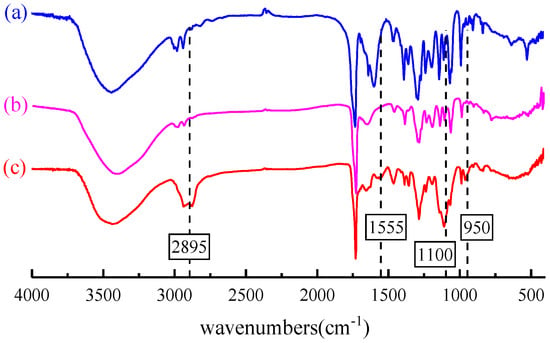
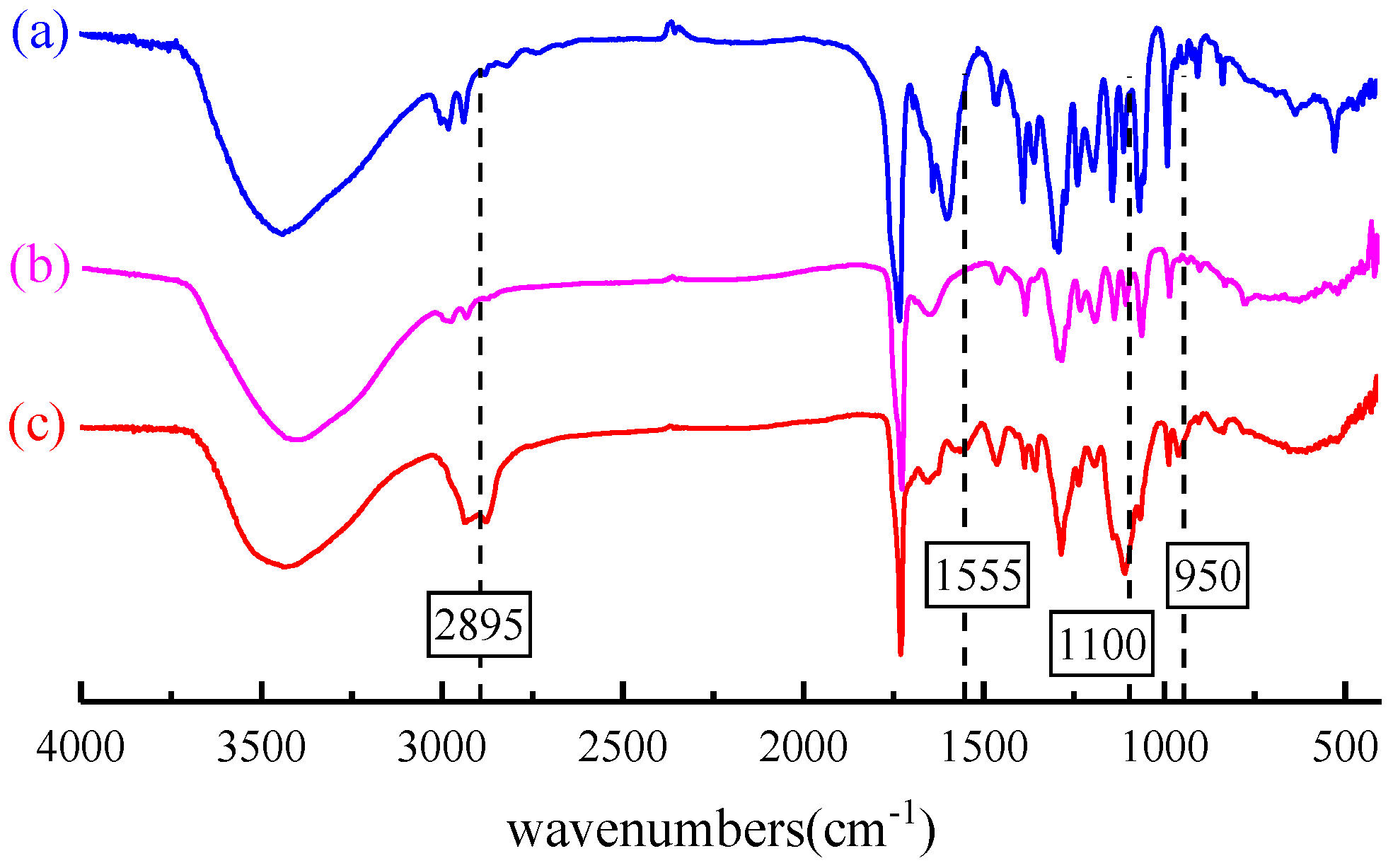
The FTIR spectra (Figure 1) show that the curve of PHB-diol almost has a similar shape trend to the curve of PHB except for the C=O stretching from 1700 cm−1 to 1600 cm−1, because of the chain of ethylene glycol being added into the PHB. It means that the molecular structures of PHB and PHB-diol have almost no difference. The alcoholysis reaction mainly cleaves the long PHB molecular chains and introduces terminal hydroxyl groups, and the main ester backbone structure of PHB segments is retained. But, looking at the spectrum of PHB-co-PEG, we can observe two special peaks from 1600 cm−1 to 1500 cm−1, which belongs to the C—N stretching, and from 970 cm−1 to 910 cm−1, which belongs to the N—H wagging. At the same time, the C—H stretching from 3030 cm−1 to 2900 cm−1 in PHB has expanded from 3030 cm−1 to 2780 cm−1. The newly emerged absorption signals correspond to carbamate groups generated by the reaction between isocyanate groups of HMDI and hydroxyl groups, together with methylene vibration signals from PEG segments. It means that the —CO—NH— chains of HMDI and the —O—CH2— chains from PEG have copolymerized successfully.
Figure 1.
FT-IR spectra of PHB (a), PHB-diol (b) and PHB-co-PEG (c).
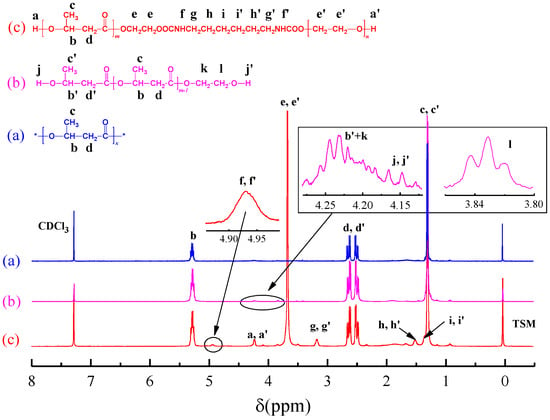
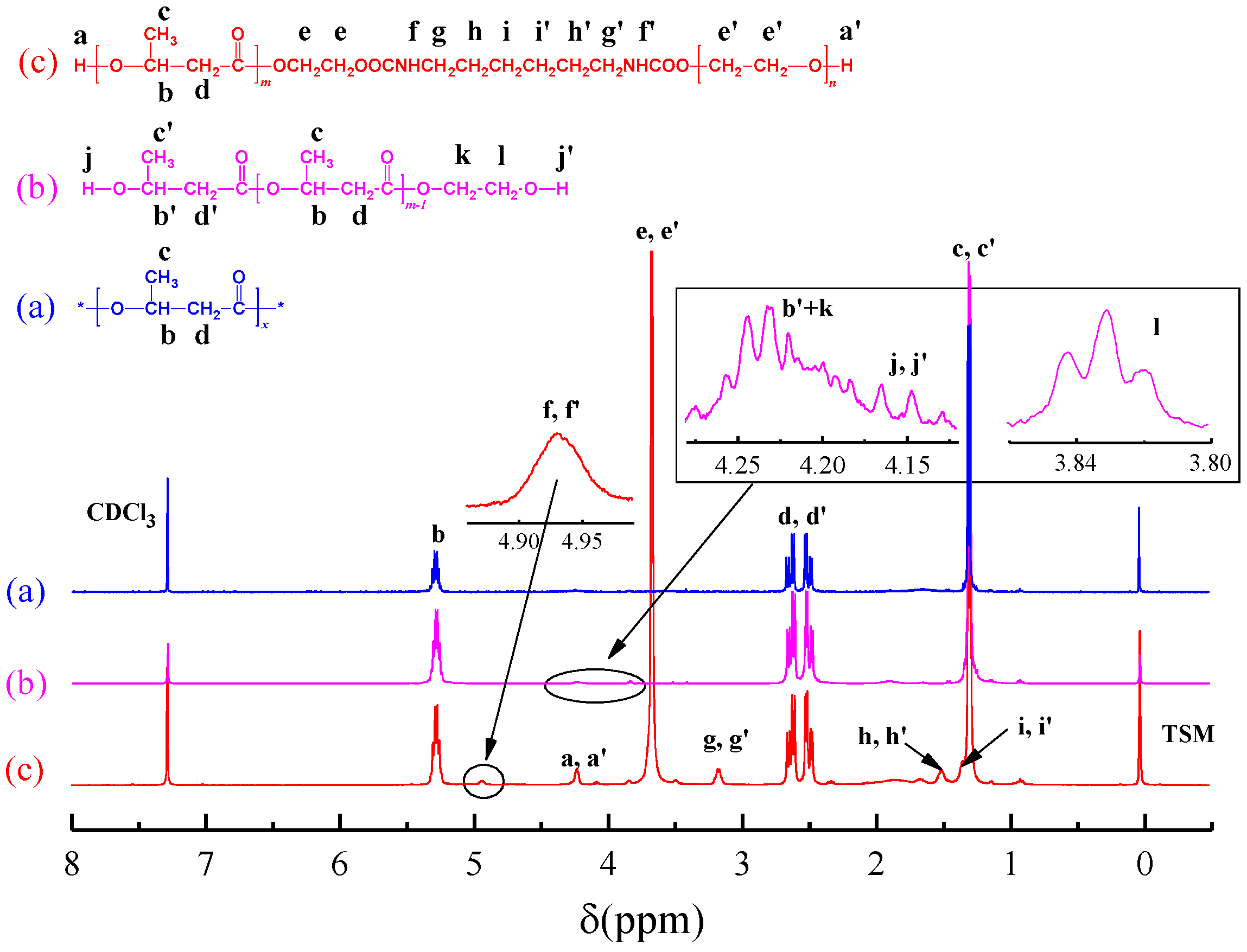
1H-NMR spectra were measured objectively to identify the chemical structure of the materials, and the atomic chemical shifts of hydrogens in different chemical environments are detailed in Figure 2. The chemical shifts at 5.27 ppm, 2.56 ppm, and 1.28 ppm belong to the repeat unit in PHB. After alcoholysis with ethylene glycol, PHB-diol displays special chemical shifts at 4.23 ppm, 4.15 ppm, and 3.83 ppm, which belong to the unique hydrogens in ethylene glycol, proving that ethylene glycol fragments have been connected to the end of PHB molecular chains after alcoholysis. As can be noticed, the spectrum of PHB-co-PEG displays unique absorptions at 4.93 ppm and 3.66 ppm corresponding to the hydrogen chemical shifts in the —CONH— chains from HMDI and in the —OCH2CH2O— chains from PEG. The peak at 3.66 ppm is the characteristic hydrogen signal of repeating ethylene-oxy units in the PEG molecular chain, which cannot be observed in pure PHB and PHB-diol samples. Combining the FTIR and 1H-NMR spectrum results, the target copolymer has been synthesized in the established reaction route.
Figure 2.
1H-NMR spectra of PHB (a), PHB-diol (b) and PHB-co-PEG (c).
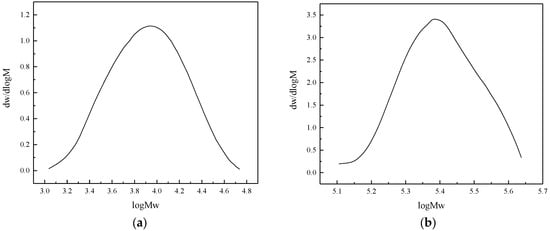
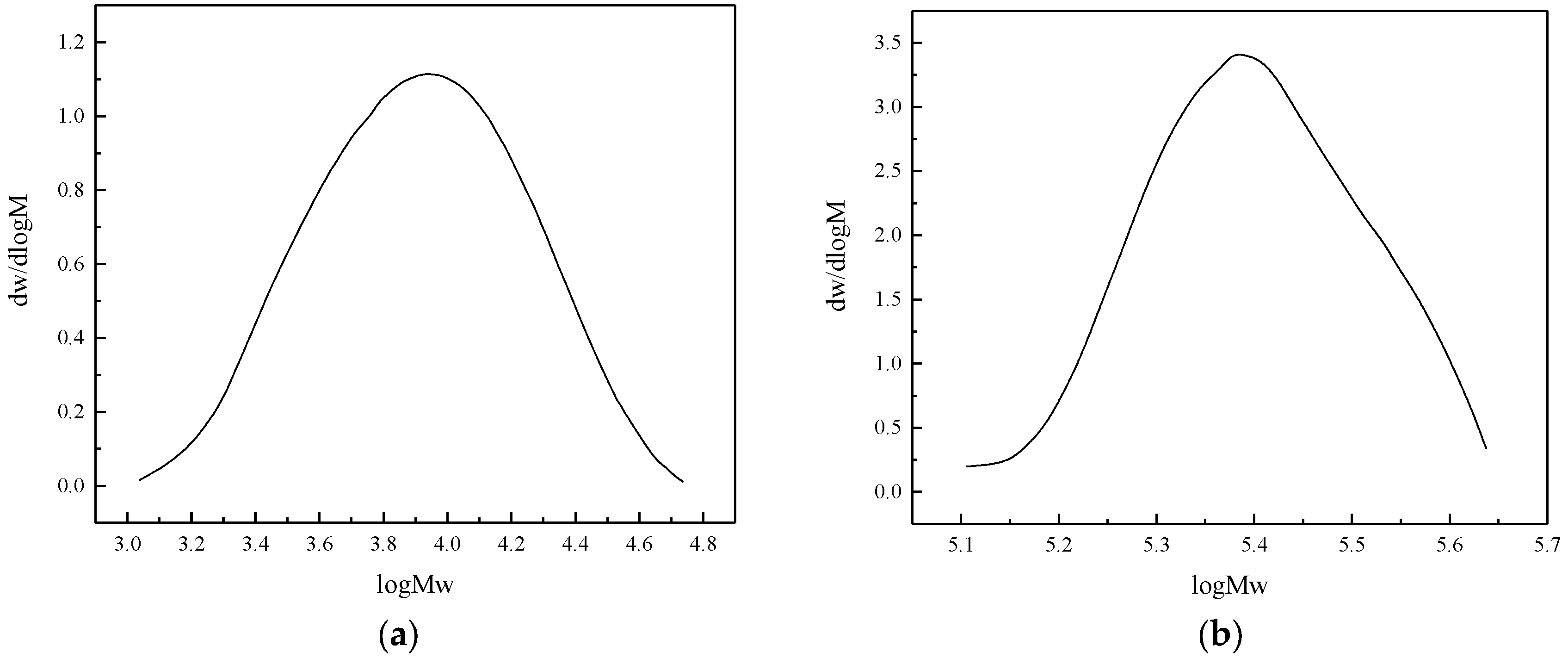
GPC was employed to trace molecular-weight evolution during the synthesis process (Figure 3). The commercial starting PHB has a manufacturer-reported average molecular weight of 4.0 × 10⁶. After ethylene glycol alcoholysis, PHB-diol exhibited a peak molecular weight of 9.12 × 10³ with a log molecular weight peak of 3.96, demonstrating effective backbone chain scission to generate a low-molecular-weight hydroxyl-terminated prepolymer. Subsequent HMDI-mediated chain extension with PEG-1500 afforded PHB-co-PEG with a higher peak molecular weight of 2.40 × 10⁵ and a log molecular weight peak of 5.38. The obvious increase in peak molecular weight confirms a successful coupling reaction. Relatively broad molecular-weight distributions were observed for both samples, which is typical for diisocyanate-mediated coupling polymerization.
Figure 3.
GPC spectra of PHB-diol (a) and PHB-co-PEG (b).
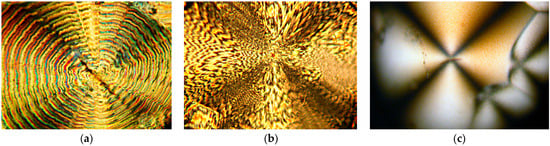
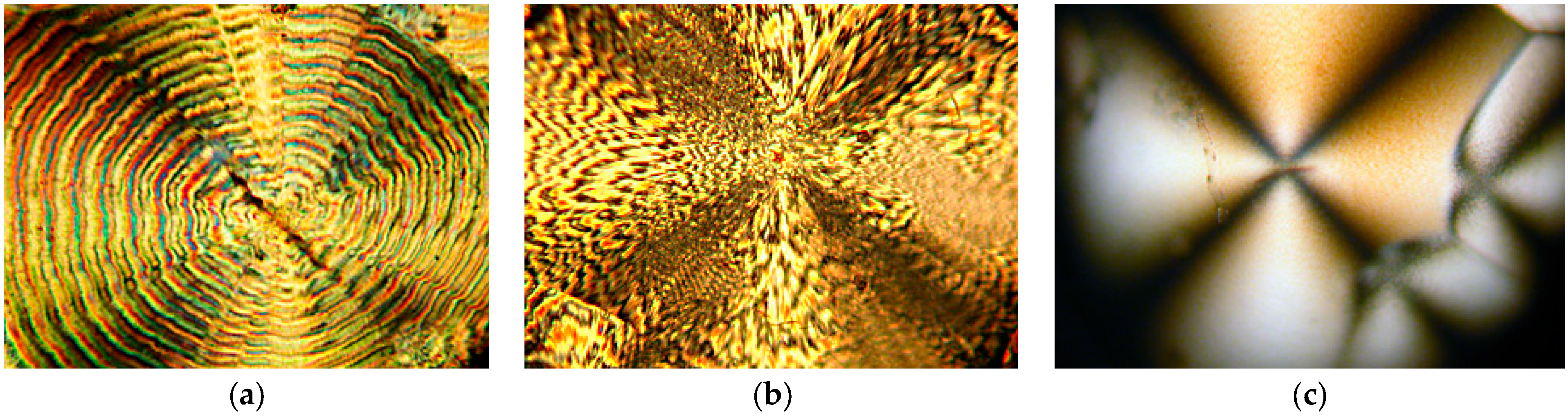
Polarized optical microscopy (POM) equipped with a hot stage was utilized to characterize the spherulitic crystalline morphology of the neat PHB, PHB-diol and PHB-co-PEG block copolymer under controlled melt-cooling conditions. Consistent thermal treatment was performed for all specimens: each sample was heated to 200 °C to achieve full melting and eliminate pre-existing crystal nuclei, followed by controlled cooling, where crystallization took place at approximately 70 °C.
Neat PHB consists of highly regular aliphatic molecular chains with an intrinsically strong crystallization tendency. During the cooling process after melting, plenty of large-size and well-ordered crystalline domains are gradually formed. These perfect spherulite architectures produce prominent Newtonian diffraction rings under polarized light illumination, which are typical optical features originating from the periodic lamellar twisting inside mature PHB spherulites [24]. For PHB-diol obtained from ethylene-glycol alcoholysis, molecular backbone cleavage reduces overall molecular weight; meanwhile, terminal hydroxyl end-groups are introduced onto oligomer chains. Both lowered molecular weight and altered chemical end-groups greatly disturb the orderly stacking and regular folding of PHB chain segments.
As a direct result, the distinctive Newtonian diffraction rings that can be clearly observed in raw PHB almost disappear from the POM micrographs of PHB-diol (Figure 4). When flexible PEG segments are covalently incorporated into the polymer backbone to construct the PHB-co-PEG block copolymer, these long-chain PEG moieties act as permanent internal structural defects. They further obstruct long-range ordered arrangement of PHB-derived segments and suppress the full growth of large spherulites. Although the classic fingerprint-like spherulite bands completely disappear, partial extinction crosses can still be observed in local micro-regions. This finding indicates that the copolymer is not fully converted into an amorphous state, and limited crystalline domains originating from PHB segments are still retained within the copolymer matrix.
Figure 4.
POM micrographs of PHB (a), PHB-diol (b) and PHB-co-PEG (c).
2.2. Wettability
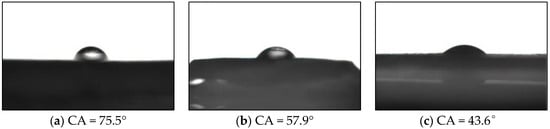
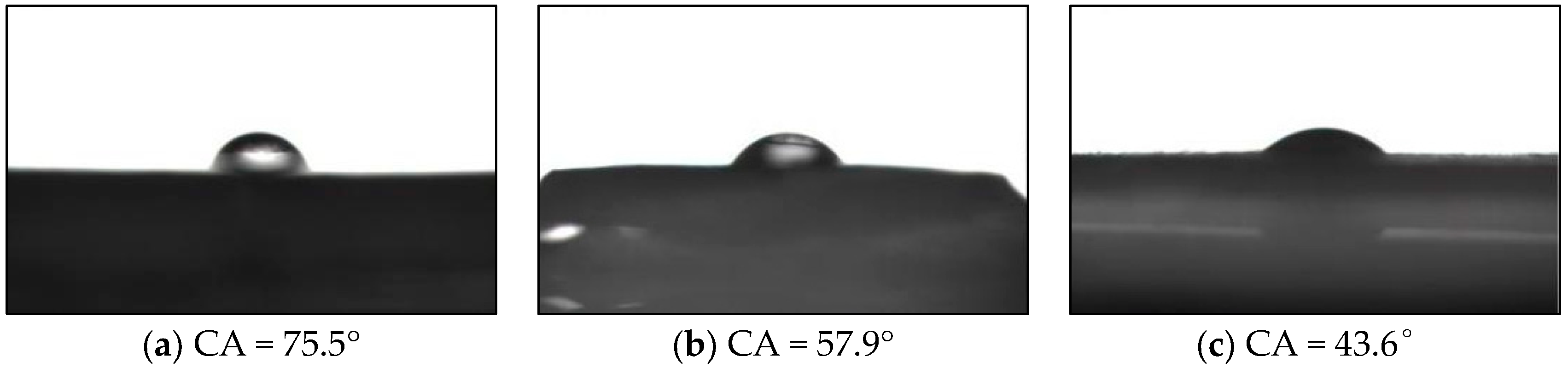
Water contact angle images of different sample films are presented in Figure 5. Pure PHB shows a high contact angle value. This result proves its intrinsic hydrophobic property. PHB molecular chains contain a large number of non-polar alkyl groups. Polar groups are scarce on the material surface. Water droplets cannot spread easily.
Figure 5.
Water contact angle images of PHB (a), PHB-diol (b) and PHB-co-PEG (c).
After ethylene glycol alcoholysis, hydroxyl groups are introduced at molecular chain ends of PHB-diol. These terminal hydroxyl groups can form hydrogen bonds with water molecules. Surface polarity increases, so PHB-diol gets better wettability. Its water contact angle drops from 75.5° to 57.9°. However, hydroxyl groups only exist at chain ends. The total quantity of polar groups is limited. Therefore, the improvement in hydrophilicity is moderate.
When hydrophilic PEG segments are chemically bonded into copolymer chains, PHB-co-PEG achieves the lowest contact angle at 43.6°. Plenty of ether-oxygen groups distribute along PEG molecular chains. These groups can form hydrogen bonds with water. Different from simple physical blending, PEG segments connect with PHB segments via stable carbamate covalent bonds. PEG segments will not separate or migrate out when the material is in contact with water for a long time. The hydrophilic modification effect can stay stable in long-term service. This is a key advantage of chemical copolymerization over physical blending modification.
Surface free energy was calculated according to the “Berthelot Rules” [25,26]:
In Equation (1), θ represents the water contact angle; γsg is solid–gas interfacial tension (surface free energy); γlg is liquid–gas interfacial tension of the water–air system, which takes 72.8 mN/m.
Calculated surface free-energy values are 28.4 mN/m (PHB), 42.7 mN/m (PHB-diol) and 54.1 mN/m (PHB-co-PEG). Surface free energy increases significantly after copolymerization. Higher surface free energy corresponds to stronger surface polarity of materials. Water can spread more easily on the sample surface. In addition, degrading micro-organisms in water environments tend to adsorb and colonize on high-surface-energy interfaces. More microorganisms attach to the material surface. They secrete degrading enzymes to accelerate polymer chain cleavage. In practical application scenarios such as water-environment degradation, higher surface free energy creates favorable interface conditions for biodegradation.
2.3. Thermal Stability
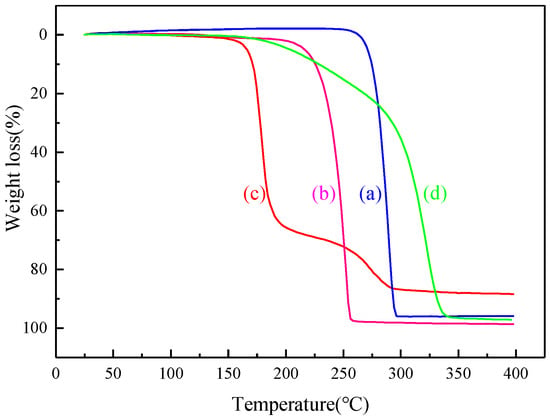
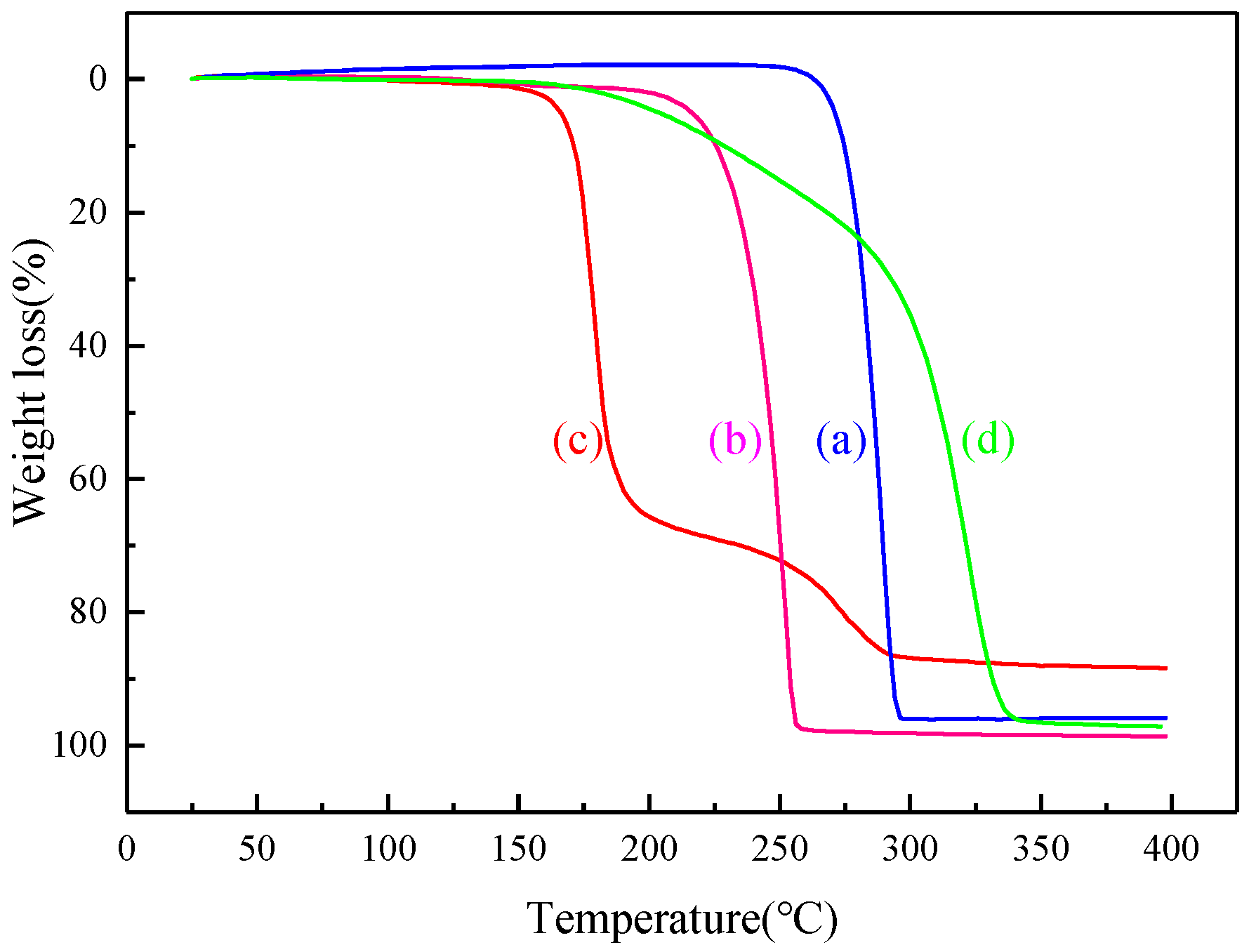
TGA test curves of PHB, PHB-diol, PHB-co-PEG and PEG-1500 are shown in Figure 6. T1%, T5% and T50% represent the temperature at mass loss of 1%, 5% and 50%, respectively. Corresponding data are summarized in Table 1.
Figure 6.
TGA curves of PHB (a), PHB-diol (b), PHB-co-PEG (c) and PEG-1500 (d).
Table 1.
Thermal parameters of the TGA curves.
Neat PHB exhibits good thermal stability benefiting from its high molecular weight and tightly stacked molecular chains. After ethylene-glycol alcoholysis, backbone cleavage lowers the molecular weight of PHB-diol, reduces chain-entanglement density, and consequently deteriorates its thermal-degradation performance. After chain-extension reaction, the obtained block copolymer displays further reduced thermal-degradation temperature. This decline is mainly attributed to the introduction of thermally labile carbamate linkages, as well as the disruption of ordered PHB chain stacking by flexible PEG segments. It should be noted that pure PEG-1500 itself possesses good thermal stability, so the deterioration of thermal-degradation resistance for the copolymer originates from structural changes in PHB segments and newly formed carbamate groups rather than the PEG component.
The PHB-co-PEG copolymer shows further decreased decomposition temperature. Two main reasons account for this change. First, flexible PEG segments insert into copolymer chains. They break the ordered packing of PHB segments and weaken intermolecular force. Second, carbamate linkages introduced by HMDI have poorer thermal resistance compared with ester bonds inside the PHB backbone. Under high temperature, carbamate groups tend to decompose in advance and trigger chain scission. Pure PEG-1500 has a high T50% value of 313 °C. It demonstrates that PEG itself possesses excellent thermal stability. The thermal performance decline of the copolymer mainly comes from the destruction effect of the chain structure and weak carbamate bonds, rather than PEG segments themselves.
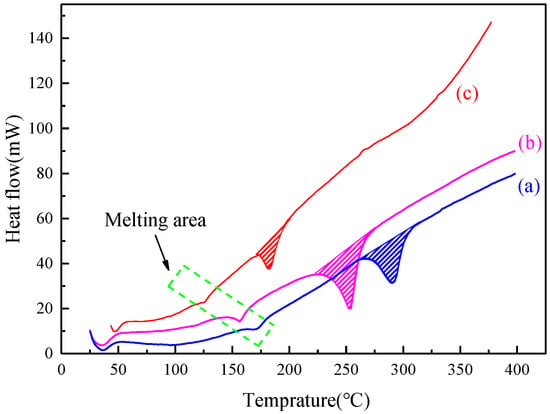
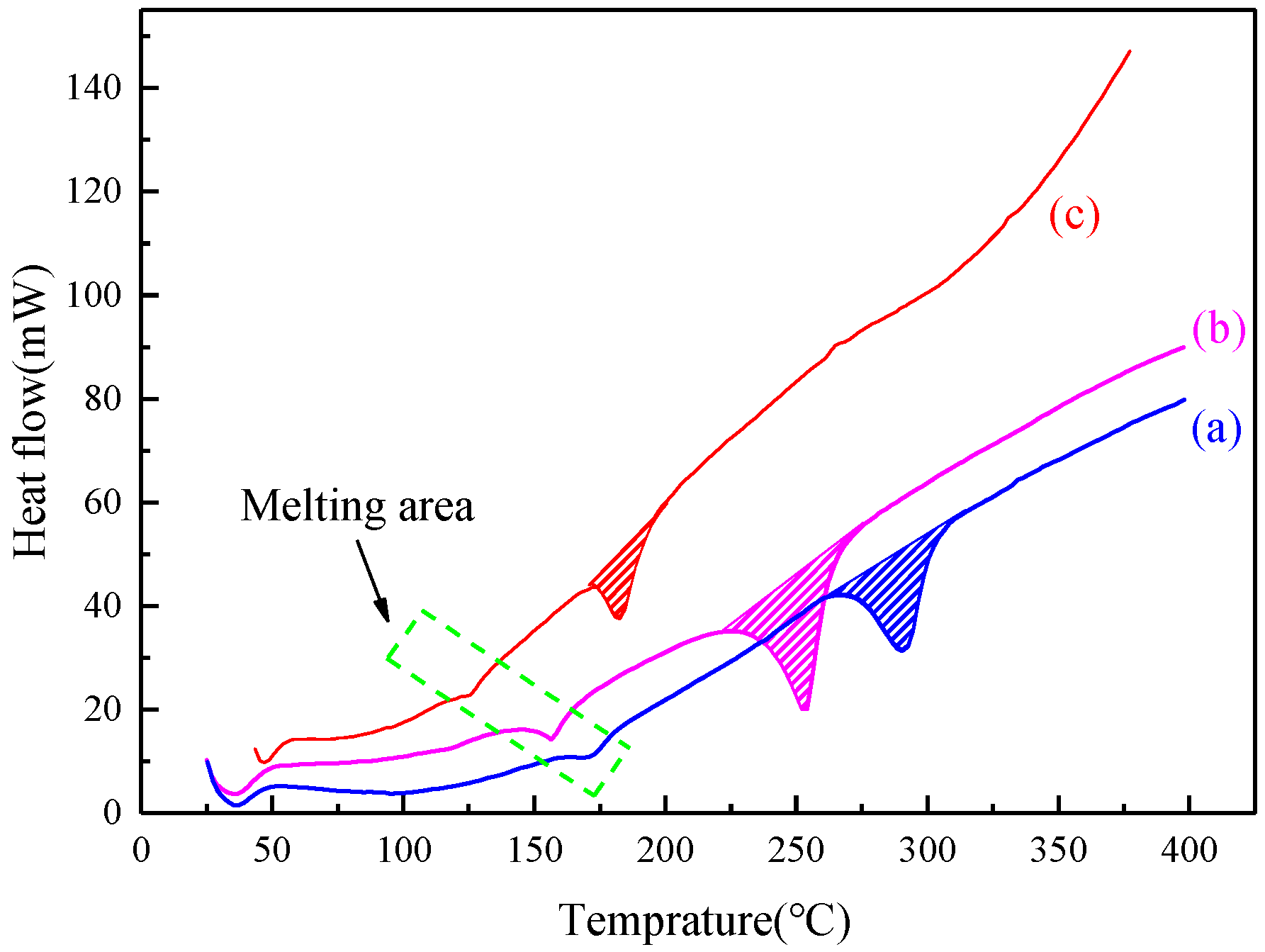
DSC thermograms are given in Figure 7. DSC parameters are listed in Table 2. The decomposition peak temperature of PHB-co-PEG is 181 °C. It drops more than 100 °C compared with original PHB (291 °C). Flexible PEG blocks damage the high regularity of PHB molecular chains and suppress crystallization behavior [27,28,29]. Absolute decomposition enthalpy ΔH reduces from −79 J/g for pure PHB to −51 J/g for the copolymer. Decomposition enthalpy is positively correlated with polymer crystallinity. The quantitative drop proves the inhibition effect on crystallization.
Figure 7.
DSC thermographs of PHB (a), PHB-diol (b) and PHB-co-PEG (c).
Table 2.
DSC parameters of the materials.
Lower crystallinity forms loose internal microstructure. Water molecules and degrading enzymes can penetrate into the material’s interior. This phenomenon accelerates overall degradation rate [30,31,32,33]. It should be noted that thermal stability reduction is a trade-off brought by this modification. PHB-co-PEG cannot endure high-temperature processing. The material is more suitable for solution processing such as film-casting, instead of high-decomposition-temperature extrusion or injection molding. This limitation defines its applicable scenarios. It fits well for water-environment-degradable products and drug sustained-release carriers that adopt solution forming methods. For decomposition-required products, further formula optimization will be needed in follow-up research.
3. Materials and Methods
3.1. Materials
In this study, we used PHB (Mw = 4.0 × 10⁶, School of Life Sciences, Northwestern Polytechnical University, Xi’an, China, 99%), PEG-1500 (99%, Aladdin, Shanghai, China), ethylene glycol (EG, 99%, Macklin, Shanghai, China), p-toluenesulfonic acid (PTSA, 99%, Macklin, Shanghai, China), hexamethylene diisocyanate (HMDI, 99%, Aladdin, Shanghai, China), chloroform (99%, Macklin, Shanghai, China), methanol (99%, Macklin, Shanghai, China), sodium bicarbonate (99%, Macklin, Shanghai, China), sodium chloride (99%, Macklin, Shanghai, China), etc.
3.2. Synthesis
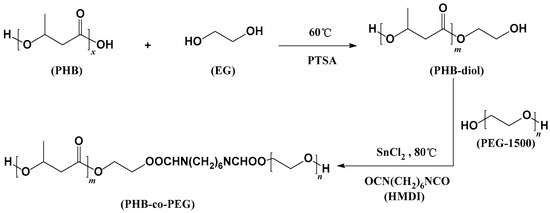
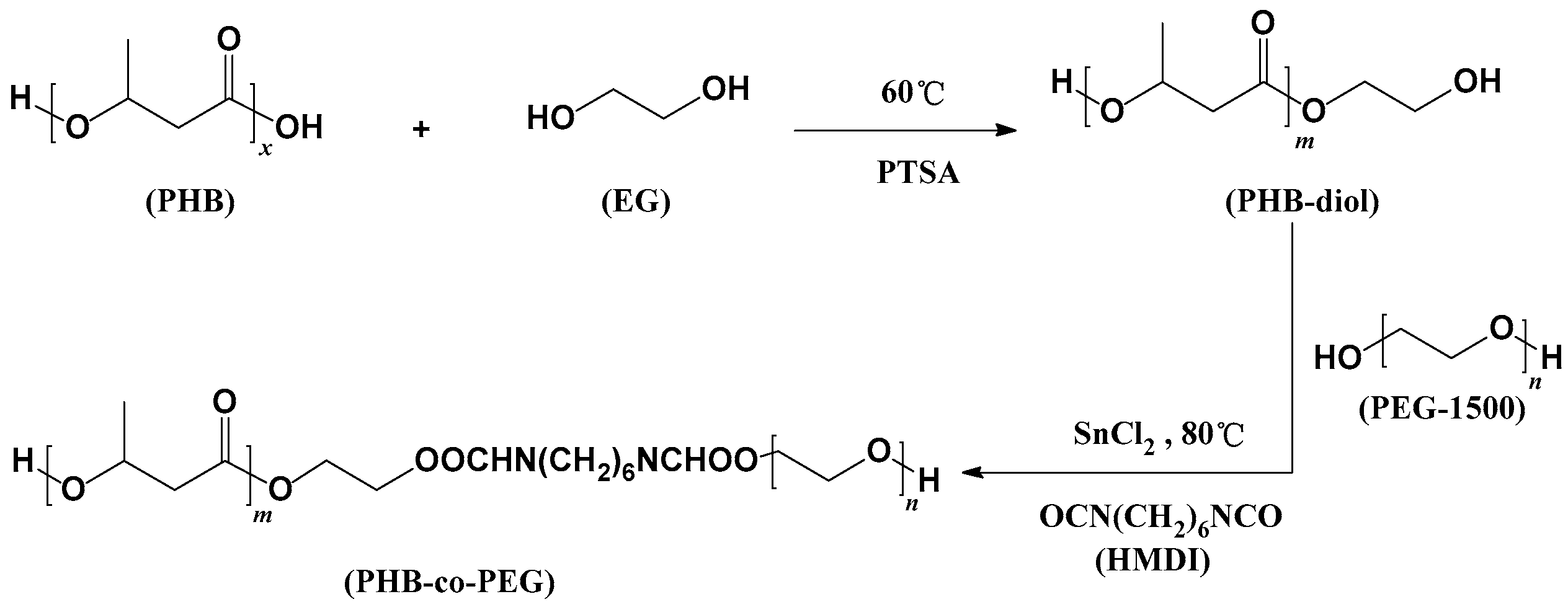
The synthesis progress is shown in Scheme 1. PHB was dissolved in chloroform in a three-neck flask under heating and stirring. Ethylene glycol and catalyst PTSA were added into the solution, and the alcoholysis reaction proceeded under reflux conditions. After reaction completion, the mixture was cooled to room temperature [34,35]. The crude product was precipitated by methanol, filtered and repeatedly washed with methanol to remove residual EG and PTSA. Finally, vacuum drying was conducted to acquire hydroxyl-terminated PHB-diol solid [36,37].
Scheme 1.
Synthesis of PHB-co-PEG.
Predried PHB-diol and PEG-1500 were dissolved in anhydrous chloroform under nitrogen protection to remove trace water. A calculated amount of HMDI was added drop-wise, and a chain-extension reaction between isocyanate groups and hydroxyl groups took place under constant stirring [38]. When the reaction finished, methanol was added to precipitate the copolymer. The precipitate was neutralized by dilute sodium bicarbonate solution, then alternately washed with deionized water and methanol. Vacuum drying was performed to obtain the target PHB-co-PEG copolymer.
3.3. Measurements
The molecular structure of the materials was analyzed using Fourier transform infrared spectroscopy (FT-IR, FR-5700, Thermo Fisher Scientific, Waltham, MA, USA) and nuclear magnetic resonance (NMR, ADVANCEIII 400 MHz, Bruker, Billerica, MA, USA) in CDCl3, with tetramethylsilane (TMS) as a reference. The thermal properties of the materials were characterized by differential scanning calorimetry (DSC, STAR/RW11.00, Mettler Toledo, Greifensee, Switzerland) and a thermogravimetric analyzer (TGA, TGA/SDTA851e, Mettler Toledo, Greifensee, Switzerland). The scanning rate was 10 °C/min and the temperature range covered 25–400 °C. The microstructure of the materials was observed with polarized optical microscopy (POM, Nikon ECLIPSE e6400 POL, Nikon, Tokyo, Japan) with a hot stage. The products were dissolved in chloroform and formed films, and these films were tested by contact angle measurement (CA, JC2000D, Powereach, Shanghai, China) to measure the contact angle with water.
4. Conclusions
A PHB-co-PEG hydrophilic block copolymer was synthesized by ethylene-glycol alcoholysis and HMDI chain-extension reaction. Copolymer modification greatly improves PHB’s hydrophilic performance. Benefiting from covalently bonded hydrophilic PEG segments, the surface hydrophilicity of PHB-co-PEG is distinctly enhanced. The water contact angle reduces from 75.5° for pristine PHB down to 43.6°, while surface free energy increases from 28.4 mN/m to 54.1 mN/m. POM characterization shows that alcoholysis eliminates the Newtonian diffraction rings of PHB spherulites; further incorporation of PEG segments largely suppresses the formation of intact fingerprint-type spherulites, though partial crystalline domains still remain in the copolymer matrix.
Nevertheless, the introduction of flexible PEG chains and carbamate chemical bonds sacrifices thermal stability. The initial decomposition temperature of PHB-co-PEG decreases notably, which indicates that the copolymer is unsuitable for conventional high-temperature melt processing and is more appropriate for solution-casting forming techniques. Improved hydrophilicity and reduced crystallinity are expected to create favorable structural conditions for aqueous biodegradation, while actual degradation behavior needs further experimental validation. This work offers a feasible chemical modification route to adjust the surface property of PHB, and provides basic data for developing PHB-derived degradable polymer materials.
Author Contributions
Conceptualization, L.L. (Lei Liang) and H.L. (Huiru Lei); methodology, L.L. (Lei Liang), H.L. (Huiru Lei) and Q.X.; software, Y.X. and Z.M.; formal analysis, H.L. (Huiru Lei) and L.L. (Lang Liu); investigation, D.L.; data curation, W.Z.; writing—original draft preparation, L.L. (Lei Liang); writing—review and editing, L.L. (Lei Liang), H.L. (Hualin Liu) and Y.X.; visualization, Z.M.; supervision, Q.X.; project administration, D.W. All authors have read and agreed to the published version of the manuscript.
Funding
This research received no external funding.
Institutional Review Board Statement
Not applicable.
Data Availability Statement
All data supporting the conclusions of this study are included within the article.
Conflicts of Interest
Author Lei Liang, Huiru Lei, Qinghua Xiao, Yujia Xiong, Zilai Mei, Hualin Liu, Lang Liu, Dong Liao, Wei Zhao and Dong Wang were employed by the company CCDC Geological Exploration and Development Research Institute and Sichuan Hengyi Petroleum Technology Service Co., Ltd. The remaining declare that the research was conducted in the absence of any commercial or financial relationships that could be construed as a potential conflict of interest.
References
- Jouenne, S.; Chakibi, H.; Levitt, D. Polymer Stability After Successive Mechanical-Degradation Events. SPE J. 2017, 23, 18–33. [Google Scholar] [CrossRef] [Scilit]
- Djouonkep, L.D.W.; Zuo, Y.; Cheng, Z.; Gauthier, M. Investigating the thermomechanical behavior, molecular structure and dynamics of rigid-flexible bio-based copolyesters. Polym. Chem. 2025, 46, 4943–4960. [Google Scholar] [CrossRef] [Scilit]
- Jeepery, I.F.; Goto, T.; Sudesh, K.; Abe, H. Biodegradable block copolymer as compatibilizer and blend component of poly(3-hydroxybutyrate-co-3-hydroxyhexanoate)-based polyester blends. Eur. Polym. J. 2023, 196, 112314. [Google Scholar] [CrossRef] [Scilit]
- Corrado, I.; Abdalrazeq, M.; Pezzella, C.; Di Girolamo, R.; Porta, R.; Sannia, G.; Giosafatto, C.V.L. Design and characterization of poly (3-hydroxybutyrate-co-hydroxyhexanoate) nanoparticles and their grafting in whey protein-based nanocomposites. Food Hydrocoll. 2020, 110, 106167. [Google Scholar] [CrossRef] [Scilit]
- Garcia, D.; Rayón, E.; Carbonell-Verdu, A.; Lopez-Martinez, J.; Balart, R. Improvement of the compatibility between poly(3-hydroxybutyrate) and poly(ε-caprolactone) by reactive extrusion with dicumyl peroxide. Eur. Polym. J. 2016, 86, 41–57. [Google Scholar] [CrossRef] [Scilit]
- Shao, Z.; Kumagai, S.; Saito, Y.; Yoshioka, T. Characteristics of the steam degradation of poly(lactic acid) and poly(3-hydroxybutyrate-co-3-hydroxyhexanoate). Polym. J. 2024, 56, 8. [Google Scholar] [CrossRef] [Scilit]
- Briassoulis, D.; Tserotas, P.; Athanasoulia, I.G. Alternative optimization routes for improving the performance of poly(3-hydroxybutyrate) (PHB) based plastics. J. Clean. Prod. 2021, 318, 128555. [Google Scholar] [CrossRef] [Scilit]
- Diez-Pascual, A. Poly(3-hydroxybutyrate-co-3-hydroxyhexanoate) with zinc oxide nanoparticles for food packaging. J. Food Process. Eng. 2021, 45, e13814. [Google Scholar] [CrossRef] [Scilit]
- Long, J.; Ma, S.; Deng, W.; Yan, C.; Yang, T.; Chu, X.; Tian, G.; Xiong, D.; Lu, J.; Yang, W. Polarization-free high-crystallization β-PVDF piezoelectric nanogenerator toward self-powered 3D acceleration sensor. Nano Energy 2018, 50, 632–638. [Google Scholar] [CrossRef] [Scilit]
- Mechernene, N.; Benkraled, L.; Zennaki, A.; Arabeche, K.; Berrayah, A.; Mechernene, L.; Bouriche, A.; Benabdellah, S.A.; Bouberka, Z.; Barrera, A.; et al. A Novel Plasticization Mechanism in Poly(Lactic Acid)/PolyEthyleneGlycol Blends: From Tg Depression to a Structured Melt State. Polymers 2026, 18, 317. [Google Scholar] [CrossRef] [Scilit]
- Yu, Q.; Wang, H.; Ma, Y. Renewable zein-induced physical networks in PVDF composites for hydrogen bond-mediated crystallization control and ultrahigh energy storage performance. Polymer 2026, 344, 129499. [Google Scholar] [CrossRef] [Scilit]
- Zhu, G.; Wang, F.; Gao, Q.; Liu, Y. Modification of Hydrophobic Polypeptide-based Film by Blending with Hydrophilic Poly(acrylic acid). Polimeros 2013, 23, 24–28. [Google Scholar] [CrossRef] [Scilit]
- Zhu, G.; Wang, F.; Gao, Q.; Xu, K.; Liu, Y. Modification of hydrophilic poly(vinyl alcohol) film via blending with hydrophobic poly(butyl acrylate-co-methyl methacrylate). Res. Chem. Intermed. 2014, 40, 1583–1593. [Google Scholar] [CrossRef] [Scilit]
- Wang, G.; Chi, X. Ductile poly[(3-hydroxybutyrate)-co-(4-hydroxybutyrate)]-based blends derived from biomass. Polym. Inter. 2024, 73, 6610. [Google Scholar] [CrossRef] [Scilit]
- Andrés, F.C.; Palencia, M.; Combatt, E.M. Starch Hydrogels for Slow and Controlled-Release Fertilizers: A Review. Polymers 2025, 17, 1117. [Google Scholar] [CrossRef] [Scilit]
- Zhang, J.; Cui, L.; Zhang, Y. Self-crosslinking all-hydrocarbon polyethylene thermosets through intrinsic benzocyclobutene cycloaddition. Polym. Chem. 2025, 29, 3362–3369. [Google Scholar] [CrossRef] [Scilit]
- Loh, X.J.; Wang, X.; Li, H.; Li, X.; Li, J. Compositional study and cytotoxicity of biodegradable poly(ester urethane)s consisting of poly[(R)-3-hydroxybutyrate] and poly(ethylene glycol). Mat. Sci. Eng. C-Mater. 2007, 27, 267–273. [Google Scholar] [CrossRef] [Scilit]
- Fiorentini, F.; Diment, W.T.; Deacy, A.C.; Kerr, R.W.F.; Faulkner, S.; Williams, C.K. Understanding catalytic synergy in dinuclear polymerization catalysts for sustainable polymers. Nat. Commun. 2023, 14, 284. [Google Scholar] [CrossRef] [Scilit]
- Kurmaz, S.V.; Fadeeva, N.V.; Gorshkova, A.I.; Kurochkin, S.A.; Knerelman, E.I.; Davydova, G.I.; Torbov, V.I.; Dremova, N.N.; Konev, D.V.; Kurmaz, V.A.; et al. Mesoporous Networks of N-Vinylpyrrolidone with (di)Methacrylates as Precursors of Ecological Molecular Imprinted Polymers. Materials 2021, 14, 6757. [Google Scholar] [CrossRef] [Scilit]
- Ledesma, A.R.; Hernández, M.A.; Pagonabarraga, I. Growth saturation of unstable thin films on transverse-striped hydrophilic-hydrophobic micropatterns. Soft Matter 2011, 7, 6051–6060. [Google Scholar] [CrossRef] [Scilit]
- Ioannidis, R.O.; Klonos, P.A.; Terzopoulou, Z.; Nikolaidis, N.; Kyritsis, A.; Bikiaris, D.D. Thermodynamic investigation of renewable block copolymers based on poly(lactic acid) and poly(ethylene azelate). Soft Matter 2025, 21, 6613. [Google Scholar] [CrossRef] [Scilit]
- Wang, Z.; Wang, J.; Pang, Y.; Zhu, J.; Zheng, W. Comparing non-isothermal melt and cold crystallization behavior and kinetics of poly(ethylene 2,5-furandicarboxylate-co-ethylene terephthalate) copolyesters. J. Mater. Sci. 2022, 57, 17503–17516. [Google Scholar] [CrossRef] [Scilit]
- Nair, C.P.R.; Manshad, P.K.; Ashir, A.M.; Athul, S. Synthesis of 3-Carbonyl Acrylic Acid-Functionalized Polystyrene and an Insight in to its role in Cross Linking and Grafting of Polystyrene on to Natural Rubber. Eur. Polym. J. 2020, 131, 109688. [Google Scholar] [CrossRef] [Scilit]
- Yang, Z.; Li, C.; Liu, Y.; Zhang, Z.; Cao, X. Effect of chain extension on processability and mechanical properties of poly(3-hydroxybutyrate-co-4-hydroxybutyrate). J. Appl. Polym. Sci. 2024, 141, e55490. [Google Scholar] [CrossRef] [Scilit]
- Boda, D.; Henderson, D. The effects of deviations from Lorentz–Berthelot rules on the properties of a simple mixture. Mol. Phys. 2008, 106, 2367–2370. [Google Scholar] [CrossRef] [Scilit]
- Moučka, F.; Nezbeda, I.; Smith, W.R. Molecular Force Field Development for Aqueous Electrolytes: 1. Incorporating Appropriate Experimental Data and the Inadequacy of Simple Electrolyte Force Fields Based on Lennard-Jones and Point Charge Interactions with Lorentz–Berthelot Rules. J. Chem. Theory Comput. 2013, 9, 5076–5085. [Google Scholar] [CrossRef] [Scilit]
- Frédéric, C.; Anne, L.F.; Edith, B.; Phantavong, Y.-H.; Grimont, P.; Saliot, A.; Oudot, J. Identification and biodegradation potential of tropical aerobic hydrocarbon-degrading microorganisms-ScienceDirect. Res. Microbiol. 2004, 155, 587–595. [Google Scholar] [CrossRef] [Scilit]
- Puntus, I.F.; Sakharovsky, V.G.; Filonov, A.E.; Boronin, A. Surface activity and metabolism of hydrocarbon-degrading microorganisms growing on hexadecane and naphthalene. Process Biochem. 2005, 40, 2643–2648. [Google Scholar] [CrossRef] [Scilit]
- Liu, F.; Ma, K.; He, H.; Wan, X.; Guo, Z.; Cui, J.; Shi, W.; Huang, B.; Pan, X. Surfactants facilitate microbial growth on the surface of microplastics in biological wastewater treatment. J. Environ. Manag. 2025, 395, 127934. [Google Scholar] [CrossRef] [Scilit]
- Liang, X.; Qian, H. Polymer Degradation via a Mechanochemical Gating Strategy. Chin. J. Chem. 2025, 43, 349–354. [Google Scholar] [CrossRef] [Scilit]
- Aydonat, S.; Hergesell, A.H.; Seitzinger, C.L.; Lennarz, R.; Chang, G.; Sievers, C.; Meisner, J.; Vollmer, I.; Göstl, R. Leveraging mechanochemistry for sustainable polymer degradation. Polym. J. 2024, 56, 249–268. [Google Scholar] [CrossRef] [Scilit]
- Lim, Y.J.; Wong, B.; Macfee, K.; Cueva, A.; Martinez, E.A.; Paxton, C.; Barnes, R.; Kleinsasser, E.; Williams, T.J. A Polymer Degradation and Remanufacturing Experiment in the High School Classroom. J. Chem. Edu. 2024, 101, 131–135. [Google Scholar] [CrossRef] [Scilit]
- Ng, K.H.; Malz, F.; Metzsch-Zilligen, E.; Pfaendner, R. Correlation Between Vinyl Content of Recycled HDPE and Polymer Degradation: An NMR Approach. J. Appl. Polym. Sci. 2025, 142, 57833. [Google Scholar] [CrossRef] [Scilit]
- Zhou, G.; Ma, Y.; Fan, T.; Wang, G. Preparation and Characteristics of a Multifunctional Dust Suppressant with Agglomeration and Wettability Performance Used in Coal Mine. Chem. Eng. Res. Des. 2018, 132, 729–742. [Google Scholar] [CrossRef] [Scilit]
- Filippi, S.; Cinelli, P.; Mezzetta, A.; Carlozzi, P.; Seggiani, M. Extraction of Polyhydroxyalkanoates from Purple Non-Sulfur Bacteria by Non-Chlorinated Solvents. Polymers 2021, 13, 4163. [Google Scholar] [CrossRef] [Scilit]
- Puppi, D.; Braccini, S.; Ranaudo, A.; Chiellini, F. Poly(3-hydroxybutyrate-co-3-hydroxyexanoate) Scaffolds with Tunable Macro- and Microstructural Features by Additive Manufacturing. J. Biotechnol. 2019, 308, 96–107. [Google Scholar] [CrossRef] [Scilit]
- Martla, M.; Umsakul, K.; Sudesh, K. Production and recovery of poly(3-hydroxybutyrate-co-3-hydroxyvalerate) from biodiesel liquid waste (BLW). J. Basic Microbiol. 2018, 58, 977–986. [Google Scholar] [CrossRef] [Scilit]
- Kalita, D.J.; Bharali, R.; Ambala, S.; Gogoi, S. Visible-Light-Induced Chain Elongation Reaction of Tetrahydrofuran for the Synthesis of Cinnamate Esters. Eur. J. Org. Chem. 2026, 29, e202501093. [Google Scholar] [CrossRef] [Scilit]

Disclaimer/Publisher’s Note: The statements, opinions and data contained in all publications are solely those of the individual author(s) and contributor(s) and not of MDPI and/or the editor(s). MDPI and/or the editor(s) disclaim responsibility for any injury to people or property resulting from any ideas, methods, instructions or products referred to in the content. |
© 2026 by the authors. Licensee MDPI, Basel, Switzerland. This article is an open access article distributed under the terms and conditions of the Creative Commons Attribution (CC BY) license.