


Abstract
Polymer–graphene composites have emerged as an advantageous class of functional materials that combine the exceptional electrical, mechanical, and surface properties of graphene with the ability to be processed, modified, and made more flexible through polymers. Polymer–graphene composites have recently seen rapid growth in environmental applications, including water treatment, pollutant degradation, sensing, and energy–environment interfaces. This review critically examines recent advancements in polymer–graphene composites for catalysis (including photocatalysis, electrocatalysis, hydrogenation, and energy conversion) and environmental applications (such as water treatment, dye degradation, heavy-metal removal, and oil–water separation). There is considerable discussion about structure–property–performance relationships, catalytic and adsorption mechanisms, and the role of polymer matrices. Current challenges, scalability issues, and future research directions for sustainable, industrially viable polymer–graphene systems are highlighted.
1. Introduction
The rapid development of cities and industries and population growth has led to increased energy demand and serious environmental problems, including air and water pollution and the accumulation of persistent organic pollutants [1]. Traditional remediation and catalytic technologies often exhibit low efficiency, inadequate selectivity, high costs, or limited durability in practical operational environments [2]. As a result, there is a growing need to develop new multifunctional materials capable of addressing these challenges [3].
Graphene, a two-dimensional sp2-hybridized carbon material organized in a honeycomb lattice, has garnered remarkable scientific interest owing to its exceptional electrical conductivity, substantial theoretical specific surface area (~2630 m2 g−1) [4], remarkable mechanical strength, elevated thermal conductivity [5,6], and adjustable surface chemistry [7,8]. Graphene and its derivatives, including graphene oxide (GO) [9], reduced graphene oxide (rGO) [10], and functionalized graphene [5,6], are highly useful for catalysis, energy conversion, sensing, and environmental cleanup due to their unique properties. However, the direct use of pristine graphene is limited by drawbacks such as strong π–π stacking-induced agglomeration, poor dispersibility in common solvents, limited processability, and mechanical instability in large forms [11,12,13,14].
Polymer–graphene composites have emerged as a promising solution to these problems by incorporating graphene nanosheets into polymer matrices [15,16,17]. Polymers not only enhance the dispersion and structural integrity of graphene but also introduce new functionalities, including flexibility, chemical stability, mechanical strength, and ease of large-scale processing [18,19]. The resulting composites can be tailored for specific applications, depending on the type of polymer used (conductive, insulating, hydrophilic, or polyelectrolytic). When polymers and graphene work together, they form hybrid systems that exhibit superior properties compared to either component alone [20]. These properties include improved charge transport, enhanced adsorption, and increased catalytic activity.
Polymer–graphene composites have demonstrated exceptional performance in photocatalysis [21,22], electrocatalysis [23], hydrogenation reactions [24], and electrochemical processes related to energy [25]. Graphene is a good electron acceptor and transporter because it prevents charge recombination and facilitates charge transfer between surfaces [26]. Polymers, on the other hand, help stabilize catalysts, introduce functional groups onto surfaces, and create controlled microenvironments for catalytic reactions [27]. These features have enabled reactions such as oxygen reduction, oxygen evolution, hydrogen evolution, and pollutant degradation to occur much more quickly when light or electricity is used [28,29].
Polymer–graphene composites are gaining increasing attention in environmental applications, particularly for cleaning water and treating wastewater [30]. Graphene derivatives possess a large surface area and numerous functional groups, making them highly effective at adsorbing organic dyes, drugs, and heavy-metal ions [31,32,33]. Polymer matrices also enhance mechanical robustness, fouling resistance, and recyclability. Recent advancements have demonstrated that polymer–graphene membranes, hydrogels, and hybrid catalytic systems can simultaneously execute adsorption, filtration, and catalytic degradation, providing comprehensive solutions for complex environmental challenges [33,34,35,36,37].
Although this field is evolving rapidly, there are still fundamental and practical issues that require resolution. These include finding ways to create products that are both scalable and environmentally friendly, ensuring that structures remain stable over time, preventing graphene from leaching, and obtaining a comprehensive understanding of how structure, properties, and performance are interrelated. To solve these problems, we need to look at them from all angles, including material design, catalytic mechanisms, and environmental functionality [20,38].
This review uniquely offers (i) interface-driven mechanisms, (ii) fabrication–performance links, (iii) dual catalysis–environment mapping, and (iv) scale-up/safety perspective.
2. Polymer–Graphene Composite Design and Fabrication
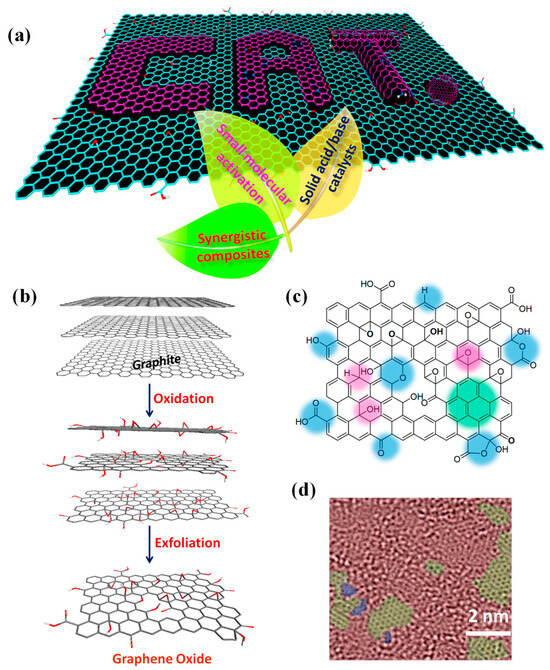
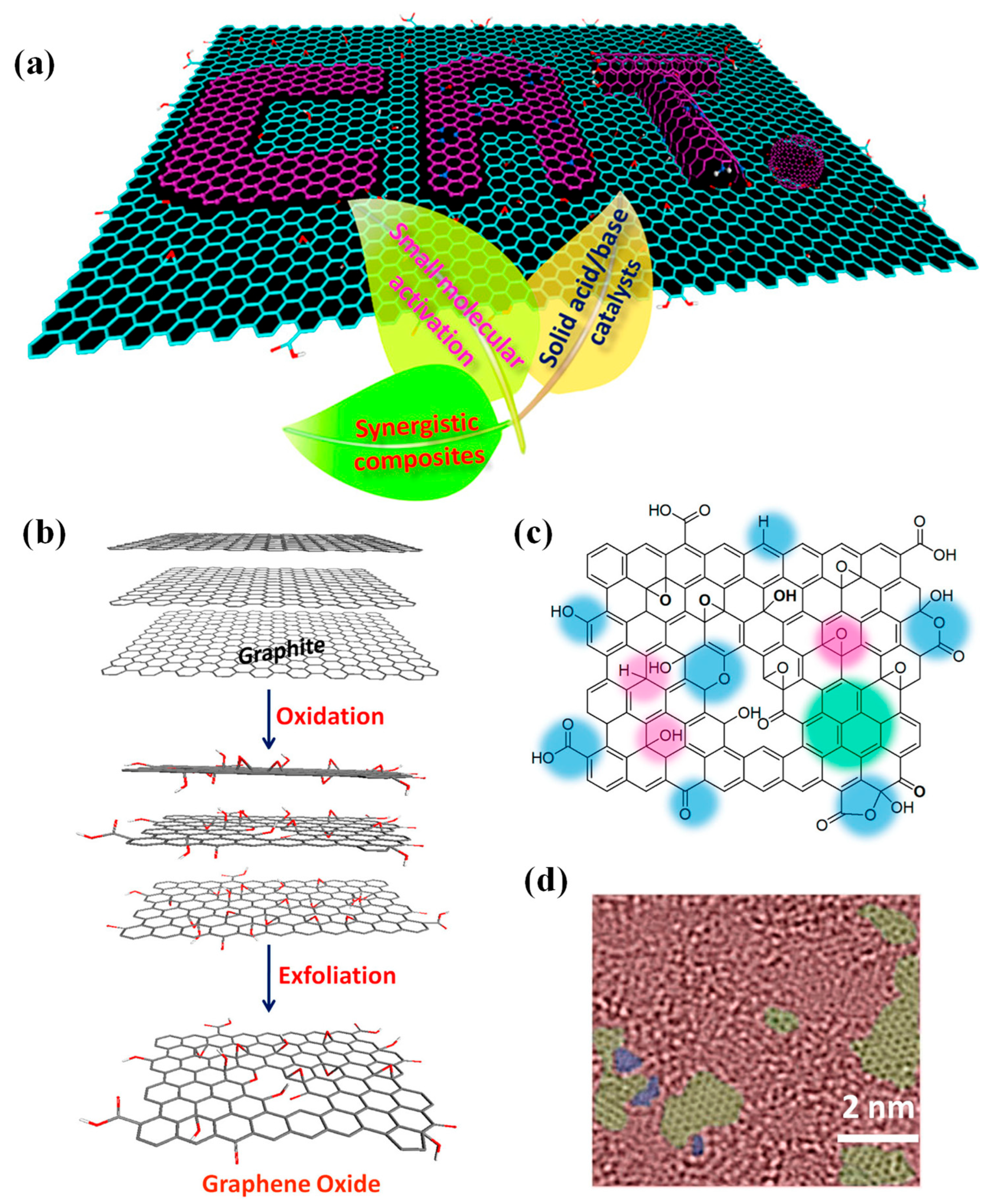
The efficacy of polymer–graphene composites in catalytic and environmental applications is dictated by selective material selection and careful control over fabrication processes [39]. Some of the most important things (as shown in Figure 1) to think about when designing are the type of graphene derivative, the type of polymer matrix, the quality of the dispersion, and the resulting micro- and nano-structure. Fabrication strategies must strike a balance between performance optimization, scalability, environmental compatibility, and long-term stability.
Figure 1.
(a) Key factors involved in selecting graphene derivatives. (b) Typical GO synthesis route. (c) Lerf–Klinowski structural model of GO, showing hydroxyl and epoxide groups on the basal plane (pink) and oxygen-containing edge defects (blue), adapted with permission from the American Chemical Society [40]. (d) HR-TEM image of GO, adapted with permission from [41].
2.1. Selection of Graphene Derivatives
Graphene exists in various chemically and structurally distinct forms, each with its own unique set of benefits. Pristine graphene has better electrical conductivity, but it tends to clump together because of π–π stacking. Graphene oxide (GO) has a lot of oxygen-containing functional groups (–OH, –COOH, epoxide), which makes it very easy to mix with polar solvents and makes polymers stick to it very well [40]. This makes it an excellent choice for environmental cleanup. Reduced graphene oxide (rGO) retains some of the electrical conductivity while maintaining sufficient surface functionality for catalytic anchoring and adsorption processes. Functionalized graphene, which can be made by covalent or non-covalent modification, makes it even more compatible with specific polymers and makes it more stable when in use.
2.2. Polymer Matrix Considerations
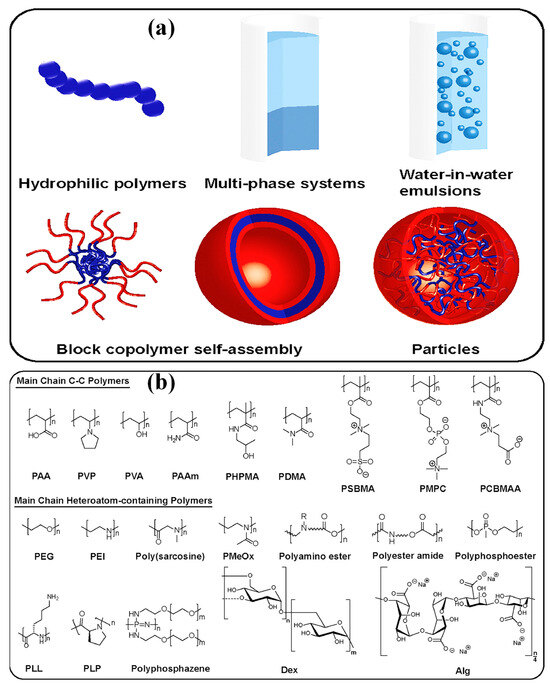
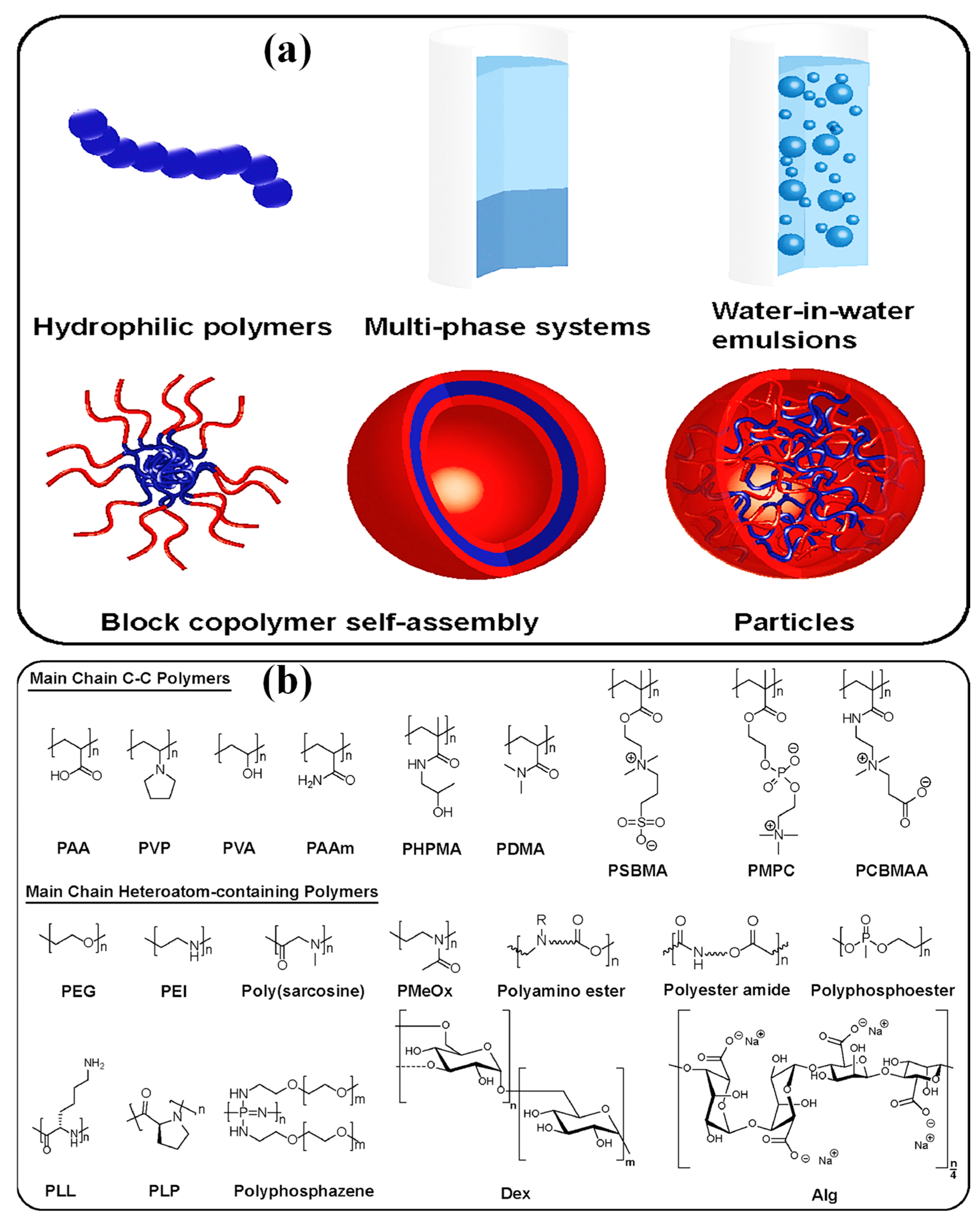
The polymer matrix plays a dual role: (a) it stabilizes graphene nanosheets and introduces application-specific functionality. (b) Conducting polymers (e.g., polyaniline, polypyrrole, PEDOT) facilitate charge transport and are widely used in electrocatalysis and sensing [21,42]. Engineering polymers such as PMMA, PVDF, and polysulfone are important for water treatment and filtration systems because they are strong, chemically resistant, and can form membranes [43,44]. Hydrophilic polymers and polyelectrolytes (Figure 2a, various hydrophilic polymers) facilitate processes in water, enhance adsorption, and increase electrostatic interactions with graphene surfaces [45]. The molecular weight, polarity, and functional group (carbon, oxygen, nitrogen, or phosphorus; Figure 2b) density of the polymer have a significant effect on the shape and performance of the composite [45].
Figure 2.
(a) Overview over the research areas of hydrophilic polymers covered in this review. (b) Overview of hydrophilic polymer research areas and examples of hydrophilic polymers: PAA (poly(acrylic acid)), PVP (poly(vinylpyrrolidone)), PVA (poly(vinyl alcohol)), PAAm (poly(acrylamide)), PHPMA (poly(2-hydroxypropyl methacrylamide)), PDMA (poly(N,N-dimethylacrylamide)), PSBMA (poly([2-(methacryloyloxy)ethyl] dimethyl-(3-sulfopropyl)ammonium hydroxide)), PMPC (poly(2-(methacryloyloxy)ethyl phosphorylcholine)), PCBMAA (poly(carboxybetaine methacrylamide)), PEG (poly(ethylene glycol)), PEI (poly(ethylene imine)), polysarcosine (poly(N-methylglycine)), PMeOx (poly(2-methyl-2-oxazoline)), polyamino esters, polyester amides, polyphosphoesters, PLL (poly(L-lysine)), PLP (poly(L-proline)), polyphosphazenes, dextran, and alginate. Adapted with permission from [45]. Copyright 2022 Elsevier B.V. All rights reserved.
2.3. Interfacial Interactions and Composite Architecture
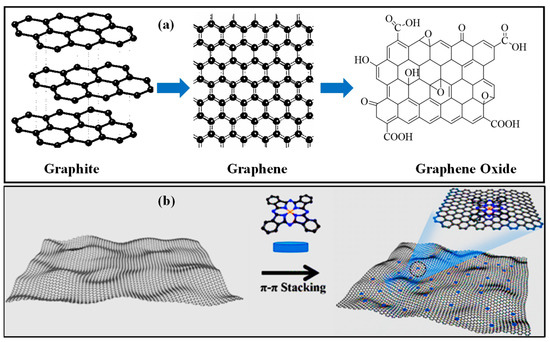
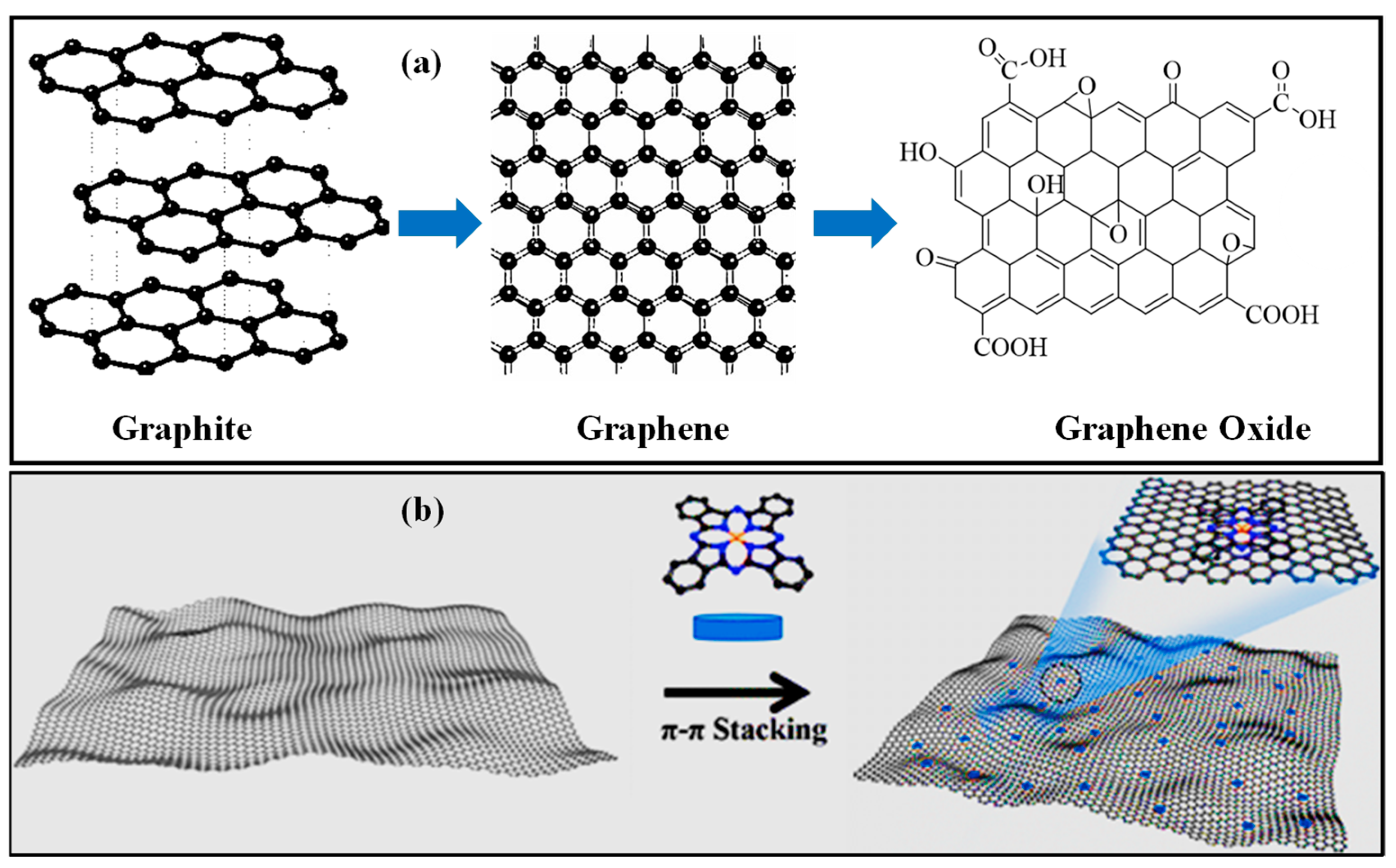
For effective load transfer, electronic communication, and long-lasting durability, graphene (Figure 3a) and polymer chains need strong interactions at their interfaces. These interactions may arise from π–π stacking (Figure 3b), hydrogen bonding, electrostatic attraction, or covalent bonding [46]. Optimized interfaces prevent graphene restacking, promote homogeneous dispersion, and create continuous conductive or catalytic pathways. Polymer–graphene composites can be made into films [47,48], membranes [49,50], hydrogels [51,52], fibers, or layered assemblies, depending on the catalytic or environmental function they are intended to serve.
Figure 3.
(a) Schematic of graphite, graphene, and graphene oxide; (b) π–π stacked iron (II) phthalocyanine/graphene oxide composites. Adapted with permission from [46].
2.4. Fabrication Techniques
2.4.1. Solution Mixing
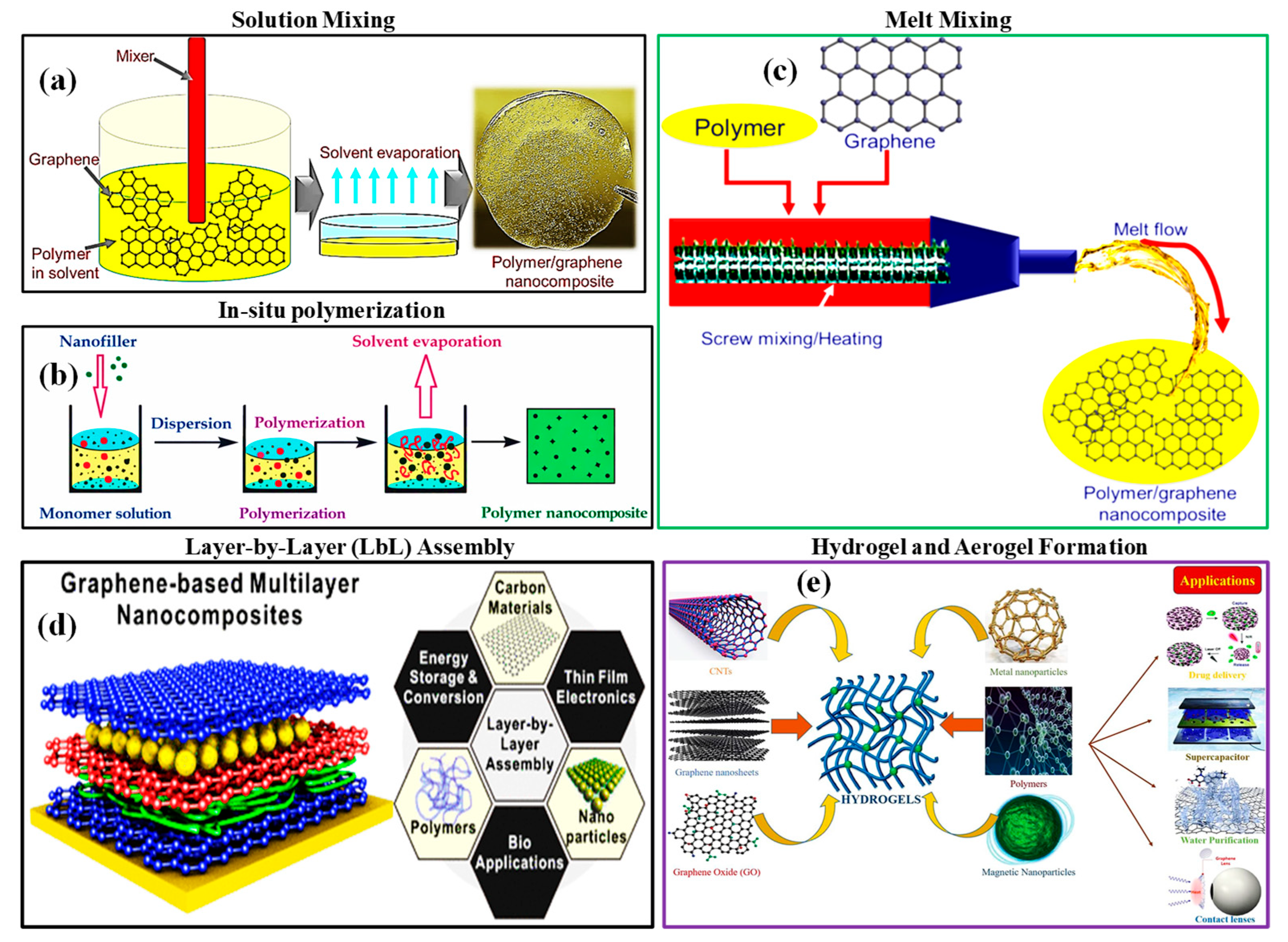
One of the most common methods used for producing materials is by mixing solutions (Figure 4a). This is because it is easy and efficient to get uniform dispersion. In this process, graphene or graphene oxide is first mixed with a solvent [53]. Then, a polymer is either dissolved or mixed into the mixture [54]. After that, the solvent is allowed to evaporate, thereby ensuring the composites are well dispersed. This method works exceptionally well for making membranes and catalysts in a lab. However, it might have problems with recovering solvents and scaling up.
2.4.2. In Situ Polymerization
Here, graphene sheets are dispersed in the monomer solutions, and polymerization occurs on or near the graphene surface. This method helps the polymer matrix bond strongly to graphene and ensures that graphene is evenly distributed within the polymer (Figure 4b) [55]. It works exceptionally well for making polymer–graphene composites that conduct electricity more efficiently and serve as better catalysts.
2.4.3. Melt Compounding
It involves blending graphene or GO with melted polymers using methods like internal mixing/extrusion (Figure 4c). This method does not use any solvents, indicating environmental friendliness and suitability for companies [54]. However, you need to carefully adjust the processing temperature, shear rate, and residence time to achieve a consistent graphene distribution. Melt compounding is especially important for the large-scale production of structural and functional polymer–graphene composites [53].
2.4.4. Layer-by-Layer (LbL) Assembly
Layer-by-layer (LbL) assembly utilizes the electrostatic interactions between oppositely charged graphene sheets and polymers to create multilayered structures with nanoscale precision (Figure 4d). Composites made with LbL give you great control over thickness, composition, and surface chemistry [56]. This makes them perfect for applications such as electrocatalytic electrodes, sensors, and thin-film membranes.
2.4.5. Hydrogel and Aerogel Formation
3D graphene–polymer hydrogels and aerogels are created through methods such as self-assembly, freeze-drying, or chemical crosslinking [57,58,59] (Figure 4e). These porous structures feature a high surface area, interconnected pathways, and efficient mass transport, making them highly effective for adsorption-driven environmental remediation and catalytic reactions in aqueous solutions.
Figure 4.
Schematic fabrication of polymer–graphene composite (a) solution mixing, adapted with permission from [53], (b) in situ polymerization, adapted with permission from [55], (c) melt-mixing, adapted with permission from [54], (d) layer-by-layer assembly, adapted with permission from [56], (e) hydrogel and aerogel formation, adapted with permission from [59].
The final performance of polymer–graphene composites depends on dispersion quality, interfacial bonding, and composite fabrication. Uniform dispersion of graphene improves electrical conductivity and catalytic efficiency, while a well-designed polymer network enhances mechanical strength and recyclability. Even though significant progress has been made, there are still problems to solve to enable large-scale fabrication without defects, reduce graphene leaching, and pursue green synthesis pathways [60]. Table 1 shows the limitations of polymer–graphene composite fabrication methods and their targeted environmental applications. To enable the use of polymer–graphene composites in real-world catalytic and environmental applications in a sustainable way, future work should focus on bio-based polymers, water-assisted processing, and scalable manufacturing strategies.
Table 1.
Limitations of polymer–graphene composite fabrication methods and their targeted environmental applications.
3. Catalytic Applications of Polymer–Graphene Composites
Polymer–graphene composites have emerged as a versatile group of catalytic materials [68]. In catalytic systems, graphene primarily serves as an electron-conducting platform, a support for active sites, and an adsorption medium. Polymers, on the other hand, provide mechanical stability, chemical functionality, interface control, and the ability to scale-up processes [69]. This part gives a current, complete picture of the main catalytic areas where polymer–graphene composites have had a significant effect.
3.1. Photocatalysis
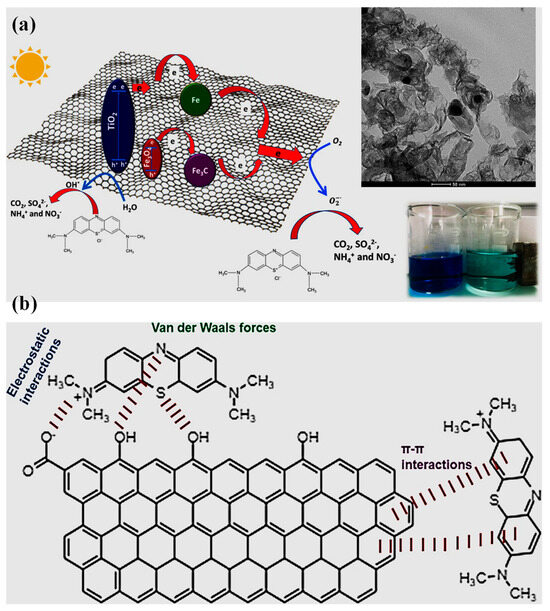
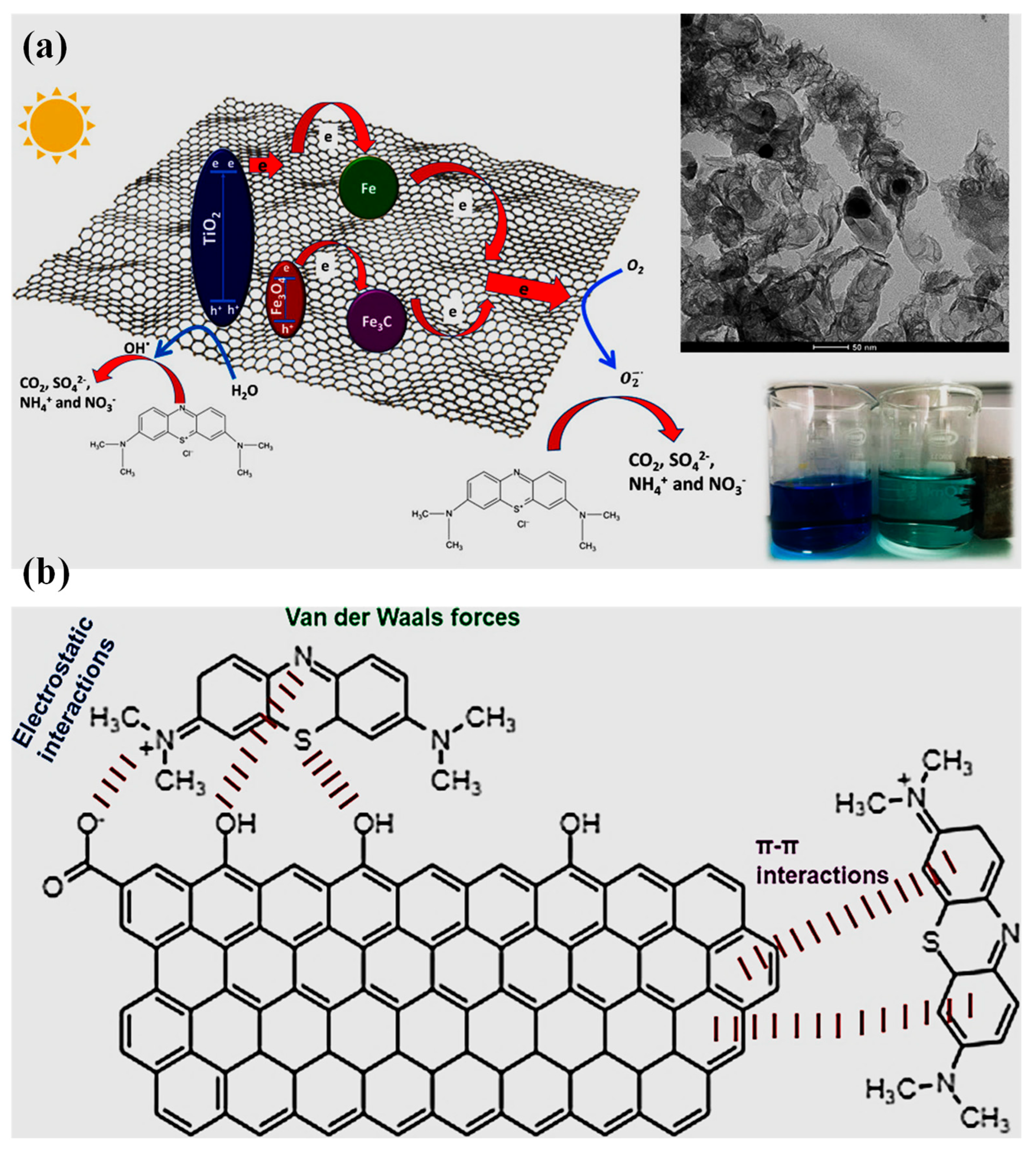
Photocatalysis is very important for cleaning the environment and generating energy without harming it [70]. This is especially true for degrading organic pollutants and producing hydrogen through photocatalysis. Common semiconductor photocatalysts like TiO2, ZnO, and SnO2 do not absorb much visible light and quickly recombine the electron–hole pairs generated by light [71,72]. In polymer–graphene composites, graphene acts as an electron acceptor and improves charge transport, allowing for faster charge separation and reducing recombination [73]. Polymer matrices improve catalyst dispersion, stabilize active phases, and modify the surface chemistry. The extended π-conjugated structure of graphene also enhances light absorption and provides abundant adsorption sites for pollutant molecules, increasing local reactant concentration near catalytic sites Figure 5 [74].
Figure 5.
(a) Visible-light photocatalysis and (b) adsorption mechanism of MB to graphitic carbon. Adapted with permission from [75].
According to recent research, polymer–graphene composites promote the visible light-induced degradation of antibiotics, organic dyes, and pharmaceutical residues through synergistic adsorption photocatalysis mechanisms [75]. Graphene-based polymer hybrids containing transition-metal dichalcogenides or metal oxides have also demonstrated increased photocatalytic hydrogen evolution reaction (HER) activity, driven by improved interfacial charge transfer and increased catalytically active sites.
3.2. Electrocatalysis
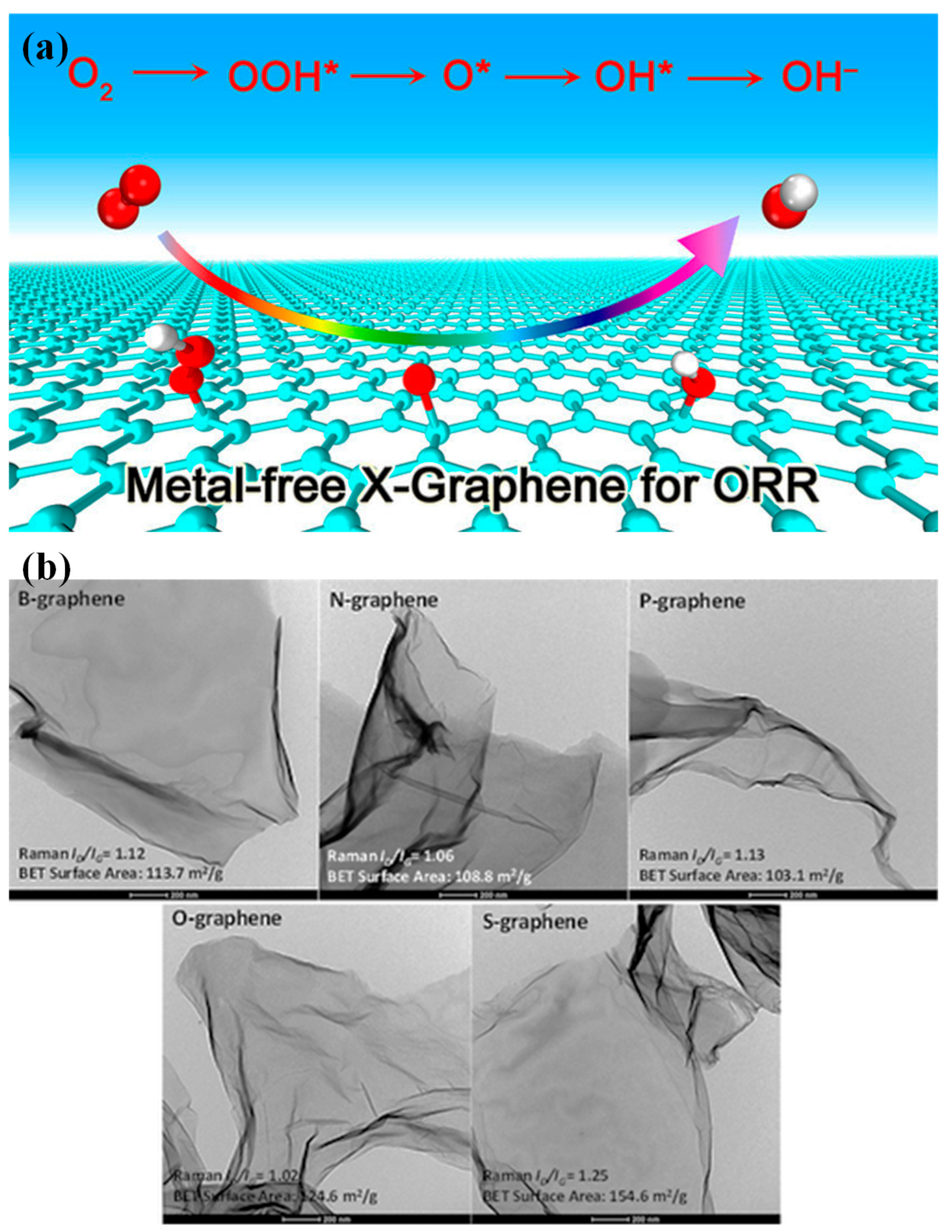
Electrocatalysis (ORR and OER) represents one of the most intensively studied applications of polymer–graphene composites [76]. These reactions are central to fuel cells, water splitting, metal–air batteries, and electrochemical environmental treatment technologies. Graphene is a strong support for electrocatalysts because it has high electrical conductivity, chemical stability, and a large, readily accessible surface area [77]. When integrated with polymers, especially conducting polymers or polyelectrolytes, the resulting composites exhibit enhanced charge-transfer kinetics, improved electrode stability, and tunable electronic properties. Polymer functionalization can alter the electronic density of graphene by redistributing charge at interfaces. This can make sites that are active for catalysis even in systems without metals (Figure 6).
Figure 6.
(a) Electrocatalytic oxygen reduction activity of graphene-based catalysts and (b) TEM images of various single-doped graphene samples. The inset values represent the ID/IG ratios and the specific surface areas obtained from Raman spectra and nitrogen adsorption isotherms, respectively, for each sample. Adapted with permission from [76].
Polymer–graphene electrocatalysts have demonstrated competitive ORR performance compared to noble-metal catalysts in alkaline media [78]. In hybrid systems, including metal or metal oxide nanoparticles. The polymer matrix minimizes nanoparticle agglomeration and leaching, while graphene facilitates electron transport [79]. These characteristics all contribute to reduced overpotentials, higher current densities, and better cycling stability.
3.3. Catalytic Hydrogenation and Reduction Reactions
Catalytic hydrogenation processes are commonly used to detoxify nitroaromatic chemicals, azo dyes, and other harmful organic contaminants in aquatic environments [80]. Polymer–graphene composites have emerged as highly efficient platforms for such reactions, especially when paired with noble or non-noble metal nanoparticles.
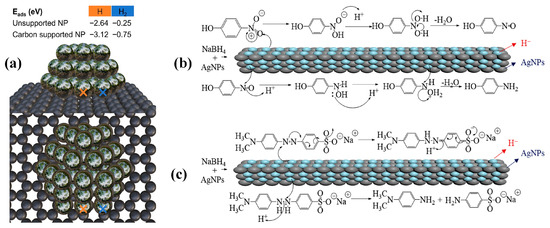
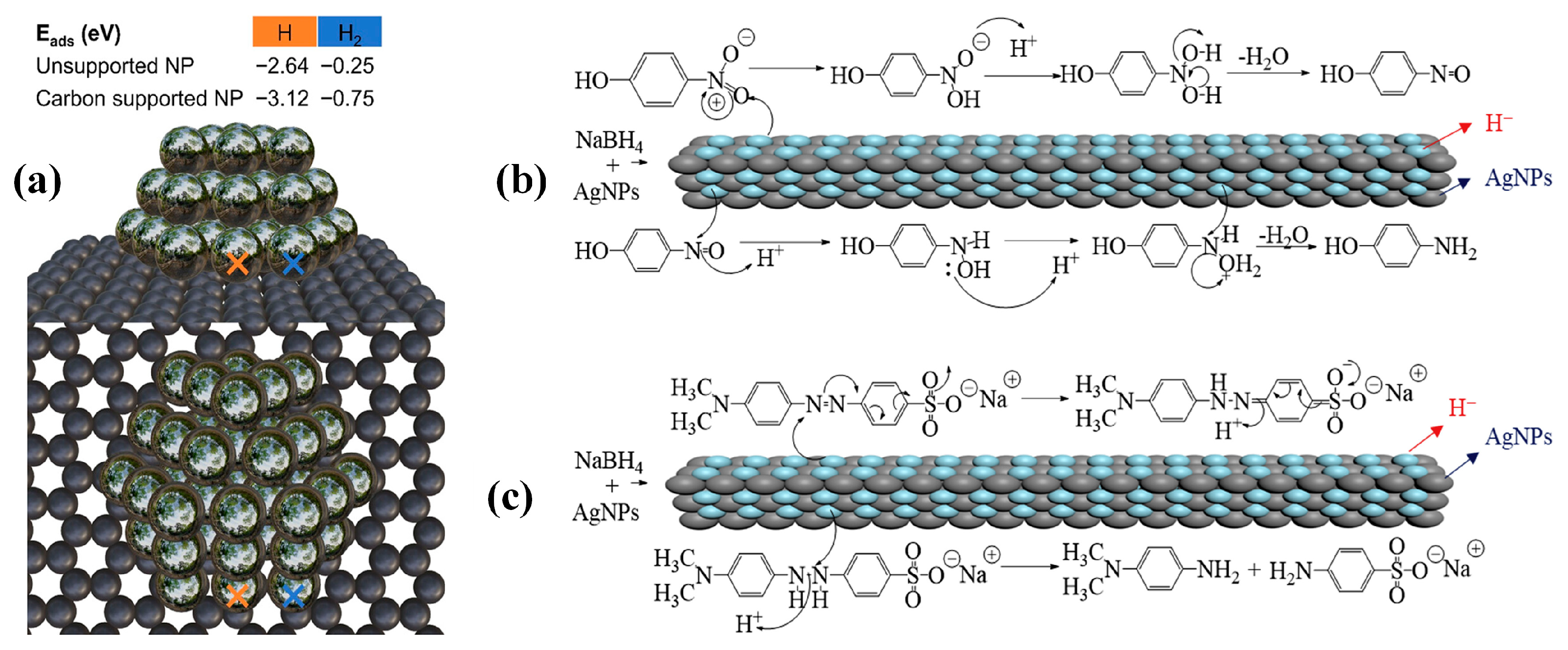
Graphene and its derivatives provide a high-surface-area support for the uniform dispersion of metal nanoparticles [80]. At the same time, polymer matrices stabilize the nanoparticles, enabling easy recovery and reuse of the catalyst [81]. Reports indicate that the adsorption energies of both atomic and molecular hydrogen are considerably greater on carbon-supported silver nanoparticles compared to those that are unsupported (Figure 7a). In aqueous reduction systems using reducing agents such as sodium borohydride, polymer–graphene-supported metal catalysts exhibit rapid reaction kinetics (Figure 7b), high conversion efficiency, and excellent recyclability.
Figure 7.
(a) Model of graphene-anchored Ag37 nanoparticles, adapted with permission from [81]. (b) Proposed NaBH4-assisted reduction pathway involving AgNPs and (c) breakdown of 4-nitrophenol and cleavage of azo bonds in dye molecules, adapted with permission from [80].
The catalytic activity is generally attributed to the synergistic interaction between graphene-supported nanoparticles and the polymer network, which facilitates electron transfer, enhances reactant adsorption, and minimizes catalyst deactivation [82]. These systems are attractive and promising for wastewater treatment due to their efficiency under mild conditions and reduced secondary pollution.
3.4. Energy-Related Catalysis and Electrochemical Devices
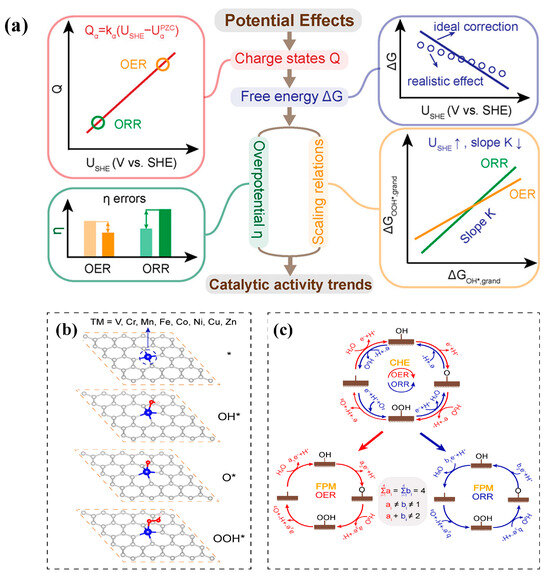
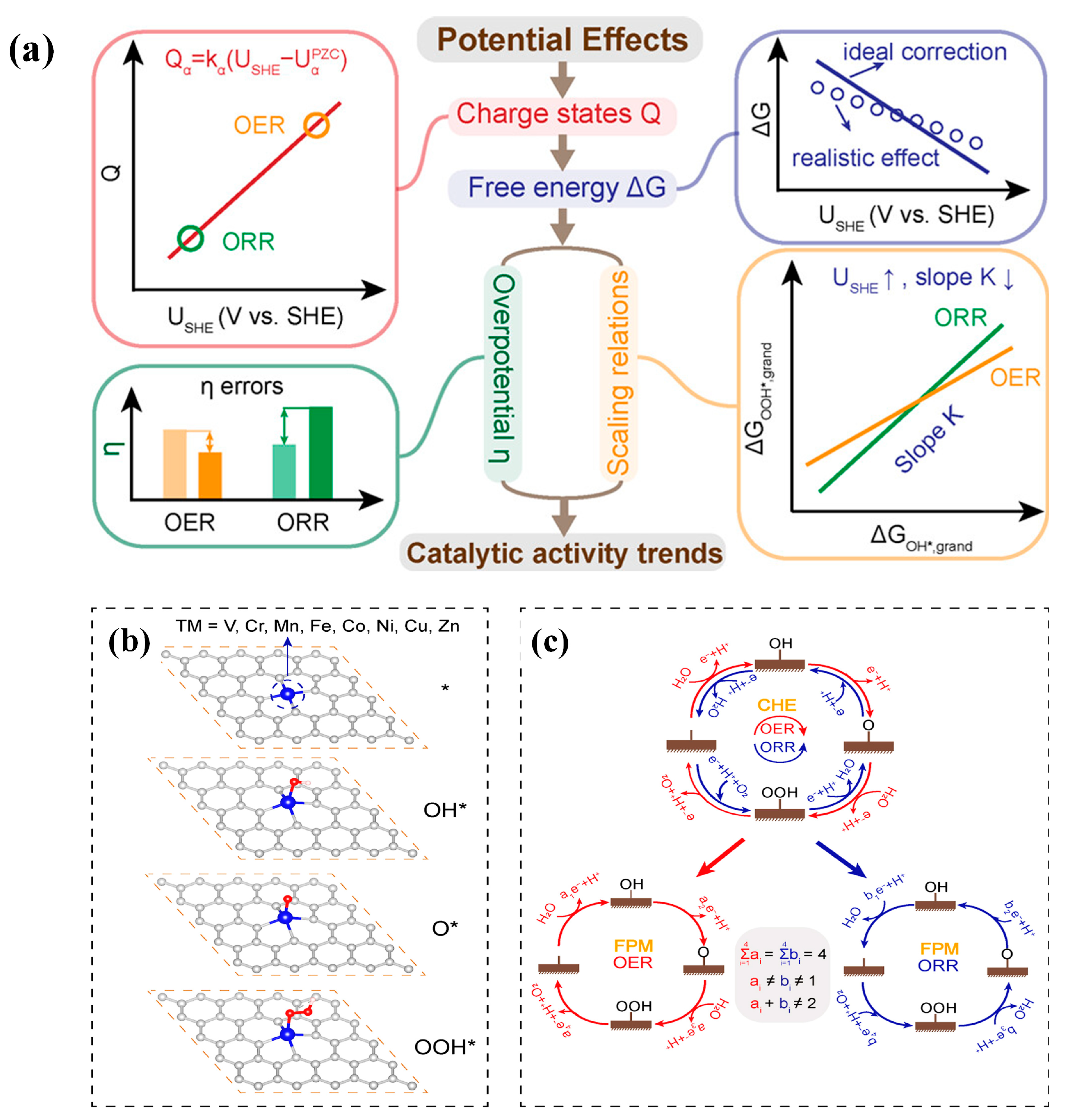
Polymer–graphene composites have also attracted significant attention for energy-related catalytic applications, including lithium-ion and lithium–air batteries [83]. In these systems, catalytic processes such as ORR and OER occur at the electrode–electrolyte interface and critically determine device performance [67,83,84] (Figure 8a) [85]. Transition-metal-doped graphene (TM@graphene, where TM = V, Cr, Mn, Fe, Co, Ni, Cu, or Zn) structures and their catalytic intermediates are shown in Figure 8b. These are built from (5 × 5) graphene supercells, with four C atoms around a central low-coordinated TM atom acting as the active site. Figure 8c illustrates the OER and ORR processes under the computational hydrogen electrode (CHE) and fixed-potential method (FPM) [84].
Figure 8.
(a) Conceptual overview of how OER and ORR mechanisms operate under applied electrode potentials. (b) Structural models of transition-metal-doped (5 × 5) graphene (TM@graphene) and their reaction intermediates, where C, O, H, and TM atoms are shown in gray, red, white, and blue, respectively. (c) Diagram illustrating the OER and ORR pathways under the CHE and FPM frameworks. Adapted with permission from [85].
Graphene polymer composites used as cathode materials show enhanced electrochemical performance, improved mass transport, and superior structural integrity [86]. The polymer component imparts flexibility, durability, and improved adhesion to other materials, while the graphene component facilitates rapid electron conduction and serves as an effective catalyst. Three-dimensional polymer–graphene structures facilitate more efficient migration and interaction of electrolytes [87].
Graphene-enriched polymer composites have demonstrated superior ORR performance [88], increased discharge capacities, and enhanced cycle stability compared to conventional carbon-based electrodes in lithium–air batteries. These advancements indicate that polymer–graphene composites may represent the next generation of catalytic materials for energy-dense storage devices. In addition, polymer–graphene composites have also attracted attention for hydrogen storage and related energy applications due to the high surface area of graphene and the tunable porosity of polymer matrices, which can provide additional adsorption sites and improved structural stability for hydrogen uptake.
4. Environmental Applications of Polymer–Graphene Composites
Pollution from manufacturing plants, farms, and cities has become a global problem, so we need to develop new materials that can clean up the environment efficiently, last long, and be versatile. Polymer–graphene composites are promising materials for environmental applications because they combine the high surface area, chemical tunability, and adsorption ability of graphene with the mechanical strength, flexibility, and ease of processing of polymers [37]. This part goes into great detail about the important environmental applications of polymer–graphene composites, focusing on how they work, how they form, and how useful they are in real-world applications.
4.1. Water Purification and Wastewater Treatment
Water purification is among the most widely explored environmental applications of polymer–graphene composites. Graphene oxide and reduced graphene oxide possess abundant oxygen-containing functional groups that facilitate strong interactions with a wide range of contaminants, including dyes, pharmaceuticals, pesticides, and heavy-metal ions. When embedded within polymer matrices, graphene-based materials form robust composite systems that overcome the handling and recovery challenges associated with powder catalysts or adsorbents [54].
Polymer–graphene membranes made from polymers such as polysulfone, poly (vinylidene fluoride), poly (vinyl alcohol), and polyethyleneimine exhibit improved antifouling, permeability, and hydrophilicity [89]. Graphene nanosheets make transport pathways more winding, improving contaminant rejection while maintaining high water flux. Also, the polymer matrix provides the material with mechanical properties such as tensile strength and Young’s modulus, ensuring reliable performance over time under pressure-driven filtration conditions [90].
Polymer–graphene composites in advanced systems combine physical separation with chemical functionality, enabling both filtration and pollutant degradation simultaneously. This multifunctionality significantly reduces secondary pollution and makes wastewater treatment processes easier to run.
4.2. Adsorptive Removal of Organic Pollutants and Toxic Ions
Adsorption-based remediation remains one of the most effective and cost-effective methods for removing organic pollutants from water [91]. Polymer–graphene composites have excellent adsorption properties because of π–π interactions, hydrogen bonding, electrostatic attraction, and van der Waals forces between graphene surfaces and pollutant molecules [92]. Graphene-based polymer hydrogels and aerogels have garnered significant attention owing to their three-dimensional porous architectures, which facilitate high adsorption capacity and swift mass transfer [93,94]. These materials exhibit high removal efficiency for dyes such as rhodamine B, Congo red, methyl orange, and methylene blue. The polymer network not only maintains the graphene framework’s stability but also facilitates reuse by enabling the recovery and regeneration of the adsorbent [91]. It is important to note that the adsorption behavior can be altered by varying the polymer chemistry, the amount of graphene, and the surface functional groups. This enables the selective removal of target pollutants from complex wastewater streams.
Heavy-metal contamination is harmful to people and ecosystems because metal ions such as Pb2+, Cd2+, Hg2+, Cr6+, and As3+ do not naturally break down and accumulate in living organisms [94,95,96,97]. Polymer–graphene composites have shown remarkable effectiveness in capturing these ions through chelation, electrostatic attraction, and surface complexation [95]. Functional groups on graphene oxide, such as carboxyl, hydroxyl, and epoxy groups, are active binding sites for metal ions [98]. Polymer matrices, on the other hand, stabilize the structure and prevent graphene from clumping. Polyelectrolyte-based composites work exceptionally well because their charged functional groups bind metal ions more effectively, increasing metal-ion affinity and adsorption capacity. These composites help treat industrial wastewater and purify drinking water because they are highly selective, exhibit rapid adsorption kinetics, and can be recycled effectively.
In addition to mechanistic understanding, recent studies demonstrate significantly enhanced adsorption capacities in polymer–graphene composites compared to pristine polymers. Graphene-based polymer hydrogels and aerogels show much higher adsorption performance than conventional polymer adsorbents due to the presence of high-surface-area graphene networks. Several reports indicate adsorption capacities of 200–600 mg g−1 for dyes and above 100 mg g−1 for heavy-metal ions, depending on surface functionality, graphene loading, and pore structure [91,92,93,94]. These improvements are attributed to the large specific surface area of graphene, abundant oxygen-containing functional groups, π–π interactions with aromatic pollutants, electrostatic attraction provided by functional polymer matrices, and the interconnected porous structure, which enhances mass transfer and adsorption kinetics.
4.3. Oil–Water Separation and Organic Solvent Recovery
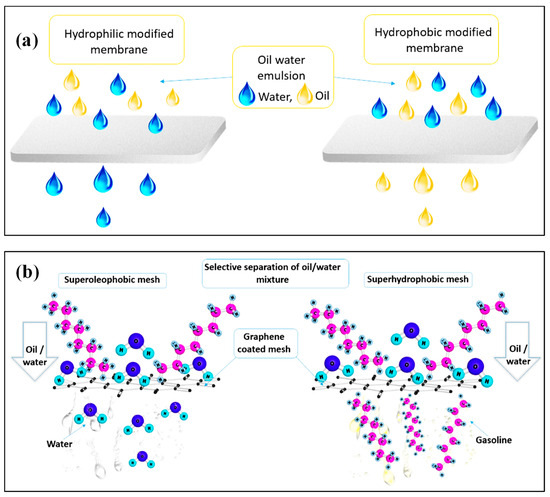
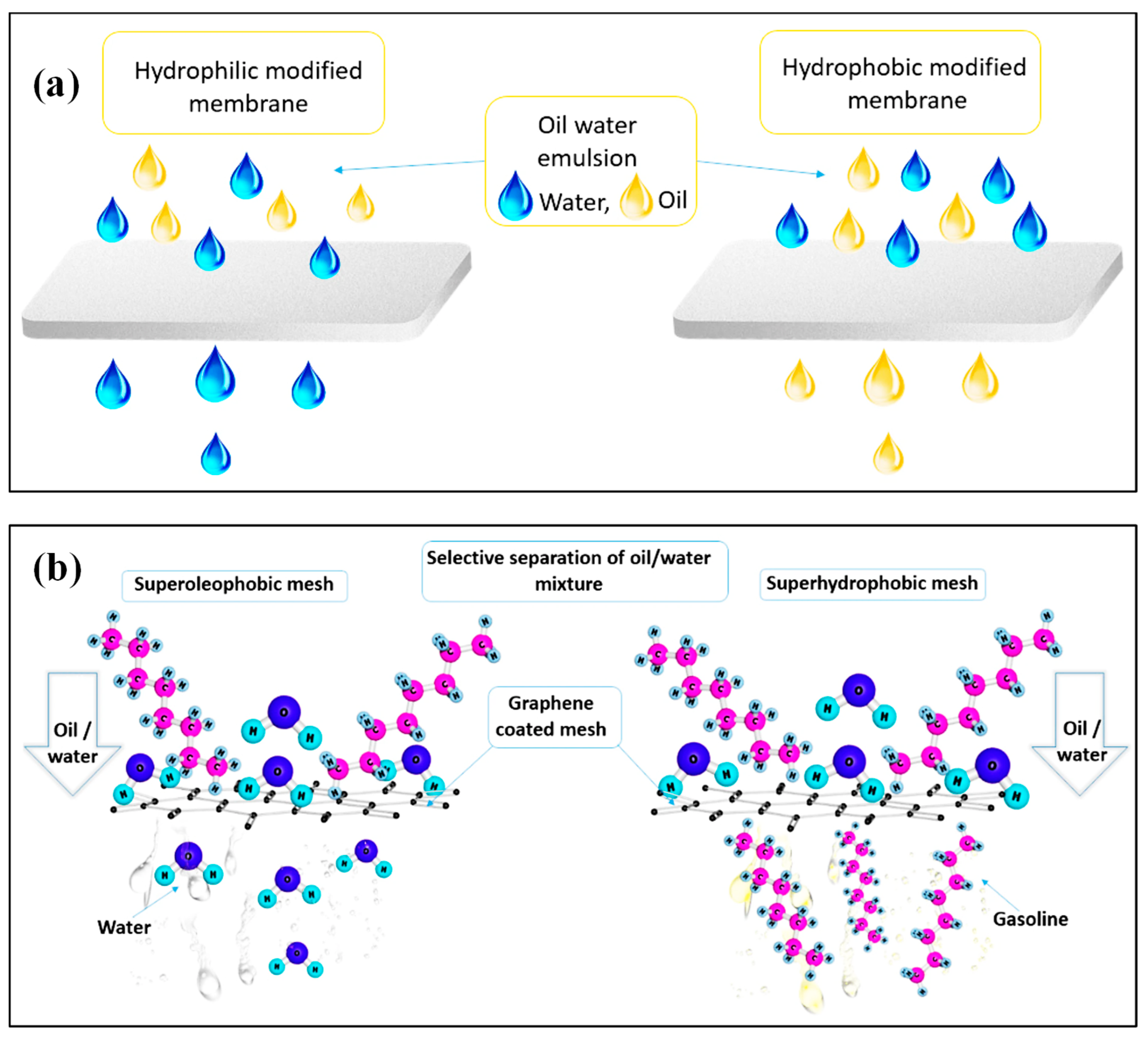
Oil spills and wastewater contaminated with oil are problems that will not go away. Polymer–graphene aerogels and foams have been made to separate oil and water effectively [99]. They are low-density, highly porous, and can have their surface wettability changed (Figure 9a). These materials can absorb oils and organic solvents while keeping water out (Figure 9b). These materials exhibit high absorption capacity and rapid uptake kinetics. The polymer composite provides mechanical resilience and is easier to recycle, enabling it to undergo many absorption-desorption cycles without significant performance loss [90]. These composites are beneficial for cleaning up spills in emergencies and for treating industrial wastewater.
Figure 9.
(a) Schematic diagram of oil/water membrane separation process. (b) Selective separation of an oil/water mixture (gasoline and water) using a graphene-coated mesh. Adapted with permission from [99].
On the other hand, polymer–graphene composites are increasingly used in environmental sensing, where it is important to quickly and accurately detect pollutants [100]. Graphene’s remarkable ability to conduct electricity and functional polymers’ ability to choose which chemicals to react with make it possible to make sensors that can find tiny amounts of gases, heavy metals, and organic pollutants [101]. Composites of conducting polymers and graphene exhibit improved signal response, lower detection limits, and faster response times. These traits make them suitable for systems that monitor the environment in real time and give early warnings.
5. Mechanistic Insights into Polymer–Graphene Composites
Polymer–graphene composites get their catalytic and environmental performance from synergistic mechanisms that include interfacial interactions, charge transfer, adsorption behavior, and structural architecture [13]. These systems depend on strong interfacial interactions between polymers and graphene, including π–π stacking, hydrogen bonding, electrostatic attraction, and covalent bonding [20,37]. These forces prevent graphene from restacking and ensure it is evenly spread out, improving mechanical strength and the transmission of electrons and mass [37].
In composites made of polyelectrolytes, charge redistribution at the interface creates areas that are rich or poor in electrons. This activates graphene’s basal planes for catalytic activities that do not include metals [102]. Polymer chains also act as spacers, keeping the active sites open. Graphene’s delocalized π–electron network creates conductive pathways in polymer matrices. This makes it much easier for charges to move around and for electrons to shuttle between photocatalytic and electrocatalytic reactions [71,72], such as ORR and HER [67,83]. This is often done through Schottky-type junctions or polymer-induced electronic tuning. GO and rGO have numerous functional groups that can interact with pollutants via hydrogen bonding, electrostatic attraction, surface complexation, and π–π interactions. Polymer matrices help stabilize the structure and provide additional binding sites. 3D porous networks, such as hydrogels, accelerate diffusion and adsorption kinetics even further. Polymers and graphene work together to support and stabilize metal or metal oxide nanoparticles in catalytic reactions [87]. This allows graphene to mediate electron transfer between reactants and catalytic centers, speeding up the reaction and making it more efficient under mild conditions, while also facilitating catalyst recovery.
The overall performance at a large scale depends heavily on the architecture at a small scale. For example, 2D layers facilitate surface reactions, whereas 3D hydrogels or aerogels facilitate mass transport. At the same time, balanced graphene loading ensures the material maintains optimal conductivity without clumping. This shows how important it is to regulate the structure when designing composites [37].
6. Challenges and Future Perspectives
Even though polymer–graphene composites have advanced significantly in catalytic and environmental applications, several scientific, technological, and practical challenges make their large-scale use difficult. One of the most significant problems is achieving even, consistent graphene dispersion in polymer matrices at scales applicable to industry. Although laboratory-scale techniques often produce well-dispersed systems, challenges such as graphene agglomeration, restacking, and non-uniform distribution persist during scale-up, especially in melt compounding and solvent-free methodologies. Not only does poor dispersion reduce the available surface area, but it also disrupts charge-transport pathways, thereby lowering catalytic and environmental performance [103,104].
Another major problem is the stability and durability of polymer–graphene composites at the interface in real-world applications. During environmental cleanup, materials are often exposed to changing pH, ionic strength, temperature, and other pollutants. Under these conditions, polymer matrices may have degraded, graphene derivatives may oxidize, and embedded catalytic nanoparticles may leach. This can lead to reduced performance and possible secondary pollution [105,106,107]. It is still important to develop robust interfacial bonding methods and chemically stable polymer backbones to ensure they work well and can be used repeatedly.
From a catalytic standpoint, structure–activity relationships are poorly understood, especially at the polymer–graphene interface. While improved performance is frequently ascribed to synergistic effects, the specific contributions of polymer chemistry, graphene defect density, functional groups, and electrical interactions are challenging to disentangle. The absence of systematic investigations linking molecular-level structure to macroscopic catalytic activity obstructs rational material design and constrains predictive capacity [108,109]. To understand how charge transfer and reactions occur in real time, we require advanced operando and in situ characterization methods, along with theoretical modeling.
Sustainability and environmental safety are also significant problems. Many of the methods we use to prepare samples now rely on toxic solvents, strong oxidants, or energy-intensive processes, undermining the environmental benefits of polymer–graphene composites. Additionally, apprehensions regarding the eco-toxicity and life-cycle implications of graphene-based materials remain inadequately addressed, especially for applications entailing direct environmental contact. Future research must prioritize green synthesis techniques, water-based processing, bio-derived polymers, and complete life-cycle assessments to assure safe and sustainable deployment [110,111].
Cost and scalability remain major barriers that stand in the way of commercialization. Producing high-quality graphene remains rather expensive, and the performance of composites can vary from batch to batch. Graphene oxide and other low-cost graphene derivatives are promising alternatives, but controlling their degree of reduction and defect structure on a large scale remains challenging. To connect laboratory demonstrations with pilot-scale or industrial systems, materials science will need to work closely with process engineering and production optimization [112,113].
Several promising paths are opening up for the future. The creation of multifunctional polymer–graphene composites that can perform adsorption, catalysis, and sensing simultaneously is a great way to advance environmental technologies. Adding polymer–graphene systems to membranes, reactors, and modular treatment units could enable the creation of small, energy-efficient, and flexible remediation platforms. In catalysis, the development of metal-free or low-metal polymer–graphene composites offers the potential to reduce dependence on limited noble metals while preserving high activity and longevity [114,115].
Future progress will also rely on a deeper mechanistic understanding, facilitated by operando spectroscopy, synchrotron-based methodologies, and multi-scale simulations [116,117,118]. These methods can help people build interfaces and architectures that work best for specific reactions or contaminants. Finally, turning polymer–graphene composites from academic research into real-world applications will require people from different fields to work together, standardize testing methods, and ensure compliance with rules and sustainability guidelines. Then, the polymer–graphene composites could change the way we do sustainable catalysis and clean up the environment.
7. Conclusions
Polymer–graphene composites have emerged as a versatile materials platform for addressing challenges in catalysis and environmental remediation. Their performance arises from the complementary roles of graphene and polymers: graphene provides high surface area, efficient charge transport, and strong adsorption affinity; polymers ensure good dispersion, mechanical stability, processability, and functional tunability. Through controlled selection of graphene derivatives, polymer chemistry, and composite design, these systems can be engineered to enhance photocatalytic and electrocatalytic reactions, stabilize catalytic nanoparticles for reduction and hydrogenation processes, and enable advanced separation and remediation functions such as antifouling membranes, selective adsorption of organic pollutants and heavy metals, and oil–water separation.
Mechanistically, the enhanced efficiency is governed by interface-driven effects, including strong polymer–graphene interactions, improved charge transport, and adsorption–reaction coupling. Graphene-mediated electron transfer suppresses charge recombination, reduces reaction overpotentials, and accelerates redox transformations, while polymer networks preserve accessible active sites and enable catalyst recyclability.
Despite significant progress, challenges remain in scalable fabrication, long-term stability under complex environmental conditions, prevention of material leaching, and assessment of life-cycle impacts. Future research should focus on greener synthesis routes for polymer–graphene composites, including the use of eco-friendly solvents, low-toxicity reducing agents, and energy-efficient processing methods, together with improved control of graphene dispersion and interfacial bonding. Advanced approaches such as operando characterization, in situ analysis, and standardized testing are required to understand structure–property relationships better. In addition, unresolved issues related to ecotoxicology, possible bioaccumulation, and recyclability must be evaluated through life-cycle assessment and long-term stability studies. Among the reported systems, conducting polymer–graphene composites, graphene-supported metal nanoparticle catalysts, and three-dimensional hydrogel/aerogel structures show the greatest potential for practical implementation due to their high catalytic activity, stability, and scalability. With continued advances, polymer–graphene composites are well-positioned for sustainable catalysis and environmental applications.
Funding
This research received no external funding.
Data Availability Statement
Data sharing is not applicable to this article.
Conflicts of Interest
The author declares no conflicts of interest.
References
- Liang, L.; Wang, Z.; Li, J. The Effect of Urbanization on Environmental Pollution in Rapidly Developing Urban Agglomerations. J. Clean. Prod. 2019, 237, 117649. [Google Scholar] [CrossRef] [Scilit]
- Tang, W.; Wang, J.; Yin, J.; Han, Y.; Zhang, C.; Wu, W.; Zhang, J. Emerging Technologies and Recent Advances in the Advanced Treatment of Petrochemical Wastewater: A Comprehensive Review. Carbon Hydrog. 2026, 27, 444–462. [Google Scholar] [CrossRef] [Scilit]
- Kumar, S.; Himanshi; Prakash, J.; Verma, A.; Suman; Jasrotia, R.; Kandwal, A.; Verma, R.; Kumar Godara, S.; Khan, M.A.M.; et al. A Review on Properties and Environmental Applications of Graphene and Its Derivative-Based Composites. Catalysts 2023, 13, 111. [Google Scholar] [CrossRef] [Scilit]
- Chenarani, B.; Ghaemi, A. A Comprehensive Review on Exploring the Potential and Behaviour of Graphene-Based Materials for CO2 Capture. J. CO2 Util. 2025, 99, 103167. [Google Scholar] [CrossRef] [Scilit]
- Biswas, K.; Kumar, A.; Girigoswami, A.; Girigoswami, K. Evaluating the Role of Functionalized Graphene Systems in Achieving Wastewater Treatment: A Paradigm for Sustainable Development. Next Mater. 2026, 10, 101397. [Google Scholar] [CrossRef] [Scilit]
- Wei, W.; Qu, X. Extraordinary Physical Properties of Functionalized Graphene. Small 2012, 8, 2138–2151. [Google Scholar] [CrossRef] [Scilit]
- Zare, M.; Rane, K.K.; Niroumand, B.; Ghaderi, O.; Behera, S.K.; Park, C.; Salamanca-Riba, L.G.; Rohatgi, P.K. On Advanced Casting Methods for Synthesis and Improvement of Microstructural and Mechanical Properties of Graphene Reinforced Light Metal Matrix Composites. Int. J. Miner. Metall. Mater. 2026. [Google Scholar]
- Ibrahim, M.N.M.; Umar, K.; Parveen, T.; Yaqoob, A.A.; Safian, M.T. Graphene: A Versatile Advanced Material; Penerbit USM: Gelugor, Malaysia, 2024. [Google Scholar]
- Hummers, W.S.; Offeman, R.E. Preparation of Graphitic Oxide. J. Am. Chem. Soc. 1958, 80, 1339. [Google Scholar] [CrossRef] [Scilit]
- Guex, L.G.; Sacchi, B.; Peuvot, K.F.; Andersson, R.L.; Pourrahimi, A.M.; Ström, V.; Farris, S.; Olsson, R.T. Experimental Review: Chemical Reduction of Graphene Oxide (GO) to Reduced Graphene Oxide (RGO) by Aqueous Chemistry. Nanoscale 2017, 9, 9562–9571. [Google Scholar] [CrossRef] [Scilit]
- Urade, A.R.; Lahiri, I.; Suresh, K.S. Graphene Properties, Synthesis and Applications: A Review. JOM 2023, 75, 614–630. [Google Scholar] [CrossRef] [Scilit] [PubMed]
- Alwan, S.H.; Omran, A.A.; Naser, D.K.; Ramadan, M.F. A Mini-Review on Graphene: Exploration of Synthesis Methods and Multifaceted Properties. Eng. Proc. 2023, 59, 226. [Google Scholar]
- Qamar, S.; Ramzan, N.; Aleem, W. Graphene Dispersion, Functionalization Techniques and Applications: A Review. Synth. Met. 2024, 307, 117697. [Google Scholar] [CrossRef] [Scilit]
- Ghavipanjeh, A.; Sadeghzadeh, S. Cellulose-Based Laser-Induced Graphene: Progress and Prospects. Polym. Rev. 2026, 1–64. [Google Scholar] [CrossRef] [Scilit]
- Nekhlaoui, S.; Bensalah, M.-O.; Essabir, H. Elastomer Composites and Nanocomposite Materials Based on Graphene and Its Derivatives: From Preparation to Applications. In Elastomer-Based Composites and Nanocomposites; Elsevier: Amsterdam, The Netherlands, 2026; pp. 223–254. [Google Scholar]
- Sun, X.; Huang, C.; Wang, L.; Liang, L.; Cheng, Y.; Fei, W.; Li, Y. Recent Progress in Graphene/Polymer Nanocomposites. Adv. Mater. 2021, 33, 2001105. [Google Scholar] [CrossRef] [Scilit] [PubMed]
- Itapu, B.; Jayatissa, A. A Review in Graphene/Polymer Composites. Chem. Sci. Int. J. 2018, 23, 1–16. [Google Scholar] [CrossRef] [Scilit]
- Lee, S.J.; Yoon, S.J.; Jeon, I.-Y. Graphene/Polymer Nanocomposites: Preparation, Mechanical Properties, and Application. Polymers 2022, 14, 4733. [Google Scholar] [CrossRef] [Scilit]
- Wang, M.; Duan, X.; Xu, Y.; Duan, X. Functional Three-Dimensional Graphene/Polymer Composites. ACS Nano 2016, 10, 7231–7247. [Google Scholar] [CrossRef] [Scilit]
- Tariq, W.; Ali, F.; Arslan, C.; Nasir, A.; Gillani, S.H.; Rehman, A. Synthesis and Applications of Graphene and Graphene-Based Nanocomposites: Conventional to Artificial Intelligence Approaches. Front. Environ. Chem. 2022, 3, 890408. [Google Scholar] [CrossRef] [Scilit]
- Chirra, S.; Aepuru, R.; Sathish, M. Tailored Conducting Polymers for Photocatalytic Treatment of Water. In Tuning of Conducting Polymers: Applications from Environmental to Biomedical Fields; Springer: Berlin/Heidelberg, Germany, 2026; pp. 81–114. [Google Scholar]
- Al-Harbi, M.; Iqbal, M.W.; Al-Hadethi, Y.; Hussein, M.A. Impact of Graphene Nanosheets@ Flexible Polyamide-Based Nanocomposites for Photodegradation of Methylene Blue (MB) Dye. Polym. Bull. 2026, 83, 134. [Google Scholar] [CrossRef] [Scilit]
- Shaishta, N.; Mane, S.K.B. Conjugated Polymer-Based Nanocomposites for Thermoelectric Applications. In Conjugated Polymer-Based Nanocomposites; Elsevier: Amsterdam, The Netherlands, 2026; pp. 565–594. [Google Scholar]
- Kolya, H.; Mondal, S.; Kang, C.-W.; Nah, C. 18—The Use of Polymer-Graphene Composites in Catalysis. In Woodhead Publishing Series in Composites Science and Engineering; Rahaman, M., Nayak, L., Hussein, I.A., Das, N.C.B.T.-P.N.C.G., Eds.; Woodhead Publishing: Cambridge, UK, 2022; pp. 537–556. [Google Scholar]
- Priyadharshini, A.; Vinodhini, S.P.; Xavier, J.R. A Comprehensive Review of Graphene-Based Nanocomposites for High-Performance Energy Storage: Advances in Design, Electrochemical Mechanisms, and Future Prospects. Ionics 2026, 1–38. [Google Scholar] [CrossRef] [Scilit]
- Dastgeer, G.; Zulfiqar, M.W.; Nisar, S.; Zulfiqar, R.; Imran, M.; Panchanan, S.; Dutta, S.; Akbar, K.; Vomiero, A.; Wang, Z. Emerging Role of 2D Materials in Photovoltaics: Efficiency Enhancement and Future Perspectives. Nano-Micro Lett. 2026, 18, 32. [Google Scholar] [CrossRef] [Scilit] [PubMed]
- Benaglia, M.; Puglisi, A.; Cozzi, F. Polymer-Supported Organic Catalysts. Chem. Rev. 2003, 103, 3401–3430. [Google Scholar] [CrossRef] [Scilit] [PubMed]
- Kangutkar, R.S.; Walko, P.; Nayaka, G.P.; Nigam, S.; Majumder, C.; Manjanna, J. Enhanced Photocatalytic Hydrogen Evolution in Deionized/Natural Seawater and Removal of Organic Pollutants Using the Heterostructure of CuO/Cu2O Nanoparticles under Visible Light. Langmuir 2026, 42, 4084–4102. [Google Scholar] [CrossRef] [Scilit] [PubMed]
- Mishra, C.; Sahoo, S.; Tripathy, M.; Senapati, S.; Sarangi, D.; Padhiari, S. Multifunctional S–g–C3N4/Fe–ZnO Photocatalysts for Visible-Light-Induced Pollutant Degradation and Hydrogen Evolution. Diam. Relat. Mater. 2026, 163, 113354. [Google Scholar] [CrossRef] [Scilit]
- Abraham, A.M.; Tawiah, B.; Jacob, M.; Haponiuk, J.; George, S.C. Foundations of Nanomaterials and Composites. In Advanced Nanomaterials and Composites: Volume 1; Springer: Berlin/Heidelberg, Germany, 2026; pp. 1–35. [Google Scholar]
- Yamajala, R.B.R.D.; Dubey, R.; Tiruveedhi, V.L.N.B.G.; Gedda, G.; Zulfajri, M.; Ahammed, S.R.; Pang, M.-G. Graphene-Based Hydrogels for Environmental Protection and Detection: Recent Advances and Future Perspectives. Graphene Hydrogels 2026, 305–328. [Google Scholar] [CrossRef] [Scilit]
- Nayak, M.A.; Laur, N.; Singh, A.; Bhatt, E. Recent Advances in Starch-Based Nanocomposite for Heavy Metal Removal: Mechanisms, and Future Prospects. Starch-Stärke 2026, 78, e70149. [Google Scholar] [CrossRef] [Scilit]
- Nori, J.; Muhsin, N.A.; Saeed, O.S.; Al-Kaabi, F.S.; Alheety, M.A. Metal-Based Contaminant Removal Using Carbon Nanostructures Composite. In Advances in Treatment Methods Towards Emerging Contaminants; Elsevier: Amsterdam, The Netherlands, 2026; pp. 97–118. [Google Scholar]
- Fu, C.-P.; Xu, Y.-Z.; Wang, S.-B.; Chen, A.-Z.; Kankala, R.K. Miscellaneous Applications of Polymers as Barrier Materials. In Polymer-Based Nanostructured Barrier Materials; Elsevier: Amsterdam, The Netherlands, 2026; pp. 711–746. [Google Scholar]
- Onisuru, O.R.; Meijboom, R. Hydrogel Nanocomposite for Water Remediation. In Water Remediation Methods and Wastewater Treatment; Elsevier: Amsterdam, The Netherlands, 2026; pp. 651–681. [Google Scholar]
- Ntone, E.P.N.; Rahman, S.A.; Samah, R.A.; Fauzi, M.A.; Ngouangna, E.N.; Hasbullah, H.; Alsalhy, Q.F. Advancing Wastewater Treatment: A Review on the Cutting-Edge Graphene Oxide-Enhanced Polymeric Membranes. Rev. Chem. Eng. 2026, 42, 1–29. [Google Scholar] [CrossRef] [Scilit]
- Karthik, V.; Selvakumar, P.; Senthil Kumar, P.; Vo, D.-V.N.; Gokulakrishnan, M.; Keerthana, P.; Tamil Elakkiya, V.; Rajeswari, R. Graphene-Based Materials for Environmental Applications: A Review. Environ. Chem. Lett. 2021, 19, 3631–3644. [Google Scholar] [CrossRef] [Scilit]
- Milka, I.A.; Ahadito, B.R.; Desnelli; Hidayati, N.; Said, M. A Review of Graphene Oxide and Reduced Graphene Oxide Applications: Multifunctional Nanomaterials for Sustainable Environmental and Energy Devices. C-J. Carbon Res. 2026, 12, 11. [Google Scholar] [CrossRef] [Scilit]
- Gong, X.; Liu, G.; Li, Y.; Yu, D.Y.W.; Teoh, W.Y. Functionalized-Graphene Composites: Fabrication and Applications in Sustainable Energy and Environment. Chem. Mater. 2016, 28, 8082–8118. [Google Scholar] [CrossRef] [Scilit]
- Su, C.; Loh, K.P. Carbocatalysts: Graphene Oxide and Its Derivatives. Acc. Chem. Res. 2013, 46, 2275–2285. [Google Scholar] [CrossRef] [Scilit]
- Erickson, K.; Erni, R.; Lee, Z.; Alem, N.; Gannett, W.; Zettl, A. Determination of the Local Chemical Structure of Graphene Oxide and Reduced Graphene Oxide. Adv. Mater. 2010, 22, 4467–4472. [Google Scholar] [CrossRef] [Scilit]
- Periyasamy, T.; Asrafali, S.P.; Lee, J. Emerging Electrode Materials for Next-Generation Electrochemical Devices: A Comprehensive Review. Micromachines 2026, 17, 106. [Google Scholar] [CrossRef] [Scilit] [PubMed]
- Zou, D.; Lee, Y.M. Design Strategy of Poly(Vinylidene Fluoride) Membranes for Water Treatment. Prog. Polym. Sci. 2022, 128, 101535. [Google Scholar] [CrossRef] [Scilit]
- Saxena, P.; Shukla, P. A Comparative Analysis of the Basic Properties and Applications of Poly(Vinylidene Fluoride) (PVDF) and Poly(Methyl Methacrylate) (PMMA). Polym. Bull. 2022, 79, 5635–5665. [Google Scholar] [CrossRef] [Scilit]
- Bayliss, N.; Schmidt, B.V.K.J. Hydrophilic Polymers: Current Trends and Visions for the Future. Prog. Polym. Sci. 2023, 147, 101753. [Google Scholar] [CrossRef] [Scilit]
- Wang, Q.; Gao, H.; Zhao, C.; Wang, S.; Liu, X.; Wang, Z.; Yu, J.; Kwon, Y.-U.; Zhao, Y. π-π Stacked Iron (II) Phthalocyanine/Graphene Oxide Composites: Rational Fabrication and Excellent Supercapacitor Properties with Superior Rate Performance. J. Solid State Electrochem. 2021, 25, 659–670. [Google Scholar] [CrossRef] [Scilit]
- Markandan, K.; Kumar, K.; Natarajan, E.; Ang, C.K.; Ramanathan, S.; Khalid, M. Tribological Behaviour of 3D Printed Graphene Based Polymer Nanocomposites: An Experimental Investigation. Prog. Addit. Manuf. 2026, 11, 563–575. [Google Scholar] [CrossRef] [Scilit]
- Ali, S.M.H.; Rabee, B.H.; Al Maimuri, N.M.L.; Hashim, A. Fabrication and Exploring the Features of (Organic Polymer-Graphene Oxide) New Nanostructures for Nanoelectronics and Biomedical Applications. Trends Sci. 2026, 23, 11365. [Google Scholar] [CrossRef] [Scilit]
- Reasad, M.; Sumaiya, S.; Rahman Khan, M.A. Nanomaterial-Enhanced Composite Membranes for Sustainable Water Treatment: Advances, Challenges, and Future Prospects. Int. J. Energy Water Resour. 2026, 10, 31. [Google Scholar] [CrossRef] [Scilit]
- Zhang, Y. Application of Graphene Materials in Energy Storage and Conversion. Trans. Environ. Energy Earth Sci. 2026, 5, 90–97. [Google Scholar] [CrossRef] [Scilit]
- Aziam, R.; Nouaa, S.; Aboussabek, A.; Stefan, D.S.; Zerbet, M.; Chiban, M. Synergistic Effects of Graphene–Inorganic Composite Hydrogels. In Graphene Hydrogels; Elsevier: Amsterdam, The Netherlands, 2026; pp. 195–212. [Google Scholar]
- Ahmad, A.; Nazar, M.; Reddy, A.V.B.; Al-Hamouz, O.C.S.; Hussain, S.M.S.; Moniruzzaman, M. Prospective Routes for the Synthesis of Graphene-Based Hydrogels. Graphene Hydrogels 2026, 49–73. [Google Scholar] [CrossRef] [Scilit]
- Kausar, A.; Ahmad, I.; Eisa, M.H.; Maaza, M.; Khan, H. Manufacturing Strategies for Graphene Derivative Nanocomposites—Current Status and Fruitions. Nanomanufacturing 2023, 3, 1–19. [Google Scholar] [CrossRef] [Scilit]
- Kolya, H.; Kang, C.-W. Next-Generation Water Treatment: Exploring the Potential of Biopolymer-Based Nanocomposites in Adsorption and Membrane Filtration. Polymers 2023, 15, 3421. [Google Scholar] [CrossRef] [Scilit]
- de Oliveira, A.D.; Beatrice, C.A.G. Polymer Nanocomposites with Different Types of Nanofiller. In Nanocomposites-Recent Evolutions; IntechOpen: London, UK, 2018. [Google Scholar]
- Lee, T.; Min, S.H.; Gu, M.; Jung, Y.K.; Lee, W.; Lee, J.U.; Seong, D.G.; Kim, B.-S. Layer-by-Layer Assembly for Graphene-Based Multilayer Nanocomposites: Synthesis and Applications. Chem. Mater. 2015, 27, 3785–3796. [Google Scholar] [CrossRef] [Scilit]
- Gorgolis, G.; Galiotis, C. Graphene Aerogels: A Review. 2D Mater. 2017, 4, 32001. [Google Scholar] [CrossRef] [Scilit]
- Zhao, Z.; Wang, X.; Qiu, J.; Lin, J.; Xu, D.; Zhang, C.; Lv, M.; Yang, X. Three-Dimensional Graphene-Based Hydrogel/Aerogel Materials. Rev. Adv. Mater. Sci 2014, 36, 137–151. [Google Scholar]
- Ashok Sharma, S.S.; Bashir, S.; Kasi, R.; Subramaniam, R.T. The Significance of Graphene Based Composite Hydrogels as Smart Materials: A Review on the Fabrication, Properties, and Its Applications. FlatChem 2022, 33, 100352. [Google Scholar] [CrossRef] [Scilit]
- Niyobuhungiro, D.; Hong, L. Graphene Polymer Composites: Art of Review on Fabrication Method, Properties, and Future Perspectives. Adv. Sci. Technol. Res. J. 2021, 15, 37–49. [Google Scholar] [CrossRef] [Scilit]
- Ali, Z.; Yaqoob, S.; Yu, J.; D’Amore, A.; Fakhar-e-Alam, M. A Comparative Review of Processing Methods for Graphene-Based Hybrid Filler Polymer Composites and Enhanced Mechanical, Thermal, and Electrical Properties. J. King Saud Univ. Sci. 2024, 36, 103457. [Google Scholar] [CrossRef] [Scilit]
- Abu-Zurayk, R.; Khalaf, A.; Alnairat, N.; Waleed, H.; Bozeya, A.; Abu-Dalo, D.; Rabba’a, M. Green Polymer Nanocomposites: Bridging Material Innovation with Sustainable Industrial Practices. Front. Mater. 2025, 12, 1701086. [Google Scholar] [CrossRef] [Scilit]
- Su, X.; Wang, R.; Li, X.; Araby, S.; Kuan, H.-C.; Naeem, M.; Ma, J. A Comparative Study of Polymer Nanocomposites Containing Multi-Walled Carbon Nanotubes and Graphene Nanoplatelets. Nano Mater. Sci. 2022, 4, 185–204. [Google Scholar] [CrossRef] [Scilit]
- Wu, J.-K.; Ye, C.-C.; Liu, T.; An, Q.-F.; Song, Y.-H.; Lee, K.-R.; Hung, W.-S.; Gao, C.-J. Synergistic Effects of CNT and GO on Enhancing Mechanical Properties and Separation Performance of Polyelectrolyte Complex Membranes. Mater. Des. 2017, 119, 38–46. [Google Scholar] [CrossRef] [Scilit]
- Cui, W.; Ji, J.; Cai, F.; Li, H.; Rong, R. Robust, Anti-Fatigue, and Self-Healing Graphene Oxide/Hydrophobic Association Composite Hydrogels and Their Use as Recyclable Adsorbents for Dye Wastewater Treatment. J. Mater. Chem. A 2015, 3, 3897–3905. [Google Scholar] [CrossRef] [Scilit]
- Moldoveanu, E.-T.; Niculescu, A.-G.; Florea, D.A.; Hadibarata, T.; Grumezescu, A.-M.; Mihaiescu, D.-E. Bridging Material Innovation and Environmental Safety: Aerogel-Based Magnetic Nanocomposites as Emerging Platforms for Water Decontamination. Toxics 2026, 14, 115. [Google Scholar] [CrossRef] [Scilit]
- Liu, Q.; Wang, L.; Fu, H. Research Progress on the Construction of Synergistic Electrocatalytic ORR/OER Self-Supporting Cathodes for Zinc–Air Batteries. J. Mater. Chem. A 2023, 11, 4400–4427. [Google Scholar] [CrossRef] [Scilit]
- Kolya, H.; Mondal, S.; Kang, C.-W.; Nah, C. The Use of Polymer-Graphene Composites in Catalysis. In Polymer Nanocomposites Containing Graphene; Elsevier: Amsterdam, The Netherlands, 2022; pp. 537–556. [Google Scholar]
- Geim, A.K. Graphene: Status and Prospects. Science 2009, 324, 1530–1534. [Google Scholar] [CrossRef] [Scilit] [PubMed]
- Ma, Y.; Duan, Y.; Su, H.; Li, Y.; Chen, Z.; Li, J. Status and Challenges of Photocatalysis in Environmental Applications: Photocatalyst Deactivation. Nano Res. 2025, 18, 94907750. [Google Scholar] [CrossRef] [Scilit]
- Yang, G.; Yan, Z.; Xiao, T. Preparation and Characterization of SnO2/ZnO/TiO2 Composite Semiconductor with Enhanced Photocatalytic Activity. Appl. Surf. Sci. 2012, 258, 8704–8712. [Google Scholar] [CrossRef] [Scilit]
- Kavan, L. Electrochemistry and Band Structure of Semiconductors (TiO2, SnO2, ZnO): Avoiding Pitfalls and Textbook Errors. J. Solid State Electrochem. 2024, 28, 829–845. [Google Scholar] [CrossRef] [Scilit]
- Rehman, S.; Ullah, R.; Butt, A.; Gohar, N.D. Strategies of Making TiO2 and ZnO Visible Light Active. J. Hazard. Mater. 2009, 170, 560–569. [Google Scholar] [CrossRef] [Scilit]
- Li, Y.; Liu, P.; Guo, Z.; Li, W.; Jiang, H.; Ma, Y. π-Conjugation-Regulated Vesicular Carbon Nitride Z-Type Homojunctions: Toward Integration of Pollutant Degradation and Detection. Langmuir 2026, 42, 1514–1525. [Google Scholar] [CrossRef] [Scilit]
- Thambiliyagodage, C.; Usgodaarachchi, L.; Jayanetti, M.; Liyanaarachchi, C.; Kandanapitiye, M.; Vigneswaran, S. Efficient Visible-Light Photocatalysis and Antibacterial Activity of TiO2-Fe3C-Fe-Fe3O4/Graphitic Carbon Composites Fabricated by Catalytic Graphitization of Sucrose Using Natural Ilmenite. ACS Omega 2022, 7, 25403–25421. [Google Scholar] [CrossRef] [Scilit] [PubMed]
- Jiao, Y.; Zheng, Y.; Jaroniec, M.; Qiao, S.Z. Origin of the Electrocatalytic Oxygen Reduction Activity of Graphene-Based Catalysts: A Roadmap to Achieve the Best Performance. J. Am. Chem. Soc. 2014, 136, 4394–4403. [Google Scholar] [CrossRef] [Scilit]
- Wang, Z.; Li, W.; Chen, Z.; Jin, H.; Si, Y.; Ji, X.; Li, L.; Chen, C.; He, D. Synergistic Modulation of Electronic Structure in PtCo Intermetallic Electrocatalysts via N, F-Co-Doped Graphene for Robust Oxygen Reduction Reaction. Inorg. Chem. Front. 2026, 13, 2460–2469. [Google Scholar] [CrossRef] [Scilit]
- Bolar, S.; Shit, S.; Samanta, P.; Chandra Murmu, N.; Kolya, H.; Kang, C.-W.; Kuila, T. Conducting Scaffold Supported Defect Rich 3D RGO-CNT/MoS2 Nanostructure for Efficient HER Electrocatalyst at Variable PH. Compos. Part B Eng. 2022, 230, 109489. [Google Scholar] [CrossRef] [Scilit]
- Arif, M. Photocatalytic Degradation of Dyes by Metal Sulfide–Chitosan Based Composites: A Comprehensive Review. RSC Adv. 2026, 16, 5353–5373. [Google Scholar] [CrossRef] [Scilit] [PubMed]
- Kolya, H.; Kuila, T.; Kim, N.H.; Lee, J.H. Bioinspired Silver Nanoparticles/Reduced Graphene Oxide Nanocomposites for Catalytic Reduction of 4-Nitrophenol, Organic Dyes and Act as Energy Storage Electrode Material. Compos. Part B Eng. 2019, 173, 106924. [Google Scholar] [CrossRef] [Scilit]
- Wicht, T.; Genest, A.; Chinchilla, L.E.; Haunold, T.; Steiger-Thirsfeld, A.; Stöger-Pollach, M.; Calvino, J.J.; Rupprechter, G. Role of Interfacial Hydrogen in Ethylene Hydrogenation on Graphite-Supported Ag, Au, and Cu Catalysts. ACS Catal. 2024, 14, 16905–16919. [Google Scholar] [CrossRef] [Scilit]
- Burkholder, M.B.; Rahman, F.B.A.; Chandler, E.H.; Regalbuto, J.R.; Gupton, B.F.; Tengco, J.M.M. Metal Supported Graphene Catalysis: A Review on the Benefits of Nanoparticular Supported Specialty Sp2 Carbon Catalysts on Enhancing the Activities of Multiple Chemical Transformations. Carbon Trends 2022, 9, 100196. [Google Scholar] [CrossRef] [Scilit]
- Lawal, A.T. Recent Progress in Graphene Based Polymer Nanocomposites. Cogent Chem. 2020, 6, 1833476. [Google Scholar] [CrossRef] [Scilit]
- Elsehsah, K.A.A.A.; Noorden, Z.A.; Saman, N.M.; Ahmad, N.A.; Hasan, M.F.; Ghani, S.A.; Ahmed, A. Nitrogen-Doped Graphene Aerogels for Supercapacitors: Advances in Synthesis and Electrochemical Performance. Batter. Energy 2026, 5, e70083. [Google Scholar] [CrossRef] [Scilit]
- Zhang, Q.; Zhang, Y.; Zhang, S.; Gao, G. Potential Effects on the Catalytic Mechanisms of OER and ORR. J. Phys. Chem. C 2023, 127, 16346–16356. [Google Scholar] [CrossRef] [Scilit]
- Zhou, F.; Wang, G.; Huang, F.; Zhang, Y.; Pan, M. Polyaniline Derived N-and O-Enriched High Surface Area Hierarchical Porous Carbons as an Efficient Metal-Free Electrocatalyst for Oxygen Reduction. Electrochim. Acta 2017, 257, 73–81. [Google Scholar] [CrossRef] [Scilit]
- Wu, N.; Che, S.; Li, H.; Wang, C.; Tian, X.; Li, Y. A Review of Three-Dimensional Graphene Networks for Use in Thermally Conductive Polymer Composites: Construction and Applications. New Carbon Mater. 2021, 36, 911–926. [Google Scholar] [CrossRef] [Scilit]
- Palaniselvam, T.; Kashyap, V.; Bhange, S.N.; Baek, J.; Kurungot, S. Nanoporous Graphene Enriched with Fe/Co-N Active Sites as a Promising Oxygen Reduction Electrocatalyst for Anion Exchange Membrane Fuel Cells. Adv. Funct. Mater. 2016, 26, 2150–2162. [Google Scholar] [CrossRef] [Scilit]
- Kausar, A.; Ahmad, I.; Zhao, T.; Aldaghri, O.; Eisa, M.H. Graphene in Polymeric Nanocomposite Membranes—Current State and Progress. Processes 2023, 11, 927. [Google Scholar] [CrossRef] [Scilit]
- Kolya, H.; Singh, V.K.; Kang, C.-W. Polymeric Membranes and Hybrid Techniques for Water Purification Applications. In Polymer-Based Advanced Functional Materials for Energy and Environmental Applications; Subramani, N.K., Nataraj, S.K., Patel, C., Shivanna, S., Eds.; Springer: Singapore, 2022; pp. 75–91. [Google Scholar]
- Kolya, H.; Kang, C.-W. Bio-Based Polymeric Flocculants and Adsorbents for Wastewater Treatment. Sustainability 2023, 15, 9844. [Google Scholar] [CrossRef] [Scilit]
- Bhushan, B.; Negi, P.; Nayak, A.; Goyal, S. Graphene Composites for Water Remediation: An Overview of Their Advanced Performance with Focus on Challenges and Future Prospects. Adv. Compos. Hybrid Mater. 2024, 8, 55. [Google Scholar] [CrossRef] [Scilit]
- Nassar, G.; Daou, E.; Najjar, R.; Bassil, M.; Habchi, R. A Review on the Current Research on Graphene-Based Aerogels and Their Applications. Carbon Trends 2021, 4, 100065. [Google Scholar] [CrossRef] [Scilit]
- Wang, Z.; Liu, L.; Zhang, Y.; Huang, Y.; Liu, J.; Zhang, X.; Liu, X.; Teng, H.; Zhang, X.; Zhang, J.; et al. A Review of Graphene-Based Materials/Polymer Composite Aerogels. Polymers 2023, 15, 1888. [Google Scholar] [CrossRef] [Scilit]
- Kolya, H.; Tripathy, T. Metal Complexation Studies of Amylopectin-Graft-Poly[(N,N-Dimethylacrylamide)-Co-(Acrylic Acid)]: A Biodegradable Synthetic Graft Copolymer. Polym. Int. 2015, 64, 1336–1351. [Google Scholar] [CrossRef] [Scilit]
- Kolya, H.; Das, S.; Tripathy, T. Synthesis of Starch-g-Poly-(N-Methylacrylamide-Co-Acrylic Acid) and Its Application for the Removal of Mercury (II) from Aqueous Solution by Adsorption. Eur. Polym. J. 2014, 58, 1–10. [Google Scholar] [CrossRef] [Scilit]
- Sasmal, D.; Maity, J.; Kolya, H.; Tripathy, T. Selective Adsorption of Pb (II) Ions by Amylopectin-g-Poly(Acrylamide-Co-Acrylic Acid): A Bio-Degradable Graft Copolymer. Int. J. Biol. Macromol. 2017, 97, 585–597. [Google Scholar] [CrossRef] [Scilit]
- Khine, Y.Y.; Wen, X.; Jin, X.; Foller, T.; Joshi, R. Functional Groups in Graphene Oxide. Phys. Chem. Chem. Phys. 2022, 24, 26337–26355. [Google Scholar] [CrossRef] [Scilit] [PubMed]
- Elhenawy, S.; Khraisheh, M.; AlMomani, F.; Hassan, M.K.; Al-Ghouti, M.A.; Selvaraj, R. Recent Developments and Advancements in Graphene-Based Technologies for Oil Spill Cleanup and Oil–Water Separation Processes. Nanomaterials 2022, 12, 87. [Google Scholar] [CrossRef] [Scilit]
- Toto, E.; Laurenzi, S.; Santonicola, M.G. Recent Trends in Graphene/Polymer Nanocomposites for Sensing Devices: Synthesis and Applications in Environmental and Human Health Monitoring. Polymers 2022, 14, 1030. [Google Scholar] [CrossRef] [Scilit] [PubMed]
- Shrirame, T.S.; Khan, J.S.; Umekar, M.S.; Potbhare, A.K.; Bhilkar, P.R.; Bhusari, G.S.; Masram, D.T.; Abdala, A.A.; Chaudhary, R.G. Graphene-Polymer Nanocomposites for Environmental Remediation of Organic Pollutants. In Metal Nanocomposites for Energy and Environmental Applications; Singh, S.P., Agarwal, A.K., Kumar, K., Srivastav, S.K., Eds.; Springer Nature: Singapore, 2022; pp. 321–349. [Google Scholar]
- Fadlalla, M.I.; Kumar, P.S.; Selvam, V.; Babu, S.G. Emerging Energy and Environmental Application of Graphene and Their Composites: A Review. J. Mater. Sci. 2020, 55, 7156–7183. [Google Scholar] [CrossRef] [Scilit]
- Kim, H.; Abdala, A.A.; Macosko, C.W. Graphene/Polymer Nanocomposites. Macromolecules 2010, 43, 6515–6530. [Google Scholar] [CrossRef] [Scilit]
- Kuilla, T.; Bhadra, S.; Yao, D.; Kim, N.H.; Bose, S.; Lee, J.H. Recent Advances in Graphene Based Polymer Composites. Prog. Polym. Sci. 2010, 35, 1350–1375. [Google Scholar] [CrossRef] [Scilit]
- Georgakilas, V.; Otyepka, M.; Bourlinos, A.B.; Chandra, V.; Kim, N.; Kemp, K.C.; Hobza, P.; Zboril, R.; Kim, K.S. Functionalization of Graphene: Covalent and Non-Covalent Approaches, Derivatives and Applications. Chem. Rev. 2012, 112, 6156–6214. [Google Scholar] [CrossRef] [Scilit]
- Loupe, N.; Doan, J.; Smotkin, E.S. Twenty Years of Operando IR, X-Ray Absorption, and Raman Spectroscopy: Direct Methanol and Hydrogen Fuel Cells. Catal. Today 2017, 283, 11–26. [Google Scholar] [CrossRef] [Scilit]
- Nasrollahzadeh, M.; Nezafat, Z.; Gorab, M.G.; Sajjadi, M. Recent Progresses in Graphene-Based (Photo)Catalysts for Reduction of Nitro Compounds. Mol. Catal. 2020, 484, 110758. [Google Scholar] [CrossRef] [Scilit]
- Xia, B.; Yan, Y.; Wang, X.; Lou, X.W. (David) Recent Progress on Graphene-Based Hybrid Electrocatalysts. Mater. Horizons 2014, 1, 379–399. [Google Scholar] [CrossRef] [Scilit]
- Wang, S.; Yu, D.; Dai, L.; Chang, D.W.; Baek, J.-B. Polyelectrolyte-Functionalized Graphene as Metal-Free Electrocatalysts for Oxygen Reduction. ACS Nano 2011, 5, 6202–6209. [Google Scholar] [CrossRef] [Scilit] [PubMed]
- Mamba, G.; Gangashe, G.; Moss, L.; Hariganesh, S.; Thakur, S.; Vadivel, S.; Mishra, A.K.; Vilakati, G.D.; Muthuraj, V.; Nkambule, T.T.I. State of the Art on the Photocatalytic Applications of Graphene Based Nanostructures: From Elimination of Hazardous Pollutants to Disinfection and Fuel Generation. J. Environ. Chem. Eng. 2020, 8, 103505. [Google Scholar] [CrossRef] [Scilit]
- Liu, H.; Liu, Y.; Zhu, D. Chemical Doping of Graphene. J. Mater. Chem. 2011, 21, 3335–3345. [Google Scholar] [CrossRef] [Scilit]
- Parvez, K.; Yang, S.; Hernandez, Y.; Winter, A.; Turchanin, A.; Feng, X.; Müllen, K. Nitrogen-Doped Graphene and Its Iron-Based Composite As Efficient Electrocatalysts for Oxygen Reduction Reaction. ACS Nano 2012, 6, 9541–9550. [Google Scholar] [CrossRef] [Scilit]
- Sanes, J.; Sánchez, C.; Pamies, R.; Avilés, M.-D.; Bermúdez, M.-D. Extrusion of Polymer Nanocomposites with Graphene and Graphene Derivative Nanofillers: An Overview of Recent Developments. Materials 2020, 13, 549. [Google Scholar] [CrossRef] [Scilit] [PubMed]
- Wu, G.; Mack, N.H.; Gao, W.; Ma, S.; Zhong, R.; Han, J.; Baldwin, J.K.; Zelenay, P. Nitrogen-Doped Graphene-Rich Catalysts Derived from Heteroatom Polymers for Oxygen Reduction in Nonaqueous Lithium–O2 Battery Cathodes. ACS Nano 2012, 6, 9764–9776. [Google Scholar] [CrossRef] [Scilit]
- Geng, D.; Chen, Y.; Chen, Y.; Li, Y.; Li, R.; Sun, X.; Ye, S.; Knights, S. High Oxygen-Reduction Activity and Durability of Nitrogen-Doped Graphene. Energy Environ. Sci. 2011, 4, 760–764. [Google Scholar] [CrossRef] [Scilit]
- Chakrabarti, A.; Ford, M.E.; Gregory, D.; Hu, R.; Keturakis, C.J.; Lwin, S.; Tang, Y.; Yang, Z.; Zhu, M.; Banares, M.A. A Decade+ of Operando Spectroscopy Studies. Catal. Today 2017, 283, 27–53. [Google Scholar] [CrossRef] [Scilit]
- Caudillo-Flores, U.; Muñoz-Batista, M.J.; Kubacka, A.; Fernández-García, M. Operando Spectroscopy in Photocatalysis. ChemPhotoChem 2018, 2, 777–785. [Google Scholar] [CrossRef] [Scilit]
- Black, A.P.; Tchitchekova, D.S.; Patil, N.; Goujon, N.; Mecerreyes, D.; Marcilla, R.; Yousef, I.; Ponrouch, A. Operando Synchrotron-Based Fourier Transform Infrared Microspectroscopy of Metal-Ion Organic Battery Materials. Chem. Mater. 2026, 38, 645–656. [Google Scholar] [CrossRef] [Scilit]

Disclaimer/Publisher’s Note: The statements, opinions and data contained in all publications are solely those of the individual author(s) and contributor(s) and not of MDPI and/or the editor(s). MDPI and/or the editor(s) disclaim responsibility for any injury to people or property resulting from any ideas, methods, instructions or products referred to in the content. |
© 2026 by the author. Licensee MDPI, Basel, Switzerland. This article is an open access article distributed under the terms and conditions of the Creative Commons Attribution (CC BY) license.