


Abstract
Mammals influence savanna tree recruitment through seed handling, granivory, and browsing, but their relative contributions across early life stages remain uncertain. We examined marula (Sclerocarya birrea caffra) in South Africa’s Greater Kruger Ecosystem using captive rodent feeding trials (2014 and 2016) and subsequent seedling surveys and antelope camera-trap monitoring at 20 habitat-stratified sites (2019–2022). In 2014 trials, marula seeds experienced greater interaction and visible damage than alternative tree species, whereas 2016 mixed-effects analyses found lower marula consumption severity than knobthorn. Differences in seed sources, scoring methods, supplementary food, and tree species offered precluded direct comparisons between years. Across captive seedling trials, 44 of 80 seedlings (55%) sustained presumed lethal damage, although mortality was not confirmed. A mixed-effects analysis restricted to 59 seedlings exposed to 29 Namaqua rock mice found no significant tree-species effect on presumed lethal damage (likelihood-ratio χ2(3) = 2.840, p = 0.417). Field surveys documented 14 marula seedlings in 2019/20 and 48 in 2021/22. Antelope site-use varied among vegetation communities, while kudu site-use also differed with season and distance to water. Sparse seedling observations and unstable models prevented reliable inference about relationships between antelope site use and marula recruitment. Together, these complementary studies document rodent damage and local seedling scarcity while highlighting the need for direct tests of wildlife-driven recruitment limitation.
1. Introduction
Savannas are characterized by a dynamic mosaic of dominance between woody species and grasses. This ever-shifting patchwork is mediated through a combination of climatic factors and disturbance regimes [1,2,3]. Two main processes are credited with preventing savannas from stabilizing as either treeless grasslands or closed canopy forests—herbivory and fire [4,5,6,7,8]. Fire repeatedly top-kills seedlings, often stunting them in the 2–3 m height range [3]. This phenomenon is known as the “fire trap” [3,9]. Similarly, chronic browsing pressure may impose a comparable “browse trap”, preventing seedlings from maturing into saplings and adult trees [10]. That said, prior to experiencing either classical fire traps or browse traps, trees must survive the seed life stage, where individuals are subject to predation from insects, rodents, and birds [11,12,13,14]. Trees are slow-growing and long-lived, requiring survival across multiple life stages before reproduction [15,16]. The dynamics are complex, species-specific, and context-dependent, with certain tree species facing different levels of ecological adversity at different life stages [7].
The ecologically, culturally [17], and economically [18] significant savanna tree, the marula (Sclerocarya birrea caffra), is facing stark, persistent population decline characterized by two elements: mortality of mature trees often driven directly and indirectly by elephant (Loxodonta africana) impact [19] and a profound lack of recruitment [14]. Much attention has been paid to understanding and mitigating the top-down influences of elephant impact on adult marula trees [14,19,20,21,22,23,24,25,26,27,28,29]; however, markedly less effort has been put towards understanding and solving marula’s conspicuous recruitment failure [7,12,30]. While mitigating elephant impact on mature trees has utility, it does nothing to protect marula at early life stages from pressures other than elephants.
Marula is recognized as a keystone savanna tree, providing food and shelter for diverse animals and contributing to soil nutrient enrichment beneath its canopy [12,19,28]. Female marula trees produce large but variable annual fruit crops, each fruit with a thin fleshy layer around a woody endocarp containing 1–4 seeds [12]. Dispersal is mainly mammal-facilitated, including rodents, primates, ungulates, and especially megaherbivores [12]. Rodents both heavily predate seeds [14] and cache endocarps, potentially shielding them from fire [12]. Given fruit morphology and a short-lived seedbank, marula recruitment appears seed-limited rather than microsite-limited [12].
Marula trees endure a sequential gauntlet of ecological pressures from multiple guilds of consumers in addition to disturbances, which together create severe recruitment bottlenecks. Rodents may contribute to early recruitment filters through consumption, physical handling, caching, and damage to emerging seedlings, but the balance of destructive and potentially dispersive interactions varies with context. Seed predation experiments determined rates of marula seed predation ranging from roughly 20% up to 74%, indicating that rodents can remove the majority of a cohort’s seeds [12]. In the absence of regular fire, dense ground cover develops and provides rodents with cover and shelter, leading to heightened seed predation pressure [14,31]. Following germination, newly emerged seedlings may be browsed by mesoherbivores such as impala, potentially limiting establishment before the sapling stage [32]. This seedling vulnerability is distinct from the classical “browse trap”, in which repeated browsing suppresses the height growth of established saplings and delays their escape beyond browsing reach [10]. Compounding this, fire regimes can create an additional bottleneck [22]. Long-term fire experiments showed that high fire frequency suppresses nearly all woody individuals below ~2 m in height, thus blocking their progression into the canopy layer [33]. This fire trap can operate in concert with the browse trap: intense browsing keeps saplings short and palatable, making them more vulnerable to each subsequent fire, whereas repeated fires maintain cohorts of trees in stunted development, inviting persistent browsing [5,6]. Saplings that escape the browsing pressure of micro-and-mesoherbivores and transition to the tree life stage are then prone to elephant impacts, especially due to elephants’ preferential browsing on marula individuals in the 5–11 m height class [14,27]. Notably, elephant damage also interacts synergistically with fire and insect damage, compounding their lethality. When elephants strip bark or push over a large marula, they render it highly susceptible to later fires and attacks by boring beetles [14,27]. Drought can also contribute substantially to large-tree mortality in African savannas, including landscapes where elephants are absent [34]. In essence, each life stage’s bottleneck drastically reduces the pool of survivors entering the next life stage and these pressures can reinforce one another’s effects. The recognition of these intertwined pressures underscores the importance of a holistic, multi-faceted approach when assessing savanna tree dynamics and developing conservation strategies for declining species such as marula.
Few studies have examined these pressures in concert for any individual savanna tree species. Most prior work has focused on single guild impacts or individual life stages, leaving a gap in our understanding of how multi-guild interactions structure marula population dynamics across their entire life cycle. This omission constrains our ability to assess the relative contribution of each herbivore guild and disturbance to the ongoing recruitment failure, and to determine whether certain life stages represent stronger demographic bottlenecks than others. In particular, rodent seed and seedling predation remains underrepresented in marula-decline research, despite evidence from other savanna tree species that rodent granivory can strongly limit woody recruitment [11]. In a three-year exclosure experiment in Kruger National Park, Jones et al. [7] compared open controls with plots excluding either megaherbivores alone or both mega- and large herbivores. Recruitment remained low across treatments for three savanna tree species, including marula, with no detected effect of herbivore exclusion. These findings suggest that restricting large-herbivore access alone may be insufficient to increase recruitment, providing context for evaluating whether antelope site use is associated with marula seedling occurrence.
We used marula as a case study to evaluate how wild mammals contribute to recruitment bottlenecks across early plant life stages in a managed savanna. Specifically, we asked: (1) whether rodents preferentially damaged or consumed marula seeds relative to seeds of sympatric tree species; (2) whether rodents inflicted lethal damage on marula and other tree seedlings; (3) whether marula seedlings were scarce across habitat-stratified field sites; and (4) whether seedling presence or abundance was associated with vegetation community or camera-trap-derived antelope site-use. We predicted that (A) rodents would damage or consume marula seeds more extensively than seeds of the other tree species offered; (B) rodents would inflict damage classified as presumed lethal on seedlings of marula and other tree species; (C) marula seedlings would occur in low numbers and be absent from many surveyed sites; and (D) seedling occurrence and abundance would vary among vegetation communities and be negatively associated with site use by browsing and mixed-feeding antelope. We draw on complementary studies conducted at different locations and several years apart within the same landscape. Captive feeding trials assessed rodents’ capacity to damage seeds and seedlings, while subsequent field surveys and camera-trap monitoring documented marula seedling occurrence and abundance and examined their associations with antelope site use.
2. Materials and Methods
2.1. Study Area
Olifants West Nature Reserve (OWNR) spans roughly 8800 ha and has unfenced boundaries with Kruger National Park along its eastern and northern edges [35]. Its western boundary is secured by fencing (~3 m in height, electrified wiring), while the Olifants River defines the northern extent [35]. The reserve lies within the lowveld savanna biome, characterized by nutrient-deficient granitic soils and a subtropical climate [36]. Average annual rainfall is approximately 419 mm (OWNR weather station). The vegetation structure consists of a canopy dominated by marula (Sclerocarya birrea) and knobthorn (Senegalia [Acacia] nigrescens), a middle layer of bushwillows (Combretum spp.), corkwoods (Commiphora spp.), and raisin bushes (Grewia spp.), and a near-continuous grass layer [36] (Table 1). Across the Kruger Associated Private Nature Reserves (APNR), fire events have historically been uncommon, largely due to intensive herbivore grazing [37]. Our trapping and sampling sites did not experience fire during the course of our study. Balule Nature Reserve (BNR), which at one time encompassed OWNR, was founded in 1993 by a coalition of landowners transitioning from livestock farming [36].
Table 1.
Estimated extent and study-site representation of vegetation communities within Olifants West Nature Reserve (OWNR), South Africa. Estimated area and percentage indicate the mapped extent of each vegetation community within the reserve, and study sites indicate the number of camera-trap sites assigned to each community.
2.2. Rodent Trapping Site Selection
We trapped rodents and conducted feeding trials in two years: 2014 (Sites: n = 7; 6370 trap-nights; Table 2) and 2016 (Sites: n = 7; 4282 trap-nights; Table 2). We employed trapping techniques and housed rodents in standardized arenas according to requirements set by the American Society of Mammalogists and IACUC during both periods [38]. We employed two kinds of traps: Sherman® traps (H. B. Sherman Traps, Inc., Tallahassee, FL, USA) and Tomahawk® live traps (Tomahawk Live Trap, Hazelhurst, WI, USA) within our experimental design to maximize effectiveness in determining small mammal community composition [39]. During the 2016 sampling period, we supplemented field trapping with opportunistic captures in buildings on the property during periods of low trapping success. In 2016, building captures comprised only Namaqua rock mice and red veld rats. These individuals were included to increase sample sizes for our captive feeding trials. However, rodents inhabiting buildings may experience different food availability and foraging conditions than their counterparts captured in natural habitats, potentially influencing their feeding preferences and responses to the experimental seed offerings. We employed manual restraint while handling captured individuals, considered to be the most effective and ethical handling technique [38,39].
Table 2.
Geographic coordinates of the rodent trapping sites in Olifants West Nature Reserve, Limpopo, South Africa. Latitude and longitude are expressed in decimal degrees using WGS84 (EPSG:4326).
2.3. Rodent Seed and Seedling Feeding Trials
In 2014, seeds for feeding trials were collected by OWNR staff from the field. In 2016, we attempted to collect seeds within OWNR; however, these attempts were unsuccessful due to the general scarcity of trees that had set seed in the drought conditions (C. Banotai Pers. Obs.; [40]). We ordered seeds from Silverhill Seeds and Books of Cape Town, South Africa. Because the origin and handling history of the offered seed material differed between years, year-specific feeding outcomes were not treated as a controlled experimental comparison of seed provenance or supplementary feeding.
In 2014, captured rodents were housed in wire-mesh arenas measuring 88 × 113 × 40 cm (W × L × H). In 2016, rodents were housed either in commercial cages measuring 100 × 57 cm (L × W) or in clear plastic tubs measuring 65 × 47 cm (L × W) with wire-mesh tops. Rodents were provided an acclimation period to the arena for >24 h prior to the trial. During the 2014 feeding trials, each rodent was presented with a wooden feeding tray containing four plastic cups arranged in a straight line. Three cups contained the experimental tree species, with two offered seed units each of marula (Sclerocarya birrea), knobthorn (Senegalia nigrescens), and red bushwillow (Combretum apiculatum). The fourth cup contained supplementary grain consisting of three sunflower seeds, three sorghum seeds, and three pieces of cracked corn. Each tree species occupied a separate cup, and the positions of the cups were randomized among trials to minimize positional bias. The supplementary grain was provided to ensure that rodents had access to alternative food rather than being forced to consume the experimental tree seeds.
Marula seeds were presented within their woody endocarps, with each offered endocarp treated as a single seed unit regardless of the number of enclosed seeds. The original 2014 trials distinguished completely consumed, partially consumed, moved without consumption, and untouched seed fates. We therefore employed three binary outcomes: seed interaction (documented handling, movement, or damage), visible damage (physical alteration, including peeling, cracking, or gnawing), and confirmed consumption (explicit evidence that enclosed seed tissue had been consumed). Each tree-species offering comprised two seed units, and an outcome was classified as positive when at least one unit met the corresponding criterion. Final classifications incorporated all documented observations, including inspection and recovery of offered material after completion of the feeding period. Movement, disappearance, or external endocarp damage alone was not considered evidence of seed consumption, and ambiguous outcomes were retained as missing rather than classified as undamaged or unconsumed.
We analyzed the 2014 trials separately from the 2016 experiments, using the reconstructed tree-species offerings as observational units and accounting for the repeated offerings within individual rodents. The primary 2014 analysis included 25 completed feeding trials involving 16 individually identified Namaqua rock mice and nine red veld rats. One additional red veld rat trial with an unrecorded individual identifier was retained for sensitivity analysis but excluded from primary inference. Interaction, visible damage, and confirmed consumption were analyzed separately using within-rodent conditional Monte Carlo permutation tests with 9999 permutations to evaluate overall differences among tree species. Pairwise comparisons employed exact conditional tests stratified by rodent identity, with p-values adjusted using the Holm procedure across the three tree-species comparisons for each endpoint. Analyses were conducted using available final-fate classifications for each response, retaining missing observations as unknown. These analyses represent reconstructions of the documented final outcomes rather than direct reproductions of the original ordinal seed-fate scores.
For the 2016 seed trials, we employed a cumulative link mixed-effects model to evaluate differences in seed consumption severity among tree species. In 2016, seed fates were scored as undisturbed (1), cached without visible damage (2), partially consumed (3), or completely consumed (4). For analysis, scores 1 and 2 were classified as no consumption, score 3 as partial consumption, and score 4 as complete consumption. Undamaged caching was also summarized separately to distinguish seed handling from seed-tissue consumption. Tree species was included as a fixed effect, with rodent identity and the tree-specific cup within each trial included as random effects to account for repeated observations and the shared experimental conditions of seeds presented together. Given the unequal representation of rodent species, primary inference was restricted to Namaqua rock mice, retaining one trial per individual. We additionally evaluated the inclusion of repeated trials through a sensitivity analysis. We assessed the overall effect of tree species using likelihood-ratio tests, followed by pairwise model comparisons with Holm-adjusted p-values. Analyses were conducted in R using the ordinal package (version 2023.12-4.1) for cumulative-link mixed-effects modelling [41]. During the 2016 seed trials, each rodent was offered two seeds of each of four tree species: marula, knobthorn, false marula, and jackalberry. Seeds were presented in separate species-specific cups, yielding eight experimental seed observations per trial. Sunflower seeds were also provided as supplementary food, with availability maintained at functionally ad libitum levels throughout the trials. The complete archived dataset comprised 264 seed observations from 33 feeding trials involving 32 distinct rodents: 23 Namaqua rock mice, six red veld rats, one bushveld gerbil, one multimammate mouse, and one rodent whose species identification was unavailable. One Namaqua rock mouse participated in two trials. To avoid pseudoreplication, the primary seed-consumption analysis retained one trial per Namaqua rock mouse, yielding 23 independent animals and 184 seed observations. The full dataset was retained for descriptive summaries of seed-fate outcomes across rodent taxa, and the additional Namaqua rock mouse trial was included in a sensitivity analysis.
In 2016, we propagated seedlings of marula, knobthorn, false marula, and jackalberry for use in the rodent feeding trials. Seedlings were initially germinated in an on-site screenhouse between March and June, with subsequent propagation conducted indoors under a heat lamp as declining soil temperatures constrained germination. Experimental seedlings represented a range of developmental stages rather than a standardized chronological age. Prior to each trial, we recorded seedling leaf and cotyledon numbers and photographed the plants to document their condition. Seedlings were placed individually into approximately 350 mL of damp soil within the experimental arena, with their positions randomized to minimize spatial bias. Between one and four seedlings were presented during each trial, with 80 seedlings evaluated across 44 trials. In a one-rodent-per-arena scheme, rodents were acclimated for >24 h prior to commencement of the feeding trial. At the beginning of a trial (approximately sunset the day after capture), seedlings were planted in a random arrangement in the arena. Rodents were provided commercial rodent food and apple slices during captivity after the trials. Gradations in damage for seedlings are as follows: undisturbed (1), minor herbivory (2), major herbivory (3), uprooted with no other damage (4), and completely consumed (5). Seedling outcomes of undisturbed (1) and minor herbivory (2) were grouped as nonlethal, whereas major herbivory (3), uprooting without other damage (4), and complete consumption (5) were grouped as (presumed) lethal. The sets of rodents for seed and seedling trials were not the same, as seedling trials were performed after the seed trials—only four rodents (identified by morphometrics and manually-applied markings) participated in both seed and seedling trials. We analyzed seedling damage using a binomial generalized linear mixed-effects model to account for the nonindependence of multiple seedlings exposed to individual rodents. The full dataset comprised 80 seedlings across 44 feeding trials involving several rodent species. Because of the substantial imbalance in sample sizes among rodent species, primary inference was restricted to Namaqua rock mice, comprising 59 seedlings exposed to 29 individual rodents, with one trial retained per animal. Tree species was included as a fixed effect and rodent identity as a random effect to account for repeated seedling observations within individuals. We compared the full model against a null model excluding tree species using a likelihood-ratio test, and evaluated pairwise comparisons using Holm-adjusted p-values. To assess the sensitivity of our results to repeated trials, we additionally fit the same model using all 63 Namaqua rock mouse seedling observations across 30 trials. Because uprooting without additional tissue damage does not necessarily indicate seedling mortality, we conducted a separate exploratory sensitivity analysis using a stricter definition of severe damage. Under this definition, major herbivory (score 3) and complete consumption (score 5) were coded as severe damage (1), whereas undisturbed seedlings, minor herbivory, and uprooting without additional tissue damage (scores 1, 2, and 4, respectively) were coded as non-severe (0). Using the same one-trial-per-animal dataset as the primary analysis, we evaluated differences among tree species using a within-animal conditional Monte Carlo permutation test (9999 permutations), conditioning on each rodent’s outcome total and the tree species presented. Pairwise comparisons were adjusted for multiple testing using the Holm procedure. Unlike the primary binomial generalized linear mixed-effects model, this exploratory analysis evaluated within-animal differences under an alternative damage classification. Seedling survival was not monitored following the feeding trials; consequently, neither endpoint establishes confirmed mortality.
2.4. Camera-Trapping and Seedling Surveys
Using QGIS (version 2.18.23), we generated 200 random candidate points over a vegetation map (derived from NDVI imagery and ground truthing) of OWNR. We selected 20 sites to meet vegetation-community quotas, subject to landowner permission. The resulting sites were concentrated in the western portion of the reserve (Figure 1). Sampling was therefore stratified by vegetation community but constrained by access, limiting spatial coverage and the extent to which findings can be generalized to the reserve as a whole. These sites were independent and did not overlap with the rodent trapping sites. At each selected point, we established a 1-ha study plot, delineated using a handheld Garmin GPS unit (Garmin, Taiwan, China) and a measuring tape. Vegetation-community classification was based on a combination of ground truthing and GIS analysis of each 1-ha site polygon; a site was assigned to a community when that community comprised at least 51% of the polygon area. Five of the seven vegetation communities, including the reference community, were represented by a single site each. We deployed four Bushnell Trophy Cam HD Low Glow cameras (Bushnell, Hyde Park, UT, USA) at each site, one within 10 m of each corner. We positioned cameras overlooking active game trails, secured to trees at ~1 m in height to capture three image bursts when triggered, with a minimum of one minute between bursts. Because cameras overlooked active game trails, we interpreted effort-standardized detections as indices of antelope site-use and movement along those trails. Trail placement can increase detection rates relative to off-trail locations, with effects varying among species and trail characteristics [42,43]. These indices therefore describe use of the monitored routes and do not directly measure browsing pressure beneath marula canopies or herbivory on individual seedlings. Detection probabilities also vary among species because of differences in body size and movement behaviour [42]. Our site-use index standardizes detections for camera effort but does not adjust for species-specific detectability; differences in index values among species may therefore reflect both variation in site use and variation in detection probability.
Figure 1.
Locations of the 20 Sampling Sites Within Olifants West Nature Reserve, Limpopo, South Africa. Site markers are not representative of site size.
Cameras operated from 1 July 2019 through 31 October 2021. We reconstructed sampling effort from camera-service records. For each site and day, we determined how many cameras were supported as active. A site-day was considered sampled when at least two cameras were active, and a site-month was retained when it contained at least 10 sampled site-days. Only sampled days within retained site-months contributed to the analytical effort record. Weekly effort was calculated as the total number of active camera-days at each site, with a maximum possible effort of 28 camera-days per site-week. We verified that reconstructed effort never exceeded the study design of four active cameras per site-day or 28 camera-days per site-week. Marula seedling surveys were conducted within the 20 established 1-ha sampling plots during monthly field visits associated with adult marula evaluations and camera maintenance, from October 2019 through March 2020 and during January and February 2022. The adult-tree inventory contained 107 individual marula trees. At sites containing mature marula trees, teams of four observers systematically searched quadrants beneath each tree canopy and within a 10-m buffer extending beyond its margin. Site-specific adult marula tree counts, seedling detections, and estimated survey effort are presented in Table S1. At sites containing adult marula trees, timed search effort was 20 team-minutes per tree per visit, comprising 10 min beneath the canopy and 10 min within the surrounding 10-m buffer. With complete monthly sampling, this corresponded to six survey rounds during October 2019–March 2020 and two during January–February 2022. At sites without adult marula trees, searches followed perimeter and diagonal transects without a fixed duration. Consequently, differences in search coverage and effort limit direct comparisons of seedling counts among sites and survey periods. Seedling counts represent observed detections rather than directly comparable estimates of seedling density or recruitment intensity. Site-level adult-tree counts, survey periods, and reconstructed per-visit effort estimates are summarized in Table S1. Seedlings were distinguished from root suckers by their lack of developed woody bark and their sparser, less developed foliage. The GPS location of each observed seedling was recorded to prevent re-counting the same individuals and to allow for revisiting seedlings.
2.5. Antelope Site-Use Modelling
All modelling described below was performed in R version 4.4.0 [44]. We quantified site use for seven focal antelope species: impala (Aepyceros melampus), kudu (Tragelaphus strepsiceros), nyala (Tragelaphus angasii), bushbuck (Tragelaphus sylvaticus), waterbuck (Kobus ellipsiprymnus), steenbok (Raphicerus campestris), and common duiker (Sylvicapra grimmia). Independent detection events were reconstructed before applying camera-effort filters. For each species at each site, detections were ordered chronologically. A new independent event began when a detection occurred at least 15 min after the immediately preceding detection of that species at a site; detections separated by less than 15 min were grouped into the same event. We then retained independent events whose dates occurred on eligible sampled site-days. A site-day was eligible when at least two cameras were active, and it occurred within a site-month containing at least 10 sampled days.
Retained events were aggregated by site, species, and calendar week. Weekly camera effort was calculated as the total number of active camera-days contributing to each eligible site-week. To account for variation in camera effort, we standardized weekly detections to the sampling effort expected from four cameras operating for seven days:
standardized weekly detections = independent events/camera-days × 28.
Site-weeks with eligible camera effort but no detection of a given focal species were retained as zero-detection observations rather than treated as missing. Seasons were assigned based on the midpoint date of each calendar week, with weeks falling in October–March classified as wet season and those in April–September as dry season. Continuous spatial covariates were standardized at the site level across the 20 study sites using z-scores, calculated as the site value minus the mean across sites divided by the standard deviation across sites. The resulting standardized value for each site was then applied to all repeated observations from that site.
For the pooled antelope analysis, we averaged standardized weekly detections across all eligible weeks for each site × species combination. We fit a linear mixed-effects model with vegetation community and standardized distances to the nearest waterhole, river, road, fence, and building as fixed effects, and site and species as random intercepts. The pooled model contained one mean site-use value for each of the seven species at each of the 20 sites.
We then fit separate linear mixed-effects models for each focal antelope species. For these models, standardized weekly detections were averaged within each site × season combination. Each species-specific model included vegetation community, season, and standardized distance to the nearest waterhole as fixed effects, with site as a random intercept. Dry season was the seasonal reference level, and vegetation-community coefficients were interpreted relative to the Acacia–Combretum reference community. We fit models using restricted maximum likelihood. Fixed-effect support was assessed at α = 0.05, with 95% confidence intervals calculated from the coefficient estimate ± 1.96 standard errors.
We evaluated residual spatial autocorrelation in species-specific antelope site-use models that satisfied our model convergence and interpretation criteria. We summarized marginal model residuals at the site level to account for repeated observations within sampling locations. We assessed spatial autocorrelation using Moran’s I [45], with spatial relationships defined by four nearest neighbors and significance evaluated through 9999 Monte Carlo permutations. We also conducted sensitivity analyses using three and five nearest neighbors. These assessments were restricted to models with interpretable residuals, as instability in the remaining models precluded meaningful spatial diagnostics.
We evaluated model stability before drawing ecological conclusions from individual fixed effects. Each linear mixed model was assessed for convergence problems, singular random-effects structure, rank deficiency, and non-estimable coefficients. We interpreted species-specific responses only when the model provided a stable and estimable basis for inference; models that failed these checks were retained for transparency but were not used to support ecological conclusions from individual coefficients or p-values. We also assessed collinearity among fixed effects as an additional indicator of whether individual habitat relationships could be separated reliably, but we did not alter the prespecified model structure in response to collinearity diagnostics.
2.6. Linking Antelope Activity with Marula Seedlings
To relate antelope site-use to marula seedling recruitment, we restricted detections and camera effort to the periods corresponding to seedling emergence and sampling: 1 October 2019–31 March 2020 for the 2019/20 wet season and 1–31 October 2021 for the 2021/22 survey. Raw seedling surveys included all 20 sites, whereas inferential analyses included only sites with valid antelope-exposure data during the corresponding survey window. Sites lacking valid exposure were treated as missing and excluded rather than assigned zero exposure. Presence models included both seedling-positive and seedling-absent sites with complete exposure data, whereas truncated abundance models were restricted to seedling-positive sites with complete exposure data. We applied a hurdle modelling framework to separately evaluate the phenomena of seedling presence and abundance. We modelled presence using a binomial GLM with a logit link, where the response was coded as 1 if seedlings were present at a site and 0 otherwise. We modelled seedling abundance using a truncated Poisson GLM with a log link, restricted to sites where seedlings were present. Both models included site-use intensity for each antelope species as well as vegetation community as predictors. We fit pooled and species-specific linear mixed-effects models of antelope site use using the lme4 v1.1-7 and lmerTest v2.0-33 packages [46,47]. Seedling presence was analyzed using binomial logistic regression implemented with the glm function in R, whereas positive seedling abundance was modeled using zero-truncated Poisson regression implemented with the glmmTMB v0.2.0 package [48].
We evaluated the seedling models for sufficient stability to support ecological inference before interpreting individual predictors. Presence models were assessed for convergence, rank deficiency, severe separation, and non-estimable coefficients, while truncated abundance models were additionally checked for optimizer and Hessian problems. We interpreted relationships between antelope site use, vegetation community, and seedling presence or abundance only when the model provided a stable and estimable basis for inference. When these conditions were not met, we report the model’s diagnostic limitations but did not use individual coefficients or p-values to support ecological conclusions.
3. Results
3.1. Seed-Stage Bottlenecks: Rodent Granivory and Early Seedling Loss
In the 2014 trials, we evaluated final documented seed fates across 25 completed feeding trials involving 16 Namaqua rock mice and nine red veld rats. The trials comprised 75 tree-species offerings, each consisting of two seed units. Final interaction outcomes were classifiable for 71 offerings, visible damage for 63, and confirmed consumption for 47. Marula experienced interaction in 20 of 24 classifiable offerings, compared with six of 24 knobthorn and two of 23 red bushwillow offerings. Visible damage was documented in 17 of 21 marula offerings, compared with two of 20 knobthorn and one of 22 red bushwillow offerings. Overall differences among tree species were significant for both interaction and visible damage (within-rodent conditional permutation tests, both p = 0.0001). These patterns were also evident when Namaqua rock mice and red veld rats were analyzed separately, with significant overall differences in interaction (p = 0.0002 and p = 0.0090, respectively) and visible damage (p = 0.0018 and p = 0.0237, respectively). Pooled exact conditional comparisons indicated greater interaction with marula than knobthorn (Holm-adjusted p = 0.000488) or red bushwillow (p = 0.000092), whereas knobthorn and red bushwillow did not differ significantly (p = 0.250). Similarly, marula experienced greater visible damage than knobthorn (Holm-adjusted p = 0.001953) and red bushwillow (p = 0.000732), with no significant difference between the latter two species (p = 0.500).
Confirmed seed consumption was explicitly documented in three marula tree-species offerings, including evidence obtained from post-trial seed recovery and inspection. No consumption was confirmed in the 18 classifiable knobthorn or 21 classifiable red bushwillow offerings. However, consumption status could not be established for 28 of the 75 offerings, and only two rodents contributed informative within-individual comparisons. Consequently, the overall conditional test did not identify a statistically significant difference in confirmed consumption among tree species (p = 0.3346), and neither marula comparison was significant following Holm adjustment (both p = 1.000). The knobthorn–red bushwillow consumption contrast was not estimable because no rodents contributed informative variation. Thus, although marula experienced greater interaction and visible damage in the 2014 trials, the limited evidence concerning confirmed ingestion did not support reliable inference about relative seed-consumption preferences.
In the 2016 trials, we evaluated differences in seed consumption severity using a cumulative link mixed-effects model accounting for repeated observations within rodents and seed cups. The primary analysis included 184 seeds presented to 23 individual Namaqua rock mice. Marula seeds exhibited significantly lower consumption severity than knobthorn seeds (odds ratio = 0.00316, 95% CI = 0.0000804–0.124166; Holm-adjusted p = 0.0127). No other pairwise comparisons remained significant after adjustment.
Undamaged caching was observed in 17 of 264 seed evaluations (6.4%) across the 33 feeding trials. Caching was most frequently recorded for marula (9 of 66 seeds; 13.6%), followed by jackalberry (7 of 66; 10.6%) and false marula (1 of 66; 1.5%). No undamaged caching was recorded for knobthorn. These observations were distinguished from partial and complete seed consumption in the original fate classifications and treated as non-consumption outcomes in the cumulative-link mixed-effects analysis. Although the trials documented seed caching under captive conditions, the subsequent fate and viability of cached seeds were not evaluated. Including the additional repeated trial in a sensitivity analysis weakened the overall tree-species effect (χ2(3) = 7.213, p = 0.0654), although the marula–knobthorn contrast remained significant (odds ratio = 0.00289, 95% CI = 0.000066–0.126326; Holm-adjusted p = 0.0145).
We exposed 80 seedlings (marula: n = 34, knobthorn: n = 21, false marula: n = 16, and jackalberry: n = 9) to rodents through our trials. Thirty trials involved Namaqua rock mice, 6 were performed with red veld rats, 3 with multimammate mice, 3 with Dendromus spp., and 2 with bushveld gerbils. Of the 80 seedlings exposed during the feeding trials, 44 (55.0%) sustained damage classified as presumed lethal. Across all tree species, presumed lethal interactions outnumbered non-lethal interactions 44:36 (Figure 2B). Notably, rodents often excised cotyledons from seedlings across tree species (C. Banotai; Pers. Obs.).
Figure 2.
Rodent feeding-trial outcomes for savanna tree seeds and seedlings. (A1a) Pooled 2014 seed-interaction comparisons across Namaqua rock mice (Micaelamys namaquensis) and red veld rats (Aethomys chrysophilus), demonstrating significantly greater interaction with marula than knobthorn or red bushwillow. (A1b) Pooled 2014 visible-damage comparisons, demonstrating significantly greater damage to marula than either alternative tree species. Classifications in panels (A1a,A1b) reflect the final documented outcomes, incorporating seed recovery and post-trial inspection. Overall comparisons were evaluated using within-rodent conditional Monte Carlo permutation tests (9999 permutations), whereas pairwise comparisons employed exact conditional tests with Holm-adjusted p-values. Confirmed consumption was analyzed separately but is not displayed because few rodents contributed informative comparisons. (A2) Model-based pairwise comparisons of seed consumption severity in 2016 Namaqua rock mouse trials, accounting for nonindependence among observations within rodents and seed cups. Marula exhibited significantly lower consumption severity than knobthorn, whereas other comparisons were not significant following Holm adjustment. In panels (A1a,A1b,A2), > and < indicate significantly greater or lesser interaction, damage, or consumption severity for the row species relative to the column species, respectively; ns indicates no statistically significant difference; and NE indicates a comparison that could not be reliably estimated. (B) Descriptive seedling-damage outcomes across 80 seedlings exposed to rodents in 2016. Outcomes were classified as nonlethal (undisturbed or minor herbivory; n = 36) or presumed lethal (major herbivory, uprooting, or complete consumption; n = 44). Presumed lethality describes observed damage severity rather than confirmed mortality, as seedling survival was not subsequently monitored.
The primary mixed-effects analysis included 59 seedling observations from 29 individual Namaqua rock mice, retaining one trial per rodent and including rodent identity as a random effect. The overall effect of tree species on seed consumption severity was statistically significant (likelihood-ratio χ2(3) = 9.304, p = 0.0255). Using marula as the reference category, the estimated effects of tree species on the log-odds of presumed lethal damage were positive for false marula (β = 0.076, SE = 1.473, p = 0.959) and knobthorn (β = 1.716, SE = 1.383, p = 0.215), and negative for jackalberry (β = −0.808, SE = 1.482, p = 0.586). However, the overall effect of tree species was not statistically significant (likelihood-ratio χ2(3) = 2.840, p = 0.417). This conclusion was consistent with a sensitivity analysis retaining repeated trials (χ2(3) = 4.674, p = 0.197). Thus, although presumed lethal damage was common across the tested seedlings, we found insufficient evidence that its probability differed among tree species.
An additional exploratory sensitivity analysis applied a stricter definition of severe seedling damage, classifying uprooting without additional tissue damage as non-severe rather than presumed lethal. Under this classification, a within-rodent conditional permutation test detected an overall difference in severe damage among tree species (p = 0.0096). However, only eight rodents contributed informative within-individual comparisons, and no pairwise contrasts remained statistically significant following Holm adjustment. Although the global test suggests that damage patterns may vary among tree species under this alternative classification, the limited number of informative rodents and absence of significant adjusted pairwise differences preclude reliable identification of species-specific effects.
3.2. Seedling-Stage Bottlenecks: Antelope Site-Use and Patterns of Marula Seedling Distribution
Across the camera-trap survey, 206,735 image records of the seven focal antelope species were recorded. Applying the 15-min independence rule produced 13,470 independent detection events. Raw independent-event counts were highest for impala (7618; 56.6%), followed by kudu (2084; 15.5%), duiker (1919; 14.2%), steenbok (688; 5.1%), waterbuck (612; 4.5%), nyala (461; 3.4%), and bushbuck (88; 0.7%). Camera-effort reconstruction identified 457 eligible site-months, comprising 49,632 eligible camera-days and 1995 eligible site-weeks. Restricting independent events to eligible sampled site-days retained 11,630 events for analysis (Table 3). During the 2019/20 wet season, we detected 14 marula seedlings across our 20 sites, though most sites hosted zero detections of marula seedlings. During the 2021/22 wet season, we detected 48 marula seedlings across our 20 sites. Raw seedling surveys included all 20 study sites, but inferential models included only sites with valid mammal-exposure data for the corresponding survey window. For 2019/20, the presence model included 19 sites; site K was excluded because valid mammal exposure was unavailable. For 2021/22, the presence model included 17 sites; sites D, E, and G were excluded for the same reason. We restricted abundance models to seedling-positive sites with valid mammal exposure (Table 5).
Table 3.
Camera-trap sampling effort and processing of focal-antelope detections at Olifants West Nature Reserve, South Africa.
3.3. Antelope Site-Use Patterns Across Vegetation Communities, Season, and Water Availability
The pooled antelope model was not interpreted because it showed convergence and singularity problems together with severe collinearity among several habitat covariates (vegetation-community VIF ≈ 343, fence ≈ 225, building ≈ 154, river ≈ 41; Tables S2 and S3). Table 4 summarizes the statistically supported fixed effects from the species-specific models, which revealed substantial differences in antelope site-use patterns, particularly among vegetation communities (Figure 3). Impala showed lower site-use in all six vegetation communities relative to the Acacia–Combretum reference: Colophospermum–Combretum (β = −18.25, p < 0.001), Combretum (β = −16.80, p < 0.001), Combretum–Sclerocarya (β = −14.09, p < 0.001), Dicrostachys–Terminalia (β = −15.96, p < 0.001), Grewia–Combretum (β = −18.63, p < 0.001), and Grewia–Grewia (β = −13.85, p = 0.004). Waterbuck showed a similar pattern, with lower site use in all six vegetation communities relative to Acacia–Combretum (β = −2.11 to −3.24, all p < 0.001). Kudu site use was lower during the wet season (β = −0.356 ± 0.107, p = 0.004) and declined with increasing distance from waterholes (β = −0.410 ± 0.186, p = 0.048). Bushbuck showed higher site use in Colophospermum–Combretum relative to Acacia–Combretum (β = 0.766 ± 0.029, p < 0.001), whereas duiker and steenbok showed no supported fixed effects. The nyala model was unstable and its individual coefficients were therefore not interpreted. Because Acacia–Combretum and four other vegetation communities were represented by only one site, vegetation coefficients should be interpreted as site/community contrasts rather than broadly replicated habitat preferences. We found no significant residual spatial autocorrelation in any of the six retained species-specific antelope site-use models (Moran’s I = −0.177 to 0.054; permutation p = 0.289–0.872). However, the limited number of independent sampling sites (n = 20) reduces the power of these assessments to detect spatial dependence, and nonsignificant results should not be interpreted as evidence of spatial independence.
Table 4.
Statistically supported fixed effects from species-specific linear mixed models of effort-standardized weekly antelope site use at Olifants West Nature Reserve, South Africa.
Figure 3.
Species-specific antelope responses to season, distance to water, and vegetation community. Tiles summarize fixed effects from species-specific linear mixed models of effort-standardized weekly site use. Blue tiles with downward arrows indicate supported negative effects (p < 0.05), orange tiles with upward arrows indicate supported positive effects, and grey tiles marked ‘ns’ indicate estimated effects not supported at α = 0.05. Dark-grey tiles marked with a multiplication symbol indicate a model that did not provide a sufficiently stable basis for ecological inference; individual coefficients from those models were therefore not interpreted. Vegetation-community coefficients are contrasts against Acacia–Combretum (~715.13 ha; estimated 8.13% of the reserve), which was represented by one site. Numbers beneath vegetation-community labels indicate site-level replication. Consequently, contrasts involving sparsely represented vegetation communities should be interpreted as site/community contrasts rather than broadly replicated habitat effects.
Seedling models provided limited direct evidence for antelope–seedling relationships. In 2019/20, seedlings were present at only 6 of 20 sites, with 14 seedlings detected in total. In 2021/22, seedlings were present at 12 of 20 sites, with 48 seedlings detected. Binomial models of seedling presence and truncated Poisson models of seedling abundance were diagnostically unstable in the context of few sites and seedling-positive observations. The 2019/20 abundance model did not converge, and the remaining models produced very large standard errors or non-estimable coefficients. We therefore do not interpret individual antelope coefficients as evidence of species-specific effects. Instead, these models indicate that low seedling abundance constrained our ability to detect direct relationships between antelope site-use intensity, vegetation community, and marula seedling presence or abundance. Table 5 summarizes the sample sizes, convergence diagnostics, and inferential limitations of the seedling presence and abundance models for both survey periods. Overall, antelope site use showed strong species-specific spatial structure, particularly among vegetation communities, while kudu site-use also varied with season and distance to water (Figure 3). However, sparse marula seedling occurrence and unstable seedling models prevented reliable inference about relationships between focal mammal site use and marula seedling presence or abundance (Table 5). Both presence GLMs were rank-deficient and showed severe separation. The 2019/20 abundance model showed optimizer failure, rank deficiency, a non-positive-definite Hessian, and non-estimable coefficients. The 2021/22 abundance model was rank-deficient with non-estimable coefficients.
Table 5.
Summary of model performance for wet-season analyses linking marula seedling presence and abundance to vegetation community and focal antelope site-use intensity across 20 habitat-stratified sites in Olifants West Nature Reserve, Limpopo, South Africa. Models were evaluated as diagnostic tests of whether seedling occurrence and abundance could be linked directly to antelope site use; unstable or non-convergent models were not interpreted at the coefficient level.
4. Discussion
Captive feeding trials demonstrated that rodents can damage marula seeds and seedlings, while field surveys recorded few marula seedlings across 20 sites: 14 in 2019/20 and 48 in 2021/22. These low counts are consistent with previous reports of poor marula regeneration [14,19]. Camera-trap monitoring revealed spatial variation in antelope site use, but sparse seedling observations and model instability prevented reliable inference about associations between antelope site use and seedling occurrence or abundance. The contribution of these mammal groups to recruitment limitation under field conditions therefore requires further investigation. Adult marula trees throughout the site array fruited abundantly in 2019 and 2021 (C. Banotai, Pers. Obs.), but seedlings remained scarce. Across 20 sites containing more than 100 mature trees, we recorded 14 seedlings in 2019/20 and 48 in 2021/22, with no observed persistence between surveys. These observations are consistent with previous reports of poor regeneration in marula and other fruiting savanna trees [14,19]. Such low seedling densities limit replacement of aging and elephant-impacted cohorts, underscoring the urgency of interventions.
Elephants are well known as primary marula dispersers [12,49,50], but our findings emphasize rodents’ underappreciated role in marula seed fate. In the 2014 captive feeding trials, marula seeds experienced significantly greater interaction and visible damage than knobthorn or red bushwillow, even after incorporating post-trial recovery and inspection observations into the final-fate classifications. Confirmed seed consumption was documented in three marula offerings, but incomplete consumption records and the small number of informative rodents prevented reliable inference regarding relative consumption preferences. Conversely, the 2016 trials demonstrated significantly lower consumption severity for marula than knobthorn, illustrating that more frequent seed handling or external damage does not necessarily correspond to greater ingestion of seed tissue. These contrasting results should not be interpreted as direct experimental evidence of changing rodent preferences because the trials differed in seed provenance, supplementary food availability, alternative species offered, and assessment methods. Seed handling and caching may also contribute to secondary dispersal rather than exclusively to seed mortality [12]. However, neither seed viability following handling nor subsequent germination was evaluated, preventing us from determining the demographic consequences of these interactions. Further, our seedling trials showed no species-level differences in presumed lethal damage and included observed cotyledon excision, suggesting rodents act as impactful generalist seedling predators, consistent with evidence that cotyledon or leaf loss strongly reduces woody seedling fitness [51,52,53]. In the Serengeti, small mammals eliminated nearly all tree seedlings when large herbivores declined [54], and in the GKE, >90% of sampled marula endocarps (n = 1003) had at least one seed removed [14]. Rodent interactions with seeds may also contribute to secondary seed dispersal rather than exclusively to seed mortality. Movement and caching can redistribute seeds and potentially reduce immediate granivory risk, while superficial damage to the woody marula endocarp does not necessarily compromise the enclosed seed. However, our captive trials did not track seed viability, post-caching retrieval, or subsequent germination, preventing us from determining whether these behaviors contributed to successful dispersal or recruitment under field conditions. Thus, we suggest that rodents can both facilitate recruitment (via caching) and drive bottlenecks when most seeds and seedlings are consumed, with outcomes influenced by fire regime, seed availability, and the availability of alternative foods. Maintaining predators (raptors, small carnivores) could limit rodent impacts, though elephant-driven loss of raptor habitat may reduce this control [55]. Rodents therefore warrant further study alongside meso- and megaherbivores to clarify their potential role in marula recruitment limitation and decline.
Our hypothesis that rodents would impart increased damage to marula seeds was partially supported by results of our 2014 seed trials. However, we were unable to detect mammal- or vegetation community-driven patterns of seedling presence/abundance. Our findings fit within a broader understanding of how multiple factors govern seedling recruitment in savanna landscapes. Marula seedling establishment (and savanna tree recruitment in general) are not solely dependent on seed viability or dispersal; they are often limited by intense herbivory from the moment of germination onwards. Yet, when we attempted to link mammal site-use to marula seedling presence and abundance, statistical results were weak or not meaningful, almost certainly influenced by low observable seedling counts, which limit power in GLM. While we did not measure rodent abundances at seedling sampling sites, it is possible that in locations where the fire regime has historically been suppressed (such as OWNR—by grazing and through purposeful management to protect buildings and property), the few marula seeds that survive the rodent-granivory filter are pressured again immediately by the same rodents as seedlings—in addition to the mesoherbivores considered in the classical “browse trap”.
Seedling scarcity mirrors prior findings in these ecosystems [5,14,19,34]. Impala may warrant experimental attention because previous exclusion experiments have demonstrated strong effects of impala on tree seedlings [56]. In our study, impala site-use was lower in all six vegetation-community contrasts relative to the single Acacia–Combretum reference site. Because that reference community lacked within-community replication, this pattern should not be interpreted as evidence of a general habitat preference. Rather, the results demonstrate strong spatial heterogeneity in impala site use and provide a basis for experimentally testing whether variation in browsing pressure affects marula seedling survival. Fire, although absent during our study, remains a critical factor influencing marula recruitment in the GKE: reduced fire frequency increases understory density and rodent abundances, further elevating seed and seedling predation [12,31]. Successful marula recruitment may require a naturally rare sequence of favorable conditions—ample rainfall, reduced rodent and browser pressure, and compatibly timed low-intensity fire. From a conservation and management standpoint, these patterns suggest that ensuring the regeneration of marula populations and other savanna trees will require managing all guilds of herbivores as well as the fire regime.
Several limitations should guide interpretation of our results. First, the rodent feeding trials were conducted under captive conditions in 2014 and 2016, several years before the camera-trap monitoring (2019–2021) and marula seedling surveys (2019/20 and 2021/22), preventing direct temporal linkage of rodent feeding behavior, antelope activity, and seedling recruitment. The rodent trials also differed in supplementary food availability and composition, seed provenance, alternative tree species offered, rodent species composition, and seed-fate assessment methods. Specifically, the 2014 trials provided a fixed grain offering and primarily supported inference about seed interaction and visible damage, whereas the 2016 trials supplied functionally ad libitum sunflower seeds and evaluated consumption severity using an ordinal scale. Differences in seed provenance between the locally collected seeds used in 2014 and commercially sourced seeds used in 2016 may have introduced additional confounding factors, including variation in moisture content, seed-coat hardness, and olfactory cues associated with seed freshness, storage, and handling, potentially influencing rodent detection, handling, and consumption independently of intrinsic tree-species preferences. Seed size also differed by more than two orders of magnitude among species, ranging from large marula stones/endocarps (approximately 3 g [57]) to jackalberry (approximately 0.3 g [58]), knobthorn (approximately 0.2 g [59]), and false marula seeds (approximately 0.02 g [60]). Consequently, equivalent damage scores do not represent equivalent quantities of food consumed, and differences in seed handling may reflect variation in seed size, handling costs, and alternative food availability. However, these confounded experimental differences preclude direct quantitative comparisons between years or attribution of contrasting outcomes to any single factor. The trials therefore demonstrate the potential for rodents to interact with, damage, and consume seeds of multiple savanna tree species, rather than providing estimates of in situ predation rates or evidence of fixed seed preferences. Second, our habitat-stratified sampling design provided limited replication within vegetation communities, with five of seven communities represented by a single site, preventing reliable separation of vegetation-community effects from site-specific conditions. Third, cameras were positioned along active game trails, potentially introducing species-specific detection biases and disproportionately representing established movement routes. Although detections were standardized by camera effort, these indices describe site use rather than direct browsing of marula seedlings and do not account for differences in detectability among species. Fourth, seedling search effort was not fully standardized across sites: searches focused on areas beneath and surrounding mature marula canopies where adult trees were present, whereas sites without adult marula were surveyed using perimeter and diagonal transects. Differences in search area, adult-tree distribution, and seedling detectability may therefore have influenced observed seedling counts. Fifth, the 2021/22 seedling analyses relied on antelope detections from October 2021 alone because camera monitoring ended on 31 October 2021. This exposure window did not encompass the subsequent wet season and may not adequately represent herbivore activity during seedling emergence, establishment, and early survival. Finally, seedling occurrence was sparse, with only six seedling-positive sites retained for analysis in 2019/20 and ten in 2021/22. Relative to these sample sizes, the seedling models were overparameterized, producing unstable or non-estimable coefficients and preventing reliable estimation of antelope site-use and vegetation-community effects. Our fourth research question therefore remains unresolved: these models cannot establish whether seedling occurrence or abundance is associated with antelope activity or vegetation community, and their limitations should not be interpreted as evidence that such associations are absent. Collectively, our strongest inference concerns documented rodent feeding and damage, spatial variation in antelope site use, and the scarcity of marula seedlings. Establishing causal relationships between wildlife-mediated recruitment constraints and marula seedling survival will require temporally coordinated monitoring and targeted field experiments.
The relative contributions of different herbivore guilds to marula recruitment remain uncertain. In a three-year experimental exclosure study in Kruger National Park, Jones et al. [7] found that recruitment rates remained low across three savanna tree species, including marula, regardless of whether megaherbivores alone or both mega- and large herbivores were excluded. Their findings therefore did not support a significant effect of these herbivore guilds on recruitment during the study, although megaherbivores negatively influenced tree survival. The persistence of low recruitment despite herbivore exclusion suggests that additional ecological constraints may limit establishment, but does not establish that rodents, invertebrates, or other factors were responsible. Our findings similarly highlight the potential importance of early recruitment bottlenecks through documented rodent seed and seedling damage, although our field analyses could not establish a direct relationship between antelope site use and marula seedling occurrence or abundance. Together, these studies underscore the need to distinguish the processes governing initial recruitment from those influencing subsequent seedling and tree survival.
Further experimentation concerning fates of marula’s early life stages is necessary to inform management. Examples may include pairing seed addition with rodent exclosures, or employing seedling cages across vegetation communities to quantify population gains at each life stage [11,12]. Can managers employ low-frequency, low-intensity burns to reduce rodent populations, thus reducing seed and seedling predation, and increasing tree recruitment? Experiments in Australian savannas demonstrated that annual burns reduced rodent recruitment, but not survivorship in burned areas [61]. Rodent responses to fire in the Serengeti Grassland are species-dependent [62]. Further, Dairel & Fidelis [63] observed a 16–50% increase in seedling emergence in burned plots after reintroducing fire to a historically fire-suppressed Brazilian savanna. Is there more efficacy in forcing browser exclusion to promote sapling escape from the browse and fire traps? Experimental evidence from Australian tropical savannas demonstrates that annual early- and late-dry-season burning can substantially constrain tree recruitment, with recruitment rates 76–84% lower in burned treatments than in unburned plots, consistent with a fire-mediated recruitment bottleneck [64]. Similarly, research in North American longleaf pine savannas demonstrated that juvenile tree recruitment was concentrated in canopy gaps and areas that escaped burning during some prescribed fires, highlighting the importance of spatial variation in fire exposure for successful regeneration [65]. Is there a cost-effective and ethical way to promote predation on rodents and does this result in increased tree recruitment? Predation of rodents by raptors, snakes, and mammalian predators increased in burned areas within Australian savannas as groundcover was reduced [66]. Finally, given the water sensitivity for browsers like kudu as shown in our results, evaluating the efficacy of closing artificial waterpoints in certain parts of a reserve is warranted. Perhaps by employing this strategy, herbivore concentrations might shift, allowing heavily impacted zones to recover if they become farther from water or if this change in water access promotes heterogeneity in the profile of browser impact [67,68,69]. These studies would provide the practical insight necessary to approach savanna tree conservation with holistic management of the fire regime, seed predators, browsers, and elephants to facilitate successful recruitment. Our results should be viewed as a call for reorientation in the marula conservation discourse, broadening the discussion beyond top-down suppression of marula by megaherbivores, and for investment put towards understanding and facilitating marula recruitment.
5. Conclusions
While elephant–tree dynamics dominate much of the conservation discourse surrounding marula in southern Africa, our study highlights the potential importance of less conspicuous interactions affecting earlier life stages. In the 2014 captive trials, rodents interacted with and visibly damaged marula seeds more frequently than knobthorn or red bushwillow, although confirmed consumption was too sparsely documented to support reliable comparisons among species. Conversely, the 2016 trials demonstrated significantly lower consumption severity for marula than knobthorn. These findings distinguish seed handling and external damage from consumption and underscore the context-dependent nature of rodent–seed interactions. Rodents also inflicted substantial damage on experimentally presented seedlings across tree species, although subsequent mortality was not assessed. Together, these experiments demonstrate that rodents can affect the physical condition of seeds and seedlings, but their contribution to marula recruitment limitation under field conditions requires further investigation.
We also observed a general scarcity of marula seedlings across our study sites. These low seedling counts echo previous work in the region and constrained our ability to draw species-specific conclusions about relationships between antelope site use and marula seedling distribution. Antelope site-use intensity was nevertheless heterogeneous and strongly structured for some species. Although we did not directly observe or measure antelope feeding on marula seedlings, these patterns indicate that potential browsing pressure is unlikely to be spatially uniform. Experimental work is therefore needed to determine whether individual antelope species contribute meaningfully to marula seedling loss.
Marula conservation discourse is often dominated by the most conspicuous form of impact—damage to mature trees by elephants. Although protecting mature marula trees has clear conservation value, adult-tree protection alone is unlikely to address the underlying recruitment deficit. Long-term conservation strategies should therefore consider the processes affecting seeds, seedlings, and saplings, including seed predators, browsers, and fire, alongside established efforts to reduce elephant impacts on adult trees.
Supplementary Materials
The following supporting information can be downloaded at: https://www.mdpi.com/article/10.3390/conservation6040137/s1, Table S1: Adult marula tree abundance, seedling detections, and estimated seedling-search effort across 20 sampling sites in Olifants West Nature Reserve, South Africa; Table S2: Fixed-effect estimates from the pooled linear mixed model of effort-standardized antelope site use at Olifants West Nature Reserve, South Africa. Table S3. Diagnostic results for the pooled linear mixed model of effort-standardized antelope site use at Olifants West Nature Reserve, South Africa.
Author Contributions
Conceptualization, C.M.B., C.F., B.A.B., W.L.W., J.L.K., M.K.S. and C.R.S.; Methodology, C.M.B., C.F., B.A.B., W.L.W., J.L.K., M.K.S. and C.R.S.; Investigation, C.M.B., C.F., B.A.B. and W.L.W.; Formal analysis, C.M.B., B.A.B. and W.L.W.; Writing—original draft preparation, C.M.B.; Writing—review and editing, C.M.B., C.F., B.A.B., W.L.W., J.L.K., M.K.S. and C.R.S. All authors have read and agreed to the published version of the manuscript.
Funding
This work was made possible by the University of Arizona Foundation, the Biology Department of Western Kentucky University, as well as the University of Wyoming’s Department of Zoology and Physiology, Haub School of Environment and Natural Resources, and the Center for Global Studies.
Institutional Review Board Statement
All fieldwork was conducted with permission from Olifants West Nature Reserve, Transfrontier Africa and participating landowners. Site access, camera placement, seedling surveys and field activities followed all rules and instructions provided by reserve staff and landowners. Rodent trapping, handling, temporary housing and feeding trials were conducted under institutional animal-care approval from the relevant Institutional Animal Care and Use Committee (Western Kentucky University: Animal Welfare Assurance # A3558-01: designated 14-07, approved 2 February 2014 and 16-03, approved 25 May 2016) and followed accepted guidelines for the ethical use of wild mammals in research. Captured rodents were handled only by trained personnel, housed temporarily for feeding trials, provided with food, water and shelter, and released at their site of capture after completion of trials unless animal-welfare considerations required immediate release. Pregnant or lactating females were released immediately and were not used in feeding trials. Camera-trap monitoring and marula seedling surveys were non-invasive and did not involve baiting, handling or experimental manipulation of free-ranging large mammals. Seed and seedling work was conducted with permission from reserve staff and landowners, and no destructive sampling of protected plant populations was conducted beyond seed material authorized for the feeding trials. No human participants or personally identifiable human data were involved in this study.
Informed Consent Statement
Not applicable.
Data Availability Statement
The datasets and R code supporting the analyses in this article are available in the public repository at 10.6084/m9.figshare.33716566.
Acknowledgments
The authors extend their sincere acknowledgements and gratitude to the volunteers and staff of Transfrontier Africa, especially Siboniso Thela, Amy Dennet, and Paul Allin. This work would also not have been possible without the generosity and understanding of the OWNR landowner community. We would not have been able to sort our dataset without the diligent work of Kellyn Chandler, Kayla Wenzler, Lindsay Buckhout, and Lindsey Mitchell. Finally, the authors extend their sincere gratitude to Jeff Wagner, Brian Blais, and Kenneth Anderson for substantive conversations and review during the analysis and writing of this manuscript. During preparation and revision of this manuscript, the authors used OpenAI ChatGPT, including GPT-5.5 and GPT-5.6 models, for R-code debugging, analytical quality assurance, interpretation checks of author-generated model outputs, reference formatting, editing, and proofreading. All AI-assisted outputs were reviewed and verified by the authors, who take full responsibility for the content of this publication.
Conflicts of Interest
The authors declare no conflicts of interest.
References
- Bond, W.J. Open Ecosystems: Ecology and Evolution beyond the Forest Edge; Oxford University Press: Oxford, UK, 2019. [Google Scholar]
- Charles-Dominique, T.; Midgley, G.F.; Bond, W.J. Fire frequency filters species by bark traits in a savanna–forest mosaic. J. Veg. Sci. 2017, 28, 728–735. [Google Scholar] [CrossRef] [Scilit]
- Higgins, S.I.; Bond, W.J.; Trollope, W.S.W. Fire, resprouting and variability: A recipe for grass–tree coexistence in savanna. J. Ecol. 2000, 88, 213–229. [Google Scholar] [CrossRef] [Scilit]
- Barnes, M.E. Effects of large herbivores and fire on the regeneration of Acacia erioloba woodlands in Chobe National Park, Botswana. Afr. J. Ecol. 2001, 39, 340–350. [Google Scholar] [CrossRef] [Scilit]
- Staver, A.C.; Bond, W.J.; Stock, W.D.; van Rensburg, S.J.; Waldram, M.S. Browsing and fire interact to suppress tree density in an African savanna. Ecol. Appl. 2009, 19, 1909–1919. [Google Scholar] [CrossRef] [Scilit] [PubMed]
- Voysey, B.C.; Wigley, B.J.; Cramer, M.D.; Bond, W.J. The role of browsers in maintaining the openness of savanna grazing lawns. J. Ecol. 2021, 109, 913–926. [Google Scholar] [CrossRef] [Scilit]
- Jones, M.; Fletcher, R.J., Jr.; Kruger, L.; Wigley, B.; Coetsee, C.; Bijl, A.; Mohlala, M.; Zwane, I.L.; McCleery, R. Mega- and large herbivores influence survival but not recruitment rates of African savanna trees. Biol. Conserv. 2025, 308, 111201. [Google Scholar] [CrossRef] [Scilit]
- van Langevelde, F.; van de Vijver, C.A.D.M.; Kumar, L.; van de Koppel, J.; de Ridder, N.; van Andel, J.; Skidmore, A.K.; Hearne, J.W.; Stroosnijder, L.; Bond, W.J.; et al. Effects of fire and herbivory on the stability of savanna ecosystems. Ecology 2003, 84, 337–350. [Google Scholar] [CrossRef] [Scilit]
- Hoffmann, W.A.; Sanders, R.W.; Just, M.G.; Wall, W.A.; Hohmann, M.G. Better lucky than good: How savanna trees escape the fire trap in a variable world. Ecology 2020, 101, e02895. [Google Scholar] [CrossRef] [Scilit] [PubMed]
- Staver, A.C.; Bond, W.J. Is there a ‘browse trap’? Dynamics of herbivore impacts on trees and grasses in an African savanna. J. Ecol. 2014, 102, 595–602. [Google Scholar] [CrossRef] [Scilit]
- Teman, S.J.; Stevens, N.; Monadjem, A.; Fletcher, R.J., Jr.; Austin, J.D.; McCleery, R.A. Savanna rodents’ selective removal of an encroaching plant’s seeds increased with grass biomass. Front. Ecol. Evol. 2021, 9, 676572. [Google Scholar] [CrossRef] [Scilit]
- Helm, C.V.; Scott, S.L.; Witkowski, E.T.F. Reproductive potential and seed fate of Sclerocarya birrea subsp. caffra (marula) in the low altitude savannas of South Africa. S. Afr. J. Bot. 2011, 77, 650–664. [Google Scholar] [CrossRef] [Scilit]
- Hargreaves, A.L.; Suárez, E.; Mehltreter, K.; Myers-Smith, I.; Vanderplank, S.E.; Slinn, H.L.; Vargas-Rodriguez, Y.L.; Haeussler, S.; David, S.; Muñoz, J.; et al. Seed predation increases from the Arctic to the Equator and from high to low elevations. Sci. Adv. 2019, 5, eaau4403. [Google Scholar] [CrossRef] [Scilit] [PubMed]
- Cook, R.M.; Witkowski, E.T.F.; Helm, C.V.; Henley, M.D.; Parrini, F. Recent exposure to African elephants after a century of exclusion: Rapid accumulation of marula tree impact and mortality, and poor regeneration. For. Ecol. Manag. 2017, 401, 107–116. [Google Scholar] [CrossRef] [Scilit]
- Salguero-Gómez, R.; Jones, O.R.; Jongejans, E.; Blomberg, S.P.; Hodgson, D.J.; Mbeau-Ache, C.; Zuidema, P.A.; de Kroon, H.; Buckley, Y.M. Fast–slow continuum and reproductive strategies structure plant life-history variation worldwide. Proc. Natl. Acad. Sci. USA 2016, 113, 230–235. [Google Scholar] [CrossRef] [Scilit] [PubMed]
- Petit, R.J.; Hampe, A. Some evolutionary consequences of being a tree. Annu. Rev. Ecol. Evol. Syst. 2006, 37, 187–214. [Google Scholar] [CrossRef] [Scilit]
- Banotai, C.M.; Spencer, C.R.; Koprowski, J.L. Rooted in community: Local perspectives on the cultural and conservation value of marula in rural South Africa. Front. For. Glob. Change 2026, 9, 1765177. [Google Scholar] [CrossRef] [Scilit]
- Shackleton, C.M.; Shackleton, S.E. The importance of non-timber forest products in rural livelihood security and as safety nets: A review of evidence from South Africa. S. Afr. J. Sci. 2004, 100, 658–664. [Google Scholar]
- Helm, C.V.; Witkowski, E.T.F. Continuing decline of a keystone tree species in the Kruger National Park, South Africa. Afr. J. Ecol. 2013, 51, 270–279. [Google Scholar] [CrossRef] [Scilit]
- Cook, R.M.; Parrini, F.; King, L.E.; Witkowski, E.T.F.; Henley, M.D. African honeybees as a mitigation method for elephant impact on trees. Biol. Conserv. 2018, 217, 329–336. [Google Scholar] [CrossRef] [Scilit]
- Helm, C.V.; Witkowski, E.T.F.; Kruger, L.; Hofmeyr, M.; Owen-Smith, N. Mortality and utilisation of Sclerocarya birrea subsp. caffra between 2001 and 2008 in the Kruger National Park, South Africa. S. Afr. J. Bot. 2009, 75, 475–484. [Google Scholar] [CrossRef] [Scilit]
- Helm, C.V.; Wilson, G.; Midgley, J.J.; Kruger, L.; Witkowski, E.T.F. Investigating the vulnerability of an African savanna tree (Sclerocarya birrea subsp. caffra) to fire and herbivory. Austral Ecol. 2011, 36, 964–973. [Google Scholar] [CrossRef] [Scilit]
- Gadd, M. The impact of elephants on the marula tree Sclerocarya birrea. Afr. J. Ecol. 2002, 40, 328–336. [Google Scholar] [CrossRef] [Scilit]
- Shannon, G.; Page, B.R.; Slotow, R.; Grant, R. The utilization of large savanna trees by elephant in southern Kruger National Park. J. Trop. Ecol. 2008, 24, 281–289. [Google Scholar] [CrossRef] [Scilit]
- Jacobs, O.S.; Biggs, R. The status and population structure of the marula in the Kruger National Park. S. Afr. J. Wildl. Res. 2002, 32, 1–12. [Google Scholar]
- Hemborg, Å.M.; Bond, W.J. Do browsing elephants damage female trees more? Afr. J. Ecol. 2007, 45, 41–48. [Google Scholar] [CrossRef] [Scilit]
- Shannon, G.; Thaker, M.; Vanak, A.T.; Page, B.R.; Grant, R.; Slotow, R. Relative impacts of elephant and fire on large trees in a savanna ecosystem. Ecosystems 2011, 14, 1372–1381. [Google Scholar] [CrossRef] [Scilit]
- Cook, R.M.; Henley, M.D. Complexities associated with elephant impact on Sclerocarya birrea subsp. caffra in the Greater Kruger National Park. S. Afr. J. Bot. 2019, 121, 543–548. [Google Scholar] [CrossRef] [Scilit]
- Cook, R.M.; Henley, M.D.; Hofmeyr, M. Presence and absence of beehives as a management tool for reducing elephant-induced tree mortality. Diversity 2024, 16, 577. [Google Scholar] [CrossRef] [Scilit]
- Midgley, J.J.; Gallaher, K.; Kruger, L.M. The role of the elephant (Loxodonta africana) and the tree squirrel (Paraxerus cepapi) in marula (Sclerocarya birrea) seed predation, dispersal and germination. J. Trop. Ecol. 2012, 28, 227–231. [Google Scholar] [CrossRef] [Scilit]
- Reader, R.J. Control of seedling emergence by ground cover: A potential mechanism involving seed predation. Can. J. Bot. 1991, 69, 2084–2087. [Google Scholar] [CrossRef] [Scilit]
- O’Kane, C.A.J.; Duffy, K.J.; Page, B.R.; Macdonald, D.W. Heavy impact on seedlings by the impala suggests a central role in woodland dynamics. J. Trop. Ecol. 2012, 28, 291–297. [Google Scholar] [CrossRef] [Scilit]
- Jacobs, O.S.; Biggs, R. The effect of different fire treatments on the population structure and density of the marula Sclerocarya birrea subsp. caffra in the Kruger National Park. Afr. J. Range Forage Sci. 2001, 18, 13–23. [Google Scholar] [CrossRef] [Scilit]
- Jones, M.M.; Fletcher, R.J., Jr.; Kruger, L.; Monadjem, A.; Simelane, P.; McCleery, R.A. Drought limits large trees in African savannas with or without elephants. Austral Ecol. 2022, 47, 1668–1684. [Google Scholar] [CrossRef] [Scilit]
- Smith, E.; Brown, L.R.; Barrett, A.S. Insights into artificial waterhole utilization patterns by elephants and rhinos: Lessons from a South African nature reserve. PLoS ONE 2024, 19, e0312158. [Google Scholar] [CrossRef] [Scilit] [PubMed]
- Gordon, C.E.; Lerm, R.E.; Allin, P.; Greve, M.; Svenning, J.-C. Elephant rewilding indirectly affects the abundance of an arboreal but not generalist savanna lizard. Biodivers. Conserv. 2021, 30, 1277–1291. [Google Scholar] [CrossRef] [Scilit]
- Peel, M. Ecological Monitoring: Association of Private Nature Reserves (Timbavati, Umbabat, Klaserie, and Balule); Animal Production Institute, Livestock Business Division, South African Agricultural Research Council: Nelspruit, South Africa, 2014. [Google Scholar]
- Sikes, R.S.; Animal Care and Use Committee of the American Society of Mammalogists. 2016 guidelines of the American Society of Mammalogists for the use of wild mammals in research and education. J. Mammal. 2016, 97, 663–688. [Google Scholar] [CrossRef] [Scilit] [PubMed]
- Manley, P.N.; van Horne, B.; Roth, J.K.; Zielinski, W.J.; McKenzie, M.M.; Weller, T.J.; Weckerly, F.W.; Vojta, C. Multiple Species Inventory and Monitoring Technical Guide; General Technical Report WO-73; U.S. Department of Agriculture, Forest Service: Washington, DC, USA, 2006.
- Monyela, B.M. A Two-Year Long Drought in Summer 2014/2015 and 2015/2016 over South Africa. Master’s Thesis, University of Cape Town, Cape Town, South Africa, 2017. [Google Scholar]
- Christensen, R.H.B. Ordinal—Regression Models for Ordinal Data; R Package Version 2023.12-4.1. 2023. Available online: https://CRAN.R-project.org/package=ordinal (accessed on 19 October 2026).
- Kolowski, J.M.; Forrester, T.D. Camera-trap placement and the potential for bias due to trails and other features. PLoS ONE 2017, 12, e0186679. [Google Scholar] [CrossRef] [Scilit] [PubMed]
- Beukes, M.; Perry, T.; Parker, D.M.; Mgqatsa, N. Refining Camera Trap Surveys for Mammal Detection and Diversity Assessment in the Baviaanskloof Catchment, South Africa. Wild 2025, 2, 15. [Google Scholar] [CrossRef] [Scilit]
- R Core Team. R: A Language and Environment for Statistical Computing, Version 4.4.0; R Foundation for Statistical Computing: Vienna, Austria, 2024; Available online: https://www.R-project.org (accessed on 24 June 2026).
- Bivand, R.S.; Wong, D.W.S. Comparing implementations of global and local indicators of spatial association. TEST 2018, 27, 716–748. [Google Scholar] [CrossRef] [Scilit]
- Bates, D.; Mächler, M.; Bolker, B.; Walker, S. Fitting linear mixed-effects models using lme4. J. Stat. Softw. 2015, 67, 1–48. [Google Scholar] [CrossRef] [Scilit]
- Kuznetsova, A.; Brockhoff, P.B.; Christensen, R.H.B. lmerTest package: Tests in linear mixed effects models. J. Stat. Softw. 2017, 82, 1–26. [Google Scholar] [CrossRef] [Scilit]
- Brooks, M.E.; Kristensen, K.; van Benthem, K.J.; Magnusson, A.; Berg, C.W.; Nielsen, A.; Skaug, H.J.; Mächler, M.; Bolker, B.M. glmmTMB balances speed and flexibility among packages for zero-inflated generalized linear mixed modeling. R J. 2017, 9, 378–400. [Google Scholar] [CrossRef] [Scilit]
- Dudley, J.P. Seed dispersal by elephants in semiarid woodland habitats of Hwange National Park, Zimbabwe. Biotropica 2000, 32, 556–561. [Google Scholar] [CrossRef] [Scilit]
- Lewis, D.M. Fruiting patterns, seed germination, and distribution of Sclerocarya caffra in an elephant-inhabited woodland. Biotropica 1987, 19, 50–56. [Google Scholar] [CrossRef] [Scilit]
- Kitajima, K. Impact of cotyledon and leaf removal on seedling survival in three tree species with contrasting cotyledon functions. Biotropica 2003, 35, 429–434. [Google Scholar] [CrossRef] [Scilit]
- Hanley, M.E.; Fegan, E.L. Timing of cotyledon damage affects growth and flowering in mature plants. Plant Cell Environ. 2007, 30, 812–819. [Google Scholar] [CrossRef] [Scilit] [PubMed]
- Dube, S.; Mlambo, D.; Sebata, A. Response of Faidherbia albida and Acacia nilotica seedlings to simulated cotyledon and shoot herbivory in a semi-arid savanna in Zimbabwe. Afr. J. Ecol. 2009, 48, 361–367. [Google Scholar] [CrossRef] [Scilit]
- Belsky, A.J. Role of small browsing mammals in preventing woodland regeneration in the Serengeti National Park, Tanzania. Afr. J. Ecol. 1984, 22, 271–279. [Google Scholar] [CrossRef] [Scilit]
- Vogel, S.M.; Henley, M.D.; Rode, S.C.; van de Vyver, D.; Meares, K.F.; Simmons, G.; de Boer, W.F. Elephant (Loxodonta africana) impact on trees used by nesting vultures and raptors in South Africa. Afr. J. Ecol. 2014, 52, 458–465. [Google Scholar] [CrossRef] [Scilit]
- Moe, S.R.; Rutina, L.P.; Hytteborn, H.; du Toit, J.T. What controls woodland regeneration after elephants have killed the big trees? J. Appl. Ecol. 2009, 46, 223–230. [Google Scholar] [CrossRef] [Scilit]
- Mkwezalamba, I.; Munthali, C.R.Y.; Missanjo, E. Phenotypic variation in fruit morphology among provenances of Sclerocarya birrea (A. Rich.) Hochst. Int. J. For. Res. 2015, 2015, 735418. [Google Scholar] [CrossRef] [Scilit]
- Motbaynor, K.; Alemu, A.; Gebremariam, Y.; Gebeye, A.; Taju, M. Fruit characterization and seed germination of selected dry forest wild edible fruit tree species in North West Ethiopia. For. Sci. Technol. 2025, 21, 397–405. [Google Scholar] [CrossRef] [Scilit]
- Rampart, M.; Teketay, D.; Makgobota, K.; Mojeremane, W.; Mmolotsi, R.; Makoi, T.; Kopong, I. Enhancing germination of seeds of Cassia abbreviata and Senegalia nigrescens using pre-sowing seed treatments in Botswana. Curr. Agric. Res. J. 2021, 9, 179–187. [Google Scholar] [CrossRef] [Scilit]
- Simute, S.; Phiri, C.L.; Tengnäs, B. Agroforestry Extension Manual for Eastern Zambia; Regional Land Management Unit (RELMA)/Sida: Nairobi, Kenya, 1998; Available online: https://www.cifor-icraf.org/publications/downloads/Publications/PDFS/B11227.pdf (accessed on 20 August 2026).
- Griffiths, A.D.; Brook, B.W. Fire impacts recruitment more than survival of small mammals in a tropical savanna. Ecosphere 2015, 6, 99. [Google Scholar] [CrossRef] [Scilit]
- Manyonyi, A.M.; Mariki, S.B.; Mnyone, L.L.; Belmain, S.R.; Mulungu, L.S. Effects of prescribed burning on rodent community ecology in Serengeti National Park. J. Vertebr. Biol. 2020, 69, 1–13. [Google Scholar] [CrossRef] [Scilit]
- Dairel, M.; Fidelis, A. Fire stimulates seedling recruitment from the seed bank in the Cerrado. J. Veg. Sci. 2024, 35, e13268. [Google Scholar] [CrossRef] [Scilit]
- Prior, L.D.; Williams, R.J.; Bowman, D.M.J.S. Experimental evidence that fire causes a tree recruitment bottleneck in an Australian tropical savanna. J. Trop. Ecol. 2010, 26, 595–603. [Google Scholar] [CrossRef] [Scilit]
- Robertson, K.M.; Platt, W.J.; Faires, C.E. Patchy Fires Promote Regeneration of Longleaf Pine (Pinus palustris Mill.) in Pine Savannas. Forests 2019, 10, 367. [Google Scholar] [CrossRef] [Scilit]
- Leahy, L.; Legge, S.M.; Tuft, K.; McGregor, H.W.; Barmuta, L.A.; Jones, M.E.; Johnson, C.N. Amplified predation after fire suppresses rodent populations in Australia’s tropical savannas. Wildl. Res. 2016, 42, 705–716. [Google Scholar] [CrossRef] [Scilit]
- Chamaillé-Jammes, S.; Charbonnel, A.; Dray, S.; Madzikanda, H.; Fritz, H. Spatial distribution of a large herbivore community at waterholes: An assessment of its stability over years in Hwange National Park, Zimbabwe. PLoS ONE 2016, 11, e0153639. [Google Scholar] [CrossRef] [Scilit] [PubMed]
- Schmied née Stommel, C.; Hofer, H.; Scherer, C.; Kramer-Schadt, S.; East, M.L. Effect of human induced surface water scarcity on herbivore distribution during the dry season in Ruaha National Park, Tanzania. Wildl. Biol. 2025, 2025, e01131. [Google Scholar] [CrossRef] [Scilit]
- Titcomb, G.C.; Amooni, G.; Mantas, J.N.; Young, H.S. The effects of herbivore aggregations at water sources on savanna plant communities differ across soil and climate gradients. Ecol. Appl. 2021, 31, e02422. [Google Scholar] [CrossRef] [Scilit] [PubMed]
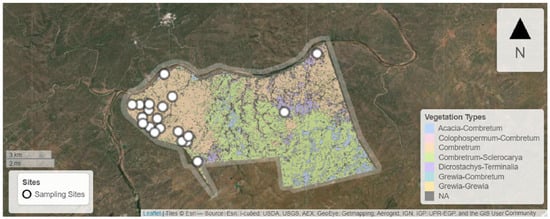
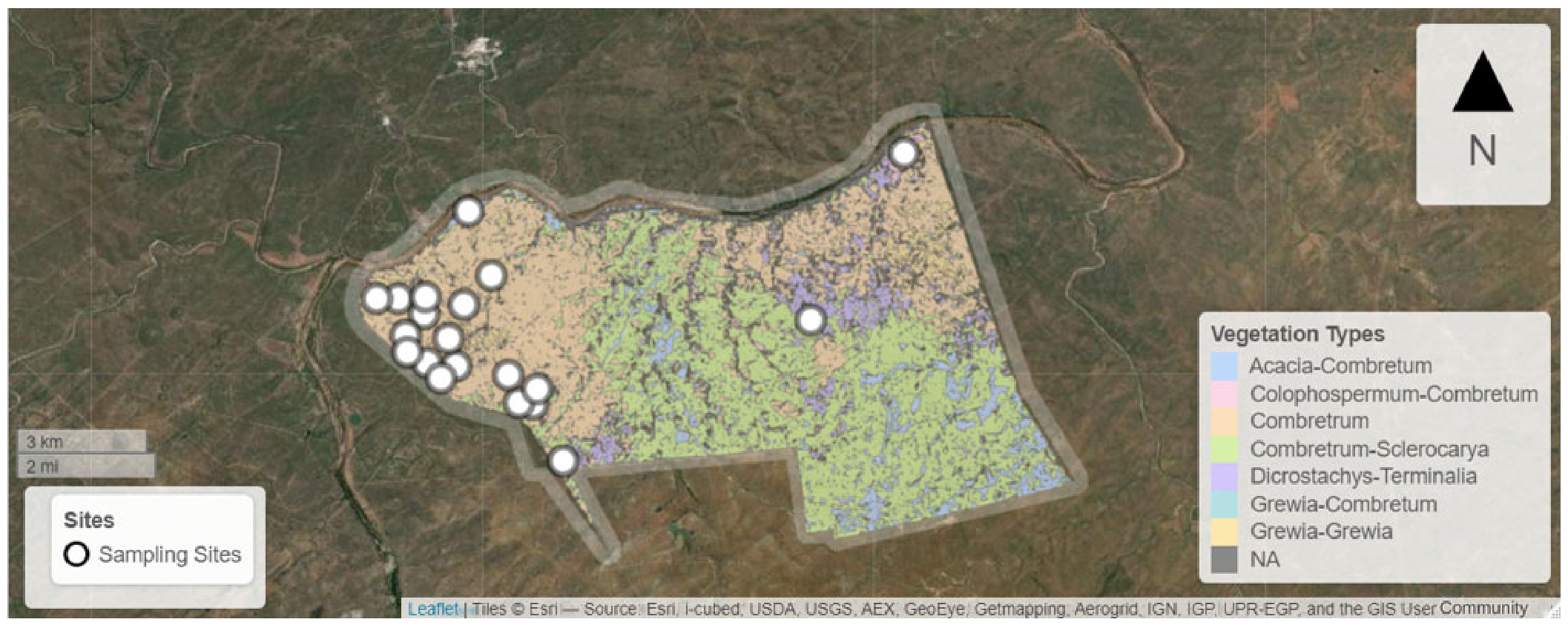
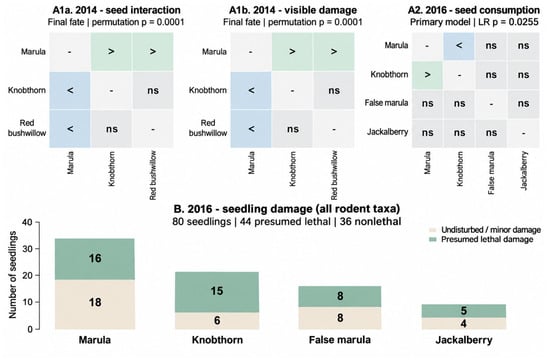
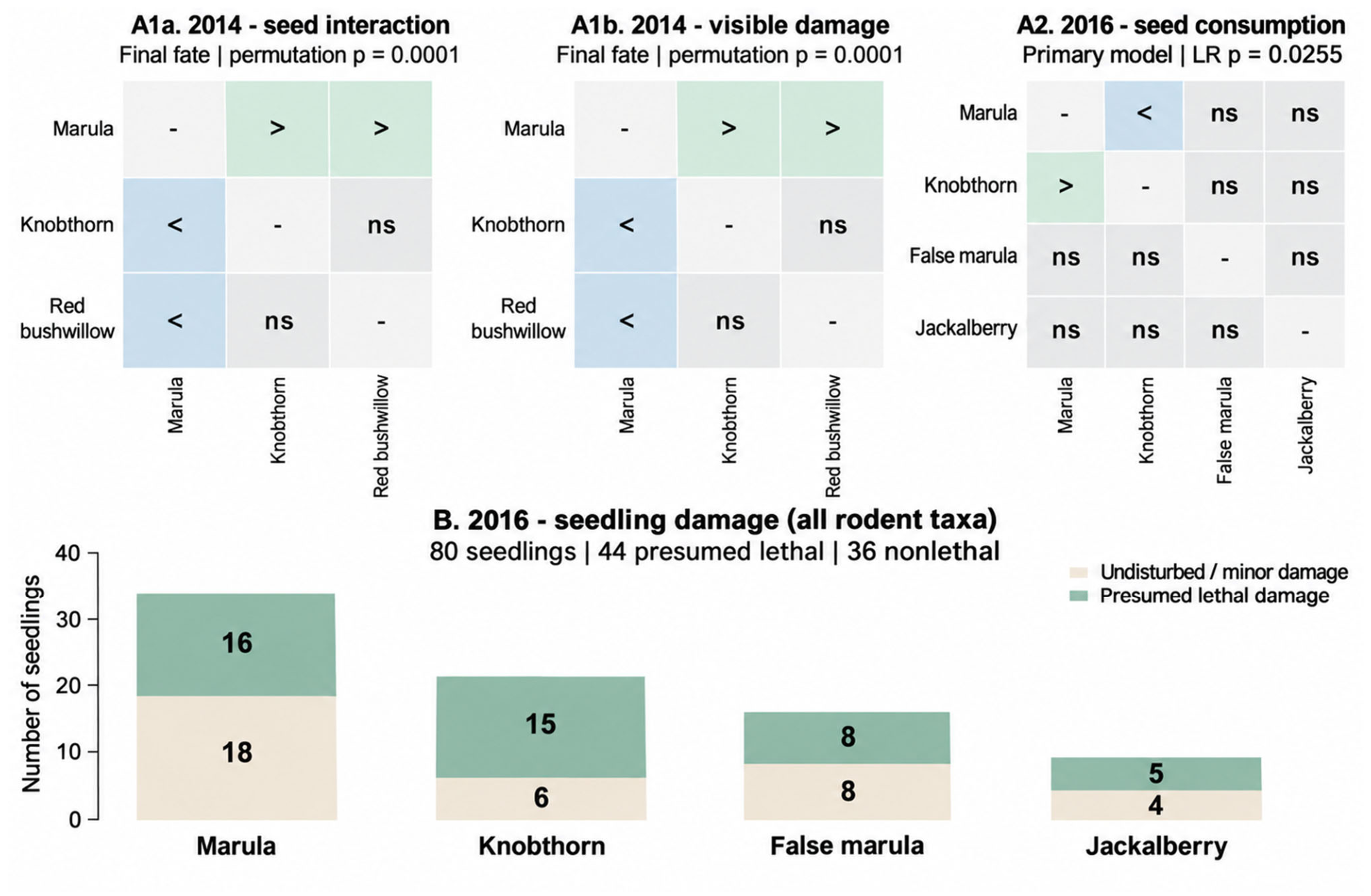
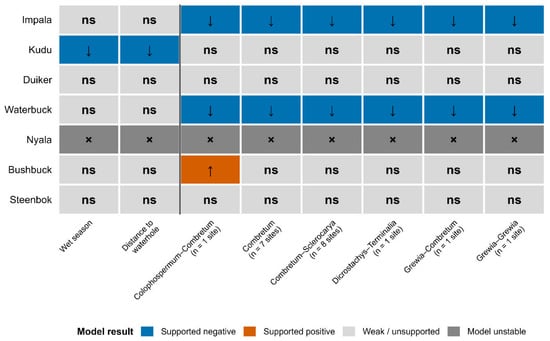
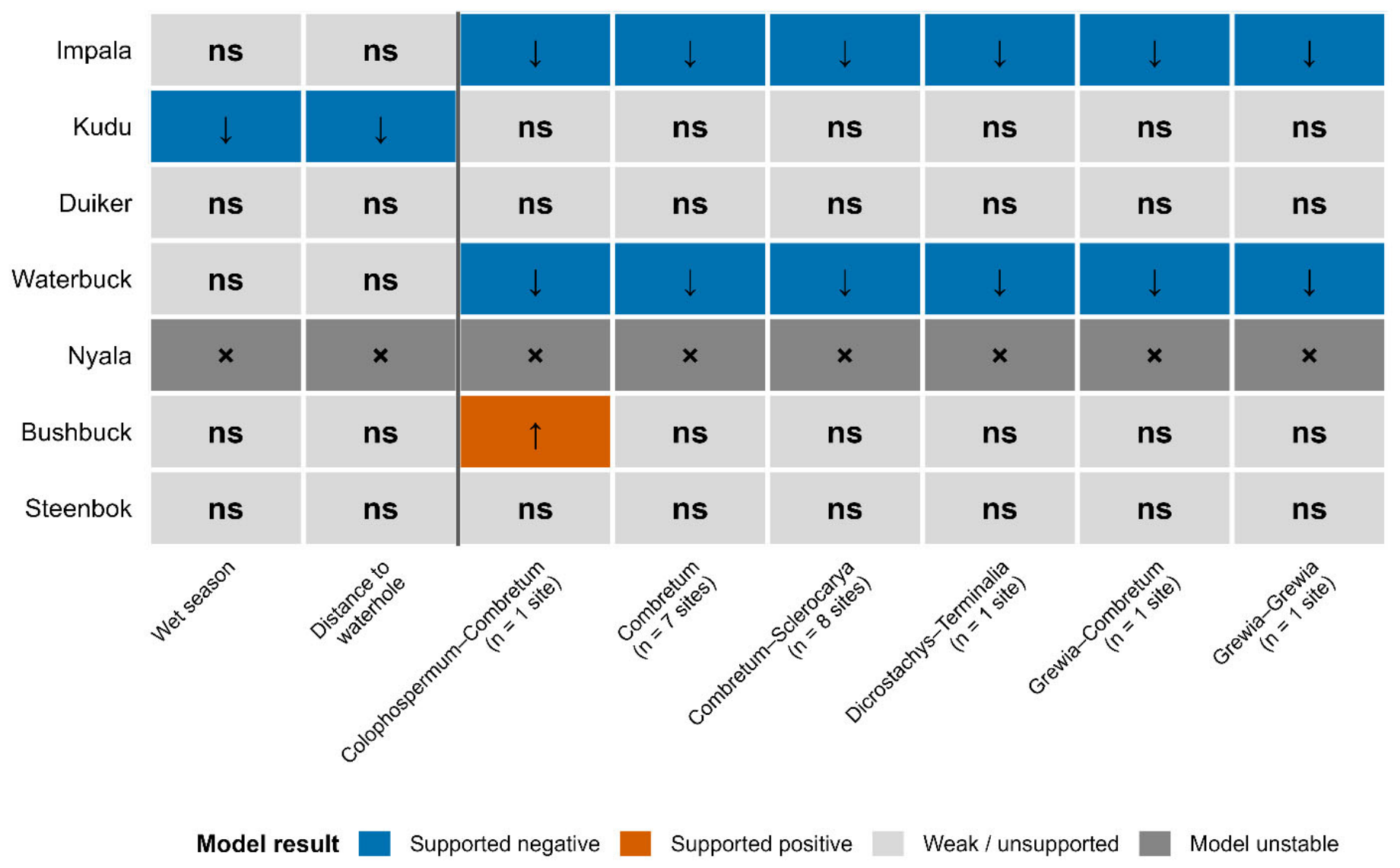

Disclaimer/Publisher’s Note: The statements, opinions and data contained in all publications are solely those of the individual author(s) and contributor(s) and not of MDPI and/or the editor(s). MDPI and/or the editor(s) disclaim responsibility for any injury to people or property resulting from any ideas, methods, instructions or products referred to in the content. |
© 2026 by the authors. Licensee MDPI, Basel, Switzerland. This article is an open access article distributed under the terms and conditions of the Creative Commons Attribution (CC BY) license.