


Abstract
Irrigation strategies are essential for agricultural production in semiarid regions. The productivity of sugar apple (Annona squamosa L.) is often limited by water deficit and edaphoclimatic factors. This study aimed to evaluate the effect of foliar proline application on the physiology, mineral composition, and yield of mature sugar apple trees under different irrigation intervals in a sandy soil. The field experiment in São Domingos-PB, Brazil, used a randomized block design with a split-plot scheme: four irrigation intervals (every 1, 4, 8, and 12 days) and two proline concentrations (0 and 10 mM). Although extending the irrigation interval compromised pigment synthesis, it maintained optimal photochemical efficiency and increased the yield of the sugar apple plants by 63.77% compared to the daily interval. The lower yield and foliar nitrogen observed under daily irrigation suggest a detrimental effect of over-watering when interacting with natural precipitation. The application of 10 mM proline provided localized physiological benefits, maintaining chlorophylls and reducing electrolyte leakage, but these effects were primarily restricted to plants under daily irrigation. Under extended intervals, the exogenous osmoprotectant failed to improve photochemical efficiency and negatively impacted yield, reducing it by approximately 28%. Based on the results obtained, the hypothesis that foliar application of proline prevents yield losses under intermittent irrigation is rejected, as the natural endogenous acclimation of mature sugar apple trees—assisted by intermittent rainfall—is more efficient than the exogenous application of proline.
1. Introduction
The sugar apple (Annona squamosa L.), also known as the sweetsop or custard apple, is a small tree belonging to the Annonaceae family. Originally from Central America, it has successfully adapted to a wide range of tropical and subtropical regions. It is particularly valued for the significant economic and nutritional contributions of its fruits, which are rich in carbohydrates, vitamins, and various phytochemicals, including phenolic compounds, saponins, and acetogenins; the latter are family-specific metabolites recognized for their antioxidant, anticancer, and antitumor properties [1].
In Brazil, the sugar apple is of considerable socioeconomic importance, particularly in the north-east region, which accounts for around 86% of national production [2]. However, agricultural development in several north-eastern states is constrained by semi-arid conditions characterized by low rainfall, high evapotranspiration rates and irregular precipitation patterns, all of which hinder optimal crop growth [3]. Water deficit, a defining characteristic of this region, adversely affects numerous biochemical and physiological processes, leading to detrimental morphological alterations and consequently impairing crop development and productivity [3,4].
Regarding the water relations of Annona species, these plants generally exhibit a moderate tolerance to seasonal dry spells; however, intermittent water restriction during critical phenological stages, such as flowering and fruit set, heavily compromises yield [5]. In semi-arid environments, the high atmospheric demand coupled with limited soil moisture induces rapid stomatal closure and internal osmotic imbalances [6]. Water deficit significantly impacts photosynthetic activity by affecting pigment synthesis and the operational efficiency of photosystems, thereby causing damage to the photosynthetic apparatus and reducing photochemical efficiency [7]. Under conditions of intermittent water supply, the structural integrity of chloroplasts is challenged, often resulting in the degradation of photosynthetic pigments and a reduction in the quantum yield of photosystem II [8].
In this context, the search for strategies to mitigate the adverse effects of water deficiency has intensified, with the use of elicitor compounds, such as foliar proline application, emerging as a promising approach. This amino acid acts as an osmoprotectant, stabilizing cellular structures and protecting proteins and membranes against degradation caused by abiotic stress factors [9,10]. In woody fruit trees, exogenously applied proline is rapidly absorbed through the leaf cuticle, where its optimal dose and timing are crucial for transiently buffering reactive oxygen species (ROS) and serving as an alternative nitrogen sink during periods of limited root uptake [11,12]. Furthermore, proline is involved in osmoregulation mechanisms and the maintenance of cellular turgor, thereby enhancing plant tolerance to adverse environmental conditions [13,14].
Previous research by our group (Torres et al., 2023) [9] evaluated the initial gas exchange and early physiological responses of this specific Annona squamosa orchard during its juvenile establishment stage under drought stress. While that study confirmed the immediate physiological sensitivity of the crop to water restriction, there remains a clear gap regarding the ontogenetic shift and long-term field acclimation of mature sugar apple trees. Specifically, it is unknown how exogenous proline affects the long-term photochemical efficiency, mineral nutrient accumulation, and final crop yield when these mature woody plants are subjected to prolonged cycles of intermittent irrigation intervals.
Accordingly, we hypothesize that foliar application of proline can alleviate the detrimental effects of extended irrigation intervals by acting as an osmoprotectant that maintains pigment synthesis and preserves photochemical efficiency, thereby supporting nutrient uptake and preventing severe yield losses in sugar apple plants. Therefore, the objective of this study was to evaluate the effects of foliar proline application on the photochemical physiology, mineral composition and yield of sugar apple cultivated under different irrigation intervals.
2. Results
The summary of the analysis of variance presented in Table 1 shows a significant interaction between irrigation intervals × proline application for the variables of chlorophyll b content (Chl b), total chlorophyll (Chl t), leaf water saturation deficit (WSD), electrolyte leakage (EL), maximum fluorescence (Fm), variable fluorescence (Fv), nitrogen (N), sulfur (S), and yield (Y). The isolated effect of the irrigation interval was significant for chlorophyll a (Chl a), phosphorus (P), and carotenoid (Car) contents. For the other variables, no significant effects of the studied factors were observed.
Table 1.
Summary of the analysis of variance for chlorophyll a (Chl a), b (Chl b), total (Chl t), carotenoids (Car), leaf water saturation deficit (WSD), electrolyte leakage (EL), initial (F0), maximum (Fm), and variable fluorescence (Fv), quantum efficiency of photosystem II (Fv/Fm), nitrogen (N), phosphorus (P), potassium (K), sulfur (S), sodium (Na), chloride (Cl) content and yield (Y) of sugar apple (Annona squamosa L.) cultivated under different irrigation intervals (II) and foliar application of proline (P), at 894 days after transplanting (DAT).
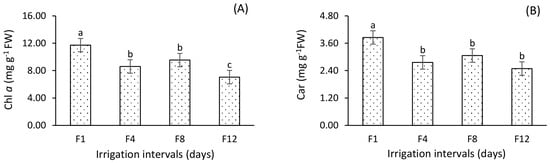
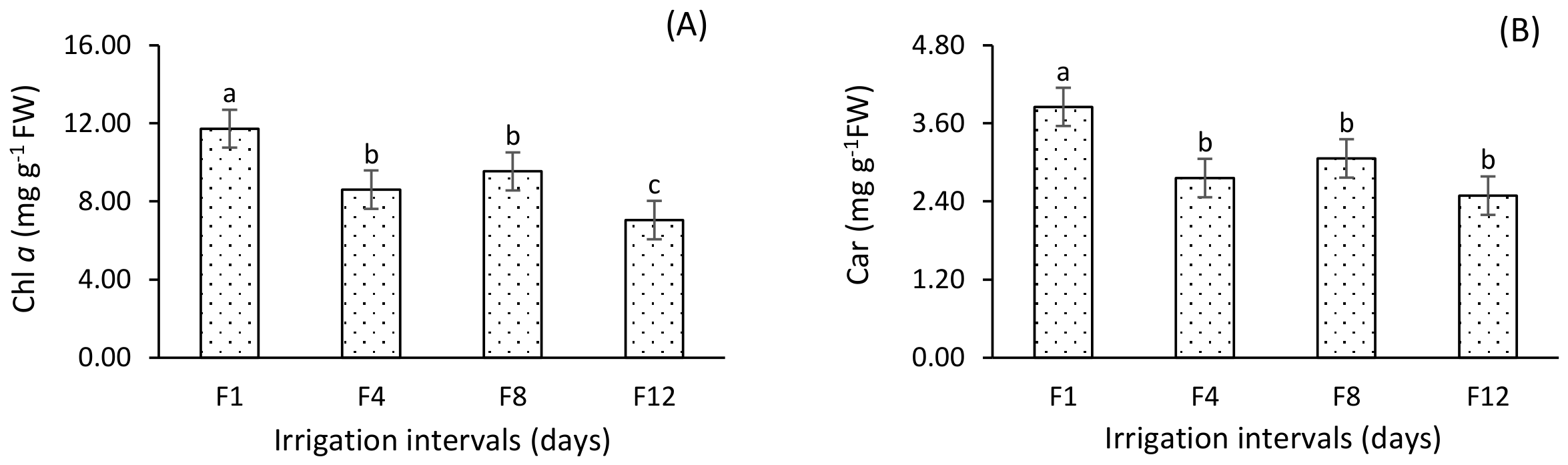
Increasing the interval between irrigation events was detrimental to chlorophyll a synthesis in sugar apple (Figure 1A), with the highest value observed in plants maintained under daily irrigation (F1: 11.73 mg g−1 FW). Compared to F1, extending the irrigation interval to 4, 8, and 12 days resulted in significant reductions of 26.68%, 18.75%, and 39.72%, respectively, with F12 showing the lowest absolute value (7.07 mg g−1 FW). A similar pattern was observed for the carotenoid content (Figure 1B), with the highest value in daily irrigated plants (3.85 mg g−1 FW); increasing irrigation intervals to F4, F8, and F12 led to reductions of 28.31%, 20.51%, and 35.32% respectively, compared to F1, although no significant differences were found among the extended irrigation treatments.
Figure 1.
Chlorophyll a—Chl a (A) and carotenoid—Car (B) contents of sugar apple as a function of irrigation interval at 894 DAT. Means followed by different letters differ significantly by Tukey’s test (p ≤ 0.05). Vertical bars represent the standard error of the mean (n = 4).
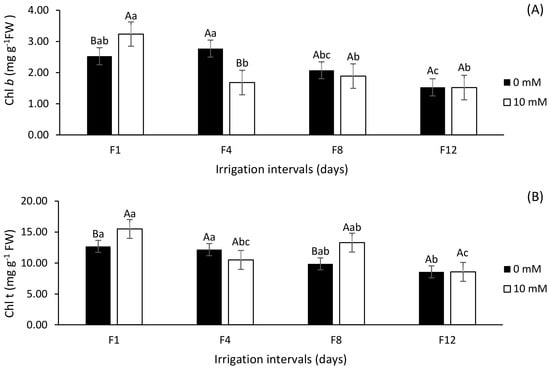
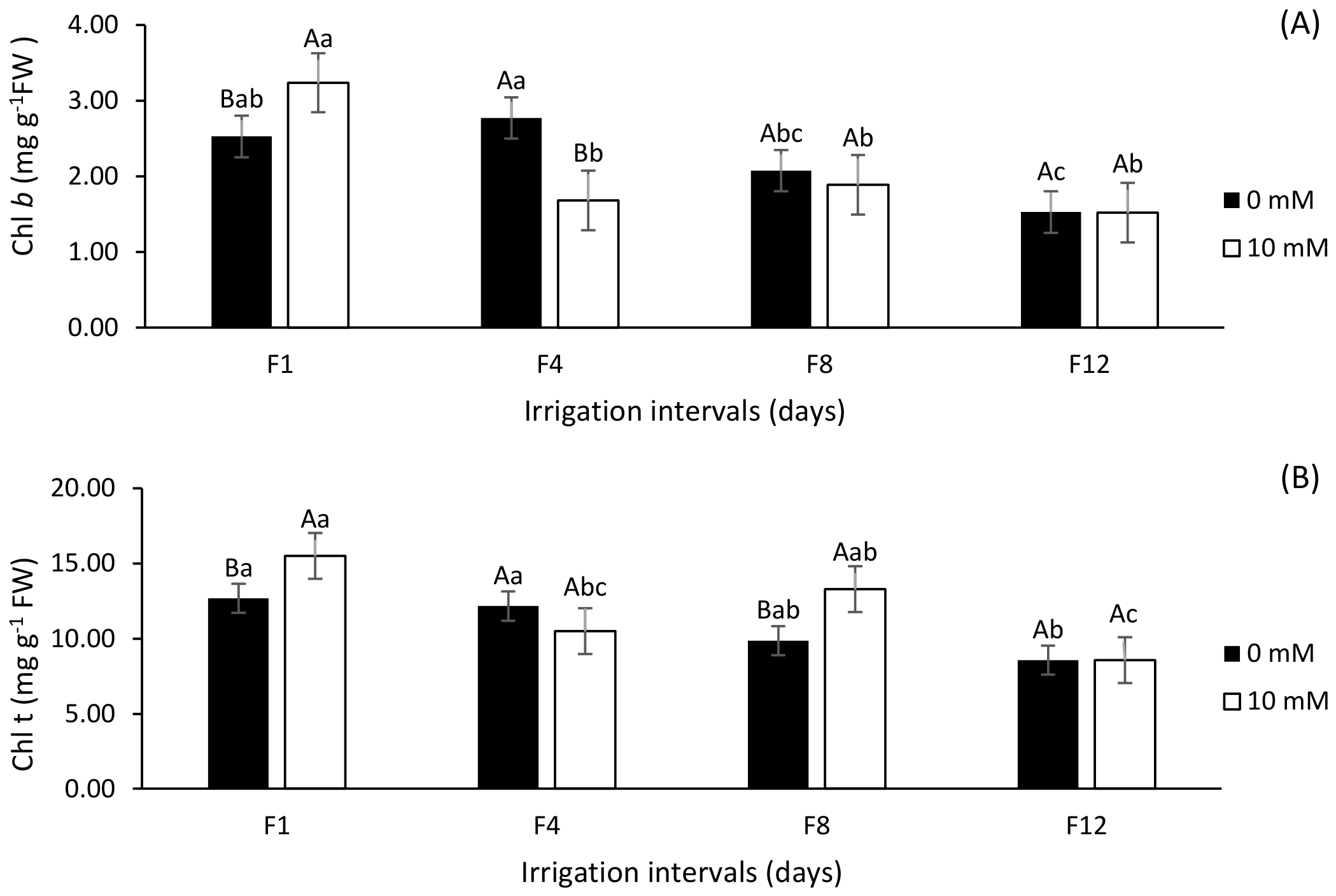
Foliar chlorophyll b content under a 4-day irrigation interval showed the highest value (2.77 mg g−1 FW), which was 34.0% and 81.0% higher than the values observed under F8 (2.06 mg g−1 FW) and F12 (1.53 mg g−1 FW), respectively, but did not differ from F1 (2.53 mg g−1 FW) (Figure 2A). Compared to F1, a significant reduction in Chl b was only observed under F12 (−39.52%). Proline application increased Chl b only under F1, with a 28.06% increase relative to untreated plants, representing the highest value among irrigation regimes. In contrast, a 39.35% reduction was observed under F4 with the 10 mM proline application. No significant differences were found in the other treatments.
Figure 2.
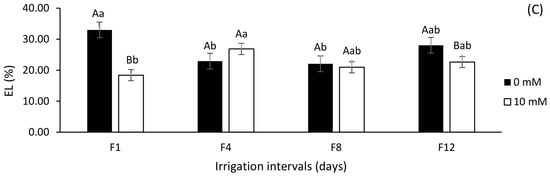
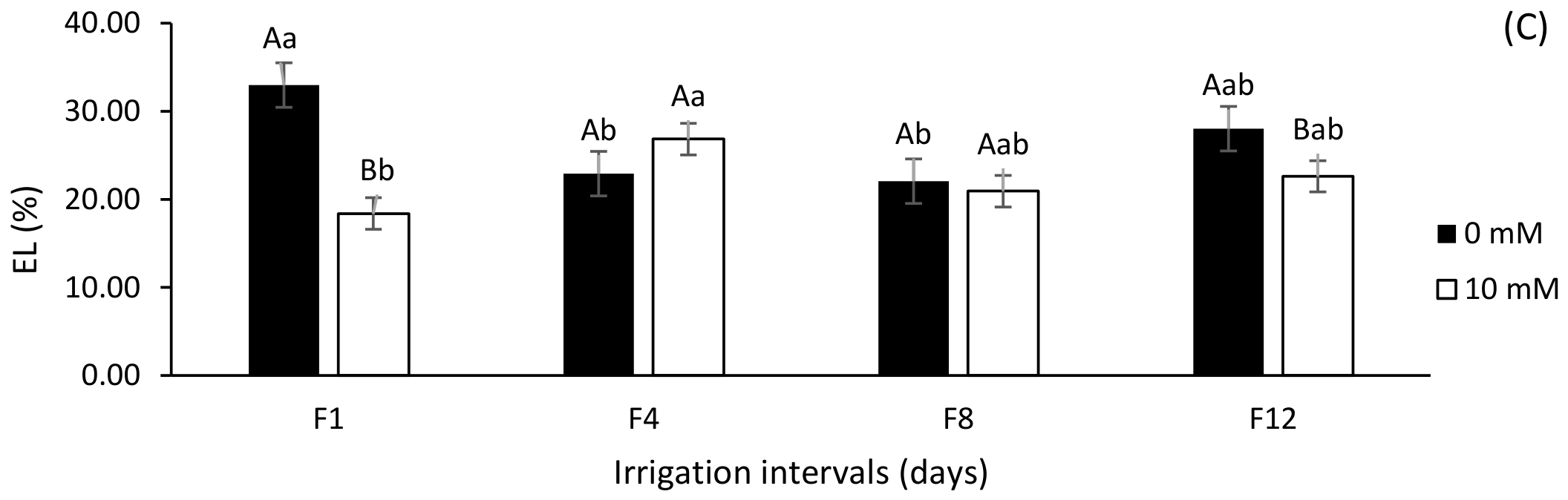
Chlorophyll b—Chl b (A), total chlorophyll—Chl t (B), and electrolyte leakage—EL (C) of sugar apple as a function of the interaction between irrigation interval and proline application, at 894 DAT. Within each proline level, bars with the same lowercase letter do not differ significantly between irrigation intervals (Tukey, p ≤ 0.05); within each irrigation interval, bars with the same uppercase letter indicate no significant difference between proline concentrations by the F test (p ≤ 0.05). Vertical bars represent the standard error of the mean (n = 4).
For total chlorophyll content (Figure 2B), a significant reduction relative to F1 was observed only under F12 (−32.49%). Proline application increased Chl t under F1 and F8 by 22.24% and 34.68%, respectively. The highest Chl t value (15.50 mg g−1 FW) was recorded under F1 treated with proline, which was 47.48% and 80.86% higher than those under F4 and F12 with the same treatment, respectively.
Electrolyte leakage in untreated plants was highest under F1 (33.01%), with no significant difference compared to F12 (28.06%). A decline was observed under F4 and F8, with reductions of 30.50% and 33.08%, respectively, compared to F1 (Figure 2C). Proline application reduced EL under F1 and F12 by 44.23% and 19.35%, respectively. The lowest EL value among proline-treated plants was recorded under F1 (18.41%), which was 31.45% lower than F4 (26.86%).
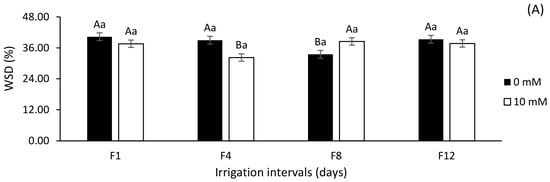
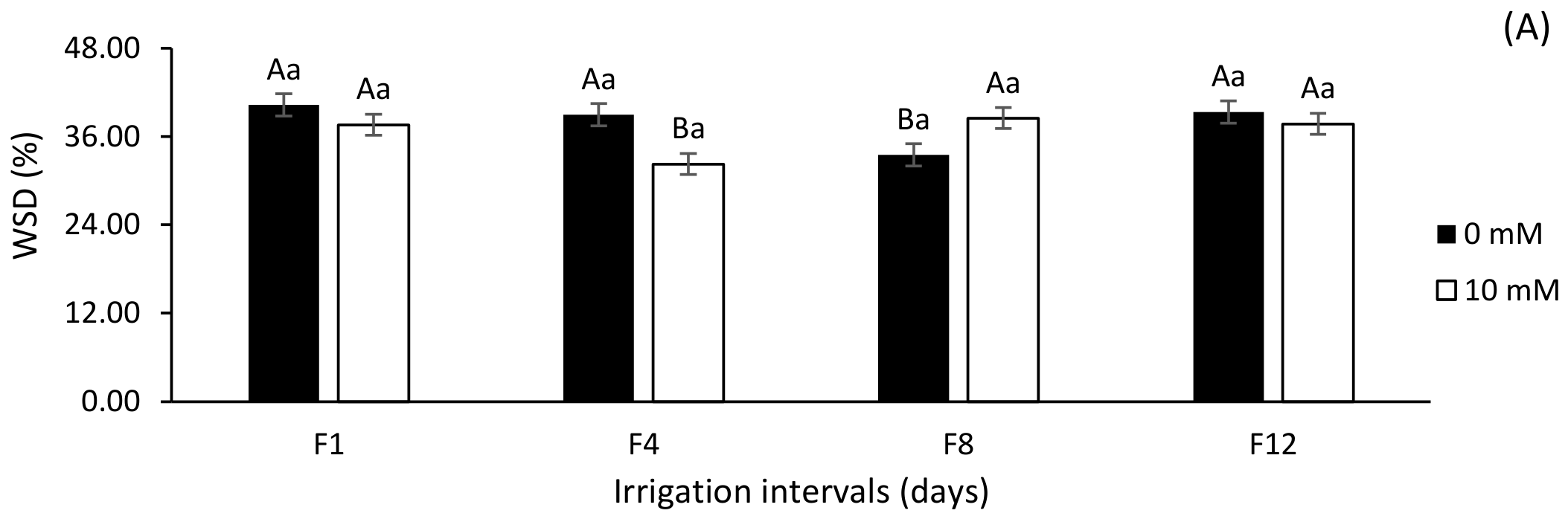
Water saturation deficit in untreated plants was only significantly affected under F8 (Figure 3A), with the lowest value among the intervals (33.52%), increasing to 38.50% with 10 mM proline—an increase of 14.86%. In contrast, proline application under F4 reduced WSD by 17.17%, with no significant differences in the other treatments.
Figure 3.
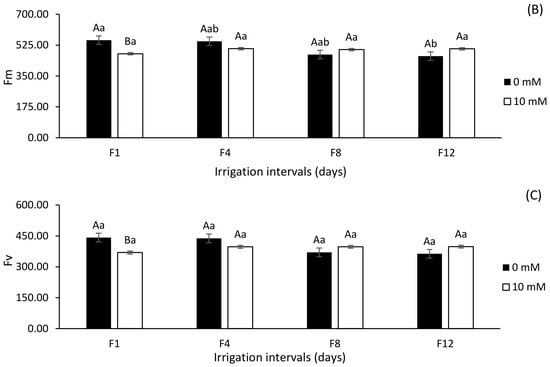
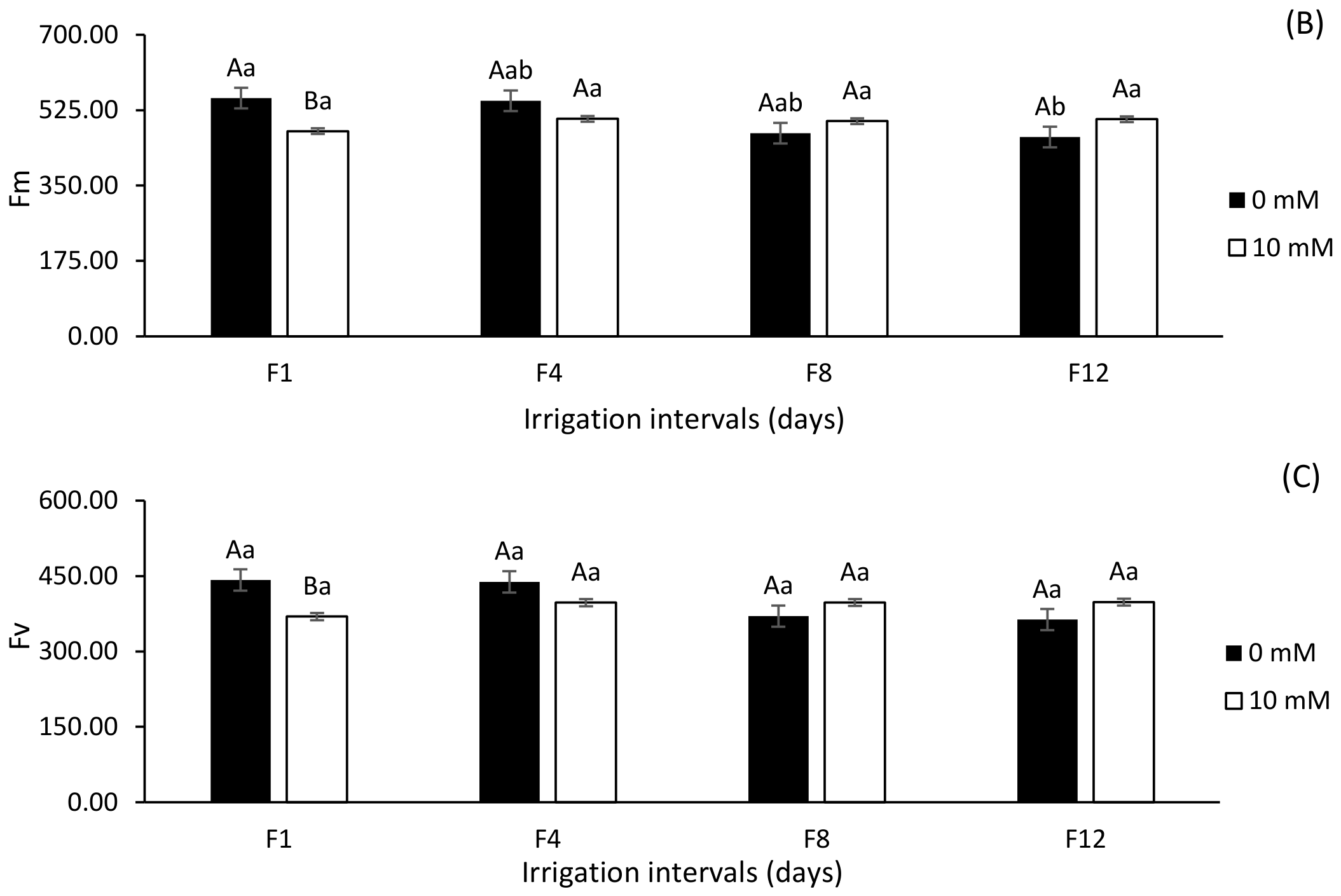
Leaf water saturation deficit—WSD (A), maximum fluorescence—Fm (B), and variable fluorescence—Fv (C) of sugar apple as a function of the interaction between irrigation interval and proline at 894 DAT. Within each proline level, bars with the same lowercase letter do not differ significantly between irrigation intervals (Tukey, p ≤ 0.05); within each irrigation interval, bars with the same uppercase letter indicate no significant difference between proline concentrations by the F test (p ≤ 0.05). Vertical bars represent the standard error of the mean (n = 4).
For maximum fluorescence (Figure 3B), untreated plants under F12 showed a 16.34% reduction compared to F1 (553.13). Under F1, 10 mM proline caused a 13.87% decrease (476.38), with no significant difference in Fm among the other irrigation treatments. Variable fluorescence showed no significant differences among the irrigation intervals, with or without proline (Figure 3C). However, under F1, plants treated with 10 mM proline exhibited a 16.47% reduction in Fv compared to untreated plants, although no significant differences were found under the other intervals.
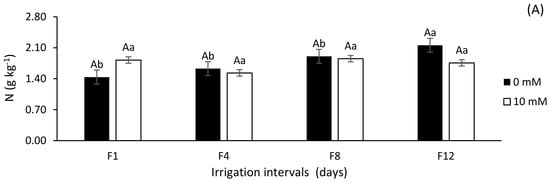
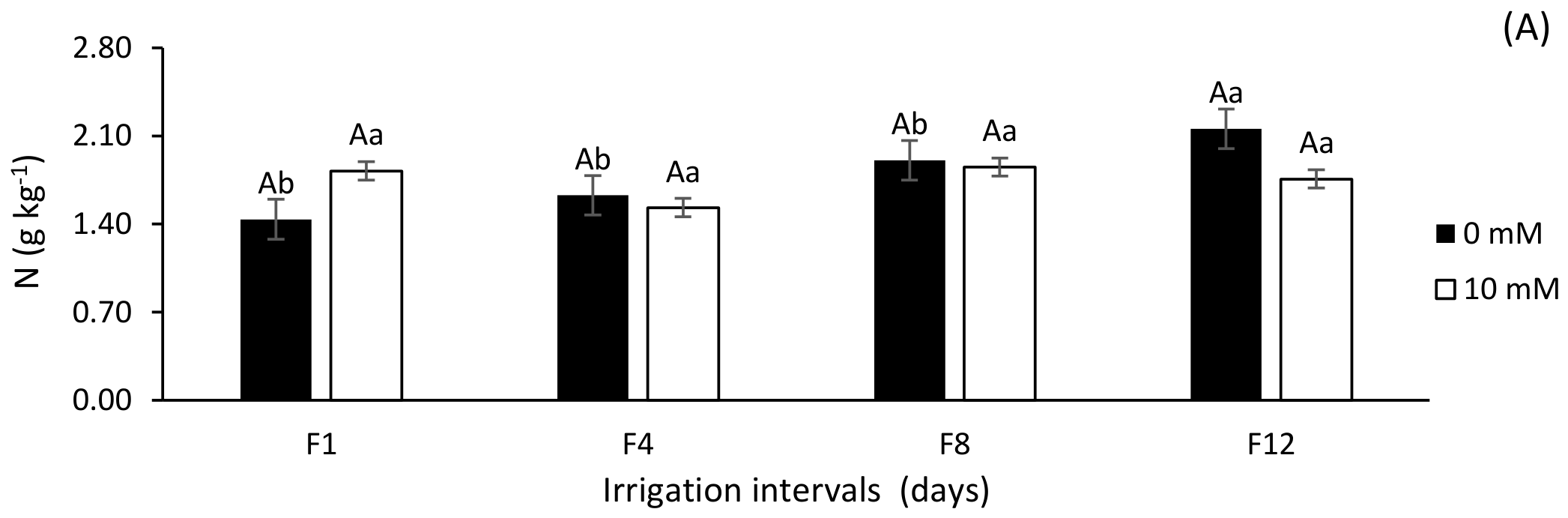
Nitrogen content in untreated plants increased with the irrigation interval (Figure 4A) from 14.40 g kg−1 under F1 to 21.60 g kg−1 under F12: a 50% increase. With proline application, N content in F12 decreased to 17.60 g kg−1, but this difference was not significant compared to untreated plants, and no significant differences were found among the other treatments.
Figure 4.
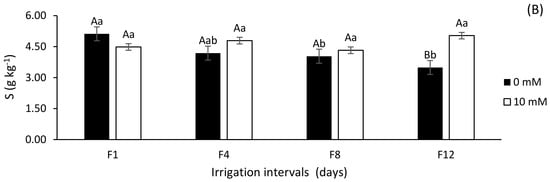
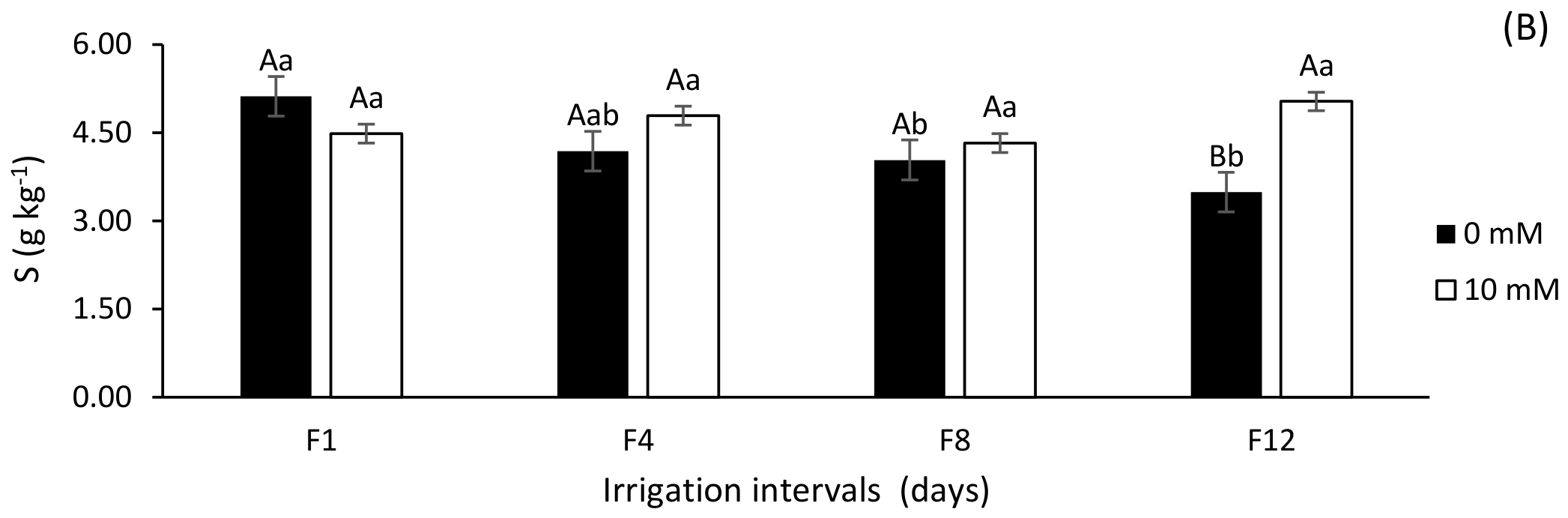
Foliar nitrogen—N (A) and sulfur—S (B) contents of sugar apple as a function of the interaction between irrigation interval and proline at 894 DAT. Within each proline level, bars with the same lowercase letter do not differ significantly between irrigation intervals (Tukey, p ≤ 0.05); within each irrigation interval, bars with the same uppercase letter indicate no significant difference between proline concentrations by the F test (p ≤ 0.05). Vertical bars represent the standard error of the mean (n = 4).
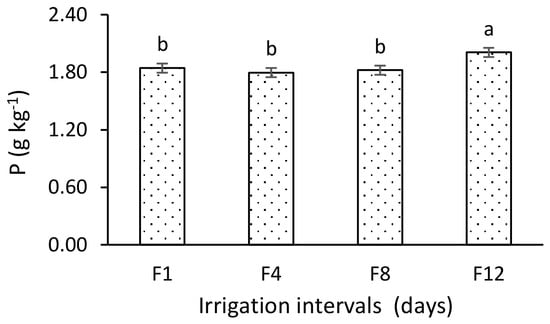
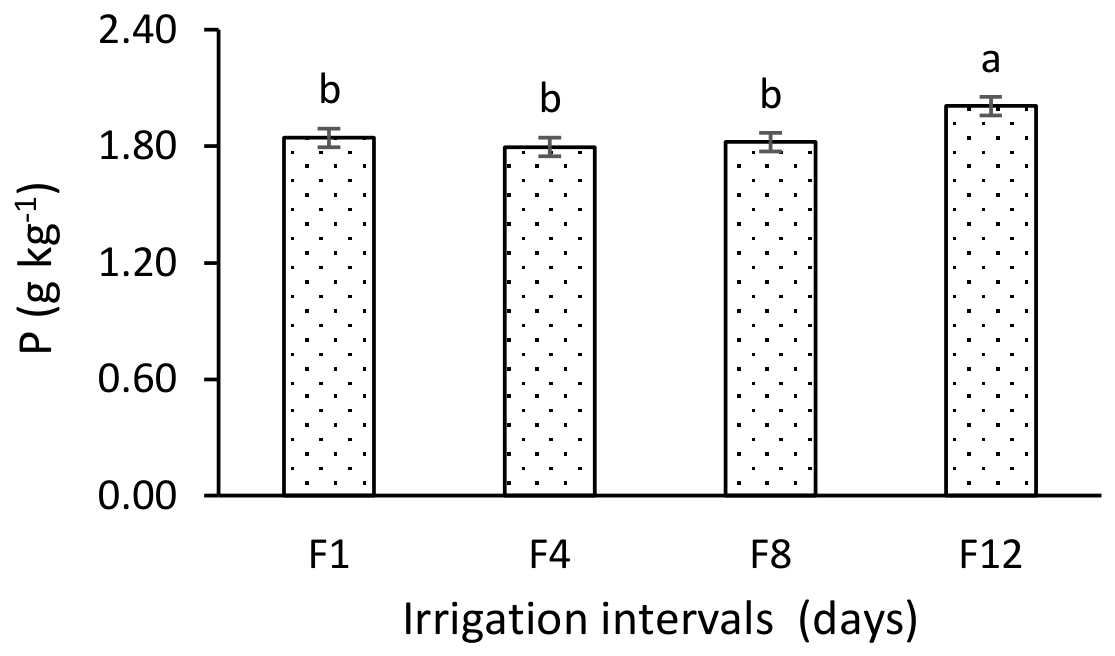
For sulfur content (Figure 4B), the lowest value was observed under F12 (3.49 g kg−1), which represents a 31.83% reduction compared to the highest value observed under F1 (5.12 g kg−1). Proline application under F12 increased the sulfur content to 5.03 g kg−1, 44.13% higher than untreated plants at the same interval. The behavior of sulfur contrasts with the phosphorus data (Figure 5), where F12 (2.01 g kg−1) showed a 9.24% increase over F1 (1.84 g kg−1).
Figure 5.
Foliar phosphorus content of sugar apple as a function of irrigation interval at 894 DAT. Means followed by different letters differ significantly by Tukey’s test (p ≤ 0.05). Vertical bars represent the standard error of the mean (n = 4).
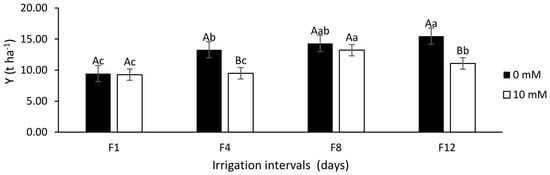
Productivity of untreated sugar apple plants increased with the irrigation interval (Figure 6), with the lowest value under F1 (9.44 t ha−1), increasing by 40.47%, 51.48%, and 63.77% under F4, F8, and F12, respectively, and F12 showed the highest yield (15.46 t ha−1), not differing from F8 but 16.59% higher than F4. With proline, yield decreased by 28.43% and 28.34% under F4 and F12, respectively, with no differences under the other treatments.
Figure 6.
Yield (Y) of sugar apple as a function of the interaction between irrigation interval and proline at 894 DAT. Within each proline level, bars with the same lowercase letter do not differ significantly between irrigation intervals (Tukey, p ≤ 0.05); within each irrigation interval, bars with the same uppercase letter indicate no significant difference between proline concentrations by the F test (p ≤ 0.05). Vertical bars represent the standard error of the mean (n = 4).
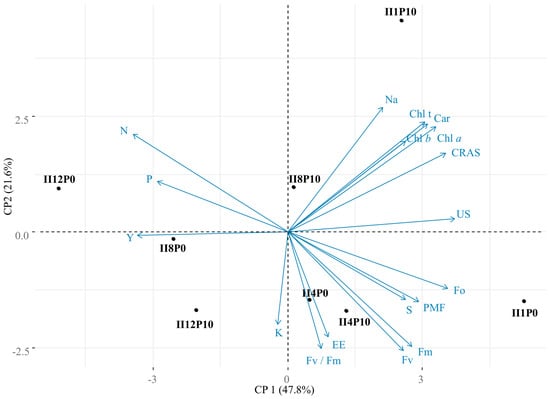
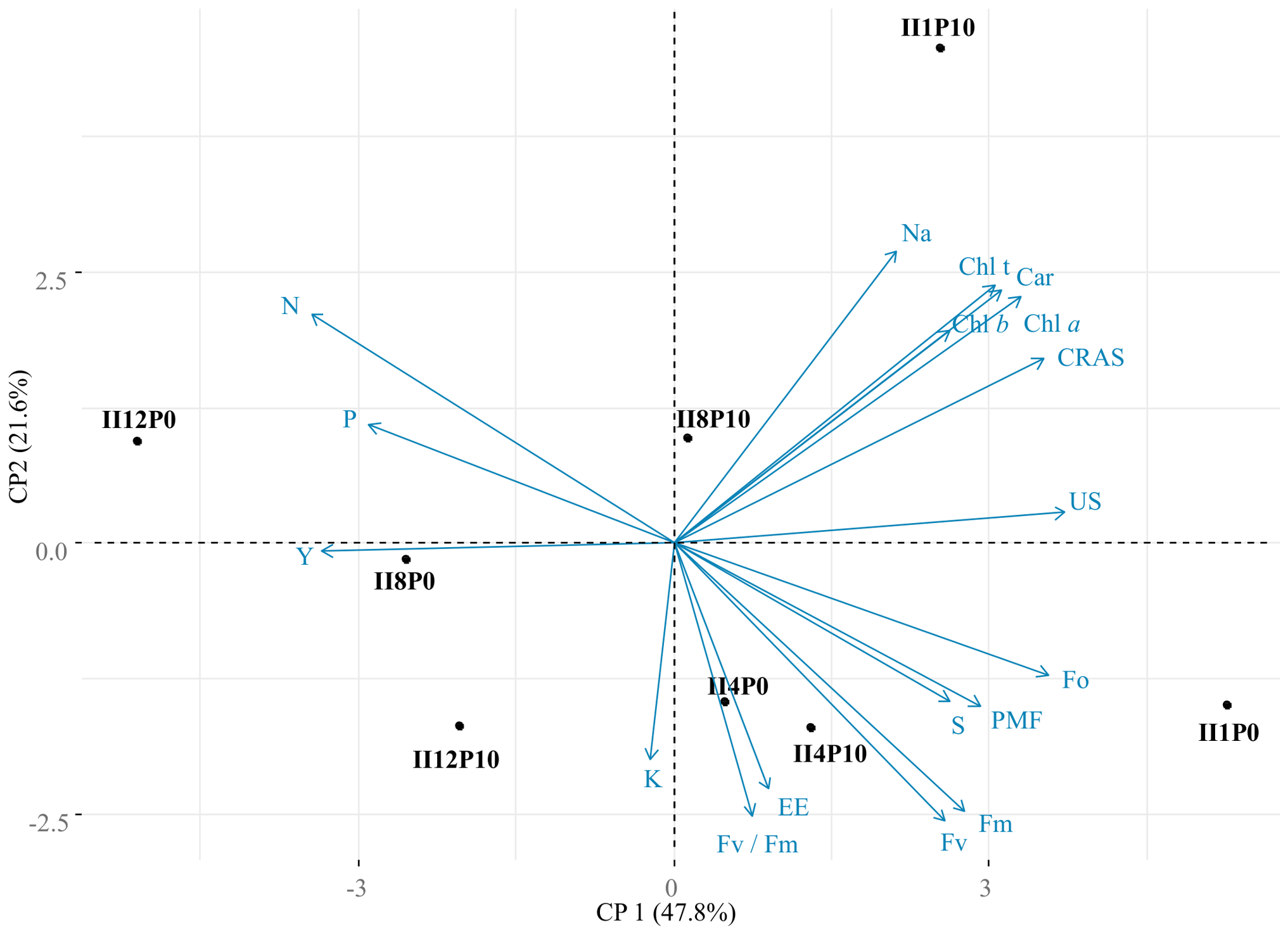
As a descriptive exploratory tool to understand multivariate trends among the evaluated variables across the eight treatment means, the principal component analysis (PCA) (Figure 7) was applied to the treatment means. The first two components (PC1 and PC2) explained most of the variation, accounting for 73.2% of the total. PC1 contributed 47.2% and was associated with treatments F8P0 and F12P0 (i.e., 8- and 12-day irrigation intervals without proline), correlating yield and foliar contents of N and P (loadings: 0.8096; 0.8340; and 0.7022, respectively).
Figure 7.
Principal component analysis (PCA) showing the interrelationships among photochemical, nutritional, and productivity variables of sugar apple under irrigation intervals and foliar proline application. Factors: II = irrigation intervals (every 1, 4, 8, and 12 days) and P = proline (P0 = 0 mM, P10 = 10 mM). Variables: Photosynthetic pigments: chlorophyll a (Chl a), b (Chl b), total (Chl t), and carotenoids (Car); membrane integrity: electrolyte leakage (EL); chlorophyll a fluorescence: Initial (F0), maximum (Fm), variable (Fᵥ), and maximum quantum efficiency of photosystem II (Fᵥ/Fm); nutrient content: nitrogen (N), phosphorus (P), sulfur (S), and sodium (Na+); Yield (Y).
The second component (PC2) accounted for 26.0% of total variation, especially that associated with treatment F4P10, which was highly correlated with Fm and Fv (loadings: 0.5988 and 0.6206, respectively), and treatment F4P0 correlated with electrolyte leakage (EL) and photosystem II quantum yield (Fv/Fm) (loadings: 0.5981 and 0.6080, respectively).
3. Discussion
Extending the irrigation interval to 4, 8, and 12 days prompted distinct physiological adjustments in the mature sugar apple trees. The reduction in chlorophylls and carotenoids observed at these extended intervals, rather than indicating structural degradation, is hypothesized to reflect a morphological acclimation strategy [15]. By down-regulating pigment concentration, plants might limit light energy absorption to avoid photodamage under the fluctuating water availability of intermittent regimes, although specific measurements of xanthophyll cycle components or non-photochemical quenching are required to confirm this hypothesis [16].
The maintenance of optimal photochemical efficiency (Fv/Fm around 0.79) and the reduction in electrolyte leakage at longer irrigation intervals (F8 and F12) in untreated plants indicate a robust endogenous acclimation of the crop. This physiological resilience must be contextualized within the long-term nature of the experiment. The plants evaluated in this study had been subjected to these intermittent irrigation regimes for over two years, a prolonged exposure that favors the development of deep root systems and structural adaptations. In plants, long-term acclimation to fluctuating water availability is commonly mediated by phytohormonal signaling networks—such as auxin and abscisic acid—which integrate environmental cues to modulate root architecture and stress-responsive pathways [17]. Although hormonal profiles were not quantified in the present study, such established endogenous mechanisms likely underpin the capacity of mature trees to buffer surface water fluctuations.
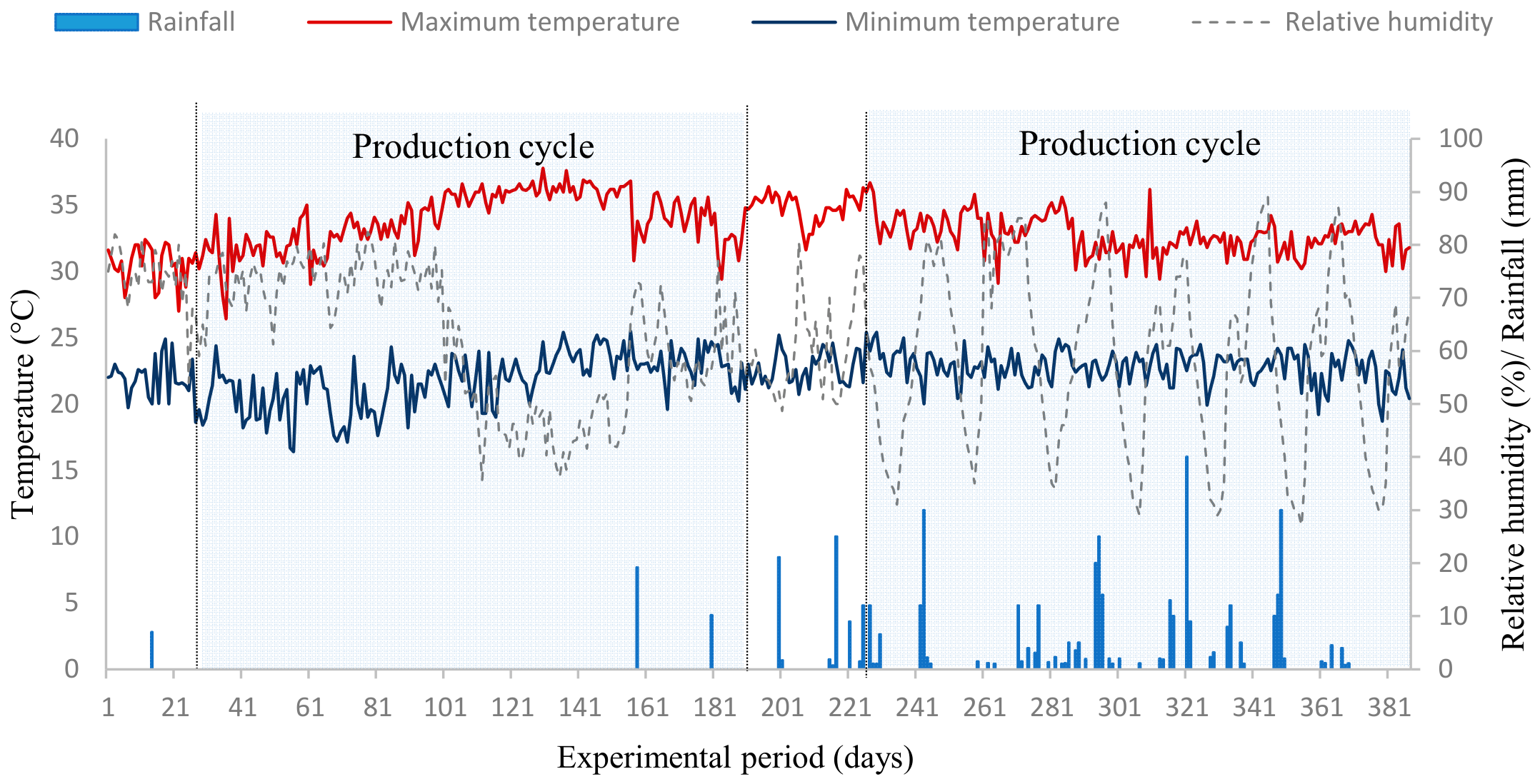
Furthermore, the climatic conditions during the evaluated cycles significantly mitigated the severity of the water restriction, explaining the absence of drastic physiological damage under the 12-day interval. Although the region is semi-arid, the experiment coincided with a period of milder temperatures, with the maximums remaining below 35 °C—which, while elevated, do not represent the extreme historical peaks of the region—and relative humidity levels remaining above the critical 20% threshold. More importantly, the occurrence of natural precipitation (378.3 mm in the third and final evaluated cycle) was accompanied by prolonged periods of cloud cover. These cloudy, rainy days drastically reduced the incident solar radiation and the transpirational demand of the canopy. The combination of reduced atmospheric demand, supplementary rainfall, and a well-developed deep root system enabled the plants to effectively navigate the 12-day intervals without severe water deficit.
This deep root exploration and climatic buffering also elucidate the nutritional and yield responses, highlighting a critical interaction between irrigation management and soil physics. Although the daily irrigation interval (F1) rigorously replenished the crop evapotranspiration (ETc), it resulted in the lowest overall yield and foliar nitrogen concentration (14.40 g kg−1). The experimental area features a sandy soil (758.80 g kg−1 of sand), which naturally has high macroporosity, fast drainage, and low water retention. By receiving daily irrigation, the soil profile in F1 was consistently maintained near field capacity. Even though scheduled irrigation events were dynamically recalculated during rainy periods, any subsequent unpredicted rainfall lacked the empty pore space (aeration buffer) to be accommodated. Because true waterlogging is highly transient in sandy soils due to rapid percolation, prolonged root hypoxia was likely avoided; however, this rapid drainage of excess water severely intensified deep percolation, causing the severe leaching of mobile nutrients like nitrate [18]. In contrast, the wetting and drying cycles under the extended intervals (F12) allowed the matric potential to oscillate. This dynamic enabled the sandy profile to effectively absorb natural rainfall, minimizing deep percolation and allowing for better nutrient retention and active root uptake.
This endogenous acclimation becomes remarkably evident when contrasting the current results with the initial developmental stage of this orchard. During the first productive cycle (evaluated at 298 and 501 DAT), Torres et al. (2023) [9] reported that the 12-day irrigation interval severely reduced the stomatal conductance and CO2 assimilation rate of these sugar apple plants. At that juvenile stage, the foliar application of 10 mM proline effectively mitigated the water restriction, increasing photosynthetic pigments and fruit fresh mass. However, our current results at 894 DAT reveal a distinct ontogenetic shift. Over two years of continuous field exposure, the mature trees likely developed deeper root exploration and endogenous acclimation mechanisms, fundamentally altering their response to both the extended intervals and the exogenous elicitor.
Regarding the foliar application of 10 mM proline in the current mature stage, the exogenous elicitor yielded inconsistent and limited benefits. Exogenously applied proline is known to be absorbed through the cuticle, translocated, and utilized to scavenge reactive oxygen species (ROS) and stabilize membranes [19,20]. Under daily irrigation (F1), where plants faced severe nutrient leaching, proline successfully reduced electrolyte leakage and increased chlorophyll b and total chlorophyll. However, it simultaneously reduced the variable and maximum fluorescence (Fv and Fm). Furthermore, while proline increased total chlorophyll under the 8-day interval, this biochemical gain did not translate to higher productivity.
Ultimately, the application of proline under the 4- and 12-day intervals caused significant yield reductions (approximately 28%) in mature trees. This contrasts sharply with the benefits observed in the first cycle [13], strongly suggesting a developmentally dependent metabolic cost associated with the elicitor. We hypothesize that the energy expended by the mature plant in the uptake, compartmentalization, and catabolism of exogenous proline into glutamate might act as a physiological burden [21] when the plant’s endogenous acclimation mechanisms, bolstered by years of field adaptation, reduced transpirational demand during rainy days, and the effective storage of rainfall in the aerated soil profile, are already sufficient to handle the environmental conditions. The highest yield achieved under F12 without proline confirms that optimizing the irrigation interval to respect the soil’s water retention capacity and prevent nutrient leaching is a far more effective and cost-efficient strategy for mature sugar apple orchards than applying exogenous osmoprotectants.
4. Materials and Methods
4.1. Experiment Location
The research was conducted in the fruit-growing sector located at the experimental farm “Rolando Enrique Rivas Castellón”, part of the Center for Sciences and Agri-Food Technology (CCTA) of the Federal University of Campina Grande (UFCG), in São Domingos, Paraíba, Brazil, located at 06°48′50″ S latitude and 37°56′31″ W longitude, at an altitude of 190 m. According to the Köppen classification, the region has a hot semi-arid climate (BSh), characterized by an average annual temperature of 27 °C, average annual rainfall of 840 mm, and annual evapotranspiration exceeding 1280 mm. Rainfall is predominantly concentrated in the first half of the year due to the influence of the Intertropical Convergence Zone [22].
4.2. Experimental Design
The treatments were arranged in a randomized block design in a split-plot scheme, with the main plots consisting of four irrigation intervals (1—F1, 4—F4, 8—F8, and 12—F12 days) and the subplots represented by proline applications (0 and 10 mM), with four replications. The irrigation intervals were selected to simulate the intermittent drought cycles typical of the Brazilian semi-arid region, establishing a gradient of water availability. Each plot comprised four useful plants, totaling 128 observational units. The data collected from the four plants in each plot were averaged to represent a single experimental unit for statistical analysis. Border rows were included to minimize edge effects and interference between adjacent plots and plants. The proline application level (10 mM) was established based on the study by Lima et al. [23] as a standard reference for osmoprotectant elicitation.
4.3. Conducting the Experiment
The plant material consisted of a local (crioula) population of sugar apple (Annona squamosa L.), the most widely cultivated genotype by local farmers in the region. Seeds were extracted from healthy, fully mature fruits selected from highly productive matrix trees within the municipality to ensure regional adaptability, acknowledging the inherent genetic variability of unselected populations. Seedlings were produced in a greenhouse located at the “Rolando Enrique Rivas Castellón” experimental farm.
Soil preparation included plowing followed by harrowing to uproot and level the area. Soil samples were collected at a depth of 0–30 cm, and the physical and chemical characteristics (Table 2) were determined according to the methodology of Teixeira et al. [24].
Table 2.
Chemical and physical properties of the soil used in the experiment, prior to treatment application.
After soil preparation, the area was marked, and planting holes were dug using a post hole digger, with a spacing of 3 m between rows and 3 m between plants. Each hole measured 40 × 40 × 40 cm. Fertilization consisted of 10 L of cattle manure and 40, 60 and 60 g per plant of N, P2O5 and K2O, using urea (45% N), potassium chloride (60% K2O) and single superphosphate (21% P2O5; 11% S; 18% Ca) as nutrient sources. Additional NPK fertilization was applied biweekly through fertigation, supplying 100, 80 and 40 g per plant of N, P2O5 and K2O, respectively, as recommended by Silva and Silva [25]. This fertigation was scheduled independently of the water restriction treatments via concentrated injection, ensuring all plants received the exact same nutrient dose. Seedling transplanting was performed 120 days after emergence. Micronutrients were applied biweekly via foliar spraying with Dripsol Micro® (Candeias, BA, Brazil) (Mg2+ = 1.1%; B = 0.85%; Cu (Cu-EDTA) = 0.5%; Fe (Fe-EDTA) = 3.4%; Mn (Mn-EDTA) = 3.2%; Mo = 0.05%; Zn = 4.2%; containing 70% EDTA chelating agent) at a concentration of 1 g L−1.
Throughout the experiment, formation and fruiting pruning were conducted to standardize and optimize plant architecture. Formation pruning involved removing the apical bud when plants reached 40 cm in height to induce lateral branch development. Once the lateral branches formed, additional pruning was performed, leaving four scaffold branches each 40 cm long.
The irrigation system used was a localized drip system, consisting of 32 mm PVC pipes for the main line and 16 mm low-density polyethylene pipes for lateral lines, equipped with 10 L/h drip emitters. Two self-compensating emitters (GA 10 Grapa model) were installed per plant, placed 15 cm from the stem. The Christiansen Uniformity Coefficient (CUC) and the Distribution Uniformity Coefficient (DUC) were evaluated prior to the treatments, presenting values of 92% and 89%, respectively, as described by Christiansen [26] and Criddle [27].
Irrigation water came from an artesian well located on the experimental farm, with an electrical conductivity of 0.9 dS m−1 during the study period. The irrigation management was established based on crop evapotranspiration (ETc), calculated by multiplying the reference evapotranspiration (ETo) by the crop coefficient (Kc). ETo was determined daily using data from a Class A evaporation pan [28]. Crop coefficients (Kc) corresponding to the phenological stages were adopted as follows: 0.40 (post-pruning), 0.50 (early sprouting), 0.65 (flowering), 0.70 (fruit development), and 0.60 (maturation), based on FAO Bulletin 56 [29].
It is imperative to clarify the precise chronological timeline of the orchard and the water management. Seedlings were transplanted to the field on 10 January 2021. The differentiation of the irrigation intervals (every 1, 4, 8, and 12 days) was initially established at 30 days after transplanting (DAT). The crop’s first productive cycle, as detailed by Torres et al. (2023) [9], concluded on 1 June 2022 (507 DAT). Following that initial cycle, the present study evaluated the second and third consecutive productive cycles of this long-term experiment, encompassing an additional 387 days.
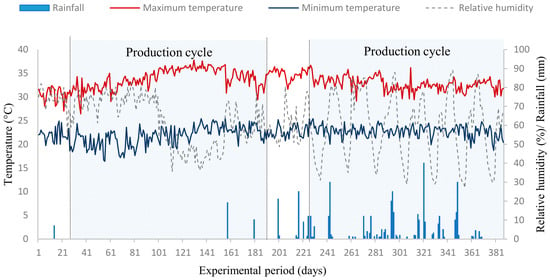
The second productive cycle occurred from 1 July 2022 to 28 November 2022, followed by a 30-day off-season (until 28 December 2022). The third cycle then ran until 23 June 2023, culminating at exactly 894 DAT. During the off-seasons (including the 30 days prior to the second cycle), formative and production pruning were performed. To facilitate adequate canopy recovery and root maintenance after pruning, the specific intermittent treatments were temporarily suspended, and all plants received a strictly controlled and uniform irrigation depth before the water restriction intervals were resumed for the subsequent cycle. The detailed meteorological data—including maximum and minimum temperatures, relative humidity, and rainfall—across these specific evaluated cycles are presented in Figure 8.
Figure 8.
Daily weather data, including maximum and minimum temperatures (°C), relative humidity (%), and rainfall (mm), recorded throughout the evaluated experimental period (387 days). This period encompasses the second and third productive cycles, culminating at 894 days after transplanting (DAT).
During the productive cycles, the controlled irrigation depths applied via the drip system were calculated by accumulating the daily ETc over the respective days of each interval and applied entirely on the scheduled irrigation day in a single event without a leaching fraction. Crucially, to prevent deliberate over-irrigation during rainy periods, the scheduled irrigation events were dynamically recalculated or suspended based on the occurrence of natural precipitation. The accumulated precipitation was 29.5 mm in the second cycle, 60.8 mm during the second off-season, and 378.3 mm during the third cycle.
Based on an estimated wetted area of 4.0 m2 per plant, the total volume of water received by the crop represents the sum of the applied irrigation and the natural precipitation. Across the entire evaluated period (cycles 2 and 3 plus off-seasons), the total accumulated water depths (irrigation + rainfall) were 4133.48, 1642.33, 1226.31, and 1096.19 mm for the F1, F4, F8, and F12 intervals, respectively. Because irrigation was dynamically adjusted according to rainfall, the exact number of irrigation events varied. However, under the daily irrigation interval (F1), the soil was consistently maintained at or near field capacity. Consequently, unpredicted natural rainfall events occurring shortly after the scheduled irrigation interval exceeded the sandy soil’s retention capacity, leading directly to deep percolation and nutrient leaching.
Consistent with the methodology established during the crop’s first productive cycle by Torres et al. (2023) [9], exogenous proline was applied at a concentration of 10 mM (by diluting 1.1513 g L−1 of the amino acid in distilled water). The applications were performed fortnightly (every 15 days) at 5:00 PM using a backpack sprayer, delivering an average solution volume of 400 mL per plant to thoroughly wet both the abaxial and adaxial leaf surfaces. To reduce the surface tension of the water and improve spray efficacy, the non-ionic surfactant Haiten® (São Roque, SP, Brazil) was added to the solution at a concentration of 0.05% (v/v).
To clearly differentiate the developmental cycles and ensure methodological continuity, while Torres et al. (2023) [9] initiated the first applications at 30 DAT during the initial establishment of the orchard, the proline treatments for the current study resumed immediately following each 30-day off-season. For the second and third productive cycles evaluated herein, the exogenous proline applications were carried out every 15 days and continued uninterrupted until the crop reached full bloom in each respective cycle. Control plants (0 mM proline) were sprayed simultaneously with distilled water containing the identical volume and surfactant concentration to ensure uniform experimental conditions. Plastic tarps were used between plots during all applications to prevent spray drift and cross-contamination.
4.4. Evaluations
To evaluate the long-term legacy of the treatments on mature, fruit-bearing trees, physiological, nutritional, and yield assessments were synchronized and conducted at 894 DAT (23 June 2023), coinciding with the main harvest peak of the studied cycle.
Photosynthetic pigment contents were determined following the method of Arnon [30], including quantification of chlorophyll a, chlorophyll b, total chlorophyll, and carotenoids. Pigments were extracted from leaf disks (2.8 cm2) and the results were extrapolated and expressed in mg g−1 of fresh weight (FW) considering the specific leaf area of the samples, placed in vials with 8 mL of 80% acetone and kept in the dark at 4 °C for 48 h. Absorbance was measured using a spectrophotometer at wavelengths of 470, 647, and 663 nm. Results were expressed in mg g−1 of fresh weight (FW).
Photochemical efficiency was assessed using chlorophyll a fluorescence parameters, measured with a pulse-modulated fluorometer (model OS5p, Opti-Science) (Hudson, NY, United States). The parameters evaluated included initial fluorescence (F0), maximum fluorescence (Fm), variable fluorescence (Fv = Fm − F0), and quantum efficiency of photosystem II (Fv/Fm). Measurements were taken after 30 min of dark adaptation using leaf clips to ensure that all primary acceptors were oxidized and reaction centers were open.
Electrolyte leakage (EL) was evaluated by collecting leaves from the middle third of the plant and obtaining 10 leaf disks (113 mm2). Disks were rinsed with distilled water and placed in 50 mL of distilled water in beakers sealed with aluminum foil. Beakers were kept at 25 °C for 24 h, after which initial electrical conductivity (Ci) was measured. They were then placed in a forced-air oven at 80 °C for 90 min, followed by final conductivity (Cf) measurement. EL was calculated as described by Scotti-Campos et al. [31].
Leaf water saturation deficit (WSD) was used as an indicator of the plant’s water balance, representing the amount of water required to achieve saturation. WSD was determined according to the methodology described by Silva et al. [32].
In the pre-flowering stage of the evaluated productive cycle, leaf samples were collected to assess mineral composition. Healthy leaves from the middle third of the canopy were used to determine nitrogen (N), phosphorus (P), potassium (K+), sulfur (S), sodium (Na+), and chloride (Cl−) contents. Leaves were dried at 65 °C to constant weight, then ground in a Wiley-type mill. The nitrogen content was determined by the micro-Kjeldahl method after sulfuric digestion. Sulfur was determined by turbidimetry of barium sulfate, and chloride was determined by titration with silver nitrate (Mohr’s method). Sodium and potassium were determined by flame photometry; phosphorus was determined using the molybdate-vanadate colorimetric method with a spectrophotometer [32].
Yield (Y), expressed in t ha−1, was calculated based on the cumulative harvest of the production cycle evaluated at 894 DAT. The average number of fruits per plant and the mean fruit mass were recorded for each plot to obtain the total harvested fruit mass per plant. The yield was obtained by multiplying the total harvested fruit mass per plant by the planting density of 1111 plants per hectare (based on a 3 × 3 m spacing).
4.5. Statistical Analysis
Data were analyzed by analysis of variance (ANOVA) using the F-test, after checking for normality (Shapiro–Wilk test) and homogeneity of variance. In the split-plot ANOVA, the main effect of irrigation intervals was tested using Error A (Block × Irrigation interval), while the effect of proline and the interaction (Irrigation interval × Proline) were tested using Error B. When significant effects were detected (p ≤ 0.05), the means of the irrigation intervals were compared using Tukey’s test, and the simple effects of proline within each irrigation interval were evaluated using the F-test. Principal component analysis (PCA) was used to explore correlations among variables using the R statistical software [33]. Prior to the PCA, the mean values of the variables for each treatment were standardized (scaled to zero mean and unit variance) to ensure equal weighting of all parameters.
5. Conclusions
The hypothesis that foliar proline application acts as an osmoprotectant to maintain photochemical efficiency, support nutrient uptake, and prevent yield losses under extended intermittent irrigation is rejected for mature sugar apple trees. While exogenous proline provided localized biochemical relief such as reducing electrolyte leakage under daily irrigation, it compromised photochemical efficiency and decreased the final crop yield under extended intervals. This demonstrates that once the orchard reaches maturity, the metabolic cost of assimilating the exogenous elicitor outweighs its potential benefits. Over two years of field establishment, these mature trees developed a robust endogenous acclimation to the semi-arid environment, effectively buffering up to 12-day irrigation intervals without severe physiological impairment. Furthermore, these extended intervals optimized the sandy soil’s aeration capacity to safely accommodate natural rainfall, avoiding the severe nutrient leaching that limited productivity under daily irrigation. Therefore, optimizing intermittent irrigation for up to 12 days is a highly efficient and self-sufficient agronomic strategy for mature sugar apple orchards, rendering exogenous proline applications unnecessary. Future research should explore the efficacy of elicitors during early vegetative stages before full root establishment, or utilize spatial transcriptomics to elucidate the cell-specific mechanisms of this drought acclimation.
Author Contributions
The authors confirm their contributions to the paper as follows: Conceptualization, F.A.d.S.; G.S.d.L., L.A.d.A.S., F.J.d.S.P. and J.T.A.F.; methodology, F.A.d.S., L.A.d.A.S., J.L.N. and M.D.; software, R.T.d.F. and M.V.D.; validation, M.V.D., C.N.d.L., and F.J.d.S.P.; formal analysis, R.T.d.F., M.D., J.L.N. and L.d.A.S.; investigation, L.d.A.S., S.T.d.A.S., R.A.F.T., C.N.d.L., V.K.N.O. and L.d.A.S.; resources, H.R.G. and C.N.d.L., data curation, L.A.d.A.S., R.T.d.F. and L.d.A.S.; writing—original draft preparation, R.T.d.F., F.J.d.S.P. and F.A.d.S.; writing—review and editing, G.S.d.L., J.S.N., M.V.D., and J.T.A.F.; visualization, L.A.d.A.S., H.R.G., J.T.A.F. and J.L.N.; supervision, G.S.d.L.; project administration, F.A.d.S. and F.J.d.S.P. All authors have read and agreed to the published version of the manuscript.
Funding
This research was funded by the INCT in Sustainable Agriculture in the Tropical Semi-Arid Region—INCT AgriS (CNPq/Funcap/Capes), processes 406570/2022-1 (CNPq) and INCT Process—35960-62747.65.95/51 (Funcap) and was financed in part by the Coordenação de Aperfeiçoamento de Pessoal de Nível Superior (CAPES), Brasil—Finance code 001.
Institutional Review Board Statement
Not applicable.
Informed Consent Statement
Not applicable.
Data Availability Statement
The original contributions presented in this study are included in the article. Further inquiries can be directed to the corresponding author.
Acknowledgments
The authors thank the Federal University of Campina Grande and the Center for Agro-Food Science and Technology for providing the infrastructure for this research, and the Graduate Program in Agricultural Engineering for the opportunity to pursue the course of study.
Conflicts of Interest
The authors declare no conflicts of interest.
References
- Al-Kazman, B.S.; Harnett, J.E.; Hanraham, J.R. Traditional uses, phytochemistry and pharmacological activities of Annonaceae. Molecules 2022, 27, 3462. [Google Scholar] [CrossRef] [Scilit] [PubMed]
- IBGE—Instituto Brasileiro de Geografia e Estatística. Produção Agrícola, Cadastro de Municípios Localizados na Região Semiárido do Brasil. Available online: https://www.ibge.gov.br/ (accessed on 15 June 2022).
- Nóbrega, J.S.; Gomes, V.R.; Soares, L.A.A.; Lima, G.S.; Silva, A.A.R.; Gheyi, H.R.; Torres, R.A.F.; da Silva, F.J.L.; da Silva, T.I.; da Costa, F.B.; et al. Hydrogen peroxide alleviates salt stress effects on gas exchange, growth, and production of naturally colored cotton. Plants 2024, 13, 390. [Google Scholar] [CrossRef] [Scilit] [PubMed]
- Zarif, H.; Fan, C.; Yuan, G.; Zhou, R.; Chang, Y.; Sun, J.; Lu, J.; Liu, J.; Wang, C. Drought stress in roses: A comprehensive review of morphophysiological, biochemical, and molecular responses. Int. J. Mol. Sci. 2025, 26, 4272. [Google Scholar] [CrossRef] [Scilit] [PubMed]
- Qiao, M.; Hong, C.; Jiao, Y.; Hou, S.; Gao, H. Impacts of drought on photosynthesis in major food crops and the related mechanisms of plant responses to drought. Plants 2024, 13, 1808. [Google Scholar] [CrossRef] [Scilit] [PubMed]
- Nasrabadi, M.; Ramezanian, A.; Eshghi, S.; Valero, D. Reaction of pomegranate trees to sustained deficit irrigation in terms of morphophysiological and biochemical traits. Sci. Rep. 2025, 15, 17581. [Google Scholar] [CrossRef] [Scilit] [PubMed]
- Silva, F.A.; Pereira, F.H.F.; Campos Júnior, J.E.; Nóbrega, J.S.; Dias, M.S. Aplicação foliar de prolina no crescimento e fisiologia do milho verde cultivado em solo salinizado. Colloq. Agrar. 2020, 16, 23–34. [Google Scholar] [CrossRef] [Scilit]
- Trejo-Paniagua, B.O.; Ruiz-Lau, N.; Goretty Caamal-Chan, M.; Cruz-Rodríguez, R.I.; Lam-Gutiérrez, A.; Ruíz-Valdiviezo, V.M. Effect of proline pretreatment on the water stress response in “Siete Caldos” pepper plants. Phyton-Int. J. Exp. Bot. 2025, 94, 861–873. [Google Scholar] [CrossRef] [Scilit]
- Torres, R.A.F.; Lima, G.S.; Paiva, F.J.S.; Soares, L.A.A.; Silva, F.A.; Silva, L.A.; Oliveira, V.K.N.; Mendonça, A.J.T.; A Roque, I.; A Silva, S.T. Physiology and production of sugar-apple under water stress and application of proline. Braz. J. Biol. 2023, 83, e273404. [Google Scholar] [CrossRef] [Scilit] [PubMed]
- Silva, S.T.A.; Lima, G.S.; Lima, V.L.A.; Silva, S.S.; Nóbrega, J.S.; Soares, L.A.A.; Ferreira, J.T.A.; Dantas, M.V.; Roque, I.A.; Soares, L.A.d.A.; et al. Use of proline to induce salt stress tolerance in guava. Plants 2024, 13, 1887. [Google Scholar] [CrossRef] [Scilit] [PubMed]
- Pérez-Álvarez, E.P.; Gil-Muñoz, R.; Martínez-Cutillas, A.; Melgarejo, P.; García-Martínez, S. Effects of water deficit irrigation on phenolic composition and antioxidant activity of Monastrell grapes under semiarid conditions. Antioxidants 2021, 10, e1301. [Google Scholar] [CrossRef] [Scilit] [PubMed]
- Chaudhry, S.; Sidhu, G.P.S. Climate change regulated abiotic stress mechanisms in plants: A comprehensive review. Plant Cell Rep. 2022, 41, 1–31. [Google Scholar] [CrossRef] [Scilit] [PubMed]
- Bassi, R.; Dall’osto, L. Dissipation of light energy absorbed in excess: The molecular mechanisms. Ann. Rev. Plant Biol. 2021, 72, 47–76. [Google Scholar] [CrossRef] [Scilit] [PubMed]
- Siddique, A.; Kandpal, G.; Kumar, P. Proline accumulation and its defensive role under diverse stress condition in plants: An overview. J. Pure Appl. Microb. 2018, 12, 1655–1659. [Google Scholar] [CrossRef] [Scilit]
- Alemu, S.T. Photosynthesis limiting stresses under climate change scenarios and role of chlorophyll fluorescence: A review article. Cog. Food Agric. 2020, 6, e1785136. [Google Scholar] [CrossRef] [Scilit]
- Ahmad, Z.; Waraich, E.A.; Akhtar, S.; Anjum, S.; Ahmad, T.; Mahboob, W.; Hafeez, O.B.A.; Tapera, T.; Labuschagne, M.; Rizwan, M. Physiological responses of wheat to drought stress and its mitigation approaches. Acta Physiol. Plant 2018, 40, e80. [Google Scholar] [CrossRef] [Scilit]
- Ali, M.; Shi, L.; Khan, M.A.; Ali, A.; Hu, S.; Shen, J. Auxin biodynamics and its integral role in enhancing plant resilience to environmental cues. Physiol. Plant. 2025, 177, e70165. [Google Scholar] [CrossRef] [Scilit] [PubMed]
- Rashmi, I.; Shirale, A.; Kartikha, K.S.; Shinogi, K.C.; Meena, B.P.; Kala, S. Leaching of plant nutrients from agricultural lands. In Essential Plant Nutrients: Uptake, Use Efficiency, and Management; Springer International Publishing: Cham, Switzerland, 2017; pp. 465–489. [Google Scholar]
- Ghosh, U.K.; Singh, G.; Singh, P.; Singh, S. Proline, a multifaceted signalling molecule in plant responses to abiotic stress: Understanding the physiological mechanisms. Plant Biol. 2022, 24, 227–239. [Google Scholar] [CrossRef] [Scilit] [PubMed]
- Alvarez, M.E.; Savouré, A.; Szabados, L. Proline metabolism as regulatory hub. Trends Plant Sci. 2022, 27, 39–55. [Google Scholar] [CrossRef] [Scilit] [PubMed]
- Suekawa, M.; Fujikawa, Y.; Esaka, M. Exogenous proline has favorable effects on growth and browning suppression in rice but not in tobacco. Plant Phys. Bioch 2019, 142, 1–7. [Google Scholar] [CrossRef] [Scilit] [PubMed]
- Alvares, C.A.; Stape, J.L.; Sentelhas, P.C.; Gonçalves, J.L.M.; Sparovek, G. Köppen’s climate classification map for Brazil. Meteor. Zeit 2013, 22, 711–728. [Google Scholar] [CrossRef] [Scilit] [PubMed]
- Lima, G.S.; Santos, J.B.; Soares, L.A.A.; Gheyi, H.R.; Nobre, R.G.; Pereira, R.F. Irrigação com águas salinas e aplicação de prolina foliar em cultivo de pimentão “All Big”. Com. Sci. 2016, 7, 513–522. [Google Scholar] [CrossRef] [Scilit]
- Teixeira, P.C.; Donagemma, G.K.; Fontana, A.; Teixeira, W.G. Manual de Métodos de Análise de Solo, 3rd ed.; Embrapa: Brasília, Brazil, 2017; 573p. [Google Scholar]
- Silva, A.Q.; Silva, H. Nutrição e adubação de anonáceas. In Anonáceas: Produção e Mercado (Pinha, Graviola, Atemóia e Cherimólia); São José, A.R., Ed.; DFZ/UESB: Vitória da Conquista, Brazil, 1997; pp. 118–137. [Google Scholar]
- Christiansen, J.E. Irrigation by Sprinkling; California Agricultural Station: Berkeley, CA, USA, 1942; Bulletin 670; 124p. [Google Scholar]
- Criddle, W.D.; Davis, S.; Pair, C.H.; Shockley, D.G. Methods for Evaluating Irrigation Systems; Soil Conservation Service—USDA: Washington, DC, USA, 1956; Agricultural Handbook 82; 24p. [Google Scholar]
- Bernardo, S.; Mantovani, E.C.; Silva, D.D.; Soares, A.A. Manual de Irrigação, 9th ed.; Editora UFV: Viçosa, Brazil, 2019; 545p. [Google Scholar]
- Allen, R.G.; Pereira, L.S.; Raes, D.; Smith, M. Crop Evapotranspiration: Guidelines for Computing Crop Requirements; FAO: Rome, Italy, 1998; Irrigation and Drainage Paper 56; 328p. [Google Scholar]
- Arnon, D.I. Copper enzymes in isolated chloroplasts: Polyphenoloxidase in Beta vulgaris. Plant Physiol. 1949, 24, 1–15. [Google Scholar] [CrossRef] [Scilit] [PubMed]
- Scotti-Campos, P.; Pham-Thi, A.T.; Semedo, J.N.; Pais, I.P.; Ramalho, J.C.; Matos, M.C. Physiological responses and membrane integrity in three Vigna genotypes with contrasting drought tolerance. Emir. J. Food Agric. 2013, 25, 1002–1013. [Google Scholar] [CrossRef] [Scilit]
- Silva, F.C. Manual de Análises Químicas de Solos, Plantas e Fertilizantes; Embrapa Comunicação para Transferência de Tecnologia: Brasília, Brazil, 1999; 370p. [Google Scholar]
- R Core Team. R: A Language and Environment for Statistical Computing; R Foundation for Statistical Computing: Vienna, Austria, 2021. [Google Scholar]

Disclaimer/Publisher’s Note: The statements, opinions and data contained in all publications are solely those of the individual author(s) and contributor(s) and not of MDPI and/or the editor(s). MDPI and/or the editor(s) disclaim responsibility for any injury to people or property resulting from any ideas, methods, instructions or products referred to in the content. |
© 2026 by the authors. Licensee MDPI, Basel, Switzerland. This article is an open access article distributed under the terms and conditions of the Creative Commons Attribution (CC BY) license.