


Abstract
Rising temperatures and an increased frequency of acute heat events pose a threat to tropical fruit production, necessitating sustainable nursery strategies to improve seedling quality. This study evaluated the morphological growth, leaf pigment indices, and short-term chlorophyll a fluorescence responses of ‘Aliança’ papaya (Carica papaya L.) seedlings treated with four commercial bio-input formulations (AçãoH 3+, H-Plant AC, H-Plant AC VM, and H-Plant CO) at a dosage of 3 mL L−1, compared to an untreated control (N = 140 seedlings in a completely randomized design). At 49 days after sowing, 40 seedlings (n = 8 independent plants per treatment) were assessed for vegetative morphology, dry biomass, the Dickson Quality Index (DQI), and leaf chlorophyll indices. Subsequently, 100 independent seedlings (n = 4 per treatment/temperature combination) were exposed to temperatures of 20, 25, 30, 35, and 40 °C in controlled incubators for 240 min. The maximum quantum efficiency of Photosystem II (Fv/Fm) and the total performance index (PiTotal) were recorded every 60 min as parameters for the heat response. All commercial formulations increased the length of the primary root within the nursery containers compared to the control. Seedlings treated with AçãoH 3+ exhibited greater leaf area (312.7 cm2), shoot dry mass (1.41 g), total dry mass (1.83 g), and DQI (0.317). At 35 °C, at the 180 and 240 min marks, the AçãoH 3+ formulation maintained higher PiTotal values compared to the control. At 40 °C and 180 min, the Fv/Fm values for the control seedlings dropped below 0.75 (0.715), whereas the treated seedlings remained above 0.76. It is concluded that commercial bio-input formulations alter seedling morphogenesis and the photochemical performance of PSII in the short term under controlled thermal exposure; however, field survival and the isolation of the effects of specific ingredients require further validation, including the use of vehicle controls and post-stress recovery assays.
1. Introduction
Global climate change has intensified the occurrence of heat waves, posing severe challenges to tropical agricultural production [1,2]. In Brazil, agribusiness accounted for 23.8% of gross domestic product in 2023, with papaya (Carica papaya L.) cultivation standing out for its economic and social relevance. In the north of the state of Espírito Santo, one of the main papaya producing centers in the country, producers have been reporting losses associated with thermal excess during the hottest months of the year, when maximum temperatures frequently exceed 34 °C and occasionally exceed 40 °C, according to historical meteorological records [3].
In species with C3 metabolism, such as papaya, supra-optimal temperatures compromise the processes of photosynthesis and respiration in plants. Under these conditions, photosynthesis is limited, making it impossible to replace the carbon used in respiration. This fact results in the use of carbohydrate reserves present in plant tissues, limiting their growth and development [4].
To mitigate these effects, strategies have been developed with the use of technologies that promote greater efficiency in the use of water in irrigation systems, planting of tolerant cultivars, use of fertilizers and bio-inputs that induce physiological tolerance to stressful factors caused by the environment [5,6]. Over the last three decades, several technological innovations have been proposed to increase the sustainability of agricultural production systems, through a significant reduction in synthetic pesticides and fertilizers [7].
To increase seedling vigor and mitigate thermal damage, commercial formulations of bioinputs containing organic carbon, amino acids, mineral nutrients and preparations subjected to dynamization (sequential dilution and succussion) have been used in nursery management. Although many bioinputs prepared have regulatory authorization for use in Brazilian organic agriculture by MAPA Ordinance No. 52/2021 [8], legal permission does not in itself prove physiological efficacy nor elucidate stress mitigation mechanisms. Furthermore, as commercial formulations combine organic carriers, micronutrients and dynamized components, it is necessary to experimentally evaluate their integrated effects on the growth and photochemistry of PSII.
Therefore, research is needed to establish reliable protocols based on ecophysiological evidence to optimize the use of substances containing bioactives, which minimize the effects of abiotic stresses on plants, ensuring greater uniformity and better quality of production. Therefore, the hypothesis was that the application of the commercial formulations AçãoH 3+, H-Plant AC, H-Plant AC VM and H-Plant CO promotes improvements in the morphological characteristics of the seedlings and attenuates the drop in the photochemical indices of PSII under induced thermal stress. Thus, the objective of this work was to evaluate the effect of these commercial formulations on vegetative growth, biomass accumulation and photochemical performance of PSII in ‘Aliança’ papaya seedlings exposed to different laboratory temperatures.
2. Results
2.1. Vegetative Growth and Development
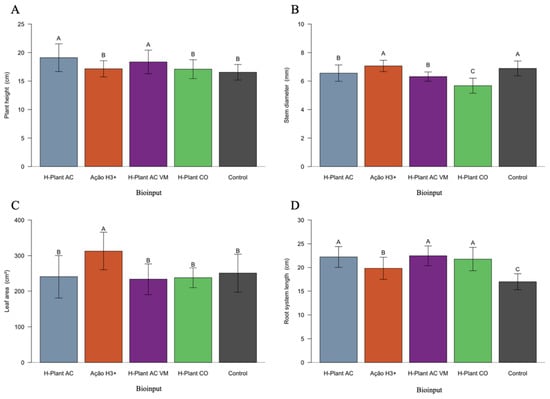
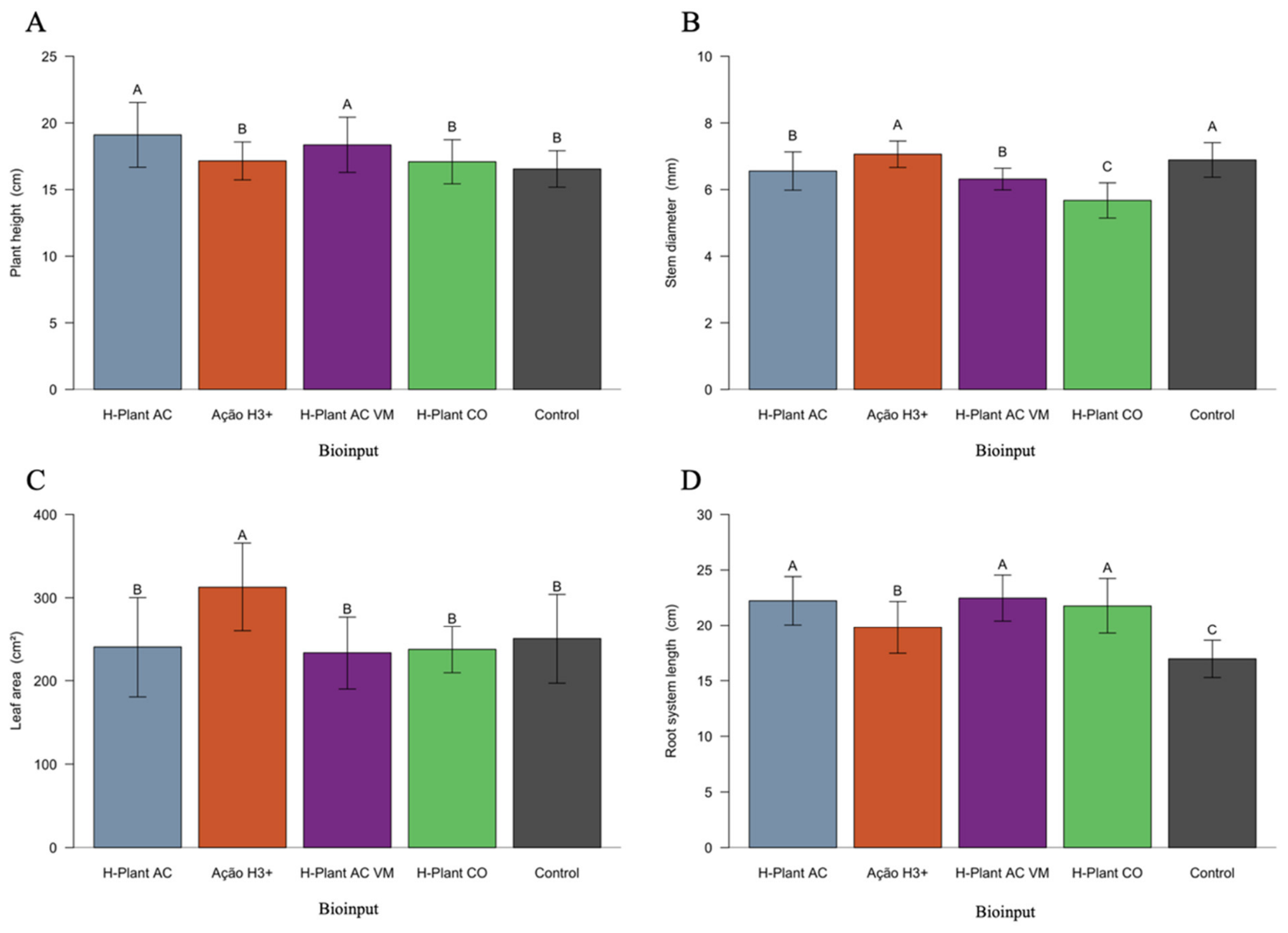
At 49 days after sowing, the H-Plant AC and H-Plant AC VM treatments presented the highest averages for plant height (19.1 cm and 18.4 cm, respectively) (p = 0.05) (Figure 1). For stem diameter, the AçãoH 3+ treatment (7.06 mm) and the Control (6.88 mm) were statistically equivalent and superior to the others (p < 0.001). The leaf area was significantly higher in the seedlings treated with AçãoH 3+ (312.7 cm2) compared to the Control (250.5 cm2) and the other treatments (p = 0.0139). The length of the main root system measured in the tubes was greater in all seedlings that received commercial formulations compared to the Control (p < 0.001).
Figure 1.
Plant height (A), stem diameter (B), leaf area (C) and length of the root system (D) of ‘Aliança’ papaya seedlings treated with different bioinputs in comparison with treatment and application of bioinputs (Control). Means followed by the same letter are not different from each other using the Scott–Knott test (p < 0.05). Bars indicate standard error for n = 8.
2.2. Biomass and Seedling Quality
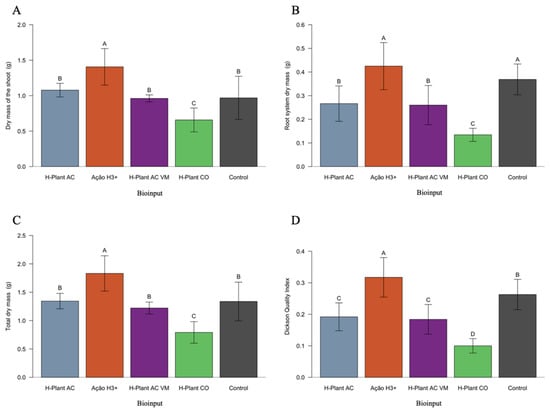
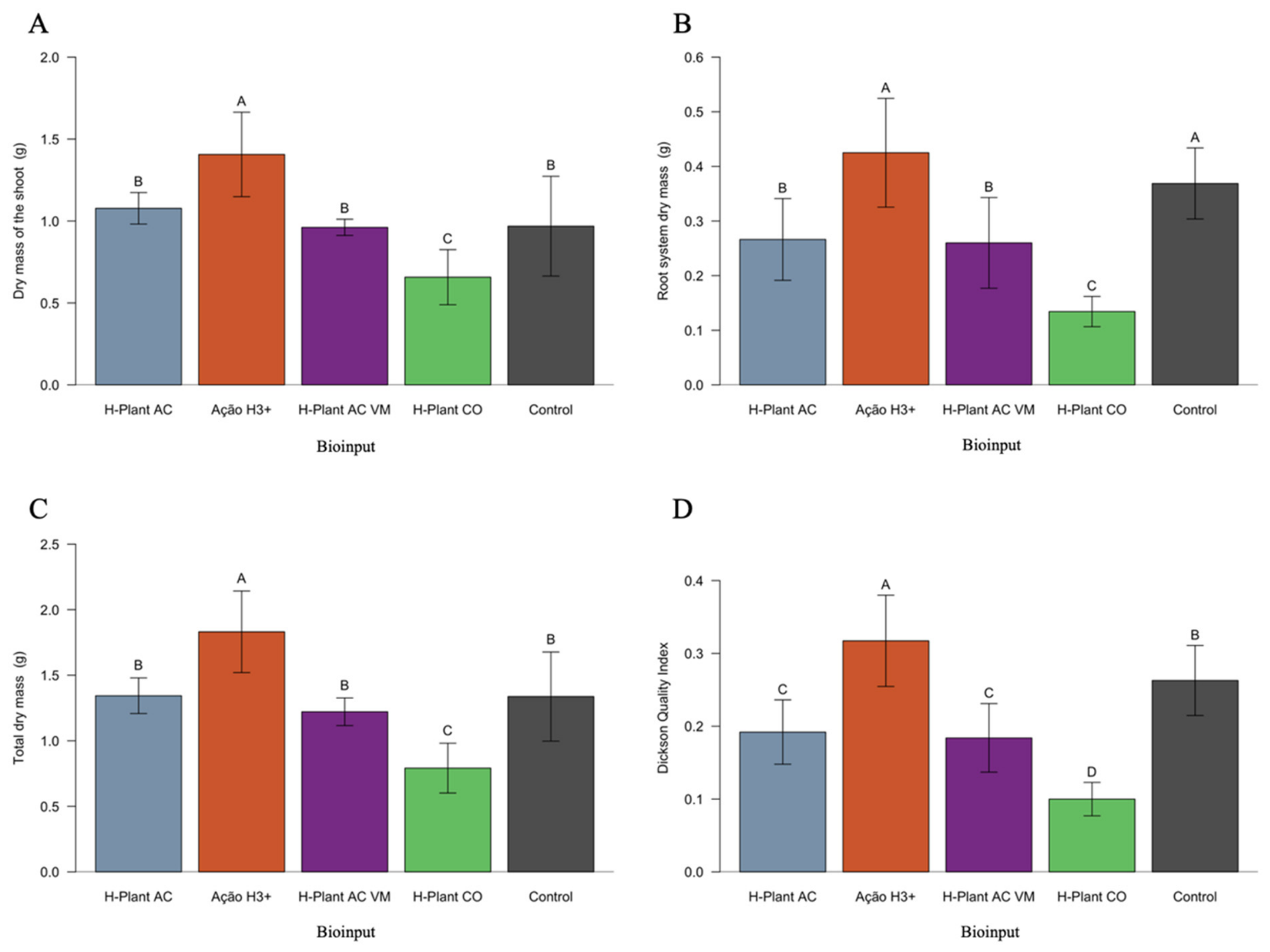
The accumulation of dry mass of aerial part and total dry mass was significantly greater in seedlings under the AçãoH 3+ treatment (1.41 g and 1.83 g, respectively), surpassing the Control (0.97 g and 1.34 g) (p < 0.001) (Figure 2). The dry mass of the root system of AçãoH 3+ (0.42 g) was equivalent to the Control (0.37 g) and higher than the other treatments (p < 0.001). The Dickson Quality Index (DQI) reflected the greater robustness of the AçãoH 3+ treatment (0.317), surpassing the Control (0.262), H-Plant AC (0.192), H-Plant ACVM (0.184) and H-Plant CO (0.100) (p < 0.001).
Figure 2.
Dry mass of the aerial part (A), dry mass of the root system (B), total dry mass (C) and Dickson quality index (D) of ‘Aliança’ papaya seedlings treated with different bioinputs in comparison with treatment and application of bioinputs (Control). Means followed by the same letter, not different from each other using the Scott–Knott test (p < 0.05). Bars indicate standard error for n = 8.
2.3. Photosynthetic Pigments
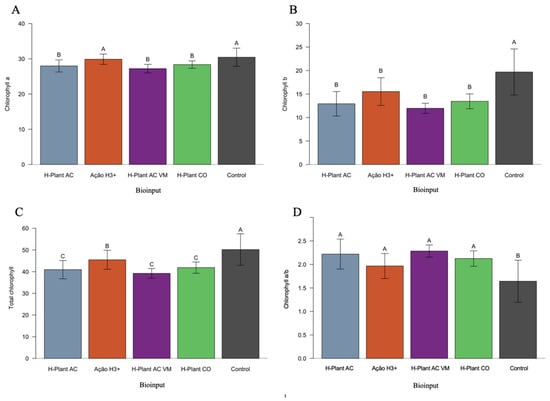
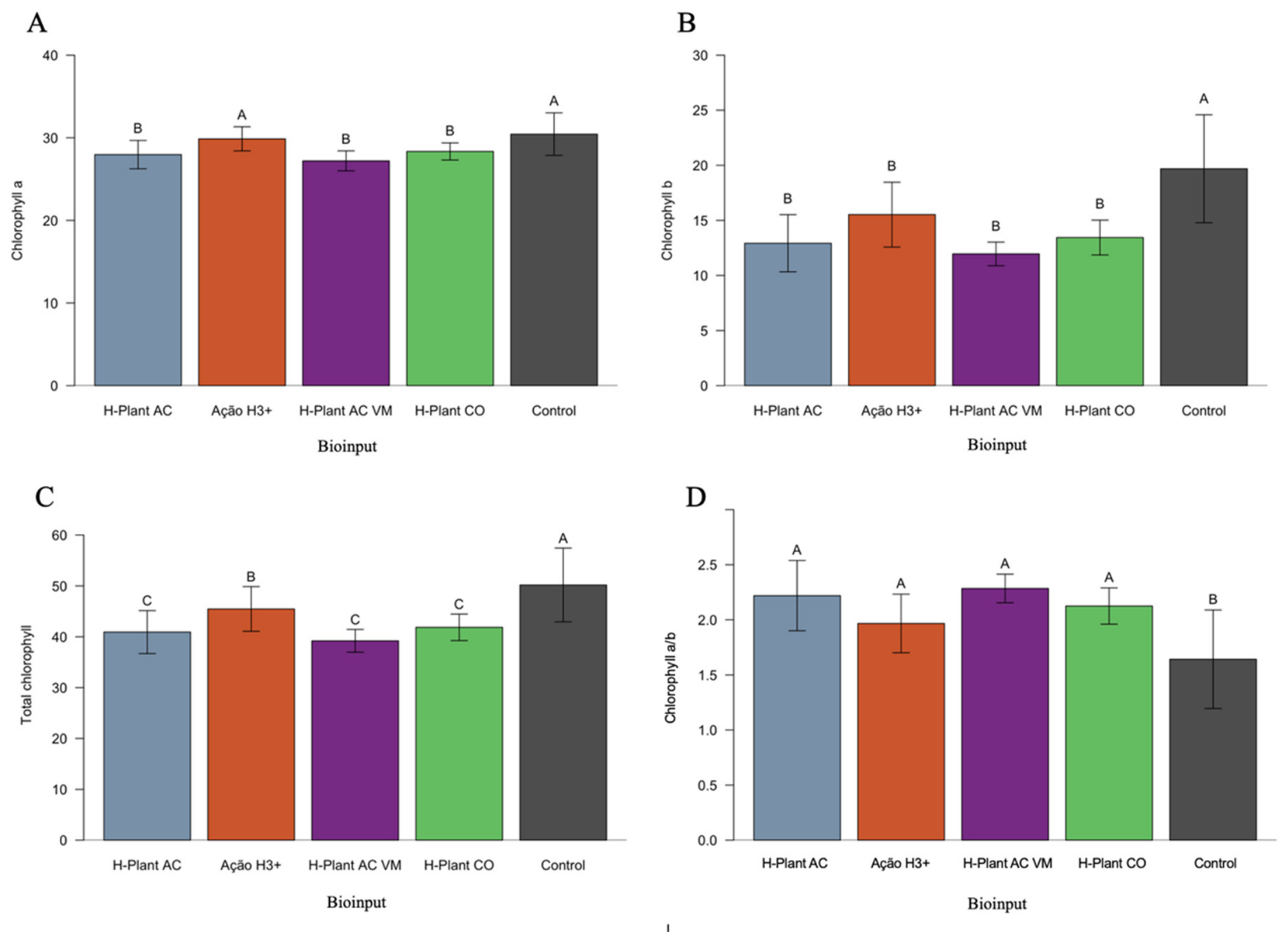
The chlorophyll a content was higher in the AçãoH 3+ and Control treatments (29.8 and 30.4) (p = 0.0024) (Figure 3). The Control showed higher levels of chlorophyll b (19.6) (p < 0.001) and total chlorophyll (50.1) (p < 0.001) compared to the seedlings treated with bioinputs. The chlorophyll a/b ratio revealed that the seedlings treated with commercial formulations were statistically higher in relation to the Control (p < 0.001).
Figure 3.
Chlorophyll a (A), chlorophyll b (B) m total chlorophyll (C) and Chlorophyll a/b ratio (D) of ‘Aliança’ papaya seedlings treated with different bioinputs compared to treatment without the application of bioinputs (Control). Means followed by the same letter are not different from each other using the Scott–Knott test (p < 0.05). Bars indicate standard error for n = 8.
2.4. Exposure Time and Different Temperatures in the Total Performance Index
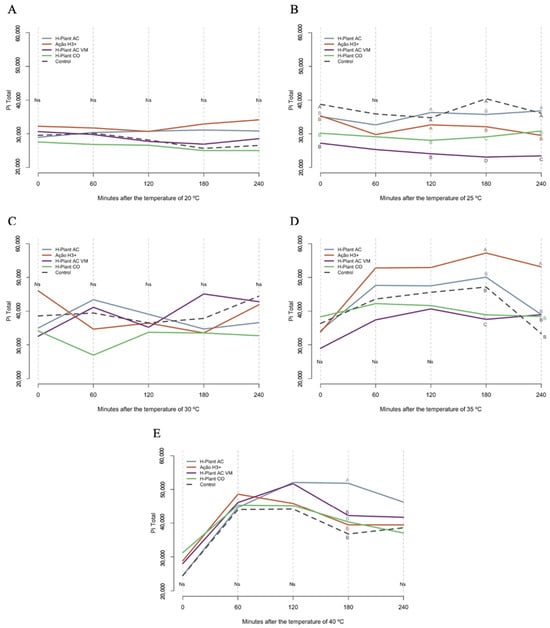
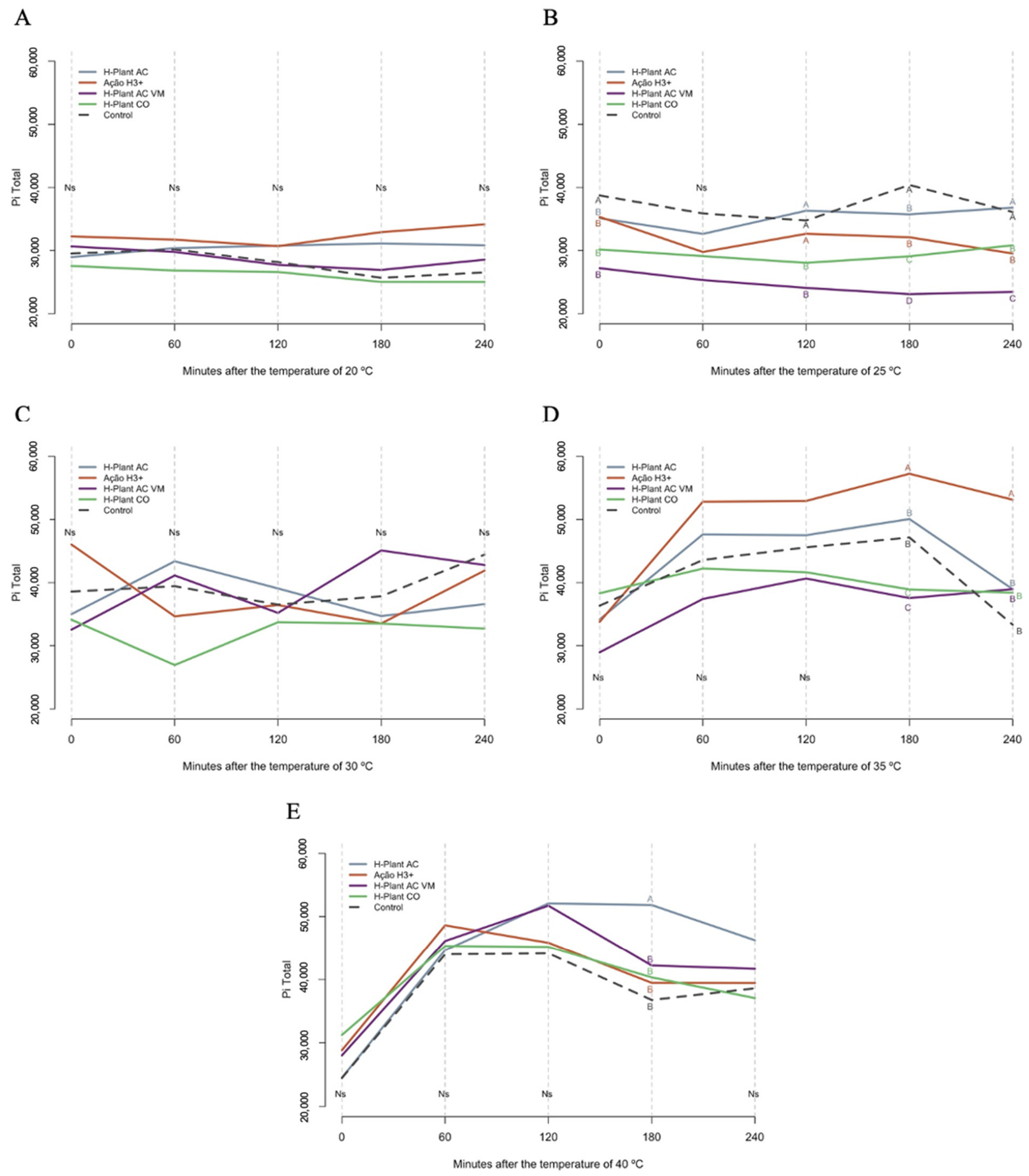
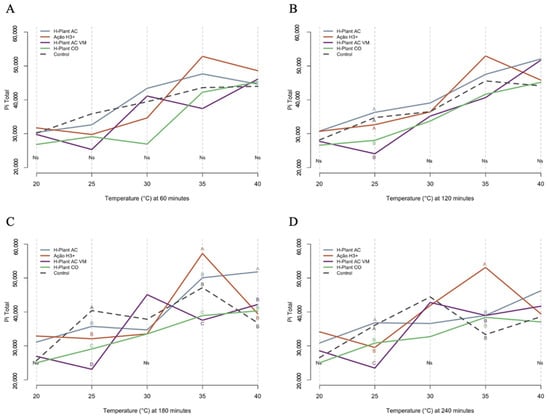
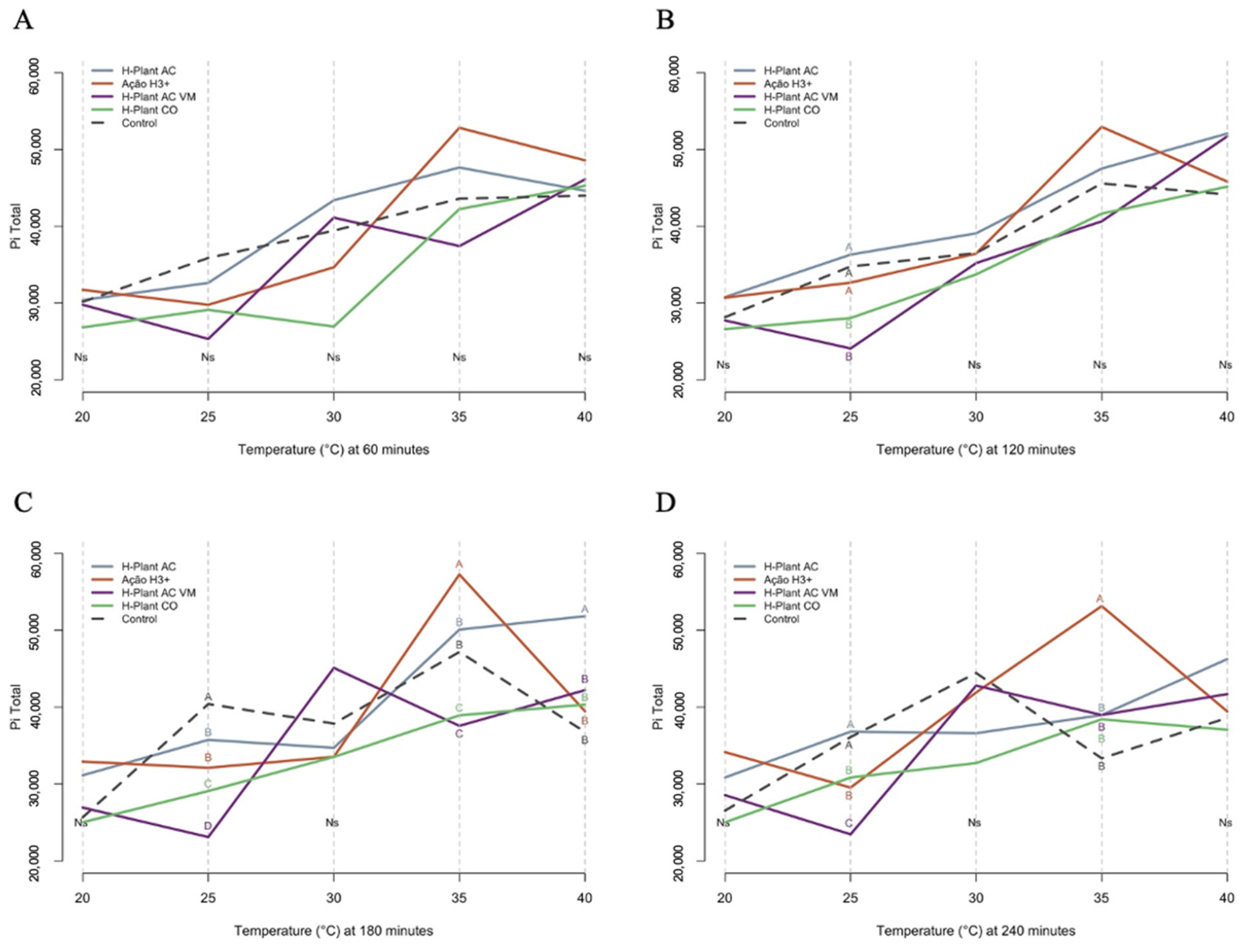
Photosynthetic performance was variable in relation to the time of exposure to different temperatures (Figure 4 and Figure 5). ‘Aliança’ papaya seedlings exposed to temperatures of 20 and 30 °C did not show significant differences for PiTotal in all treatments. However, the application of the dynamized bioinput AçãoH 3+ improved the photosynthetic performance of the seedlings at a temperature of 35 °C in the exposure period of 180 and 240 min. Furthermore, the dynamized bioinput H-Plant AC demonstrated greater photosynthetic capacity of papaya plants at 180 min, with a temperature of 40 °C.
Figure 4.
PiTotal values for ‘Aliança’ papaya seedlings treated with different bioinputs compared to treatment without the application of bioinput (Control) at different minutes (60, 120, 180, 240) under temperatures of 20 (A), 25 (B), 30 (C), 35 (D) and 40 °C (E). At each time point, letters indicate significant differences between bioinput treatments using the Scott–Knott test (p < 0.05, n = 4 plants); Ns—not significantly different.
Figure 5.
PiTotal values for ‘Aliança’ papaya seedlings treated with different bioinputs compared to treatment without the application of bioinput (Control) at different temperatures (20, 25, 30, 35 and 40 °C) after 60 (A), 120 (B), 180 (C) and 240 min (D). At each time point, letters indicate significant differences between bioinput treatments using the Scott–Knott test (p < 0.05, n = 4 plants); Ns—not significantly different.
2.5. Exposure Time and Different Temperatures at Maximum Photosystem II Efficiency
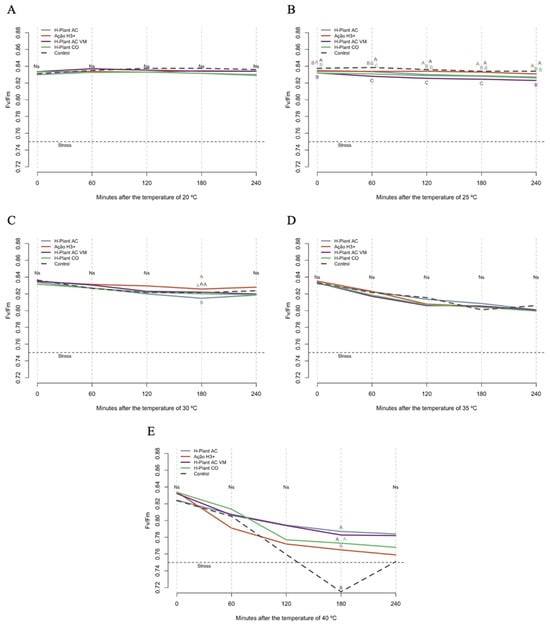
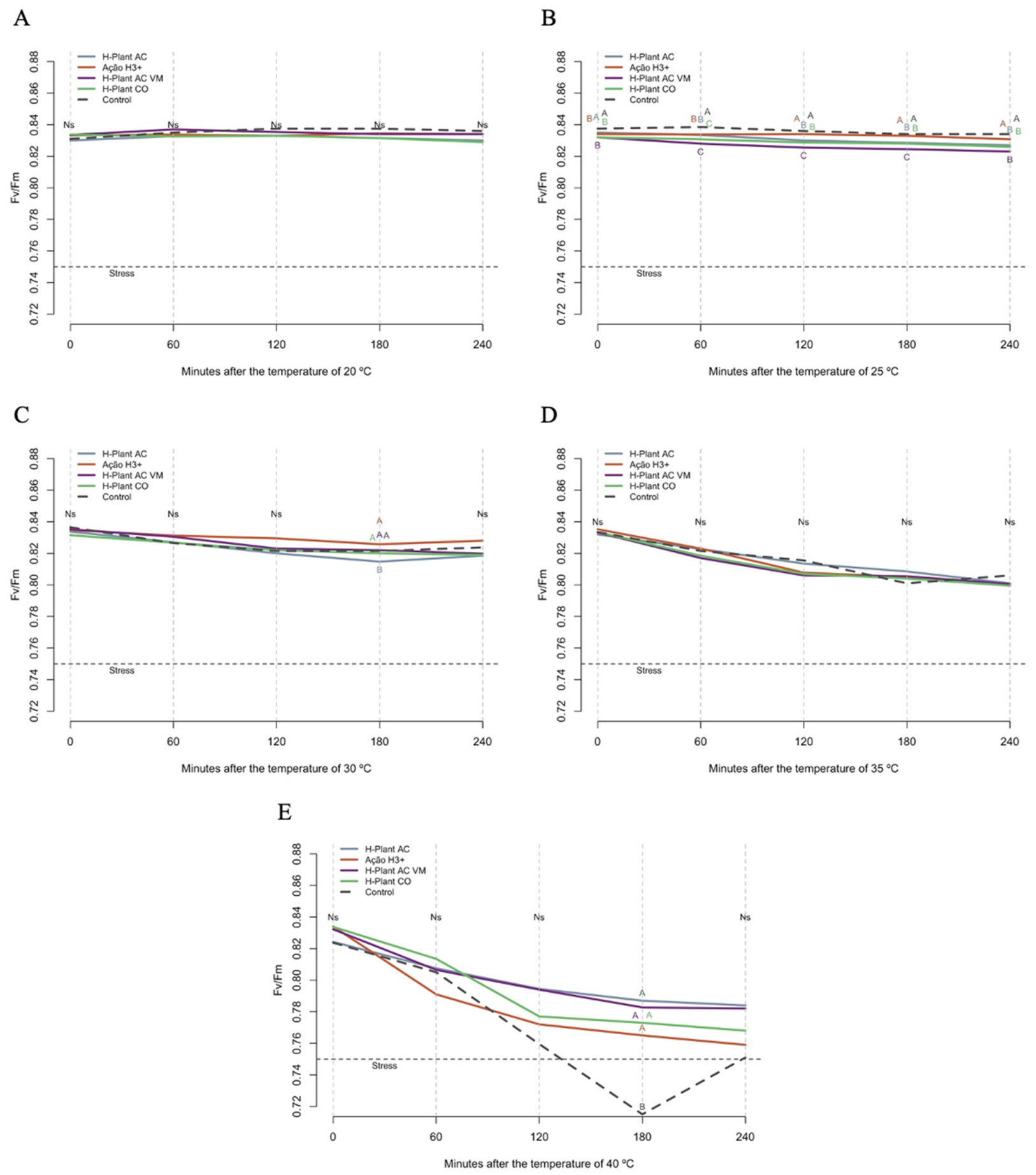
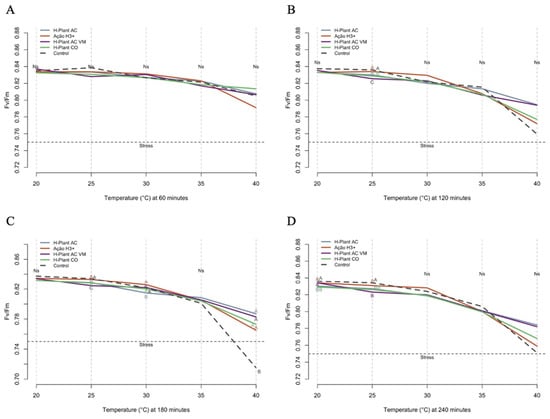
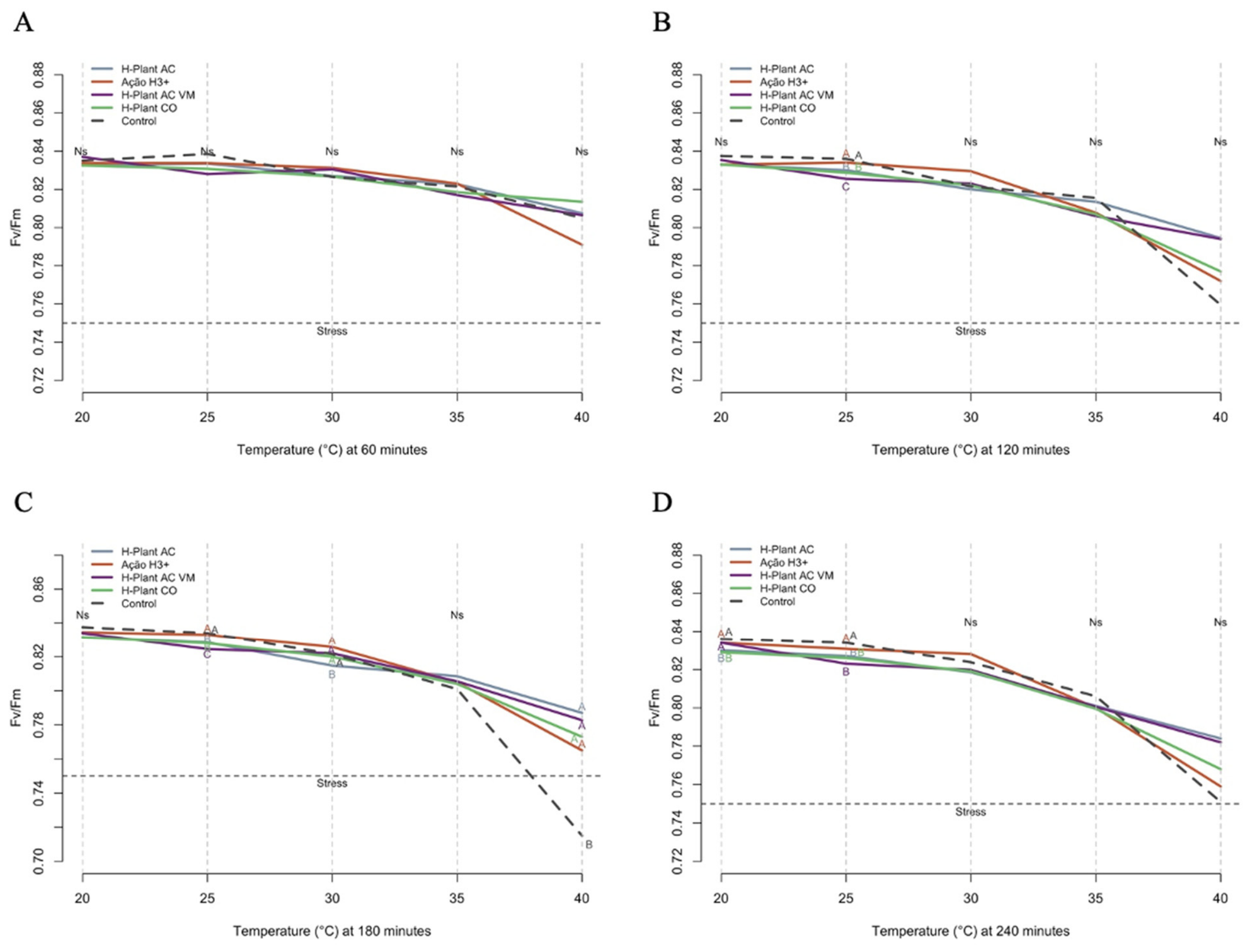
The maximum efficiency yield of photosystem II (Fv/Fm) of ‘Aliança’ papaya seedlings was affected by exposure time and temperature (Figure 6 and Figure 7). In general, under the lowest temperatures the Fv/Fm remained stable, without significant differences between treatments. However, a reduction in Fv/Fm was observed at all temperatures as the exposure time passed. However, only at a temperature of 40 °C with an exposure time of 180 min, the ‘Aliança’ papaya seedlings presented values lower than 0.75, in the Control treatment, demonstrating a state of moderate stress under this condition.
Figure 6.
Fv/Fm values for ‘Aliança’ papaya seedlings treated with different bioinputs compared to treatment without the application of bioinput (Control) at different minutes (60, 120, 180, 240), under temperatures of 20 (A), 25 (B), 30 (C), 35 (D) and 40 °C (E). At each time point, letters indicate significant differences between bioinput treatments using the Scott–Knott test (p < 0.05, n = 4 plants); Ns—not significantly different.
Figure 7.
Fv/Fm values for ‘Aliança’ papaya seedlings treated with different bioinputs compared to treatment without the application of bioinput (Control) at different temperatures (20, 25, 30, 35 and 40 °C) after 60 (A), 120 (B), 180 (C) and 240 min (D). At each time point, letters indicate significant differences between bioinput treatments using the Scott–Knott test (p < 0.05, n = 4 plants); Ns—not significantly different.
3. Discussion
The commercial bioinput formulations tested in this study modified the vegetative morphology and short-term PSII fluorescence kinetics in ‘Aliança’ papaya seedlings. All four formulations promoted greater growth of the main root system within the 280 cm3 tubes compared to the Control without application of bioinputs. Although the greater initial root length may be advantageous in container production, measuring the root axis confined in a tube does not in itself prove changes in complex root architecture, exploration of deep soil layers, efficiency of nutrient absorption or anchorage after transplanting in the field. However, it can serve as an initial parameter to define quality seedlings that can tolerate abiotic stresses such as high temperatures, allowing greater stability of the crop and the production system [9,10].
Among the products evaluated, the AçãoH 3+ formulation provided greater leaf area, aerial part dry mass, total dry mass and Dickson Quality Index at 49 days after sowing. A larger leaf surface increases light interception, which is positively associated with the accumulation of biomass in papaya seedlings [11]. Additionally, under controlled exposure at 35 °C for 180 and 240 min, the application of AçãoH 3+ was associated with higher PiTotal values. As PiTotal integrates energy capture, electron transport beyond QA and the reduction of final electron acceptors on the acceptor side of Photosystem I (PSI), high values of PiTotal reflect greater conservation of photochemical energy in the thylakoidal electron transport chain [12,13,14]. However, as the test lasted 4 h and no measurements of gas exchange, electrolyte extravasation or monitoring of post-stress recovery were carried out, it is not possible to state that changes occurred in CO2 fixation or in the plant’s total photosynthetic capacity.
In C3 plants subjected to acute heat stress, high temperatures destabilize the oxygen evolution complex, reduce the efficiency of electron transport between PSII and PSI and favor Rubisco oxygenation to the detriment of carboxylation [15]. In the present trial in a controlled chamber, Fv/Fm remained stable at 20 °C (0.83–0.84) and within the range considered physiologically normal (0.75–0.85) at 25 °C and 30 °C [16]. The absence of differences between treatments from 20 to 30 °C is consistent with independent evidence from the literature that places the optimal thermal range for papaya between 21 °C and 33 °C [17], although non-significant comparisons between isolated treatments do not establish an optimal physiological range.
The empirical threshold of 0.75 for Fv/Fm is widely used in chlorophyll fluorescence screening as an indicator of the onset of photoinhibition or thermal impairment of PSII [15,18,19]. At 40 °C and 180 min, Control seedlings fell below this threshold (0.715), while seedlings treated with commercial formulations maintained Fv/Fm above 0.76. However, as values converged between treatments at 240 min and no measurements of post-stress recovery, electrolyte extravasation or gas exchange were performed, the transient maintenance of Fv/Fm above 0.75 indicates short-term photochemical buffering rather than permanent thermal tolerance.
In the evaluation of pigments, the Control treatment showed greater accumulation of chlorophyll b and lower chlorophyll a/b ratio. The biosynthesis and retention of chlorophyll a in adequate proportion to chlorophyll b is important for the arrangement of the antenna complexes and reaction centers of PSII. According to Wang et al. [15], the chlorophyll content in leaves is related to the photosynthetic potential of plants. However, despite the highest levels of total chlorophyll being found in plants from the Control treatment, these values were only possible due to the higher content of chlorophyll b in this treatment. The decrease in the proportion of chlorophyll a in relation to chlorophyll b can generate photo-oxidative stress in plants at the juvenile stage [20]. This occurs, therefore, the transfer of electrons in photosystem II, in the chlorophyll a molecule is negatively affected when there is an increase in the amount of chlorophyll b [21]. Under these conditions, plants produce compounds such as H2O2 that can alter gene expression and lead to cell lysis. Therefore, the regulated biosynthesis of chlorophyll b is essential for plant acclimatization [22].
Finally, two methodological limitations must be highlighted when interpreting the results. Firstly, as the Control received only distilled water without the formulation vehicle (glycerin, alcohol, organic acids or soluble micronutrients such as B, Mn and Zn), the observed responses reflect the composite effect of each integral commercial formulation and cannot be attributed exclusively to dynamization or a single ingredient. Secondly, as thermal exposure lasted 240 min in incubators, without subsequent evaluation in the field, the findings do not allow inference of post-transplant survival, stress tolerance prolonged abiotic or agricultural productivity.
4. Materials and Methods
4.1. Experimental Site and Propagation Material
The study was carried out at the Federal University of Espírito Santo, located in the municipality of São Mateus, North of the State of Espírito Santo, Brazil, with geographic coordinates of 18°40′36″ South latitude and 39°51′35″ West longitude. The region’s climate according to the Köppen classification is tropical AW (humid tropical), with rain in the summer and dry winters [23]. The temperature and relative humidity of the air during the experimental period can be seen in Figure A1.
The experiment was carried out in a greenhouse, surrounded by polypropylene mesh with 50% shading. To prepare the papaya seedlings, seeds from the cultivar ‘Aliança’ were used and sown in tubes with a volume of 280 cm3. Each tube was filled with Bioplant® commercial substrate, plus 3 g of Osmocote® (3M). Two seeds were used per tube (Figure A2A), with thinning carried out, keeping the seedling more vigorous after 15 days. The irrigation used was with a localized sprinkler system, with a frequency of irrigation four times a day for 15 min, with an average rainfall of 8 mm day−1.
4.2. Details of Products and Treatments
Four commercial formulations manufactured by Homeoplant LTDA were evaluated. (Pinheiros, ES, Brazil), acquired in a single commercial batch (Lot 002/2026, manufactured 19 February 2026 with a validity of 18 months; stored at room temperature 22–25 °C protected from light):
- Ação H 3+: Formulable containing organic glycerin, dynamized preparations (vegetable matrices succussed on the CH scale), boric acid (0.1% w/w B and manganese sulfate (0.06% w/w Mn), pH 5.5, density 1.25 g mL−1.
- H-Plant AC: Bioinput containing amino acids from vegetable protein hydrolysis, humic/fulvic acids, organic carbon (7% w/w), soluble boron (0.4% w/w B), pH 4.0, density 1.15 g mL−1.
- H-Plant ACVM: Formulation with amino acids, fulvic/humic acids, organic carbon (7% w/w), soluble boron (0.3% w/w), pH 4.0, density 1.15 g mL−1.
- H-Plant CO: Fluid bioinput with amino acids, organic carbon (7% w/w), soluble zinc (0.2% w/w Zn), pH 4.0, density 1.15 g mL−1.
- Control: Seedlings irrigated and handled identically, without applying products.
4.3. Imbibition and Foliar Spray Protocol
Seed Treatment (Pre-sowing): The seeds from the bioinput treatments were immersed for 24 h in a solution of 3 mL L−1 of the respective product (proportion of 50 mL of solution for 50 seeds). The Control seeds were immersed in distilled water under the same volume and period (Figure A2B).
Foliar Sprays: According to the schedule (Table A1), from the establishment of the seedlings (6 days after sowing), 5 weekly applications were carried out (Figure A2C). Manual spraying was carried out up to the point of leaf runoff (approximate volume of 5 mL changes−1), using a calibrated spray bottle, always around 10:00 am. To prevent drift between tubes, individual plastic shields were positioned around the treatment during application.
4.4. Experimental Design and Sample Allocation
The experimental design employed was a completely randomized design (Figure A3), with treatments consisting of various bio-inputs and a control. A total of 140 seedlings were used, with 28 seedlings assigned to each treatment. At 49 days after sowing, the 140 seedlings were randomly distributed into two independent batches:
- Lot 1 (n = 40 seedlings; 8 independent plants per treatment): Designated for destructive evaluations of morphology, biomass, and chlorophyll indices.
- Lot 2 (n = 100 seedlings; 20 independent plants per treatment): Intended for chlorophyll a fluorescence testing under controlled temperatures (n = 4 independent plants per combination of treatment times and temperature.
4.5. Morphological Assessments and Pigments
In the seedlings from lot 1 (n = 8 per treatment), at 49 days after sowing, the following were measured: plant height (PH); stem diameter (SD); leaf area (LA); and root system length (RSL). Biomass: dry mass of the shoot (DMS); root system dry mass (RSDM); and total dry mass (TDM). Quality: Dickson Quality Index (DQI). PH was measured with a graduated ruler, measured from the collar to the apical bud, in cm. The SD was measured with the aid of a caliper, in mm 2 cm above the edge of the tube. LA was determined with a LI-COR tabletop meter model LI-3100C, in cm2. The RSL was obtained with a ruler graduated by the longest root length. For DMS and RSDM, the seedlings were placed in paper bags and dried in a forced air circulation oven for 72 h at a temperature of 65 °C and weighed on a precision scale. TDM was obtained by the sum of DMS and RSDM. The DQI was determined according to Dickson et al. [24] through the following expression:
Photosynthetic pigments were evaluated from fully expanded leaves, from the middle region of the seedlings. Chlorophyll a, b and total values were obtained using the ClorofiLOG electronic chlorophyll meter, model CFL 2060. The ratio between chlorophyll a and b was also calculated.
4.6. Thermal Stress Assay and Chlorophyll a Fluorescence
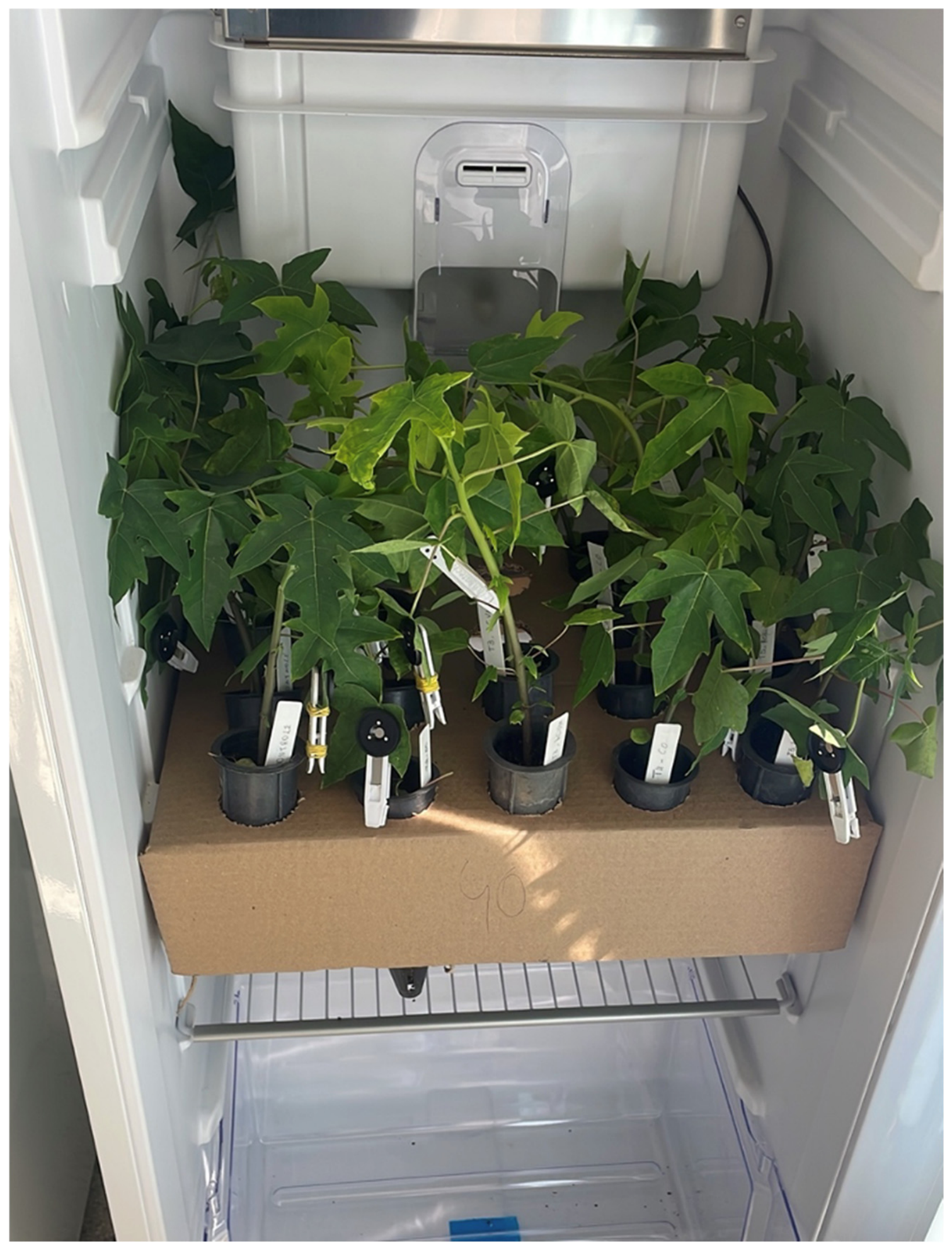
In Lot 2, the 100 seedlings (n = 4 per treatment), were transferred to 5 Demand-type incubators (B.O.D.) regulated at temperatures of 20, 25, 30, 35 and 40 °C. The chambers maintained luminosity with fluorescent lamps with approximately 2000 lux, internal relative humidity of 70 ± 5% monitored via memory thermo-hygrometers and constant internal air circulation (Figure A4). Time 0 min corresponds to the pre-exposure condition (ambient temperature of 24.5 °C).
Each temperature was operated at a B.O.D. independent. Because chamber assignments were not rotated between independent runs, statistical comparisons between temperatures are described as conditional on the chambers used.
Photochemical efficiency was measured with a portable Pocket-PEA fluorometer (Hansatech Instruments, Norfolk, UK) at times 0, 60, 120, 180 and 240 min. The same expanded median leaf of each plant was held with leaf clips for dark adaptation during measurement intervals. A saturating light pulse of 3500 μmol m−2 s−1 was applied for 1 s (650 nm). The JIP test parameters were obtained: maximum PSII quantum efficiency (Fv/Fm = (Fm − F0/Fm)) and the Total Performance Index (PiTotal), calculated via PEA Plus software according to Strasser and Strasser [25] and Strasser et al. [26].
4.7. Statistical Analysis
The data were subjected to analysis of variance using the F test at 5% probability. When significant, the means were compared using the Scott-Knott cluster test at 5% probability. All statistical analyzes were carried out using the R software [27], with scripts developed by the Easyanova data package [28].
5. Conclusions
The application of the commercial formulation AçãoH 3+ (3 mL L−1) promotes greater biomass accumulation, greater leaf area and a high Dickson quality index in ‘Aliança’ papaya seedlings 49 days after sowing in a greenhouse.
All commercial formulations tested promote an increase in the length of the main root axis in 280 cm3 tubes.
Under short-term thermal stress induced in the laboratory (35 °C at 180 and 240 min), the AçãoH 3+ formulation acts to preserve the photochemical performance index of PSII (PiTotal).
Under 40 °C at 180 min, seedlings from the Control treatment show signs of photochemical stress (Fv/Fm < 0.75), which is attenuated in seedlings treated with commercial formulations.
Author Contributions
Conceptualization, S.A.F., R.L.B.C., R.N.R.F., Q.M.d.S.N. and J.S.B.P.; methodology, S.A.F., R.L.B.C., R.N.R.F., Q.M.d.S.N. and J.S.B.P.; software, S.A.F., R.L.B.C., R.N.R.F., Q.M.d.S.N., J.S.B.P. and V.d.S.O.; validation, S.A.F., R.L.B.C., R.N.R.F., Q.M.d.S.N., J.S.B.P. and V.d.S.O.; formal analysis, M.E.d.S.B., L.P.S., S.F., W.E.A., S.C.S., G.Q.S. and V.d.S.O.; investigation, M.E.d.S.B., L.P.S., S.F., W.E.A., S.C.S. and G.Q.S.; resources, M.E.d.S.B., L.P.S., S.F., W.E.A., S.C.S. and G.Q.S.; data curation, M.E.d.S.B., L.P.S., S.F., W.E.A., S.C.S., G.Q.S. and V.d.S.O.; writing—original draft preparation, A.R.F., S.D.-A., A.B.P.L.G. and V.d.S.O.; writing—review and editing, A.R.F., S.D.-A., A.B.P.L.G. and V.d.S.O.; visualization, A.R.F., S.D.-A., A.B.P.L.G. and V.d.S.O.; supervision, A.R.F., S.D.-A., A.B.P.L.G. and V.d.S.O.; project administration, S.D.-A. and V.d.S.O.; funding acquisition, S.D.-A. and V.d.S.O. All authors have read and agreed to the published version of the manuscript.
Funding
This research received no external funding.
Institutional Review Board Statement
Not applicable.
Informed Consent Statement
Not applicable.
Data Availability Statement
The original contributions presented in this study are included in the article. Further inquiries can be directed to the corresponding authors.
Conflicts of Interest
The authors declare no conflicts of interest.
Abbreviations
The following abbreviations are used in this manuscript:
| PH | Plant height |
| SD | Stem diameter |
| LA | Leaf area |
| RSL | Root system length |
| DMS | Dry mass of the shoot |
| RSDM | Root system dry mass |
| TDM | Total dry mass |
| IQD | Dickson Quality Index |
| Fv/Fm | Maximum efficiency parameters of Photosystem II |
| PiTotal | Total performance index |
Appendix A
Figure A1.
Maximum, minimum and average temperatures (°C) and relative humidity (%) in the municipality of São Mateus—ES during the experimental period.
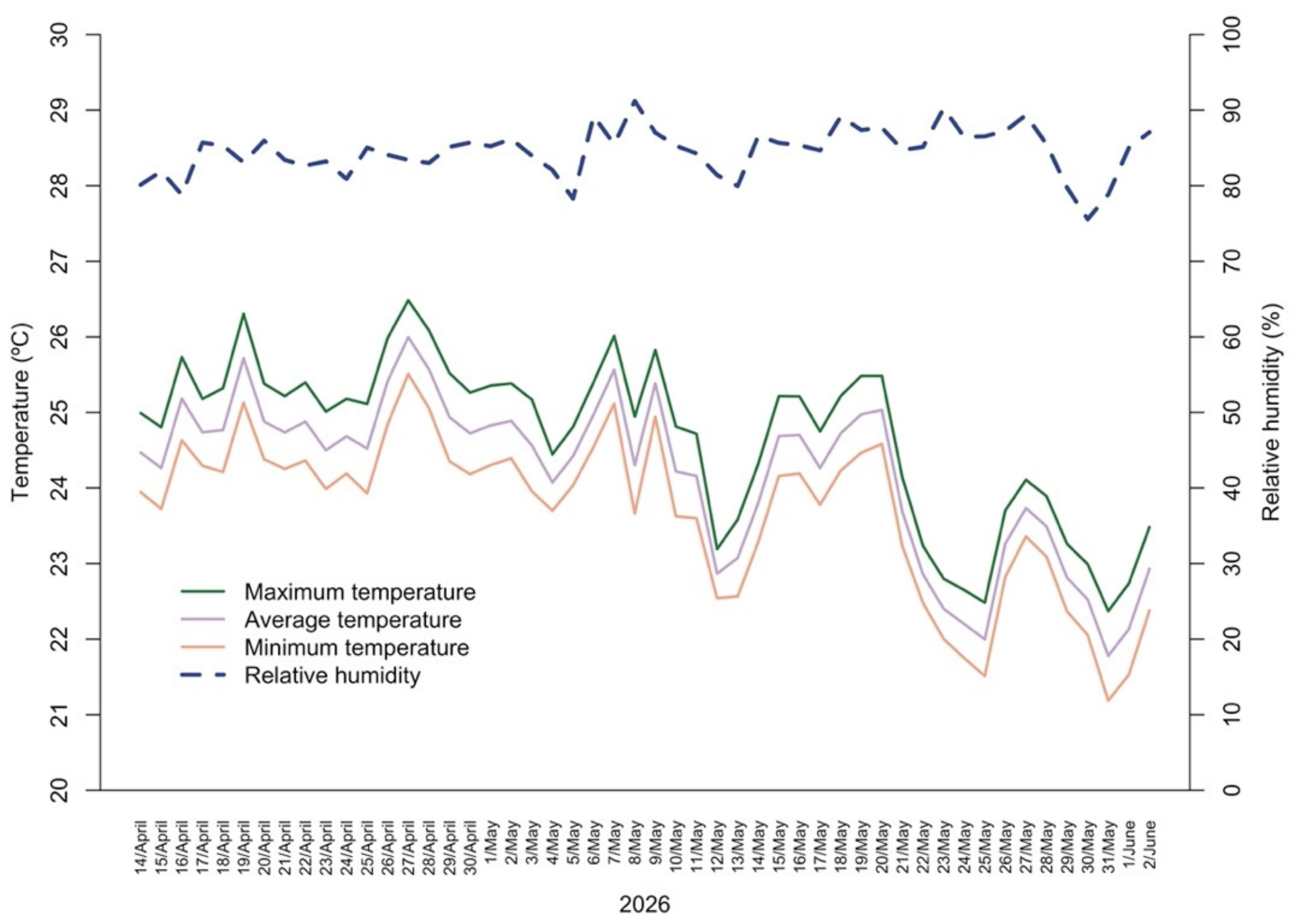
Table A1.
Schedule for conducting ‘Aliança’ papaya seedlings with planting, thinning and application of dynamized bioinputs.
Figure A2.
Process of sowing (A), seed treatment with soaking (B), and spraying (C) of ‘Aliança’ papaya seedlings seedlings with dynamized bioinputs and Control.
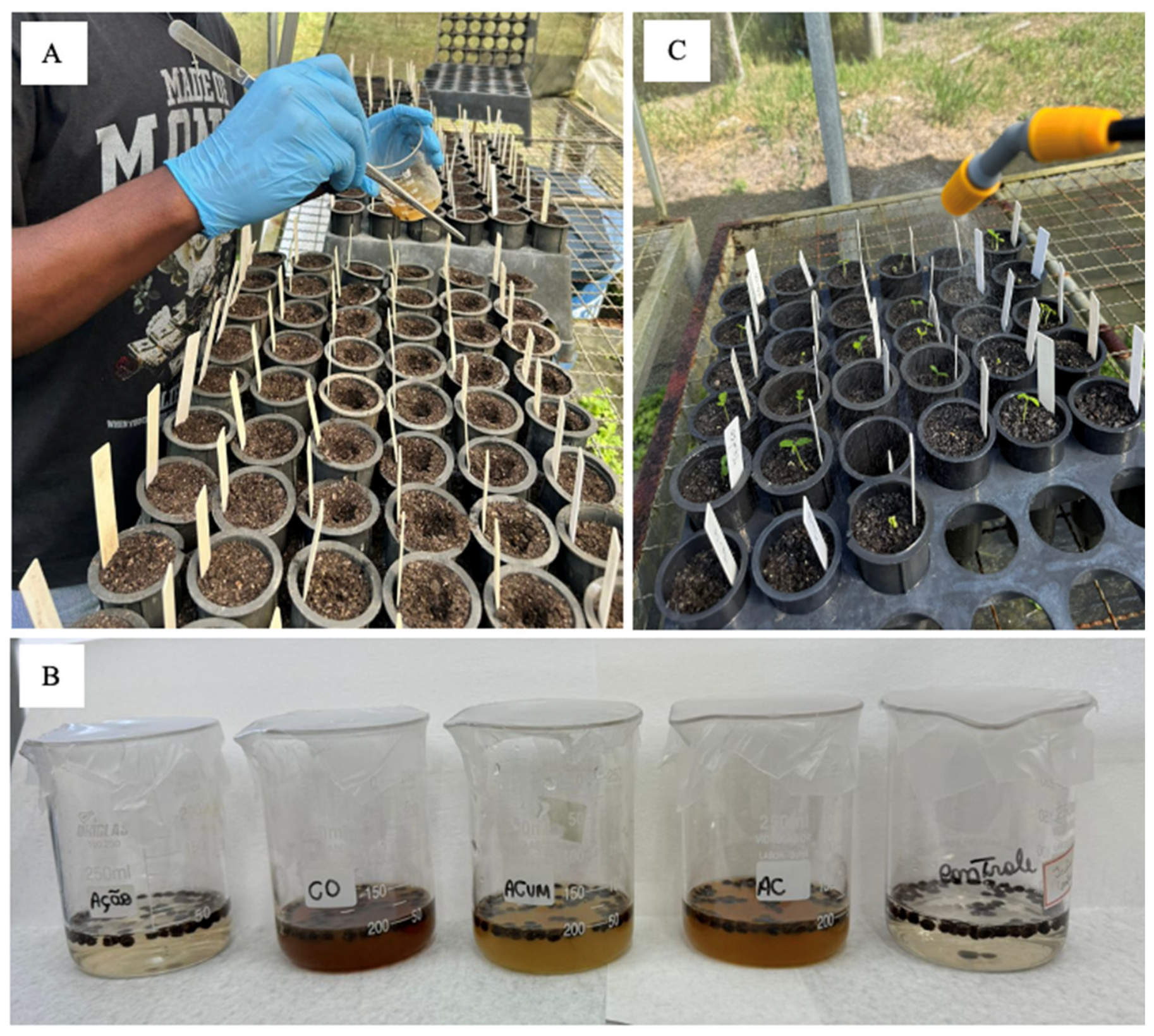
Figure A3.
Arrangement of ‘Aliança’ papaya seedlings with dynamic bioinputs and control in a completely randomized design.
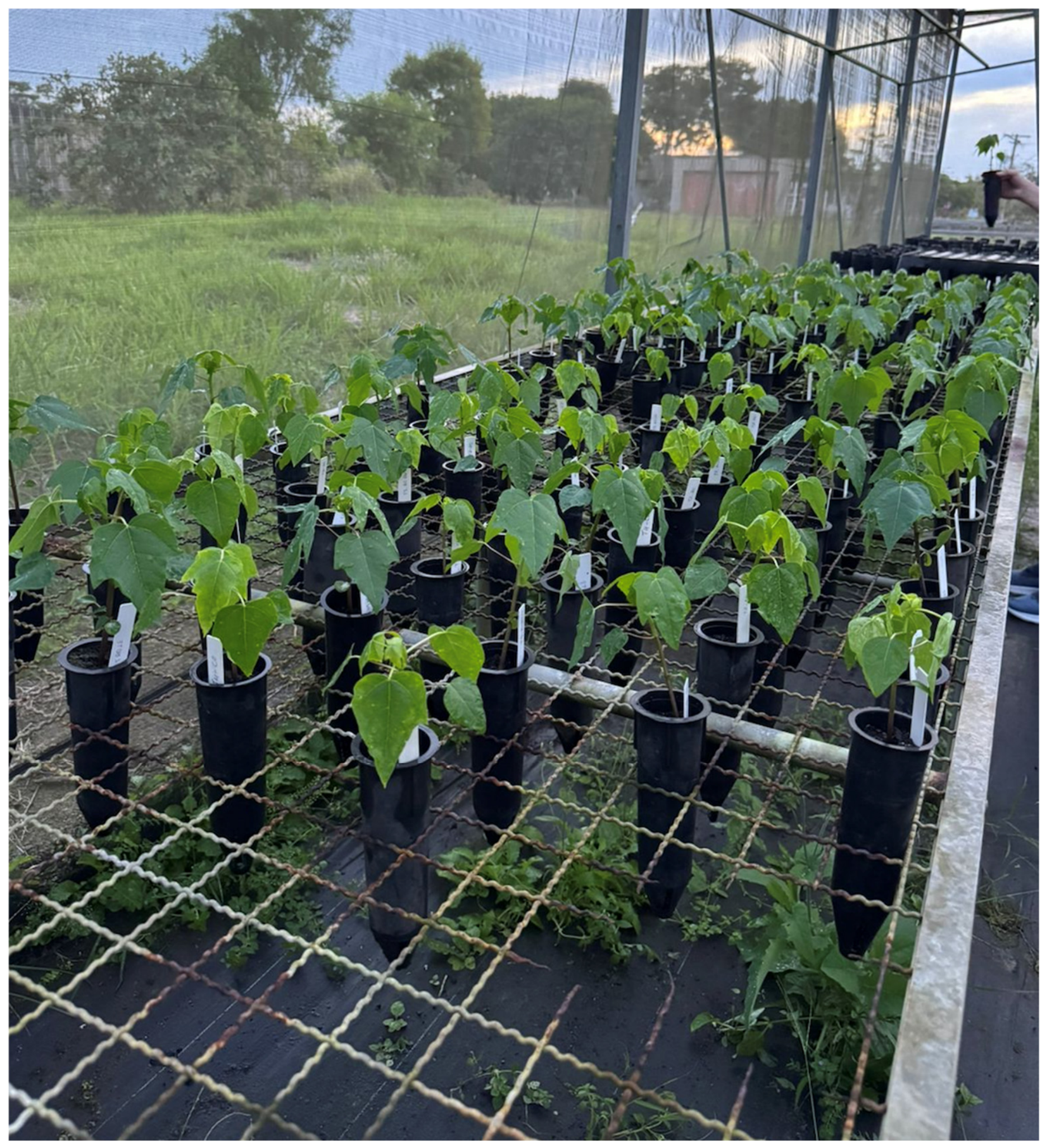
Figure A4.
Representation of ‘Aliança’ papaya seedlings treated with the dynamized bioinputs and the Control, in a Biological Oxygen Demand (B.O.D) type incubator, with leaf clips for determining chlorophyll a fluorescence.
References
- Zilli, M.; Scarabello, M.; Soterroni, A.C.; Valin, H.; Mosnier, A.; Leclère, D.; Havlík, P.; Kraxner, F.; Lopes, M.A.; Ramos, F.M. The impact of climate change on Brazil’s agriculture. Sci. Total Environ. 2020, 740, 139384. [Google Scholar] [CrossRef] [Scilit] [PubMed]
- Abbass, K.; Qasim, M.Z.; Song, H.; Murshed, M.; Mahmood, H.; Younis, I. A review of the global climate change impacts, adaptation, and sustainable mitigation measures. Environ. Sci. Pollut. Res. 2022, 29, 42539–42559. [Google Scholar] [CrossRef] [Scilit] [PubMed]
- Inmet. Instituto Nacional de Meteorologia. Dados Históricos Anuais. Available online: https://portal.inmet.gov.br/dadoshistoricos (accessed on 10 May 2024).
- Taiz, L.; Zeiger, E.; Møller, I.M.; Murphy, A. Fisiologia e Desenvolvimento Vegetal, 7th ed.; Artmed: Porto Alegre: Porto Alegre, Brazil, 2024. [Google Scholar]
- Malhi, G.S.; Kaur, M.; Kaushik, P. Impact of Climate Change on Agriculture and Its Mitigation Strategies: A Review. Sustainability 2021, 13, 1318. [Google Scholar] [CrossRef] [Scilit]
- Du Jardin, P. Plant biostimulants: Definition, concept, main categories and regulation. Sci. Hortic. 2015, 196, 3–14. [Google Scholar] [CrossRef] [Scilit]
- Rouphael, Y.; Colla, G. Biostimulants in agriculture. Front. Plant Sci. 2020, 11, 40. [Google Scholar] [CrossRef] [Scilit] [PubMed]
- Brasil. Estabelece o Regulamento Técnico para os Sistemas Orgânicos de Produção e as Listas de Substâncias e Práticas para o uso nos Sistemas Orgânicos de Produção; Brasil. Portaria nº 52, de 15 de março de 2021; Ministério da Agricultura e Pecuária: Brasília, Brazil, 2021.
- Lucini, L.; Rouphael, Y.; Cardarelli, M.; Bonini, P.; Baffi, C.; Colla, G. A vegetal biopolymer-based biostimulant promoted root growth in melon while triggering brassinosteroids and stress-related compounds. Front. Plant Sci. 2018, 9, 472. [Google Scholar] [CrossRef] [Scilit] [PubMed]
- Ferreira, T.R.; Rodrigues, J.D.S.; Galote, J.K.B.; Crasque, J.; Neto, B.C.; Falqueto, A.R.; Arantes, L.D.O.; Arantes, S.D. Mitigation of High Temperatures with Ascophyllum nodosum Biostimulants in Papaya (Carica papaya L.) Seedlings. Plants 2025, 14, 317. [Google Scholar] [CrossRef] [Scilit] [PubMed]
- Ramos, E.P.; Aguiar, D.B.; Barbosa, A.K.M.; Oliveira, V.S.; Arantes, L.O.; Schmildt, E.R.; Falqueto, A.R.; Fernandes, A.A.; Dousseau-Arantes, S. Production of ‘Aliança’ papaya seedlings under different dosages and sources of Lithothamnion sp. Front. Plant Sci. 2025, 16, 1630560. [Google Scholar] [CrossRef] [Scilit] [PubMed]
- Gunasekera, D.; Berkowitz, G.A. Use of transgenic plants with ribulose-1, 5-bisphosphate carboxylase/oxygenase antisense DNA to evaluate the rate limitation of photosynthesis under water stress. J. Plant Physiol. 1993, 103, 629–635. [Google Scholar] [CrossRef] [Scilit] [PubMed]
- Medrano, H.; Parry, M.A.J.; Socias, X.; Lawlor, D.W. Long term water stress inactivates rubisco in subterranean clover. Ann. Appl. Biol. 2010, 131, 491–501. [Google Scholar] [CrossRef] [Scilit]
- Moore, C.E.; Meacham-Hensold, K.; Lemonnier, P.; Slattery, R.A.; Benjamin, C.; Bernacchi, C.J. The effect of increasing temperature on crop photosynthesis: From enzymes to ecosystems. J. Exp. Bot. 2021, 72, 2822–2844. [Google Scholar] [CrossRef] [Scilit] [PubMed]
- Wang, R.; Gao, Y.; Li, J.; Wang, X.; Yang, Y.; Huang, H.; Zhou, Z.; Wang, P.; Zhao, L. Drought and heat stress studies in perennial ryegrass: A bibliometric analysis 1994–2024. Front. Sustain. Food Syst. 2024, 8, 1458552. [Google Scholar] [CrossRef] [Scilit]
- Schansker, G.; Tóth, S.Z.; Holzwarth, A.R.; Garab, G. Chlorophyll a Fluorescence: Beyond the Limits of the Q(A) Model. Photosynth. Res. 2014, 120, 43–58. [Google Scholar] [CrossRef] [Scilit] [PubMed]
- Martins, D.S.; Ventura, J.A.; Ferreguetti, G.A.; Marin, S.L.D. Recomendações Técnicas para o Cultivo do Mamoeiro; Incaper: Vitória, Brazil, 2024; p. 198. [Google Scholar] [CrossRef] [Scilit]
- Pan, C.Z.; Ahammed, G.J.; Li, X.; Shi, K. Elevated CO2 improves photosynthesis under high temperature by attenuating the functional limitations to energy fluxes, electron transport and redox homeostasis in tomato leaves. Front. Plant Sci. 2018, 9, 1739. [Google Scholar] [CrossRef] [Scilit] [PubMed]
- Zhu, Y.Q.; Liao, Z.C.; Yang, J.; Ye, H.T.; Han, C.Y.; Xu, W.Z.; Nie, G. Genotypic and phenotypic diversity of heat tolerance among and within perennial ryegrass (Lolium perenne L.). Braz. J. Bot. 2022, 45, 1223–1234. [Google Scholar] [CrossRef] [Scilit]
- Yamasato, A.; Tanaka, R.; Tanaka, A. Loss of the N-terminal domain of chlorophyllide a oxygenase induces photodamage during greening of Arabidopsis seedlings. BMC Plant Biol. 2008, 8, 64. [Google Scholar] [CrossRef] [Scilit]
- Sakuraba, Y.; Yokono, M.; Akimoto, S.; Tanaka, R.; Tanaka, A. Deregulated chlorophyll b synthesis reduces the energy transfer rate between photosynthetic pigments and induces photodamage in Arabidopsis thaliana. Plant Cell Physiol. 2010, 51, 1055–1065. [Google Scholar] [CrossRef] [Scilit]
- Tamaka, R.; Tanaka, A. Chlorophyll cycle regulates the construction and destruction of the light-harvesting complexes. Biochim. Et. Biophys. Acta (BBA) –Bioenerg. 2011, 8, 8. [Google Scholar] [CrossRef] [Scilit] [PubMed]
- Alvares, C.A.; Stape, J.L.; Sentelhas, P.C.; Gonçalves, J.L.M.; Sparovek, G. Köppen’s climate classification map for Brazil. Meteorol. Z. 2014, 22, 6. [Google Scholar] [CrossRef] [Scilit]
- Dickson, A.; Leaf, A.L.; Hosner, J.F. Quality appraisal of white spruce and white pine seedling stock in nurseries. For. Chron. 1960, 36, 10–13. [Google Scholar] [CrossRef] [Scilit]
- Strasser, B.J.; Strasser, R.J. Measuring fast fluorescence transients to address environmental questions: The JIP test. In Photosynthesis: From Light to Biosphere; Mathis, P., Ed.; Kluwer Academic Publishers: Dordrecht, The Netherlands, 1995; pp. 977–980. [Google Scholar]
- Strasser, R.J.; Tsimilli-Michael, M.; Srivastava, A. Analysis of the chlorophyll a fluorescence transient. In Chlorophyll a Fluorescence: A Signature of Photosynthesis. Advances in Photosynthesis and Respiration; Papageorgiou, G.C., Govindjee, Eds.; Springer: Dordrecht, The Netherlands, 2004; pp. 321–362. [Google Scholar]
- R Core Team. R: A Language and Environment for Statistical Computing; R Foundation for Statistical Computing: Vienna, Austria, 2024; Available online: https://www.R-project.org/ (accessed on 21 June 2026).
- Arnhold, E. Easyanova: Analysis of Variance and Other Important Complementary Analyses, version 11.0; R Foundation for Statistical Computing: Vienna, Austria, 2014; Available online: https://cran.r-project.org/web/packages/easyanova/easyanova.pdf (accessed on 21 June 2026).
Disclaimer/Publisher’s Note: The statements, opinions and data contained in all publications are solely those of the individual author(s) and contributor(s) and not of MDPI and/or the editor(s). MDPI and/or the editor(s) disclaim responsibility for any injury to people or property resulting from any ideas, methods, instructions or products referred to in the content. |
© 2026 by the authors. Licensee MDPI, Basel, Switzerland. This article is an open access article distributed under the terms and conditions of the Creative Commons Attribution (CC BY) license.