


Abstract
Cross-kingdom pathogenesis—human and animal pathogens colonizing and persisting in plants—is transforming our understanding of microbial ecology, food safety, and public health. This review translates incoming research that demonstrates plants as more than mute carriers to dynamic ecological interfaces where human and zoonotic pathogens, such as Salmonella enterica, Escherichia coli O157:H7, and Listeria monocytogenes, will adhere, internalize, and, in some cases, potentially evade host defenses. Such pathogens exploit evolutionarily conserved molecular processes like Type III secretion system 1 (TTSS), biofilm formation, quorum sensing, and small RNA-mediated immune sabotage that have allowed them to cross biological kingdom boundaries. To provide an entry point for pathogens, environmental conditions (e.g., contaminated irrigation water, manure application, wildlife access, and mechanical wounding) promote pathogen transfer to and penetration into plant tissues through stomata hydathodes above ground or roots below ground. Once inside, pathogens confront a range of plant immune responses, indigenous microbiota, and abiotic stresses such as UV radiation exposure, nutrient starvation, and osmotic fluctuations. Nonetheless, biofilm production, metabolic versatility, and virulence gene expression contribute to their persistence. Interactions with plant pathogens and microbiomes additionally shape colonization dynamics, for example, through co-survival and niche manipulation. With the acceleration of these processes due to climate change, urbanization, and intensified agriculture, cross-kingdom pathogenesis becomes a rising concern for One Health. Critical knowledge gaps, including seedborne transmission, microbiome engineering, and predictive modeling, are pointed out in the review along with emerging mitigation strategies, including point-of-care diagnostics and microbial biocontrol. In conclusion, this review advocates for interdisciplinary collaboration from microbiology, plant science, and One Health perspectives to predict and mitigate cross-kingdom threats to global food production.
1. Introduction
Cross-kingdom pathogenesis presents a profound challenge of physiological adaptation, as pathogens overcome classical host barriers and encounter very different biotic and abiotic stresses in phylogenetically diverged organisms. This convergence of pathosystems is not merely a biological curiosity but raises critical public and environmental health issues, with important consequences for agriculture, food security, and zoonotic disease transmission [1]. To breach these biological boundaries, pathogens, primarily bacteria and fungi, exploit evolutionarily conserved virulence tactics and host defense pathways [2]. This is evident in Salmonella enterica, a human enteral pathogen that can persist in plant tissues and thus elude normal sanitation procedures for animal-derived pathogens [3]. Fungal pathogens like Fusarium and Aspergillus, perceived as host-specific in plants or animals, are also now recognized for their bidirectional host range under favorable ecological niches [4]. This adaptive plasticity is exacerbated by anthropogenic disturbances, including international trade, climate change, and intensive farming, which impose selective pressures that force pathogens to broaden their host range [5]. In this context, human pathogens must be able to counter plant-specific stresses, including UV exposure, shifts in osmolarity and antimicrobial phytochemicals. On the other hand, it may be becoming riskier for immunocompromised human patients to suffer invasion and infection by opportunistic phytonotic agents [6] such as Klebsiella pneumoniae KpC4, which was isolated from both maize and human tissues [7]. This stress adaptation is mediated by conserved effector proteins, secretion systems (such as Type III secretion) and common signaling pathways [8]. In addition,, small RNAs (sRNAs) from both host and pathogen were identified as important regulators during the pathogenesis in a recent study, involved in restraining host immunity responses and enhancing virulence [9]. Although these phenomena are increasingly appreciated, we still have very limited knowledge about the individual systems allowing adaptation mechanisms between mammals and plants. This review refines understanding of the molecular, ecological and evolutionary attributes of cross-kingdom pathogens. Integrating perspectives from microbiology, plant pathology and clinical sciences, we present here a new paradigm of the multidimensional threat posed by cross-kingdom pathogens and encourage exploration of new avenues to monitor and manage these agents.
2. Empirical Evidence and Epidemiological Mechanisms of Cross-Kingdom Pathogen Transfer
Cross-kingdom transmission of animal-associated pathogens into plant hosts presents a difficult agricultural and public health challenge. Highlighting their extreme ecological opportunism, several opportunistic human pathogens have recently caused successful cross-boundary plant disease outbreaks. We can see this with Klebsiella pneumoniae KpC4, which leads to bacterial top rot in maize as well as banana leaf spot [7,10]. In a similar manner, during CYVD, the squash bug vectors the causative agent, the bacterium Serratia marcescens [11,12] (Table 1), leading to devastating losses in cucurbit production. Moreover, Pseudomonas aeruginosa induces root and stem rot of ginseng and tomatoes [13,14]. In your other example, Salmonella enterica has been commonly associated with produce-associated foodborne outbreaks; however, Salmonella is considered an opportunistic asymptomatic endophytic colonizer but not fully as a necrotic plant pathogen [15,16].
The epidemiological mechanisms enabling these inter-host jumps are complex processes that depend on environmental encounters, vector-borne transmission and conserved molecular factors. Contaminated irrigation water, agricultural runoff and manure frequently introduce enteric pathogens to the plant rhizosphere and phyllosphere [17,18]. Upon introduction, adaptation, and horizontal gene transfer with the native plant microbiota promote pathogen survivorship [18]. Moreover, biological vectors, including insects and nematodes, enhance the host shift and systemic spread [19,20]. At the molecular level, cross-kingdom colonization likely entails the use of overlapping virulence and stress-response mechanisms such as type III secretion systems (T3SS) and toxins that function across vastly different host physiologies [1,21]. In sickness and in health, cross-kingdom movement is a cyclical process, dependent on contaminated niches, biological vectors, and conserved molecular virulence.
Table 1.
Human opportunistic pathogens associated with plant infections and colonization.
3. How Pathogens Reach Plants: Transmission Routes and Entry Points
3.1. Sources of Contamination
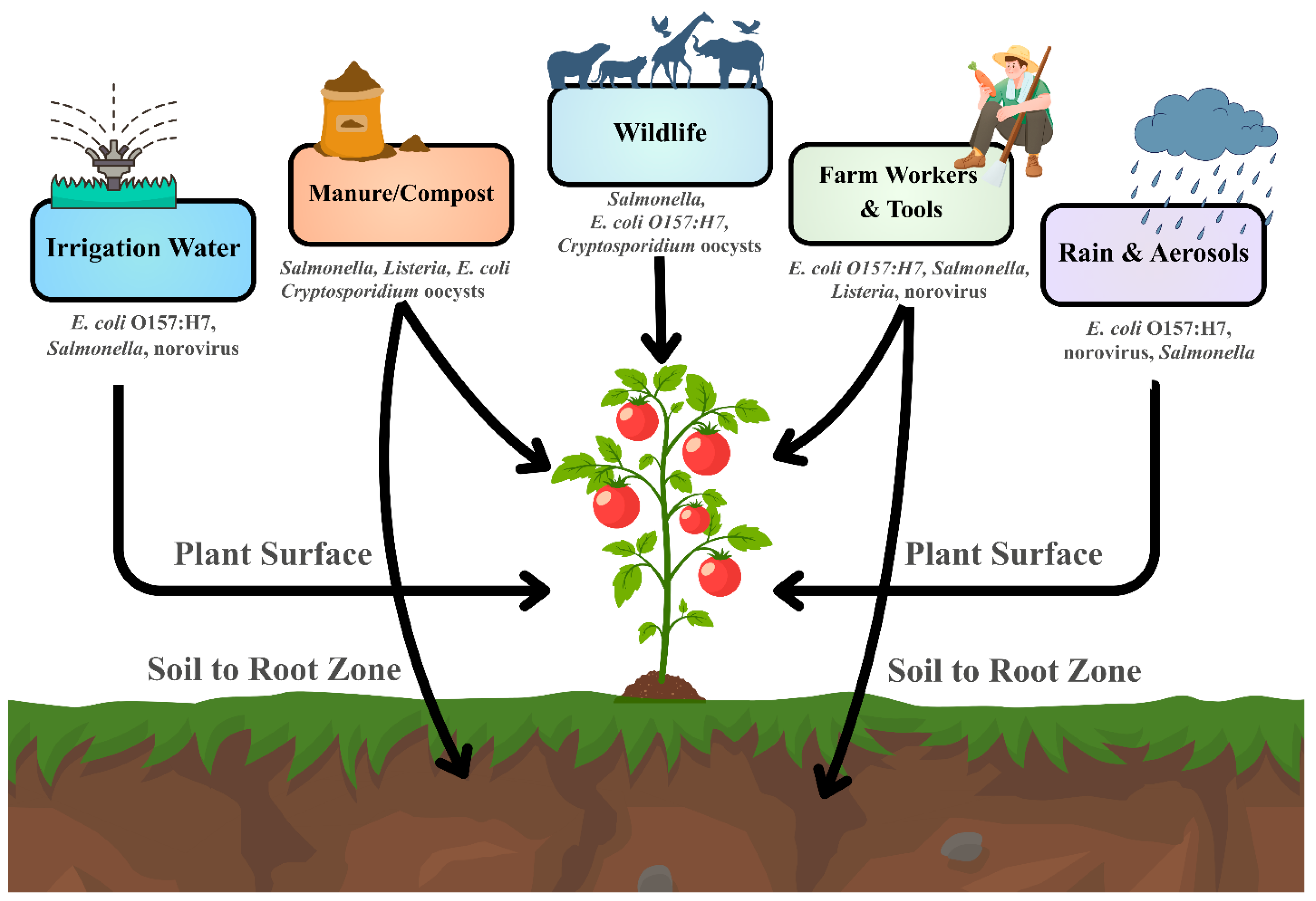
Plant-associated human and animal pathogens penetrate crops via interconnected environmental channels, such as irrigation water, soil additives, and agricultural equipment, which serve as selective stressors (e.g., UV radiation, osmotic variations) promoting cross-kingdom adaptability. Irrigation water is a principal vector for bacteria such as Escherichia coli, Salmonella enterica, and Listeria monocytogenes, along with protozoan pathogens like Cryptosporidium and Giardia, which spread through aerosols and direct leaf contact [36,37] (Figure 1). In developing regions like Bangladesh, irrigation with wastewater that is not treated is a primary driver of pathogen internalization. Moreover, soil and inadequately processed organic amendments represent significant pathways for contamination, as they can harbor live enteric pathogens for prolonged durations [36]. Simultaneously, livestock and wildlife function as mobile reservoirs, depositing fecal pollutants directly onto vegetation or indirectly through contaminated soil [38]. In addition to biological and environmental vectors, agricultural and postharvest handling equipment, including harvesting knives, conveyor belts, and storage bins, can function as mechanical carriers. Enduring biofilms on these surfaces insulate E. coli and Salmonella from desiccation and sanitizers, facilitating prolonged life and cross-contamination over subsequent crop cycles [39,40] (Figure 1). The combined aqueous, soil-mediated, animal-derived, and mechanical pathways provide an integrated network that facilitates the persistence, dispersion, and internalization of human and animal pathogens throughout plant systems.
Figure 1.
Principal sources and environmental transmission routes of microbial contamination in agricultural systems. Diverse reservoirs, including irrigation water, organic amendments, and animals, act as entry points for various infections such as Salmonella, E. coli O157:H7, and Listeria. These pollutants are transmitted through biotic and abiotic vectors, including agricultural practices and precipitation, to access the crop via the plant surface or the soil-root interface.
3.2. Entry Points into the Plant
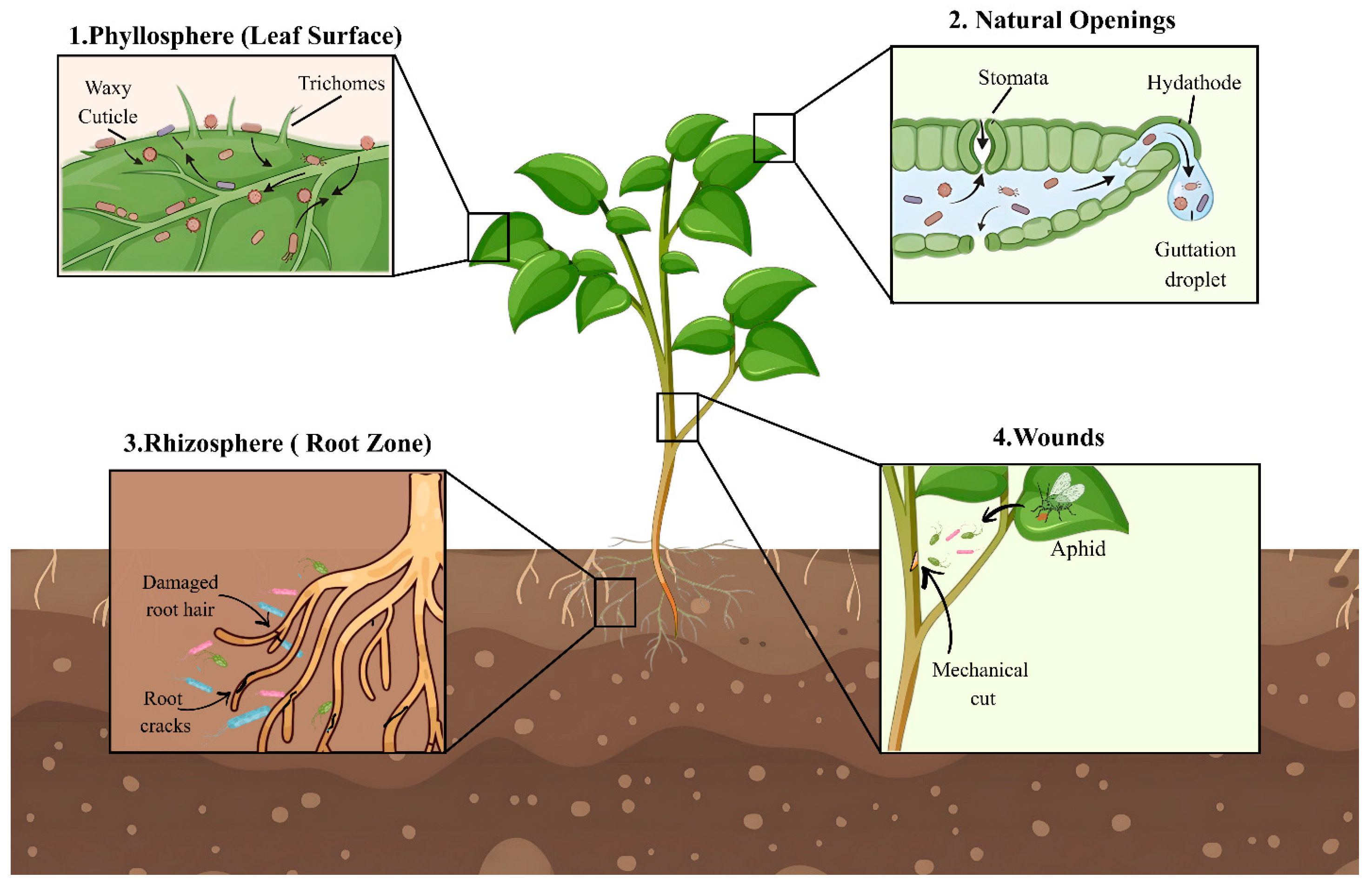
Human and animal pathogens penetrate plant tissues mostly through natural openings and mechanical wounds, taking advantage of physiological privileged sites to colonize and establish infections. The major entry ports are stomata, hydathodes, root interfaces, wounds, and seeds (Figure 2), all of which represent unique microenvironments that condition the success of pathogen establishment in the host under stress. Stomata act as both key gateways and integral elements of the plant immune system, initiating closure and defense responses upon microbial perception [41]. However, numerous bacterial and fungal pathogens have evolved virulence mechanisms, including effector proteins, quorum-sensing molecules, and hormone mimics that suppress stomatal closure and disrupt guard cell signaling [42]. Likewise, hydathodes, specialized guttation structures on leaf margins, are major points of entry for vascular pathogens like Xanthomonas campestris, a process that is also exploited by Salmonella through sensing of the guttation fluid as a nutrient attractant and to move systemically in plants via xylem [43]. The root zone is another important entry point (Figure 2), and nutrient gradients, rhizodeposition, and competition between microbes influence pathogen attachment and survival. Enteric species such as Escherichia coli are capable of colonizing rhizospheres and penetrating internal root tissues [44]. In addition to natural openings, mechanical wounding arising from cultivation, harvesting, insect herbivory, or environmental stresses (e.g., storms, abrasion) creates direct breaches in epidermal barriers that grant pathogens immediate access to internal tissues and nutrient pools [45] (Table 2). The various entry routes collectively demonstrate how cross-kingdom pathogens utilize plant structural and physiological characteristics to establish residency, highlighting the complex stress-adaptive interaction between plant defensive barriers and microbial invasion strategies.
Figure 2.
Anatomical gateways and stress-associated entry points for plant–microbe interactions. The plant surface functions as a primary interface where microorganisms interact with specific niches, including the phyllosphere and rhizosphere, to navigate physical barriers like the waxy cuticle and trichomes. To bypass these epidermal defenses, microbes frequently exploit natural openings such as stomata and hydathodes, utilizing physiological exudates like guttation droplets to facilitate ingress. Furthermore, abiotic and biotic stresses compromise tissue integrity, offering opportunistic access routes through mechanical wounds, insect vectors (e.g., aphids), and damaged root hairs or cracks in the subterranean root zone. Black arrows indicate the pathways of microbial movement and colonization into plant tissues, while colored symbols represent various microbial populations.
Table 2.
Pathogen entry points into plant tissues.
4. Environmental Constraints for Human and Animal Pathogen Survival in Plants
4.1. Stresses Imposed by Plant Surfaces and Tissues
Plants provide an extraordinary collection of abiotic and biotic challenges, which exert a profound influence on the survival of human and animal pathogens. In contrast to animal hosts, the airborne, subsoil, and endomicroscopic niches of plants expose microbial cells to changing ultraviolet radiation and osmotic disequilibria; desiccation stress; temperature fluctuation and nutrient starvation. Together, these conditions favor long-term epiphytic persistence over vegetative proliferation [47]. In particular, the phyllosphere stands out as one of the most extreme habitats with diurnal UV radiation of up to 2000 kJ m−2 day−1, temperature fluctuations around 20–30 °C and intense water limitation. Under these conditions, less than 1% of the cells are culturable after 24 h, in part as a result of oxidative bursts produced by reactive oxygen species (ROS) and nutrient depletion (∼10−12 g C leaf−1) [47].
4.1.1. Ultraviolet-Induced Stresses
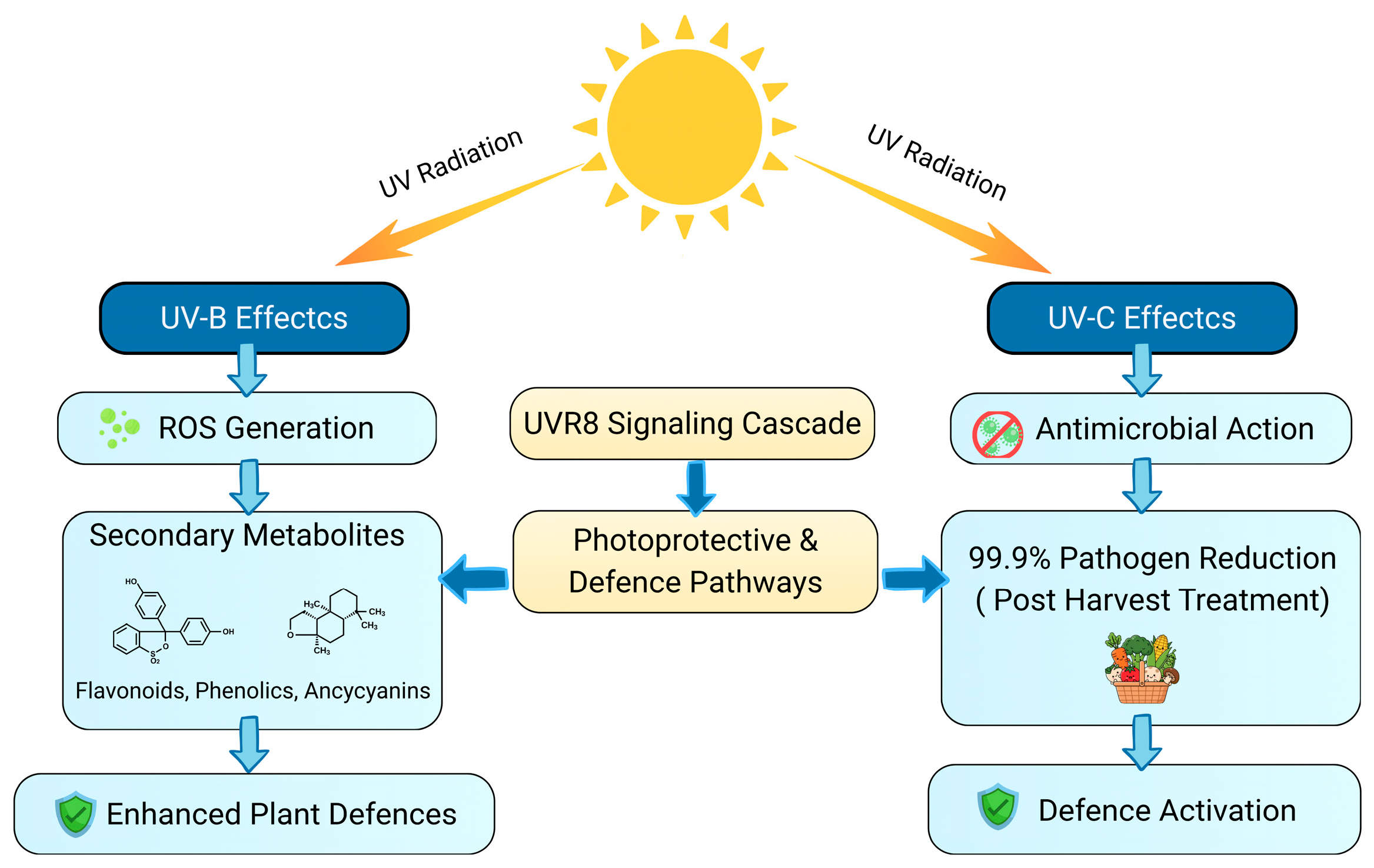
UV radiation is a crucial factor for plant-pathogen interactions among the abiotic limitations. The UV spectrum creates oxidative adducts in pathogens and is a modulator of host defense. UV-B stress generates ROS and induces secondary metabolite synthesis in the plant, leading to defense signaling but also oxidative damage in microbial cells [48]. UV-C light has strong antimicrobial effects. When applied, it is capable of reducing the bacterial burden and oomycete persistence by more than 99.9% in contaminated systems [49] (Figure 3); however, as solar UV-C is attenuated by the ozone layer, this stress cannot be effectively observed as a field persistent factor but rather on artificial post-harvest decontaminations complementary to other factors [50]. Furthermore, UV-B increases the production of phenolics, flavonoids and anthocyanins, which are antioxidant molecules that help mitigate ROS damage [51]. These responses are additionally enhanced by a UVR8-mediated signaling cascade that induces the up-regulation of photoprotective and defense-related pathways [52]. It is noteworthy that defense gene activation and metabolite accumulation seem to be the mechanisms behind mild UV-B-induced resistance, providing a non-chemical approach against biotic stress [51,53]. However, chronic exposure to UV causes damage to DNA and the membranes, leading to a loss of innate resistance in plants and subsequently opening pathways for pathogen invasion [48].
Figure 3.
Impact of UV Radiation on Plant Defense Mechanisms and Pathogen Control. UV-B radiation induces the generation of reactive oxygen species (ROS) and activates the UVR8 signaling cascade, enhancing the production of secondary metabolites such as flavonoids, phenolics, and anthocyanins, which boost plant defenses. UV-C radiation has antimicrobial properties, reducing pathogen levels by more than 99.9% in post-harvest treatments. These processes collectively activate plant defense mechanisms, providing a non-chemical strategy for combating biotic stress and pathogens.
4.1.2. Nutrient Limitation and Chemical Constraints
Animal hosts have a nutrient-rich environment, whereas the leaf phyllosphere is relatively oligotrophic due to low bioavailability of carbon, nitrogen, and minerals. Nutrient deprivation like this starves enteric pathogens to reprogram metabolism to live longer and scavenge for nutrients [54]. Restricted carbon and nitrogen availability subdue the growth and virulence expression of bacteria. Furthermore, plant exudates determine pathogen destiny: sugars and organic acids fuel the growth of Salmonella enterica; in contrast, fatty acids like oleic and palmitic acid strongly inhibit expansion by interfering with bacterial cell membrane stability [55]. However, plants also restrict bacterial penetration and colonization by means of their intrinsic immune mechanisms, like stomatal closure, which starves pathogens from the nutrient-rich apoplast, as well as trapping bacteria to survive on the nutrient-poor adaxial leaf surface.
Chemical constraints are important drivers of enteric pathogen survival in plants. Although secondary metabolites, such as alkaloids and terpenes, can disturb the integrity of bacterial membranes, metabolism, and DNA [38,56] the in vitro efficacy does not necessarily translate to achieving sterilization in planta. For example, S. enterica colonizes leaf surfaces and so gets systemically introduced to the plant root system, allowing for persistence in terpenoid-enriched basil and coriander even in commercial supply chains [57,58]. It is important to note that survival here is a result of adaptation to the stressor by the action of linalool; they undergo membrane remodeling, porta, and increased membrane aggregation of linalool, which strengthens the response of Salmonella to plant oils [59]. In addition, pathogens use sheltered microhabitats such as the apoplast to avoid chemical defenses and abiotic stressors such as UV radiation [60]. Pathogen persistence in chemically inhospitable plants, we argue, is therefore the outcome of a bureaucratic process of chemical partial suppression, bacterial adaptation to chemical suppression, and niche protection instead of phytochemical ineffectiveness. Ultimately, pathogen persistence in chemically hostile plants results from a dynamic balance of partial inhibition, bacterial adaptation, and niche protection, rather than phytochemical inactivity.
4.1.3. Osmotic Stress and Water Potential Variability
Pathogens inhabiting plants must also contend with severe osmotic challenges arising from fluctuating water availability due to rainfall, transpiration, irrigation, and soil conditions. These alterations induce osmotic shocks that compromise membrane integrity and turgor balance, hence activating adaptive osmoregulatory mechanisms. For example, S. enterica subjected to >0.5 M NaCl, corresponding to the osmolarity of lettuce, activates glycine betaine absorption through the proU operon and synthesizes trehalose via otsBA to restore turgor; ΔproU mutants demonstrate a 4-log increase in mortality [47]. Likewise, E. coli O157:H7 undergoes osmotic plasmolysis on spinach surfaces, with ΔompF/C mutants exhibiting increased mortality [47]. Listeria monocytogenes adapts by upregulating sigB/cbcV, enhancing carnitine absorption at around 0.6 Osm. This adaptation diminishes invasiveness by a factor of five [61].
4.1.4. Temperature and Desiccation Stresses
Thermal and desiccation stress additionally influence the survival of pathogens on plants. Diurnal differences of 10–30 °C surface during membrane fluidity, enzymatic kinetics, stress persistence, but also >90% loss of viability in E. coli O157:H7 and S. enterica during peaks between 25 and 40 °C [47]. Conversely, cold exposure (4–15 °C) induces the expression of cold-shock proteins in L. monocytogenes and promotes growth at refrigerator temperatures; whereas, ΔcspA mutants exhibit reduced ability to form biofilms and lower invasion proficiency [61]. At the same time, bacterial viability is strongly suppressed by drought-induced desiccation. Below 40% relative humidity, S. enterica and E. coli O157:H7 numbers decrease by 2–4 logs via membrane disintegration and disrupted osmolyte balance [47,62].
4.2. Competitive Exclusion by the Native Plant Microbiota
In addition to abiotic stress, plants house an ecologically complex native microbiota that places powerful biotic counterpressure on invading human and animal pathogens. The resident microbial community, which includes bacteria, fungi and yeasts of the phyllosphere, rhizosphere and endophytic compartments, operates a dynamic protective barrier through nutrient competition, niche preemption and chemical antagonism [63]. Early colonizers compete to race quickly in organizing attachment sites and capturing limited resources such as iron, often with high-affinity systems of siderophore production, for non-native invaders to be left without essential growth stimuli [47]. This priority effect strongly decreases plant surface and tissue invasibility after the indigenous microbiome has been established. Meanwhile, the indigenous microbiota also produce various antimicrobial metabolites such as bacteriocins, lipopeptides and volatile organic compounds (VOC), exerting inhibitory effect on enteric pathogens including Salmonella enterica, Escherichia coli O157:H7 and Ralstonia solanacearum [63]. In addition to soluble antimicrobials, some such resident Proteobacteria use contact-dependent interference systems, the type VI secretion system (T6SS) as an instance, to inject toxins into competing pathogen cells by direct physical interaction that effectively lyses invaders [64]. The formation of biofilms additionally reinforces exclusion by physically occupying adhesion sites and creating microenvironments that reduce access to oxygen and nutrients. Metabolic flexibility of indigenous microbial taxa also provides a major competitive advantage as plant-associated microbes efficiently catabolize phenolics, organic acids and polysaccharides that are less well utilized by animal-originated pathogens, which, conversely, rely on host protein amino acids/peptides [65,66]. These cooperative behaviors—nutrient capture, contact-dependent killing and metabolic specialization—combine into a biotic shield that stabilizes the plant microbiome, represses pathogen fitness and hinders cross-kingdom colonization. Both ecologically and agriculturally, these exclusionary dynamics demonstrate that the plant-associated microbiomes are resilient in preventing ‘intruders’ from maintaining their states. At the same time, SynCom-based biocontrol strategies could be exploited to reduce contamination and zoonotic transmission risks in agroecosystems [47,63,65,66].
5. Mechanisms Enabling Cross-Kingdom Colonization and Persistence
5.1. Adhesion to Plant Surfaces as the First Step in Cross-Kingdom Colonization
Human and animal pathogens present on plant surfaces confront a hostile habitat void of standard epithelial receptors, mucus sheaths, and physiological constancy found in animals [67]. In the face of these obstacles, enteric pathogens have evolved elaborate adhesion mechanisms for binding to a variety of plant tissues in what is an essential early step in colonization. They express surface adhesins that use electrostatic and hydrophobic interactions to attach to plant cell walls and cuticles, allowing them to avoid phyllosphere defenses [68]. In these pathogens, pili, fimbriae, and curli fibers are major contributors to attachment during biofilm initiation (Figure 3). The CFA/I fimbriae of enterotoxigenic E. coli (ETEC), for instance, exhibit structural flexibility that aids both adhesion and evasion of host defenses [69]. In parallel, outer membrane proteins (OMPs) such as OmpA, OmpX, and PagN function as additional adhesins that strengthen surface interactions and contribute to colonization stability [70]. In analogy to phytopathogens, organisms like Xylella fastidiosa increase adhesion by delivering outer membrane vesicles (OMVs) [71]. OMVs together also have an immunomodulatory activity by suppressing plant defense signaling, thereby promoting pathogen colonization under stress [72]. Specialized adhesins such as XadA1, XadA2 and XadA3 also play a fundamental role in the biofilm architecture and cell–cell aggregation, acting as molecular anchors to maintain continuous colonization of xylem vessels and leaf surface [73]. In sum, these adhesion mechanisms highlight the central aspect of surface-interaction as the first and defining event in cross-kingdom adaptation, facilitating enteric pathogens’ ability to traverse the ecological barrier separating animal from plant hosts.
5.2. Biofilm Formation as a Strategy for Persistence on and Within Plants
Human and animal pathogens switch from free-living cells to structured biofilms soon after adhesion, which allows their survival under adverse environmental conditions [17]. In the phyllosphere and rhizosphere, humid conditions and nutrient exudates form a very dense biofilm that enables survival of both phytopathogens and opportunistic human pathogens [74]. Pathogens like Salmonella enterica, E. coli O157:H7, and Listeria monocytogenes use biofilm to survive against sanitizers, being up to 1000 times more resistant than when the cells were planktonic [75]. Human pathogens such as Klebsiella pneumoniae use LuxR-family regulators to trigger expression of plant-responsive genes, leading to the formation of dedicated biofilms with cross-kingdom fitness [7]. In addition, human pathogens co-aggregate with autochthonous microbiota in multi-species biofilms that can lead to increased resistance and horizontal gene transfer [76]. They also colonize microplastics, which they use as “plastisphere” niches to survive in soils and irrigation water [77]. Taken together, these datasets underscore the importance of biofilm formation as a central and stress-dependent mode of cross-kingdom persistence that affords both physical protection and ecological fit for human/animal pathogens in plant environments.
5.3. Internalization and Systemic Movement Within Plant Tissues
Internalized pathogens are a major cause of food safety risk because they can escape surface disinfection and survive attack in edible tissues. This entrance is promoted by contaminated irrigation water or soil, mainly in lesions area or nutrient and moisture-deficient stress conditions [78]. Likewise, stomatal apertures act as important micropores in high humidity conditions for Salmonella and E. coli entry into leaf mesophyll tissues, where nutrient-rich intercellular spaces are exploited without encountering the environmental stresses [79]. The efficiency of internalization depends on the pathogen and host species. Still, it can also be affected by environmental stressors, plant growth stage, as well as by expression of patterns involving stress-responsive proteins controlling the cuticular permeability [3,80]. Mechanical injuries and harvesting wounds create avenues for infection by enterobacterial pathogens such as E. amylovora, Salmonella spp., and E. coli that enter into planta [81]. After gaining entry, these pathogens frequently develop protective biofilms on internal surfaces that provide protection against oxidative stress and prevent effective use of routine sanitization procedures [82]. Research has shown that the inocula become internalized within lettuce or tomato tissues and may continue to survive after washing/sanitizing treatments have been applied, with bacteria in biofilm surviving chlorination at levels that are normally lethal to planktonic forms [77].
5.4. Plant miRNAs in Cross-Kingdom Signaling and Defense
Increasing evidence shows that extracellular plant microRNAs (miRNAs) are cross-kingdom regulators with a possible long-distance function, moving through dietary intake and then affecting the metabolism and physiology of animal and human consumers [83]. In addition, these miRNAs should certainly be regarded as a new player of the plant-pathogen interaction, since RNA interference and small-RNA-mediated defense were shown in plants infected with viruses, and MiRNAs are now being considered as more dynamic regulators of immunity, development, and responses to environmental and biotic stimuli [38,84,85,86,87]. Their abundance and distribution shift among developmental stages and in response to abiotic and simulated biotic stress [86], thereby suggesting they may play a role in the plant response to non-native microbes as well. That potential is further supported by the classical evidence for stimulus-driven regulation of miRNA; for example, the flagellin-induced miRNA miR393 acts to promote antibacterial resistance through the repression of auxin signaling in Arabidopsis [87]. Within human enteropathogens, temperate plant immune response suppression was recently shown for Salmonella enterica, which selectively suppresses early plant immune responses in a type III secretion system-dependent manner [88,89] and S. enterica and E. coli O157:H7 were found to elicit qualitatively distinct defense outputs from Arabidopsis and lettuce, showing that despite their apparent passive existence on plants, these bacteria interact with conserved immune pathways [90]. Considering these ongoing inter-kingdom interactions, we propose that human pathogenic enteric organisms could target plant defense-associated miRNAs to promote their own colonization. Although direct empirical evidence has yet to be determined, this is a promising and relevant mechanism for future research.
6. Genetic and Evolutionary Foundations of Cross-Kingdom Pathogenicity
6.1. Horizontal Gene Transfer and Pathogenicity Islands
Pathogenicity islands (PAIs) are the primary evolutionary machines of large genetic regions that have been acquired by Horizontal Gene Transfer (HGT), for redefining the potential virulence and fitness of bacteria [91]. In the context of plant pathogens, these factors are exploited by the pathogen for adhesion, biofilm formation and stress as opposed to overt virulence [91,92]. This rapid adaptation to plant surfaces is facilitated by the high proportion of mobile elements and by an atypical G + C composition [93]. For example, Salmonella enterica uses the horizontally acquired SPI-1 and SPI-4 islands for employing Type III and Type I secretion systems to adhere to Lactuca sativa [29]. At the same time, plants and their pathogens enter into a dialogue of elicitation and response to stress. Plants turn on ion transporters and ROS-based defenses [94], while pathogens such as Salmonella and E. coli develop strategies to circumvent oxidative stress [95]. This co-adaptive interaction also supports cross-kingdom persistence, as well as the evolution of plant-tolerant phenotypes.
6.2. Virulence Mechanisms and Secretion System Plasticity
Biofilm formation and Quorum Sensing (QS) are important for the plant response to pathogens that tend to colonize a plant host (Table 3). Aggregates are also justified for having increased the environmental resistance and antibiotic tolerance [96]. For instance, Escherichia coli uses poly-N-acetylglucosamine (PGA), colanic acid, and cellulose to help attach to alfalfa sprouts, while Pseudomonas aeruginosa can form biofilms on the roots of Arabidopsis and Ocimum basilicum. In addition to structural defense mechanisms, human pathogens employed a suite of plant-like virulence factors such as Type III Secretion Systems (T3SS) and Phytohormone mimicry for cross-kingdom colonization [97]. More specifically, Salmonella enterica utilizes hrp/hrc homologs to translocate effectors Avr-like plant proteins via type III systems, whereas E. coli O157:H7 employs PAPI-2 and eae (intimin) for xanthan-like EPS production [47]. Listeria monocytogenes uses inlA/inlB and actA to invade cabbage roots. Competition in the rhizosphere is also promoted by secretion systems. T3SS injects T3S effectors into host cells to influence the immune response [98]. Concurrently, contact-dependent antagonism against competing bacteria is enabled by the Type VI Secretion System (T6SS). P. aeruginosa uses T6SS clusters to break down competing peptidoglycans, and V. cholerae utilizes T6SS during chitin-based biofilm formation; meanwhile, S. Typhimurium exploits SPI-6 T6SS for rhizosphere competition [99,100].
Table 3.
Virulence determinants and secretion system plasticity enabling cross-kingdom colonization.
6.3. Metabolic Reprogramming and Oligotrophic Adaptation
Human pathogens encounter severe nutrient limitations when transitioning from animal to plant hosts. To survive, they undergo profound metabolic adjustments. TCA-cycle enzymes are downregulated by Salmonella enterica under fructose limitation. At the same time, it triggers curli-cellulose production needed for biofilm development (Table 4) [47]. Escherichia coli O157:H7 induces expression of the arbutin operons under low-sucrose conditions. This associated metabolic change produces the EPS matrix, the base for attaching trichomes [103]. Likewise, Listeria monocytogenes expresses glutamine synthetase under nitrogen-limited conditions. These adaptations make human pathogens oligotrophic phyllosphere specialists. They persist under environmental stress and promote the lateral transfer of catabolic loci [47]. Together, the integration of genetic plasticity and metabolic reprogramming establishes the evolutionary concept of cross-kingdom pathogenicity.
Table 4.
Adaptive metabolic traits of human pathogens in oligotrophic plant environments.
7. Human or Animal Pathogens in the Phytobiome
The phytobiome encompasses diverse microorganisms across the rhizosphere, phyllosphere, and endosphere. This complex network governs plant health, stress resilience, and disease dynamics. Human and animal pathogens integrate into this system through ecological and metabolic interactions. This integration challenges traditional concepts of host specificity. Plants serve as secondary habitats for these enteric organisms. Consequently, this niche expansion enables pathogen persistence and transmission across biological boundaries.
7.1. Cooperative and Opportunistic Interactions with Phytopathogens
Colonization of the phyllosphere by human enteric pathogens (HEPs) is often not a matter of independent survival but usurpation of preestablished ecological niches generated by phytopathogens. Infection by Xanthomonas hortorum pv. gardneri induces hydrated mesophyll tissues. This hydration-induced release of nutrient-rich apoplastic fluids is used by Salmonella enterica to promote growth. Also, soft-rot pathogens exploit tissue maceration for nutrient acquisition. Erwinia tracheiphila and Pectobacterium carotovorum produce carbon and nitrogen metabolites from lysed cells [106]. At the same time, in addition, Pectobacterium species release decomposed substrates in organic fertilizer-applied soils. These substrates provide a support to S. enterica colonization in settings with scarce organic carbon [107]. This colonization is further driven by chemical cross-talk and structural vectors. Co-colonization with Pseudomonas syringae pv. tomato (Pst DC3000) induces chemotaxis in S. enterica to plant exudates [108]. Pst DC3000 employs type VI secretion (T6SS) for this bacterial competition. It regulates Salmonella stress response to the acidic apoplastic pH values [109]. Lastly, they are mechanical vectors to herbivorous insects. They promote the spread of bacteria over phyllospheric areas [110].
7.2. Microbiome Modulation and Dysbiosis in Plant-Associated Pathogen Persistence
The plant microbiome serves as a first line of defense against microbial invasion. Still, human enteric pathogens (HEPs) such as Salmonella enterica, Escherichia coli, and Listeria monocytogenes have developed mechanisms to perturb this balance and utilize the resulting dysbiosis for their own propagation. Rather than helplessly tolerating environmental stress, then, S. enterica actively co-opts host immune signaling by deploying reactive oxygen species (ROS) and nitric oxide, whose production occurs during these kinds of immune re-programming for the purpose of inducing an alternative biofilm-based defense against infection [111]. Alternatively, biotic resistance can be enforced by antagonistic plant-associated taxa such as Pseudomonas fluorescens or Bacillus subtilis, which significantly hinder E. coli O157:H7 colonization through antimicrobial metabolites secretion and rapid niche saturation [112].
8. One-Health-Based Surveillance and Mitigation Tools for Tackling Cross-Kingdom Pathogenesis in Crops
8.1. Ecological Integration and Risk Pathways Across the One Health Continuum
The One Health perspective stresses the links between human, animal and environmental health, but has commonly overlooked the role of plants in pathogen movement as “ecological intermediaries”. Risk models are transitioning away from the simplistic notion of surface contamination to complex interaction models that include internalization through stomata and root junctions, which can be inefficient or ineffective with respect to surface sanitation [34]. In addition, the plant immune system is an important natural filter; in Arabidopsis, it was observed that Pseudomonas syringae pv. tomato DC3000 enters the leaf apoplast much more easily than E. coli O157:H7 or Salmonella enterica, suggesting pathotype-specific adaptation mechanisms to determine colonization success [113]. Thus, the incorporation of plant responses to stress and microbiome stability into One Health surveillance is necessary to both predict potentially “high-risk” crops and ameliorate the financial cost of foodborne outbreaks [114].
8.2. Climate, Antimicrobial Resistance, and Seed Transmission as Emerging Drivers
Global environmental perturbations are ‘upscaling’ the “cross-kingdom” stress landscape, affecting host–pathogen-vector relationships in a direction favoring resilient phenotypes. Higher temperatures and fluctuating precipitation climate regimes increase the geographic extent of pathogens and select for stress-adapted strains that can be hyper-virulent and have increased capacity to form a biofilm [115,116]. Meanwhile, the soil–plant continuum is a stress filter and a sanctuary of defense simultaneously, with the rhizosphere as an HGT hotspot for antimicrobial resistance genes (ARGs). For example, Acinetobacter baylyi and E. coli spread ARGs through conjugative plasmids in lettuce and urban soils [117,118]. While direct clinical links are currently lacking, the capacity for crop-mediated ARG transmission highlights the necessity for thorough monitoring of organic inputs. Also, seed transmission allows zoonotic pathogens to easily spread and transmit over longer distances because Salmonella and E. coli can enter the inside of seed tissues in a dormant state, which becomes a bypass for the external sanitization before being reactivated at the time of sprouting [119,120]. Taken together, climate change, microbial adaptation and anthropogenic inputs are reshaping the evolution of pathogens, highlighting the importance of climate-smart surveillance under the One Health initiative.
8.3. Diagnostics and Microbiome-Based Biocontrol Strategies
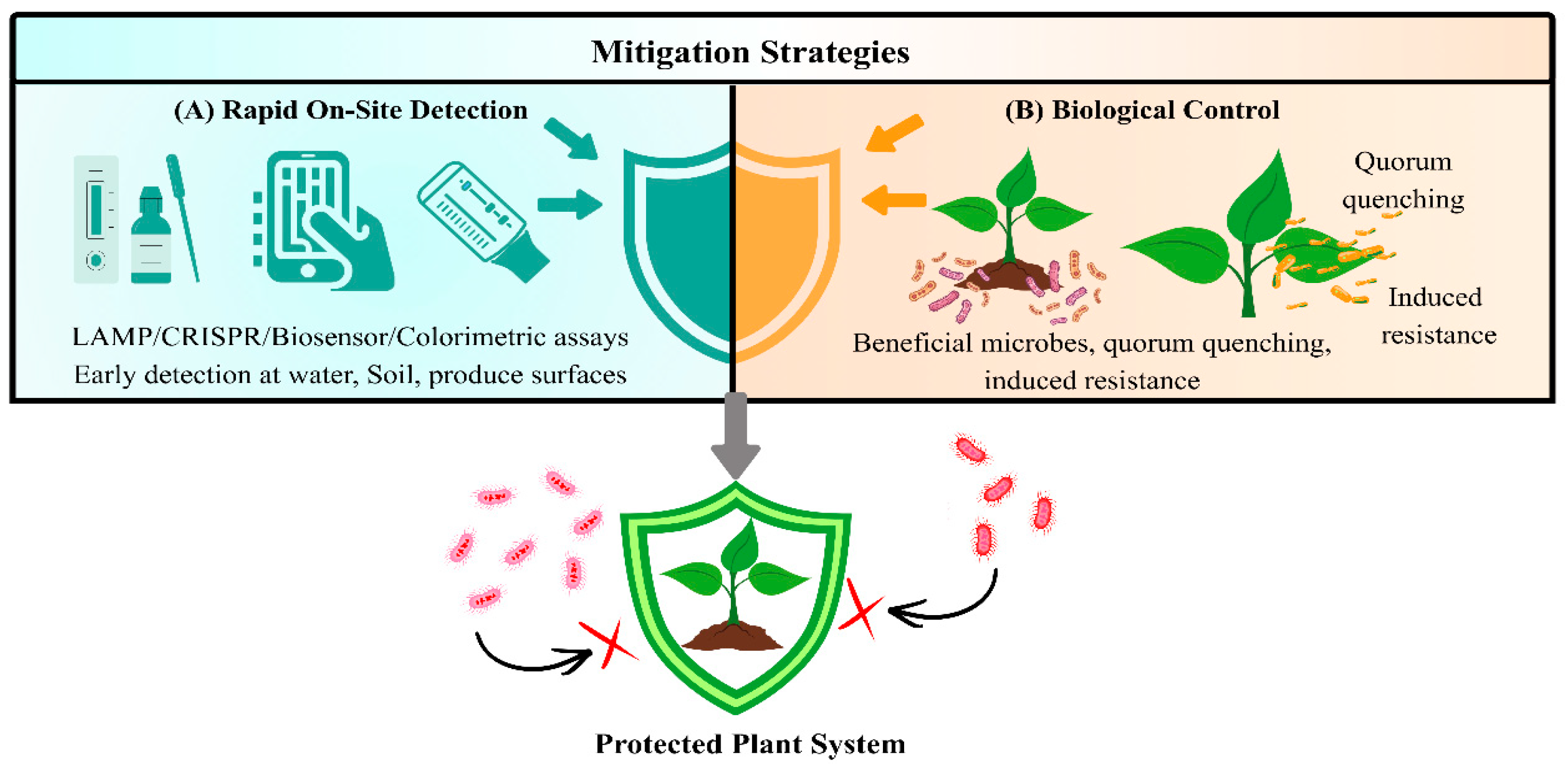
For these new threats, One Health mitigation plans are moving to focus on precision diagnostics and microbiome engineering. Recent technological progress has moved from culture-based detections to on-site rapid molecular detection; we now rapidly identify Salmonella, E. coli and Listeria in minutes directly in the agricultural fields using handheld LAMP assays, CRISPR-Cas12a biosensors, and smartphone-interfaced lateral flow devices [47,121,122] (Figure 4). In conjunction with this level of diagnostic specificity, biocontrol tactics are progressing from chemical sterilization to “microbial buffering.” The use of probiotic consortia containing Pseudomonas, Bacillus and Lactobacillus strains suppresses human pathogens by competitive exclusion, quorum quenching and triggering Induced Systemic Resistance (ISR) [123,124]. By engineering the phytobiome to be naturally suppressive of intruders, these interventions create a sustainable barrier that is resistant to stress and transforms agricultural biosecurity from being in opposition with public health goals [125,126].
Figure 4.
Integrated mitigation strategies as a dual-pronged framework for crop protection. The system combines (A) preventative surveillance via rapid on-site detection technologies, including LAMP, CRISPR-based biosensors, and colorimetric assays, to identify contaminants in water, soil, and produce surfaces. Complementing these diagnostics, (B) biological control interventions utilize beneficial microbes to suppress pathogen virulence through quorum quenching and the activation of induced systemic resistance (ISR). The synergistic application of these diagnostic and biocontrol measures establishes a fortified “Protected Plant System” that effectively excludes microbial invaders and enhances agricultural safety.
9. Future Research Priorities for Predicting and Mitigating Cross-Kingdom Pathogen Risks
Despite significant advances, cross-kingdom pathogenesis remains an emerging frontier characterized by critical knowledge gaps that demand focused, hypothesis-driven investigation across microbiology, plant science, and systems ecology. Based on current evidence, four priority research areas can be identified. First, it is essential to clarify the ecological conditions under which plants act as stable reservoirs for pathogens of human and animal health concern. Future studies should elucidate the environmental, agronomic, and microbiome-mediated factors that enable pathogen persistence, adaptation, and onward transmission within crop systems. Second, seed transmission into controlled-environment agriculture (CEA) and hydroponic systems represents a major “front-loaded” risk. Rigorous assessment of seedborne contamination, evaluation of seed treatments and certification protocols, and development of scalable mitigation strategies are urgently needed for both open-field and soilless production systems. Third, predictive models capable of identifying the key determinants of pathogen colonization and internalization—including environmental variables, plant genotype, immune traits, and microbiome composition—are required. Integrating multi-omics datasets, field-based measurements, and machine-learning approaches could enable real-time, context-aware risk assessment and management. Finally, the long-term impacts of interventions, whether chemical, biological, or genetic, on pathogen populations, plant-associated microbiomes, and the evolution of resistance remain poorly understood. Longitudinal studies tracking pathogen resilience, ecological dynamics, and horizontal gene transfer are therefore essential for the development of sustainable and integrated control strategies. Collectively, these challenges highlight both the complexity and the opportunity inherent in cross-kingdom pathogenesis and underscore the need for coordinated, interdisciplinary One Health research that can be tested in real-world production systems to safeguard plant, animal, and human health.
10. Conclusions
The conclusion from the evidence gathered in this review could not have been clearer: Old dogma about intra-kingdom-specific pathogenicity no longer holds water. Human and animal pathogens are not solely transient contaminants of plant surfaces, but searching for transient or even colonization on mycorrhizal networks has often revealed their adaptability to these biotic niches. These findings indicate that biological barriers separating kingdoms are porous, and microorganisms can readily borrow cues from conserved physiological features, common ecological niches, and parallel immune stratagems in plants, animals and humans. To consider plants as active interfaces in the (not merely passive endpoints), transmission of pathogens is a fundamental change to how we think about food safety and disease ecology. This fundamental re-orientation bodes profound consequences for food, health, and the environment. The occurrence of produce-associated outbreaks emphasizes the necessity to develop intervention strategies beyond postharvest treatments and to consider plant immunity, microbiome dynamics and environmental management in risk assessment frameworks. Concurrently, the rising forces of climate change, globalized trade, and intensifying agriculture are projected to increase opportunities for cross-kingdom interactions that enhance both food safety threats and ecosystem susceptibility. Future studies need to take more integrated and cross-disciplinary approaches to understand the molecular, ecological, and evolutionary bases of cross-kingdom pathogenesis. As such, an integration of plant science, microbiology, and One Health views is required to develop sustainable approaches that protect food systems, preserve ecosystem health, and forecast future pathogenic challenges.
Author Contributions
J.H.H. and M.M.H.; methodology, software Y.S.S.; validation, M.K.; formal analysis, investigation, resources, data curation, J.H.H., Y.S.S., M.K. and M.M.H.; writing—original draft preparation, J.H.H., Y.S.S., M.K. and M.M.H.; writing—review and editing, J.H.H., Y.S.S., M.K. and M.M.H.; visualization, J.H.H., Y.S.S., M.K. and M.M.; supervision, M.M.H.; project administration, M.M.H.; funding acquisition, M.M.H. All authors have read and agreed to the published version of the manuscript.
Funding
This research received no external funding.
Institutional Review Board Statement
Not applicable.
Informed Consent Statement
Not applicable.
Data Availability Statement
No new data were created or analyzed in this study.
Conflicts of Interest
The authors declare no conflicts of interest.
References
- Kim, J.; Yoon, S.; Park, Y.; Kim, S.; Ryu, C. Crossing the kingdom border: Human diseases caused by plant pathogens. Environ. Microbiol. 2020, 22, 2485–2495. [Google Scholar] [CrossRef] [Scilit] [PubMed]
- Hitzler, S.U.J.; Fernandez, C.C.; Montaño, D.E.; Dietschmann, A.; Gresnigt, M.S. Microbial adaptive pathogenicity strategies to the host inflammatory environment. Fems Microbiol. Reviews 2024, 49, fuae032. [Google Scholar] [CrossRef] [Scilit]
- Grivokostopoulos, N.C.; Makariti, I.P.; Hilaj, N.; Apostolidou, Z.; Skandamis, P.N. Internalization of Salmonella in Leafy Greens and Impact on Acid Tolerance. Appl. Environ. Microbiol. 2022, 88, e0224921. [Google Scholar] [CrossRef] [Scilit]
- Rezaei, A.R.; Mishra, T. Breaking Barriers: Non-Human Fungal Pathogens Crossing Kingdoms into Human Disease. Preprint 2025. [Google Scholar] [CrossRef] [Scilit]
- Roudaire, T.; Héloir, M.-C.; Wendehenne, D.; Zadoroznyj, A.; Dubrez, L.; Poinssot, B. Cross Kingdom Immunity: The Role of Immune Receptors and Downstream Signaling in Animal and Plant Cell Death. Front. Immunol. 2021, 11, 612452. [Google Scholar] [CrossRef] [Scilit]
- Kaur, P.; Kaur, S.; Sood, A.S. Opportunistic Fungal Infections in Immunocompromised Patients of a Tertiary Care Centre, Amritsar, India. Natl. J. Lab. Med. 2022, 11, 30–33. [Google Scholar] [CrossRef] [Scilit]
- Huang, M.; He, P.; He, P.; Wu, Y.; Munir, S.; He, Y. Novel Virulence Factors Deciphering Klebsiella pneumoniae KpC4 Infect Maize as a Crossing-Kingdom Pathogen: An Emerging Environmental Threat. Int. J. Mol. Sci. 2022, 23, 16005. [Google Scholar] [CrossRef] [Scilit]
- Zeng, J.; Gupta, V.K.; Jiang, Y.; Yang, B.; Gong, L.; Zhu, H. Cross-Kingdom Small RNAs among Animals, Plants and Microbes. Cells 2019, 8, 371. [Google Scholar] [CrossRef] [Scilit]
- Mahanty, B.; Mishra, R.; Joshi, R.K. Cross-kingdom small RNA communication between plants and fungal phytopathogens-recent updates and prospects for future agriculture. RNA Biol. 2023, 20, 109–119. [Google Scholar] [CrossRef] [Scilit] [PubMed]
- Huang, M.; He, P.; Munir, S.; Wu, Y.; Li, X.; He, P.; He, Y. Ecology and etiology of bacterial top rot in maize caused by Klebsiella pneumoniae KpC4. Microb. Pathog. 2019, 139, 103906. [Google Scholar] [CrossRef] [Scilit]
- Besler, K.R.; Little, E.L. Diversity of Serratia marcescens Strains Associated with Cucurbit Yellow Vine Disease in Georgia. Plant Dis. 2016, 101, 129–136. [Google Scholar] [CrossRef] [Scilit] [PubMed]
- Shikov, A.E.; Merkushova, A.V.; Savina, I.A.; Nizhnikov, A.A.; Antonets, K.S. The man, the plant, and the insect: Shooting host specificity determinants in Serratia marcescens pangenome. Front. Microbiol. 2023, 14, 1211999. [Google Scholar] [CrossRef] [Scilit]
- Gao, J.; Wang, Y.; Wang, C.W.; Lu, B.H. First Report of Bacterial Root Rot of Ginseng Caused by Pseudomonas aeruginosa in China. Plant Dis. 2014, 98, 1577. [Google Scholar] [CrossRef] [Scilit] [PubMed]
- Diggle, S.P.; Whiteley, M. Microbe Profile: Pseudomonas aeruginosa: Opportunistic pathogen and lab rat. Microbiology 2019, 166, 30–33, Correction in Microbiology 2021, 167, 001073. https://doi.org/10.1099/mic.0.001073. [Google Scholar] [CrossRef] [Scilit]
- Hernández-Reyes, C.; Schikora, A. Salmonella, a cross-kingdom pathogen infecting humans and plants. FEMS Microbiol. Lett. 2013, 343, 1–7. [Google Scholar] [CrossRef] [Scilit]
- McClure, M.; Whitney, B.; Gardenhire, I.; Crosby, A.; Wellman, A.; Patel, K.; McCormic, Z.D.; Gieraltowski, L.; Gollarza, L.; Low, M.S.; et al. An outbreak investigation of Salmonella typhimurium illnesses in the United States linked to packaged leafy greens produced at a controlled Environment Agriculture indoor hydroponic operation–2021. J. Food Prot. 2023, 86, 100079. [Google Scholar] [CrossRef] [Scilit] [PubMed]
- Sobiczewski, P.; Iakimova, E.T. Plant and Human Pathogenic Bacteria Exchanging their Primary Host Environments. J. Hortic. Res. 2022, 30, 11–30. [Google Scholar] [CrossRef] [Scilit]
- Van Overbeek, L.S.; Van Doorn, J.; Wichers, J.H.; Van Amerongen, A.; Van Roermund, H.J.W.; Willemsen, P.T.J. The arable ecosystem as battleground for emergence of new human pathogens. Front. Microbiol. 2014, 5, 104. [Google Scholar] [CrossRef] [Scilit]
- Proesmans, W.; Albrecht, M.; Gajda, A.; Neumann, P.; Paxton, R.J.; Pioz, M.; Polzin, C.; Schweiger, O.; Settele, J.; Szentgyörgyi, H.; et al. Pathways for Novel Epidemiology: Plant–Pollinator–Pathogen networks and Global Change. Trends Ecol. Evol. 2021, 36, 623–636. [Google Scholar] [CrossRef] [Scilit]
- Ajileye, O.D.; Verocai, G.G.; Light, J.E. A review of filarial nematodes parasitizing tick vectors: Unraveling global patterns in species diversity, host associations, and interactions with tick-borne pathogens. Parasites Vectors 2025, 18, 50. [Google Scholar] [CrossRef] [Scilit]
- Meza-Menchaca, T.; Singh, R.K.; Quiroz-Chávez, J.; García-Pérez, L.M.; Rodríguez-Mora, N.; Soto-Luna, M.; Gastélum-Contreras, G.; Vanzzini-Zago, V.; Sharma, L.; Quiroz-Figueroa, F.R. First Demonstration of Clinical Fusarium Strains Causing Cross-Kingdom Infections from Humans to Plants. Microorganisms 2020, 8, 947. [Google Scholar] [CrossRef] [Scilit]
- Ku, Y.; Chuang, Y.; Chen, C.; Lee, M.; Yang, Y.; Tang, H.; Yu, W. Klebsiella pneumoniae Isolates from Meningitis: Epidemiology, Virulence and Antibiotic Resistance. Sci. Rep. 2017, 7, 6634. [Google Scholar] [CrossRef] [Scilit]
- Liu, S.; Lv, M.; Gu, Y.; Zhou, J. First Report of Bulb Disease of Onion Caused by Klebsiella pneumonia in China. Plant Dis. 2015, 99, 1853. [Google Scholar] [CrossRef] [Scilit]
- Imai, K.; Ishibashi, N.; Kodana, M.; Tarumoto, N.; Sakai, J.; Kawamura, T.; Takeuchi, S.; Taji, Y.; Ebihara, Y.; Ikebuchi, K.; et al. Clinical characteristics in blood stream infections caused by Klebsiella pneumoniae, Klebsiella variicola, and Klebsiella quasipneumoniae: A comparative study, Japan, 2014–2017. BMC Infect. Dis. 2019, 19, 946, Correction in BMC Infect. Dis. 2022, 22, 425. https://doi.org/10.1186/s12879-022-07384-5. [Google Scholar] [CrossRef] [Scilit]
- Duran-Bedolla, J.; Garza-Ramos, U.; Rodríguez-Medina, N.; Aguilar Vera, A.; Barrios-Camacho, H. Exploring the environmental traits and applications of Klebsiella variicola. Braz. J. Microbiol. 2021, 52, 2233–2245. [Google Scholar] [CrossRef] [Scilit]
- Toh, W.K.; Kong, Z.H.; Wong, F.H.; Lim, C.C.; Ho, S.H.; Wong, C.K.F.; Loh, P.C.; Wong, H.L. First Report of Bacterial Wilt Disease of Banana Caused by Klebsiella variicola in Malaysia. Plant Dis. 2024, 108, 2914. [Google Scholar] [CrossRef] [Scilit]
- Shanmugam, V.; Thakur, H.; Paul, S.; Bhadwal, P.; Mahajan, S.; Mondal, K.K. First report of collar rot caused by Pseudomonas aeruginosa on calla lily (Zantedeschia elliottiana). SHILAP Rev. Lepidopterología 2016, 55, 427–431. [Google Scholar] [CrossRef] [Scilit]
- Ambreetha, S.; Balachandar, D. Pathogenesis of plant-associated Pseudomonas aeruginosa in Caenorhabditis elegans model. BMC Microbiol. 2022, 22, 269. [Google Scholar] [CrossRef] [Scilit]
- Elpers, L.; Hensel, M. Analysis of Salmonella enterica Adhesion to Leaves of Corn Salad or Lettuce. Methods Mol. Biol. 2022, 2427, 167–175. [Google Scholar] [CrossRef] [Scilit]
- Chahar, M.; Kroupitski, Y.; Gollop, R.; Belausov, E.; Melotto, M.; Sela-Saldinger, S. Determination of Salmonella enterica Leaf Internalization Varies Substantially According to the Method and Conditions Used to Assess Bacterial Localization. Front. Microbiol. 2021, 12, 622068. [Google Scholar] [CrossRef] [Scilit]
- Jechalke, S.; Schierstaedt, J.; Becker, M.; Flemer, B.; Grosch, R.; Smalla, K.; Schikora, A. Salmonella establishment in agricultural soil and colonization of crop plants depend on soil type and plant species. Front. Microbiol. 2019, 10, 967. [Google Scholar] [CrossRef] [Scilit]
- Carter, M.Q.; Carychao, D.; Bono, J.L. Comparative analyses of persistence traits in Escherichia coli O157:H7 strains belonging to different clades including REPEXH01 and REPEXH02 strains. Front. Microbiol. 2024, 15, 1501956. [Google Scholar] [CrossRef] [Scilit]
- Fulano, A.M.; Elbakush, A.M.; Chen, L.; Gomelsky, M. The Listeria monocytogenes exopolysaccharide significantly enhances colonization and survival on fresh produce. Front. Microbiol. 2023, 14, 1126940. [Google Scholar] [CrossRef] [Scilit]
- Jacob, C.; Melotto, M. Lettuce immune responses and apoplastic metabolite profile contribute to reduced internal leaf colonization by human bacterial pathogens. BMC Plant Biol. 2025, 25, 635. [Google Scholar] [CrossRef] [Scilit]
- Dixon, M.H.; Nellore, D.; Zaacks, S.C.; Barak, J.D. Time of arrival during plant disease progression and humidity additively influence Salmonella enterica colonization of lettuce. Appl. Environ. Microbiol. 2024, 90, e0131124. [Google Scholar] [CrossRef] [Scilit]
- Jang, H.; Seo, S. Interaction of microbial pathogens with plants: Attachment to persistence. In The Produce Contamination Problem: Causes and Solutions, 3rd ed.; Academic Press: San Diego, CA, USA, 2023; pp. 13–45. [Google Scholar] [CrossRef] [Scilit]
- Wang, X.; Wang, X.; Cao, J. Environmental Factors Associated with Cryptosporidium and Giardia. Pathogens 2023, 12, 420. [Google Scholar] [CrossRef] [Scilit]
- Yan, Y.; Li, X.; Zhang, C.; Lv, L.; Gao, B.; Li, M. Research progress on antibacterial activities and mechanisms of natural alkaloids: A review. Antibiotics 2021, 10, 318. [Google Scholar] [CrossRef] [Scilit]
- Leaman, S. Fresh Produce Harvesting Equipment—A Review of Cleaning and Sanitizing Practices and Related Science. Food Prot. Trends 2023, 43, 126–143. [Google Scholar] [CrossRef] [Scilit]
- Matthews, K.R. Advances in understanding the contamination of fresh produce by pathogenic Escherichia coli. In Advances in Ensuring the Microbiological Safety of Fresh Produce; Rutgers University: New York, NY, USA, 2023; pp. 77–94. [Google Scholar] [CrossRef] [Scilit]
- Meddya, S.; Meshram, S.; Sarkar, D.; Rakesh, S.; Datta, R.; Singh, S.; Avinash, G.; Kumar Kondeti, A.; Savani, A.K.; Thulasinathan, T. Plant Stomata: An Unrealized Possibility in Plant Defense against Invading Pathogens and Stress Tolerance. Plants 2023, 12, 3380. [Google Scholar] [CrossRef] [Scilit]
- Sakata, N.; Ishiga, Y. Prevention of Stomatal Entry as a Strategy for Plant Disease Control against Foliar Pathogenic Pseudomonas Species. Plants 2023, 12, 590. [Google Scholar] [CrossRef] [Scilit]
- Bellenot, C.; Routaboul, J.-M.; Laufs, P.; Noël, L.D. Hydathodes. Curr. Biol. 2022, 32, R763–R764. [Google Scholar] [CrossRef] [Scilit]
- Knights, H.E.; Jorrin, B.; Haskett, T.L.; Poole, P.S. Deciphering bacterial mechanisms of root colonization. Environ. Microbiol. Rep. 2021, 13, 428–444. [Google Scholar] [CrossRef] [Scilit]
- Poudel, A.; Kc, S. Interplay of plant pathogens and host defenses: Unveiling the mechanisms and strategies for crop protection. Arch. Agric. Environ. Sci. 2024, 9, 93–101. [Google Scholar] [CrossRef] [Scilit]
- Denancé, N.; Grimault, V. Seed pathway for pest dissemination: The ISTA Reference Pest List, a bibliographic resource in non-vegetable crops. EPPO Bull. 2022, 52, 434–445. [Google Scholar] [CrossRef] [Scilit]
- Brandl, M.T.; Ivanek, R.; Zekaj, N.; Belias, A.; Wiedmann, M.; Suslow, T.V.; Allende, A.; Munther, D.S. Weather stressors correlate with Escherichia coli and Salmonella enterica persister formation rates in the phyllosphere: A mathematical modeling study. ISME Commun. 2022, 2, 91. [Google Scholar] [CrossRef] [Scilit]
- Singh, P.; Singh, A.; Choudhary, K. Revisiting the role of phenylpropanoids in plant defense against UV-B stress. Plant Stress. 2023, 7, 100143. [Google Scholar] [CrossRef] [Scilit]
- Jones, L.A.; Worobo, R.W.; Smart, C.D. UV Light Inactivation of Human and Plant Pathogens in Unfiltered Surface Irrigation Water. Appl. Environ. Microbiol. 2014, 80, 849–854. [Google Scholar] [CrossRef] [Scilit] [PubMed]
- Naradisorn, M. Effect of Ultraviolet Irradiation on Postharvest Quality and Composition of Foods; Academic Press: San Diego, CA, USA, 2021; pp. 255–279. [Google Scholar] [CrossRef] [Scilit]
- Vanhaelewyn, L.; Van Der Straeten, D.; De Coninck, B.; Vandenbussche, F. Ultraviolet Radiation from a Plant Perspective: The Plant-Microorganism Context. Front. Plant Sci. 2020, 11, 597642. [Google Scholar] [CrossRef] [Scilit]
- Pandey, A.; Jaiswal, D.; Agrawal, M.; Agrawal, S.B. Secondary Metabolites Biosynthesis and Related Gene Expression Under Ultraviolet-B Radiation. In Stress-Responsive Factors and Molecular Farming in Medicinal Plants; Springer: Berlin/Heidelberg, Germany, 2023; pp. 155–168. [Google Scholar] [CrossRef] [Scilit]
- Mmbando, G.S. The recent relationship between ultraviolet-B radiation and biotic resistance in plants: A novel non-chemical strategy for managing biotic stresses. Plant Signal. Behav. 2023, 18, 2191463. [Google Scholar] [CrossRef] [Scilit]
- Brandl, M.T.; Cox, C.E.; Teplitski, M. Salmonella Interactions with Plants and Their Associated Microbiota. Phytopathology 2013, 103, 316–325. [Google Scholar] [CrossRef] [Scilit]
- Han, S.; Micallef, S.A. Environmental Metabolomics of the Tomato Plant Surface Provides Insights on Salmonella enterica Colonization. Appl. Environ. Microbiol. 2016, 82, 3131–3142. [Google Scholar] [CrossRef] [Scilit]
- George, A.S.; Brandl, M.T. Plant bioactive compounds as an intrinsic and sustainable tool to enhance the microbial safety of crops. Microorganisms 2021, 9, 2485. [Google Scholar] [CrossRef] [Scilit]
- Azizah, N.S.; Irawan, B.; Kusmoro, J.; Safriansyah, W.; Farabi, K.; Oktavia, D.; Doni, F.; Miranti, M. Sweet basil (Ocimum basilicum L.)—A review of its botany, phytochemistry, pharmacological activities, and biotechnological development. Plants 2023, 12, 4148. [Google Scholar] [CrossRef] [Scilit]
- Delbeke, S.; Ceuppens, S.; Jacxsens, L.; Uyttendaele, M. Microbiological analysis of pre-packed sweet basil (Ocimum basilicum) and coriander (Coriandrum sativum) leaves for the presence of Salmonella spp. and Shiga toxin-producing Escherichia coli. Int. J. Food Microbiol. 2015, 208, 11–18. [Google Scholar] [CrossRef] [Scilit]
- Kalily, E.; Hollander, A.; Korin, B.; Cymerman, I.; Yaron, S. Adaptation of Salmonella enterica serovar Senftenberg to linalool and its association with antibiotic resistance and environmental persistence. Appl. Environ. Microbiol. 2017, 83, e03398-16. [Google Scholar] [CrossRef] [Scilit]
- Holden, N.; Barak, J. Microbe-plant interactions of Escherichia coli and Salmonella. EcoSal Plus 2025, 13, eesp-0018-2023. [Google Scholar] [CrossRef] [Scilit]
- Muchaamba, F.; Stephan, R.; Tasara, T. Listeria monocytogenes Cold Shock Proteins: Small Proteins with A Huge Impact. Microorganisms 2021, 9, 1061. [Google Scholar] [CrossRef] [Scilit]
- Shankar, A.; Prasad, V. Potential of desiccation-tolerant plant growth-promoting rhizobacteria in growth augmentation of wheat (Triticum aestivum L.) under drought stress. Front. Microbiol. 2023, 14, 1017167. [Google Scholar] [CrossRef] [Scilit]
- Brennan, F.P.; Alsanius, B.W.; Allende, A.; Burgess, C.M.; Moreira, H.; Johannessen, G.S.; Castro, P.M.L.; Uyttendaele, M.; Truchado, P.; Holden, N.J. Harnessing agricultural microbiomes for human pathogen control. ISME Commun. 2022, 2, 44. [Google Scholar] [CrossRef] [Scilit]
- Bernal, P.; Llamas, M.A.; Filloux, A. Type VI secretion systems in plant-associated bacteria. Environ. Microbiol. 2017, 20, 1–15. [Google Scholar] [CrossRef] [Scilit]
- Gu, S.; Wei, Z.; Shao, Z.; Friman, V.-P.; Cao, K.; Yang, T.; Kramer, J.; Wang, X.; Li, M.; Mei, X.; et al. Competition for iron drives phytopathogen control by natural rhizosphere microbiomes. Nat. Microbiol. 2020, 5, 1002–1010. [Google Scholar] [CrossRef] [Scilit]
- Bi, L.; Islam, Z.F.; Chan, L.H.; Hu, H.W. The Role of Phyllosphere Microbes and Viruses in Biocontrol of Pathogenic Fungi. Microb. Biotechnol. 2025, 18, e70251. [Google Scholar] [CrossRef] [Scilit] [PubMed]
- Singh, G.; Chanda, A. Mechanical properties of whole-body soft human tissues: A review. Biomed. Mater. 2021, 16, 062004. [Google Scholar] [CrossRef] [Scilit] [PubMed]
- Mendoza-Barberá, E.; Merino, S.; Tomás, J.M. Bacterial adhesion. In Molecular Medical Microbiology, 3rd ed.; Academic Press: San Diego, CA, USA, 2023; pp. 359–375. [Google Scholar] [CrossRef] [Scilit]
- Gahlot, D.K.; Taheri, N.; MacIntyre, S. Diversity in Genetic Regulation of Bacterial Fimbriae Assembled by the Chaperone Usher Pathway. Int. J. Mol. Sci. 2022, 24, 161. [Google Scholar] [CrossRef] [Scilit] [PubMed]
- Ćwiek, K.; Bugla-Płoskońska, G.; Wieliczko, A. Salmonella biofilm development: Structure and significance. Postȩpy Hig. I Med. Dosw. 2019, 73, 937–943. [Google Scholar] [CrossRef] [Scilit]
- Feitosa-Junior, O.R.; Stefanello, E.; Zaini, P.A.; Nascimento, R.; Pierry, P.M.; Dandekar, A.M.; Lindow, S.E.; da Silva, A.M. Proteomic and Metabolomic Analyses of Xylella fastidiosa OMV-Enriched Fractions Reveal Association with Virulence Factors and Signaling Molecules of the DSF Family. Phytopathol. 2019, 109, 1344–1353. [Google Scholar] [CrossRef] [Scilit]
- Rudnicka, M.; Noszczyńska, M.; Malicka, M.; Kasperkiewicz, K.; Pawlik, M.; Piotrowska-Seget, Z. Outer Membrane Vesicles as Mediators of Plant–Bacterial Interactions. Front. Microbiol. 2022, 13, 902181. [Google Scholar] [CrossRef] [Scilit]
- Feitosa-Junior, O.R.; Souza, A.P.S.; Zaini, P.A.; Baccari, C.; Ionescu, M.; Pierry, P.M.; Uceda-Campos, G.; Labroussaa, F.; Almeida, R.P.P.; Lindow, S.E.; et al. The XadA Trimeric Autotransporter Adhesins in Xylella fastidiosa Differentially Contribute to Cell Aggregation, Biofilm Formation, Insect Transmission and Virulence to Plants. Mol. Plant-Microbe Interact. 2022, 35, 857–866. [Google Scholar] [CrossRef] [Scilit]
- Niazi, P.; Monib, A.W.; Ozturk, H.; Mansoor, M.; Azizi, A.; Hassand, M.H. Review on Surface Elements and Bacterial Biofilms in Plant-Bacterial Associations. J. Res. Appl. Sci. Biotechnol. 2023, 2, 204–214. [Google Scholar] [CrossRef] [Scilit]
- Yin, H.-B.; Patel, J. Persistence and Biofilm Formation of Foodborne Bacterial Pathogens on Fresh Produce and Equipment Surfaces. In Recent Advancements in the Diagnosis of Human Disease; CRC Press: Boca Raton, FL, USA, 2024; pp. 247–294. [Google Scholar] [CrossRef] [Scilit]
- Hossain, M.M.; Sultana, F.; Mostafa, M.; Ferdus, H.; Kundu, M.; Adhikary, S.; Akter, N.; Saha, A.; Sabbir, M.A.A. Stress Responses and Mechanisms of Phytopathogens Infecting Humans: Threats, Drivers, and Recommendations. Stresses 2025, 5, 28. [Google Scholar] [CrossRef] [Scilit]
- Quilliam, R.S.; Pow, C.J.; Shilla, D.J.; Mwesiga, J.J.; Shilla, D.A.; Woodford, L. Microplastics in agriculture—A potential novel mechanism for the delivery of human pathogens onto crops. Front. Plant Sci. 2023, 14, 1152419. [Google Scholar] [CrossRef] [Scilit] [PubMed]
- Kim, J.; Park, S.; Og, H.; Lee, S. Internalization of foodborne pathogens into fresh produce through damaged roots. Korean J. Food Sci. Technol. 2023, 55, 173–176. [Google Scholar] [CrossRef] [Scilit]
- Li, L.; Ahmed, S.; Abdulraheem, M.I.; Hussain, F.; Zhang, H.; Wu, J.; Raghavan, V.; Xu, L.; Kuan, G.; Hu, J. Plant Microbe Interaction—Predicting the Pathogen Internalization Through Stomata Using Computational Neural Network Modeling. Foods 2024, 13, 3848. [Google Scholar] [CrossRef] [Scilit]
- Hou, S.; Rodrigues, O.; Liu, Z.; Shan, L.; He, P. Small holes, big impact: Stomata in plant–pathogen–climate epic trifecta. Mol. Plant 2024, 17, 26–49. [Google Scholar] [CrossRef] [Scilit]
- Millett, F.; Standish, J.; Scanley, J.; Miller, K.; Inguagiato, J.; Zuverza-Mena, N.; Abril, M.; Robinson, V.; Li, Y.; Sundin, G.W.; et al. The fire blight pathogen, Erwinia amylovora, enters apple leaves through naturally occurring wounds from the abscission of trichomes. Plant J. 2024, 123, e70472. [Google Scholar] [CrossRef] [Scilit]
- Barba-León, J.; Arista-Regalado, A.D.; Mancilla-Becerra, L.M.; Flores-Valdez, M.A.; González-Aguilar, D.G. Adhesion to and survival of foodborne pathogens in produce and strategies for their biocontrol. J. Food Saf. 2024, 44, e13100. [Google Scholar] [CrossRef] [Scilit]
- Chen, X.; Liu, L.; Chu, Q.; Sun, S.; Wu, Y.; Tong, Z.; Fang, W.; Timko, M.P.; Fan, L. Large-scale identification of extracellular plant miRNAs in mammals implicates their dietary intake. PLoS ONE 2021, 16, e0257878. [Google Scholar] [CrossRef] [Scilit]
- Islam, W.; Noman, A.; Qasim, M.; Wang, L. Plant responses to pathogen attack: Small RNAs in focus. Int. J. Mol. Sci. 2018, 19, 515. [Google Scholar] [CrossRef] [Scilit]
- Lopez-Gomollon, S.; Baulcombe, D.C. Roles of RNA silencing in viral and non-viral plant immunity and in the crosstalk between disease resistance systems. Nat. Rev. Mol. Cell Biol. 2022, 23, 645–662. [Google Scholar] [CrossRef] [Scilit]
- Gismondi, A.; Di Marco, G.; Camoni, L.; Montesano, C.; Braglia, R.; Marra, M.; Canini, A. MicroRNA expression profiles in Moringa oleifera Lam. seedlings at different growth conditions. J. Plant Growth Regul. 2023, 42, 2115–2123. [Google Scholar] [CrossRef] [Scilit]
- Navarro, L.; Dunoyer, P.; Jay, F.; Arnold, B.; Dharmasiri, N.; Estelle, M.; Voinnet, O.; Jones, J.D.G. A plant miRNA contributes to antibacterial resistance by repressing auxin signaling. Science 2006, 312, 436–439. [Google Scholar] [CrossRef] [Scilit] [PubMed]
- Shirron, N.; Yaron, S. Active suppression of early immune response in tobacco by the human pathogen Salmonella Typhimurium. PLoS ONE 2011, 6, e18855. [Google Scholar] [CrossRef] [Scilit]
- Schikora, A.; Virlogeux-Payant, I.; Bueso, E.; Garcia, A.V.; Nilau, T.; Charrier, A.; Pelletier, S.; Menanteau, P.; Baccarini, M.; Velge, P.; et al. Conservation of Salmonella infection mechanisms in plants and animals. PLoS ONE 2011, 6, e24112. [Google Scholar] [CrossRef] [Scilit]
- Roy, D.; Panchal, S.; Rosa, B.A.; Melotto, M. Escherichia coli O157:H7 induces stronger plant immunity than Salmonella enterica Typhimurium SL1344. Phytopathology 2013, 103, 326–332. [Google Scholar] [CrossRef] [Scilit]
- Feng, S.; Wang, Y.-T. Pathogenicity islands: Origins, structure, and roles in bacterial pathogenesis. In Molecular Medical Microbiology; Academic Press: San Diego, CA, USA, 2024; pp. 325–336. [Google Scholar] [CrossRef] [Scilit]
- Wiktorczyk-Kapischke, N.; Skowron, K.; Wałecka-Zacharska, E. Genomic and pathogenicity islands of Listeria monocytogenes—Overview of selected aspects. Front. Mol. Biosci. 2023, 10, 1161486. [Google Scholar] [CrossRef] [Scilit] [PubMed]
- Watanabe, Y.; Ishiga, Y.; Sakata, N. The Role of Genomic Islands in the Pathogenicity and Evolution of Plant-Pathogenic Gammaproteobacteria. Microorganisms 2025, 13, 1803. [Google Scholar] [CrossRef] [Scilit] [PubMed]
- Movahedi, A.; Aghaei-Dargiri, S.; Barati, B.; Kadkhodaei, S.; Wei, H.; Sangari, S.; Yang, L.; Xu, C. Plant Immunity Is Regulated by Biological, Genetic, and Epigenetic Factors. Agronomy 2022, 12, 2790. [Google Scholar] [CrossRef] [Scilit]
- Ikram, A.U.; Khan, M.S.S.; Islam, F.; Ahmed, S.; Ling, T.; Feng, F.; Sun, Z.; Chen, H.; Chen, J. All Roads Lead to Rome: Pathways to Engineering Disease Resistance in Plants. Adv. Sci. 2024, 12, e2412223. [Google Scholar] [CrossRef] [Scilit] [PubMed]
- Khan, M.; Shahid, M.; Celik, I.; Khan, H.; Shahzad, A.; Husain, F.; Adil, M. Attenuation of quorum sensing regulated virulence functions and biofilm of pathogenic bacteria by medicinal plant Artemisia annua and its phytoconstituent 1, 8-cineole. Microsc. Res. Tech. 2023, 87, 133–148. [Google Scholar] [CrossRef] [Scilit]
- Kirzinger, M.W.B.; Nadarasah, G.; Stavrinides, J. Insights into Cross-Kingdom Plant Pathogenic Bacteria. Genes 2011, 2, 980–997. [Google Scholar] [CrossRef] [Scilit]
- Xin, X.-F.; Kvitko, B.; He, S.Y. Pseudomonas syringae: What it takes to be a pathogen. Nat. Rev. Microbiol. 2018, 16, 316–328. [Google Scholar] [CrossRef] [Scilit]
- Matte, L.M.; Genal, A.V.; Landolt, E.F.; Danka, E.S. T6SS in plant pathogens: Unique mechanisms in complex hosts. Infect. Immun. 2024, 92, e0050023. [Google Scholar] [CrossRef] [Scilit]
- Gonzalez Moreno, P.J.; Nishiguchi, M.K. The Competitive Edge: T6SS-Mediated Interference Competition by Vibrionaceae Across Marine Ecological Niches. Microorganisms 2025, 13, 1370. [Google Scholar] [CrossRef] [Scilit]
- Das, T.; Kimyon, O.; Manefield, M.J. Bacterial Biofilms on Wounds, a Major Factor That Delays Wound Healing and a Potential Threat to Human Life and Economy. In Biofilm, Pilonidal Cysts and Sinuses; Springer: Berlin/Heidelberg, Germany, 2017; pp. 69–88. [Google Scholar] [CrossRef] [Scilit]
- Zboralski, A.; Biessy, A.; Filion, M. Bridging the Gap: Type III Secretion Systems in Plant-Beneficial Bacteria. Microorganisms 2022, 10, 187. [Google Scholar] [CrossRef] [Scilit]
- Jacob, C.; Velásquez, A.C.; Josh, N.A.; Settles, M.; He, S.Y.; Melotto, M. Dual transcriptomic analysis reveals metabolic changes associated with differential persistence of human pathogenic bacteria in leaves of Arabidopsis and lettuce. G3 Genes Genomes Genet. 2021, 11, jkab331. [Google Scholar] [CrossRef] [Scilit] [PubMed]
- Han, M.; Duan, Y.; Schikora, A. Salmonella enterica employs metabolic adaptation to plant environments. Front. Plant Sci. 2025, 16, 1636330. [Google Scholar] [CrossRef] [Scilit]
- Wu, J.; Wang, C.; O’Byrne, C. Metabolic reprogramming in the food-borne pathogen Listeria monocytogenes as a critical defence against acid stress. FEMS Microbiol. Lett. 2024, 371, fnae060. [Google Scholar] [CrossRef] [Scilit]
- George, A.S.; Salas González, I.; Lorca, G.L.; Teplitski, M. Contribution of the Salmonella enterica KdgR Regulon to Persistence of the Pathogen in Vegetable Soft Rots. Appl. Environ. Microbiol. 2016, 82, 1353–1360. [Google Scholar] [CrossRef] [Scilit]
- George, A.S.; Cox, C.E.; Desai, P.; Porwollik, S.; Chu, W.; de Moraes, M.H.; McClelland, M.; Brandl, M.T.; Teplitski, M. Interactions of Salmonella enterica Serovar Typhimurium and Pectobacterium carotovorum within a Tomato Soft Rot. Appl. Environ. Microbiol. 2018, 84, e01913-17, Erratum in Appl. Environ. Microbiol. 2018, 84, e00927-18. https://doi.org/10.1128/AEM.00927-18. [Google Scholar] [CrossRef] [Scilit] [PubMed]
- Santamaría-Hernando, S.; López-Maroto, Á.; Galvez-Roldán, C.; Munar-Palmer, M.; Monteagudo-Cascales, E.; Rodríguez-Herva, J.J.; Krell, T.; López-Solanilla, E. Pseudomonas syringae pv. tomato infection of tomato plants is mediated by GABA and l-Pro chemoperception. Mol. Plant Pathol. 2022, 23, 1433–1445. [Google Scholar] [CrossRef] [Scilit] [PubMed]
- Chien, C.-F.; Liu, C.-Y.; Lu, Y.-Y.; Sung, Y.-H.; Chen, K.-Y.; Lin, N.-C. HSI-II Gene Cluster of Pseudomonas syringae pv. tomato DC3000 Encodes a Functional Type VI Secretion System Required for Interbacterial Competition. Front. Microbiol. 2020, 11, 1118. [Google Scholar] [CrossRef] [Scilit]
- Dixon, M.H.; Harrod, V.L.; Groves, R.L.; Barak, J.D. The “Friends” That Help Dangerous Bacteria Get into Your Salad. Front. Young Minds 2023, 11, 1124186. [Google Scholar] [CrossRef] [Scilit]
- Han, M.; Zarkani, A.A.; Duan, Y.; Grimm, M.; Trotereau, J.; Virlogeux-Payant, I.; Schikora, A. Bidirectional Comparisons Revealed Functional Patterns in the Interaction between Salmonella enterica and Plants. Plants 2024, 13, 414. [Google Scholar] [CrossRef] [Scilit]
- Kashyap, A.S.; Manzar, N.; Chaudhary, P. Unravelling microbial interactions in plant health and disease dynamics. Front. Microbiol. 2025, 16, 1716380. [Google Scholar] [CrossRef] [Scilit]
- Melotto, M.; Panchal, S.; Roy, D. Plant innate immunity against human bacterial pathogens. Front. Microbiol. 2014, 5, 411. [Google Scholar] [CrossRef] [Scilit]
- Couradeau, E.; Martiny, J.B.H.; Fontaine, F.; Bréchot, C.; Bonneville, M.; Callens, K.; Asnicar, F.; Baker, B.J.; Berg, G.; Bonneville, M.; et al. Incorporating microbiomes into the One Health Joint Plan of Action. mbio 2025, 16, e0145625. [Google Scholar] [CrossRef] [Scilit]
- Khan, A.; Yasin, M.; Anjum Aqueel, M.; Aslam Farooqi, M.; Irfan Akram, M.; Muhamad Bilal Yousuf, H.; Noor, M.; Maqsood, A. Vector-Borne Disease and Climate Change. In Arthropods-New Advances and Perspectives; IntechOpen: London, UK, 2023. [Google Scholar] [CrossRef] [Scilit]
- Salkeld, D.; Hopkins, S.; Hayman, D.T.S. Climate Change and Emerging Infectious Diseases; Oxford University Press: Oxford, UK, 2023; pp. 199–220. [Google Scholar] [CrossRef] [Scilit]
- Maeusli, M.; Lee, B.; Miller, S.; Reyna, Z.; Lu, P.; Yan, J. Horizontal gene transfer of antibiotic resistance from Acinetobacter baylyi to Escherichia coli on lettuce and subsequent transmission to the gut microbiome. mSphere 2020, 5, e00329-20. [Google Scholar] [CrossRef] [Scilit] [PubMed]
- Mafiz, A.I.; He, Y.; Zhang, W.; Zhang, Y. Soil bacteria in urban community gardens have the potential to disseminate antimicrobial resistance through horizontal gene transfer. Front. Microbiol. 2021, 12, 771707. [Google Scholar] [CrossRef] [Scilit] [PubMed]
- Baldodiya, G.M.; Baruah, G.; Sen, P.; Nath, P.D.; Borah, B.K. Host-Parasite Interaction During Development of Major Seed-Transmitted Viral Diseases; Springer: Singapore, 2020; pp. 265–289. [Google Scholar] [CrossRef] [Scilit]
- Shanmugam, K.; Perumal, R.; Oliva, R.; Cheng, H.; Iruthayasamy, J.; Angappan, S.; Chandrasekaran, I.R.; Nallusamy, S. Seed transmission of potyviruses: A threat to crop health. Not. Bot. Horti Agrobot. Cluj-Napoca 2024, 52, 13698. [Google Scholar] [CrossRef] [Scilit]
- Kozel, K.; Healy, S.; Hassan, M.M. Loop-Mediated Isothermal Amplification (LAMP): A Simple Method for the Detection of Foodborne Pathogens. In Foodborne Pathogens; Springer: New York, NY, USA, 2025; pp. 3–15. [Google Scholar] [CrossRef] [Scilit]
- Zhao, J.; Xu, H.; Xu, C.; Yin, W.; Luo, L.; Liu, G.; Wang, Y. Smartphone-integrated RPA-CRISPR-Cas12a Detection System with Microneedle Sampling for Point-of-Care Diagnosis of Potato Late Blight in Early Stage. arXiv 2025. [Google Scholar] [CrossRef] [Scilit]
- Bonaterra, A.; Badosa, E.; Daranas, N.; Francés, J.; Roselló, G.; Montesinos, E. Bacteria as Biological Control Agents of Plant Diseases. Microorganisms 2022, 10, 1759. [Google Scholar] [CrossRef] [Scilit] [PubMed]
- Pandit, M.A.; Kumar, J.; Gulati, S.; Bhandari, N.; Mehta, P.; Katyal, R.; Rawat, C.D.; Mishra, V.; Kaur, J. Major Biological Control Strategies for Plant Pathogens. Pathogens 2022, 11, 273. [Google Scholar] [CrossRef] [Scilit] [PubMed]
- Liu, X.; Mei, S.; Salles, J.F. Do inoculated microbial consortia perform better than single strains in living soil? A meta-analysis. Appl. Soil Ecol. 2023, 190, 105011. [Google Scholar] [CrossRef] [Scilit]
- Trivedi, S.; Butani, N.; Patel, H.; Nath, M.; Bhatt, D. Microbial Consortia and Their Application for the Development of a Sustainable Environment. In Microbial Technology for Sustainable Environment; Springer: Singapore, 2021; pp. 191–202. [Google Scholar] [CrossRef] [Scilit]

Disclaimer/Publisher’s Note: The statements, opinions and data contained in all publications are solely those of the individual author(s) and contributor(s) and not of MDPI and/or the editor(s). MDPI and/or the editor(s) disclaim responsibility for any injury to people or property resulting from any ideas, methods, instructions or products referred to in the content. |
© 2026 by the authors. Licensee MDPI, Basel, Switzerland. This article is an open access article distributed under the terms and conditions of the Creative Commons Attribution (CC BY) license.