


Abstract
Industry 4.0 (I4.0) garnered significant attention from academics and practitioners in the last decade. However, there is a lack of a measure in the extant literature that evaluates I4.0 and digital transformation capability disclosure of companies. The purpose of this study is threefold. First, we conceptualized and developed a novel measure, “Industry 4.0 Capability Disclosure Index (I4.0-CDI)”, using machine learning and text analytics to assess I4.0 and the digital innovation capability disclosure of companies. Second, we investigated the influence of CEO demographics, such as CEO age and gender, on a firm’s I4.0 capability disclosure. We found that CEO age has a negative and statistically significant relationship with I4.0-CDI. Finally, we examined the impact of I4.0 capability disclosure of firms on their financial performance. Our results suggest that I4.0 and the digital capability disclosure of firms have a positive and statistically significant association with their financial performance. This study makes significant contributions to the literature on CEO characteristics, I4.0, and innovation. It is among the first to derive a measure of I4.0 and the digitalization capability disclosure of organizations using machine learning algorithms and text analytics. Our findings provide invaluable insights for academics and practitioners alike.
1. Introduction
The current trend of digital transformation of manufacturing corporations using advanced automation technologies such as cyber-physical systems, the internet of things, artificial intelligence (AI), machine learning, blockchain, cloud computing, and digital twin is termed Industry 4.0 (I4.0) (Kagermann et al., 2013; Liao et al., 2017; Galati & Bigliardi, 2019). I4.0 revolutionized how businesses operate and deliver value to customers by reshaping firms’ business models and innovation strategies. The emerging I4.0 technologies allow companies to create a competitive advantage in the market and are increasingly embraced by businesses across the globe (Frank et al., 2019). The top industrial automation companies have already established an eclectic portfolio of I4.0 solutions to identify new business opportunities and exploit the growing market of I4.0 (Rodič, 2017; Liao et al., 2017; Sony & Naik, 2020; Boyer & Kokosy, 2024). As global economies undergo digital transformation driven by I4.0-enabling technologies, an important question arises: How do we measure I4.0 capability disclosure of corporations? To the best of our knowledge, there is a lack of a measure in the I4.0 literature to evaluate the dynamic I4.0 and digitalization capability disclosures of companies.
Parallel to this measurement gap, a growing body of upper echelons research has examined who within the organization drives digital transformation; yet, this question remains theoretically underdeveloped in the I4.0 context specifically. Upper echelon theory (UET) posits that top executives’ values and cognitive biases impact various organizational outcomes (Hambrick & Mason,1984). Specifically, CEOs make strategic decisions such as innovation investments and new product development that drive competitive advantage and financial performance. Although extant literature lavished attention on the impact of CEO characteristics on organizational outcomes like R&D spending (Barker & Mueller, 2002), innovation (Papadakis & Bourantas, 1998; Talke et al., 2011; Dezsö & Ross, 2012; Sattayaraksa & Boon-itt, 2016; Han & Jo, 2024; W. Wu et al., 2024b), and firm performance (Goll et al., 2001), no prior study has examined the extent to which CEO characteristics associate with the disclosures of I4.0 and innovative digital transformation capabilities of firms. Given this backdrop, a second research question arises: Do CEO characteristics act as antecedents of I4.0 capability disclosure of firms?
There is a distinguished tradition of literature on the nexus between corporate innovation and a firm’s financial performance that draws on the theoretical underpinnings of the resource-based view (RBV) and information technology (IT) capability theory. Innovation enables organizations to expand their technological horizons (Zahra & Garvis, 2000) and create a competitive edge in the market (Porter, 1992), ultimately enhancing their financial performance. As a result, corporate innovation is viewed as an essential driver of firm performance (Bharadwaj, 2000; Tambe & Hitt, 2012; Bellstam et al., 2021; Babina et al., 2024). Past studies examining the impact of innovation on firm performance have used traditional measures of innovation, such as R&D spending (Dalziel et al., 2011; Chen, 2014) and the number of patents (L. Wu et al., 2020). However, the impact of an organization’s I4.0 capability disclosures on its financial performance has not been investigated yet, which is surprising given the increasing number of publications on I4.0. The fact that innovation is at the center stage of the I4.0 phenomenon engenders a third research question: Do I4.0 capability disclosures of companies impact their financial performance?
Addressing these interrelated gaps, we first conceptualize and develop a novel measure, the I4.0 Capability Disclosure Index (I4.0-CDI), by applying machine learning and text analytics to corporate disclosures. Second, we draw on UET and show that executive demographic characteristics have an economic influence on the extent of I4.0 capability disclosure. Third, we adopt RBV and IT capability theory as underlying theoretical frameworks and provide empirical evidence that I4.0 capability disclosure of firms exerts a positive and significant impact on firm financial performance.
This study makes significant contributions to the extant literature on CEO characteristics, I4.0, and innovation. Methodologically, this study is among the first to derive a measure of I4.0 and digitalization capability disclosure using machine learning algorithms and text analytics applied at scale across firms, offering the field a scalable alternative to patent- and R&D-based proxies that have historically constrained empirical work on I4.0 and digital capability measurement. Our approach contributes to the growing methodological tradition in operations management and information systems research that uses technology-specific text in annual reports to construct innovation measures. Theoretically, it extends UET in the I4.0 context to empirically examine how CEO demographics, such as age and gender, are associated with an organization’s I4.0 capability disclosure, which is largely unexplored in the prior upper echelons research. It further extends RBV and IT capability theory to position “I4.0 capability disclosure” in the innovation-performance literature as a strategic organizational resource with significant financial implications for the firms. Practically, our findings offer the board of directors, nomination committees, and top management teams with empirical insights relevant to executive succession planning and the strategic allocation of resources towards innovation and I4.0 initiatives. Furthermore, they offer investors, stakeholders, and analysts a basis to evaluate corporate disclosures related to I4.0.
2. Literature Review and Theoretical Frameworks
This literature review synthesizes several inter-related research streams that collectively motivate the theoretical and empirical contributions of this study: (a) the conceptual definition of I4.0, (b) existing measurement approaches of digital capabilities and their limitations, (c) upper echelon theory, (d) resource-based view and IT capability theory, and (e) technology disclosure in annual reports as a strategic signal of organizational performance. The intersection of these research bodies unravels a precise research gap—the lack of an I4.0 capability disclosure measure that simultaneously examines its CEO demographic antecedents and financial consequences. This study is designed to address this measurement gap.
2.1. The Conceptual Definition of Industry 4.0
The term ‘Industry 4.0’ was coined in the German manufacturing context by Kagermann et al. (2013) and describes the systematic integration of advanced manufacturing technologies in traditional manufacturing environments to build modern manufacturing and production paradigms. We adopt this manufacturing-oriented definition of I4.0, treating it as an organizational capability that encompasses the integration and deployment of cyber-physical systems and state-of-the-art automation technologies, as this definition aligns well with the technology-relevant text observed in the corporate annual reports. Despite more than a decade of conceptual development of I4.0, however, there is a lack of firm-level I4.0 disclosure measures in the extant literature—a gap that motivates the review of existing measurement approaches that follows.
2.2. Measurement of Industry 4.0 and Digital Capability: Existing Approaches, Limitations, and Gaps
There have been four distinct methodological approaches to operationalize firm-level I4.0 capability. While each approach accounts for an important facet of the construct, no single approach provides a comprehensive assessment, and as a result, significant elements remain unmeasured.
The first tradition comprises survey-based indices, in which readiness of organizations across diverse I4.0 aspects is assessed. Lichtblau et al. (2015) proposed the IMPULS I4.0 Readiness Index based on a company survey, while Schumacher et al. (2016) developed a novel I4.0 maturity model to assess nine firm-level dimensions in the discrete manufacturing domain. Furthermore, Ávila Bohórquez and Gil Herrera (2022) and Jamwal et al. (2025) developed I4.0 maturity models for small and medium enterprises. These instruments provide detailed and multidimensional evaluation of I4.0 readiness of companies. However, they have some serious limitations. They rely on self-reported measures that restrict large-scale longitudinal comparisons, are inherently susceptible to respondent bias, and fail to capture long-term dynamics. Although they provide depth, they cannot be easily scaled, and their application in broad empirical studies is restricted.
The second approach uses patent-based proxies as a signal of firm-level technological investment. Griliches (1990) established that patent statistics are meaningful indicators of technological change and R&D investment. Bloom and Van Reenen (2002) demonstrated that patents have a statistically significant influence on market value and organizational productivity, while Hall et al. (2005) showed that citation-weighted patent stocks have a significant and positive relationship with market value measured by Tobin’s Q ratios. Behrens and Trunschke (2020) demonstrated that I4.0 patent stock has a positive and significantly larger relationship with sales compared to non-I4.0 patent stocks. Recently, Ni et al. (2026) established a patent-based measure of firm-level AI innovation. While patent-based proxies are objective and devoid of self-report bias, they have a major limitation in the I4.0 context: patents focus on invention rather than adoption. Consequently, companies that primarily adopt technologies rather than develop them remain underrepresented in patent-based measures.
The third tradition employs technology investment ratios as objective proxies to measure firms’ technological orientation and capabilities. For instance, Bharadwaj (2000) established that companies with high IT capabilities perform significantly better than a matched control group on various profit- and cost-based performance measures. Brynjolfsson and Hitt (2003) demonstrated with a longitudinal analysis that productivity and growth returns of computerization compound significantly over time, with long-term estimates far exceeding short-term returns. Tambe and Hitt (2012) further established that IT investments lead to significant and varying productivity returns by firm size, industry, and time period. Raguseo and Vitari (2018) showed that big data analytics investments yield advantages in organizational financial performance. Despite the replicability and scalability of IT investment ratios, their aggregation of fundamentally different IT expenditures, such as infrastructure maintenance, licensing, and automation, into a single generic category poses a major limitation.
The fourth tradition has turned to Computer-Aided Textual Analysis (CATA) and mixed-method approaches to assess I4.0 and digital transformation capabilities of companies, exploiting the essence of technology-specific text in annual reports and corporate disclosures. CATA offers greater throughput and accuracy, higher processing speeds even for large samples, lower cost, and higher coding reliability than manual methods of content analysis and has been used to measure organizational constructs that are otherwise difficult to operationalize empirically (Short et al., 2010). For instance, Alkaraan et al. (2022) constructed a measure to assess “Corporate transformation toward Industry 4.0 (CTTI4.0)” using CATA and demonstrated that CTTI4.0 has a positive and significant association with financial performance. Mixed-methods studies have further triangulated CATA with qualitative approaches. For example, Castelo-Branco et al. (2022) proposed an I4.0 maturity index based on a multi-methods approach. Drawing on a systematic literature review combined with semi-structured interviews of practitioners, K. Huang et al. (2023) proposed 16 technologies representative of I4.0, used them to construct a measure ‘Industry 4.0 adoption level’, examined its impact on supply chain resilience, and demonstrated that I4.0 adoption has a positive association with IT advancement. Despite these advances, CATA and mixed-method approaches have their own limitations. The inherent limitation of CATA-based measures stems from keyword- and dictionary-based textual measures that are prone to systematic misclassification when text employs negation, expresses future rather than realized intent, or discusses industry-level trends rather than firm-specific practices (Li, 2010; Loughran & McDonald, 2011; Loughran & McDonald, 2016). On the other hand, mixed-method designs experience significant integration challenges due to the lack of standardized protocols to reconcile quantitative and qualitative score discrepancies, and limited generalizability due to small and context-specific samples.
While survey-based indices, patent-based proxies, technology investment ratios, and CATA and mixed-method approaches have their own advantages, it is worth noting that none of these approaches provides a more nuanced and comprehensive assessment of I4.0 capability disclosure. This gap motivates our approach of constructing a text-based I4.0-CDI from annual reports as a proxy measure for firm-level I4.0 capability disclosure. Specifically, we used the state-of-the-art Bidirectional Encoder Representations from Transformers (BERT) architecture with bidirectional contextual sensitivity to train our multi-label classification model (discussed in detail in Section 4.2.2), which helps overcome the limitations of CATA-, interview-, and survey-based methods.
2.3. Upper Echelon Theory
UET postulates that top management values, cognitive biases, and background characteristics influence various organizational outcomes and performance (Hambrick & Mason, 1984). Top management refers to the group of top-ranking executives in the organization, including the CEO and their direct reports (Hambrick, 2015). CEOs often have significant discretion and decision-making latitude to define the strategic direction of the firm (Hambrick & Mason, 1984; Balsmeier & Buchwald, 2014). CEOs thus are the primary architects of strategic organizational choices (Boone et al., 2019; Na et al., 2021) that demand sustained and long-term commitment, such as allocating funds to R&D initiatives, hiring/promoting top management team personnel, and driving corporate innovation (Cohen & Levinthal, 1990; Balsmeier & Buchwald, 2014). This rationale is particularly meaningful and relevant in the context of I4.0, the most recent yet most complex facet of innovation, where the adoption of state-of-the-art I4.0 technologies requires visionary commitment from top management over longer time horizons.
Prior literature provides evidence that CEO characteristics strongly influence firm innovation. For instance, Papadakis and Bourantas (1998) conducted an empirical study using a sample of 97 manufacturing firms and confirmed that CEO characteristics significantly impact technological innovation. Talke et al. (2011) demonstrated that top management characteristics have a strong and positive impact on organizational innovation orientation. Furthermore, Sattayaraksa and Boon-itt (2016) established that CEO leadership has a strong and positive association with organizational learning and innovation. Recently, W. Wu et al. (2024b) confirmed that managerial ability exerts positive influence on digital transformation and plays a vital role in shaping strategic orientations.
2.4. Resource-Based View and IT Capability Theory
The RBV of an organization (Barney, 1991; Conner, 1991; Schulze, 1992) and its extension to IT Capability Theory (Bharadwaj, 2000; Sambamurthy et al., 2003) provide a theoretical foundation to understand the capability-performance nexus. RBV posits that organizations compete based on strategically distinctive resources (Barney, 1991). Furthermore, strategic integration and deployment of crucial organizational resources allow firms to build distinct capabilities and create a sustainable competitive advantage (Amit & Schoemaker, 1993). The extension of RBV in IT Capability Theory is well-documented in the information systems literature. For instance, Bharadwaj (2000) established the empirical foundation between IT capability and financial performance and found that there is a positive and significant relationship between IT capability and firm performance. Sambamurthy et al. (2003) further examined the association between IT practices and supply chain agility and found that the relationship was positive. These foundational works can be further used to represent I4.0, which is not only the most recent but also the most nuanced dimension of IT capability. Wamba et al. (2017) demonstrated that big data analytics capability of companies has a positive and significant impact on firm performance, whereas Raguseo and Vitari (2018) showed that investments in big data analytics lead to better firm performance. More recently, W. Wu et al. (2024a) used questionnaire data from 152 senior managers in IT and provided empirical evidence that IT capability has a positive direct and indirect effect on firm performance through knowledge stock and knowledge process. Fosso Wamba et al. (2024) established that AI capability of companies enhances firm performance directly and through data-driven culture and further identified AI infrastructure as a crucial resource to achieve better firm performance. Collectively, this research stream anchors our argument that companies with higher I4.0 capability disclosure will exhibit superior firm performance.
2.5. Technology Disclosure in Annual Reports as a Strategic Signal of Organizational Performance
The theoretical foundation of the proposed index I4.0-CDI is based on the premise that corporate annual reports are strategically designed signaling instruments to communicate various firm-level strategic orientations, including technological orientations to external stakeholders. Verrecchia (1983) and Campbell et al. (2001) established that companies disclose private information voluntarily as a signaling means to attract investments and strategically position their reputation in the market. In our context, organizations with significant commitments to I4.0 have strong incentives to disclose those commitments in annual reports to signal that they are better than other companies. This incentive structure is precisely what reinforces I4.0-CDI as a valid and meaningful indicator of a firm’s disclosed I4.0 strategic orientation. While the narrative business section (Item 1) of the annual report is not covered by the independent auditor’s opinion, it is subject to SEC disclosure requirements and anti-fraud provisions. Under SEC disclosure requirements, the business section is where firms are required to describe their business operations, competitive environment, and strategic assets, making it the most standardized section for comparing I4.0 capability disclosures across firms. The SEC anti-fraud provisions impose legal liability on management for materially false or misleading statements, providing a meaningful deterrent against purely opportunistic impression management that does not apply to voluntary disclosures such as press releases, earnings calls, or corporate social responsibility reports. Managers therefore face meaningful reputational and litigation costs for materially overstating technological capabilities in annual reports, particularly under heightened investor and analyst scrutiny of digital transformation claims (Verrecchia, 1983; Healy & Palepu, 2001). This legal accountability structure is the crucial factor in making technology-related language in annual reports a theoretically credible and empirically tractable signal of enterprise-level technological intent rather than mere rhetoric.
The nexus between deployment of technology-specific language in annual reports and organizational outcomes has gained substantial attention across various research streams. Bellstam et al. (2021) developed a text-based innovation measure using analyst reports of S&P 500 firms and established that the linguistic content of technology-oriented language forecasts enhanced organizational performance and growth opportunities for up to four years robustly. Their findings showed that text captures firm-level investment dynamics for technology and innovation, further validating the premise that technological vocabulary in strategic corporate narratives measures a real and forward-looking phenomenon. Furthermore, using CATA, Alkaraan et al. (2022) derived a text-based index to measure CTTI4.0 and demonstrated that CTTI4.0 disclosures in annual reports exert positive influence on the financial performance of UK firms. More recently, Babina et al. (2024) demonstrated that firms that disclose higher investment in AI, measured from text in corporate filings and job postings, witness significantly higher growth in sales, market valuation, and employment. Their results confirm that technology-related language in corporate communications exhibits genuine organizational commitment towards innovation and technology. This research tradition treats the textual content of corporate disclosures as credible primary data for deriving firm-level constructs. Our study is anchored in this tradition, treating the proposed index measured from I4.0-oriented text in annual reports as a valid and theoretically grounded signal of firms’ disclosed orientation towards I4.0.
3. Hypotheses Development
3.1. CEO Age
The UET posits that personal characteristics of top executives influence organizational outcomes by shaping their interpretations of external environments and strategic organizational choices. There is a distinguished tradition of research on CEO characteristics and corporate innovation that provides evidence that CEO age is negatively associated with innovation (Barker & Mueller, 2002; Bertrand & Schoar, 2003; Serfling, 2014; Zhang & Sun, 2017; Han & Jo, 2024). Prior studies support the notion that older CEOs are more conservative, resistant to adopting new ideas, and driving technological innovation (Hambrick & Mason, 1984; Yim, 2013). Furthermore, Hambrick and Mason (1984) asserted that older CEOs are slower in learning new technologies and less likely to seize innovation opportunities. Compared to younger CEOS, older executives tend to be risk-averse (MacCrimmon & Wehrung, 1986; Han & Jo, 2024), and as a result, older CEOs spend less on R&D activities (Serfling, 2014). Moreover, since innovation and R&D projects are risky and take longer to yield better organizational outcomes, older CEOs may not derive immediate benefits from innovation investments in the short term. In support of this view, Dechow and Sloan (1991) argued that older CEOs often reduce R&D investments in the years leading up to their retirement. In contrast, younger CEOs exhibit risk-seeking behavior while pursuing innovation as their careers have a longer time horizon (Barker & Mueller, 2002; Zou et al., 2024). Consistent with this premise, younger CEOs strive to project superior technological capabilities in the market by investing in corporate innovation aggressively (Prendergast & Stole, 1996; You et al., 2020; Zou et al., 2024). Since the I4.0 phenomenon is inherently associated with exploiting modern technologies to drive technological innovation in companies, we hypothesize the following:
H1.
CEO age will have a negative relationship with I4.0 capability disclosure of firms.
3.2. CEO Gender
The UET asserts that observable CEO demographic characteristics serve as valid proxies for the underlying values, cognitive attitudes and orientations, and risk dispositions that ultimately guide strategic choices of firms (Hambrick & Mason, 1984). Gender is one such CEO characteristic that has attracted widespread attention in scholarly research as a driver of risk cognition, innovation, and digital leadership, which are foundational pillars of I4.0 capability development.
There is a well-established research tradition on systematic gender differences in risk cognition. Although female executives are generally more risk-averse in financial decision-making than men (Croson & Gneezy, 2009; Khan & Vieito, 2013; Faccio et al., 2016), this financial prudence does not extend uniformly towards strategic technological transformations: female leaders tend to demonstrate broader strategic attention and more extensive information search and processing than men (Pan et al., 2025), enabling better identification of long-horizon technological opportunities. When there is long-term potential of value creation through technological initiatives and innovation, such as I4.0, the risk calculus of female CEOs shifts, as their expanded information search and processing capacity allows them to evaluate and champion strategic technological investments more effectively than their risk-loving male counterparts who may favor short-term returns (J. Huang & Kisgen, 2013; Faccio et al., 2016). Recently, Khalid et al. (2026) revealed that organizations with higher female representation in senior management exhibit higher levels of digital innovation orientation, and this association is further mediated by managerial myopia, indicating that female executives prioritize long-term strategic thinking over short-term financial gains.
Beyond risk cognition, female executives exhibit participative, collaborative, and transformational leadership orientations that facilitate organizational learning (Krishnan & Park, 2005; Dezsö & Ross, 2012; You et al., 2020), which play a crucial role in building long-term innovation capabilities such as I4.0, requiring knowledge sharing and cross-functional integration. Gender diversity further promotes innovation, creativity, and strategic decision-making (Van Knippenberg et al., 2004; Dezsö & Ross, 2012). Using fifteen years of panel data on the top executives of S&P 1500 firms, Dezsö and Ross (2012) demonstrated that female CEOs improve firms’ financial performance, specifically when a firm’s strategy is centered on innovation and technological transformation—precisely the context that characterizes I4.0 adoption and integration. While Khan and Vieito (2013) established that companies with female CEOs perform better than companies with male CEOs, Prabowo and Setiawan (2021) demonstrated that companies with female executives exhibit a higher probability of being innovators. More recently, Zhou and Zhao (2025) established that digitalization improves the innovation performance of organizations, and this relationship is amplified in companies with a higher ratio of female executives. Using data from 410 companies in the energy industry, Mansour et al. (2025) provided empirical evidence that companies led by female executives exhibit higher levels of environmental innovation, especially when their board structures are characterized by gender diversity. Khalid et al. (2026) showed that companies with greater female representation in top management demonstrate a stronger relationship with digital innovation orientation. Collectively, this research stream indicates that female leaders possess various behavioral dispositions, such as comprehensive information processing, transformational leadership, long-term strategic orientation, and collaborative corporate governance, that are most conducive to organizational learning, knowledge development, and cross-functional integration needed to develop I4.0 capabilities. Accordingly, we propose the following hypothesis:
H2.
Female CEOs will have a positive relationship with I4.0 capability disclosure of firms.
3.3. The Impact of I4.0 Capability Disclosure of Firms on Their Financial Performance
The RBV of a company (Barney, 1991; Schulze, 1992) and its interplay with IT capability theory (Bharadwaj, 2000) provide the theoretical underpinnings of the nexus between firm-level IT capabilities and financial performance. Innovation is one such facet of IT capabilities of firms, referring to the implementation of new ideas to improve organizational outcomes and performance (Camisón-Zornoza et al., 2004; Bowen et al., 2010). Innovation acts as an engine for strategic change (Damanpour et al., 2009) that incorporates the firm’s commitment to introduce new products (Zahra et al., 2000) and exploit new market opportunities (Adams et al., 2006; De Massis et al., 2013). Innovation helps organizations develop unique technological capabilities (Teece et al., 1997; Zahra & Garvis, 2000) and gain competitive advantage (Porter, 1992; Hitt et al., 1996). In turn, organizations expand their market share (Franko, 1989) and enhance their financial performance (Morbey, 1988). I4.0 precisely captures this essence of innovation, wherein traditional manufacturing systems are transformed into smart systems using state-of-the-art technologies (Rajput & Singh, 2019; Koh et al., 2020) and thus plays a crucial role in extending the frontiers of technological capabilities of corporations and helping businesses enhance their innovative performance (Mubarak & Petraite, 2020).
The notion that innovation is a significant predictor of firm performance is widely accepted in scholarly literature (Caves & Ghemawat, 1992; Torchia et al., 2011; Torchia et al., 2018). Audretsch (1995) showed that firms that are successful innovators exhibit higher growth rates, while Bharadwaj (2000) observed that IT capability is positively and significantly associated with firm performance. Brynjolfsson and Hitt (2003) demonstrated that productivity and growth rates of computerization increase cumulatively, with significantly higher long-term returns than short-term gains. Furthermore, using the survey data of 845 Canadian manufacturing firms, Thornhill (2006) found that innovation significantly impacts firm performance measured by revenue growth. Evangelista and Vezzani (2010) demonstrated that technological innovation enables manufacturing and service firms to develop a competitive advantage and significantly affects organizational performance. Tambe and Hitt (2012) showed that firm-level investments in IT generate significant returns varying by firm size, industry, and time period. Raguseo and Vitari (2018) established that big data analytics investments are associated with better firm performance. More recently, using a text-driven innovation index of analyst reports of S&P 500 firms, Bellstam et al. (2021) demonstrated that technology-related text in those reports robustly forecasts firm performance and growth avenues up to four years, whereas Alkaraan et al. (2022) showed that CTTI4.0 and firm performance have a positive and significant association. While Babina et al. (2024) observed that companies disclosing greater investment in AI experience significantly higher growth rates in sales and market valuation. Consistent with these findings, we formulate the following hypothesis.
H3.
I4.0 capability disclosure of firms will have a positive relationship with the firm’s financial performance.
Figure 1 shows our conceptual model.
Figure 1.
Conceptual Model.
4. Research Methodology
4.1. Data Collection and Sample
The data are collected from a variety of sources. We use the list of Standard and Poor’s (S&P) 500 constituent companies from 2019 through 2020 to construct our main sample of 488 unique firms. We obtained data on firms’ financial performance from the Compustat database and CEO characteristics from the Execucomp database. Furthermore, we collected firms’ annual reports from the U.S. Securities and Exchange Commission (SEC) website. Table 1 shows the distribution of companies in our sample by sector.
Table 1.
The Distribution of Companies by Sector.
While our sample selection focuses on the 2019–2020 S&P 500 constituent firms, our overall data collection period spans 2017 through 2020. This longer window is necessary because testing our hypotheses requires one-year lagged values of the independent variables. Extending data collection back to 2017 allows us to apply this lag structure consistently across all three hypotheses. Our final sample comprises a panel dataset with 1861 firm-year observations from 488 unique S&P 500 firms across the 2017–2020 period.
4.2. Variables Description
4.2.1. Tobin’s Q, Return on Assets (ROA), and Return on Equity (ROE)
The dependent variable in our model is Tobin’s Q, which measures a firm’s financial performance. We follow the tradition from the finance literature (Hirshleifer et al., 2012; Bharath et al., 2013; Hwang & Kim, 2017; J. Choi et al., 2021b) and measure Tobin’s Q as the sum of the market value of common equity plus total assets minus the book value of common equity divided by total assets. We use ROA and ROE as alternative measures of firm performance. ROA is defined as the ratio of net income to the book value of total assets, whereas ROE is the ratio of net income to the book value of common stock (Giroud & Mueller, 2011).
4.2.2. Novel Measure Development—I4.0-CDI
We used a two-step method to develop I4.0-CDI. In the first step, we developed a multi-label classification model using advanced machine learning algorithms. We downloaded 4933 abstracts of I4.0 publications from the Web of Science database to identify the common I4.0 keywords. We collated the author keywords lists of these abstracts and extracted 12,276 unique keywords and their frequency counts. Then, we selected only the keywords with a minimum of ten appearances and derived 272 unique ones. Furthermore, out of these 272 keywords, 25 keywords that were neither interpretable nor insightful were removed. Finally, we performed data deduplication, grouped similar keywords, and obtained 177 unique keywords. For instance, the terms ‘IoT’ and ‘the internet of things’ have the same meaning; hence, we combined them in a single keyword label.
Next, we sorted the reduced list of 177 keywords in descending order based on their frequency count. We then applied the elbow method to identify the optimal frequency count, which was identified as 92. There was a total of 16 keywords with frequencies greater than or equal to 92 in the list. These 16 keyword labels are used to train the multi-label classification model. As shown in Table 2, these 16 keyword labels include artificial intelligence, big data, blockchain, cloud, cyber-physical systems, digital transformation, digital twin, industrial internet of things, innovation, internet of things, machine learning, manufacturing, smart factory, smart manufacturing, supply chain, and sustainability. For each of the 4933 abstracts, we used the 16 keywords as labels, each of which was assigned a binary indicator (1/0) based on whether its author-keyword list contained that keyword or one of its synonyms. Since an abstract may have more than one of the selected 16 keywords, it could be tagged with more than one keyword label, making it a multi-label classification task. We trained the classification model using a base BERT architecture (Devlin et al., 2018), implemented via the ktrain package, which provides a high-level interface for fine-tuning pretrained transformer models.
Table 2.
I4.0 Keyword Labels.
We selected BERT for this task because, unlike keyword-count- or content-analysis-type (CATA) approaches, its bidirectional transformer architecture encodes the contextual meaning of words within a sentence rather than treating text as a simple bag of keywords. This allows the model to capture the contextual meaning from the abstracts that reference an I4.0 technology using synonyms or indirect phrasing even when the exact keyword is absent. This contextual sensitivity gives BERT an advantage over traditional CATA-, survey-, and interview-based coding and measures, which are constrained by respondent recall, subjectivity, and small sample sizes. The classification model predicts the probability of each of the 16 keyword labels. The ROC-AUC score of the trained classification model is 0.8468.
In the second step, we apply the multi-label classification model developed in the first step to the business section (Section 1) of S&P 500 companies’ annual reports (i.e., unseen text) and obtain the predicted probabilities for each of the 16 keyword labels. Each probability is the predicted probability of the extent to which the companies disclose I4.0 capability in their annual reports. Finally, we derived the average probability for each company across all 16 keyword labels and used it as a measure of companies’ I4.0 capability disclosure. We call this measure “I4.0-CDI”1. It must be noted that I4.0-CDI is a disclosure-based measure and does not provide direct evidence of actual I4.0 capability or technology implementation.
4.2.3. CEO Age and CEO Gender
We measure CEO age as the current age of the CEO. This operationalization is consistent with the prior literature (Barker & Mueller, 2002; Cheng et al., 2010; Garcés-Galdeano & García-Olaverri, 2019). Following Dezsö and Ross (2012), we define CEO female as a gender dummy variable that takes the value of 1 if a firm’s CEO is a female and 0 otherwise.
4.2.4. Control Variables
We used firm-level and industry-level control variables such as firm size, R&D intensity, advertising intensity, leverage, tangibility, cash, markup, and Herfindahl–Hirschman Index (HHI). Firm size is operationalized as the natural logarithm of the firm’s total sales (Di Giovanni et al., 2011; Dang et al., 2018). R&D intensity is measured as the ratio of R&D expenditure and sales (J. Choi et al., 2021b). Advertising intensity, proxied by advertising expenditure relative to sales, represents intangible investment and product differentiation (Andras & Srinivasan, 2003). Its coefficient is expected to be positive. Leverage is defined as the book value of debt divided by total assets (Bhatt & Bhattacharya, 2015; Pucheta-Martínez & Gallego-Álvarez, 2020). The asset tangibility is defined as the ratio of fixed assets to total assets (Rajan & Zingales, 1995). Firms possessing a higher proportion of tangible assets may experience lower Tobin’s Q due to limited growth opportunities; however, they are also more likely to invest in AI. Cash holdings, represented as cash to total assets, indicate the firms’ reserves for investment opportunities (Bates et al., 2009); thus, its coefficient is expected to be positive, particularly for high-growth firms. Markup indicates the price-cost margin or the firm’s market power at the individual level (De Loecker et al., 2020), capturing the ability to generate rents. Its coefficient is anticipated to be positive. The Herfindahl–Hirschman Index (HHI) serves as a proxy for market concentration, reflecting the degree of competition within the product market (Giroud & Mueller, 2011). Firms operating in concentrated industries tend to earn rents; therefore, the coefficient is also expected to be positive, although it may be negative if a lack of competition diminishes efficiency.
Table 3 presents the operationalization of the key variables, Table 4 reports their summary statistics, and Table 5 shows the correlation matrix among them.
Table 3.
Operationalization of Key Variables.
Table 4.
Descriptive Statistics of Key Variables.
Table 5.
Correlation Matrix of Key Variables.
4.3. Econometric Modeling
We specify and estimate the following equations to test our hypotheses.
where i, j, and t denote firm, 3-digit SIC industry, and year, respectively. For firm performance, we use three proxies: Tobin’s Q, ROA, and ROE. We include industry fixed effects () to control for unobserved industry-specific factors, and year fixed effects () to control for unobserved common factors. The other variables are defined above, and and are the disturbance terms.
In order to examine if the nexus between I4.0-CDI and CEO Age variables is non-linear, we create the terciles of the CEO Age variable and include in our model the dummy variables that represent the second and third terciles, with the first tercile serving as the base group.
5. Analysis and Results
The extent to which an organization makes the I4.0 capability disclosure in a specific period is a result of the strategic decisions taken by CEOs in the previous year. Hence, we used one-year lagged values of the independent variables CEO age and CEO female in the I4.0-CDI regression model to test the hypotheses H1 and H2. The use of lagged values also helps address potential endogeneity concerns. Additionally, we control for common unobserved factors through year fixed effects, and account for industry-specific unobserved factors with three-digit SIC industry fixed effects in our models to further alleviate endogeneity concerns. Table 6 results provide evidence on the relationship between CEO characteristics and the firms’ extent of I4.0 capability disclosure, captured through I4.0-CDI.
Table 6.
Estimation Results of I4.0-CDI (H1 and H2).
Model 1 is our main model that includes the variables of primary theoretical interest, CEO age and CEO female, along with a set of firm-level controls, such as Firm Size, R&D Intensity, ADV Intensity, Leverage, Tangibility, Cash, Markup, and HHI, to test H1 and H2. The coefficient on CEO age is negative and statistically significant at a one percent significance level (β = −0.0004, p < 0.01), indicating that companies led by older executives exhibit lower levels of I4.0 capability disclosure, ceteris paribus. Given that the dependent variable I4.0-CDI is fractional, a reduction of 0.0004 corresponds to a 0.04 percentage point decrease. While a 0.04 percentage point decrease per year may initially appear negligible, it constitutes a substantial change relative to the mean of the dependent variable I4.0-CDI. Specifically, when the mean of the dependent variable I4.0-CDI is 0.022, the relative change is calculated as (−0.0004/0.022) ∗ 100, approximately −1.82%. Consequently, a one-year increase in CEO age is associated with roughly a 1.82% relative decrease in the dependent variable I4.0-CDI (i.e., I4.0 capability disclosure) for the average firm within the dataset, which is a reasonable economic effect. Hence, hypothesis H1 is supported. The overall R-squared value of this model is 0.393, indicating that this regression model accounts for approximately 39.30% variation in the dependent variable I4.0-CDI.
In Model 2, we further examined whether the relationship between CEO age and I4.0-CDI is non-linear, with an alternate operationalization of the CEO age construct by replacing the continuous CEO age variable with tercile indicators, with the first tercile being the base group. The coefficient on the dummy variable for the second tercile (β = −0.004, p < 0.10) indicates the average change in I4.0-CDI when transitioning from an early-career manager to a mid-career or established manager. Likewise, the coefficient for the third tercile (β = −0.006, p < 0.05) denotes the average variation in I4.0-CDI when progressing from an early-career manager to a late-career manager. It is noted that although both coefficients are negative and statistically significant, the coefficient corresponding to the third tercile is more negative than that of the second tercile. Furthermore, the difference between these coefficients is also statistically significant. Thus, these findings corroborate our base model; the relationship between CEO age and I4.0 capability disclosure is negative and becomes more negative at the higher levels of CEO age.
On the other hand, with respect to CEO female, the coefficient is consistently negative across Models 1 and 2 but does not reach conventional levels of statistical significance in any specification. This suggests, within this sample, CEO female does not exert a discernible independent effect on the extent of I4.0 capability disclosure. This lack of statistical significance may be partly attributable to the limited representation of female CEOs in the sample (mean = 0.051), which constrains the statistical power available to detect a significant effect. Hence, hypothesis H2 is not supported.
To test hypothesis H3, we performed panel regression using the one-year lagged value of the independent variable I4.0-CDI. The rationale for using the lagged value of I4.0-CDI is that it is a strategic factor that takes time to drive firm performance. This reasoning is consistent with the prior literature on innovation and IT strategy (Ravichandran et al., 2017; Mithas et al., 2017; Xue et al., 2017; I. Choi et al., 2021a). In addition to lagged values, we employ year fixed effects and three-digit SIC industry fixed effects to address potential endogeneity concerns. Table 7 results examine the relationship between firms’ I4.0 capability disclosure and firm performance.
Table 7.
Estimation Results of Performance (H3).
Model 1 is our main model that includes our main independent variable, I4.0-CDI, along with the full set of firm-level control variables, such as Firm Size, R&D Intensity, ADV Intensity, Leverage, Tangibility, Cash, Markup, and HHI, to test H3. Additionally, we used the natural logarithm of Tobin’s Q as a dependent variable. The coefficient on I4.0-CDI is positive and statistically significant at a one percent significance level (β = 1.229, p < 0.01), providing evidence that an increase in I4.0 capability disclosure positively relates to higher firm performance. Economically, a one-percentage-point increase in I4.0-CDI is associated with a 1.23% increase in Tobin’s Q. This means that a one-standard-deviation increase in I4.0-CDI (SD = 0.028, i.e., 2.8 percentage points) is associated with an approximately 3.44% increase in Tobin’s Q (1.23 × 2.8 = 3.44%). This confirms that the magnitude of the relationship between I4.0 capability disclosure and firm performance is economically meaningful beyond statistical significance, thus providing support for H3. The overall R-squared value of this model is 0.693, indicating that this regression model accounts for approximately 69.30% variation in the dependent variable, logged Tobin’s Q.
We further performed additional robustness checks by re-estimating alternative specifications using two accounting-based performance proxies, ROA and ROE as dependent variables, with the full set of control variables included, as shown in Models 2 and 3. The coefficient on I4.0-CDI remains positive and significant for ROA (β = 0.235, p < 0.01) and for ROE (β = 3.353, p < 0.05), corroborating the main findings from Model 1 and suggesting that the positive relationship between I4.0 capability disclosure and firm performance is not specific to market-based valuation measures but extends to accounting-based measures of operating efficiency and shareholder returns as well.
The regression samples reported in Table 6 and Table 7 are smaller than the full panel of 1861 firm-year observations described in Section 4.1. This reduction arises from two sources. First, one-year lagged values of the independent variables consume the first-year data. Thus, 470 observations from 2017 serve only as lagged inputs and cannot themselves be outcome-variable rows. Second, approximately 290 to 294 observations were lost due to missing values across the Compustat and Execucomp databases. Together, these account for 1097 firm-year observations used in the H1 and H2 models (Table 6) and 1101 observations used in the H3 models (Table 7). The further reduction to 1044 observations in the ROE specification reflects 57 additional missing values on that measure.
Taken together, these results provide convergent evidence that CEO age associates negatively with I4.0 capability disclosure, consistent with UET, and firms’ I4.0 capability disclosure is, in turn, positively associated with financial performance after controlling for a comprehensive set of firm-level characteristics and remains robust across market-based and accounting-based performance proxies.
Additional Endogeneity Checks
In addition to using lagged values of variables of interest in both I4.0-CDI and performance regressions, we include industry and year fixed effects in our models to mitigate endogeneity concerns arising from time-invariant industry characteristics and common macroeconomic or regulatory shocks. This specification improves comparability by assessing firms operating within similar industry environments and subject to the same year-specific conditions.
To further assess the sensitivity of our estimates to omitted-variable bias, we implement Oster’s (2019) coefficient-stability approach. This method evaluates how strong selection on unobserved factors would need to be, relative to selection on observed controls, to attenuate the estimated coefficient to zero. Oster’s approach summarizes this comparison using a coefficient-stability parameter, delta, which measures the relative degree of selection on unobserved factors compared with selection on observed controls. In this framework, Rmax represents the assumed maximum attainable R2 that would be observed if both observed and unobserved controls were included in the model. Following Oster (2019), we set Rmax equal to 1.3 times the R2 from the fully specified model.
Using the specification highlighted in Equation (1), in which the outcome variable is , the absolute value of parameter delta for is 10.365. For the second specification, in which firm performance is the dependent variable, the coefficient-stability parameter for the main variable of interest, , is 7.266. Larger values of this parameter indicate that unobserved selection would need to be substantial to overturn the results. Because both delta values exceed the conventional benchmark of one, the estimates appear robust to selection on unobserved factors under the assumptions of the Oster framework. Taken together with the inclusion of controls and fixed effects, these results ease concerns that omitted-variable bias drives the findings.
We also acknowledge that the S&P 500 sample is not randomly drawn from the broader population of publicly traded firms. Large, established firms may differ systematically from smaller or less mature firms in governance structures, resource availability, digital transformation capacity, market visibility, and performance dynamics. Therefore, the findings are most directly applicable to large publicly listed firms, and any generalization beyond the S&P 500 should be made with caution.
Although valid instrumental variables or exclusion restrictions would offer more robust causal identification, regrettably, we do not have instrumental variables that satisfy both the relevance and exogeneity criteria. Therefore, while the fixed-effects specification and Oster coefficient-stability tests help alleviate concerns regarding endogeneity, our findings should be considered robust associations rather than conclusive causal inferences.
6. Discussion
I4.0 has fundamentally changed the traditional functions of organizations by compelling them to integrate cyber-physical systems, the internet of things, artificial intelligence, machine learning, and big data analytics into their core operations. While the strategic dimension of I4.0 has been widely theorized in scholarly literature, empirical investigation into this complex phenomenon remains restricted by a critical measurement issue: the lack of a theoretically grounded, scalable, and empirically valid index of I4.0 capability disclosure of companies. Organizations cannot be viewed as monolithic adopters of emerging digital technologies, as they exhibit substantial variation in the depth, breadth, and maturity of their digitalization journeys in developing innovative I4.0 capabilities, and this heterogeneity has remained largely obscured and insufficiently operationalized in large-scale empirical investigations. Our study addresses this foundational gap by developing and validating a novel index, I4.0-CDI, using text analytics and machine learning and further enables the field to transition from mere theoretical assertion to systematic empirical testing, offering scalability and generalizability. Our proposed index I4.0-CDI treats technology-specific language in corporate disclosure as an important indicator of firms’ I4.0 strategic orientation and disclosure practices, thereby addressing the research questions this study was set out to answer: whether CEO characteristics, such as age and gender, associate with the firms’ I4.0 capability disclosure and whether such disclosure is associated with enhanced financial performance outcomes of organizations.
Our empirical results offer nuanced answers to these questions. The results for H1 suggest that companies led by older CEOs exhibit lower levels of I4.0 capability disclosure in their annual reports, a finding that aligns with the central premise of UET. The managerial perspectives of older chief executives were often shaped in earlier eras characterized by lower levels of digital intensity; as a result, they may demonstrate higher cognitive rigidity, reduced propensity for risk-taking, and a narrower strategic focus as they approach retirement. These cognitive and experiential characteristics may reduce their inclination towards pursuing corporate innovation and developing I4.0 capabilities, which usually demand significant resource requirements and organizational disruption. This finding advances upper echelons research by extending its application beyond traditional domains, such as R&D investment, mergers and acquisitions, and diversification, and anchoring it in a distinct I4.0 context, establishing that age-driven managerial conservatism remains relevant and applicable to the I4.0 and digital transformation domain.
The result for H2 is theoretically informative rather than reflecting a lack of empirical evidence. We expected female executives to demonstrate higher levels of I4.0 capability disclosure, given that they have distinct risk calculus and long-term innovation orientations. Our finding suggests that CEO gender alone is not a direct and unconditional predictor of a firm’s I4.0 capability disclosure: female CEOs represent a relatively small group which may confound any gender effect. Moreover, the influence of CEO gender on strategic decisions regarding I4.0 investments may be conditional on other dimensions of top management human capital, such as education, technical expertise, and tenure, as well as social capital factors, such as board gender composition and organizational culture.
Finally, strong empirical support for H3 confirms that I4.0 capability disclosure of firms, as characterized by I4.0-CDI, is strongly associated with enhanced financial performance, with such disclosure serving as a meaningful and value-relevant signal to stakeholders. This finding resonates with innovation and digital transformation literature in operations management and information systems research that highlights enhanced financial outcomes associated with data-driven managerial and analytical decision-making, adaptive operational agility, and digitalized business models.
6.1. Contributions and Implications
This study makes significant contributions to theory, measurement, and practice in three ways. First, it introduces the I4.0-CDI, a novel index designed by using text analytics and machine learning approaches on corporate disclosures in annual reports. The proposed index allows the I4.0 construct to move beyond small-sample studies to large-sample and longitudinal empirical investigations by offering scalability, replicability, and generalizability. Our index charts a path for future researchers to extend its application to other digital transformation capability domains.
Second, by establishing CEO age as a robust antecedent of firm-level I4.0 capability disclosure, we anchor UET into a strategically important and technically nuanced yet underexplored I4.0 domain. The lack of empirical support for the CEO gender hypothesis further refines this theoretical contribution, suggesting that the impact of executives’ gender on firm-level technological capabilities may be conditional rather than direct.
Third, this study contributes to RBV and IT capability literature by providing among the first large-sample empirical evidence on the relationship between a firm’s I4.0 capability disclosure and financial performance. Furthermore, this result addresses persistent academic as well as practitioner concerns regarding whether I4.0 investments yield substantive financial returns or merely introduce operational complexity and organizational disruption.
From a practical standpoint, our results inform practitioners on board and top management succession decisions. Boards seeking to accelerate I4.0 adoption and integration might prioritize executive succession planning and mandatory digital literacy initiatives for incumbent chief executives. Furthermore, they may deliberately construct top management teams to mitigate age-driven strategic conservatism by intentionally pairing experienced CEOs with technology-savvy executives. The proposed index I4.0-CDI serves as a readily applicable due-diligence and benchmarking tool for practitioners, stakeholders, and investors, further allowing them to evaluate and benchmark firms’ I4.0 capability disclosures in corporate annual reports. Finally, the established link between I4.0 capability disclosure and firm performance offers boards and CEOs with empirical insights to maintain sustained I4.0 investments, even when the associated benefits take longer to materialize.
6.2. Future Research
The findings of this study offer several research avenues to future researchers. First, since the result for the CEO gender hypothesis may reflect unexamined boundary conditions rather than a direct-effect association, scholars may explore the moderating role of board characteristics, such as board size and board gender diversity, to examine whether the impact of CEO gender on I4.0 capability disclosure of firms emerges under distinct contextual configurations. Furthermore, future research may investigate other facets of executive-level human and social capital.
Second, future studies should examine the moderating role of absorptive capacity in the relationship between I4.0 capability disclosure and firm performance. Organizations with greater absorptive capacity may be strategically better positioned to acquire, assimilate, and exploit new external knowledge, translating I4.0 capabilities into financial outcomes more efficiently than their counterparts with less mature knowledge assimilation and integration mechanisms. Testing this relationship may further clarify why companies with comparable I4.0-CDI scores might realize heterogeneous financial performance outcomes.
Third, future research may also explore the moderating impact of environmental munificence and organizational culture in the association between I4.0 capability disclosure and organizational performance. In resource-abundant environments, firms may have superior strategic readiness to convert I4.0 capabilities into financial value; in contrast, in scarce and highly volatile environmental conditions, equivalent levels of I4.0 capability may generate asymmetric performance benefits, as firms’ ability to fully leverage I4.0 investments remains restricted due to competitive pressure and resource constraints. Similarly, organizational cultures that emphasize innovation, learning, and digital orientation may amplify the performance returns of I4.0 capability disclosure, whereas cultures characterized by risk aversion and hierarchical rigidity may attenuate or even negate those returns entirely. Examining these contingencies would explicate whether and how external environmental and resource conditions, as well as internal cultural orientations, influence the I4.0-performance nexus.
6.3. Limitations
This study has several limitations. First, our focus on CEO demographics, such as age and gender, leaves other dimensions of executive human and social capital unexplored. Second, the CEO gender hypothesis finding warrants cautious interpretation given the limited representation of female executives, which may obscure conditional effects in the presence of unexamined variables. Lastly, the institutional and disclosure context of the sample firms may also restrict generalizability to non-S&P 500 samples with distinct institutional, disclosure, and regulatory contexts, thus warranting caution. Despite these limitations, this study makes timely and significant contributions, including the development of an I4.0 capability disclosure measure, the empirical examination of the effects of CEO-level antecedents, and the confirmation of financial benefits of disclosing I4.0 capabilities.
7. Conclusions
This study identifies a critical measurement gap in I4.0 and digital transformation literature and develops novel text-analytics- and machine learning-based I4.0-CDI to operationalize I4.0 capability disclosure of firms, offering a scalable, replicable, and generalizable measure that facilitates large-sample empirical investigations. While the antecedents of I4.0 and digital transformation strategies have received limited attention in the extant literature so far, linking CEO age to I4.0 capability disclosure of companies extends UET into a strategically crucial yet uncharted domain. By contrast, weaker results for CEO gender identity may be attributable to smaller representation of female executives in our sample or may operate through a different mechanism. Consequently, through the lens of RBV and IT capability theory, this study provides direct empirical evidence that I4.0 capability disclosures are value-creating and yield enhanced financial payoffs, making disclosures a crucial strategic resource. It offers stakeholders and practitioners an empirically grounded basis for I4.0 and digital transformation-related decision-making and disclosure evaluation.
Author Contributions
Conceptualization, V.G., S.N., M.Y., E.P., K.-Y.C., G.G.; Methodology, V.G., S.N., M.Y., E.P., K.-Y.C., and G.G.; Validation, V.G. and G.G.; Formal analysis, V.G., M.Y., and G.G.; Resources, V.G., S.N., M.Y., E.P., K.-Y.C., and G.G.; Data curation, V.G. and G.G.; Writing—original draft, V.G.; Writing—review and editing, V.G.; Visualization, V.G. and G.G.; Supervision, S.N., M.Y., E.P., and K.-Y.C.; Project administration, S.N., M.Y., E.P., and K.-Y.C. All authors have read and agreed to the published version of the manuscript.
Funding
This research received no external funding.
Institutional Review Board Statement
Not applicable.
Informed Consent Statement
Not applicable.
Data Availability Statement
The datasets presented in this article are not readily available because the sample dataset of Standard and Poor’s (S&P) constituent companies was obtained from S&P Global. Since this is a proprietary dataset owned by S&P Global, it is intended for private use only.
Conflicts of Interest
The authors declare no conflict of interest.
Note
| 1 | To validate I4.0-CDI, we benchmarked our 16 keywords against two existing I4.0 indices: Alkaraan et al. (2022) and K. Huang et al. (2023). Accounting for exact matches and synonymous terms, 87.50% (14/16) of our keywords overlap with those in Alkaraan et al. (2022), and 37.50% (6/16) overlap with those in K. Huang et al. (2023). |
References
- Adams, R., Bessant, J., & Phelps, R. (2006). Innovation management measurement: A review. International Journal of Management Reviews, 8(1), 21–47. [Google Scholar] [CrossRef] [Scilit]
- Alkaraan, F., Albitar, K., Hussainey, K., & Venkatesh, V. G. (2022). Corporate transformation toward industry 4.0 and financial performance: The influence of environmental, social, and governance (ESG). Technological Forecasting and Social Change, 175, 121423. [Google Scholar] [CrossRef] [Scilit]
- Amit, R., & Schoemaker, P. J. (1993). Strategic assets and organizational rent. Strategic Management Journal, 14(1), 33–46. [Google Scholar] [CrossRef] [Scilit]
- Andras, T. L., & Srinivasan, S. S. (2003). Advertising intensity and R&D intensity: Differences across industries and their impact on firm’s performance. International Journal of Business and Economics, 2(2), 167. [Google Scholar]
- Audretsch, D. B. (1995). Innovation, growth and survival. International Journal of Industrial Organization, 13(4), 441–457. [Google Scholar] [CrossRef] [Scilit]
- Ávila Bohórquez, J. H., & Gil Herrera, R. D. J. (2022). Proposal and validation of an industry 4.0 maturity model for SMEs. Journal of Industrial Engineering and Management, 15, 433–454. [Google Scholar] [CrossRef] [Scilit]
- Babina, T., Fedyk, A., He, A. X., & Hodson, J. (2024). Artificial intelligence, firm growth, and product innovation. Journal of Financial Economics, 151, 103745. [Google Scholar] [CrossRef] [Scilit]
- Balsmeier, B., & Buchwald, A. (2014). Who promotes more innovations? Inside versus outside hired CEOs. Industrial and Corporate Change, 24(5), 1013–1045. [Google Scholar] [CrossRef] [Scilit]
- Barker, V. L., III, & Mueller, G. C. (2002). CEO characteristics and firm R&D spending. Management Science, 48(6), 782–801. [Google Scholar] [CrossRef] [Scilit]
- Barney, J. (1991). Firm resources and sustained competitive advantage. Journal of Management, 17(1), 99–120. [Google Scholar] [CrossRef] [Scilit]
- Bates, T. W., Kahle, K. M., & Stulz, R. M. (2009). Why do US firms hold so much more cash than they used to? The Journal of Finance, 64(5), 1985–2021. [Google Scholar] [CrossRef] [Scilit]
- Behrens, V., & Trunschke, M. (2020). Industry 4.0 related innovation and firm growth (ZEW Discussion Paper No. 20-070). ZEW—Leibniz Centre for European Economic Research. [CrossRef] [Scilit]
- Bellstam, G., Bhagat, S., & Cookson, J. A. (2021). A text-based analysis of corporate innovation. Management Science, 67(7), 4004–4031. [Google Scholar] [CrossRef] [Scilit]
- Bertrand, M., & Schoar, A. (2003). Managing with style: The effect of managers on firm policies. The Quarterly Journal of Economics, 118(4), 1169–1208. [Google Scholar] [CrossRef] [Scilit]
- Bharadwaj, A. S. (2000). A resource-based perspective on information technology capability and firm performance: An empirical investigation. MIS Quarterly, 24(1), 169–196. [Google Scholar] [CrossRef] [Scilit]
- Bharath, S. T., Jayaraman, S., & Nagar, V. (2013). Exit as governance: An empirical analysis. The Journal of Finance, 68(6), 2515–2547. [Google Scholar] [CrossRef] [Scilit]
- Bhatt, R. R., & Bhattacharya, S. (2015). Do board characteristics impact firm performance? An agency and resource dependency theory perspective. Asia-Pacific Journal of Management Research and Innovation, 11(4), 274–287. [Google Scholar] [CrossRef] [Scilit]
- Bloom, N., & Van Reenen, J. (2002). Patents, real options and firm performance. The Economic Journal, 112(478), C97–C116. [Google Scholar] [CrossRef] [Scilit]
- Boone, C., Lokshin, B., Guenter, H., & Belderbos, R. (2019). Top management team nationality diversity, corporate entrepreneurship, and innovation in multinational firms. Strategic Management Journal, 40(2), 277–302. [Google Scholar] [CrossRef] [Scilit]
- Bowen, F. E., Rostami, M., & Steel, P. (2010). Timing is everything: A meta-analysis of the relationships between organizational performance and innovation. Journal of Business Research, 63(11), 1179–1185. [Google Scholar] [CrossRef] [Scilit]
- Boyer, J., & Kokosy, A. (2024). Providers or users of Industry 4.0-based solutions: How does the innovation ecosystem affect a company’s decision to engage in industry 4.0? Journal of Manufacturing Technology Management, 35(2), 291–313. [Google Scholar] [CrossRef] [Scilit]
- Brynjolfsson, E., & Hitt, L. M. (2003). Computing productivity: Firm-level evidence. Review of Economics and Statistics, 85(4), 793–808. [Google Scholar] [CrossRef] [Scilit]
- Camisón-Zornoza, C., Lapiedra-Alcamí, R., Segarra-Ciprés, M., & Boronat-Navarro, M. (2004). A meta-analysis of innovation and organizational size. Organization Studies, 25(3), 331–361. [Google Scholar] [CrossRef] [Scilit]
- Campbell, D., Shrives, P., & Bohmbach-Saager, H. (2001). Voluntary disclosure of mission statements in corporate annual reports: Signaling what and to whom? Business and Society Review, 106(1), 65–87. [Google Scholar] [CrossRef] [Scilit]
- Castelo-Branco, I., Oliveira, T., Simões-Coelho, P., Portugal, J., & Filipe, I. (2022). Measuring the fourth industrial revolution through the Industry 4.0 lens: The relevance of resources, capabilities and the value chain. Computers in Industry, 138, 103639. [Google Scholar] [CrossRef] [Scilit]
- Caves, R. E., & Ghemawat, P. (1992). Identifying mobility barriers. Strategic Management Journal, 13(1), 1–12. [Google Scholar] [CrossRef] [Scilit]
- Chen, H. L. (2014). Board capital, CEO power and R&D investment in electronics firms. Corporate Governance: An International Review, 22(5), 422–436. [Google Scholar]
- Cheng, L. T., Chan, R. Y., & Leung, T. Y. (2010). Management demography and corporate performance: Evidence from China. International Business Review, 19(3), 261–275. [Google Scholar] [CrossRef] [Scilit]
- Choi, I., Chung, S., Han, K., & Pinsonneault, A. (2021a). CEO risk-taking incentives and IT innovation: The moderating role of a CEO’s IT-related human capital. MIS Quarterly, 45(4), 2175–2192. [Google Scholar] [CrossRef] [Scilit]
- Choi, J., Menon, A., & Tabakovic, H. (2021b). Using machine learning to revisit the diversification–performance relationship. Strategic Management Journal, 42(9), 1632–1661. [Google Scholar] [CrossRef] [Scilit]
- Cohen, W. M., & Levinthal, D. A. (1990). Absorptive capacity: A new perspective on learning and innovation. Administrative Science Quarterly, 35, 128–152. [Google Scholar] [CrossRef] [Scilit]
- Conner, K. R. (1991). A historical comparison of resource-based theory and five schools of thought within industrial organization economics: Do we have a new theory of the firm? Journal of Management, 17(1), 121–154. [Google Scholar] [CrossRef] [Scilit]
- Croson, R., & Gneezy, U. (2009). Gender differences in preferences. Journal of Economic Literature, 47(2), 448–474. [Google Scholar] [CrossRef] [Scilit]
- Dalziel, T., Gentry, R. J., & Bowerman, M. (2011). An integrated agency–resource dependence view of the influence of directors’ human and relational capital on firms’ R&D spending. Journal of Management Studies, 48(6), 1217–1242. [Google Scholar] [CrossRef] [Scilit]
- Damanpour, F., Walker, R. M., & Avellaneda, C. N. (2009). Combinative effects of innovation types and organizational performance: A longitudinal study of service organizations. Journal of Management Studies, 46(4), 650–675. [Google Scholar] [CrossRef] [Scilit]
- Dang, C., Li, Z. F., & Yang, C. (2018). Measuring firm size in empirical corporate finance. Journal of Banking & Finance, 86, 159–176. [Google Scholar] [CrossRef] [Scilit]
- Dechow, P. M., & Sloan, R. G. (1991). Executive incentives and the horizon problem: An empirical investigation. Journal of Accounting and Economics, 14(1), 51–89. [Google Scholar]
- De Loecker, J., Eeckhout, J., & Unger, G. (2020). The rise of market power and the macroeconomic implications. The Quarterly Journal of Economics, 135(2), 561–644. [Google Scholar] [CrossRef] [Scilit]
- De Massis, A., Frattini, F., & Lichtenthaler, U. (2013). Research on technological innovation in family firms: Present debates and future directions. Family Business Review, 26(1), 10–31. [Google Scholar]
- Devlin, J., Chang, M. W., Lee, K., & Toutanova, K. (2018). Bert: Pre-training of deep bidirectional transformers for language understanding. arXiv, arXiv:1810.04805. [Google Scholar]
- Dezsö, C. L., & Ross, D. G. (2012). Does female representation in top management improve firm performance? A panel data investigation. Strategic Management Journal, 33(9), 1072–1089. [Google Scholar] [CrossRef] [Scilit]
- Di Giovanni, J., Levchenko, A. A., & Ranciere, R. (2011). Power laws in firm size and openness to trade: Measurement and implications. Journal of International Economics, 85(1), 42–52. [Google Scholar] [CrossRef] [Scilit]
- Evangelista, R., & Vezzani, A. (2010). The economic impact of technological and organizational innovations. A firm-level analysis. Research Policy, 39(10), 1253–1263. [Google Scholar] [CrossRef] [Scilit]
- Faccio, M., Marchica, M. T., & Mura, R. (2016). CEO gender, corporate risk-taking, and the efficiency of capital allocation. Journal of Corporate Finance, 39, 193–209. [Google Scholar] [CrossRef] [Scilit]
- Fosso Wamba, S., Queiroz, M. M., Pappas, I. O., & Sullivan, Y. (2024). Artificial intelligence capability and firm performance: A sustainable development perspective by the mediating role of data-driven culture. Information Systems Frontiers, 26(6), 2189–2203. [Google Scholar] [CrossRef] [Scilit]
- Frank, A. G., Mendes, G. H., Ayala, N. F., & Ghezzi, A. (2019). Servitization and industry 4.0 convergence in the digital transformation of product firms: A business model innovation perspective. Technological Forecasting and Social Change, 141, 341–351. [Google Scholar] [CrossRef] [Scilit]
- Franko, L. G. (1989). Global corporate competition: Who’s winning, who’s losing, and the R&D factor as one reason why. Strategic Management Journal, 10(5), 449–474. [Google Scholar] [CrossRef] [Scilit]
- Galati, F., & Bigliardi, B. (2019). Industry 4.0: Emerging themes and future research avenues using a text mining approach. Computers in Industry, 109, 100–113. [Google Scholar] [CrossRef] [Scilit]
- Garcés-Galdeano, L., & García-Olaverri, C. (2019). The hidden value of intangibles: Do CEO characteristics matter? International Journal of Manpower, 40, 1075–1091. [Google Scholar] [CrossRef] [Scilit]
- Giroud, X., & Mueller, H. M. (2011). Corporate governance, product market competition, and equity prices. Journal of Finance, 66(2), 563–600. [Google Scholar] [CrossRef] [Scilit]
- Goll, I., Sambharya, R. B., & Tucci, L. A. (2001). Top management team composition, corporate ideology, and firm performance. MIR: Management International Review, 41, 109–129. [Google Scholar]
- Griliches, Z. (1990). Patent statistics as economic indicators: A survey. Journal of Economic Literature, 28(4), 1661–1707. [Google Scholar]
- Hall, B. H., Jaffe, A., & Trajtenberg, M. (2005). Market value and patent citations. The RAND Journal of Economics, 36(1), 16–38. Available online: http://www.jstor.org/stable/1593752 (accessed on 14 March 2026).
- Hambrick, D. C. (2015). Top management teams. Wiley Encyclopedia of Management, 11, 1–2. [Google Scholar] [CrossRef] [Scilit]
- Hambrick, D. C., & Mason, P. A. (1984). Upper echelons: The organization as a reflection of its top managers. Academy of Management Review, 9(2), 193–206. [Google Scholar] [CrossRef] [Scilit]
- Han, J., & Jo, S. J. (2024). How much does the CEO’s age impact corporate performance under a changing environment? Administrative Sciences, 14(11), 304. [Google Scholar] [CrossRef] [Scilit]
- Healy, P. M., & Palepu, K. G. (2001). Information asymmetry, corporate disclosure, and the capital markets: A review of the empirical disclosure literature. Journal of Accounting & Economics, 31(1–3), 405–440. [Google Scholar] [CrossRef] [Scilit]
- Hirshleifer, D., Low, A., & Teoh, S. H. (2012). Are overconfident CEOs better innovators? The Journal of Finance, 67(4), 1457–1498. [Google Scholar] [CrossRef] [Scilit]
- Hitt, M. A., Hoskisson, R. E., Johnson, R. A., & Moesel, D. D. (1996). The market for corporate control and firm innovation. Academy of Management Journal, 39(5), 1084–1119. [Google Scholar] [CrossRef] [Scilit] [PubMed]
- Huang, J., & Kisgen, D. J. (2013). Gender and corporate finance: Are male executives overconfident relative to female executives? Journal of Financial Economics, 108(3), 822–839. [Google Scholar] [CrossRef] [Scilit]
- Huang, K., Wang, K., Lee, P. K., & Yeung, A. C. (2023). The impact of industry 4.0 on supply chain capability and supply chain resilience: A dynamic resource-based view. International Journal of Production Economics, 262, 108913. [Google Scholar] [CrossRef] [Scilit]
- Hwang, B. H., & Kim, H. H. (2017). It pays to write well. Journal of Financial Economics, 124(2), 373–394. [Google Scholar] [CrossRef] [Scilit]
- Jamwal, A., Agrawal, R., & Sharma, M. (2025). Developing a maturity model for industry 4.0 practices in manufacturing SMEs: A. Jamwal et al. Operations Management Research, 18(1), 111–143. [Google Scholar]
- Kagermann, H., Wahlster, W., & Helbig, J. (2013). Recommendations for implementing the strategic initiative industrie 4.0. Final Report of the Industrie, 4, 82. [Google Scholar]
- Khalid, F., Naveed, K., & Srivastava, M. (2026). Female executives and management digital innovation orientation: Mediating role of managerial myopia. Corporate Governance: The International Journal of Business in Society, 26(2), 451–467. [Google Scholar] [CrossRef] [Scilit]
- Khan, W. A., & Vieito, J. P. (2013). CEO gender and firm performance. Journal of Economics and Business, 67, 55–66. [Google Scholar] [CrossRef] [Scilit]
- Koh, L., Dolgui, A., & Sarkis, J. (2020). Blockchain in transport and logistics–paradigms and transitions. International Journal of Production Research, 58(7), 2054–2062. [Google Scholar] [CrossRef] [Scilit]
- Krishnan, H. A., & Park, D. (2005). A few good women—On top management teams. Journal of Business Research, 58(12), 1712–1720. [Google Scholar] [CrossRef] [Scilit]
- Li, F. (2010). The information content of forward-looking statements in corporate filings—A naïve Bayesian machine learning approach. Journal of Accounting Research, 48(5), 1049–1102. [Google Scholar] [CrossRef] [Scilit]
- Liao, Y., Deschamps, F., Loures, E. D. F. R., & Ramos, L. F. P. (2017). Past, present and future of industry 4.0—A systematic literature review and research agenda proposal. International Journal of Production Research, 55(12), 3609–3629. [Google Scholar] [CrossRef] [Scilit]
- Lichtblau, K., Stich, V., Bertenrath, R., Blum, M., Bleider, M., Millack, A., Schmitt, K., Schmitz, E., & Schröter, M. (2015). Industrie 4.0 readiness. IMPULS-Stiftung. [Google Scholar]
- Loughran, T., & McDonald, B. (2011). When is a liability not a liability? Textual analysis, dictionaries, and 10-Ks. The Journal of Finance, 66(1), 35–65. [Google Scholar] [CrossRef] [Scilit]
- Loughran, T., & McDonald, B. (2016). Textual analysis in accounting and finance: A survey. Journal of Accounting Research, 54(4), 1187–1230. [Google Scholar] [CrossRef] [Scilit]
- MacCrimmon, K. R., & Wehrung, D. A. (1986). Taking risks: The management of uncertainty. Free Press. [Google Scholar]
- Mansour, M., E’leimat, D. A., & Tabash, M. I. (2025). Female leadership, gender boards and environmental innovation: Comprehensive evidence from the global energy sector. Innovation and Green Development, 4(4), 100275. [Google Scholar] [CrossRef] [Scilit]
- Mithas, S., Whitaker, J., & Tafti, A. (2017). Information technology, revenues, and profits: Exploring the role of foreign and domestic operations. Information Systems Research, 28(2), 430–444. [Google Scholar] [CrossRef] [Scilit]
- Morbey, G. K. (1988). R&D: Its relationship to company performance. Journal of Product Innovation Management: An International Publication of the Product Development & Management Association, 5(3), 191–200. [Google Scholar] [CrossRef] [Scilit]
- Mubarak, M. F., & Petraite, M. (2020). Industry 4.0 technologies, digital trust and technological orientation: What matters in open innovation? Technological Forecasting and Social Change, 161, 120332. [Google Scholar] [CrossRef] [Scilit]
- Na, J., Kim, B., & Sim, J. (2021). COO’s overconfidence and the firm’s inventory performance. Production Planning & Control, 32(1), 19–33. [Google Scholar] [CrossRef] [Scilit]
- Ni, Y., Nyhoff, J., Napier, M., & Townsend, D. (2026). AI innovation and bank performance: Evidence from patent activity of large US commercial banks. Journal of Risk and Financial Management, 19(4), 247. [Google Scholar] [CrossRef] [Scilit]
- Oster, E. (2019). Unobservable selection and coefficient stability: Theory and evidence. Journal of Business and Economic Statistics, 37(2), 187–204. [Google Scholar] [CrossRef] [Scilit]
- Pan, L., McNamara, G., Devers, C. E., & Yonish, L. M. (2025). Taking a broader view: Female directors, CEO strategic attention breadth, and firm performance. Organization Science, 36(2), 737–761. [Google Scholar] [CrossRef] [Scilit]
- Papadakis, V., & Bourantas, D. (1998). The chief executive officer as corporate champion of technological innovation: Aii empirical investigation. Technology Analysis & Strategic Management, 10(1), 89–110. [Google Scholar] [CrossRef] [Scilit]
- Porter, M. E. (1992). America capital disadvantage-reply. Harvard Business Review, 70(6), 151. [Google Scholar]
- Prabowo, R., & Setiawan, D. (2021). Female CEOs and corporate innovation. International Journal of Social Economics, 48(5), 709–723. [Google Scholar] [CrossRef] [Scilit]
- Prendergast, C., & Stole, L. (1996). Impetuous youngsters and jaded old-timers: Acquiring a reputation for learning. Journal of Political Economy, 104(6), 1105–1134. [Google Scholar] [CrossRef] [Scilit]
- Pucheta-Martínez, M. C., & Gallego-Álvarez, I. (2020). Do board characteristics drive firm performance? An international perspective. Review of Managerial Science, 14(6), 1251–1297. [Google Scholar] [CrossRef] [Scilit]
- Raguseo, E., & Vitari, C. (2018). Investments in big data analytics and firm performance: An empirical investigation of direct and mediating effects. International Journal of Production Research, 56(15), 5206–5221. [Google Scholar] [CrossRef] [Scilit]
- Rajan, R. G., & Zingales, L. (1995). What do we know about capital structure? Some evidence from international data. The Journal of Finance, 50(5), 1421–1460. [Google Scholar] [CrossRef]
- Rajput, S., & Singh, S. P. (2019). Connecting circular economy and industry 4.0. International Journal of Information Management, 49, 98–113. [Google Scholar] [CrossRef] [Scilit]
- Ravichandran, T., Han, S., & Mithas, S. (2017). Mitigating diminishing returns to R&D: The role of information technology in innovation. Information Systems Research, 28(4), 812–827. [Google Scholar] [CrossRef] [Scilit]
- Rodič, B. (2017). Industry 4.0 and the new simulation modelling paradigm. Organizacija, 50(3), 193. [Google Scholar] [CrossRef] [Scilit]
- Sambamurthy, V., Bharadwaj, A., & Grover, V. (2003). Shaping agility through digital options: Reconceptualizing the role of information technology in contemporary firms1. MIS Quarterly, 27(2), 237–263. [Google Scholar] [CrossRef] [Scilit]
- Sattayaraksa, T., & Boon-itt, S. (2016). CEO transformational leadership and the new product development process: The mediating roles of organizational learning and innovation culture. Leadership & Organization Development Journal, 37(6), 730–749. [Google Scholar]
- Schulze, W. S. (1992). The two resource-based models of the firm: Definitions and implications for research. In Academy of management proceedings (Vol. 1992, No. 1, pp. 37–41). Academy of Management. [Google Scholar]
- Schumacher, A., Erol, S., & Sihn, W. (2016). A maturity model for assessing Industry 4.0 readiness and maturity of manufacturing enterprises. Procedia CIRP, 52, 161–166. [Google Scholar] [CrossRef] [Scilit]
- Serfling, M. A. (2014). CEO age and the riskiness of corporate policies. Journal of Corporate Finance, 25, 251–273. [Google Scholar] [CrossRef] [Scilit]
- Short, J. C., Broberg, J. C., Cogliser, C. C., & Brigham, K. H. (2010). Construct validation using computer-aided text analysis (CATA) an illustration using entrepreneurial orientation. Organizational Research Methods, 13(2), 320–347. [Google Scholar]
- Sony, M., & Naik, S. (2020). Critical factors for the successful implementation of Industry 4.0: A review and future research direction. Production Planning & Control, 31(10), 799–815. [Google Scholar] [CrossRef] [Scilit]
- Talke, K., Salomo, S., & Kock, A. (2011). Top management team diversity and strategic innovation orientation: The relationship and consequences for innovativeness and performance. Journal of Product Innovation Management, 28(6), 819–832. [Google Scholar] [CrossRef] [Scilit]
- Tambe, P., & Hitt, L. M. (2012). The productivity of information technology investments: New evidence from IT labor data. Information Systems Research, 23(3-part-1), 599–617. [Google Scholar] [CrossRef] [Scilit]
- Teece, D. J., Pisano, G., & Shuen, A. (1997). Dynamic capabilities and strategic management. Strategic Management Journal, 18(7), 509–533. [Google Scholar] [CrossRef] [Scilit]
- Thornhill, S. (2006). Knowledge, innovation and firm performance in high-and low-technology regimes. Journal of Business Venturing, 21(5), 687–703. [Google Scholar] [CrossRef] [Scilit]
- Torchia, M., Calabrò, A., Gabaldon, P., & Kanadli, S. B. (2018). Women directors contribution to organizational innovation: A behavioral approach. Scandinavian Journal of Management, 34(2), 215–224. [Google Scholar] [CrossRef] [Scilit]
- Torchia, M., Calabrò, A., & Huse, M. (2011). Women directors on corporate boards: From tokenism to critical mass. Journal of Business Ethics, 102(2), 299–317. [Google Scholar] [CrossRef] [Scilit]
- Van Knippenberg, D., De Dreu, C. K., & Homan, A. C. (2004). Work group diversity and group performance: An integrative model and research agenda. Journal of Applied Psychology, 89(6), 1008. [Google Scholar] [CrossRef] [Scilit] [PubMed]
- Verrecchia, R. E. (1983). Discretionary disclosure. Journal of Accounting and Economics, 5, 179–194. [Google Scholar] [CrossRef] [Scilit]
- Wamba, S. F., Gunasekaran, A., Akter, S., Ren, S. J. F., Dubey, R., & Childe, S. J. (2017). Big data analytics and firm performance: Effects of dynamic capabilities. Journal of Business Research, 70, 356–365. [Google Scholar] [CrossRef] [Scilit]
- Wu, L., Hitt, L., & Lou, B. (2020). Data analytics, innovation, and firm productivity. Management Science, 66(5), 2017–2039. [Google Scholar] [CrossRef] [Scilit]
- Wu, W., Li, X., & Surangkana, B. (2024a). Mediation effect of knowledge management on the impact of IT capability on firm performance: Exploring the moderating role of organization culture management. Frontiers in Psychology, 15, 1344330. [Google Scholar] [CrossRef] [Scilit] [PubMed]
- Wu, W., Song, J., Lu, L., & Guo, H. (2024b). Is managerial ability a catalyst for driving digital transformation in enterprises? An empirical analysis from internal and external pressure perspectives. PLoS ONE, 19(2), e0293454. [Google Scholar] [CrossRef] [Scilit] [PubMed]
- Xue, L., Ray, G., & Zhao, X. (2017). Managerial incentives and IT strategic posture. Information Systems Research, 28(1), 180–198. [Google Scholar] [CrossRef] [Scilit]
- Yim, S. (2013). The acquisitiveness of youth: CEO age and acquisition behavior. Journal of Financial Economics, 108(1), 250–273. [Google Scholar] [CrossRef] [Scilit]
- You, Y., Srinivasan, S., Pauwels, K., & Joshi, A. (2020). How CEO/CMO characteristics affect innovation and stock returns: Findings and future directions. Journal of the Academy of Marketing Science, 48(6), 1229–1253. [Google Scholar] [CrossRef] [Scilit]
- Zahra, S. A., & Garvis, D. M. (2000). International corporate entrepreneurship and firm performance: The moderating effect of international environmental hostility. Journal of Business Venturing, 15(5–6), 469–492. [Google Scholar]
- Zahra, S. A., Neubaum, D. O., & Huse, M. (2000). Entrepreneurship in medium-size companies: Exploring the effects of ownership and governance systems. Journal of Management, 26(5), 947–976. [Google Scholar] [CrossRef] [Scilit]
- Zhang, B., & Sun, C. (2017). An empirical research on the influence of TMT characteristics on R&D investment. Research on Modern Higher Education, 2, 109–113. [Google Scholar]
- Zhou, T., & Zhao, J. (2025). Corporate digitalization and innovation: The role of female executives. Finance Research Letters, 73, 106646. [Google Scholar] [CrossRef] [Scilit]
- Zou, Z., Fu, J., Zeng, Y., & Huang, Y. (2024). Do young CEOs matter for corporate digital transformation? Economics Letters, 237, 111636. [Google Scholar] [CrossRef] [Scilit]
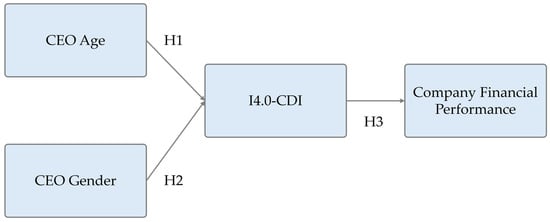

Disclaimer/Publisher’s Note: The statements, opinions and data contained in all publications are solely those of the individual author(s) and contributor(s) and not of MDPI and/or the editor(s). MDPI and/or the editor(s) disclaim responsibility for any injury to people or property resulting from any ideas, methods, instructions or products referred to in the content. |
© 2026 by the authors. Licensee MDPI, Basel, Switzerland. This article is an open access article distributed under the terms and conditions of the Creative Commons Attribution (CC BY) license.