


Abstract
Engineered cementitious composites (ECC) are primarily designed to enhance ductility, achieving strain-hardening behavior and controlled micro-cracking. Key constituents typically include cement, fine aggregates, fly ash, and polymeric fibers. This study aims to replace conventional materials, such as river sand (RS) and fly ash (FA), with volcanic materials consisting of volcanic ash (VA) and volcanic sand (VS) while utilizing two types of polymeric fibers: polyethylene (PE) and polyvinyl alcohol (PVA). A complete replacement strategy was adopted to evaluate its impact on the general properties of ECC. A series of tests was conducted to evaluate the mechanical and durability performance of ECC using specific sample geometries: 50 mm cubes for compressive strength, water absorption, and abrasion tests, while the tensile behavior test samples were dog bones with a gauge cross section of 30 mm × 80 mm, and the flexural performance was conducted using prisms of 40 × 40 × 160 mm. For accuracy, three specimens were tested for each test, and the average results were reported. The results demonstrated that utilizing a volcanic matrix improved the 28-day compressive strength by up to 48% compared to mixtures containing conventional materials. Furthermore, volcanic-based ECC mixtures exhibited a 90% increase in compressive strength at 28 days compared to 7-day results. Regarding mechanical performance, PE fibers yielded remarkable results in tension and flexural, with uniaxial tensile strength and flexural strength reaching 6.69 MPa and 20.70 MPa, respectively, particularly in the presence of VA. Moreover, the use of volcanic materials reduced the water absorption of ECC mixtures by up to 16%. Notably, the inclusion of volcanic sand enhanced the abrasion resistance of ECC mixtures by up to 20% across various cycles. Finally, microstructural analysis confirmed that volcanic materials promote a high-density cementitious matrix with superior bonding characteristics with the utilized fibers.
1. Introduction
Concrete remains a fundamental material in modern civil engineering because it is readily available, simple to prepare, and easy to cast. Despite these advantages, its natural brittleness is a significant drawback, as the material tends to suffer from sudden structural failure as soon as its tensile capacity is exceeded [1,2,3]. This brittle behavior limits the deformation capacity of structural members and reduces their safety and durability when subjected to extreme loading conditions, including earthquakes, impact forces, and long-term deterioration during service [4,5]. To overcome these limitations, considerable research has been directed toward enhancing the crack resistance, ductility, and toughness of cement-based materials [4,5,6]. Engineered cementitious composites (ECC), designed using micromechanical concepts, constitute a major advancement in the field of cement-based materials [7,8,9]. In contrast to conventional fiber-reinforced concrete, ECC demonstrates strain-hardening behavior that distributes microcracks under tensile loading [10,11,12]. Rather than generating a small number of large cracks, ECC forms numerous closely spaced microcracks, resulting in enhanced ductility, improved durability, and greater energy dissipation capacity [13,14,15]. To attain superior tensile strain capacity, ECC primarily incorporates polymeric fibers, particularly polyvinyl alcohol (PVA) and polyethylene (PE) fibers [16]. PVA fiber-reinforced ECC typically achieves a tensile strain capacity of 3–7%, a tensile strength ranging from 3 to 6 MPa, and a compressive strength between 40 and 60 MPa [17,18,19]. In PE-reinforced ECC, the tensile strain capacity can reach as high as 8%, accompanied by a compressive strength of up to 120 MPa and a tensile strength of 18.17 MPa [20]. Due to the hydrophilic characteristics of PVA fibers, they are well suited for the production of low- to medium-strength ECC, whereas the hydrophobic nature and superior tensile strength of PE fibers make them more appropriate for medium- to high-strength ECC applications [21]. Liu et al. [22] determined that incorporating 2.25% PE fiber into ECC results in optimal mechanical properties, specifically achieving a maximum tensile strength of 7.0 MPa and a strain capacity of 6.25%. Another study conducted by Fu et al. [23] explored the impact of increasing PE fiber concentrations up to 2% on the characteristics of ECC. Their findings concluded that the 2% dosage was the most effective, resulting in a tensile strength of 7.2 MPa and a strain capacity of 5.6%. Ma et al. [24] conducted a comparative analysis of the tensile properties of ECC reinforced with either PVA or PE fibers. While PE fibers were tested at a single 2% concentration, PVA fibers were evaluated at volume fractions ranging from 1% to 4% in 1% increments. The study highlighted the beneficial impact of higher PVA concentrations, showing a significant rise in initial crack strength from 0.63 MPa at 1% fiber content to 2.03 MPa at 4%. In contrast, the ECC mixture incorporating 2% PE fibers exhibited an initial crack strength of 1.77 MPa, higher than the equivalent 2% PVA fiber-reinforced ECC by 5%.
Andesite is a common intermediate-composition igneous rock formed through the solidification of lava following volcanic eruptions [25,26,27]. Andesite processing generates a significant amount of waste throughout its mining, cutting, and finishing stages. These by-products typically manifest as unusable stone fragments, slurry resulting from wet-cutting operations, or fine dust particles collected during the polishing phase [25]. To mitigate these environmental impacts, this industrial by-product can be repurposed as volcanic ash (VA) and volcanic sand (VS), effectively turning stone waste into a valuable resource as a natural pozzolana to be used in concrete as a supplementary cementitious material [28,29]. Numerous studies have investigated how the VA affects the physical strength and microstructure of cement-based materials [30]. In a study by Sebayang [31], who examined how adding VA to concrete impacts its mechanical properties, the findings demonstrated notable gains, specifically a 9.8% increase in compressive strength and a 5.99% improvement in tensile strength. Furthermore, research by Karolina and Simanjuntak [32] indicated that as the proportion of VA used to replace cement increases, the workability of the concrete mixture decreases. Hossain and Lachemi [33] observed that replacing 20% of cement with VA allowed the concrete to reach a compressive strength of 60 MPa within a 28-day curing period. Abdullah et al. [34] demonstrated that incorporating volcanic pumice stone ash enhances the compressive strength of self-compacting concrete, emphasizing that the particle fineness of the ash is a critical factor influencing the resulting mechanical performance. Al-Fadala et al. [35] examined the influence of VA concentrations within a cementitious matrix, ranging from 10% to 30%. Their study indicated that incorporating VA at a 10% replacement level yielded specific performance benefits. Due to the widely recognized observation that replacing ordinary Portland cement (OPC) with volcanic ash VA can lead to reduced strength, particularly during early curing stages, researchers are increasingly exploring VA as a substitute for fly ash (FA) or other pozzolanic materials. This shift is especially evident in the development of specialized applications, such as ECC used for structural repair and strengthening [36,37]. Volcanic sand is used as a full or partial replacement for conventional fine aggregate due to its high durability and hardness. It is typically derived from volcanic andesitic rocks, which can exhibit pozzolanic activity when finely ground into powder. Moreover, volcanic sand is characterized by angular and sharp-edged particles that provide high bonding capability, with a density comparable to that of conventional aggregates. It serves as a suitable alternative that achieves a sustainable mechanical balance in ECC.
For using andesite volcanic rocks as an aggregate in concrete, a study by El-Desoky et al. [38] evaluated the Dokhan volcanics in Egypt’s Eastern Desert as a sustainable coarse aggregate for concrete, revealing that their inclusion enhances mechanical performance and yields a 28-day compressive strength exceeding conventional dolomite concrete by over 36%. Another study [39] examined the suitability of basaltic rocks from the basic Dokhan Volcanics in Egypt’s Eastern Desert as coarse aggregates in concrete. The petrographic analysis demonstrates that these volcanic basalts can successfully enhance overall concrete properties, provided that suitable types are carefully selected. A study by Elshikh et al. [40] investigated the production of green high-strength self-compacting concrete using andesite, rhyolite, dolomite, and gravel as different types of coarse volcanic aggregates. The results showed that the rhyolite rocks achieved the optimum compressive strength up to 85 MPa.
2. Research Significance
Given the limited existing research focused on the impact of volcanic materials on the overall properties of ECC, as previous studies have primarily concentrated on the specific effects of VA only on ECC performance to achieve the objectives of this research, the study was conducted in structured experimental stages. First, different ECC mixtures were designed and prepared based on three main fiber groups: PE fibers, PVA fibers, and a hybrid combination of both. Second, within each fiber group, the effects of sustainable local volcanic materials were investigated by utilizing VA as a complete replacement for FA and VS as a complete replacement for river sand (RS). Third, all mixtures were cast, cured, and subjected to a comprehensive testing program covering both mechanical properties and durability performance. The experimental results were analyzed to evaluate the effects of the fiber type and the proposed volcanic-based replacements on the behavior of ECC.
3. Materials and Methods
3.1. Materials
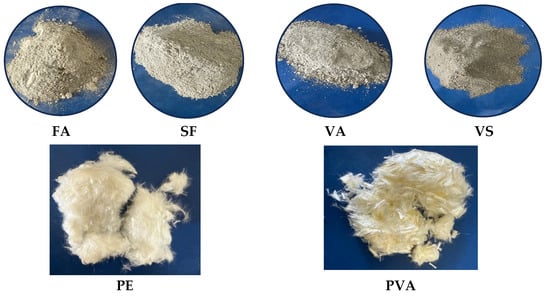
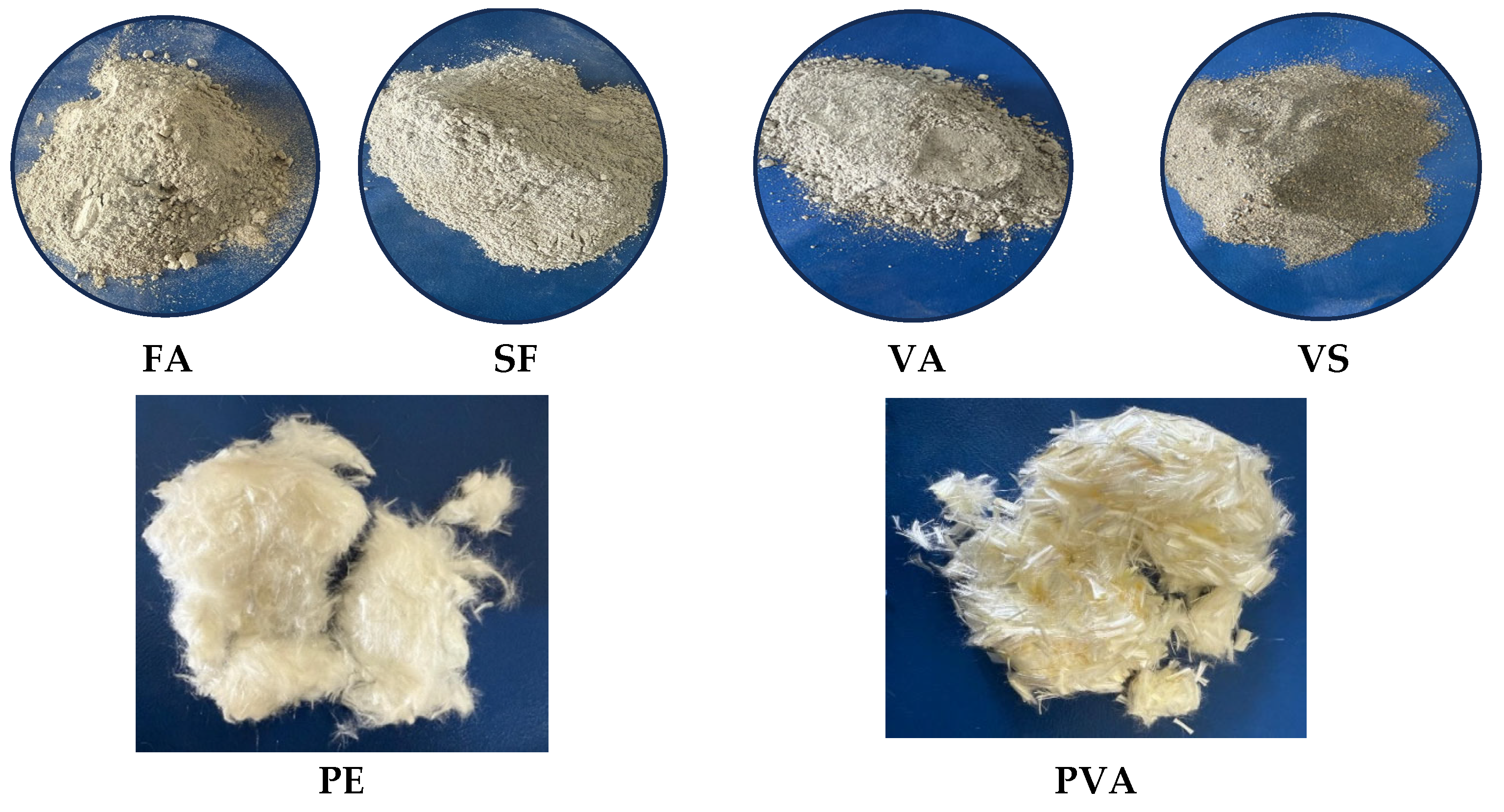
The binder system for the ECC mixes was composed of ordinary Portland cement (OPC-CEM I 52.5 N), class F fly ash (FA), and silica fume (SF). Regarding their physical properties, the specific gravity for the OPC was 3.15, while both the FA and SF exhibited a specific gravity of 2.2. The primary fine aggregate used was natural river sand (RS), which featured a particle size distribution between 0.30 mm and 1.18 mm. Its physical properties included a specific gravity of 2.65, a water absorption capacity of 0.8%, and a fineness modulus of 1.18. To create sustainable alternatives that achieve the efficiency of ECC, andesite volcanic rock from Egypt’s Red Sea Desert, selected for its notable hardness and inherent pozzolanic characteristics, was incorporated. This andesite was processed into volcanic sand (VS) featuring a fineness modulus of 1.30 and a particle size range of 0.30 to 1.18 mm to function as a full replacement for the RS. Furthermore, the andesite volcanic rock was crushed into volcanic ash (VA) to serve as a full replacement for the FA. Both the VS and VA have a specific gravity of 2.68. Figure 1 illustrates the various materials utilized in the production of the ECC mixes. Also, to ensure the desired workability, the ECC mixtures incorporated Viscocrete-3425, a polycarboxylate-based superplasticizer (SP) with a specific gravity of 1.08. The dosage was kept constant at 0.42% by weight of the total binder materials.
Figure 1.
Materials used for ECC production.
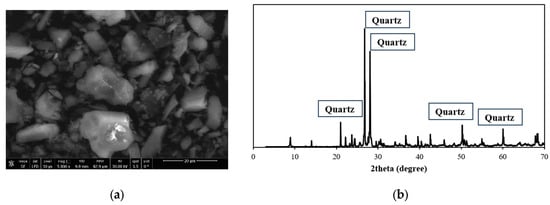
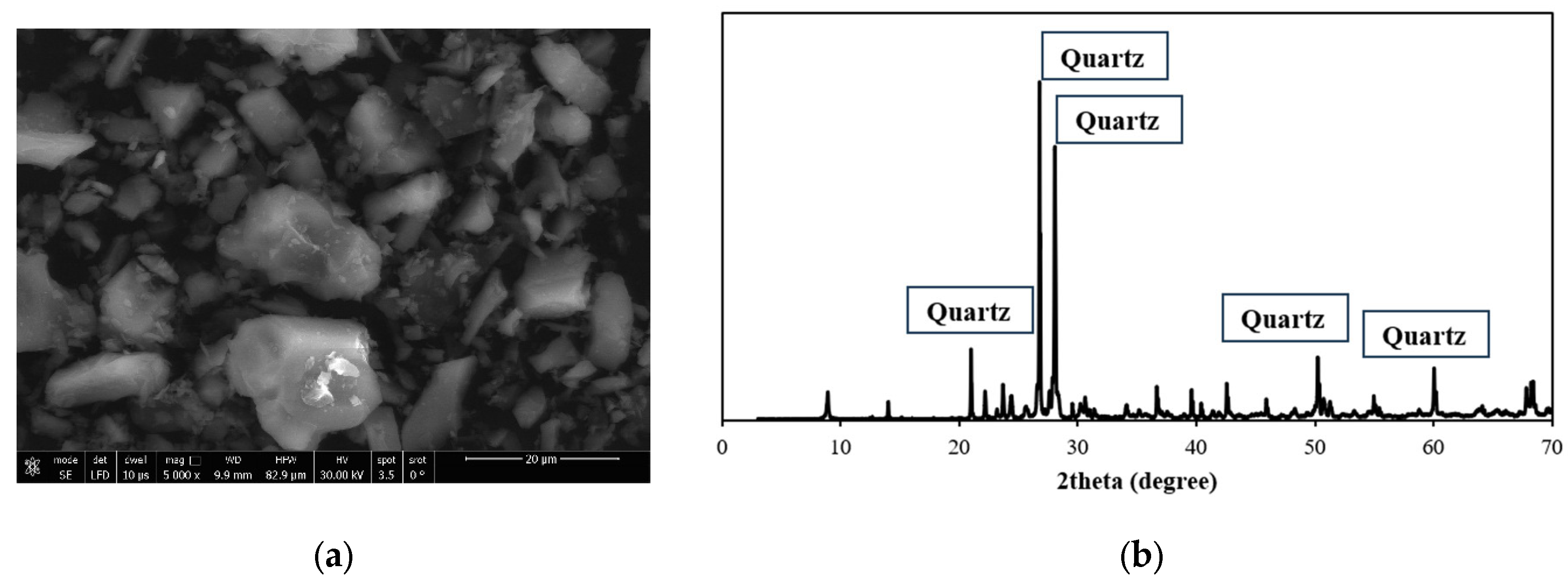
Morphologically, using scanning electronic microscope (SEM), as shown in Figure 2, the volcanic material particles are characterized by an angular shape, which gives them a higher mechanical interlocking potential within the ECC matrix. Mineralogically, X-ray diffraction (XRD) analysis indicates that volcanic materials contain quartz (SiO2), which is entirely consistent with its original sources and chemical formation.
Figure 2.
Material characterization of volcanic materials (a) SEM and (b) XRD.
Table 1 presents the chemical and physical characteristics of the binder materials utilized throughout this study. As shown in Table 1, the VA serves as a natural pozzolanic material due to the high content of SiO2 and Al2O3. For this reason, it has been used as a full replacement of FA.
Table 1.
Chemical composition of binder materials of ECC detected by XRF (%).
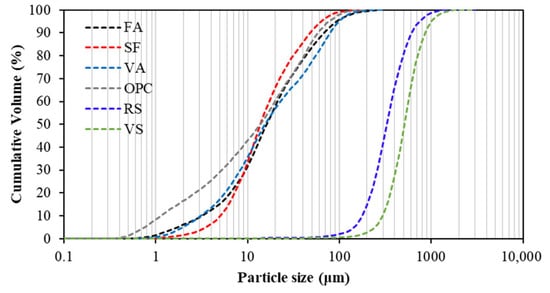
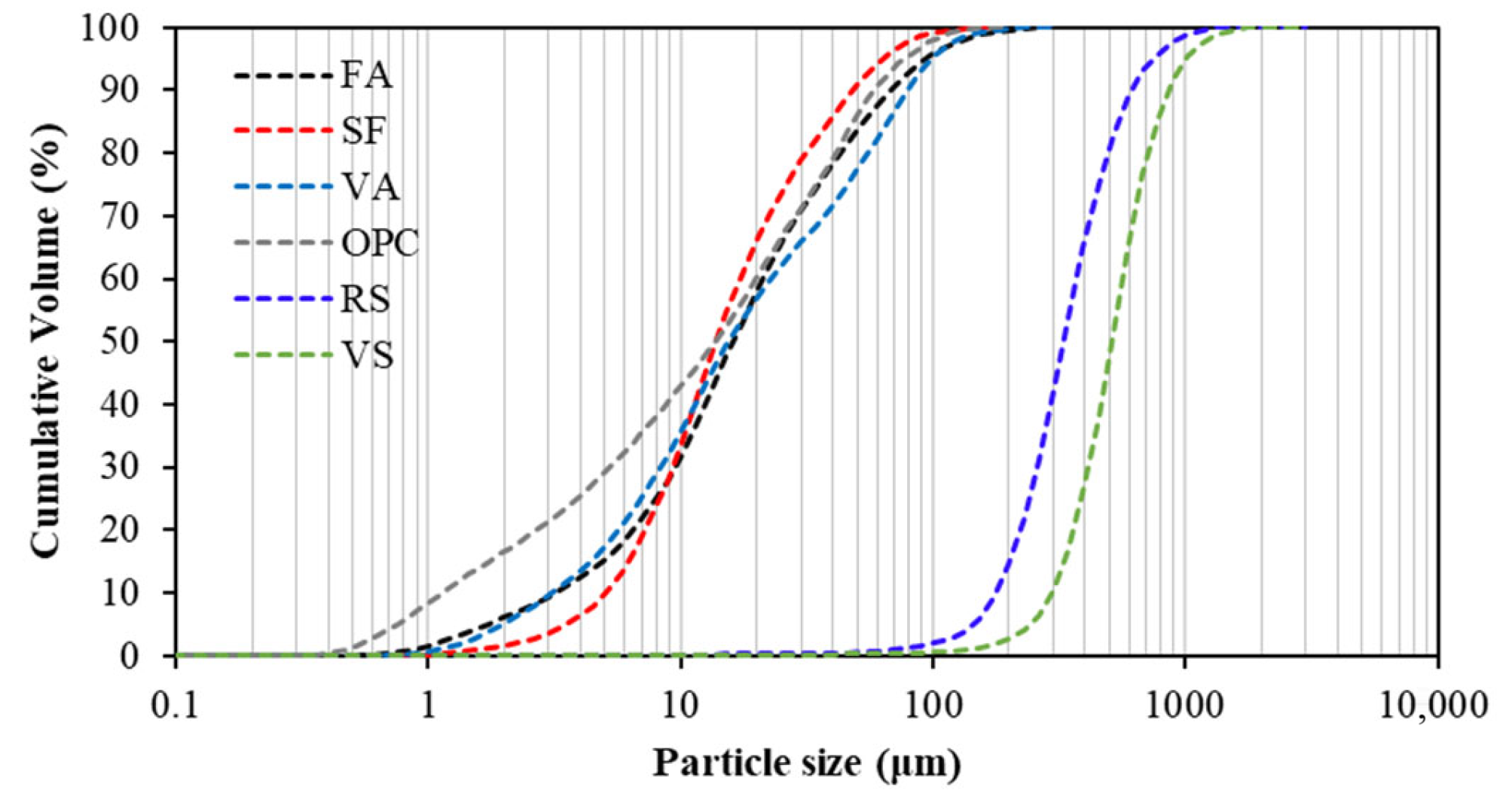
Figure 3 shows the particle size distribution of the used binder and fine aggregate materials. As shown in Figure 3, all binder materials, including FA, SF, VA, and OPC, are approximately in the same size to ensure their same fineness to avoid any defects in the results. The size of RS and VA was almost the same also.
Figure 3.
Particle size distribution of binder and fine aggregate materials of ECC.
To ensure the strain-hardening performance of ECC, polyethylene fiber (PE) and polyvinyl alcohol fiber (PVA) were incorporated separately or together as discrete reinforcement. The properties of these fibers are detailed in Table 2.
Table 2.
The characteristics of PE and PVA fiber.
3.2. Mix Design
This study evaluates the overall performance of nine ECC mixtures, categorized into three groups as detailed in Table 3. The experimental variables involve the complete replacement of FA with VA and RS with VS. While these substitution strategies remained consistent across all groups, the primary variable is the fiber reinforcement type: Group 1 incorporates 2% PE fibers by volume; Group 2 utilizes 2% PVA fibers by volume; and Group 3 employs a hybrid reinforcement of 1% PE and 1% PVA fibers by total mix volume. The 2% and (1% + 1%) mixing ratios of PE and PVA were selected based on extensive literature review, as these specific dosages are the most widely reported and optimized proportions in previous studies for achieving the desired mechanical and strain-hardening properties of ECC [41,42,43]. To confirm a fair comparison across the three groups, all other mix components, such as OPC, SF, water, and SP, were kept constant throughout all nine mixtures. The water-to-binder ratio is kept constant across all mixes at 0.25. This standardized way allows for a direct evaluation of the influence of VA and VS as full replacements for FA and RS, respectively, across the different fiber reinforcement types. The mixture codes are structured into three parts: the first indicates the variable binder material (FA or VA), the second refers to the variable fine aggregate (RS or VS), and the third refers to the fiber type. As described in Table 3, all components and ratios of ECC mixtures were selected based on trial mixes, firstly to obtain the desired workability and desired mechanical performance.
Table 3.
Mixes components of ECC (kg/m3).
3.3. Sample Preparation
All ECC mixtures were produced in a climate-controlled laboratory (23 ± 2 °C, 50 ± 5% relative humidity) using a high-torque electric mixer to ensure thorough blending. The procedure began with a 1-min dry-mixing cycle for all binder and fine aggregate components (OPC, SF, FA or VA, and RS or VS). To optimize fiber dispersion, a part of the water and SP was introduced initially, with rheology carefully monitored to avoid excessive fluidity. Once a stable paste was attained, fibers were added incrementally and mixed until uniformly distributed. After incorporating the remaining water and SP to control target workability, the mixtures were cast. Specimens were demolded after 24 h and moved to a water-curing tank until their scheduled testing dates.
3.4. Test Methods
3.4.1. Flowability
The workability of the ECC mixtures was assessed using the flow table test, as specified in ASTM C1437 [44]. The final flow spread was determined by averaging two perpendicular diameter measurements for each mixture.
3.4.2. Compressive Strength
To evaluate the compressive strength of the ECC mixtures, 50 mm cubic specimens were prepared and tested at 3, 7, and 28 days, following ASTM C109 [45]. For each mixture, nine cubes were cast, with three specimens tested at each age interval. All specimens underwent standard water curing until the designated testing dates. The reported compressive strength for each mixture is the average of three identical specimens to ensure accuracy in the analysis.
3.4.3. Uniaxial Tensile Load Displacement Test
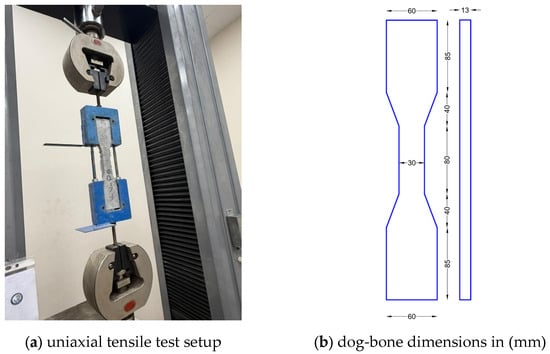
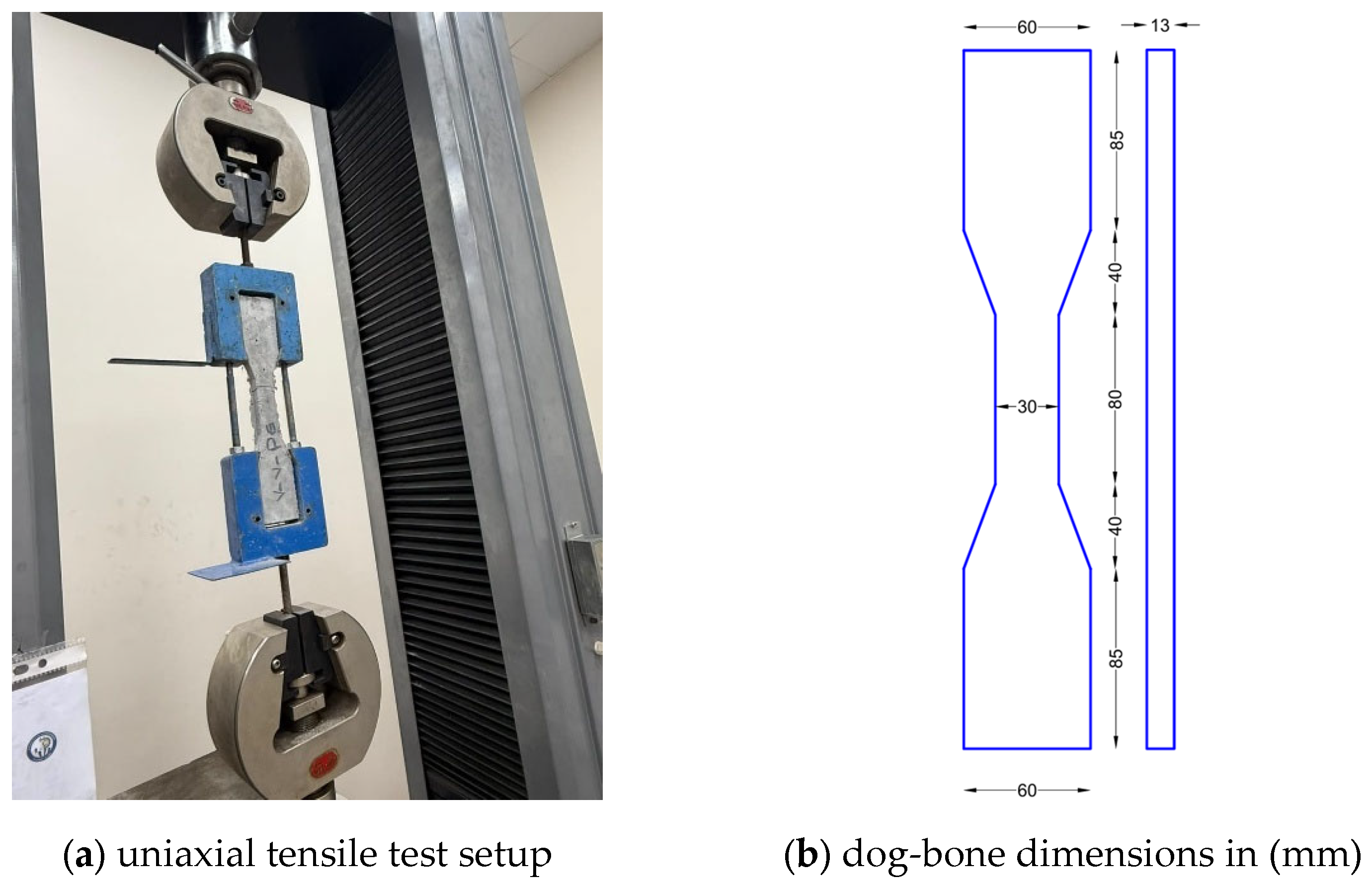
The uniaxial tensile stress-strain behavior of the ECC mixtures was evaluated at 28 days of curing using dog-bone specimens, following JSCE (2008) specifications [46]. The tests were conducted at a constant loading rate of 0.80 mm/min, with the tensile loads and displacements being recorded directly by the machine’s data acquisition system (Figure 4a). To assess tensile performance, dog-bone specimens were prepared with a cross-sectional area of 13 × 30 mm for stress evaluation and a gauge length of 80 mm for strain capacity measurement (Figure 4b). For each mixture, a total of three specimens were initially prepared, and the reported values represent the average of the successfully tested and valid replicates (three specimens or two specimens based on the validated specimens during test). To verify the strain-hardening behavior of the ECC mixtures, the tensile load-displacement curve for the specimens and their average was reported for the tensile behavior.
Figure 4.
Uniaxial stress-strain test setup and sample dimensions of ECC.
3.4.4. Three-Point Bending Test
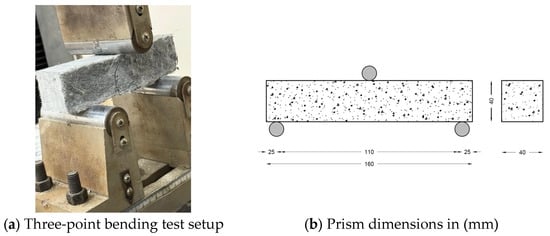
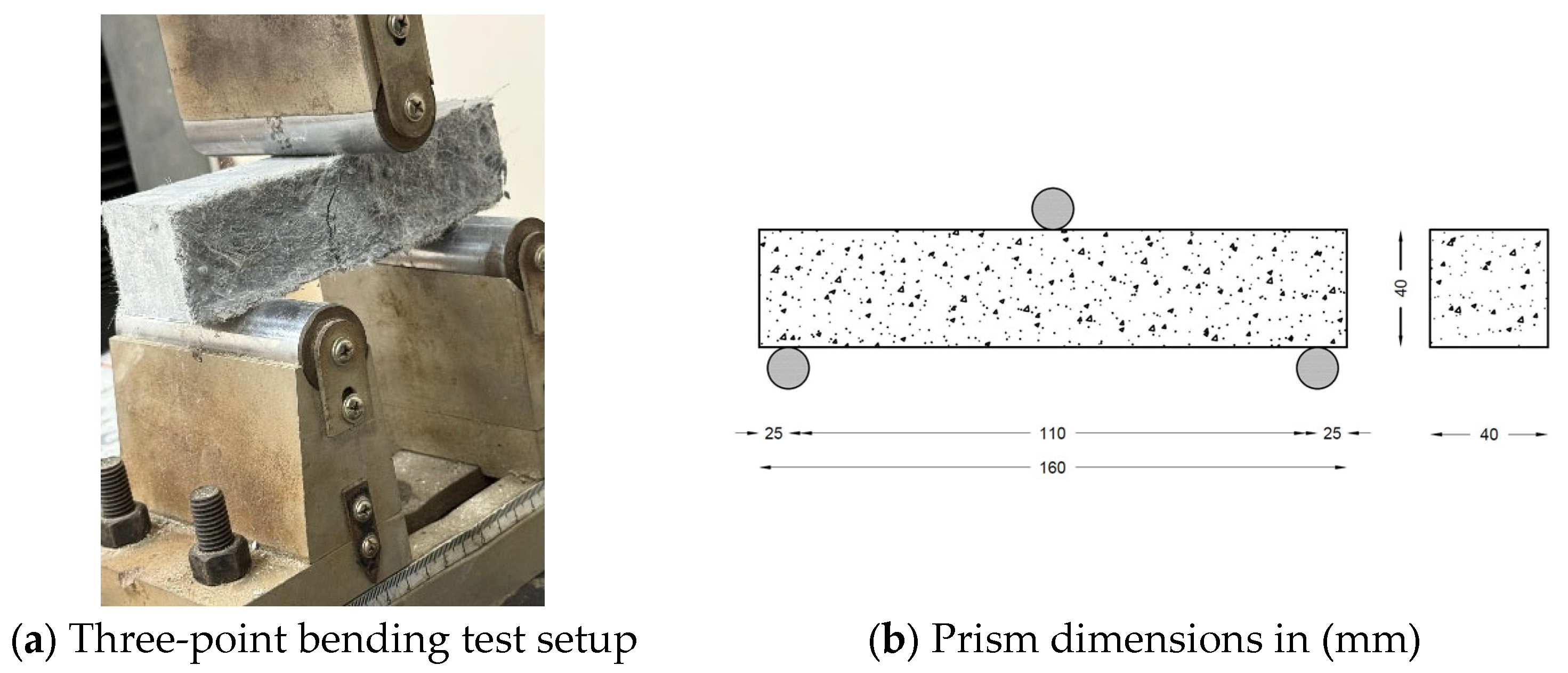
To evaluate the flexural performance of the ECC, a three-point bending test was conducted on 40 × 40 × 160 mm prisms according to ASTM C348 [47] at 28 days of curing with an effective support span of 110 mm, as shown in Figure 5. The test was performed at a constant displacement rate of 0.50 mm/min, with load and mid-span deflection data recorded directly by the testing machine’s data acquisition system. Flexural strength was determined from the peak load, while flexural toughness was quantified by calculating the total area under the complete load-displacement curve, reflecting the material’s energy absorption capacity. This comprehensive approach allows for an accurate assessment of the post-cracking deformation and energy-dissipation characteristics. Also, the flexural load-displacement curve most representative of the average flexural strength was selected to evaluate the ECC flexural properties.
Figure 5.
Three-point bending test setup and sample dimensions of ECC.
3.4.5. Water Absorption
The water absorption of the ECC mixtures was determined in accordance with ASTM C642 [48] using 50 mm cubic specimens at 28 days. Initially, the samples were oven-dried at 105 °C for 24 h until mass stability, defined as a weight change of less than 0.5%, was achieved, and this was recorded as the oven-dry mass. Subsequently, the specimens were submerged in water for 24 h, after which the saturated-surface-dry (SSD) mass was measured. Finally, the water absorption percentage was calculated using Equation (1).
To ensure saturation fully, the small size of the samples helped water get inside faster to make up for the dense material. For the water absorption test, three specimens for each mix were tested. All results were expressed as mean standard deviation.
3.4.6. Abrasion Test
To evaluate the durability performance of ECC mixtures against abrasion and impact, the abrasion test was conducted in accordance with ASTM C1747 [49]. This assessment is critical for understanding how the ECC samples’ surface withstands wear and friction over time. To assess mass loss, 50 mm cubic specimens, cured for 28 days, were subjected to testing using a Los Angeles abrasion machine. To ensure reliable and consistent results, the test was performed on three identical cubes per mixture, and the final data represents their average mass loss with their standard deviations. Specimens were weighed initially and again at 100-cycle intervals until they reached a total of 500 revolutions. The resulting abrasion resistance was calculated as the percentage of mass lost compared to the starting weight, serving as a primary indicator of the long-term durability of the ECC. For the abrasion test, three specimens for each mix were tested. All results were expressed as mean standard deviation.
3.4.7. Microstructure Performance
To characterize the microstructure of the ECC samples after 28 days of water curing, a combination of scanning electron microscope (SEM), energy dispersive X-ray (EDX), X-ray diffraction (XRD), and Fourier transform infrared spectroscopy was conducted for the mixes F-R-PE, V-R-PE, and V-V-PE. The SEM and EDX analysis, performed using a JEOL JSM 6510 LV microscope (JEOL Ltd., Tokyo, Japan) at 30 kV and an Oxford X-Max 20 system, required a 12 nm gold coating on the specimens to ensure electrical conductivity while mapping elemental composition. Complementing this, XRD was conducted on pulverized core samples, which were dried at 60 °C for 24 h to identify mineralogical phases. These diffraction patterns were obtained across a 2 theta range of 10–70° at a scanning speed of 2°/min, with the equipment set to 40 kV and 30 mA. FTIR spectroscopy was conducted using a Varian 3100 spectrometer operating in transmittance mode. The samples were prepared by crushing the ECC samples into a fine powder and sieving them to a particle size of 75 μm or smaller. Data were collected across a wavenumber range of 400–4000 cm−1 at a resolution of 1 cm−1, allowing for the identification of functional groups and the monitoring of chemical structural variations within the material.
4. Results and Discussions
4.1. Flowability
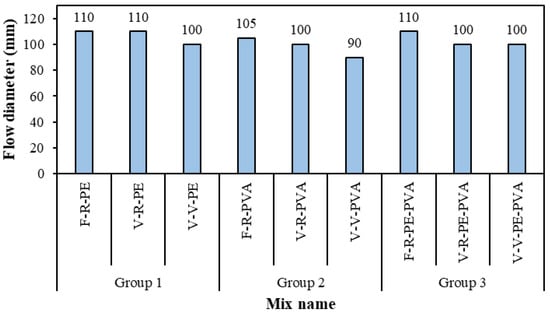
Figure 6 illustrates the flow table test results for the ECC mixtures. In the first group, replacing FA with VA while maintaining a constant RS had no effect on the flow diameter, which remained 110 mm for both F-R-PE and V-R-PE; however, fully replacing RS with VS in the presence of VA resulted in a 9% reduction in flow diameter. In the second group, the use of VA led to a 5% decrease in flow diameter for the V-R-PVA mixture compared to F-R-PVA, while fully replacing RS with VS caused a 10% reduction in the V-V-PVA mixture compared to the mixture V-R-PVA. Finally, in the third group, the inclusion of volcanic materials (VA or VS) was found to reduce the flow diameter by 9% compared to the control mixture without volcanic materials when using a combination of 1% PE and 1% PVA. Overall, it is evident from the flow table results that the use of either VS or PVA fibers adversely impacts the workability of ECC mixtures, which can be attributed to two primary factors: Firstly, the angular and irregular morphology of the VS particles, which contrasts with the smoother profile of the RS grains, this increased angularity promotes internal friction and impedes the mobility of water within the mixture, ultimately limiting the overall flow spread [40]. Secondly, unlike hydrophobic PE fibers, which are inert and do not interact with the surrounding mixture, PVA fibers feature surface hydroxyl groups that actively form strong physical-chemical bonds with the cementitious matrix. This chemical affinity means that while PVA fibers integrate more effectively into the material to enhance structural integrity, they also increase internal friction and viscosity, which reduces the overall flowability of the mixture compared to the non-reactive PE fibers [43,50].
Figure 6.
Flow diameter of ECC mixes.
4.2. Mechanical Properties
4.2.1. Compressive Strength
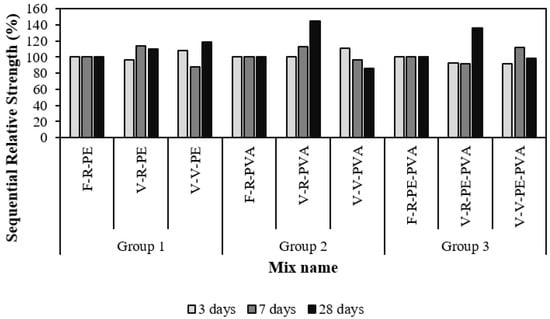
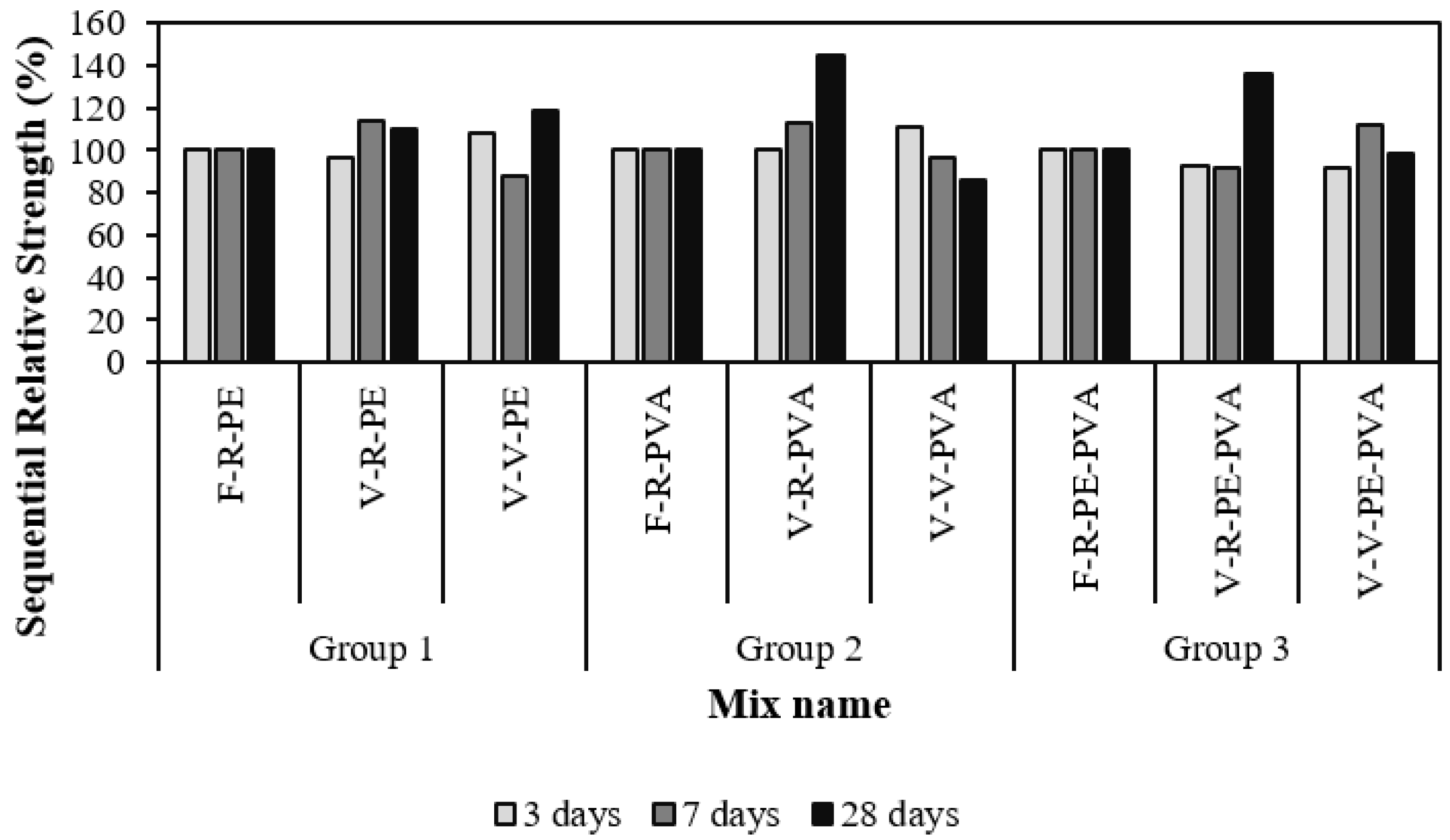
Table 4 and Figure 7 illustrate the compressive strength results for the ECC mixtures, comparing various groups at 3, 7, and 28 days. At 3 days, the results indicate that the incorporation of volcanic materials in the presence of PE fibers did not significantly affect compressive strength, with values remaining between 37 and 40 MPa. At 7 days, the use of VA in the presence of RS increased compressive strength by 13% compared to using FA in the mix F-R-PE, highlighting the strong pozzolanic activity of VA; conversely, replacing RS completely with VS in the mix V-V-PE resulted in a 12% decrease in strength compared to the mix V-R-PE, suggesting that the combination of VA and RS forms the strongest ECC matrix at this age of curing. At 28 days, the progressive inclusion of volcanic materials further enhanced performance, with VA replacing FA (the mix V-R-PE) yielding an 11% compressive strength increase compared to the mix F-R-PE and VS replacing RS (the mix V-V-PE) yielding an 18% increase compared to the mix V-R-PE; this is attributed to the completion of the pozzolanic reaction and improved bonding between the volcanic components and the PE fibers. Regarding the second group, utilizing PVA fibers, the compressive strength results remain relatively constant for both the F-R-PVA and V-R-PVA mixtures, with both exhibiting a compressive strength of 33 MPa at 3 days of curing. However, the V-V-PVA mixture shows a 12% increase in strength due to the presence of VS compared to the mix V-R-PVA. At 7 days, results further indicate that the inclusion of VA increases compressive strength by 13% when combined with RS (the mix V-R-PVA), confirming the strong pozzolanic activity of VA regardless of the fiber type; meanwhile, the compressive strength remains nearly stable when substituting RA with VS. By 28 days of curing, the compressive strength of the V-R-PVA mixture increases by 48% compared to the F-R-PVA mixture and shows a 92% increase compared to its own 7-day strength, underscoring the superior performance of VA in enhancing compressive strength compared to FA. For the final mixture in this group (V-V-PVA), a 14% decrease in compressive strength is observed compared to the V-R-PVA mixture. The bond between VS and PVA fibers was stronger at 3 days, while a slight reduction was observed at 7 and 28 days. This may be attributed to changes in the interfacial transition zone (ITZ) and microstructural evolution with curing time. Regarding the third and final group, the compressive strength results at 3 days show a gradual decrease from 44 to 41 and then to 37 MPa as the hybrid fiber system (PE and PVA) is integrated into the F-R-PE-PVA, V-R-PE-PVA, and V-V-PE-PVA mixtures, respectively. This trend may be attributed to the differing expansion properties of the two fiber types under load, which negatively affects compressive strength when volcanic materials are utilized. At 7 days, however, the use of VS in the V-V-PE-PVA mixture achieves a 14% increase in compressive strength compared to the V-R-PE-PVA mixture. Similarly, at 28 days, mixtures incorporating volcanic materials (VA or VS) exhibit a compressive strength increase exceeding 38% compared to traditional ECC mixtures. The reason for increasing the compressive strength using the hybrid system of PE and PVA fibers may be attributed to high-strength PE fibers providing ultimate tensile ductility under large deformations, while well-bonded PVA fibers effectively control micro-cracking. This multiscale crack bridging optimizes stress transfer and energy dissipation, achieving mechanical performance. It can be concluded that the inclusion of volcanic materials, whether VA or VS, effectively enhances compressive strength, particularly after completing the 28-day hydration period. This is attributed to their relatively strong pozzolanic activity of VA when used as a replacement for FA and their robust interfacial bonding of VS with the fibers after the completion of the hydration process when used as a replacement for RS.
Table 4.
Mechanical characteristics results of ECC mixes.
Figure 7.
Relative compressive strength of ECC mixes.
Finally, as shown in Figure 7, the 28-day compressive strength of mixes containing volcanic materials exhibits an increase in compressive strength compared to their compressive strength at 7 days. For example, the V-V-PE mixture increased by 87% compared to its 7-day strength, confirming that the pozzolanic reaction and matrix cohesion intensify with hydration age as the high amorphous silica content in the volcanic ash reacts with free calcium hydroxide (CH) to produce C-S-H, thereby reinforcing the ECC matrix [51]. Also, mixes V-R-PVA and V-R-PE-PVA increased by 91% and 82%, respectively, compared to their 7-day compressive strength. The mixes V-V-PVA and V-V-PE-PVA increased in the compressive strength at 28 days by 72% and 56%, respectively, compared to their 7-day strength. The significant enhancement in the compressive strength at 28 days using volcanic materials may be attributed to the pozzolanic activity of the reactive silica natural in the volcanic materials, combined with the presence of SF. Although this high content of amorphous, reactive silica, K2O, and Na2O in VA could theoretically cause deleterious alkali-silica reactions (ASR), the inclusion of SF effectively mitigates this risk. SF acts as a powerful pozzolanic admixture that consumes excess alkalis and refines the pore structure, ensuring that the reactive silica contributes safely and positively to the formation of dense C-S-H gel rather than causing harmful expansion.
4.2.2. Uniaxial Tensile Load Displacement Response
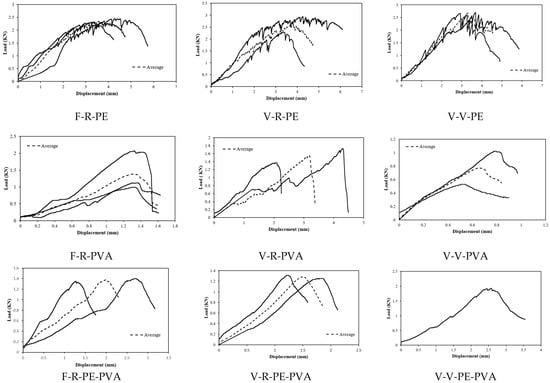
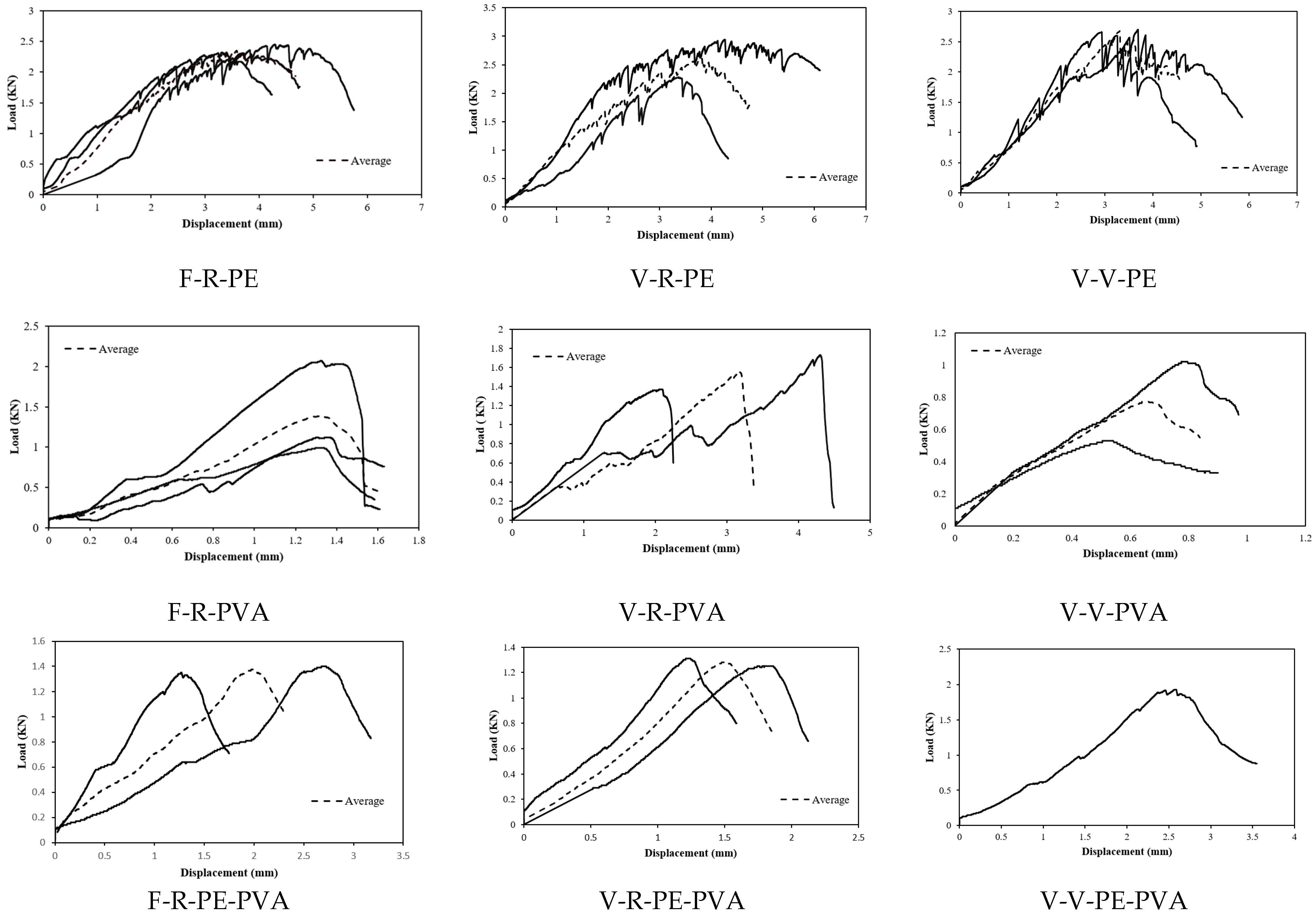
Figure 8 presents the tensile load-displacement behavior of three ECC mixture groups based on the available specimens and their average after testing, demonstrating the performance based on fiber type. As shown in Figure 8, the PE-fiber mixtures exhibit superior ductility with both conventional and volcanic materials, achieving average displacements exceeding 4.5 mm and maximum average tensile loads exceeding 2.25 kN, while clearly achieving micro-cracking and strain-hardening behaviors that indicate high energy absorption capacity. Figure 8 also demonstrates that PVA-fiber mixtures achieved lower average displacement values up to 3 mm and average tensile load up to 1.5 kN, reflecting a more balanced, brittleness-reduced, strain-hardening performance. Finally, Figure 8 illustrates that the hybrid PE/PVA fiber system provides an intermediate response, with average loads ranging from 1.25 kN to 2 kN and displacements between 2 mm and 3.5 mm, confirming that incorporating PE fibers either individually or in a hybrid system is essential for optimizing the ductility, strain-hardening, and micro-cracking capabilities of ECC mixtures. It should be noted that for the V-V-PE-PVA mixture, only a single valid curve is presented due to testing equipment malfunctions in the other replicates. This curve successfully represents the tensile performance and ductility of the ECC incorporating volcanic materials and hybrid PE-PVA fibers. This overall behaviour of enhancing strain-hardening and micro-cracking using PE fibers may be attributed to the higher elastic modulus and tensile strength of PE fibers, which, in role enhancing, the tensile stress strain response of ECC mixtures using conventional volcanic materials more than PVA [52,53]. The V-R-PVA mix exhibited higher deformability due to the superior strain-hardening capacity and fiber pull-out resistance characteristic of flexible PVA fibers under direct tension. The specific packing and interaction in the V-R-PE-PVA hybrid system under direct tension resulted in a stiffer response with lower displacement.
Figure 8.
Tensile load-displacement performance of ECC mixtures.
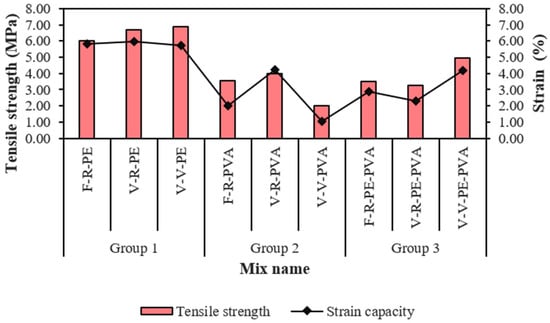
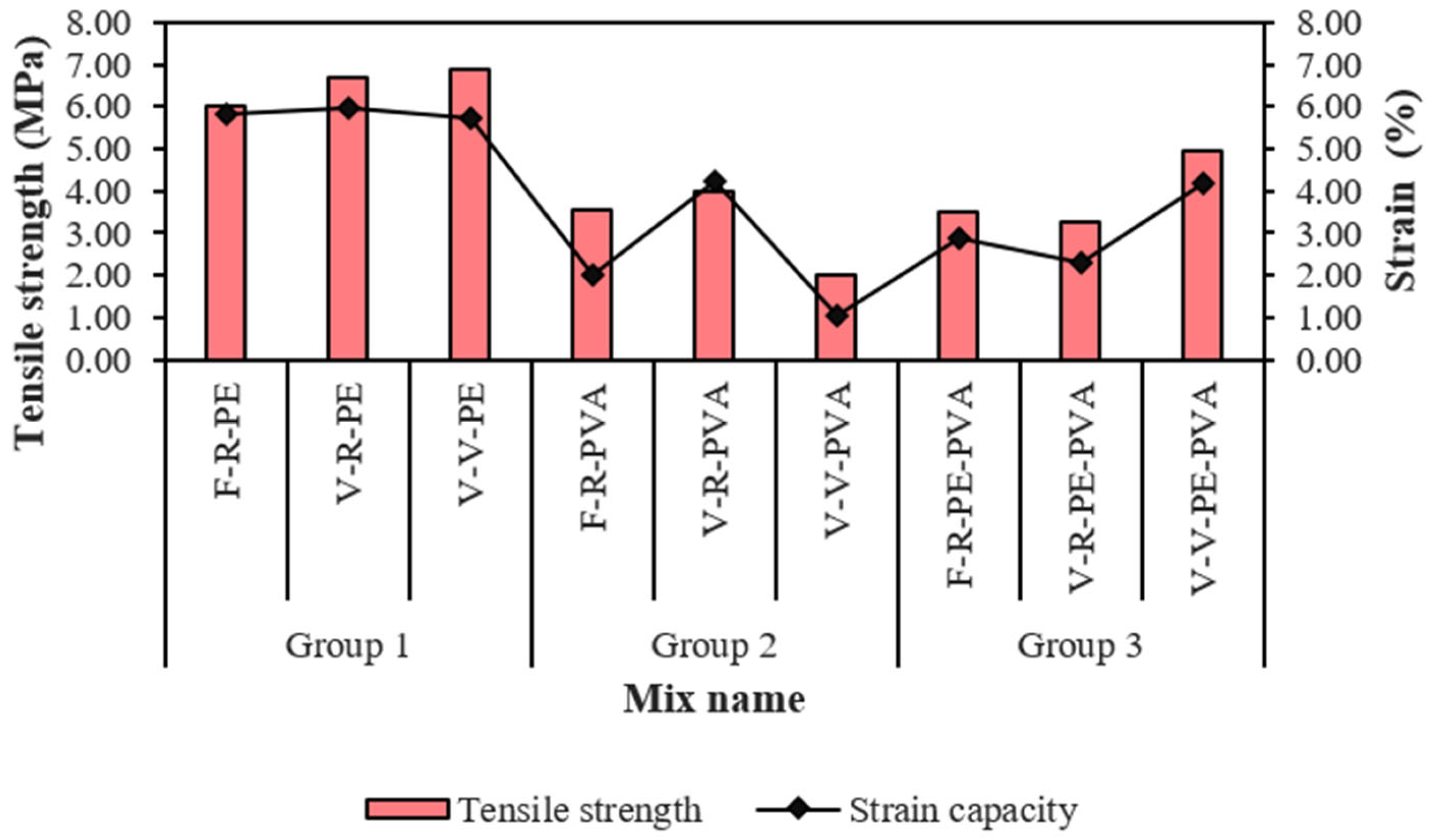
Table 4 and Figure 9 present the uniaxial tensile strength and tensile strain results for the ECC mixtures across the three study groups. In the first group, tensile strength increased by 11% when using VA as a total replacement for FA, confirming mechanical compatibility with compressive strength data due to the strong pozzolanic reaction of VA at 28 days; furthermore, VS increased tensile strength up to 6.87 MPa compared to 6.69 MPa for RS, effectively serving as a 100% replacement. In the second group, tensile strength increased by 11% in the V-R-PVA mixture and decreased by 50% when using VS, the latter likely resulting from poor bonding between the relatively smooth PVA fibers and the VS matrix. The third group demonstrated a tensile strength increase of up to 50% using volcanic materials, which is attributed to the presence of hybrid PE and PVA fibers that optimize the balance between the fibers and the matrix, thereby enhancing cohesion and overall tensile strength of ECC. Regarding the strain values, Table 4 and Figure 8 demonstrate a trend consistent with the tensile strength results: the inclusion of PE fibers achieves superior tensile strain, ranging from 5.73% to 5.97%, regardless of whether a conventional or volcanic matrix is used. The use of PVA fibers leads to a notable reduction in strain capacity, with values falling between 1.05% and 4.22%. Meanwhile, the final group, utilizing a hybrid of PE and PVA fibers, achieves a balanced strain capacity ranging from 2.32% to 4.20%. These findings confirm that integrating PE fibers into the ECC matrix results in a highly efficient stress-strain response compared to PVA fibers, particularly when volcanic materials are incorporated, primarily due to the higher tensile properties of PE fibers, which, in role, give the ECC matrix high tensile properties, as reported in [4,54].
Figure 9.
Tensile strength and strain capacity values of ECC mixes.
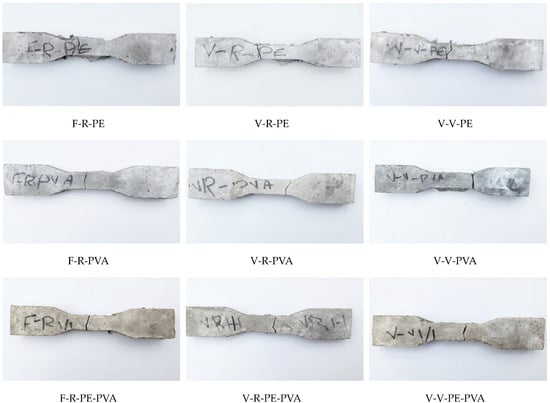
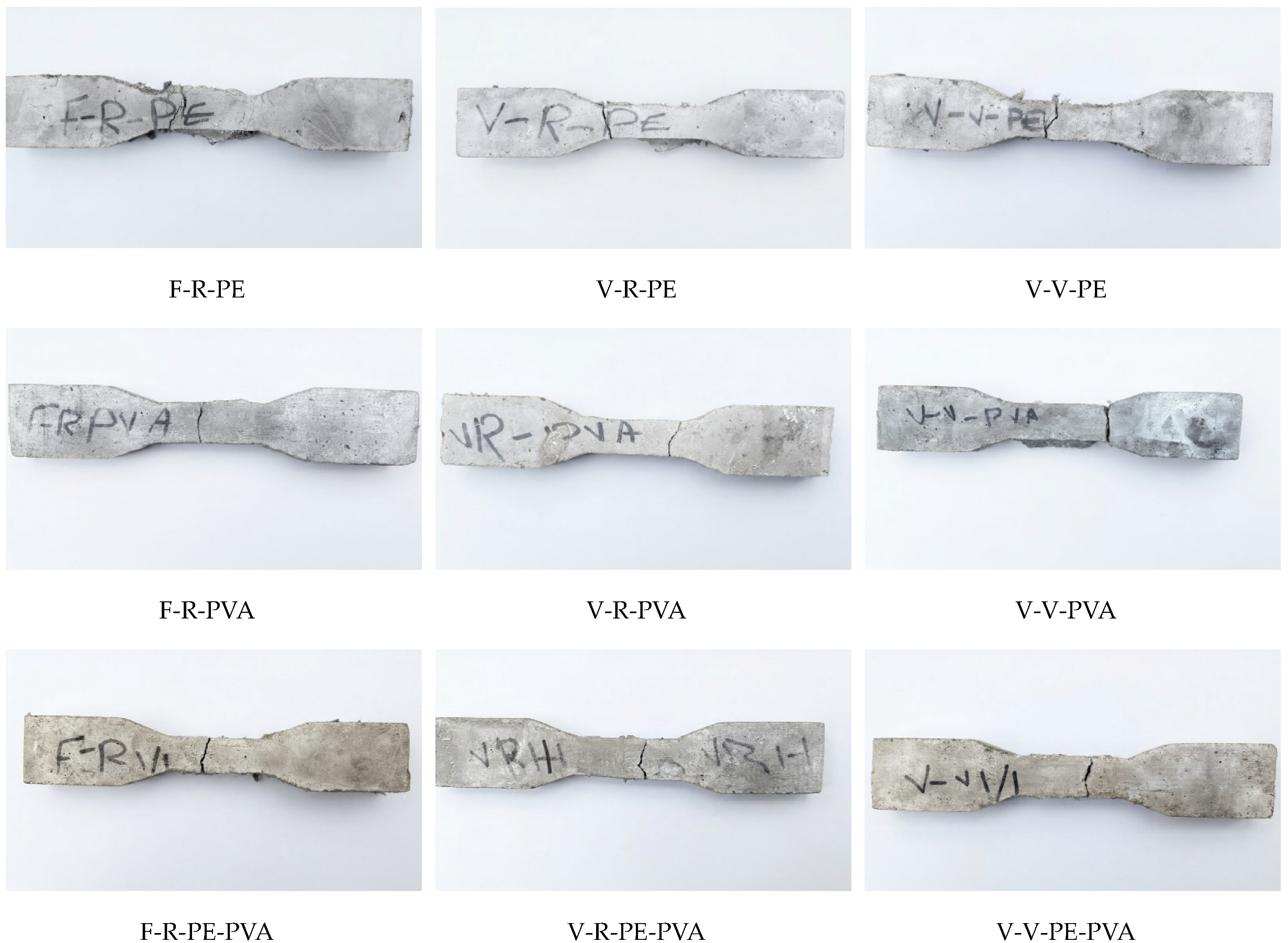
Figure 10 represents the crack patterns of the dog-bone specimens for all ECC mixes in this study. For the PE group, all mixes, whether containing FA and RS or volcanic materials, exhibited multiple microcracks within the gauge length. These distributed microcracks fully explain the strain-hardening phenomenon and the saw-tooth behavior observed in Figure 8, while also accounting for the enhanced strain capacity and higher tensile strength of the PE-fiber mixes compared to other groups. This multi-cracking behavior demonstrates that the specimens do not fail in a sudden, brittle manner; instead, it confirms that the PE fibers effectively carry tensile loads, particularly in mixes containing volcanic materials due to their excellent dispersion and bonding within the ECC matrix. The PVA group mixes displayed a single major crack within the gauge length, indicating a limited strain-hardening capacity. Regarding the PE-PVA hybrid group, only a few microcracks were observed compared to the PE group. This performance gap is fundamentally driven by the superior mechanical properties of the PE fibers; referring to Table 2, the PE fibers possess a tensile strength approximately 72% higher and an elastic modulus roughly three times greater than those of the PVA fibers. These exceptional mechanical properties, combined with an optimized fiber-matrix interfacial bond with both matrices, are the main reasons why the PE fiber-reinforced mixtures fully achieved the characteristic strain-hardening and multiple-cracking performance of standard ECC.
Figure 10.
Visual appearance of crack pattern of uniaxial tensile specimens.
4.2.3. Flexural Load—Displacement Response
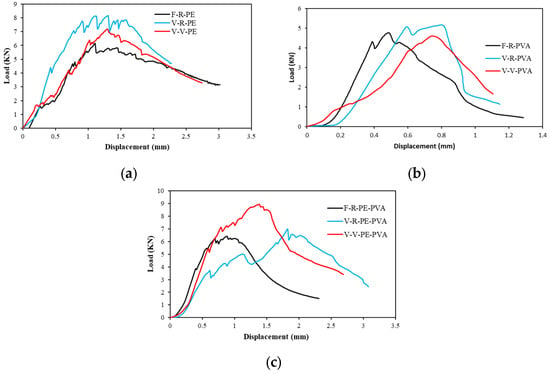
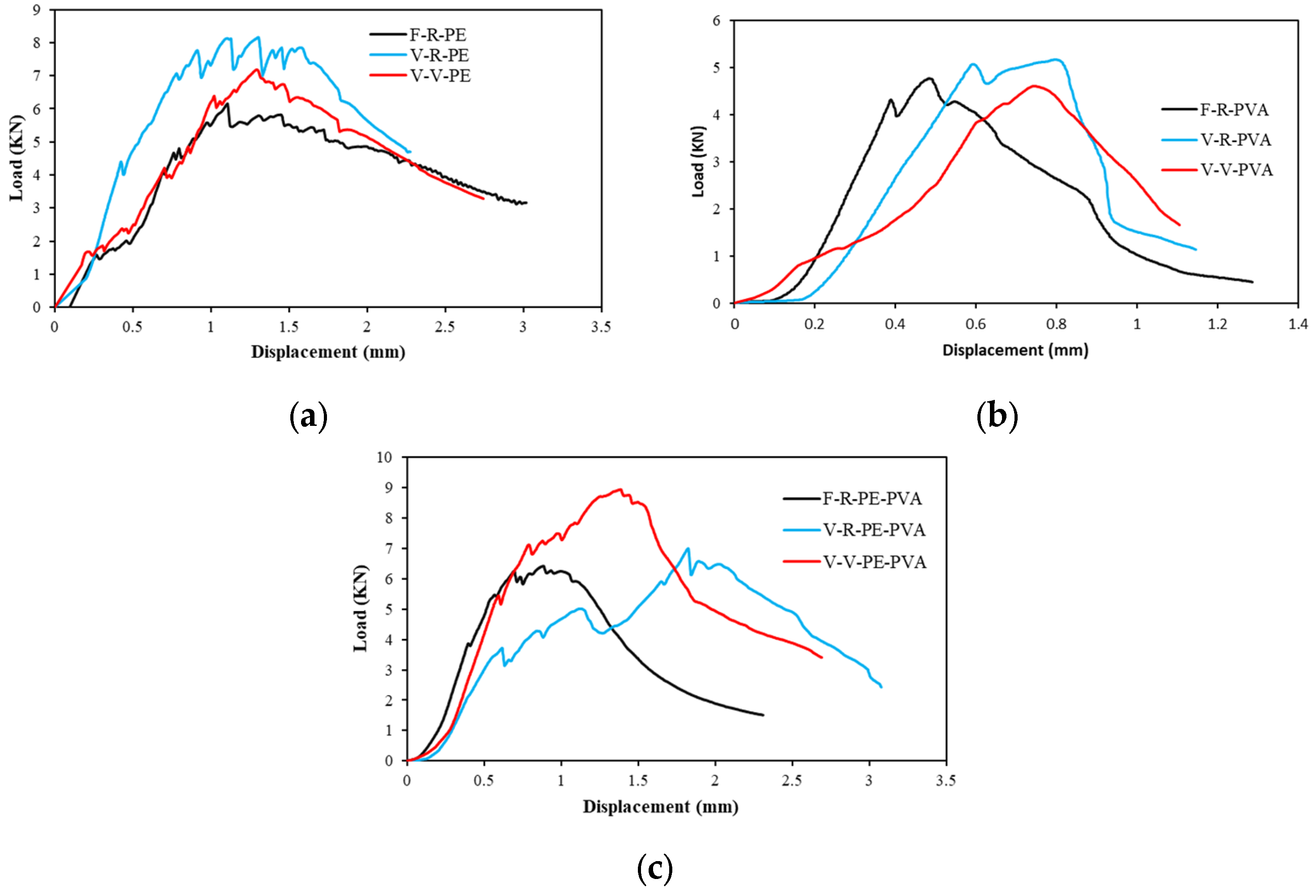
Figure 11 illustrates the typical load-displacement curves for the flexural behavior of the ECC mixtures, demonstrating that the inclusion of PE fibers, whether used individually or combined with PVA, consistently achieves superior flexural load capacity and acceptable displacement. Specifically, the first group shows that adding VA allows the V-R-PE mixture to reach 8 kN compared to 6 kN for the F-R-PE mixture, while the V-V-PE mixture achieves a balanced 7 kN; all show displacements between 2.5 mm and 3 mm. The second group (Figure 11b) shows lower performance with loads between 4–5 kN and limited displacement of 1.30 mm, indicating that PVA fibers have lower interfacial bonding effectiveness than PE fibers. In the third group, the synergistic interaction between the fiber combinations and the volcanic matrix is evident, particularly in the V-V-PE-PVA mixture, which achieves a superior peak load of 9 kN and a displacement of 3 mm, confirming the overall enhancement in flexural performance and the characteristic micro-cracking behavior. The “saw-tooth” pattern observed in Figure 11a,c confirms the occurrence of strain-hardening and micro-cracking and the effectiveness of using PE fiber in achieving these properties. These results are primarily due to the high tensile properties of PE fibers in enhancing the bond between the ECC matrix and the fibers [55]. In Figure 11c, the combined action of hybrid PE and PVA fibers under the flexural load significantly enhanced the post-cracking energy absorption and deflection capacity, allowing the V-R-PE-PVA sample to accommodate larger deformations and exhibit higher displacement compared to the other groups.
Figure 11.
Representative flexural load displacement curves of ECC mixes: (a) Group 1, (b) Group 2, and (c) Group 3.
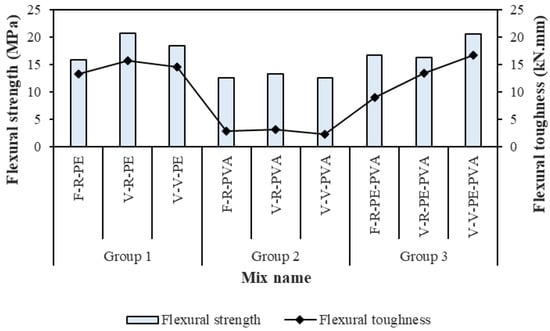
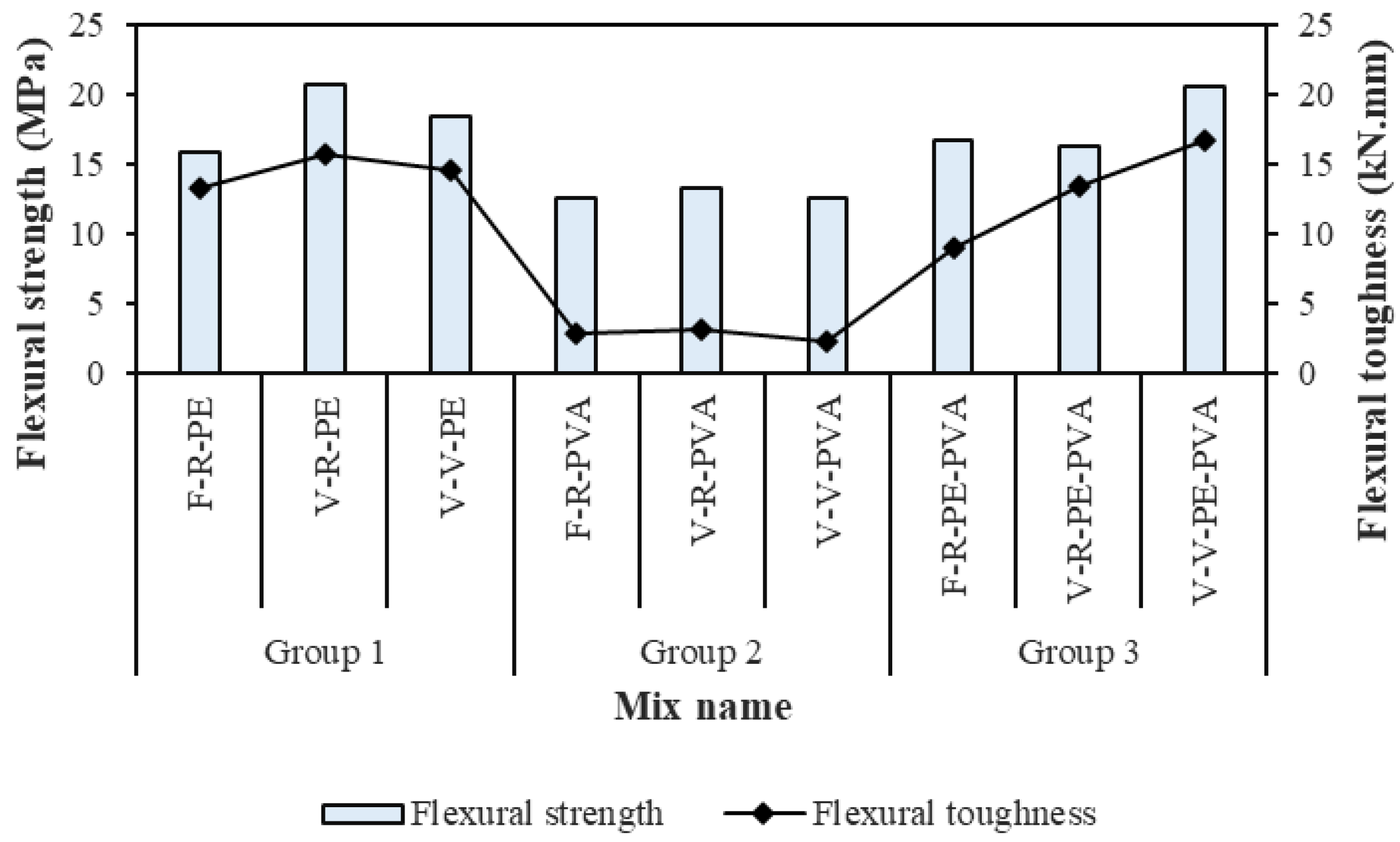
Table 4 and Figure 12 illustrate the flexural strength and toughness values for the ECC mixtures across the three studied groups. In the first group, the results indicate that replacing FA in the F-R-PE mixture with VA in the V-R-PE mixture significantly enhances flexural strength by 30%, whereas incorporating VS instead of RS in the V-V-PE mixture results in a slight decrease of 11% compared to the V-R-PE mixture. A similar trend is observed in the second group, where the V-R-PVA mixture achieves a 6% increase in flexural strength, while the V-V-PVA mixture shows a 6% decrease. Regarding the third group, both F-R-PVA and V-R-PVA mixtures exhibit nearly identical flexural strength of approximately 16.50 MPa; however, the V-V-PE-PVA mixture achieves 27% higher flexural strength compared to the RS-containing mixture. This finding aligns with the previously mentioned tensile behavior, confirming that the hybrid use of PE and PVA fibers within the volcanic matrix exerts a superior impact on the mechanical properties of ECC, effectively fulfilling the study’s objective of achieving a balanced performance between high compressive, tensile, and flexural strength without compromising the essential strain-hardening capacity of ECC when using volcanic materials as sustainable alternatives to traditional constituents. Furthermore, the toughness of the ECC mixtures follows a trend similar to that of the flexural strength. In the first group, the V-R-PE mixture achieved 18% higher toughness than the F-R-PE mixture, while the V-V-PE mixture showed a slight decrease of 8% compared to the V-R-PE mixture, with toughness values generally ranging from 13 to 15 kN.mm. In the second group, toughness values dropped significantly regardless of the matrix used, whether conventional or volcanic, ranging from 2.27 to 3.21 kN.mm, with the V-R-PVA mixture achieving the highest value of 3.21 kN.mm; this underscores the superior effectiveness of PE fibers in producing ECC with high energy absorption capacity compared to PVA fibers. In the third group, toughness increases gradually by 48% when using VA as a substitute for FA and by 24% when using VS as a substitute for RS, confirming that the synergistic use of the cementitious matrix with the two types of fibers achieves a mechanical balance in flexural behavior by providing high strength and ductility, which enables significant energy absorption, particularly in the presence of PE fibers. These results of toughness are consistent with those reported in [4].
Figure 12.
Flexural strength and toughness values of ECC mixes.
4.3. Physical Properties
4.3.1. Water Absorption
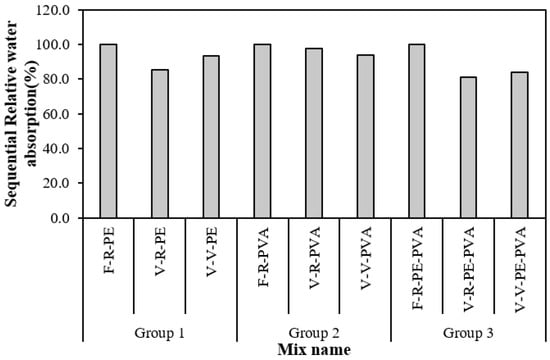
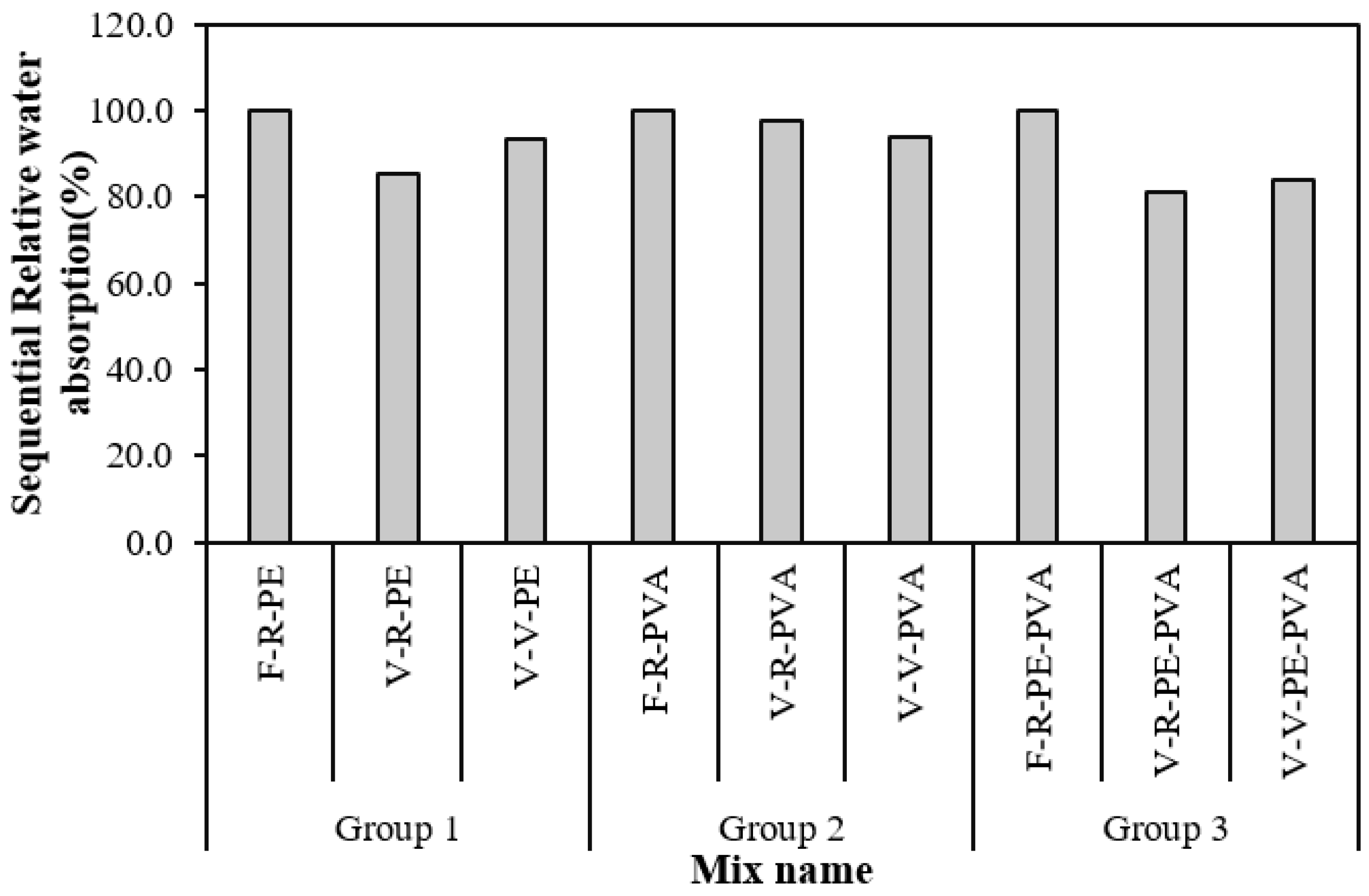
Table 5 and Figure 13 present the water absorption ratios and relative results for the ECC mixtures across the three groups, demonstrating that the inclusion of volcanic materials consistently reduces water absorption due to their strong pozzolanic activity, which creates a denser, less porous matrix with fewer capillary voids. In the first group, replacing FA entirely with VA reduces the absorption rate by 15%, while substituting RS with VS leads to a 6% reduction. This trend remains consistent in the second group (utilizing PVA fibers), where the V-R-PVA mixture shows a 3% decrease compared to the F-R-PVA mixture and the V-V-PVA mixture achieves a 6% reduction compared to the V-R-PVA mixture. Similarly, in the final group featuring a hybrid of PE and PVA fibers, the incorporation of VA and VS further decreases absorption rates by 19% and 16%, respectively. These results align closely with the compressive strength findings across all groups, confirming the effective pozzolanic activity of the volcanic materials in enhancing the durability and density of the ECC matrix.
Table 5.
Durability results of ECC mixes.
Figure 13.
Relative water absorption of ECC mixes.
4.3.2. Abrasion Test
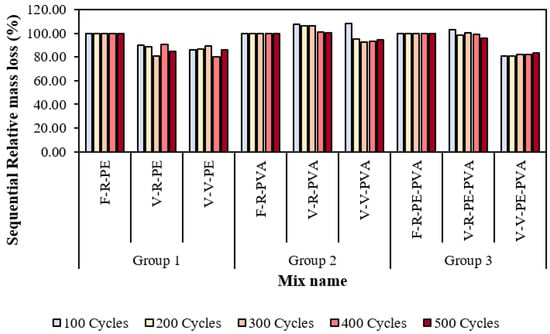
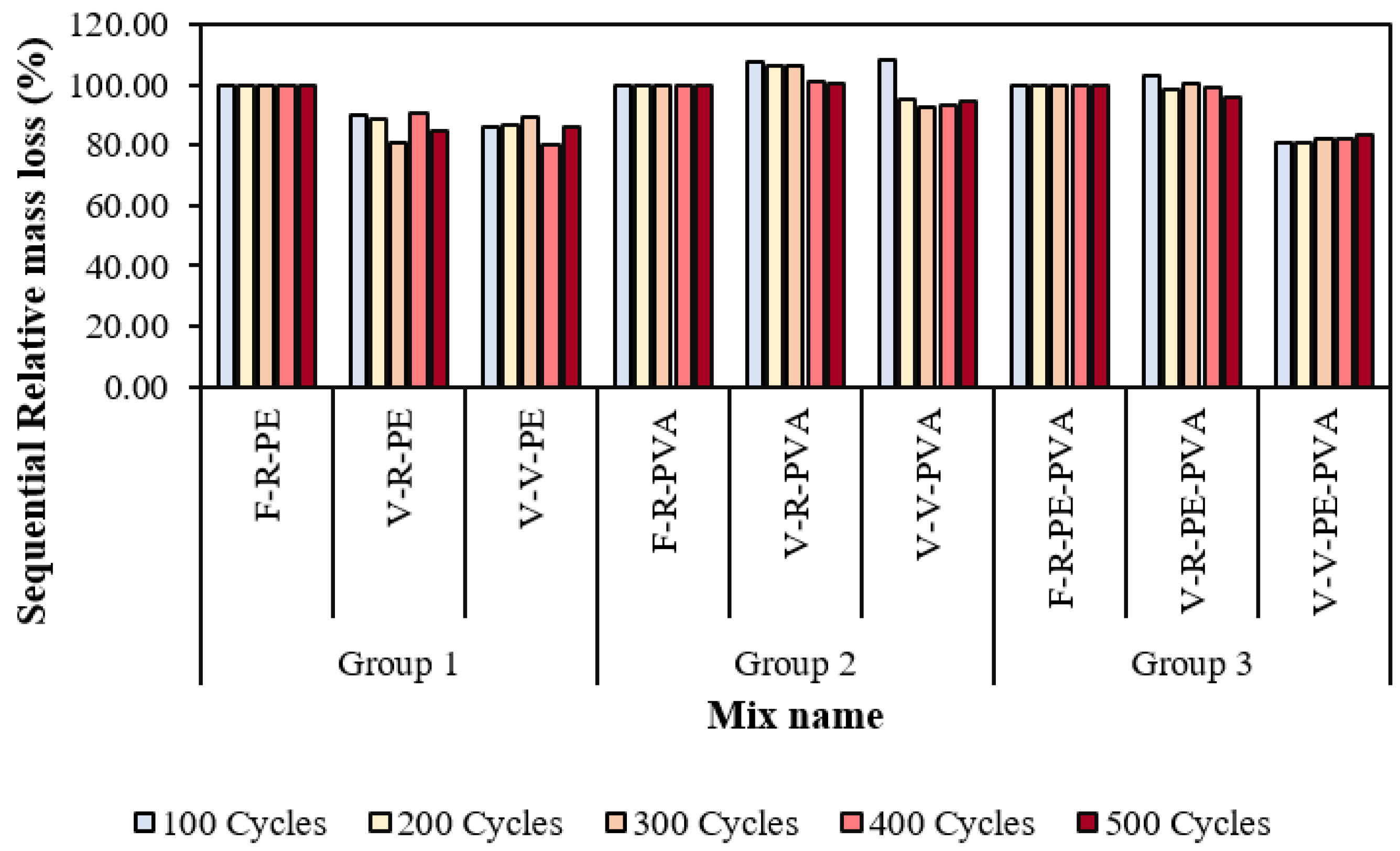
To assess the surface durability of the ECC mixtures, an abrasion resistance test was performed by determining the percentage of mass loss after subjecting the specimens to cumulative abrasion cycles ranging from 100 to 500 in a Los Angeles abrasion machine. Table 5 and Figure 14 illustrate the abrasion mass loss results for the ECC mixtures across the three groups. In the first group, it is evident that using VA as a replacement for FA reduces the mass loss rate by 11%, 11%, 19%, 9%, and 16% at 100, 200, 300, 400, and 500 cycles, respectively, due to the dense consistency and strong interfacial bond between the cementitious ECC matrix containing VA and the PE fibers [56]. When using VS as a replacement for RS, the results show that mass loss rates decrease by 14%, 13%, 11%, 20%, and 14% at 100, 200, 300, 400, and 500 cycles, respectively. This improvement is attributed to the increased strength of the cementitious matrix provided by VS, which possesses higher hardness compared to RS, enabling the well-bonded ECC mixtures of the first group to resist abrasion effectively and superiorly. Regarding the second group, it is observed that replacing FA with VA slightly increases mass loss rates in the presence of PVA fibers, with marginal increases ranging from 6% to 8%. This phenomenon may be attributed to the smoother surface texture of PVA fibers compared to PE fibers, which results in a weaker interfacial bond between the fibers and the cementitious matrix, potentially leading to increased fiber pull-out or partial debonding under abrasion. The incorporation of VS effectively offsets these effects; it improves abrasion resistance by reducing mass loss rates by 6% in mixtures containing VA and RS. Consequently, it can be concluded that the use of VS in the second group, when combined with VA and PVA fibers, enables the ECC specimens to regain their abrasion resistance, effectively compensating for the interfacial limitations and performing comparably to mixtures containing conventional FA and RS components. In the final group, utilizing a hybrid of PE and PVA fibers, the same trend was observed in the previous groups. The inclusion of VS continues to enhance the abrasion resistance of the ECC mixtures. Overall, these findings consistently demonstrate that the incorporation of volcanic materials significantly improves abrasion resistance as reported in [57], which aligns perfectly with the mechanical properties and strength characteristics observed across all ECC mixture groups.
Figure 14.
Relative abrasion mass loss of ECC mixes.
4.4. Microstructure of ECC
4.4.1. XRD and FTIR Analysis
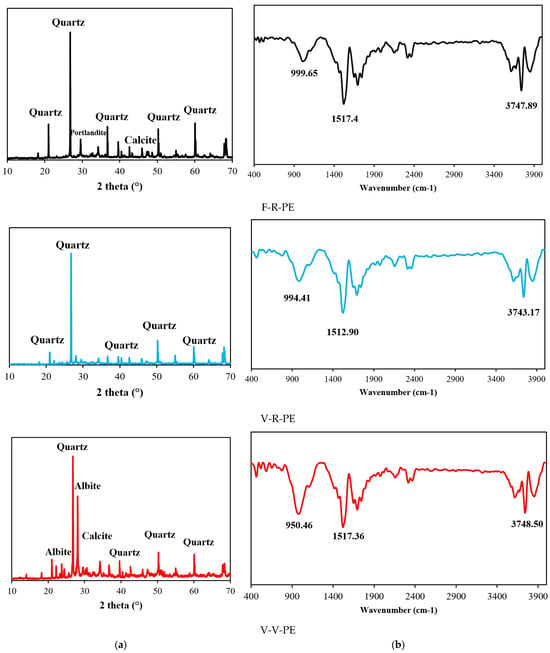
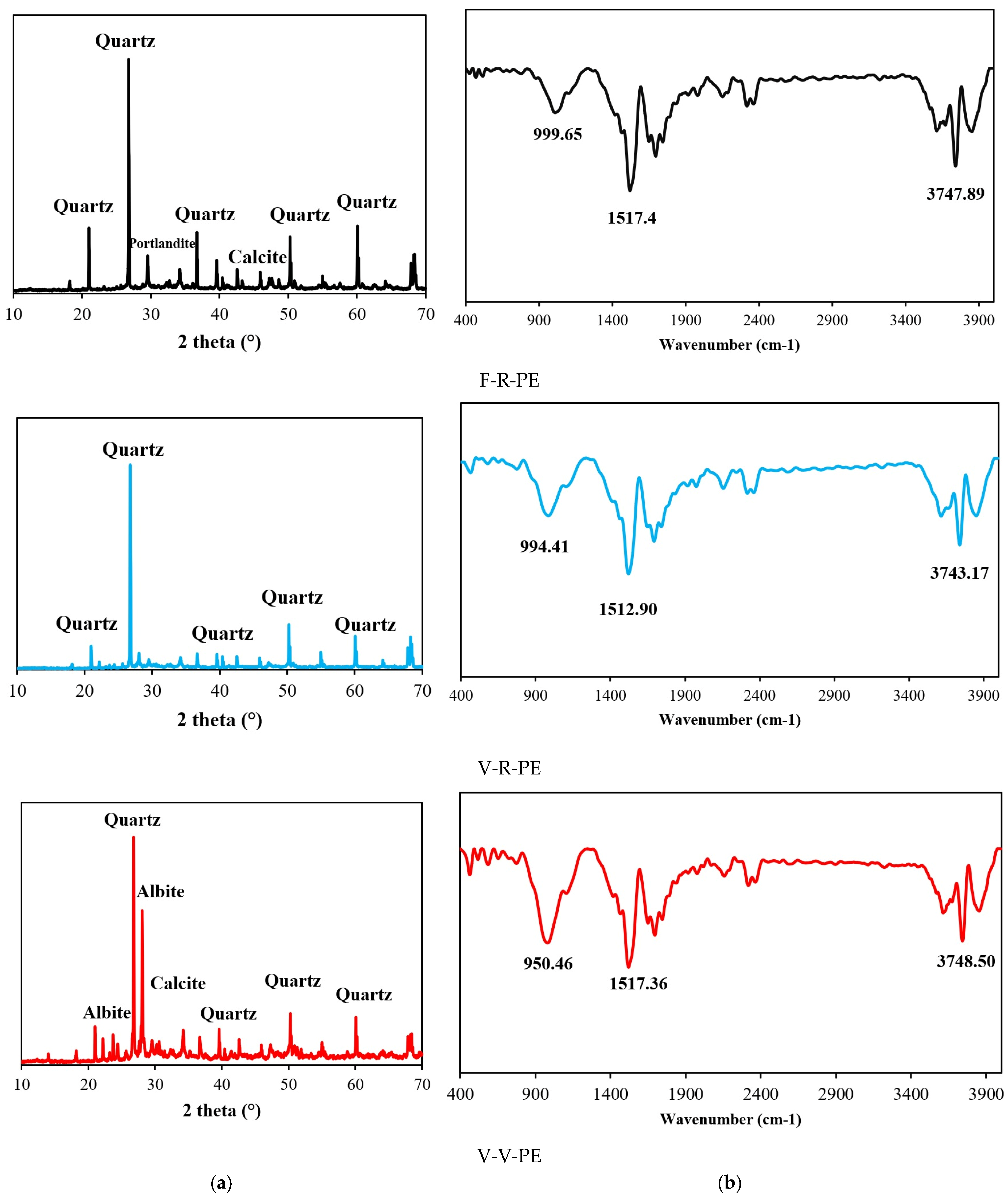
Figure 15 shows the XRD and FTIR curves for the ECC mixes of group 1, which were extracted from the compressive strength cubes tested at 28 days. The XRD patterns in Figure 15a reveal distinct mineralogical differences between the three ECC mixes, which directly influence their mechanical performance. While all samples share a strong quartz signature, the presence of Portlandite in the F-R-PE sample suggests a lower degree of pozzolanic activity, whereas the V-V-PE sample exhibits a prominent calcite peak. This calcite phase is particularly significant as it likely acts as an effective micro-filler within the cementitious matrix, refining the pore structure and increasing density. The V-V-PE mix is expected to exhibit superior compressive strength compared to the other formulations due to this optimized mineralogical composition and reduced porosity, which is aligned with the compressive strength results. In Figure 15, the FTIR analysis complements the XRD results by providing insight into the degree of polymerization of the C-S-H gel. The shift in the Si-O vibration band toward lower wavenumbers in the V-V-PE sample (950.46 cm−1) suggests a more refined and polymerized silicate network compared to the F-R-PE sample. This chemically supports the superior compressive strength observed in the V-V-PE cubes, as a higher degree of polymerization in the cementitious matrix directly correlates with improved structural density and mechanical integrity. The clear hydroxyl and surface vibration peaks observed in the 3400–3900 cm−1 region reflect the extent of cement hydration and pozzolanic reactions. The mixture V-V-PE was expected to exhibit superior compressive strength and mechanical bonding, as discussed previously in the compressive strength section. This enhanced performance is directly linked to the more intensive pozzolanic activity and formation of a dense C-S-H network, as indicated by these structural and surface chemical modifications along with improved interfacial transition zone (ITZ) bonding provided by the VS compared to the RS in the other mixtures.
Figure 15.
(a) XRD and (b) FTIR analysis of the ECC mixes of group 1.
4.4.2. SEM and EDX Analysis of ECC
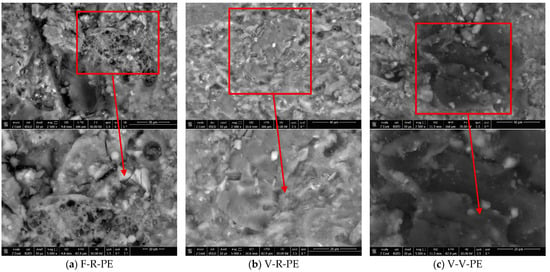
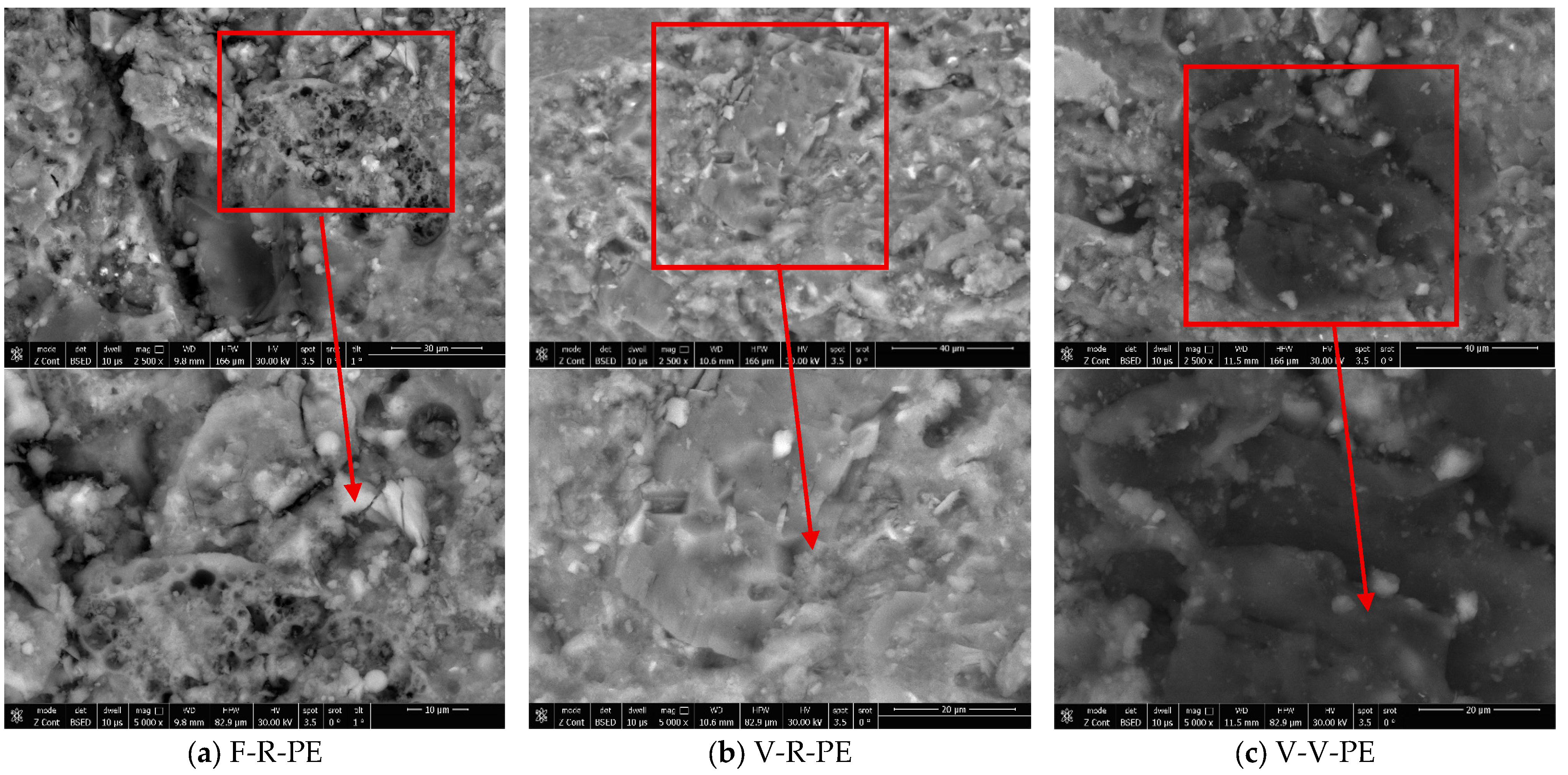
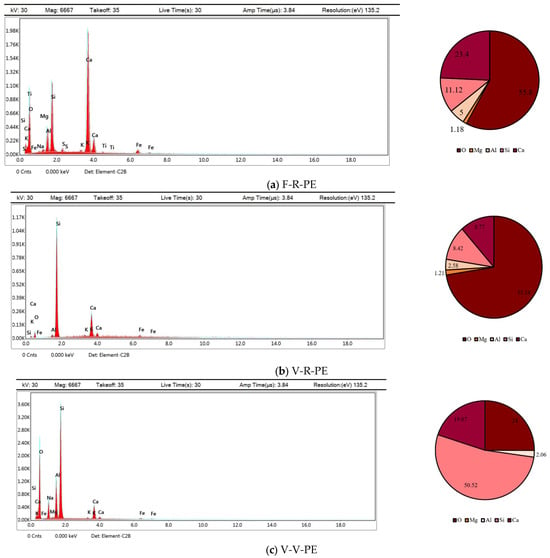
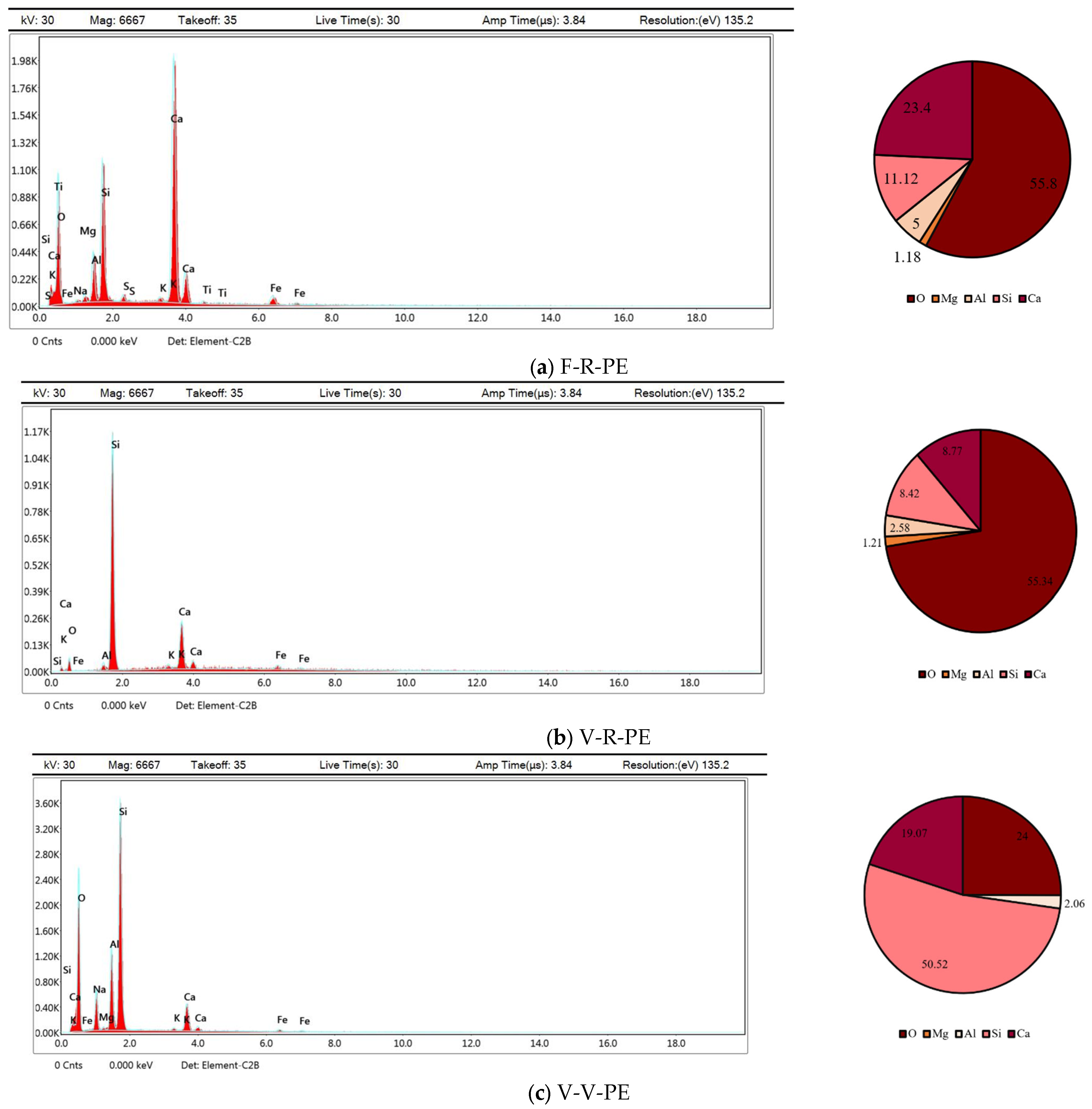
Figure 16 and Figure 17 illustrate the surface morphology generating from SEM and EDS chemical analysis of samples taken from ECC cubes after 28 days of compressive strength testing for the Group 1 mixes (PE group). The PE group was selected for the microstructure analysis because it exhibited superior performance for all mechanical properties, particularly tensile behavior, and demonstrated the most strain-hardening response. This made it the ideal candidate to investigate the interfacial bonding mechanism between these high-performance fibers and the ECC matrix, whether in traditional or volcanic-based matrices. Figure 16a shows the SEM analysis of the F-R-PE mixture, revealing some microcracks and unreacted FA particles. Figure 16b demonstrates that the V-R-PE mixture, which utilizes VA instead of FA, and exhibits a relative reduction in micro-cracking, confirming the effectiveness of VA’s pozzolanic reaction in enhancing the ECC matrix. Finally, Figure 16c, representing the V-V-PE mixture, clearly shows the complete disappearance of microcracks and more effective fiber embedding, highlighting the superior performance of the volcanic materials and their excellent interfacial bonding with the PE fibers. Figure 17 further illustrates the chemical elements present in the same mixtures to validate the strong pozzolanic activity of the VA, attributed to its key constituents, silica and alumina. The analysis reveals that the calcium-to-silica (Ca/Si) ratio for the F-R-PE mixture is approximately 5, while for the V-R-PE mixture, it is approximately 6.5. Notably, the V-V-PE mixture shows a significantly lower ratio of 2.64. This decrease in the Ca/Si ratio in this mix may be attributed to local compositional variations. This chemical shift serves as a primary explanation for the overall improvement in mechanical properties observed when utilizing volcanic materials.
Figure 16.
SEM analysis of ECC Group 1 mixes.
Figure 17.
EDX analysis of ECC Group 1 mixes.
4.5. Comparison with Previous Studies
Table 6 represented a comparison between previous studies and the current study in terms of the main binder used, main and alternative sand used, and fiber type. The results of previous studies indicated that using different types of sand, especially as a full replacement of the main sand, achieved comparable mechanical performance. According to C. [58] and G.D. Ransinchung R.N, using manufactured sand (M-sand) as a full replacement of natural river sand, using OPC/FA as a binder system and PVA fiber, increased the compressive strength of ECC up to 32%. Regarding the tensile performance of ECC, the same study indicated that using M-sand slightly increased the uniaxial tensile strength up to 12% but dropped the tensile strain from 3.54% to 2.29%. Another study by Chen et al. [59] indicated that using crumb rubber as a partial replacement of silica sand up to 40% decreased the compressive strength and uniaxial tensile strength of ECC up to 43% and 26%, respectively, but approximately increased the tensile capacity of ECC up to 57%. Regarding using glass sand as full replacement of silica sand, a study by Adesina and Das [60] achieved an enhancement in the compressive strength and uniaxial tensile strength of ECC using glass sand as a full replacement of silica sand up to 14% and 47%, respectively. Also, a previous study [61] indicated that using the recycled concrete sand slightly dropped the compressive strength and uniaxial tensile strength of 3D-printed ECC but raised the tensile capacity from 5.4% to 8.5%. The current study achieved a comparable mechanical result up to 86% MPa in the compressive strength, 6.62 MPa in the uniaxial tensile strength, and 6.13% in the tensile capacity using the volcanic materials in the presence of PE fiber.
Table 6.
Comparison of mechanical performance of ECC between previous studies and current one.
5. Limitation and Future Work of the Study
- -
- The study focused on using either VA or VS as a full replacement of FA and RS, respectively, and it is recommended to consider different ratios of VA and VS in the future work.
- -
- PE and PVA fibers were used in a specific ratio (2%) or (1% + 1%); it is recommended to assess the performance of ECC using different ratios of PE and PVA fibers.
- -
- It is also recommended to use the VA as a partial replacement of OPC and compared the results to the obtained results of the study.
- -
- For the statistical evaluation, it is recommended to make AVONA test in future work to assess the effect of using volcanic materials with the types of fibers used.
- -
- It is recommended to make large-scale ECC structural models to investigate their structural behavior and to evaluate the effectiveness of using volcanic-based ECC for repairing and retrofitting structural members.
6. Conclusions
This study investigated the viability of using volcanic materials as a total replacement for conventional river sand (RS) and fly ash (FA) in engineered cementitious composites (ECC). The experimental program incorporated two types of fibers: polyethylene (PE) and polyvinyl alcohol (PVA). The results demonstrated significant improvements in mechanical performance, durability, and microstructural characteristics. The key findings of this investigation are summarized below:
- The incorporation of volcanic sand and PVA fibers significantly reduces the workability of ECC mixtures up to 9%. This reduction is primarily driven by the high angularity of volcanic particles, which increases internal friction, and the chemical affinity of PVA fibers with the cementitious matrix.
- The inclusion of volcanic materials significantly enhances the compressive strength of ECC mixtures up to 48%, particularly after the 28-day hydration period. This improvement is primarily driven by the strong pozzolanic activity of volcanic ash, which generates additional calcium silicate hydrate (C-S-H) to densify the matrix and the superior interfacial bonding between volcanic sand and fibers.
- The study demonstrates that PE fibers provide superior tensile strain, while the integration of volcanic materials significantly boosts tensile strength through improved pozzolanic activity and matrix cohesion.
- The results also confirm that volcanic materials significantly enhance flexural strength and toughness when combined with a hybrid PE/PVA fiber system. While PE fibers remain superior for energy absorption, the synergistic interaction between volcanic components and hybrid fibers effectively optimizes the mechanical balance, demonstrating that volcanic-based ECC can achieve high strength and ductility as a sustainable alternative to traditional mixtures.
- The consistent reduction in water absorption by up to 19% confirms that volcanic materials effectively densify the ECC matrix. By reducing capillary porosity through their strong pozzolanic activity, these materials significantly improve the overall durability of the ECC mixtures.
- The inclusion of volcanic materials significantly improves the surface durability of ECC mixtures by increasing matrix hardness and densifying the interfacial transition zone against abrasion resistance, while PVA fibers may present minor challenges due to their specific surface properties.
- Microstructural analysis confirms that volcanic materials refine the ECC matrix by promoting a more uniform fiber distribution and effectively eliminating microcracks.
Author Contributions
Methodology, M.M.K.; Validation, M.M.K.; Formal analysis, M.M.K. and I.A.E.-M.; Writing—original draft, M.M.K.; Writing—review & editing, M.M.Y.E., O.Y. and I.A.E.-M.; Supervision, M.M.Y.E. and O.Y.; Project administration, O.Y.; Funding acquisition, I.A.E.-M. All authors have read and agreed to the published version of the manuscript.
Funding
This research received no external funding.
Data Availability Statement
All data used in this study are already provided within the main body of the paper.
Conflicts of Interest
The authors declare no conflict of interest.
References
- Li, P.; Huang, M.; Shang, Y.; Kuang, Y.; Xiong, G.; Tang, X. Study on mechanical properties of coarse-fine polypropylene fiber blended concrete. Buildings 2025, 15, 2971. [Google Scholar] [CrossRef] [Scilit]
- Zhou, S.; Jiang, Z.; Ou, Q.; Liu, J.; Wang, C. Analysis on flexural toughness of steel fiber reinforced concrete based on acoustic emission and digital image correlation techniques. Constr. Build. Mater. 2025, 492, 143039. [Google Scholar] [CrossRef] [Scilit]
- Helal, K.A.; Tahwia, A.M.; Youssf, O. Performance of Eco-Friendly ECC Made of Pre-treated Crumb Rubber and Waste Quarry Dust. J. Build. Eng. 2024, 97, 110820. [Google Scholar] [CrossRef] [Scilit]
- Chen, B.; Hou, L.; Yan, R.G.; Zhang, X.Y.; Meng, H.; Li, J.T. Flexural Performance and Flexural Toughness Evaluation Method of High-Strength Engineered Cementitious Composites. Buildings 2025, 15, 4003. [Google Scholar] [CrossRef] [Scilit]
- Youssf, O.; Eltawil, K.A.; Elshikh, M.M.Y.; Keshta, M.M. Performance of High Strength Fiber Reinforced Mortar Made with Ceramic Powder, Metakaolin, and Magnetized Water. Infrastructures 2025, 10, 124. [Google Scholar] [CrossRef] [Scilit]
- Zheng, Y.; Lv, X.; Hu, S.; Zhuo, J.; Wan, C.; Liu, J. Mechanical properties and durability of steel fiber reinforced concrete: A review. J. Build. Eng. 2024, 82, 108025. [Google Scholar] [CrossRef] [Scilit]
- Manso-Morato, J.; Hurtado-Alonso, N.; Revilla-Cuesta, V.; Skaf, M.; Ortega-López, V. Fiber-Reinforced concrete and its life cycle assessment: A systematic review. J. Build. Eng. 2024, 94, 110062. [Google Scholar] [CrossRef] [Scilit]
- Ding, L.; Lin, Z.; Xu, C.; Xu, H.; Li, B.; Shen, J. Study on the hybrid effect of basalt and polypropylene fibers on the mechanical properties of concrete. Buildings 2025, 15, 3197. [Google Scholar] [CrossRef] [Scilit]
- Chen, W.; Liang, L.; Jiang, F.; Tang, Z.; Sun, X.; Yu, J.; Li, V.C.; Yu, K. New opportunity: Materials genome strategy for engineered cementitious composites (ECC) design. Cem. Concr. Compos. 2025, 159, 106009. [Google Scholar] [CrossRef] [Scilit]
- Xu, S.; Li, W.; Wang, X.; Zhang, H.; Liu, J.; Jiang, H.; Wang, X.; Ma, H.; Shi, J.; Yu, Z.; et al. The mechanical properties and durability of the pe-bfrp hybrid-fiber-engineered cementitious composite (ECC). Buildings 2025, 15, 1860. [Google Scholar] [CrossRef] [Scilit]
- Hu, Z.; Elchalakani, M.; Yehia, S.; Ran, H.; Sadakkathulla, M.A.; Guo, X. Engineered cementitious composite (ECC) strengthening of reinforced concrete structures: A state-of-the-art review. J. Build. Eng. 2024, 86, 108941. [Google Scholar] [CrossRef] [Scilit]
- Helal, K.A.; Tahwia, A.M.; Youssf, O. Behavior of functionally graded concrete beams made of eco-friendly engineered cementitious composites. Innov. Infrastruct. Solut. 2025, 10, 287. [Google Scholar] [CrossRef] [Scilit]
- Singh, M.; Saini, B.; Chalak, H.D. Performance and composition analysis of engineered cementitious composite (ECC)–A review. J. Build. Eng. 2019, 26, 100851. [Google Scholar] [CrossRef] [Scilit]
- Yuan, F.; Pan, J.; Leung, C.K.Y. Flexural behaviors of ECC and concrete/ECC composite beams reinforced with basalt fiber-reinforced polymer. J. Compos. Constr. 2013, 17, 591–602. [Google Scholar] [CrossRef] [Scilit]
- Helal, K.A.; Tahwia, A.M.; Youssf, O. Assessment of the efficiency of hybrid basalt fibre sustainable ECC incorporating industrial waste materials. Constr. Build. Mater. 2025, 461, 139933. [Google Scholar] [CrossRef] [Scilit]
- Yu, P.; Yao, J.; He, S.; Li, Z. Effects of different fiber types and curing methods on the mechanical performance of seawater coral sand engineered cementitious composites. J. Build. Eng. 2025, 105, 112450. [Google Scholar] [CrossRef] [Scilit]
- Li, V.C. From micromechanics to structural engineering the design of cementitious composites for civil engineering applications. Doboku Gakkai Ronbunshu 1993, 1993, 1–12. [Google Scholar]
- Li, V.C.; Mishra, D.K.; Wu, H.C. Matrix design for pseudo-strain-hardening fibre reinforced cementitious composites. Mater. Struct. 1995, 28, 586–595. [Google Scholar] [CrossRef] [Scilit]
- Eltawil, K.A.; Keshta, M.M.; Elshikh, M.M.Y.; El-Demerdash, W.E.; Youssf, O. Performance of Engineered Cementitious Composites Containing High Volume of Ceramic Powder and Magnetized Water. Hybrid. Adv. 2025, 8, 100371. [Google Scholar] [CrossRef] [Scilit]
- Yu, K.; Wang, Y.; Yu, J.; Xu, S. A strain-hardening cementitious composites with the tensile capacity up to 8%. Constr. Build. Mater. 2017, 137, 410–419. [Google Scholar] [CrossRef] [Scilit]
- Yu, K.; Li, L.; Yu, J.; Wang, Y.; Ye, J.; Xu, Q. Direct tensile properties of engineered cementitious composites: A review. Constr. Build. Mater. 2018, 165, 346–362. [Google Scholar] [CrossRef] [Scilit]
- Liu, L.; Xiao, J.; Wu, Z. The effect of fiber content on the static and dynamic performance of PE-ECC. Case Stud. Constr. Mater. 2024, 20, e03041. [Google Scholar] [CrossRef] [Scilit]
- Fu, C.; Chen, M.; Guo, R.; Qi, R. Green-engineered cementitious composite production with high-strength synthetic fiber and aggregate replacement. Materials 2022, 15, 3047. [Google Scholar] [CrossRef] [Scilit] [PubMed]
- Ma, H.; He, L.; Wu, C. Development of Reactive MgO Cement-Silica Fume–Based Strain-Hardening Engineered Cementitious Composite. J. Mater. Civ. Eng. 2023, 35, 04023354. [Google Scholar] [CrossRef] [Scilit]
- Handayani, A.F.; Rosyidah, D.H.; Sulaksitaningrum, R.; Susanto, P.B.; Umniati, S. Andesite waste powder as mineral admixture in concrete: A Review. In E3S Web of Conferences; EDP Sciences: Les Ulis, France, 2023; Volume 445, p. 01030. [Google Scholar]
- Heriyadi, B.; Nata, R.A.; Tanjung, A.A.; Fadhilah. The Impact of Microwave Treatment on the Andesite Rock Mechanical Properties. In Journal of Physics: Conference Series; IOP Publishing: Bristol, UK, 2023; Volume 2582, p. 012023. [Google Scholar]
- Keshta, M.M.; Elshikh, M.M.Y.; Abd Elrahman, M.; Youssf, O. Utilizing of magnetized water in enhancing of volcanic concrete characteristics. J. Compos. Sci. 2022, 6, 320. [Google Scholar] [CrossRef] [Scilit]
- Kupwade-Patil, K.; De Wolf, C.; Chin, S.; Ochsendorf, J.; Hajiah, A.E.; Al-Mumin, A.; Büyüköztürk, O. Impact of Embodied Energy on materials/buildings with partial replacement of ordinary Portland Cement (OPC) by natural Pozzolanic Volcanic Ash. J. Clean. Prod. 2018, 177, 547–554. [Google Scholar] [CrossRef] [Scilit]
- Hamada, H.M.; Abed, F.; Beddu, S.; Humada, A.M.; Majdi, A. Effect of Volcanic Ash and Natural Pozzolana on mechanical properties of sustainable cement concrete: A comprehensive review. Case Stud. Constr. Mater. 2023, 19, e02425. [Google Scholar] [CrossRef] [Scilit]
- Al Asmari, A.F.; Bashir, M.I.; Farooq, F.; Asif, U. Investigating the effect of locally available volcanic ash on mechanical and microstructure properties of concrete. Rev. Adv. Mater. Sci. 2025, 64, 20240085. [Google Scholar] [CrossRef] [Scilit]
- Sebayang, M.D. Analyze the proportion of volcanic ash of Sinabung volcano at the most optimum to get the compressive strength and tensile strength of concrete. In IOP Conference Series: Materials Science and Engineering; IOP Publishing: Bristol, UK, 2020; Volume 725, p. 012044. [Google Scholar]
- Karolina, R.; Panatap Simanjuntak, M. The influence of using volcanic ash and lime ash as filler on compressive strength in self compacting concrete. In IOP Conference Series: Earth and Environmental Science; IOP Publishing: Bristol, UK, 2018; Volume 126, p. 012038. [Google Scholar]
- Hossain, K.M.A.; Lachemi, M. Strength, durability and micro-structural aspects of high performance volcanic ash concrete. Cem. Concr. Res. 2007, 37, 759–766. [Google Scholar] [CrossRef] [Scilit]
- Abdullah, G.M.; Alshaikh, I.M.; Zeyad, A.M.; Magbool, H.M.; Bakar, B.A. The effect of openings on the performance of self-compacting concrete with volcanic pumice powder and different steel fibers. Case Stud. Constr. Mater. 2022, 17, e01148. [Google Scholar] [CrossRef] [Scilit]
- Al-Fadala, S.; Chakkamalayath, J.; Al-Bahar, S.; Al-Aibani, A.; Ahmed, S. Significance of performance based specifications in the qualification and characterization of blended cement using volcanic ash. Constr. Build. Mater. 2017, 144, 532–540. [Google Scholar] [CrossRef] [Scilit]
- Hu, W.; Zhu, H.; An, Y.; Bhutta, A.; Zapsas, G.; Nasser, W.; Ellis, B.R.; Li, V.C. Development of volcanic ash based self-stressing engineered cementitious composites (ECC). Cem. Concr. Compos. 2026, 168, 106468. [Google Scholar] [CrossRef] [Scilit]
- Zhu, H.; Hu, W.H.; Mehthel, M.; Villette, T.; Vidal, O.S.; Nasser, W.N.; Li, V.C. Engineered cementitious composites (ECC) with a high volume of volcanic ash: Rheological, mechanical, and micro performance. Cem. Concr. Compos. 2023, 139, 105051. [Google Scholar] [CrossRef] [Scilit]
- El-Desoky, H.; Abd El-Hafez, N.; Khalil, A.; Arafat, A.; Hasan, M.G.; Youssef, T. The geology, petrography, and geochemistry of Egyptian Dokhan volcanics: A potential source for construction aggregate. Minerals 2023, 13, 635. [Google Scholar] [CrossRef] [Scilit]
- El-Desoky, H.M.; Khalil, A.E. Petrography and geochemistry of Basic Dokhan Volcanics from the Eastern Desert of Egypt and their use as aggregates in concrete mixes. Arab. J. Geosci. 2015, 8, 6791–6809. [Google Scholar] [CrossRef] [Scilit]
- Elsheikh, M.Y.; Elshami, A.A.; Mohsen, I.A. Green Concrete Utilizing Andesite and Rhyolite Aggregate. Int. J. Civ. Eng. Technol. 2020, 11, 1–15. [Google Scholar] [CrossRef] [Scilit]
- Yu, K.; Zhu, H.; Hou, M.; Li, V.C. Self-healing of PE-fiber reinforced lightweight high-strength engineered cementitious composite. Cem. Concr. Compos. 2021, 123, 104209. [Google Scholar] [CrossRef] [Scilit]
- Hou, M.J.; Xu, K.; Monteiro, P.J.M.; Li, V.C. Rubber particle bridging effect on crack width control of low carbon Engineered Cementitious Composites (ECC). Cem. Concr. Compos. 2023, 140, 105106. [Google Scholar] [CrossRef] [Scilit]
- Guo, J.; Shi, J.; Wang, L.; Huang, C.; Tao, X.; Li, C.; Chen, Z. Evaluation of axial compressive and tensile properties of PE/PVA hybrid fiber reinforced strain-hardening geopolymer composites. Materials 2024, 17, 4356. [Google Scholar] [CrossRef] [Scilit] [PubMed]
- ASTM C1437; Standard Test Method for Flow of Hydraulic Cement Mortar. ASTM International: Washington, DC, USA, 2015.
- ASTM C109; Standard Test Method for Compressive Strength of Hydraulic Cement Mortars. ASTM International: Washington, DC, USA, 2014.
- JSCE. Recommendations for Design and Construction of High Performance Fiber Reinforced Cement Composites with Multiple Fine Cracks; Japan Society of Civil Engineers: Tokyo, Japan, 2008. [Google Scholar]
- ASTM C 349–08; Standard Test Method for Flexural Strength of Hydraulic-Cement Mortars. ASTM International: West Conshohocken, PA, USA, 2021. [CrossRef] [Scilit]
- ASTM C642-13; Test Method for Density, Absorption, and Voids in Hardened Concrete. ASTM International: Washington, DC, USA, 2022. [CrossRef] [Scilit]
- ASTM C1747; Standard Test Method for Determining Potential Resistance to Degradation of Pervious Concrete by Impact and Abrasion. ASTM: West Conshohocken, PA, USA, 2013.
- Kong, H.J.; Bike, S.G.; Li, V.C. Constitutive rheological control to develop a self-consolidating engineered cementitious composite reinforced with hydrophilic poly (vinyl alcohol) fibers. Cem. Concr. Compos. 2003, 25, 333–341. [Google Scholar] [CrossRef] [Scilit]
- Bawab, J.; El-Dieb, A.; El-Hassan, H.; Khatib, J. Effect of different activation techniques on the engineering properties of cement-free binder containing volcanic ash and calcium carbide residue. Constr. Build. Mater. 2023, 408, 133734. [Google Scholar] [CrossRef] [Scilit]
- Nguyễn, H.H.; Nguyễn, P.H.; Lương, Q.H.; Meng, W.; Lee, B.Y. Mechanical and autogenous healing properties of high-strength and ultra-ductility engineered geopolymer composites reinforced by PE-PVA hybrid fibers. Cem. Concr. Compos. 2023, 142, 105155. [Google Scholar] [CrossRef] [Scilit]
- Wang, Y.; Liu, F.; Yu, J.; Dong, F.; Ye, J. Effect of polyethylene fiber content on physical and mechanical properties of engineered cementitious composites. Constr. Build. Mater. 2020, 251, 118917. [Google Scholar] [CrossRef] [Scilit]
- Gao, X.; Li, W.; Ke, L.; Wang, P.; Wei, J.; Zhong, Y.; Wu, H.; Zhou, Y. Effects of saline contents on tensile behavior and fiber-matrix interaction in seawater sea-sand engineered cementitious composite (SS-ECC). Constr. Build. Mater. 2025, 467, 140306. [Google Scholar] [CrossRef] [Scilit]
- Jiang, Z.; Zhu, Z.; Fang, D.; Fu, C.; Li, S.; Jing, Y. Multi-Dimensional Assessment of Low-Carbon Engineering Cement-Based Composites Based on Rheological, Mechanical and Sustainability Factors. Materials 2026, 19, 424. [Google Scholar] [CrossRef] [Scilit] [PubMed]
- Zeyad, A.M.; Khan, A.H.; Tayeh, B.A. Durability and strength characteristics of high-strength concrete incorporated with volcanic pumice powder and polypropylene fibers. J. Mater. Res. Technol. 2020, 9, 806–818. [Google Scholar] [CrossRef] [Scilit]
- Eken, M. Mechanical and durability properties of concrete with volcanic rock additives. J. Mater. Civ. Eng. 2023, 35, 04023196. [Google Scholar] [CrossRef] [Scilit]
- Chandrasekhar, C.; Ransinchung, G.D. Assessment of interface characteristics and durability aspects of manufactured sand (M-sand) in engineered cementitious composites. J. Build. Eng. 2024, 91, 109705. [Google Scholar] [CrossRef] [Scilit]
- Chen, Y.; Lu, C.; Zhang, Z.; Abdalla, J.A.; Hawileh, R.A.; Zhang, X. Multiple-scaled investigations on mechanical properties of medium-early-strength PVA-ECC with recycled tire crumb rubber incorporated. Case Stud. Constr. Mater. 2025, 23, e04931. [Google Scholar] [CrossRef] [Scilit]
- Adesina, A.; Das, S. Mechanical performance of engineered cementitious composite incorporating glass as aggregates. J. Clean. Prod. 2020, 260, 121113. [Google Scholar] [CrossRef] [Scilit]
- Bai, M.; Wu, Y.; Xiao, J.; Ding, T.; Yu, K. Workability and hardened properties of 3D printed engineered cementitious composites incorporating recycled sand and PE fibers. J. Build. Eng. 2023, 71, 106477. [Google Scholar] [CrossRef] [Scilit]

Disclaimer/Publisher’s Note: The statements, opinions and data contained in all publications are solely those of the individual author(s) and contributor(s) and not of MDPI and/or the editor(s). MDPI and/or the editor(s) disclaim responsibility for any injury to people or property resulting from any ideas, methods, instructions or products referred to in the content. |
© 2026 by the authors. Licensee MDPI, Basel, Switzerland. This article is an open access article distributed under the terms and conditions of the Creative Commons Attribution (CC BY) license.