


Abstract
In this work the electrodeposition of phenol, polyhydroxy phenols (resorcinol, phloroglucinol, pyrogallol), phenylphenols, naphthols, dimethoxybenzenes, N,N-diphenylguanidine, N,N-diphenylurea, N,N-diphenylthiourea, and 2,2′-dihydroxy-4,4′-dimethoxybenzophenone was studied in acetylacetone and 3,3-dimethyl-2,4-pentanedione solvents. These solvents originate from multiple families and their electrochemistry may differ significantly and have different interactions with the solvent molecules. Deposition of polymers of all of the studied compounds was accomplished by using cyclic voltammetry within the range where anodic oxidation of monomers occurs, and some of the organic layers were visible to the naked eye; however, the strength of deactivation differed remarkably and in most cases this fact was reflected by the tendency of peak heights obtained in the subsequent voltammograms. Complementary 1H NMR spectroscopic experiments were needed for N,N′-diphenylguanidine and the other carbonic acid derivatives as their solutions prepared with acetylacetone became yellow with different rates, but no sign of chemical reaction was detected. Scanning electron micrographs revealed the formation of thicker layers in 3,3-dimethyl-2,4-pentanedione, indicating the influence of the carbon–carbon double bond in the dominant enol form of acetylacetone. In the latter solvent the double bond resulted in some copolymers and modified the polymer structure with increased solubility. Generally, an unusual tendency in anodic peak currents showed the development of highly porous layers which were characterized by no tendency in peak current decrease.
1. Introduction
Acetylacetone (2,4-pentanedione) has been extensively studied in coordination chemistry as it contributes to the formation of stable metal complexes. Its role in metal electrodeposition and dissolution is therefore based on its strong coordinating ability. On the other hand, acetylacetone is a reactant in many organic syntheses due to the active methylene group. As a nucleophile in aqueous solutions it reacts with catechols in Michael addition reactions yielding the corresponding benzofurans during electrooxidation [1]. Certain benzofurans can be synthesized in a similar way from dihydroxybenzoic acids [2].
Electrodeposition of organic monomers has been studied for several decades as they can form coatings upon electrochemical oxidation with diverse physicochemical properties, but this also depends on the conditions. The insulating films are also very attractive when immobilized on electrodes through secondary interactions. The applications of the as-modified electrodes cover a lot of areas and one of the most important ones is the utilization of permselectivity in electroanalytical procedures. Usually they have a somewhat hydrophobic nature, and accumulation phenomena may improve the sensitivity. The fundamental process is the electrolytic generation of the corresponding radicals, radical cations or radical anions and the subsequent coupling reactions with each other or with unreacted monomers, leading to polymer growth. The conductivity properties are mainly determined by the monomer but the composition of the electrolysis solution can highly influence them. The most popular is the family of phenols, and numerous attempts have been made in organic solvents. In these reactions acetonitrile is one of the most popular solvents mainly due to its relatively high chemical inertness and stability within a wide potential window. Phenols serve as appropriate monomers, especially in aqueous environments, for the creation of the corresponding layer, which can be characterized by high compactness [3,4].
In the literature no results can be found where acetylacetone was studied as a solvent in the electropolymerization of organic monomers. As acetylacetone has a moderate dielectric constant, the liquid is promising for electrochemical investigations of electroactive compounds as some earlier works mentioned above have verified. It has a carbon-carbon double bond in one of its tautomer form (Scheme 1). Therefore the study of multiple polymerizable compounds in acetylacetone is the focus of this work.
Scheme 1.
Enol-oxo tautomerization of acetylacetone.
As the derivative 3,3-dimethyl-2,4-pentanedione (3324-PD) is not able to undergo enol-oxo tautomerization due to the lack of active hydrogen atoms between the two oxo groups, its performance will be compared with that of acetylacetone as a solvent in electrochemical studies with emphasis on electropolymerization reactions. Similarly to other unsaturated solvents like mesityl oxide the enol form of acetylacetone seems to be able to insert into the forming polymer chains, thus enabling copolymerization.
2. Materials and Methods
The solvents were acetylacetone and 3,3-dimethyl-2,4-pentanedione, and the solid chemicals were analytical grade and used as received. The supporting electrolyte was tetrabutylammonium perchlorate (TBAP) in all electrochemical studies in non-aqueous solvents and pH = 7 phosphate buffer in aqueous systems. A platinum wire counter electrode, a silver wire reference electrode and a 1 mm diameter disk-shaped platinum working electrode were used for carrying out the experiments, and they were all from eDAQ Pty Ltd., Denistone East, Australia. Before all experiments the surface of the platinum working electrode was cleaned by using a polishing cloth immersed with aqueous suspension of alumina (eDAQ, average particle size 0.3 μm). This step was followed by thorough washing with tap water and a final wash with distilled water. To prevent the introduction of water into the non-aqueous solutions, washing with dry acetone was applied. They were connected to a potentiostat (Dropsens, Oviedo, Spain). The NMR spectra were recorded on a Bruker Avance III Ascend 500 system (Bruker BioSpin Corp., Karslruhe, Germany) operated at 500 MHz in CDCl3 or DMSO-d6 at 298 K. A scanning electron micrograph was used for investigating deposit morphology with a scanning electron microscope (Jeol JSM-IT500HR (Jeol, Tokyo, Japan)) at the desired magnification.
3. Results
3.1. Redox Behavior of Solvents
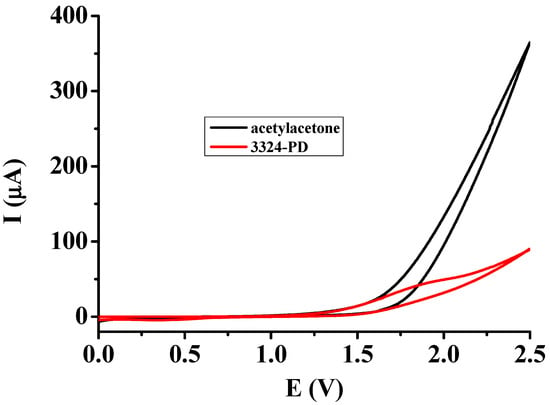
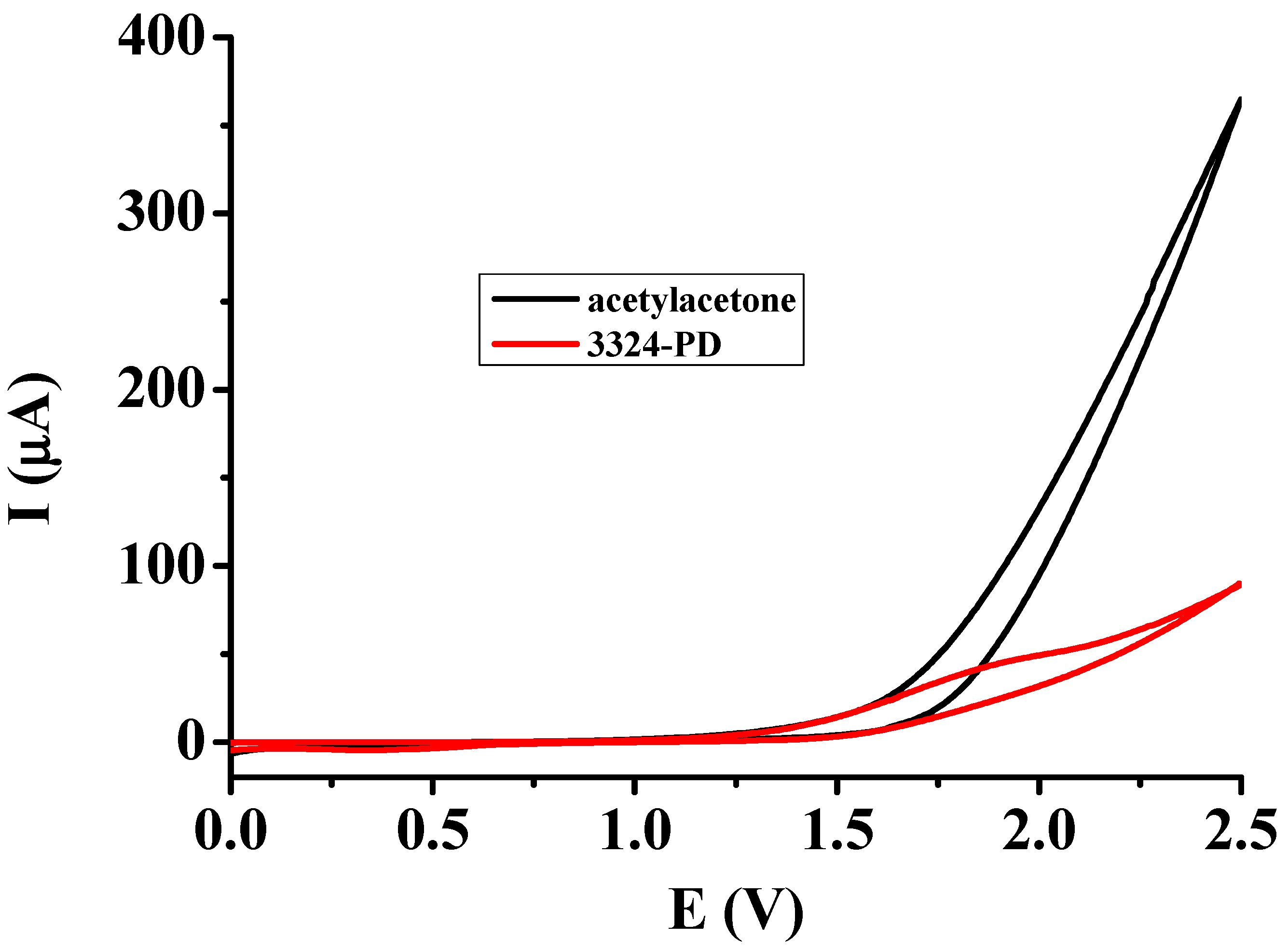
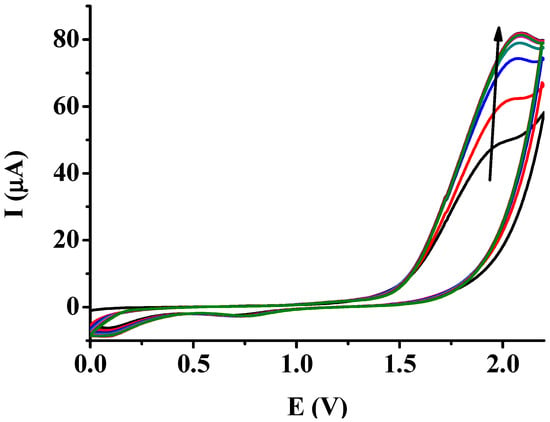
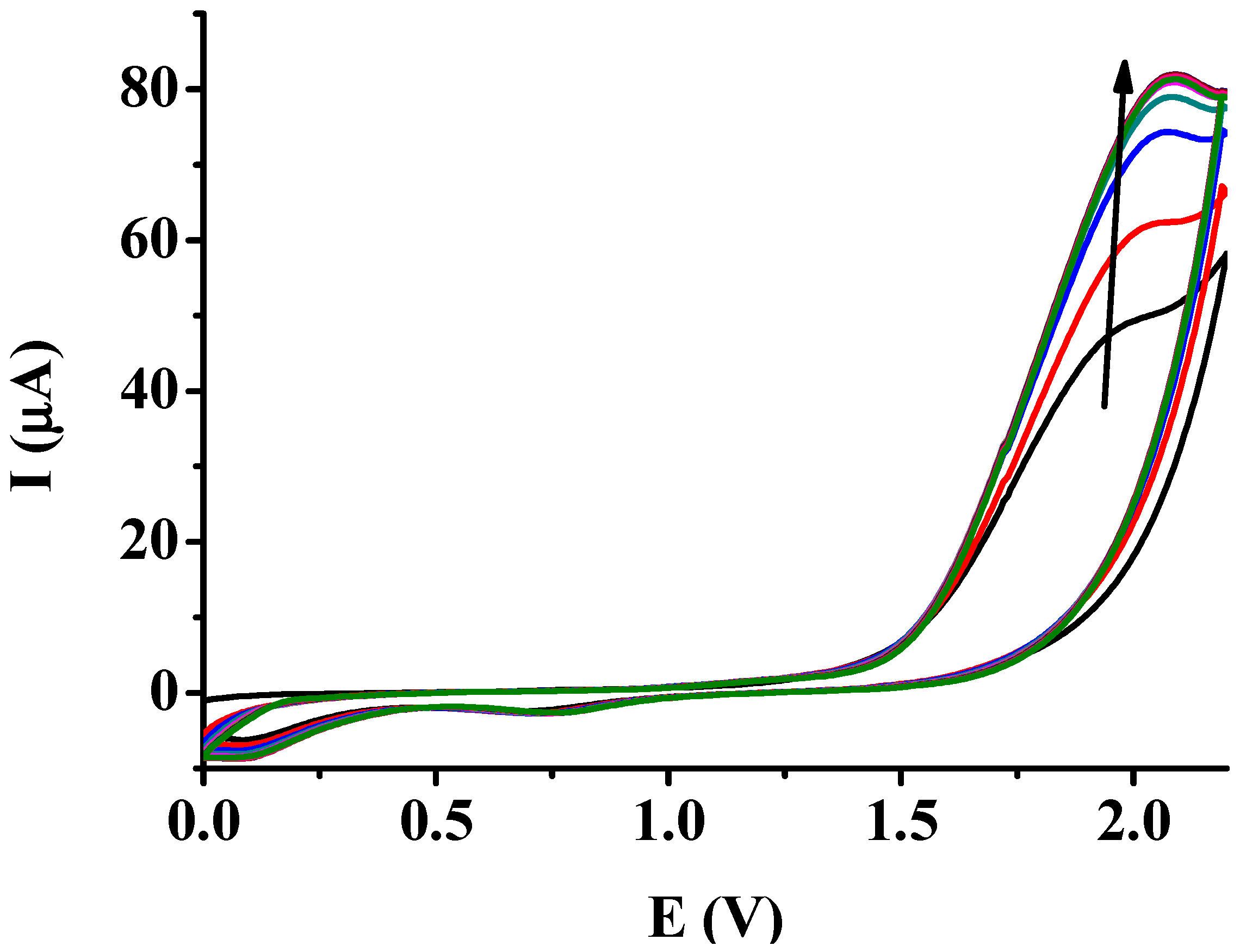
When assessing whether a solvent is suitable for voltammetric investigations its electrochemical stability should be studied first. Our interest was restricted to the potential range between 0 and 2.5 V due to anodic electropolymerization reactions taking place within this range, so the two studied solvents were examined in this potential window. Figure 1 shows the cyclic voltammetric curves of the two solvents on a platinum electrode with only the supporting electrolyte dissolved in them and indicates that these organic compounds start to oxidize around 1.7 V, also showing that some interference may occur during the electrooxidation of compounds having higher oxidation potential. There are numerous monomers which oxidize in non-aqueous solvents at something below 2 V, especially if they bear electron withdrawing groups, and no such compounds were chosen here. There is a remarkable difference in the magnitudes of the currents as acetylacetone has a higher current enhancement. This highlights the substitution of active hydrogens by methyl groups and that oxidation occurs on the active methylene groups.
Figure 1.
Cyclic voltammogram recorded in acetylacetone (black curve) and 3324-PD (red curve) with a platinum electrode (v = 0.1 V/s, supporting electrolyte 0.1 M TBAP).
In order to investigate how the selected monomers can be electrochemically oxidized in the two studied solvents, ten cyclic voltammograms were taken immediately after each other, mainly between 0 and 2 V, with a 0.1 V/s scan rate. The recording of the ten voltammetric curves was advantageous as useful conclusions can be made from the tendency of decline in the anodic peak heights, which may change in different ways to commonly used solvents.
3.2. Phenol and Polyhydroxy Phenols
One of the most widely studied organic monomers in the viewpoint of deposit preparation is phenol, which has also been polymerized in numerous non-aqueous solvents. The general experience is that phenol forms a blocking insulating layer on electrodes in each solvent, forming poly(phenylene oxide) [5,6]. The behavior of monohydroxy phenols does not differ significantly in aqueous media but the substituted ones have a weak susceptibility to fouling in organic solvents within a wide concentration range [7].
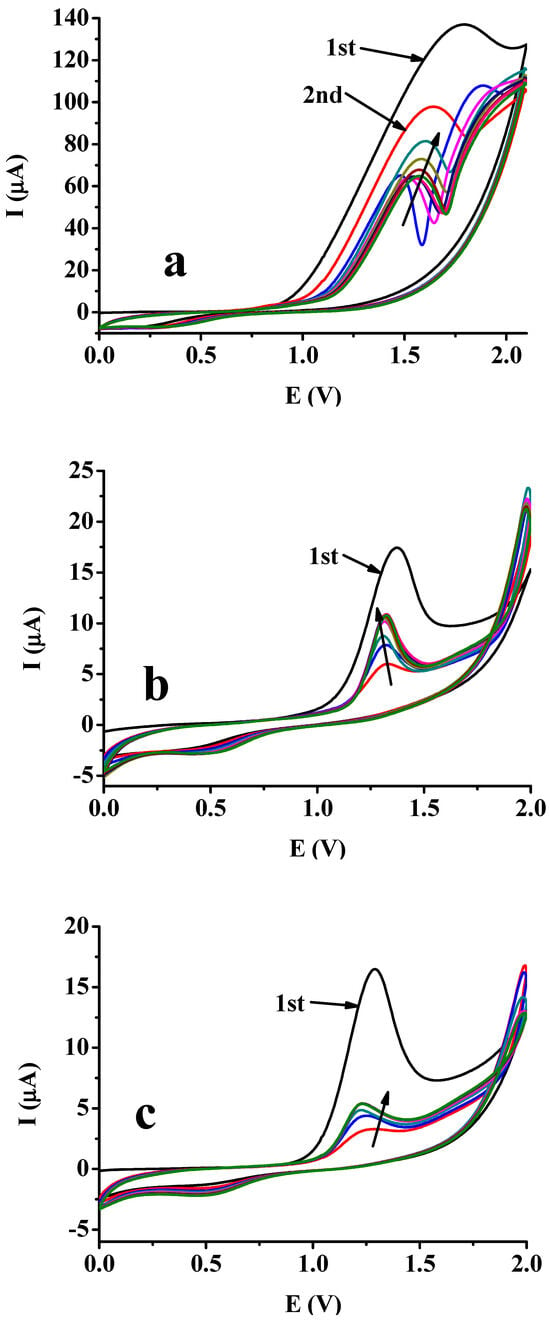
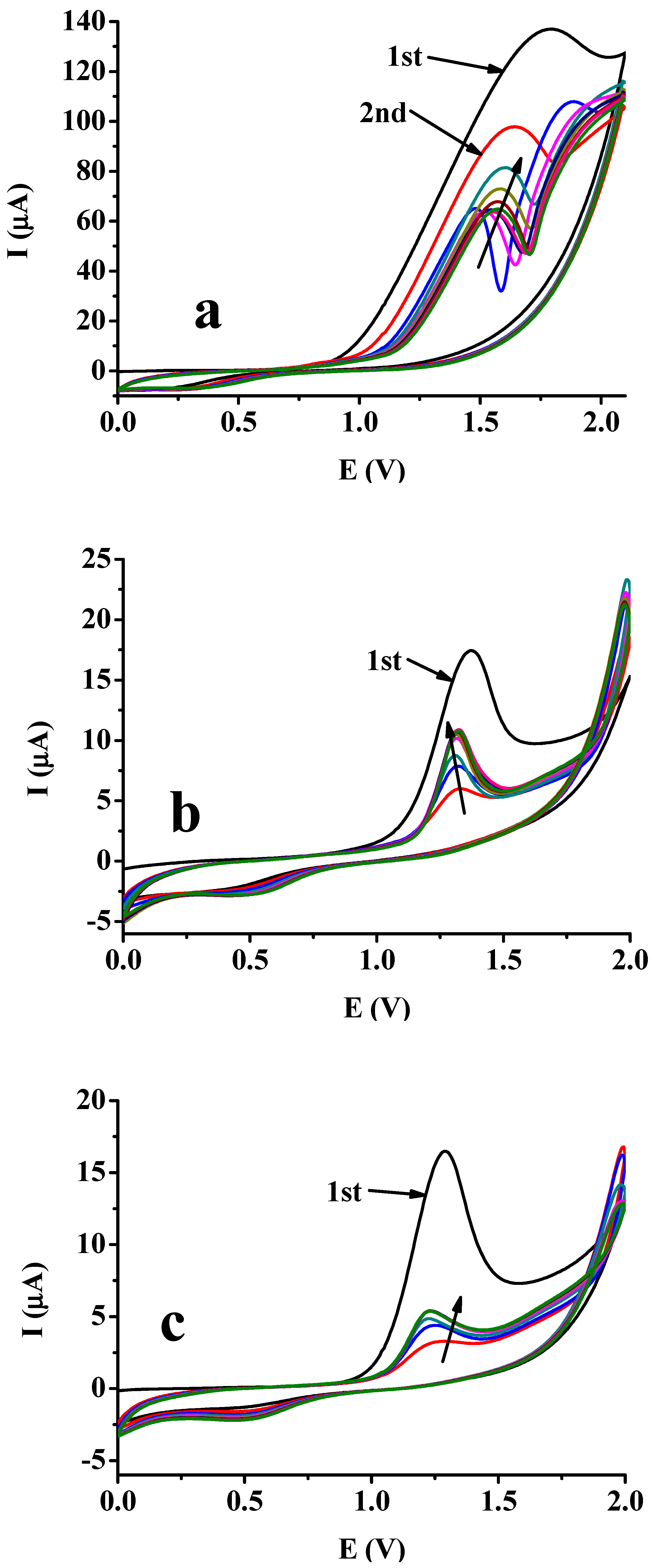
The cyclic voltammograms of bare phenol are displayed in Figure 2a in acetylacetone, showing that deactivation is not very strong compared with the commonly used nonaqueous solvents in spite of the relatively high applied concentration of 50 mM. The carbon–carbon double bond present in the enol form does a lot of matter compared with 3324-PD (Figure S1a). In the latter one the decline of oxidation peaks is continuous, indicating its more pronounced inertness regarding polymer formation. But this is just a visual observation, as currents are approximately one third of those in acetylacetone, suggesting the formation of a lower amount of polymer, thus allowing consequences like swelling of the previously deposited material on the timescale of one voltammogram. This phenomenon elevated the monomer flux through the pores, leading to reduced electrode deactivation. In other works other carbon–carbon-double-bond-containing compounds like trans isomer of fumaric acid promote the formation of structures favorable for enhanced ion transport [8]. Here the enol form can also contribute to easier monomer diffusion. Eugenol is a phenolic compound bearing an allyl functional group and the double bond found in that may also react during the film formation [9]. Based on the latter work some solvent molecules may insert into the polymeric backbone. Due to the relatively low maximum currents smaller peaks appeared between 0 and 0.5 V, attributable to the redox reaction of some polymer segments.
Figure 2.
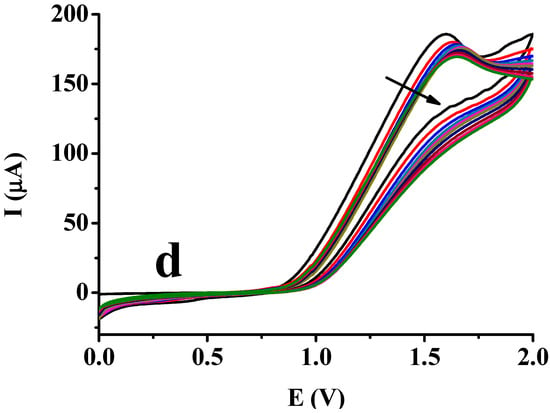
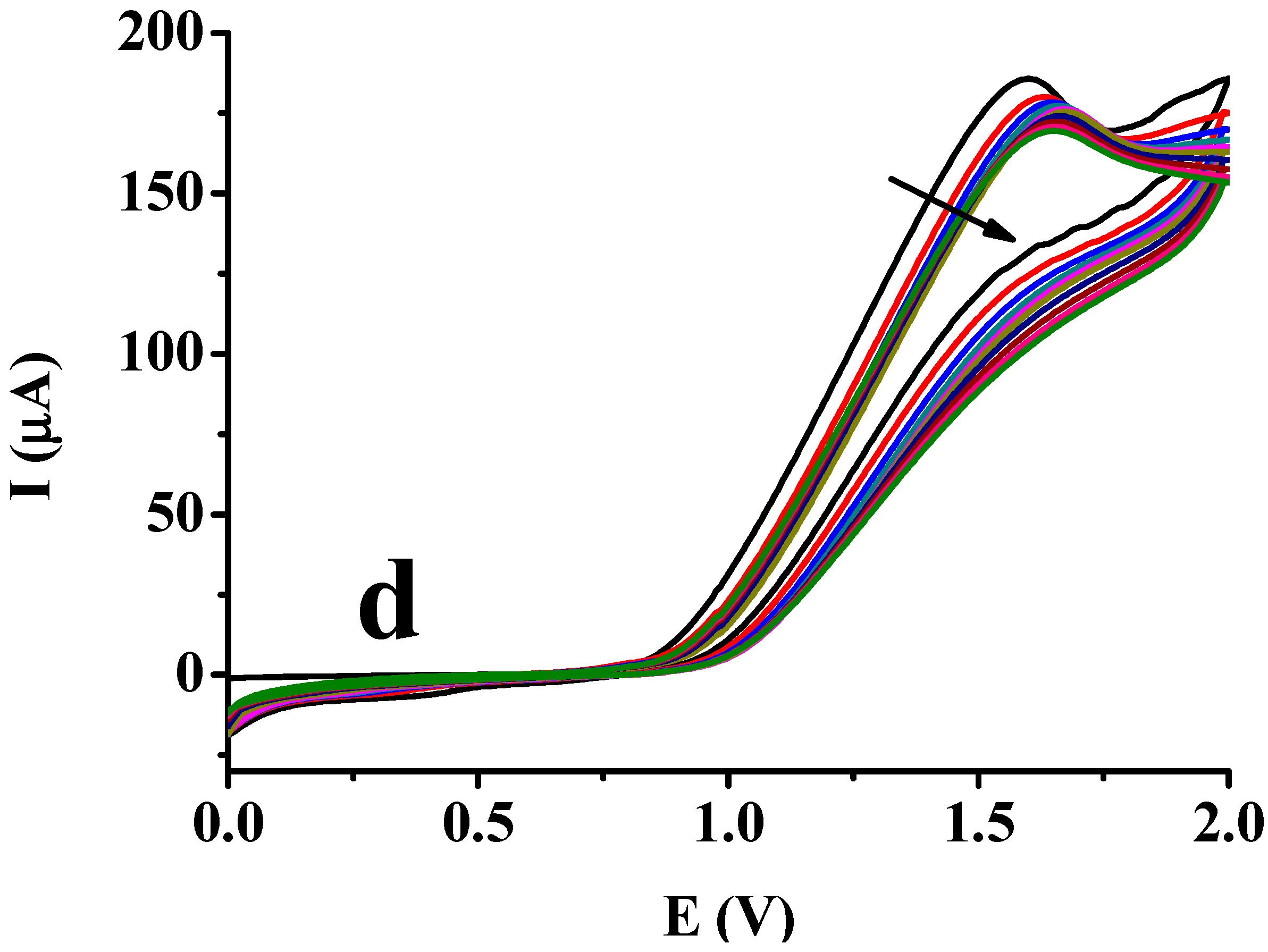
Cyclic voltammetric curves of 50 mM phenol (a), resorcinol (b), phloroglucinol (c) and pyrogallol (d) in acetylacetone (scan rate 0.1 V/s, supporting electrolyte 70 mM TBAP).
Of the dihydroxyphenols only resorcinol exhibited compact polymer formation during its electrooxidation as shown by some previous works [10,11]. The difference between the two solvents is obvious (Figure 2b and Figure S1b), especially from the third voltammogram as peak heights begin to raise again only in acetylacetone, highlighting the role of the enol form.
The position of the hydroxyl groups in trihydroxyphenols does a lot, especially in the cases of phloroglucinol and pyrogallol [12], and there is no significant difference between the two pentanediones studied here (Figure 2c and Figure S1c for phloroglucinol and Figure 2d and Figure S1d for pyrogallol). Phloroglucinol behaves very similarly to resorcinol but pyrogallol exhibits a weak deactivation in both solvents. However in pyrogallol each two neighboring hydroxyl groups oxidize in a similar way as in the case of catechol (and this is the dominant process); in another reaction route the middle hydroxyl group can be oxidized similarly to phenol and some radicals formed in this way can couple with each other [13]. Here, as generally with other monomers, this coupling involves some solvent molecules presenting in the enol form.
3.3. Dimethoxybenzenes
There is a family of phenol derivatives where the hydrogen in the -OH group is substituted with an alkyl group. Their electrochemical behavior differs markedly from that of phenols as the result of electrooxidation not being a phenoxyl radical or a quinone but a radical cation which promotes further polymerization [14,15]. The positive charge is delocalized in the benzene ring and alkoxy groups remain unchanged in most conditions. This process can result under severely dry conditions in the corresponding electronically conducting polymer as monomers are bound to each other through the aromatic rings building up a long conjugated bond system.
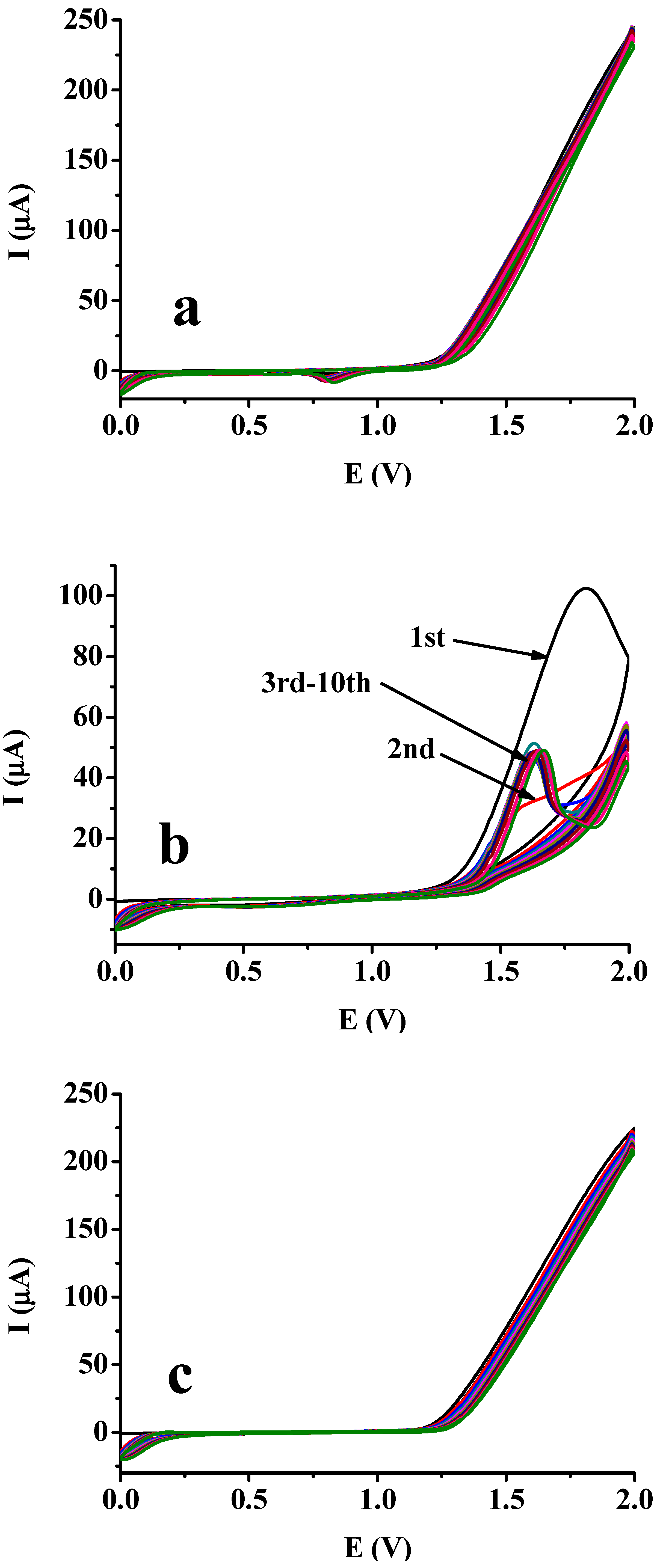
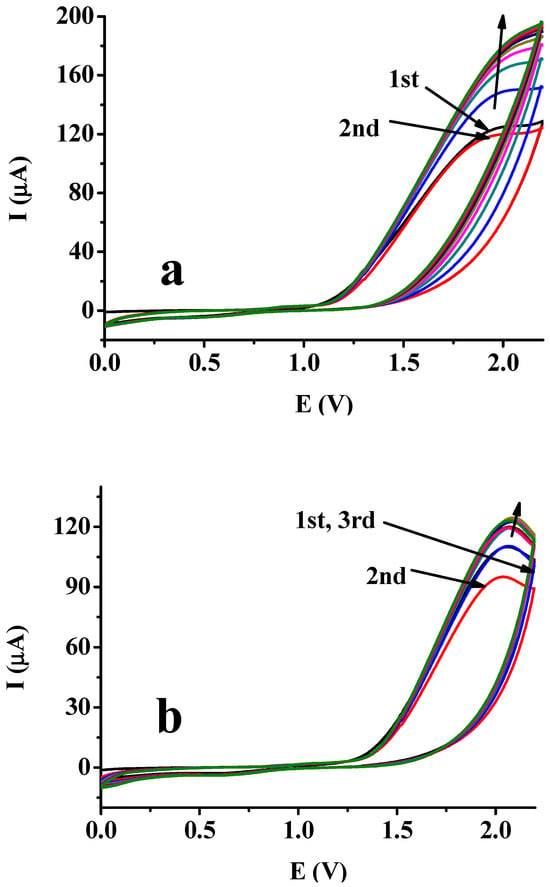
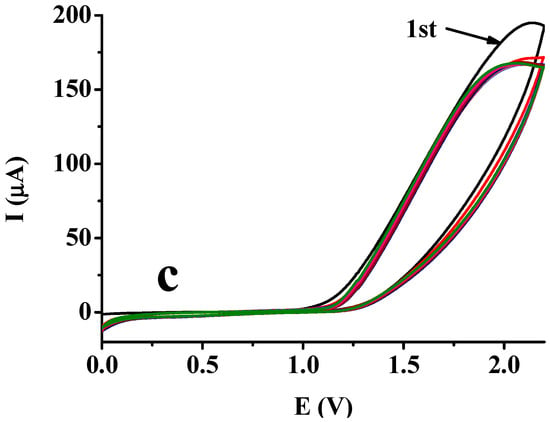
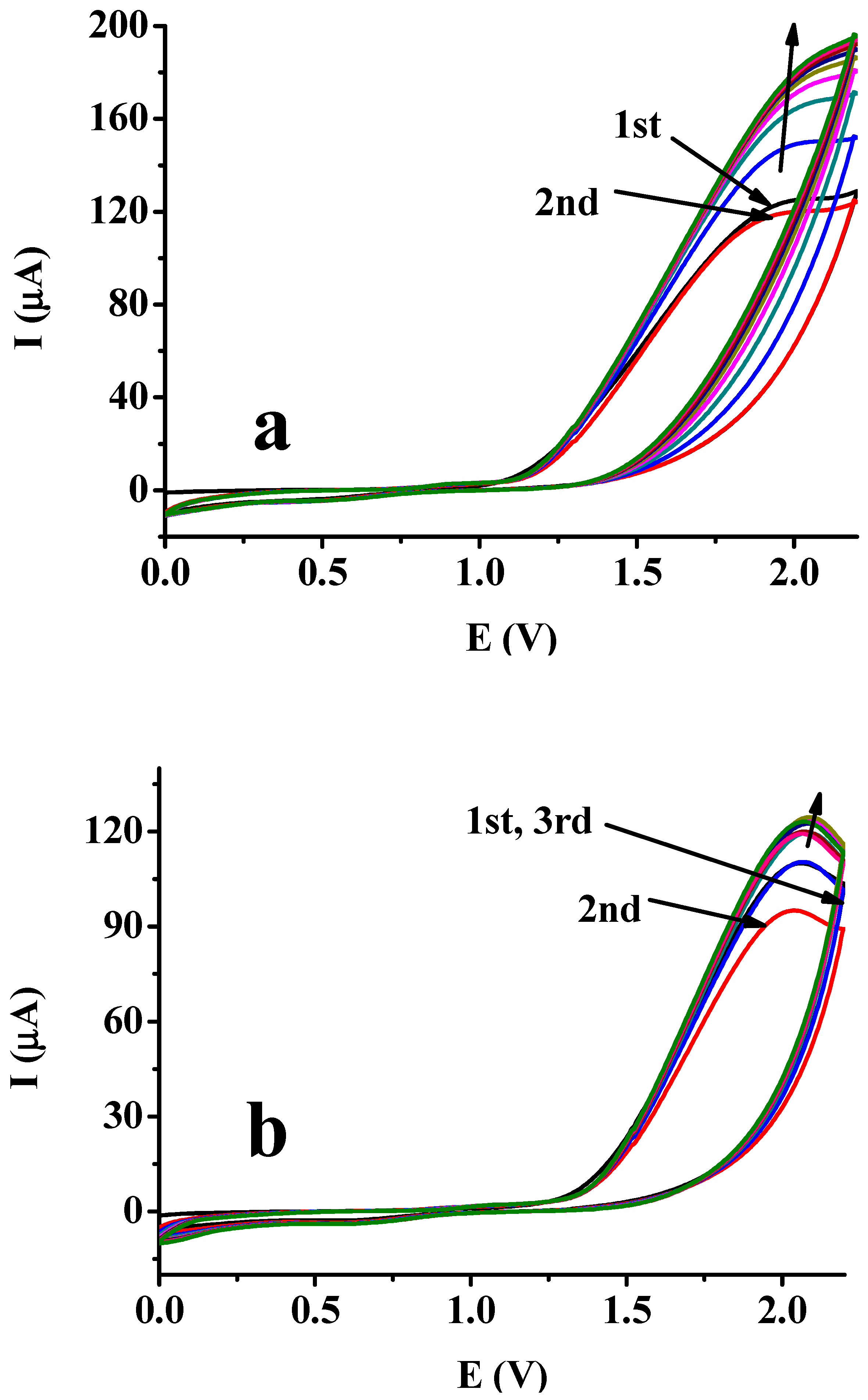
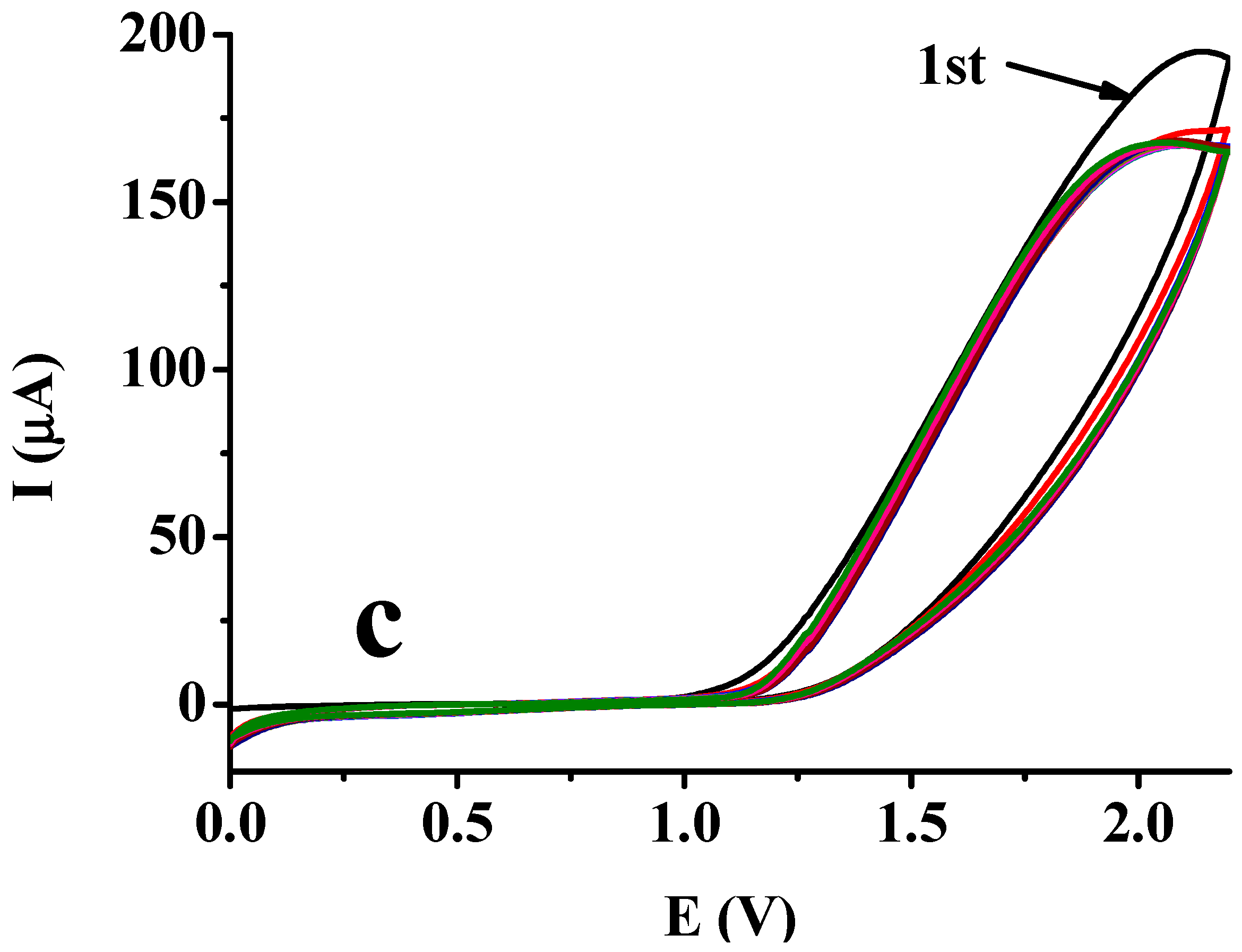
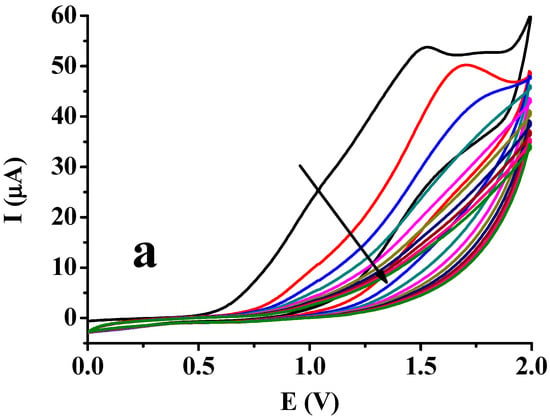
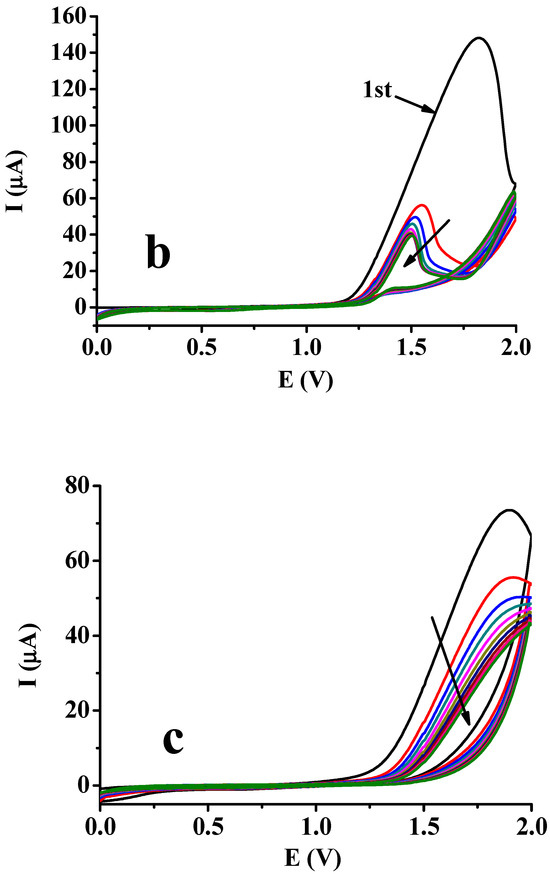
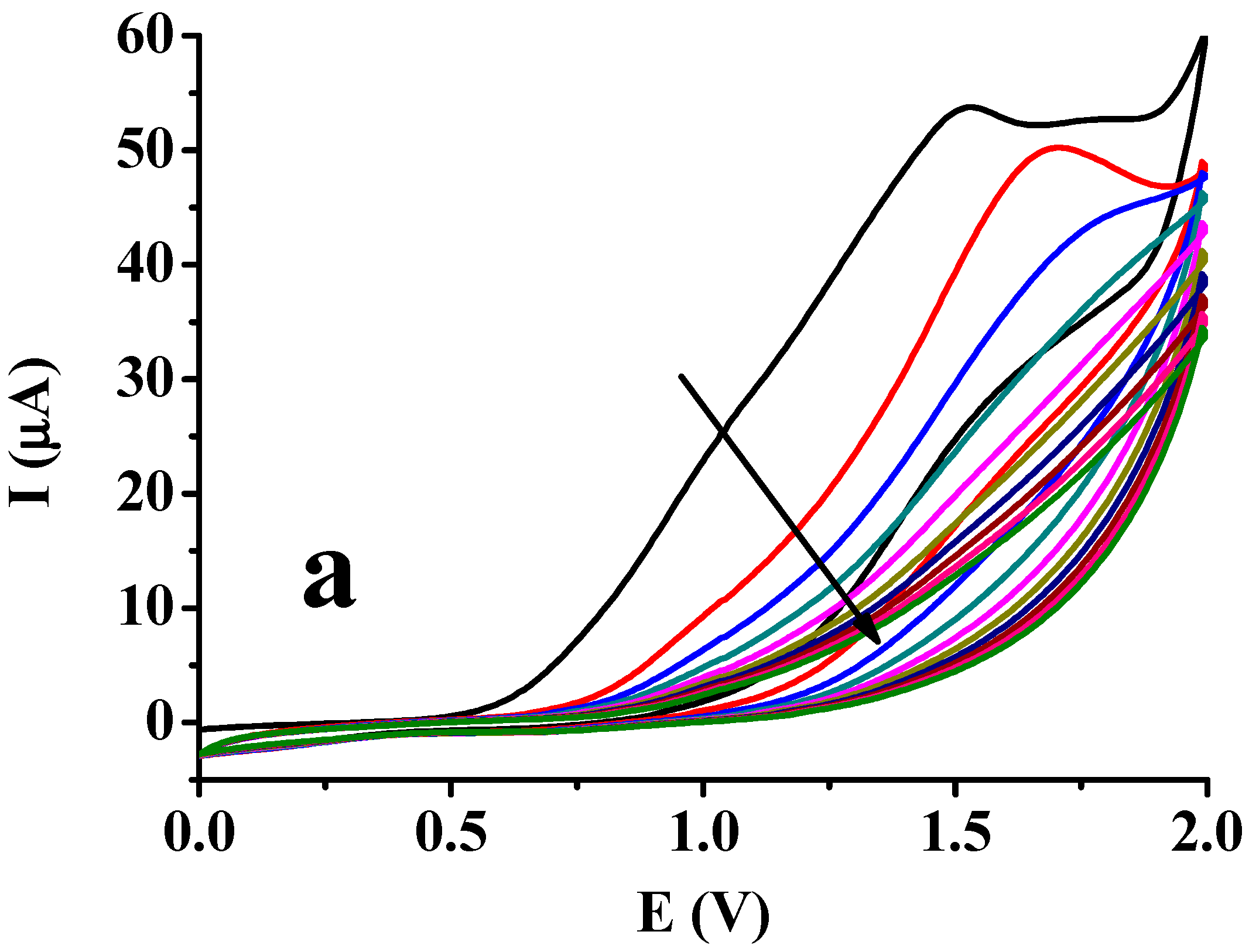
The most easily available compounds of this family are dimethoxybenzenes, so all three isomers were studied in the two pentanedione solvents. Practically there is no difference between them in 3324-PD (Figure S2a) but in acetylacetone only the 1,3-isomer exhibited stronger deactivation (Figure 3). It is noteworthy that 1,2- and 1,4-isomer have reproducible voltammograms mainly attributable to the favorable solubilities of oligomers. As electrochemical polymerization of this family of compounds is very susceptible to the presence of nucleophilic species already in low concentrations, the high excess of the enol form leads to the very early quenching of coupling of radical cations in acetylacetone. In these experiments there are only small differences between the two pentanediones except for the 1,3-isomer. By comparing the maximum currents in the two solvents the reason is the significant deactivation in the timescale of the voltammograms, as was observed similarly with phenol. The cause of the rise in currents above 1.5 V in 3324-PD is the remarkable interference of background current, and the rate of change was also significantly lower, suggesting high compactness of layers. Although the curves were reproducible this indicates that diffusion of monomers was not hindered through the growing layers. That is why the shapes of curves of 1,3-isomer did not differ from those of the other isomers.
Figure 3.
Subsequent voltammograms of 50 mM 1,2-dimethoxybenzene (a), 1,3-dimethoxybenzene (b), 1,4-dimethoxybenzene (c) in acetylacetone (scan rate 0.1 V/s, supporting electrolyte 70 mM TBAP).
3.4. Phenylphenols
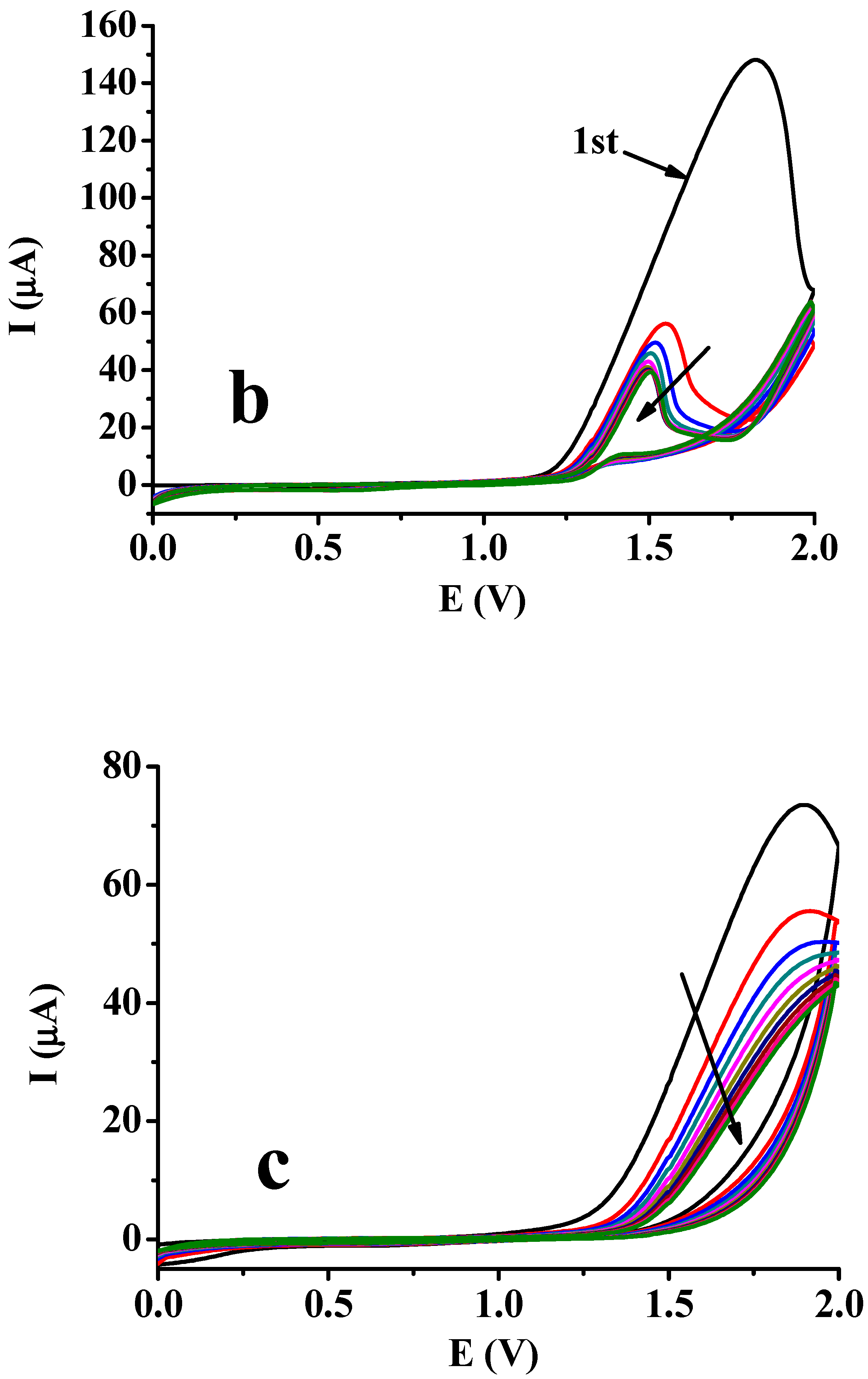
This family of phenol derivatives has a phenyl group which has an electronic connection with the phenolic moiety due to the continuous conjugated electronic system, and their susceptibility to electrode fouling is discussed in an earlier work [16]. Therefore, when they are oxidized, the electronic structure of the radical can reorganize so the unpaired electron can also migrate to the anchored phenyl group. This offers more coupling modes by the formation of oligomers, and at higher concentrations higher molecular weight polymers adhered to the electrode surface. In acetylacetone the 2- and 3-isomers exhibited continuous enhancement in peak currents by repeating the scans after temporary stagnation or a small decrease at the beginning (Figure 4a,b). This unusual tendency shows that fouling layers develop on the electrode but then their interaction with it becomes weaker due to the favorable solvation properties of 2,4-pentanedione. In the case of 4-phenylphenol, weak deactivation could be observed. Similar curves were obtained in shape in 3324-PD (Figure S3) but without peaks.
Figure 4.
Subsequent cyclic voltammetric curves of 2-phenylphenol (a), 3-phenylphenol (b), 4-phenylphenol (c) in acetylacetone (scan rate 0.1 V/s, supporting electrolyte 70 mM TBAP).
3.5. 2,2′-Dihydroxy-4,4′-dimethoxybenzophenone
The outlined benzophenone derivative has two phenolic parts capable of forming two phenoxyl radicals on the two aromatic parts, respectively. In previous results micrographs and voltammetric experiments showed that the layer formed in commonly used solvents is not compact [17]. On the other hand the deposited layer can suffer easily from rupture under certain conditions mainly due to the weak binding of its polymer to electrode surfaces, attributable particularly to the presence of more substituents. The tendency of change in peak heights in acetylacetone resembles that observed in mesityl oxide in the work cited here, which is further evidence that the role of the double bond in the enol form is highly important (Figure 5). A similar but weaker tendency was experienced in 3324-PD (Figure S4).
Figure 5.
Cyclic voltammograms of 50 mM 2,2′-dihydroxy-4,4′-dimethoxybenzophenone in acetylacetone (scan rate 0.1 V/s, supporting electrolyte 70 mM TBAP).
3.6. N,N′-Diphenylguanidine, N,N′-Diphenylurea and N,N′-Diphenylthiourea
The outlined compounds have very similar structures and they all contain two moieties similar to aniline, so they are capable of electropolymerization. These compounds have been mainly used as electrode modifiers in electrochemical studies. In the determination of traces of vanadium and zirconium in water samples by adsorptive stripping voltammetry N,N′-diphenylguanidine showed excellent binding ability towards these metal ions as one of the complexing agents studied [18]. Diphenylguanidine proved its high performance similarly by uranium detection in water [19,20]. N,N′-diphenylthiourea served as an appropriate binding agent in an electrochemical sensor aiming at detecting L-glutamine and asparagin combined with polypyrrole and poly(vinyl chloride) [21]. This process is initiated on the nitrogen atoms and the unpaired electron can be delocalized in the neighboring aromatic ring. In our earlier work N,N′-diphenylguanidine was investigated in some commonly used solvents and the rate of deactivation showed visible differences depending on the solvent [22].
According to our knowledge N,N′-diphenylurea and N,N′-diphenylthiourea have not been studied with respect to electropolymerization so they were selected for consideration. The related subsequent curves are displayed in Figure 6 taken in acetylacetone. These compounds exhibited slow electrode deactivation except for N,N′-diphenylurea. The findings may be reasonable considering the solvation properties and therefore solubility of monomers, but the size of the middle heteroatom can also influence the adherence and porosity of deposits.
Figure 6.
Repetitive cyclic voltammograms of N,N-diphenylguanidine (a), N,N-diphenylurea (b), N,N-diphenylthiourea (c) in acetylacetone (c = 50 mM, scan rate 0.1 V/s, supporting electrolyte 70 mM TBAP).
When dissolving N,N-diphenylguanidine in acetylacetone the color of the solution changed from colorless to clearly visible light-yellow, but the time necessary for this change was much longer than the time needed to record the subsequent voltammograms. This indicates that the observed phenomenon presumably does not disturb anything on the timescale of recording the ten voltammograms. To get more insight into the process between the solute and the solvent 1H NMR spectroscopic investigations were carried out, but there were no differences between the solution immediately after preparation and after 2 days had elapsed (Figures S7 and S8). This means that no additional peak appeared, only the singlets (s), multiplets (m) and triplets (t) characteristic of the starting compound. Consequently a reaction might be excluded. A similar color change occurred in the case of N,N′-diphenylthiourea but some days were needed for the appearance of the yellow color (Figures S9 and S10). N,N′-diphenylurea did not exhibit any color change in acetylacetone (Figures S11 and S12). The results suggest that the color changes might be attributed to the solvent–solute interactions which change slowly.
3.7. Naphthols
The polycyclic aromatic compounds might also have interesting electropolymerization characteristics so 1-naphthol and 2-naphthol were also investigated as the simplest condensed monohydroxy aromatics. Thorough studies of these compounds have been carried out in multiple solutions and the key step is the oxidative formation of the corresponding naphthoxyl radical. In acetonitrile remarkable differences were observed between the two naphthol isomers as poly(1-naphthol) exhibited excellent electronic conductivity [23,24]. These properties originated from the alternating occurrence of naphthalene and furan rings along the polymeric backbone. Usually in the case of numerous monomers and within the family naphthols the use of boron trifluoride diethyl etherate contributes significantly to the enhanced electronic conductivity [25]. Under the same conditions during oxidation of 2-naphthol insulating layers cover the electrode [26] and make enzyme immobilization possible [27].
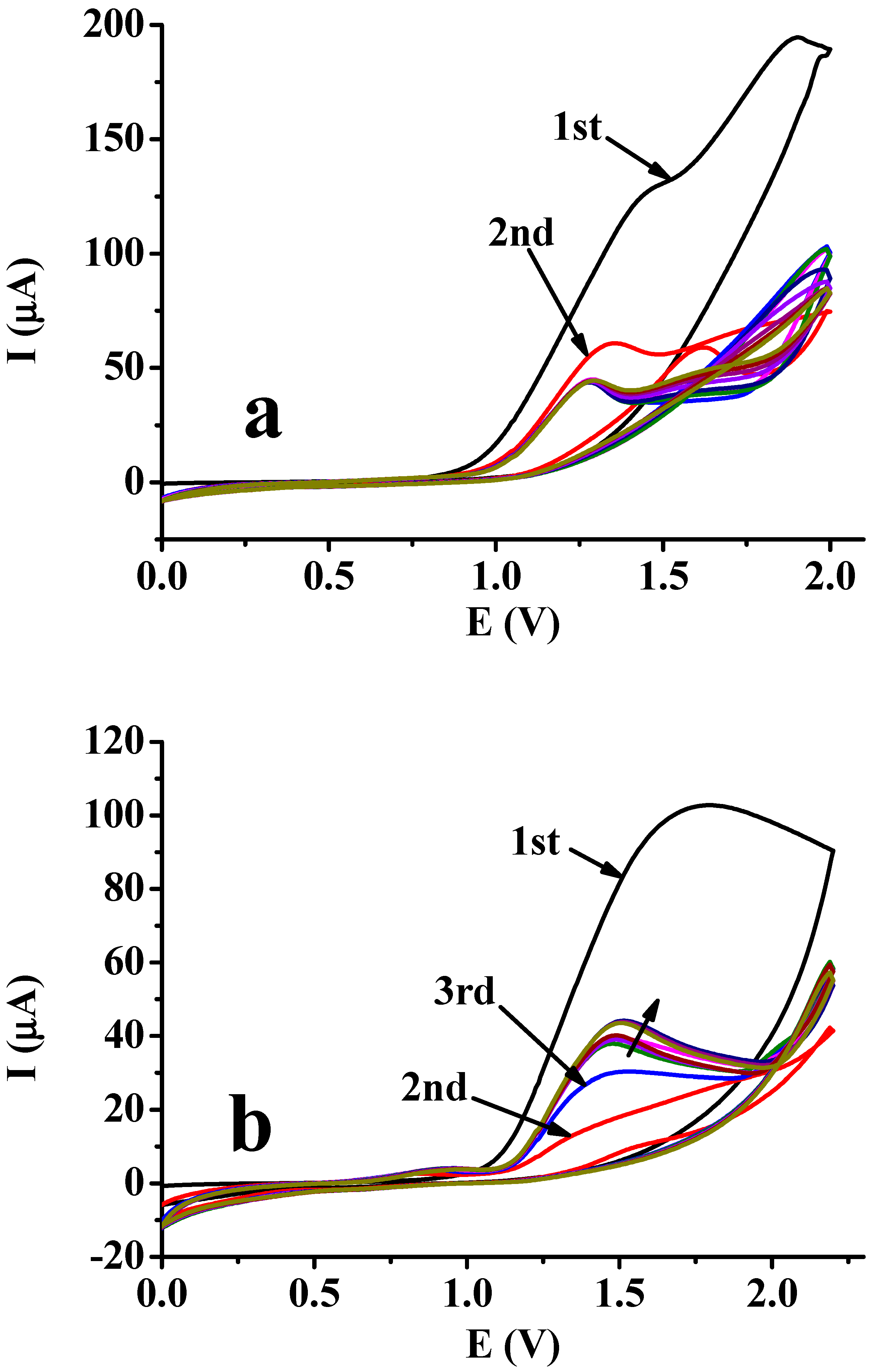
The obtained cyclic voltammograms of the two naphthols are seen in Figure 7 in acetylacetone. The formation of insulating films can be concluded from the decline of voltammetric peaks; however, they were not tendentious. In the case of 1-naphthol the peak heights reached a constant value at around 40 μA, showing that a stationary state developed between pore diffusion and rate of radical coupling. It suggests that pore volume did not change. With 2-naphthol there was a partial rupture of the film attributable to this structure (currents rose again after the second voltammogram). In the other solvent 3324-PD (Figure S6) the continuous decrease with both isomers highlighted the role of the carbon–carbon double bond in the dominant form as the film structure was obviously different in acetylacetone from that in 3324-PD. Similar effects governed the film growth in 3324-PD as with many other monomers and the remarkably smaller currents suggest the more densely packed structure.
Figure 7.
Successive voltammograms of 1-naphthol (a) and 2-naphthol (b) in acetylacetone (c = 50 mM, scan rate 0.1 V/s, supporting electrolyte 70 mM TBAP).
3.8. SEM Studies of Films Deposited from the Two Solvents
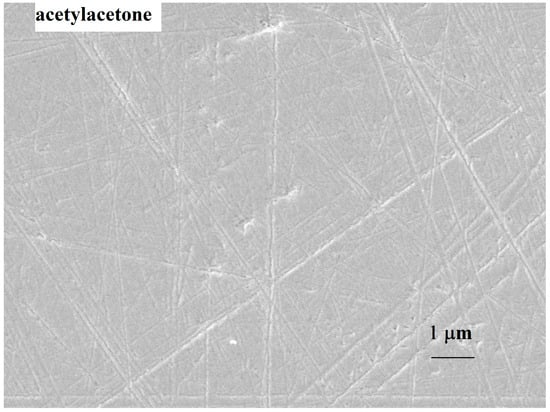
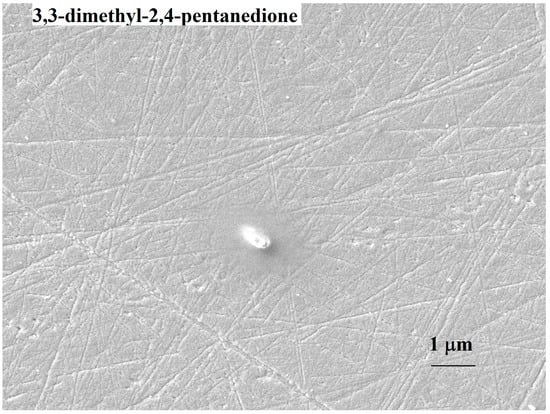
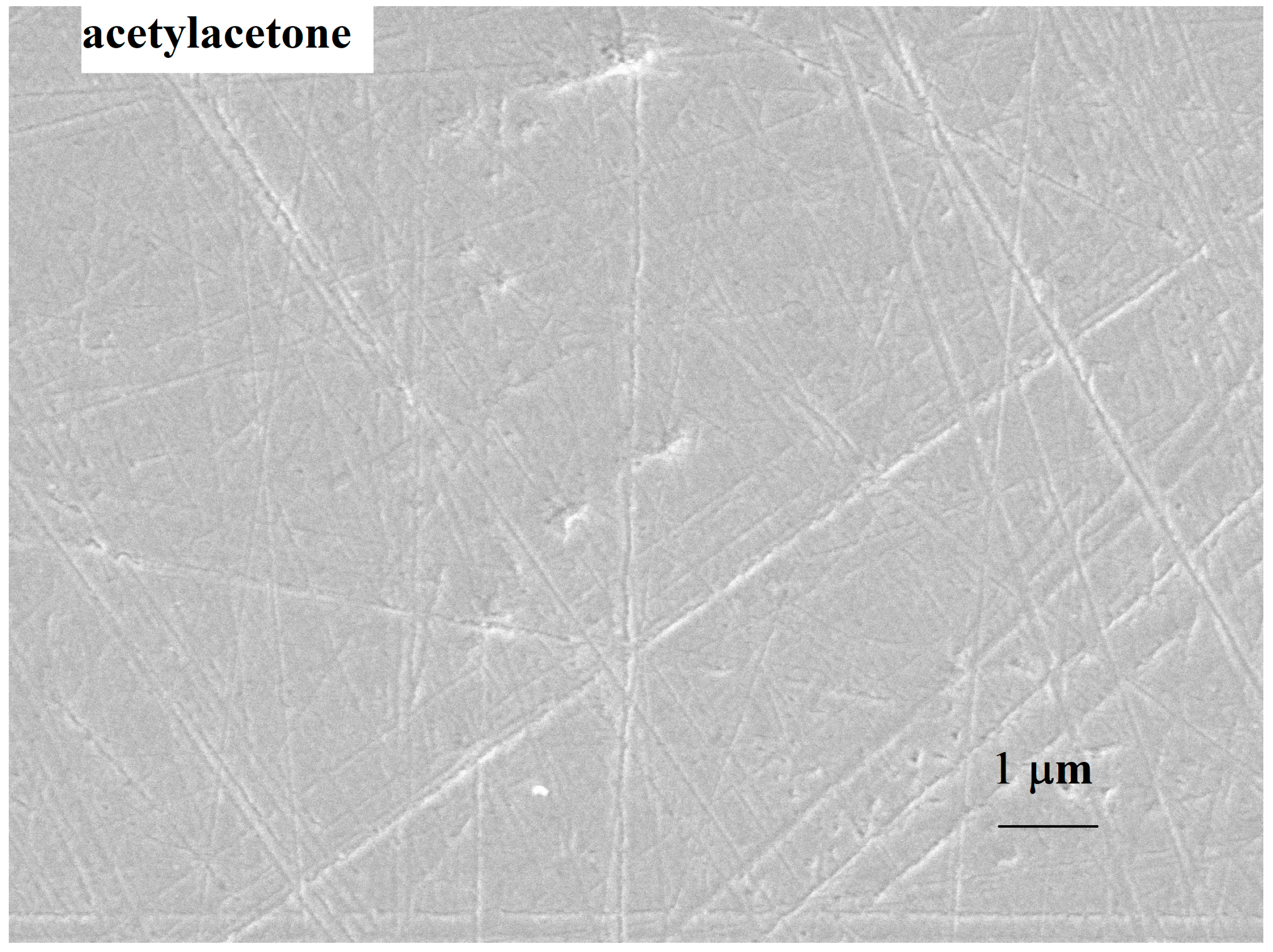
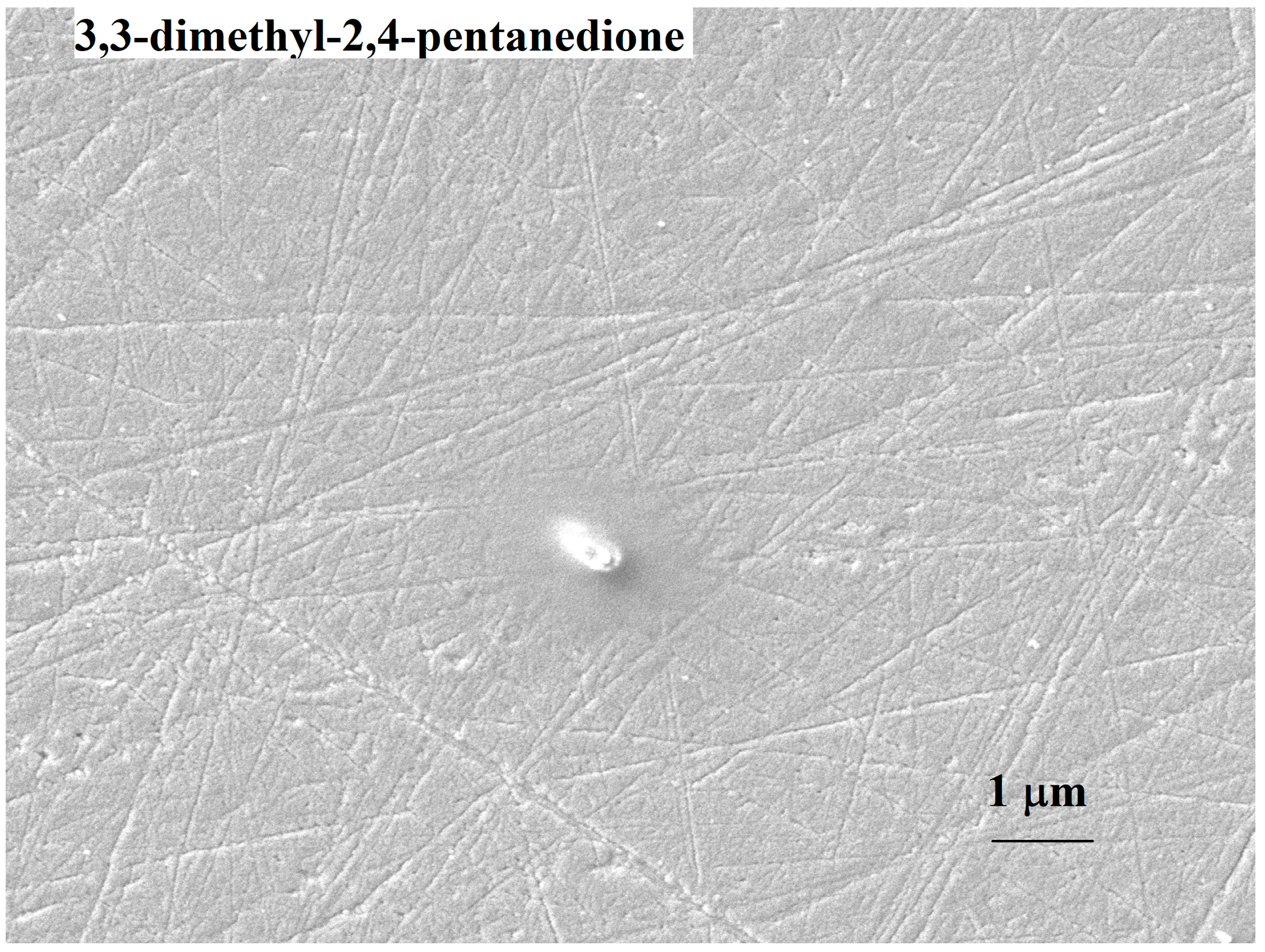
Morphology of deposits is an additional possibility to find differences between the two solvents. Therefore ten cyclic voltammograms were taken for phloroglucinol in acetylacetone and 3,3-dimethyl-2,5-pentanedione under the same conditions as before. Figure 8 reveals the corresponding scanning electron micrographs, which reveal some differences. The deposit from 3,3-dimethyl-2,4-pentanedione exhibits more marked unevenness with stackings, especially along the scratches, and as a consequence the thickness is a little higher. These findings reveals that acetylacetone contributes to the formation of a flat deposit which seems coherent in this magnification but has porosity appropriate for elevated diffusion of redox molecules (see later in Section 3.9). Furthermore the insertion of the enol form improves the solvation properties of certain copolymers which cannot appear in 3324-PD. This helps in elucidating the contradiction between microscopic findings and voltammetric experiments as higher currents may be attributed in acetylacetone to the more elevated material flux to the electrode after partial removal of products from the vicinity of the platinum surface.
Figure 8.
SEM images of electropolymerized phloroglucinol in acetylacetone and 3,3-dimethyl-2,4-pentanedione (deposition conditions: 50 mM phloroglucinol, 70 mM TBAP, scan rate 0.1 V/s).
3.9. Investigation of Permeability of Deposits
Polymer coatings are typically inhomogeneous systems where the type of transport processes deviates from that characteristic of free space. Generally in diffusion reduced material flux occurs due to the hindrance caused by objects, and consequently effective diffusivity is lower. This is characteristic of the complicated structure of the porous system which changes site by site. Quantitatively tortuosity is the degree of hindrance within the system against diffusion and there is a solution to this problem for gases [28]. Fluid flow was also investigated in a bisized system and wall effect had to be taken into account [29], while a different solution can be applied for packings with identical particles [30]. Further findings highlighted the importance of the shape of hindrances [31]; furthermore, cell cavities cause enhanced tortuosity in the brain [32].
The porosity of electrodeposited films is a useful piece of information which can be examined by estimation of its tortuosity effect with a redox probe. There exists a simple and rapid procedure to gain information about the compactness of a deposit. It also provides information about the coverage of the electrode and wetting capabilities of the film. The most-studied environments are aqueous solutions, so an aqueous solution of ascorbic acid was used at a concentration of 10 mM with 0.05 M pH = 7 phosphate buffer, which was also the supporting electrolyte. The normalization of peak currents measured with the deposit-coated electrode to those obtained with a bare electrode leads to valuable data, and on the other hand the shift in the oxidation peak allows for a very useful estimation of the coverage of the platinum surface.
The data concerned are collected in Table 1 and they demonstrate significant differences between the different monomers (3 data are averaged for each one). With the bare platinum electrode the peak potential of ascorbic acid was 0.427 V and deviations toward the positive direction also allow for conclusions about the size exclusion properties of the related polymers. In most cases remarkable shifts could be obtained, reflecting the strong hindrance of diffusion of one or more components to the active sites of the electrode. Sometimes the position of the peak is almost identical to that on the bare electrode but the peak heights are lower. This shows the development of a highly porous deposit with poor electronic conductivity and tortuous effects predominate [33]. All in all the peak height recoveries highlight the importance and position of substituents which increase the hydration ability and porosity, for example when phenol, phloroglucinol and resorcinol are compared.
Table 1.
Estimation of film porosities formed in acetylacetone and 3,3-dimethyl-2,4-pentanedione for 10 mM ascorbic acid in pH = 7 phosphate buffer by using the normalized peak current (peak potentials in parentheses).
4. Conclusions
For most of the monomers high differences were observed between acetylacetone and 3324-PD, especially in the magnitude of currents, which indicates the significant role of the carbon–carbon double bond in the enol form of acetylacetone. The high influence of its enol form on the film structures leads to the development of loosely structured films, while in 3324-PD deposits this can be characterized by high compactness (revealed by Figures S1–S6). The results presented here offer an additional proof for the importance of an unsaturated part in the solvent or additive. The units of acetylacetone within the polymers improve the solvation properties, thus contributing to elevation of the mass transport of monomers to the electrode. The positions of the peaks in the first voltammogram in case of some monomers reinforce that the two solvents have very similar relative permittivities and that ohmic distortion has negligible effect on the shape of curves.
Supplementary Materials
The following supporting information can be downloaded at: https://www.mdpi.com/article/10.3390/compounds6040056/s1, Figure S1: Cyclic voltammetric curves of 50 mM phenol (a), resorcinol (b), phloroglucinol (c) and pyrogallol (d) in 3324-PD (scan rate 0.1 V/s, supporting electrolyte 70 mM TBAP); Figure S2: Subsequent voltammograms of 50 mM 1,2-dimethoxybenzene (a), 1,3-dimethoxybenzene (b), 1,4-dimethoxybenzene (c) in 3324-PD (scan rate 0.1 V/s, supporting electrolyte 70 mM TBAP); Figure S3: Subsequent cyclic voltammetric curves of 2-phenylphenol (a), 3-phenylphenol (b), 4-phenylphenol (c) in 3324-PD (scan rate 0.1 V/s, supporting electrolyte 70 mM TBAP); Figure S4: Cyclic voltammograms of 50 mM 2,2′-dihydroxy-4,4′-dimethoxybenzophenone in 3324-PD (scan rate 0.1 V/s, supporting electrolyte 70 mM TBAP); Figure S5: Repetitive cyclic voltammograms of N,N-diphenylguanidine (a), N,N-diphenylurea (b), N,N-diphenylthiourea (c) in 3324-PD (c = 50 mM, scan rate 0.1 V/s, supporting electrolyte 70 mM TBAP); Figure S6: Successive voltammograms of 1-naphthol (a) and 2-naphthol (b) in 3324-PD (c = 50 mM, scan rate 0.1 V/s, supporting electrolyte 70 mM TBAP); Figure S7: 1H NMR spectrum of the initial solution of N,N′-diphenylguanidine in acetylacetone 1H NMR (500 MHz, CDCl3): 7.33 (t, 4H, J = 7.0 Hz); 7.24 (d, 4H, J = 8.0 Hz); 7.18 (t, 2H, J = 7.5 Hz); Figure S8: 1H NMR spectrum of the solution of N,N′-diphenylguanidine in acetylacetone after 2 days 1H NMR (500 MHz, CDCl3): 7.33 (t, 4H, J = 7.5 Hz); 7.24 (d, 4H, J = 8.0 Hz); 7.18 (t, 2H, J = 7.5 Hz); Figure S9: 1H NMR spectrum of the initial solution of N,N′-diphenylthiourea in acetylacetone 1H NMR (500 MHz, DMSO d6): 9.78 (s, 2H); 7.55 (m, 4H); 7.34 (t, 4H, J = 7.5 Hz); 7.13 (t, 2H, J = 7.5 Hz); Figure S10: 1H NMR spectrum of the solution of N,N′-diphenylthiourea in acetylacetone after 2 days 1H NMR (500 MHz, DMSO d6): 9.77 (s, 2H); 7.57 (d, 4H, J = 8.5 Hz); 7.34 (t, 4H, J = 8.0 Hz); 7.13 (t, 2H, J = 7.0 Hz); Figure S11: 1H NMR spectrum of the initial solution of N,N′-diphenylurea in acetylacetone 1H NMR (500 MHz, DMSO d6): 8.63 (s, 2H); 7.48 (d, 4H, J = 8.5 Hz); 7.28 (t, 4H, J = 7.5 Hz); 6.97 (t, 2H, J = 7.0 Hz);. Figure S12: 1H NMR spectrum of the solution of N,N′-diphenylurea in acetylacetone after 2 days 1H NMR (500 MHz, DMSO d6): 8.64 (s, 2H); 7.47 (m, 4H); 7.28 (t, 4H, J = 7.0 Hz); 6.97 (t, 2H, J = 7.5 Hz).
Author Contributions
Conceptualization, L.K.; methodology, L.K.; investigation, L.K., Á.B., P.S., H.L. and Y.L.; writing—original draft preparation, L.K. and Á.B.; writing—review and editing, S.K.-M., H.L. and Y.L.; visualization, P.S.; supervision, L.K.; project administration, S.K.-M.; funding acquisition, S.K.-M. All authors have read and agreed to the published version of the manuscript.
Funding
This research was funded by the Hungarian National Research Development and Innovation Office (NKFI), grant number NKFI-137793, the Chinese-Hungarian Intergovernmental S & T Cooperation Programme (Project nos.: CH-10-6/2024 and 2024-1.2.5-TÉT-2024-00006).
Data Availability Statement
The original contributions presented in this study are included in the article/Supplementary Material. Further inquiries can be directed to the corresponding author.
Acknowledgments
We are grateful to the Ministry of Culture and Innovation; Hungarian National Research, Development and Innovation Found; University Research Scholarship Programme (EKÖP-26-4-I-PTE-963) for financial support.
Conflicts of Interest
The authors declare no conflicts of interest.
References
- Nematollahi, D.; Rafiee, M. Electrochemical oxidation of catechols in the presence of acetylacetone. J. Electroanal. Chem. 2004, 566, 31–37. [Google Scholar] [CrossRef] [Scilit]
- Nematollahi, D.; Rafiee, M. Diversity in electrochemical oxidation of dihydroxybenzoic acids in the presence of acetylacetone. A green method for synthesis of new benzofuran derivatives. Green Chem. 2005, 7, 638–644. [Google Scholar] [CrossRef] [Scilit]
- Ahmed, S.; Ahmad, M.; Butt, S.B. Electrooxidation of chloro, nitro and amino substituted phenols in aqueous medium and their heterogeneous kinetics. Res. Chem. Intermed. 2012, 38, 705–722. [Google Scholar] [CrossRef] [Scilit]
- Fino, D.; Jara, C.C.; Saracco, G.; Specchia, V.; Spinelli, P. Deactivation and regeneration of Pt anodes for the electro-oxidation of phenol. J. Appl. Electrochem. 2005, 35, 405–411. [Google Scholar] [CrossRef] [Scilit]
- Christopher, P.R.; Jeffrey, W.L.; Michael, S.D.; John, J.F.; Debra, R.R. Nanoscale polymer electrolytes: Ultrathin electrodeposited poly(phenylene oxide) with solid-state ionic conductivity. J. Phys. Chem. B 2004, 108, 13079–13087. [Google Scholar] [CrossRef] [Scilit]
- Robin, L.M.; Eugene, A.I.; Royce, W.M. Permeant molecular sieving with electrochemically prepared 6-nm films of poly(phenylene oxide). J. Phys. Chem. 1991, 95, 2492–2498. [Google Scholar] [CrossRef] [Scilit]
- Kiss, L.; Kunsági-Máté, S. Scan rate and concentration dependence of the voltammograms of substituted phenols on electrodes with different size, diffusion coefficients of phenols in different solvents. Can. J. Chem. 2023, 101, 297–305. [Google Scholar] [CrossRef] [Scilit]
- Huang, S.; Fu, H.; Kwon, H.M.; Kim, M.S.; Zhang, J.D.; Lu, J.; Kim, J.S.; Jang, G.; Min, D.H.; Kim, W.I.; et al. Stereoisomerism of multi-functional electrolyte additives for initially anodeless aqueous zinc metal batteries. Nat. Commun. 2025, 16, 6117. [Google Scholar] [CrossRef] [Scilit] [PubMed]
- Ciszewski, A.; Milczarek, G. Polyeugenol-modified platinum electrode for selective detection of dopamine in the presence of ascorbic acid. Anal. Chem. 1999, 71, 1055–1061. [Google Scholar] [CrossRef] [Scilit] [PubMed]
- Li, H.; Wang, Z.; Wu, B.; Liu, X.; Xue, Z.; Lu, X. Rapid and sensitive detection of methyl-parathion pesticide with an electropolymerized, molecularly imprinted polymer capacitive sensor. Electrochim. Acta 2012, 62, 319–326. [Google Scholar] [CrossRef] [Scilit]
- Marco, B.; Walter, G.; Andrea, S.; Andrea, M.; Massimo, I.; Claudio, F. Resorcinol electropolymerization process obtained via electrochemical oxidation. Electrochim. Acta 2022, 428, 140928. [Google Scholar] [CrossRef] [Scilit]
- Kiss, L.; Kunsági-Máté, S. Assessment of non-aqueous solvents in the electrooxidation of resorcinol, phloroglucinol, pyrogallol and role of co-solvent in determination of pyrogallol with microelectrode voltammetry. Stud. Univ. Babes-Bolyai Chem. 2021, 66, 149–158. [Google Scholar] [CrossRef] [Scilit]
- Shi, Q.; Mu, S. Preparation of Pt/poly(pyrogallol)/graphene electrode and its electrocatalytic activity for methanol oxidation. J. Power Sources 2012, 203, 48–56. [Google Scholar] [CrossRef] [Scilit]
- Veronique, L.B.; Lysiane, A.; Jacques, S.; Guy, M.; Michel, B. Electrochemical polymerization of paradialkoxybenzenes. Part I. Anodic oxidation of paradimethoxybenzene in dry acetonitrile. J. Electroanal. Chem. 1987, 218, 173–185. [Google Scholar]
- Choy de Martinez, M.; Márquez, O.P.; Márquez, J.; Hahn, F.; Beden, B.; Crouigneau, P.; Rakotondrainibe, A.; Lamy, C. In situ spectroscopic investigation of the anodic oxidation of 1,4-dimethoxybenzene at platinum electrodes. Synth. Met. 1997, 88, 187–196. [Google Scholar] [CrossRef] [Scilit]
- Kiss, L.; Nagymihály, Z.; Szabó, P.; Kollár, L.; Kunsági-Máté, S. Anodic polymerization of phenylphenols in methyl isobutyl ketone and mesityl oxide: Incorporation of a cavitand into the layers formed for sensing phenols in organic media. Molecules 2022, 27, 5366. [Google Scholar] [CrossRef] [Scilit] [PubMed]
- Kiss, L.; Kovács, F.; Yan, H.; Li, H.; Kunsági-Máté, S. Characterization of dimethoxybenzene isomers and 2,2′-dihydroxy-4,4′-dimethoxybenzophenone by voltammetry in acetonitrile, allyl alcohol and mesityl oxide, effect of electrode size. Rev. Chim. 2024, 75, 1–15. [Google Scholar] [CrossRef] [Scilit]
- Alexandre, B.S.; Paulo, C.N.; Denise, B.; Leandro, M.; Ananda, G.; Cristian, K.; Bruna, A.W.; Andrea, K. Determination of zirconium and vanadium in natural waters by adsorptive stripping voltammetry in the presence of cupferron, oxalic acid and 1,3-diphenylguanidine. Electroanalysis 2015, 27, 1864–1870. [Google Scholar] [CrossRef] [Scilit]
- Zhang, L.; Wang, C.Z.; Tang, H.B.; Wang, L.; Liu, Y.S.; Zhao, Y.L.; Chai, Z.F.; Shi, W.Q. Rapid determination of uranium in water samples by adsorptive cathodic stripping voltammetry using a tin-bismuth alloy electrode. Electrochim. Acta 2015, 174, 925–932. [Google Scholar] [CrossRef] [Scilit]
- Zhou, Z.; Zhou, Y.; Liang, X.; Xie, F.; Liu, S.; Ma, J. Sensitive detection of uranium in water samples using differential pulse adsorptive stripping voltammetry on glassy carbon electrode. J. Radioanal. Nucl. Chem. 2019, 322, 2049–2056. [Google Scholar] [CrossRef] [Scilit]
- Wang, X.; Hu, F.; Zhu, L.; Liu, D.; Dong, Y.; Wang, C.; Wu, D. N,N’-diphenylthiourea electrochemical sensor for the detection of L-glutamate and aspartate in beef. J. Food Sci. 2020, 85, 3852–3857. [Google Scholar] [CrossRef] [Scilit] [PubMed]
- Kiss, L.; Kovács, F.; Kunsági-Máté, S. Electropolymerization of N,N’-diphenylguanidine in non-aqueous aprotic solvents and alcohols. Period. Polytech. Chem. Eng. 2021, 65, 139–147. [Google Scholar] [CrossRef] [Scilit]
- Abd El-Rahman, H.A. Stability and behavior of poly-1-naphthol films towards charge transfer reactions. Thin Solid Films 1997, 310, 208–216. [Google Scholar] [CrossRef] [Scilit]
- Pham, M.C.; Moslih, J.; Chauveau, F.; Lacaze, P.C. In situ multiple internal reflection Fourier transform infrared spectroscopic (MIRFTIRS) study of the electrochemical immobilization of heteropolyanions in poly(1-naphthol) coated electrodes. J. Appl. Electrochem. 1991, 21, 902–909. [Google Scholar] [CrossRef] [Scilit]
- Lu, B.; Liu, C.; Li, Y.; Xu, J.; Liu, G. Conducting polynaphthalenes from 1,1′-binaphthyl and 1,1′-bi-2-naphthol via electropolymerization. Synth. Met. 2011, 161, 188–195. [Google Scholar] [CrossRef] [Scilit]
- Abdelaal, M.Y. Electrochemical polymerization of naphthols in aqueous medium. Int. J. Polym. Mater. Polym. Biomater. 2005, 54, 151–159. [Google Scholar] [CrossRef] [Scilit]
- Ciriello, R.; Tommaso, R.I.C.; Diego, C.; Antonio, G. Permselective behavior of an electrosynthesized, nonconducting thin film of poly(2-naphthol) and its application to enzyme immobilization. Electroanalysis 2000, 12, 825–830. [Google Scholar] [CrossRef] [Scilit]
- Gerasimos, S.A. Determination of the effects of the pore size distribution and pore connectivity distribution on the pore tortuosity and diffusive transport in model porous networks. Chem. Eng. Sci. 2006, 61, 4662–4675. [Google Scholar] [CrossRef] [Scilit]
- Dias, R.P.; Fernandes, C.S.; Texeira, J.A.; Mota, M.; Yelshin, A. Permeability analysis in bisized porous media: Wall effect between particles of different size. J. Hydrol. 2008, 349, 470–474. [Google Scholar] [CrossRef] [Scilit]
- Lanfrey, P.Y.; Kuzeljevic, Z.V.; Dudukovic, M.P. Tortuosity model for fixed beds randomly packed with identical particles. Chem. Eng. Sci. 2010, 65, 1891–1896. [Google Scholar] [CrossRef] [Scilit]
- Shen, L.; Chen, Z. Critical review of the impact of tortuosity on diffusion. Chem. Eng. Sci. 2007, 62, 3748–3755. [Google Scholar] [CrossRef] [Scilit]
- Tao, A.; Tao, L.; Nicholson, C. Cell cavities increase tortuosity in brain extracellular space. J. Theor. Biol. 2005, 234, 525–536. [Google Scholar] [CrossRef] [Scilit] [PubMed]
- Martínez, Y.; Hernández, R.; Kalaji, M.; Márquez, J.; Márquez, O. Electrosynthesis and characterization of poly(1,3-dimethoxybenzene). Synth. Met. 1998, 93, 9–15. [Google Scholar] [CrossRef] [Scilit]



Disclaimer/Publisher’s Note: The statements, opinions and data contained in all publications are solely those of the individual author(s) and contributor(s) and not of MDPI and/or the editor(s). MDPI and/or the editor(s) disclaim responsibility for any injury to people or property resulting from any ideas, methods, instructions or products referred to in the content. |
© 2026 by the authors. Licensee MDPI, Basel, Switzerland. This article is an open access article distributed under the terms and conditions of the Creative Commons Attribution (CC BY) license.