


Abstract
Corticosteroid-induced immunosuppression creates a permissive environment for opportunistic intestinal parasitic infections (OIPIs), especially in endemic regions where latent or subclinical parasitic carriage is common. Yet, the interplay between corticosteroid exposure, parasitic ecology, and clinical outcomes remains insufficiently characterized. This study aimed to investigate the epidemiological and clinical characteristics of OIPIs in corticosteroid-treated patients by integrating findings from an original Egyptian case series with a systematic review of published global cases. A dual analytical approach was undertaken, combining newly characterized Egyptian corticosteroid-treated cases (ECS; n = 53) with a systematic review of global corticosteroid-associated parasitic cases (LRCS; 94 cases, 1975–2024). Clinical profiles, corticosteroid regimens, comorbidities, parasitic spectra, and outcomes were analyzed to elucidate risk patterns and pathophysiological mechanisms. Six opportunistic intestinal parasite genera were detected among ECS. The most notable species were Giardia duodenalis, Cyclospora cayetanensis, and Cryptosporidium spp., while seven were identified globally, with Strongyloides stercoralis and Cryptosporidium spp. predominating in LRCS. Remarkably, 70% of ECS patients exhibited polyparasitism, harbouring up to five different concurrent species, including both opportunistic and non-opportunistic parasites. Over half of the Egyptian patients were asymptomatic, while nearly one-third displayed extraintestinal manifestations, predominantly respiratory, which may reflect altered clinical presentation under corticosteroid-induced immune modulation. Prolonged corticosteroid therapy (≥1 month) was significantly associated with higher complication rates (p = 0.002) in ECS, and tissue invasion, organ dysfunction, hospitalization, and mortality in LRCS. The compiled LRCS mortality and hospitalization data (34 fatalities, 87 hospitalisations) reflect rare quantitative insight into global OIPI lethality under steroid exposure. This study provides the first integrated clinical and epidemiological synthesis linking corticosteroid exposure to complex parasitic dynamics across endemic and non-endemic settings. It advances the hypothesis that corticosteroids act less as mere infection triggers and more as amplifiers of pre-existing parasitic ecosystems, reshaping host–parasite interactions and facilitating subclinical dissemination. The findings underscore the importance of routine parasitic screening, risk stratification, and longitudinal monitoring before and during corticosteroid therapy, particularly in endemic regions, to ensure long-term patient care and prevent and manage OIPIs.
1. Introduction
Over the past 25 years, the reported incidence of opportunistic intestinal parasitic infections (OIPIs), including invasive OIPIs in humans, has significantly increased [1,2,3,4,5]. Opportunistic parasitic infections are caused by parasite species that typically result in mild or asymptomatic conditions in individuals with a healthy immune system; however, in immunocompromised individuals, these infections can become life-threatening, leading to fatal diarrhoeal diseases [6,7]. Opportunistic parasitic infections, encompassing both helminths and protozoa, are classified as neglected tropical diseases and are among the targets of the Sustainable Development Goals (SDGs) [8].
Cryptosporidium spp., Giardia duodenalis, Blastocystis spp., Cyclospora cayetanensis, Cystoisospora belli, Entamoeba histolytica/dispar/moshkovskii, Strongyloides stercoralis, and Balantidium coli have been identified as the intestinal parasites that may become invasive when the immunity lowers or cause severe disease in immunocompromised hosts, causing OIPIs [3,7,9,10,11,12,13]. Risk factors for OIPIs include consuming contaminated food, drinking untreated water, swimming in rivers or pools, and contact with infected individuals or environmental sources, agricultural work, and poor hygiene [3,7,14].
Large populations of immunocompromised patients with underlying diseases, such as hematologic malignancies and acquired immunodeficiency syndrome (AIDS), or patients undergoing cancer chemotherapy or immunosuppressive therapy, or chronic corticosteroid therapy, are particularly susceptible to the effects of OIPIs [12,15,16]. A recent investigation has revealed a striking vulnerability among patients undergoing corticosteroid therapy, highlighting a markedly elevated susceptibility to parasitic infections, especially G. duodenalis. Notably, individuals receiving corticosteroids were found to be 36 times more likely to harbour concomitant parasitic infections (CPIs) compared with non-corticosteroid-treated controls [17]. This finding was reported in a comparative molecular epidemiological study involving 52 G. duodenalis-infected patients (21 corticosteroid-treated patients and 31 controls), in which multi-locus sequence typing was used to characterize Giardia assemblages and investigate associated risk factors [17]. Intriguingly, the immunosuppressive effects of corticosteroids appeared to obscure the typical symptomatic profile of infection, thereby impeding timely diagnosis and enabling undetected transmission within the community.
OIPIs impose a significant global burden, manifesting in substantial rates of illness, long-term disability, and mortality. Cryptosporidium spp. contribute approximately 8.37 million Disability-Adjusted Life Years (DALYs) and over 27.500 deaths annually, making it one of the top parasitic disease burdens [18]. G. duodenalis remains a major contributor to enteric disease. The majority of the estimated 300 million annual G. duodenalis infections worldwide occur in children living in limited-resource settings, many of whom are undernourished [19]. E. histolytica, responsible for amoebiasis, infects around 50 million people yearly and causes roughly 100,000 deaths with an estimated 2.54 million DALYs [20,21]. For C. cayetanensis, C. belli, Blastocystis spp., and B. coli, precise DALY and mortality data remain sparse. Nevertheless, these parasites are recognized causes of both acute and chronic disease, particularly among immunocompromised individuals. They are part of a broader group of foodborne protozoan pathogens (e.g., Toxoplasma gondii and G. duodenalis), for which the overall global burden has been estimated at approximately 67 million illnesses, 492,000 DALYs, and 5560 deaths annually [22,23]. Lastly, S. stercoralis and other soil-transmitted helminths cause high morbidity; STHs collectively led to 1.38 million DALYs and over 3400 deaths in 2021, with strongyloidiasis alone responsible for thousands of deaths annually [3,24]. Considering the impact of OIPIs, their implications extend beyond populations residing in endemic regions. With the increasing trends of global travel and migration, these infections represent an emerging public health concern for communities in industrialized settings as well [3].
Systemic corticosteroid use remains widespread globally, particularly in the management of inflammatory, autoimmune, respiratory, and transplant-related conditions [11,25,26]. In particular, steroids are commonly used to treat various rheumatologic conditions (e.g., systemic lupus erythematosus, rheumatoid arthritis, sarcoidosis), pulmonary diseases (e.g., asthma, chronic obstructive pulmonary disease), ophthalmic diseases (e.g., uveitis), hematologic disorders (e.g., idiopathic thrombocytopenic purpura), and as immunosuppressants in organ transplantation [11,25,26]. Chronic and long-term steroid use is also associated with an increased risk of developing certain infectious diseases by interfering with host defence mechanisms. A single dose of corticosteroid can induce neutrophilic leukocytosis, which peaks 4 to 6 h after administration, and leads to significant lymphocytopenia, monocytopenia, and eosinopenia [11]. The risk of infectious complications rises with higher steroid doses and longer treatment durations, as case reports have shown that corticosteroids are a contributing factor in the development of invasive and disseminated OIPIs, such as fulminant amoebic colitis [1,2,3,4,5].
Corticosteroid therapy, through its potent immunosuppressive effects, has been repeatedly associated with the progression of chronic or subclinical parasitic colonization into severe, acute, and potentially invasive infections, particularly those caused by G. duodenalis and Cryptosporidium spp. A case–control study in Egypt found that patients on high-dose corticosteroids were more likely to harbour concurrent Giardia and Cryptosporidium infections than non-treated individuals, underscoring the profound impact of steroids on parasitic susceptibility [17]. Likewise, a severe case of cryptosporidiosis was documented in a patient with bullous pemphigoid receiving prednisolone, where downstream immunosuppression permitted overwhelming intestinal infection that resolved only after steroid withdrawal [27]. Experimental evidence from murine and gerbil models infected with the rodent-specific species Giardia muris has shown that a single dose of cortisone acetate markedly increased trophozoite burden and reactivated chronic infections months after the initial exposure. Although these findings provide mechanistic insights into the effects of corticosteroid-induced immunosuppression on Giardia infections, their direct applicability to human G. duodenalis infection remains uncertain [28]. Similarly, long-term corticosteroid use has been associated with fulminant amoebic colitis due to E. histolytica, with 24 documented cases, many previously asymptomatic, progressing rapidly to severe inflammation, perforation, and death [3]. For S. stercoralis, corticosteroid therapy may enhance larval autoinfection through multiple mechanisms, including suppression of Th2-mediated immune responses and the proposed stimulation of larval development via steroid-responsive pathways, possibly involving ecdysteroid-like compounds. These effects can precipitate hyperinfection syndrome or disseminated strongyloidiasis with mortality rates exceeding 50% [29,30,31]. While less is known about corticosteroid-triggered Blastocystis invasiveness, meta-analysis shows immunosuppressed patients, including those on chemotherapy or haemodialysis, have a pooled 10.3% prevalence, with significantly increased infection odds in cancer patients (OR: 2.8) [32].
The widespread use of corticosteroid therapy, along with the increasing prevalence of immunocompromised and immunosuppression-associated diseases, has highlighted the growing need for heightened awareness, early diagnosis, and prompt appropriate medical treatment for OIPIs. Consequently, OIPIs have become a subject of significant interest to clinicians and laboratory parasitologists. To address this clinically important and underexplored issue, the present study combines an original case series of patients receiving corticosteroid therapy in the Arab Republic of Egypt with a systematic review of published corticosteroid-associated OIPI cases. The study aims to characterize the occurrence, clinical presentation, and outcomes of OIPIs in relation to both short- and long-term corticosteroid exposure while integrating clinical observations with existing epidemiological evidence.
2. Materials and Methods
The current study employed a dual analytical design integrating: (i) an Egyptian case series (ECS) analysis investigating the characteristics of opportunistic intestinal parasitic infections and concomitant parasitic infections (CPIs) among patients receiving corticosteroid therapy (PReCT), in relation to short- and long-term corticosteroid exposure; and (ii) a systematic literature review of published case reports and case series describing corticosteroid-associated OIPIs worldwide. The literature review methodology is detailed in Section 2.2.2. Findings from both components were subsequently integrated through comparative clinical and epidemiological synthesis to identify shared patterns of parasitic distribution, clinical presentation, corticosteroid exposure, complications, and outcomes.
2.1. Definitions and Categories
OIPIs: Opportunistic intestinal parasitic infections, i.e., with Cryptosporidium spp., Cyclospora cayetanensis, Cystoisospora belli, Giardia duodenalis, Entamoeba histolytica complex (Entamoeba histolytica/dispar/moshkovskii), Blastocystis spp., Strongyloides stercoralis, and Balantidium coli.
CPIs: Concomitant parasitic infections, where infection with multiple parasitic species exists, either helminths + helminths, protists + helminths, or protists + protists.
PReCT: Cases who received corticosteroid therapy, regardless of the specific disease, and were treated with corticosteroids at any dose, via any form of administration, for any duration of time.
Short- and long-term corticosteroid therapy: Short-term steroid treatment was defined as administration lasting less than one month, whereas long-term treatment was defined as administration for one month or longer [33].
Routes/forms of corticosteroids: Refer to the various routes and formulations through which corticosteroid medications are administered (i.e., inhaler, systemic “oral or intravenous”, and local “topical, intra-articular, intraocular”).
Relapse/refractory infection: Refers to the reappearance (relapse) or persistence of clinical symptoms (refractory) following the completion of an appropriate course of therapy.
Escalation of treatment: Increasing the complexity of care in the management of a disease, starting treatment with drugs of low side-effect profile and low efficacy, and “escalating” to drugs of higher efficacy, with more potential side-effects.
2.2. Search Strategies
2.2.1. Egyptian Case Series of the Current Study
An original clinic-based consecutive case series study was undertaken among patients receiving corticosteroid therapy who attended the Family Practice Centre, Faculty of Medicine, Suez Canal University, between 2020 and 2024. Consecutive patients of both sexes and all age groups receiving corticosteroid therapy for any underlying medical condition were considered eligible, regardless of corticosteroid dose, route of administration, or treatment duration. No minimum duration of corticosteroid therapy or age restrictions were applied. Patients with a previous history of parasitic infection were not excluded, as the study aimed to characterize the real-world spectrum of opportunistic intestinal parasitic infections among corticosteroid-treated individuals.
Patients were excluded from the study if they were not receiving corticosteroid therapy, had an uncertain or undocumented corticosteroid history (including type, dose, duration, or indication), had incomplete demographic or clinical information, failed to provide an adequate stool specimen for parasitological examination, were lost to follow-up before completion of the laboratory investigations, had inconclusive parasitological findings, or represented duplicate enrolments during the study period. Following laboratory examination, patients with negative parasitological results or those found to have only non-opportunistic intestinal parasitic infections were also excluded from the final Egyptian case series analysis.
Written informed consent was obtained from all adult participants and from the parents or legal guardians of minors prior to sample collection. Ethical approval for the study was granted by the University Board of the Faculty of Medicine, Suez Canal University (Approval Number: 5415), as detailed in the Institutional Review Board Statement section.
Over a five-year period (2020–2024), data were collected from 114 patients. Participants were asked to provide fecal specimens and complete detailed clinical and demographic history forms. The specimens collected were promptly transported under appropriate conditions to the Department of Parasitology for laboratory examination. Stool samples were examined using direct saline and iodine wet mount preparations to identify the distinctive morphological characteristics of intestinal parasites. Following formalin-ethyl acetate concentration techniques, specialized staining methods, including modified Ziehl–Neelsen staining for coccidian parasites and trichrome staining for intestinal protozoa, were additionally performed when indicated. The microscopic examination included assessment for both intestinal protozoa and helminths to identify OIPIs and CPIs. All samples were evaluated independently by two experienced parasitologists, and only cases with diagnostic agreement were classified as confirmed infections.
Among the 114 patients initially recruited during the study period, only patients with laboratory-confirmed opportunistic intestinal parasitic infections and complete demographic and clinical data were included in the final ECS analysis (n = 53). Patients with negative parasitological findings (20), patients with non-OIPIs (18), uncertain corticosteroid history (10), incomplete documentation (4), and insufficient stool sample quantity with loss to follow-up were excluded (9) (Supplementary File: Figure S1).
The data collected from the 53 patients of the ECS were subsequently categorized according to:
- Demographic and clinical characteristics, including age, gender, underlying disease for which corticosteroid therapy was prescribed, and associated comorbidities;
- Corticosteroid treatment variables, including the route of administration, duration (classified as short-term or long-term), and any reported complications;
- The presence and type of parasitic infections, with particular emphasis on OIPIs and CPIs.
2.2.2. The Systematic Literature Review
The systematic literature review was conducted in accordance with the PRISMA guidelines (Supplementary File: Table S1). The PubMed (MEDLINE) database of the National Library of Medicine was searched for cases (case reports and case series) treated with corticosteroids and diagnosed with OIPIs, utilizing the following keywords “opportunistic parasites; corticosteroids; Cryptosporidium; Giardia; Strongyloides; Blastocystis; Entamoeba; Cyclospora; Cystoisospora/Isospora; Balantidium; immunosuppression; case reports”. The complete Medical Subject Headings (MeSH) search strategy, including all keywords, Boolean operators, and search combinations used in the literature retrieval process, is provided in the Supplementary File (Table S2). The search was concluded on 1 January 2025, with no time restrictions. The literature review included only papers that were published in English.
Multiple predefined Google Scholar searches were conducted using standardized combinations of parasite-specific keywords (e.g., Cryptosporidium, Giardia, Strongyloides, Cyclospora, Blastocystis, Entamoeba, Balantidium and Cystoisospora) together with corticosteroid-related terms (e.g., steroid therapy, corticosteroids, prednisone, prednisolone, dexamethasone, and methylprednisolone). To enhance reproducibility, the searches were performed during the same search period using consistent search terms and screening criteria. The first 200 results retrieved from each search were screened manually according to the predefined inclusion and exclusion criteria. Duplicate records identified across PubMed and Google Scholar were removed manually before study selection. Additionally, the reference lists of all eligible studies were examined to identify further relevant publications (Supplementary File: Table S2 and Figure S1).
2.3. Data Eligibility Processing
Only case reports and case series with comprehensive clinical and diagnostic information were considered eligible for inclusion in the final analysis. Specifically, studies had to describe human patients diagnosed with OIPIs, including Cryptosporidium, Cyclospora, Cystoisospora/Isospora, Giardia, Blastocystis, Balantidium, or Entamoeba species, who were receiving corticosteroid therapy at the time of infection or before diagnosis. To ensure clinical relevance, eligible reports had to provide sufficient details on the patient’s presentation, diagnostic methods used to confirm the parasitic infection, corticosteroid regimen (type, dose, and duration), and subsequent clinical outcomes.
Studies lacking the essential clinical, parasitological, or corticosteroid-related data needed for extraction and analysis were excluded. Animal studies were excluded because this review focused exclusively on human clinical cases to preserve clinical relevance and translational applicability. Review articles, conference abstracts, editorials, and letters to the editor were also excluded. Studies for which the full text could not be accessed were omitted. A formal risk-of-bias assessment was not undertaken because all included publications were descriptive case reports or case series.
Following duplicate removal, the retrieved studies were independently screened by AM and SG at the title, abstract, and full-text levels. Any disagreements encountered during the selection process were discussed collectively and resolved by consensus, with final adjudication performed by SA as the third reviewer.
For each included study, two reviewers independently collected data using a standardized Microsoft Excel data extraction sheet. Extracted information comprised bibliographic characteristics (first author, publication year, and country of publication), patient-related variables (demographic data, comorbidities, exposure risks, and clinical manifestations), corticosteroid therapy characteristics (type of corticosteroid, dosage, and treatment duration), and parasitological findings (identified parasite species and diagnostic methods employed). Any inconsistencies in the extracted information were discussed and resolved by consensus (SA, AM & SG).
2.4. Statistical Analysis
For the case series studies, categorical variables are reported as frequencies, while for continuous variables mean and standard deviation (SD) is presented. Bivariate analysis for the association between duration of steroid (long- vs. short-term use) and complications (yes or no) was conducted with the Fisher test. Furthermore, the odds ratio (OR) and 95% Confidence Interval (CI) was calculated.
A two-tailed p-value of less than 0.05 was considered statistically significant, and the analysis was performed using Stata, version 18 (StataCorp LLC, College Station, TX).
For the systematic review we performed descriptive analyses to summarize the study characteristics. Due to the heterogeneity of the studies included a narrative synthesis of the findings is presented.
3. Results
3.1. Egyptian Case Series
3.1.1. Characteristics of the Egyptian Case Series
The principal characteristics of the included Egyptian case series are comprehensively described (Supplementary File: Table S3). The analyzed ECS comprised 53 Egyptian patients undergoing corticosteroid therapy who were diagnosed with OIPIs. The mean age of the participants was 24.5 (±20.5) years. Regarding gender distribution, 30 patients (57%) were female and 23 (43%) were male. The presence of comorbidities was also noted among the patients; the most frequently reported comorbidities were diabetes mellitus (DM), hypertension (HTN), and chronic liver disease (CLD) (Table 1).
Table 1.
Features of the Egyptian case series (n = 53).
3.1.2. Corticosteroid Therapy Profile Among the Egyptian Case Series
Corticosteroid therapy was prescribed for a diverse range of medical conditions, including rheumatoid arthritis, urticaria, biliary atresia, allergic rhinitis, nephrotic disease, inflammatory bowel disease (IBD), chronic cough, eye infections, systemic lupus erythematosus (SLE), and idiopathic thrombocytopenic purpura. These conditions varied in both severity and chronicity, thereby contributing to heterogeneity in corticosteroid treatment regimens and exposure patterns among participants (Table 1).
In relation to the duration of corticosteroid therapy, patients were categorized based on the length of their treatment. A total of 26 patients (49%) received long-term corticosteroid therapy (≥1 month), with treatment durations ranging from 1 month to 20 years. Conversely, 27 patients (51%) underwent short-term therapy, lasting 2 days to 4 weeks (Table 1).
Corticosteroids were administered to patients in the ECS through various routes of delivery, including systemic, local, inhalation, and combined regimens, depending on the clinical indication and disease severity. The most frequently prescribed corticosteroid was prednisolone (Solupred), administered orally or intravenously, with daily doses typically ranging from 5 mg to 40 mg, tailored to individual therapeutic requirements. A subset of patients (six cases; 11%) received local corticosteroid therapy at doses ranging from 4 mg to 16 mg per day (Table 1).
Corticosteroid administration was associated with complications in 14 patients (26%) within the ECS. The reported adverse effects included osteoporosis (n = 5), weight gain (n = 11), peptic ulcer (n = 3), gastrointestinal disturbance (n = 1), rash (n = 1), and diarrhea (n = 2). Several patients experienced a combination of these complications (Table 1). A significant association was found between duration of steroid use and complications, with those on long-term treatment reporting a higher proportion of complications compared to those on short-term treatment (46% vs. 7%; p = 0.002; OR: 10.7; 95% CI: 2.1, 54.9).
None of the patients in the ECS were asked by their attending clinicians to undergo stool examination before treatment initiation. Consequently, corticosteroid administration commenced without prior screening for potential parasitic intestinal infections that could have been clinically relevant before therapy initiation.
3.1.3. Distribution and Clinical Pattern of Opportunistic Intestinal Parasitic Infections in Egyptian Case Series—PReCT
A total of six OIPIs were identified among patients of the ECS. G. duodenalis and C. cayetanensis represented the most frequently detected opportunistic parasites in their fecal samples, followed by Cryptosporidium spp. (Table 2).
Table 2.
Parasitological and clinical profile of the Egyptian case series (n = 53).
Among the examined individuals, 23 (43%) presented with gastrointestinal (GIT) symptoms, whereas 30 (57%) were asymptomatic. The predominant clinical manifestations among symptomatic individuals included diarrhea and abdominal pain, either occurring independently or in combination. Additional reported symptoms are detailed in Table 2. Additionally, it is noteworthy that extraintestinal manifestations were observed in 15 ECS cases (28%), predominantly involving the respiratory system and presenting with cough and dyspnea (Table 2).
3.1.4. Categories of Concomitant Parasitic Infections in Egyptian Case Series—PReCT
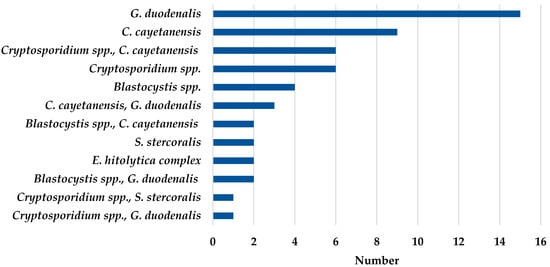
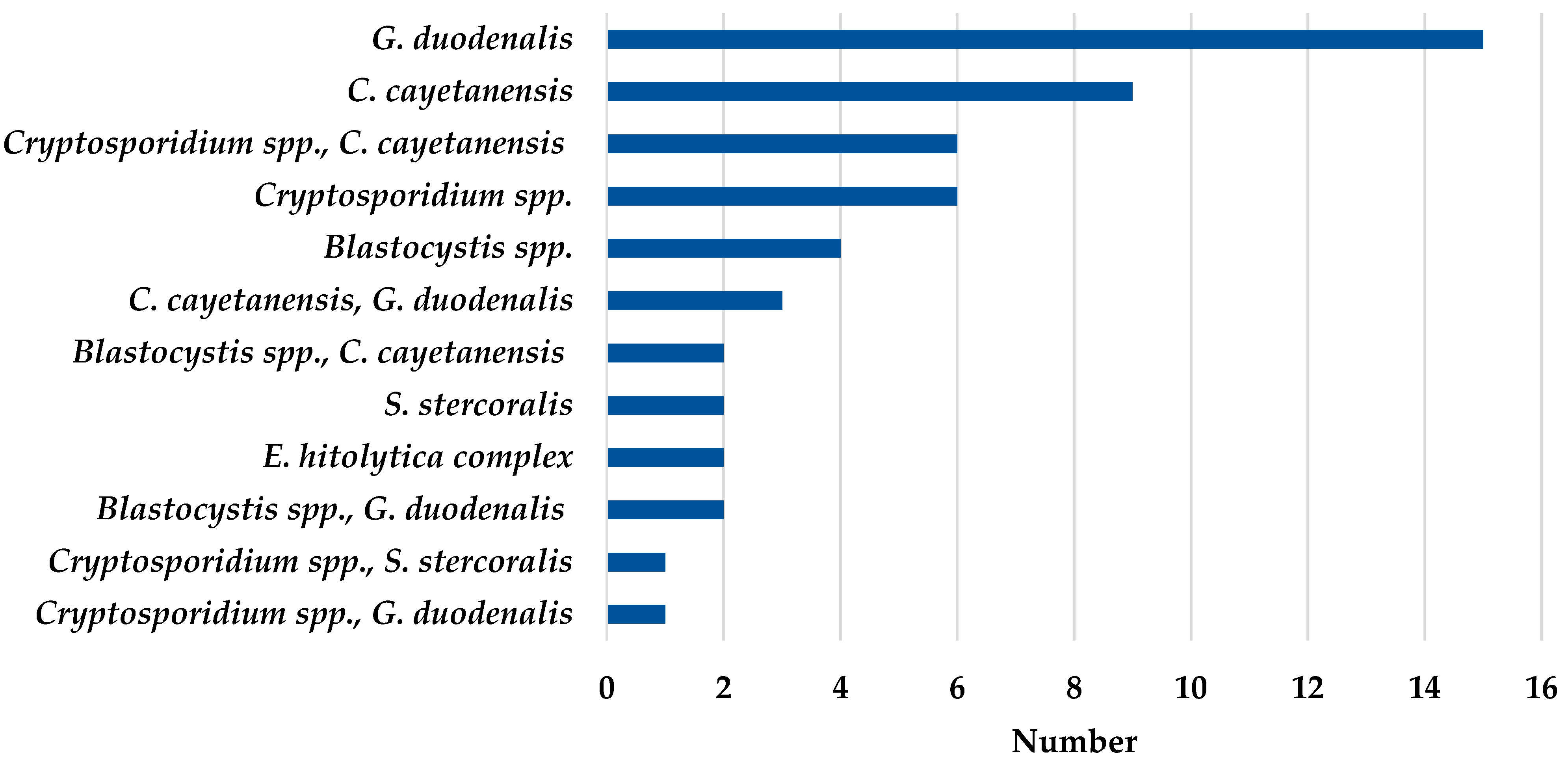
The Egyptian case series demonstrated a distinctive pattern of concomitant parasitic infections, with 37 (70%) of the patients in the ECS harbouring multiple concurrent parasitic species, in some instances involving up to five distinct parasites (Table 3). Among the asymptomatic patients, CPIs were highly prevalent, being detected in 33 (69%) of the cases (Table 4), highlighting the potential for subclinical parasitic carriage among patients receiving corticosteroid therapy. These infections encompassed both OIPIs and non-OIPIs, including protozoa and helminths. Among the identified non-OIPIs, D. fragilis and E. coli were the most frequently detected protozoa, whereas Ancylostoma duodenale represented the most prevalent helminth species (Table 4). Furthermore, mixed OIPIs were markedly observed within the ECS, indicating a complex parasitic infection profile (Figure 1).
Table 3.
Distribution of parasitic infections in Egyptian case series (n = 53).
Table 4.
Parasitic infections among symptomatic and asymptomatic individuals in the Egyptian case series.
Figure 1.
The distribution of opportunistic intestinal parasitic infections within the Egyptian case series receiving corticosteroid therapy. spp.: Species. S. stercoralis: Stongyloides stercoralis; C. cayetanensis: Cyclospora cayetanensis; G. duodenalis: Giardia duodenalis.
3.2. Literature Review Case Series (LRCS)
3.2.1. Search Results
A total of 3576 articles were initially identified through searches in the PubMed and Google Scholar databases, with 10 duplicate records removed. Following title and abstract screening, 151 articles were deemed potentially eligible for full-text review. However, 58 articles could not be accessed in full because of subscription and paywall restrictions, resulting in a substantial limitation during the retrieval process. Consequently, 93 studies underwent full-text evaluation, of which 58 satisfied the inclusion criteria. An additional 18 studies were identified through reference list screening of the papers included, bringing the final total to 76 studies. The detailed selection process and the corresponding flowchart of the literature search are illustrated in the (Supplementary File: Figure S1).
3.2.2. Characteristics of the Literature Review Case Series
The studies included in the current literature review case series were published between 1975 and 2024, covering nearly five decades of research. Table 5 summarizes the main characteristics of the 76 studies analyzed, whereas the LRCS were presented in detail (Supplementary File: Tables S4 and S5).
Table 5.
Characteristics of literature review case series—PReCT.
The reviewed literature encompassed both individual case reports and case series involving multiple patients, totalling 94 documented cases. A notable majority of the studies (62 out of 76; 82%) were published between 2000 and 2024, indicating a marked increase in scientific attention in recent years. In contrast, only 18% of the studies originated from the earlier period between 1975 and 1999. The geographic distribution of the studies was broad, reflecting contributions from both high-endemic and low-prevalence regions. The largest share of research (34 studies; 45%) originated from Asia, with India being the most prominent contributor (n = 11; 15%), followed by Japan (n = 7; 9%) and China (n = 5; 7%). North America accounted for 33% of the total (n = 25), with the United States emerging as the most frequently represented country (28%).
The 94 LRCS ranged in age from 1.5 to 91 years, with a mean age of 50.6 (±23.4) years. The age distribution varied across studies, with children accounting for 11%, adults for 53%, and elderly individuals for 36%. In terms of gender, males constituted the majority at 71.3%, while females represented 28.7% of the total (Table 5).
Exposure risk factors associated with acquiring OIPIs were reported for 23 LRCS. The risks included travel to parasitic endemic regions (ex., Indonesia, Thailand, Cuba) (n = 10), being a native of endemic areas (ex., Romania, Rwanda, Puerto Rico) (n = 9), swimming in potentially contaminated pools (n = 3), and receiving organ transplants from donors originating from endemic regions (n = 1) (Table 5, Supplementary File: Tables S4 and S5).
The indications for corticosteroid administration varied among the LRCS, including organ transplantation (20%), chronic obstructive pulmonary disease (13%), glomerulonephritis or nephrotic syndrome (9%), bronchial asthma (6%), SLE (4%), and other conditions (49%). Notably, a subset of patients (35/94; 37%) received concurrent immunosuppressive therapy alongside corticosteroid treatment. Comorbidities were commonly reported in the LRCS, with HTN documented in 13% of cases, DM in 10%, and other comorbidities in 13% (Table 5, Supplementary File: Tables S4 and S5).
Corticosteroids were administered to LRCS via various routes. Most patients received systemic therapy (66%), administered orally or intravenously, while others were treated with topical preparations, bolus injections, inhalers, or combined oral and topical therapies (10%). For 24% of cases, the route of administration was not reported. Among the different corticosteroids used, synthetic intermediate-acting glucocorticoids, such as prednisone, prednisolone, and methylprednisolone, were the most frequently prescribed (75/94; 80%), predominantly administered systemically. The daily dosage varied according to clinical requirements, ranging from 5 mg per day to 40 mg twice daily (Table 5, Supplementary File: Tables S4 and S5).
Regarding the duration of corticosteroid therapy, the majority (80/94, 85%) had received long-term corticosteroid therapy, with treatment durations ranging from 1 month to 20 years. In contrast, 14 patients (15%) underwent short-term therapy lasting from 1 day to 3 weeks (Table 5, Supplementary File: Tables S4 and S5).
Analysis of the association between corticosteroid therapy duration and OIPIs indicated a markedly higher prevalence among long-term users. S. stercoralis was the most frequently detected parasite (77%), followed by Cryptosporidium spp. (13%), both occurring predominantly in long-term therapy cases, along with other identified parasites. In contrast, Blastocystis spp. (2%) was observed exclusively among short-term corticosteroid users, represented by two cases (Table 5, Supplementary File: Tables S4 and S5).
3.2.3. Distribution and Clinical Pattern of Opportunistic Intestinal Parasitic Infections in LRCS—PReCT
A total of seven OIPI species were detected among the LRCS. S. stercoralis and Cryptosporidium spp. were the most reported parasites (Table 6). Gastrointestinal manifestations were predominant among the affected individuals, with diarrhea and abdominal pain being the most frequently reported symptoms (Table 6; Supplementary File: Tables S4 and S5).
Table 6.
Parasitological and clinical profile of the literature review case series (n = 94).
Among LRCS, extraintestinal manifestations were reported in more than half of the cases (51 cases, 54%). Respiratory symptoms (i.e., cough, dyspnea, wheezes, hypoxia) represented the most frequent category, observed in 26 individuals (27%). Multisystemic involvement (i.e., purities, edema, respiratory, general) was noted in 11 patients (12%), followed by general manifestations (i.e., weight loss, malaise, fatigue) in eight patients (9%). Skin rash and cholangiopathy were each reported in three patients (3%) (Table 6; Supplementary File: Tables S4 and S5).
3.2.4. Diagnostic Methods and Diagnostic Findings of OIPIs Among LRCS
The diagnostic approaches employed for the detection of OIPIs among the LRCS demonstrated substantial variation depending on the type of biological specimen examined and the diagnostic technique applied.
The wet mount (WM) examination of fecal samples represented the most frequently employed technique, applied in 45 cases, followed by histopathological biopsy performed in 27 cases. Staining methods, predominantly the modified Ziehl–Neelsen (mZN) technique, were used in 16 cases. Other diagnostic tools also implemented included culture, polymerase chain reaction (PCR) and sequencing, immunological assays (ImA), high-resolution melting curve (HRMC) analysis, electron microscopy (EM), bronchoalveolar lavage (BAL), and endoscopy, either individually or in combination, depending on the type of parasitic infection and the specific organ system involved.
A comprehensive summary of the diagnostic methodologies, specimen types, and respective parasitological findings for each OIPI identified among LRCS is presented in Table 7.
Table 7.
Summary of diagnostic approaches, sample types, and findings of OIPIs in LRCS.
3.2.5. Complications of Corticosteroid Therapy in OIPIs and Disease Progression
A comprehensive review of the documented LRCS revealed a diverse spectrum of clinical trajectories among patients with OIPIs.
The clinical consequences associated with corticosteroid therapy in patients with OIPIs were divided into two categories:
- Complications, which are direct pathological effects such as parasite invasion (dissemination of latent or subclinical infections), relapse (recurrence of parasitic symptoms after temporary improvement), and organ dysfunction (e.g., hepatic, renal, or respiratory suppression),
- Outcomes in the form of death, hospitalization (admission due to worsening symptoms, sepsis, or multi-organ involvement), treatment escalation (requirement for higher-dose or additional therapies), or cessation/change of immunosuppressives (management decision due to adverse events). The outcome is estimated according to each OIPI and the pathway of the infection for each patient’s status.
Hospitalization was documented in 87 cases, and 34 cases culminated in fatal outcomes. Information on the type of complications associated with corticosteroid therapy during opportunistic intestinal parasitic infections was reported for 67 cases. Among these, 43 cases demonstrated parasitic tissue invasion, 44 cases developed organ dysfunction, and 26 cases required treatment escalation. A summary of the clinical complications and outcomes associated with corticosteroid therapy and opportunistic intestinal parasitic infections is presented in (Table 8 and Supplementary File: Tables S4 and S5).
Table 8.
Clinical complications and outcomes with corticosteroid therapy and associated OIPIs.
4. Discussion
The findings from the analyzed ECS and LRCS offer significant insight into the epidemiological and clinical interplay between corticosteroid therapy and OIPIs, particularly in immunocompromised hosts. The demographic profile of the ECS and LRCS suggests that OIPIs are not confined to a specific age or sex but may affect a broad spectrum of immunocompromised patients. This finding is consistent with previous studies demonstrating that corticosteroid-induced susceptibility to infection is primarily driven by the degree and duration of immunosuppression rather than demographic characteristics alone [34,35,36]. Consequently, clinicians should maintain a high index of suspicion for opportunistic intestinal parasitic infections in any patient receiving corticosteroid therapy, irrespective of age or sex, particularly in the presence of prolonged treatment or additional immunosuppressive risk factors.
The coexistence of chronic comorbidities is likely to amplify the immunosuppressive effects of corticosteroid therapy, thereby increasing susceptibility to OIPIs. Conditions such as diabetes mellitus, hypertension, and chronic liver disease are independently associated with immune dysregulation through impaired innate and adaptive immune responses, chronic inflammation, and defective antimicrobial defences [37,38,39]. When combined with corticosteroid-induced immunosuppression, these alterations may act synergistically to facilitate parasite establishment, persistence, and progression to severe disease. Similar interactions between corticosteroid therapy and host comorbidities have been reported for other opportunistic infections, supporting the concept that infection risk is determined by the cumulative burden of immune dysfunction rather than corticosteroid exposure alone [40,41,42]. These findings emphasize the importance of comprehensive pre-treatment risk stratification, incorporating both underlying comorbidities and immunosuppressive therapies, to identify patients who may benefit from enhanced parasitological screening and closer clinical monitoring.
The broad range of clinical indications for corticosteroid therapy highlights that the risk of OIPIs is not disease-specific but is primarily related to the extent of immunosuppression induced by treatment. Previous studies have consistently demonstrated that the risk of opportunistic infections increases with cumulative glucocorticoid exposure, reflecting the combined effects of dose, duration, and route of administration rather than the underlying disease alone [41,43,44,45]. Beyond systemic immunosuppression, prolonged corticosteroid therapy disrupts intestinal barrier function, alters gut microbiota composition, and impairs mucosal immune responses, thereby creating a favourable environment for enteric opportunistic pathogens such as Strongyloides stercoralis and Cryptosporidium spp. [41]. The greater frequency of severe complications among long-term corticosteroid users observed in our study further supports the concept that cumulative glucocorticoid exposure is a major determinant of both infection susceptibility and adverse clinical outcomes.
The apparent lack of routine parasitological screening before initiating corticosteroid therapy highlights a potentially important gap in preventive clinical practice, particularly in parasite-endemic settings. Failure to identify latent infections before immunosuppression may permit otherwise asymptomatic or chronic infections to progress to severe or disseminated disease, especially in the case of S. stercoralis. This concern is supported by current evidence-based recommendations advocating pre-immunosuppression screening for S. stercoralis in individuals at risk of exposure, as well as reports demonstrating that early detection and treatment may prevent life-threatening hyperinfection syndrome [46,47]. Given the endemicity of intestinal parasitic infections in Egypt and similar settings [48], incorporating targeted parasitological screening into the pre-treatment assessment of patients requiring prolonged or intensive corticosteroid therapy may represent an effective strategy to reduce preventable morbidity and mortality [48,49].
The diversity of corticosteroid formulations and administration routes suggests that the risk of OIPIs is influenced not only by the choice of corticosteroid but also by the cumulative systemic immunosuppressive effect of therapy. Although systemic corticosteroids are generally associated with the greatest infectious risk, growing evidence indicates that prolonged or high-dose inhaled and locally administered corticosteroids may also contribute to clinically relevant immune suppression [49,50,51,52,53].
The contrasting parasite profiles observed between the ECS and the LRCS emphasize the combined influence of regional epidemiology, environmental exposure, and host immune status on the occurrence of OIPIs. While food- and waterborne protozoa predominated in the Egyptian cohort, the international literature was characterized by parasites capable of chronic autoinfection and dissemination under immunosuppression, consistent with previous reports [17,54,55,56,57]. These findings indicate that OIPIs should be considered within the local epidemiological context rather than as a uniform clinical entity.
An important finding of this study is that more than one-third of the published cases received concomitant immunosuppressive therapy in addition to corticosteroids. This observation suggests that the development and severity of OIPIs cannot always be attributed to corticosteroid therapy alone, as additional immunosuppressive agents may further compromise both innate and adaptive immune responses. The independent effect of corticosteroids should be interpreted with caution in these cases, as concomitant immunosuppressive therapy represents a potential confounding factor. Nevertheless, because corticosteroids were the common therapeutic exposure across all included patients and remain a well-established trigger for opportunistic parasitic infections, particularly S. stercoralis hyperinfection, they likely played a central role in disease progression, while additional immunosuppressive agents may have further amplified this risk. Furthermore, the predominance of nonspecific gastrointestinal manifestations together with the occurrence of asymptomatic infections suggests that reliance on clinical presentation alone may delay diagnosis.
Corticosteroid-treated patients may present with a broad clinical spectrum ranging from asymptomatic intestinal infection to severe multisystem disease, making diagnosis particularly challenging because gastrointestinal symptoms may overlap with corticosteroid-related adverse effects. In addition, the frequent occurrence of polyparasitism in endemic settings suggests that corticosteroid-induced immune dysfunction may permit the simultaneous persistence of multiple intestinal parasites, thereby increasing disease complexity and complicating diagnosis and treatment [58,59,60].
The severe clinical outcomes reported across the included studies highlight the substantial morbidity associated with OIPIs in immunocompromised patients. Disseminated S. stercoralis infection remains the most serious manifestation because of its unique ability to progress rapidly to hyperinfection and systemic dissemination following corticosteroid-induced immunosuppression. Likewise, severe cryptosporidiosis may result in persistent, life-threatening diarrheal illness with extraintestinal involvement in profoundly immunosuppressed patients, while C. cayetanensis infection may become prolonged, recurrent, and difficult to eradicate because of impaired cell-mediated immunity. Together, these observations emphasize that the clinical severity of OIPIs is determined not only by parasite-specific virulence but also by the cumulative degree of host immunosuppression.
Physicians are frequently forced to balance infection control against the risk of disease flare in patients requiring ongoing corticosteroid therapy for autoimmune or inflammatory conditions. This underscores the need for clear guidelines on pre-therapy screening, prophylactic antiparasitic measures, and post-therapy monitoring in endemic areas. The disproportionately high hospitalization (87 cases) and mortality rates (34 deaths) observed in LRCS provide compelling evidence that OIPIs, though often neglected in routine risk assessment, represent a major contributor to corticosteroid-related morbidity and mortality.
A strategic clinical framework should also be implemented. (i) In regions with parasitic endemicity or in patients with exposure history, pre-corticosteroid parasitological screening (stool microscopy/concentration, serology, molecular assays) or empiric prophylaxis (especially against Strongyloides) should be strongly considered. (ii) Recognizing that long-term, high-dose systemic corticosteroids pose the greatest risk, such patients warrant enhanced vigilance, prompt testing upon onset of GI symptoms, and possibly a lower threshold for initiating empiric anti-parasitic therapy. (iii) Regional mapping of S. stercoralis and Cryptosporidium prevalence could guide the optimization of screening and prophylaxis strategies according to geographic exposure and parasite-specific risk. (iv) Clinicians should maintain a high index of suspicion for OIPIs in PReCT presenting with new or worsening GI symptoms, especially when symptoms are atypical or resistant to standard management.
One limitation of this study relates to the literature search strategy. Although Google Scholar was searched using standardized search terms, only the first 200 retrieved records were screened as a pragmatic and reproducible approach. Consequently, some relevant studies indexed beyond this threshold may have been missed, introducing the possibility of selection bias. To minimize this risk, the reference lists of all eligible articles were also manually screened to identify additional relevant publications.
5. Conclusions
This study represents a well-documented Egyptian case series with a five-decade global literature review under a unified analytical framework. The comparative synthesis between the ECS and LRCS reveals the multifaceted, heterogeneous nature of OIPIs under corticosteroid therapy. The convergence of intestinal and extraintestinal manifestations across varied clinical and geographic contexts underscores the predictable risk pathways shaped by corticosteroid-induced immunosuppression. The Egyptian cases, in particular, delineate a distinctive epidemiological profile marked by extensive polyparasitism, immune tolerance, and the asymptomatic coexistence of both opportunistic and non-opportunistic species. This observation reflects the ecological complexity of host–parasite interactions in endemic environments. Therefore, this study underscores the urgent need to integrate preventive parasitic screening, risk stratification, and diagnostic vigilance into corticosteroid stewardship programmes. Recognizing OIPIs as an underappreciated yet clinically significant dimension of corticosteroid safety is imperative, especially in parasitically endemic settings, where timely intervention could avert severe complications and fatal outcomes. High-risk corticosteroid-treated patients, particularly those receiving long-term or intensive immunosuppressive therapy, should undergo risk-based parasitic screening and close clinical monitoring for early detection of opportunistic intestinal parasitic infections.
Despite these findings, the interpretation of the results should consider the limitations of the available evidence, including the descriptive nature of the included studies and methodological limitations of the systematic review, particularly the absence of prospective protocol registration due to the exploratory nature of the review. Future research should prioritize prospective cohort studies to better define the association between corticosteroid therapy and OIPIs, along with cost-effectiveness analyses evaluating routine parasitic screening strategies in corticosteroid-treated patients.
Supplementary Materials
The following supporting information can be downloaded at: https://www.mdpi.com/article/10.3390/parasitologia6040046/s1, Figure S1: PRISMA flow diagram of literature search and included studies. PRISMA flow diagram modified from Page et al. (2021) [61]; Table S1: PRISMA checklist; Table S2: Search strategy of the MeSH keywords and the MeSH terms; Table S3: Egyptian case series on opportunistic intestinal parasitic infections among patients receiving corticosteroid therapy; Table S4: Literature review case series on opportunistic intestinal parasitic infections among patients receiving corticosteroid therapy (Part 1); Table S5: Literature review case series on opportunistic intestinal parasitic infections among patients receiving corticosteroid therapy (Part 2).
Author Contributions
S.A.A.A., conceptualization; S.A.A.A., A.M. and S.E.M.G., methodology; S.A.A.A. and A.Q., software; S.A.A.A., A.M. and A.Q., validation; S.A.A.A. and A.Q., formal analysis; S.A.A.A. and A.M., investigation; S.A.A.A., A.M. and S.E.M.G., resources; S.A.A.A., A.M. and A.Q., data curation; S.A.A.A., writing—original draft; S.A.A.A., A.M., A.Q., P.K. and S.E.M.G., review and editing; S.A.A.A. and A.M., visualization; P.K., mentoring, and supervision; S.A.A.A., project administration. All authors have read and agreed to the published version of the manuscript.
Funding
This research received no external funding.
Institutional Review Board Statement
The study was conducted in accordance with the Declaration of Helsinki and was approved by the Institutional Review Board (IRB)/Research of Faculty of Medicine, Suez Canal University (Approval No. 5415; 16 January 2020).
Informed Consent Statement
Written informed consent was obtained from all participants or their legal guardians prior to enrollment. Participant confidentiality and anonymity were maintained throughout the study, and all data were analyzed in a de-identified manner.
Data Availability Statement
The original contributions presented in this study are included in the article/Supplementary Materials. Further inquiries can be directed to the corresponding author(s).
Conflicts of Interest
The authors declare that they have no known competing financial interests or personal relationships that could have appeared to influence the work reported in this paper.
Abbreviations
The following abbreviations are used in this manuscript:
| A. duodenale | Ancylostoma duodenale |
| AIDS | Acquired immunodeficiency syndrome |
| BAL | Bronchoalveolar lavage |
| C. cayetanensis | Cyclospora cayetanensis |
| C. mesnili | Chilomastix mesnili |
| CLD | Chronic liver disease |
| COPD | Chronic obstructive pulmonary disease |
| CPIs | Concomitant parasitic infections |
| D. fragilis | Dientamoeba fragilis |
| DALYs | Disability-adjusted life years |
| DM | Diabetes mellitus |
| E. coli | Entamoeba coli |
| E. histolytica | Entamoeba histolytica |
| E. vermicularis | Eneterobius vermicularis |
| ECS | Egyptian case series |
| EM | Electron microscopy |
| EULAR | The European League Against Rheumatism |
| G. duodenalis | Giardia duodenalis |
| H. nana | Hymenolypis nana |
| HRMC | High-resolution melting curve |
| HTN | Hypertension |
| IBD | Inflammatory bowel disease |
| ImA | Immunological assays |
| LRCS | Literature review case series |
| MeSH | Medical subject headings |
| mZN | Modified Ziehl–Neelsen |
| OIPIs | Opportunistic intestinal parasitic infections |
| PCR | Polymerase chain reaction |
| PReCT | Patients receiving corticosteroid therapy |
| S. stercoralis | Strongyloides stercoralis |
| SD | Standard deviation |
| SDGs | Sustainable development goals |
| SLE | Systemic lupus erythematosus |
| Spp. | Species |
| STHs | Soil-transmitted helminths |
| WM | Wet mount |
References
- Alkorta, M.; Manzanal, A.; Zeberio, I. A case of severe diarrhoea caused by Cyclospora cayetanensis in an immunocompromised patient in northern Spain. Access Microbiol. 2022, 4, 000313. [Google Scholar] [CrossRef] [Scilit] [PubMed]
- Penuelas Martinez, M.; Carmena, D.; Guzman Herrador, B.R.; Palau Miguel, M.; Saravia Campelli, G.; Garcia Alvarez, R.M.; Guerrero-Vadillo, M.; Dashti, A.; Koster, P.C.; Guevara Alemany, E.; et al. Marked increase in cryptosporidiosis cases, Spain, 2023. Euro Surveill. 2024, 29, 2300733. [Google Scholar] [CrossRef] [Scilit] [PubMed]
- Shirley, D.-A.; Moonah, S. Fulminant amebic colitis after corticosteroid therapy: A systematic review. PLoS Negl. Trop. Dis. 2016, 10, e0004879. [Google Scholar] [CrossRef] [Scilit] [PubMed]
- Singh, A.; Priyadarshi, K.; Rai, T.; Banerjee, T. A case report of Blastocystis infection and Steven Johnson’s syndrome. Trop. Biomed. 2019, 36, 987–992. [Google Scholar] [PubMed]
- Uslu, Ö.; Demirel, F.; Aydoğ, G.; Dinç, B.; Özkan, A.T. Strongyloides stercoralis infection in a patient initiating corticosteroid therapy for hypereosinophilia: A case report. Parasitol. Int. 2025, 106, 103024. [Google Scholar] [CrossRef] [Scilit] [PubMed]
- Al-Qobati, S.A.; Al-Nabehi, B.; Mohamad, A.; Al-Nabbhi, A.; Al-Kadi, M. Enteric protozoal infections among immunocompromised and immunocompetent people, Sana’a Town, Yemen. EC Microbiol. 2018, 14, 837–843. [Google Scholar]
- Laksemi, D.; Suwanti, L.T.; Mufasirin, M.; Suastika, K.; Sudarmaja, M. Opportunistic parasitic infections in patients with human immunodeficiency virus/acquired immunodeficiency syndrome: A review. Vet. World 2020, 13, 716. [Google Scholar] [CrossRef] [Scilit] [PubMed]
- World Health Organization. Ending Disease in Africa: Vision Strategies and Special Initiatives, 2023–2030. 2023. Available online: https://www.afro.who.int/publications/ending-disease-africa-vision-strategies-and-special-initiatives-2023-2030 (accessed on 31 March 2024).
- Brožová, K.; Jirků, M.; Lhotská, Z.; Květoňová, D.; Kadlecová, O.; Stensvold, C.R.; Samaš, P.; Petrželková, K.J.; Jirků, K. The opportunistic protist, Giardia intestinalis, occurs in gut-healthy humans in a high-income country. Emerg. Microbes Infect. 2023, 12, 2270077. [Google Scholar] [CrossRef] [Scilit] [PubMed]
- De, A. Current laboratory diagnosis of opportunistic enteric parasites in human immunodeficiency virus-infected patients. Trop. Parasitol. 2013, 3, 7–16. [Google Scholar] [CrossRef] [Scilit] [PubMed]
- Klein, N.C.; Go, C.H.-U.; Cunha, B.A. Infections associated with steroid use. Infect. Dis. Clin. 2001, 15, 423–432. [Google Scholar] [CrossRef] [Scilit] [PubMed]
- St. Georgiev, V. Opportunistic infections: Treatment and developmental therapeutics of cryptosporidiosis and isosporiasis. Drug Dev. Res. 1993, 28, 445–459. [Google Scholar] [CrossRef] [Scilit]
- Zhang, S.-X.; Wang, J.-C.; Li, Z.-W.; Zheng, J.-X.; Zhou, W.-T.; Yang, G.-B.; Yu, Y.-F.; Wu, X.-P.; Lv, S.; Liu, Q. Impact factors of Blastocystis hominis infection in persons living with human immunodeficiency virus: A large-scale, multi-center observational study from China. Infect. Dis. Poverty 2023, 12, 82. [Google Scholar] [CrossRef] [Scilit] [PubMed]
- Ahmed, S.A.; Kotepui, M.; Masangkay, F.R.; Milanez, G.D.; Karanis, P. Gastrointestinal parasites in Africa: A review. Adv. Parasitol. 2023, 119, 1–64. [Google Scholar] [CrossRef] [Scilit] [PubMed]
- Łanocha, A.; Łanocha-Arendarczyk, N.; Wilczyńska, D.; Zdziarska, B.; Kosik-Bogacka, D. Protozoan intestinal parasitic infection in patients with hematological malignancies. J. Clin. Med. 2022, 11, 2847. [Google Scholar] [CrossRef] [Scilit] [PubMed]
- Mirzaei, L.; Ashrafi, K.; Roushan, Z.A.; Mahmoudi, M.R.; Masooleh, I.S.; Rahmati, B.; Saadat, F.; Mirjalali, H.; Sharifdini, M. Strongyloides stercoralis and other intestinal parasites in patients receiving immunosuppressive drugs in northern Iran: A closer look at risk factors. Epidemiol. Health 2021, 43, e2021009. [Google Scholar] [CrossRef] [Scilit] [PubMed]
- Ahmed, S.A.A.; Mokhtar, A.B.; Mohamed, S.F.; El-Din, M.I.S.; Phanis, C.O.D.; Kazamia, S.; Schou, C.; Gładysz, P.; Lass, A.; Quattrocchi, A.; et al. Molecular characterization and risk analysis of Giardia duodenalis assemblages in corticosteroid-treated and non-treated patients in Ismailia, Arab Republic of Egypt. Gut Pathog. 2024, 16, 74. [Google Scholar] [CrossRef] [Scilit] [PubMed]
- Pisarski, K. The global burden of disease of zoonotic parasitic diseases: Top 5 contenders for priority consideration. Trop. Med. Infect. Dis. 2019, 4, 44. [Google Scholar] [CrossRef] [Scilit] [PubMed]
- Dougherty, M.; Bartelt, L.A. Giardia and growth impairment in children in high-prevalence settings: Consequence or co-incidence? Curr. Opin. Infect. Dis. 2022, 35, 417–423. [Google Scholar] [CrossRef] [Scilit] [PubMed]
- Chou, A.; Austin, R.L. Entamoeba histolytica infection. In StatPearls [Internet]; StatPearls Publishing: Treasure Island, FL, USA, 2023. [Google Scholar]
- Fu, X.; Zhong, Y.; Chen, L.; Ge, M.; Yu, M.; Sun, Y.; Shen, L. Global burden and trends of the Entamoeba infection-associated diseases from 1990 to 2019: An observational trend study. Acta Trop. 2023, 240, 106866. [Google Scholar] [CrossRef] [Scilit] [PubMed]
- Ahmed, S.A.A.; Quattrocchi, A.; Karanis, P. Cryptosporidium sp. infection in solid organ transplant recipients: A systematic review and meta-analysis. Pathog. Glob. Health 2024, 118, 305–316. [Google Scholar] [CrossRef] [Scilit] [PubMed]
- Torgerson, P.R.; Devleesschauwer, B.; Praet, N.; Speybroeck, N.; Willingham, A.L.; Kasuga, F.; Rokni, M.B.; Zhou, X.-N.; Fèvre, E.M.; Sripa, B. World Health Organization estimates of the global and regional disease burden of 11 foodborne parasitic diseases, 2010: A data synthesis. PLoS Med. 2015, 12, e1001920. [Google Scholar] [CrossRef] [Scilit] [PubMed]
- Chen, J.; Gong, Y.; Chen, Q.; Li, S.; Zhou, Y. Global burden of soil-transmitted helminth infections, 1990–2021. Infect. Dis. Poverty 2024, 13, 68–77. [Google Scholar] [CrossRef] [Scilit] [PubMed]
- Aberdein, J.; Singer, M. Clinical review: A systematic review of corticosteroid use in infections. Crit. Care 2005, 10, 203. [Google Scholar]
- Bleecker, E.R.; Menzies-Gow, A.N.; Price, D.B.; Bourdin, A.; Sweet, S.; Martin, A.L.; Alacqua, M.; Tran, T.N. Systematic literature review of systemic corticosteroid use for asthma management. Am. J. Respir. Crit. Care Med. 2020, 201, 276–293. [Google Scholar] [CrossRef] [Scilit] [PubMed]
- Meisel, J.; Perera, D.; Meligro, C.; Rubin, C. Overwhelming watery diarrhea associated with a Cryptosporidium in an immunosuppressed patient. Gastroenterology 1976, 70, 1156–1160. [Google Scholar] [CrossRef] [Scilit]
- Nair, K.; Gillon, J.; Ferguson, A. Corticosteroid treatment increases parasite numbers in murine giardiasis. Gut 1981, 22, 475–480. [Google Scholar] [CrossRef] [Scilit] [PubMed]
- Vadlamudi, R.S.; Chi, D.S.; Krishnaswamy, G. Intestinal strongyloidiasis and hyperinfection syndrome. Clin. Mol. Allergy 2006, 4, 8. [Google Scholar] [CrossRef] [Scilit] [PubMed]
- Genta, R.M. Dysregulation of strongyloidiasis: A new hypothesis. Clin. Microbiol. Rev. 1992, 5, 345–355. [Google Scholar] [CrossRef] [PubMed]
- Ericsson, C.D.; Steffen, R.; Siddiqui, A.A.; Berk, S.L. Diagnosis of Strongyloides stercoralis infection. Clin. Infect. Dis. 2001, 33, 1040–1047. [Google Scholar] [CrossRef] [Scilit] [PubMed]
- Asghari, A.; Sadeghipour, Z.; Hassanipour, S.; Abbasali, Z.; Ebrahimzadeh-Parikhani, H.; Hashemzaei, M.; Alimardani, V.; Hatam, G. Association between Blastocystis sp. infection and immunocompromised patients: A systematic review and meta-analysis. Environ. Sci. Pollut. Res. Int. 2021, 28, 60308–60328. [Google Scholar] [CrossRef] [Scilit] [PubMed]
- Mundell, L.; Lindemann, R.; Douglas, J. Monitoring long-term oral corticosteroids. BMJ Open Qual. 2017, 6, e000209. [Google Scholar] [CrossRef] [Scilit] [PubMed]
- Youssef, J.; Novosad, S.A.; Winthrop, K.L. Infection risk and safety of corticosteroid use. Rheum. Dis. Clin. N. Am. 2015, 42, 157. [Google Scholar] [CrossRef] [Scilit] [PubMed]
- Ramprasad, A.; Kodan, P.; Jonnalagadda, K.; Bir, R.; Verma, N.; Sahni, K.; Vikram, N.K.; Soneja, M.; Mirdha, B.R.; Wig, N. Seroprevalence of Strongyloides infection among steroid recipients in a tertiary care centre in North India. Le Infez. Med. 2022, 30, 593. [Google Scholar] [CrossRef] [Scilit] [PubMed]
- Liu, D.; Ahmet, A.; Ward, L.; Krishnamoorthy, P.; Mandelcorn, E.D.; Leigh, R.; Brown, J.P.; Cohen, A.; Kim, H. A practical guide to the monitoring and management of the complications of systemic corticosteroid therapy. Allergy Asthma Clin. Immunol. 2013, 9, 30. [Google Scholar] [CrossRef] [Scilit] [PubMed]
- Guzik, T.J.; Nosalski, R.; Maffia, P.; Drummond, G.R. Immune and inflammatory mechanisms in hypertension. Nat. Rev. Cardiol. 2024, 21, 396–416. [Google Scholar] [CrossRef] [Scilit] [PubMed]
- Lee, H.; Kim, M.-J.; Lee, I.-K.; Hong, C.-W.; Jeon, J.-H. Impact of hyperglycemia on immune cell function: A comprehensive review. Diabetol. Int. 2024, 15, 745–760. [Google Scholar] [CrossRef] [Scilit] [PubMed]
- Albillos, A.; Martin-Mateos, R.; Van der Merwe, S.; Wiest, R.; Jalan, R.; Álvarez-Mon, M. Cirrhosis-associated immune dysfunction. Nat. Rev. Gastroenterol. Hepatol. 2022, 19, 112–134. [Google Scholar] [CrossRef] [Scilit] [PubMed]
- Gregory, M.H.; Spec, A.; Stwalley, D.; Gremida, A.; Mejia-Chew, C.; Nickel, K.B.; Ciorba, M.A.; Rood, R.P.; Olsen, M.A.; Deepak, P. Corticosteroids increase the risk of invasive fungal infections more than tumor necrosis factor-alpha inhibitors in patients with inflammatory bowel disease. Crohn’s Colitis 360 2023, 5, otad010. [Google Scholar] [CrossRef] [Scilit] [PubMed]
- Chastain, D.B.; Spradlin, M.; Ahmad, H.; Henao-Martínez, A.F. Unintended consequences: Risk of opportunistic infections associated with long-term glucocorticoid therapies in adults. Clin. Infect. Dis. 2024, 78, e37–e56. [Google Scholar] [CrossRef] [Scilit] [PubMed]
- Riley, T.R.; George, M.D. Risk for infections with glucocorticoids and DMARDs in patients with rheumatoid arthritis. RMD Open 2021, 7, e001235. [Google Scholar] [CrossRef] [Scilit] [PubMed]
- Barbulescu, A.; Sjölander, A.; Delcoigne, B.; Askling, J.; Frisell, T. Glucocorticoid exposure and the risk of serious infections in rheumatoid arthritis: A marginal structural model application. Rheumatology 2023, 62, 3391–3399. [Google Scholar] [CrossRef] [Scilit] [PubMed]
- Yang, S.; Lai, Y.; Huang, M.; Tsai, C.; Wang, J. Corticosteroid dose and the risk of opportunistic infection in a national systemic lupus erythematosus cohort. Lupus 2018, 27, 1819–1827. [Google Scholar] [CrossRef] [Scilit] [PubMed]
- Strehl, C.; Bijlsma, J.W.; De Wit, M.; Boers, M.; Caeyers, N.; Cutolo, M.; Dasgupta, B.; Dixon, W.G.; Geenen, R.; Huizinga, T.W. Defining conditions where long-term glucocorticoid treatment has an acceptably low level of harm to facilitate implementation of existing recommendations: Viewpoints from an EULAR task force. Ann. Rheum. Dis. 2016, 75, 952–957. [Google Scholar] [CrossRef] [Scilit] [PubMed]
- Requena-Méndez, A.; Buonfrate, D.; Gomez-Junyent, J.; Zammarchi, L.; Bisoffi, Z.; Muñoz, J. Evidence-based guidelines for screening and management of strongyloidiasis in non-endemic countries. Am. J. Trop. Med. Hyg. 2017, 97, 645. [Google Scholar] [CrossRef] [Scilit] [PubMed]
- Ashiri, A.; Rafiei, A.; Beiromvand, M.; Khanzadeh, A.; Alghasi, A. Screening of Strongyloides stercoralis infection in high-risk patients in Khuzestan Province, Southwestern Iran. Parasites Vectors 2021, 14, 37. [Google Scholar] [CrossRef] [Scilit] [PubMed]
- Ahmed, S.A.; El-Moselhy, A.; El-Moammaly, A.; El-Shewy, K. Strongyloides stercoralis in patients on corticosteroids therapy using enzyme-linked immunosorbent assay and gelatin particles indirect agglutination tests: A diagnostic approach. Acta Parasitol. 2019, 64, 394–405. [Google Scholar] [CrossRef] [Scilit] [PubMed]
- World Gastroenterology Organisation. World Gastroenterology Organisation Global Guidelines. Management of Strongyloidiasis; WGO: Milwaukee, WI, USA, 2018. [Google Scholar]
- Lipworth, B.J. Systemic adverse effects of inhaled corticosteroid therapy: A systematic review and meta-analysis. Arch. Intern. Med. 1999, 159, 941–955. [Google Scholar] [PubMed]
- Miravitlles, M.; Auladell-Rispau, A.; Monteagudo, M.; Vázquez-Niebla, J.C.; Mohammed, J.; Nuñez, A.; Urrútia, G. Systematic review on long-term adverse effects of inhaled corticosteroids in the treatment of COPD. Eur. Respir. Rev. 2021, 30, 210075. [Google Scholar] [CrossRef] [Scilit] [PubMed]
- You, Y.; Ni, Y.; Shi, G. Inhaled corticosteroids and mycobacterial infection in patients with chronic airway diseases: A systematic review and meta-analysis. Respiration 2022, 101, 970–980. [Google Scholar] [CrossRef] [Scilit] [PubMed]
- Mash, B.R.; Bheekie, A.; Jones, P.; Group, C.A. Inhaled versus oral steroids for adults with chronic asthma. Cochrane Database Syst. Rev. 1996, 2010, CD002160. [Google Scholar]
- Ahmed, S.A.A.; Mohamed, S.F.; El-Mahallawy, H.S.; Quattrocchi, A.; Karanis, P. Gastrointestinal parasitic infections: Prevalence and risk factors in West Ismailia, Arab Republic of Egypt. Gut Pathog. 2024, 16, 29. [Google Scholar] [CrossRef] [Scilit] [PubMed]
- Nutman, T.B. Human infection with Strongyloides stercoralis and other related Strongyloides species. Parasitology 2017, 144, 263–273. [Google Scholar] [CrossRef] [Scilit] [PubMed]
- Krolewiecki, A.; Nutman, T.B. Strongyloidiasis: A neglected tropical disease (NTD). Infect. Dis. Clin. N. Am. 2019, 33, 135. [Google Scholar]
- Keiser, P.B.; Nutman, T.B. Strongyloides stercoralis in the immunocompromised population. Clin. Microbiol. Rev. 2004, 17, 208–217. [Google Scholar] [CrossRef] [Scilit] [PubMed]
- Cain, D.W.; Cidlowski, J.A. Immune regulation by glucocorticoids. Nat. Rev. Immunol. 2017, 17, 233–247. [Google Scholar] [CrossRef] [Scilit] [PubMed]
- Brooker, S.; Clements, A.C. Spatial heterogeneity of parasite co-infection: Determinants and geostatistical prediction at regional scales. Int. J. Parasitol. 2009, 39, 591–597. [Google Scholar] [CrossRef] [Scilit] [PubMed]
- Steinmann, P.; Utzinger, J.; Du, Z.-W.; Zhou, X.-N. Multiparasitism: A neglected reality on global, regional and local scale. Adv. Parasitol. 2010, 73, 21–50. [Google Scholar] [PubMed]
- Page, M.J.; McKenzie, J.E.; Bossuyt, P.M.; Boutron, I.; Hoffmann, T.C.; Mulrow, C.D.; Shamseer, L.; Tetzlaff, J.M.; Akl, E.A.; Brennan, S.E. The PRISMA 2020 statement: An updated guideline for reporting systematic reviews. BMJ 2021, 372, n71. [Google Scholar] [CrossRef] [Scilit] [PubMed]

Disclaimer/Publisher’s Note: The statements, opinions and data contained in all publications are solely those of the individual author(s) and contributor(s) and not of MDPI and/or the editor(s). MDPI and/or the editor(s) disclaim responsibility for any injury to people or property resulting from any ideas, methods, instructions or products referred to in the content. |
© 2026 by the authors. Licensee MDPI, Basel, Switzerland. This article is an open access article distributed under the terms and conditions of the Creative Commons Attribution (CC BY) license.