


Abstract
Zoonotic gastrointestinal parasites such as Toxocara canis and Ancylostoma caninum are a public health concern, particularly in tropical and urban environments. This study evaluated Mexican veterinarians’ perceptions, knowledge, and deworming practices regarding these parasites and their zoonotic risks. A nationwide online survey obtained 717 fully completed responses from veterinarians across all Mexican states, exceeding the required sample size. Inclusion criteria required participants to be active small-animal practitioners with no missing data on core deworming questions; veterinarians working exclusively in pharmacies, feed stores, boarding facilities, dog daycares, or grooming services were excluded. Overall ESCCAP guideline compliance was 34.2%. Compliance was highest in northern states (41.8%) and lowest in southern states (23.5%). Deworming practices in lactating dogs showed uniformly low adherence, and no state reached moderate compliance for puppies aged 1–3 weeks. Compliance with the recommended puppy deworming frequency was notably higher. Compliance with the recommended adult deworming frequency was very low (9.8%), while coprological monitoring was recommended by 43.4% of respondents. Professional formation was the strongest predictor of overall guideline adherence across nearly all criteria. The 16–20-year experience group showed the highest overall compliance. Sex was not a significant predictor of overall ESCCAP compliance; the only significant sex difference was observed for coprological monitoring, where female veterinarians showed higher compliance rates. These findings suggest that academic training, years of experience, and geographic region are independently associated with guideline adherence, underscoring the value of standardized national protocols and continuing education to strengthen zoonotic risk awareness among veterinarians in Mexico.
1. Introduction
Toxocara canis is a common roundworm of dogs and is considered one of the most prevalent zoonotic parasites worldwide. It causes visceral and ocular larva migrans in humans, especially in children who ingest contaminated soil. Its prevalence varies significantly across geographic regions, influenced by climate, hygiene, and the level of veterinary care [1].
Ancylostoma caninum, a hookworm of dogs, is also of zoonotic importance due to its ability to cause cutaneous larva migrans in humans. Infected dogs shed eggs in their feces, and the larvae can penetrate human skin, especially in warm, moist environments [2].
These two nematodes were selected as the focus of this study because they represent the most prevalent and epidemiologically significant zoonotic helminths transmitted by dogs in Mexico and Latin America [3,4,5]. T. canis is transmitted via ingestion of embryonated eggs from contaminated soil, transplacentally, or through transmammary transmission to puppies, making puppies the primary source of environmental contamination [3]. A. caninum is transmitted primarily through percutaneous larval penetration, posing particular risk in warm, moist environments typical of tropical Mexico [4,5,6]. Both parasites disproportionately affect vulnerable populations, children in the case of T. canis [7] and individuals with barefoot soil contact in the case of A. caninum [2,8]. Their combined public health impact, together with the availability of specific deworming recommendations targeting these species across different life stages of the dog, makes them ideal candidates for evaluating veterinary guideline adherence.
The epidemiological relevance of these parasites is particularly acute in tropical and subtropical regions of the Americas, where environmental conditions favor year-round transmission and free-roaming dog populations are common. For example, in a coastal tourist destination in the Yucatán Peninsula, 76% of fecal samples from free-roaming dogs tested positive for gastrointestinal parasites; A. caninum was the most prevalent species, followed by T. canis [5]. In coastal Cartagena (Colombia) soil, Toxocara contamination reached 46.2% and lack of canine deworming was independently associated with a 3.8-fold increase in human infection risk [9]. In four marginalized coastal communities in Ecuador, A. caninum prevalence in dogs was 53.6% and T. canis was 12.4%, with association with poor sanitation and dog managements, conditions shared by many coastal and peri urban communities in Mexico [7].
The presence of zoonotic gastrointestinal nematodes like T. canis and A. caninum in domestic dogs highlights the need for routine deworming and public health education [1]. These parasites are resilient and persist in the environment for long periods, increasing the risk of transmission [10]. Several studies have shown that even household pets with no apparent symptoms may be harboring parasitic infections, making them potential sources of zoonotic transmission [11]. This underscores the importance of regular fecal examinations and systematic treatments.
The ESCCAP (European Scientific Council Companion Animal Parasites) provides evidence-based guidelines for the diagnosis, treatment, and control of parasites in companion animals in most European regions [12]. The Tropical Council for Companion Animal Parasites (TroCCAP) complements these recommendations by adapting parasite control strategies to tropical and subtropical settings [13]. Critically, both ESCCAP and TroCCAP guidelines are risk-based: recommended deworming frequencies are not fixed but should be tailored to individual patient risk factors, including lifestyle, environment, and geographic location. ESCCAP recommends a minimum of four treatments per year in most European regions, with higher frequencies indicated for high-risk animals [12]. In tropical and subtropical regions, TroCCAP advises more frequent deworming due to the higher environmental burden of parasites, with monthly treatments often recommended in areas with heavy contamination [13].
In addition to region-specific recommendations, the World Small Animal Veterinary Association (WSAVA) promotes a preventive healthcare framework grounded in the assessment of individual and local epidemiological risk. Although not focused exclusively on parasitology, this approach supports the implementation of tailored parasite prevention strategies, aligning with the risk-based principles described by ESCCAP and TroCCAP [14].
Despite available guidelines, studies indicate that compliance with recommended deworming schedules among veterinarians varies widely. Factors such as lack of awareness, cost concerns, and perceived low risk contribute to inconsistent practices [15].
Veterinarians play a crucial role in zoonotic disease prevention through proper communication with pet owners about parasite control. Educating clients about the health implications of T. canis and A. caninum is vital for improving compliance and reducing transmission risk [16].
Risk-adapted, scheduled deworming not only protects pets but also has significant public health benefits. Studies have documented decreased prevalence of zoonotic helminths in communities with consistent veterinary outreach and control programs [17,18].
Children, due to their frequent hand-to-mouth behaviors and outdoor play habits, are particularly at risk for T. canis infections. Preventive measures include deworming pets, hand hygiene, and avoiding contaminated play areas [19].
Veterinary surveys in Latin America have shown suboptimal adherence to deworming guidelines. This suggests a need for region-specific strategies and training to improve practices in countries like Mexico [20].
There is a growing concern over the environmental persistence of T. canis eggs, which can remain infective in soil for years. Public awareness campaigns and urban sanitation are critical components of integrated parasite control [21].
Guidelines recommend that pregnant and lactating dogs be treated with safe anthelmintics to reduce vertical transmission of parasites to puppies [12,13]. However, in practice, this is often neglected due to concerns about drug safety or lack of clear protocols. A combined approach involving veterinary clinics, public health authorities, and educational institutions can enhance control efforts against zoonotic parasites in companion animals [22].
Standardizing national deworming protocols and ensuring continuing education for veterinarians could significantly reduce the burden of zoonotic helminths in dogs. Evidence from other countries supports the impact of such policy interventions [23]. awareness in Mexico regarding control strategies against T. canis and A. caninum in dogs, we developed and analyzed data from a survey on the deworming practices of veterinarians and also assessed whether the deworming habits in Mexico align with recommended deworming frequencies.
The main aim of this research was to assess the transmission risks and deworming protocols of roundworms and hookworms in dogs as expressed by veterinarians and evaluated in line with the latest ESCCAP guidelines. As part of this analysis, information was gathered on the presence of risk factors outlined in the ESCCAP guidelines. Furthermore, we examined whether the deworming frequencies reported by veterinarians align with the recommended frequency outlined in the guidelines.
2. Materials and Methods
2.1. Study Design
In the summer of 2022, an online survey was conducted across the 32 Mexican states to assess veterinarians’ awareness of parasitic zoonotic intestinal helminths. All states were included in the sampling frame. Regional representation was ensured through proportional stratified sampling, whereby the number of clinics sampled per state was determined proportionally to the number of registered small-animal clinics in that state relative to the national total (n = 12,159 clinics) [24,25]. This study focused on veterinarians specializing in small animal care. Information was gathered and analyzed regionally.
A national, observational, cross-sectional study was carried out using an anonymous questionnaire designed by parasitologists from the Committee 17 (Parasitology and Parasiticides) of the National Advisory Technical Council on Animal Health (CONASA for its initials in Spanish). The questionnaire was distributed via email to small animal veterinary clinics through the CONASA email account using Google Forms, from May to August 2022. The sampling unit was the veterinary clinic; one response per clinic was requested, to be completed by the veterinarian primarily responsible for companion animal care at that clinic. In clinics with multiple practitioners, the clinic director or lead small-animal veterinarian was asked to respond.
To achieve a 5% margin of error with 99% confidence, a minimum sample of 534 clinics was required. The sample size calculation was based on an expected prevalence of non-compliance with ESCCAP deworming guidelines of 30%, derived from prior surveys of veterinary deworming practices in Mexico [26]. The sample size for each state was determined proportionally to the number of clinics in each one. The random selection of clinics in each state was conducted using the “RAND” function in Excel.
The number of clinics sampled in each state was determined using the following formula:
where N represents the total number of clinics, which is 12,159 [24,25,27], n is the total sample size, and Nh is the number of clinics in each specific state. This formula ensures that the sample size for each state is proportional to the number of clinics it contains.
The survey was distributed electronically to 1049 veterinarians registered in the national census of the official national agency responsible for conducting censuses and statistical information in Mexico (INEGI). A total of 717 responses were received, yielding a response rate of 68.4%. Surveys were confidential, and veterinarians were informed of the study’s purpose and consented to participate. Veterinarians surveyed were responsible for the health care of companion animals. To maintain a homogeneous study population, canine grooming salons, establishments functioning only as pharmacies, feed stores, and pet food shops were excluded. The questionnaire underwent content validation by a panel of parasitologists from CONASA (Committee 17) and a formal pilot test subsequently underwent another structured expert validation process. It was reviewed and applied to the academic staff of the Parasitology Department of the Faculty of Veterinary Medicine of the UNAM, comprising 14 veterinarians, as well as to seven veterinarians with postgraduate training in pharmacology. This multidisciplinary group assessed the instrument for content relevance, clarity, comprehensiveness, and consistency with current parasitological and therapeutic practices. Feedback obtained during this process led to iterative refinements, including modifications in wording, question structure, and response options to minimize ambiguity and improve interpretability. Although a formal pilot test with a separate group of practicing veterinarians was not conducted, this expert-based pretesting provided a robust evaluation of the questionnaire prior to its distribution. Multiple-choice questionnaires were administered to small animal veterinarians in both urban and rural areas who had attended veterinary medical schools in Mexico personally or online using Google forms. The questionnaire collected data on perceptions regarding the zoonotic potential of dog parasites, deworming practices.
The survey comprised questions related to the antiparasitic active ingredient used and the deworming frequency.
The survey (Supplementary File S1) categorized questions into:
- (a)
- Sociodemographic data (veterinarian gender, years practicing the profession, State, graduate studies, academic or scientific association membership).
- (b)
- Health education (communication of zoonotic risks between owners and veterinarians)
- (c)
- Deworming guidelines (administration of antiparasitic drugs to pregnant and lactating dogs, to puppies and adult dogs; frequency of administration of endoparasiticides against roundworms and hookworms, and coprological studies recommendations before deworming; knowledge of ESCCAP guidelines).
Questions related to communication of the zoonotic risk awareness of T. canis and A. caninum between owners and veterinarians, as well as sociodemographic data and chosen anthelmintics were included in the survey but were not explored in this analysis.
A map depicting the proportion (%) of veterinarians deworming in compliance with ESCCAP risk-based recommendations was developed according to geographical regions established by INEGI (2020).
2.2. Data Analysis
To assess whether current deworming practices of surveyed veterinarians align with TROCCAP or ESCCAP deworming recommendations, the percentage of dogs dewormed according to these guidelines was calculated for each state. Pregnant, lactating dogs, puppies and adult dogs were deemed to be dewormed in compliance with the recommendations if they met the following criteria: (i) pregnant dogs were dewormed on days 40 or 55 of gestation with macrocyclic lactones or with fenbendazole from day 40 of gestation to day 2 after parturition; (ii) lactating dogs were dewormed at two weeks postpartum; (iii) puppies should be first dewormed starting at 14 days (2 weeks) of age and thereafter every 15 days until they are 8 weeks old, preferably with a product active against both immature and adult worms, and then monthly thereafter; (iv) compliance with ESCCAP recommendations, including the practice of conducting coprological exams.
Deworming practices in each Mexican state were classified into four categories based on the proportion of veterinarians complying with ESCCAP recommendations, using thresholds adapted from veterinary compliance and public health surveillance literature: excellent (>90%), good (60–90%), moderate (40–60%), or poor (<40%) [28]. These thresholds were selected to distinguish states achieving near-universal adherence (excellent), clinically meaningful compliance (good), partial compliance requiring improvement (moderate), and critically low adherence (poor). A summary of these categories is presented in Table 1.
Table 1.
Classification of ESCCAP deworming compliance levels by proportion of veterinarians meeting guideline criteria.
It is important to acknowledge that this compliance assessment applies ESCCAP criteria uniformly as a reference standard. Because ESCCAP guidelines are inherently risk-based and context-dependent, some veterinarians classified as “non-compliant” may have been making clinically appropriate, individualized decisions for specific patients. Our binary compliance classification therefore represents an approximation of adherence to guideline recommendations at the population level, rather than a judgment of individual clinical decision-making.
To examine associations between sociodemographic characteristics and ESCCAP compliance, chi-square tests (χ2) were performed for each combination of predictor variable (sex, years of professional experience, academic training, geographic region) and compliance outcome (criteria: deworming practices in pregnant and lactating dogs including timing; age at initiation of deworming in puppies; frequency of deworming in puppies and adult dogs; coprological testing prior to treatment; and overall compliance). Effect sizes were estimated using Cramér’s V (small: V = 0.10; medium: V = 0.030; large: V = 0.50). A multiple binary logistic regression model was subsequently fitted with overall compliance (≥4/8 criteria met) as the dependent variable and all four predictors entered simultaneously. Results are reported as odds ratio (OR) with 95% confidence intervals (CI). The model was fitted on n = 645 observations with complete data on all predictors. Model fit was assessed using psudo-R2 (McFadden) and the Akaike Information Criterion. All tests were two-tailed with α = 0.05. Analyses were performed using Stata (version 17.0; StataCorp LLC, College Station, TX, USA).
3. Results
The working universe included 717 veterinarians: 56.7% men, 33.8% women, and 9.5% chose not to respond. The largest percentage (29.60%) of respondents have practiced their profession for 11 to 15 years, 23.9% for zero to five years, 28.1% for six to 10 years, 10.6% for 16 to 20 years, and 7.8% for more than 20 years. Of the respondents, 82.3% work in a private clinic or practice, 14.8% in a hospital, 2.1% in a veterinary pharmacy, and 0.6% in a laboratory. The 0.2% who worked in a feed store were not considered because they did not provide medical care to companion animals.
The number of veterinarians with graduate studies included 330 specialized in companion animals, 58 with a master’s degree, six with a PhD, 307 with a diploma in small animal medicine, 280 are members of a companion animal specialist association, one veterinarian received a diploma in non-conventional species, and 86 were certified by the National Board of Certification in Veterinary Medicine and Animal Science, A.C. (CONCERVET for its initials in Spanish).
Veterinarians who were asked if they talk with their clients about the problems caused by Toxocara and/or Ancylostoma in dogs responded as follows: Always 25.10%, Frequently 42.20%, Occasionally 18%, Never 14.70%. Veterinarians were asked if they inform their clients about the likelihood that Toxocara and/or Ancylostoma can infect humans, and they responded as follows: Always 23.30%, Frequently 36.50%, Occasionally 22.60%, Never 17.60%.
3.1. National Compliance with ESCCAP Deworming Criteria
According to the compliance with ESCCAP guidelines, the responses were classified into four categories: >90% (Excellent), 60–90% (Good), 40–60% (Moderate), and >40% (Poor) [28].
National compliance rates with ESCCAP deworming criteria among Mexican veterinarians revealed substantial heterogeneity across the eight guideline components, with overall compliance, defined as meeting ≥4 of 8 criteria, achieved by only 34.2% of respondents (Table 2). The mean compliance score was 2.83 ± 1.90 criteria (range 0–8). C6 (correct puppy repeat dosing frequency) demonstrated Excellent compliance at 95.1% (n = 682), while C8 (correct adult deworming frequency) exhibited Poor compliance at only 9.8% (n = 70). Other criteria fell into the Poor to Moderate range: C7 (coprological monitoring, 43.4%), C1 (deworming pregnant dogs, 42.1%), C2 (correct trimester for pregnant dogs, 36.3%), C3 (deworming lactating dogs, 25.4%), C5 (correct puppy first deworming age, 18.0%), and C4 (correct timing for lactating dogs, 12.7%).
Table 2.
National compliance rates with ESCCAP deworming criteria (n = 717).
3.2. Compliance by Sociodemographic Groups
Overall ESCCAP compliance rates varied substantially across sociodemographic groups, with the most pronounced gradients observed for academic training and years of experience (Table 3). Sex differences were minimal: 36.4% of female veterinarians vs. 33.98% of male veterinarians. The only significant sex difference was for coprological monitoring, where female veterinarians showed higher rates (49.2% vs. 39.7%, χ2(1) = 5.147, p = 0.023, V = 0.089). Years of experience demonstrated a strong positive association: compliance increased from 15.7% (0–5 years) to 67.1% (16–20 years). Academic training exhibited an even steeper gradient: 10.0% (basic DVM) to 100.0% (PhD, n = 5). Regional variation: Northern 41.8% > Central 33.9% > Southern 23.5%.
Table 3.
Overall ESCCAP compliance rates (≥4/8 criteria) by sociodemographic group.
3.3. Statistical Associations Between Predictors and Compliance
Chi-square tests (Table 4) revealed that sex was the weakest predictor (overall: χ2 = 0.349, p = 0.555, V = 0.023), significant only for C7 (χ2 = 5.147, p = 0.023, V = 0.089) where females showed slightly higher adherence. Years of experience showed strong associations (overall: χ2 = 87.351, df = 4, p < 0.001, V = 0.349). Academic training showed the strongest associations overall: χ2 = 111.978, df = 4, p < 0.001, V = 0.395). Geographic region showed significant but weaker associations (overall: χ2 = 10.450, df = 2, p = 0.005, V = 0.121).
Table 4.
Chi-square test results: Association between sociodemographic predictors and ESCCAP compliance criteria.
3.4. Independent Predictors of Overall Compliance
Multivariable binary logistic regression (n = 645; pseudo-R2 = 0.216, AIC = 671.3) confirmed that academic training and years of experience were independent predictors of overall ESCCAP compliance. Each one-level increase in experience was associated with 77.7% higher odds of compliance (OR = 1.777, 95% CI [1.476, 2.139], p < 0.001). Academic training showed a dose–response: Diploma/Member OR = 4.565 (p < 0.001), Specialization OR = 7.385 (p < 0.001), Master’s OR = 15.625 (p < 0.001). Northern region: OR = 1.659 (p = 0.029). Sex was not significant (OR = 0.919, p = 0.684) (Table 5).
Table 5.
Multivariable binary logistic regression: Independent predictors of overall ESCCAP compliance (n = 645).
3.5. Geographic and Demographic Patterns by Deworming Practice
3.5.1. Deworming Practices on Pregnant Dogs (After Day 40 of Gestation)
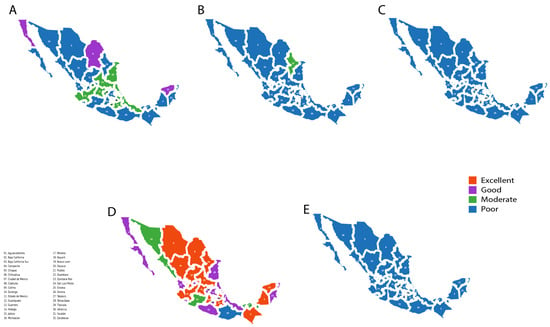
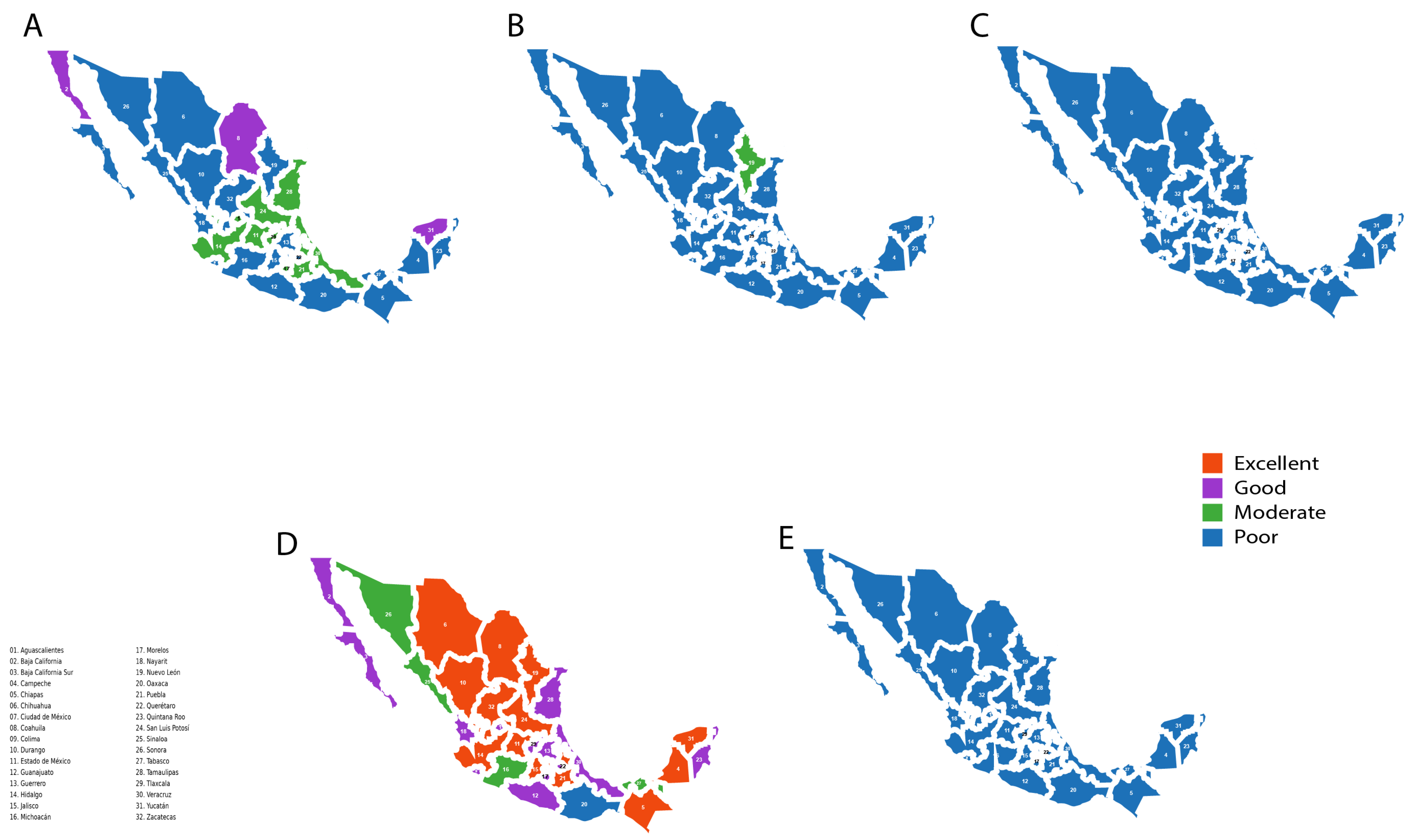
Northeast showed the highest state level compliance, while South showed the lowest (Figure 1A). Certified veterinarians by the National Board of Certification in Veterinary Medicine and Animal Science, A.C. and diploma holders demonstrated good compliance, while DVM with no board-certification showed 0% compliance; veterinarians with 16 to 20 years of experience achieved good compliance, compared to those with 0 to 5 years (poor).
Figure 1.
Geographic distribution of compliance with ESCCAP deworming guidelines across Mexican states, by criterion panel. (A) Pregnant dogs after day 40 of gestation. (B) Lactating dogs, 0–2 weeks postpartum. (C) Initial puppy deworming age, weeks 1–3. (D) Recommended puppy repeat dosing frequency. (E) Adult dog deworming and coprological testing.
3.5.2. Deworming Practices on Lactating Dogs (0 to 2 Weeks Postpartum)
Compliance was uniformly low across all regions, with Nuevo León (40.5%) as the only state approaching moderate adherence and most states reporting 0% of near-zero (Figure 1B).
3.5.3. Deworming Practices on Newborn Puppies
Compliance with correct initial puppy deworming age (weeks 1 to 3) was uniformly poor across all regions, with no state exceeding 40%. Overall, 25% of veterinarians deworm puppies at birth, 13.6% between weeks 1–3 (ESCCAP-compliant), 35.2% after one month, and 49.4% at five weeks (Figure 1C); academic training and experience gradients were attenuated compared to other criteria, with DVM paradoxically showing the highest formation-level compliance (17.7%).
3.5.4. Compliance with ESCCAP Guidelines by State Regarding the Recommended Frequency of Puppy Deworming
In contrast to all other criteria, compliance with recommended puppy repeat dosing frequency was high across most regions, with most states achieving good to excellent adherence (Figure 1D). The academic training was reversed for this criterion: DVM showed good compliance, while master’s and PhD holders showed a poor one.
3.5.5. Adult Dogs and Coprology Recommendation
Compliance with coprological monitoring and correct adult deworming frequency was poor across all regions; Compliance with the recommended adult deworming frequency was very low (9.8%), and coprological monitoring was recommended by 43.4% of respondents, rather than the ESCCAP-recommended individual risk-based protocol (Figure 1E). Only board-certified veterinarians reached moderate compliance for this criterion, with all other formation and experience groups remaining in the poor category.
4. Discussion
This study collected a total of 717 valid responses from veterinarians across all Mexican federal entities, exceeding the minimum sample size. Regarding ESCCAP guideline compliance by state, significant regional variation was observed.
The rationale for deworming at specific life stages is grounded in the biology of these parasites. T. canis undergoes somatic larval migration in adult dogs, with larvae reactivated during pregnancy and transmitted transplacentally and via colostrum or milk to puppies, making pregnant and lactating females the primary source of neonatal infection. Puppies thus begin shedding eggs as early as 3 weeks of age, explaining the ESCCAP recommendation to initiate deworming at 2 weeks of life. A. caninum larvae similarly undergo transmammary transmission. These biological pathways underscore why deworming of pregnant and lactating dogs and early puppy treatment are not optional but essential components of effective parasite control, and why low adherence to ESCCAP guidelines observed in this study represents a critical gap in zoonotic risk reduction.
Eight binary compliance criteria (C1–C8) were operationalized for survey responses based on ESCCAP guidelines [12]. C1 assessed whether the veterinarian recommends deworming pregnant dogs (recommendation: deworm at day 40 of pregnancy). C2 assessed whether the correct gestational trimester was indicated (recommendation: third trimester, ≥day 40). C3 assessed whether the veterinarian recommends deworming lactating dogs (recommendation: at parturition). C4 assessed whether the correct postpartum timing was indicated (recommendation: 0–2 weeks postpartum). C5 assessed whether the correct age for first puppy deworming was indicated (recommendation: weeks 1–3 weeks of life). C6 assessed whether the correct puppy repeat dosing frequency was indicated (recommendation: every two weeks until two months of age, then monthly until six months). C7 assessed whether the veterinarian recommends coprological monitoring prior to deworming adult dogs (recommendation: fecal examination before each treatment). C8 assessed whether the correct adult deworming frequency was indicated (recommendation: every three months or based on individual lifestyle risk assessment).
Geographic and sociodemographic patterns in ESCCAP guideline adherence revealed substantial heterogeneity across Mexican states and professional profiles, with most categories falling below moderate compliance thresholds. The low rates of deworming during pregnancy observed in this study are consistent with findings reported in Slovakia, where inadequate deworming during gestation correlated with higher prevalence of T. canis, reinforcing the importance of strict perinatal control measures [29]. In contrast to our findings, studies in Italy observed more consistent prenatal deworming practices among veterinarians, contributing to lower parasite loads in both dams and litters [30]. Similarly, low rates of compliance have been reported in Ghana, where veterinarians rarely address postpartum parasite transmission [31]. Studies from Ethiopia highlight the importance of deworming starting at week 1 to prevent zoonotic transmission, as delays increase environmental contamination [32]. The low awareness of zoonotic risks documented in our sample mirrors results in Kathmandu and Hawassa, where only 4.4% of owners were aware of zoonotic parasites [33].
Years of experience emerged as a significant and strong predictor of overall compliance. Adherence increased progressively from the last experienced group to peak at 16–20 years, with a slight decline among those with more than 20 years of experience. This patterns is consistent with findings reported in systematic reviews of physician performance, where a subset of studies documented an initial increase in quality with experience followed by a subsequent plateau or decline [34]. Another study found a positive or partially positive association between experience and best results [35]. In contrast, some studies in veterinary medicine have reported that younger practitioners showed higher guideline adherence than their more experienced counterparts [36]. A study in cardiology revealed that on physician guideline adherence, older age has a negative effect [37]. The divergence between these findings and ours may reflect differences in the type of guideline evaluated, the continuing education infrastructure available, or the professional culture specific to the Mexican veterinary context.
Advanced academic training was the strongest predictor of overall compliance, with veterinarians holding a master’s degree demonstrating good adherence and PhD-degree holders reaching excellent compliance, though the latter finding should be interpreted with caution given the small sample size. This clear dose–response gradient reflects the integration of evidence-based reasoning and critical appraisal skills acquired through postgraduate training [38]. However, one exception was observed: veterinarians without graduate studies showed the highest compliance with puppy repeat dosing frequency, a criterion that was near-universal across all groups. The apparent paradox does not undermine the overall finding that advanced training strongly predicts adherence; rather, it highlights that certain guideline components may be so well disseminated that they transcend educational stratification [39,40]. On the other hand, it is reasonable to speculate that advanced practitioners may apply more individualized protocols.
Lactating dog deworming had low adherence in nearly all states. For puppies between weeks 1 and 3, no state reached moderate levels. Compliance with the recommended frequency of puppy deworming was much higher as northern and central states often achieved excellent scores. For adult dogs and coprology recommendation, overall adherence was poor, with isolated good compliance in states like Yucatán and Campeche. These results are not isolated to Mexico: in western Canada, only 13% of surveyed veterinarians recommended deworming protocols for puppies that were consistent with established guidelines, and most protocols began too late to prevent endoparasite shedding during the critical early weeks of life [23]. This parallel underscores that neonatal and periparturient deworming, which demands strict timing and repeated treatments within a narrow developmental window, represents a globally under implemented component of companion animal parasite control.
When analyzed by academic background, board-certified veterinarians, those specialized in companion animals, with master’s degrees and PhD, consistently demonstrated the highest compliance with ESCCAP guidelines. This gradient mirrors the strong effect of postgraduate formation and is consistent with the evidence that advanced academic training is associated with greater uptake of evidence-based clinical practices in veterinary medicine [38].
Sex was not a statistically significant predictor of overall ESCCAP compliance in this study. Across the eight individual ESCCAP criteria, sex reached statistical significance only for coprological analyses, where females veterinarians showed higher adherence than males, though the effect size was small. These findings are consistent with evidence from Swiss equine practitioners in which demographic variables, including sex, were not associated with antibiotic prescribing compliance [41]. The higher female compliance in coprological monitoring parallels earlier observations that female veterinarians tend to be more proactive in behavior-related monitoring and preventive practices [42].
Rather than reflecting inherent differences in clinical competence or professional commitment, the lack of disparity may suggest that structural barriers historically associated with gender, such as time constraints arising from overlapping domestic and professional responsibilities, or underrepresentation in clinical leadership roles, have not produced measurable differences in guideline adherence in this sample. Collectively, these findings underscore the importance of maintaining equitable access to continuing education and professional networks so that all veterinarians, regardless of sex, can implement evidence-based parasite control practices.
Our findings underscore a concerning gap between recommended best practices and real-world implementation of coproparasitological diagnosis in Mexico. Despite ESCCAP guidelines on the importance of fecal examinations prior to deworming, only 43.4% of surveyed veterinarians reported recommending such tests in adult dogs, a finding that reflects the tendency to favor prophylactic anthelmintic administration over diagnostic-based decision-making This pattern is not unique to Mexico: in a survey of 50 veterinary clinics in Costa Rica, 84% of practitioners reported using anthelmintics prophylactically, with fecal analysis informing treatment decisions in only 28% of cases [43]; in Qatar, only 10% of pet owners reported that a veterinarian had requested fecal testing for intestinal parasites [16]. Low diagnostic utilization has similarly been documented through retrospective parasitological data from Italy, where the reliance on clinical signs rather than coprological confirmation was identified as a persistent gap in companion animal parasite management [44].
Further supporting this interpretation are findings from urban Nigeria, where high infection rates of T. canis and A. caninum in owned dogs have been linked to irregular deworming schedules and insufficient client education [45]. Similar patterns have been documented across sub-Saharan Africa and South Asia. In Zambia, A. caninum prevalence exceeded 70% in both urban and rural populations, underscoring the zoonotic burden sustained by inadequate parasite control [46]; in India, multivariate analysis confirmed that regular deworming and owner awareness were significant protective factor against helminth infections, highlighting that both veterinarian-level practice and client education are essential components of effective control [47]. In Ethiopia, deworming decisions were influenced more by custom than scientific rationale, paralleling the traditional, non-standardized practices observed among Mexican veterinarians [48]. Collectively, these patterns highlight the urgent need for improved diagnostic awareness, continuing education, and tailored communication strategies to bridge the implementation gap.
The findings of this study have direct implications for health education and public policy. The strong association between postgraduate professional formation and ESCCAP compliance suggests that targeted continuing education programs in clinical parasitology, particularly those focused on life-stage-specific deworming, coprological monitoring, and zoonotic risk communication, could substantially improve guideline adherence among practicing veterinarians. Veterinarians occupy a uniquely influential position as primary communicators of parasite prevention strategies to pet owners [12]. Public health policies should therefore prioritize: (1) mandatory inclusion of updated ESCCAP and TroCCAP guidelines in veterinary continuing education curricula; (2) subsidized or publicly funded deworming programs targeting free-roaming and community dogs in coastal and southern regions, where compliance rates were lowest; and (3) inter-sectoral coordination between veterinary professional associations (e.g., CONASA), public health authorities, and academic institutions to standardize deworming protocols and monitor their implementation at the national level. Recent One Health interventions in comparable tropical settings in Brazil [49] and Colombia [9] demonstrate that multi-sectoral approaches combining community education, deworming access, and sanitation improvements can significantly reduce the zoonotic parasite burden in both animal and human populations.
The recent literature has emphasized how global challenges such as climate change and rapid urbanization are intensifying the complexity of zoonotic parasite control. These environmental and demographic shifts create favorable conditions for the persistence and spread of parasites, underscoring the need for rigorous adherence to international guidelines like those of ESCCAP. Our findings resonate with this concern, as they reveal low compliance with ESCCAP recommendations among Mexican veterinarians. This suggests that the current level of engagement with systematic protocols is insufficient to address the evolving risks posed by parasite transmission in increasingly urbanized and climate-sensitive contexts.
Several limitations of this study should be acknowledged when interpreting the findings. First, potential selection bias may have affected the results. Although the survey was distributed to all veterinarians registered in the national census of the official national agency responsible for conducting censuses and statistical information (INEGI), participation was voluntary. Veterinarians who chose to respond may differ systematically from non-respondents. For example, those with greater interest in parasitology or continuing education may have been more likely to complete the survey, potentially overestimating compliance rates relative to the broader population of practicing veterinarian in Mexico. Second, although participation was voluntary, the survey achieved a response rate of 68.4%, which is considered high for online professional surveys. Nevertheless, the characteristics of non-respondents could not be assessed, and the possibility that veterinarian with lower guideline adherence were less likely to participate cannot be entirely excluded. Third, the descriptive and cross-sectional nature of the study limits casual inference: observed associations between professional formation, experience or region and compliance rates cannot establish directionality or rule out confounding. Fourth, compliance was assessed against ESCCAP criteria applied uniformly, without accounting for the risk-based, individualized nature of the guidelines; veterinarians who appropriately deviated from standard protocols for specific patient risk profiles would be classified as non-compliant in the present framework. Fifth, social desirability bias may have led some respondents to report practices more aligned with guidelines than their actual behavior. Finally, the absence of formal pilot testing among non-academic veterinarians, such as clinicians working in small animal practice, prior to survey distribution may have introduced ambiguity in question interpretation. Future studies would benefit from a validated instrument and longitudinal designs to assess temporal trends in compliance.
5. Conclusions
Our findings reveal low compliance with ESCCAP guidelines among Mexican veterinarians, especially regarding diagnostic testing and risk-based deworming. To improve outcomes, it is essential to promote adherence to international recommendations, expand access to diagnostics, and strengthen veterinary training. Additionally, understanding the local prevalence of canine parasites is crucial for developing context-specific guidelines that better reflect Mexico’s epidemiological reality.
Supplementary Materials
The following supporting information can be downloaded at https://www.mdpi.com/article/10.3390/parasitologia6030032/s1, File S1: SURVEY ON DOG DEWORMING PRACTICES.
Author Contributions
Conceptualization, Y.A.-C., J.F.d.J.T.-A., R.I.R.-V., D.R.S., C.A.V.y.M., S.N.O. and P.M.-d.G.; methodology, Y.A.-C. and S.N.O.; software, S.N.O.; validation, Y.A.-C., J.F.d.J.T.-A., R.I.R.-V., D.R.S., C.A.V.y.M., S.N.O. and P.M.-d.G.; formal analysis, Y.A.-C., C.A.V.y.M., P.M.-d.G. and S.N.O.; investigation, Y.A.-C., J.F.d.J.T.-A., R.I.R.-V. and D.R.S.; resources, Y.A.-C.; data curation, S.N.O.; writing—original draft preparation, Y.A.-C.; writing—review and editing, Y.A.-C., S.N.O., C.A.V.y.M., D.R.S. and P.M.-d.G.; supervision, Y.A.-C.; project administration, Y.A.-C.; funding acquisition, Y.A.-C. All authors have read and agreed to the published version of the manuscript.
Funding
The study was supported by grant PAPIIT IN213023 (Dirección de Asuntos del Personal Académico—Universidad Nacional Autónoma de México).
Institutional Review Board Statement
The study approved by the Institutional Ethics Committee of Programa de Maestría y Doctorado en Ciencias de la Producción y de la Salud Animal (code SICUAE.MDVM-2022/6-10, on 11 June 2022).
Informed Consent Statement
Informed consent was obtained from all subjects involved in the study.
Data Availability Statement
The original contributions presented in this study can be requested to the corresponding author.
Acknowledgments
During the preparation of this work the authors used ASISTENTE CUAED (https://asistenteia.cuaed.unam.mx) to translate text, improve language editing and readability. After using this tool, the authors reviewed and edited the content as needed and take full responsibility for the content of the publication. The authors are grateful to Comité 17: Parasitología y Parasiticidas of the Consejo Técnico Consultivo Nacional de Sanidad Animal for their contributions to this study.
Conflicts of Interest
The authors declare no conflicts of interest. The funders had no role in the design of the study; in the collection, analyses, or interpretation of data; in the writing of the manuscript; or in the decision to publish the results.
Abbreviations
The following abbreviations are used in this manuscript:
| ESCCAP | European Scientific Council Companion Animal Parasites |
| TroCCAP | Tropical Council for Companion Animal Parasites |
References
- Overgaauw, P.A.M.; van Knapen, F. Veterinary and public health aspects of Toxocara spp. Vet. Parasitol. 2013, 193, 398–403. [Google Scholar] [CrossRef] [Scilit] [PubMed]
- Bowman, D.D.; Montgomery, S.P.; Zajac, A.M.; Eberhard, M.L.; Kazacos, K.R. Hookworms of dogs and cats as agents of cutaneous larva migrans. Trends Parasitol. 2010, 26, 162–167. [Google Scholar] [CrossRef] [Scilit] [PubMed]
- Camacho-Giles, V.; Hortelano-Moncada, Y.; Torres-Carrera, G.; Gil-Alarcón, G.; Oceguera-Figueroa, A.; García-Prieto, L.; Osorio-Sarabia, D.; Cervantes, F.A.; Arenas, P. Helminths of free-ranging dogs and cats in an urban natural reserve in Mexico City and their potential risk as zoonotic agents. PLoS ONE 2024, 19, e0310302. [Google Scholar] [CrossRef] [Scilit] [PubMed]
- Lyons, M.A.; Malhotra, R.; Thompson, C.W. Investigating the free-roaming dog population and gastrointestinal parasite diversity in Tulúm, México. PLoS ONE 2022, 17, e0276880. [Google Scholar] [CrossRef] [Scilit] [PubMed]
- Nunez, C.R.; Duran, N.R.; Barrera, G.E.M.; Barrera, E.M.; Gomez, L.G.B. Dipylidium caninum, Ancylostoma spp., and Trichuris spp. Contamination in Public Parks in Mexico. Acta Sci. Vet. 2014, 42, 1188. [Google Scholar]
- Miller, A.D. Pathology of larvae and adults in dogs and cats. Adv. Parasitol. 2020, 109, 537–544. [Google Scholar] [CrossRef] [Scilit] [PubMed]
- Rodríguez-Vivas, R.I.; Gutierrez-Ruiz, E.; Bolio-González, M.E.; Ruiz-Piña, H.; Ortega-Pacheco, A.; Reyes-Novelo, E.; Manrique-Saide, P.; Aranda-Cirerol, F.; Lugo-Perez, J.A. An epidemiological study of intestinal parasites of dogs from Yucatan, Mexico, and their risk to public health. Vector Borne Zoonotic Dis. 2011, 11, 1141–1144. [Google Scholar] [CrossRef] [Scilit] [PubMed]
- Coello-Peralta, R.; Vinueza, R.L.; Pazmiño Gómez, B.J.; León, R.; Faytong-Haro, M.; Yancha Moreta, C.; Guerrero Lapo, G.E.; González González, M.; Andrada, A.R.; Alderete, M.; et al. Ecoepidemiology and zoonotic risk of intestinal parasites in humans and domestic dogs in marginalized coastal communities of Ecuador. Sci. Rep. 2025, 15, 30329. [Google Scholar] [CrossRef] [Scilit] [PubMed]
- Currie, B.J.; Hoopes, J.; Cumming, B. Cutaneous Larva Migrans Refractory to Therapy with Ivermectin: Case Report and Review of Implicated Zoonotic Pathogens, Epidemiology, Anthelmintic Drug Resistance and Therapy. Trop. Med. Infect. Dis. 2025, 10, 163. [Google Scholar] [CrossRef] [Scilit] [PubMed]
- Rivera, D.M.F.; Ballestas, I.T.; Aleans, M.M.; Meneses, J.M.; Calle, N.L.; Fontalvo, M.L.M.; Suarez, S.P.; Hoz, A.B.; Ballesteros, J.G.; Cantillo, V.Q.; et al. One Health assessment of zoonotic intestinal parasites in humans, dogs, and soil of coastal Cartagena, Colombia. Vet. World 2025, 18, 3352–3366. [Google Scholar] [CrossRef] [Scilit] [PubMed]
- Traversa, D. Pet roundworms and hookworms: A continuing need for global worming. Parasites Vectors 2012, 5, 91. [Google Scholar] [CrossRef] [Scilit] [PubMed]
- Robertson, I.D.; Thompson, R.C. Enteric parasitic zoonoses of domesticated dogs and cats. Microbes Infect. 2002, 4, 867–873. [Google Scholar] [CrossRef] [Scilit] [PubMed]
- ESCCAP. Worm Control in Dogs and Cats. Guideline 01; ESCCAP: Worcestershire, UK, 2017. [Google Scholar]
- Dantas-Torres, F.; Ketzis, J.; Mihalca, A.D.; Baneth, G.; Otranto, D.; Tort, G.P.; Watanabe, M.; Linh, B.K.; Inpankaew, T.; Jimenez Castro, P.D.; et al. TroCCAP recommendations for the diagnosis, prevention and treatment of parasitic infections in dogs and cats in the tropics. Vet. Parasitol. 2020, 283, 109167. [Google Scholar] [CrossRef] [Scilit] [PubMed]
- Steagall, P.V.; Pelligand, L.; Page, S.; Granick, J.L.; Allerton, F.; Bęczkowski, P.M.; Weese, J.S.; Hrček, A.K.; Queiroga, F.; Guardabassi, L. The 2023 World Small Animal Veterinary Association (WSAVA): List of essential medicines for cats and dogs. J. Small Anim. Pract. 2023, 64, 731–748. [Google Scholar] [CrossRef] [Scilit] [PubMed]
- Palmer, C.S.; Robertson, I.D.; Traub, R.J.; Rees, R.; Thompson, R.C. Intestinal parasites of dogs and cats in Australia: The veterinarian’s perspective and pet owner awareness. Vet. J. 2010, 183, 358–361. [Google Scholar] [CrossRef] [Scilit] [PubMed]
- Alho, A.M.; Lima, C.; Colella, V.; Madeira de Carvalho, L.; Otranto, D.; Cardoso, L. Awareness of zoonotic diseases and parasite control practices: A survey of dog and cat owners in Qatar. Parasites Vectors 2018, 11, 133. [Google Scholar] [CrossRef] [Scilit] [PubMed]
- Zanzani, S.A.; Gazzonis, A.L.; Scarpa, P.; Berrilli, F.; Manfredi, M.T. Intestinal parasites of owned dogs and cats from metropolitan and micropolitan areas: Prevalence, zoonotic risks, and pet owner awareness in northern Italy. Biomed. Res. Int. 2014, 2014, 696508. [Google Scholar] [CrossRef] [Scilit] [PubMed]
- Zanzani, S.A.; Di Cerbo, A.R.; Gazzonis, A.L.; Genchi, M.; Rinaldi, L.; Musella, V.; Cringoli, G.; Manfredi, M.T. Canine fecal contamination in a metropolitan area (Milan, north-western Italy): Prevalence of intestinal parasites and evaluation of health risks. Sci. World J. 2014, 2014, 132361. [Google Scholar] [CrossRef] [Scilit] [PubMed]
- Nguyen, T.; Clark, N.; Jones, M.K.; Herndon, A.; Mallyon, J.; Soares Magalhaes, R.J.; Abdullah, S. Perceptions of dog owners towards canine gastrointestinal parasitism and associated human health risk in Southeast Queensland. One Health 2021, 12, 100226. [Google Scholar] [CrossRef] [Scilit] [PubMed]
- Ramírez-Barrios, R.A.; Barboza-Mena, G.; Muñoz, J.; Angulo-Cubillán, F.; Hernández, E.; González, F.; Escalona, F. Prevalence of intestinal parasites in dogs under veterinary care in Maracaibo, Venezuela. Vet. Parasitol. 2004, 121, 11–20. [Google Scholar] [CrossRef] [Scilit] [PubMed]
- Despommier, D. Toxocariasis: Clinical aspects, epidemiology, medical ecology, and molecular aspects. Clin. Microbiol. Rev. 2003, 16, 265–272. [Google Scholar] [CrossRef] [Scilit] [PubMed]
- Bourgoin, G.; Callait-Cardinal, M.P.; Bouhsira, E.; Polack, B.; Bourdeau, P.; Roussel Ariza, C.; Carassou, L.; Lienard, E.; Drake, J. Prevalence of major digestive and respiratory helminths in dogs and cats in France: Results of a multicenter study. Parasites Vectors 2022, 15, 314. [Google Scholar] [CrossRef] [Scilit] [PubMed]
- Stull, J.W.; Carr, A.P.; Chomel, B.B.; Berghaus, R.D.; Hird, D.W. Small animal deworming protocols, client education, and veterinarian perception of zoonotic parasites in western Canada. Can. Vet. J. 2007, 48, 269–276. [Google Scholar] [CrossRef] [Scilit] [PubMed]
- Secretaría de Economía, M. Veterinarios Y Zootecnistas. Available online: https://www.economia.gob.mx/datamexico/en/profile/occupation/veterinarios-y-zootecnistas (accessed on 27 April 2026).
- INEGI. Directorio Estadístico Nacional de Unidades Económicas. 2023. Available online: https://www.inegi.org.mx/app/mapa/denue/default.aspx (accessed on 23 June 2023).
- Hernández, M.A. Diagnóstico Sobre la Situación Actual Relacionada Con Las Estrategias de Control Y Prevención de Helmintos Gastrointestinales en Perros de la Ciudad de México; Diagnóstico de Situación, Universidad Nacional Autónoma de México: Ciudad de México, México, 2023. [Google Scholar]
- Roussel, C.; Drake, J.; Ariza, J.M. French national survey of dog and cat owners on the deworming behaviour and lifestyle of pets associated with the risk of endoparasites. Parasites Vectors 2019, 12, 480. [Google Scholar] [CrossRef] [Scilit] [PubMed]
- Jarošová, J.; Antolová, D.; Lukáč, B.; Maďari, A. A Survey of Intestinal Helminths of Dogs in Slovakia with an Emphasis on Zoonotic Species. Animals 2021, 11, 3000. [Google Scholar] [CrossRef] [Scilit] [PubMed]
- La Torre, F.; Di Cesare, A.; Simonato, G.; Cassini, R.; Traversa, D.; Frangipane di Regalbono, A. Prevalence of zoonotic helminths in Italian house dogs. J. Infect. Dev. Ctries. 2018, 12, 666–672. [Google Scholar] [CrossRef] [Scilit] [PubMed]
- Amissah-Reynolds, P.K.; Monney, I.; Adowah, L.M.; Agyemang, S.O. Prevalence of Helminths in Dogs and Owners’ Awareness of Zoonotic Diseases in Mampong, Ashanti, Ghana. J. Parasitol. Res. 2016, 2016, 1715924. [Google Scholar] [CrossRef] [Scilit] [PubMed]
- Paulos, D.; Addis, M.; Fromsa, A.; Mekibib, B. Prevalence of gastrointestinal helminthes among dogs and owners perception about zoonotic dog parasites in Hawassa Town, Ethiopia. J. Public Health Epidemiol. 2012, 4, 205–209. [Google Scholar] [CrossRef] [Scilit]
- Sukupayo, P.R.; Tamang, S. Prevalence of Zoonotic Gastrointestinal Helminth Parasite among Dogs in Suryabinayak, Nepal. Vet. Med. Int. 2023, 2023, 3624593. [Google Scholar] [CrossRef] [Scilit] [PubMed]
- Choudhry, N.K.; Fletcher, R.H.; Soumerai, S.B. Systematic review: The relationship between clinical experience and quality of health care. Ann. Intern. Med. 2005, 142, 260–273. [Google Scholar] [CrossRef] [Scilit] [PubMed]
- Ajmi, S.C.; Aase, K. Physicians’ clinical experience and its association with healthcare quality: A systematised review. BMJ Open Qual. 2021, 10, e001545. [Google Scholar] [CrossRef] [Scilit] [PubMed]
- Hagley, S.P.; Kruppert, A.; Leal, R.O.; Pizarro Del Valle, J.C.; Iannucci, C.; Hennink, I.; Boiron, L.; Hoehne, S.N. Self-Reported Clinical Practice of Small Animal Cardiopulmonary Resuscitation and Compliance with RECOVER Guidelines Among Veterinarians in Eight Western European Regions. Front. Vet. Sci. 2022, 9, 919206. [Google Scholar] [CrossRef] [Scilit] [PubMed]
- Hoorn, C.J.G.M.; Crijns, H.J.G.M.; Dierick-van Daele, A.T.M.; Dekker, L.R.C. Review on Factors Influencing Physician Guideline Adherence in Cardiology. Cardiol. Rev. 2019, 27, 80–86. [Google Scholar] [CrossRef] [Scilit] [PubMed]
- Jin, Y.H.; Tan, L.M.; Khan, K.S.; Deng, T.; Huang, C.; Han, F.; Zhang, J.; Huang, Q.; Huang, D.; Wang, D.Q.; et al. Determinants of successful guideline implementation: A national cross-sectional survey. BMC Med. Inform. Decis. Mak. 2021, 21, 19. [Google Scholar] [CrossRef] [Scilit] [PubMed]
- Vishnupriya, C.; Thomas, N.; Kumar, G.; Trikkur, S.; Maria Thomas, A.; Ponnaboina, S.S.; Saju, D. Assessment of Electrocardiogram (ECG) Interpretation Proficiency Among Paramedics in a Tertiary Care Teaching Hospital. Cureus 2025, 17, e95881. [Google Scholar] [CrossRef] [Scilit] [PubMed]
- Altulayhi, A.; Alrusayni, Y.A.; Alhnaya, M. The Attitudes of Healthcare Workers Towards Cardiopulmonary Resuscitation Training in Qassim, Saudi Arabia. Cureus 2025, 17, e92418. [Google Scholar] [CrossRef] [Scilit] [PubMed]
- Kunz, T.; Torgerson, P.R.; Schoster, A. Survey on the use of antibiotics among Swiss equine veterinarians. Schweiz. Arch. Tierheilkd. 2023, 165, 105-0. [Google Scholar] [PubMed]
- Patronek, G.J.; Dodman, N.H. Attitudes, procedures, and delivery of behavior services by veterinarians in small animal practice. J. Am. Vet. Med. Assoc. 1999, 215, 1606–1611. [Google Scholar] [CrossRef] [Scilit]
- de Oliveira, J.B.; De Oliveira, J.B.; Calderón, S.; Romero, J.J. Prácticas de diagnóstico y control de parásitos de caninos y felinos en 50 clínicas veterinarias del área metropolitana de Costa Rica. Cienc. Vet. 2008, 26, 51–71. [Google Scholar]
- Morelli, S.; Colombo, M.; Traversa, D.; Iorio, R.; Paoletti, B.; Bartolini, R.; Barlaam, A.; Di Cesare, A. Zoonotic intestinal helminthes diagnosed in a 6-year period (2015–2020) in privately owned dogs of sub-urban and urban areas of Italy. Vet. Parasitol. Reg. Stud. Rep. 2022, 29, 100689. [Google Scholar] [CrossRef] [Scilit] [PubMed]
- Kamani, J.; Massetti, L.; Olubade, T.; Balami, J.A.; Samdi, K.M.; Traub, R.J.; Colella, V.; González-Miguel, J. Canine gastrointestinal parasites as a potential source of zoonotic infections in Nigeria: A nationwide survey. Prev. Vet. Med. 2021, 192, 105385. [Google Scholar] [CrossRef] [Scilit] [PubMed]
- Bwalya, E.C.; Nalubamba, K.S.; Hankanga, C.; Namangala, B. Prevalence of canine gastrointestinal helminths in urban Lusaka and rural Katete Districts of Zambia. Prev. Vet. Med. 2011, 100, 252–255. [Google Scholar] [CrossRef] [Scilit] [PubMed]
- Rajpoot, P.; Singh, M.; Shakya, M.; Sharma, A.K.; Bhangale, G.N.; Mourya, A.; Jatav, G.P.; Choudhary, N.S. Percent positivity and risk analysis of zoonotic intestinal parasites (helminths) in dogs population-a participatory epidemiological study. Vet. Parasitol. Reg. Stud. Rep. 2026, 69, 101443. [Google Scholar] [CrossRef] [Scilit] [PubMed]
- Tamerat, N.; Abera, D.; Teha, R.; Terefe, Y.; Lemma, F. Cat and dog gastrointestinal helminth and assessment of community perception on helminthic zoonosis in Haramaya town, eastern Ethiopia. AEJSR 2015, 10, 299–306. [Google Scholar]
- do Nascimento, K.K.F.; Melo, P.H.T.; Neto, J.S.C.; do Nascimento, K.K.F.; dos Santos, F.S.; da Silva, G.M.; Brandespim, D.F.; de Oliveira, J.B. One Health strategies for the prevention and control of infections by parasites with zoonotic potential in canines and felines from Quilombola communities in the northeast region of Brazil. Res. Soc. Dev. 2024, 13, e2913946790. [Google Scholar] [CrossRef] [Scilit]

Disclaimer/Publisher’s Note: The statements, opinions and data contained in all publications are solely those of the individual author(s) and contributor(s) and not of MDPI and/or the editor(s). MDPI and/or the editor(s) disclaim responsibility for any injury to people or property resulting from any ideas, methods, instructions or products referred to in the content. |
© 2026 by the authors. Licensee MDPI, Basel, Switzerland. This article is an open access article distributed under the terms and conditions of the Creative Commons Attribution (CC BY) license.