


Abstract
Two new species of Lonchaeidae in the genus Lonchaea, namely Lonchaea desirade sp. nov. and Lonchaea minutissima sp. nov., are described from the island of Guadeloupe in the Lesser Antilles, an island group in the southern Caribbean Sea. The genitalia of the new species are figured, and comparison is made with other similar species in the Neotropical fauna. Previous lonchaeid records for the Caribbean islands are reviewed.
1. Introduction
The Lonchaeidae, or lance-flies, are a small family of Diptera which includes some 610 species. They are moderately small in size, 3–6 mm, stout-bodied and hairy flies with black halteres with an entirely shiny black body colour, although many species exhibit a varying number of yellow tarsomeres or a partly orange antennal postpedicel. In the majority of cases, identification depends on the characters of the male terminalia. The genus Lonchaea Fallén, 1820 is the largest within the family with 238 species known worldwide [1]. In the Neotropics, there is a distinctive fauna dominated by the genera Dasiops Rondani, 1856, and Neosilba Waddill & Weems, 1978, the latter genus apparently endemic to this realm. Lonchaea, with 38 species, is the third most common genus after Dasiops with 58 species and Neosilba with 40 species [1]. This compares to 70 species of Lonchaea currently described from the Nearctic.
The Lonchaea fauna of the Neotropics has received little taxonomic attention, with, apart from Lonchaea panguanae MacGowan & Tschirnhaus, 2024 [2], no species having been described since 1988 [3]. In contrast, Neosilba, a genus restricted to the Neotropics and whose members often have an impact on agricultural crops, has been the focus of a substantial amount of recent taxonomic and ecological study with 22 species described since 2010 [4,5,6,7]. The only attempt to produce a key to the Neotropical Lonchaea was by Luna [3], who provided a key to 30 species. Further taxonomic review and an updated key to the genus in the Neotropics are overdue.
Within the Neotropical lonchaeid fauna, that of the Caribbean islands has been little studied, with records of only some nine species in the literature. The first published record is of Neosilba glaberrima (Wiedemann, 1830) [8], which is described from the “West Indies (St. Croix Island?)” and later from Trinidad [9]. The holotype of Lonchaea orchidearum Townsend, 1895 is from Kingston, Jamaica [10]; however, Luna [3] (p. 250) states that this species needs to be redescribed as the existing descriptions do not allow for its adequate identification or taxonomic placement. Dasiops bruneri Malloch, 1931 was described from Havana, Cuba [11], and in the list of new insect records for Puerto Rico Medina Gaud & Martorell [12] record Dasiops coracinus McAlpine, 1964, Dasiops passifloris McAlpine, 1964 and Neosilba certa (Walker, 1853). The holotype of Neosilba perezi (Romero & Ruppel, 1973) was described from Puerto Rico [13], and the World Catalogue of Lonchaeidae [1] also lists this species from the Caribbean countries of Cuba, Honduras, Jamaica, and the Dominican Republic. The holotype of Dasiops rugulosus Norrbom & McAlpine, 1997 was intercepted in material from a plane originating in Port of Spain, Trinidad [14]. McAlpine & Steyskal [9] note a female specimen of Neosilba dimidiata (Curran, 1932) also from Trinidad, although whether this specimen can be definitely attributed to this species on the basis of a female may be questionable.
Specimens collected during the expedition, “Our Planet Reviewed—Islands of Guadeloupe 2024”, organized by the Regional Agency of Biodiversity for the islands of Guadeloupe and the National Museum of Natural History, France, have added a further two undescribed species of Lonchaea to the fauna of this region, which are described below.
2. Materials and Methods
The “Our Planet Reviewed—Islands of Guadeloupe 2024” initiative, led by the Regional Biodiversity Agency (ARB-IG) and the French National Museum of Natural History, was a major scientific expedition focused on exploring, documenting, and protecting the neglected marine and terrestrial biodiversity of Guadeloupe’s southern islands, specifically Les Saintes, Marie-Galante, and La Désirade. This initiative examines biodiversity in various under-explored regions globally.
The survey stage in 2024 deployed a wide range of sampling techniques but Lonchaeid specimens were only captured in Malaise traps, indicated by “MAL” in the specimen data, and by traps utilizing the coupling of light attraction (blue LEDs) and interception-based PolytrapTM. These combine the interception effect of a Polytrap™ trap with a low-power, battery-operated light attractant controlled by a timer. The blue LED strips offer a specific light spectrum that has previously proven effective for collecting insects in French Guiana and the French Antilles. Collected specimens were sorted into families and stored in alcohol prior to examination by relevant specialists. Once removed from the alcohol, lonchaeid specimens were placed on their side on a piece of tissue paper and allowed to dry naturally, thus ensuring the wings were not crumpled or stuck together. After drying, specimens were micro-pinned and staged with accompanying data labels. Male genitalia were removed and cleared in 10% KOH before examination, after which they were stored in a glycerol-filled micro-vial attached to the specimen pin. The taxonomic terms used in describing the new species and the orientation of the genitalia figures follow the standards adopted in the Lonchaeidae chapter of the Manual of Afrotropical Diptera [15].
Abbreviations used for type depositories. INRAE: Centre Régional de recherche de l’ INRAE, Petit-Bourg, Guadeloupe. MNHN: Muséum Nationale Historie Naturelle, Paris, France. NMS: National Museums of Scotland, Edinburgh, Scotland.
3. Systematics
New Species
Genus Lonchaea Fallén, 1820.
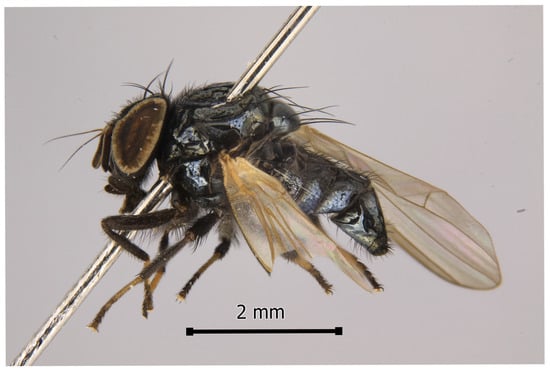
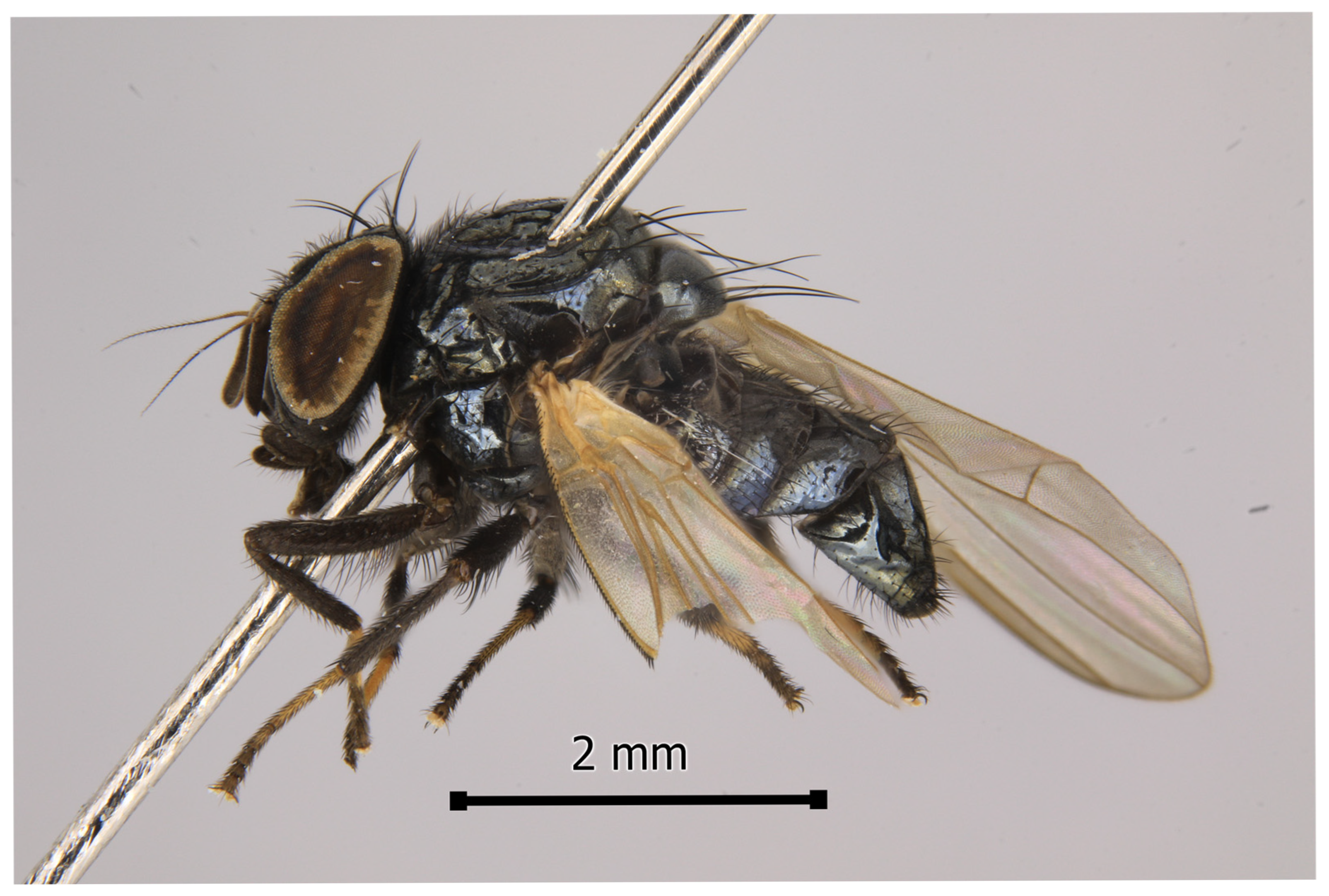
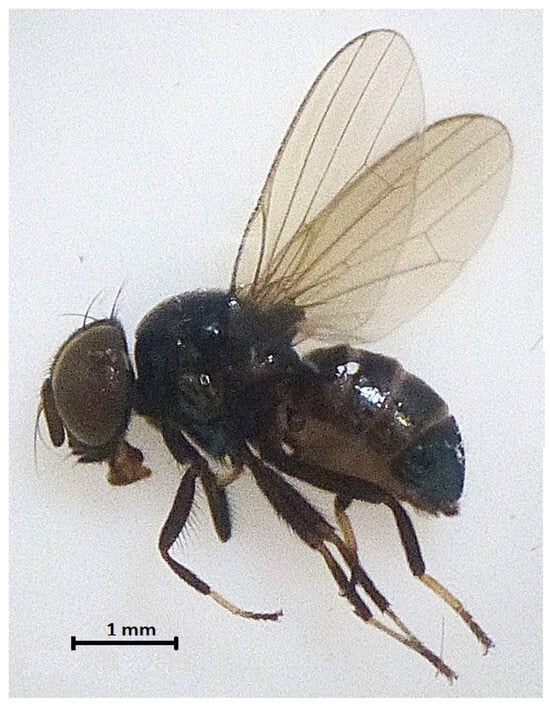
Figure 1.
Lonchaea desirade male paratype.
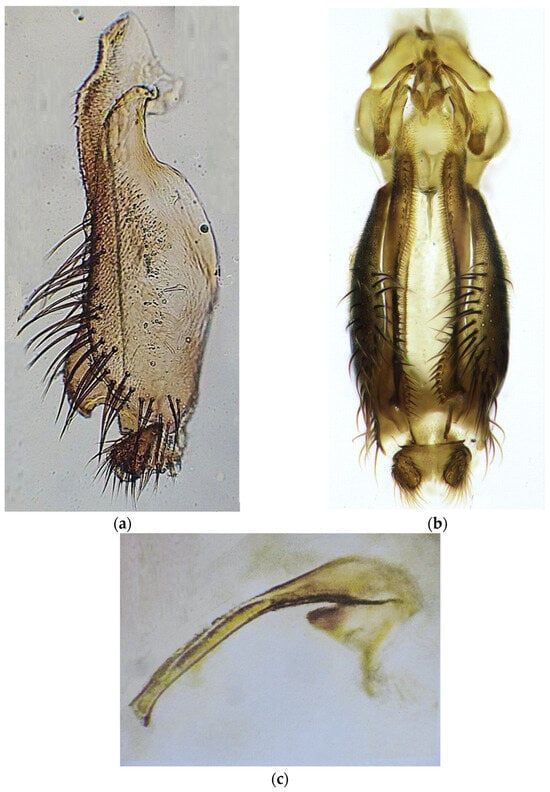
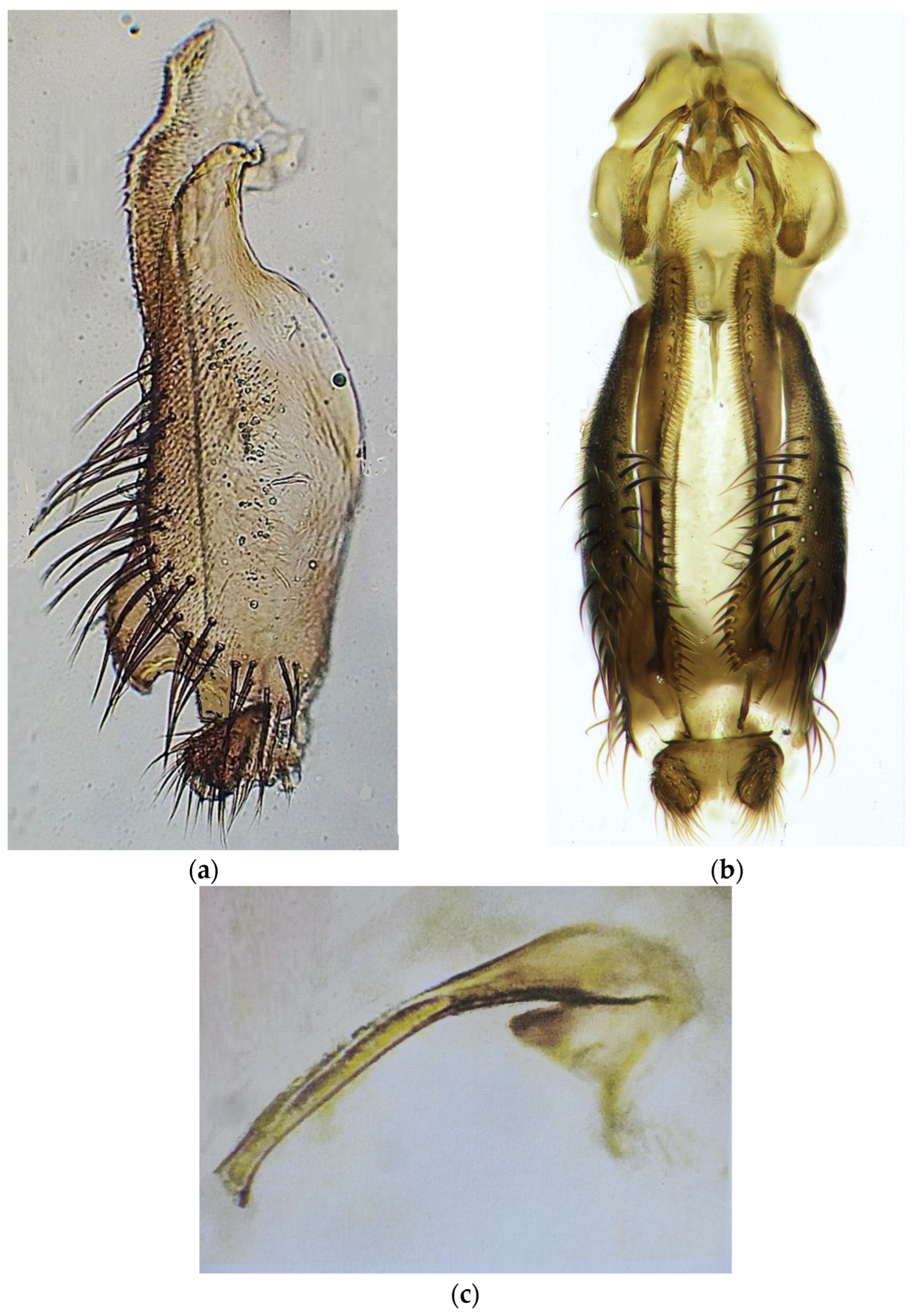
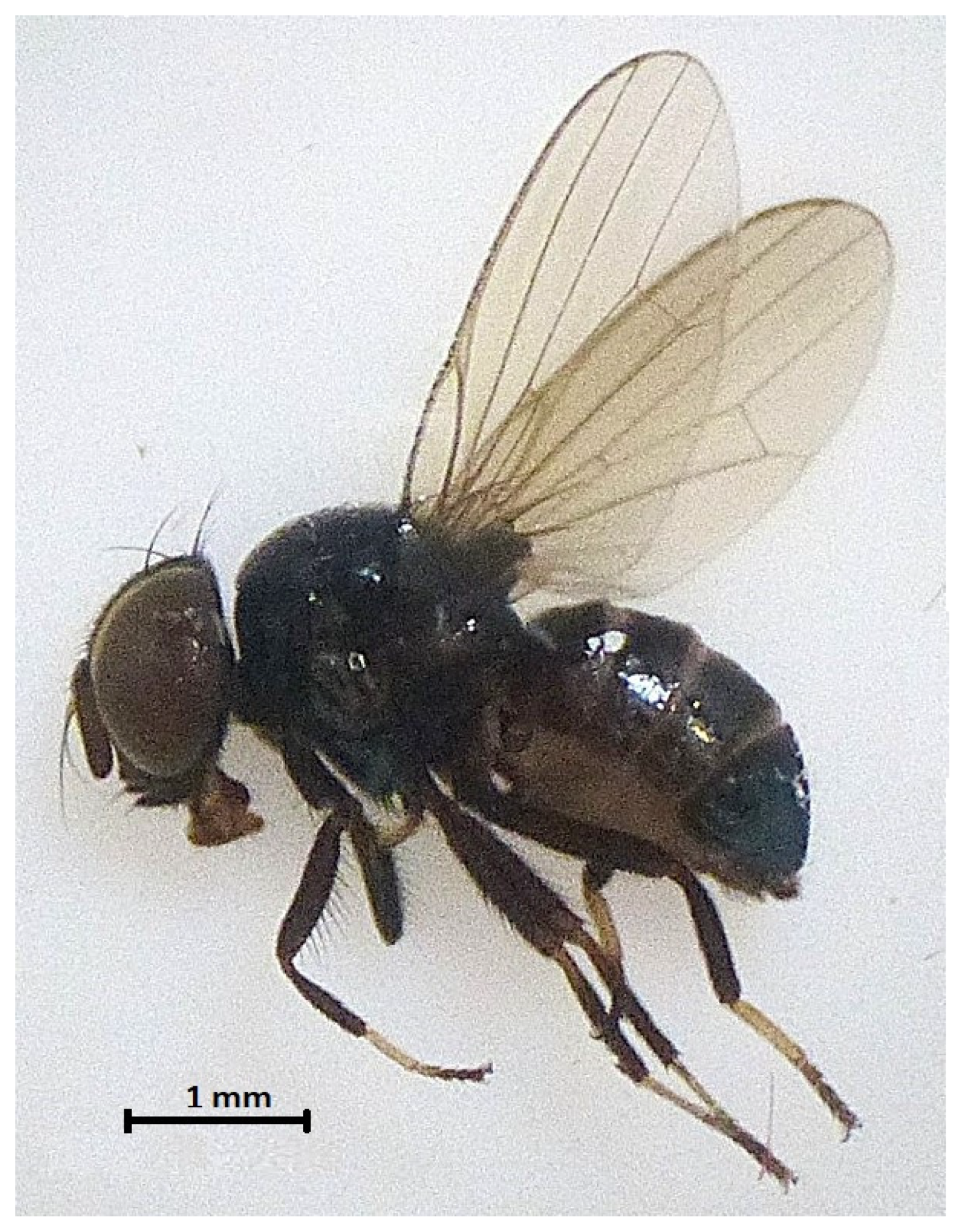
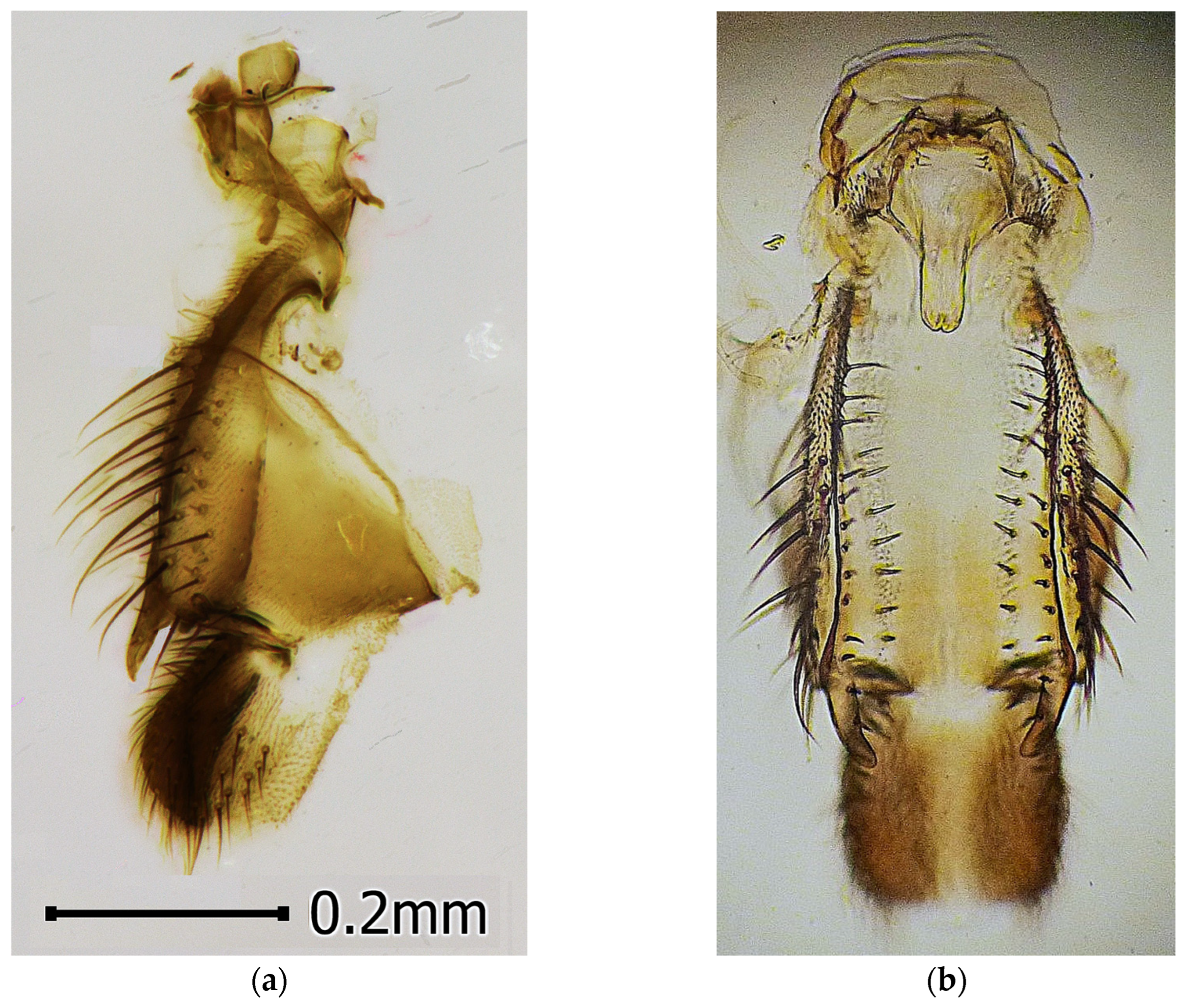
Figure 2.
Lonchaea desirade sp. nov. (a) Epandrium and associated structures, oblique lateral view. (b) Same, ventral view. (c) Phallus, lateral view.
Description. Holotype, Male. Head: Eye bare. Frons at narrowest point above lunule approximately 0.6× width of eye, dull black, covered with light grey dusting, frontal and interfrontal setulae approximately 0.2× length of orbital seta. Orbital plate sub-shining black, dulled by microsculpture, bare apart from orbital seta. Lunule ground colour black with a slight silver dusting, face and parafacial light-grey dusted: anterior genal setulae forming a single row of three–four along the mouth margin. Antenna: scape black, pedicel slightly brownish, postpedicel black with inner surface broadly orange basally and along ventral margin, length to depth ratio 3.0:1, reaching just past mouth margin. Arista orange basally, pubescent.
Thorax: Scutum shining blue-black. Anepisternum mainly shining blue-black with two setae in a vertical row along the posterior margin, one anterior seta, and the remainder of this sclerite with scattered setulae approximately 0.5× as long as the setae. Proepisternum and proepimeron each with a single seta. Katepisternum lightly dusted, with one strong seta located near the dorsal margin, and a few scattered short setulae positioned anterior to this seta. Anepimeron lightly dusted, bare. Scutellum and pre-scutellar area of thorax lightly dusted, rather brassy-black, margin in addition to four strong setae (two broken and missing), with two setulae between apical and lateral setae on the right, one on the left, two between apical setae, these all approximately 0.3× length of the apical setae. Calypter pale yellow with a concolorous marginal fringe of uniform length. Wing: length 3.6 mm, veins light-brown, membrane clear. Legs black, basal and at least the base of the second tarsomere of each leg yellow, covered by small black setulae, apical segments darkened, ventral fringe of short, stiff golden setulae on basal tarsomeres of anterior and posterior legs.
Abdomen: Sternite 1 bare. Apical tergite with a dense brush of short setae on each side of the apex. Male terminalia: in lateral view, epandrium 2.5× as high as wide, very long, strong setae along ventral margin, slightly shorter on posterior margin, narrowed and slightly recurved apically. Cercus somewhat rectangular, 0.2× height of epandrium, slightly sclerotized ventrally, covered in short, quite thick setulae. Surstylus extended posteriorly beyond the shell of the epandrium as a large, rounded process, the posterior margin of which has an obvious semi-circular excavation, extended anteriorly as a truncate projection, ventral margin lined with short stiff setulae, these stronger and more obvious posteriorly. Inner surface of surstylus with a posterior—anterior broad band of micro-spicules running from posterior margin to apical projection, between this and ventral margin with a scattered row of approximately 20 short setae. Pregonite a simple rod with a covering of small setulae on the base. Phallus partially bi-segmented, in lateral view, basiphallus boat-shaped with a large, cone-shaped basal lobe, distiphallus slightly longer than basiphallus, almost straight with an expanded apex.
Female: female specimens from Guadeloupe of the same size and same overall morphology and colouration as the male of L. desirade are considered to be conspecific. With slightly shorter pilosity and lacks the brush of short setae on the apical tergite. Ratio of frons width above the lunule to eye width approximately 1:1. Apical segment of aculeus bullet-shaped, approximately 2× as long as wide, with a pair of dorsobasal setulae less than 0.5× length of segment and a pair of apicoventral setae approximately 0.8× length of segment.
Type material. Holotype ♂, GUADELOUPE: La Désirade, Beauséjour/Latanier (Plateau du Calvaire), PCA-PVB, 16.313° N 61.075° W, 23 October 2024–11 November 2024, 136 m, Polyvie bleu, leg. Jourdan, T, & Poirier, E. Specimen number MNHN-ED15285, La Planète Revisitée.
Paratypes: With the same data as the holotype: 1 ♂ specimen number MNHN-ED15286. 1 ♂ 2 ♀ specimen numbers INRAE Antilles-Guyane, 27523, 27524 £ 27526. 1 ♀ specimen number NMS-10033156.
1. ♂ La Désirade, Grand Bassin, 16.324° N 61.047° W, 22 October 2024–10 November 2024, PVB, leg. Jourdan, T, & Poirier, E. Specimen number NMS-10033165.
1. ♀ La Désirade, Les Sables (Les Salines), SAL-PVB, 16.298° N 61.085° W, 21 October 2024–9 November 2024, 1 m, MAL Piĕge Malaise, T, leg. Jourdan, T, & Poirier, E. Specimen number MNHN-ED15287, La Planète Revisitée.
Species: LSIDurn:lsid:zoobank.org:act:CDF3AC51-DF21-4336-B0D7-0F9C0D7F36F8.
Etymology: The specific epithet refers to the island of La Désirade from which the type series was collected.
Diagnosis: Using the key to Neotropical Lonchaea species of Luna [3], this species, with its bare arista, basal tarsomere yellowish, proepimeron with one seta, calypter clear yellow with a uniform fringe, postpedicel yellowish brown on medial base and at least half the medial margin, would lead to a group including Lonchaea aculeata Bezzi, 1910 and L. pseudoaculeata Luna, 1988. It is however clearly distinct from these two species in terms of the length of the antennal postpedicel and in the structures of the male genitalia.
As with most Lonchaea species, the structures of the male genitalia are essential in determining species-level identification. In this case, the posterior projection of the surstylus with its large semi-circular excavation and the shape of the phallus with its cone-shaped basal lobe serve to clearly distinguish it from similar species. The group of short lateral setae at each side of the apical tergite is also a useful indicator for this species.
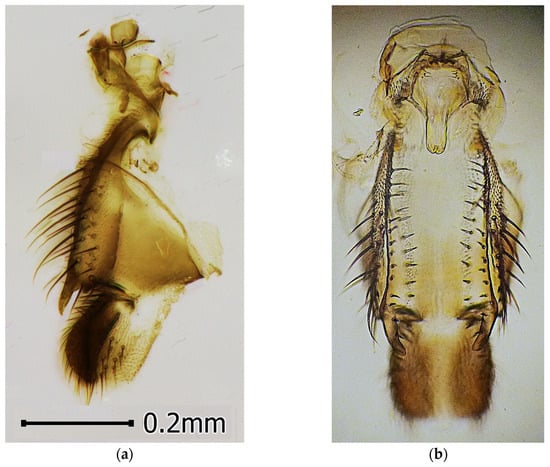
Figure 3.
Lonchaea minutissima sp. nov. paratype male.
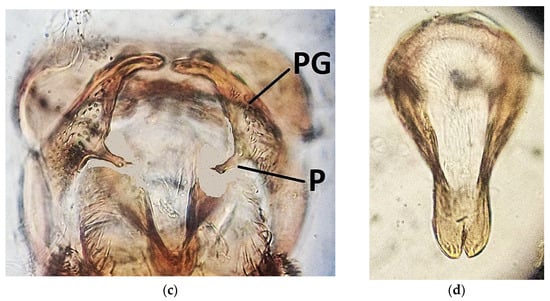
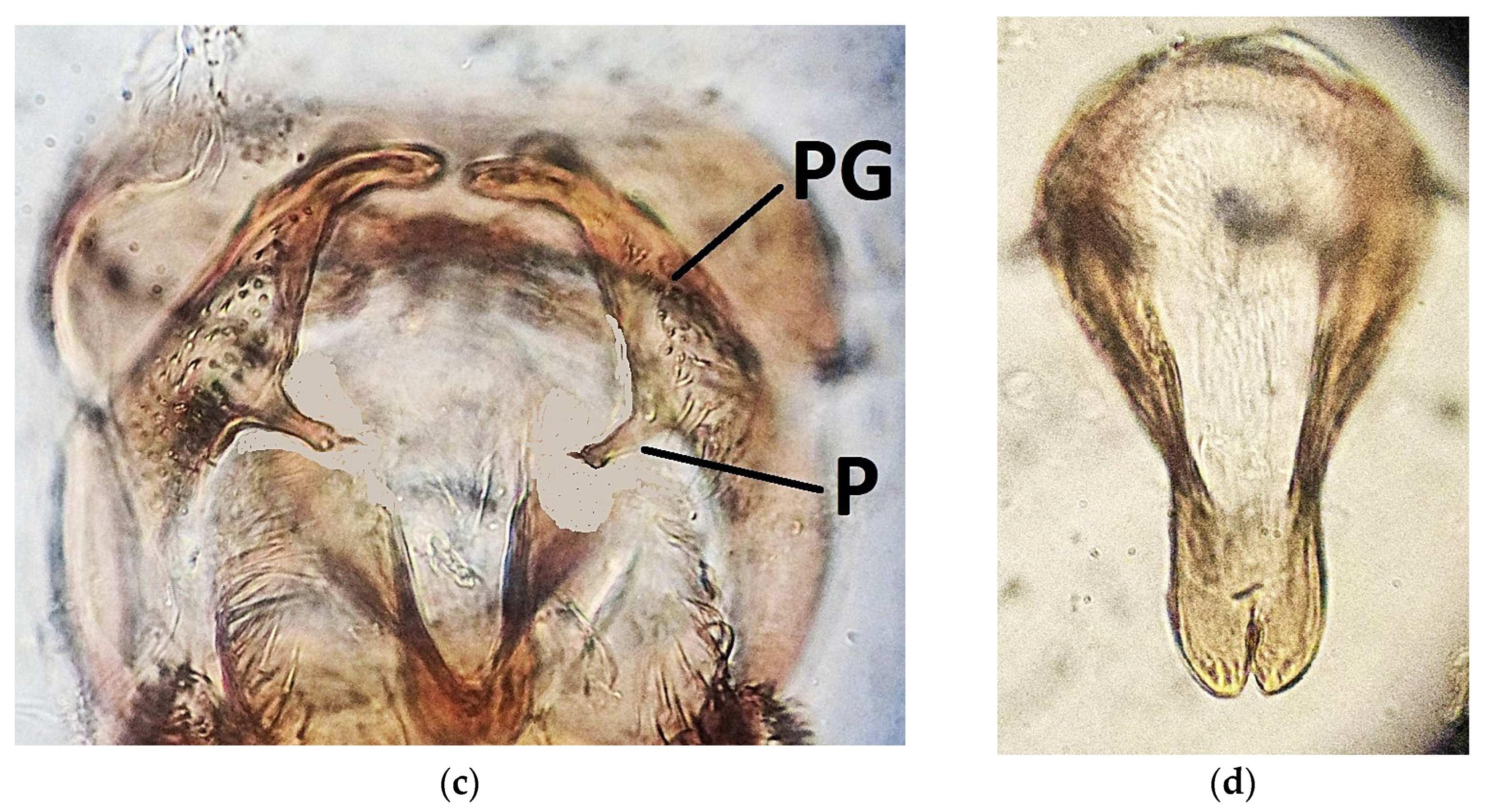
Figure 4.
Lonchaea minutissima sp. nov. (a) Epandrium and associated features, lateral view. (b) Same, ventral view. (c) Pregonites (PG) ventral view, showing medial process (P). (d) Phallus ventral view.
Description. Holotype, Male. Head: Eye bare. Frons, at narrowest point above lunule, approximately 0.4× width of eye, matt black covered with dense grey dusting, frontal and interfrontal setulae approximately 0.2× length of orbital seta. Orbital plate dulled by microsculpture, bare apart from the orbital seta. Lunule ground colour black, covered with silver pollinosity, face and parafacials lightly silver dusted. Anterior genal setulae form a single row of four along mouth margin. Antenna: scape and pedicel black, postpedicel black but broadly orange on medial base, this colouration extending along all of ventral margin, length to depth ratio 2.5:1. Arista entirely black, pubescence at maximum extent equaling width of arista at its base.
Thorax: Scutum shining blue-black. Anepisternum shining blue-black with two setae in a vertical row along the posterior margin, one anterior seta located near the dorsal margin, and the remainder of this sclerite with scattered setulae. Proepisternum with a single seta, proepimeron with a single weaker seta. Katepisternum with a single strong seta located near dorsal margin, positioned anterior to the seta, two setulae of almost the same length, a line of five–six setulae along the anterior margin; otherwise, sclerite bare and shining black. Anepimeron bare. Scutellum with the usual four strong marginal setae, these longer than the length of the scutellum, two setulae between apical and lateral setae on right side, one broken setula on left side, no setulae between apical setae, all these setulae approximately 0.25× length of marginal setae. Calypter whitish with a concolorous marginal fringe of uniform length. Wing: length 2.25 mm, veins light-brown, membrane clear but covered with numerous microtrichia. Legs black, basal and at least base of second tarsomere of each leg yellow, apical segments darkened, ventral fringe of short, stiff golden setulae on basal and second tarsomeres of fore and hind legs.
Abdomen: Sternite 1 bare. Male terminalia: In the lateral view, epandrium approximately 0.8× as wide as high, with long, strong setae along ventral margin. Cercus roughly triangular in shape, 0.6× height of epandrium; slightly sclerotized on ventral half, bearing long stiff setulae at ventral base with finer long setulae apically and posteriorly. Surstylus extended posteriorly beyond shell of epandrium as a slender thorn-like process, reaching to almost half height of cercus; at base of posterior process, a medially directed process which itself bears a smaller posteriorly directed blunt-ended process bearing an apical seta. Inner surface of surstylus with an anterior–posterior linear row of 8 well-spaced setulae, placed on a wider row of numerous small spicules. Pregonite covered in small, black setulae, narrowed towards a slightly recurved apex, with a finger-like interior process which bears a few apical setulae. Phallus a simple small boat-like structure, broadly rounded with a central apical slit, similar to the type of phallus found in the genus Dasiops.
Female: female specimens from Guadeloupe of the same very small size and of the same overall morphology and colouration as the male of L. minutissima are considered to be conspecific. These show the usual female characters of slightly shorter pilosity and a wider frons. Apical segment of aculeus bullet-shaped, with a pair of very short dorsobasal and apicoventral setae.
Type material. Holotype: ♂, GUADELOUPE: Marie-Galante, Capesterre-de-Marie-Galante (Nesmond), NES-PVB, 15.930° N 61.231° W, 16 October 2024–24 October 2024, 128 m, Polyvie bleu, leg. Jourdan, T, & Poirier, E. Specimen number MNHN-ED15285, La Planète Revisitée.
Paratypes: With the same data as the holotype—2 ♂ specimen numbers: NMS-10033129 & NMS-10033147. 2 ♂ 7 ♀ specimens, specimen numbers: MNHN-ED-15289, MNHN-ED-15290, MNHN-ED-15291, MNHN-ED-15292, MNHN-ED-15293, MNHN-ED-15294, MNHN-ED-15295, MNHN-ED-15296, MNHN-ED-15297. 1 ♂ 3 ♀ specimens, specimen numbers: INRAE Antilles-Guyane: 27526, 27527, 27528 & 27529.
1 ♂ Les Saintes (Terre-de-Bas), Grande Anse (Morne Sec) (seep with rocks in canopied dry forest), 15.858° N 61.635° W, 8 October 2024, (M)SW, leg. Pollet, M., specimen number: NMS-10033138.
Species: LSIDurn:lsid:zoobank.org:act:C648FEA2-602C-4D91-8F20-4433A4129D8A.
Etymology: The specific epithet refers to the very small size of this species.
Diagnosis: Using the key to Neotropical Lonchaea species by Luna [3], this species shares similar characters to Lonchaea desirade sp. nov. and keys out to couplets which include L. aculeata and L. pseudoaculeata. Apart from its diminutive size, this species is distinguished by features of the male genitalia, in particular the thorn-like posterior process of the surstylus, the regular linear row of setae on the inner surface of the surstylus, the small, wide phallus with a blunt apex and the pregonite with a finger-like medial process. The combination of these features makes this species clearly distinct from any other described Lonchaea.
4. Discussion
The Caribbean islands are recognized as a biodiversity hotspot supporting a wealth of biodiversity within their diverse terrestrial ecosystems. There is a high proportion of endemicity, making the region biologically unique. The hotspot supports exceptionally diverse ecosystems, ranging from montane cloud forests to cactus scrublands and contains many highly threatened species [16].
However, there are only a relatively few Lonchaeidae species recorded in the literature from the Caribbean islands and, as outlined previously, several of these require further verification. The two species described here bring the total to eleven and it is considered that this only represents a small percentage of the true fauna of this taxonomically difficult and relatively little-studied Dipteran family. This mismatch between too many species awaiting discovery and too few taxonomic experts available, also known as the “taxonomic impediment”, is a considerable hurdle to biodiversity research [17].
The placing of these two new species within the genus Lonchaea is perhaps tentative, as no published phylogenetic framework exists for the entire genus or family. However, a preliminary genetic analysis carried out by Andreas Kolter of the University of Guelph seems to indicate that there are several species groups present within the Neotropical Lonchaea, some of which after further investigation may deserve genus rank. The two new species described here would seem to fit into one of these Neotropical species groups, with the genitalia showing similarities to those described for Lonchaea panguanae MacGowan & Tschirnhaus, 2024 [2] from Peru.
A detailed study of the insects of Guadeloupe using various trapping methods has been carried out. Although this resulted in individuals of only two species of Lonchaeidae being captured, both of these species are new to science and, after further investigation, may possibly prove to be endemic to Guadeloupe. This underscores the rich insect biodiversity of the region and also the number of potentially new or endemic species still awaiting discovery in the lesser-known Orders and Families.
Funding
All of the material treated for this study was collected during the naturalist expedition, “Our Planet Reviewed—Islands of Guadeloupe 2024”. This survey was organized by the Regional Agency of Biodiversity for the islands of Guadeloupe, the National Museum of Natural History, Paris (MNHN), in collaboration with and funded by the French Office for Biodiversity (OFB) and the University of the French Antilles (UA). We are grateful to our financial and logistical partners: the FEDER European Grant Office, the Region of Guadeloupe, the National Forestry Office (ONF) and the French Coastal Protection Agency (CdL).
Data Availability Statement
The data presented in this paper will be made public and disseminated within the framework of the French national inventory of natural heritage (https://inpn.mnhn.fr) and Karunati, the Guadeloupe biodiversity portal (https://carto.karunati.fr/). For collection data: the collections portal of the National Museum of Natural History (https://science.mnhn.fr/institution/mnhn/item/search/form?lang=fr_FR). The specimens described here have been given unique identification codes and are available for examination at the depositories stated in the type description.
Acknowledgments
I am grateful to Marc Pollet (La Planète Revisitée des Iles de Guadeloupe Diptera coordinator, Belgium) for processing of the pan trap and Diptera samples, Maéva Pronesti, MNHN, Paris for supplying the species identification numbers for specimens deposited in MNHN and INRAE and to Thibault Ramage (France) for extracting Diptera from the trap material. Also, to Andreas Kolter, University of Guelph, for access to a draft phylogenetic tree for the family.
Conflicts of Interest
The author declares no conflicts of interest.
References
- MacGowan, I. World Catalogue of the family Lonchaeidae (Diptera, Cyclorrhapha, Acalyptratae). Zootaxa 2023, 5307, 1–96. [Google Scholar] [CrossRef] [Scilit] [PubMed]
- MacGowan, I.; Tschirnhaus, M. A new species of Lonchaeidae (Diptera) from Peru. Entomol. Mon. Mag. 2024, 160, 191–194. [Google Scholar] [CrossRef] [Scilit]
- Luna, I.G. Clave taxonomica para la identificacion del genero Lonchaea Fallén en la Region Neotropical (Lonchaeidae, Diptera). Scientia 1988, 3, 27–42. [Google Scholar]
- Strikis, P.C. Description of 11 new species of the genus Neosilba (Diptera: Lonchaeidae) from Brazil, its hosts and geographical distribution. Trends Entomol. 2011, 7, 67–79. [Google Scholar]
- Galeano-Olaya, P.E.; Canal, N.A. New species of Neosilba McAlpine (Diptera: Lonchaeidae) and New Records from Colombia. Papéis Avulsos Zool. 2012, 52, 361–385. [Google Scholar] [CrossRef] [Scilit]
- MacGowan, I.; Navarro-de-la-Fuente, L.; Williams, T.; Lasa, R. A new species of Neosilba (Diptera: Lonchaeidae) associated with fig orchards in Mexico. Zootaxa 2025, 5583, 195–200. [Google Scholar] [CrossRef] [Scilit] [PubMed]
- Lasa, R.; Navarro-de-la-Fuente, L.; MacGowan, I.; Williams, T. A complex of lance flies (Diptera: Lonchaeidae) infesting figs in Veracruz, Mexico, with the description of a new species. Insects 2025, 16, 458. [Google Scholar] [CrossRef] [Scilit] [PubMed]
- Wiedemann, C.R.W. Aussereuropäische zweiflügelige Insekten. In Als Fortsetzung des Meigenschen Werkes; Zweiter Theil; Schulz: Hamm, Germany, 1830; xii + 684p. [Google Scholar]
- McAlpine, J.F.; Steyskal, G.C. A revision of Neosilba McAlpine with a key to the world genera of Lonchaeidae. Can. Entomol. 1982, 114, 105–137. [Google Scholar] [CrossRef] [Scilit]
- Townsend, C.H.T. Contributions to the dipterology of North America. II.—Tabanidae, Conopidae, Tachinidae, etc. Trans. Am. Entomol. Soc. 1895, 22, 55–80. [Google Scholar]
- Malloch, J.R. XXXII—Exotic Muscaridæ (Diptera). Ann. Mag. Nat. Hist. 1931, 7, 314–340. [Google Scholar] [CrossRef] [Scilit]
- Medina Gaud, S.; Martorell, L.F. New Insect Records for Puerto Rico. J. Agric. Univ. P. R. 1973, 57, 247–254. [Google Scholar] [CrossRef] [Scilit]
- Romero, J.L.; Ruppel, R.F. A new species of Silba (Diptera, Lonchaeidae) from Puerto Rico. J. Agric. Univ. P. R. 1973, 57, 165–168. [Google Scholar] [CrossRef] [Scilit]
- Norrbom, A.L.; McAlpine, J.F. A revision of the Neotropical species of Dasiops Rondani (Diptera: Lonchaeidae) attacking Passiflora (Passifloraceae). Mem. Entomol. Soc. Wash. 1997, 18, 189–211. [Google Scholar]
- MacGowan, I.; Rotheray, G.E. Lonchaeidae (Lance flies). In Manual of Afrotropical Diptera; Kirk-Spriggs, A.H., Sinclair, B.J., Eds.; Brachycera: Cyclorrhapha, Excluding Calyptratae, Suricata; South African National Biodiversity Institute: Pretoria, South Africa, 2021; Volume 3, pp. 1587–1596. [Google Scholar]
- Ecosystem Profile, The Caribbean Islands Biodiversity Hotspot. 2010. Available online: https://biodiversite-martinique.fr/sites/default/files/the_caribbean_islands_biodiversity_hotspot_final_version_birdlife_international_2010_id_182148.pdf (accessed on 18 February 2026).
- Engel, M.S.; Ceríaco, L.M.P.; Daniel, G.M.; Dellapé, P.M.; Löbl, I.; Marinov, M.; Reis, R.E.; Young, M.T.; Dubois, A.; Agarwal, A.; et al. The taxonomic impediment: A shortage of taxonomists, not the lack of technical approaches. Zool. J. Linn. Soc. 2021, 193, 381–387. [Google Scholar] [CrossRef] [Scilit]
Disclaimer/Publisher’s Note: The statements, opinions and data contained in all publications are solely those of the individual author(s) and contributor(s) and not of MDPI and/or the editor(s). MDPI and/or the editor(s) disclaim responsibility for any injury to people or property resulting from any ideas, methods, instructions or products referred to in the content. |
© 2026 by the author. Licensee MDPI, Basel, Switzerland. This article is an open access article distributed under the terms and conditions of the Creative Commons Attribution (CC BY) license.