


Simple Summary
Shrikes (family Laniidae) are small predatory songbirds that live mostly alone, each bird defending its own territory in open or semi-open habitats. They behave in many ways like miniature raptors: they hunt large insects, small mammals, reptiles, and other birds from exposed perches, and uniquely impale their prey on thorns or barbed wire to store food and help tear it apart. This study brings together research on shrike territoriality, foraging, prey impalement and caching, handling of toxic prey, anti-predator behavior, and reproduction to ask how a solitary lifestyle can succeed without the advantages of group living. The evidence shows that shrikes compensate through finetuned habitat selection, strong spatial memory, flexible but seasonally limited social behavior, and innovative prey handling strategies, making them a powerful model for understanding solitary living in birds and its parallels with solitary mammals and reptiles. Because shrikes are highly sensitive to habitat loss, fragmentation, climate change, and urbanization, conserving them will require targeted management of hedgerows, field margins, and other structurally complex open habitats, but doing so may also help maintain their role as mesopredators that influence arthropod and small vertebrate communities in human-dominated landscapes.
Abstract
Solitary living is an evolutionarily widespread yet comparatively under-theorized social system, despite its occurrence across diverse animal taxa. Shrikes (family Laniidae) are small predatory passerines that combine raptorial behavior, strong territoriality, and predominantly solitary space use, making them a powerful model for examining the ecology and evolution of solitary living. Here, I synthesize published work on shrike behavioral ecology and explicitly link these traits to the costs and benefits of a solitary lifestyle. I argue that shrikes exemplify how solitary species can offset the absence of social buffering through cognitive innovation, finetuned habitat selection, and flexible yet tightly bounded sociality. I then compare shrike ecology to solitary mammals and reptiles, highlighting convergent patterns in resource dispersion, spatial memory, risk management, and juvenile dispersal. I further examine how anthropogenic pressures, such as habitat fragmentation, climatic instability, and urbanization, interact with solitary life histories and review evidence from management interventions in both European farmland and North American systems that demographic recovery is achievable but remains contingent on addressing broader land-use conflicts and sources of adult mortality. Finally, I outline five interconnected research priorities—spanning cognitive ecology, trophic interactions, movement ecology, genomics, and formal comparative analyses—that would move shrike research from its current observational foundation toward a more experimental, mechanistic, and phylogenetically informed programme. By reframing shrikes as a model taxon for solitary living, this review aims to integrate avian behavioral ecology into broader comparative frameworks of social organization, cognition, and resilience under global change.
1. Introduction
Solitary living—defined here as a social system in which individuals maintain independent home ranges or territories outside of brief reproductive or parental contexts—is taxonomically widespread, yet has received far less conceptual attention than group living or cooperative breeding [1,2]. Theoretical and empirical work on social evolution has largely focused on the emergence and maintenance of sociality [3], leaving the ecological and cognitive underpinnings of solitary strategies comparatively underdeveloped [4,5]. This gap is notable because solitary living is central to several overarching frameworks in social evolution and behavioral ecology, including resource-dispersion and land-tenure models of space use, game-theoretic treatments of conflict and cooperation, and life-history theory linking territoriality, parental investment, and dispersal [6].
Here, I use shrikes to bridge this gap between existing theory and empirical detail. Resource dispersion and territory-economics models predict that solitary living and strict territoriality should be favored when key resources (prey, nest sites, impaling structures) are clumped enough to be economically defensible but not so abundant as to support stable groups; shrikes should therefore show small, tightly defended territories in prey-rich edge mosaics and larger, more diffuse ranges in resource poor habitats. Game-theory models of conflict predict resident-biased “owner advantage” strategies when prior ownership is a reliable proxy for future payoffs and escalation costs are high, leading to strong asymmetries between territory holders and intruders in interspecific contests. Life history theory, in turn, predicts that species with relatively high adult survival, costly parental care, and risky juvenile dispersal will invest heavily in the quality and defense of breeding territories rather than in producing many widely dispersed offspring; for shrikes, this should be expressed as intensive investment in a single brood or few broods within well-defended territories embedded in structurally complex open habitats. Throughout the review, I use these linked frameworks to generate and evaluate concrete expectations about shrike territoriality, foraging, and demography under different ecological conditions, rather than treating solitary living as a purely descriptive label.
True shrikes (family Laniidae) provide a particularly compelling model for re-examining solitary living [7]. These passerines combine small body size and songbird morphology with behavioral traits often associated with raptors [8,9,10,11,12], including active predation on vertebrate prey, use of elevated hunting perches, and the impalement and caching of prey on thorns, twigs, or barbed wire [13,14,15]. Most species maintain diurnal, solitary, and strongly defended territories during the breeding season, and individuals spend much of the day perched conspicuously, scanning for both prey and intruders [16].
Like many solitary raptors and mammalian carnivores, shrikes occupy individually defended territories, hunt vertebrate prey, cache food, and show strong sensitivity to habitat structure and resource dispersion; yet, in contrast to most non-passerine predators, their territories are small enough to be mapped exhaustively, their impaling sites and caches provide permanent, visible records of foraging decisions, and their breeding attempts can be monitored at fine temporal and spatial scales. This gives shrikes a dual status: they are ecologically convergent with solitary felids, canids, and reptiles in space use and predatory niche, while remaining methodologically tractable in ways that many of those taxa are not. By explicitly comparing shrike territoriality, caching, and dispersal with patterns described for solitary mammals and reptiles, this review uses shrikes as an unusually informative avian analogue for testing general predictions about solitary space use, cognitive demands, and vulnerability under anthropogenic change (Figure 1).
Figure 1.
Conceptual framework illustrating the five core adaptive domains through which true shrikes (Laniidae) compensate for the absence of social buffering as solitary territorial predators. Each spoke represents a functionally distinct but interacting dimension of shrike behavioural ecology. The outer ring situates this framework within broader comparative and conservation contexts. See text for details and supporting references.
Over the past several decades, field studies, experiments, and more recently tracking based work on Lanius species across North America, Europe, the Middle East, and Africa have documented a rich behavioral repertoire. These include strict territoriality and tests of territorial responses to intruders [17,18,19], fine-scale habitat selection analyzed with quantitative habitat models [20,21], prey impalement and caching studied through both observational and experimental approaches [22,23,24,25], intricate prey-handling techniques [26,27], and seasonal shifts in diet and space use increasingly revealed by ringing, isotopes, and modern tracking technologies [28,29,30,31]. Additional work has described context-dependent social interactions [32], territorial behavior and foraging at migration and stop-over sites, and on wintering grounds [31,33,34], and behavioral responses to urbanization in terms of space use, perch choice, and breeding performance [35,36]. Collectively, these findings suggest that solitary shrikes achieve ecological success not in spite of, but through, a suite of behavioral and cognitive adaptations that compensate for the absence of group living, and they provide a foundation for integrating experimental, quantitative, and movement-based perspectives on solitary living (Figure 2).
Figure 2.
Woodchat Shrike (Lanius senator) perched on a vantage point. Photo Ezra Hadad.
In this manuscript, I pursue four objectives: (1) to synthesize current knowledge on shrike territoriality, foraging ecology, and reproductive behavior, emphasizing their relevance to solitary life-history strategies; (2) to examine impaling, caching, and prey detoxification as examples of cognitive and behavioral innovation in a solitary predator; (3) to place shrikes in a comparative context with solitary mammals and reptiles, focusing on resource dispersion, spatial memory, and risk management; and (4) to explore the conservation implications of solitary living in shrikes, particularly under accelerating habitat alteration and climate change, and to outline research directions that position shrikes as model organisms for solitary behavioral ecology [37]. While the present review focuses on behavioral and ecological evidence, recent advances in avian genomic and neuroethology suggest clear avenues for extending shrike research into mechanistic studies of social organization. Comparative genomic and transcriptomic work on social versus solitary birds has begun to identify candidate genes and neural circuits associated with sociality gradients [38]. By integrating shrike biology with these broader ecological and comparative frameworks, I argue that Laniidae represent an underutilized but highly informative system for understanding solitary living in the Anthropocene, while recognizing that mechanistic genomic and neuroethological studies on shrikes are still largely prospective [7,39,40,41].
2. Territoriality, Space Use, and Solitary Organization
2.1. Territorial Exclusivity and Habitat Structure
One of the defining characteristics of shrikes is their strong territoriality [18,19,42]. Breeding individuals typically occupy exclusive territories that they defend aggressively against conspecifics and, in many cases, against ecologically similar heterospecifics such as small falcons or other insectivorous passerines [43]. Territories are usually centered on open or semi-open habitats—field margins, hedgerows, scrub, grazed pastures, and other edge environments—that provide both elevated perches and accessible foraging substrates [13,16,44,45,46]. Territorial birds spend a large proportion of daylight hours perched in exposed positions, scanning their surroundings to detect prey and intruders [44,47]. These habitats are often vertically structured, with scattered shrubs or trees for perching and nesting interspersed with herbaceous vegetation where arthropod and small vertebrate prey are abundant [46]. This combination of vertical complexity and open sight lines appears critical for shrikes, supporting both efficient foraging and early predator detection [13,48,49].
Territoriality in shrikes varies markedly among species, populations, and seasons, reflecting underlying ecological gradients. Loggerhead shrikes (Lanius ludovicianus) in resource-rich agricultural or urban mosaics often maintain very small, densely packed territories—on the order of 2–3 ha year-round in some populations—where high prey availability and abundant perches allow close spacing of breeding pairs [16,36,46]. By contrast, Northern Shrikes (L. borealis) in winter can defend much larger territories, averaging over 200 ha in some temperate steppe and shrubland systems, reflecting lower prey densities and the need to encompass multiple key habitat features such as hunting areas and sheltered roost sites [50]. Great Grey Shrikes (L. excubitor) in semi-open farmland and heathland typically hold intermediate-sized territories (roughly 20–350 ha), with size decreasing as local prey abundance and perch density increase [24,51]. In the central Negev desert, male Southern Grey Shrikes had territories of approximately 54.8 and 76.9 ha, with size closely tied to the availability of suitable perches and prey ([13,52,53]; Figure 3). Even within species, territory size can contract when supplemental perches or high-quality foraging patches are added [16], underscoring the tight coupling between territorial behavior, resource configuration, and solitary space use.
Figure 3.
Southern Grey Shrike (Lanius excubitor) surveying its’ territory from an elevated perch. Note the relatively weak legs but strong, hooked, raptorial bill with a tomial tooth that enables dismembering of prey. Photo Ezra Hadad.
Across shrike species and populations, territory size covaries with several key ecological factors, but most published estimates remain essentially descriptive, reported as means or ranges in hectares rather than as formal spatial statistics. Loggerhead Shrike territories in prey rich edge mosaics, Northern/Great/Southern Grey Shrike ranges in steppe and desert shrubland, and intermediate sized Great Grey Shrike territories in farmland and heath together illustrate a consistent negative relationship between territory size and local resource availability [16,24,46,50,51]. Recent work on African shrikes and bush shrikes in acacia savanna provides a more quantitative template: using territory mapping methods, Kopij [54] estimated standardized population densities (0.8–2.5 breeding pairs per 100 ha) and related them statistically to habitat type and rainfall, revealing temporal variation in density and philopatry as adaptive responses to resource competition and reproductive interference. To date, however, few shrike studies have combined such mapping with modern movement ecology tools (e.g., kernel density estimators or utilization distributions applied to GPS-tracked individuals), and this represents a clear avenue for future work aimed at deriving comparable effect sizes and explicit spatial models of shrike space use across habitats.
Across shrike species and populations, territory size covaries with several key ecological factors. Local prey abundance is a primary driver: territories in prey-rich agricultural mosaics or urban edges can be an order of magnitude smaller than those in sparse steppe, heath, or wintering shrubland, where birds must range widely to meet energetic needs [16,46,50]. Habitat structure—particularly the density and distribution of hunting perches, nesting substrates, and impaling sites—strongly influences how much area a pair must defend, with higher perch and shrub density permitting smaller, more compact territories in otherwise similar landscapes [16,24,28]. Season and social context also matter: some populations maintain large, loosely defended winter territories that contract into smaller, more intensively defended breeding territories when mate attraction, nesting, and chick provisioning become the dominant selective pressures [17,55]. Human land use can further alter territory size by modifying prey communities, vegetation structure, and disturbance regimes, leading either to territory compression in heterogeneous, prey-rich farmland and urban mosaics, or to territory expansion and eventual abandonment in simplified, intensively managed landscapes [56,57,58].
Territory size is expected to influence shrike breeding performance because it mediates access to food, exposure to predators, and the intensity of neighbor interactions [59,60]. In shrikes, this relationship is supported by several studies that go beyond simple description to provide explicit statistical tests and experimental evidence. Yosef and Grubb [16] demonstrated experimentally in loggerhead shrikes that territory size responded directly to resource manipulation: when supplemental perches were added, territory size contracted, and pairs with access to better-quality, resource-rich territories achieved higher provisioning rates and greater fledgling success than those in larger, resource-poor territories, demonstrating that in shrikes territory size and quality are causally linked to reproductive output. Conversely, very small, compressed territories in fragmented or heavily disturbed landscapes may increase edge effects, neighbor conflict, and nest predation, leading to lower reproductive output despite high local prey availability [57,58]. In the Negev desert, cache size and territory quality were jointly shown to predict breeding success, with males holding larger, prey-richer caches prior to breeding achieving significantly higher nest success and fledgling numbers, suggesting that the cache functions as a reliable pre-breeding investment that integrates territory quality into reproductive performance [22,61,62].
At the population level, Müller et al. [63] used model-selection procedures on five years of data from 332 Red-backed Shrike (L. collurio) clutches in Switzerland to jointly test the relative contributions of timing of breeding, parental quality, nest predation, nest site selection, territory quality, intraspecific density, and weather on nest success and local recruitment. Their full model confirmed that territory quality was among the strongest predictors of local recruitment probability, even after controlling for all other factors, while nest success was primarily influenced by laying date, nest concealment, intraspecific density, and year. Bloche and Sapir [64] provide complementary evidence from a breeding population of Woodchat Shrikes (L. senator) at the southern edge of their range in the Golan Heights, Israel, where pairs bred at a relatively high density of 0.32 active breeding pairs per ha with a mean inter-nest distance of 130.65 m, consistent with the small territory sizes of approximately 1.5 ha described for Mediterranean and Middle Eastern shrike populations [14]. Using generalized linear mixed models, they found that nest height above the ground was the only nest-site characteristic significantly associated with nesting success, with higher nests achieving greater success, plausibly reflecting reduced exposure to ground predators such as reptiles and small mammals. Overall nesting success was low at 21.9%, but breeding success increased substantially to 39.3% when replacement broods were accounted for, underlining the critical demographic importance of re-nesting attempts for population viability in this species. Fledgling daily apparent survival increased significantly with age over the post-fledging period, and fledglings remained in family groups under parental care for 16–49 days before dispersing, a period of extended post-fledging investment that parallels patterns described for other solitary territorial shrikes and highlights the importance of parental care beyond the nest as a component of reproductive success in this group [64]. The importance of prey availability as a proximate driver of reproductive performance across the full breeding cycle is further demonstrated by Zeng et al. [65] in a five-year longitudinal study of the Grey-backed Shrike (L. tephronotus) breeding in the alpine meadows of the Qinghai–Tibet Plateau. Using generalized linear mixed models applied to 215 eggs across 63 nests monitored between 2017 and 2021, and 1414 h of nest video footage yielding 6829 behavioral events, they showed that environmental conditions operating primarily through invertebrate food availability exerted pervasive and statistically significant effects on clutch size, nestling growth, parental provisioning rates, and offspring survival. Average rainfall negatively predicted clutch size, interpreted as reflecting reduced invertebrate abundance under drier conditions, while average temperature negatively predicted nestling weight during the rearing period, with higher ambient temperatures associated with slower nestling growth despite increased male provisioning rates under warmer conditions. Both male and female feeding rates declined significantly with wind speed, which simultaneously reduced foraging efficiency and increased the time parents spent brooding to prevent nestling heat loss. Parental feeding preferences were further modulated by brood sex ratio and nestling age, with male parents consistently preferring to provision male nestlings regardless of brood composition—a strategy interpreted as maximizing fitness returns by investing preferentially in the larger, faster-growing sex under favorable prey conditions—while female parents showed no consistent sex preference but tended to feed marginal offspring, adopting a nest survival strategy to maximize overall brood fledging success. Notably, male nestling survival rates exceeded those of females by over 27%, a difference attributable in part to this sex-biased male provisioning under prey-rich conditions. Collectively, these findings demonstrate that prey abundance, as mediated by temperature, rainfall, and wind operating at the territory level, does not merely influence clutch initiation but penetrates deeply into nestling growth trajectories, parental effort allocation, sex-specific survival outcomes, and ultimately local recruitment—reinforcing the view that territory quality, defined primarily by its prey base, has cascading consequences across the entire reproductive cycle in shrikes. Together, these studies provide a multi-species, multi-system body of evidence—combining experimental manipulation, cache analysis, and formal multi-model inference—that territory size and quality are meaningfully and demonstrably linked to reproductive performance and recruitment in shrikes, although cross-system comparisons using standardized effect sizes remain a priority for future work (Figure 4).
Figure 4.
Comparison of social and solitary strategies across seven core functional challenges faced by territorial vertebrates. Left column illustrates solutions available to group-living species through collective action and social information transfer. Right column illustrates the individual-level behavioral and cognitive mechanisms through which True Shrikes (Laniidae) achieve functionally equivalent outcomes in the absence of social buffering. Double-headed arrow indicates functional equivalence achieved through divergent mechanisms. See text for supporting references and cross-taxon comparisons.
From a life-history perspective, territoriality in shrikes can be interpreted as a strategy that maximizes lifetime reproductive success under conditions of high juvenile mortality, short breeding seasons, and spatially clumped resources [66,67]. Defending a compact territory with adequate perches, nest sites, and prey allows a pair to secure the resources needed for intensive parental investment in a single brood or a small number of broods, while minimizing time spent searching over larger, riskier areas; this pattern fits models in which species with relatively high adult survival, costly parental care, and risky juvenile dispersal invest heavily in the quality of a defended breeding area rather than in producing large numbers of widely dispersed offspring [65,68,69,70]. From a theoretical perspective, shrike territorial behavior can also be viewed through the lens of evolutionary game theory, in which alternative strategies of aggression, retreat, and tolerance compete in repeated contests over space and resources [3,71,72]. The strong “owner advantage” typical of shrikes—where established territory holders vigorously defend core areas against intruders while sometimes tolerating limited peripheral overlap—is consistent with classic models showing that resident-biased strategies can constitute evolutionarily stable strategies (ESS) when escalation costs are high and prior ownership reliably predicts future resource payoffs [71,73]. In this framework, variation among individuals in boldness, persistence, or willingness to escalate can be interpreted as positions along an ESS continuum rather than as arbitrary behavioral noise, and shrike systems, with their clearly demarcated boundaries and observable contests, offer an attractive opportunity to test these predictions empirically [3,73].
2.2. Seasonal Sociality and Temporal Flexibility
Although shrikes are predominantly solitary, their social system is neither fixed nor uniform across the annual cycle. Many species exhibit seasonal sociality: individuals are typically socially monogamous during the breeding season, forming pair bonds [74,75,76,77], cooperatively building nests [78], sharing parental duties [79], and in some cases even engaging in polygynous breeding arrangements [53,80], before reverting to solitary or loosely associated lifestyles outside the breeding window [81,82]. This temporal modulation of sociality is best understood not as a departure from solitary living but as a theoretically predicted outcome of life-history optimization: individuals reap the short-term fitness benefits of biparental care and cooperative nest defense without incurring the long-term costs—resource sharing, within-group competition, and parasite transmission—associated with permanent group living [67,83,84,85]. This pattern is convergent with that seen in solitary mammals and reptiles that aggregate primarily for mating or parturition before dispersing, suggesting a broadly shared strategy in which temporal flexibility in social association is itself an adaptive feature of solitary life histories.
Such flexibility extends to spatial behavior across the full annual cycle. In some populations, shrikes defend “mini-territories” during migration, excluding conspecifics from small stopover sites that offer reliable prey concentrations and perch availability (L. cristatus [17,86]; L. collurio [87]). Similarly, wintering individuals in several species defend discrete foraging territories, sometimes for extended periods, indicating that the drive to monopolize exclusive space is not confined to the breeding season but persists wherever key resources are economically defensible (L. ludovivianus [88,89]; L. borealis [90,91,92]). The dietary flexibility of shrikes extends beyond the breeding grounds into their migratory stopovers, where individuals may exploit highly novel and locally abundant prey items that bear no resemblance to their typical arthropod and vertebrate diet. Jarrett et al. [93] used diet metabarcoding of faecal samples from three Woodchat Shrikes caught during spring migration at a desert stopover site in south-eastern Morocco to reveal that camel ticks (Hyalomma dromedarii)—fully engorged ectoparasites that drop from dromedaries and move slowly through the sand in search of oviposition sites—constituted over 50% of reads in each faecal sample, making them the dominant dietary item recorded. Dromedary (Camelus dromedaries) DNA was additionally detected in one sample, confirming secondary consumption of blood-engorged ticks. Field observations corroborated the metabarcoding data, with shrikes observed consuming ticks and impaling them on spikes in the characteristic manner of the group. This finding is particularly noteworthy from a foraging-ecology perspective: engorged ticks are exceptionally protein-rich (approximately 95% crude protein on a dry-matter basis) but low in fat, suggesting that shrikes at this desert stopover may be selectively exploiting them to replenish protein stores and offset water stress through metabolic water production—a nutritional strategy well suited to the physiological demands of the Sahara Desert crossing. This represents a rare documented instance of tick predation by a passerine and illustrates the capacity of solitary shrikes to identify, exploit, and store novel prey resources opportunistically during migration, extending their cognitive and behavioral flexibility well beyond the breeding territory. This consistency of territorial behavior across breeding, migratory, and wintering contexts is consistent with the resource-dispersion prediction that solitary space use and active site defense should arise whenever resources are sufficiently clumped to reward exclusivity but insufficient to sustain stable social groups [94,95,96]. It further reinforces shrikes as a model system for examining how solitary territorial strategies are expressed, maintained, and modulated across life-history stages and ecological contexts, and invites direct comparison with solitary carnivores and reptiles that show analogous seasonal shifts between defended exclusive ranges and more permissive spatial regimes.
Rather than resting on descriptive trait similarities alone, the cross-taxon comparison presented here is structured around three explicit, theory-derived predictions that apply equally to solitary shrikes, felids, canids, and reptiles and that together provide a more demonstrative basis for the claimed convergences.
- Resource-dispersion prediction: solitary space use and exclusive territory defense should be favored when key resources are clumped enough to be economically defensible but insufficient in abundance or spatial extent to sustain stable social groups [97,98,99]. This prediction generates the expectation that territory size should scale negatively with local prey density, a pattern documented in Loggerhead and Great Grey Shrikes across habitat gradients (16, 24), and paralleled in solitary felids and canids whose home range sizes contract predictably as prey biomass increases [100,101].
- Cognitive-load prediction: solitary foragers, lacking access to group-level information transfer, must rely more heavily on individual spatial memory, route fidelity, and site-specific landmark use to locate and exploit resources efficiently [102,103,104,105]. This predicts stronger dependence on individually maintained caches, cache locations, and territory-internal landmarks than is typical in group-living species that can acquire resource information socially. Shrike impalement and caching behavior and inter-seasonal site fidelity to specific thorn bushes and barbed-wire sections are consistent with this prediction, and parallel the cache-dependent foraging strategies documented in solitary mustelids and food-storing Corvids [102,103,104,105].
- Dispersal-risk prediction: in the absence of philopatric kin networks that buffer natal dispersal, juvenile solitary species are predicted to face higher per-capita dispersal mortality, generating selection for delayed independence, conservative dispersal distances, and strong natal-habitat preference matching [106,107,108]. This pattern is documented in juvenile shrikes, which show strong fidelity to structurally similar habitat types during first settlement [47,109], and is mirrored in solitary felids and several lizard species in which juveniles settle preferentially in habitats resembling their natal territory [110,111].
It should be noted that these cross-taxon comparisons are not supported by formal phylogenetic comparative analyses or quantitative metrics of convergent evolution and should therefore be interpreted as theoretically motivated analogies rather than demonstrated cases of evolutionary convergence. A rigorous test of convergence would require comparative datasets with standardized effect sizes for territory size, spatial memory performance, and reproductive investment across solitary species spanning multiple clades, ideally analyzed within a phylogenetic framework such as phylogenetic generalized least squares or ancestral-state reconstruction. Nevertheless, by structuring the comparison around shared theoretical predictions rather than surface-level trait similarities, the argument is made theoretically demonstrative rather than merely descriptive, and points to a clear agenda for future formal comparative work.
3. Foraging Strategies, Impalement, and Caching
3.1. Impaling Behavior as a Multi-Functional Adaptation
Caching Dynamics and Seasonal Shifts
Shrike caches vary in composition and use over time. Studies on Loggerhead Shrikes, for example, show monthly variation in cached prey items and suggest that the relative importance of impaling for storage versus immediate feeding changes seasonally [112,113]. During the breeding season, shrikes often cache smaller prey that can be quickly retrieved to feed nestlings, whereas in non-breeding periods they may impale larger or more diverse prey, including vertebrates that serve as medium-term reserves [114,115,116]. Unlike communal Corvid roosts or Parid flocks, shrikes do not appear to rely on conspecific pilfering or observational learning at caches; each bird bears the full cognitive load of locating, assessing, and revisiting multiple impaled items dispersed across its territory [117,118]. Caches are typically used intensively during periods of high prey availability and then abandoned for weeks or months before being reused, indicating that shrikes track resource pulses and adjust caching behavior accordingly [119,120,121]. In agricultural mosaics, shrikes often track short-lived resource pulses such as invertebrate outbreaks along field margins or irrigation ditches, concentrating caches near these ephemeral “hotspots” and then abandoning them as vegetation structure and prey availability change [112,115]. A striking example of this opportunistic exploitation of locally abundant and otherwise atypical prey is provided in loggerhead shrikes preying on crayfish (Procambryus alleni) in Florida—a prey item entirely outside the species’ typical arthropod and small-vertebrate diet—suggesting that individuals actively monitor and respond to the sudden local availability of energetically profitable prey items at the margins of wetlands and irrigation infrastructure, impaling and caching them in the characteristic manner of the group [122]. This capacity to detect, exploit, and cache novel prey encountered at ephemeral resource hotspots further illustrates the behavioral and dietary flexibility that allows solitary shrikes to buffer energy intake across temporally and spatially unpredictable resource landscapes without the information-sharing advantages available to group-living species.
Shrikes show several behavioral patterns consistent with, but not yet experimentally confirmed to reflect, advanced temporal and spatial information processing. These include inter-seasonal fidelity to specific impalement sites and cache locations [22,25], context-dependent adjustment of cache size relative to prey availability and breeding stage, and selective detoxification of chemically defended prey prior to consumption [22,123,124,125]. While these patterns are suggestive of individual spatial memory and anticipatory foraging decisions, controlled experimental tests—such as cache-recovery trials under manipulated memory-load conditions, or spatial maze paradigms adapted for territorial passerines—have not yet been conducted in shrikes and remain an important priority for future cognitive ecology research.
Although controlled cognitive experiments of the kind used in laboratory studies of food-storing Corvids and Parids have not yet been conducted in shrikes, the behavioral inferences drawn here are grounded in two complementary bodies of evidence. First, experimental work on cache recovery and spatial memory in food-storing Corvids and Parids, species phylogenetically distant from shrikes but ecologically convergent in their dependence on individually maintained caches, has demonstrated that site-specific spatial memory, anticipatory caching, and flexible cache-recovery strategies can evolve under foraging pressures broadly similar to those experienced by shrikes [126,127,128]. These findings provide a comparative ecological framework within which shrike caching behavior can be meaningfully positioned, without implying equivalent cognitive mechanisms or capacity. Second, field-based evidence from shrikes themselves establishes that individuals respond flexibly and adaptively to spatial changes in resource availability: Yosef [129] and Yosef and Grubb [16] showed through perch-manipulation experiments that shrikes rapidly reorganized their territory use in response to altered resource configurations, while Yosef and Pinshow [22] demonstrated that pre-breeding cache investment predicted subsequent nest success and fledgling number, indicating that cache management is not incidental but functionally integrated into the breeding cycle. Critically, Yosef and Deyrup [56] provided direct experimental evidence that prey availability within the territory drives reproductive outcomes in loggerhead shrikes: fertilizer-induced reductions in invertebrate abundance led to measurable declines in breeding success, demonstrating that shrikes track and respond to fine-scale, territory-level variation in prey resources in ways that have direct fitness consequences. This finding implies that successful reproduction requires not only the occupation of a territory but the continuous monitoring and exploitation of its prey base, a demand that places a premium on individual spatial knowledge, foraging flexibility, and adaptive decision-making within a fixed home range. Together, these lines of evidence, comparative ecological convergence, perch-manipulation experiments, cache-investment studies, and prey-manipulation trials—justify treating shrike spatial and temporal foraging behavior as a serious candidate for cognitive ecological investigation, while I explicitly acknowledge that the underlying mechanisms remain untested experimentally and that controlled studies examining cache-site memory, anticipatory investment, and individual learning in shrikes represent one of the most important open questions in shrike behavioral ecology.
For solitary shrikes, such cognitive demands are borne entirely by individuals rather than distributed through social learning or cooperative foraging. The impaling–caching system thus appears to be a key innovation that enables solitary shrikes to stabilize energy intake and maintain territorial independence in variable environments [18,125,130,131].
3.2. Cognitive Flexibility and Handling of Toxic Prey
3.2.1. Blister Beetles and Cantharidin
Many shrike species consume chemically defended prey, including blister beetles (family Meloidae), which contain cantharidin, a potent vesicant and systemic toxin that can cause severe gastrointestinal and urinary damage in vertebrates [132,133,134]. Most predators avoid these beetles, yet shrikes have been observed impaling them and delaying consumption, effectively “curing” the prey to reduce toxicity before ingestion. Juvenile and adult shrikes differ markedly in their handling of chemically defended prey, a contrast that is consistent with, but not yet experimentally confirmed to reflect, ontogenetic learning through individual trial-and-error experience. Field observations document that juvenile shrikes frequently attempt immediate consumption of blister beetles (Epicauta spp.) and other cantharidin-bearing invertebrates, and appear to suffer adverse effects as a consequence, whereas experienced adults more commonly employ delayed consumption, impaling prey and allowing cantharidin to degrade before ingestion, or selectively remove and discard chemically concentrated tissues prior to eating [26,57,135]. This age-related divergence in prey-handling proficiency is consistent with a developmental trajectory in which individual experience progressively refines handling decisions, paralleling ontogenetic improvements in prey-processing efficiency documented experimentally in other avian predators [136,137]. However, shrike-specific longitudinal or experimental evidence, such as controlled trials exposing naive juveniles to chemically defended prey under monitored conditions, or cross-fostering experiments manipulating early dietary experience, has not yet been conducted. Alternative explanations, including age-related maturation of sensory discrimination, increasing familiarity with prey morphology independent of chemical experience, or social observation of adults during the natal period, cannot currently be excluded. Resolving whether the observed ontogenetic shift reflects individual associative learning, maturation, or social information acquisition represents a tractable and important question for future experimental work on shrike foraging cognition.
Similar age-related shifts have been noted in handling of Orthopterans and Hymenopterans, where juveniles often attempt to swallow prey whole, whereas adults increasingly disarticulate or remove the most dangerous body parts before consumption [27,135,138]. Over time, individuals appear to associate particular visual or olfactory cues with toxicity and adjust their behavior accordingly (Figure 5) [124]. Such learning requires memory for aversive experiences, discrimination among prey types, and the ability to modify handling techniques, a suite of cognitive abilities that underpin successful solitary foraging and that distinguish experienced adult shrikes from naive juveniles in ways that have direct fitness consequences.
Figure 5.
Eastern lubber grasshoppers (Romaela (guttata) microptera) impaled by Loggerhead Shrikes (Lanius ludovicianus). This species represents one of the most chemically defended Orthopterans; impaled individuals are left to desiccate for approximately one week, until the toxins degrade and the body darkens, before the abdomen is consumed and the thorax discarded. MacArthur AgroEcology Ranch, Archbold Biological Station, Florida. Photo Reuven Yosef.
3.2.2. Prey-Specific Processing and Innovation
Beyond blister beetles, shrikes use a range of prey-processing behaviors that likely reduce exposure to toxins or physical harm. These include removing wings or stingers from Hymenopterans, decapitating or disemboweling Orthopterans that may contain plant-derived toxins, and selectively feeding on the less chemically concentrated body parts of caterpillars with urticating hairs [27,138]. In Mediterranean landscapes, shrikes frequently consume herbivorous insects that feed on chemically defended shrubs, such as Cistus, Euphorbia, and selective tissue feeding on these preys may reflect a learned ability to avoid tissues with high concentrations of plant-derived secondary metabolites [124,134,135]. These behaviors are often context-dependent: adults may avoid chemically risky prey altogether when provisioning nestlings, switching to softer, more predictable prey items to minimize nestling mortality [139].
The ecological significance of stopover sites for migrating shrikes is further illustrated by Jarrett et al. [93], whose diet metabarcoding study at a Saharan oasis demonstrated that Woodchat Shrikes exploit highly site-specific and locally concentrated prey resources, engorged camel ticks that are available only at sites where dromedaries are present. This finding suggests that individual shrikes may show selectivity not only in stopover site choice but also in prey assessment and exploitation at fine spatial scales during migration, reinforcing the view that the solitary foraging strategies and individual prey-detection skills that shrikes develop and deploy on breeding territories may also confer advantages at critical refueling points along the flyway [93].
Such prey-specific strategies resemble behavioral innovations documented in other taxa, such as tool-mediated prey extraction in Corvids [140] or selective tissue feeding in some snake species [141]. They support emerging hypotheses in cognitive ecology that solitary animals can exhibit high levels of innovation and problem-solving, precisely because they lack opportunities for social learning and must solve foraging and risk-management challenges independently. Together, impaling, caching, and prey-specific processing illustrate how a solitary predator can evolve complex, individually acquired solutions to energetic and toxicological challenges that are, in many social species, partly mitigated by information sharing and cooperative foraging [2,67].
3.2.3. Shrikes as Mesopredators and Top-Down Effects
Shrikes occupy the functional position of mesopredators in open farmland and edge habitats, preying on large arthropods, small mammals, reptiles, and other birds across multiple trophic levels [142]. Their ability to subdue vertebrate prey approaching or even exceeding their own body mass—achieved through specialized bill morphology and rapid head-twisting kinematics [143,144]—allows them to exert predation pressure on small-vertebrate guilds in ways not typical of most passerines [145,146,147,148]. Theory predicts that mesopredators of this kind should exert measurable top-down effects on prey communities, potentially suppressing herbivorous or granivorous invertebrate populations and indirectly influencing vegetation structure—a process formalized in trophic cascade and mesopredator release frameworks [149,150,151]. Mesopredator release theory further predicts that the regional decline of shrikes documented across Europe, North America, and parts of Africa could relax predation pressure on large arthropod and small vertebrate communities, potentially allowing prey populations to expand and alter local community composition, consistent with observed increases in agricultural pest invertebrates in landscapes from which insectivorous predators have been lost [149,152,153].
However, these predicted effects have not yet been demonstrated experimentally in shrike systems. Observational work in field margins and pasture mosaics has associated local abundance of Loggerhead and Red-backed Shrikes with shifts in the composition and size structure of arthropod and small vertebrate communities [56]. The most direct available evidence comes from Knozowski et al. [154], who documented associations between shrike presence and arthropod community composition in farmland habitats. While suggestive, such observational studies cannot establish causation, control for confounding habitat variables, or quantify the magnitude of shrike predation pressure relative to other predator guilds. No published trophic cascade analyses, exclosure experiments, or density-manipulation studies have yet quantified the community-level consequences of shrike presence or absence, and claims about their ecological significance as top-down regulators must therefore be treated as theoretically motivated predictions rather than demonstrated effects.
There is additionally observational evidence that persistent shrike predation may act as a selective agent on prey morphology—driving the evolution or enhancement of spines, armor, or cryptic coloration in frequently targeted prey taxa—though this too awaits experimental confirmation [155,156]. As largely solitary territorial predators, any such effects are distributed across many small, individually defended territories rather than concentrated in group hunting areas, producing a mosaic of localized predation pressure that depends sensitively on shrike population density, habitat configuration, and the presence of larger apex predators that may suppress shrike activity through intraguild effects. Demonstrating these community-level effects will ultimately require exclosure experiments comparing prey community composition inside and outside active shrike territories, before-after-control-impact analyses in areas of documented shrike population change, and stable isotope or gut-content analyses to quantify the breadth of shrike predation across prey guilds and seasons—approaches standard in trophic ecology but not yet applied to shrikes, and which I identify as a priority for future research.
4. Reproductive Behavior, Mate Choice, and Kin Dispersal
Shrikes generally exhibit socially monogamous breeding systems, with seasonal pair bonds that may or may not persist across years [78,157]. Both sexes typically participate in nest building, incubation, chick provisioning, and nest defense, although the relative contributions can vary with environmental conditions and individual quality [120,158,159].
Males often play a central role in early provisioning and in the display of foraging prowess through prey impalement. Conspicuous caches of diverse or energetically valuable prey items are frequently used in courtship and may influence female mate choice, functioning as honest indicators of male territory quality and hunting competence [22,121,160,161,162]. This aligns with sexual selection frameworks in which costly or elaborate signals reliably convey individual quality [163]. In shrikes, such signals are produced and maintained by individuals without cooperative courtship groups or leks, further highlighting how solitary organisms can evolve complex social signals while remaining largely asocial outside the reproductive period.
In many shrike species, males appear to take the lead in nest-site selection within their territories. During early courtship, males frequently guide females to prospective nest shrubs or trees, sometimes performing specific displays such as repeated visits, wing-shaking, or short flights between candidate sites, before the pair commits to a single location [45,164,165,166]. Field studies on Loggerhead Shrikes and Red-backed Shrikes show that males tend to propose sites that combine good visibility for detecting predators and prey with structural protection for the nest, often favoring thorny shrubs, hedgerow bushes, or isolated trees embedded in short, open ground vegetation that facilitates foraging [45,165,166,167]. In human-modified landscapes, males may also incorporate anthropogenic structures, such as utility poles, fences, and portable corrals, into their nesting repertoire when natural substrates are scarce, indicating both the strength of breeding-site fidelity and the flexibility of male nest-site choice under changing habitat conditions [168].
Juvenile dispersal in shrikes is typically rapid and carries high mortality risk [40,169,170,171,172]. Fledglings are driven from parental territories soon after independence, forcing them to locate and establish territories in the surrounding landscape. High juvenile mortality during this dispersal phase is common, reflecting a trade-off between avoiding kin competition and exposure to predation, resource scarcity, and human-modified habitats [173]. Patterns of dispersal and settlement are strongly constrained by the availability of suitable edge or scrub habitats, making shrike recruitment particularly sensitive to habitat loss and fragmentation [166,168,174].
5. Anti-Predator Behavior and Solitary Risk Management
A central cost of solitary living is the absence of group-based vigilance, alarm systems, and cooperative defense. Shrikes have evolved a suite of behaviors to mitigate this risk [159]. Elevated perches serve not only as hunting platforms but also as vantage points for detecting predators [175,176] or luring avian prey [177]. Individuals respond aggressively to both aerial and terrestrial threats, and many species engage in mobbing behaviors against raptors, Corvids, and mammalian predators, sometimes joined opportunistically by other passerines [43,178].
Because shrikes combine loud, distinctive calls with conspicuous, exposed perches, they function as highly visible and audible sentinels in open country. When they detect aerial or terrestrial predators, they frequently produce abrupt, harsh alarm calls and may mob the threat, making them reliable “early warning” indicators in farmland, scrub, and steppe [177,179]. In many regions, hunters and herders have learned to read these alarm calls and movements: a suddenly agitated shrike calling persistently from a fence line or bush can signal the presence of a raptor or other predator that has not yet been detected by the observer, helping people locate quarry or assess predation risk in the surrounding landscape [180,181,182]. In this way, shrikes function not only as solitary predators and territorial singers but also as de facto sentinels, whose sharp, shrieking calls, echoed in their name, broadcast information about hidden threats across the landscape (Figure 6).
Figure 6.
An adult male Red-backed Shrike (Lanius collurio) on a vantage perch, simultaneously scanning for prey and monitoring for intruding conspecifics or predators. Photo Ezra Hadad.
Nest placement and habitat selection also reflect risk-sensitive decision-making. Shrikes tend to avoid habitats with dense human activity or high predator densities, even when such areas offer abundant prey, suggesting that perceived predation or disturbance risk can outweigh short-term foraging benefits [35,36,183]. In some populations, individuals preferentially nest in thorny bushes or hedgerows, or abandoned clumps of barbed wire, that provide physical barriers against predators [184,185,186], and there are anecdotal reports of decoy or incomplete nests that may dilute predation pressure [184].
These strategies mirror those described in the “landscape-of-fear” literature for solitary mammals, where individuals adjust space use, activity patterns, and habitat selection to balance foraging gains against predation risk [187,188]. For shrikes, such finetuned risk management is executed entirely at the individual level: without social allies, each bird must continuously monitor its surroundings, assess local predation risk, and modify both foraging and breeding decisions accordingly—a demanding cognitive and behavioral challenge that underscores the costs of solitary living and the selective pressure it places on individual vigilance and adaptive flexibility.
6. Solitary Living Across Taxa: Shrikes in Comparative Perspective
Solitary living in shrikes exemplifies several general themes that recur across taxa. First, solitary systems often arise in environments where key resources—food, nesting sites, or refuges—are spatially dispersed or economically defensible, making exclusive use more beneficial than sharing [16,48]. In shrikes, this is evident in the strong correlation between habitat structure, prey availability, and territorial behavior, consistent with the resource-dispersion hypothesis, which predicts that the spatial distribution and density of key resources can favor exclusive space use and low conspecific tolerance even where some spatial overlap would be feasible [6,189]. Their finely tuned responses to neighbors, intruders, and heterospecific competitors are also consistent with evolutionary game-theory models of territorial conflict, in which strategies such as “owner advantage”, conditional aggression, and retreat can all be evolutionarily stable under different ecological payoffs structures [73,190].
Second, solitary species tend to exhibit advanced spatial memory and environmental awareness, which support efficient exploitation of large or complex home ranges. In shrikes, remembering the locations and states of multiple impaled prey items, nest sites, and vantage points is critical for survival and reproductive success. Food-caching Corvids [191,192,193], solitary bears [194], and felids [195,196] show comparable reliance on long-term spatial memory, highlighting convergent cognitive demands across solitary taxa.
Third, many solitary taxa exhibit flexible but tightly constrained social systems, with brief periods of association for mating or parental care and otherwise independent existence. Shrikes fit this pattern closely: pair bonds, cooperative nest building, and biparental care during the breeding season atop a default solitary organization, paralleling solitary mammals and reptiles that aggregate primarily for reproduction before dispersing.
Finally, solitary species often experience high juvenile dispersal mortality, limited opportunities for kin cooperation, and strong selection on individual-level traits such as boldness, exploratory behavior, and cognitive flexibility. Shrikes exemplify these trade-offs: high juvenile dispersal mortality, early territory establishment, and relatively short windows place them firmly within life-history frameworks that emphasize trade-offs between current reproduction, survival, and future reproductive opportunities in species with strongly defended, resource-based territories [2,67]. Comparable combinations of resource-driven territoriality, cognitive demands, and life-history constraints are found in solitary carnivores [197,198], solitary reptiles [199,200,201], and certain insectivorous bats [202,203], underscoring the broader relevance of shrikes as an avian model for solitary strategies.
The functional significance of facial coloration in shrikes extends beyond interspecific signaling and territory advertisement. Yosef et al. [204] demonstrated experimentally in the Masked Shrike (Lanius nubicus) (Figure 7) that the bold black facial mask reduces solar glare, improving foraging accuracy from exposed perches, a finding consistent with the broader glare-reduction hypothesis for dark facial masks in visually guided predators [205,206]. Hasegawa [207,208] subsequently provided independent macroevolutionary support for a related but conceptually distinct mechanism: the sight-line hypothesis, which proposes that conspicuous light-dark contrast in front of the eyes functions as an aiming sight to enhance fast and accurate prey targeting. Hasegawa [208] showed that across 47 tern species requiring accurate aiming during foraging, such as plunge-divers, were significantly more likely to possess eyelines than those using less precise foraging techniques, and that eyeline angle was evolutionarily associated with skimming behavior in a direction consistent with the line of sight during that foraging mode. Although shrikes were not included in this analysis, the convergent co-occurrence of bold facial masks, eyeline-like dark-light contrast, and precision perch-hunting in Lanius species invites direct application of the sight-line hypothesis to shrikes. Solitary shrikes hunting from exposed elevated perches must accurately judge distance and trajectory to intercept fast-moving invertebrate and vertebrate prey, precisely the foraging context under which the sight-line hypothesis predicts selection for eyeline-like facial contrast. Whether the shrike facial mask functions primarily through glare reduction [204], as a sight-line aiming aid [208], or through both mechanisms simultaneously remains an open and tractable question for future experimental work, with direct implications for understanding the evolution of facial coloration in solitary avian predators more broadly.
Figure 7.
Masked Shrike (Lanius nubicus), a migratory species with a restricted global breeding distribution. Note the prominent black eyeline. Photo Ezra Hadad.
7. Anthropogenic Change, Solitary Life Histories, and Conservation
7.1. Habitat Fragmentation and Territory Compression
Shrikes are not merely incidentally affected by land-cover change and fragmentation; their biology makes them especially vulnerable [30]. Their breeding system depends on discrete, individually defended territories embedded within structurally complex open habitats, so the removal of hedgerows, scrub, and low-intensity agricultural mosaics directly erodes the spatial configuration they require [209,210]. As these elements disappear, territories are compressed into smaller, more isolated patches: edge effects increase, encounter rates between neighbors and predators rise, and shrikes’ low social tolerance is increasingly tested, fostering heightened aggression, territory abandonment, and ultimately local declines across several Lanius species across North America, Europe, and the Levant [211,212,213].
These responses parallel patterns documented in solitary carnivores, whose home ranges shrink under deforestation or urban expansion, often resulting in reduced hunting efficiency and increased human–wildlife conflict [214,215]. In shrikes, the same process carries immediate demographic consequences: compressed, degraded territories are predicted to reduce breeding success, increase nest predation, and limit safe settlement opportunities for dispersing juveniles, thereby eroding population viability from both the adult survival and juvenile recruitment sides.
This vulnerability clarifies why some management strategies succeed while others underperform. Interventions that explicitly rebuild structural complexity—hedgerow networks, scrub patches, and low intensity grasslands—tend to restore the territorial templates shrikes require. In parts of the Mediterranean and Central Europe, targeted restoration of hedgerows and traditional field margins has been associated with higher densities of Red backed Shrikes and improved breeding performance relative to adjacent intensively managed fields lacking such features [216,217,218,219]. By contrast, generic agri-environment schemes that do little to restore shrubs and edge structure typically show limited benefits for shrikes, underscoring that “one-size-fits-all” measures are unlikely to reverse declines in a species whose ecology is tightly linked to specific habitat architecture.
At the southern range edge in Israel, Bloche and Sapir [64] demonstrated that Woodchat Shrikes achieved their highest breeding densities in semi-open shrubland maintained by extensive grazing, and that nest predation, primarily by avian and reptile predators, was the dominant cause of nest failure, severely reducing fledging success relative to hatching success. Their findings highlight that site-specific conservation measures for shrikes near range margins must consider not only the structural characteristics of breeding habitat but also local predator communities, the availability of thorny nest-support shrubs, and the extent of habitat that supports multiple sequential brood attempts within a single season. The importance of replacement broods for overall breeding success, and the extended post-fledging period during which fledglings remain dependent on parental care, further suggest that conservation assessments based solely on nesting success will systematically underestimate both the reproductive potential and the habitat-area requirements of solitary territorial shrike populations [64].
The Bargerveen Reserve in the Netherlands illustrates both the promise and the limits of such targeted site-based management. One of the last Dutch strongholds for Red-backed Shrikes has been maintained through a combination of raised-bog and wet-heath restoration, water level regulation, and preservation of shrub rich edges within an intensively farmed matrix [201,220,221]. Long term monitoring since the 1970s shows that declines linked to habitat loss and landscape change in the late 1990s could be halted and local numbers stabilized once habitat quality and prey availability improved through targeted management, although continued immigration from surrounding areas remains necessary to sustain the population [222,223]. Bargerveen thus demonstrates that site-based restoration can recover shrike territories and breeding densities, while also revealing that solitary territorial species depend simultaneously on within-site habitat quality and broader landscape connectivity for dispersal and recruitment.
Because shrikes function as mesopredators, these management decisions have ramifications beyond the species itself. Actions that sustain or restore shrike populations not only conserve a declining solitary predator but also help maintain its top-down influence on arthropod and small vertebrate communities in farmland and edge habitats, with potential consequences for pest regulation and ecosystem dynamics [154].
7.2. Urbanization, Behavioral Plasticity, and Limits of Adaptation
Urban and peri-urban environments introduce a suite of novel challenges for shrikes, including altered predator communities, anthropogenic noise, light pollution, and modified prey communities. Some species show partial adaptation to such landscapes by exploiting utility wires, fences, and roadside vegetation as perches and impaling sites, incorporating human-associated prey into their diets, and in some cases nesting on anthropogenic structures [58,168,224].
Urbanization can substantially alter shrike territory sizes by reshaping the distribution of key resources. In Horry County, South Carolina, urban Loggerhead Shrikes maintained very small, year-round home ranges averaging approximately 2.5 ha (range 1.6–6.1 ha) at densities of 2.9–6.9 shrikes/km2, with a median inter-nest distance of only 354 m along highway corridors, commercial parks, and residential edges where mowed grass, road verges, and utility lines provide abundant foraging substrate and perches [35,36]. By contrast, rural Loggerhead Shrikes breeding in grassland and mixed agricultural landscapes typically hold territories on the order of 10–25 ha in parts of the Canadian prairies and Great Plains, and nest at substantially greater inter-nest distances [46,169]. These comparisons indicate that moderate levels of development can create resource rich mosaics that permit territory compression and closer spacing of pairs, but that in heavily urbanized cores with extensive impervious surfaces and few shrubs or hedgerows shrikes often disappear entirely, suggesting a threshold beyond which habitat simplification and disturbance outweigh the benefits of increased perch availability.
This apparent plasticity has clear limits. Red-backed and Lesser Grey Shrikes (L. minor) frequently show reduced occupancy and reproductive performance near dense human infrastructure, despite increased perching opportunities and some additional prey resources [225,226]. In such settings, the costs of disturbance, elevated nest predation by Corvids and domestic cats (Felis catus), and collision or poisoning risks can outweigh the benefits of novel structures or prey. Management interventions in urbanizing landscapes have produced mixed outcomes: in eastern North America, captive breeding, hacking, and habitat management programs for the eastern Loggerhead Shrike (L. l. migrans) have released hundreds of juveniles and achieved localized recruitment into the wild population, yet long-term recovery remains constrained by ongoing habitat loss, migration mortality, and persistent human pressures, including the funding of such projects [227,228]. In the west, the San Clemente Loggerhead Shrike (L. l. mearnsi), endemic to San Clemente Island off southern California, was brought back from fewer than ten individuals in the 1990s through intensive captive breeding and predator control, and the population has since stabilized at several hundred birds; however, it remains entirely dependent on continued management and is highly vulnerable to stochastic events given its restricted range and island endemism [229,230]. Together, these experiences underscore that demographic gains from intensive management can be quickly offset if broader land-use conflicts and sources of adult mortality are not simultaneously addressed.
This mixture of behavioral adaptability and ecological conservatism is mirrored in other solitary species such as pumas (Panthera concord), leopards (P. pardus), and giant anteaters (Myrmecophaga tridactyla), which may adjust activity patterns or diets to urban edges while still suffering higher mortality and reduced reproduction [196,231,232,233,234]. For shrikes, identifying the behavioral traits that facilitate or constrain urban tolerance, including risk-taking propensity, reliance on anthropogenic perches, and flexibility in nest-site choice, is crucial for predicting future range shifts and population trajectories under continued urban expansion [235] (Table 1).
Table 1.
Matrix linking five major anthropogenic threats to True Shrikes (Laniidae) with their ecological mechanisms, predicted demographic impacts, and current management responses. Effectiveness ratings reflect outcomes documented in the literature and reviewed in the text. Shrike populations remain vulnerable where multiple threats operate synergistically and where management interventions address symptoms (e.g., predator control) rather than underlying drivers (e.g., habitat loss, climatic instability). See text for supporting references.
Conservation of solitary shrikes in urbanizing and agricultural landscapes is tightly intertwined with socio-economic dynamics. Many of the most effective habitat measures, retaining hedgerows, delaying mowing, or maintaining extensive grazing, incurs opportunity costs for landowners or conflict with incentives for field enlargement and mechanization, so their uptake depends strongly on subsidy design, compliance costs, and perceived benefits, including ecosystem services and landscape aesthetics. Evaluations of European agro-environment and eco-scheme programmes suggest that shrike-friendly practices are more likely to persist when they align with farmers’ production goals, are rewarded at realistic financial levels, and are embedded in long-term, predictable policy frameworks rather than short funding cycles. Integrating local stakeholder priorities and economic constraints into shrike conservation planning is therefore essential if management prescriptions are to be both socially acceptable and ecologically effective for solitary territorial species (Table 1).
8. Climate Change and Phenological Mismatch
Climate warming and increased climatic variability affect shrikes through changes in prey phenology, habitat conditions, and extreme weather events [236]. Shrikes time their breeding to coincide with peak availability of large insects and small vertebrates, but shifts in spring temperatures and precipitation can alter the timing and magnitude of these prey peaks [237,238]. If prey emergence advances faster than shrike arrival or breeding initiation, phenological mismatches may reduce chick survival and overall reproductive output [68,239].
Such mismatches have been documented in other insectivorous birds and solitary mammals that rely on synchronized life-history events [69,240]. In solitary systems without group buffering (e.g., cooperative feeding, flexible brood care), fitness impacts can be especially severe. Long-distance migrant shrikes which winter in sub-Saharan Africa and breed across Europe and western Asia [241,242,243,244,245], may be particularly vulnerable because their migratory schedules are constrained by large-scale climatic and ecological processes [246] (Figure 8).
Figure 8.
A Lesser Grey Shrike (Lanius minor) on migration through the Middle East. Photo Ezra Hadad.
9. Shrikes as Model Organisms for Solitary Behavioral Ecology
Shrikes occupy a unique position at the intersection of avian ecology, predatory behavior, and social evolution [9,10]. Their small size, tractable territories, conspicuous behaviors, and responsiveness to habitat change make them excellent subjects for both observational and experimental work. Several features recommend them as model organisms for solitary behavioral ecology:
- Clear and observable territorial boundaries and behaviors, which can be quantified using standardized perch censuses, song playback, or simple GPS-based mapping over relatively small spatial scales [247].
- Easily monitored impaling and caching sites that directly index foraging strategy, temporal allocation, and aspects of spatial memory; these can be repeatedly checked with minimal disturbance and linked to individual identity through color-ringing or tagging.
- Measurable responses to habitat structure, fragmentation, and climatic variation at multiple scales, from territory-level vegetation composition to landscape configuration and regional climate anomalies, facilitating integration with remote-sensing data and long-term monitoring programmes [21,58].
- A well-documented decline in several species, linking behavioral ecology to pressing conservation issues and enabling tests of how behavioral and cognitive traits predict persistence or local extinction under global change [57,96,183,211].
Direct genomic and neurobiological studies of sociality or cognition in shrikes are currently lacking, but rapid advances in avian sociogenomics provide a clear roadmap for mechanistic work [248,249]. Comparative genomic and transcriptomic approaches have already begun to elucidate molecular pathways associated with cooperative breeding and social behavior in other birds, demonstrating that suites of traits such as territoriality, parental care, and dispersal can be linked to identifiable genetic and regulatory architectures including candidate “sociality” gene networks and supergenes. Given their well-characterized behavioral modules—territorial exclusivity, solitary foraging, cache-based spatial memory, and seasonal sociality—shrikes are well positioned for targeted genomic, transcriptomic, and neuroethological studies testing whether solitary living is associated with distinctive molecular signatures in brain regions underlying spatial navigation, risk assessment, and decision-making.
Future research can leverage these strengths to address fundamental questions, including:
- How do individual differences in cognition, boldness, or problem-solving affect territory acquisition, caching success, and reproductive output in solitary shrikes, and can these differences be mapped onto predictions from evolutionary game theory and life-history models of risk-sensitive behavior and investment?
- To what extent are impaling and detoxification behaviors socially influenced (e.g., through observation of parents) versus individually discovered and refined?
- How do shrikes integrate information about prey availability, predation risk, and human disturbance when selecting territories and nesting sites across heterogeneous landscapes?
- What genomic or neurobiological correlates underlie solitary territoriality and cognitive innovation in shrikes, and how do these compare with those in social passerines or solitary mammals? For example, do solitary shrikes show distinct expression patterns or network architectures in brain regions involved in spatial memory, risk-taking, or parental care, analogous to patterns emerging from sociogenomic work in cooperative breeders?
- To what extent do shrike settlement, eviction, and neighbor–stranger interactions conform to classic game-theoretic models of territoriality (e.g., hawk–dove, owner–intruder games), and how are these strategic interactions constrained by the life-history schedule of migration, breeding, and juvenile dispersal in solitary species?
- How can standardized, volunteer-based monitoring of shrike territories, impaling sites, and breeding success be used to track behavioral responses to land-use change and climate variability at continental scales?
Addressing these questions will not only deepen understanding of shrike biology but also illuminate broader principles governing solitary systems and their resilience to rapid environmental change.
While shrikes offer many advantages as model organisms, several important limitations must be acknowledged. Many Lanius populations are declining or highly fragmented [183], which restricts sample sizes, complicates long-term demographic studies, and raises ethical concerns about intensive experimental work on already vulnerable species. Strong territoriality and low local densities in some regions can make it logistically difficult and time consuming to locate sufficient marked individuals for robust behavioral or genetic analyses, particularly across full annual cycles [250,251,252]. Shrikes are also seasonally inconspicuous outside the breeding period, and key processes—such as juvenile dispersal, migration, and overwinter survival—remain challenging to observe directly, even with modern tracking tools [253,254]. Finally, the group’s specialization on structurally complex open habitats means that findings may not generalize readily to solitary species in forested, aquatic, or pelagic systems, limiting their value as universal models and underscoring the need to integrate shrike research with work on other solitary taxa.
10. Future Directions
Despite considerable progress in shrike behavioral ecology over the past four decades, the synthesis presented here reveals several interconnected areas where empirical evidence remains thin, theoretical predictions untested, and methodological innovation urgently needed. I organize these priorities around five themes.
10.1. Cognitive Ecology and Experimental Tests of Spatial Memory
The behavioral patterns documented in shrikes, inter-seasonal fidelity to specific impalement sites, context-dependent adjustment of cache size relative to prey availability and breeding stage, and age-related improvements in prey-handling proficiency, are consistent with individual spatial memory, anticipatory foraging decisions, and ontogenetic learning, but none of these interpretations has been subjected to controlled experimental testing. Priority questions include the following: Do shrikes remember the locations of individual cache sites across days or weeks, and does memory accuracy vary with cache size or prey type? Does early dietary experience with chemically defended prey accelerate or improve adult detoxification behavior, and if so, through what learning mechanism? Controlled cache-recovery trials, prey-exposure experiments with naïve juveniles [250,251], and spatial maze paradigms adapted for territorial passerines would all be tractable approaches to these questions and would position shrikes within the growing comparative literature on avian cognitive ecology.
10.2. Trophic Ecology and Community-Level Effects
As argued above, the predicted top-down effects of shrikes on arthropod and small vertebrate communities have not been demonstrated through manipulative field experiments. Key priorities include exclosure experiments comparing prey community composition and abundance inside and outside active shrike territories, before–after-control-impact analyses in landscapes where shrike populations have recently declined or recovered through conservation management, and stable isotope or gut-content analyses to quantify prey selectivity across seasons and habitats. These approaches, standard in trophic ecology, would provide the first rigorous test of whether shrikes function as community-level regulators or selective agents in the farmland and edge systems they inhabit.
10.3. Movement Ecology and Spatial Behavior Across the Annual Cycle
The application of modern tracking tools—GPS loggers, light-level geolocators, and radio/satellite-telemetry combined with kernel density estimation and utilization distributions—to shrike populations remains extremely limited. Such tools would enable the first standardized, cross-population comparisons of territory size and space use, explicit tests of the resource-dispersion hypothesis across habitat gradients, and quantification of stopover and wintering territory fidelity and size. Longitudinal tracking of individually marked birds from fledging through first breeding would additionally allow direct measurement of natal dispersal distances, habitat selectivity during settlement, and the mortality costs of juvenile dispersal, all currently inferred from observational or ring-recovery data.
10.4. Genomics, Physiology, and the Mechanistic Basis of Solitary Living
Comparative genomic and transcriptomic approaches have begun to identify candidate genes and neural circuits associated with sociality gradients in birds and mammals [252]. Applying similar approaches to shrikes—comparing gene expression profiles between the breeding (paired) and non-breeding (solitary) phases of the annual cycle or between populations that differ in territorial aggression or mate-guarding intensity—could identify the molecular and neuroendocrine correlates of facultative sociality in a solitary territorial passerine. Such work would complement behavioral and ecological data and help integrate shrike research into the broader mechanistic programme of social evolution research.
10.5. Formal Comparative Analyses Across Solitary Taxa
The cross-taxon comparisons presented in this review are structured around theoretically derived predictions but are not supported by formal phylogenetic comparative analyses. A rigorous test of the claimed convergences between shrikes, solitary felids, canids, and reptiles would require comparative datasets with standardized effect sizes for territory size, spatial memory performance, dispersal distance, and reproductive investment across solitary species spanning multiple clades, analyzed within a phylogenetic framework such as phylogenetic generalized least squares or ancestral-state reconstruction [255,256]. Assembling such a dataset, potentially through meta-analysis of published home-range and reproductive success studies, would represent a major conceptual advance in understanding the evolutionary ecology of solitary living across vertebrates.
Together, these five research priorities form a coherent agenda that moves shrike research from its current descriptive and observational foundation toward a more experimental, mechanistic, and formally comparative programme—one that would both deepen understanding of shrike biology and strengthen their value as a model system for the ecology and evolution of solitary living under global change.
11. Conclusions
Shrikes challenge simplistic dichotomies between “social” and “solitary” species. They are largely solitary territorial predators that nonetheless exhibit complex, context-dependent social behaviors, sophisticated foraging strategies, and notable cognitive flexibility. Their impaling and caching of prey, innovative handling of toxic or dangerous prey items, and finely tuned habitat and risk selection illustrate how solitary animals can offset the absence of social buffering through behavioral and cognitive adaptations.
Viewed through the lens of social evolution theory, shrikes offer a tractable empirical system in which to test how resource dispersion, territorial games, and life-history trade-offs jointly shape the evolution of solitary social organization [257]. The cross-taxon comparisons developed in this review suggest meaningful convergences between shrikes and other solitary vertebrates—including felids, canids, and reptiles—in territory defense strategies, dispersal patterns, and cognitive investment, though formal phylogenetic tests of these convergences remain a priority for future work.
As global change accelerates, shrikes and other solitary species face mounting pressures from habitat loss, fragmentation, climatic instability, and urban expansion. Because they rely on individually defended territories, stable prey bases, and precise phenological matching, solitary shrikes may be particularly vulnerable to rapid environmental shifts, especially in fragmented agricultural and peri-urban landscapes. At the same time, their sensitivity to habitat structure, prey dynamics, and climatic anomalies makes shrikes valuable sentinel species for monitoring ecosystem change and testing predictions about how solitary organisms respond to anthropogenic disturbance.
Management interventions reviewed here—ranging from captive breeding and hacking programmes for North American Loggerhead Shrike subspecies to habitat restoration in European farmland—demonstrate that demographic recovery is achievable but remains fragile when broader land-use conflicts and sources of adult mortality are not simultaneously addressed. These experiences reinforce the need to couple behavioral and ecological research with applied conservation planning at landscape scales.
True Shrikes (Laniidae) should therefore be more widely recognized and explicitly used as a model taxon for studying solitary living, both within birds and across vertebrates. Their behavioral ecology offers a window into how autonomy, innovation, and vulnerability intersect in the lives of solitary animals. Integrating shrikes into comparative frameworks that span birds, mammals, and reptiles will enrich theories of social evolution while improving our capacity to forecast and mitigate the impacts of global change on a substantial, but still underappreciated, portion of the world’s fauna.
Funding
This research received no external funding.
Institutional Review Board Statement
Not applicable.
Informed Consent Statement
Not applicable.
Data Availability Statement
The original contributions presented in this study are included in the article. Further inquiries can be directed to the corresponding author.
Acknowledgments
I am deeply grateful to the global shrike research community. I especially remember with admiration and affection those who left us too soon: Tom J. Cade, and Tom E. Eisner (USA), Eugeny Panov (Russia), Viking Olsson (Sweden), Tony Harris (Southern Africa), Hans Esselink (The Netherlands), and Andreas Helbig (Germany). I am equally indebted to the many colleagues whose friendship and collaboration have shaped my work over the years, Piotr Tryjanowski, Jakub Z. Kosicki and Piotr Zduniak (Poland), Dries Van Nieuwenhuyse (Belgium), Norbert Lefranc (France), Anton Krištín and Martin Hromada (Slovakia), Lucia Liu Severinghaus (Taiwan), Boris Nikolov (Bulgaria), Susan Craig, Tom C. Grubb. Jr., Keith Bildstein and Eric Atkinson (USA), Lorenzo Fornasari and Renato Massa (Italy), Tibor Fuisz (Hungary), David Bird and Amy Chabot (Canada), and especially Berry Pinshow (Israel).
Conflicts of Interest
The author declares no conflicts of interest.
References
- Lodé, T.; Lélias, M.L.; Lemasson, A.; Blois-Heulin, C. Solitary versus group living lifestyles, social group composition and cooperation in otters. Mammal Res. 2021, 66, 13–31. [Google Scholar] [CrossRef] [Scilit]
- Makuya, L.; Schradin, C. Costs and benefits of solitary living in mammals. J. Zool. 2024, 323, 9–18. [Google Scholar] [CrossRef] [Scilit]
- Akçay, E.; Linksvayer, T.A.; Van Cleve, J. Bridging social evolution theory and emerging empirical approaches to social behavior. Curr. Opin. Behav. Sci. 2015, 6, 59–64. [Google Scholar] [CrossRef] [Scilit]
- Rosati, A.G. Foraging cognition: Reviving the ecological intelligence hypothesis. Trends Cogn. Sci. 2017, 21, 691–702. [Google Scholar] [CrossRef] [Scilit]
- Martínez, L.S. Leaving a Solitary Life Behind: Evolutionary Processes Leading to Sociality in Animals. Ph.D. Dissertation, Georg-August Universität, Göttingen, Germany, 2020. [Google Scholar]
- Elbroch, L.M.; Lendrum, P.E.; Quigley, H.; Caragiulo, A. Spatial overlap in a solitary carnivore: Support for the land tenure, kinship or resource dispersion hypotheses? J. Anim. Ecol. 2016, 85, 487–496. [Google Scholar] [CrossRef] [Scilit]
- Fuchs, J.; Alström, P.; Yosef, R.; Olsson, U. Miocene diversification of an open-habitat predatorial passerine radiation, the shrikes (Aves: Passeriformes: Laniidae). Zool. Scr. 2019, 48, 571–588. [Google Scholar] [CrossRef] [Scilit]
- Cade, T.J. Wing movements, hunting, and displays of the Northern Shrike. Wilson Bull. 1962, 74, 386–408. [Google Scholar]
- Cade, T.J. Shrikes as predators. Proc. West. Found. Vertebr. Zool. 1995, 6, 1–5. [Google Scholar]
- Safriel, U. What’s special about shrikes? Conclusions and recommendations. Proc. West. Found. Vertebr. Zool. 1995, 6, 299–308. [Google Scholar]
- Sustaita, D.; Rubega, M.A.; Farabaugh, S.M. Come on baby, let’s do the twist: The kinematics of killing in loggerhead shrikes. Biol. Lett. 2018, 14, 20180321. [Google Scholar] [CrossRef] [Scilit] [PubMed]
- Ahmad, S.; Wanghe, K.; Jialing, L.; Gonzalez, E.B.; Syms, C.; Strelnikov, I.I.; Bosso, L.; Mao, W. Climate-Driven Morphological Variation in Passerine Birds. Glob. Ecol. Biogeogr. 2025, 34, e70164. [Google Scholar] [CrossRef] [Scilit]
- Yosef, R. Conservation commentary: Evaluation of the global decline in the True Shrikes (Family Laniidae). Auk 1994, 111, 228–233. [Google Scholar] [CrossRef] [Scilit]
- Yosef, R. True Shrikes (Laniidae)—Family account. In Handbook of the Birds of the World; Lynx Edicions: Barcelona, Spain, 2008; Volume 13, pp. 732–796. [Google Scholar]
- Yosef, R.; Lohrer, F.E. Shrikes (Laniidae) of the World: Biology and Conservation; Western Foundation of Vertebrate Zoology: Boca Raton, FL, USA, 1995. [Google Scholar]
- Yosef, R.; Grubb, T.C. Resource dependence and territory size in Loggerhead Shrikes (Lanius ludovicianus). Auk 1994, 111, 465–469. [Google Scholar] [CrossRef] [Scilit]
- Severinghaus, L.L. Territory strategy of the migratory Brown Shrike Lanius cristatus. Ibis 1996, 138, 460–465. [Google Scholar] [CrossRef] [Scilit]
- Soobramoney, S.; Downs, C.T.; Adams, N.J. Territorial behaviour and time budgets of the fiscal shrike Lanius collaris along an altitudinal gradient in South Africa. Afr. Zool. 2004, 39, 137–143. [Google Scholar]
- Merkle, T.F. Territoriality, breeding biology and vocalisations of the Crimson-breasted Shrike. Ostrich-J. Afr. Ornithol. 2006, 77, 136–141. [Google Scholar] [CrossRef] [Scilit]
- Ceresa, F.; Bogliani, G.; Pedrini, P.; Brambilla, M. The importance of key marginal habitat features for birds in farmland: An assessment of habitat preferences of Red-backed Shrikes Lanius collurio in the Italian Alps. Bird Study 2012, 59, 327–334. [Google Scholar] [CrossRef] [Scilit]
- Brambilla, M.; Gustin, M.; Fulco, E.; Sorace, A.; Celada, C. Coarse landscape features predict occurrence, but habitat selection is driven by specific habitat traits: Implications for the conservation of the threatened Woodchat Shrike Lanius senator. Bird Conserv. Int. 2017, 27, 58–70. [Google Scholar] [CrossRef] [Scilit]
- Yosef, R.; Pinshow, B. Cache size in shrikes influences female mate choice and reproductive success. Auk 1989, 106, 418–421. [Google Scholar]
- Valera, F.; Krištín, A.; Hoi, H. Why does the Lesser Grey Shrike (Lanius minor) seldom store food? Determinants of impaling in an uncommon storing species. Behaviour 2001, 138, 1421–1436. Available online: https://www.jstor.org/stable/4535901 (accessed on 26 February 2026). [CrossRef] [Scilit]
- Antczak, M.; Hromada, M.; Tryjanowski, P. Spatio-temporal changes in Great Grey Shrike Lanius excubitor impaling behaviour: From food caching to communication signs. Ardea 2005, 93, 101–107. [Google Scholar]
- Labouyrie, F. Winter foraging strategies and prey impalement behavior of the Iberian Grey Shrike Lanius meridionalis in Mediterranean landscapes: Adaptations to environmental variability. J. Ornithol. 2025, 166, 791–801. [Google Scholar] [CrossRef] [Scilit]
- Becker, M. Loggerhead Shrike (Lanius ludovicianus L.) Foraging Patch and Perch Selection. Master’s Thesis, East Michigan University, Ypsilanti, MI, USA, 2006. Available online: https://commons.emich.edu/theses/87 (accessed on 26 February 2026).
- Yosef, R.; McPherson, L.E. Taxon-specific prey handling by the loggerhead shrike (Lanius ludovicianus). Acta Ethologica 2016, 19, 147–150. [Google Scholar] [CrossRef] [Scilit]
- Karlsson, S. Season-dependent diet composition and habitat use of Red-backed Shrikes Lanius collurio in SW Finland. Ornis Fenn. 2004, 81, 97–108. [Google Scholar]
- Macías-Torres, P.; Alerstam, T.; Andersson, A.; Bäckman, J.; Thorup, K.; Tøttrup, A.P.; Sjöberg, S. Activity patterns throughout the annual cycle in a long-distance migratory songbird, the red-backed shrike Lanius collurio. Mov. Ecol. 2022, 10, 55. [Google Scholar] [CrossRef] [Scilit]
- Chabot, A.A.; Hobson, K.A.; Van Wilgenburg, S.L.; Pérez, G.E.; Lougheed, S.C. Migratory connectivity in the Loggerhead Shrike (Lanius ludovicianus). Ecol. Evol. 2018, 8, 10662–10672. [Google Scholar] [CrossRef] [Scilit]
- Adamík, P.; Wong, J.B.; Hahn, S.; Krištín, A. Non-breeding sites, loop migration and flight activity patterns over the annual cycle in the Lesser Grey Shrike Lanius minor from a north-western edge of its range. J. Ornithol. 2024, 165, 247–256. [Google Scholar] [CrossRef] [Scilit]
- Labouyrie, F. Multi-modal displays during pre-nuptial interactions in the Iberian Grey Shrike (Lanius meridionalis): Field observations. J. Ornithol. 2026, 167, 1–11. [Google Scholar] [CrossRef] [Scilit]
- Tryjanowski, P.; Yosef, R. Differences between the spring and autumn migration of the Red-backed Shrike Lanius collurio: Record from the Eilat stopover (Israel). Acta Ornithol. 2002, 37, 85–90. [Google Scholar] [CrossRef] [Scilit]
- Yosef, R.; Kosicki, J.Z. A Citizen Science Perspective of the Laniidae in Israel. Eur. J. Ecol. 2024, 10, 69–78. [Google Scholar] [CrossRef] [Scilit]
- Maddox, K.A. Use of Space and Foraging Behavior of Loggerhead Shrikes in Urban Areas. Master’s Thesis, Coastal Carolina University, Conway, SC, USA, 2022. [Google Scholar]
- Maddox, K.A.; Hill, C.E. Use of space by urban Loggerhead Shrikes (Lanius ludovicianus) as a window into habitat suitability. J. Field Ornithol. 2024, 95, 6. [Google Scholar] [CrossRef] [Scilit]
- Wickler, W.; Seibt, U. Duetting: A Daily Routine of Laniarius funebris, the Slate-coloured Boubou (Aves, Laniidae). Z. Tierpsychol. 1979, 51, 153–157. [Google Scholar] [CrossRef] [Scilit]
- Ribeiro, M.J.C.S. Living on the Edge in a Changing World: Modelling Global Change Effects on the Distribution of Red-Backed Shrike (Lanius collurio) in Iberia. Master’s Thesis, Universidade de Lisboa, Lisbon, Portugal, 2025. Available online: http://hdl.handle.net/10400.5/100889 (accessed on 26 February 2026).
- Fuchs, J.; Crowe, T.M.; Bowie, R.C. Phylogeography of the fiscal shrike (Lanius collaris): A novel pattern of genetic structure across the arid zones and savannas of Africa. J. Biogeogr. 2011, 38, 2210–2222. [Google Scholar] [CrossRef] [Scilit]
- Padilla, D.P.; Spurgin, L.G.; Fairfield, E.A.; Illera, J.C.; Richardson, D.S. Population history, gene flow, and bottlenecks in island populations of a secondary seed disperser, the southern grey shrike (Lanius meridionalis koenigi). Ecol. Evol. 2015, 5, 36–45. [Google Scholar] [CrossRef] [Scilit]
- Aoki, D.; Matsui, S.; Esashi, M.; Nishiumi, I.; Nagata, J.; Takagi, M. Population genetics of recent natural colonization by the bull-headed shrike (Lanius bucephalus; Aves) suggests the importance of recurrent immigration on remote islands. Biol. J. Linn. Soc. 2024, 141, 559–571. [Google Scholar] [CrossRef] [Scilit]
- Devereux, C.L. Ecological Factors Influencing the Reproductive Ecology, Territoriality and Foraging Behaviour of Fiscal Shrikes. Master’s Thesis, University of Natal, Durban, South Africa, 1998. [Google Scholar]
- Němec, M.; Fuchs, R. Nest defense of the red-backed shrike Lanius collurio against five corvid species. Acta Ethologica 2014, 17, 149–154. [Google Scholar] [CrossRef] [Scilit]
- Brooks, B.L.; Temple, S.A. Habitat availability and suitability for Loggerhead Shrikes in the upper Midwest. Am. Midl. Nat. 1990, 123, 75–83. [Google Scholar] [CrossRef] [Scilit]
- Chabot, A.A.; Titman, R.D.; Bird, D.M. Habitat use by loggerhead shrikes in Ontario and Quebec. Can. J. Zool. 2001, 79, 916–925. [Google Scholar] [CrossRef]
- Collister, D.M.; Wilson, S. Territory size and foraging habitat of Loggerhead Shrikes (Lanius ludovicianus) in southeastern Alberta. J. Raptor Res. 2007, 41, 130–138. [Google Scholar] [CrossRef] [Scilit]
- Remsen, J.V.; Robinson, S.K. A classification scheme for foraging behavior of birds in terrestrial habitats. Stud. Avian Biol. 1990, 13, 22. [Google Scholar]
- Lynn, S.; Martin, J.A.; Garcelon, D.K. Can supplemental foraging perches enhance habitat for endangered San Clemente Loggerhead Shrikes? Wilson J. Ornithol. 2006, 118, 333–340. [Google Scholar] [CrossRef] [Scilit]
- Yosef, R.; Tryjanowski, P. Progress in shrike research: Global trends, challenges, and new directions. Eur. J. Ecol. 2024, 10, 1–4. [Google Scholar] [CrossRef] [Scilit]
- Atkinson, E.C.; Cade, T.J. Winter foraging and diet composition of Northern Shrikes in Idaho. Condor 1993, 95, 528–535. [Google Scholar] [CrossRef] [Scilit] [PubMed]
- Karlsson, S. Selection of habitat and perches by the Great Grey Shrike Lanius excubitor and the effects of snow layer and prey type. Ornis Svec. 2001, 11, 7–18. [Google Scholar] [CrossRef] [Scilit]
- Yosef, R. The Breeding Biology of the Great-Grey Shrike and the Ecological Implications of Its Impaling Prey. Master’s Thesis, Ben Gurion University of the Negev, Beer Sheva, Israel, 1989. [Google Scholar]
- Yosef, R.; Mitchell, W.A.; Pinshow, B. The proximate costs and benefits of polygyny to male Northern Shrikes. Wilson Bull. 1991, 103, 146–149. Available online: https://www.jstor.org/stable/4162988 (accessed on 26 February 2026).
- Kopij, G. The Population Density, Interspecific Territoriality, and Philopatry of Shrikes (Laniidae) and Bushshrikes (Malaconotidae) in a Mosaic of Natural and Human-Modified Acacia Savanna. Biology 2025, 14, 577. [Google Scholar] [CrossRef] [Scilit]
- Hollander, F.A.; Titeux, N.; Van Dyck, H. Territorial resource valuation deviates from habitat quality in an ecologically trapped, long-distance migratory bird. Behav. Ecol. Sociobiol. 2012, 66, 777–783. [Google Scholar] [CrossRef] [Scilit]
- Yosef, R.; Deyrup, M.A. Effects of fertilizer-induced reduction of invertebrates on reproductive success of Loggerhead Shrikes (Lanius ludovicianus). J. Ornithol. 1998, 139, 307–312. [Google Scholar] [CrossRef] [Scilit]
- Bellar, C.A.; Maccarone, A.D. The effects of prairie habitat loss and land-use changes on loggerhead shrike populations in Kansas. Trans. Kans. Acad. Sci. 2002, 105, 51–65. [Google Scholar] [CrossRef] [Scilit]
- Froehly, J.L.; Tegeler, A.K.; Jachowski, C.M.B.; Jachowski, D.S. Effects of scale and land cover on loggerhead shrike occupancy. J. Wildl. Manag. 2019, 83, 426–434. [Google Scholar] [CrossRef] [Scilit]
- Ordiz, A.; Aronsson, M.; Persson, J.; Støen, O.G.; Swenson, J.E.; Kindberg, J. Effects of human disturbance on terrestrial apex predators. Diversity 2021, 13, 68. [Google Scholar] [CrossRef] [Scilit]
- Fraissinet, M.; Ancillotto, L.; Migliozzi, A.; Capasso, S.; Bosso, L.; Chamberlain, D.E.; Russo, D. Responses of avian assemblages to spatiotemporal landscape dynamics in urban ecosystems. Landsc. Ecol. 2023, 38, 293–305. [Google Scholar] [CrossRef] [Scilit]
- Nishida, Y.; Takagi, M. Male bull-headed shrikes use food caches to improve their condition-dependent song performance and pairing success. Anim. Behav. 2019, 152, 29–37. [Google Scholar] [CrossRef] [Scilit]
- Yosef, R.; Pinshow, B. Polygyny in the northern shrike (Lanius excubitor) in Israel. Auk 1988, 105, 581–582. [Google Scholar] [CrossRef] [Scilit]
- Müller, M.; Pasinelli, G.; Schiegg, K.; Spaar, R.; Jenni, L. Ecological and social effects on reproduction and local recruitment in the red-backed shrike. Oecologia 2005, 143, 37–50. [Google Scholar] [CrossRef] [Scilit]
- Bloche, D.A.; Sapir, N. Breeding performance and nest-site selection of Woodchat Shrikes Lanius senator near the southern edge of their breeding distribution. J. Ornithol. 2024, 165, 691–701. [Google Scholar] [CrossRef] [Scilit]
- Zeng, J.; Li, Y.; Gong, Y.; Shi, Y.; Feng, H.; Song, S. Variation in parental investment preferences for nestlings of the Gray-backed Shrike (Lanius tephronotus) in alpine environments. Ecol. Evol. 2024, 14, e70267. [Google Scholar] [CrossRef] [Scilit] [PubMed]
- Lukas, D.; Clutton-Brock, T. Life histories and the evolution of cooperative breeding in mammals. Proc. B R. Soc. 2012, 279, 4065–4070. [Google Scholar] [CrossRef] [Scilit]
- Makuya, L.; Schradin, C. The secret social life of solitary mammals. Proc. Natl. Acad. Sci. USA 2024, 121, e2402871121. [Google Scholar] [CrossRef] [Scilit]
- Jones, T.; Cresswell, W. The phenology mismatch hypothesis: Are declines of migrant birds linked to uneven global climate change? J. Anim. Ecol. 2010, 79, 98–108. [Google Scholar] [CrossRef] [Scilit] [PubMed]
- Visser, M.E.; Gienapp, P. Evolutionary and demographic consequences of phenological mismatches. Nat. Ecol. Evol. 2019, 3, 879–885. [Google Scholar] [CrossRef] [Scilit]
- Hollander, F.A.; Titeux, N.; Van Dyck, H. Habitat-dependent prey availability and offspring provisioning explain an ecological trap in a migratory bird. Funct. Ecol. 2013, 27, 702–709. [Google Scholar] [CrossRef] [Scilit]
- Maynard Smith, J.; Parker, J. The logic of asymmetric contests. J. Theor. Biol. 1976, 25, 93–101. [Google Scholar]
- Avila, P.; Mullon, C. Evolutionary game theory and the adaptive dynamics approach: Adaptation where individuals interact. Philos. Trans. R. Soc. Lond. B Biol. Sci. 2023, 378, 20210502. [Google Scholar] [CrossRef] [Scilit]
- Cowden, C.C. Game Theory, Evolutionary Stable Strategies and the Evolution of Biological Interactions. Nat. Educ. Knowl. 2012, 3, 6. [Google Scholar]
- Gawlik, D.E.; Bildstein, K.L. Reproductive success and nesting habitat of Loggerhead Shrikes in North-central South Carolina. Wilson Bull. 1990, 102, 37–48. [Google Scholar]
- Gawlik, D.E.; Bildstein, K.L. Seasonal habitat use and abundance of Loggerhead Shrikes in South Carolina. J. Wildl. Manag. 1993, 57, 352–357. [Google Scholar] [CrossRef] [Scilit]
- Krištín, A.; Hoi, H.; Valera, F.; Hoi, C. Philopatry, dispersal patterns and nest-site reuse in Lesser Grey Shrikes (Lanius minor). Biodivers. Conserv. 2007, 16, 987–995. [Google Scholar] [CrossRef] [Scilit]
- Krištín, A.; Hoi, H.; Valera, F.; Hoi, C. The importance of breeding density and breeding synchrony for paternity assurance strategies in the lesser grey shrike. Folia Zool. 2008, 57, 240. [Google Scholar]
- Grimes, L.G. Observations of group behaviour and breeding biology of the yellow-billed shrike Corvinella corvina. Ibis 1980, 122, 166–192. [Google Scholar] [CrossRef] [Scilit]
- van den Heuvel, I.M.; Cherry, M.I.; Klump, G.M. Crimson-breasted shrike females with extra pair offspring contributed more to duets. Behav. Ecol. Sociobiol. 2014, 68, 1245–1252. [Google Scholar] [CrossRef] [Scilit]
- Yosef, R.; Pinshow, B. Nestling transfer in the Northern Shrike (Lanius excubitor). Auk 1988, 105, 30. [Google Scholar] [CrossRef] [Scilit]
- Etterson, M.A. Conspecific attraction in Loggerhead Shrikes: Implications for habitat conservation and reintroduction. Biol. Conserv. 2003, 114, 199–205. [Google Scholar] [CrossRef] [Scilit]
- László, B.O.Z.Ó.; Csatho, A.I. The occurrence of the Great Grey Shrike (Lanius excubitor) in Hungary, with special reference to the Csanádi-hát region. Ornis Hung. 2025, 33, 330–345. [Google Scholar] [CrossRef] [Scilit]
- Clutton-Brock, T. Social evolution in mammals. Science 2021, 373, eabc9699. [Google Scholar] [CrossRef] [Scilit]
- Wilson, E.O.; Hölldobler, B. Meet the alloparents. In Mothers and Others: The Evolutionary Origins of Mutual Understanding; Hrdy, S.B., Ed.; Harvard University Press: Cambridge, MA, USA, 2011; pp. 175–206. [Google Scholar]
- Hadad, E.; Balaban, A.; Yosef, R. Alloparenting by helpers in striped hyena (Hyaena hyaena). Animals 2023, 13, 1914. [Google Scholar] [CrossRef] [Scilit] [PubMed]
- Yosef, R. Perch-site use and inter- and intraspecific aggression of migratory Brown Shrikes (Lanius cristatus) in Southern Taiwan. Biol. Lett. 2004, 41, 113–118. [Google Scholar]
- Hollander, F.A.; Van Dyck, H.; San Martin, G.; Titeux, N. Maladaptive habitat selection of a migratory passerine bird in a human-modified landscape. PLoS ONE 2011, 6, e25703. [Google Scholar] [CrossRef] [Scilit] [PubMed]
- Crouch, C.G.; Flores, A.J.; Krainyk, A.; Brennan, L.A.; Wester, D.B.; Grahmann, E.D.; Benson, R.H.; Hernández, F.; Kelly, J.F. Comparative habitat use of wintering American Kestrels and Loggerhead Shrikes along south Texas roadways. Southeast. Nat. 2019, 18, 240–255. [Google Scholar] [CrossRef] [Scilit]
- Donahue, E.; Worm, A.; Wessels, J.; Youtz, J.; Bryant, L.; Matthews, A.; Krajcir, K.; Raibley, R.; Boves, T. Evaluating demographic habitat partitioning and its consequences during the non-breeding season in Loggerhead Shrikes. J. Field Ornithol. 2024, 95, 1–18. [Google Scholar] [CrossRef] [Scilit]
- Atkinson, E.C. Winter territories and night roosts of Northern Shrikes in Idaho. Condor 1993, 95, 515–527. [Google Scholar] [CrossRef] [Scilit]
- Atkinson, E.C.; Valine, A.; Bollinger, K.E. An Initial Description of the Fecal Microbiome of Wintering Northern Shrikes Lanius borealis. European J. Ecol. 2024, 10, 30–42. [Google Scholar] [CrossRef] [Scilit]
- Small, D.M. Winter site fidelity and over-wintering site persistence of a Northern Shrike, Lanius borealis, in Maryland. Md. Birdlife 2017, 66, 9–19. [Google Scholar]
- Jarrett, C.; Illa, M.; Burri, M.; Marcacci, G.; Mata, V.A.; Boglino, M.L.; Himmi, O.; Maggini, I.; Helm, B. ‘Vampire birds’: Diet metabarcoding reveals that migrating Woodchat Shrikes Lanius senator consume engorged camel ticks in a desert stopover site. Ostrich 2024, 95, 296–300. [Google Scholar] [CrossRef] [Scilit]
- Macdonald, D.W. The ecology of carnivore social behaviour. Nature 1983, 301, 379–384. [Google Scholar] [CrossRef] [Scilit]
- Johnson, D.W.; Johnson, R.T. Cooperative Learning and Social Interdependence Theory. In Theory and Research on Small Groups. Social Psychological Applications to Social Issues; Springer: Boston, MA, USA, 2002; Volume 4. [Google Scholar] [CrossRef] [Scilit]
- Macdonald, D.W.; Johnson, D.D.P. Patchwork planet: The resource dispersion hypothesis, society, and the ecology of life. J. Zool. 2015, 295, 75–107. [Google Scholar] [CrossRef] [Scilit]
- Odden, J.; Nilsen, E.B.; Linnell, J.D. Density of wild prey modulates lynx kill rates on free-ranging domestic sheep. PLoS ONE 2013, 8, e79261. [Google Scholar] [CrossRef] [Scilit]
- Kittle, A.M. The Influence of Prey Availability, Habitat Attributes and Other Factors on Space Use by Social Carnivores. Ph.D. Dissertation, University of Guelph, Guelph, ON, Canada, 2014. [Google Scholar]
- Asensio, N.; Brockelman, W.Y.; Malaivijitnond, S.; Reichard, U.H. Gibbon travel paths are goal oriented. Anim. Cogn. 2011, 14, 395–405. [Google Scholar] [CrossRef] [Scilit]
- Smulders, T.V.; Gould, K.L.; Leaver, L.A. Using ecology to guide the study of cognitive and neural mechanisms of different aspects of spatial memory in food-hoarding animals. Philos. Trans. R. Soc. B Biol. Sci. 2010, 365, 883–900. [Google Scholar] [CrossRef] [Scilit]
- Burmeister, S.S. Ecology, cognition, and the hippocampus: A tale of two frogs. Brain Behav. Evol. 2022, 97, 211–224. [Google Scholar] [CrossRef] [Scilit]
- Vander Wall, S.B. Food Hoarding in Animals; The University of Chicago Press: Chicago, IL, USA, 1990. [Google Scholar]
- Castleberry, N.L.; Castleberry, S.B. Food selection and caching behavior. In The Allegheny Woodrat: Ecology, Conservation, and Management of a Declining Species; Springer: New York, NY, USA, 2008; pp. 93–106. [Google Scholar] [CrossRef] [Scilit]
- Kamil, A.C.; Gould, K.L. Memory in food caching animals. In Learning and Memory: A Comprehensive Reference; Menzel, R., Byrne, J.H., Eds.; Vol. I Learning Theory and Behaviour; Elsevier: Amsterdam, The Netherlands, 2008; Chapter 22; pp. 419–439. [Google Scholar]
- Daw, F.; Beheim, B.A.; Wascher, C.A. Evolutionary drivers of caching behaviour in corvids. Anim. Cogn. 2025, 28, 17. [Google Scholar] [CrossRef] [Scilit]
- Stamps, J.A.; Swaisgood, R.R. Someplace like home: Experience, habitat selection and conservation biology. Appl. Anim. Behav. Sci. 2007, 102, 392–409. [Google Scholar] [CrossRef] [Scilit]
- Stamps, J.A.; Krishnan, V.V.; Willits, N.H. How different types of natal experience affect habitat preference. Am. Nat. 2009, 174, 623–630. [Google Scholar] [CrossRef] [Scilit]
- Mortier, F.; Bonte, D. Trapped by habitat choice: Ecological trap emerging from adaptation in an evolutionary experiment. Evol. Appl. 2020, 13, 1877–1887. [Google Scholar] [CrossRef] [Scilit] [PubMed]
- Chabot, A.A.; Hobson, K.A.; Van Wilgenburg, S.L.; McQuat, G.J.; Lougheed, S.C. Advances in linking wintering migrant birds to their breeding-ground origins using combined analyses of genetic and stable isotope markers. PLoS ONE 2012, 7, e43627. [Google Scholar] [CrossRef] [Scilit]
- Macdonald, D.W.; Newman, C.; Dean, J.; Buesching, C.D.; Johnson, P.J. The distribution of Eurasian badger, Meles meles, setts in a high-density area: Field observations contradict the sett dispersion hypothesis. Oikos 2004, 106, 295–307. [Google Scholar] [CrossRef] [Scilit]
- Wolf, J.B.; Trillmich, F. Beyond habitat requirements: Individual fine-scale site fidelity in a colony of the Galapagos sea lion (Zalophus wollebaeki) creates conditions for social structuring. Oecologia 2007, 152, 553–567. [Google Scholar] [CrossRef] [Scilit]
- Craig, R.B. An analysis of the predatory behavior of the Loggerhead Shrike. Auk 1978, 95, 221–234. [Google Scholar]
- Morrison, M.L. Seasonal aspects of the predatory behavior of Loggerhead Shrikes. Condor 1980, 82, 296–300. [Google Scholar] [CrossRef] [Scilit]
- Morelli, F.; Bussière, R.; Goławski, A.; Tryjanowski, P.; Yosef, R. Saving the best for last: Differential usage of impaled prey by red-backed shrike (Lanius collurio) during the breeding season. Behav. Process. 2015, 119, 6–13. [Google Scholar] [CrossRef] [Scilit]
- Donahue, E.R. Non-Breeding Ecology of Loggerhead Shrikes in an Intensive Agricultural Region. Master’s Thesis, Arkansas State University, Jonesboro, AR, USA, 2020. [Google Scholar]
- Donahue, E.R.; Krajcir, K.J.; Bryant, L.C.; Raibley, R.; Wessels, J.L.; Youtz, J.; Boves, T.J. Non-breeding behavior and diet of Loggerhead Shrikes in an intensive agricultural region. Southeast. Nat. 2021, 20, 427–447. [Google Scholar] [CrossRef] [Scilit]
- Vander Wall, S.B.; Smith, K.G. Cache-Protecting Behavior of Food-Hoarding Animals; Kamil, A.C., Krebs, J.R., Pulliam, H.R., Eds.; Springer: Boston, MA, USA, 1987. [Google Scholar] [CrossRef] [Scilit]
- Brodin, A.; Clark, C.W. Long-term hoarding in the Paridae: A dynamic model. Behav. Ecol. 1997, 8, 178–185. [Google Scholar] [CrossRef] [Scilit]
- Carlson, A. Central place food caching: A field experiment with red-backed shrikes (Lanius collurio L.). Behav. Ecol. Sociobiol. 1985, 16, 317–322. [Google Scholar] [CrossRef] [Scilit]
- Antczak, M.; Hromada, M.; Tryjanowski, P. Sex differences in impaling behaviour of Great Grey Shrike Lanius excubitor: Do males have better impaling skills than females? Behav. Process. 2012, 91, 50–53. [Google Scholar] [CrossRef] [Scilit] [PubMed]
- Ritchison, G.; Lewis, L.; Heist, C.A. Provisioning behavior of male and female Loggerhead Shrikes. Avian Biol. Res. 2022, 15, 93–99. [Google Scholar] [CrossRef] [Scilit]
- Yosef, R. Loggerhead shrikes eat crayfish. Fla. Field Nat. 1992, 20, 75–76. [Google Scholar]
- Yosef, R.; Pinshow, B. Impaling in true shrikes (Laniidae): A behavioral and ontogenetic perspective. Behav. Process. 2005, 69, 363–367. [Google Scholar] [CrossRef] [Scilit]
- Yosef, R.; Whitman, D.W. Predator exaptations and defensive adaptations in evolutionary balance: No defence is perfect. Evol. Ecol. 1992, 6, 527–536. [Google Scholar] [CrossRef] [Scilit]
- Hernández, Á. Temporal-spatial patterns of food caching in two sympatric shrike species. Condor Ornithol. Appl. 1995, 97, 1002–1010. [Google Scholar] [CrossRef] [Scilit]
- Vander Wall, S.B.; Balda, R.P. Coadaptations of the Clark’s Nutcracker and the pinon pine for efficient seed harvest and dispersal. Ecol. Monogr. 1977, 47, 89–111. [Google Scholar] [CrossRef] [Scilit]
- Watanabe, S. Strategies of spatial learning for food storing in scrub jays. J. Ethol. 2005, 23, 181–187. [Google Scholar] [CrossRef] [Scilit]
- Pravosudov, V.V.; Roth, T.C., II; LaDage, L.D.; Freas, C.A. Environmental influences on spatial memory and the hippocampus in food-caching chickadees. Comp. Cogn. Behav. Rev. 2015, 10, 25–43. [Google Scholar] [CrossRef]
- Yosef, R. Influence of observation posts on territory size of Northern Shrikes. Wilson Bull. 1993, 105, 180–183. [Google Scholar]
- Degen, A.A.; Pinshow, B.; Yosef, R.; Kam, M.; Nagy, K.A. Energetics and growth rate of northern shrike (Lanius excubitor) nestlings. Ecology 1992, 73, 2273–2283. [Google Scholar] [CrossRef] [Scilit]
- Budden, A.E.; Wright, J. Nestling diet, chick growth and breeding success in the Southern Grey Shrike (Lanius meridionalis). Ring 2000, 22, 165–172. [Google Scholar]
- Yosef, R.; Carrel, J.E.; Eisner, T. Contrasting reactions of loggerhead shrikes to two types of chemically defended insect prey. J. Chem. Ecol. 1996, 22, 173–181. [Google Scholar] [CrossRef] [Scilit] [PubMed]
- Johns, B.; Johns, D. Loggerhead shrike larder and prey. Blue Jay 2001, 59, 3. [Google Scholar] [CrossRef] [Scilit]
- Cortés-Fossati, F.; Rojo, M. When toxicity is not enough: Review and new data on blister beetle (Coleoptera, Meloidae) predation by shrikes. Acta Ornithol. 2023, 57, 197–202. [Google Scholar] [CrossRef] [Scilit]
- Fuisz, T.I.; Yosef, R. Effect of habitat quality on the hunting behaviour of breeding Great Grey Shrikes (Lanius excubitor). Acta Zool. Acad. Sci. Hung. 2001, 47, 311–320. [Google Scholar]
- Wunderle, J., Jr. Age-specific foraging proficiency in birds. Curr. Ornithol. 1991, 8, 273–324. [Google Scholar]
- Sánchez-Hernández, J. Age-related differences in prey-handling efficiency and feeding habitat utilization of Squalius carolitertii (Cyprinidae) according to prey trait analysis. Biologia 2014, 69, 696–704. [Google Scholar] [CrossRef] [Scilit]
- Craig, R.B.; DeAngelis, D.L.; Dixon, K.R. Long-and short-term dynamic optimization models with application to the feeding strategy of the loggerhead shrike. Am. Nat. 1979, 113, 31–51. [Google Scholar] [CrossRef] [Scilit]
- Fan, L.; Gao, L.; Zhu, Z.; Zhang, X.; Zhang, W.; Zhang, H.; Li, J.; Du, B. The Grey-backed Shrike parents adopt brood survival strategy in both the egg and nestling phases. Avian Res. 2021, 12, 11. [Google Scholar] [CrossRef] [Scilit]
- Wimpenny, J.H.; Weir, A.A.; Kacelnik, A. New Caledonian crows use tools for non-foraging activities. Anim. Cogn. 2011, 14, 459–464. [Google Scholar] [CrossRef] [Scilit] [PubMed]
- Moon, B.R.; Penning, D.A.; Segall, M.; Herrel, A. Feeding in snakes: Form, function, and evolution of the feeding system. In Feeding in Vertebrates: Evolution, Morphology, Behavior, Biomechanics; Springer International Publishing: Cham, Switzerland, 2019; pp. 527–574. [Google Scholar]
- Roos, S.; Smart, J.; Gibbons, D.W.; Wilson, J.D. A review of predation as a limiting factor for bird populations in mesopredator-rich landscapes: A case study of the UK. Biol. Rev. 2018, 93, 1915–1937. [Google Scholar] [CrossRef] [Scilit] [PubMed]
- Miller, A.H. Systematic revision and natural history of the American shrikes (Lanius). Univ. Calif. Publ. Zool. 1931, 38, 11–242. [Google Scholar]
- Slack, H.E. Entanglement in Nest Material Causes Mortality of Young Loggerhead Shrikes. N. Am. Bird Bander 1992, 17, 60. Available online: https://digitalcommons.usf.edu/nabb/vol17/iss2/4 (accessed on 12 January 2026).
- Sustaita, D.; Rubega, M.A. The anatomy of a shrike bite: Bill shape and bite performance in Loggerhead Shrikes. Biol. J. Linn. Soc. 2014, 112, 485–498. [Google Scholar] [CrossRef] [Scilit]
- Anderson, R.A.; McBrayer, L.D.; Herrel, A. Bite force in vertebrates: Opportunities and caveats for use of a nonpareil whole-animal performance measure. Biol. J. Linn. Soc. 2008, 93, 709–720. [Google Scholar] [CrossRef] [Scilit]
- Krishnan, A. Biomechanics illuminates form–function relationships in bird bills. J. Exp. Biol. 2023, 226, jeb245171. [Google Scholar] [CrossRef] [Scilit]
- Sustaita, D.; Laurin, M.A. Biomechanics of biting in loggerhead shrikes: Jaw-closing force, velocity and an argument for power. J. Exp. Biol. 2024, 227, jeb246555. [Google Scholar] [CrossRef] [Scilit]
- Prugh, L.R.; Stoner, C.J.; Epps, C.W.; Bean, W.T.; Ripple, W.J.; Laliberte, A.S.; Brashares, J.S. The rise of the mesopredator. BioScience 2009, 59, 779–791. [Google Scholar] [CrossRef] [Scilit]
- Russell, J.C.; Lecomte, V.; Dumont, Y.; Le Corre, M. Intraguild predation and mesopredator release effect on long-lived prey. Ecol. Model. 2009, 220, 1098–1104. [Google Scholar] [CrossRef] [Scilit]
- Wallach, A.D.; Ripple, W.J.; Carroll, S.P. Novel trophic cascades: Apex predators enable coexistence. Trends Ecol. Evol. 2015, 30, 146–153. [Google Scholar] [CrossRef] [Scilit]
- Tscharntke, T.; Klein, A.M.; Kruess, A.; Steffan-Dewenter, I.; Thies, C. Landscape perspectives on agricultural intensification and biodiversity–ecosystem service management. Ecol. Lett. 2005, 8, 857–874. [Google Scholar] [CrossRef] [Scilit]
- Tscharntke, T.; Tylianakis, J.M.; Rand, T.A.; Didham, R.K.; Fahrig, L.; Batáry, P.; Bengtsson, J.; Clough, Y.; Crist, T.O.; Dormann, C.F.; et al. Landscape moderation of biodiversity patterns and processes-eight hypotheses. Biol. Rev. 2012, 87, 661–685. [Google Scholar] [CrossRef] [Scilit] [PubMed]
- Knozowski, P.; Nowakowski, J.J.; Stawicka, A.M.; Dulisz, B.; Górski, A. Effect of management of grassland on prey availability and physiological condition of Nestling of Red-Backed Shrike Lanius collurio. Animals 2024, 14, 1093. [Google Scholar] [CrossRef] [Scilit] [PubMed]
- Fouts, W.R. How did the horned lizard get its horns? Science 2004, 305, 1909–1910. [Google Scholar] [CrossRef] [Scilit] [PubMed]
- Young, K.V.; Brodie, E.D., Jr.; Brodie, E.D., III. How the horned lizard got its horns. Science 2004, 304, 65. [Google Scholar] [CrossRef] [Scilit]
- Schwarzová, L.; Šimek, J.; Coppack, T.; Tryjanowski, P. Male-biased sex of extra pair young in the socially monogamous Red-backed Shrike Lanius collurio. Acta Ornithol. 2008, 43, 235–239. [Google Scholar] [CrossRef] [Scilit]
- Chabot, A.A.; Bird, D.M.; Titman, R.D. Breeding biology and nesting success of Loggerhead Shrikes in Ontario. Wilson Bull. 2001, 113, 285–289. [Google Scholar] [CrossRef] [Scilit]
- Tryjanowski, P.; Goławski, A. Sex differences in nest defence by the red-backed shrike Lanius collurio: Effects of offspring age, brood size, and stage of breeding season. J. Ethol. 2004, 22, 13–16. [Google Scholar] [CrossRef] [Scilit]
- Tryjanowski, P.; Šimek, J. Sexual size dimorphism and positive assortative mating in red-backed shrike Lanius collurio: An adaptive value? J. Ethol. 2005, 23, 161–165. [Google Scholar] [CrossRef] [Scilit]
- Hromada, M.; Antczak, M.; Valone, T.J.; Tryjanowski, P. Settling Decisions and Heterospecific Social Information Use in Shrikes. PLoS ONE 2008, 3, 10. [Google Scholar] [CrossRef] [Scilit]
- Hromada, M.; Antczak, M.; Tryjanowski, P. Females prefer extra-pair males that are older and better hunters. Eur. J. Ecol. 2015, 1, 26–31. [Google Scholar] [CrossRef] [Scilit]
- Schaefer, H.M.; Ruxton, G.D. Signal diversity, sexual selection, and speciation. Annu. Rev. Ecol. Evol. Syst. 2015, 46, 573–592. [Google Scholar] [CrossRef] [Scilit]
- Yosef, R. From nest building to fledging of young in Great Grey Shrikes (Lanius excubitor) at Sede Boqer, Israel. J. Ornithol. 1992, 133, 279–285. [Google Scholar] [CrossRef] [Scilit]
- Lislevand, T. Habitat and nest placement of Red-backed Shrikes Lanius collurio breeding in clear-cuts in southern Norway. Ornis Nor. 2012, 35, 28–36. [Google Scholar] [CrossRef] [Scilit]
- Froehly, J.L.; Tegeler, A.K.; Jachowski, D.S. Nest site selection by Loggerhead Shrike (Lanius ludovicianus) in a fragmented landscape. Wilson J. Ornithol. 2020, 132, 61–71. [Google Scholar] [CrossRef] [Scilit]
- Svendsen, J.K.; Sell, H.; Bøcher, P.; Svenning, J.C. Habitat and nest site preferences of Red-backed Shrike (Lanius collurio) in western Denmark. Ornis Fenn. 2015, 92, 63–75. [Google Scholar] [CrossRef] [Scilit]
- Todaro, H.M.; Loss, S.R.; Lonsinger, R.C.; Duchardt, C.J. Factors influencing spatial and temporal patterns of Lanius ludovicianus (Loggerhead Shrike) occupancy at a grassland-sagebrush ecotone. Ornithol. Appl. 2025, 128, 1–13. [Google Scholar] [CrossRef]
- Collister, D.M.; De Smet, K. Breeding and Natal Dispersal in the Loggerhead Shrike (Lanius Ludovicianus). J. Field Ornithol. 1997, 68, 273–282. Available online: http://www.jstor.org/stable/4514225 (accessed on 11 February 2026).
- Van Nieuwenhuyse, D. Dispersal patterns of the Red-backed Shrike. Ring 2000, 22, 65–78. [Google Scholar]
- Krištín, A. Lesser Grey Shrike Lanius minor at the North-Western Edge of Its Range: Comments to Population Decline and Migration Strategies. Eur. J. Ecol. 2024, 10, 20–22. [Google Scholar] [CrossRef] [Scilit]
- Pasinelli, G.; Müller, M.; Schaub, M.; Jenni, L. Possible causes and consequences of philopatry and breeding dispersal in red-backed shrikes Lanius collurio. Behav. Ecol. Sociobiol. 2007, 61, 1061–1074. [Google Scholar] [CrossRef] [Scilit]
- Yosef, R. Effects of Little Owl predation on Northern Shrike postfledging success. Auk 1993, 110, 396–398. [Google Scholar]
- Hollander, F.A.; Titeux, N.; Holveck, M.J.; Van Dyck, H. Timing of breeding in an ecologically trapped bird. Am. Nat. 2017, 189, 515–525. [Google Scholar] [CrossRef] [Scilit]
- Becker, M.E.; Bednekoff, P.A.; Janis, M.W.; Ruthven, D.C. Characteristics of foraging perch-sites used by Loggerhead Shrikes. Wilson J. Ornithol. 2009, 121, 104–111. [Google Scholar] [CrossRef] [Scilit]
- Golawski, A.; Kasprzykowski, Z. Comparative foraging behaviour of three species of shrike in southern Africa. Afr. Zool. 2018, 53, 69–74. [Google Scholar] [CrossRef] [Scilit]
- Atkinson, E.C. Singing for your supper: Acoustical luring of avian prey by northern shrikes. Condor 1997, 99, 203–206. [Google Scholar] [CrossRef] [Scilit]
- Strnad, M.; Nemec, M.; Vesely, P.; Fuchs, R. Red-backed Shrikes (Lanius collurio) adjust the mobbing intensity, but not mobbing frequency, by assessing the potential threat to themselves from different predators. Ornis Fenn. 2012, 89, 206–215. [Google Scholar] [CrossRef] [Scilit]
- Yosef, R. Loggerhead Shrike Lanius ludovicianus. In The Birds of North America; No. 231; The Academy of Natural Sciences: Philadelphia, PA, USA; The American Ornithologist’s Union: Washington, DC, USA, 1996. [Google Scholar]
- Harris, T. Shrikes and Bush-shrikes: Including Wood-Shrikes, Helmet-Shrikes, Shrike Flycatchers, Philentomas, Batises and Wattle-Eyes; A&C Black: London, UK, 2010. [Google Scholar]
- Panov, E.N. The True Shrikes (Laniidae) of the World: Ecology, Behavior and Evolution; Pensoft: Sofia-Moscow, Bulgaria, 2011. [Google Scholar]
- Lefranc, N. Shrikes World; Bloomsbury Publishing: London, UK, 2022. [Google Scholar]
- Yosef, R. The effects of fencelines on the reproductive success of Loggerhead Shrikes. Conserv. Biol. 1994, 8, 281–285. Available online: https://www.jstor.org/stable/2386744 (accessed on 12 January 2026). [CrossRef] [Scilit]
- Yosef, R. Male-biased breeding site fidelity in a population of Northern Shrikes. Condor 1992, 94, 1025–1027. [Google Scholar] [CrossRef] [Scilit]
- Keynan, O.; Yosef, R. Temporal changes and sexual differences of impaling behavior in Southern Grey Shrike (Lanius meridionalis). Behav. Process. 2010, 85, 47–51. [Google Scholar] [CrossRef] [Scilit] [PubMed]
- Keynan, O.; Yosef, R. Annual precipitation affects reproduction of the Southern Grey Shrike (Lanius meridionalis). Wilson J. Ornithol. 2010, 122, 334–339. [Google Scholar] [CrossRef] [Scilit]
- Schmidt, K.; Kuijper, D.P. A “death trap” in the landscape of fear. Mammal Res. 2015, 60, 275–284. [Google Scholar] [CrossRef] [Scilit]
- Fardell, L.L.; Nano, C.E.; Pavey, C.R.; Dickman, C.R. Small prey animal habitat use in landscapes of fear: Effects of predator presence and human activity along an urban disturbance gradient. Front. Ecol. Evol. 2021, 9, 750094. [Google Scholar] [CrossRef] [Scilit]
- le Roex, N.; Mann, G.K.; Hunter, L.T.; Balme, G.A. Relaxed territoriality amid female trickery in a solitary carnivore. Anim. Behav. 2022, 194, 225–231. [Google Scholar] [CrossRef] [Scilit]
- Parker, G.; Maynard-Smith, J. Optimality theory in evolutionary biology. Nature 1990, 348, 27–33. [Google Scholar] [CrossRef] [Scilit]
- Waite, T.A.; Reeve, J.D. Caching behaviour in the Gray Jay and the source departure decision for rate maximizing scatter hoarders. Behaviour 1992, 120, 51–67. [Google Scholar] [CrossRef] [Scilit]
- Green, A.J.; Elmberg, J.; Lovas-Kiss, Á. Beyond scatter-hoarding and frugivory: European corvids as overlooked vectors for a broad range of plants. Front. Ecol. Evol. 2019, 7, 133. [Google Scholar] [CrossRef] [Scilit]
- Wani, H.M.; Fazili, M.F.; Bhat, B.A.; Bhat, R.A. Intelligence, Feeding Ecology and Scatter Hoarding Behaviour of Corvids: A review. J. Himal. Ecol. Sustain. Dev. 2019, 14, 93–105. [Google Scholar]
- Thompson, P.R.; Lewis, M.A.; Edwards, M.A.; Derocher, A.E. Time-dependent memory and individual variation in Arctic brown bears (Ursus arctos). Mov. Ecol. 2022, 10, 18. [Google Scholar] [CrossRef] [Scilit]
- Perdue, B.M.; Wilson, M.L.; Maple, T.L. The Value of a Comparative Approach to Investigating Adaptive Memory and Cognitive Processes across Species. In Interdisciplinary Perspectives and Advances in Understanding Adaptive Memory; Toglia, M., Otgaar, H., Altarriba, J., Erickson, W., Eds.; Oxford University Press: Oxford, UK, 2024; pp. 154–168. [Google Scholar]
- Yosef, R.; Kumbhojkar, S. Solitary Living and Kin-Structured Hidden Sociality in Leopards: Insights from the Peri-Urban Jhalana Forest Reserve. Conservation 2026, 6, 32. [Google Scholar] [CrossRef] [Scilit]
- Frey, S.N.; Conover, M.R. Habitat use by meso-predators in a corridor environment. J. Wildl. Manag. 2006, 70, 1111–1118. [Google Scholar] [CrossRef] [Scilit]
- Lichtenstein, J.L.; Daniel, K.A.; Wong, J.B.; Wright, C.M.; Doering, G.N.; Costa-Pereira, R.; Pruitt, J.N. Habitat structure changes the relationships between predator behavior, prey behavior, and prey survival rates. Oecologia 2019, 190, 297–308. [Google Scholar] [CrossRef] [Scilit] [PubMed]
- Moermond, T.C. The influence of habitat structure on a Nolis foraging behavior. Behaviour 1979, 70, 147–167. [Google Scholar] [CrossRef] [Scilit]
- Subach, A.; Scharf, I.; Ovadia, O. Foraging behavior and predation success of the sand viper (Cerastes vipera). Can. J. Zool. 2009, 87, 520–528. [Google Scholar] [CrossRef] [Scilit]
- Wasko, D.K.; Sasa, M. Food resources influence spatial ecology, habitat selection, and foraging behavior in an ambush-hunting snake (Viperidae: Bothrops asper): An experimental study. Zoology 2012, 115, 179–187. [Google Scholar] [CrossRef] [Scilit]
- Almenar, D.; Aihartza, J.; Goiti, U.; Salsamendi, E.; Garin, I. Hierarchical patch choice by an insectivorous bat through prey availability components. Behav. Ecol. Sociobiol. 2013, 67, 311–320. [Google Scholar] [CrossRef] [Scilit]
- Ancillotto, L.; Falanga, A.; Agostinetto, G.; Tommasi, N.; Garonna, A.P.; de Benedetta, F.; Bernardo, U.; Galimberti, A.; Conti, P.; Russo, D. Predator-prey traits and foraging habitat shape the diet of a common insectivorous bat. Acta Oecologica 2023, 118, 103890. [Google Scholar] [CrossRef] [Scilit]
- Yosef, R.; Zduniak, P.; Tryjanowski, P. Unmasking Zorro: Functional importance of the facial mask in the Masked Shrike (Lanius nubicus). Behav. Ecol. 2012, 23, 615–618. [Google Scholar] [CrossRef] [Scilit]
- Bortolotti, G.R. Natural selection and coloration: Protection, concealment, advertisement, or deception? In Bird Coloration II; Hill, G.E., McGraw, K.J., Eds.; Harvard University Press: Cambridge, UK, 2006; pp. 3–35. [Google Scholar]
- Vrettos, M.; Reynolds, C.; Amar, A. Malar stripe size and prominence in peregrine falcons vary positively with solar radiation: Support for the solar glare hypothesis. Biol. Lett. 2021, 17, 20210116. [Google Scholar] [CrossRef] [Scilit]
- Hasegawa, M. Macroevolutionary analysis of swallows revives the sight-line hypothesis. Behav. Ecol. Sociobiol. 2023, 77, 18. [Google Scholar] [CrossRef] [Scilit]
- Hasegawa, M. Sight-line hypothesis explains facial color patterns in terns and allies. bioRxiv 2026. [Google Scholar] [CrossRef] [Scilit]
- Martinuzzi, S.; Withey, J.C.; Pidgeon, A.M.; Plantinga, A.J.; McKerrow, A.J.; Williams, S.G.; Helmers, D.P.; Radeloff, V.C. Future land-use scenarios and the loss of wildlife habitats in the southeastern United States. Ecol. Appl. 2015, 25, 160–171. [Google Scholar] [CrossRef] [Scilit] [PubMed]
- Brambilla, M.; Rubolini, D.; Guidali, F. Between land abandonment and agricultural intensification: Habitat preferences of Red-backed Shrikes Lanius collurio in low-intensity farming conditions. Bird Study 2007, 54, 160–167. [Google Scholar] [CrossRef] [Scilit]
- Olsson, V. The effects of habitat changes on the distribution and population trends of the Great Grey Shrike and Red-backed Shrike in Sweden. Proc. West. Found. Vertebr. Zool. 1995, 6, 108–111. [Google Scholar]
- Krauser, M.A.; Hill, C.E. Loggerhead Shrike occurrence along urban gradients in South Carolina’s coastal plain. Urban Nat. 2023, 10, 1–14. [Google Scholar]
- Scridel, D.; Denac, D. Over 30 years decline of an iconic farmland bird, Red-backed Shrike Lanius collurio, in a Central European stronghold: Meadow loss and shrub succession drive near-local extinction. Bird Conserv. Int. 2025, 35, e32. [Google Scholar]
- Šálek, M.; Drahníková, L.; Tkadlec, E. Changes in home range sizes and population densities of carnivore species along the natural to urban habitat gradient. Mammal. Rev. 2015, 45, 1–14. [Google Scholar] [CrossRef] [Scilit]
- O’Donnell, K.; delBarco-Trillo, J. Changes in the home range sizes of terrestrial vertebrates in response to urban disturbance: A meta-analysis. J. Urban Ecol. 2020, 6, juaa014. [Google Scholar] [CrossRef] [Scilit]
- Brambilla, M.; Casale, F.; Bergero, V.; Bogliani, G.; Crovetto, G.M.; Falco, R.; Roati, M.; Negri, I. Glorious past, uncertain present, bad future? Assessing effects of land-use changes on habitat suitability for a threatened farmland bird species. Biol. Conserv. 2010, 143, 2770–2778. [Google Scholar] [CrossRef] [Scilit]
- Brambilla, M.; Ficetola, G.F. Species distribution models as a tool to estimate reproductive parameters: A case study with a passerine bird species. J. Anim. Ecol. 2012, 81, 781–787. [Google Scholar] [CrossRef] [Scilit]
- Brambilla, M.; Celada, C.; Gustin, M. Setting Favourable Habitat Reference Values for breeding birds: General principles and examples for passerine birds. Bird Conserv. Int. 2014, 24, 263–271. [Google Scholar] [CrossRef] [Scilit]
- Brambilla, M.; Gustin, M.; Cento, M.; Ilahiane, L.; Celada, C. Habitat, climate, topography and management differently affect occurrence in declining avian species: Implications for conservation in changing environments. Sci. Total Environ. 2020, 742, 140663. [Google Scholar] [CrossRef] [Scilit]
- European Commission. From Degraded to Active Raised Bogs pSCI BARGERVEEN (LIFE04 NAT/NL/000206); LIFE Project Report; European Commission: Brussels, Belgium, 2004; Available online: https://webgate.ec.europa.eu/life/publicWebsite/project/LIFE04-NAT-NL-000206/from-degraded-to-active-raised-bogs-psci-bargerveen- (accessed on 1 April 2026).
- Hemerik, L.; Geertsma, M.; Waasdorp, S.; Middelveld, R.P.; van Kleef, H.; Klok, C. Survival, reproduction, and immigration explain the dynamics of a local Red-backed Shrike population in the Netherlands. J. Ornithol. 2015, 156, 35–46. [Google Scholar] [CrossRef] [Scilit]
- Jørgensen, S.P.; Tøttrup, A.P.; Rahbek, C.; Geertsma, M. Effects of summer weather on reproductive success of the Red-backed Shrike (Lanius collurio). Bird Study 2013, 60, 1–10. [Google Scholar] [CrossRef] [Scilit]
- Nijssen, M.; Geertsma, M.; Kuper, J.; van den Burg, A.; van Duinen, G.J.; Versluijs, R.; Waasdorp, S. Long-term research reveals effects of peat moor regeneration on a core population of Red-Backed Shrike Lanius collurio. Eur. J. Ecol. 2024, 10, 93–101. [Google Scholar] [CrossRef] [Scilit]
- Todaro, H.M.; Donahue, E.R.; Harman, A.J.; Duchardt, C.J. Use of anthropogenic structures for nesting by Loggerhead Shrikes. Avian Conserv. Ecol. 2025, 20, 15. [Google Scholar] [CrossRef] [Scilit]
- Morelli, F. Are the nesting probabilities of the red-backed shrike related to proximity to roads? Nat. Conserv. 2013, 5, 1–11. [Google Scholar] [CrossRef] [Scilit]
- Krištín, A.; Hoi, H.; Kaňuch, P. Local population decline of the threatened Lesser Grey Shrike Lanius minor is linked to the modernisation of the rural landscape. Bird Conserv. Int. 2024, 34, e18. [Google Scholar] [CrossRef] [Scilit]
- Lagios, E.L.; Robbins, K.F.; Lapierre, J.M.; Steiner, J.C.; Imlay, T.L. Recruitment of juvenile, captive-reared eastern loggerhead shrikes Lanius ludovicianus migrans into the wild population in Canada. Oryx 2015, 49, 321–328. [Google Scholar] [CrossRef] [Scilit]
- Ontario Ministry of Natural Resources and Forestry. Recovery Strategy for the Loggerhead Shrike (Lanius ludovicianus Migrans) in Ontario; Ontario Recovery Strategy Series; Ontario Ministry of Natural Resources and Forestry: Peterborough, ON, Canada, 2016. [Google Scholar]
- Roemer, G.W.; Wayne, R.K. Conservation in conflict: The tale of two endangered species. Conserv. Biol. 2003, 17, 1251–1260. [Google Scholar] [CrossRef] [Scilit]
- Heath, S.R.; Kershner, E.L.; Cooper, D.M.; Lynn, S.; Turner, J.M.; Warnock, N.; Farabaugh, S.; Brock, K.; Garcelon, D.K. Rodent control and food supplementation increase productivity of endangered San Clemente Loggerhead Shrikes (Lanius ludovicianus mearnsi). Biol. Conserv. 2008, 141, 2506–2515. [Google Scholar] [CrossRef] [Scilit]
- Jennings, M.K.; Lewison, R.L.; Vickers, T.W.; Boyce, W.M. Puma response to the effects of fire and urbanization. J. Wildl. Manag. 2016, 80, 221–234. [Google Scholar] [CrossRef] [Scilit]
- Bertassoni, A.; Mourão, G.; Bianchi, R.D.C. Space use by giant anteaters (Myrmecophaga tridactyla) in a protected area within human-modified landscape. Ecol. Evol. 2020, 10, 7981–7994. [Google Scholar] [CrossRef] [Scilit]
- Nisi, A.C.; Benson, J.F.; Wilmers, C.C. Puma responses to unreliable human cues suggest an ecological trap in a fragmented landscape. Oikos 2022, 5, e09051. [Google Scholar] [CrossRef] [Scilit]
- Meiga, A.Y.Y.; Desbiez, A.L.J.; Dornas, R.A.; Attias, N.; Giroux, A.; Valle, D. Giant anteaters on the move: Native habitat selection and behavioral responses to land use change. Mov. Ecol. 2026, 14, 2. [Google Scholar] [CrossRef] [Scilit]
- Morelli, F. Plasticity of habitat selection by Red-backed Shrikes (Lanius collurio) breeding in different landscapes. Wilson J. Ornithol. 2012, 124, 51–56. [Google Scholar] [CrossRef] [Scilit]
- Van Nieuwenhuyse, D. Population dynamics of Red-backed Shrike (Lanius collurio) in south-eastern Belgium: Modelling of climate influence. Rev. D’écologie La Terre Et La Vie 2012, 67, 353–374. [Google Scholar]
- Antczak, M.; Golawski, A.; Kuzniak, S.; Tryjanowski, P. Costly replacement: How do different stages of nest failure affect clutch replacement in the red-backed shrikes Lanius collurio? Ethol. Ecol. Evol. 2009, 21, 127–136. [Google Scholar] [CrossRef] [Scilit]
- Van Doren, B.M. How migratory birds might have tracked past climate change. Proc. Natl. Acad. Sci. USA 2022, 119, e2121738119. [Google Scholar] [CrossRef] [Scilit]
- Visser, M.E.; te Marvelde, L.; Lof, M.E. Adaptive phenological mismatches of birds and their food in a warming world. J. Ornithol. 2012, 153, 75–84. [Google Scholar] [CrossRef] [Scilit]
- Damien, M.; Tougeron, K. Prey–predator phenological mismatch under climate change. Curr. Opin. Insect Sci. 2019, 35, 60–68. [Google Scholar] [CrossRef] [Scilit] [PubMed]
- Pérez, G.; Hobson, K.A. Isotopic evaluation of interrupted molt of northern breeding populations of the Loggerhead Shrike. Condor 2006, 108, 877–886. [Google Scholar] [CrossRef] [Scilit]
- Pérez, G.; Hobson, K.A. Feather deuterium measurement reveal origins of migratory western Loggerhead Shrikes (Lanius ludovicianus excubitorides) wintering in Mexico. Divers. Distrib. 2007, 13, 166–171. [Google Scholar] [CrossRef] [Scilit]
- Pérez, G.E.; Hobson, K.A. Winter habitat use by Loggerhead Shrikes (Lanius ludovicianus) in Mexico: Separating migrants from residents using stable isotopes. J. Field Ornithol. 2009, 150, 459–467. [Google Scholar] [CrossRef] [Scilit]
- Aoki, D.; Sakamoto, H.; Kitazawa, M.; Kryukov, A.P.; Takagi, M. Migration-tracking integrated phylogeography supports long-distance dispersal-driven divergence for a migratory bird species in the Japanese archipelago. Ecol. Evol. 2021, 11, 6066–6079. [Google Scholar] [CrossRef] [Scilit]
- Nishida, Y.; Takagi, M. Song performance is a condition-dependent dynamic trait honestly indicating the quality of paternal care in the bull-headed shrike. J. Avian Biol. 2018, 49, e01794. [Google Scholar] [CrossRef] [Scilit]
- Pedersen, L.; Onrubia, A.; Vardanis, Y.; Barboutis, C.; Waasdorp, S.; van Helvert, M.; Geertsma, M.; Ekberg, P.; Willemoes, M.; Strandberg, R.; et al. Remarkably similar migration patterns between different red-backed shrike populations suggest that migration rather than breeding area phenology determines the annual cycle. J. Avian Biol. 2020, 51, e02475. [Google Scholar] [CrossRef] [Scilit]
- Sfougaris, A.I.; Plexida, S.G.; Solomou, A.D. Assessing the effects of environmental factors on the presence and density of three shrike species in a continental and a coastal area of central Greece. North-West. J. Zool. 2014, 10, 101–109. [Google Scholar]
- Vallianatos, M.; Lougheed, S.C.; Boag, P.T. Phylogeography and genetic characteristics of a putative secondary-contact zone of the Loggerhead Shrike in central and eastern North America. Can. J. Zool. 2001, 79, 2221–2227. [Google Scholar] [CrossRef]
- Vallianatos, M.; Lougheed, S.C.; Boag, P.T. Conservation genetics of the Loggerhead Shrike (Lanius ludovicianus) in central and eastern North America. Conserv. Genet. 2002, 3, 1–13. [Google Scholar] [CrossRef] [Scilit]
- Smith, S.M. The ontogeny of impaling behaviour in the Loggerhead Shrike, Lanius ludovicianus. Behaviour 1972, 42, 232–247. [Google Scholar] [CrossRef] [Scilit]
- Smith, S.M. Food manipulation by young passerines and the possible evolutionary history of impaling by shrikes. Wilson Bull. 1973, 85, 318–322. [Google Scholar]
- Rubenstein, D.R.; Abbot, P. The evolution of social evolution. In Comparative Social Evolution; Cambridge University Press: Cambridge, UK, 2017; pp. 1–18. [Google Scholar]
- Haas, C.A. Breeding Ecology and Site Fidelity of American Robins, Brown Thrashers, and Loggerhead Shrikes in Shelterbelts in North Dakota. Ph.D. Dissertation, Cornell University, Ithaca, NY, USA, 1990; p. 24. [Google Scholar]
- Haas, C.A.; Sloane, S.A. Low return rates of migratory Loggerhead Shrikes: Winter mortality or low site fidelity? Wilson Bull. 1989, 101, 458–460. Available online: https://www.jstor.org/stable/4162752 (accessed on 12 January 2026).
- Martins, E.P. Estimation of ancestral states of continuous characters: A computer simulation study. Syst. Biol. 1999, 48, 642–650. Available online: https://www.jstor.org/stable/2585331 (accessed on 12 January 2026). [CrossRef] [Scilit]
- Freckleton, R.P.; Harvey, P.H.; Pagel, M. Phylogenetic analysis and comparative data: A test and review of evidence. Am. Nat. 2002, 160, 712–726. [Google Scholar] [CrossRef]
- Elbroch, L.M.; Levy, M.; Lubell, M.; Quigley, H.; Caragiulo, A. Adaptive social strategies in a solitary carnivore. Sci. Adv. 2017, 3, e1701218. [Google Scholar] [CrossRef] [Scilit]
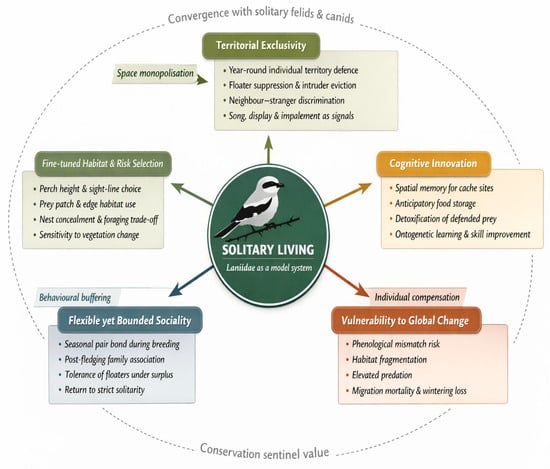

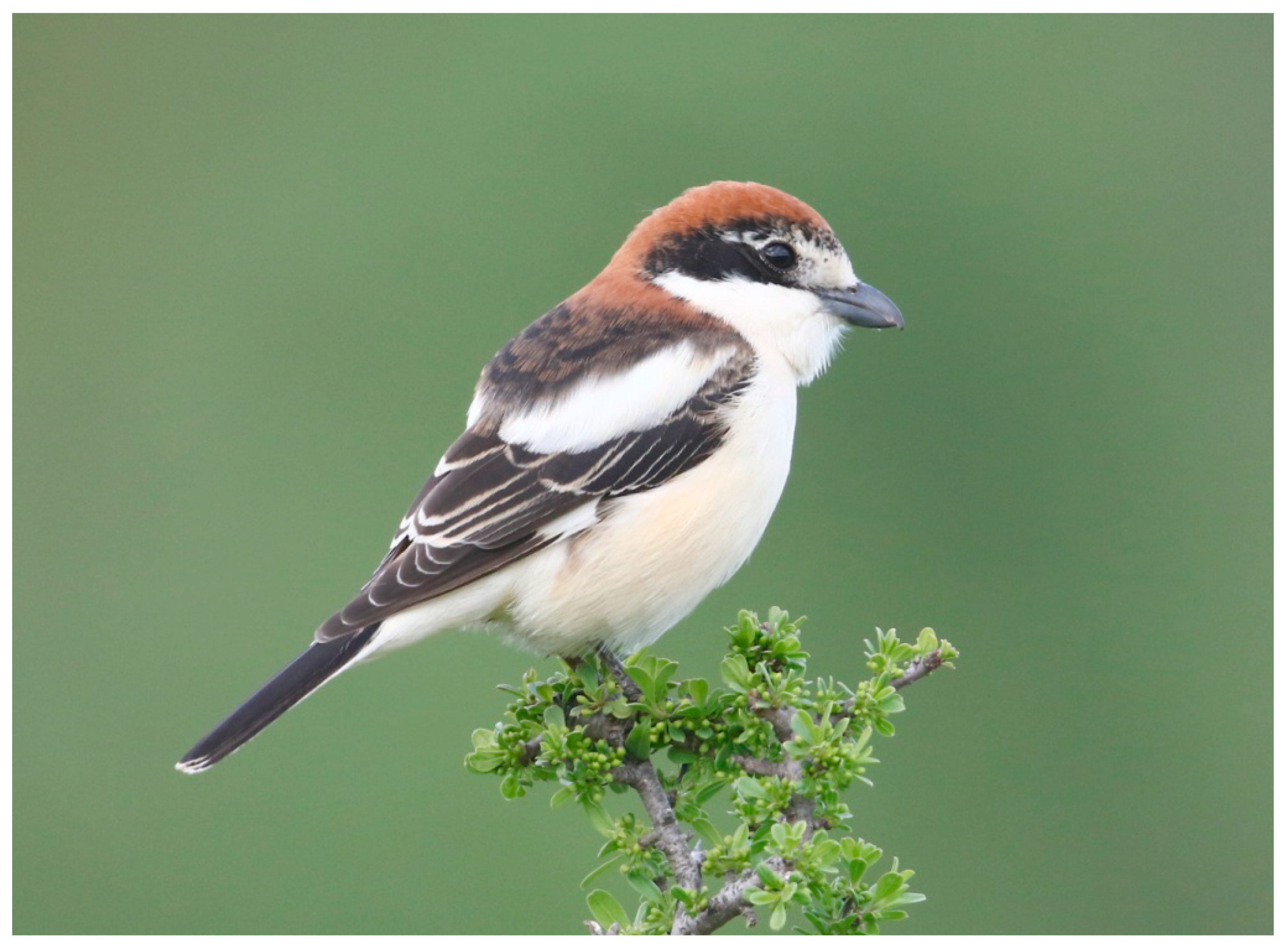
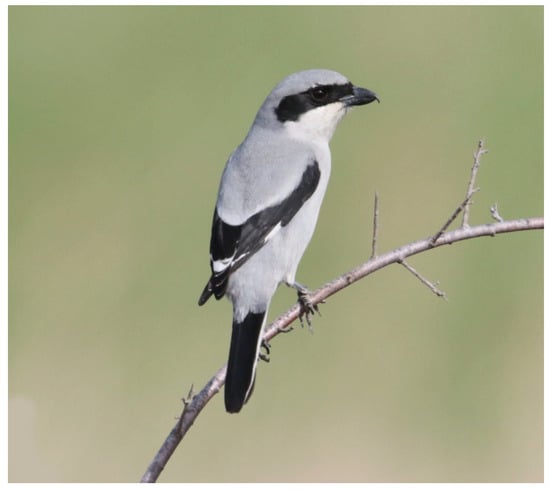
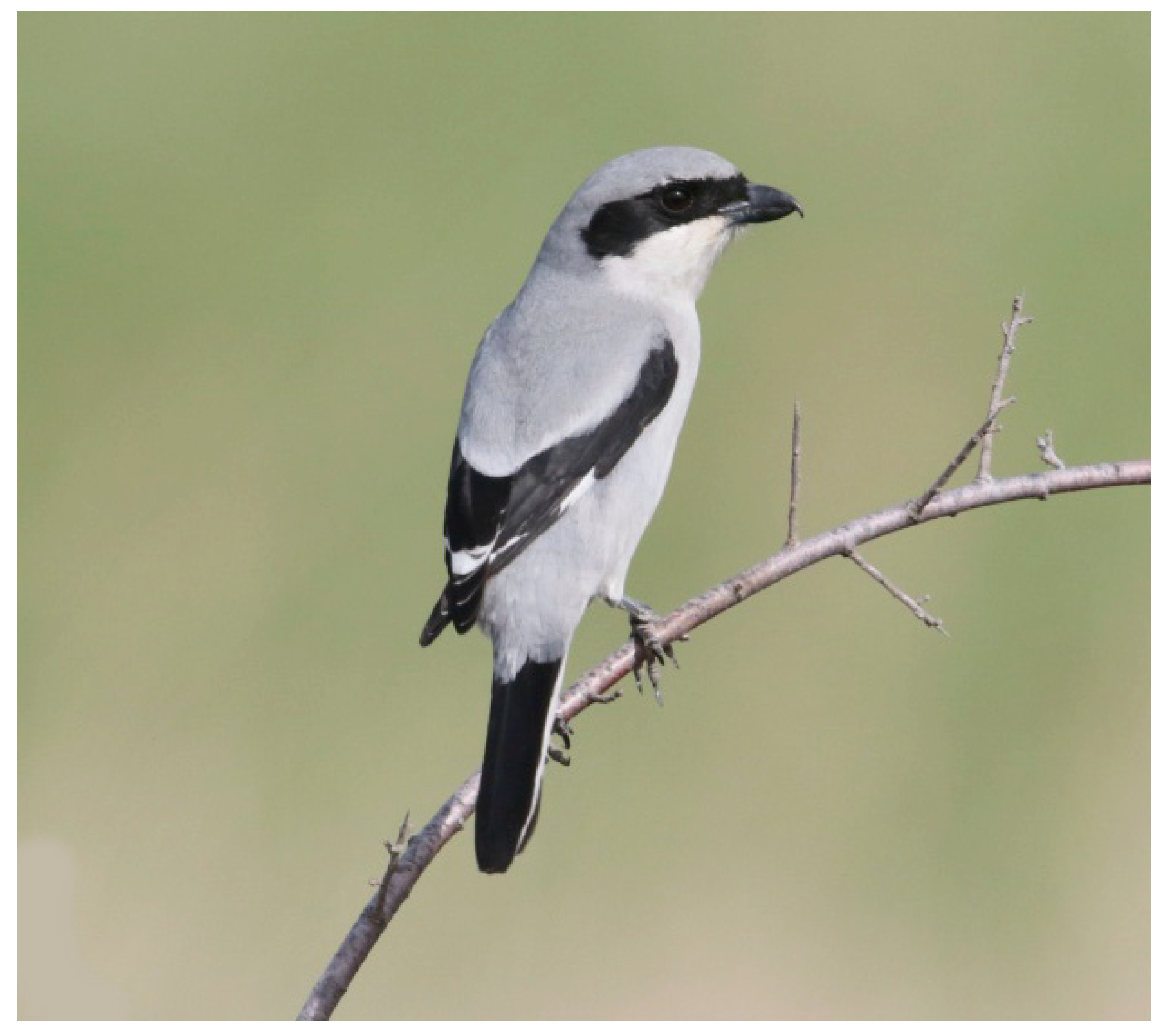
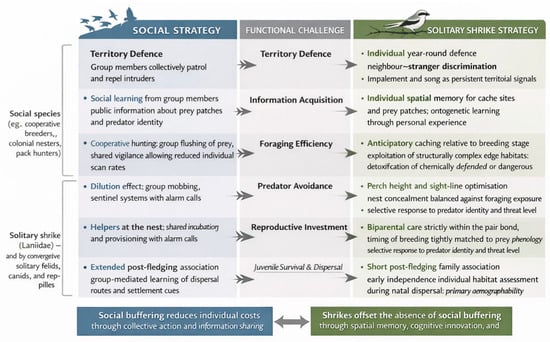
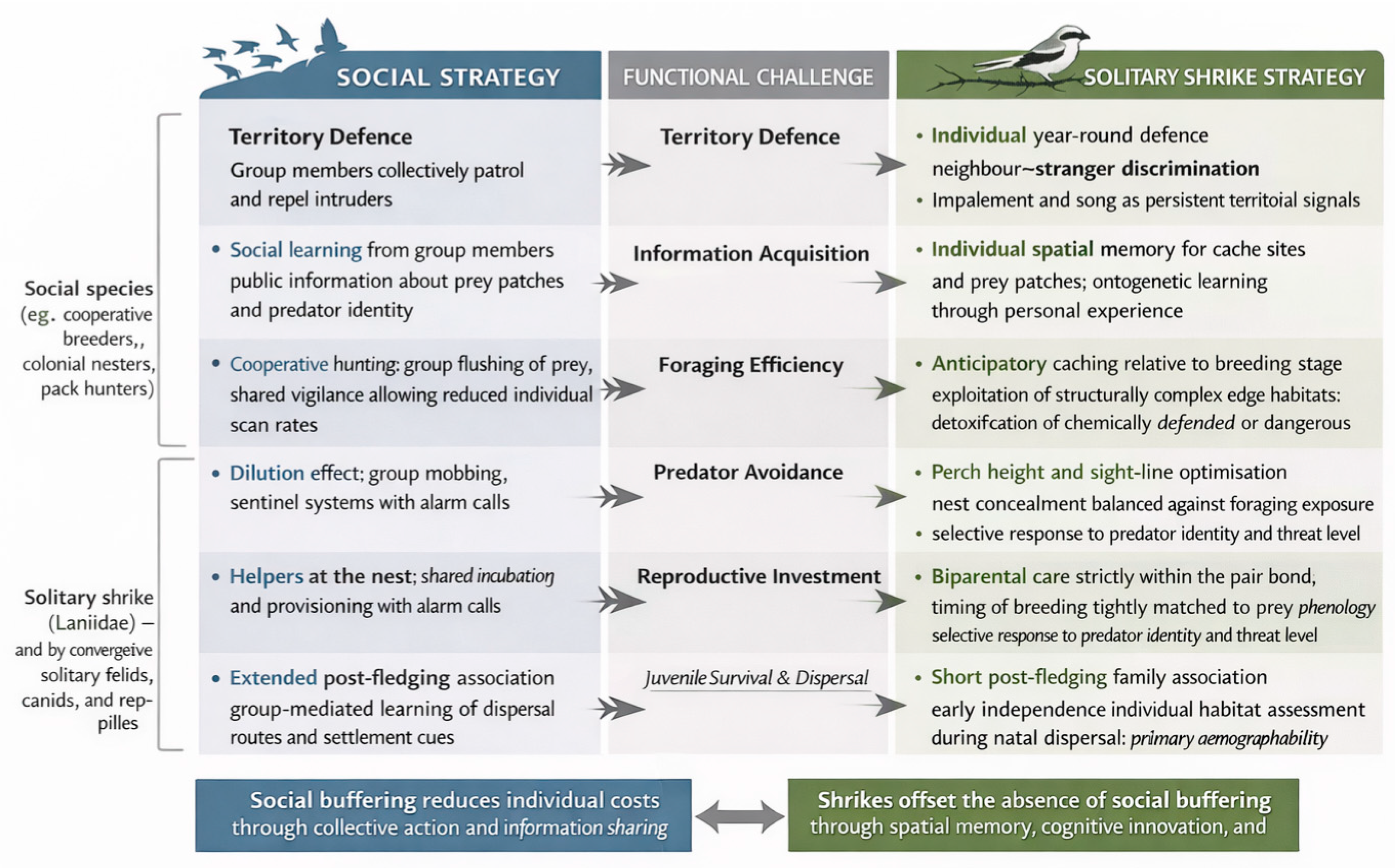
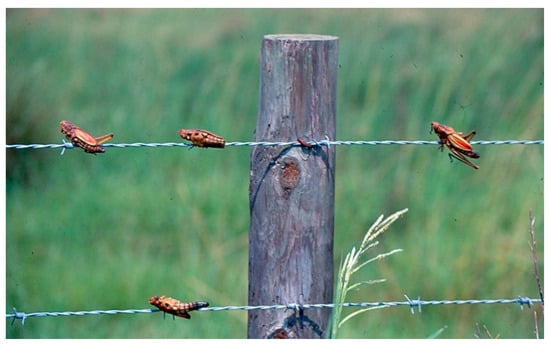
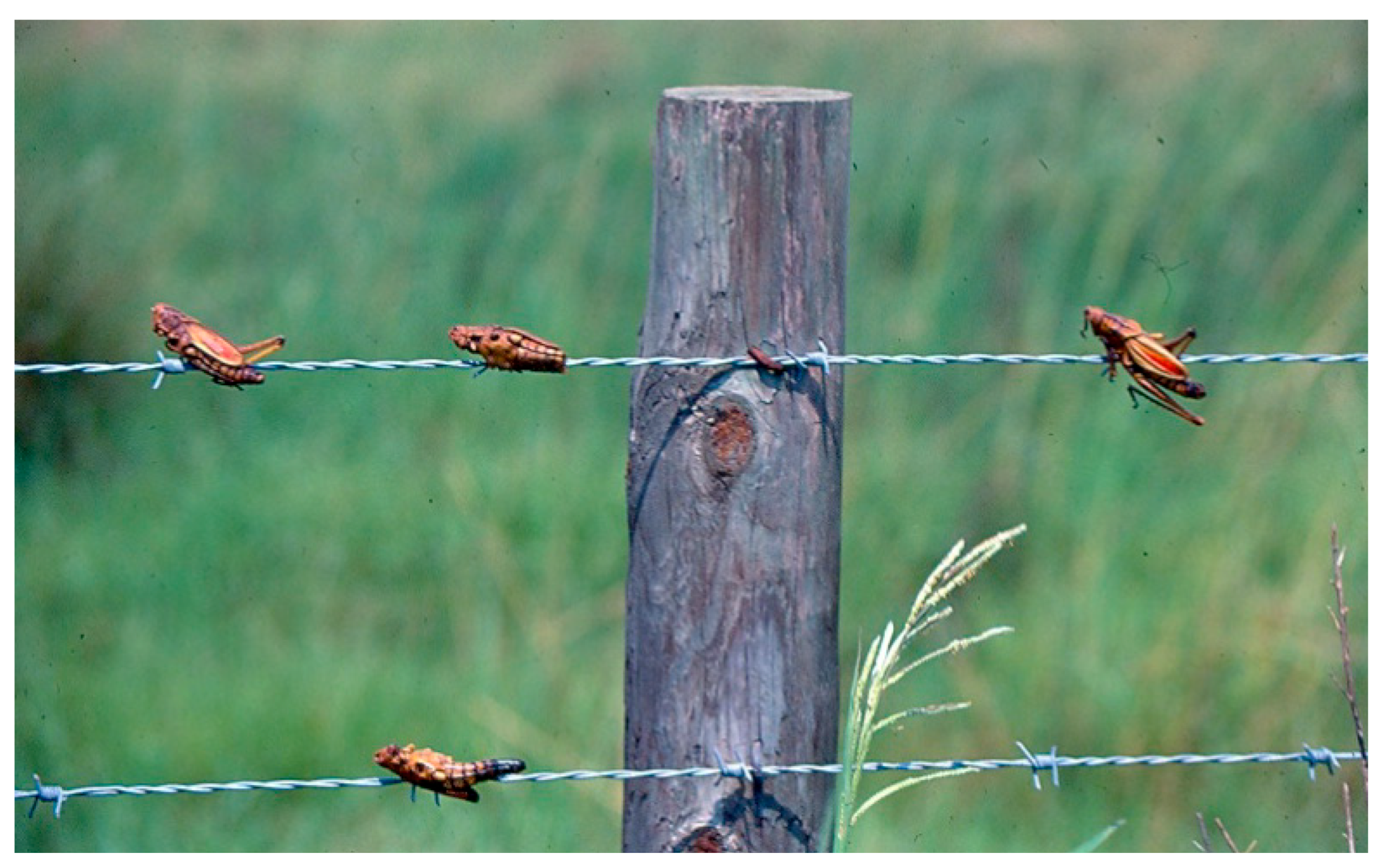
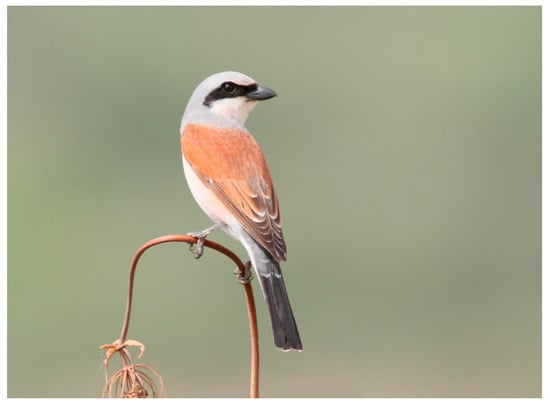
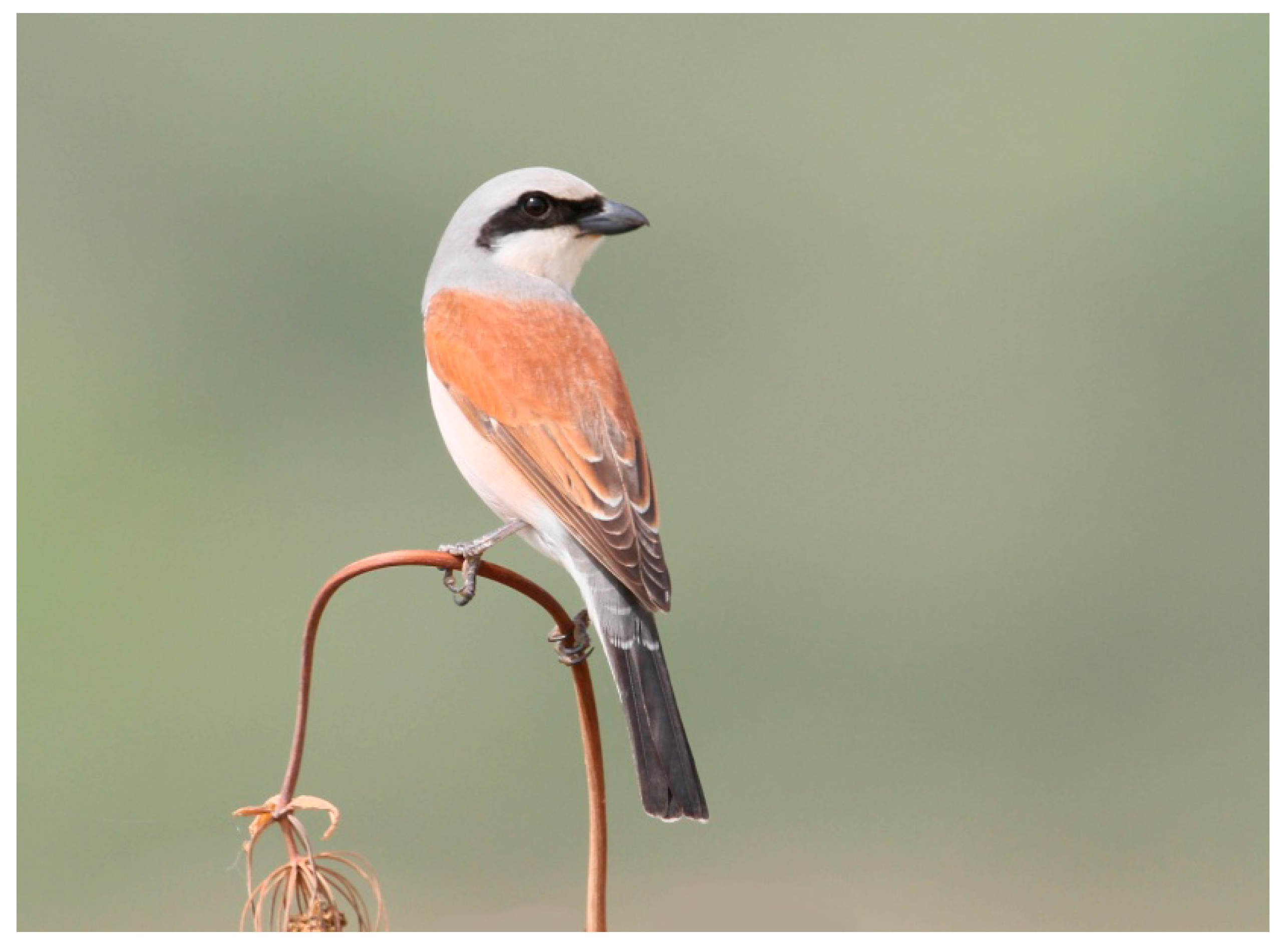
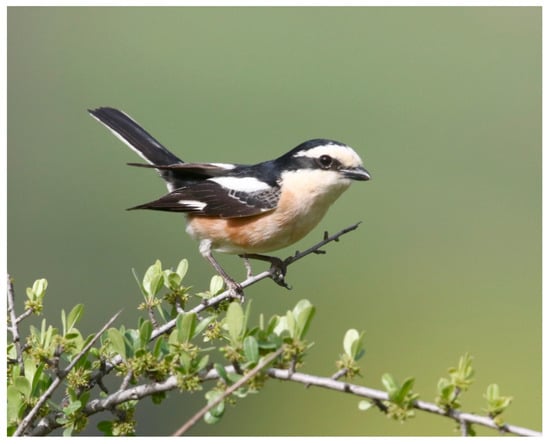
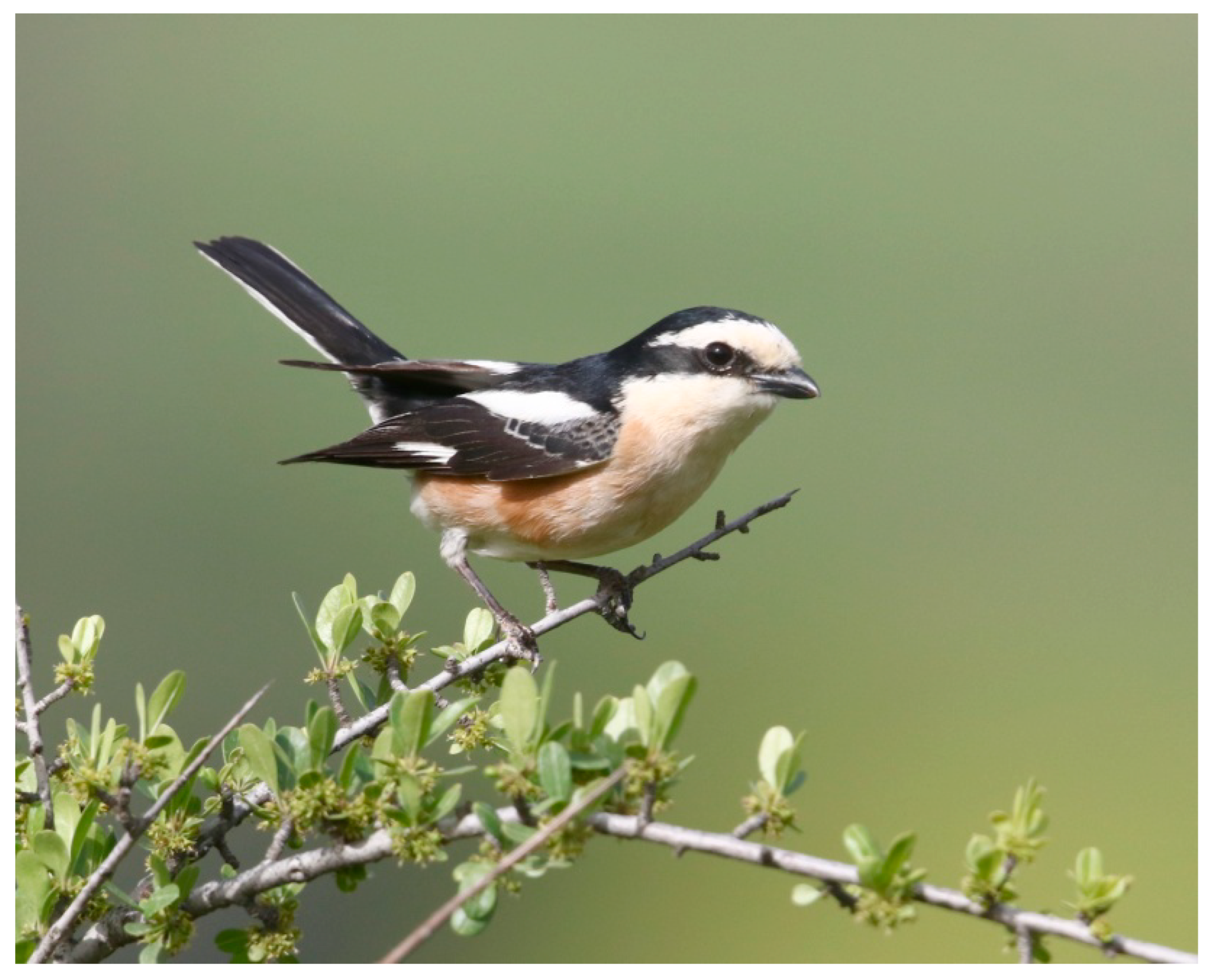
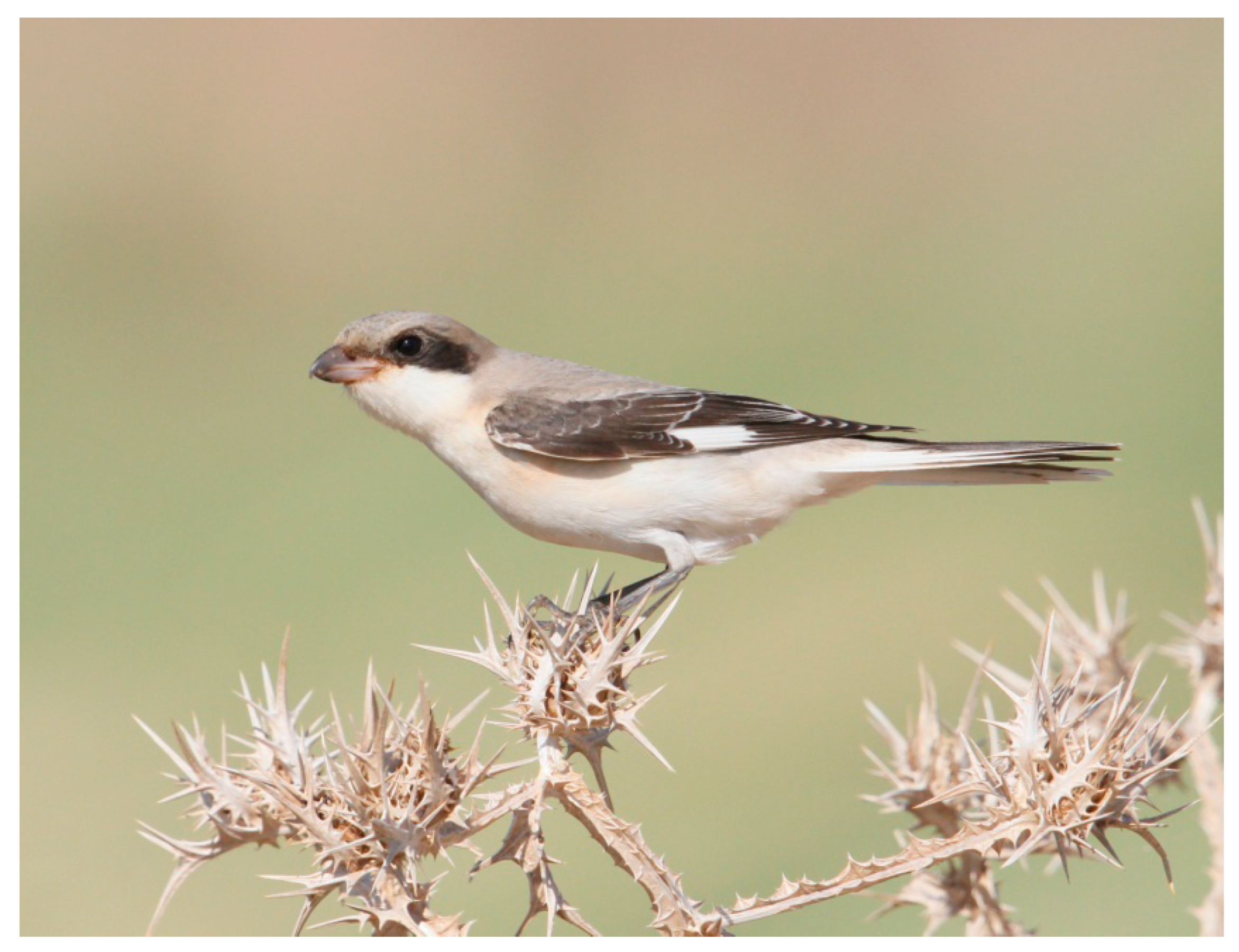

Disclaimer/Publisher’s Note: The statements, opinions and data contained in all publications are solely those of the individual author(s) and contributor(s) and not of MDPI and/or the editor(s). MDPI and/or the editor(s) disclaim responsibility for any injury to people or property resulting from any ideas, methods, instructions or products referred to in the content. |
© 2026 by the author. Licensee MDPI, Basel, Switzerland. This article is an open access article distributed under the terms and conditions of the Creative Commons Attribution (CC BY) license.