


Simple Summary
People referred for palliative radiation therapy for cancer that has spread to the bones and is causing pain may be booked for a radiation oncologist consultation and treatment appointments without clearly understanding what treatment can achieve and whether it aligns with their preferences. Without structured pre-assessment, patients may make a burdensome clinic trip for treatment they do not want, causing booking changes and unused treatment time. There may also be delays for the most unwell patients to be seen. This study examined whether a radiation therapist specialized in palliative treatment could assess patients by telephone before the consultation and make preliminary decisions that would align with the radiation oncologist’s. It also explored whether this improved patients’ expectations of treatment, involvement in decisions, and treatment-unit efficiency. The findings suggest that these radiation therapists can contribute meaningfully to pre-consult assessment. This research may inform larger studies, help define advanced practice radiation therapist roles, and support more efficient, patient-centred models of palliative radiation therapy.
Abstract
Background: Palliative radiotherapy (PRT) referrals for painful bone metastases often lack structured pre-consult triage, potentially contributing to inefficient resource use and delayed access. This pilot evaluated a palliative radiation therapist (pRTT)-led telephone triage pathway for decision concordance, patient expectations, shared decision-making (SDM), and operational efficiency. Methods: This quasi-experimental study compared 20 triage patients with 35 receiving standard care. Paired pRTT post-triage and radiation oncologist (RO) post-consult decisions were compared. Referral-to-treatment intervals and booking changes were assessed. Eighteen patients participated in expectations and SDM assessments before PRT, with some missing responses. Sixteen survived to six-week expectations follow-up. Results: pRTT–RO concordance was substantial for clinical trial eligibility [90%; κ = 0.76], fractionation [88%; κ = 0.72], and consultation urgency [75%; κ = 0.64] and moderate for treatment site [65%; κ = 0.59]. Triage participants reported greater perceived influence of their own behaviour on treatment outcomes [p = 0.05]. Expectations were completely met in at least one domain for 50% of triage participants versus 0% of controls [p = 0.09]. Qualitative findings suggested improved understanding and SDM. Modifying requisitions after triage would have significantly reduced net canceled booked time [p = 0.003]. Conclusions: pRTT-led triage showed substantial concordance with RO decisions and potential benefits for patient understanding and booking efficiency. These pilot findings support further evaluation of Advanced Practice Radiation Therapist roles in palliative radiotherapy.
1. Introduction
Palliative radiotherapy (PRT) accounts for approximately half of all radiotherapy (RT) courses, with bone metastases the indication in 40–50% of those courses and pain relief the primary goal [1,2]. Referrals can flow through tumour-site radiation oncologist (RO) queues without structured pre-consult triage, which may delay evaluation and make treatment starts dependent on clinic availability [3]. Centralized triage and rapid-access clinics can improve access, but straightforward cases still require RO evaluation, limiting physician time available for complex or emergent presentations [4].
Radiation therapists (RTTs) with advanced PRT-specific training in areas such as pain assessment and goals of care (hereafter, pRTTs) are one example of an expanded RTT role, including advanced practice radiation therapist (APRT) models [5]. Studies of pRTT-led triage report shorter waits and referral-to-treatment intervals, as well as greater patient satisfaction [3,6,7,8,9].
Pre-consultation telephone triage by a pRTT may also help ensure that patient management matches their needs. As pain sites may change between referral and consultation, and patients may ultimately decline PRT, a pRTT call could help identify changes before appointments are booked [10]. The call may also offer environmental benefits and convenient early education, although whether this enhances the quality and efficiency of the subsequent physician visit requires further evaluation [11,12].
Evidence suggests substantial expectation misalignment in RT and PRT. Patients may have limited prior knowledge of RT, overestimate the speed or extent of pain relief, and misunderstand palliative intent or prognosis even after RO consultation [13,14,15]. Expectations correlate with satisfaction and can influence shared decision-making (SDM), while realistic expectations may better position patients to make informed treatment decisions [16,17]. A method to clarify palliative intent has been identified as a priority for PRT research [18].
Although shared decision making (SDM) can improve satisfaction and align care with patient values, it remains inconsistently implemented in RT [19,20]. Time pressure, complex information, and assumptions that patients prefer clinicians to decide may be barriers, even though many patients want meaningful involvement when information is tailored to their needs [21]. pRTTs are well positioned to explain the PRT process and proactively engage patients in PRT decisions, which may help reduce psychosocial burden [11,22,23].
Concordance between pRTT and RO decisions should be evaluated to ensure that delegating pre-consultation triage to pRTTs maintains quality of care. This model represents a form of task shifting, in which responsibilities that are traditionally held by ROs are transferred to an appropriately trained APRT working at an advanced level of practice to optimize palliative workflows and expand workforce capacity [24]. Existing studies suggest that pRTTs can reach decisions similar to those of ROs; however, previous assessments of field placement, treatment site, or prescription have not consistently established that pRTT decisions were made independently of the RO’s clinical assessment or treatment decision [25,26,27]. Concordance must be interpreted in light of variation between clinicians, as two different fractionation choices may both be clinically acceptable yet have operational implications for the duration and number of pre-booked PRT appointments [1,25,28,29].
Objective
This pilot study aimed to evaluate pRTT-led pre-consultation telephone triage for clinical decision concordance between pRTT and RO clinical decisions, service efficiency, and patient-centred outcomes, including alignment of treatment expectations and participation in SDM, for patients referred for PRT to painful bone metastases.
2. Materials and Methods
2.1. Population and Sampling
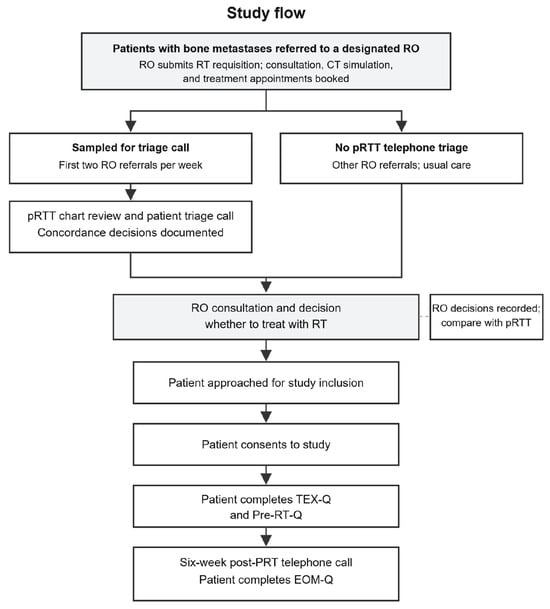
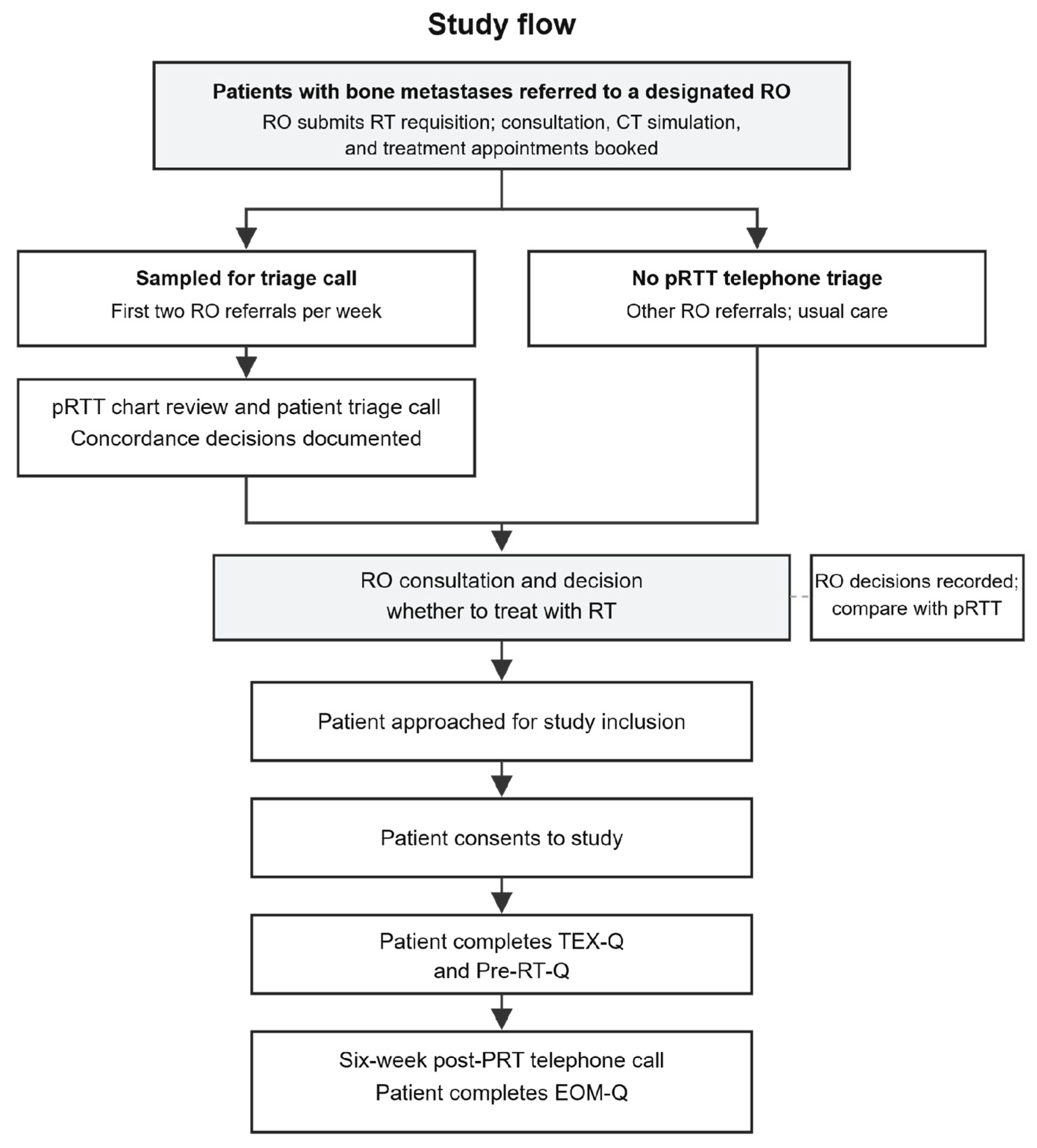
A quasi-experimental design was employed, with concurrent prospective parallel cohorts, comparing the standard RO-led pathway with the same pathway plus pRTT-led telephone triage one to five days prior to consultation. The sample included patients referred to a designated RO for consideration of PRT for painful bone metastases between July 2025 and February 2026 (Figure 1). Calls were limited to the first two weekly referrals, subject to workflow, referral volume, and contactability. Allocation to the triage cohort followed the natural timing of referrals, independent of patient complexity or outcomes of interest. All contacted patients were included in the concordance component. Patients not contacted by the pRTT, including those exceeding weekly triage capacity, those affected by workflow-related constraints, and one patient who could not be contacted, formed the control cohort. Both cohorts received standard patient education at consultation, at CT simulation, and prior to the first treatment and were invited to participate in the patient-reported experience component after consultation. As an exploratory pilot study, no formal sample-size calculation was performed; recruitment was limited to the predefined study period.
Figure 1.
Study participant flow. RO decisions recorded post consultation for triage cohort patients.
The evidence-based triage script was developed from the pRTT’s advanced practice training in patient communication and PRT, reviewed by an external pRTT, refined with input from a Patient and Family Partner, and approved by the supervising RO. The script guided the pRTT assessment of pain, functional impact, goals, and treatment expectations [18,30,31]. PRT information regarding palliative intent, expected likelihood and timing of benefit onset, and potential toxicities was provided. Patient understanding, readiness to proceed, and ability to attend treatment were also assessed to inform appropriate triage decisions [32].
2.2. Decisional Concordance
pRTT decisions post triage call were documented for appropriateness for PRT, the one to three most painful or function-limiting treatment sites, treatment urgency, fractionation, and—when relevant—any urgent supportive referrals, imaging required prior to planning, or eligibility for PRT clinical trials. Treatment sites were selected based on symptom burden, fracture or cord compression risk, and radiologic confirmation of disease [1,30,33]. Fractionation decisions considered single-fraction treatment where appropriate, with multifraction treatment for organ-at-risk constraints or more complex disease [28]. Treatment urgency was categorized using predefined thresholds based on pain severity and clinical indicators, including same-day referral for suspected oncologic emergencies [10,33,34].
All pRTT clinical decisions used for concordance analysis were documented and locked before communicating with the RO and without reviewing the RO’s requisition for PRT. The pRTT was therefore blinded to the RO’s decisions at the time of documentation. Provisional pRTT decisions were withheld from the RO whenever feasible, although safety-critical information was communicated immediately when required. After the RO consultation, the RO’s final decisions were recorded and compared to evaluate concordance, except for treatment site(s) and fractionation, which were determined from the prescription produced after CT simulation and planning.
Percent agreement was supplemented with Cohen’s kappa (κ) to measure agreement beyond that expected by chance alone [35,36]. Treatment urgency was categorized as within 24 h, within one week, or within two weeks. Weighted kappa used a predefined weighting scheme assigning 1.0 to matching categories, 0.5 to disagreement between the one-week and two-week categories, and 0 to other disagreements.
Because precise site determination is challenging without physical examination, treatment sites were grouped into eight anatomical regions plus soft tissue for kappa analysis, consistent with anatomical categorization used in the previous PRT literature [10]. The treatment site rather than the patient was the unit of observation. Geographic misses and differences in field number were not counted as matches. If clinicians identified multiple mismatched treatment sites in the same patient, sites were paired according to their closest anatomical correspondence.
Fractionation concordance was also assessed at the treatment-site level, with multiple observations per patient when both clinicians identified multiple sites for treatment. Additional sites identified by only one clinician were excluded from the fractionation analysis but remained discordances in the treatment-site analysis.
2.3. Operational Efficiency
The operational-efficiency evaluation used routinely collected anonymous system metrics for all patients. Metrics included referral-to-treatment interval, number of fractions, and late modifications to CT simulation or treatment bookings, including appointment length, number of fractions, start date, and cancellations [3,9,10].
Because booking changes were not routinely implemented following triage except for oncologic emergencies, changes to wait times or consultation volumes were not expected. However, comparison of pRTT’s provisional decisions with the RO’s final plan allowed estimation of the potential operational impact of submitting or modifying a requisition after triage. The hypothetical triage/pRTT requisition pathway was modelled using the pRTT’s prospectively documented post-triage assessment of the number of treatment sites, fractionation, and the patient’s preferred treatment start date. Changes in treatment unit appointment durations resulting from differences between the initial requisition and final prescription, accounting for changes in the number of treatment sites and fractions, were calculated for each patient. The net change was then calculated cumulatively across patients for each pathway.
System resource metrics were compared descriptively between pathways. Categorical variables were analysed using chi-square test, and continuous variables using Mann–Whitney U tests for non-normally distributed data. Paired patient-level comparisons between the observed and hypothetical requisition pathways were analysed using the Wilcoxon signed-rank test.
2.4. Expectations and SDM
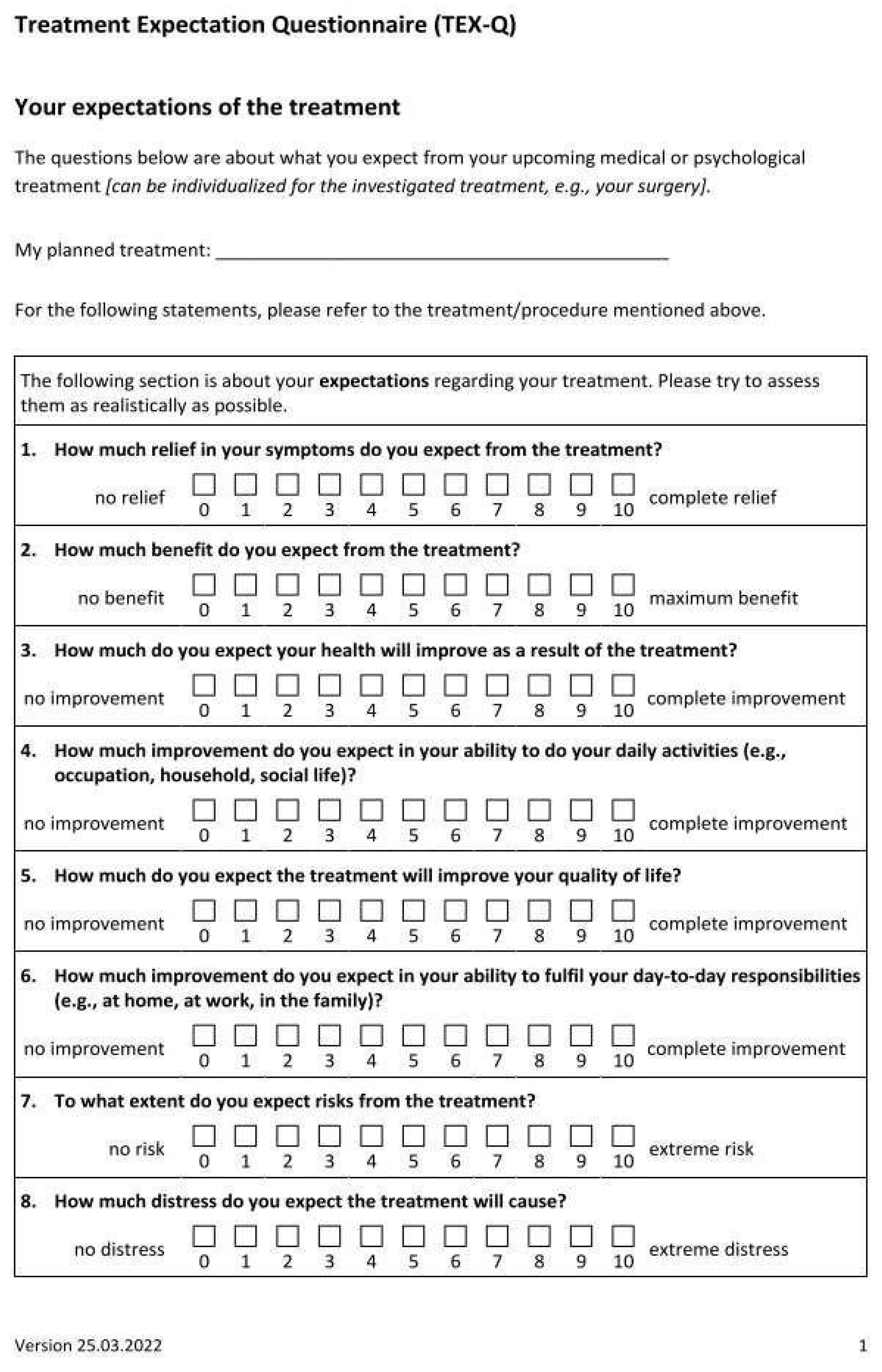
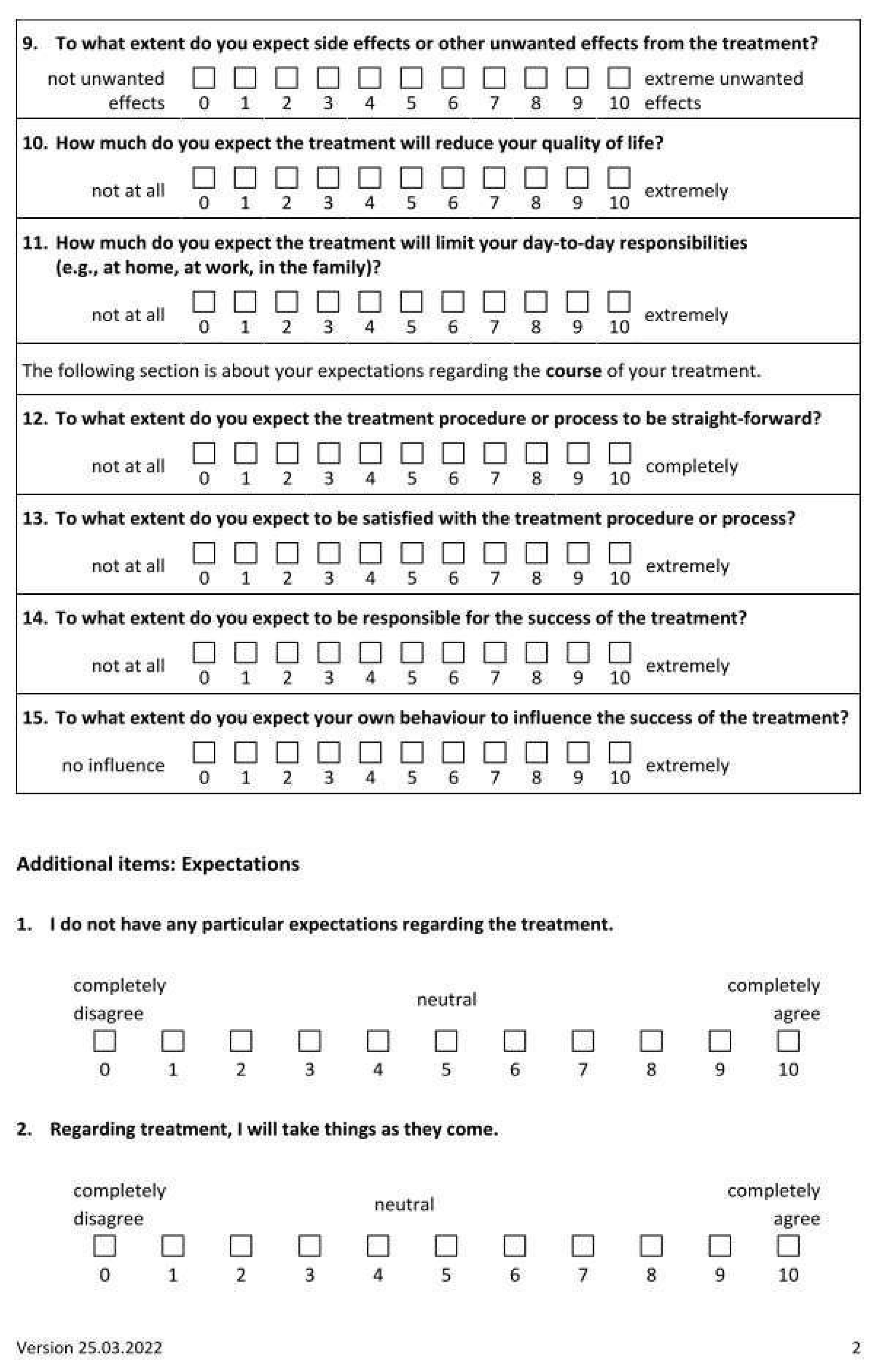
Consented patients completed two brief surveys after RO consultation and before PRT. The first survey was the 15-item Treatment Expectation Questionnaire (TEX-Q), a validated, generic measure of multidimensional patient expectations (Appendix A) [37]. The Treatment Benefit subscale was used as an indirect indicator of whether expectations aligned with the palliative intent and likely symptom benefit of treatment. Participants with missing TEX-Q items were excluded from that subscale only.
The second survey was the one-page Pre-RT-Q, containing three open-ended questions refined with input from a Patient Partner to improve relevance to the PRT context (Appendix B). Question 1 assessed expected onset of pain relief, which is not captured by the TEX-Q. Question 2 explored how HCPs shaped PRT-specific expectations, informed by prior qualitative research [38]. Question 3 was informed by the PICS scale but adapted to capture perceived SDM narratively [39].
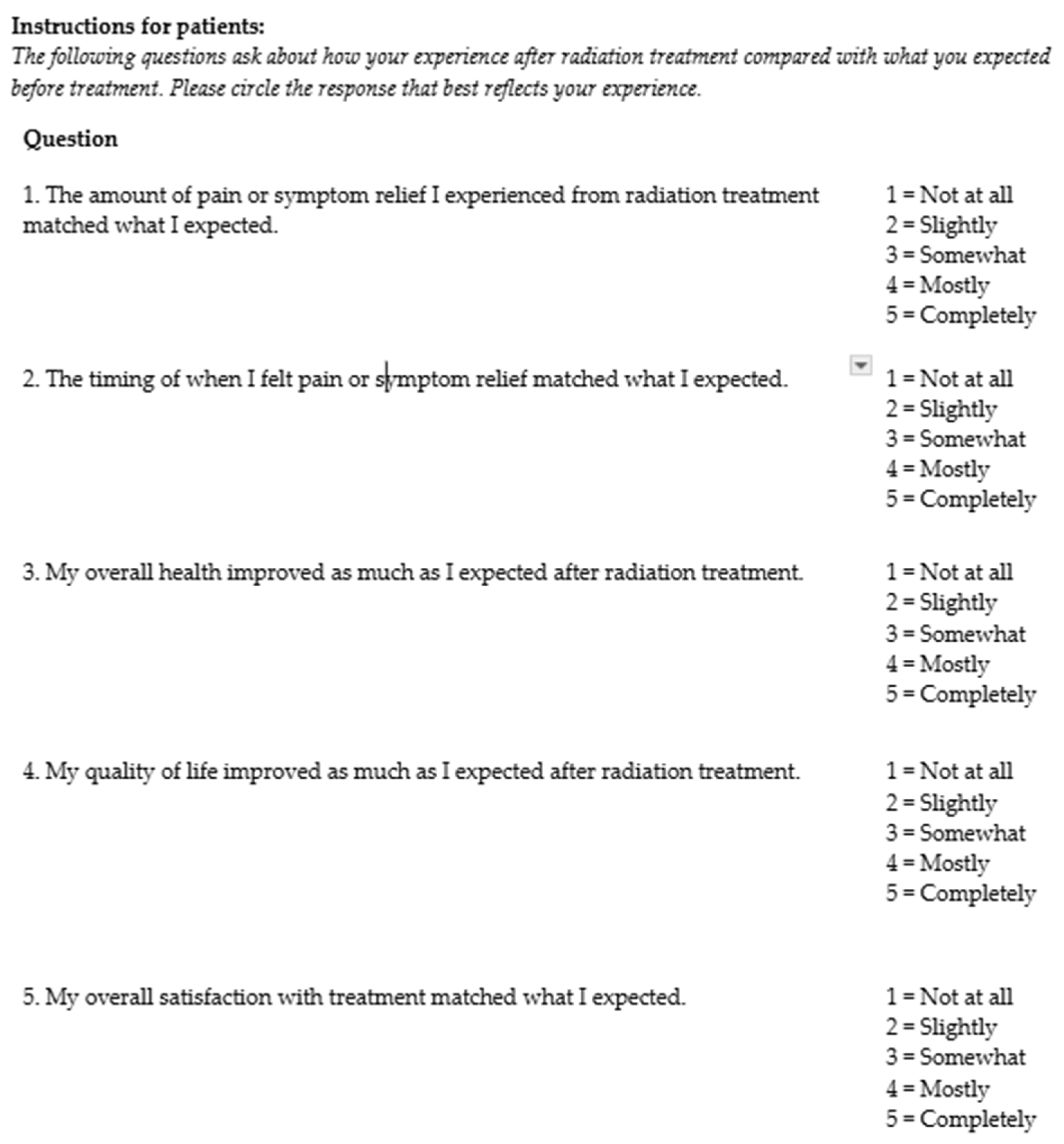
Six weeks after PRT, patients completed by telephone a five-item follow-up Expectation-Outcome Match questionnaire, with higher scores indicating greater expectation–outcome alignment (EOM-Q, Appendix C). Items were adapted from the TEX-Q to assess whether expectations regarding pain or symptom relief, timing of improvement, overall health and quality of life, and satisfaction had been met when treatment benefit would typically be evident. The EOM-Q was developed for exploratory use and was not formally validated. Responses used a five-point Likert scale from ‘Not at all’ to ‘Completely’. Patients who died before six-week follow-up were excluded from EOM-Q analysis.
Demographic and clinical characteristics were compared between cohorts using Fisher’s exact test for categorical variables with small cell counts. Between-cohort differences in TEX-Q and EOM-Q scores were assessed using Mann–Whitney U tests due to sample size. Pre-RT-Q Question 1 responses were reported separately as ≥2 weeks, <2 weeks, or “don’t know.” For the binary Fisher’s exact test, responses of <2 weeks and “don’t know” were combined and compared with responses of ≥2 weeks. The two-week threshold was selected as a clinically informed distinction between expectations of earlier relief and expectations more consistent with the typical onset of pain relief at or after 2 weeks post-PRT [40].
Written open-text responses to Pre-RT-Q questions 2 and 3 were analysed using framework analysis and charted in a framework matrix [41]. The primary researcher, who also conducted the pRTT triage calls, coded responses using a framework exploring how expectations changed following clinical interactions, the importance of SDM, which decisions mattered to patients, and who or what influenced decision-making. Themes were developed from patterns identified within these responses. A second researcher independently coded the data, with minor discrepancies resolved through discussion. Themes identified in at least three responses were reported. This threshold was selected to focus reporting on recurring patterns rather than isolated responses. Quotations were identified by cohort (triage or standard care) and participant study number, with HCP roles substituted for names.
Following independent coding by the primary and second researchers, ChatGPT version 5.3 was used as a supplementary tool to review coding consistency, assess whether proposed codes were supported by participants’ responses, and suggest potential themes. Only de-identified responses were entered, without participant identifiers, cohort allocation, or identifying information about patients or HCPs. All AI-generated interpretations and suggested themes were critically reviewed by the primary researcher, who rejected suggestions that were not supported by the data or did not adequately reflect the clinical context, and retained responsibility for the final coding and thematic analysis.
Given the exploratory pilot design and multiple comparisons, p-values were interpreted descriptively rather than as confirmatory evidence.
These findings were previously presented at conference and published as an abstract [42].
3. Results
Between July 2025 and February 2026, 55 patients were referred to the designated RO for PRT. Routine-care operational data were collected from 7 July 2025 through February 2026 and subsequently used for the operational efficiency evaluation. pRTT triage calls and recruitment for the patient-reported outcomes component commenced on August 22, 2025, following ethics approvals, triage script development with patient-partner review, and pRTT training.
Patient flow through the study stages is shown in Table 1. The expectations component assessed patient-reported treatment expectations and SDM before PRT and expectation–outcome alignment at six-week follow-up. All patients agreed to proceed with the triage call after its purpose was explained.
Table 1.
Participant flow through the pRTT triage and standard pathways, including eligibility and consent for the patient-reported expectations and shared decision-making component.
The analytical populations differed according to the study component, as summarized in Table 2.
Table 2.
Study components and analytical populations.
3.1. Concordance
Twenty patients received pRTT triage and were included in the decisional concordance analysis. Agreement, κ values, and common discordance patterns for each triage item are shown in Table 3. Appendix D shows the site-level concordance matrix used to calculate κ for treatment sites. Where only one clinician identified a treatment site, the corresponding decision was recorded as “no site” for the other clinician.
Table 3.
Decisional Concordance Between pRTT and RO (n = 20).
Fractionation decisions were compared for the 20 concordant treatment sites, plus the five observations in which both clinicians identified a treatment site but disagreed on its anatomical location.
Agreement between the pRTT and RO was substantial for clinical trial eligibility [90%; κ = 0.76], fractionation [88%; κ = 0.72], and urgency [75%; κ = 0.64] and moderate for treatment sites [65%; κ = 0.59]. Ribs were the site of greatest discordance, whereas the lumbar spine showed the greatest concordance. In all three fractionation discordances, the pRTT selected 800 cGy/1 and the RO 2000 cGy/5. The one oncological emergency presenting at triage was correctly recognized by the pRTT. Appropriateness for PRT, additional imaging, and immediate referral required showed high percent agreement but slight or fair κ values, reflecting skewed case distribution.
3.2. Operational Efficiency
Operational efficiency was compared across standard care (n = 35), pRTT triage with RO requisition (triage/RO req, n = 20), and hypothetical outcomes for the same 20 triage patients if the requisition had been submitted or updated following triage (triage/pRTT req). Pathway metrics are shown in Table 4. Booking accuracy was higher with the hypothetical triage/pRTT req pathway than with the triage/RO req pathway (55% vs. 30%), and the cumulative net booking time balance was significantly lower (additional 2.0 h required vs. 7.8 h of net cancelled treatment unit time; p = 0.003). Although median consultation-to-treatment intervals were identical (1 day), the triage/pRTT req pathway showed shorter intervals for some patients, including same-day treatment (p = 0.14).
Table 4.
Operational efficiency outcomes across pathways: changes from initial appointment bookings.
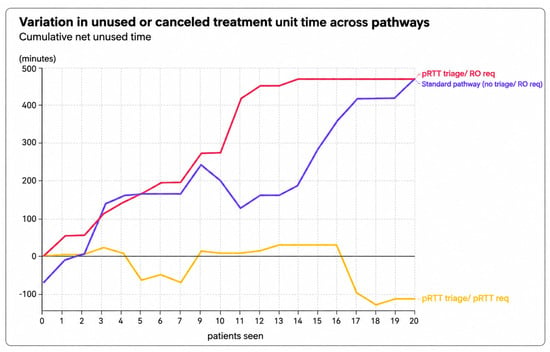
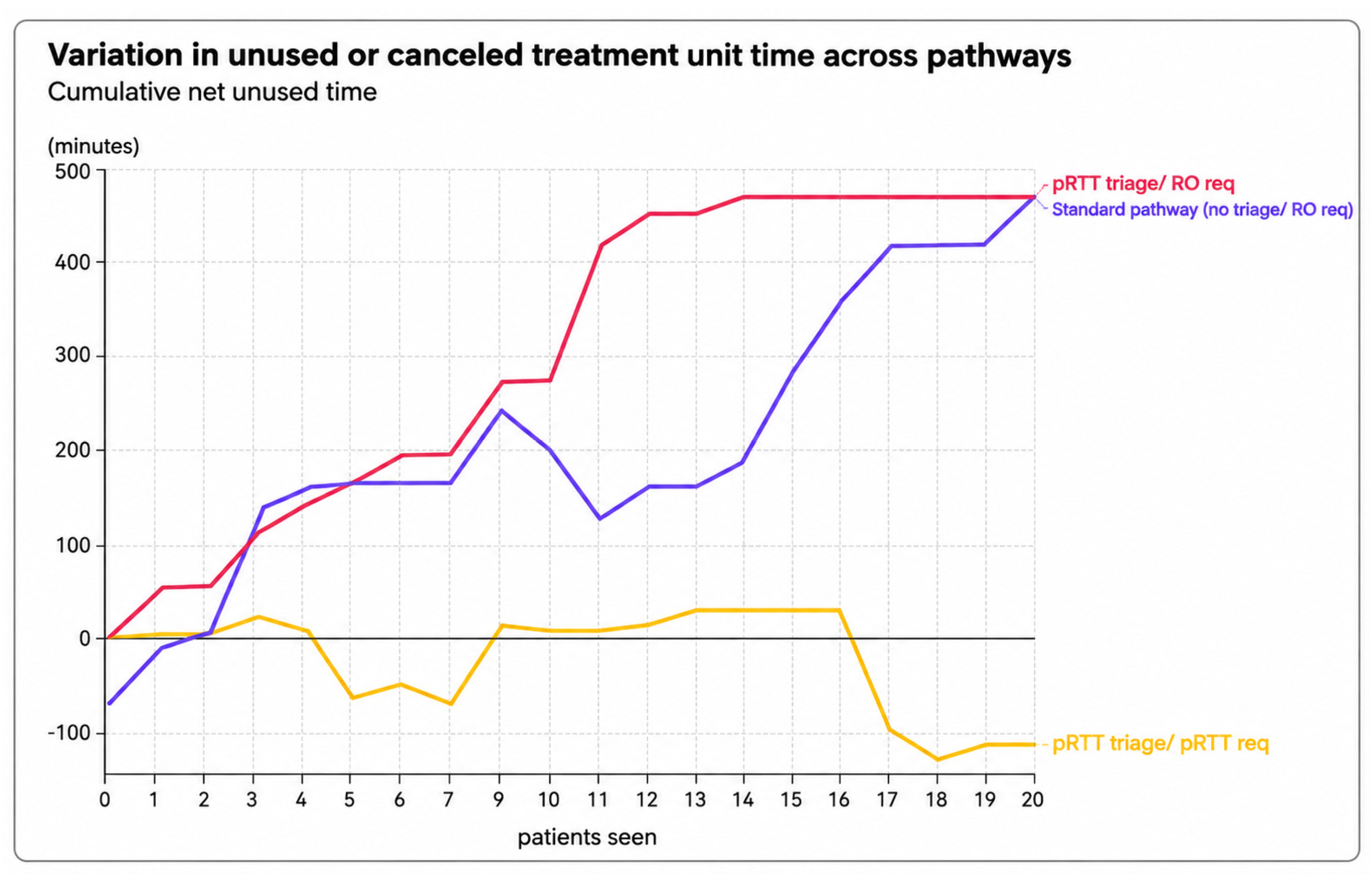
The cumulative net booking time balance across care pathways is shown in Figure 2. Positive values indicate a net reduction in treatment unit time due to cancellations, whereas negative values indicate a net increase in time required for additional appointments. The two triage pathways include the same 20 patients, whereas the standard pathway graph includes the first 20 of 35 standard-care patients.
Figure 2.
Cumulative net booking-time balance across sequential patients in each care pathway (positive = net canceled booked time; negative = net additional time required).
3.3. Expectations and SDM
3.3.1. Patient Demographics
Baseline demographic and clinical characteristics of patients who consented to the expectations and SDM component were similar between cohorts, as shown in Table 5. The pRTT was present during RO consultation more frequently in the triage cohort (82% versus 43% in the control cohort; p = 0.14).
Table 5.
Baseline Demographic and Clinical Characteristics of participants who consented to the patient-reported expectations and SDM component.
One triage and one control participant died before six-week follow-up. Additional missing responses varied by questionnaire item or subscale. Analyses used available responses for each outcome, with participants excluded only from analyses for which the required data were missing. The corresponding sample sizes are reported in Table 6.
Table 6.
Comparison of TEX-Q subscale scores, Pre-RT-Q item 1, and EOM-Q scores between consenting participants in the pRTT triage and standard pathway cohorts.
3.3.2. Expectations
Patient expectations and expectation–outcome alignment among participants who consented to the patient-reported component, measured using the TEX-Q and Pre-RT-Q questionnaires before PRT, and the EOM-Q 6 weeks after PRT, are summarized in Table 6. The TEX-Q Behavioural Control subscale differed between cohorts, with higher scores in the triage cohort (median 7.8 vs. 5.0, p = 0.05). The Adverse Events subscale was also higher in the triage cohort (median 3.7 vs. 2.7, p = 0.10). A higher proportion of triage participants reported expectations consistent with the typical onset of pain relief at ≥2 weeks (45% vs. 14%, p = 0.32).
For post-treatment expectation–outcome alignment, 50% of triage participants and no controls reported expectations completely met in at least one domain (p = 0.09).
3.3.3. Expectations and SDM (Qualitative)
Qualitative shared decision-making responses (Pre-RT-Q Items 2 and 3) were available from 10 triage and 6 control participants, with one participant in each cohort not responding. Four themes were identified from participants’ accounts of triage and consultation: increased understanding, supportive communication leading to trust, increased confidence, and decision-making deference.
Many participants described improved understanding of what to expect with treatment. In the triage cohort, several participants said they were “more informed” (TR11). One participant noted, “after speaking at length with [the pRTT] on the phone, my expectations and understanding were dramatically changed” (TR08). By contrast, one standard cohort participant said they “came in blind” and reported that their expectations changed “not much” (SOC07).
Participants in both cohorts described feeling supported by HCPs, often linking caring communication with comfort, optimism, and trust. One participant described HCPs as “professional and gave me a sense of comfort…[RO] made me feel at ease” (TR04). Participants also described greater confidence in treatment and their decisions:
“After speaking to them I didn’t have any apprehension or concerns, I had more confidence in the treatment…I felt very involved and confident in my decision to have radiation treatment.”(TR01)
Among participants who deferred decision-making to HCPs, two patterns were observed. Some participants expressed full trust in clinician judgement, such as one who stated it “was unimportant that I was involved in the decision. I feel that I am in a knowledgeable and professional care team. Their decisions are medically based and are obviously in my best interest” (TR03). Others described less perceived choice: “as an average person you go with what your Dr’s recommend and hope for the best” (SOC05). One triage participant similarly stated they “don’t see any choice. I do whatever it takes” (TR06).
4. Discussion
In this pilot study, pRTT-led pre-consultation telephone triage was associated with better understanding of PRT among some patients. The pRTT’s decisions showed substantial agreement with RO decisions in several triage domains, although agreement on treatment site was lower. A model using pRTT-informed requisitions suggested more accurate initial bookings and less unused treatment unit time. These findings support further evaluation of the role, while the small sample and observational design limit conclusions about patient outcomes and service capacity. They add to a growing body of literature describing expanded and advanced-practice RTT roles in palliative care, including broader responsibilities in patient assessment, care coordination, treatment planning, and delivery [5,43,44,45]. Within this evolving scope of practice, the present study specifically evaluates whether selected decisions can be shifted earlier in the pathway to a pRTT before RO consultation.
4.1. Patient Experience and Decision Making
Participants’ accounts suggest that receiving information before the RO consultation helped some understand treatment intent, likely outcomes, and the reasoning behind treatment options, which is important as patients could otherwise enter their initial RO consultation with limited knowledge and misconceptions about RT [45]. The triage cohort scored higher on the TEX-Q Behavioural Control subscale (median 7.8 vs. 5.0, p = 0.05), indicating greater expectation that their own behaviour could influence treatment success. The TEX-Q Behavioural Control subscale measures perceived influence over treatment outcomes rather than shared decision-making directly. Together with participants’ descriptions of greater confidence and involvement, this suggests that triage may have supported patient empowerment and participation in decisions, consistent with previous evidence [21,22,46].
A higher proportion of triage participants reported expectations consistent with the typical onset of pain relief, a topic addressed explicitly in the triage call. This targeted finding should be considered in the context of the multidimensional nature of treatment expectations, which may encompass specific expectations as well as broader hopes about treatment outcomes. A focused pre-consultation conversation may therefore clarify particular expectations without substantially changing expectations across all domains [47,48].
This complexity was also reflected in the broader expectation measures. Half of triage participants, compared with none of the controls, reported that expectations were completely met in at least one domain, but otherwise there was little evidence of a triage effect. Interpretation is complicated by the measures themselves: the TEX-Q Treatment Benefit subscale combines expectations of symptom relief and overall health improvement, although PRT may improve symptoms without improving overall health [18,29,37]. At six weeks, the EOM-Q required participants to recall earlier expectations and judge outcomes that may have been influenced by factors other than PRT [13]. Some participants also appeared to confuse whether expectations were met with satisfaction, further limiting interpretation of EOM-Q scores. Notably, overall health improvement was the least met expectation in both cohorts, highlighting the need for plain-language explanations distinguishing possible symptom relief from improvement in overall health [49].
4.2. Clinical Concordance
The substantial concordance between pRTT and RO decisions supports the delegation of selected triage decisions to the pRTT for uncomplicated bone metastasis referrals, consistent with growing evidence for palliative pRTT-led triage and expanded scope of practice [6]. Substantial agreement for treatment urgency (weighted κ = 0.64), together with the identification of the single oncological emergency, suggests that pRTT triage may support access prioritization by identifying which patients require earlier assessment, extending previous evidence that pRTT-led models can improve access and reduce wait times [5]. Similarly, early identification of potential clinical trial eligibility during pRTT triage may also facilitate recruitment by allowing trial-related discussions and consent preparation before the RO consultation.
Treatment site selection was more challenging, with 65% concordance and moderate agreement. Site discordance only occurred in patients receiving treatment to multiple sites, and complex referrals, including re-treatment, were not excluded. Unlike the pRTT’s pre-consultation assessment, the RO decision incorporated physical examination and CT simulation. In patients with widespread metastatic disease, more than one site may plausibly account for symptoms, contributing to inter-clinician variation in site and field definition, as reflected in the rib, scapula, and thoracic spine discordance observed here [25]. These factors may partly explain the lower site concordance than previously reported and highlight limitations of telephone triage for precise anatomical localization [25,27]. Future evaluation could identify general treatment regions at telephone triage, with precise anatomical sites determined after in-person assessment.
The RO decision also represents a reference standard rather than an absolute gold standard. Some discordance, particularly in fractionation, may therefore reflect clinically acceptable variation where more than one evidence-based approach is appropriate rather than error [1,29]. pRTT-led workflows have been associated with increased use of evidence-based single fraction treatment, with potential benefits for patient throughput [10]. Dominant pain sites may also change between triage and consultation, as occurred in this study. Together, these findings suggest that concordance should be interpreted in clinical context rather than assuming that every difference represents compromised safety or efficacy.
4.3. Potential Operational Implications
If simulation and treatment appointments had been booked according to the pRTT’s decisions following triage, initial bookings would have more closely matched patients’ eventual treatment requirements, resulting in a smaller net booking time imbalance. As illustrated in Figure 2, the hypothetical triage/pRTT requisition pathway remained close to zero cumulative net booking time balance across much of the patient sequence, whereas the observed triage/RO requisition pathway accumulated larger changes, particularly among the earlier patients. There was, however, an additional 2 h of treatment unit time required beyond the initial bookings for all 20 patients. Because this pathway was modelled using prospectively documented pRTT decisions rather than implemented in clinical practice, these findings represent estimated rather than observed operational effects.
Accurate advance booking depended less on identifying the precise treatment site than on anticipating the number and length of treatment appointments ultimately required. The pRTT showed substantial concordance with the RO’s final fractionation decision (88%), despite lower concordance on treatment site. Thus, differences in the precise anatomical site selected would have little effect on booking accuracy if the number of sites and fractions required was correctly anticipated. Speaking with patients before consultation allowed the pRTT to identify dominant pain sites and preferences for fractionation and start date, better aligning booked appointments with anticipated treatment. Because triage occurred 1–5 days before consultation, booking changes could potentially release treatment unit time earlier, allowing it to be reallocated to other patients. In contrast, changes made at consultation, when treatment is pre-booked for the following day, may provide insufficient notice to utilize the released time. However, actual reuse of released appointment time was not measured. This aligns with previous evidence that pRTT triage can improve efficiency by identifying inappropriate referrals and coordinating appointments before consultation [6].
Although the pRTT triage pathway did not shorten overall referral-to-treatment time, same-day treatment occurred in the triage pathway, including when the RO requisition was used, but not in the standard pathway. Triage enabled the pRTT to identify patient needs, such as travel constraints, before consultation and coordinate same day treatment. This demonstrates how pre-consultation triage can support greater responsiveness to individual patient needs even without a measurable reduction in overall referral-to-treatment time. Whether this translates into consistent improvements in access and operational efficiency requires prospective evaluation in a larger cohort.
Wait time alone may not capture the full operational contribution of pre-consultation triage when comparing these findings with previous pRTT models. Earlier consultation may improve access to assessment, but its effect on system capacity is limited if referral-to-treatment time and patient throughput remain unchanged [3]. Pre-consultation triage may contribute to operational efficiency through other mechanisms, including more accurate initial bookings, reduced unused treatment capacity, responsive coordination of treatment, and prioritization according to clinical need.
4.4. Implications
Taken together, these findings suggest that pRTT triage has clinical and organisational value within the PRT pathway, while also supporting patient education. Clinically, it offers a structured way to improve informed, patient-centred care and support SDM before consultation. Substantial concordance for treatment urgency suggests that pRTT triage could also contribute to access prioritization. Reproducibility of these findings, however, is likely dependent on appropriately trained pRTTs with advanced clinical assessment, communication, and palliative care expertise. Implementation timelines would depend on existing competencies, local workflows, and the development of structured triage procedures.
Organizationally, the findings support delegation of selected triage decisions to a pRTT for uncomplicated bone metastasis referrals, with potential to improve initial booking accuracy and reduce unused treatment unit time. Ongoing delivery requires dedicated time for chart review, telephone triage assessment, documentation, and care coordination. Patient education may also be strengthened through structured, plain-language explanations of treatment intent, expected symptom relief, timing of benefit, and treatment limitations.
4.5. Limitations
The nonrandomized, single-centre pilot design, small cohorts, and lack of full-cohort baseline characteristics to assess potential selection bias limit causal inference and generalizability. Concordance was assessed between one pRTT and one RO, limiting assessment of inter-clinician variability. The RO had access to physical examination and CT simulation, unlike the pRTT at telephone triage, which may have contributed to site discordance. The pRTT’s variable involvement during RO consultations also means that the effects of telephone triage cannot be fully isolated from subsequent clinical interactions.
Missing questionnaire responses and loss to follow-up due to death may have introduced bias and reduced precision for patient-reported outcomes. Operational effects of a pRTT-initiated requisition were modelled using prospectively documented triage decisions rather than evaluated through prospective implementation and therefore represent estimated rather than directly observed improvements in booking efficiency. Finally, site-level concordance analysis did not account for potential within-patient correlation among multiple treatment sites. The small number of observations also limits the precision of the agreement estimates, particularly κ values, which should be interpreted cautiously.
4.6. Future Directions
Future research should build on these findings using a larger sample, more context-specific expectation measures, and improved assessment of post-treatment outcomes. Measures that separate symptom relief from overall health and assess pain response or satisfaction directly may be more informative than expectation–outcome alignment alone. In-person pRTT assessment could also determine whether concordance in treatment site selection improves and whether a broader range of treatment decisions could be delegated safely. Research should also examine whether more consistent pRTT participation in consultation could improve clinic efficiency and patient involvement in decisions. A future APRT pathway could involve RO review of referral suitability followed by APRT triage assessment and submission of the initial treatment requisition, avoiding the need for provisional bookings and subsequent revisions.
5. Conclusions
The present study addresses a gap in PRT practice, where SDM has been inconsistently implemented, and responds to Galietta et al.’s (2025) call for evidence on structured pre-consult education delivered by a pRTT [18].
pRTT-led pre-consultation triage was well accepted and appeared to improve understanding of treatment intent, likely outcomes, and the rationale for treatment decisions, while supporting confidence and perceived agency among some patients. Differences in treatment expectations and post-treatment expectation–outcome alignment varied across domains, without clear evidence of a consistent benefit from triage.
pRTT triage decisions showed substantial concordance with RO decisions across several clinical domains, including treatment urgency, while treatment site selection remained more challenging without in-person assessment. The hypothetical pRTT-informed requisition pathway suggested potential operational value through improved booking accuracy and reduced net canceled booked time. Together, these pilot findings support further evaluation of advanced practice radiation therapist roles in palliative radiotherapy, including their contribution to patient education, clinical triage, access prioritization, and efficient use of treatment-unit capacity.
Author Contributions
Conceptualization, S.G., M.M. and C.G.; methodology, S.G. and M.C.; investigation, S.G. and M.M.; data curation, S.G.; formal analysis, S.G. and C.G.; writing—original draft preparation, S.G.; writing—review and editing, S.G., C.G. and M.C.; visualization, S.G.; project administration, S.G. and M.C.; supervision, M.M., C.G. and M.C. All authors have read and agreed to the published version of the manuscript.
Funding
This research received no external funding.
Institutional Review Board Statement
The study was conducted in accordance with the Declaration of Helsinki and approved by the University of British Columbia–BC Cancer Research Ethics Board (REB number H25-02113, approved 29 July 2025) and the Sheffield Hallam University Research Ethics Committee (approved 21 August 2025). The BC Cancer REB approved the inclusion of routine-care operational data collected from 7 July 2025 in the approved study analysis.
Informed Consent Statement
Written informed consent was obtained from subjects for the patient-reported expectations and shared decision-making component of the study. A waiver of consent was granted for the clinical concordance and operational-efficiency components.
Data Availability Statement
The raw data supporting the conclusions of this article will be made available by the authors on request.
Acknowledgments
We would like to express our sincere gratitude to the patients who participated in this study. There would be no research findings without their willingness to share their experiences, knowing that their contributions could help improve care for future patients receiving palliative radiotherapy. During the preparation of this manuscript/study, the authors used ChatGPT version 5.3 for the purposes of study design, generating graphics, and supplementary review of qualitative coding and identification of potential themes. The authors have reviewed and edited the output and take full responsibility for the content of this publication.
Conflicts of Interest
The authors declare no conflicts of interest.
Abbreviations
The following abbreviations are used in this manuscript:
| PRT | Palliative radiotherapy |
| RT | Radiotherapy |
| RO | Radiation oncologist |
| RTTs | Radiation therapists |
| pRTTs | Radiation therapists with advanced palliative radiotherapy specific training |
| APRT | Advanced Practice Radiation Therapist |
| CSRT | Clinical specialist radiation therapist |
| SDM | Shared decision making |
| MDT | Multi-disciplinary team |
| TR | Triage pathway |
| SOC | Standard of care pathway |
| TEX-Q | Treatment Expectations Questionnaire |
| Pre-RT-Q | Pre-radiation therapy questionnaire |
| HCPs | Health care providers |
| EOM-Q | Expectation–outcome match questionnaire |
| GU | Genitourinary |
Appendix A. Treatment Expectation Questionnaire (TEX-Q)
Figure A1.
Treatment Expectation Questionnaire (TEX-Q).
Appendix B. Pre-RT-Q
The questions below are about your expectations on your upcoming radiation treatment.
- How soon do you expect symptom or pain relief from the treatment?
- How did your expectations about radiation treatment change after speaking with the BC Cancer health care professionals (e.g., radiation therapists, radiation oncologists, or nurses)?
- How important was it for you to be involved in choosing whether to have radiation treatment and your treatment schedule (how many treatments and when)? What or who helped you most with these decisions? What would have helped you feel more heard and involved in these decisions?
Appendix C. Expectation-Outcome Match Questionnaire (EOM-Q)
Figure A2.
Expectation-Outcome Match Questionnaire (EOM-Q).
Appendix D. Treatment Site Concordance Matrix
Table A1.
Treatment Site Concordance Matrix.
References
- Alcorn, S.; Cortés, Á.; Bradfield, L.; Brennan, M.; Dennis, K.; Diaz, D.A.; Doung, Y.-C.; Elmore, S.; Hertan, L.; Johnstone, C.; et al. External Beam Radiation Therapy for Palliation of Symptomatic Bone Metastases: An ASTRO Clinical Practice Guideline. Pract. Radiat. Oncol. 2024, 14, 377–397. [Google Scholar] [CrossRef] [Scilit] [PubMed]
- Spencer, K.; Morris, E.; Dugdale, E.; Newsham, A.; Sebag-Montefiore, D.; Turner, R.; Hall, G.; Crellin, A. 30 day mortality in adult palliative radiotherapy--A retrospective population based study of 14,972 treatment episodes. Radiother. Oncol. 2015, 115, 264–271. [Google Scholar] [CrossRef] [Scilit] [PubMed]
- Wear, M.A.; Hoppe, B.S.; Rutenberg, M.S.; Moreno, K.C.; Harrell, A.C.; Holtzman, A.L.; Oladeru, O.T.; Peterson, J.L.; Trifiletti, D.M.; Attia, A.N.; et al. Impact of an Advanced Practice Provider Directed Palliative Bone Metastasis Radiation Therapy Clinic on Patient Care. Adv. Radiat. Oncol. 2025, 10, 101712. [Google Scholar] [CrossRef] [Scilit]
- Dennis, K.; Linden, K.; Balboni, T.; Chow, E. Rapid Access Palliative Radiation Therapy Programs: An Efficient Model of Care. Future Oncol. 2015, 11, 2417–2426. [Google Scholar] [CrossRef] [Scilit] [PubMed]
- Lavergne, C.; Rozanec, N.; Harnett, N. The palliative clinical specialist radiation therapist: A CAMRT White Paper. J. Med. Imaging Radiat. Sci. 2021, 52, 636–649. [Google Scholar] [CrossRef] [Scilit] [PubMed]
- Paterson, P.; Fairchild, A. Triage for palliative radiotherapy by clinical specialist radiation therapists: A scoping review. Tech. Innov. Patient Support. Radiat. Oncol. 2023, 27, 100213. [Google Scholar] [CrossRef] [Scilit] [PubMed]
- Job, M.; Holt, T.; Bernard, A. Reducing radiotherapy waiting times for palliative patients: The role of the Advanced Practice Radiation Therapist. J. Med. Radiat. Sci. 2017, 64, 274–280. [Google Scholar] [CrossRef] [Scilit] [PubMed]
- Rozanec, N.; Smith, S.; Wells, W.; Moyo, E.; Zychla, L.; Harnett, N. Patient satisfaction with the role of a Clinical Specialist Radiation Therapist in palliative care. J. Radiother. Pract. 2017, 16, 226–231. [Google Scholar] [CrossRef] [Scilit]
- Lavergne, C.; Javor, J.; Sze, S.; Linden, K.; Blain, J.; Holden, L. Implementation of the Palliative Clinical Specialist Radiation Therapist Improves Access to Care for Patients Referred for Palliative Radiation Therapy. J. Med. Imaging Radiat. Sci. 2018, 49, S2. [Google Scholar] [CrossRef] [Scilit]
- Casson, C.; Round, G.; Johnson, J. Implementation and evaluation of a rapid access palliative clinic in a New Zealand cancer centre. J. Med. Radiat. Sci. 2014, 61, 217–224. [Google Scholar] [CrossRef] [Scilit] [PubMed]
- Chen, J.J.; Brown, A.M.; Garda, A.E.; Kim, E.; McAvoy, S.A.; Perni, S.; Rooney, M.K.; Shiue, K.; Tonning, K.L.; Warren, L.E.; et al. Patient Education Practices and Preferences of Radiation Oncologists and Interprofessional Radiation Therapy Care Teams: A Mixed-Methods Study Exploring Strategies for Effective Patient Education Delivery. Int. J. Radiat. Oncol. Biol. Phys. 2024, 119, 1357–1367. [Google Scholar] [CrossRef] [Scilit] [PubMed]
- van der Zee, C.; Chang-Wolf, J.; Koopmanschap, M.A.; van Leeuwen, R.; Wisse, R.P. Assessing the Carbon Footprint of Telemedicine: A Systematic Review. Health Serv. Insights 2024, 17, 11786329241271562. [Google Scholar] [CrossRef] [Scilit] [PubMed]
- Chow, E.; Chiu, H.; Doyle, M.; Hruby, G.; Holden, L.; Barnes, E.A.; Tsao, M.; Mallia, G.; Harris, K.; Danjoux, C. Patient Expectation of the Partial Response and Response Shift in Pain Score. Support. Cancer Ther. 2007, 4, 110–118. [Google Scholar] [CrossRef] [Scilit] [PubMed]
- Chen, J.J.; Roldan, C.S.; Nichipor, A.N.; Balboni, T.A.; Krishnan, M.S.; Revette, A.C.; Chen, A.B.; Hertan, L.M. Prognostic Understanding and Goals of Palliative Radiotherapy: A Qualitative Study. J. Pain Symptom Manag. 2022, 64, 567–576. [Google Scholar] [CrossRef] [Scilit] [PubMed]
- Mitera, G.; Zhang, L.; Sahgal, A.; Barnes, E.; Tsao, M.; Danjoux, C.; Holden, L.; Chow, E. A Survey of Expectations and Understanding of Palliative Radiotherapy from Patients with Advanced Cancer. Clin. Oncol. 2012, 24, 134–138. [Google Scholar] [CrossRef] [Scilit] [PubMed]
- Kee, K.; Gerrits, R.G.; de Meij, N.; Boonen, L.H.M.; Willems, P. ‘What you suggest is not what I expected’: How pre-consultation expectations affect shared decision-making in patients with low back pain. Patient Educ. Couns. 2023, 106, 85–91. [Google Scholar] [CrossRef] [Scilit] [PubMed]
- Versteeg, A.; Gal, R.; Charest-Morin, R.; Reichl, L.; Tsang, A.; Aludino, A.; Sahgal, A.; Verlaan, J.-J.; Fisher, C.G.; Verkooijen, H.M. Introducing the New Patient Expectations in Spine Oncology Questionnaire. Neurosurgery 2023, 93, 1331–1338. [Google Scholar] [CrossRef] [Scilit] [PubMed]
- Galietta, E.; Donati, C.M.; Mammini, F.; Zamfir, A.A.; Bazzocchi, A.; Sassi, R.; Hovenier, R.; Bos, C.; Buwenge, M.; Cammelli, S.; et al. Patient Education and Communication in Palliative Radiotherapy: A Narrative Review. Cancers 2025, 17, 3109. [Google Scholar] [CrossRef] [Scilit] [PubMed]
- NHS England. Shared Decision Making; NHS England: London, UK, 2025. [Google Scholar]
- Leech, M.; Katz, M.S.; Kazmierska, J.; McCrossin, J.; Turner, S. Empowering patients in decision-making in radiation oncology—Can we do better? Mol. Oncol. 2020, 14, 1442–1460. [Google Scholar] [CrossRef] [Scilit] [PubMed]
- Rabben, J.; Vivat, B.; Fossum, M.; Rohde, G.E. Shared decision-making in palliative cancer care: A systematic review and metasynthesis. Palliat. Med. 2024, 38, 406–422. [Google Scholar] [CrossRef] [Scilit] [PubMed]
- Chen, J.J.; Roldan, C.S.; Nichipor, A.N.; Balboni, T.A.; Krishnan, M.S.; Revette, A.C.; Hertan, L.M.; Chen, A.B. Patient-Provider Communication, Decision-Making, and Psychosocial Burdens in Palliative Radiotherapy: A Qualitative Study on Patients’ Perspectives. J. Pain. Symptom Manag. 2021, 62, 512–522. [Google Scholar] [CrossRef] [Scilit] [PubMed]
- Feuz, C. Shared decision making in palliative cancer care: A literature review. J. Radiother. Pract. 2014, 13, 340–349. [Google Scholar] [CrossRef] [Scilit]
- WHO. Task Shifting. Global Recommendations & Guidelines. Rational Redistribution of Tasks among Health Workforce Teams; World Health Organization: Geneva, Switzerland, 2008. [Google Scholar]
- Job, M.; Holt, T.; Bernard, A. An evaluation of an advanced practice role in palliative radiation therapy. J. Med. Radiat. Sci. 2019, 66, 96–102. [Google Scholar] [CrossRef] [Scilit] [PubMed]
- Rose, B.; Fairchild, A.; Ghosh, S.; Eberle, S.; Campbell, T.; Robinson, D. Virtual Simulation of Bone Metastases by a Dedicated Palliative Radiation Therapist: A Retrospective Comparison Pilot Study. J. Med. Imaging Radiat. Sci. 2010, 41, 25–29. [Google Scholar] [CrossRef] [Scilit] [PubMed]
- Rozanec, N.; Cho, C.; Fenkell, L.; Kassam, Z.; Taremi, M.; Allibhai, Z.; Wong, J.; Wells, W.; Zychla, L.; Harnett, N. Concordance of a Clinical Specialist Radiation Therapist and Radiation Oncologist: A Prospective Study involving Treatment Planning and Assessment of Patients Receiving Palliative Radiotherapy for Bone Metastases. J. Med. Imaging Radiat. Sci. 2014, 45, 165–166. [Google Scholar] [CrossRef] [Scilit]
- Chow, E.; Hoskin, P.; Mitera, G.; Zeng, L.; Lutz, S.; Roos, D.; Hahn, C.; van der Linden, Y.; Hartsell, W.; Kumar, E. Update of the international consensus on palliative radiotherapy endpoints for future clinical trials in bone metastases. Int. J. Radiat. Oncol. Biol. Phys. 2012, 82, 1730–1737. [Google Scholar] [CrossRef] [Scilit] [PubMed]
- Rich, S.E.; Chow, R.; Raman, S.; Zeng, K.L.; Lutz, S.; Lam, H.; Silva, M.F.; Chow, E. Update of the systematic review of palliative radiation therapy fractionation for bone metastases. Radiother. Oncol. 2018, 126, 547–557. [Google Scholar] [CrossRef] [Scilit] [PubMed]
- Lutz, S.; Balboni, T.; Jones, J.; Lo, S.; Petit, J.; Rich, S.E.; Wong, R.; Hahn, C. Palliative radiation therapy for bone metastases: Update of an ASTRO Evidence-Based Guideline. Pract. Radiat. Oncol. 2017, 7, 4. [Google Scholar] [CrossRef] [Scilit] [PubMed]
- Parmar, H. pCSRT Pre-RT Pain Assessment—Improving Pain Control for Boney Metastases. J. Med. Imaging Radiat. Sci. 2024, 55, S12–S13. [Google Scholar] [CrossRef] [Scilit]
- Reid, H.; Smith, R.; Williamson, W.; Baldock, J.; Caterson, J.; Kluzek, S.; Jones, N.; Copeland, R. Use of the behaviour change wheel to improve everyday person-centred conversations on physical activity across healthcare. BMC Public Health 2022, 22, 1784. [Google Scholar] [CrossRef] [Scilit] [PubMed]
- NICE. Spinal Metastases and Metastatic Spinal Cord Compression: NICE Guideline NG234; National Institute for Health and Care Excellence: London, UK, 2023. [Google Scholar]
- Zwicker, V. Target Setting for Palliative Care Wait Times at Ontario Regional Cancer Centres. In Proceedings of the ARCC Conference 2015, Montréal, QC, Canada, 24–25 May 2015. [Google Scholar]
- Kottner, J.; Gajewski, B.J.; Streiner, D.L. Guidelines for Reporting Reliability and Agreement Studies (GRRAS). Int. J. Nurs. Stud. 2011, 48, 659–660. [Google Scholar] [CrossRef] [Scilit] [PubMed]
- Landis, J.R.; Koch, G.G. The Measurement of Observer Agreement for Categorical Data. Biometrics 1977, 33, 159–174. [Google Scholar] [CrossRef] [Scilit]
- Shedden-Mora, M.C.; Alberts, J.; Petrie, K.J.; Laferton, J.A.; von Blanckenburg, P.; Kohlmann, S.; Nestoriuc, Y.; Löwe, B. The Treatment Expectation Questionnaire (TEX-Q): Validation of a generic multidimensional scale measuring patients’ treatment expectations. PLoS ONE 2023, 18, e0280472. [Google Scholar] [CrossRef] [Scilit] [PubMed]
- Bowling, A.; Rowe, G. Psychometric properties of the new Patients’ Expectations Questionnaire. Patient Exp. J. 2014, 1, 111–130. [Google Scholar]
- Lerman, C.E.; Brody, D.S.; Caputo, G.C.; Smith, D.G.; Lazaro, C.G.; Wolfson, H.G. Patients’ perceived involvement in care scale. J. Gen. Intern. Med. 1990, 5, 29–33. [Google Scholar] [CrossRef] [Scilit]
- Lutz, S.T.; Chow, E.L.; Hartsell, W.F.; Konski, A.A. A review of hypofractionated palliative radiotherapy. Cancer 2007, 109, 1462–1470. [Google Scholar] [CrossRef] [Scilit] [PubMed]
- Gale, N.K.; Heath, G.; Cameron, E.; Rashid, S.; Redwood, S. Using the framework method for the analysis of qualitative data in multi-disciplinary health research. BMC Med. Res. Methodol. 2013, 13, 117. [Google Scholar] [CrossRef] [Scilit] [PubMed]
- Grahame, S.; McKenzie, M.; Clarkson, M.; Gillan, C. Patient Expectations and Decision Concordance Evaluation in pRTT-Led Palliative Radiotherapy Triage (PEACE-RT). J. Med. Imaging Radiat. Sci. 2026, 57, 102406. [Google Scholar] [CrossRef] [Scilit]
- LeGuerrier, B.; Huang, F.; Spence, W.; Rose, B.; Middleton, J.; Palen, M.; Thvone, K.; Ravji, S.; Danielson, B.; Severin, D.; et al. Evolution of the Radiation Therapist Role in a Multidisciplinary Palliative Radiation Oncology Clinic. J. Med. Imaging Radiat. Sci. 2019, 50, 17–23.e1. [Google Scholar] [CrossRef] [Scilit] [PubMed]
- Rozanec, N.; Lavergne, C.; Harnett, N. A Canadian experience of palliative advanced practice radiation therapy TIPS: Training, implementation, practice and sustainability. Tech. Innov. Patient Support Radiat. Oncol. 2021, 17, 89–96. [Google Scholar] [CrossRef] [Scilit] [PubMed]
- Roos, D.; Job, M.; Holt, T. Establishing a palliative Advanced Practice Radiation Therapist role: A viable alternative to a Rapid Access Palliative Radiation Therapy clinic in Australia. J. Med. Imaging Radiat. Oncol. 2022, 66, 117–128. [Google Scholar] [CrossRef] [Scilit] [PubMed]
- Szumacher, E.; Llewellyn-Thomas, H.; Franssen, E.; Chow, E.; DeBoer, G.; Danjoux, C.; Hayter, C.; Barnes, E.; Andersson, L. Treatment of bone metastases with palliative radiotherapy: Patients’ treatment preferences. Int. J. Radiat. Oncol. Biol. Phys. 2005, 61, 1473–1481. [Google Scholar] [CrossRef] [Scilit] [PubMed]
- Meyrose, A.K.; Basedow, L.A.; Hirsing, N.; Buchweitz, O.; Rief, W.; Nestoriuc, Y. Assessment of treatment expectations in people with suspected endometriosis: A psychometric analysis. F1000Research 2024, 13, 174. [Google Scholar] [CrossRef] [Scilit] [PubMed]
- Munn, J.S. Predicting Dissatisfaction with Total Knee Arthroplasty, ProQuest Dissertations and Theses. Doctoral Dissertation, Western University, London, ON, Canada, 2021. [Google Scholar]
- Hoque, F. Shared Decision-Making in Patient Care: Advantages, Barriers and Potential Solutions. J. Brown Hosp. Med. 2024, 3, 13–15. [Google Scholar] [CrossRef] [Scilit] [PubMed]

Disclaimer/Publisher’s Note: The statements, opinions and data contained in all publications are solely those of the individual author(s) and contributor(s) and not of MDPI and/or the editor(s). MDPI and/or the editor(s) disclaim responsibility for any injury to people or property resulting from any ideas, methods, instructions or products referred to in the content. |
© 2026 by the authors. Licensee MDPI, Basel, Switzerland. This article is an open access article distributed under the terms and conditions of the Creative Commons Attribution (CC BY) license.