


Highlights
What are the main findings?
- Only a limited number of reported responsible tourism practices were classified as very high; most economic, social, and environmental practices still require further improvement.
- Environmental protection and long-term business sustainability were the main motivations, whereas inadequate training, limited awareness, and insufficient institutional support were the main barriers.
What are the implications of the main findings?
- Tourism enterprises should prioritise improving responsible tourism practices that have not yet reached a very high level, particularly environmental practices, employee capacity development, and local economic linkages.
- Tourism management agencies should prioritise training, awareness-raising, technical guidance, and institutional support to strengthen responsible tourism implementation.
Abstract
Responsible tourism practices are essential for sustainable tourism development, yet evidence on their implementation across different types of tourism enterprises remains limited. This study examines reported responsible tourism practices, together with the motivations and barriers influencing their implementation among tourism enterprises in Kien Giang province, Vietnam. A mixed-methods approach was employed, involving focus group discussions with 24 participants to develop the measurement indicators and a questionnaire survey of 125 tourism business representatives and 70 employees. Descriptive analysis revealed that only a few responsible tourism practices were reported at very high levels, including employee welfare, customer protection, fair recruitment, price transparency, avoidance of legally protected wild flora and fauna, and the provision of multiple waste bins. Most economic, social, and environmental practices were reported at lower levels, indicating substantial room for improvement. The main motivations were environmental protection, long-term business sustainability, tourist satisfaction, operational efficiency, and ethical responsibility, whereas inadequate training, limited awareness, insufficient implementation knowledge, and weak institutional support were the principal barriers. These findings suggest that targeted capacity building and stronger institutional support are needed to address implementation gaps and strengthen responsible tourism practices in Kien Giang province and other emerging tourism destinations.
1. Introduction
Responsible tourism has emerged as an approach that encourages enterprises, local communities, and tourists to assume shared responsibilities for improving tourism development (Goodwin, 2023). These responsibilities encompass economic, social, and environmental dimensions, aiming to maximize tourism’s positive impacts while minimizing its adverse consequences. By fostering a healthy tourism environment and enhancing destination quality and sustainability, responsible tourism is widely recognized as an important pathway toward achieving the United Nations 2030 Sustainable Development Goals (Mondal & Samaddar, 2021). Central to this approach is the awareness and active engagement of all stakeholders in implementing responsible practices.
Responsible tourism practices generate substantial benefits across multiple dimensions. They mitigate the adverse economic, social, and environmental impacts of tourism while enhancing economic opportunities and community well-being (Caruana et al., 2014; Spenceley & Rylance, 2016; Mathew & Kuriakose, 2017). Furthermore, they contribute to the preservation of natural, cultural, and social heritage, strengthen local pride and confidence (Sangkhaduang et al., 2021), and enrich tourists’ experiences by providing more meaningful and enjoyable interactions with destinations (Mathew et al., 2024). Collectively, these outcomes promote destination sustainability, improve residents’ quality of life, conserve natural resources, support community development, and enhance visitor experiences.
Tourism enterprises are key actors in translating responsible tourism principles into practice. Their contributions extend beyond economic value creation through local employment generation and improved community welfare (Spenceley & Rylance, 2016; Schönherr, 2024). Enterprises also influence tourists’ responsible behavior through educational and interpretive activities, particularly those provided by tour operators. In addition, environmental initiatives, including green purchasing, solar energy adoption, water-saving technologies, employee environmental training, and environmental management systems, help reduce resource consumption and waste generation (Budeanu, 2005). Through these practices, tourism enterprises contribute to socioeconomic development, environmental conservation, and the mitigation of tourism’s negative impacts while maximizing benefits for local communities and ecosystems, thereby fostering the long-term sustainability of tourism destinations. Beyond external drivers, the implementation of responsible tourism practices is also influenced by the internal values and strategic orientation of tourism enterprises. Enterprises with a sustainable identity are more likely to integrate economic, social, and environmental considerations into their daily operations, thereby creating sustainable value for both businesses and stakeholders. Such an identity provides an organizational foundation for the consistent implementation of responsible tourism practices rather than treating them as isolated or compliance-driven initiatives. This perspective helps explain why responsible tourism practices differ across enterprises despite operating within similar destination contexts (Chomać-Pierzecka, 2025).
Given its practical significance and societal value, responsible tourism has attracted increasing scholarly attention. Existing research has primarily examined environmental responsibility, environmental protection behavior, environmental knowledge and training, corporate social responsibility, green tourism, and participation in environmental management. These studies have drawn upon various theoretical perspectives, including the Theory of Reasoned Action, the Theory of Planned Behavior, Social Exchange Theory, the Push–Pull Framework, the Triple Bottom Line Framework, and the Unified Theory of Acceptance and Use of Technology (Mondal & Samaddar, 2021). Despite this growing body of research, studies specifically addressing responsible tourism practices at the enterprise level remain limited. Existing research has focused predominantly on the hotel (Merwe & Wocke, 2007; Musavengane & Steyn, 2013; Musavengane, 2019) and travel sectors (Spenceley, 2007; Baltescu, 2020; Chan & Fiffy, 2021). These studies have explored barriers to hotel participation in responsible tourism initiatives (Merwe & Wocke, 2007), hotels’ adaptation to corporate social responsibility guidelines (Musavengane & Steyn, 2013), enterprises’ perceptions and practices of responsible tourism (Musavengane, 2019), the importance of responsible business activities among travel companies (Baltescu, 2020), the understanding, motivations, and implementation of responsible tourism practices in Lower Kinabatangan (Chan & Fiffy, 2021), and the extent to which travel companies adopt responsible tourism activities (Spenceley, 2007).
Although interest in enterprise-level responsible tourism has increased, the literature remains fragmented. Most existing studies emphasize corporate social responsibility rather than providing a comprehensive assessment of responsible tourism practices across economic, social, and environmental dimensions (Pei & Rajaratnam, 2017). Moreover, the motivations driving enterprises to adopt responsible tourism practices and the barriers hindering their implementation remain insufficiently understood, despite their importance for designing effective support policies. Research has also largely overlooked enterprises operating in the food and beverage, shopping, and entertainment sectors. To address these gaps, this study assesses the extent to which tourism enterprises implement responsible tourism practices across the economic, social, and environmental dimensions and identifies the key motivations and barriers influencing their implementation. The findings contribute to the responsible tourism literature and provide practical implications for enterprises, policymakers, and tourism managers seeking to promote more responsible and sustainable tourism development.
2. Literature Review
2.1. Stakeholder Theory
Stakeholder theory provides a useful framework for understanding how organizations create value by recognizing and balancing the interests of multiple stakeholder groups, including shareholders, employees, customers, suppliers, local communities, and the natural environment (Mahajan et al., 2023). The theory is founded on several key principles: (i) organizations should create value for both shareholders and stakeholders to ensure long-term sustainability and organizational success; (ii) stakeholder interests are interdependent, requiring organizations to effectively manage and balance competing expectations; (iii) sustained organizational performance depends on understanding and responding to stakeholders’ concerns; and (iv) effective stakeholder engagement and open communication are essential for building trust and fostering mutually beneficial relationships (de Freitas Langrafe et al., 2020; Morad, 2021). In the context of this study, stakeholder theory provides the theoretical foundation for explaining the motivations that drive tourism enterprises to adopt responsible tourism practices.
2.2. Responsible Tourism
Responsible tourism is a form of alternative tourism that is closely associated with ethical tourism, green tourism, pro-poor tourism, ecotourism, and sustainable tourism. Emerging in the 1980s (Leslie, 2012), it evolved from environmental conservation movements, the sustainable development agenda of the late twentieth century, and growing concerns over social justice and ethics in tourism. The concept gained formal international recognition through the 2002 Cape Town Declaration, marking a shift from broad sustainability aspirations to clearly defined and actionable responsibilities for tourism stakeholders (Goodwin, 2023). Since then, responsible tourism has become an important approach to achieving sustainable tourism development by maximizing positive economic, social, and environmental impacts while minimizing adverse outcomes.
Despite its widespread application, no universally accepted definition of responsible tourism exists, resulting in diverse conceptualizations within the literature. Based on a comprehensive review of existing definitions, Chan and Xin (2015) identified three fundamental objectives of responsible tourism: creating better places for local communities to live, enhancing tourists’ experiences at destinations, and generating greater business opportunities for tourism enterprises. Achieving these objectives requires the active participation and shared responsibilities of all key stakeholders, including governments and tourism authorities, local communities, tourists, and tourism enterprises.
2.3. Enterprises’ Responsible Tourism Practices
Responsible tourism practices, particularly those implemented by tourism enterprises, generate substantial benefits for the economy, society, the environment, local communities, and tourists (Caruana et al., 2014; Spenceley & Rylance, 2016; Mathew & Kuriakose, 2017; Sangkhaduang et al., 2021). By maximizing positive impacts and minimizing adverse economic, social, and environmental consequences, these practices enhance destination quality and support sustainable tourism development. Moreover, responsible tourism practices have been shown to positively influence tourists’ satisfaction, revisit intentions, and word-of-mouth recommendations (Mathew et al., 2024). In this study, enterprises’ responsible tourism practices are defined as deliberate actions undertaken to minimize negative economic, social, and environmental impacts while maximizing value for multiple stakeholders.
Sustainable awareness lies at the core of responsible tourism practices; consequently, tourism enterprises are expected to fulfill economic, social, and environmental responsibilities (Musavengane, 2019). Economic responsibility refers to enterprises’ contributions to local economic development and community well-being through job creation, support for local suppliers and businesses, equitable distribution of benefits, and poverty alleviation (Goffi et al., 2022; Elgin & Elveren, 2024). Social responsibility reflects enterprises’ commitment to considering the interests of employees, customers, local communities, and destinations by operating fairly, ethically, and responsibly while contributing to community welfare (McWilliams, 2020; Wirba, 2024). Environmental responsibility encompasses initiatives aimed at reducing resource consumption, preventing pollution, promoting cleaner production, improving energy efficiency, reducing emissions, and optimizing resource utilization (Liu et al., 2023). Collectively, these responsible tourism practices strengthen enterprises’ competitive advantage, enhance corporate reputation, differentiate products and services, improve long-term business viability, and support sustainable tourism development (SNV, 2009; Caruana et al., 2014).
3. Materials and Methods
This study was conducted in Kien Giang Province, Vietnam, located in the Mekong Delta region, bordering Cambodia to the north and the Gulf of Thailand to the west. The province covers 6348.78 km2 and had a population of 1,723,067 in 2024. Its diverse landscape, including plains, coastlines, islands, mountains, and forests, combined with a tropical monsoon climate provides favorable conditions for agriculture, particularly crop cultivation and aquaculture, while also supporting tourism development. Tourism is one of the province’s key economic sectors, benefiting from abundant natural and cultural resources and relatively well-developed infrastructure. Kien Giang is particularly recognized for its island and coastal tourism, cultural tourism, ecotourism, and community-based agritourism. In 2024, the province welcomed more than 9.8 million visitors and generated tourism revenue exceeding VND 25,141 billion. Consistent with its sustainable development strategy, Kien Giang has identified responsible tourism as a key development priority. However, empirical research examining responsible tourism practices at the enterprise level remains limited, restricting the evidence available to support policymaking and management aimed at promoting responsible and sustainable tourism development. These considerations justify the selection of Kien Giang as the study area.
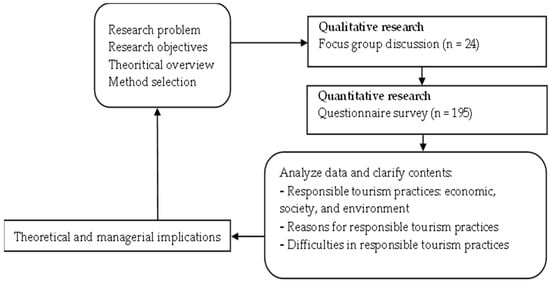
A sequential exploratory mixed-methods design was adopted (Figure 1), in which an initial qualitative phase informed the development of the survey instrument, followed by a quantitative survey that generated the empirical findings reported in this study. The qualitative phase was not intended to produce standalone empirical findings; rather, it was conducted to ensure that the questionnaire adequately reflected the responsible tourism context of the Mekong Delta and incorporated issues considered relevant by key stakeholders.
Figure 1.
Research approach.
Specifically, focus group discussions were conducted to explore responsible tourism practices, implementation motivations, and perceived barriers among tourism stakeholders in the study area. Following Krueger (1997), a semi-structured discussion guide was employed to facilitate open-ended discussions while allowing participants to introduce additional issues relevant to local tourism development. The focus groups involved representatives from the Department of Science and Technology, the Department of Tourism, local authorities, tourism enterprises, tourism employees, tourism experts, and members of the research team, thereby providing perspectives from both policymakers and industry practitioners.
The discussions were documented by the project secretary, and the research team subsequently reviewed and synthesized the discussion notes to identify recurring themes. Through iterative discussion and consensus, these themes were translated into measurable constructs and questionnaire items, thereby enhancing the contextual relevance and content validity of the survey instrument. Consequently, the qualitative findings were incorporated into the questionnaire development process rather than reported as a separate set of research findings.
The quantitative phase constituted the main empirical component of this study. Survey data were collected from owners, managers, or authorized representatives of tourism enterprises, who were selected because of their direct knowledge of their organizations’ responsible tourism practices and business performance.
For the quantitative component, a questionnaire survey was employed, as it is a widely accepted method for exploratory, descriptive, and causal research (Murphy, 2023). This structured technique uses standardized questions to collect information on respondents’ characteristics, attitudes, and behaviors and is particularly suitable for descriptive research (Preston, 2009). Accordingly, it was considered appropriate for achieving the objectives of this study. In addition to collecting respondents’ demographic information, the questionnaire examined three key aspects: the current implementation of responsible tourism practices, the motivations underlying their adoption, and the barriers encountered by enterprises. These measurement items were developed and refined based on quality content analysis of the focus group discussions and subsequently incorporated into the structured questionnaire for the quantitative survey. To document the implementation of responsible tourism practices, respondents were asked to indicate whether each practice was implemented using dichotomous (Yes/No) response options. This approach was considered appropriate because the objective was to identify the presence or absence of specific practices rather than to assess respondents’ attitudes or perceptions. A pilot survey involving 10 enterprises and 10 employees was conducted to evaluate the clarity and comprehensibility of the questionnaire, after which several minor revisions were made to improve the wording of the indicators.
The primary survey respondents were representatives of tourism enterprises operating in the accommodation, food and beverage, travel, shopping, and entertainment sectors. To enhance the reliability of the findings, tourism employees were also surveyed to cross-validate responses from enterprise representatives regarding responsible tourism practices. Although the minimum sample size depends on model complexity and analytical techniques, samples exceeding 30 observations are generally considered adequate for behavioral research and basic statistical analyses (Memon et al., 2020). Accordingly, this study surveyed 125 enterprise representatives and 70 employees, substantially exceeding the recommended minimum. With the consent of business owners, one employee from each participating enterprise was selected to facilitate data cross-validation.
Respondents were recruited through referrals from local tourism management authorities because direct access to enterprises was difficult without institutional support. To reduce potential selection bias, the researchers requested that local authorities include enterprises representing different tourism sectors and ensure broad coverage across the study area. The official survey was conducted through face-to-face interviews between January and March 2025 at major tourism destinations in Kien Giang Province, including U Minh Thuong, Rach Gia, Kien Hai, Kien Luong, Ha Tien, and Phu Quoc. The questionnaire data were coded and analyzed using descriptive statistics. Frequencies and percentages were calculated to summarize the reported implementation of responsible tourism practices, motivations, and barriers among tourism enterprises. For descriptive purposes, percentage values were interpreted using a classification scheme developed for this study: very low/very poor (0% to <20%), low/poor (20% to <50%), moderate (50% to <70%), high/good (70% to <90%), and very high/very good (90% to 100%). This classification was developed by the authors for descriptive interpretation and to facilitate the discussion of the findings.
4. Results
4.1. Demographic Characteristics of the Research Sample
Before presenting the findings, the demographic characteristics of the research sample were examined, including the positions and educational backgrounds of enterprise representatives, as well as the gender, ethnicity, and educational qualifications of employees. Among the 125 enterprise respondents, managers constituted the largest group (43.2%), followed by business owners (38.4%), board members (12.0%), and executives or department heads (6.4%). Regarding educational attainment, 52.8% had a high school education or below, 5.6% held intermediate qualifications, 9.6% had college degrees, and 32.0% possessed university degrees.
Among the 70 employee respondents, females accounted for 61.4% and males for 38.6%. Most respondents were of Kinh ethnicity (91.4%), while the remaining 8.6% belonged to the Khmer and Chinese ethnic groups. Employees also represented diverse educational backgrounds, with 58.6% holding a high school diploma or below, 5.7% possessing intermediate qualifications, 14.3% having college degrees, and 21.4% holding university degrees. The diversity of respondents in terms of organizational roles, demographic characteristics, and educational attainment enhances the representativeness of the sample and strengthens the credibility of the study findings.
4.2. Current Status of Enterprises’ Responsible Tourism Practices
As sustainability and ethical business practices receive increasing attention from governments, local communities, tourism enterprises, and tourists, responsible tourism and its implementation have become integral to sustainable destination development. Through its three interconnected dimensions, including economic, social, and environmental, responsible tourism enables enterprises to contribute to local economic development while enhancing their competitiveness, corporate image, and reputation, as well as protecting natural resources and the environment. This study was conducted in Kien Giang Province, a rapidly developing tourism destination where enterprises have increasingly sought to balance tourism growth with community well-being, social responsibility, and environmental conservation. Consequently, the findings provide valuable insights for destination managers, policymakers, and tourism practitioners in Vietnam and other destinations seeking to promote responsible tourism.
The assessment of enterprises’ responsible tourism practices focused on the economic, social, and environmental dimensions. Table 1 presents the findings for economic responsibility. A very high percentage of both tourism business representatives (90.5%) and employees (92.9%) reported that enterprises provide bonuses or gifts to employees. Furthermore, high percentages of tourism business representatives and employees reported that enterprises maximize local economic benefits by prioritizing local goods, materials, and services (84.8% and 84.3%, respectively), as well as by paying wages that meet or exceed the statutory minimum wage (83.6% and 84.3%, respectively). A slightly lower proportion of tourism business representatives (80.0%) and employees (78.6%) indicated that local residents are given priority in recruitment. Collectively, these findings suggest that tourism enterprises make meaningful contributions to the local economy through employment creation and local economic linkages. In contrast, displaying, selling, or using local specialty products was reported less frequently, with only 49.6% of tourism business representatives and 52.9% of employees confirming this practice. This finding suggests that integrating local products into business operations remains relatively limited and represents an area for further improvement.
Table 1.
Reported economic responsibility practices.
Table 2 presents the findings on reported enterprises’ social responsibility practices based on responses from both tourism business representatives and employees. Overall, the findings suggest a very high level of reported engagement in several social responsibility practices. Among the reported responsible tourism practices, the highest percentage of affirmative responses was recorded for protecting tourists’ rights, safety, and security, with 99.1% of tourism business representatives and 98.6% of employees reporting that their businesses implemented this practice. This finding suggests that customer protection is regarded as a fundamental component of responsible tourism practices.
Table 2.
Reported social responsibility practices.
A similarly very high percentage of affirmative responses was observed for non-discriminatory recruitment, with 93.1% of tourism business representatives and 95.7% of employees reporting that recruitment is conducted fairly regardless of gender, ethnicity, or job position. Likewise, 92.0% of tourism business representatives and 90.0% of employees reported that prices for goods and services are publicly displayed, reflecting enterprises’ commitment to business transparency and ethical practices. Most respondents also confirmed that enterprises support local community development through financial, material, or human resource contributions, as reported by 80.8% of tourism business representatives and 82.9% of employees, demonstrating that their social responsibility extends beyond organizational boundaries.
Employee development was also widely recognized, with 76.7% of tourism business representatives and 77.1% of employees indicating that enterprises regularly provide training to enhance employees’ knowledge and skills. Given that employees represent the public image of tourism enterprises, continuous capacity building is essential for improving service quality and organizational performance. In contrast, only 62.1% of tourism business representatives and 64.3% of employees confirmed the existence of formal labor contracts, suggesting a relatively high reliance on seasonal employment and indicating room for improvement in labor practices and legal compliance. Similarly, enterprises’ participation in promoting local tourism remained limited. Only 46.4% of tourism business representatives and 48.6% of employees reported that tourism promotional materials were available at business establishments, indicating that enterprises have yet to play a more active role in destination promotion.
Finally, environmental responsibility has become an integral component of responsible tourism as concerns over climate change, environmental degradation, and resource depletion continue to intensify. For tourism enterprises, environmental responsibility encompasses initiatives that reduce negative environmental impacts and promote the sustainable use of natural resources. Table 3 indicates that enterprises in the study area have adopted a range of environmental practices.
Table 3.
Reported environmental responsibility practices.
The highest percentage of affirmative responses was observed for avoiding the use of legally protected wild flora and fauna to meet tourists’ shopping and dining demands, with 96.4% of tourism business representatives and 98.6% of employees reporting that their businesses implemented this practice. This finding reflects a strong commitment to biodiversity conservation and compliance with environmental regulations. Similarly, the provision of multiple waste bins to maintain environmental cleanliness was reported by a very high percentage of both tourism business representatives (92.0%) and employees (91.4%). High percentages of tourism business representatives and employees also reported that enterprises implement electricity-saving measures (87.5% and 88.6%, respectively) and make financial contributions to nature, cultural, and environmental conservation activities (82.4% and 82.9%, respectively), indicating that resource conservation and environmental stewardship have become important aspects of business operations.
Water conservation was also commonly practiced, with 78.4% of tourism business representatives and 80.0% of employees reporting the implementation of water-saving measures. Likewise, wastewater collection systems designed to reduce water pollution were confirmed by 79.2% of tourism business representatives and 77.1% of employees. Consistent with this finding, 77.6% of tourism business representatives and 75.7% of employees also reported that wastewater was not directly discharged into rivers or the sea. Nevertheless, the results indicate that nearly one-quarter of respondents perceived that some tourism businesses still discharged wastewater directly into rivers or the sea. Given the potentially severe environmental consequences of this practice, this issue warrants immediate attention from both tourism enterprises and regulatory authorities.
In addition, several environmentally responsible practices were reported to be implemented at moderate or low levels. Source waste separation was reported by approximately three-fifths of respondents (61.6% of tourism business representatives and 62.9% of employees), while environmental training for employees was acknowledged by only 57.6% and 64.3%, respectively, suggesting that environmental awareness and capacity building have not yet received sufficient attention. Similarly, the adoption of solar energy remained modest, with 56.0% of tourism business representatives and 60.0% of employees confirming its use. The use of biodegradable materials, including bags (52.8–54.3%) and cups or straws (45.6–47.1%), was even less prevalent, indicating that the transition toward sustainable materials is still at an early stage.
4.3. Reasons for Enterprise Responsible Tourism Practices
Understanding the motivations underlying enterprises’ responsible tourism practices is essential for explaining why businesses voluntarily adopt economic, social, and environmental responsibilities. Table 4 shows that enterprises are motivated by a combination of environmental, economic, social, and strategic considerations. Overall, the findings indicate that environmental protection and long-term sustainability are the strongest drivers, followed by enhancing tourist satisfaction and business performance, fulfilling social and ethical responsibilities, improving employee morale, strengthening community relationships, and creating business differentiation.
Table 4.
Enterprises’ reasons for engaging in responsible tourism practices.
Environmental considerations emerged as the primary motivation. Specifically, 88.0% of enterprise representatives reported implementing responsible tourism practices to protect natural resources and the environment, while 79.2% emphasized ensuring the long-term sustainability of their business operations. Business-related motivations were also prominent, with 76.8% of respondents identifying enhanced tourist satisfaction and 70.4% identifying reduced operating costs as important motivations for adopting responsible tourism practices.
Social and ethical considerations likewise played an important role in motivating responsible tourism practices. Specifically, 68.8% of enterprise representatives attributed their actions to personal conscience and a sense of social responsibility, while 68.0% emphasized their commitment to promoting responsible tourism development. In addition, 64.0% of respondents reported that responsible tourism practices improve operational efficiency and employee morale, whereas 56.8% viewed them as a means of strengthening relationships with employees and the local community. By contrast, creating business differentiation was the least influential motivation, with only 37.6% of respondents reporting it as a reason for adopting responsible tourism practices.
4.4. Challenges in Enterprise Responsible Tourism Practices
Identifying the barriers to enterprises’ responsible tourism practices is essential for developing effective management strategies and policy interventions. As shown in Table 5, enterprises encounter several obstacles that hinder the implementation of responsible tourism practices. The most significant barrier is the lack of training, with 77.6% of respondents reporting that they have never received training or capacity-building support related to responsible tourism knowledge, skills, or practices. This finding highlights a substantial gap in enterprise capacity development.
Table 5.
Challenges in implementing enterprise responsible tourism practices.
Limited awareness also emerged as a major challenge. More than half of the respondents (57.6%) had never heard of responsible tourism, while 51.2% were uncertain about the actions required to implement responsible tourism practices and 45.6% did not understand the concept itself. These findings suggest that inadequate knowledge remains a fundamental constraint on the adoption of responsible tourism.
Institutional support was another important barrier, with 50.4% of respondents indicating that local authorities provide insufficient encouragement or support for responsible tourism development. In contrast, only 9.6% perceived responsible tourism practices as financially burdensome, suggesting that limited awareness and capacity, rather than implementation costs, constitute the primary obstacles to enterprise engagement in responsible tourism.
5. Discussion of the Results
Based on self-reported responses from tourism business representatives and employees, the findings indicate considerable variation in the reported implementation of responsible tourism practices across economic, social, and environmental dimensions. Overall, tourism enterprises reported stronger implementation of practices that are closely integrated into routine business operations or regulatory compliance, whereas practices requiring greater organisational capacity, resource investment, or external support were reported less frequently. This pattern suggests that responsible tourism implementation remains uneven and highlights substantial opportunities to strengthen more proactive and long-term responsible tourism practices.
Economic responsibility constitutes a fundamental dimension of enterprise responsible tourism practices. It requires enterprises to safeguard employees’ rights and welfare while prioritizing local labor and resources to support community economic development. The survey results indicate that responsible tourism practices were reported to have been implemented to varying degrees across businesses. Providing bonuses or gifts to employees was the most widely reported practice, with a very high average implementation rate of 91.7% (the arithmetic mean of the percentages reported by tourism business representatives and employees), suggesting that enterprises recognize and value employee contributions. This practice is well justified, as bonuses and rewards enhance employees’ commitment, job satisfaction, morale, and motivation (Clemens, 2024). Similarly, high levels of agreement were reported regarding the prioritization of local resources (an average of 84.6%) and compliance with minimum wage regulations (an average of 84.0%), demonstrating enterprises’ commitment to supporting local economies and upholding ethical labor standards. In comparison, the relatively lower emphasis on recruiting local workers (an average of 79.3%) may reflect a mismatch between available workforce competencies and business requirements. Notably, displaying, selling, or consuming local specialty products received the lowest level of implementation (an average of 51.3%), possibly due to differences in business strategies, market competition, and consumer purchasing power.
Social responsibility represents another essential pillar of responsible tourism development. Examining enterprise social responsibility practices provides valuable insights into enterprises’ commitment to social values and stakeholder well-being. The findings reveal a multidimensional picture of current practices. First, the protection of tourists’ rights, security, and safety received a very high percentage of affirmative responses (an average of 99.0%). Archie (1991) identifies stakeholder safety as a fundamental ethical obligation of businesses. In the tourism context, protecting tourists’ rights not only fulfills this obligation but also enhances corporate image and strengthens customer trust. Likewise, fairness in recruitment and non-discrimination were widely reported, with a very high average implementation rate of 94.4%. Equal treatment regardless of gender, ethnicity, or job position reflects progressive human resource management and serves as an important form of social capital that promotes workplace diversity and inclusion (Shen et al., 2009). Price transparency was also widely reported, with a very high average implementation rate of 91.0%. Public price disclosure may help demonstrate ethical business conduct, protect consumer rights, reduce information asymmetry, and strengthen customer trust.
Furthermore, a high proportion of respondents reported that enterprises actively participate in local community development initiatives (an average of 81.9%) through financial, material, or human resource contributions. Such engagement strengthens corporate reputation and fosters positive relationships with local communities. This outward-oriented responsibility also reflects businesses’ commitment to protecting the rights and interests of customers and other stakeholders. From a human resource perspective, 76.9% of respondents reported that enterprises regularly provide employee training, an essential practice for developing employees’ knowledge and skills and helping organizations respond to changing competitive demands (Noe, 2020). Continuous investment in employee development benefits both individual performance and organizational service quality. However, only 63.2% of respondents reported the existence of formal labor contracts, indicating persistent challenges in formalizing employment relationships. This finding suggests potential shortcomings in compliance with labor regulations and the provision of decent working conditions and workers’ rights (ILO, 2002). Addressing these issues would help reduce vulnerabilities associated with informal employment while improving employee welfare. Finally, only 47.5% of respondents reported implementing activities to promote local tourism destinations, indicating relatively limited engagement in this practice. The limited availability of promotional materials may constrain businesses’ contributions to destination branding and marketing. Strengthening promotional efforts could better support broader community and destination development goals.
Environmental responsibility has become a strategic imperative amid escalating global environmental challenges, including climate change, resource depletion, and pollution. Environmentally responsible practices can generate ecological benefits while enhancing corporate reputation, operational performance, and customer loyalty. The findings indicate that respondents reported implementing a range of environmentally responsible practices, although implementation levels varied considerably across practices. Nearly all respondents (an average of 97.5%) reported avoiding the exploitation and consumption of protected wildlife species, indicating a high level of conservation awareness and strong reported compliance with environmental regulations. Such practices may help conserve ecosystems that support tourism activities and local livelihoods. Similarly, respondents widely reported providing trash bins for waste management (an average of 91.7%), a simple yet effective measure that may help reduce pollution and maintain environmental cleanliness.
Resource conservation practices were also commonly reported. Electricity-saving measures and financial support for environmental conservation activities were also widely reported, with average implementation rates of 88.1% and 82.7%, respectively. These initiatives may help improve resource efficiency and contribute to long-term competitive advantage (Hart, 1995). Water conservation measures, including water-saving practices and wastewater collection systems, were also widely reported, with average implementation rates of 79.2% and 78.2%, respectively. These measures are consistent with global priorities for sustainable water resource management and the protection of water quality. Respondents also reported that wastewater was not directly discharged into rivers or the sea, with an average implementation rate of 76.7%. Although this finding indicates that most tourism enterprises reported adopting this practice, the remaining proportion suggests that wastewater management still requires further improvement, given the potential environmental consequences of untreated wastewater for aquatic ecosystems and tourism resources.
Despite these positive practices, several environmental initiatives remain insufficiently implemented. Waste separation had an average reported implementation rate of only 62.3%, although effective waste sorting is fundamental to recycling, resource recovery, and reducing reliance on landfills (Hoornweg & Bhada-Tata, 2012). Likewise, only around 61% of enterprise representatives reported that employees had participated in environmental training. Given that environmental training plays a critical role in strengthening employee participation in environmental management and improving environmental performance, this relatively limited level of training may reduce the effectiveness of environmental management initiatives. The reported adoption of solar energy remained moderate, with an average implementation rate of 58%. This finding may reflect barriers such as limited knowledge, high initial investment costs, and technical constraints associated with rooftop solar installations (Pieloor, 2022). Similarly, the reported use of biodegradable products, including bags, cups, and straws, remained relatively low, with average implementation rates of 53.6% and 46.4%, respectively. These findings suggest that the adoption of environmentally friendly alternatives remains limited among tourism enterprises despite growing concerns about environmental sustainability.
Enterprises are motivated to adopt responsible tourism practices by a combination of environmental, economic, social, and ethical considerations. Environmental protection and ensuring the long-term sustainability of business operations emerged as the strongest reported motivations for adopting responsible tourism practices. This finding suggests that tourism enterprises were motivated not only by environmental stewardship but also by the strategic objective of maintaining the long-term viability of their businesses. Similar motivations have been observed among tourism enterprises in Kinabalu Park, where environmental stewardship and intergenerational sustainability strongly influenced responsible tourism practices (Tay et al., 2016). Economic and customer-oriented motivations were also prominent, as many respondents identified enhanced tourist satisfaction and reduced operating costs as important motivations for adopting responsible tourism practices. In addition, social and ethical considerations encourage enterprises to fulfill their ethical obligations, contribute to responsible tourism development, improve employee morale, and strengthen relationships with stakeholders. Previous studies have likewise identified cost reduction, marketing benefits, industry sustainability, community engagement, environmental protection, and ethical responsibility as key drivers of responsible tourism practices among accommodation enterprises in South Africa (Merwe & Wocke, 2007). Similarly, Musavengane and Steyn (2013) highlighted environmental protection, long-term industry sustainability, ethical responsibility, business strategy, community relationship enhancement, and customer influence as important motivations. Although market differentiation is less frequently reported, it remains an additional incentive for responsible tourism implementation. From the perspective of stakeholder theory, these motivations reflect enterprises’ recognition that long-term success depends on balancing the interests of the environment, customers, employees, local communities, the tourism industry, and the businesses themselves. Ignoring stakeholder expectations may ultimately undermine enterprises’ competitiveness within the tourism sector.
Despite these motivations, enterprises encounter several obstacles in implementing responsible tourism practices. The most significant reported challenge was the lack of training, as many respondents have never participated in responsible tourism education or capacity-building programs. This deficiency contributes directly to limited awareness and weakens enterprises’ ability to effectively implement and support responsible tourism initiatives. Similar barriers, including conceptual ambiguity and inadequate understanding of responsible tourism, have been reported in studies conducted in South Africa (Merwe & Wocke, 2007), Kinabalu Park (Tay et al., 2016), and Cape Town (Musavengane & Steyn, 2013). Another major reported obstacle was the lack of institutional encouragement and support for responsible tourism development at the local level. Interestingly, only a small proportion of enterprise representatives reported that responsible tourism practices were excessively costly, suggesting that financial constraints were not a major barrier to implementation.
6. Conclusions and Implications
As tourism has become a key economic sector in many countries and the industry has shifted from mass tourism toward more sustainable forms of development, responsible tourism has emerged as a strategic imperative for both tourism enterprises and destinations. Based on self-reported responses from tourism business representatives and employees, this study examined the reported implementation of responsible tourism practices, together with the motivations and barriers associated with their adoption in Kien Giang province. By examining responsible tourism practices together with the motivations and barriers underlying their adoption from the perspectives of both tourism enterprise representatives and employees, this study provides a more comprehensive understanding of responsible tourism implementation at the enterprise level. In doing so, it addresses an important gap in the responsible tourism literature, where these dimensions have often been examined separately, while providing evidence to support more effective destination management and policy development.
Using the descriptive classification adopted in this study, responsible tourism practices with affirmative response rates of 90% or above were classified as very high and should be maintained, whereas those with lower affirmative response rates indicate opportunities for further improvement. The self-reported findings indicate that only a limited number of responsible tourism practices reached the very high level of implementation. These included employee welfare through bonuses or gifts, protection of customers’ rights, security and safety, fair recruitment, price transparency, avoidance of legally protected wild flora and fauna, and the provision of multiple waste bins. Most other reported economic, social, and environmental practices fell below this threshold, suggesting opportunities to strengthen their implementation. In particular, greater attention should be given to strengthening local economic linkages by increasing the use of local goods and services and creating more economic opportunities for local communities, strengthening employee training and formal employment practices, enhancing destination promotion, and expanding the adoption of environmental practices that received comparatively lower levels of reported implementation, including waste separation, environmental training, renewable energy, and environmentally friendly materials. These recommendations are directly informed by the practices that respondents reported less frequently. Accordingly, tourism enterprises could prioritise strengthening these reported areas while maintaining practices already reported at very high levels.
The findings further indicate that business representatives primarily reported adopting responsible tourism practices to protect natural resources and the environment, ensure the long-term sustainability of their businesses, enhance tourist satisfaction, improve operational efficiency, fulfil ethical and social responsibilities, and strengthen relationships with employees and local communities. Interestingly, respondents rarely identified financial cost as a major barrier. Instead, the most frequently reported barriers were inadequate training, limited awareness and understanding of responsible tourism, insufficient knowledge of practical implementation measures, and limited institutional support. These findings suggest that improving knowledge, practical implementation capacity, and institutional support may be more effective than relying solely on financial incentives to strengthen responsible tourism implementation. Therefore, tourism management agencies and local governments should focus on expanding practical training programmes, raising awareness of responsible tourism, providing technical guidance, and strengthening institutional support to address the specific barriers identified by respondents. Although the findings are based on self-reported data collected from tourism enterprises in Kien Giang province, they may also provide useful insights for tourism enterprises and destination management authorities in other emerging tourism destinations facing similar challenges in strengthening responsible tourism implementation.
Despite its theoretical and practical contributions, this study has several limitations. First, because most respondents were identified through local management agencies, the findings may not fully represent the perspectives of all tourism business representatives and employees in the study area. Second, the absence of qualitative evidence limits a more comprehensive interpretation of the quantitative findings. Third, this study relied on self-reported data from tourism business representatives and employees. Consequently, the findings may be subject to response biases, including social desirability bias and respondents’ inclination to present their companies in a more favorable light. Therefore, the reported practices may not fully reflect actual practices implemented by tourism businesses. Fourth, responsible tourism practices were measured using dichotomous (Yes/No) response options. Although this approach facilitated the identification of whether specific practices were implemented, it did not capture the extent, frequency, or intensity of implementation. Future research could address these limitations by employing probability sampling techniques, adopting a sequential explanatory mixed-methods design, complementing self-reported data with direct observations, independent audits, or other objective measures, and using Likert-scale measures to capture the extent of responsible tourism practices. These approaches would provide a more nuanced assessment of implementation and enhance the robustness, validity, and analytical power of future studies.
Author Contributions
Conceptualization, T.N.N.; methodology, T.N.N.; software, T.N.N.; validation, T.N.N. and V.D.H.; formal analysis, T.N.N.; investigation, T.N.N., V.D.H. and M.T.L.; resources, M.T.L.; data curation, T.N.N.; writing—original draft preparation, T.N.N.; writing—review and editing, T.N.N.; visualization, M.T.L.; supervision and project administration, T.N.N.; funding acquisition, M.T.L. All authors have read and agreed to the published version of the manuscript.
Funding
This study was conducted as part of a research project funded by the Department of Science and Technology of Kien Giang Province under Contract No. 19/HĐ-SKHCN.
Institutional Review Board Statement
Ethical review and approval were waived for this study due to get an exemption from the Ethics Committee of Can Tho University.
Informed Consent Statement
Informed consent was obtained from all subjects involved in the study.
Data Availability Statement
The datasets generated and/or analyzed during the current study are not publicly available due to ethical and confidentiality constraints but are available from the corresponding author upon reasonable request, subject to institutional approval.
Conflicts of Interest
The authors declare no conflicts of interest.
References
- Archie, B. C. (1991). The pyramid of corporate social responsibility: Toward the moral management of organizational stakeholders. Business Horizons, 34(4), 39–48. [Google Scholar] [CrossRef] [Scilit]
- Baltescu, C. A. (2020). Responsible tourism practices implemented by tourism companies. Bulletin of the Transilvania University of Brasov. Series V: Economic Sciences, 13(62), 49–54. [Google Scholar] [CrossRef] [Scilit]
- Budeanu, A. (2005). Impacts and responsibilities for sustainable tourism: A tour operator’s perspective. Journal of Cleaner Production, 13(2), 89–97. [Google Scholar] [CrossRef] [Scilit] [PubMed]
- Caruana, R., Glozer, S., Crane, A., & McCabe, S. (2014). Tourists’ accounts of responsible tourism. Annals of Tourism Research, 46, 115–129. [Google Scholar] [CrossRef] [Scilit]
- Chan, J. K. L., & Fiffy, H. S. (2021). Exploring tour operators’ perspectives on responsible tourism at ecotourism destination: Meaning, motivation, and practices. AsiaPacific Journal of Innovation in Hospitality and Tourism, 10(1), 23–40. [Google Scholar]
- Chan, J. K. L., & Xin, T. K. (2015). Exploring definitions and practices of responsible tourism in Kinabalu National Park, Sabah, Malaysia. Journal of Tourism and Hospitality Management, 3(5–6), 87–101. [Google Scholar] [CrossRef] [Scilit][Green Version]
- Chomać-Pierzecka, E. (2025). Identity of the sustainable organisation. Język. Religia. Tożsamość, 32(2), 291–303. [Google Scholar] [CrossRef] [Scilit]
- Clemens, M. (2024). Bonuses, profit-sharing and job satisfaction: The more, the better? IAAEU Discussion Paper Series in Economics. Available online: https://www.econstor.eu/bitstream/10419/301045/1/1896059953.pdf (accessed on 25 March 2026).
- de Freitas Langrafe, T., Barakat, S. R., Stocker, F., & Boaventura, J. M. G. (2020). A stakeholder theory approach to creating value in higher education institutions. The Bottom Line, 33(4), 297–313. [Google Scholar] [CrossRef] [Scilit]
- Elgin, C., & Elveren, A. Y. (2024). Unpacking the economic impact of tourism: A multidimensional approach to sustainable development. Journal of Cleaner Production, 478, 143947. [Google Scholar] [CrossRef] [Scilit]
- Goffi, G., Masiero, L., & Pencarelli, T. (2022). Corporate social responsibility and performances of firms operating in the tourism and hospitality industry. The TQM Journal, 34(6), 1626–1647. [Google Scholar] [CrossRef] [Scilit]
- Goodwin, H. (2023). Responsible travel and ethical tourism: Trends and issues. Journal of Responsible Tourism Management, 3(1), 1–14. [Google Scholar] [CrossRef] [Scilit]
- Hart, S. L. (1995). A natural-resource-based view of the firm. Academy of Management Review, 20(4), 986–1014. [Google Scholar] [CrossRef] [Scilit]
- Hoornweg, D., & Bhada-Tata, P. (2012). What a waste: A global review of solid waste management. World Bank Group. Available online: https://documents1.worldbank.org/curated/en/302341468126264791/pdf/68135-REVISED-What-a-Waste-2012-Final-updated.pdf (accessed on 26 March 2026).
- ILO. (2002). Decent work and the informal economy. Available online: https://capacity4dev.europa.eu/library/decent-work-and-informal-economy-ilo-2002_en (accessed on 16 April 2026).
- Krueger, R. A. (1997). Developing questions for focus groups (focus group kit). SAGE Publications Inc. [Google Scholar]
- Leslie, D. (2012). Responsible tourism: Concepts, theory and practice. CABI. [Google Scholar]
- Liu, R., Zhao, H., & Ren, J. (2023). Does corporate environmental responsibility promote the improvement of corporate economic performance?–Based on the perspective of green reputation. Polish Journal of Environmental Studies, 32(5), 4679–4697. [Google Scholar] [CrossRef] [Scilit] [PubMed]
- Mahajan, R., Lim, W. M., Sareen, M., Kumar, S., & Panwar, R. (2023). Stakeholder theory. Journal of Business Research, 166, 114104. [Google Scholar] [CrossRef] [Scilit]
- Mathew, P. V., Cabral, C., & Mohandas, N. P. (2024). Influence of responsible tourism practices on the destination perceptions of tourists. International Journal of Tourism Research, 26(4), e2692. [Google Scholar] [CrossRef] [Scilit]
- Mathew, P. V., & Kuriakose, V. (2017). A study on the indicator framework of responsible tourism in tourism accommodation sector. Asian Journal of Management, 8(4), 989–996. [Google Scholar] [CrossRef] [Scilit]
- McWilliams, A. (2020). Corporate social responsibility. Oxford University Press. [Google Scholar] [CrossRef] [Scilit][Green Version]
- Memon, M. A., Ting, H., Cheah, J.-H., Thurasamy, R., Chuah, F., & Cham, T. H. (2020). Sample size for survey research: Review and recommendations. Journal of Applied Structural Equation Modeling, 4(2), i–xx. [Google Scholar] [CrossRef] [Scilit] [PubMed]
- Merwe, M. V. D., & Wocke, A. (2007). An investigation into responsible tourism practices in the South African hotel industry. South African Journal of Business Management, 38(2), 1–15. [Google Scholar] [CrossRef] [Scilit]
- Mondal, S., & Samaddar, K. (2021). Responsible tourism towards sustainable development: Literature review and research agenda. Asia Pacific Business Review, 27, 229–266. [Google Scholar] [CrossRef] [Scilit]
- Morad, N. (2021). Stakeholder theory: Origins, developments and contributions to the field of business and society. African Scientific Journal, 3(9), 001. [Google Scholar] [CrossRef]
- Murphy, L. (2023). The questionnaire surveying research method: Pros, cons and best practices. ScienceOpen Preprints, 1–4. [Google Scholar] [CrossRef] [Scilit]
- Musavengane, R. (2019). Small hotels and responsible tourism practice: Hoteliers’ perspectives. Journal of Cleaner Production, 220, 786–799. [Google Scholar] [CrossRef] [Scilit]
- Musavengane, R., & Steyn, J. N. (2013). Responsible tourism practices in the Cape Town hotel sub-sector. International Journal of Hospitality and Tourism Systems, 6(2), 52–63. [Google Scholar]
- Noe, R. A. (2020). Employee training and development. McGraw-Hill. [Google Scholar]
- Pei, J., & Rajaratnam, S. D. (2017). Corporate social responsibility: Exploring SME owners’ understanding and practices. Asia-Pacific Journal of Innovation in Hospitality and Tourism APJIHT, 6(2), 25–43. [Google Scholar]
- Pieloor, H. (2022). Barriers and drivers for businesses to adopt rooftop solar power systems: A qualitative research among businesses with, and without, rooftop-PV. University of Twente. Available online: https://essay.utwente.nl/fileshare/file/92563/Pieloor_MA_BMS.pdf (accessed on 16 April 2026).
- Preston, V. (2009). Questionnaire survey. International Encyclopedia of Human Geography, 9, 46–52. [Google Scholar] [CrossRef] [Scilit]
- Sangkhaduang, T., Visuthismajarn, P., & Kongchouy, N. (2021). The relationship between responsible tourism practice, destination sustainability and quality of life: Perspective of Marine National Park communities. Planning, 16(5), 895–901. [Google Scholar] [CrossRef] [Scilit]
- Schönherr, S. (2024). Tourism actors’ responsible behavior: A systematic literature review. Journal of Hospitality & Tourism Research, 48(4), 671–683. [Google Scholar] [CrossRef] [Scilit]
- Shen, J., Chanda, A., D’netto, B., & Monga, M. (2009). Managing diversity through human resource management: An international perspective and conceptual framework. The International Journal of Human Resource Management, 20(2), 235–251. [Google Scholar] [CrossRef] [Scilit]
- SNV. (2009). The market for responsible tourism products: With a special focus on Latin America and Nepal. SNV Netherlands Development Organisation. Available online: https://www.bibalex.org/search4dev/files/339292/172758.pdf (accessed on 26 March 2026).
- Spenceley, A. (2007). Responsible tourism practices by South African tour operators. Available online: https://www.tourism.gov.za/CurrentProjects/ResponsibleTourism/Responsible%20Tourism/Responsible%20Tourism%20Practices%20By%20South%20African%20Tour%20Operators.pdf (accessed on 25 March 2026).
- Spenceley, A., & Rylance, A. (2016). The responsible tourist: How to find, book and get the most from your holiday. Sustainable Tourism Programme. Available online: https://www.oneplanetnetwork.org/sites/default/files/from-crm/the_responsible_tourist_-_issue_1_interactive_pdf-final.pdf (accessed on 16 April 2026).
- Tay, K. X., Chan, J. K. L., Vogt, C. A., & Mohamed, B. (2016). Comprehending the responsible tourism practices through principles of sustainability: A case of Kinabalu Park. Tourism Management Perspectives, 18, 34–41. [Google Scholar] [CrossRef] [Scilit]
- Wirba, A. V. (2024). Corporate social responsibility (CSR): The role of government in promoting CSR. Journal of the Knowledge Economy, 15(2), 7428–7454. [Google Scholar] [CrossRef] [Scilit] [PubMed]

Disclaimer/Publisher’s Note: The statements, opinions and data contained in all publications are solely those of the individual author(s) and contributor(s) and not of MDPI and/or the editor(s). MDPI and/or the editor(s) disclaim responsibility for any injury to people or property resulting from any ideas, methods, instructions or products referred to in the content. |
© 2026 by the authors. Licensee MDPI, Basel, Switzerland. This article is an open access article distributed under the terms and conditions of the Creative Commons Attribution (CC BY) license.