


Abstract
Stakeholders in the tourism system, recognizing the importance of digitalization and the adoption of modern technological solutions, are increasingly integrating artificial intelligence into their operations, including the use of autonomous robots. These initiatives should primarily aim to enhance the customer experience by simplifying and streamlining procedures, while allowing tourism employees to devote more attention to guests. Nautical tourism is a specific form of tourism in which the Republic of Croatia is a global leader; however, it also faces a shortage of qualified staff. Marinas, as the most significant stakeholders within the nautical tourism sector, are the first to invest in the development of innovative solutions. In addition to reviewing the theoretical framework, this paper emphasizes primary research. The aim of the research was to examine the attitudes and habits of nautical tourism guests regarding the adoption of new technologies in marinas, as well as their willingness to use autonomous robots. Given the decision to develop and implement autonomous robots in business operations, the research was conducted among users of nautical services in one of the most modern nautical tourism ports in Croatia and the Mediterranean. A structured online questionnaire was used. The results indicate users’ readiness for the immediate adoption of autonomous robots in certain services, providing a direct incentive for stronger implementation of similar solutions among other stakeholders. This research also suggests that Croatia has the potential to become a technological hub for smart nautical tourism.
1. Introduction
Over the past decade, nautical marinas have faced increasing operational and environmental demands, driven by the continuous growth of nautical tourism and rising user expectations. Nautical tourism is one of the most recognizable and best market-positioned tourism products in the Republic of Croatia. The sea area of the Republic of Croatia is 31,479 km2, and the coastline is 6278 km long (16% of the Mediterranean), of which 1880 km is mainland coastline and 4398 km is island coastline (Enciklopedija, n.d.). According to the same source, the indentation coefficient is 11.1 (1244 islands, islets, rocks, and reefs), placing the Croatian coast among the most indented in the world. In 2024, Croatia had 226 nautical tourism ports along its coast, including 85 marinas (20 of which are dry marinas), 81 anchorages, 16 moorings, and 44 storage areas for floating objects. The total area of their aquatorium was 4,949,829 m2, with 19,073 berths (CBS, 2025). The Strategy for the Development of Sustainable Tourism of the Republic of Croatia until 2030 recognizes nautical tourism as an important product with a strong foundation for further development.
In the context of the current market position and the desired direction of development for this specific tourism product in the Republic of Croatia, digitalization emerges as a key instrument for improving efficiency and service quality, giving rise to the concept of so-called “smart marinas.” This concept involves the integration of information and communication technologies into all segments of marina management, including berth management, infrastructure monitoring, communication with users, and resource optimization (Cocks, 2025). The implementation of technologies such as the Internet of Things (IoT), cloud computing, and advanced data analytics enables the collection and processing of large volumes of data in real time. These data are used to optimize operational processes, efficiently plan demand, and manage energy and other resources. Artificial intelligence plays a particularly important role in this process, enabling the development of data-driven decision-making models (Ioras & Bandara, 2025). In recent years, increasing attention in the business practice of nautical marinas has been devoted to automation and the application of autonomous systems, including the development of autonomous vessels, underwater and land-based robots, as well as unmanned aerial vehicles, which open up possibilities for automating a wide range of operations within marinas. Digitalization in nautical marinas is closely linked to sustainable development goals, as it enables more efficient resource management and reduces negative environmental impacts.
However, despite its significant advantages, the implementation of digital and autonomous technologies also faces a number of challenges, such as high initial costs, lack of standardization, and security concerns. In order to examine the preferences of nautical marina service users regarding digitalization and the implementation of autonomous robots in marinas, primary research was conducted, and the results will be presented in the paper.
2. Theoretical Background
Nautical tourism is a segment of maritime activities and includes travel and temporary stays by individuals outside their permanent place of residence for the purposes of sailing and staying on vessels and in nautical tourism ports for rest, entertainment, and recreation. It is a specific form of tourism predominantly based on natural resources. In academic literature, it is defined as a set of activities connected with sailing, recreation, and time spent on the water, utilizing specific infrastructure within nautical ports (Luković, 2013; Gračan et al., 2016). One of the dominant characteristics of nautical tourism is high mobility, as well as a high level of safety and quality of the marine ecosystem and infrastructure (Ivanić et al., 2018). The successful operation of nautical tourism requires the integration of a large number of different systems, including transportation, security, and infrastructure. When it comes to types of ports in nautical tourism, marinas are the most important and comprehensive. They connect logistics, security, and tourism operations. Due to their complexity, they provide a quality environment for the implementation of new technologies. The rapid growth of technology affects the entire tourism market and all stakeholders, including both the demand and supply sides (Gretzel et al., 2015; Xiang et al., 2015). The process of digitalization enables the integration of systems and enhances the quality of the end-user experience (Buhalis & Leung, 2018). Nearly three decades ago, Dimitrios Buhalis emphasized that information technologies (IT) introduce numerous opportunities as well as challenges for tourism. To remain competitive, stakeholders in nautical tourism must continuously adapt to technological changes. Businesses, governments, tourists, and service providers are increasingly embracing innovative technological solutions to enhance their operations and service quality. Among the most commonly utilized technologies in tourism are big data, blockchain, recognition technologies, the Internet of Things (IoT), virtual and augmented reality, and artificial intelligence, as highlighted by leading scholars (Boucher, 2017; Buhalis, 2020; Buhalis & Moldavska, 2022; Chaouchi, 2013; Dragović et al., 2018; Iansiti & Lakhani, 2017; Jung & Dieck, 2017; Pizam et al., 2022; Tussyadiah et al., 2018). Given the rapid pace of technological advancement, stakeholders are no longer faced with the question of whether to adopt technology, but rather which technologies to implement and to what extent they best fit their business models. When it comes to robots in tourism, they belong to artificial intelligence. Concerning usage in tourism, AI can be categorized into three levels based on complexity. The first level involves process automation, while the second and third levels relate to the use of chatbots and robots. An example of IoT systems in tourism is their use at marinas to monitor resources in real time. The implementation of such systems is suggested to provide a foundation for the future development and integration of more complex technologies, such as robotics (Heilig et al., 2017). Robots have been identified as one of the most important innovations in tourism (Ivanov & Webster, 2020; Wirtz et al., 2018).
However, due to their complexity and high costs on the one hand, and a large number of small service providers in tourism on the other, robots are often used only by large companies like Hilton, Marriott, KLM, etc. Despite this fact, Huang and Rust (2018) state that automation and personalized service are crucial for the future of tourism. Robots are considered a significant component of the future of the tourism industry (Murphy et al., 2017).
The adoption of robotics in the tourism industry has witnessed remarkable progress over recent years, owing to improvements in service automation and artificial intelligence applications, most notably in the areas of hospitality and transportation (Ivanov & Webster, 2020). Literature shows that robots have the potential to increase operational effectiveness, reduce labor expenses, and ensure standardized delivery of services, especially in repetitive processes (Ivanov et al., 2017; Ivanov & Webster, 2020). Despite their advantages, implementing robots in services entails some difficulties, ranging from heavy financial investment requirements to technical and process-related issues (Ivanov & Webster, 2020). The main benefits of using robots in services include the provision of consistent and uninterrupted services in addition to working in environments where minimal physical contact is required, an issue that became critical over recent years (Seyitoğlu & Ivanov, 2021). However, the major drawbacks consist of a lack of emotional intelligence, inability to deal with unusual situations, and inability to personalize interactions (Ivanov et al., 2017). The perception of a user can be critical for adopting robots in tourism successfully. Literature suggests that acceptance of robots for providing services relies on perceptions of perceived usefulness, ease of use, and perceived trust in a robot technology (Gursoy et al., 2019). Another study highlights that the more anthropomorphic and intelligent robots appear, the greater their likelihood to receive positive feedback from tourists (Tussyadiah & Park, 2018). It appears that trust can be viewed as a multi-dimensional concept that includes trust in functionalities, processes, and purposes of using robots (Park, 2020). In fact, empirical research demonstrates that while tourists appreciate robots’ innovative character and efficiency, they might choose humans for communication when empathy and personalization are needed (Shin & Jeong, 2020). Moreover, it was found that acceptance of robots depends significantly on service contexts, which means that tourists tend to accept robots’ help only in the case of simple functional activities and not complicated service interactions (Ivanov et al., 2017), which implies that acceptance is more likely when robots perform routine tasks (Lu et al., 2019).
Application of technologies in marinas relates to the larger process of digitalization in the maritime sector and tourism, where the application of information systems, automation, and analytics is used in operations management. For instance, the use of intelligent solutions using IoT technologies allows collecting and analyzing data in real time, resulting in increased efficiency, safety, and sustainability of the operation (Heilig et al., 2017). Such solutions may involve various devices and networks, as well as analytical instruments, allowing efficient management and decision-making that is especially important for such a complex environment (Molavi et al., 2019). The digital transformation of the maritime industry also reflects the importance of using automated technologies and advanced technologies to gain competitiveness and service quality (Heilig et al., 2017). While most of the literature concerns ports and the larger maritime industry, these findings imply considerable applicability in marinas regarding resource management, safety, and environmental protection. Usage of robots in marinas is not so common, but it represents a large. There are many ways to use robots for safety, maintenance, and communication with users before, during, and after their stay. When planning the use of robotics in marinas, an integrated framework is crucial; this should cover technology, organizations, and society. The successful introduction of robotics in the marina industry will depend equally on user and employee acceptance. According to Lu et al. (2019), tourists prefer human interaction when it comes to situations that include empathy or complex decision-making. According to the same authors, robots are acceptable for standardized, routine jobs and situations (Lu et al., 2019; Gursoy et al., 2019). Furthermore, robots can have a positive effect on sustainability within nautical tourism. Automated systems can help reduce resource consumption and improve the efficiency of energy and water management (Zhang et al., 2022). In relation to environmental protection, robots can also assist in monitoring ocean quality and waste removal, helping to protect ecosystems. Finally, as robotics continues to develop in nautical tourism, new service development and differentiation opportunities for marinas will continue to emerge.
The primary use of robots in marinas is related to infrastructure and environmental maintenance, and the high service demands of users. The implementation of robots can lead to higher efficiency, reduced costs, and improved user experience. Furthermore, the introduction of autonomous systems designed to protect the environment can help in solving the problem of marine pollution. In tourism, robots are also being developed to communicate with users, provide information, and assist with user services. The level of functionality and extent of use of robots varies greatly based on the type of marina or port system. Examples of robots currently used in marinas and port systems include: the removal of oil and plastic from water (Dubai Creek Marina, UAE; Port de Mataró, Spain; Cherbourg Marina, France), waste removal from land (Vilanova Marina, Spain), and boat cleaning. These robots enable continuous operation with a minimal amount of human oversight, thus creating much more efficient marina operations and reducing operational costs. In comparison, robots that operate on land and interact with tourists are much less common. They are applied only to certain types of facilities or locations, such as cruise terminals and integrated tourist facilities (for example, the Port of Barcelona and Marina Bay Sands). For instance, robots (such as Pepper) are used to provide information to tourists, enhancing their experience through interaction. Most robots deployed on land have been implemented within pilot projects and demonstration programs (for example, Visit Dubai). Main challenges for deploying robots include high implementation costs, limitations on functionality (mostly limited to basic social interactions), and the need to accommodate users’ diverse languages and cultures. The level of development of the destination, the availability of resources, and strategic priorities for innovation significantly affect the potential of applying robots. Although robotics represents an important opportunity for further development of nautical tourism, scientific research in this area is still scarce. Most of the existing research on robotics and technology is focused on the hospitality sector (Ivanov & Webster, 2020). Samala et al. (2022) also highlight the need for more research on nautical tourism, as does Tussyadiah (2020). Due to that, there is a research gap that requires empirical studies in marinas, particularly regarding user experience and willingness to use robots in marinas.
3. Methodology and Data
Today, a growing number of stakeholders in the tourism sector are recognizing the importance of digitalization and the need to adapt to global trends related to the application of artificial intelligence in business, with the aim of achieving competitive advantages. A similar trend is evident in the nautical tourism segment.
The general objective of this paper is to examine and explain the factors influencing the acceptance and use of autonomous robots in marinas, including user attitudes, the level of acceptance of service robotization, perceptions of reduced human contact, and readiness to adapt to new technologies in the context of tourism and nautical activities.
Nautical tourism is one of the most strategically important segments of tourism in the Republic of Croatia. With its highly indented coastline of more than 6000 km, Croatia is among the leading Mediterranean destinations for nautical tourists. In addition to its direct economic effects, nautical tourism stimulates the development of coastal and island communities, contributes to employment, and plays an important role in extending the tourist season.
For this reason, marinas in nautical tourism are among the first to invest in development, increasingly choosing to implement innovative solutions such as autonomous robots. Their implementation in daily operations is intended to enhance process efficiency and the organization of activities. The conducted research aimed to identify consumer habits, as well as to examine the impact of the implementation of autonomous robots in business operations, particularly their effect on user satisfaction and the level of tourism expenditure. The research was conducted in the first quarter of 2025 on a purposive sample of contractual users of the nautical marina Punat services, who were the first to decide to invest in the development of autonomous robots and introduce them into regular operational business. Marina Punat was selected as the case study for this research. It is the oldest marina in Croatia, established in 1964, and at the same time, one of the most modern marinas in the Mediterranean. It is located in a sheltered bay on the southwestern coast of the island of Krk, in the northern part of the Adriatic Sea, and has received multiple awards for quality. In its operations and business policies, the marina emphasizes the importance of continuous customer care, ongoing service quality improvement, and readiness to adopt innovative technological solutions.
The research objectives were defined as follows:
- To examine the attitudes and habits of marina users regarding the use of autonomous robots;
- To investigate the acceptance of service robotization;
- To evaluate the impact of reduced human contact resulting from automation;
- To evaluate users’ readiness to adapt to new technologies in tourism and nautical services.
Recognizing the problem areas identified during the research process and in accordance with the defined research objectives, the main hypothesis, involving a single dependent variable, was formulated and subsequently tested throughout the research process and the writing of the paper: user attitudes towards technology in nautical marina services have a significant effect on their intention to use autonomous robots in the marina.
The target population consisted of marina berth users. Based on the existing database of service users, i.e., active contracts in Marina Punat, the population and sampling frame were determined (n = 723). An email containing a link to the questionnaire was sent to respondents in both English and German. A total of 217 responses were collected, representing a response rate of 30%, which constitutes a relevant sample for the conducted research.
Data were collected through a structured questionnaire administered via a Google Forms platform. The questionnaire consisted of 15 questions, combining demographic questions (gender, age, education), questions related to habits in marina (type of berth, expenditure, length of stay), questions regarding experience with technology and robots, as well as Likert scales (1–5) to. measure respondents’ attitudes and their willingness to use robotic services.
4. Research Results
In order to assess the acceptance of service robotization in nautical tourism, as well as users’ readiness to adapt to new modes of service delivery, a study was conducted during the winter–spring period of 2025. The research also aimed to determine the level of expenditure among users of nautical services and their willingness to assign value to planned investments in an integrated innovation system based on the implementation of an autonomous robot within marina operations. The results obtained from the study are presented in the following section.
According to the results presented in Table 1, the majority of survey respondents were male (90%). Most respondents were older than 44 years (93%), and 78% had a college, university, or higher education level. The largest subgroup consisted of males aged 55–64 with a college or university degree, totaling 49 respondents, which represents 23% of the overall sample. This structure reflects the general perception that users of Marina Punat are predominantly older males with a high level of education.
Table 1.
Distribution of survey respondents by key demographic characteristics, n = 217.
In order to examine the presence of correlations between categorical variables, Chi-square tests of independence will be conducted. The tests will explore the relationships between (i) respondents grouped by boat length (in meters), (ii) respondents grouped by the annual number of arrivals to Marina Punat, and (iii) respondents grouped by their willingness to pay for services, with their average personal daily expenditure in Marina Punat (in euros). If the Chi-square results indicate a statistically significant association, Cramer’s V will be used to assess the strength of the relationship.
The use of robots by respondents and their level of satisfaction with robot-assisted tourism services will be ranked and presented graphically. Similarly, the level of agreement with statements on respondents’ travel characteristics and their willingness to use selected robot-assisted services in Marina Punat will also be presented.
Subsequently, the items related to travel characteristics and willingness to use robot-assisted services will be included in an exploratory factor analysis (EFA) to reduce the total of 17 observed dimensions. The suitability of the data for EFA will be assessed using the Kaiser–Meyer–Olkin (KMO) measure and Bartlett’s test of sphericity. Since the observed items are measured on Likert scales, which are ordinal but typically treated as interval in EFA, the Principal Axis Factoring (PAF) extraction method will be used. The number of factors will be determined with the Eigenvalue > 1 criterion, and given the expected independence of factors, an orthogonal Varimax rotation will be applied. The Cronbach’s alpha coefficient will be calculated for each factor to evaluate internal consistency.
In the following step, a logit regression model will be estimated. The dependent variable will be a binary indicator of the willingness to pay for robot-assisted services (0 = not willing to pay; 1 = willing to pay), while the previously extracted factors will be used as independent variables.
Table 2 presents the distribution of respondents according to their boat length (in meters) and their average personal daily expenditure in Marina Punat (in euros) during their stay. The majority of respondents had boats measuring 13.00–16.99 m (34%) or 11.00–12.99 m (33%). The smallest group, 10% of respondents, reported owning boats longer than 17 m. Regarding average personal daily expenditure in Marina Punat, most respondents (49%) spent between 100 and 199 euros per day, while only 9% reported daily expenditure exceeding 200 euros. The conducted Chi-square test of independence between boat length and average personal daily expenditure in Marina Punat showed no statistically significant relationship (χ2 = 6.89, df = 6, p = 0.332).
Table 2.
Distribution of respondents by boat length (meters) and average personal daily expenditure in Marina Punat (EUR), n = 217.
Similarly, to Table 2, Table 3 presents the distribution of respondents by the annual number of their arrivals at Marina Punat and their average personal daily expenditure in the marina. The results indicate that the majority of respondents (66%) visit Marina Punat frequently, more than six times per year. In contrast, only 8% of respondents visit the marina fewer than four times per year. The Chi-square test of independence between the number of annual arrivals to Marina Punat and average personal daily expenditure in the marina showed no statistically significant relationship (χ2 = 3.18, df = 4, p = 0.526).
Table 3.
Distribution of respondents by annual number of arrivals to Marina Punat and average personal daily expenditure (EUR), n = 217.
Table 4 shows the distribution of respondents according to their willingness to pay for robot-assisted services and their average personal daily expenditure in the marina. The vast majority of respondents (82%) expressed a negative attitude toward additional payment for robot-assisted services. Consequently, the results of the Chi-square test of independence between willingness to pay more and average personal daily expenditure were expected, and the test confirmed no statistically significant relationship (χ2 = 0.161, df = 2, p = 0.923).
Table 4.
Distribution of respondents by willingness to pay for services with the help of robots and average personal daily expenditure (EUR), n = 217.
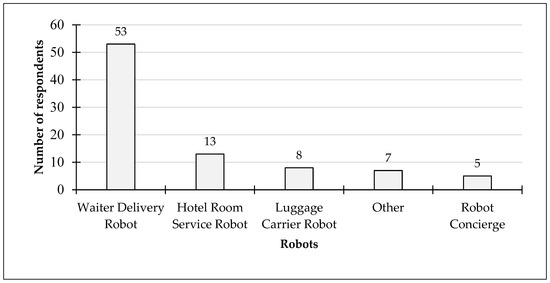
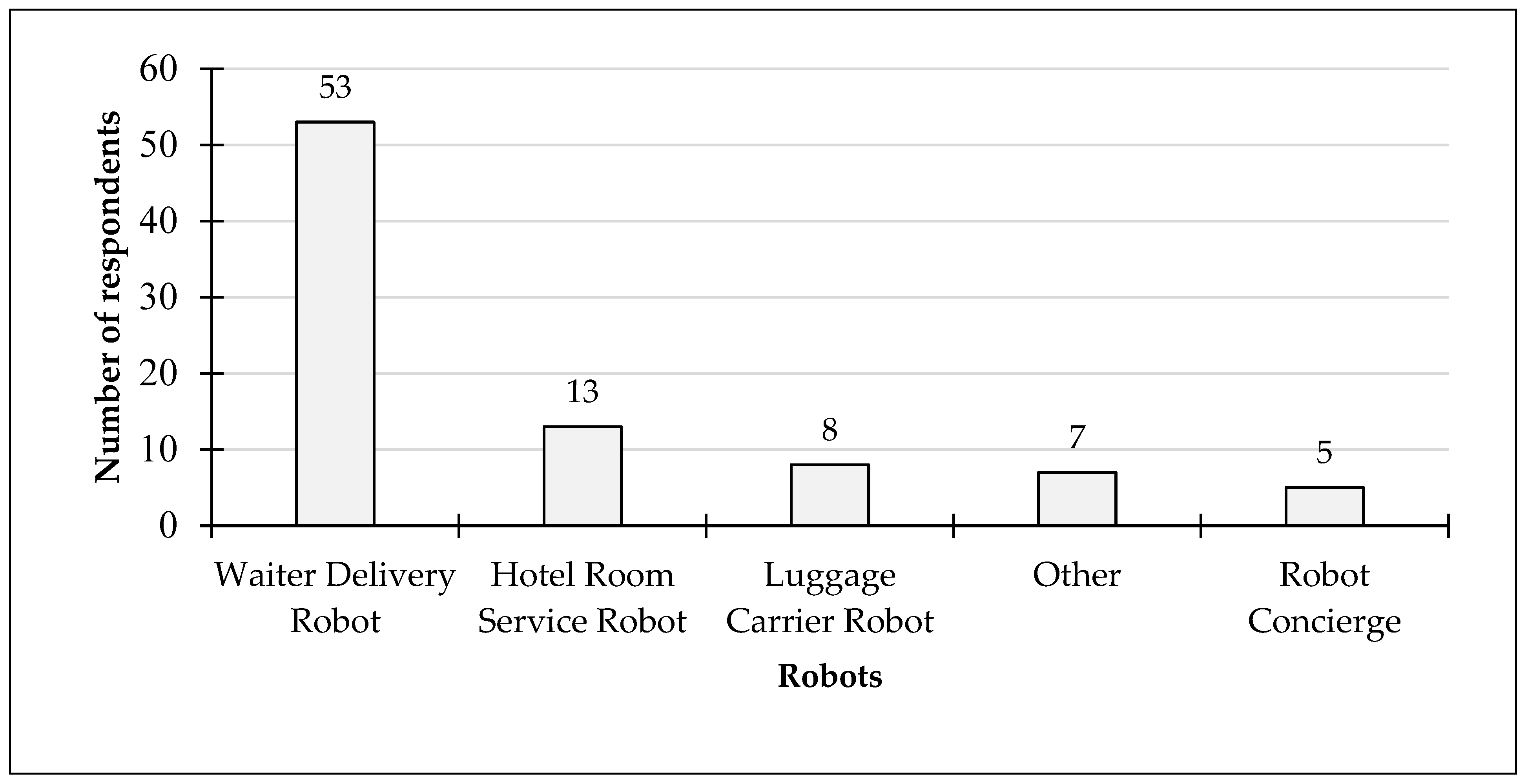
In the conducted survey, 151 respondents (70% of the total) reported that they had no previous experience with robots. Conversely, 66 respondents (30% of the total) had prior experience and had successfully used robots. As shown in Figure 1, the most commonly used type of robot was the waiter delivery robot, which was used by 80% of respondents with prior robot experience. All other types of robots were used far less frequently.
Figure 1.
Previous experiences with and use of robots by respondents, n = 66.
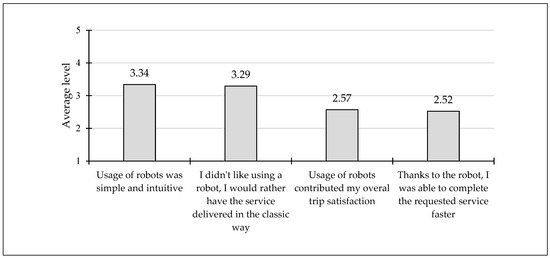
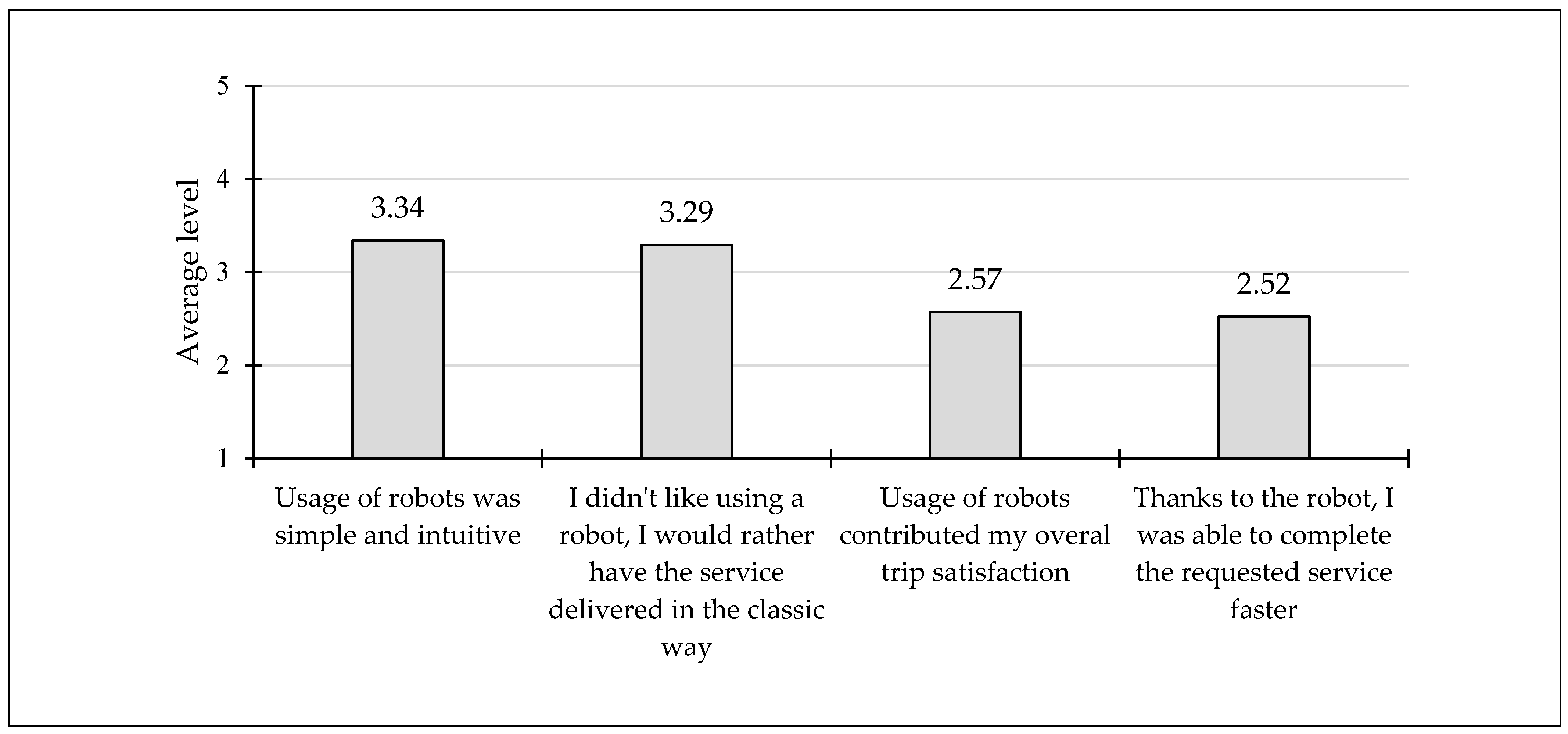
Satisfaction with robot-assisted tourism services was assessed only among respondents who had previous experience using robots in tourism. Satisfaction was measured on a five-point Likert scale, where 1 indicated strong disagreement and 5 indicated strong agreement with the presented items. In the sample, 66 respondents (30% of the total) had previously used robots, but one respondent did not provide an answer regarding their level of satisfaction with robot-assisted tourism services. The results presented in Figure 2 show that, on average, the highest level of agreement was observed for the item, indicating that respondents generally found the robots easy and intuitive to use (mean = 3.34). Nevertheless, at the same time, respondents did not enjoy using robots and preferred the classic way of service delivery (mean = 3.29). In contrast, the other two items scored below the threshold value of 3, indicating that, overall, respondents tended not to agree that the use of robots contributed to their overall trip satisfaction or allowed them to complete the requested service faster.
Figure 2.
Level of satisfaction with robot-assisted tourism services: ranking of items, n = 65.
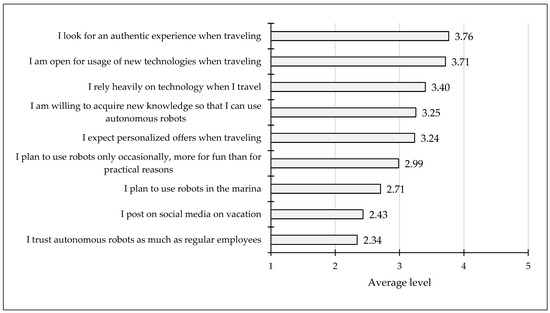
The level of agreement with statements on respondents’ travel characteristics was measured using a five-point Likert scale, where 1 indicated strong disagreement and 5 indicated strong agreement with the statements. According to the results presented in Figure 3, respondents on average agreed most with the statements that they seek an authentic experience when traveling (mean = 3.76) and that they are open to using new technologies when traveling (mean = 3.71). Conversely, respondents tended to disagree with the statements that they plan to use robots in the marina (mean = 2.71) and that they post on social media during their vacation (mean = 2.43). The statement that received the highest level of disagreement was that they trust autonomous robots as much as regular employees (mean = 2.34).
Figure 3.
Level of agreement with statements on respondents’ travel characteristics: item rankings, n = 217.
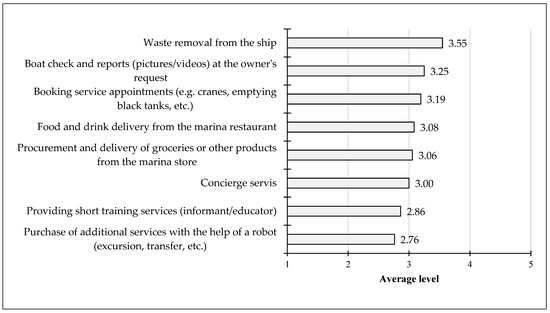
Respondents’ willingness to use selected robot-assisted services in Marina Punat was measured using a five-point Likert scale, where 1 indicated extreme unwillingness and 5 indicated extreme willingness. According to Figure 4, the highest level of agreement and approval among respondents relates to the robot-assisted service for waste removal from the ship (mean = 3.55). Respondents also expressed interest in robot-provided boat check and reporting services upon request (mean = 3.25). Conversely, respondents were least willing to use robot-assisted services such as purchasing additional services through a robot (mean = 2.76) and receiving short training sessions provided by robots (mean = 2.86).
Figure 4.
Willingness of respondents to use selected robot-assisted services in Marina Punat: ranking of items, n = 217.
The exploratory factor analysis (EFA) was conducted to reduce the total of 17 observed items measuring respondents’ level of agreement with statements on travel characteristics and their willingness to use selected robot-assisted services in Marina Punat, as presented in Figure 3 and Figure 4. The Principal Axis Factoring (PAF) extraction method with orthogonal Varimax rotation was applied. Preliminary analysis indicated that the items “I post on social media on vacation”, “I expect personalized offers when traveling”, and “I plan to use robots only occasionally, more for fun than for practical reasons” had factor loadings below 0.4 and were therefore omitted. Consequently, the EFA was conducted on a total of 14 items.
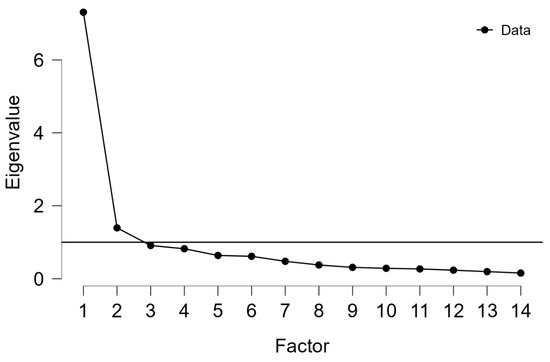
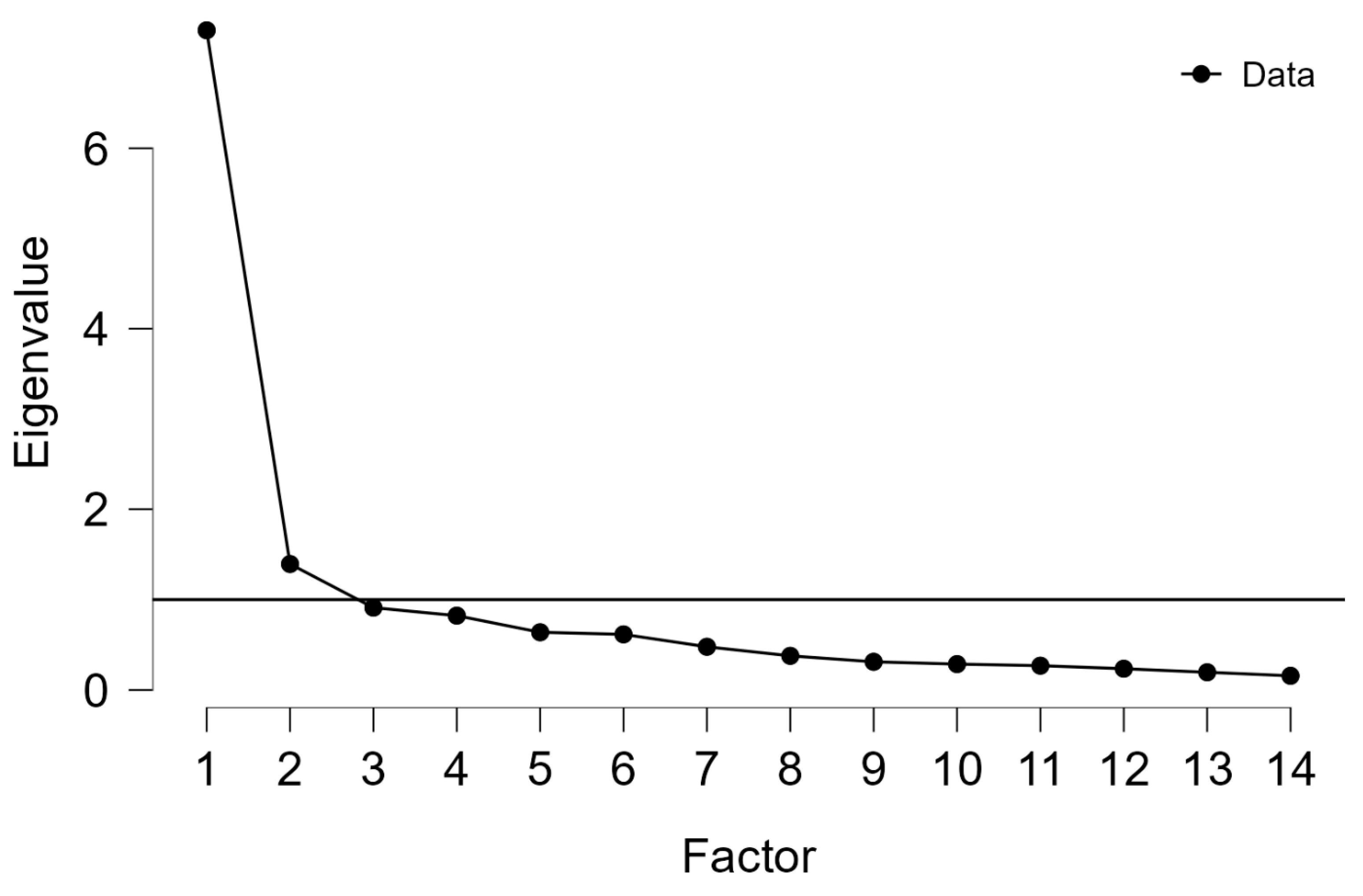
The Kaiser–Meyer–Olkin (KMO) measure of 0.899 indicates excellent sampling adequacy, while Bartlett’s Test of Sphericity (χ2(91) = 2483.48, p < 0.001) confirms that correlations among variables are sufficient for factor analysis. These measures indicate that the dataset is well-suited for EFA and that the variables share enough common variance to reveal underlying factors. The scree plot shown in Figure 5, along with the Eigenvalue > 1 criterion, indicates that two clear latent dimensions explain the structure of responses. Therefore, two factors were retained for further analysis. The corresponding factor loadings are presented in Table 5.
Figure 5.
Scree plot of eigenvalues for exploratory factor analysis, 14 items.
Table 5.
Rotated factor loadings, Varimax, for 14 items.
The rotated factor loadings presented in Table 5 indicate a clear factor structure with no major cross-loadings, and the two factors together explain 61.3% of the total variance. Factor 1 includes items describing robot-based services and operations within the marina, reflecting a positive attitude toward using robots for practical and operational purposes. Therefore, Factor 1 is labeled “Robot Service Integration.” Factor 2 comprises items reflecting personal openness to technology, trust in robots, and willingness to use them, and is accordingly labeled “Technological Readiness and Trust.”
The logistic regression analysis examined the effect of respondents’ attitudes toward robot services on their willingness to pay for robot-assisted services. The full model, including Robot Service Integration (Factor 1) and Technological Readiness and Trust (Factor 2), significantly improved fit over the intercept-only model (Δχ2 = 31.231, p < 0.001), with reductions in deviance, AIC, and BIC, indicating a better explanation of the observed data. Pseudo-R2 values suggest that the model explains a modest proportion of variance in willingness to pay (McFadden R2 = 0.155; Nagelkerke R2 = 0.222; Tjur R2 = 0.137; Cox and Snell R2 = 0.134), which is typical for behavioral outcomes in social science research.
The logistic regression results are presented in Table 6. Examining the coefficients, Factor 1 (Robot Service Integration) is a strong and significant predictor (OR = 3.59, p < 0.001), meaning that a one-unit increase in Factor 1 increases the odds of willingness to pay by approximately 3.6 times. In contrast, Factor 2 (Technological Readiness and Trust) is positive but not statistically significant (OR = 1.47, p = 0.134), indicating that general openness to technology and trust in robots alone do not significantly influence willingness to pay. The baseline odds of willingness to pay, when both factors are zero, are low (OR = 0.135).
Table 6.
Logistic regression results (odds ratios) for willingness to pay for using services with the help of robots.
In terms of classification, the model correctly identifies most respondents who are not willing to pay (98.3%) but performs poorly in predicting respondents who are willing to pay (10.5%), resulting in an overall classification accuracy of 82.95%. This reflects the imbalance in the outcome variable and suggests that while the model effectively predicts the majority class, predicting the minority class remains challenging. Overall, these results indicate that practical perceptions of robot-based services are the primary driver of willingness to pay, whereas general technological attitudes and trust play a less decisive role.
Advantages and Limitations of the Study
The main strengths of the conducted research are reflected in the relevance of the sample, the clearly defined target population, and the combination of demographic and experiential questions. Furthermore, the online questionnaire format proved to be highly practical, ensuring respondent anonymity and requiring only a short completion time, which likely contributed to the response rate.
However, several limitations should be acknowledged. The use of a purposive sampling approach may have introduced response bias, particularly in the sense that participation may have been skewed toward respondents with a higher level of interest in technology. In addition, the questionnaire design allowed limited scope for open-ended responses. Nevertheless, this limitation was mitigated through the prior conduct of preliminary interviews with selected relevant stakeholders within the tourism system, which enabled the creation of a highly structured survey.
The findings of this study provide valuable insights into marina users’ attitudes toward the application of robotics and autonomous robots in daily activities and operational processes within nautical marinas. Moreover, the results offer useful guidance for the implementation of similar solutions across other segments of the tourism system. It can be concluded that the research design and applied methodology are appropriate for the early stages of innovative system development.
The data obtained may serve as a solid foundation for the targeted development of services aligned with user preferences, the formulation of effective communication strategies (e.g., mitigating resistance to robotic technologies), and as a starting point for future, more comprehensive research involving larger samples and more advanced analytical approaches.
5. Conclusions
Based on the overall findings of the conducted research, it can be concluded that digital transformation is a fundamental driver of further development and competitiveness of nautical marinas. The primary research was conducted in the Republic of Croatia, focusing on a nautical marina that has decided to invest in the development and implementation of an autonomous robot within its operations, thereby also contributing to addressing a gap in the existing scientific literature in this field.
At the same time, it is essential to conduct follow-up research on user satisfaction after the implementation of the autonomous robotic solution, which is planned as a subsequent phase of this research agenda. Autonomous robots in nautical marinas are expected to undergo continuous innovation and improvement, particularly in the domains of autonomous navigation within highly complex marina environments, as well as in environmental protection and resource management.
The increasingly complex demands of contemporary tourists are generating a growing need for differentiated and specialized products in nautical tourism. Under the influence of modern trends, nautical tourism ports—as well as other segments of the tourism system—are undergoing a qualitative transformation driven by digitalization and the green transition. Stakeholders, including marinas, that respond promptly and effectively to these changes will be better positioned to attract new market segments and maintain a competitive advantage in an increasingly dynamic tourism market.
Based on the overall research conducted, it can be concluded that digital transformation is a key foundation for the further development and competitiveness of nautical marinas. The primary research was carried out in the Republic of Croatia, within a selected nautical marina that chose to invest in the development and implementation of an autonomous robot in its operations. This clearly demonstrates the significant potential of applying such technologies to optimize operational processes, increase efficiency, and improve service quality. At the same time, the study helps to address a research gap in this field of scientific inquiry.
The practical implications of this research are primarily seen in the potential application of autonomous robots in the daily operations of marinas, such as infrastructure monitoring, logistical support, security activities, and resource management. The implementation of such solutions may help to reduce operational costs, increase safety levels, and create added value for users through an innovative and technologically advanced marina experience. Furthermore, the use of autonomous systems may play a significant role in sustainable development, particularly by enabling more efficient energy management and reducing negative environmental impacts. Autonomous robots in nautical marinas are expected to undergo continuous innovation and improvement in the future, especially regarding autonomous navigation in the highly complex marina environment, as well as in environmental protection and resource management.
Regarding market trends, the increasing expectations of modern nautical tourists for personalized and technologically advanced services further highlight the importance of implementing innovative solutions. Marinas that promptly integrate autonomous technologies and adapt their business models to current market demands have greater potential to attract new market segments and maintain a competitive advantage in the dynamic nautical tourism environment.
Despite the identified advantages, the research results indicate the need for further examination of user acceptance of these technologies among end users. Future research should analyze user satisfaction after the implementation of autonomous robots and examine their impact on perceived service quality and overall user experience. Additionally, research should be expanded to include more marinas and varied operational contexts to obtain findings that allow for broader generalization.
It is particularly important to examine the level of acceptance of these technologies among different user segments, and to identify the key factors influencing their trust and willingness to use autonomous solutions. Further research should also address the technical aspects of developing autonomous systems in complex and dynamic environments such as marinas, including improvements in autonomous navigation systems, safety protocols, and integration with existing infrastructure. Special attention should be given to regulatory and ethical issues related to the application of autonomous technologies in public and tourism settings. The implementation of longitudinal studies on the same sample would enable monitoring of changes in user attitudes over time and provide a deeper understanding of the long-term effects of autonomous systems in nautical marinas.
Author Contributions
Conceptualization, A.V. and D.F.H.; methodology, A.V.; software, D.M.; validation, D.M.; formal analysis, D.F.H.; investigation, A.V. and D.F.H.; resources, A.V.; data curation, D.M.; writing—original draft preparation, A.V. and D.F.H.; writing—review and editing, A.V. and D.F.H.; visualization, D.F.H.; supervision, D.M.; project administration, A.V. All authors have read and agreed to the published version of the manuscript.
Funding
This research received no external funding.
Institutional Review Board Statement
Ethical review and approval were waived for this study due to Ethics Committee of the University of Zagreb (https://www.unizg.hr/fileadmin/rektorat/O_Sveucilistu/Dokumenti_javnost/Propisi/Pravilnici/Eticki_kodeks.pdf (accessed on 2 May 2026)).
Informed Consent Statement
Informed consent was obtained from all individual participants included in the study.
Data Availability Statement
The original contributions presented in this study are included in the article. Further inquiries can be directed to the corresponding author.
Conflicts of Interest
The authors declare no conflict of interest.
References
- Boucher, P. (2017). How blockchain technology could change our lives. In In-depth analysis. European Parliament. [Google Scholar]
- Buhalis, D. (2020). Technology in tourism—From information communication technologies to eTourism and smart tourism towards ambient intelligence tourism: A perspective article. Tourism Review, 75(1), 267–272. [Google Scholar] [CrossRef] [Scilit]
- Buhalis, D., & Leung, R. (2018). Smart hospitality—Interconnectivity and interoperability towards an ecosystem. International Journal of Hospitality Management, 71, 41–50. [Google Scholar] [CrossRef] [Scilit]
- Buhalis, D., & Moldavska, I. (2022). Voice assistants in hospitality: Using artificial intelligence for customer service. Journal of Hospitality and Tourism Technology, 13(3), 386–403. [Google Scholar] [CrossRef] [Scilit]
- Chaouchi, H. (2013). The internet of things: Connecting objects to the web. Wiley. [Google Scholar]
- Cocks, S. (2025). Five tech trends transforming the marina industry. PacsoftNG—Marina management solution. Available online: https://pacsoftmms.com/five-tech-trends-transforming-the-marina-industry/ (accessed on 19 February 2026).
- Croatian Bureau of Statistics (CBS). (2025). Nautički turizam—Kapaciteti i poslovanje luka nautičkog turizma u 2024. Available online: https://www.dzs.hr/ (accessed on 5 February 2026).
- Dragović, N., Stankov, U., & Vasiljević, Đ. (2018). Contactless technology as a factor of tourism industry development—A review of current practices and future directions. Economic Themes, 56(2), 179–202. [Google Scholar] [CrossRef] [Scilit]
- Enciklopedija. (n.d.). Hrvatska. Available online: https://www.enciklopedija.hr/clanak/hrvatska-drzava (accessed on 5 February 2026).
- Gračan, D., Gregorić, M., & Martinić, T. (2016). Nautical tourism in Croatia: Current situation and outlook. In 23rd international congress tourism & hospitality industry 2016: Congress proceedings (pp. 66–79). Faculty of Tourism and Hospitality Management, University of Rijeka. [Google Scholar]
- Gretzel, U., Sigala, M., Xiang, Z., & Koo, C. (2015). Smart tourism: Foundations and developments. Electronic Markets, 25(3), 179–188. [Google Scholar] [CrossRef] [Scilit]
- Gursoy, D., Chi, O. H., Lu, L., & Nunkoo, R. (2019). Consumers acceptance of artificial intelligence in hospitality services. International Journal of Hospitality Management, 81, 72–82. [Google Scholar]
- Heilig, L., Schwarze, S., & Voss, S. (2017, January 4–7). An analysis of digital transformation in the history and future of the modern ports [Conference session]. 50th Hawaii International Conference on System Sciences (pp. 1341–1348), Waikoloa Village, HI, USA. [Google Scholar]
- Huang, M.-H., & Rust, R. T. (2018). Artificial intelligence in service. Journal of Service Research, 21(2), 155–172. [Google Scholar] [CrossRef] [Scilit]
- Iansiti, M., & Lakhani, K. R. (2017). The truth about blockchain. Harvard Business Review, 95, 118–127. [Google Scholar]
- Ioras, F., & Bandara, I. (2025). Artificial intelligence and sustainable practices in coastal marinas: A comparative study of Monaco and Ibiza. Sustainability, 17(16), 7404. [Google Scholar] [CrossRef] [Scilit]
- Ivanić, K., Perić Hadžić, A., & Mohović, Đ. (2018). Nautical tourism: Generator of Croatian economy development. Pomorstvo, 32(1), 59–66. [Google Scholar] [CrossRef] [Scilit]
- Ivanov, S., & Webster, C. (2020). Robots in tourism: A research agenda for tourism economics. Tourism Economics, 26(7), 1065–1085. [Google Scholar] [CrossRef] [Scilit]
- Ivanov, S., Webster, C., & Berezina, K. (2017). Adoption of robots and service automation by tourism and hospitality companies. Revista Turismo & Desenvolvimento, 27/28, 1501–1517. [Google Scholar]
- Jung, T. H., & Dieck, M. C. (2017). Augmented reality, virtual reality and 3D printing for the co-creation of value for the visitor experience at cultural heritage places. Journal of Place Management and Development, 10(2), 140–151. [Google Scholar] [CrossRef] [Scilit]
- Lu, L., Cai, R., & Gursoy, D. (2019). Developing and validating a service robot integration willingness scale. International Journal of Hospitality Management, 80, 36–51. [Google Scholar] [CrossRef] [Scilit]
- Luković, T. (2013). Nautički turizam Hrvatske. Redak. [Google Scholar]
- Molavi, A., Lim, G. J., & Race, B. (2019). A framework for building a smart port and smart port index. International Journal of Sustainable Transportation, 14(9), 686–700. [Google Scholar] [CrossRef] [Scilit]
- Murphy, J., Hofacker, C., & Gretzel, U. (2017). Dawning of the age of robots in hospitality and Tourism: Challenges for teaching and research. European Journal of Tourism Research, 15, 104–111. [Google Scholar] [CrossRef] [Scilit]
- Park, S. (2020). Multifaceted trust in tourism service robots. Annals of Tourism Research, 81, 102888. [Google Scholar] [CrossRef] [Scilit]
- Pizam, A., Ozturk, A. B., Balderas-Cejudo, A., Buhalis, D., Fuchs, G., Hara, T., Meira, J., Revillae, M., Sethi, D., Sheng, Y., State, O., Hacikaraa, A., & Chaulagain, S. (2022). Factors affecting hotel managers’ intentions to adopt robotic technologies: A global study. International Journal of Hospitality Management, 102, 103–139. [Google Scholar] [CrossRef] [Scilit]
- Samala, N., Katkam, B., Bellamkonda, R., & Rodriguez, R. (2022). Impact of AI and robotics in the tourism sector: A critical insight. Journal of Tourism Futures, 8, 100911. [Google Scholar] [CrossRef] [Scilit]
- Seyitoğlu, F., & Ivanov, S. (2021). Service robots as a tool for physical distancing in tourism. Current Issues in Tourism, 24(12), 1631–1634. [Google Scholar] [CrossRef] [Scilit]
- Shin, H., & Jeong, M. (2020). Guests’ perceptions of robot concierge and their adoption intentions. International Journal of Contemporary Hospitality Management, 32(8), 2613–2633. [Google Scholar] [CrossRef] [Scilit]
- Tussyadiah, I. P. (2020). A review of research into automation in tourism. Annals of Tourism Research, 81, 102883. [Google Scholar] [CrossRef] [Scilit]
- Tussyadiah, I. P., & Park, S. (2018). Consumer evaluation of hotel service robots. In B. Stangl, & J. Pesonen (Eds.), Information and communication technologies in tourism 2018 (pp. 308–320). Springer. [Google Scholar] [CrossRef] [Scilit]
- Tussyadiah, I. P., Wang, D., Jung, T. H., & Dieck, M. C. (2018). Virtual reality, presence, and attitude change: Empirical evidence from tourism. Tourism Management, 66, 140–154. [Google Scholar] [CrossRef] [Scilit]
- Wirtz, J., Patterson, P., Kunz, W., Gruber, T., Lu, V. N., Paluch, S., & Martins, A. (2018). Brave new world: Service robots in the frontline. Journal of Service Management, 29(5), 907–931. [Google Scholar] [CrossRef] [Scilit]
- Xiang, Z., Tussyadiah, I., & Buhalis, D. (2015). Smart destinations foundations, analytics, and applications. Journal of Destination Marketing & Management, 4(3), 179–188. [Google Scholar] [CrossRef] [Scilit]
- Zhang, H., Shao, Y., Han, X., & Chang, H.-L. (2022). A road towards ecological development in China: The nexus between green investment, natural resources, green technology innovation, and economic growth. Resources Policy, 77(C), 102746. [Google Scholar] [CrossRef] [Scilit]

Disclaimer/Publisher’s Note: The statements, opinions and data contained in all publications are solely those of the individual author(s) and contributor(s) and not of MDPI and/or the editor(s). MDPI and/or the editor(s) disclaim responsibility for any injury to people or property resulting from any ideas, methods, instructions or products referred to in the content. |
© 2026 by the authors. Licensee MDPI, Basel, Switzerland. This article is an open access article distributed under the terms and conditions of the Creative Commons Attribution (CC BY) license.