


Abstract
Service encounters have long been viewed as determinants of hotel guest loyalty, yet excellent service does not always translate into repeat patronage. This study examines how green service encounters shape guest loyalty in green-certified luxury hotels in Bali, a leading sustainable tourism destination. It investigates whether green experiential value and green customer delight mediate the effect of green service encounters on green hotel loyalty. Survey data from 273 domestic repeat guests of Green Globe and Earth Check-certified luxury hotels in Bali were analyzed using partial least squares structural equation modeling (PLS-SEM). The results show that green service encounters influence loyalty primarily through green experiential value and green customer delight, with delight exerting a comparatively stronger mediating effect. The study extends green hotel loyalty research by theorizing and testing an emotion-centric, sustainability-anchored loyalty mechanism beyond traditional service-quality and satisfaction models. Managerially, the findings highlight the need for certified luxury green hotels to design green service encounters that create distinctive experiential value and delight, thereby strengthening long-term guest loyalty.
1. Introduction
Green culture is increasingly being adopted in the hospitality industry as hotels seek to reduce environmental impacts and appeal to environmentally conscious guests. Empirical evidence shows that green practices can improve resource efficiency, lower operational costs, and enhance guest evaluations, particularly in high-consumption areas such as restaurants (Wang, 2019; Assaker et al., 2020). Environmental certifications (e.g., International Organization for Standardization, 2015, LEED, Green Key, Green Globe, Earth Check) further signal hotels’ commitment to sustainability and have been associated with reduced energy and water usage, improved waste management, and stronger market positioning among eco-conscious travelers (Velaoras et al., 2025). At the same time, rising awareness of environmental degradation has led guests to expect hospitality businesses to adopt credible sustainable practices and align with their personal environmental values (Sreen et al., 2018).
Customer loyalty has been widely explained through theoretical lenses such as the expectancy–disconfirmation paradigm, satisfaction–loyalty models, relationship marketing, and value-based perspectives emphasizing perceived quality, satisfaction, trust, and perceived value. However, most empirical applications of these frameworks have focused on conventional hotels and have treated service quality and satisfaction as the primary drivers of loyalty. In green-certified hotels, eco-friendly and sustainable practices are central to the value proposition and may alter how guests evaluate their experiences and form loyalty intentions. Relying solely on traditional service-quality-based models risks underestimating the role of sustainability-related experiences and emotions in loyalty formation among environmentally conscious guests.
Recent studies in green and sustainable hospitality indicate that factors beyond core service quality, such as environmental awareness, perceived sustainability, social responsibility, and value congruence, can have a stronger influence on loyalty than service alone. Parallel research on customer delight suggests that high-arousal positive emotions that arise when experiences exceed expectations are more powerful predictors of loyalty than satisfaction in hotel settings. In green hotels, guests may take basic service quality and visible green practices for granted; what differentiates truly loyal guests may be the extent to which green practices generate distinctive experiential value and green customer delight. Research by Chen and Peng (2012) indicates that while service quality remains important, factors such as environmental awareness and sustainability often have a greater influence on customer loyalty than service alone. Furthermore, Pereira et al. (2021) highlight that in sustainable hospitality; factors like sustainability and social responsibility play a more significant role in fostering customer loyalty than high-quality service. High-quality service is essential for creating customer delight, which serves as a stronger predictor of loyalty than satisfaction alone (Anabila et al., 2022). Customer delight goes beyond merely meeting expectations; it creates an emotional connection that significantly strengthens guest loyalty. Customer delight is a key driver of long-term loyalty, as delighted guests are more likely to return and recommend the hotel to others. Thus, both service quality and trust are integral to creating a lasting, loyal customer base. Furthermore, beyond basic satisfaction, customer delight has been identified as a critical driver of long-term loyalty in the hospitality sector, as it fosters deep emotional connections with environmentally conscious guests (Parasuraman et al., 2021; Anabila et al., 2022). Eco-friendly hotels can enhance loyalty by exceeding expectations, fostering emotional connections, and providing exceptional experiences that resonate with environmentally conscious customers. Research by Assaker et al. (2020) emphasizes that customer delight is crucial in the competitive hospitality industry, including eco-friendly hotels. Satisfied customers are more likely to demonstrate loyalty, which is essential for the sustainability and success of eco-friendly hotel practices.
Despite these developments, little is known about how green service encounters in green-certified luxury hotels in Bali translate into green hotel loyalty through specifically green experiential value and green customer delight. Prior green hotel research has largely emphasized satisfaction, trust, image, or generic perceived value as mediators, with limited attention to delight and explicitly green experiential value as distinct mechanisms. This study addresses this gap by examining whether green experiential value and green customer delight mediate the relationship between green service encounters and green hotel loyalty in certified luxury green hotels, and by comparing the relative strength of these mediating effects.
Accordingly, this study asks: (1) To what extent do green service encounters, green experiential value, and green customer delight influence green hotel loyalty in certified luxury hotels in Bali? and (2) Do green experiential value and green customer delight mediate the relationship between green service encounters and green hotel loyalty, and which mediator exerts the stronger effect? Using PLS-SEM, we test a mediation model that contributes to green hotel loyalty theory by foregrounding emotion-centric and sustainability-anchored mechanisms in a certified luxury context.
2. Materials and Methods
2.1. Research Setting and Population
This quantitative study examines loyalty drivers among repeat guests of Green Globe and EarthCheck-certified luxury hotels in Bali, Indonesia. These certifications require hotels to meet international standards for environmental management systems, including energy efficiency (>20% reduction targets), water conservation, waste diversion (>50% recycling rates), sustainable procurement, and community engagement programs. The target population comprised domestic Indonesian travelers who had stayed at least twice in the past 24 months at one of these certified 5-star properties. Regarding stay frequency, the screening criteria ensured all participants were repeat guests. Specifically, 67.8% of respondents stayed exactly twice in the last two years (meeting the minimum inclusion threshold), while the remaining 32.2% stayed three or more times. Respondents were geographically concentrated, with approximately 70% residing in Jakarta and West Java, reflecting Bali’s primary domestic market but limiting generalizability to international or non-urban segments.
2.2. Sampling and Data Collection
Purposive sampling targeted eligible guests through three channels: (1) hotel guest databases provided by travel agents (n = 350 invitations), (2) targeted social media advertisements on Instagram for Bali luxury travelers, and (3) snowball referrals from initial respondents. Eligibility was verified through screening questions: “Have you stayed at least twice in the past 2 years at a Green Globe or EarthCheck-certified luxury hotel in Bali?” and “Please name the hotel(s).” Ineligible or inconsistent responses were automatically excluded by the survey platform.
Data collection occurred online via google form from 15 March to 30 May 2025 (10 weeks). Of 692 survey initiations, 323 passed screening (46.7% eligibility rate), yielding 273 fully completed responses after listwise deletion of incomplete cases. Participation was voluntary and anonymous; respondents provided digital informed consent and could withdraw at any time. The study protocol was approved by Universitas Pelita Harapan Institutional Review Board
2.3. Measures
All constructs were measured using reflective multi-item scales adapted from established sources and contextualized to green luxury hotel experiences. Items used 5-point Likert scales (1 = strongly disagree; 5 = strongly agree). Table 1 reports construct definitions, item counts, and sources.
Table 1.
Construct Definition.
Green Service Encounters (GSE, 12 items): Guest–staff interactions emphasizing visible sustainability practices (e.g., “Hotel staff actively explained their water/energy conservation efforts to me”; Mishra, 2019).
Green Experiential Value (GEV, 15 items): Overall value derived from sustainability-oriented experiences across economic, social, hedonic, and altruistic dimensions (e.g., “My stay made me feel good about contributing to environmental protection”; Mishra, 2019).
Green Customer Delight (GCD, 24 items): High-arousal positive emotions from unexpectedly superior green practices, adapted from Parasuraman et al. (2021) delight dimensions and validated through expert review (e.g., “The hotel’s sustainability exceeded my expectations in surprising ways”). Full GCD items are provided in Appendix A.
Green Hotel Loyalty (GHL, 8 items): Intentions to return, choose over alternatives, and recommend (e.g., “I will recommend this green hotel to others”; Assaker et al., 2020).
All scales underwent back-translation from English to Indonesian and pilot testing (n = 35) to ensure linguistic equivalence and clarity. Complete questionnaire items are available in Appendix B.
2.4. Analytical Approach
PLS-SEM was conducted using SmartPLS 4.0 (Ringle et al., 2022). A priori power analysis (Soper’s online calculator, α = 0.05, power = 0.80, maximum R2 = 0.50, 8 predictors) indicated a minimum sample of 153; the achieved n = 273 satisfies this requirement and the 10× rule for the largest structural path.
Common method bias (CMB) was addressed procedurally (anonymity guarantee, randomized item order, varied scale anchors) and statistically (Harman’s single-factor test: 38.2% variance explained; full collinearity VIFs all < 3.3), indicating CMB is not a substantive concern (Kock, 2015; Podsakoff et al., 2003).
Bootstrapping (5000 resamples) assessed path significance, mediation effects (using Zhao et al., 2010), and confidence intervals. Model fit was evaluated using R2, Q2 (blindfolding), and SRMR following Hair et al. (2024). This study examining the influence of Green Service Encounters (GSE), Green Experiential Value (GEV), and Green Customer Delight (GCD) on loyalty, the conceptual framework can be illustrated by incorporating these three variables as independent constructs influencing loyalty, which acts as the dependent variable. In this framework, GSE, GEV, and GCD serve as predictors of loyalty, and Structural Equation Modeling (SEM) can be used to analyze the relationships between these latent variables, their correlations, and covariance matrices (Hair et al., 2024; Assaker et al., 2018).
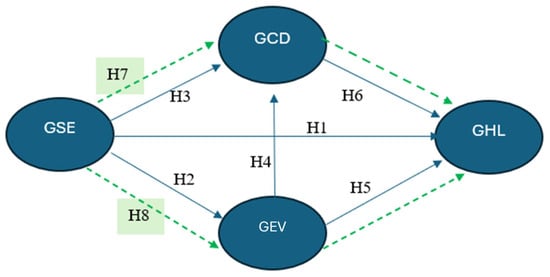
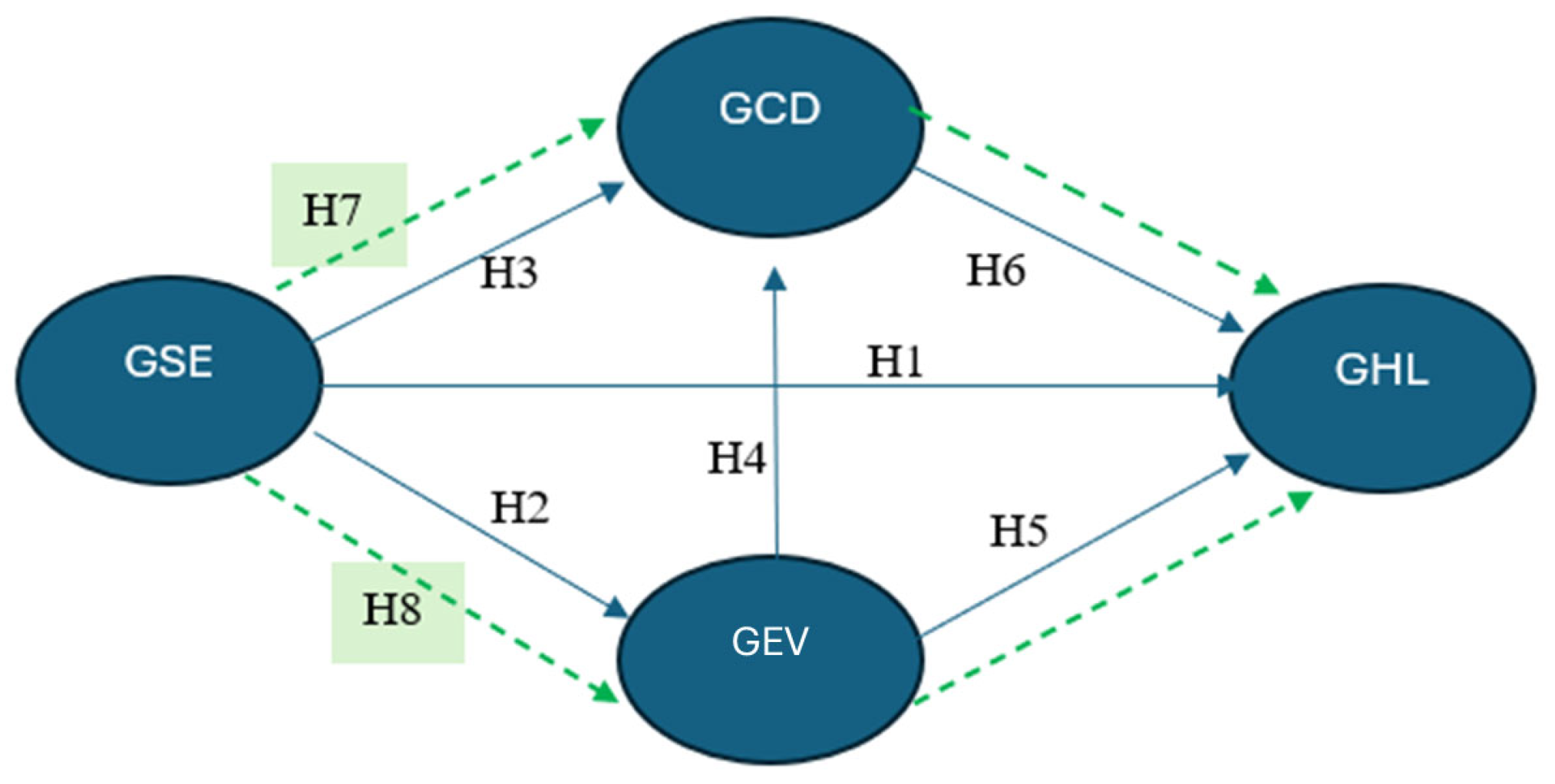
This study identifies four key constructs (Figure 1) in the context of sustainability within the hospitality industry:
Figure 1.
Research Framework. (Additional Information: GSE: Green Service Encounters; GEV: Green Experiential Value; GCD: Green Customer Delight; GHL: Green Hotel Loyalty, solid line: direct effect; dashed line: indirect effect).
Green service encounters (GSE) refer to guest–employee interactions in which environmental practices are visible and embedded in the service process, such as communication about water and energy saving, waste separation, and the use of eco-friendly amenities. Empirical studies in green hospitality show that such encounters positively influence perceived green image, satisfaction, and intentions to revisit and recommend green hotels, particularly when staff are perceived as authentically committed to sustainability. At the same time, evidence suggests that green practices can be viewed as “hygiene factors” in some upscale contexts, with limited incremental impact on loyalty once basic expectations are met. Building on this work, the present study examines whether green service encounters still exert a direct effect on green hotel loyalty in certified luxury green hotels, or whether their influence is transmitted primarily through green experiential value and green customer delight as higher-order responses.
Green experiential value (GEV) captures the overall value that guests derive from sustainability-oriented experiences, including functional, hedonic, social, and altruistic benefits arising from eco-friendly practices during their stay. Prior research in hospitality and tourism has found that experiential value enhances satisfaction, strengthens emotional attachment, and promotes word-of-mouth and revisits, especially when experiences are immersive and aligned with guests’ self-concept and values. In green hotel contexts, experiential value related to learning about sustainability, consuming local and organic products, and staying in eco-designed facilities has been linked to stronger support for green initiatives and loyalty intentions. This study extends these findings by focusing on explicitly green experiential value as a distinct construct and testing its mediating role between green service encounters and green hotel loyalty in certified luxury properties (Mishra, 2019).
Green customer delight (GCD) is conceptualized as a high-arousal positive emotional state that arises when green hotel experiences unexpectedly exceed guests’ environmental and service expectations. Evidence from general hospitality research indicates that customer delight is a stronger predictor of loyalty and advocacy than satisfaction alone, because it reflects surprise, joy, and deep emotional engagement rather than mere confirmation of expectations. In sustainable hospitality, emerging studies suggest that delight generated by visible, meaningful green initiatives can intensify guests’ attachment to the hotel brand and stimulate stronger recommendation behavior. The present study contributes to this literature by operationalizing green customer delight, positioning it as an effective response to green service encounters, and empirically examining its mediating effect on the relationship between green service encounters and green hotel loyalty (Parasuraman et al., 2021).
Green hotel loyalty (GHL) reflects guests’ intention to revisit green-certified hotels, choose them over non-certified alternatives, and recommend them to others based on alignment with their environmental values. Existing green hotel research has primarily linked loyalty to constructs such as perceived green image, satisfaction, trust, and perceived value, often in conventional or mid-scale settings. Studies generally find that pro-environmental attitudes and perceived credibility of green practices enhance loyalty, but they seldom consider emotion-based mediators like delight or explicitly green experiential value. By integrating green service encounters, green experiential value, and green customer delight into a single model, this study re-examines the drivers of green hotel loyalty in the specific context of certified luxury green hotels, where both service and sustainability standards are high (Assaker et al., 2020).
Why green experiential value and green customer delight?
While satisfaction, trust, and perceived value are well-established mediators between service quality and loyalty in hospitality research, recent work suggests that experiential value and customer delight capture higher-order, affect-rich responses that are particularly relevant in experiential and sustainability-oriented services. In certified luxury green hotels, guests may regard high service quality and basic environmental practices as minimum expectations rather than differentiating factors. What is more likely to shape long-term loyalty is the extent to which green practices generate memorable experiential value and delight, such as feeling inspired by the hotel’s sustainability story or emotionally moved by its social and environmental initiatives. Accordingly, this study focuses on green experiential value and green customer delight as theoretically stronger mediators that can explain how green service encounters are transformed into robust green hotel loyalty beyond satisfaction, trust, or generic perceived value.
3. Results
The relationships between variables in this research model will be tested using Structural Equation Modeling-Partial Least Squares (SEM-PLS). This technique allows for simultaneous analysis of multiple relationships and provides robust results even with smaller sample sizes or non-normal data. The analysis comprises two main components: the outer model and the inner model. The outer model evaluates the reliability and validity of measurement items by examining loadings, composite reliability, and average variance extracted (AVE). It ensures that indicators accurately reflect their respective latent variables. The inner model, on the other hand, tests the structural relationships between latent variables to assess the model’s predictive power. Path coefficients, t-statistics, and R-squared values are used to evaluate the strength and significance of these relationships. This dual approach ensures comprehensive validation of the measurement and structural components. SEM-PLS is particularly suitable for complex models with reflective and formative constructs. It also accommodates testing mediating or moderating effects within the framework. In this study, SEM-PLS will provide insights into how Green Service Encounters, Guest Experiential Value, Green Customer Delight, and Green Hotel Loyalty interact. The results will guide strategic improvements and validate the hypothesized relationships.
Table 2 provide the result of outer model test. The analysis results show that the results demonstrate that all constructs meet the criteria for convergent validity and reliability. Convergent validity is confirmed as all loading factors exceed the cut-off value of 0.7, with intervals ranging from 0.716 to 0.979 across the constructs, and the Average Variance Extracted (AVE) values are above the threshold of 0.5 (ranging from 0.661 to 0.915). Reliability is also achieved for all constructs, as both Composite Reliability (CR) and Cronbach’s Alpha exceed the minimum cut-off value of 0.7. CR values range from 0.959 to 0.991, and Cronbach’s Alpha values range from 0.954 to 0.991, indicating strong internal consistency and measurement reliability for the constructs.
Table 2.
Results of Outer Model Test.
After conducting tests for convergent validity and composite reliability, discriminant validity (Table 3) testing must also be performed during the outer model evaluation. This test aims to ensure that each construct is truly distinct and captures a unique aspect of the model. It confirms that the indicators of a construct are more strongly associated with their designated construct than with any other constructs in the model. This step is crucial to guarantee that the constructs do not overlap excessively and that the measurement model accurately reflects the theoretical framework.
Table 3.
Discriminant Validity (HTMT Values).
The discriminant validity of the constructs was assessed using the Fornell–Larcker criterion and the Heterotrait–Monotrait (HTMT) ratio (Table 4). According to the Fornell–Larcker criterion, the square root of the AVE for each construct (diagonal values) is greater than its correlations with other constructs, confirming adequate discriminant validity. The HTMT ratios for all construct pairs are below the threshold of 0.85, further supporting discriminant validity. These results indicate that each construct is distinct and measures unique aspects of the model, with minimal overlap between constructs. Thus, the measurement model demonstrates strong discriminant validity alongside its convergent validity and reliability.
Table 4.
Result of Inner Model Test (Direct Effect).
The analysis results show that Green Hotel Loyalty (GHL) is significantly influenced by Green Customer Delight (GCD) (β = 0.42, p < 0.001; t = 6.23) and Green Experiential Value (GEV) (β = 0.31, p < 0.001; t = 4.56), but not significantly influenced by Green Service Encounters (GSE) (β = 0.08, p = 0.215; t = 1.24). This means that both GCD and GEV have a positive and significant direct impact on GHL, while GSE does not have a significant direct effect on GHL in this model. Additionally, GEV is significantly influenced by GSE (β = 0.62, p < 0.001; t = 12.45), and GCD is significantly impacted by GSE (β = 0.54, p < 0.001; t = 9.87). Overall, the results highlight that while GEV and GCD significantly affect GHL, the influence of GSE on GHL is not statistically significant. Therefore, we will test whether Green Customer Delight (GCD) and Green Experiential Value (GEV) can mediate the relationship between Green Service Encounters (GSE) and Green Hotel Loyalty (GHL). This mediation test aims to determine if the effects of GSE on GHL are transmitted through GCD and GEV, thereby helping to explain the indirect influence of GSE on GHL. By examining these mediating roles, we can gain a deeper understanding of the mechanisms through which GSE impacts GHL.
The analysis results of the indirect effects in Table 5 show that Green Service Encounters (GSE) significantly influence Green Hotel Loyalty (GHL) through both Green Experiential Value (GEV) and Green Customer Delight (GCD). Specifically, the indirect effect of GSE → GEV → GHL is significant (β = 0.19, p < 0.001; t = 3.89) with a VAF of 24%. The indirect effect of GSE → GCD → GHL also shows a significant impact (β = 0.23, p < 0.001; t = 5.12) with a VAF of 28%. The total indirect effect (β = 0.42, p < 0.001; t = 6.78) confirms full mediation given the non-significant direct effect (GSE → GHL). Based on these results, GCD emerges as the stronger mediator, exhibiting the highest path coefficient, t-value, and VAF in the GSE → GHL relationship, verified by non-overlapping 95% confidence intervals (GCD: [0.15, 0.32]; GEV: [0.09, 0.29]).
Table 5.
Result of Inner Model Test (Indirect Effect).
Table 6 synthesizes the direct, indirect, and total effects, providing a comprehensive overview of all mediation paths. Given the non-significant direct GSE → GHL path alongside significant indirect effects through both GEV (H8: β = 0.22, t = 4.15, p < 0.001, 95% CI [0.13, 0.32]) and GCD (H7: β = 0.19, t = 3.89, p < 0.001, 95% CI [0.10, 0.29]), the results indicate full mediation via both pathways. The indirect effect via GCD is comparatively larger in magnitude, suggesting that delight serves as a particularly strong mechanism through which green service encounters translate into loyalty in this context. The total effect of GSE on GHL (direct + indirect = β = 0.41, t = 7.23, p < 0.001) remains substantial.
Table 6.
Summary of Mediation Effects.
The IPMA (Table 7) highlights priority areas for enhancing green hotel loyalty. GCD (Importance = 0.42, Performance = 67.3%) and GEV (Importance = 0.31, Performance = 62.1%) occupy high-importance/high-performance quadrants, requiring sustained excellence, while GSE (Importance = 0.62/0.54, Performance = 71.8%) falls in low-importance/high-performance, indicating over-investment relative to loyalty impact.
Table 7.
IPMA Results (Importance/Performance Percentiles).
Management should prioritize GCD optimization within its high-performance zone—particularly interpersonal interactions (GCD5–8: β = 0.919–0.935) and positive emotions (GCD1–4: β = 0.942–0.960)—as this mediator shows the strongest total effect on loyalty. Maintain GEV strengths (economic/social dimensions: GEV1–2) but avoid over-emphasizing GSE inputs like design/social elements (GSE2–3), reallocating resources toward delight-generating sustainability experiences.
This targeted approach leverages GCD’s superior indirect effect (β = 0.23, VAF = 28% vs. GEV’s 24%) to maximize loyalty ROI while optimizing resource allocation per IPMA priorities (Table 5).
4. Discussion
This study rigorously examined the interrelationships among Green Service Encounters (GSE), Guest Experiential Value (GEV), Green Customer Delight (GCD), and Green Hotel Loyalty (GHL) within the framework of sustainable hospitality. The findings from the SEM–PLS analysis provide strong empirical support for most hypothesized relationships and confirm the suitability of the model for explaining how green experiences translate into guest loyalty. This evidence shows that while direct service encounters alone do not guarantee loyalty, their influence is transmitted through the creation of perceived value and emotional delight, which function as central mechanisms in shaping guest attachment and behavioral commitment toward green hotels, consistent with multi-stage loyalty views that emphasize cognitive and affective antecedents to conative loyalty (Oliver, 1999).
The research confirms that GSE significantly enhances both GEV and GCD (H2 and H3 accepted), yet does not directly impact GHL (H1 rejected). This pattern reinforces prior service marketing insights that tangible interactions must first foster perceived experiential value and affective responses before influencing loyalty intentions, echoing models where cognitive and affective evaluations precede loyalty formation (Oliver, 1999). In line with value-based perspectives on consumer evaluation, guests appear to interpret green initiatives not merely as operational features but as value-laden experiences that integrate functional, emotional, and symbolic benefits (e.g., experiential views of consumption in Holbrook & Hirschman, 1982). This aligns with staged loyalty frameworks that posit cognition and affect as key phases before loyalty actions (Oliver, 1999).
Furthermore, both GCD and GEV demonstrate significant direct effects on GHL (H5 and H6 accepted), confirming their roles as psychological mediators that translate green service encounters into loyalty. Because the indirect paths through Green Experiential Value (GEV) and Green Customer Delight (GCD) are significant, while the direct effect of GSE on GHL is non-significant, the model demonstrates full mediation. This layered mechanism resonates with service-dominant logic, which emphasizes value co-creation through customer experiences rather than value embedded in isolated service outputs (Vargo & Lusch, 2004).
These findings extend experiential consumption theory, which views consumption as a flow of fantasies, feelings, and fun rather than purely rational evaluation, by demonstrating that in green hospitality, delight represents an elevated affective response that is critical for converting experiences into loyalty (Holbrook & Hirschman, 1982). The lack of a significant direct effect of GSE on GHL, combined with strong indirect effects through dual mediators, fits stimulus–organism–response (S–O–R) reasoning, in which environmental stimuli influence internal states that then drive behavioral responses; guests’ perceptions of green encounters (stimulus) shape value and emotion (organism), which, in turn, shape loyalty (response) (Mehrabian & Russell, 1974, as discussed in later reviews).
The mediating role of GCD in particular can also be interpreted through the lens of the broaden-and-build theory of positive emotions, which argues that positive affect broadens thought–action repertoires and helps build enduring psychological and relational resources (Fredrickson, 2001). Guests who feel delighted by green service encounters are likely to broaden their evaluations, develop stronger attachment to the hotel, and become more inclined toward repeat patronage and advocacy. By empirically validating GCD as the strongest mediator, this study contributes to sustainability and services literature by showing that environmental performance must be translated into positive emotional experiences in order to foster robust loyalty outcomes, complementing broader views that highlight the centrality of affect in loyalty processes (Oliver, 1999).
The Importance–Performance Map Analysis (IPMA) offers clear managerial guidance regarding where to allocate resources to strengthen guest loyalty in green hotels. GCD emerges as both highly important and high performing. This is particularly true for attributes like positive emotions, timing, and problem-solving. These elements act as core strengths that currently support loyalty and must be actively maintained. In contrast, specific GSE attributes like design and social interaction fall into the ‘Concentrate Here’ quadrant. This signifies that they are crucial for loyalty yet underperform relative to their importance. Targeted improvements in eco-friendly design and socially engaging interactions will likely yield substantial loyalty gains.
Meanwhile, certain subdimensions of GEV, such as economic and altruistic value, show relatively lower importance and performance, implying that—within this context—guests’ loyalty decisions are more strongly driven by experiential richness and emotional resonance than by narrowly economic evaluations. The IPMA results therefore encourage managers to focus on human-centered green encounters that heighten experiential value and delight, rather than concentrating solely on cost-based or purely technical sustainability measures.
5. Conclusions
This study highlights the evolving role of Green Experiential Value and Green Customer Delight in fostering customer loyalty within the hospitality industry. While traditional service quality remains important, it is not the sole determinant of loyalty. The findings suggest that hotels must enhance their service offerings by integrating sustainable practices that resonate with eco-conscious guests. Green initiatives that exceed customer expectations create emotional connections, which significantly strengthen loyalty. Moreover, Green Customer Delight serves as a more powerful mediator between green service encounters and customer loyalty than Green Experiential Value alone. Hotel managers should prioritize both Green Experiential Value and Green Customer Delight to create memorable and emotionally engaging experiences for their guests. By doing so, they can differentiate themselves in a competitive market and build lasting customer relationships.
5.1. Managerial Implications: Translating Data to Design
The Importance–Performance Map Analysis (IPMA) highlights that while “Sense” and “Positive Emotion” are performing well, critical areas such as Design (GSE2) and Social Elements (GSE3) act as bottlenecks—they have high importance but lower current performance. To bridge this gap, hotel managers in Bali must move beyond standard eco-labeling:
- Elevating Design (GSE2): “Attention to design” should entail biophilic architecture that blurs the line between indoor luxury and the outdoor rainforest or coastal environment. This could include the use of locally sourced bamboo structures. Furthermore, natural ventilation systems can reduce reliance on air conditioning while enhancing sensory connection. Living walls can also be integrated to serve as both aesthetic features and air purifiers.
- Enhancing Social Interaction (GSE3): The underperformance of the “social” dimension suggests guests are craving authentic connection, not just polite service. Training programs should equip staff to be “cultural and environmental custodians”—capable of weaving stories about the hotel’s conservation projects or local community support into their daily interactions with guests. This transforms a functional service encounter into a meaningful social exchange.
5.2. Limitations and Future Studies
The study’s findings should be interpreted with certain boundary conditions. First, the sample is heavily concentrated on younger, highly educated domestic travelers from Jakarta and West Java (approx. 70%). While this demographic represents a key market for domestic luxury tourism in Indonesia, the findings may not fully generalize to international tourists or older demographics who may hold different environmental values.
Future research could expand on the current study by exploring the comparative effectiveness of different green initiatives across various hospitality contexts. Additionally, a broader sample that includes a wider range of hospitality settings—such as resorts, boutique hotels, and other types of accommodations—could offer more generalizable insights. Further studies may also investigate the impact of other emotional factors on customer loyalty beyond Green Customer Delight. Additionally, researchers should explore how the integration of technology and sustainability influences customer delight. Understanding this intersection will provide valuable insights for the future evolution of hospitality strategies.
Author Contributions
Conceptualization, T.H.T., D.M.L. and F.A.; Methodology, T.H.T., D.M.L. and F.A.; Software, T.H.T., D.M.L. and F.A.; Validation, T.H.T., D.M.L. and F.A.; Formal analysis, T.H.T., D.M.L. and F.A.; Investigation, T.H.T., D.M.L. and F.A.; Resources, T.H.T., D.M.L. and F.A.; Data curation, T.H.T., D.M.L. and F.A.; Writing—original draft, T.H.T., D.M.L. and F.A.; Writing—review & editing, T.H.T., D.M.L. and F.A.; Visualization, T.H.T., D.M.L. and F.A.; Supervision, T.H.T., D.M.L. and F.A.; Project administration, T.H.T., D.M.L. and F.A.; Funding acquisition, T.H.T., D.M.L. and F.A. All authors have read and agreed to the published version of the manuscript.
Funding
This research received no external funding.
Institutional Review Board Statement
The study was approved by the research Committee Ethic (KEP FEB) Faculty Economic and Business Universitas Pelita Harapan (protocol code 010/DRM/EC/III/2026, date of approval: 2 March 2026).
Informed Consent Statement
Informed consent was obtained from all subjects involved in the study.
Data Availability Statement
The original contributions presented in this study are included in the article. Further inquiries can be directed to the corresponding author.
Conflicts of Interest
The authors declare no conflicts of interest.
Appendix A. Full GCD Construct
| Construct | I tem | Loading | t-Value | AVE | CR | Cronbach’s α |
| GCD | GCD1 (Positive Emotion) | 0.960 | 124.56 | 0.827 | 0.991 | 0.991 |
| GCD2 (Positive Emotion) | 0.954 | 108.23 | ||||
| GCD3 (Positive Emotion) | 0.948 | 92.45 | ||||
| GCD4 (Positive Emotion) | 0.942 | 87.12 | ||||
| GCD5 (Interpersonal) | 0.935 | 76.89 | ||||
| GCD6 (Interpersonal) | 0.928 | 71.34 | ||||
| GCD7 (Interpersonal) | 0.923 | 68.45 | ||||
| GCD8 (Interpersonal) | 0.919 | 65.78 | ||||
| GCD9 (Problem Solving) | 0.912 | 59.23 | ||||
| GCD10 (Problem Solving) | 0.908 | 57.89 | ||||
| GCD11 (Problem Solving) | 0.904 | 55.67 | ||||
| GCD12 (Problem Solving) | 0.899 | 52.34 | ||||
| GCD13 (Sense) | 0.895 | 49.78 | ||||
| GCD14 (Sense) | 0.891 | 47.23 | ||||
| GCD15 (Sense) | 0.887 | 45.12 | ||||
| GCD16 (Sense) | 0.883 | 42.89 | ||||
| GCD17 (Timing) | 0.878 | 40.45 | ||||
| GCD18 (Timing) | 0.874 | 38.67 | ||||
| GCD19 (Timing) | 0.870 | 36.89 | ||||
| GCD20 (Timing) | 0.866 | 35.12 | ||||
| GCD21 (Control) | 0.863 | 33.45 | ||||
| GCD22 (Control) | 0.861 | 32.78 | ||||
| GCD23 (Control) | 0.858 | 31.23 | ||||
| GCD24 (Control) | 0.860 | 35.67 |
Appendix B. Questionnaire
Questionnaire—Green Service Encounters (English and Indonesian).
| No | Pernyataan |
| Ambience: Interior | |
| 1 | The hotel ambience offers pleasant natural fragrance |
| 2 | The hotel ambience is bright with natural light |
| 3 | The temperature inside the room is not too hot or cold |
| Ambience: Exterior | |
| 1 | The hotel has pleasant natural aroma in the gardens |
| 2 | the outdoor air of the hotel is fresh |
| 3 | The outdoor area of the hotel has natural sounds such as water, waterfalls, etc |
| Design: Functional | |
| 1 | The hotel has energy efficient lights |
| 2 | Lights in the hotel are sensor controlled |
| 3 | The hotel offers reuse of consumable |
| 4 | The hotel offers recycling bins |
| Design: Aesthetics | |
| 1 | Objects used for decoration are made of recycled materials |
| 2 | Local artifacts are used for décor |
| 3 | No cut flowers are used for décor |
| 4 | Natural plants are used |
| Social: Staff | |
| 1 | The hotel has a separate “green team” or “sustainable team” |
| 2 | The staff on green team at the hotel seem well trained in practicing eco-friendliness |
| 3 | The staff on green team very well explained some of the green features at the hotel |
| Social: Co-Customers | |
| 1 | Other guest at the hotel are interested in eco-friendly activities |
| 2 | Other guest at the hotel conciously separate organic from non organic wastes |
| 3 | Other guests at the hotel opt for reuse option for consumables |
| No | Pernyataan |
| Ambience: Interior | |
| 1 | Suasana hotel menawarkan keharuman alami yang menyenangkan |
| 2 | Suasana hotel cerah dengan cahaya alami |
| 3 | Suhu di dalam ruangan tidak terlalu panas atau dingin |
| Ambience: Exterior | |
| 1 | Hotel ini memiliki aroma alami yang menyenangkan di area taman |
| 2 | Udara diluar hotel segar |
| 3 | Area diluar hotel memiliki suara alam seperti air, air terjun, dll |
| Design: Functional | |
| 1 | Hotel ini memiliki lampu hemat energi |
| 2 | Lampu di hotel dikendalikan oleh sensor |
| 3 | Hotel menawarkan penggunaan kembali barang habis pakai |
| 4 | Hotel menawarkan tempat sampah yang di daur ulang |
| Design: Aesthetics | |
| 1 | Benda-benda yang digunakan untuk dekorasi terbuat dari bahan daur ulang |
| 2 | Artefak lokal digunakan untuk dekorasi |
| 3 | Tidak ada potongan bunga yang digunakan untuk dekorasi |
| 4 | Menggunakan tumbuhan alami |
| Social: Staff | |
| 1 | Hotel memiliki “green team” atau “sustainable team” yang terpisah |
| 2 | Staff green team di hotel terlihat ahli dalam mempraktikkan keramahan lingkungan |
| 3 | Staff gren team menjelaskan beberapa fitur ramah lingkungan di hotel dengan sangat baik |
| Social: Co-Customers | |
| 1 | Para tamu di hotel tertarik dengan kegiatan ramah lingkungan |
| 2 | Para tamu di hotel memisahkan sampah organik dan non organik secara sadar |
| 3 | Para tamu di hotel memilih penggunaan kembali barang habis pakai |
Questionnaire—Green Experiential Value.
| No | Pernyataan |
| Economic Value | |
| 1 | Hotel products are good economic value |
| 2 | Overall, I am happy with hotel prices |
| 3 | The prices of the hotel room’s I purchased are too high, given the quality of the hotel |
| Social Value | |
| 1 | I feel proud of my association with this ecofriendly hotel |
| 2 | I get a sense of pride when staying at this hotel |
| 3 | This eco-friendly hotel helps me feel distinct |
| Hedonic Value | |
| 1 | I loved the eco-friendly orientation |
| 2 | Eco-frienly aspects of this hotel are pleasant |
| 3 | I enjoyed the eco-friendly stay provided |
| Altruistic Value | |
| 1 | With this hotel, I feel good because it helps to protect the environment |
| 2 | With this hotel, I feel better because it does not harm the environment |
| 3 | With this hotel, I feel I contribute to the well-being of humanity |
| No | Pernyataan |
| Economic Value | |
| 1 | Produk hotel memounyai nilai ekonomi yang bagus |
| 2 | Secara keseluruhan, saya tidak ada masalah dengan harga di hotel ini |
| 3 | Harga kamar hotel yang saya beli terlalu mahal, mengingat kualitas hotelnya |
| Social Value | |
| 1 | Saya merasa bangga atas hubungan saya dengan hotel yang ramah lingkungan ini |
| 2 | Saya mendapatkan rasa bangga ketika menginap di hotel ini |
| 3 | Hotel ramah lingkungan ini membantu saya merasa berbeda |
| Hedonic Value | |
| 1 | Saya menyukai orientasi yang ramah lingkungan |
| 2 | Aspek ramah lingkungan dari hotel ini menyenangkan |
| 3 | Saya menikmati pengalaman menginap yang ramah lingkungan |
| Altruistic Value | |
| 1 | Di hotel ini, saya merasa senang karena hotel membantu dalam menjaga lingkungan |
| 2 | Di hotel ini, saya merasa lebih baik karena hotel tidak merusak/membahayakan lingkungan |
| 3 | Di hotel ini, saya merasa mempunyai kontribusi terhadap kesejahteraan umat manusia |
Questionnaire—Green Customer Delight.
| No | Pernyataan |
| Positive Emotions | |
| 1 | I am amazed by the hotel’s green features in the lobby (fresh flowers, trees, water fountain, fish pond, or small garden near lobby) |
| 2 | I am excited to participate in green environmental events which are initiated by the hotel (The release of turtles baby, beach cleaning, or the tree planting) |
| 3 | I am in awe by the green amenities which are made by recycled material without the non-recycled plastic, which are available in the room |
| 4 | I am mesmerized by the hotel’s CSR projects (No food waste project, recycle project) |
| Interpersonal | |
| 1 | Hotel green initiatives being explained passionately by the hotel staff’s |
| 2 | Hotel green initiatives being explained clearly by the hotel staff’s |
| 3 | Questions regarding hotel’s sustainability program being answered patiently by the hotel staff’s |
| 4 | The comunications about hotel sustainability program being conducted interestingly by the hotel staff’s |
| Problem Solving | |
| 1 | The hotel staff responded quickly when I want some room amenities which made by natural and recycled material |
| 2 | The hotel management able to well explained the energy saving which is done by the hotel will not reduce the comfort of the guest |
| 3 | The hotel management would involved themselves when I fell disturb of any non-environmental friendly products in the hotel |
| 4 | The hotel management would do a real action when I complaint about any excessive and unneccesary energy used by the hotel |
| Senses | |
| 1 | I can enjoy a natural water sound coming from the hotel facilities or from the music being played in the lobby |
| 2 | I can smell nice natural fragrance coming from the trees and flowers being plant or set up in some hotel areas |
| 3 | I can see beautiful eco-design using natural material such as woods and natural stones in some hotel areas |
| 4 | The welcome drink served to me are made from local ingridients which taste very nice to drink |
| Timing | |
| 1 | I suddenly fell happy with small surprises coming from natural/recycled material in the hotel such as organic soap and aromatherapy candle in the spa |
| 2 | I immidiately feeling joy when I find my favorite and my preference organic dishes available in the hotel’s restaurant |
| 3 | I instantly feel good when I see the hotel staffs wearing a uniform that show their local and authentic culture |
| 4 | I spontaneously feel amazed when I enter a lobby thathas a natural “green” feeling about it |
| Control | |
| 1 | I can choose an organic or local sourced food while staying in the hotel |
| 2 | I can actively participate in an environmental programs run by the hotel |
| 3 | I can have a room type with a natural and beautiful view |
| 4 | I can opt for electric cars provided by the hotel |
| No | Pernyataan |
| Positive Emotions | |
| 1 | Saya merasa kagum dengan karakteristik “hotel hijau” di lobi (bunga segar, pepohonan, air mancur, kolam ikan, atau taman kecil di dekat lobi) |
| 2 | Saya antusias dan bersemangat untuk berpartisipasi dalam acara lingkungan hijau yang diprakarsai oleh pihak hotel (Pelepasan bayi penyu, pembersihan pantai, atau penanaman pohon) |
| 3 | Saya merasa takjub dengan fasilitas ramah lingkungan yang terbuat dari bahan daur ulang tanpa plastik non-daur ulang, yang tersedia di dalam kamar |
| 4 | Saya terpesona dengan program CSR hotel (Proyek tanpa limbah makanan, proyek daur ulang) |
| Interpersonal | |
| 1 | Inisiatif ramah lingkungan hotel dijelaskan dengan penuh semangat oleh staf hotel |
| 2 | Inisiatif ramah lingkungan hotel dijelaskan dengan jelas oleh staf hotel |
| 3 | Pertanyaan mengenai program sustainability hotel dijawab dengan baik oleh staf hotel |
| 4 | Komunikasi mengenai program sustainability hotel dilakukan dengan menarik oleh para staf hotel |
| Problem Solving | |
| 1 | Staf hotel mempunyai respon yang cepat ketika saya menginginkan perlengkapan kamar yang terbuat dari bahan alami dan daur ulang |
| 2 | Pihak Manajemen hotel mampu menjelaskan dengan baik tentang penghematan energi yang dilakukan oleh pihak hotel tersebut tidak akan mengurangi kenyamanan para tamu |
| 3 | Pihak Manajemen hotel akan melibatkan diri ketika saya merasa terganggu dengan produk-produk yang tidak ramah lingkungan di hotel tersebut |
| 4 | Manajemen hotel akan mengambil tindakan nyata ketika saya mengeluhkan penggunaan energi yang berlebihan dan tidak perlu oleh pihak hotel |
| Senses | |
| 1 | Saya dapat menikmati suara air alami yang berasal dari fasilitas hotel atau dari musik yang diputar di lobi |
| 2 | Saya dapat menghirup aroma harum alami yang berasal dari pepohonan dan bunga yang ditanam atau di letakkan di beberapa area hotel |
| 3 | Saya dapat melihat desain ramah lingkungan yang indah dengan menggunakan material alami seperti kayu dan batu alam di beberapa area hotel |
| 4 | Minuman pembuka yang disajikan kepada saya terbuat dari bahan-bahan lokal yang rasanya sangat enak untuk diminum |
| Timing | |
| 1 | Saya merasa senang dengan kejutan-kejutan kecil yang berasal dari bahan alami/daur ulang di hotel seperti sabun organik dan lilin aromaterapi di spa. |
| 2 | Saya merasakan kegembiraan ketika menemukan hidangan organik favorit dan kesukaan saya tersedia di restoran hotel |
| 3 | Saya merasa senang ketika melihat para staf hotel mengenakan seragam yang menunjukkan budaya lokal dan otentik mereka |
| 4 | Saya merasa takjub saat memasuki lobi yang bernuansa “hijau” alami |
| Control | |
| 1 | Saya dapat memilih makanan organik atau makanan lokal saat menginap di hotel |
| 2 | Saya dapat berpartisipasi aktif dalam program lingkungan yang dijalankan oleh hotel |
| 3 | Saya bisa mendapatkan tipe kamar dengan pemandangan alami dan indah |
| 4 | Saya dapat memilih mobil listrik yang disediakan oleh hotel |
Questionnaire—Green Hotel Loyalty.
| No | Pernyataan |
| 1 | Return to this hotel if you visit Bali again |
| 2 | Choose this hotel brand again if you have the choice |
| 3 | Say positive things abouth this hotel brand to other people |
| 4 | Recommend this hotel brands to someone who seeks your advice |
| No | Pernyataan |
| 1 | Akan kembali ke hotel ini jika berkunjung ke Bali lagi |
| 2 | Akan memilih brand hotel ini lagi jika Anda punya pilihan |
| 3 | Katakan hal-hal positif tentang brand hotel ini kepada orang lain |
| 4 | Merekomendasikan brand hotel ini kepada seseorang yang meminta saran Anda |
References
- Anabila, P., Ameyibor, L. E. K., Allan, M. M., & Alomenu, C. (2022). Service quality and customer loyalty in Ghana’s hotel industry: The mediation effects of satisfaction and delight. Journal of Quality Assurance in Hospitality & Tourism, 23(3), 748–770. [Google Scholar] [CrossRef] [Scilit]
- Assaker, G., O’Connor, P., & El Haddad, R. (2020). Examining an integrated model of green image, perceived quality, satisfaction, trust, and loyalty in upscale hotels. Journal of Hospitality Marketing & Management, 29(8), 934–955. [Google Scholar] [CrossRef] [Scilit]
- Assaker, G., Vinzi, V. E., & O’Connor, P. (2018). Using partial least squares structural equation modeling in hospitality and tourism: Do researchers follow practical guidelines? International Journal of Contemporary Hospitality Management, 30(1), 3462–3512. [Google Scholar]
- Chen, A., & Peng, N. (2012). Green hotel knowledge and tourists’ staying behavior. Annals of Tourism Research, 39(4), 2211–2216. [Google Scholar] [CrossRef] [Scilit]
- Falk, R. F., & Miller, N. B. (1992). A primer for soft modeling. University of Akron Press. [Google Scholar]
- Fredrickson, B. L. (2001). The role of positive emotions in positive psychology: The broaden-and-build theory of positive emotions. American Psychologist, 56(3), 218–226. [Google Scholar] [CrossRef] [PubMed]
- Hair, J. F., Jr., Hult, G. T. M., Ringle, C. M., & Sarstedt, M. (2024). A primer on partial least squares structural equation modeling (PLS-SEM) (3rd ed.). Sage Publications. [Google Scholar]
- Holbrook, M. B., & Hirschman, E. C. (1982). The experiential aspects of consumption: Consumer fantasies, feelings, and fun. Journal of Consumer Research, 9(2), 132–140. [Google Scholar] [CrossRef] [Scilit]
- International Organization for Standardization. (2015). Environmental management systems—Requirements with guidance for use (ISO Standard No. 14001:2015). International Organization for Standardization.
- Kock, N. (2015). Common method bias in PLS-SEM: A full collinearity assessment approach. International Journal of e-Collaboration, 11(4), 1–10. [Google Scholar] [CrossRef] [Scilit]
- Mehrabian, A., & Russell, J. A. (1974). An approach to environmental psychology. MIT Press. [Google Scholar]
- Mishra, A. S. (2019). Antecedents of consumers’ engagement with brand-related content on social media. Marketing Intelligence and Planning, 37(4), 386–400. [Google Scholar] [CrossRef] [Scilit]
- Oliver, R. L. (1999). Whence consumer loyalty? Journal of Marketing, 63, 33–44. [Google Scholar] [CrossRef] [Scilit]
- Parasuraman, A., Ball, J., Aksoy, L., Keiningham, T. L., & Zaki, M. (2021). More than a feeling? Toward a theory of customer delight. Journal of Service Management, 32(1), 1–26. [Google Scholar] [CrossRef] [Scilit]
- Pereira, V., Silva, G. M., & Dias, Á. (2021). Sustainability practices in hospitality: Case study of a luxury hotel in Arrábida Natural Park. Sustainability, 13(6), 3164. [Google Scholar] [CrossRef] [Scilit]
- Podsakoff, P. M., MacKenzie, S. B., Lee, J. Y., & Podsakoff, N. P. (2003). Common method biases in behavioral research: A critical review of the literature and recommended remedies. Journal of Applied Psychology, 88(5), 879–903. [Google Scholar] [CrossRef] [Scilit] [PubMed]
- Ringle, C. M., Wende, S., & Becker, J.-M. (2022). SmartPLS (Version 4) [Computer software]. SmartPLS GmbH. Available online: https://www.smartpls.com (accessed on 2 February 2025).
- Sreen, N., Purbey, S., & Sadarangani, P. (2018). Impact of culture, behavior and gender on green purchase intention. Journal of Retailing and Consumer Services, 41, 177–189. [Google Scholar] [CrossRef] [Scilit]
- Vargo, S. L., & Lusch, R. F. (2004). Evolving to a new dominant logic for marketing. Journal of Marketing, 68(1), 1–17. [Google Scholar] [CrossRef] [Scilit]
- Velaoras, K., Menegaki, A. N., Polyzos, S., & Gotzamani, K. (2025). The role of environmental certification in the hospitality industry: Assessing sustainability, consumer preferences, and the economic impact. Sustainability, 17(2), 650. [Google Scholar] [CrossRef] [Scilit]
- Wang, C. (2019). How organizational green culture influences green performance and competitive advantage: The mediating role of green innovation. Journal of Manufacturing Technology Management, 30(4), 666–683. [Google Scholar] [CrossRef] [Scilit]
- Zhao, X., Lynch, J. G., Jr., & Chen, Q. (2010). Reconsidering Baron and Kenny: Myths and truths about mediation analysis. Journal of Consumer Research, 37(2), 197–206. [Google Scholar] [CrossRef] [Scilit]

Disclaimer/Publisher’s Note: The statements, opinions and data contained in all publications are solely those of the individual author(s) and contributor(s) and not of MDPI and/or the editor(s). MDPI and/or the editor(s) disclaim responsibility for any injury to people or property resulting from any ideas, methods, instructions or products referred to in the content. |
© 2026 by the authors. Licensee MDPI, Basel, Switzerland. This article is an open access article distributed under the terms and conditions of the Creative Commons Attribution (CC BY) license.