


Abstract
Workers are exposed to pollutants generated by hair salon activities, which may pose potential health risks. This study measured volatile organic compound (VOC) concentrations in five hair salons using a high-sensitivity photoionization detector (PID) during daily work shifts. The highest VOC concentration was observed in Hair Salon III (0.87 ± 0.57 ppm), likely due to its high customer volume and the use of organic solvents during cleaning procedures. VOC concentrations were higher on weekends than on weekdays. Workers’ exposure to VOCs was elevated during the morning and evening periods, possibly due to inadequate ventilation and cleaning activities conducted at the beginning and end of business hours. The variance structure indicated that indoor VOC concentrations were primarily influenced by emission sources within the salons. Therefore, representative monitoring should prioritize a range of salon types to adequately characterize the variability in VOC exposure. Hair Salon III exhibited the highest exposure concentration (EC), hazard quotient (HQ), and hazard index (HI), with values of 0.055, 0.018, and 0.047, respectively. The health risk assessment indicated that workers in all five hair salons were not at significant risk of non-carcinogenic health effects, as all HQ values were below the acceptable threshold of 1.0.
1. Introduction
Hair salons contain a variety of airborne chemical pollutants, particularly volatile organic compounds (VOCs), gaseous pollutants, and particulate matter (PM), to which workers are exposed daily. VOCs are organic chemicals that readily evaporate at room temperature and are emitted from certain solids and liquids. They comprise a diverse group of compounds, some of which may cause both short- and long-term adverse health effects [1]. Previous studies have primarily focused on personal exposure to VOCs and carbonyl compounds in indoor beauty salons [1,2,3]. The concentrations of many VOCs are consistently higher indoors than outdoors [4,5]. VOCs are emitted from a wide variety of products, and the total number of identified VOC compounds is estimated to be in the thousands. Organic chemicals are widely used as ingredients in household products, including paints, varnishes, shampoos, soaps, and waxes. In addition, many cleaning, disinfecting, cosmetic, degreasing, and hobby products contain organic solvents that can release VOCs into the indoor environment [6]. These products can release VOCs during use and, to a lesser extent, while in storage. Bangkok, the capital city of Thailand, is home to numerous beauty and hair salons that contribute substantially to indoor VOC emissions and are recognized as important sources of indoor air pollution [7,8]. Despite growing concerns about air quality in these environments, VOC emission levels remain largely unknown. This lack of data significantly hinders efforts to improve indoor air quality, promote sustainability, and maintain a cleaner urban environment in major cities such as Bangkok. Challenges associated with the analysis of indoor volatile organic compounds (VOCs) include the high costs and considerable time required for comprehensive measurements, limitations of analytical instruments that cannot immediately identify all compounds, and measurement uncertainties caused by environmental factors. As urbanization and industrialization continue to expand in metropolitan areas, rising incomes and improved living standards have increased the demand for services provided by beauty and hair salons. Consequently, a growing number of individuals frequently visit these establishments and may be exposed to indoor air pollutants. The expansion of the salon industry has also increased the number of workers who may be vulnerable to the adverse health effects associated with prolonged exposure to indoor air pollutants [9,10]. Salon workers are particularly vulnerable to the adverse health effects associated with indoor air pollution. Various hair care procedures, including hair washing and conditioning, hair coloring, dyeing, bleaching, chemical treatments, and hairstyling, can generate and release air pollutants into the salon environment [5,11]. Hair salons and beauty parlors are recognized as potential sources of various chemical pollutants. For example, nail polishes and acrylic nail products may contain formaldehyde, toluene, and acetone; hair dyes and hair-straightening products may contain ammonia and formaldehyde; and hairsprays may contain alcohols and propylene glycol [12,13]. Monitoring volatile organic compounds (VOCs) in beauty salons involves identifying potential emission sources, such as nail polishes and hair dyes, and measuring VOC concentrations in indoor air. Air samples are typically collected using sorbent tubes and analyzed by gas chromatography–mass spectrometry (GC–MS), which enables the accurate identification and quantification of individual VOCs [12,13,14]. Indoor air typically contains complex mixtures of hundreds of volatile organic compounds (VOCs). The identification and quantification of individual VOC species require specialized and expensive analytical techniques, such as gas chromatography–mass spectrometry (GC–MS) [1,12]. Portable volatile organic compound (VOC) detectors provide a convenient and practical means of monitoring indoor VOC concentrations. Among these, photoionization detector (PID)-based instruments are widely used in occupational health and environmental monitoring. A PID operates by exposing gas molecules to ultraviolet (UV) radiation, which ionizes compounds with ionization potentials lower than the energy of the UV lamp. Moreover, photoionization detectors (PIDs) are widely used for total volatile organic compound (TVOC) monitoring because of their high sensitivity, rapid response, and low detection limits. These instruments have been extensively applied in a wide range of fields, including biogenic emission screening, indoor air quality assessment, marine hydrocarbon leak detection, and industrial environmental monitoring. However, PIDs are generally limited to measuring total VOC concentrations and are not suitable for the accurate identification and quantification of individual VOC species [15]. When VOC molecules are ionized by ultraviolet (UV) radiation, the resulting ions generate an electrical signal proportional to the VOC concentration in the air. In contrast, metal oxide semiconductor (MOS/MOX) sensors are widely used for VOC detection based on changes in the electrical resistance of a metal oxide sensing layer when VOC molecules interact with the sensor surface. Owing to their compact design, low cost, and low power consumption, MOS sensors are frequently incorporated into portable monitoring instruments and indoor air quality (IAQ) monitoring systems [16]. Although MOS sensors are cost-effective and widely used for indoor air quality monitoring, they generally exhibit lower accuracy than photoionization detector (PID)-based systems. In addition, their performance can be significantly affected by environmental conditions, such as temperature and relative humidity, as well as by cross-sensitivity to non-VOC gases, including carbon monoxide (CO). Additionally, portable gas chromatography-mass spectrometry (portable GC-MS) is an advanced analytical technology adapted from conventional laboratory-based GC-MS systems for field applications [16,17]. Unlike PID- and MOS-based sensors, portable GC-MS can separate, identify, and quantify individual VOC compounds with high accuracy. However, its relatively large size, operational complexity, and high cost may limit its widespread application for routine indoor air quality monitoring. Another approach involves the use of colorimetric detector tubes, which are semi-automated or manual sampling devices that use a hand-operated pump to draw air through a glass tube containing chemical reagents. Exposure to target VOCs produces a color change that can be used to estimate the concentration of the compound. Although these detector tubes are relatively inexpensive and do not require an external power supply, they are generally limited to the detection of specific compounds and are not suitable for comprehensive VOC analysis [18]. Environmental factors, including temperature, relative humidity, and ventilation rate, can significantly influence indoor VOC concentrations. Previous studies have reported that hair salons are often characterized by inadequate ventilation, which promotes the accumulation of indoor air pollutants and may increase the risk of adverse health effects among workers and customers [1]. Previous studies have indicated that hair salons are often inadequately ventilated, allowing indoor air pollutants to accumulate and potentially leading to adverse health effects. Furthermore, evidence suggests that elevated VOC concentrations in beauty salons may adversely affect reproductive health, disrupt endocrine function, and impair workers’ performance and productivity. Humans may be exposed to VOCs through both inhalation and dermal absorption [19]. Exposure to VOCs, whether short-term or long-term, has been associated with a variety of adverse health effects, including skin irritation, respiratory diseases, reproductive disorders, musculoskeletal disorders, headaches, and nausea. VOC concentrations in hair salons are influenced by several factors, including the types of salon activities performed, exposure duration [20,21], ventilation conditions, and overall indoor air quality [22,23]. Investigating VOCs in hair salons is essential for protecting occupational health, preventing work-related illnesses, and ensuring the safety of both workers and clients, as these environments are among the indoor settings with the highest concentrations of volatile chemical compounds. Numerous studies worldwide have investigated the health risks associated with exposure to total VOCs (TVOCs) and have reported a wide range of adverse health effects. However, in Thailand, relatively few studies have quantified indoor VOC exposure, particularly in hair salons, where the use of chemical products may pose significant health risks. This study aims to assess VOC concentrations in hair salons using a photoionization detector (PID). As a preliminary investigation, it seeks to characterize VOC levels in salon environments and provide baseline data for future research. The findings are expected to contribute to the protection of workers’ health and support evidence-based policy development and future health risk assessments.
2. Materials and Methods
The properties of the indoor environment and the selection of measurement points are the most significant factors influencing indoor air quality. This section provides information on the measurement points, measurement duration, and the devices used.
2.1. Description of the Study Area
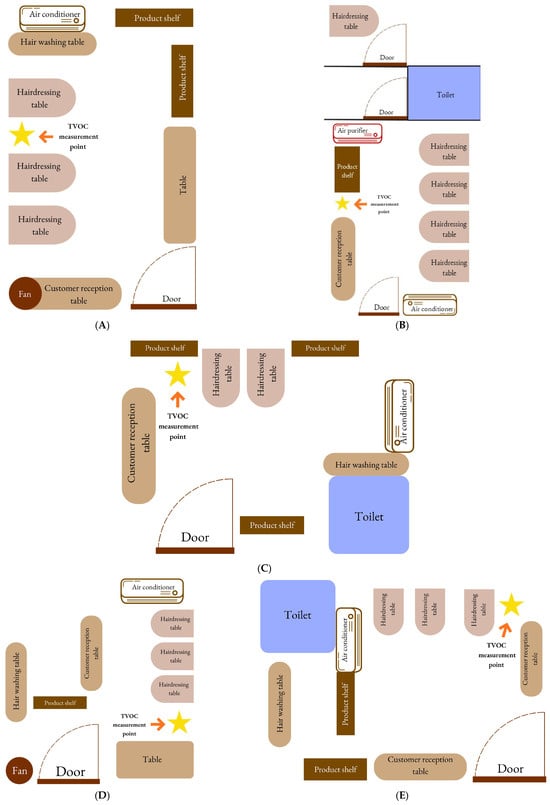
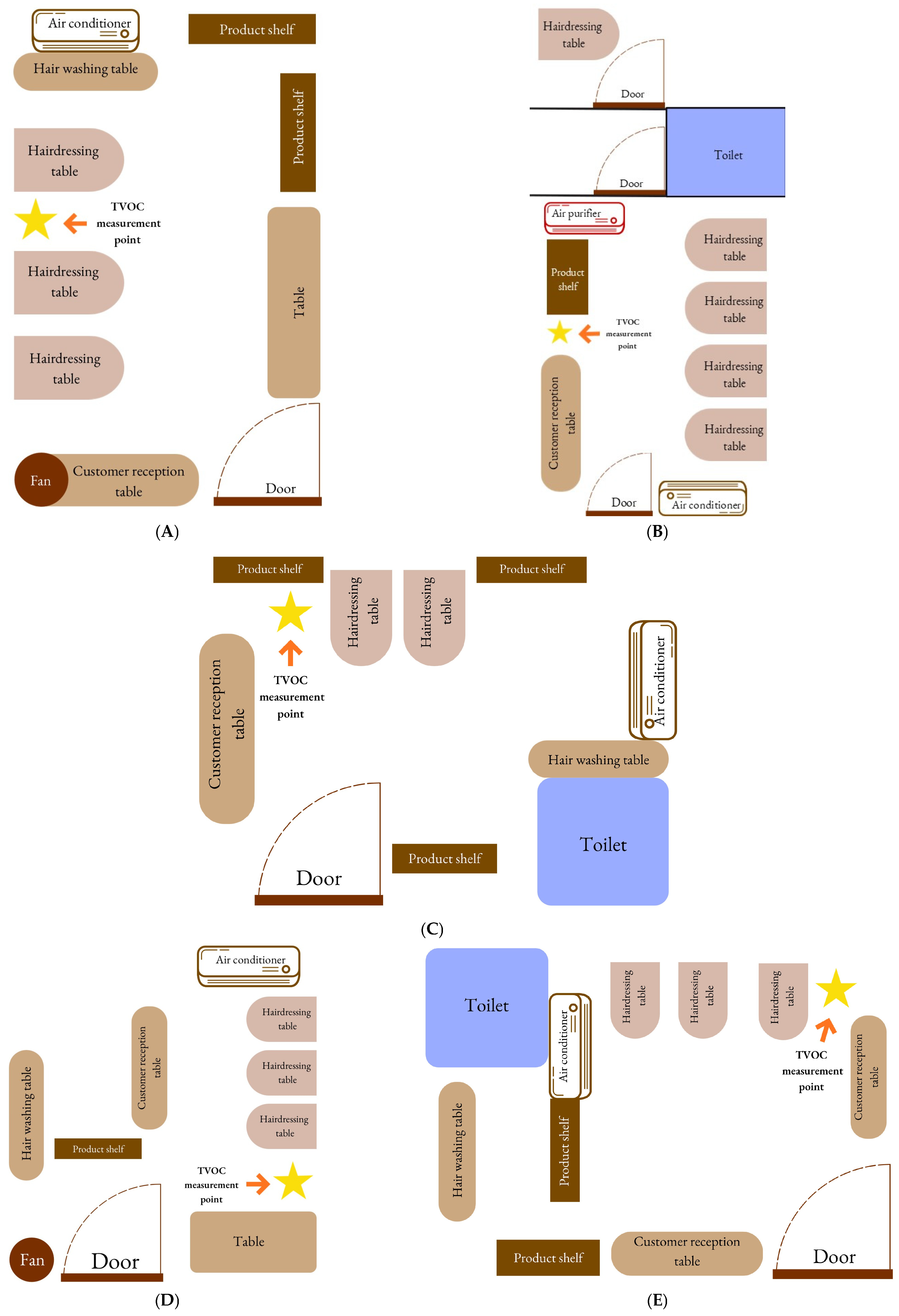
Indoor air pollution, specifically total volatile organic compounds (TVOCs), was sampled in five voluntary hair salons located in Bangkok, the capital of Thailand. The selected salons for this study were designated as Sites I, II, III, IV and V (Figure 1). Air sampling was conducted from November 2024 through January 2025. The characteristics of the studied sites are summarized in Table 1. Each hair salon differed in building type, room size, ventilation system, air exchange rate, and the number of workers and customers. Air sampling was conducted over the course of one week at each of the five sites, covering five working days from 9:00 a.m. to 5:00 p.m., as well as the weekend during the same hours. One sampling location was established in each salon. Area sampling was conducted over seven consecutive days, with the sampler positioned near the hairdresser’s workstation. Air samples were collected for 8 h per day during operating hours.
Figure 1.
Schematic layout of the hair salon used in this study. (A): site I; (B): site II; (C): site III; (D): site IV and (E): site V.
Table 1.
Indoor environmental characteristics of hair salons.
2.2. Volatile Organic Compound (VOCs) Measurement
VOCs were measured using MiniRAE instrument (equipped with a planar, dual channel PID detector (a Continuous real-time measurements were conducted using a photoionization detector (PID), Model: MiniRAE 3000+, RAE Systems, Honeywell Inc., Sunnyvale, CA, USA)). The MiniRAE is widely employed by industrial hygienists and HazMat teams to rapidly detect toxic gases, investigate leaks, and monitor air quality over a wide dynamic range. The PID was equipped with a 10.6 eV lamp and had a sampling flow rate of 0.5 L/min [24], with a resolution of 0.1 ppm in the detected range of 0–15,000 ppm [25]. VOC concentrations were recorded every 30 min over a period of seven consecutive days, from 9:00 a.m. to 5:00 p.m. [26]. Calibration of the MiniRAE 3000+ for volatile organic compound (VOC) detection requires zero gas (clean air or zero-grade air), span gas (typically isobutylene at a known concentration, e.g., 100 ppm), a gas regulator, and a calibration adapter or Tedlar bag [26]. Once these components are prepared, the MiniRAE 3000+ should be turned on by pressing and holding the power button until the display screen illuminates. Allow the unit to warm up for 5–10 min, especially if the lamp has not been used recently. Ensure that the external filter is attached to the inlet probe to prevent moisture and dust from damaging the sensor. Next, enter Calibration Mode by pressing and holding the [MODE/Power] button and the [N/-] (No) button simultaneously to access the programming mode. When prompted, enter the password, which is typically 0000 by default. Use the [Y/+] and [N/-] buttons to enter the password, and then press the middle [MODE] button to confirm. The unit will display the setup menus. Navigate to the “Calib. Menu” and press [Y/+] to select it. Then, proceed to Zero (Fresh Air) Calibration and select “Zero Calibrate.” Ensure that the instrument is located in a clean, fresh-air environment that is completely free of background VOCs. Press [Y/+] to begin the calibration process. The instrument will perform a countdown and update its internal settings. The calibration is complete when the display shows 0.0 ppm [26]. Next, perform the Span Calibration. After completing the zero calibration, press [Y/+] when the menu prompts you to perform a “Span Calibration.” The display will show the current span gas and concentration (e.g., isobutylene at 100 ppm). If necessary, adjust the gas type or concentration to match your calibration cylinder using the [Y/+] (Yes) and [N/-] (No) buttons. Connect the regulator to the span gas cylinder and attach the tubing to the probe tip of the MiniRAE 3000+ (or connect a Tedlar bag filled with the calibration gas). Open the regulator valve or release the gas from the Tedlar bag to allow the calibration gas to flow into the instrument. Press [Y/+] to start the span calibration. The instrument will detect the calibration gas and begin a countdown while updating its calibration settings. Once the process is complete, the display will indicate that the span calibration has been successfully completed and will show the calibrated gas concentration. TThen, perform a Bump Test. Leave the span gas connected for a few moments after the span calibration to conduct a quick bump test and verify that the instrument reading is close to the expected span gas concentration. After confirming the response, disconnect the span gas. The reading displayed on the screen should gradually decrease and return to approximately 0.0 ppm as the remaining gas is cleared from the sensor. Exit the calibration menu and return the instrument to the standard measurement mode. The correction factor (CF) for isobutylene on a MiniRAE 3000+ calibrated with isobutylene gas is 1.0. Therefore, the displayed concentration is equivalent to the actual isobutylene concentration, and no correction factor adjustment is required [26]. Calibration was conducted at the company’s laboratory prior to field measurements. The MiniRAE300+ is a portable Photoionization Detector (PID), it is built-in separation column or programmed injection system. For spot sampling or direct gas injection using the MiniRAE 3000+ portable handheld VOC monitor, a gas-tight syringe (Honeywell Inc., Sunnyvale, CA, USA) was used to inject 50–100 mL of the gas sample for correction factor estimation. This injection volume was sufficient to displace the ambient air and completely fill the instrument’s sampling path, thereby ensuring accurate measurements. The MiniRAE 3000+ was operated within its specified operating temperature range of −20 °C to 50 °C [26]. The air sampling instruments were set up as shown in Figure 1, and the layout of sampling points for the five hair salon sites is illustrated in Figure 1. At Site I, the salon operates without air conditioning (A), while Sites II(B), III(C), IV(D), and V(E) are air-conditioned. The site characteristics are summarized in Table 1. All sampling points were located near the emission sources and at least 1 m away from the walls. A digital thermometer was used to measure temperature and relative humidity (AS847, Smart Sensor, Neonics Ltd., Dongguan City, China P.C). The thermometer-hygrometer can display environmental parameters around the sensor using several convenient functions, including ambient temperature and relative humidity. The AS847 is a 3-in-1 instrument for measuring temperature, humidity, and thermocouple-based temperature. It has a measurement range of −10 to 50 °C (probe) and supports K-type thermocouples. The K-type thermocouple temperature measurement range is −20 to 1000 °C, with an accuracy of ±1 °C. An anemometer was used to measure air velocity (RS PRO DT-8880, CEM Ltd., Shenzhen, China). It is a professional, high-quality hot-wire thermal anemometer designed to simultaneously measure low air velocity, volumetric airflow, and air temperature. The air velocity measurement range is 0.1–25.0 m/s, with an accuracy of ±5% ±0.1 m/s and a resolution of 0.01 m/s. Both the thermometer and anemometer were calibrated in a certified calibration laboratory prior to use.
2.3. Data Analysis
VOC concentrations were calculated based on the daily average of five measurement sampling points. All data were averaged at 8-h intervals. Statistical analysis was performed using SPSS version 28. The relationship between VOCs distribution during the hair coloring process was tested using the nonparametric Mann-Whitney U Test.
2.4. Health Risk Assessment
The health risk of VOCs was evaluated based on the indoor air environment for non-carcinogenic risk, considering only the inhalation exposure pathway. The exposure concentration (ECinh) in the risk assessment was calculated using the following Equation (1) [27].
where C is concentrations of TVOCs as measured; ET is the exposure time as 8 h/day from the measured; EF is the exposure frequency as 250 days/year; ED is the exposure duration at 25 years for non-carcinogenic substances (U.S. EPA 2013); AT is the average time (for non-carcinogen AT = ED × 365 days × 24 h/day) [27].
The Risk characterization of non-carcinogenic was calculated based on the Hazard Quotient (HQ) using Equation (2) [4].
where RfC is the reference concentration of TVOC using standard in Kuwait, Malaysia, and Singapore standard indoor concentration at 3 ppm [4], a TVOC concentration below 3.0 mg/m3 (approximately 1–3 ppm, depending on the composition and molecular weight of the VOC mixture) has been suggested as an acceptable indoor air quality guideline. Hazard index (HI) means the sum of more than one hazard quotient for multiple substances, multiple exposure. pathways, or both. The Hazard Index is calculated separately for chronic, subchronic, and shorter duration exposures as the sum of the hazard quotients using Equation (3) [28,29].
HI, value less than or equal to 1 indicates that the exposure is not likely to result in adverse non-carcinogenic effects. In the case of HI, value greater than 1, however, does not necessarily suggest a likelihood of adverse health effects but still potentially caused risk [30,31].
3. Results
3.1. Site Characteristic
In the present study, the average area of the surveyed hair salons was approximately 40 × 40 m2. The number of workers per salon ranged from 2 to 4, while the number of clients served per salon ranged from 18 to 32. The average relative humidity (RH) and temperature were 46.9% and 24.53 °C, respectively. Moreover, the ventilation systems were inadequate in all selected salons. In all salons except one, the windows remained closed throughout working hours to maintain the cooling efficiency of the air-conditioning units (Table 1). The sizes of the hair salons were generally similar, with only Salon IV being slightly smaller than the others. The highest number of workers was observed at Salon II, which employed four workers. The surveyed hair salons also varied in their facilities. Some provided workspaces only, while others offered both workspaces and on-site accommodation for employees, as observed in Salons III and IV. The number of customers at each salon is presented in Table 2. Among the surveyed salons, Salon III recorded the highest number of customers during the study period.
Table 2.
The number of customers for each site.
3.2. Characteristics of VOC Levels in Selected Hair Salons
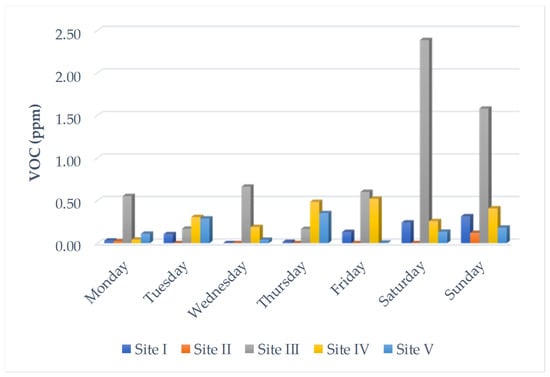
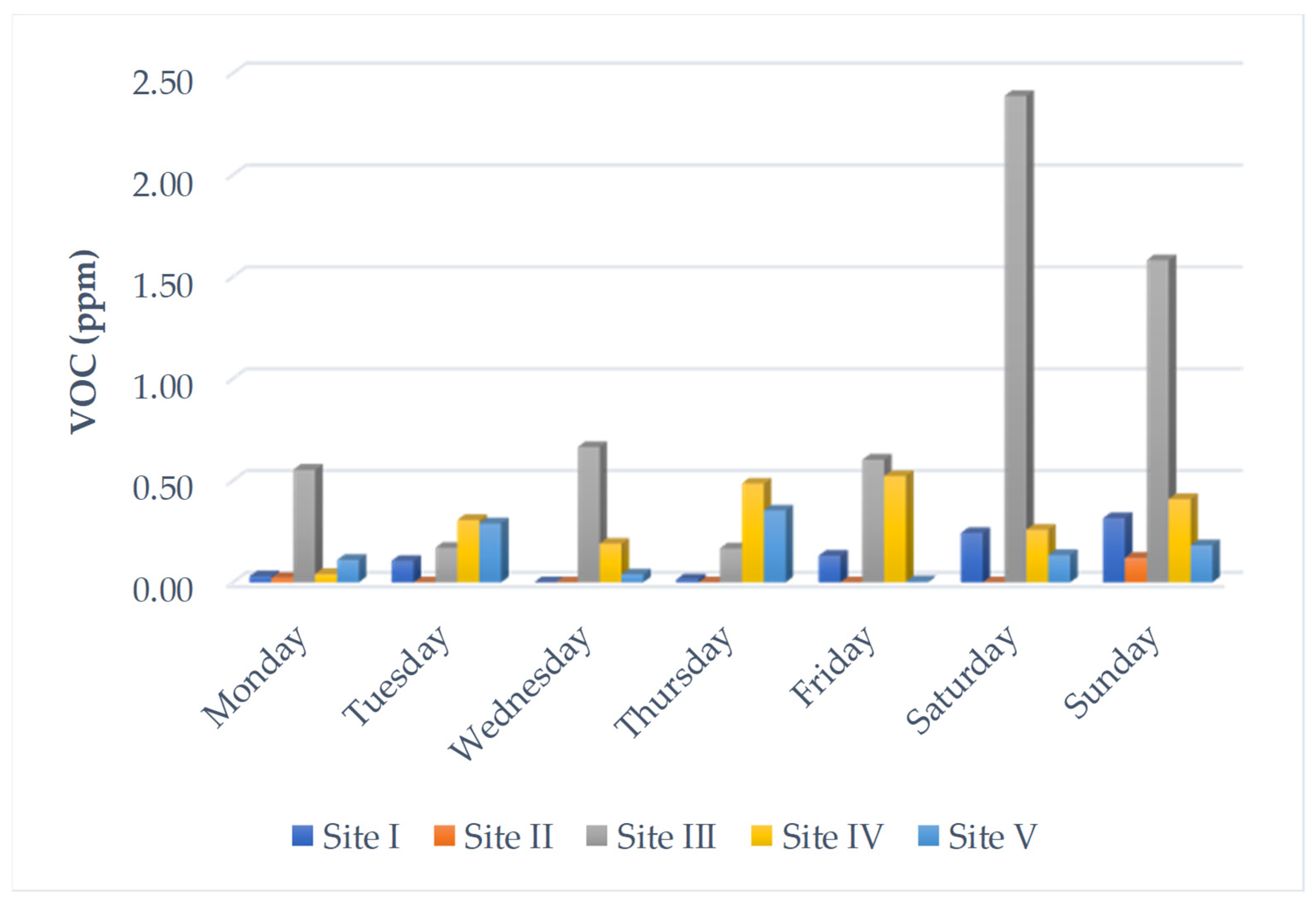
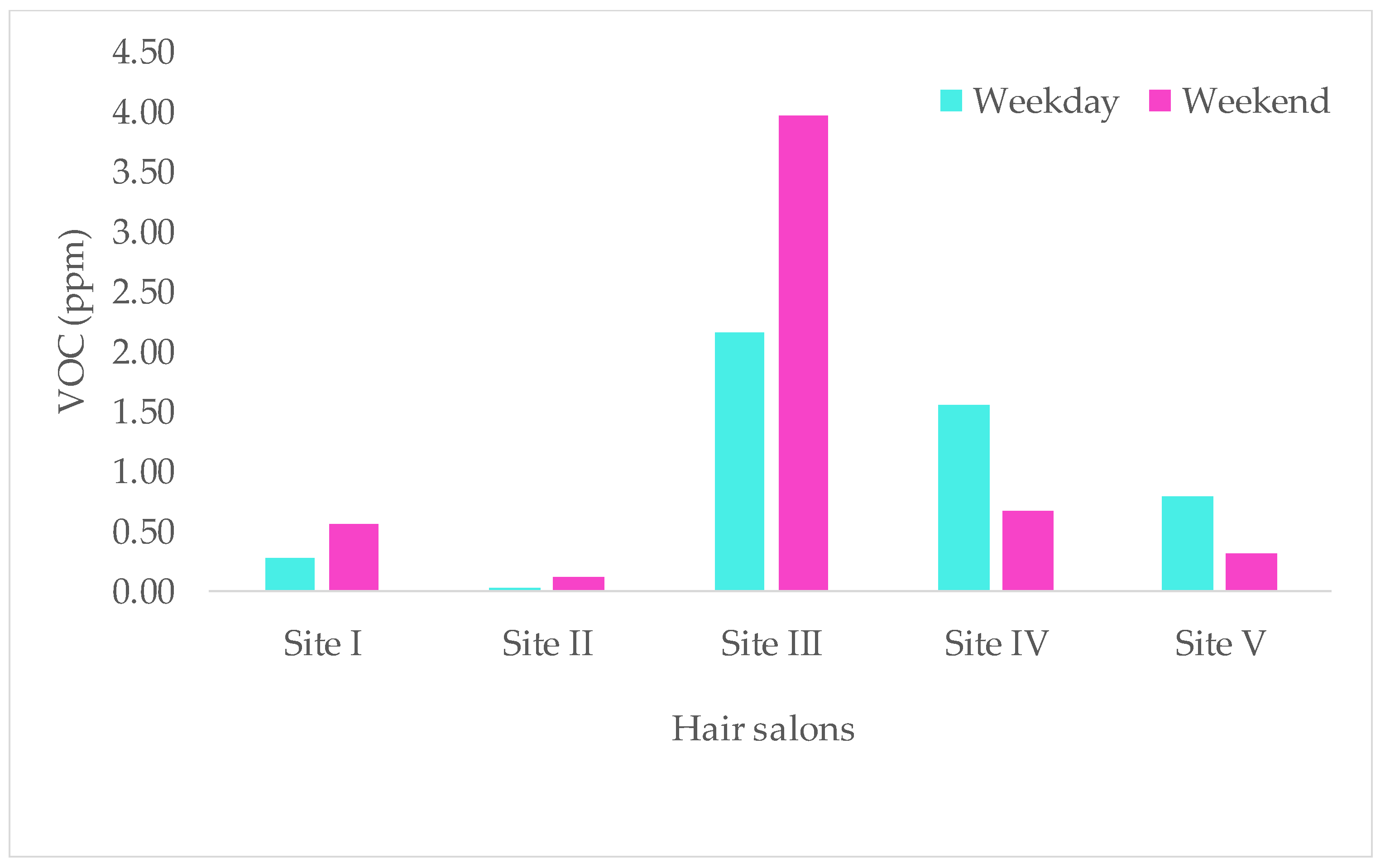
The indoor concentrations of volatile organic compounds (VOCs) were measured during working hours, and the mean values are presented in Table 3. The average VOC concentrations in Hair Salons I, II, III, IV, and V were 0.12 ± 0.18, 0.02 ± 0.05, 0.87 ± 0.57, 0.32 ± 0.36, and 0.16 ± 0.19 ppm, respectively. The average 8-h VOC concentrations measured over five consecutive working days are shown in Figure 2. Hair Salons I, III, and IV exhibited higher VOC concentrations than Hair Salons II and V. Notably, the elevated VOC concentrations observed in Hair Salons I, III, and IV (Table 3) were likely associated with higher customer volumes and the extensive use of organic solvent-containing products during hair washing, hair treatments, shampooing, conditioning, hair coloring, hairstyling, dyeing, and bleaching procedures. During periods of intensive salon activities, the average VOC concentrations were higher than those measured under normal operating conditions across all surveyed salons. At Site III, the VOC concentration was 3.97 ± 1.98 ppm on weekends, compared with 2.15 ± 0.43 ppm on weekdays, indicating substantially higher VOC levels during periods of increased salon activity. In contrast, Hair Salon II exhibited the lowest indoor VOC concentrations among the surveyed salons. Although VOC concentrations tended to be higher on weekends than on weekdays across all selected salons, the difference was not statistically significant (p = 0.108). Furthermore, VOC concentrations were evaluated at two different time periods: weekdays and weekends. In general, higher VOC concentrations were observed during weekends, which may be attributable to increased customer traffic and more frequent use of hair care and cosmetic products. The mean values were calculated and are presented in Table 4. In all salons, the mean VOC concentrations showed no statistically significant difference (p = 0.108). However, VOC concentrations were comparatively higher during weekends than on working days across all selected salons. An outlier indicating an unusually high concentration was observed at certain time points, as shown in Figure 3. During hair coloring, dyeing, bleaching, and hairstyling processes, the average VOC concentrations in Hair Salons I, II, III, IV, and V were 0.56 ± 0.28, 0.12 ± 0.16, 3.97 ± 1.98, 0.67 ± 0.33, and 0.32 ± 0.16 ppm, respectively (Table 4). These values are relatively high, as illustrated in Figure 3. This finding reflects a clear relationship between salon activities and indoor VOC levels, with hair coloring identified as the major contributing source. Overall, Hair Salon III exhibited higher VOC concentrations than the other four salons; however, the difference was not statistically significant (p = 0.108, Mann–Whitney U test). Indoor volatile pollutant levels at Hair Salon Site II were lower than those at all other sites, likely due to the use of air conditioning, fans, and air purifiers, which enhanced air circulation and helped dilute indoor pollutants, as shown in Figure 2. At Hair Salon Site I, VOC levels on Monday, Wednesday, and Thursday exhibited a similar temporal trend, as illustrated in Figure 2. Notably, VOC concentrations were lower on Wednesday, which coincided with reduced hair coloring activity. At Hair Salon Site IV, the average VOC concentration profiles from Wednesday to Friday were relatively consistent, as shown in Figure 2. However, elevated VOC levels were observed on both Wednesday and Thursday. At Hair Salon Site V, only a small amount of hair coloring involving organic solvents was performed, similar to Site IV, resulting in significantly lower VOC levels compared with Hair Salon Site III, as shown in Figure 2.
Table 3.
Mean daily concentrations of volatile organic compounds (VOCs) in selected hair salons (ppm).
Figure 2.
Comparison of mean daily concentrations of volatile organic compounds (VOCs) in selected hair salons (ppm).
Table 4.
Average of volatile organic compounds (VOC) for weekday and weekend in selected hair salons.
Figure 3.
Comparison of total concentrations of volatile organic compounds (VOCs) for weekday and weekend in selected hair salons.
3.3. Temperature and Relative Humidity
Indoor air temperature and relative humidity are important parameters for assessing occupant well-being and thermal comfort. The average indoor temperature recorded was 24.53 °C, with a range of 23.4–25.3 °C, while the average relative humidity was 60.7%, ranging from 44.4% to 72.8%. Both the average indoor air temperature and relative humidity (Table 5) were within the ASHRAE-recommended thermal comfort limits of 27 °C and 65%, respectively [32,33]. However, Site III showed that the average relative humidity frequently exceeded the recommended value during the study period. The correlation coefficient between indoor temperature and relative humidity was found to be −0.69 (p < 0.05), indicating a significant negative correlation; as temperature increased, relative humidity decreased. Hair salons or beauty salons are often strongly influenced by climate conditions, ventilation, and chemical usage. These findings are consistent with previous studies reporting gas and particulate matter concentrations in indoor classrooms of a university building [34]. Additionally, the measured indoor and outdoor wind speeds were 0.05 m/s and 0.20 m/s, respectively.
Table 5.
Mean daily of temperature and relative humidity in selected hair salons.
3.4. Health Risk Exposure of TVOC
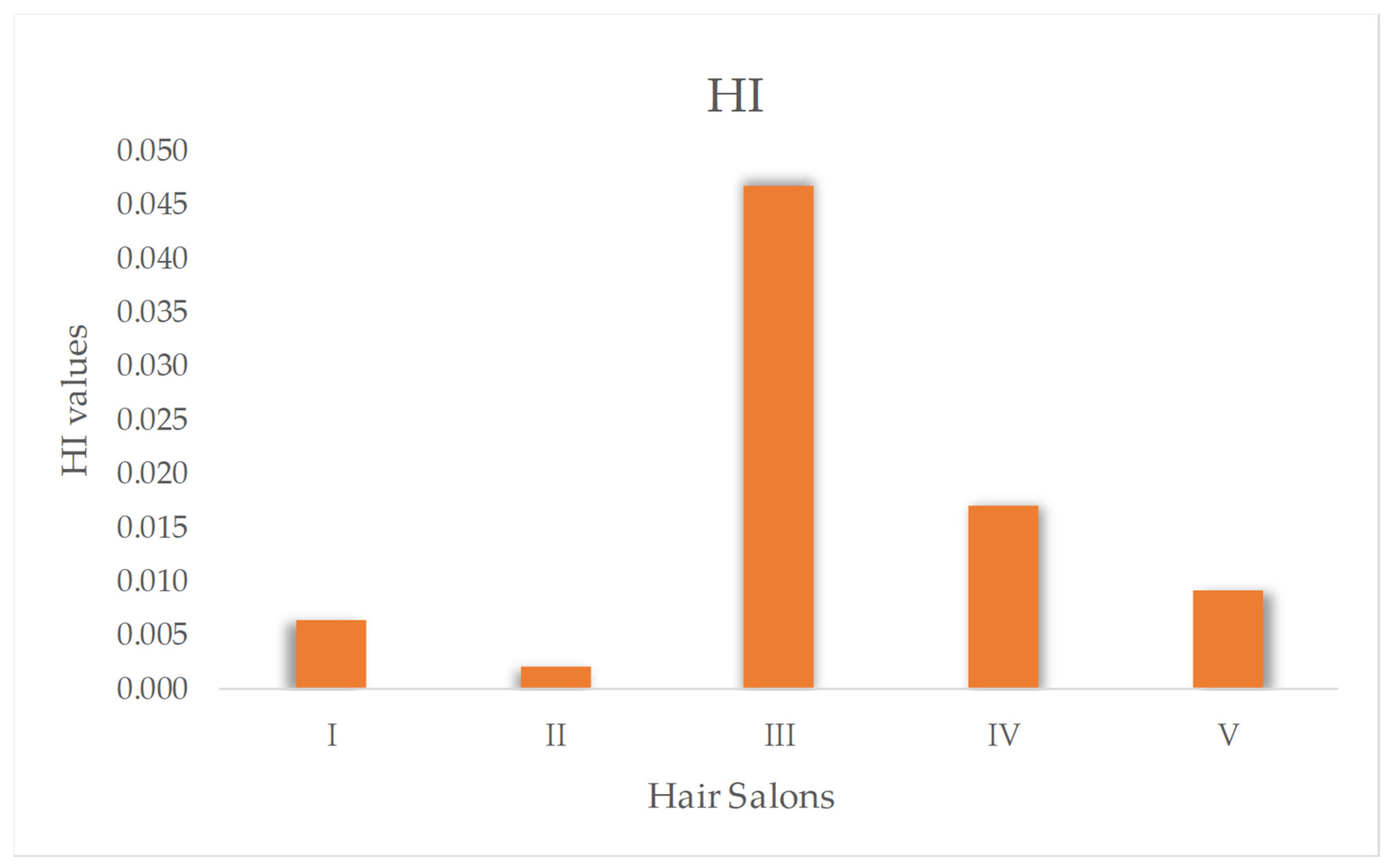
VOC exposure concentrations were calculated from the measurement data presented in Table 3. Health risk assessment was conducted using a reference concentration (RfC) of 3 ppm based on Asian standards [35]. This health risk assessment should be regarded as a preliminary screening based solely on total volatile organic compound (TVOC) concentrations. It does not represent a comprehensive health risk assessment because it does not account for the concentrations and toxicities of individual VOC species. A VOC concentration below 3.0 mg/m3 (approximately 1–3 ppm, depending on the composition and molecular weight of the VOC mixture) is considered an acceptable indoor air quality guideline. Exposure concentrations (EC) were used to estimate non-carcinogenic risk. The average EC values ranged from 0.001–0.007 for Hair Salon I, 0.001–0.003 for Hair Salon II, 0.004–0.055 for Hair Salon III, 0.001–0.012 for Hair Salon IV, and 0.001–0.008 for Hair Salon V. Among all sites, Hair Salon III showed the highest exposure levels over the 7-day monitoring period (Table 6). Non-carcinogenic risk was further evaluated using the hazard quotient (HQ) and hazard index (HI) (Figure 4). The HI is defined as the cumulative non-carcinogenic risk from VOC exposure, where values below 1 indicate no significant risk of adverse health effects, whereas values above 1 suggest potential non-carcinogenic effects [28,36,37]. In this study, HQ and HI values remained below 1 across all salons and all sampling days, indicating no significant non-carcinogenic risk. Specifically, HI values ranged from 0.002 to 0.047, confirming a negligible level of risk (Table 6 and Table 7). Although all calculated risk values were below the threshold of concern, Hair Salon III consistently exhibited higher EC, HQ, and HI values compared with the other salons, suggesting relatively greater exposure under higher activity conditions [36]. Previous studies have reported that the most common VOCs detected in beauty salons include toluene, xylene, esters, ethyl acetate, and acetone, which are widely used as solvents in various beauty products [38], as well as carbonyl compounds [1]. Among these compounds, acetone, benzaldehyde, and toluene have been reported to exhibit relatively high hazard quotient (HQ) values. In the present study, it was not possible to estimate the exposure concentration (EC), hazard quotient (HQ), and hazard index (HI) for individual VOC species because only total VOC (TVOC) concentrations were measured. Therefore, the health risk assessment presented in this study should be considered a preliminary screening-level assessment rather than a comprehensive evaluation of individual VOC-related health risks. In addition, the limited number of hair salons included in this study may have affected the representativeness of the results. Despite these limitations, the findings provide preliminary information on VOC exposure in hair salons and highlight the need for further research involving a larger number of salons and the identification of individual VOC species to enable a more comprehensive health risk assessment.
Table 6.
Exposure concentrations (EC) of selected hair salons.
Figure 4.
Comparison of Hazard Index (HI) in selected hair salons.
Table 7.
Hazard Quotient (HQ) of selected hair salons.
4. Discussion
Hair salon workers are exposed to total volatile organic compounds (TVOCs) as part of their occupational activities. These exposures arise from the chemicals and organic solvents present in various hair treatment and cosmetic products. Such substances have been associated with a range of adverse health effects, from acute irritation of the skin, eyes, and mucous membranes to more severe and potentially irreversible outcomes, including respiratory disorders and increased cancer-related risks associated with long-term exposure. Previous studies have reported that the major VOCs detected in hair salons include aromatic compounds such as toluene and xylene; esters and ketones, including ethyl acetate and acetone, which are commonly used as solvents in beauty products; and terpenes, such as pinene, limonene, camphor, and menthol, which contribute characteristic odors and may possess specific chemical and biological properties [1,35,38]. The study was conducted in five hair salons, each representing a different salon setting. Exposure monitoring was performed using a MiniRAE 3000+ photoionization detector (PID) to measure VOC concentrations generated during hair treatment procedures. Two exposure scenarios were evaluated to characterize workers’ inhalation exposure during typical salon activities. Scenario I represented hair treatment and spray procedures conducted on weekdays, whereas Scenario II represented the same procedures conducted on weekends. These scenarios were selected to capture potential differences in worker exposure associated with variations in customer volume, service frequency, and product use patterns. The highest VOC concentrations were observed during weekends, likely due to increased customer traffic and the more frequent use of hair treatment products and organic solvent-containing materials. The health risk assessment equations were applied to evaluate the toxicity of VOC exposure, and the results indicated a negligible non-carcinogenic risk. Previous studies have reported VOC concentrations in hair salons during both working hours and non-working hours. In one study, VOC measurements were conducted in four hair salons using a portable Aeroqual Series 500 monitor (Aeroqual Ltd., Auckland, New Zealand). The reported VOC concentrations ranged from 1.00 to 3.48 ppm. The relative humidity ranged from 43.43% to 56.58%, while the temperature ranged from 16.0 to 22.0 °C [39]. The VOC concentrations reported in that study were higher than those observed in the present study, indicating greater occupational exposure among the surveyed salon workers.
A study conducted in South Korea reported that VOC concentrations in hair salons were higher during working hours than before working hours. The measured VOC concentrations ranged from 0.54 to 4.10 ppm, which were higher than those observed in the present study [40]. The elevated VOC concentrations were likely attributable to the types and quantities of products used during salon activities. Previous studies have suggested that VOC levels in hair salons are influenced primarily by the nature of the products used, whereas factors such as customer area per person and ventilation play a less significant role in determining indoor VOC concentrations [1]. Moreover, other studies have reported higher indoor pollutant concentrations on weekends than on weekdays. This variation is primarily attributable to the types of treatments performed, as certain salon procedures may generate greater emissions of VOCs and other indoor pollutants [1,41]. The average weekday TVOC concentration was reported as 0.109 ppm, whereas the average weekend concentration was 0.141 ppm [36]. These findings are consistent with the results of the present study, which also demonstrated higher VOC concentrations during weekends than on weekdays. The relationship between VOC concentrations and factors such as the number of services, air conditioning, and salon area is influenced by multiple variables, including ventilation efficiency, cleaning practices, and product usage. Larger salons may accommodate ventilation systems or air purifiers that help reduce VOC concentrations, whereas poorly ventilated or highly occupied salons are likely to exhibit higher BTEX levels, increasing exposure risks for workers and customers [4,22,39]. The relationship between VOC concentrations and factors such as the number of services performed, air-conditioning use, and salon area is influenced by multiple variables, including ventilation efficiency, cleaning practices, and product usage. Larger salons may be equipped with more effective ventilation systems or air purifiers that help reduce VOC concentrations. In contrast, poorly ventilated or highly occupied salons are more likely to exhibit elevated VOC concentrations, thereby increasing exposure risks for both workers and customers [4,39]. A study of VOCs in hair salons in China reported elevated levels of potentially carcinogenic compounds, including benzene and xylene, particularly during peak customer visits, especially in areas with insufficient ventilation. This finding aligns with observations at Site III in the present study, which likely experienced inadequate ventilation. Additionally, the use of highly concentrated products may have contributed to the elevated VOC levels observed in this site [27,28]. Ventilation has a significant effect on indoor pollutant toxicity levels. Mechanical ventilation (e.g., HVAC systems with outdoor air supply) is generally more effective and faster at reducing TVOC concentrations compared to natural ventilation (e.g., opening windows) or no ventilation [42,43]. These findings provide practical guidance for salon management and occupational health professionals to reduce chemical exposure and improve worker safety. Studies of nail and beauty salons in Romania have shown that factors influencing VOC levels include the types of chemical products used, the characteristics of the service area, and the efficiency of the ventilation system. These findings are consistent with the results of the present study, which indicated that Sites I and II exhibited the lowest VOC concentrations, likely due to effective ventilation and/or the use of products with lower VOC content [44,45,46]. The findings of the present study can be used as a basis for reducing technicians’ exposure to toxic aldehydes in hair salons. This study represents a preliminary investigation of volatile organic compounds (VOCs) in hair salons and the potential health risks associated with occupational VOC exposure. At present, many studies conducted in Thai beauty salons employ low-cost sensors or PID-based devices for VOC measurements. However, careful consideration must be given to the suitability of these measurement devices when establishing standard values or conducting exposure surveillance. The analysis of specific VOCs at low concentrations should be performed using GC-FID (Gas Chromatography–Flame Ionization Detection) or GC-MS (Gas Chromatography–Mass Spectrometry), as these methods provide more accurate and reliable measurements. These analytical techniques offer sensitive detection and reliable quantification of carcinogenic VOCs at trace levels, whereas photoionization detectors (PIDs) are generally not suitable for the accurate identification and quantification of individual VOC species. However, several limitations should be acknowledged. Second, the limited number of participating salons may restrict the representativeness of the findings. Therefore, future studies should include a larger number of salons and employ analytical methods capable of identifying specific VOC compounds to enable a more comprehensive health risk assessment. Despite these limitations, the findings provide valuable baseline information on VOC exposure in hair salon environments and may contribute to the development of occupational health policies and preventive measures. To reduce VOC exposure, policies for hair salons should promote transparent disclosure of product ingredients, establish minimum indoor ventilation requirements, and encourage the use of appropriate personal protective equipment (PPE). In addition, hair salons should be recognized as occupational indoor environments requiring regular air quality management. Measures such as reducing the use of high-VOC products, improving ventilation systems, and implementing routine indoor air quality monitoring could help minimize VOC exposure and protect the health of both workers and customers.
5. Conclusions
Volatile organic compounds (VOCs) are commonly present in beauty salon products, including hair sprays, nail polishes, and various organic solvents. Exposure to these compounds has been associated with adverse health effects, such as respiratory irritation, headaches, nausea, and dizziness. In this study, the mean daily VOC concentrations measured in Hair Salons I–V were 0.12 ± 0.10, 0.02 ± 0.04, 0.875 ± 0.80, 0.316 ± 0.10, and 0.159 ± 0.10 ppm, respectively. Among the surveyed salons, Hair Salon III exhibited the highest VOC concentration. In addition, VOC concentrations were generally higher on weekends than on weekdays, which may be attributed to increased use of salon products, a greater frequency of chemical treatments, and inadequate ventilation. These findings suggest that salon activities and ventilation conditions play important roles in influencing indoor VOC concentrations. Overall, Site III exhibited a higher average VOC concentration than the other study sites. Nevertheless, the hazard quotient (HQ) and hazard index (HI) values for all salons were below 1.0 (HQ < 1 and HI < 1), indicating that the estimated exposure levels did not exceed the reference thresholds for non-carcinogenic health risks. These findings suggest that, under the current operating conditions, VOC exposure in the assessed salons is unlikely to result in significant non-carcinogenic adverse health effects among workers. However, continued monitoring and the implementation of appropriate ventilation and exposure-control measures are recommended to maintain a safe indoor working environment. This preliminary study provides baseline information on VOC concentrations in hair salons and contributes to a better understanding of indoor air quality in salon environments. The findings indicate that VOCs are present in hair salons and may pose potential health risks to workers due to prolonged occupational exposure. Although the photoionization detector (PID) used in this study has several limitations, including its inability to identify individual VOC salons and its sensitivity to environmental conditions, it remains a useful tool for screening and monitoring total volatile organic compound (TVOC) concentrations. We would like to emphasize that this study represents only a preliminary screening-level assessment based on TVOC measurements. The results of this study can serve as a foundation for future investigations, support occupational health protection for salon workers, and provide scientific evidence for the development of health standards and building regulations related to hair salon environments.
Author Contributions
All authors take public responsibility for the content of the work submitted for review. The authors confirm their contribution to the paper as follows: Conceptualization, N.F. and Y.B.; methodology, N.F. and Y.B.; software, N.F.; validation, N.F. and Y.B.; formal analysis, N.F. and Y.B.; investigation, Y.B.; data curation, Y.B.; writing—original draft preparation, Y.B.; writing—review and editing, Y.B.; writing—review and editing, Y.B. and A.I.; visualization, N.F. and Y.B. All authors have read and agreed to the published version of the manuscript.
Funding
This research received no external funding.
Data Availability Statement
The original contributions presented in this study are included in the article. Further inquiries can be directed to the corresponding author.
Acknowledgments
The authors are grateful to the local hair salons for their kindly support during the experiments. Furthermore, the authors would like to thank all of the government organization’s staff for their support during this research. The authors acknowledge the use of ChatGPT (OpenAI) for English language polishing and proofreading prior to submission. All outputs generated by the tool were carefully reviewed, verified, and substantially edited by the authors. The authors take full responsibility for the accuracy, integrity, and originality of the content presented in this publication.
Conflicts of Interest
The authors declare no conflicts of interest.
References
- Choi, Y.H.; Kim, H.J.; Sohn, J.R.; Seo, J.H. Occupational exposure to VOCs and carbonyl compounds in beauty salons and health risks associated with it in South Korea. Ecotoxicol. Environ. Saf. 2023, 256, 114873. [Google Scholar] [CrossRef] [Scilit] [PubMed]
- Chang, C.J.; Cheng, S.F.; Chang, P.T.; Tsai, S.W. Indoor air quality in hairdressing salons in Taipei. Indoor Air 2017, 28, 173–180. [Google Scholar] [CrossRef] [Scilit] [PubMed]
- Gennaro, G.D.; Gennaro, L.D.; Mazzoneb, A.; Porcelli, F.; Tutino, M. Indoor air quality in hair salons: Screening of volatile organic compounds and indicators based on health risk assessment. Atmos. Environ. 2014, 83, 119–126. [Google Scholar] [CrossRef] [Scilit]
- Mohebbi, M.; Jafari, A.J.; Gholami, M.; Baghani, A.N.; Shahsavani, A.; Kermani, M. Measurement and health risks assessment of BTEX compounds exposure in beauty Lahijan City salons. Sci. Rep. 2024, 14, 23515. [Google Scholar] [CrossRef] [Scilit] [PubMed]
- Hadei, M.; Hopke, P.K.; Shahsavani, A.; Moradi, M.; Yarahmadi, M.; Emam, B.; Rastkari, N. Indoor concentrations of VOCs in beauty salons; association with cosmetic practices and health risk assessment. J. Occup. Med. Toxicol. 2018, 13, 30. [Google Scholar] [CrossRef] [Scilit] [PubMed]
- Senthong, P.; Wittayasilp, S. Working Conditions and Health Risk Assessment in Hair Salons. Environ. Health Insights 2021, 15, 11786302211026772. [Google Scholar] [CrossRef] [Scilit] [PubMed] [PubMed Central]
- Goldin, L.J.; Ansher, L.; Berlin, A.; Cheng, J.; Kanopkin, D.; Khazan, A.; Kisivuli, M.; Lortie, M.; Peterson, E.B.; Pohl, L.; et al. Indoor air quality survey of nail salons in Boston. J. Immigr. Minor. Health 2014, 16, 508–514. [Google Scholar] [CrossRef] [Scilit] [PubMed]
- Grešner, P.; Stepnik, M.; Król, M.B.; Swiercz, R.; Smok-Pieniazek, A.; Twardowska, E.; Gromadzinska, J.; Wasowicz, W. Dysregulation of markers of oxidative stress and DNA damage among nail technicians despite low exposure to volatile organic compounds. Scand. J. Work. Environ. Health 2015, 41, 579–593. [Google Scholar] [CrossRef] [Scilit] [PubMed]
- Dalton, K.R.; Louis, L.M.; Fandiño-Del Rio, M.; Rule, A.M.; Pool, W.; Randolph, K.; Thomas, S.; Davis, M.F.; Quirós-Alcalá, L. Microbiome alterations from volatile organic compounds (VOC) exposures among workers in salons primarily serving women of color. Environ. Res. 2022, 214, 114125. [Google Scholar] [CrossRef] [Scilit] [PubMed]
- Quiros-Alcala, L.; Pollack, A.Z.; Tchangalova, N.; DeSantiago, M.; Kavi, L.K.A. Occupational exposures among hair and nail salon workers: A scoping review. Curr. Environ. Health Rep. 2019, 6, 269–285. [Google Scholar] [CrossRef] [Scilit] [PubMed]
- Ana, G.R.; Alli, A.S.; Uhiara, D.C.; Shendell, D.G. Indoor air quality and reported health symptoms among hair dressers in salons in Ibadan, Nigeria. J. Chem. Health Saf. 2019, 26, 23–30. [Google Scholar] [CrossRef] [Scilit]
- Kaikiti, C.; Stylianou, M.; Agapiou, A. TD-GC/MS analysis of indoor air pollutants (VOCs, PM) in hair salons. Chemophere 2022, 294, 133691. [Google Scholar] [CrossRef] [Scilit] [PubMed]
- Lamplugh, A.; Harries, M.; Nguyen, A.; Montoya, L.D. VOC emissions from nail salon products and their effective removal using affordable adsorbents and synthetic jets. Build. Environ. 2020, 168, 106499. [Google Scholar] [CrossRef] [Scilit]
- Moradi, M.; Hopke, P.; Hadei, M.; Eslami, A.; Rastkari, N.; Naghdali, Z.; Kermani, M.; Emam, B.; Farhadi, M.; Shahsavani, A. Exposure to BTEX in beauty salons: Biomonitoring, urinary excretion, clinical symptoms, and health risk assessments. Environ. Monit. Assess. 2019, 191, 10. [Google Scholar] [CrossRef] [Scilit] [PubMed]
- Smith, P.A.; Lepage, C.J.; Harrer, K.L.; Brochu, P.J. Hand-held photoionization instruments for quantitative detection of sarin vapor and for rapid qualitative screening of contaminated objects. J. Occup. Environ. Hyg. 2007, 4, 729–738. [Google Scholar] [CrossRef] [Scilit] [PubMed]
- Martínez-Hipatl, C.; Muñoz-Aguirre, S.; Beltrán-Pérez, G.; Castillo-Mixcóatl, J.; Rivera-De la Rosa, J. Detection of volatile organic compounds by an interferometric sensor. Sens. Actuators B Chem. 2010, 147, 37–42. [Google Scholar] [CrossRef] [Scilit]
- Patel, S.V.; Mlsna, T.E.; Fruhberger, B.; Klaassen, E.; Cemalovic, S.; Baselt, D.R. Chemicapacitive microsensors for volatile organic compound detection. Sens. Actuators B Chem. 2003, 96, 541–553. [Google Scholar] [CrossRef] [Scilit]
- Lerchner, J.; Caspary, D.; Wolf, G. Calorimetric detection of volatile organic compounds. Sens. Actuators B Chem. 2000, 70, 57–66. [Google Scholar] [CrossRef] [Scilit]
- Tomar, S.; Tiwari, R.R.; Verma, G. Occupational respiratory morbidity among hair and beauty salon workers in Udupi taluk, Karnataka, India. Am. J. Ind. Med. 2020, 63, 902–906. [Google Scholar] [CrossRef] [Scilit] [PubMed]
- Ebrahimi, V.; Yarahmadi, R.; Salehi, M.; Ashtarinezhad, A. Exposure assessment to BTEX in the air of nail salons in Tehran city, Iran. Heliyon 2023, 9, e18195. [Google Scholar] [CrossRef] [Scilit] [PubMed]
- Pavilonis, B.; Roelofs, C.; Blair, C. Assessing indoor air quality in New York City nail salons. J. Occup. Environ. Hyg. 2018, 15, 422–429. [Google Scholar] [CrossRef] [Scilit] [PubMed]
- Baghani, A.N.; Rostami, R.; Arfaeinia, H.; Hazrati, S.; Fazlzadeh, M.; Delikhoon, M. BTEX in indoor air of beauty salons: Risk assessment, levels and factors influencing their concentrations. Ecotoxicol. Environ. Saf. 2018, 159, 102–108. [Google Scholar] [CrossRef] [Scilit] [PubMed]
- Ebrahemzadih, M.; Sadeghi, S.; Mozaffari, P.; Salehzadeh, H.; Salehzadeh, H. The concentration of volatile organic compounds (VOCs) and related factors in the air in barbershops in Sanandaj in 2016. J. Adv. Environ. Health Res. 2018, 6, 67–72. [Google Scholar] [CrossRef] [Scilit]
- Hori, H.; Ishimatsu, S.; Fueta, Y.; Hinoue, M.; Ishidao, T. Comparison of sensor characteristics of three real-time monitors for organic vapors. J. Occup. Health 2015, 57, 13–19. [Google Scholar] [CrossRef] [Scilit] [PubMed]
- Jia, C.; Cao, K.; Valaulikar, R.; Fu, X.; Sorin, A.B. Variability of total volatile organic compounds (TVOC) in the indoor air of retail stores. Int. J. Environ. Res. Public Health 2019, 16, 4622. [Google Scholar] [CrossRef] [Scilit] [PubMed]
- RAE System. Handheld PID Monitors User’s Guide. 2025. Available online: https://automation.honeywell.com/us/en/products/sensing-solutions/gas-and-flame-detection/portables/photoionization-detectors-pid/minirae-3000-portable-handheld-voc-monitor (accessed on 10 September 2025).
- Fang, L.; Norris, C.; Johnson, K.; Cui, X.; Sun, J.; Teng, Y.; Tian, E.; Xu, W.; Li, Z.; Mo, J.; et al. Toxic volatile organic compounds in 20 homes in Shanghai: Concentrations, inhalation health risks, and the impacts of household air cleaning. Build. Environ. 2019, 157, 309–318. [Google Scholar] [CrossRef] [Scilit]
- Ricklund, N.; Bryngelsson, I.; Hagberg, J. Occupational Exposure to Volatile Organic Compounds (VOCs), Including Aldehydes for Swedish Hairdressers. Ann. Work. Expo. Health 2022, 67, 366–378. [Google Scholar] [CrossRef] [Scilit] [PubMed]
- U.S. EPA. Integrated Risk Information System. 2025. Available online: https://www.epa.gov/iris (accessed on 10 September 2025).
- U.S. EPA. Introduction to Indoor Air Quality. 2018. Available online: https://www.epa.gov/indoor-air-quality-iaq/introduction-indoor-air-quality (accessed on 1 October 2025).
- OEHHA. Chemicals. 2025. Available online: https://oehha.ca.gov/chemicals858 (accessed on 10 January 2026).
- ASHRAE Standard 62.1-2016; Ventilation for Acceptable Indoor Air Quality. American Society of Heating, Refrigerating and Air-Conditioning Engineers, Inc.: Atlanta, GA, USA, 2010.
- ASHRAE Standard 55-2013; Thermal Environmental Conditions for Human Occupancy. The American Society of Heating, Refrigerating and Air Conditioning Engineers (ASHRAE): Atlanta, GA, USA, 2007.
- Argunhan, Z.; Avci, S. Statistical Evaluation of indoor air quality parameters in classrooms of a University. Adv. Meteorol. 2018, 2018, 4391579. [Google Scholar] [CrossRef] [Scilit]
- Abdul-Wahab, S.A.A.; En, S.C.F.; Elkamel, A.; Ahmadi, L.; Yetilmezsoy, K. A review of standards and guidelines set by international bodies for the parameters of indoor air quality. Atmos. Pollut. Res. 2015, 6, 751–767. [Google Scholar] [CrossRef] [Scilit]
- Gaur, M.; Bhandari, K.; Shukla, A. Monitoring of total volatile organic compounds and particulate matter in an indoor environment. Curr. Sci. 2018, 115, 1787–1792. [Google Scholar] [CrossRef] [Scilit]
- An, T.; Huang, Y.; Li, G.; He, Z.; Chen, J.; Zhang, C. Pollution profiles and health risk assessment of VOCs emitted during e-waste dismantling processes associated with different dismantling methods. Environ. Int. 2014, 73, 186–194. [Google Scholar] [CrossRef] [Scilit] [PubMed]
- Tsigonia, A.; Lagoudi, A.; Chandrinou, S.; Linos, A.; Evlogias, N.; Alexopoulos, E.C. Indoor air in beauty salons and occupational health exposure of cosmetologists to chemical substances. Environ. Sci. Technol. 2010, 7, 314–324. [Google Scholar] [CrossRef] [Scilit] [PubMed]
- Saleem, I.; Ali, Z.; Hussain, A. Assessment of Indoor Air Pollutants Exposure in Hair Salons of Lahore. CMUJ. Nat. Sci. 2022, 21, e2022065. [Google Scholar] [CrossRef] [Scilit]
- Acharya, S.R.; Moon, D.H.; Shin, Y.C. Assessment of VOCs, PM10, and formaldehyde exposure in the hair salons of South Korea. J. Environ. Health Sustain. Dev. 2020, 5, 1103–1108. [Google Scholar] [CrossRef] [Scilit]
- Blessy, A.; Paul, J.J.; Gautam, S.; Shany, V.J.; Sreenath, M. IoT-Based air quality monitoring in hair salons: Screening of hazardous air pollutants based on personal exposure and health risk assessment. Water Air Soil Pollut. 2023, 234, 336. [Google Scholar] [CrossRef] [Scilit]
- Sangin, P.; Naoki, K.; Wataru, U.; Naohide, S.; Hoon, K. Influence of mechanical ventilation systems on indoor VOC concentrations in residential buildings. J. Asian Archit. Build. Eng. 2026, 25, 1424–1444. [Google Scholar] [CrossRef] [Scilit]
- Yang, Y.; Wang, Z.; Li, X.; Zhao, D.; Yu, Z.; Tian, K.; Lyu, W.; Zuo, J.; Xu, Z. Assessing health risks from cooking oil fume leaks in residential cooking exhaust shaft system. Int. J. Vent. 2024, 23, 287–308. [Google Scholar] [CrossRef] [Scilit]
- David, E.; Niculescu, V.-C. Volatile organic compounds (VOCs) as environmental pollutants: Occurrence and mitigation using nanomaterials. Int. J. Environ. Res. Public Health 2021, 18, 13147. [Google Scholar] [CrossRef] [Scilit] [PubMed]
- Ojrati, A.; Qasemi, M.; Zarei, A.; Afsharnia, M.; Zarei, A. Beauty salon technicians’ exposure to formaldehyde, benzene and acetaldehyde in Gonabad City. Sci. Rep. 2025, 15, 40699. [Google Scholar] [CrossRef] [Scilit] [PubMed]
- Milich, L.J.; Shendell, D.G.; Graber, J.M. Safety and health risk perceptions: A cross-sectional study of New Jersey hair and nail salon clients. J. Chem. Health Saf. 2017, 24, 7–14. [Google Scholar] [CrossRef] [Scilit]

Disclaimer/Publisher’s Note: The statements, opinions and data contained in all publications are solely those of the individual author(s) and contributor(s) and not of MDPI and/or the editor(s). MDPI and/or the editor(s) disclaim responsibility for any injury to people or property resulting from any ideas, methods, instructions or products referred to in the content. |
© 2026 by the authors. Licensee MDPI, Basel, Switzerland. This article is an open access article distributed under the terms and conditions of the Creative Commons Attribution (CC BY) license.