


Abstract
Circadian rhythms impose temporal organization on immune function, shaping host responses to infection, injury, and chronic disease. While transcriptional control by core clock components such as CLOCK and BMAL1 has been extensively characterized, this paradigm alone cannot explain the rapid and dynamic nature of immune signaling. Emerging evidence identifies post-translational modifications (PTMs)—including phosphorylation, ubiquitination, and acetylation—as critical regulators that confer speed, reversibility, and specificity to inflammatory pathways. Here, we propose the concept of a “Chrono-PTM axis,” in which circadian timing and PTM-dependent signaling are functionally integrated to govern immune activation thresholds. We discuss how PTMs not only regulate core clock machinery but also temporally gate key innate immune pathways, including NF-κB signaling and inflammasome activation, thereby controlling cytokine production at multiple levels. Furthermore, we highlight the role of immunometabolism in supplying essential cofactors that couple cellular energetic states to PTM dynamics, linking metabolic oscillations to inflammatory outputs. Disruption of this axis contributes to the pathogenesis of autoimmune diseases, cancer, and tissue-specific inflammatory disorders. Finally, we outline emerging therapeutic opportunities targeting the Chrono-PTM axis, including chronotherapy and PTM-directed interventions, and identify critical gaps in temporal proteomics and translational studies. Elucidating the integration of circadian and post-translational regulation will provide a unifying framework for understanding immune homeostasis and may enable time-informed precision immunotherapy.
1. Introduction
Circadian rhythms are fundamental regulators of mammalian physiology, coordinating cellular and systemic functions with predictable environmental cycles [1]. In the immune system, this temporal organization is especially evident: leukocyte trafficking, cytokine secretion, antigen presentation, and inflammatory responsiveness all exhibit strong time-of-day variation. Such rhythmicity is not merely correlative but functionally significant, shaping host defense efficiency, inflammatory tone, and susceptibility to disease across diurnal cycles [2,3,4].
Over the past two decades, the molecular architecture of the circadian clock has been largely defined through transcriptional feedback loops centered on the core clock machinery, including CLOCK and BMAL1, which drive rhythmic expression of downstream target genes [5,6,7,8]. This transcription-centric framework has provided profound insight into how temporal information is encoded at the genomic level and propagated across tissues, including immune compartments [9]. However, a growing body of evidence suggests that transcriptional regulation alone is insufficient to explain the speed, precision, and reversibility required for immune signaling dynamics [10,11].
Immune responses operate on multiple temporal scales. While transcriptional programs govern sustained changes in cellular identity and inflammatory state, acute immune activation often occurs within minutes of pathogen recognition or tissue injury [12,13]. Processes such as inflammasome assembly and NF-κB activation demand rapid molecular switching that transcriptional regulation alone cannot provide [14,15,16]. Post-translational modifications (PTMs) provide a mechanistic solution, acting as dynamic regulatory switches that translate environmental cues into context-specific immune responses on a timescale compatible with acute inflammation [17,18].
Recent studies further suggest that the circadian system itself is deeply embedded within PTM-based regulation. Core clock proteins are extensively modified post-translationally, with phosphorylation controlling PERIOD (PER) and CRYPTOCHROME (CRY) stability and degradation kinetics, thereby shaping circadian period and amplitude [19]. Ubiquitin-mediated proteolysis determines the timing of clock protein turnover, while acetylation and deacetylation cycles mediated by enzymes such as sirtuins modulate CLOCK and BMAL1 transcriptional activity [20,21,22]. These findings collectively indicate that the circadian clock is not purely a transcriptional oscillator but a multi-layered biochemical system strongly influenced by PTM kinetics. An additional and increasingly recognized layer of regulation emerges from immunometabolism. Metabolic intermediates serve not only as energy sources but also as critical substrates and cofactors for PTM enzymes. Acetyl-CoA availability directly regulates protein acetylation, NAD+ levels control sirtuin-dependent deacetylation, and ATP abundance governs phosphorylation dynamics. Because immune cell metabolism is itself highly dynamic—particularly during macrophage polarization and inflammatory activation—metabolic flux imposes temporal constraints on PTM availability and activity [23,24]. This establishes a direct mechanistic bridge between cellular metabolic state, circadian timing, and immune signaling thresholds (Figure 1). Despite these advances, a unified framework that integrates circadian timing, PTM dynamics, and immune signaling networks remains lacking. In particular, how post-translational mechanisms gate the timing, amplitude, and duration of innate immune activation has not been systematically defined. This represents a critical barrier to understanding not only physiological immune rhythmicity but also the breakdown of temporal regulation observed in chronic inflammatory and autoimmune diseases.
Figure 1.
Conceptual framework for the proposed Chrono-PTM axis. Circadian clock mechanisms influence both immunometabolic state and post-translational modification (PTM) networks. These interconnected systems collectively regulate inflammatory signaling pathways and immune responses. The Chrono-PTM axis is proposed as a conceptual framework through which temporal information may be translated into dynamic inflammatory outputs, thereby contributing to immune homeostasis or, when disrupted, chronic inflammatory disease.
This Chrono-PTM axis integrates clock-driven temporal cues, PTM-based signaling control, and metabolic regulation to define when and how immune responses are activated. As summarized in Figure 2, circadian clock proteins are extensively regulated through phosphorylation, ubiquitination, acetylation, and other PTMs that collectively determine clock protein stability, localization, and transcriptional activity. Importantly, the proposed model is not intended to represent a new signaling pathway or a single molecular mechanism. Rather, it is proposed as an integrative conceptual framework that brings together three established fields—circadian biology, post-translational regulation, and immunometabolism—to explain how temporal information may be translated into dynamic immune signaling outputs. While individual components of this framework are supported by substantial experimental evidence, the complete integrated model remains a developing area of investigation requiring further mechanistic validation. By shifting the focus from transcriptional oscillations to dynamic protein-level regulation, the axis provides a unifying perspective for understanding immune timing in both health and disease.
Figure 2.
The Chrono-PTM axis integrates circadian timing with innate immune signaling. In macrophages, a CLOCK–BMAL1-driven transcription–translation feedback loop within the nucleus is refined by a PTM HUB—comprising phosphorylation of PER, ubiquitination of CRY and REV-ERB, and acetylation of BMAL1—that governs oscillator precision and output. PTM modules in the cytoplasm further gate key inflammatory pathways, including NF-κB signaling (via rhythmic IκB turnover and p65 modification), NLRP3 inflammasome activation (through priming, deubiquitination, and caspase-1 activation), and cytokine maturation and secretion (for example, IL-1β processing and release). Disruption of this axis abolishes temporal gating and drives persistent inflammation, as observed in autoimmunity, cancer-associated macrophage reprogramming, and tissue-specific inflammatory disorders. Targeting this axis through chronotherapy and pharmacological modulation of PTM enzymes or inflammasome activity offers a strategy to restore temporal control and constrain pathological immune responses.
2. The Circadian Clock as a PTM-Regulated System
2.1. Core Clock Architecture: A Feedback System Tuned Beyond Transcription
The mammalian circadian clock is classically described as a transcription–translation feedback loop (TTFL) centered on the transcription factors CLOCK and BMAL1, which heterodimerize to drive rhythmic expression of core clock-controlled genes, including Period (PER1–3) and Cryptochrome (CRY1–2). Accumulating PER and CRY proteins subsequently translocate to the nucleus to inhibit CLOCK–BMAL1 activity, thereby closing the feedback loop and generating ~24-h oscillations [5,25]. However, this transcriptional model represents only the macroscopic output of a deeper regulatory layer. The precision, robustness, and temperature compensation of circadian rhythms cannot be fully explained by transcriptional delays alone [26,27]. Instead, the clock is fundamentally governed by post-translational mechanisms that determine protein stability, subcellular localization, complex assembly, and degradation kinetics. In this sense, the circadian oscillator is best conceptualized as a PTM-tuned biochemical timing circuit, in which temporal information is encoded in protein modification states rather than gene expression alone [20,28].
2.2. PTMs as Determinants of Clock Kinetics and Phase Control
Post-translational modifications constitute the core timing “engines” of the circadian system, governing the speed and phase of oscillations by controlling clock protein fate in real time.
Phosphorylation is the most extensively characterized regulatory layer. PER proteins undergo sequential phosphorylation by kinases such as casein kinase 1 (CK1), which dictates their cytoplasmic retention, nuclear entry, and eventual degradation [29]. Importantly, the rate of PER phosphorylation functions as a molecular “speed dial” for circadian period length—alterations in phosphorylation kinetics directly translate into circadian phase shifts and sleep–wake cycle disorders [30]. Similarly, phosphorylation of CRY proteins modulates their stability and interaction with ubiquitin ligases, thereby tuning the duration of transcriptional repression [31]. Ubiquitination introduces an additional layer of temporal precision by marking clock proteins for proteasomal degradation. The timing of PER and CRY turnover is tightly regulated by E3 ubiquitin ligases such as β-TrCP and FBXL3, which determine when repression is lifted and a new transcriptional cycle can begin. This regulated proteolysis ensures that circadian oscillations are not only rhythmic but also sharply phased and function as an autonomous oscillator [31,32]. Acetylation and deacetylation further refine clock amplitude and transcriptional output. CLOCK itself possesses intrinsic histone acetyltransferase activity, enabling chromatin remodeling at circadian promoters, while BMAL1 acetylation modulates its transcriptional potency. Counterbalancing this, the NAD+-dependent deacetylase SIRT1 couples cellular metabolic state to clock dynamics by deacetylating BMAL1 and histone substrates, thereby adjusting transcriptional amplitude in response to energy availability [21,33,34].
Ultimately, circadian precision arises from the coordinated layering of phosphorylation-dependent delays and metabolically gated acetylation states. This PTM-centered architecture provides a direct mechanistic bridge to the immune system, as both frameworks utilize shared biochemical machinery to encode and execute temporal information.
2.3. Immunometabolism as an Upstream Determinant of Clock-Linked PTM Flux
A critical yet underappreciated dimension of circadian regulation is the metabolic control of PTM enzyme activity. Immune cells, particularly macrophages and dendritic cells, exhibit dynamic metabolic rewiring across activation states, shifting between glycolysis, oxidative phosphorylation, and lipid metabolism [24,35,36]. These metabolic transitions directly regulate the availability of PTM substrates and cofactors, thereby embedding metabolic time into circadian signaling.
Key metabolic intermediates serve as obligate regulators of PTM systems: Acetyl-CoA availability directly governs global and site-specific protein acetylation, linking nutrient status to CLOCK/BMAL1 chromatin activity [37]. NAD+ levels oscillate in a circadian manner and regulate sirtuin activity, particularly SIRT1, thereby coupling redox state to deacetylation dynamics and clock amplitude control [21]. ATP abundance controls kinase-driven phosphorylation cascades, integrating energetic status with PER/CRY modification rates [38].
In parallel, immune activation states reshape mitochondrial function and reactive oxygen species (ROS) production, further influencing kinase signaling and redox-sensitive PTMs [39]. During pro-inflammatory polarization, metabolic reprogramming toward aerobic glycolysis enhances rapid ATP turnover and biosynthetic flux, creating conditions that favor accelerated PTM cycling and heightened signaling responsiveness [40,41].
An unresolved question in circadian immunometabolism is the relative contribution of cell-autonomous metabolic clocks versus systemic rhythmic cues [42]. Immune cells possess intrinsic circadian programs capable of regulating glycolysis, mitochondrial respiration, and metabolite utilization; however, these processes are also strongly influenced by external factors including feeding–fasting cycles, glucocorticoid secretion, sympathetic signaling, and circulating metabolite availability. Rather than functioning independently, these mechanisms likely operate cooperatively to synchronize immune metabolism across tissues [43,44].
This interaction is particularly evident during inflammatory activation. Activated macrophages undergo metabolic reprogramming toward aerobic glycolysis, a phenomenon analogous to the Warburg effect. Increased glycolytic flux promotes accumulation of metabolites that influence PTM availability, including acetyl-CoA and lactate. Elevated acetyl-CoA supports protein and histone acetylation, whereas lactate serves as a substrate for protein lactylation, an emerging PTM implicated in inflammatory gene regulation and macrophage functional transitions [45,46,47,48]. Through these mechanisms, metabolic oscillations are translated into dynamic PTM landscapes that directly shape immune signaling outputs.
This metabolic–PTM coupling suggests a hierarchical regulatory principle: circadian metabolism constrains PTM enzyme activity, which in turn defines clock protein dynamics and downstream immune timing. Thus, immune cells do not simply “follow” circadian cues; they actively generate PTM-dependent timing information through their metabolic state.
3. Chrono-PTM Control of Innate Immune Signaling Networks
Figure 3 illustrates the proposed Chrono-PTM framework linking circadian regulation, PTM-dependent signaling, and inflammatory outputs through key pathways including NF-κB activation, inflammasome assembly, and cytokine production. Innate immune responses must be rapidly mobilized yet tightly controlled to prevent excessive tissue damage. While circadian transcriptional programs establish a temporal framework for immune readiness, they are insufficient to account for the speed, reversibility, and signal specificity required during acute inflammatory responses [49,50,51]. Post-translational modifications (PTMs) bridge this gap by acting as dynamic molecular switches that integrate circadian timing with intracellular signaling cascades [52,53]. This section highlights how PTMs impose temporal control over key inflammatory pathways, thereby defining when and how immune responses are executed.
Figure 3.
Pathophysiological breakdown and therapeutic restoration of the Chrono-PTM axis. Disruption of the Chrono-PTM axis converts rhythmic immune gating into persistent pathological signaling. Loss of temporal control abolishes immune oscillations and drives sustained inflammation across disease contexts: in autoimmune disorders such as rheumatoid arthritis (RA) and systemic lupus erythematosus (SLE), constitutive NF-κB activation sustains pro-inflammatory signaling; in the tumor microenvironment, tumor-associated macrophages undergo PTM-driven reprogramming into a desynchronized, immunosuppressive state that promotes immune evasion; and in tissue-specific settings, local breakdown of temporal regulation leads to chronic pathology, including persistent microglial activation in the central nervous system and dysregulated barrier inflammation in the gut and lung. Mechanistically, this transition is marked by an expanded inflammasome footprint and loss of rhythmic phosphorylation and ubiquitination cycles that normally constrain signaling duration and resolution. Therapeutic strategies aim to restore temporal control by retuning immune timing, including chronotherapy to align drug delivery with circadian phases of maximal pathway susceptibility, pharmacological targeting of PTM enzymes (such as kinases, histone deacetylases, and ubiquitin system components) to reprogram signaling kinetics, and inhibition of the NLRP3 inflammasome to limit IL-1β maturation and close the pathological activation window.
3.1. NF-κB Signaling: A Prototype Chrono-PTM-Regulated Pathway
The NF-κB pathway represents a canonical example of how PTMs intersect with circadian regulation to control inflammatory signaling [54]. Activation of NF-κB is governed by a series of tightly orchestrated PTMs, including phosphorylation, ubiquitination, and acetylation, which regulate its nuclear translocation, DNA binding, and transcriptional activity [55,56]. An important feature of NF-κB signaling is its oscillatory behavior, which is largely governed by the negative feedback regulator IκBα. Upon inflammatory stimulation, phosphorylation and ubiquitin-mediated degradation of IκBα permit NF-κB nuclear translocation. Subsequent NF-κB-dependent transcription of IκBα restores cytoplasmic sequestration of NF-κB, generating repeated cycles of activation and repression [57]. Emerging evidence suggests that circadian clock components influence both NF-κB activity and the kinetics of IκBα turnover, thereby modulating the amplitude and timing of inflammatory oscillations [58,59]. Consequently, circadian regulation may shape not only the magnitude of NF-κB signaling but also the temporal structure of NF-κB activity, providing an additional layer of Chrono-PTM control over inflammatory gene expression.
Circadian components directly interface with this pathway. CLOCK has been shown to modulate NF-κB activity through acetylation of the RelA/p65 subunit, enhancing its transcriptional potential, while BMAL1 can exert inhibitory effects on inflammatory gene expression [18,58]. These interactions introduce a temporal layer to NF-κB signaling, resulting in time-of-day-dependent variation in cytokine production [50]. Acetylation further modulates NF-κB transcriptional output, linking metabolic state to inflammatory gene expression [18,58,60]. Together, these PTMs function as temporal rheostats, calibrating NF-κB signaling intensity in a circadian manner.
This Chrono-PTM regulation ensures that inflammatory responses are optimally aligned with environmental challenges, but also implies that disruption of PTM timing may lead to aberrant or sustained NF-κB activation, contributing to chronic inflammatory diseases.
3.2. Inflammasome Regulation: Circadian Gating of Danger Sensing
Inflammasomes, particularly the NLRP3 inflammasome, function as central hubs for sensing cellular stress and danger signals, driving the maturation of pro-inflammatory cytokines such as IL-1β and IL-18 [61]. In contrast to purely transcriptional inflammatory pathways, NLRP3 activation is critically governed by post-translational modifications (PTMs), which dynamically regulate both its priming and activation states [62,63].
This “temporal licensing” is managed by core clock components: REV-ERBα represses NLRP3 transcription, while BMAL1 regulates the cellular redox balance and mitochondrial metabolism that dictate PTM states like oxidation and ubiquitination [64,65]. Beyond transcription, time-of-day variation in kinase (JNK, CK2) and phosphatase activity directly gates inflammasome assembly by modulating NLRP3 phosphorylation [66,67,68]. Consequently, circadian disruption—via shift work or disease—dysregulates PTM homeostasis, leading to the aberrant NLRP3 activation and sustained tissue damage observed in chronic inflammatory states [69,70,71,72].
Given the central role of NLRP3 in a wide spectrum of inflammatory disorders, from metabolic disease to neuroinflammation, understanding its circadian and PTM-based regulation provides a critical conceptual framework for Chrono-immunology. Targeting these temporal regulatory axes may enable the development of time-of-day-specific chronotherapeutic strategies that modulate inflammasome activity with improved efficacy and reduced toxicity.
3.3. Cytokine Production: Temporal Control Beyond Transcription
Cytokine production is often viewed through the lens of transcriptional regulation; however, this perspective overlooks critical post-translational steps that determine when cytokines become biologically active. PTMs regulate multiple stages of cytokine biology, including precursor processing, maturation, and secretion [73].
For example, IL-1β production requires proteolytic cleavage by caspase-1, a process tightly controlled by inflammasome activation and its associated PTMs [74,75]. Similarly, TNFα and other cytokines are subject to regulation through vesicular trafficking, membrane shedding, and secretion pathways that are influenced by phosphorylation and ubiquitination events [76,77].
Circadian rhythms intersect with these processes by modulating both the expression of cytokine genes and the activity of PTM-regulated enzymes involved in cytokine maturation [78,79]. As a result, cytokine levels exhibit pronounced diurnal variation that cannot be fully explained by transcription alone [78,80].
This distinction highlights a critical concept: cytokine availability is temporally uncoupled from cytokine transcription. PTMs act as gatekeepers that determine the timing of cytokine release, thereby shaping the functional output of immune responses. Such multi-layered regulation allows for precise temporal coordination but also introduces vulnerability to dysregulation when PTM or circadian systems are disrupted.
3.4. Emerging PTM Layers in Circadian Immune Regulation
Beyond classical PTMs such as phosphorylation, ubiquitination, and acetylation, emerging modifications are expanding our understanding of how immune signaling is temporally controlled. These include SUMOylation, O-GlcNAcylation, and lactylation, each of which links cellular metabolism to protein function in distinct ways.
Lactylation, in particular, has garnered attention as a metabolically driven PTM derived from glycolytic flux, capable of directly modifying histones and non-histone proteins to regulate inflammatory gene expression [81]. Given that metabolic pathways are themselves under circadian control, such PTMs provide a direct mechanistic link between metabolic oscillations and immune function [48,82]. Similarly, O-GlcNAcylation integrates glucose metabolism with signaling pathways, while SUMOylation can modulate transcription factor activity and protein stability [17,83]. Although their roles in circadian immune regulation remain incompletely understood, these PTMs likely represent an additional layer of Chrono-PTM complexity [17,83]. Incorporating these emerging modifications into the Chrono-PTM framework not only broadens the mechanistic landscape but also highlights the potential for previously unrecognized regulatory nodes that could be targeted therapeutically.
3.5. Chrono-PTM Regulation of Adaptive Immunity
While innate immune pathways provide compelling examples of Chrono-PTM regulation, accumulating evidence indicates that adaptive immunity is similarly influenced by circadian and post-translational mechanisms. T-cell activation, differentiation, and effector function exhibit pronounced time-of-day variation, reflecting both intrinsic clock activity and rhythmic environmental signals [84,85].
PTMs play critical roles in adaptive immune signaling. Phosphorylation events downstream of the T-cell receptor (TCR), including activation of LCK, ZAP70, and NFAT pathways, determine activation thresholds and clonal expansion [86]. Ubiquitination regulates TCR signal termination and immune tolerance, whereas acetylation influences chromatin accessibility and lineage-specific transcriptional programs [87]. Circadian regulators including BMAL1 and REV-ERBα have been implicated in T-cell differentiation and cytokine production, suggesting that adaptive immune responses are subject to temporal gating mechanisms analogous to those observed in innate immunity [84,85,88]. In B cells, circadian influences on antibody production, germinal center responses, and antigen presentation have also been reported [85].
Collectively, these findings support the concept that PTMs serve as critical mediators linking circadian timing to immune signaling across innate and adaptive immune pathways. Through the regulation of inflammatory responses, T-cell activation, memory formation, and immune homeostasis, the proposed Chrono-PTM axis may represent a broad mechanism for temporal coordination of immunity (Table 1). Consequently, disruption of these regulatory networks may contribute to the development and persistence of chronic inflammatory and immune-mediated diseases.
Table 1.
Representative post-translational modifications linking circadian regulation and inflammatory signaling pathways.
4. Pathophysiological Implications of Chrono-PTM Dysregulation
Disruption of circadian organization is increasingly recognized as a fundamental feature of chronic disease. However, most current models frame this disruption primarily at the level of transcriptional desynchronization or behavioral rhythm loss [89]. Because PTMs govern both circadian timing mechanisms and immune effector functions, their dysregulation creates a unified molecular state characterized by loss of temporal gating, persistent signaling activation, and impaired resolution of inflammation [28,51,90].
4.1. Chronic Inflammatory and Autoimmune Diseases: Loss of Temporal Immune Gating
Chronic inflammatory and autoimmune diseases exhibit some of the clearest clinical signatures of circadian disruption. In rheumatoid arthritis (RA), for example, the well-documented phenomenon of early morning stiffness reflects a striking temporal pattern of inflammatory exacerbation, with peak levels of pro-inflammatory cytokines such as TNF, IL-6, and IL-1β occurring during the night-to-morning transition [91,92,93]. Rather than being a purely hormonal or transcriptional phenomenon, emerging evidence suggests that this rhythmicity reflects dysregulated PTM control of immune signaling pathways, particularly those governing NF-κB activation and inflammasome priming [56,90]. RA can be conceptualized as a state in which temporal restriction of pro-inflammatory PTM activity is lost, leading to prolonged or mistimed activation of kinase-, ubiquitin-, and acetylation-dependent signaling cascades [56,94]. This results in a breakdown of inflammatory resolution cycles and a shift toward persistent, self-amplifying immune activation.
A similar principle extends to systemic autoimmune disorders such as systemic lupus erythematosus (SLE). SLE is characterized by broad immune dysregulation, including aberrant type I interferon signaling, defective clearance of nucleic acids, and chronic activation of innate immune sensors [95]. These processes are tightly regulated by PTMs, including ubiquitination of nucleic acid sensors, phosphorylation-dependent activation of downstream signaling adaptors, and acetylation-mediated chromatin remodeling in interferon-stimulated genes [96]. Circadian misalignment in these PTM networks may lower activation thresholds and prolong signaling duration, contributing to sustained interferonopathy and systemic immune activation [28].
Collectively, these observations support a unifying mechanistic concept: autoimmune pathology emerges, in part, from loss of temporal control over PTM-driven immune activation states, resulting in continuous rather than oscillatory inflammatory signaling.
4.2. Cancer and the Tumor Immune Microenvironment: Hijacking of Chrono-PTM Signaling
Circadian disruption is also increasingly recognized as a hallmark of cancer biology, influencing tumor initiation, progression, and immune evasion [97]. Within the tumor microenvironment (TME), tumor-associated macrophages (TAMs) represent a central immunoregulatory population that shapes immune suppression, angiogenesis, and metastatic potential [98]. Importantly, TAM function is highly sensitive to metabolic and post-translational cues, positioning them as key nodes of Chrono-PTM dysregulation.
In many solid tumors, including head and neck squamous cell carcinoma (HNSCC), circadian misalignment is associated with enhanced inflammatory plasticity and impaired antitumor immunity. Rather than exhibiting coordinated temporal regulation, TAMs within tumors often display a “flattened” or desynchronized signaling state, characterized by constitutive activation of NF-κB, STAT3, and inflammasome-related pathways [99,100,101]. These signaling abnormalities are fundamentally PTM-driven, involving persistent phosphorylation signaling, altered ubiquitin-dependent degradation of regulatory proteins, and rewired acetylation landscapes that sustain immunosuppressive gene expression programs [102,103].
Within the Chrono-PTM framework, tumors can be viewed as actively reprogramming PTM dynamics to decouple immune signaling from circadian constraints. This enables continuous immunosuppressive signaling, enhanced expression of checkpoint molecules, and suppression of cytotoxic immune responses. In this context, circadian disruption is not merely a byproduct of malignancy but an active mechanism of immune escape.
4.3. Tissue-Specific Immunopathology: Local Breakdown of Temporal Immune Control
Beyond systemic disease, Chrono-PTM dysregulation exhibits striking tissue specificity, suggesting that local metabolic and microenvironmental conditions shape circadian immune control in a context-dependent manner.
In the central nervous system (CNS), neuroinflammation is similarly shaped by tightly regulated PTM networks controlling microglial activation states, cytokine release, and synaptic remodeling [104,105]. Circadian misalignment in PTM processes may contribute to persistent microglial activation, impaired resolution of inflammatory signaling, and progressive neuronal dysfunction [106,107]. Given the CNS’s sensitivity to inflammatory damage, even subtle disruptions in temporal PTM regulation may have amplified pathological consequences.
Barrier tissues such as the gut and lung represent highly dynamic immunological interfaces where circadian rhythms coordinate microbial exposure, epithelial repair, and immune surveillance [108,109,110]. In these systems, PTM-dependent regulation of NF-κB, STAT signaling, and inflammasome activation ensures that inflammatory responses are appropriately timed to environmental exposure cycles [111,112]. Loss of this temporal regulation may contribute to chronic inflammatory conditions such as inflammatory bowel disease and asthma, where immune responses become uncoupled from environmental rhythms and instead persist in a constitutively activated state [113,114].
Across these diverse tissues, a common mechanistic principle emerges: breakdown of Chrono-PTM regulation leads to local collapse of immune temporal architecture, resulting in tissue-specific inflammatory pathology despite shared molecular mechanisms. These pathophysiological observations suggest that restoring temporal regulation of PTM-dependent signaling may represent a novel therapeutic opportunity, providing the rationale for Chrono-PTM-based intervention strategies discussed below.
5. Therapeutic Targeting of the Chrono-PTM Axis
Evidence supporting Chrono-PTM-based therapeutic approaches currently ranges from established clinical chronotherapy strategies to emerging preclinical interventions and conceptual future directions. These categories should be interpreted according to their respective levels of experimental validation [115]. The identification of PTMs as central executors of circadian immune regulation reframes therapeutic development from static pathway inhibition toward time-aware modulation of dynamic signaling networks. From a therapeutic perspective, restoring temporal control of PTM-dependent signaling may represent an important strategy for correcting inflammatory dysregulation. This perspective opens a fundamentally translational opportunity: restoring immune homeostasis by re-establishing temporal constraints on post-translational signaling systems.
The therapeutic strategies discussed below vary substantially in their level of experimental and clinical validation. For clarity, established chronotherapeutic approaches supported by human clinical studies are distinguished from emerging preclinical strategies targeting circadian–PTM interactions, while more speculative concepts are presented as future directions requiring experimental validation.
5.1. Chronotherapy: Aligning Immune Intervention with Temporal Signaling States
Chronotherapy exploits endogenous circadian oscillations to optimize drug efficacy and minimize toxicity. While historically applied to hormone regulation and chemotherapy, emerging evidence indicates that immune signaling pathways exhibit pronounced time-of-day dependence governed by PTM dynamics [116,117]. Because phosphorylation, ubiquitination, and acetylation cycles fluctuate in synchrony with circadian metabolism, the same immune pathway may exhibit distinct signaling sensitivity depending on temporal context [118,119].
In inflammatory diseases, this principle is particularly relevant for cytokine-targeting therapies. For example, TNF, IL-1β, and IL-6 signaling exhibit circadian variation in both ligand availability and receptor responsiveness, suggesting that therapeutic blockade may be most effective when aligned with peak PTM-driven signaling activity [120,121,122]. Within the Chrono-PTM framework, chronotherapy is therefore not simply timing optimization but a strategy to intercept predictable waves of PTM-dependent immune activation before pathological amplification occurs [123]. The strongest clinical evidence currently exists for chronotherapeutic administration of corticosteroids in rheumatoid arthritis, where timed drug delivery has demonstrated improved control of morning inflammatory symptoms [124].
Importantly, this introduces a mechanistic shift in clinical trial design: rather than treating circadian variation as confounding noise, it becomes a predictable biological variable that can be leveraged for precision dosing strategies.
5.2. Targeting PTM Enzymes: Rewiring Temporal Signaling Dynamics
PTM regulatory enzymes represent highly druggable nodes within this framework, offering the ability to reshape immune signaling kinetics at a systems level. Most PTM-targeting strategies remain at the preclinical or early translational stage.
Kinase inhibitors directly modulate phosphorylation-dependent signaling cascades central to NF-κB activation, inflammasome priming, and interferon signaling [90,125,126,127]. By altering phosphorylation rates rather than simply blocking receptor engagement, kinase-targeted therapies may adjust the tempo of immune activation rather than eliminating signaling entirely [128,129,130].
Deubiquitinase and proteasome-targeting strategies offer additional control over signal duration. Because ubiquitination governs the stability of both clock proteins and immune signaling intermediates, modulating ubiquitin machinery can reset the pathological persistence of inflammatory signaling complexes [20,131,132]. This is particularly relevant for inflammasome regulation, where ubiquitination status determines activation threshold and complex assembly kinetics.
Epigenetic regulators, including histone deacetylases (HDACs) and sirtuins, integrate metabolic state with circadian transcriptional amplitude. HDAC inhibitors, already in clinical use for malignancy, may exert part of their immunomodulatory effect by restoring rhythmic chromatin accessibility and re-synchronizing inflammatory gene expression programs [133,134,135]. Conversely, SIRT1 modulation links NAD+ metabolism to circadian immune control, offering a metabolic entry point into PTM-based therapy [136,137].
Collectively, these interventions support a conceptual shift from pathway inhibition to temporal reprogramming of immune signaling architecture.
5.3. Inflammasome-Targeted Therapies: Temporal Control of Danger Sensing
Among innate immune pathways, the NLRP3 inflammasome represents a particularly compelling Chrono-PTM-controlled hub due to its multilayered regulation by phosphorylation, ubiquitination, and priming-dependent acetylation states [138,139,140]. Inflammasome activation is not constitutive but tightly gated by sequential PTM events that determine readiness for assembly and caspase-1 activation.
This provides a unique therapeutic opportunity: rather than globally inhibiting inflammasome function, interventions can be designed to modulate its temporal activation threshold. NLRP3 inflammasome activity is under circadian regulation, and pharmacologic inhibition of NLRP3 or its upstream priming pathways may therefore be influenced by temporal variation in inflammasome responsiveness, suggesting a potential framework for time-of-day-dependent therapeutic modulation [51,141]. This temporal approach is particularly relevant to chronic inflammatory conditions in which inflammasome activity becomes pathologically sustained. In such settings, disease may reflect a failure to appropriately “close” PTM-dependent activation windows, resulting in continuous danger signaling.
From a translational standpoint, this aligns directly with emerging precision medicine strategies and provides a mechanistic rationale for integrating circadian biology into inflammasome-targeted clinical development.
5.4. Emerging Therapeutic Strategies: Precision Reprogramming of PTM Networks
Beyond canonical pharmacologic approaches, several emerging strategies may enable higher-order control of the circadian–PTM framework.
Exosome-mediated PTM modulation remains a largely theoretical therapeutic concept, although emerging studies suggest that extracellular vesicles may influence PTM-dependent signaling through transfer of regulatory RNAs and proteins [142,143], while post-translational modifications such as SUMOylation regulate the selective loading of RNA-binding proteins and associated cargo into exosomes, linking PTM-dependent regulation to extracellular vesicle-mediated signaling [142,143,144,145,146].
Precision immunotherapy, including biologics and engineered antibodies, can be redesigned to account for temporal variation in PTM-dependent signaling sensitivity [10,116,147]. Emerging clinical and mechanistic evidence suggests that the efficacy and toxicity of immune checkpoint inhibitors and cytokine-based therapies may vary according to circadian regulation of immune activation states, indicating that treatment timing could represent a modifiable factor for optimizing therapeutic outcomes and reducing immune-related adverse events [51,116,148].
Emerging systems pharmacology and artificial intelligence approaches may improve chronotherapy by integrating circadian, metabolic, and multi-omics datasets. These tools could help identify optimal treatment windows and support personalized therapeutic strategies based on temporal biological profiles [10,148,149,150].
6. Knowledge Gaps and Future Directions: Defining Temporal Checkpoints in Immune Activation
Despite rapid advances in circadian immunology and post-translational regulation of immune signaling, the integration of temporal protein modification dynamics into immune regulatory models remains incomplete. Most current frameworks are dominated by transcriptional and bulk signaling readouts, which do not fully capture the rapid, reversible, and context-dependent nature of post-translational control in immune responses [10,51,148,150]. Addressing current limitations in immune modeling requires time-resolved and systems-integrated approaches that incorporate multi-omics data and protein-level regulatory dynamics, as immune signaling is governed by rapid and reversible post-translational mechanisms that are not fully captured by transcriptional or static measurements [149,151].
6.1. Critical Gaps in Chrono-PTM Biology
A major unresolved challenge is the lack of time-resolved PTM profiling in immune cells. Although circadian transcriptomics has matured into a high-resolution field, large-scale datasets capturing rhythmic post-translational modifications—including phosphorylation, ubiquitination, and acetylation—remain comparatively limited, with only a small number of proteomic studies systematically profiling these dynamic regulatory layers [152,153,154]. As a result, the dynamic “protein state” of immune signaling networks across circadian cycles is largely inferred rather than directly measured.
Comprehensive circadian ubiquitinome datasets remain limited, with only a small number of recent large-scale studies available, in contrast to more mature transcriptomic and phosphoproteomic datasets [154,155]. Given the central role of ubiquitination in regulating protein turnover and immune signaling pathways, including inflammasome activation and resolution, the lack of time-resolved ubiquitination datasets represents a significant gap [156,157]. Although both ubiquitin-mediated signaling and circadian regulation of immune responses are well established, how ubiquitin-dependent processes such as signal termination, receptor trafficking, and inflammasome shutdown are coordinated across circadian time remains poorly defined [51].
A third limitation is the scarcity of human tissue-resolved circadian immunology data. Most mechanistic insights derive from murine systems or immortalized cell lines under synchronized conditions that poorly recapitulate physiological complexity [158,159]. Human immune tissues, particularly those relevant to chronic inflammatory disease, exhibit substantial inter-individual variability in circadian phase, metabolic state, and environmental exposure—factors that are rarely integrated into PTM studies [44,160,161,162].
Finally, there is a fundamental lack of integration across circadian biology, immunometabolism, and PTM signaling networks. These domains are often studied in parallel rather than as a unified system, preventing the identification of causal relationships between metabolic flux, PTM enzyme activity, and immune temporal dynamics. This fragmentation limits both mechanistic discovery and translational application [152].
6.2. Future Directions: From Descriptive Rhythms to Mechanistic Temporal Checkpoints
A central goal for the next decade is the establishment of temporal checkpoints in immune activation, defined as discrete, mechanistically grounded stages at which circadian timing intersects with PTM-dependent signaling decisions [116,163]. Rather than viewing immune responses as continuous trajectories, this framework conceptualizes them as a series of PTM-encoded gating events that determine whether signaling is initiated, amplified, resolved, or suppressed [164,165]. Within this framework, there is a clear need to move toward high-resolution longitudinal multi-omics profiling, integrating phosphoproteomics, ubiquitinomics, acetylomics, and metabolomics across circadian time in primary immune cells and tissues [166,167,168]. Single-cell approaches will be essential to resolve heterogeneity in circadian phase alignment across immune populations [169].
To advance this framework, in vivo circadian disease models that preserve physiological timing structure are required, including infection, autoimmunity, and tissue-specific inflammatory injury models [42,170,171]. These systems should be explicitly designed to capture temporal breakdowns in PTM regulation rather than relying on static endpoint phenotypes [172]. In parallel, the development of PTM-centered systems biology frameworks is necessary to integrate metabolic state, enzyme kinetics, and signaling network topology into predictive models of immune timing, enabling identification of rate-limiting PTM steps that define transitions between immune quiescence and activation [173,174].
Finally, human translational studies with explicit circadian sampling designs will be essential, including time-of-day-stratified biopsies, longitudinal blood sampling, and integration of wearable-derived behavioral and metabolic data to contextualize PTM dynamics within real-world circadian environments [175,176,177]. These efforts converge toward the emergence of temporal PTM-based biomarker signatures, shifting diagnostics away from static inflammatory readouts toward dynamic measures of immune state, where pathway activity reflects whether signaling networks remain appropriately oscillatory or are pathologically locked into sustained activation states [178,179].
6.3. Toward a Mechanistic Framework for Temporal Immunology
Together, these advances support a conceptual shift in how immune regulation is understood. In addition to molecular pathways, immune responses must be considered within their temporal context, where PTM-dependent mechanisms determine when signaling pathways can be activated or resolved [180,181,182]. This model provides a conceptual basis for recognizing time-dependent constraints, but its full realization requires a transition from correlative circadian observations to mechanistically defined temporal checkpoints that govern immune activation and resolution [183,184]. Defining such checkpoints could transform circadian immunology from a largely descriptive discipline into a predictive and intervention-ready framework, enabling precise modulation of immune responses across time, disease states, and therapeutic contexts [169,185].
7. Conclusions
The Chrono-PTM axis provides a framework for understanding how circadian rhythms influence immune signaling through post-translational regulation. In this model, PTMs serve as key mediators that translate temporal information into dynamic inflammatory responses. This perspective integrates circadian biology, immunometabolism, and immune signaling into a unified regulatory network. Importantly, the Chrono-PTM axis also reveals a new class of therapeutic entry points—targeting not only pathways, but the timing logic of immune activation itself. By restoring or reprogramming PTM-based temporal checkpoints, it may become possible to reshape inflammatory responses with unprecedented precision. In this context, targeting temporal biology may ultimately redefine precision immunotherapy, transforming treatment from static pathway inhibition into dynamic control of immune function across time.
Author Contributions
Conceptualization, V.Y. and D.G.; writing—original draft preparation, D.G.; writing—review and editing, V.Y. and D.G.; supervision, V.Y.; project administration, V.Y.; All authors have read and agreed to the published version of the manuscript.
Funding
This research received no external funding.
Data Availability Statement
The original contributions presented in this study are included in the article. Further inquiries can be directed to the corresponding author.
Conflicts of Interest
Author Derek Gu was employed by the company VitDek Health Solutions. The remaining author declares that the research was conducted in the absence of any commercial or financial relationships that could be construed as a potential conflict of interest.
References
- Stangherlin, A.; Seinkmane, E.; O’Neill, J.S. Understanding circadian regulation of mammalian cell function, protein homeostasis, and metabolism. Curr. Opin. Syst. Biol. 2021, 28, 100391. [Google Scholar] [CrossRef] [Scilit] [PubMed]
- Druzd, D.; de Juan, A.; Scheiermann, C. Circadian rhythms in leukocyte trafficking. Semin. Immunopathol. 2014, 36, 149–162. [Google Scholar] [CrossRef] [Scilit] [PubMed]
- Nathan, P.; Gibbs, J.E.; Rainger, G.E.; Chimen, M. Changes in Circadian Rhythms Dysregulate Inflammation in Ageing: Focus on Leukocyte Trafficking. Front. Immunol. 2021, 12, 673405. [Google Scholar] [CrossRef] [Scilit] [PubMed]
- Nguyen, K.D.; Fentress, S.J.; Qiu, Y.; Yun, K.; Cox, J.S.; Chawla, A. Circadian gene Bmal1 regulates diurnal oscillations of Ly6C(hi) inflammatory monocytes. Science 2013, 341, 1483–1488. [Google Scholar] [CrossRef] [Scilit] [PubMed]
- Partch, C.L.; Green, C.B.; Takahashi, J.S. Molecular architecture of the mammalian circadian clock. Trends Cell Biol. 2014, 24, 90–99. [Google Scholar] [CrossRef] [Scilit] [PubMed]
- Takahashi, J.S. Transcriptional architecture of the mammalian circadian clock. Nat. Rev. Genet. 2017, 18, 164–179. [Google Scholar] [CrossRef] [Scilit] [PubMed]
- Yuan, G.; Hua, B.; Cai, T.; Xu, L.; Li, E.; Huang, Y.; Sun, N.; Yan, Z.; Lu, C.; Qian, R. Clock mediates liver senescence by controlling ER stress. Aging 2017, 9, 2647–2665. [Google Scholar] [CrossRef] [Scilit] [PubMed]
- Yuan, G.; Hua, B.; Yang, Y.; Xu, L.; Cai, T.; Sun, N.; Yan, Z.; Lu, C.; Qian, R. The Circadian Gene Clock Regulates Bone Formation Via PDIA3. J. Bone Min. Res. 2017, 32, 861–871. [Google Scholar] [CrossRef] [Scilit] [PubMed]
- Fagiani, F.; Di Marino, D.; Romagnoli, A.; Travelli, C.; Voltan, D.; Mannelli, L.D.C.; Racchi, M.; Govoni, S.; Lanni, C. Molecular regulations of circadian rhythm and implications for physiology and diseases. Signal Transduct. Target. Ther. 2022, 7, 41. [Google Scholar] [CrossRef] [Scilit] [PubMed]
- Collins, E.J.; Cervantes-Silva, M.P.; Timmons, G.A.; O’Siorain, J.R.; Curtis, A.M.; Hurley, J.M. Post-transcriptional circadian regulation in macrophages organizes temporally distinct immunometabolic states. Genome Res. 2021, 31, 171–185. [Google Scholar] [CrossRef] [Scilit] [PubMed]
- Kojima, S.; Shingle, D.L.; Green, C.B. Post-transcriptional control of circadian rhythms. J. Cell Sci. 2011, 124, 311–320. [Google Scholar] [CrossRef] [Scilit] [PubMed]
- Fraschilla, I.; Amatullah, H.; Jeffrey, K.L. One genome, many cell states: Epigenetic control of innate immunity. Curr. Opin. Immunol. 2022, 75, 102173. [Google Scholar] [CrossRef] [Scilit] [PubMed]
- Devenish, L.P.; Mhlanga, M.M.; Negishi, Y. Immune Regulation in Time and Space: The Role of Local- and Long-Range Genomic Interactions in Regulating Immune Responses. Front. Immunol. 2021, 12, 662565. [Google Scholar] [CrossRef] [Scilit] [PubMed]
- Zheng, D.; Liwinski, T.; Elinav, E. Inflammasome activation and regulation: Toward a better understanding of complex mechanisms. Cell Discov. 2020, 6, 36. [Google Scholar] [CrossRef] [Scilit] [PubMed]
- Liu, D.; Zhong, Z.; Karin, M. NF-kappaB: A Double-Edged Sword Controlling Inflammation. Biomedicines 2022, 10, 1250. [Google Scholar] [CrossRef] [Scilit] [PubMed]
- Mussbacher, M.; Derler, M.; Basilio, J.; Schmid, J.A. NF-kappaB in monocytes and macrophages—An inflammatory master regulator in multitalented immune cells. Front. Immunol. 2023, 14, 1134661. [Google Scholar] [CrossRef] [Scilit] [PubMed]
- Dong, H.; Liu, Z.; Wen, H. Protein O-GlcNAcylation Regulates Innate Immune Cell Function. Front. Immunol. 2022, 13, 805018. [Google Scholar] [CrossRef] [Scilit] [PubMed]
- Yuan, G.; Xu, L.; Cai, T.; Hua, B.; Sun, N.; Yan, Z.; Lu, C.; Qian, R. Clock mutant promotes osteoarthritis by inhibiting the acetylation of NFkappaB. Osteoarthr. Cartil. 2019, 27, 922–931. [Google Scholar] [CrossRef] [Scilit] [PubMed]
- Merrow, M.; Mazzotta, G.; Chen, Z.; Roenneberg, T. The right place at the right time: Regulation of daily timing by phosphorylation. Genes Dev. 2006, 20, 2629–2633. [Google Scholar] [CrossRef] [Scilit] [PubMed]
- Costanzo, K.M.; Prifti, M.V.; Todi, S.V.; Mohan, R.D. The ubiquitin-proteasome system in circadian regulation. Front. Neurosci. 2025, 19, 1632905. [Google Scholar] [CrossRef] [Scilit] [PubMed]
- Nakahata, Y.; Kaluzova, M.; Grimaldi, B.; Sahar, S.; Hirayama, J.; Chen, D.; Guarente, L.P.; Sassone-Corsi, P. The NAD+-dependent deacetylase SIRT1 modulates CLOCK-mediated chromatin remodeling and circadian control. Cell 2008, 134, 329–340. [Google Scholar] [CrossRef] [Scilit] [PubMed]
- Yuan, V.G. Rhythms in Remodeling: Posttranslational Regulation of Bone by the Circadian Clock. Biomedicines 2025, 13, 705. [Google Scholar] [CrossRef] [Scilit] [PubMed]
- Cameron, A.M.; Lawless, S.J.; Pearce, E.J. Metabolism and acetylation in innate immune cell function and fate. Semin. Immunol. 2016, 28, 408–416. [Google Scholar] [CrossRef] [Scilit] [PubMed]
- Koelwyn, G.J.; Corr, E.M.; Erbay, E.; Moore, K.J. Regulation of macrophage immunometabolism in atherosclerosis. Nat. Immunol. 2018, 19, 526–537. [Google Scholar] [CrossRef] [Scilit] [PubMed]
- Wilsbacher, L.D.; Takahashi, J.S. Circadian rhythms: Molecular basis of the clock. Curr. Opin. Genet. Dev. 1998, 8, 595–602. [Google Scholar] [CrossRef] [Scilit] [PubMed]
- Zwicker, D.; Lubensky, D.K.; ten Wolde, P.R. Robust circadian clocks from coupled protein-modification and transcription-translation cycles. Proc. Natl. Acad. Sci. USA 2010, 107, 22540–22545. [Google Scholar] [CrossRef] [Scilit] [PubMed]
- Hong, C.I.; Conrad, E.D.; Tyson, J.J. A proposal for robust temperature compensation of circadian rhythms. Proc. Natl. Acad. Sci. USA 2007, 104, 1195–1200. [Google Scholar] [CrossRef] [Scilit] [PubMed]
- Okamoto-Uchida, Y.; Izawa, J.; Nishimura, A.; Hattori, A.; Suzuki, N.; Hirayama, J. Post-translational Modifications are Required for Circadian Clock Regulation in Vertebrates. Curr. Genom. 2019, 20, 332–339. [Google Scholar] [CrossRef] [Scilit] [PubMed]
- Tataroglu, O.; Schafmeier, T. Of switches and hourglasses: Regulation of subcellular traffic in circadian clocks by phosphorylation. EMBO Rep. 2010, 11, 927–935. [Google Scholar] [CrossRef] [Scilit] [PubMed]
- Marzoll, D.; Serrano, F.E.; Shostak, A.; Schunke, C.; Diernfellner, A.C.R.; Brunner, M. Casein kinase 1 and disordered clock proteins form functionally equivalent, phospho-based circadian modules in fungi and mammals. Proc. Natl. Acad. Sci. USA 2022, 119, e2118286119. [Google Scholar] [CrossRef] [Scilit] [PubMed]
- Busino, L.; Bassermann, F.; Maiolica, A.; Lee, C.; Nolan, P.M.; Godinho, S.I.; Draetta, G.F.; Pagano, M. SCFFbxl3 controls the oscillation of the circadian clock by directing the degradation of cryptochrome proteins. Science 2007, 316, 900–904. [Google Scholar] [CrossRef] [Scilit] [PubMed]
- Liu, J.; Zou, X.; Gotoh, T.; Brown, A.M.; Jiang, L.; Wisdom, E.L.; Kim, J.K.; Finkielstein, C.V. Distinct control of PERIOD2 degradation and circadian rhythms by the oncoprotein and ubiquitin ligase MDM2. Sci. Signal. 2018, 11, eaau0715. [Google Scholar] [CrossRef] [Scilit] [PubMed]
- Hirayama, J.; Sahar, S.; Grimaldi, B.; Tamaru, T.; Takamatsu, K.; Nakahata, Y.; Sassone-Corsi, P. CLOCK-mediated acetylation of BMAL1 controls circadian function. Nature 2007, 450, 1086–1090. [Google Scholar] [CrossRef] [Scilit] [PubMed]
- Doi, M.; Hirayama, J.; Sassone-Corsi, P. Circadian regulator CLOCK is a histone acetyltransferase. Cell 2006, 125, 497–508. [Google Scholar] [CrossRef] [Scilit] [PubMed]
- Viola, A.; Munari, F.; Sanchez-Rodriguez, R.; Scolaro, T.; Castegna, A. The Metabolic Signature of Macrophage Responses. Front. Immunol. 2019, 10, 1462. [Google Scholar] [CrossRef] [Scilit] [PubMed]
- Hu, C.; Xuan, Y.; Zhang, X.; Liu, Y.; Yang, S.; Yang, K. Immune cell metabolism and metabolic reprogramming. Mol. Biol. Rep. 2022, 49, 9783–9795. [Google Scholar] [CrossRef] [Scilit] [PubMed]
- Masri, S.; Orozco-Solis, R.; Aguilar-Arnal, L.; Cervantes, M.; Sassone-Corsi, P. Coupling circadian rhythms of metabolism and chromatin remodelling. Diabetes Obes. Metab. 2015, 17, 17–22. [Google Scholar] [CrossRef] [Scilit] [PubMed]
- Ode, K.L.; Ueda, H.R. Design Principles of Phosphorylation-Dependent Timekeeping in Eukaryotic Circadian Clocks. Cold Spring Harb. Perspect. Biol. 2018, 10, a028357. [Google Scholar] [CrossRef] [Scilit] [PubMed]
- Sun, H.; Li, X. Metabolic Reprogramming in Resting and Activated Immune Cells. Metabolomics 2017, 7, 188. [Google Scholar] [CrossRef] [PubMed]
- Lv, Y.; Li, Z.; Liu, S.; Zhou, Z.; Song, J.; Ba, Y.; Weng, S.; Zuo, A.; Xu, H.; Luo, P.; et al. Metabolic checkpoints in immune cell reprogramming: Rewiring immunometabolism for cancer therapy. Mol. Cancer 2025, 24, 210. [Google Scholar] [CrossRef] [Scilit] [PubMed]
- Han, Z.; Shen, Y.; Yan, Y.; Bin, P.; Zhang, M.; Gan, Z. Metabolic reprogramming shapes post-translational modification in macrophages. Mol. Asp. Med. 2025, 102, 101338. [Google Scholar] [CrossRef] [Scilit] [PubMed]
- Waggoner, S.N. Circadian Rhythms in Immunity. Curr. Allergy Asthma Rep. 2020, 20, 2. [Google Scholar] [CrossRef] [Scilit] [PubMed]
- Shimba, A.; Ikuta, K. Glucocorticoids Regulate Circadian Rhythm of Innate and Adaptive Immunity. Front. Immunol. 2020, 11, 2143. [Google Scholar] [CrossRef] [Scilit] [PubMed]
- Cox, S.L.; O’Siorain, J.R.; Fagan, L.E.; Curtis, A.M.; Carroll, R.G. Intertwining roles of circadian and metabolic regulation of the innate immune response. Semin. Immunopathol. 2022, 44, 225–237. [Google Scholar] [CrossRef] [Scilit] [PubMed]
- O’Neill, L.A.; Kishton, R.J.; Rathmell, J. A guide to immunometabolism for immunologists. Nat. Rev. Immunol. 2016, 16, 553–565. [Google Scholar] [CrossRef] [Scilit] [PubMed]
- Galvan-Pena, S.; O’Neill, L.A. Metabolic reprograming in macrophage polarization. Front. Immunol. 2014, 5, 420. [Google Scholar] [CrossRef] [Scilit] [PubMed]
- Pietrocola, F.; Galluzzi, L.; Bravo-San Pedro, J.M.; Madeo, F.; Kroemer, G. Acetyl coenzyme A: A central metabolite and second messenger. Cell Metab. 2015, 21, 805–821. [Google Scholar] [CrossRef] [Scilit] [PubMed]
- Zhang, D.; Tang, Z.; Huang, H.; Zhou, G.; Cui, C.; Weng, Y.; Liu, W.; Kim, S.; Lee, S.; Perez-Neut, M.; et al. Metabolic regulation of gene expression by histone lactylation. Nature 2019, 574, 575–580. [Google Scholar] [CrossRef] [Scilit] [PubMed]
- Scheiermann, C.; Kunisaki, Y.; Frenette, P.S. Circadian control of the immune system. Nat. Rev. Immunol. 2013, 13, 190–198. [Google Scholar] [CrossRef] [Scilit] [PubMed]
- Keller, M.; Mazuch, J.; Abraham, U.; Eom, G.D.; Herzog, E.D.; Volk, H.D.; Kramer, A.; Maier, B. A circadian clock in macrophages controls inflammatory immune responses. Proc. Natl. Acad. Sci. USA 2009, 106, 21407–21412. [Google Scholar] [CrossRef] [Scilit] [PubMed]
- Pourcet, B.; Duez, H. Circadian Control of Inflammasome Pathways: Implications for Circadian Medicine. Front. Immunol. 2020, 11, 1630. [Google Scholar] [CrossRef] [Scilit] [PubMed]
- Mehra, A.; Baker, C.L.; Loros, J.J.; Dunlap, J.C. Post-translational modifications in circadian rhythms. Trends Biochem. Sci. 2009, 34, 483–490. [Google Scholar] [CrossRef] [Scilit] [PubMed]
- Philpott, J.M.; Torgrimson, M.R.; Harold, R.L.; Partch, C.L. Biochemical mechanisms of period control within the mammalian circadian clock. Semin. Cell Dev. Biol. 2022, 126, 71–78. [Google Scholar] [CrossRef] [Scilit] [PubMed]
- Shen, Y.; Endale, M.; Wang, W.; Morris, A.R.; Francey, L.J.; Harold, R.L.; Hammers, D.W.; Huo, Z.; Partch, C.L.; Hogenesch, J.B.; et al. NF-kappaB modifies the mammalian circadian clock through interaction with the core clock protein BMAL1. PLoS Genet. 2021, 17, e1009933. [Google Scholar] [CrossRef] [Scilit] [PubMed]
- Motolani, A.; Martin, M.; Sun, M.; Lu, T. Phosphorylation of the Regulators, a Complex Facet of NF-kappaB Signaling in Cancer. Biomolecules 2020, 11, 15. [Google Scholar] [CrossRef] [Scilit] [PubMed]
- Hong, Y.; Fu, Y.; Long, Q. Post-translational governance of NF-kappaB in cancer immunity: Mechanisms and therapeutic horizons. Front. Immunol. 2025, 16, 1627084. [Google Scholar] [CrossRef] [Scilit] [PubMed]
- Hoffmann, A.; Levchenko, A.; Scott, M.L.; Baltimore, D. The IkappaB-NF-kappaB signaling module: Temporal control and selective gene activation. Science 2002, 298, 1241–1245. [Google Scholar] [CrossRef] [Scilit] [PubMed]
- Spengler, M.L.; Kuropatwinski, K.K.; Comas, M.; Gasparian, A.V.; Fedtsova, N.; Gleiberman, A.S.; Gitlin, I.I.; Artemicheva, N.M.; Deluca, K.A.; Gudkov, A.V.; et al. Core circadian protein CLOCK is a positive regulator of NF-kappaB-mediated transcription. Proc. Natl. Acad. Sci. USA 2012, 109, E2457–2465. [Google Scholar] [CrossRef] [Scilit] [PubMed]
- Curtis, A.M.; Bellet, M.M.; Sassone-Corsi, P.; O’Neill, L.A. Circadian clock proteins and immunity. Immunity 2014, 40, 178–186. [Google Scholar] [CrossRef] [Scilit] [PubMed]
- Yeung, F.; Hoberg, J.E.; Ramsey, C.S.; Keller, M.D.; Jones, D.R.; Frye, R.A.; Mayo, M.W. Modulation of NF-kappaB-dependent transcription and cell survival by the SIRT1 deacetylase. EMBO J. 2004, 23, 2369–2380. [Google Scholar] [CrossRef] [Scilit] [PubMed]
- Cassel, S.L.; Joly, S.; Sutterwala, F.S. The NLRP3 inflammasome: A sensor of immune danger signals. Semin. Immunol. 2009, 21, 194–198. [Google Scholar] [CrossRef] [Scilit] [PubMed]
- Latz, E.; Xiao, T.S.; Stutz, A. Activation and regulation of the inflammasomes. Nat. Rev. Immunol. 2013, 13, 397–411. [Google Scholar] [CrossRef] [Scilit] [PubMed]
- Shi, W.; Jin, M.; Chen, H.; Wu, Z.; Yuan, L.; Liang, S.; Wang, X.; Memon, F.U.; Eldemery, F.; Si, H.; et al. Inflammasome activation by viral infection: Mechanisms of activation and regulation. Front. Microbiol. 2023, 14, 1247377. [Google Scholar] [CrossRef] [Scilit] [PubMed]
- Wang, S.; Lin, Y.; Yuan, X.; Li, F.; Guo, L.; Wu, B. REV-ERBalpha integrates colon clock with experimental colitis through regulation of NF-kappaB/NLRP3 axis. Nat. Commun. 2018, 9, 4246. [Google Scholar] [CrossRef] [Scilit] [PubMed]
- O’Siorain, J.R.; Cox, S.L.; Payet, C.; Nally, F.K.; He, Y.; Drewinksi, T.T.; Kennedy, O.D.; Dowling, J.K.; Mellett, M.; Early, J.O.; et al. Time-of-day control of mitochondria regulates NLRP3 inflammasome activation in macrophages. FASEB J. 2024, 38, e70235. [Google Scholar] [CrossRef] [Scilit] [PubMed]
- Bornancin, F.; Dekker, C. A phospho-harmonic orchestra plays the NLRP3 score. Front. Immunol. 2023, 14, 1281607. [Google Scholar] [CrossRef] [Scilit] [PubMed]
- Zhao, W.; Shi, C.S.; Harrison, K.; Hwang, I.Y.; Nabar, N.R.; Wang, M.; Kehrl, J.H. AKT Regulates NLRP3 Inflammasome Activation by Phosphorylating NLRP3 Serine 5. J. Immunol. 2020, 205, 2255–2264. [Google Scholar] [CrossRef] [Scilit] [PubMed]
- Song, N.; Li, T. Regulation of NLRP3 Inflammasome by Phosphorylation. Front. Immunol. 2018, 9, 2305. [Google Scholar] [CrossRef] [Scilit] [PubMed]
- Early, J.O.; Menon, D.; Wyse, C.A.; Cervantes-Silva, M.P.; Zaslona, Z.; Carroll, R.G.; Palsson-McDermott, E.M.; Angiari, S.; Ryan, D.G.; Corcoran, S.E.; et al. Circadian clock protein BMAL1 regulates IL-1beta in macrophages via NRF2. Proc. Natl. Acad. Sci. USA 2018, 115, E8460–E8468. [Google Scholar] [CrossRef] [Scilit] [PubMed]
- Kim, H.K.; Chen, W.; Andreazza, A.C. The Potential Role of the NLRP3 Inflammasome as a Link between Mitochondrial Complex I Dysfunction and Inflammation in Bipolar Disorder. Neural Plast. 2015, 2015, 408136. [Google Scholar] [CrossRef] [Scilit] [PubMed]
- Niu, T.; De Rosny, C.; Chautard, S.; Rey, A.; Patoli, D.; Groslambert, M.; Cosson, C.; Lagrange, B.; Zhang, Z.; Visvikis, O.; et al. NLRP3 phosphorylation in its LRR domain critically regulates inflammasome assembly. Nat. Commun. 2021, 12, 5862. [Google Scholar] [CrossRef] [Scilit] [PubMed]
- Wang, Y.; Li, R.; Ye, Q.; Fei, D.; Zhang, X.; Huang, J.; Liu, T.; Wang, J.; Wang, Q. Circadian disruption by simulated shift work aggravates periodontitis via orchestrating BMAL1 and GSDMD-mediated pyroptosis. Int. J. Oral Sci. 2025, 17, 14. [Google Scholar] [CrossRef] [Scilit] [PubMed]
- Anderson, P. Post-transcriptional control of cytokine production. Nat. Immunol. 2008, 9, 353–359. [Google Scholar] [CrossRef] [Scilit] [PubMed]
- Weigt, S.S.; Palchevskiy, V.; Belperio, J.A. Inflammasomes and IL-1 biology in the pathogenesis of allograft dysfunction. J. Clin. Investig. 2017, 127, 2022–2029. [Google Scholar] [CrossRef] [Scilit] [PubMed]
- Vijayaraj, S.L.; Feltham, R.; Rashidi, M.; Frank, D.; Liu, Z.; Simpson, D.S.; Ebert, G.; Vince, A.; Herold, M.J.; Kueh, A.; et al. The ubiquitylation of IL-1beta limits its cleavage by caspase-1 and targets it for proteasomal degradation. Nat. Commun. 2021, 12, 2713. [Google Scholar] [CrossRef] [Scilit] [PubMed]
- Schumacher, N.; Rose-John, S. ADAM17 orchestrates Interleukin-6, TNFalpha and EGF-R signaling in inflammation and cancer. Biochim. Biophys. Acta Mol. Cell Res. 2022, 1869, 119141. [Google Scholar] [CrossRef] [Scilit] [PubMed]
- Haidar, B.; Philippe, C.; Chevet, E.; Zahradnik, J. Biogenesis of TNF-alpha-insights into proteostasis and inflammation. FEBS J. 2026. [Google Scholar] [CrossRef] [Scilit] [PubMed]
- Nakao, A. Temporal regulation of cytokines by the circadian clock. J. Immunol. Res. 2014, 2014, 614529. [Google Scholar] [CrossRef] [Scilit] [PubMed]
- Ren, D.L.; Wang, X.B.; Hu, B. Circadian gene period1b regulates proinflammatory cytokine expression through NF-kappaB signalling in zebrafish. Fish Shellfish Immunol. 2018, 80, 528–533. [Google Scholar] [CrossRef] [Scilit] [PubMed]
- Petrovsky, N.; McNair, P.; Harrison, L.C. Diurnal rhythms of pro-inflammatory cytokines: Regulation by plasma cortisol and therapeutic implications. Cytokine 1998, 10, 307–312. [Google Scholar] [CrossRef] [Scilit] [PubMed]
- Lu, Z.; Zheng, X.; Shi, M.; Yin, Y.; Liang, Y.; Zou, Z.; Ding, C.; He, Y.; Zhou, Y.; Li, X. Lactylation: The emerging frontier in post-translational modification. Front. Genet. 2024, 15, 1423213. [Google Scholar] [CrossRef] [Scilit] [PubMed]
- Wang, H.; Shao, K.; Zhou, R.; Xi, J.; Zhang, W.; Hao, Y.; Song, J.; Ge, Z. Lactylation at the crossroads of metabolism and epigenetics in neuroinflammation. Front. Immunol. 2026, 17, 1784112. [Google Scholar] [CrossRef] [Scilit] [PubMed]
- Rosonina, E.; Akhter, A.; Dou, Y.; Babu, J.; Sri Theivakadadcham, V.S. Regulation of transcription factors by sumoylation. Transcription 2017, 8, 220–231. [Google Scholar] [CrossRef] [Scilit] [PubMed]
- Druzd, D.; Matveeva, O.; Ince, L.; Harrison, U.; He, W.; Schmal, C.; Herzel, H.; Tsang, A.H.; Kawakami, N.; Leliavski, A.; et al. Lymphocyte Circadian Clocks Control Lymph Node Trafficking and Adaptive Immune Responses. Immunity 2017, 46, 120–132. [Google Scholar] [CrossRef] [Scilit] [PubMed]
- Scheiermann, C.; Gibbs, J.; Ince, L.; Loudon, A. Clocking in to immunity. Nat. Rev. Immunol. 2018, 18, 423–437. [Google Scholar] [CrossRef] [Scilit] [PubMed]
- Smith-Garvin, J.E.; Koretzky, G.A.; Jordan, M.S. T cell activation. Annu. Rev. Immunol. 2009, 27, 591–619. [Google Scholar] [CrossRef] [Scilit] [PubMed]
- Hu, H.; Sun, S.C. Ubiquitin signaling in immune responses. Cell Res. 2016, 26, 457–483. [Google Scholar] [CrossRef] [Scilit] [PubMed]
- Yu, X.; Rollins, D.; Ruhn, K.A.; Stubblefield, J.J.; Green, C.B.; Kashiwada, M.; Rothman, P.B.; Takahashi, J.S.; Hooper, L.V. TH17 cell differentiation is regulated by the circadian clock. Science 2013, 342, 727–730. [Google Scholar] [CrossRef] [Scilit] [PubMed]
- Vetter, C. Circadian disruption: What do we actually mean? Eur. J. Neurosci. 2020, 51, 531–550. [Google Scholar] [CrossRef] [Scilit] [PubMed]
- Liang, Z.; Damianou, A.; Di Daniel, E.; Kessler, B.M. Inflammasome activation controlled by the interplay between post-translational modifications: Emerging drug target opportunities. Cell Commun. Signal 2021, 19, 23. [Google Scholar] [CrossRef] [Scilit] [PubMed]
- Arvidson, N.G.; Gudbjornsson, B.; Elfman, L.; Ryden, A.C.; Totterman, T.H.; Hallgren, R. Circadian rhythm of serum interleukin-6 in rheumatoid arthritis. Ann. Rheum. Dis. 1994, 53, 521–524. [Google Scholar] [CrossRef] [Scilit] [PubMed]
- Cutolo, M.; Masi, A.T. Circadian rhythms and arthritis. Rheum. Dis. Clin. N. Am. 2005, 31, 115–129. [Google Scholar] [CrossRef] [Scilit] [PubMed]
- Yoshida, K.; Hashimoto, T.; Sakai, Y.; Hashiramoto, A. Involvement of the circadian rhythm and inflammatory cytokines in the pathogenesis of rheumatoid arthritis. J. Immunol. Res. 2014, 2014, 282495. [Google Scholar] [CrossRef] [Scilit] [PubMed]
- Quivy, V.; Van Lint, C. Regulation at multiple levels of NF-kappaB-mediated transactivation by protein acetylation. Biochem. Pharmacol. 2004, 68, 1221–1229. [Google Scholar] [CrossRef] [Scilit] [PubMed]
- Lazar, S.; Kahlenberg, J.M. Systemic Lupus Erythematosus: New Diagnostic and Therapeutic Approaches. Annu. Rev. Med. 2023, 74, 339–352. [Google Scholar] [CrossRef] [Scilit] [PubMed]
- Navarro Quiroz, E.; Chavez-Estrada, V.; Macias-Ochoa, K.; Ayala-Navarro, M.F.; Flores-Aguilar, A.S.; Morales-Navarrete, F.; de la Cruz Lopez, F.; Gomez Escorcia, L.; Musso, C.G.; Aroca Martinez, G.; et al. Epigenetic Mechanisms and Posttranslational Modifications in Systemic Lupus Erythematosus. Int. J. Mol. Sci. 2019, 20, 5679. [Google Scholar] [CrossRef] [Scilit] [PubMed]
- El-Tanani, M.; Rabbani, S.A.; Ali, A.A.; Alfaouri, I.G.A.; Al Nsairat, H.; Al-Ani, I.H.; Aljabali, A.A.; Rizzo, M.; Patoulias, D.; Khan, M.A.; et al. Circadian rhythms and cancer: Implications for timing in therapy. Discov. Oncol. 2024, 15, 767. [Google Scholar] [CrossRef] [Scilit] [PubMed]
- Tang, W.; Wang, X.; Han, B.; Jiang, S.H.; Cao, H. Tumor-associated macrophages in cancer: From mechanisms to application. Mol. Biomed. 2025, 6, 145. [Google Scholar] [CrossRef] [Scilit] [PubMed]
- Xuan, W.; Khan, F.; James, C.D.; Heimberger, A.B.; Lesniak, M.S.; Chen, P. Circadian regulation of cancer cell and tumor microenvironment crosstalk. Trends Cell Biol. 2021, 31, 940–950. [Google Scholar] [CrossRef] [Scilit] [PubMed]
- Knudsen-Clark, A.M.; Mwangi, D.; Cazarin, J.; Morris, K.; Baker, C.; Hablitz, L.M.; McCall, M.N.; Kim, M.; Altman, B.J. Circadian rhythms of macrophages are altered by the acidic tumor microenvironment. EMBO Rep. 2024, 25, 5080–5112. [Google Scholar] [CrossRef] [Scilit] [PubMed]
- Squarize, C.H.; Castilho, R.M.; Sriuranpong, V.; Pinto, D.S., Jr.; Gutkind, J.S. Molecular cross-talk between the NFkappaB and STAT3 signaling pathways in head and neck squamous cell carcinoma. Neoplasia 2006, 8, 733–746. [Google Scholar] [CrossRef] [Scilit] [PubMed]
- Zhang, T.; Ma, C.; Zhang, Z.; Zhang, H.; Hu, H. NF-kappaB signaling in inflammation and cancer. MedComm 2021, 2, 618–653. [Google Scholar] [CrossRef] [Scilit] [PubMed]
- Cao, Y.; Yi, Y.; Han, C.; Shi, B. NF-kappaB signaling pathway in tumor microenvironment. Front. Immunol. 2024, 15, 1476030. [Google Scholar] [CrossRef] [Scilit] [PubMed]
- Yang, G.; Xu, X.; Gao, W.; Wang, X.; Zhao, Y.; Xu, Y. Microglia-orchestrated neuroinflammation and synaptic remodeling: Roles of pro-inflammatory cytokines and receptors in neurodegeneration. Front. Cell Neurosci. 2025, 19, 1700692. [Google Scholar] [CrossRef] [Scilit] [PubMed]
- Wang, X.; Yang, M.; Wang, Y.; Zhu, F. Post-translational modifications regulating microglial inflammation in central nervous system disorders: A review. Inflamm. Res. 2025, 74, 161. [Google Scholar] [CrossRef] [Scilit] [PubMed]
- Maziz, M.N.H.; Chakravarthi, S.; Aung, T.; Htoo, P.M.; Shwe, W.H.; Gupalo, S.; Udayah, M.W.; Singh, H.; Kabir, M.S.; Thangarajan, R.; et al. Microglia-Mediated Neuroinflammation Through Phosphatidylinositol 3-Kinase Signaling Causes Cognitive Dysfunction. Int. J. Mol. Sci. 2025, 26, 7212. [Google Scholar] [CrossRef] [Scilit] [PubMed]
- Lu, Q.; Kim, J.Y. Microglial clock dysfunction during neuroinflammation impairs oligodendrocyte progenitor cell recruitment and disrupts neuroimmune homeostasis. Front. Immunol. 2025, 16, 1620343. [Google Scholar] [CrossRef] [Scilit] [PubMed]
- Liu, J.; Jiang, Z.; Zha, J.; Lin, Q.; He, W. Crosstalk between the circadian clock, intestinal stem cell niche, and epithelial cell fate decision. Genes Dis. 2025, 12, 101650. [Google Scholar] [CrossRef] [Scilit] [PubMed]
- Butler, T.D.; Gibbs, J.E. Circadian Host-Microbiome Interactions in Immunity. Front. Immunol. 2020, 11, 1783. [Google Scholar] [CrossRef] [Scilit] [PubMed]
- Zhao, Z.; Wu, S.; Wang, T.; Zhao, Y. Gut microbiota circadian rhythms: A key regulator of immunometabolic homeostasis. Acta Biochim. Biophys. Sin. 2026, 58, 106–119. [Google Scholar] [CrossRef] [Scilit] [PubMed]
- Zhong, Z.; Umemura, A.; Sanchez-Lopez, E.; Liang, S.; Shalapour, S.; Wong, J.; He, F.; Boassa, D.; Perkins, G.; Ali, S.R.; et al. NF-kappaB Restricts Inflammasome Activation via Elimination of Damaged Mitochondria. Cell 2016, 164, 896–910. [Google Scholar] [CrossRef] [Scilit] [PubMed]
- Afonina, I.S.; Zhong, Z.; Karin, M.; Beyaert, R. Limiting inflammation-the negative regulation of NF-kappaB and the NLRP3 inflammasome. Nat. Immunol. 2017, 18, 861–869. [Google Scholar] [CrossRef] [Scilit] [PubMed]
- Nagao, Y.; Taguchi, A.; Ohta, Y. Circadian Rhythm Dysregulation in Inflammatory Bowel Disease: Mechanisms and Chronotherapeutic Approaches. Int. J. Mol. Sci. 2025, 26, 3724. [Google Scholar] [CrossRef] [Scilit] [PubMed]
- Barnig, C.; Bezema, T.; Calder, P.C.; Charloux, A.; Frossard, N.; Garssen, J.; Haworth, O.; Dilevskaya, K.; Levi-Schaffer, F.; Lonsdorfer, E.; et al. Activation of Resolution Pathways to Prevent and Fight Chronic Inflammation: Lessons From Asthma and Inflammatory Bowel Disease. Front. Immunol. 2019, 10, 1699. [Google Scholar] [CrossRef] [Scilit] [PubMed]
- Sancar, A.; Van Gelder, R.N. Clocks, cancer, and chronochemotherapy. Science 2021, 371, eabb0738. [Google Scholar] [CrossRef] [Scilit] [PubMed]
- Lin, A.; Fang, X.; Zhang, P.; Zhang, N.; Liu, Z.; Cheng, Q.; Zhang, J.; Tang, B.; Luo, P. Temporal dynamics in cancer immunotherapy: The interplay between circadian rhythms, tumor microenvironment, and immune checkpoint blockade. J. Natl. Cancer Cent. 2026, 6, 98–115. [Google Scholar] [CrossRef] [Scilit] [PubMed]
- Orozco-Solis, R.; Aguilar-Arnal, L. Circadian Regulation of Immunity Through Epigenetic Mechanisms. Front. Cell. Infect. Microbiol. 2020, 10, 96. [Google Scholar] [CrossRef] [Scilit] [PubMed]
- Oster, H.; Challet, E.; Ott, V.; Arvat, E.; de Kloet, E.R.; Dijk, D.J.; Lightman, S.; Vgontzas, A.; Van Cauter, E. The Functional and Clinical Significance of the 24-Hour Rhythm of Circulating Glucocorticoids. Endocr. Rev. 2017, 38, 3–45. [Google Scholar] [CrossRef] [Scilit] [PubMed]
- Sulli, G.; Lam, M.T.Y.; Panda, S. Interplay between Circadian Clock and Cancer: New Frontiers for Cancer Treatment. Trends Cancer 2019, 5, 475–494. [Google Scholar] [CrossRef] [Scilit] [PubMed]
- Reinhardt, E.L.; Fernandes, P.; Markus, R.P.; Fischer, F.M. Night work effects on salivary cytokines TNF, IL-1beta and IL-6. Chronobiol. Int. 2019, 36, 11–26. [Google Scholar] [CrossRef] [Scilit] [PubMed]
- Galbo, H.; Kall, L. Circadian variations in clinical symptoms and concentrations of inflammatory cytokines, melatonin, and cortisol in polymyalgia rheumatica before and during prednisolone treatment: A controlled, observational, clinical experimental study. Arthritis Res. Ther. 2016, 18, 174. [Google Scholar] [CrossRef] [Scilit] [PubMed]
- Agueusop, I.; Margerie, D.; Remaury, A.; Brard, R.; Frau, F.; Gerard, E.; Thill, G.; Veeranagouda, Y.; Didier, M.; Kohlmann, M.; et al. Deciphering differential biomarkers for anti-interleukin-6 receptor and anti-tumour necrosis factor-alpha treatment response in rheumatoid arthritis by multiomics analysis. RMD Open 2025, 11, e005556. [Google Scholar] [CrossRef] [Scilit] [PubMed]
- Liu, D.; Li, Z.; Cui, H.; Zhang, H.; Li, H.; Wu, X. Chrono-immunotherapy’s current and future optimization strategies: Immunotherapy timing in line with the circadian rhythm brings longer survival benefits. Front. Immunol. 2026, 17, 1777437. [Google Scholar] [CrossRef] [Scilit] [PubMed]
- Buttgereit, F.; Doering, G.; Schaeffler, A.; Witte, S.; Sierakowski, S.; Gromnica-Ihle, E.; Jeka, S.; Krueger, K.; Szechinski, J.; Alten, R. Efficacy of modified-release versus standard prednisone to reduce duration of morning stiffness of the joints in rheumatoid arthritis (CAPRA-1): A double-blind, randomised controlled trial. Lancet 2008, 371, 205–214. [Google Scholar] [CrossRef] [Scilit] [PubMed]
- Yim, H.C.; Williams, B.R. Protein kinase R and the inflammasome. J. Interferon Cytokine Res. 2014, 34, 447–454. [Google Scholar] [CrossRef] [Scilit] [PubMed]
- Kannan, G.; Paul, B.M.; Thangaraj, P. Stimulation, regulation, and inflammaging interventions of natural compounds on nuclear factor kappa B (NF-kB) pathway: A comprehensive review. Inflammopharmacology 2025, 33, 145–162. [Google Scholar] [CrossRef] [Scilit] [PubMed]
- Zarrin, A.A.; Bao, K.; Lupardus, P.; Vucic, D. Kinase inhibition in autoimmunity and inflammation. Nat. Rev. Drug Discov. 2021, 20, 39–63. [Google Scholar] [CrossRef] [Scilit] [PubMed]
- Sengupta, T.K.; Schmitt, E.M.; Ivashkiv, L.B. Inhibition of cytokines and JAK-STAT activation by distinct signaling pathways. Proc. Natl. Acad. Sci. USA 1996, 93, 9499–9504. [Google Scholar] [CrossRef] [Scilit] [PubMed]
- Stadnicki, E.J.; Ludewig, H.; Kumar, R.P.; Wang, X.; Qiao, Y.; Kern, D.; Bradshaw, N. Dual-action kinase inhibitors influence p38alpha MAP kinase dephosphorylation. Proc. Natl. Acad. Sci. USA 2025, 122, e2415150122. [Google Scholar] [CrossRef] [Scilit] [PubMed]
- Groten, S.A.; Langerhorst, P.; Malamas, G.; Barraclough, A.; Hoogendijk, A.J.; van den Biggelaar, M. Targeting synergetic endothelial inflammation by inhibiting NFKB and JAK-STAT pathways. iScience 2025, 28, 113307. [Google Scholar] [CrossRef] [Scilit] [PubMed]
- Xing, W.; Busino, L.; Hinds, T.R.; Marionni, S.T.; Saifee, N.H.; Bush, M.F.; Pagano, M.; Zheng, N. SCF(FBXL3) ubiquitin ligase targets cryptochromes at their cofactor pocket. Nature 2013, 496, 64–68. [Google Scholar] [CrossRef] [Scilit] [PubMed]
- Tong, X.; Buelow, K.; Guha, A.; Rausch, R.; Yin, L. USP2a protein deubiquitinates and stabilizes the circadian protein CRY1 in response to inflammatory signals. J. Biol. Chem. 2012, 287, 25280–25291. [Google Scholar] [CrossRef] [Scilit] [PubMed]
- Sun, Z.; Feng, D.; Everett, L.J.; Bugge, A.; Lazar, M.A. Circadian epigenomic remodeling and hepatic lipogenesis: Lessons from HDAC3. Cold Spring Harb. Symp. Quant. Biol. 2011, 76, 49–55. [Google Scholar] [CrossRef] [Scilit] [PubMed]
- Feng, D.; Liu, T.; Sun, Z.; Bugge, A.; Mullican, S.E.; Alenghat, T.; Liu, X.S.; Lazar, M.A. A circadian rhythm orchestrated by histone deacetylase 3 controls hepatic lipid metabolism. Science 2011, 331, 1315–1319. [Google Scholar] [CrossRef] [Scilit] [PubMed]
- Fawad, J.A.; Luzader, D.H.; Hanson, G.F.; Moutinho, T.J., Jr.; McKinney, C.A.; Mitchell, P.G.; Brown-Steinke, K.; Kumar, A.; Park, M.; Lee, S.; et al. Histone Deacetylase Inhibition by Gut Microbe-Generated Short-Chain Fatty Acids Entrains Intestinal Epithelial Circadian Rhythms. Gastroenterology 2022, 163, 1377–1390.e11. [Google Scholar] [CrossRef] [Scilit] [PubMed]
- Bellet, M.M.; Orozco-Solis, R.; Sahar, S.; Eckel-Mahan, K.; Sassone-Corsi, P. The time of metabolism: NAD+, SIRT1, and the circadian clock. Cold Spring Harb. Symp. Quant. Biol. 2011, 76, 31–38. [Google Scholar] [CrossRef] [Scilit] [PubMed]
- Nakahata, Y.; Sahar, S.; Astarita, G.; Kaluzova, M.; Sassone-Corsi, P. Circadian control of the NAD+ salvage pathway by CLOCK-SIRT1. Science 2009, 324, 654–657. [Google Scholar] [CrossRef] [Scilit] [PubMed]
- Sandall, C.F.; MacDonald, J.A. Effects of phosphorylation on the NLRP3 inflammasome. Arch. Biochem. Biophys. 2019, 670, 43–57. [Google Scholar] [CrossRef] [Scilit] [PubMed]
- Zhang, Y.; Luo, L.; Xu, X.; Wu, J.; Wang, F.; Lu, Y.; Zhang, N.; Ding, Y.; Lu, B.; Zhao, K. Acetylation is required for full activation of the NLRP3 inflammasome. Nat. Commun. 2023, 14, 8396. [Google Scholar] [CrossRef] [Scilit] [PubMed]
- Zangiabadi, S.; Abdul-Sater, A.A. Regulation of the NLRP3 Inflammasome by Posttranslational Modifications. J. Immunol. 2022, 208, 286–292. [Google Scholar] [CrossRef] [Scilit] [PubMed]
- Sengupta, S.; Lee, Y.; Tao, J.Q.; Akolia, I.; Louneva, N.; Forrest, K.; Paul, O.; Brooks, T.G.; Grant, G.R.; Sehgal, A.; et al. Circadian Control of Pulmonary Endothelial Signaling Occurs via the NADPH Oxidase 2-NLRP3 Pathway. J. Biol. Rhythm. 2025, 40, 555–573. [Google Scholar] [CrossRef] [Scilit] [PubMed]
- Valadi, H.; Ekstrom, K.; Bossios, A.; Sjostrand, M.; Lee, J.J.; Lotvall, J.O. Exosome-mediated transfer of mRNAs and microRNAs is a novel mechanism of genetic exchange between cells. Nat. Cell Biol. 2007, 9, 654–659. [Google Scholar] [CrossRef] [Scilit] [PubMed]
- Villarroya-Beltri, C.; Gutierrez-Vazquez, C.; Sanchez-Cabo, F.; Perez-Hernandez, D.; Vazquez, J.; Martin-Cofreces, N.; Martinez-Herrera, D.J.; Pascual-Montano, A.; Mittelbrunn, M.; Sanchez-Madrid, F. Sumoylated hnRNPA2B1 controls the sorting of miRNAs into exosomes through binding to specific motifs. Nat. Commun. 2013, 4, 2980. [Google Scholar] [CrossRef] [Scilit] [PubMed]
- Chigozie, V.U. Exosomal bioactive molecules: Molecular regulation, functional heterogeneity, and translational implications in disease diagnostics and therapeutics. Clin. Exp. Med. 2026, 26, 179. [Google Scholar] [CrossRef] [Scilit] [PubMed]
- Carnino, J.M.; Ni, K.; Jin, Y. Post-translational Modification Regulates Formation and Cargo-Loading of Extracellular Vesicles. Front. Immunol. 2020, 11, 948. [Google Scholar] [CrossRef] [Scilit] [PubMed]
- Yuan, V.G. Polarized Macrophages and Their Exosomes: Implications for Autoimmune and Immune-Mediated Diseases. Biology 2025, 14, 1371. [Google Scholar] [CrossRef] [Scilit] [PubMed]
- Quist, M.; van Os, M.; van Laake, L.W.; Bovenschen, N.; Crnko, S. Integration of circadian rhythms and immunotherapy for enhanced precision in brain cancer treatment. EBioMedicine 2024, 109, 105395. [Google Scholar] [CrossRef] [Scilit] [PubMed]
- Fey, R.M.; Billo, A.; Clister, T.; Doan, K.L.; Berry, E.G.; Tibbitts, D.C.; Kulkarni, R.P. Personalization of Cancer Treatment: Exploring the Role of Chronotherapy in Immune Checkpoint Inhibitor Efficacy. Cancers 2025, 17, 732. [Google Scholar] [CrossRef] [Scilit] [PubMed]
- Liu, F.; Jiang, X.; Yang, J.; Tao, J.; Zhang, M. A chronotherapeutics-applicable multi-target therapeutics based on AI: Example of therapeutic hypothermia. Brief. Bioinform. 2022, 23, bbac365. [Google Scholar] [CrossRef] [Scilit] [PubMed]
- Lee, Y.; Field, J.M.; Sehgal, A. Circadian Rhythms, Disease and Chronotherapy. J. Biol. Rhythm. 2021, 36, 503–531. [Google Scholar] [CrossRef] [Scilit] [PubMed]
- Hong, S.; Park, K. Multi-physiology modeling of the immune system in the era of precision immunotherapy. Front. Immunol. 2025, 16, 1548768. [Google Scholar] [CrossRef] [Scilit] [PubMed]
- Mauvoisin, D.; Dayon, L.; Gachon, F.; Kussmann, M. Proteomics and circadian rhythms: It’s all about signaling! Proteomics 2015, 15, 310–317. [Google Scholar] [CrossRef] [Scilit] [PubMed]
- Chiang, C.K.; Xu, B.; Mehta, N.; Mayne, J.; Sun, W.Y.; Cheng, K.; Ning, Z.; Dong, J.; Zou, H.; Cheng, H.M.; et al. Phosphoproteome Profiling Reveals Circadian Clock Regulation of Posttranslational Modifications in the Murine Hippocampus. Front. Neurol. 2017, 8, 110. [Google Scholar] [CrossRef] [Scilit] [PubMed]
- Szabo, A.; Papin, C.; Cornu, D.; Chelot, E.; Lipinszki, Z.; Udvardy, A.; Redeker, V.; Mayor, U.; Rouyer, F. Ubiquitylation Dynamics of the Clock Cell Proteome and TIMELESS during a Circadian Cycle. Cell Rep. 2018, 23, 2273–2282. [Google Scholar] [CrossRef] [Scilit] [PubMed]
- Hansen, F.M.; Tanzer, M.C.; Bruning, F.; Bludau, I.; Stafford, C.; Schulman, B.A.; Robles, M.S.; Karayel, O.; Mann, M. Data-independent acquisition method for ubiquitinome analysis reveals regulation of circadian biology. Nat. Commun. 2021, 12, 254. [Google Scholar] [CrossRef] [Scilit] [PubMed]
- Bednash, J.S.; Mallampalli, R.K. Regulation of inflammasomes by ubiquitination. Cell. Mol. Immunol. 2016, 13, 722–728. [Google Scholar] [CrossRef] [Scilit] [PubMed]
- Cockram, P.E.; Kist, M.; Prakash, S.; Chen, S.H.; Wertz, I.E.; Vucic, D. Ubiquitination in the regulation of inflammatory cell death and cancer. Cell Death Differ. 2021, 28, 591–605. [Google Scholar] [CrossRef] [Scilit] [PubMed]
- Pendergast, J.S.; Yeom, M.; Reyes, B.A.; Ohmiya, Y.; Yamazaki, S. Disconnected circadian and cell cycles in a tumor-driven cell line. Commun. Integr. Biol. 2010, 3, 536–539. [Google Scholar] [CrossRef] [Scilit] [PubMed]
- Man, K.; Loudon, A.; Chawla, A. Immunity around the clock. Science 2016, 354, 999–1003. [Google Scholar] [CrossRef] [Scilit] [PubMed]
- Beam, C.A.; Wasserfall, C.; Woodwyk, A.; Akers, M.; Rauch, H.; Blok, T.; Mason, P.; Vos, D.; Perry, D.; Brusko, T.; et al. Synchronization of the Normal Human Peripheral Immune System: A Comprehensive Circadian Systems Immunology Analysis. Sci. Rep. 2020, 10, 672. [Google Scholar] [CrossRef] [Scilit] [PubMed]
- Butler, T.D.; Mohammed Ali, A.; Gibbs, J.E.; McLaughlin, J.T. Chronotype in Patients with Immune-Mediated Inflammatory Disease: A Systematic Review. J. Biol. Rhythm. 2023, 38, 34–43. [Google Scholar] [CrossRef] [Scilit] [PubMed]
- Jerigova, V.; Zeman, M.; Okuliarova, M. Circadian Disruption and Consequences on Innate Immunity and Inflammatory Response. Int. J. Mol. Sci. 2022, 23, 13722. [Google Scholar] [CrossRef] [Scilit] [PubMed]
- Karaboue, A.; Innominato, P.F.; Wreglesworth, N.I.; Duchemann, B.; Adam, R.; Levi, F.A. Why does circadian timing of administration matter for immune checkpoint inhibitors’ efficacy? Br. J. Cancer 2024, 131, 783–796. [Google Scholar] [CrossRef] [Scilit] [PubMed]
- Qian, C.; Cao, X.; Hoffmann, J.A. Toll-like receptors in innate immunity and inflammation: From fundamental biology to clinic insights. Immun. Inflamm. 2026, 2, 22. [Google Scholar] [CrossRef] [Scilit] [PubMed]
- Qu, J.; Liu, M.; Zhou, C. Rewriting the viral script: Post-translational modifications orchestrating SARS-CoV-2 pathogenesis and immune evasion. Front. Microbiol. 2026, 17, 1748470. [Google Scholar] [CrossRef] [Scilit] [PubMed]
- Babu, M.; Snyder, M. Multi-Omics Profiling for Health. Mol. Cell. Proteom. 2023, 22, 100561. [Google Scholar] [CrossRef] [Scilit] [PubMed]
- Shen, X.; Kellogg, R.; Panyard, D.J.; Bararpour, N.; Castillo, K.E.; Lee-McMullen, B.; Delfarah, A.; Ubellacker, J.; Ahadi, S.; Rosenberg-Hasson, Y.; et al. Multi-omics microsampling for the profiling of lifestyle-associated changes in health. Nat. Biomed. Eng. 2024, 8, 11–29. [Google Scholar] [CrossRef] [Scilit] [PubMed]
- Gong, Q.; Sharma, M.; Glass, M.C.; Kuan, E.L.; Chander, A.; Singh, M.; Graybuck, L.T.; Thomson, Z.J.; LaFrance, C.M.; Rachid Zaim, S.; et al. Multi-omic profiling reveals age-related immune dynamics in healthy adults. Nature 2025, 648, 696–706. [Google Scholar] [CrossRef] [Scilit] [PubMed]
- Fortin, B.M.; Pfeiffer, S.M.; Insua-Rodriguez, J.; Alshetaiwi, H.; Moshensky, A.; Song, W.A.; Mahieu, A.L.; Chun, S.K.; Lewis, A.N.; Hsu, A.; et al. Circadian control of tumor immunosuppression affects efficacy of immune checkpoint blockade. Nat. Immunol. 2024, 25, 1257–1269. [Google Scholar] [CrossRef] [Scilit] [PubMed]
- Nosal, C.; Ehlers, A.; Haspel, J.A. Why Lungs Keep Time: Circadian Rhythms and Lung Immunity. Annu. Rev. Physiol. 2020, 82, 391–412. [Google Scholar] [CrossRef] [Scilit] [PubMed]
- Crislip, G.R.; Johnston, J.G.; Douma, L.G.; Costello, H.M.; Juffre, A.; Boyd, K.; Li, W.; Maugans, C.C.; Gutierrez-Monreal, M.; Esser, K.A.; et al. Circadian Rhythm Effects on the Molecular Regulation of Physiological Systems. Compr. Physiol. 2021, 12, 2769–2798. [Google Scholar] [CrossRef] [Scilit] [PubMed]
- Peng, Y.; Liu, J.; Inuzuka, H.; Wei, W. Targeted protein posttranslational modifications by chemically induced proximity for cancer therapy. J. Biol. Chem. 2023, 299, 104572. [Google Scholar] [CrossRef] [Scilit] [PubMed]
- Strutz, J.; Martin, J.; Greene, J.; Broadbelt, L.; Tyo, K. Metabolic kinetic modeling provides insight into complex biological questions, but hurdles remain. Curr. Opin. Biotechnol. 2019, 59, 24–30. [Google Scholar] [CrossRef] [Scilit] [PubMed]
- Turn, R.E.; Aziz-Zanjani, M.O.; Asthana, A.; Jackson, P.K. Strategies for multimodal spatiotemporal profiling of phosphorylation in cilia biology. J. Cell Sci. 2025, 138, jcs264159. [Google Scholar] [CrossRef] [Scilit] [PubMed]
- Depner, C.M.; Cheng, P.C.; Devine, J.K.; Khosla, S.; de Zambotti, M.; Robillard, R.; Vakulin, A.; Drummond, S.P.A. Wearable technologies for developing sleep and circadian biomarkers: A summary of workshop discussions. Sleep 2020, 43, zsz254. [Google Scholar] [CrossRef] [Scilit] [PubMed]
- Morin, R.; Forest, G.; Imbeault, P. Circadian rhythms revealed: Unraveling the genetic, physiological, and behavioral tapestry of the human biological clock and rhythms. Front. Sleep 2025, 4, 1544945. [Google Scholar] [CrossRef] [Scilit] [PubMed]
- Kim, D.W.; Mayer, C.; Lee, M.P.; Choi, S.W.; Tewari, M.; Forger, D.B. Efficient assessment of real-world dynamics of circadian rhythms in heart rate and body temperature from wearable data. J. R. Soc. Interface 2023, 20, 20230030. [Google Scholar] [CrossRef] [Scilit] [PubMed]
- Tang, S.; Yuan, K.; Chen, L. Molecular biomarkers, network biomarkers, and dynamic network biomarkers for diagnosis and prediction of rare diseases. Fundam. Res. 2022, 2, 894–902. [Google Scholar] [CrossRef] [Scilit] [PubMed]
- Vianello, E.; Galliera, E. New Molecular Mechanisms and Markers in Inflammatory Disorders. Int. J. Mol. Sci. 2024, 25, 6506. [Google Scholar] [CrossRef] [Scilit] [PubMed]
- Luecke, S.; Sheu, K.M.; Hoffmann, A. Stimulus-specific responses in innate immunity: Multilayered regulatory circuits. Immunity 2021, 54, 1915–1932. [Google Scholar] [CrossRef] [Scilit] [PubMed]
- Hu, T.; Liu, C.H.; Lei, M.; Zeng, Q.; Li, L.; Tang, H.; Zhang, N. Metabolic regulation of the immune system in health and diseases: Mechanisms and interventions. Signal Transduct. Target. Ther. 2024, 9, 268. [Google Scholar] [CrossRef] [Scilit] [PubMed]
- Versteeg, G.A.; Benke, S.; Garcia-Sastre, A.; Rajsbaum, R. InTRIMsic immunity: Positive and negative regulation of immune signaling by tripartite motif proteins. Cytokine Growth Factor. Rev. 2014, 25, 563–576. [Google Scholar] [CrossRef] [Scilit] [PubMed]
- Geiger, S.S.; Fagundes, C.T.; Siegel, R.M. Chrono-immunology: Progress and challenges in understanding links between the circadian and immune systems. Immunology 2015, 146, 349–358. [Google Scholar] [CrossRef] [Scilit] [PubMed]
- Madhukar, M.; Das, S.; Kavipriya, M.; Ray, S.; Rengan, A.K. Chrono-Pharmacology for Cancer: Harnessing Circadian Regulations of the Cell Cycle and Immune Response Dynamics for Precision Therapy. ACS Pharmacol. Transl. Sci. 2025, 8, 3821–3834. [Google Scholar] [CrossRef] [Scilit] [PubMed]
- Szredzka, A.; Chwastowicz, A.; Pergol, J.; Matryba, P. Circadian clocks and adaptive immune function: From mechanisms to therapeutic applications. Front. Immunol. 2025, 16, 1697854. [Google Scholar] [CrossRef] [Scilit] [PubMed]
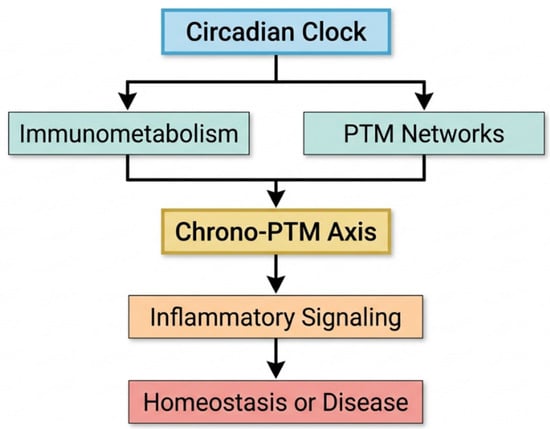
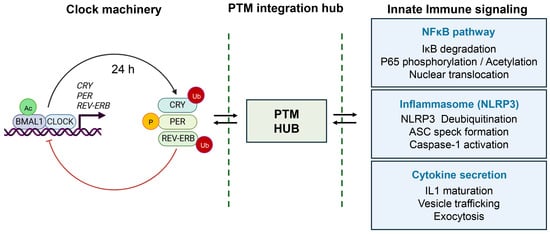
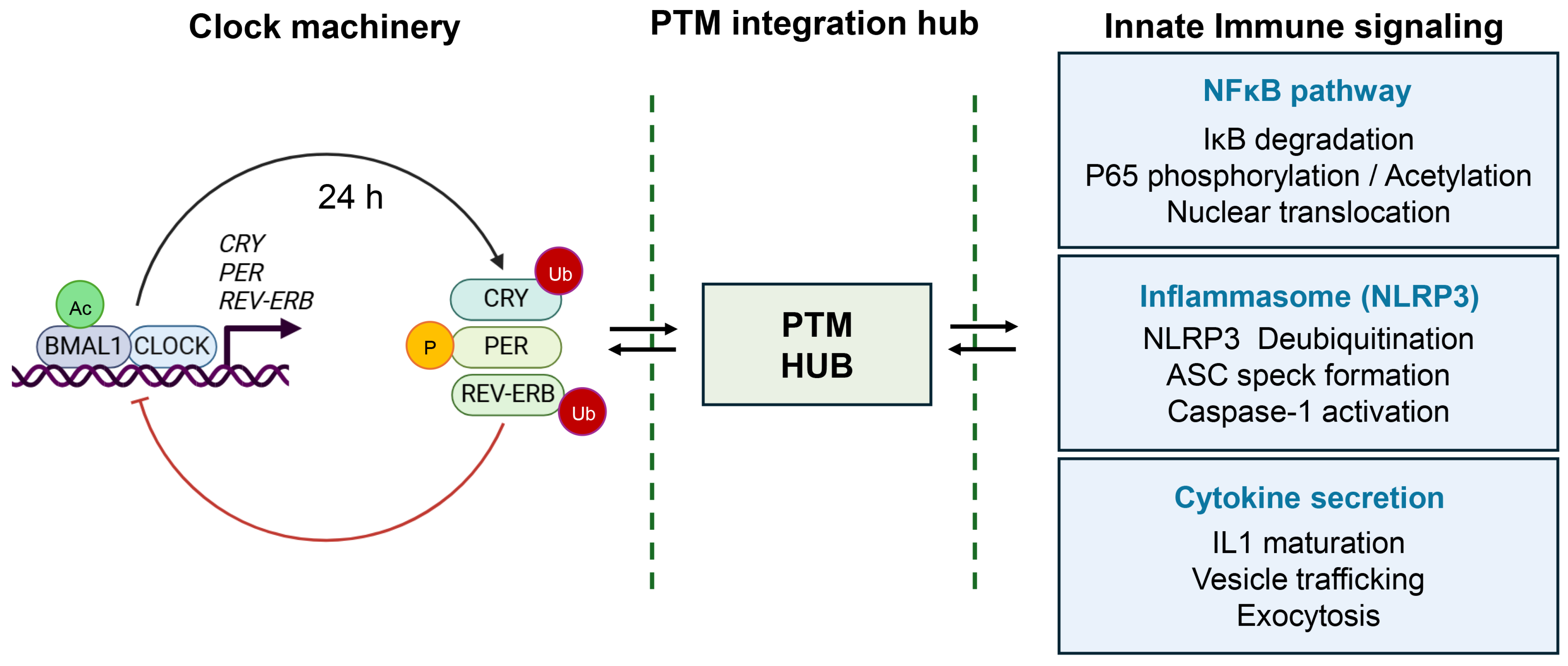
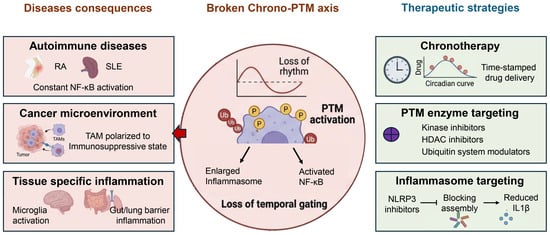
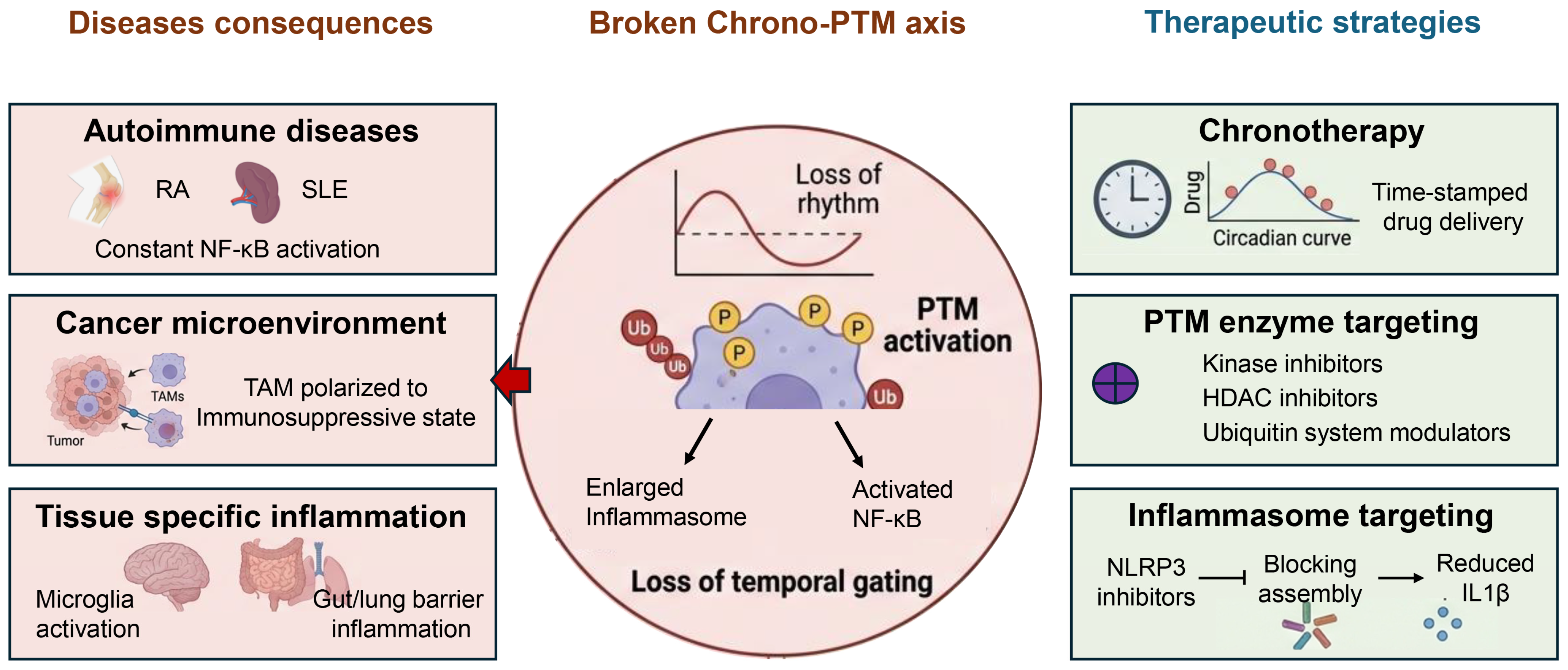

Disclaimer/Publisher’s Note: The statements, opinions and data contained in all publications are solely those of the individual author(s) and contributor(s) and not of MDPI and/or the editor(s). MDPI and/or the editor(s) disclaim responsibility for any injury to people or property resulting from any ideas, methods, instructions or products referred to in the content. |
© 2026 by the authors. Licensee MDPI, Basel, Switzerland. This article is an open access article distributed under the terms and conditions of the Creative Commons Attribution (CC BY) license.