


Abstract
Formal thought disorder (FTD) is classically associated with schizophrenia-spectrum disorders, but speech disorganization may also occur in other acute psychotic conditions. This study compared eight prespecified FTD phenomena between operationally defined primary and secondary psychotic disorders. In this single-center cross-sectional study, 93 adults admitted with an acute psychotic state to three psychiatric inpatient departments were classified as having primary psychotic disorders (F20/F23.2; n = 51) or secondary psychotic disorders (F06.2/F10.5/F15.5; n = 42). Eight phenomena derived from Andreasen’s descriptions were rated using study-specific 0–2 ordinal anchors. Item-level distributions were analyzed using exact tests with Benjamini–Hochberg correction and covariate-adjusted ordinal regression; composite and diagnostic-subgroup analyses were exploratory. Higher ratings in the primary group were observed for derailment, tangentiality, incoherence, neologisms, and clanging, whereas loss of goal, circumstantiality, and perseveration did not differ statistically. Adjusted models supported the same item-level pattern, and sensitivity analyses supported several principal findings. The exploratory composite was also higher in the primary group (median 10 [8–10.5] vs. 7 [6–8]; p < 0.001). These findings support cautious, descriptive phenomenon-level assessment across acute psychotic disorders but do not validate the framework as a diagnostic instrument or establish disorder-specific FTD profiles.
1. Introduction
Psychotic disorders comprise a heterogeneous group of conditions with different clinical contexts and presumed etiological backgrounds, but they may present with overlapping psychopathological manifestations during the acute phase. Delusions, hallucinations, disorganized thinking, and behavioral disturbances can occur in primary psychotic disorders, including schizophrenia-spectrum disorders, as well as in psychotic disorders associated with substance use, neurological disease, or other medical conditions [1,2,3,4]. This overlap may make differential diagnosis particularly challenging during early admission or first-episode presentations [5,6,7]. Identifying the clinical context in which psychosis occurs remains important because it may influence treatment selection, expected clinical course, recurrence risk, and long-term prognosis [7,8,9].
Formal thought disorder (FTD) refers to observable disturbances in the organization, coherence, and communicative form of thought as expressed through speech [10,11]. It has long been regarded as one of the central psychopathological features of schizophrenia-spectrum disorders, but contemporary research increasingly treats FTD not as a single homogeneous syndrome but as a set of partially distinguishable speech and language phenomena [10,11,12,13]. Classical descriptions include disturbances of topic maintenance, goal direction, relevance, coherence, word formation, and sound-based associations [14,15]. This phenomenon-level perspective is clinically relevant because different FTD manifestations may vary in their measurement properties, cognitive correlates, and associations with functional outcomes [10,16,17,18,19].
Empirical studies support the multidimensional nature of FTD. Factor-analytic work in first-episode psychosis has identified separable dimensions of disorganized speech rather than a single uniform construct, and a recent systematic review found substantial variation in the number and composition of reported FTD dimensions across instruments and samples [11,20]. The Thought and Language Disorder Scale (TALD) similarly distinguishes objective and subjective positive and negative thought and language phenomena, further supporting the view that FTD should be examined at the level of specific manifestations as well as global severity [13]. These findings indicate that a total score can summarize the overall burden of speech disturbance but may obscure which specific phenomena account for group differences [10,11,13,20].
Most FTD research has focused on schizophrenia-spectrum disorders [12,21]. Systematic reviews and meta-analyses have shown that FTD is associated with neurocognition, social functioning, symptomatic remission, and illness stage in schizophrenia and early psychosis [16,18,19,21]. Positive FTD has been linked to impairments in executive functioning, working memory, semantic processing, and language organization, whereas negative or impoverished speech phenomena may show partially different cognitive correlates [18,22,23,24]. Neuroimaging studies have also associated FTD with abnormalities in frontal and temporal language-related networks [25,26,27]. However, these findings provide background evidence only and should not be treated as direct mechanistic explanations for FTD in any particular clinical sample unless cognition, speech structure, or neural systems are directly measured.
FTD is not restricted to schizophrenia. Thought and language disturbances have been described in bipolar disorder, schizotypal traits, organic psychoses, delirium, and substance-induced psychotic disorders [1,28,29,30,31]. Prior comparative evidence is limited but suggests that FTD may have relevance beyond schizophrenia-spectrum disorders. Cutting reported differences in psychopathological patterns, including thought disorder, between acute organic psychosis and acute schizophrenia [1]. Rosenthal and Miner found that the presence of FTD contributed to distinguishing schizophrenia from substance-induced psychosis among inpatients with substance use disorders [32]. More recent work on early-phase primary and substance-induced psychoses has also emphasized substantial clinical overlap, diagnostic uncertainty, and longitudinal diagnostic change [5,6,7,8,9,33]. These findings support further study of FTD across diagnostically different acute psychotic disorders, but they do not justify treating FTD as a standalone diagnostic marker.
Historically, psychoses were often discussed using the endogenous–exogenous distinction [34]. In that framework, endogenous psychoses referred mainly to disorders such as schizophrenia-spectrum conditions, whereas exogenous psychoses referred to psychotic states associated with organic, toxic, metabolic, infectious, or substance-related factors [1,28]. This dichotomy has historical psychopathological relevance, but it is not a current diagnostic principle in modern psychiatric nosography [3,4]. Contemporary classification systems organize psychotic disorders according to defined clinical syndromes, course, and attribution to substances or medical conditions rather than according to a broad endogenous–exogenous opposition [3,4]. Therefore, using the traditional dichotomy as a direct pathophysiological explanation would be inappropriate.
For this reason, the present study uses a more limited and operational analytical framework. Psychotic disorders not coded as attributable to a substance or organic condition were grouped as primary psychotic disorders, whereas psychotic disorders explicitly coded in relation to organic or substance-related conditions were grouped as secondary psychotic disorders [3,4]. This terminology was used for analysis only and was not intended to imply etiological homogeneity, shared pathogenesis, or a diagnostic boundary that can be inferred from FTD alone. The secondary group is clinically heterogeneous by definition, and this heterogeneity must be considered when interpreting any between-group difference [1,5,6,7,28].
A further methodological issue concerns measurement. The complete Scale for the Assessment of Thought, Language, and Communication (TLC) includes multiple individually rated phenomena and broader content than the present assessment [14]. The current study did not administer the full TLC and did not attempt to validate a shortened TLC scale. Instead, it examined eight prespecified observable positive or disorganized speech phenomena derived from Andreasen’s phenomenological descriptions: derailment, tangentiality, loss of goal, circumstantiality, perseveration, incoherence, neologisms, and clanging [14,15]. These phenomena were selected because they could be identified during a brief clinical interview in an acute inpatient setting and because they represent different aspects of topic maintenance, relevance, goal direction, comprehensibility, unusual word formation, and sound-driven word selection [14,15]. The resulting framework was therefore intended for descriptive phenomenon-level comparison, not for psychometric validation or diagnostic classification.
The novelty of this study lies not in reviving the historical endogenous–exogenous dichotomy, but in applying a phenomenon-level analysis of selected observable FTD manifestations to diagnostically different acute psychotic disorders under a clearly defined operational grouping. This approach may provide a more detailed description of how speech disorganization is expressed across primary and secondary psychotic disorder groups than a global FTD score alone [10,11,13,20]. At the same time, such analysis cannot determine etiology, establish a diagnostic test, or identify neurocognitive or neurobiological mechanisms without direct supporting measures.
The aim of this study was to compare the distributions of eight prespecified FTD phenomena between operationally defined primary and secondary psychotic disorder groups in acute psychiatric inpatients. The primary objective was to determine whether specific FTD phenomena differed between groups after correction for multiple comparisons and covariate adjustment. A secondary exploratory objective was to examine whether an unweighted eight-phenomenon composite differed between groups and whether the findings were robust in sensitivity analyses addressing diagnostic heterogeneity. We hypothesized that FTD phenomena would not differ uniformly across all eight items, but would show selective between-group differences. Such a pattern would be consistent with heterogeneity in the clinical expression of disorganized speech across the included primary and secondary psychotic disorder groups.
2. Materials and Methods
2.1. Study Design and Setting
This was a single-center, observational, analytical cross-sectional study examining differences in formal thought disorder phenomena between two operationally defined diagnostic groups. Consecutive recruitment was conducted in three adult acute inpatient psychiatric departments of the Regional Mental Health Center, Health Department of the Karaganda Region, Karaganda, Kazakhstan, from 22 January to 15 April 2026. Each participant underwent one study assessment during the current hospital admission; no longitudinal follow-up was performed. Reporting of the study was guided by the Strengthening the Reporting of Observational Studies in Epidemiology (STROBE) statement and the checklist for cross-sectional studies [35]. The completed STROBE checklist is provided as Supplementary Table S1.
2.2. Participants, Eligibility Criteria, and Diagnostic Grouping
Patients admitted with an acute psychotic state were screened consecutively for eligibility. The inclusion criteria were: age 18–55 years; a current acute psychotic state of no more than 14 days’ duration; a qualifying ICD-10 diagnosis [3]; sufficient verbal output and ability to participate in a semi-structured clinical interview; and provision of written informed consent. Patients were excluded if they were outside the prespecified age range; had clinically evident severe cognitive impairment, markedly limited speech output, or severe behavioral disorganization that precluded completion of the interview; or declined participation. Cognitive impairment relevant to eligibility was determined clinically; no standardized cognitive instrument was administered.
Clinical diagnoses were established according to the International Classification of Diseases, 10th Revision (ICD-10) [3] by the attending psychiatrists as part of routine inpatient care. The attending psychiatrists worked in the three participating departments and did not perform the study ratings. Although diagnostic eligibility was originally framed using the broader ICD-10 blocks F00–F09, F10–F19, and F20–F29, diagnostic classification for the present analyses was based on the specific diagnoses represented in the enrolled sample: schizophrenia (F20), acute schizophrenia-like psychotic disorder (F23.2), organic delusional [schizophrenia-like] disorder (F06.2), mental and behavioural disorders due to use of alcohol: psychotic disorder (F10.5), and mental and behavioural disorders due to use of other stimulants, including caffeine: psychotic disorder (F15.5) [3]. Schizophrenia subtypes within F20 were not analyzed separately. All F15.5 cases in this sample were clinically attributed to amphetamine use; no psychotic disorders associated with other stimulants were represented. The substance-related diagnoses included in this study were limited to psychotic disorders coded as F10.5 and F15.5; acute intoxication, withdrawal state, and withdrawal state with delirium were not included.
For the primary analysis, schizophrenia (F20) and acute schizophrenia-like psychotic disorder (F23.2) were assigned to the operationally defined primary psychotic disorders group. Organic delusional [schizophrenia-like] disorder (F06.2) and substance-related psychotic disorders (F10.5 and F15.5) were assigned to the secondary psychotic disorders group [3]. This classification distinguished psychotic disorders not coded as attributable to an organic condition or psychoactive substance from psychotic syndromes explicitly coded in ICD-10 in relation to these conditions [3]. The grouping was used as an operational analytical framework and was not intended to imply a shared pathophysiological mechanism or clinical homogeneity within either group. To examine the influence of heterogeneity within the secondary group, exploratory sensitivity analyses considered F06.2 separately from F10.5/F15.5 and included restricted comparisons involving schizophrenia and substance-related psychotic disorders [1,5,6,7,28].
2.3. Clinical and Treatment Variables
Demographic, episode-related, and treatment variables were obtained from inpatient clinical records, prescription charts, and medication-administration records available at the time of the FTD assessment. Age was recorded in completed years and analyzed as a continuous variable. Sex was obtained from the medical record.
Psychotic episode status was classified as a first lifetime psychotic episode, a recurrent psychotic episode, or persistent psychosis with an acute exacerbation. A first lifetime episode indicated that no previous psychotic episode was documented; a recurrent episode indicated a new acute episode following a previous psychotic episode; and persistent psychosis with acute exacerbation indicated a clinically documented worsening of ongoing psychotic symptoms. The duration of the current acute psychotic state was recorded in calendar days from its clinically documented onset to the FTD assessment. For patients with persistent psychosis, this interval was calculated from the onset of the current acute exacerbation rather than from the onset of the underlying disorder.
Antipsychotic treatment before the current admission was categorized as yes, no, or unknown according to the available clinical history. Inpatient antipsychotic exposure before the FTD assessment was defined as the administration of at least one antipsychotic dose after admission and before the assessment. For exposed participants, the interval from the first inpatient antipsychotic administration to the FTD assessment was recorded in calendar days; a value of zero indicated that the first administration and the assessment occurred on the same calendar day. This interval was considered structurally not applicable, rather than missing, for participants who had not received an inpatient antipsychotic before assessment.
Antipsychotic dose and the number of regular antipsychotics were descriptively summarized among participants who had received at least one inpatient antipsychotic dose before the FTD assessment. The current regular antipsychotic dose was defined as the total scheduled daily dose of the antipsychotic regimen in place at the time of assessment. Doses were converted to chlorpromazine equivalents (CPZ equivalents, mg/day) using the method reported by Leucht et al. [36]. When two regular antipsychotics were included in the regimen, their individual CPZ-equivalent doses were calculated separately and then summed. As-needed prescriptions were excluded. The number of regular antipsychotics in the current regimen was recorded separately.
For the full-sample dose-sensitivity model, participants who had not received an inpatient antipsychotic before FTD assessment were assigned a CPZ-equivalent exposure value of zero. Accordingly, this model variable represented pre-assessment inpatient antipsychotic exposure combined with the intensity of the current regular regimen, rather than prescribed dose irrespective of whether treatment had been initiated.
Inpatient benzodiazepine exposure before the FTD assessment was defined as the administration of at least one benzodiazepine dose after admission and before assessment. Lifetime illness duration, duration of untreated psychosis, educational attainment, standardized global psychosis-severity scores, formal cognitive-test results, and standardized quantitative characteristics of substance use were not available for analysis and were treated as unmeasured variables rather than as missing observations.
2.4. Assessment of Formal Thought Disorder Phenomena
FTD was evaluated using a study-specific observational framework comprising eight prespecified phenomena: derailment, tangentiality, loss of goal, circumstantiality, perseveration, incoherence, neologisms, and clanging. The terminology and core phenomenological definitions were derived from Andreasen’s descriptions of thought, language, and communication disturbances and the corresponding TLC items [14,15]. However, the complete TLC scale was not administered. Accordingly, the present framework was not regarded as an abbreviated or modified TLC scale and was not assumed to preserve the latent structure, severity ranges, or psychometric properties of the complete instrument.
The eight phenomena were selected before data collection to provide a focused assessment of positive and disorganized speech abnormalities that could be identified directly during a clinical interview with patients experiencing an acute psychotic state. Derailment, tangentiality, loss of goal, circumstantiality, and perseveration were selected to characterize disturbances in topic maintenance, relevance, and goal-directed organization of speech [14,15]. Incoherence, neologisms, and clanging were selected to capture disturbances affecting comprehensibility, word formation, and sound-driven word selection [14,15]. This grouping was descriptive only; the two sets of phenomena were not treated as validated subscales or latent dimensions.
The remaining TLC phenomena—poverty of speech, poverty of content of speech, pressure of speech, distractible speech, illogicality, word approximations, echolalia, blocking, stilted speech, and self-reference—were outside the prespecified focus of the study [14]. Their omission should not be interpreted as indicating that they are clinically unimportant. Rather, the study was designed to compare the distributions of selected positive FTD phenomena between the diagnostic groups instead of providing a comprehensive assessment of all positive and negative dimensions of FTD [13,14]. This restriction also permitted consistent phenomenon-level assessment within a single clinical interview in an acute inpatient setting. The resulting loss of content coverage is acknowledged as a methodological limitation.
The use of phenomenon-level outcomes is consistent with previous FTD research in which investigators analyzed individual TLC items, restricted the analytic item set according to prevalence or measurement properties, or examined both symptom components and their constituent phenomena [10,11,13,20]. These studies support item-level analysis as an established analytical approach but do not establish the validity of the particular eight-phenomenon framework used in the present study.
Each phenomenon was rated on a study-specific three-level ordinal scale: 0 indicated that the phenomenon was not observed; 1 indicated that it was clearly present but limited or intermittent and did not dominate the speech sample; and 2 indicated recurrent, sustained, or marked manifestation with a clear effect on the relevance, organization, or comprehensibility of speech. These categories were developed as pragmatic observational anchors and were not obtained by collapsing or recoding the original TLC severity categories. The operational definitions and phenomenon-specific decision criteria are presented in Supplementary Table S2.
The eight individual ordinal ratings constituted the primary FTD outcomes. An unweighted sum of the eight ratings, ranging from 0 to 16, was additionally calculated as an exploratory eight-phenomenon composite. This composite was not interpreted as a TLC total score, a validated scale score, or a measure with an established diagnostic threshold. Consequently, the primary inferential analyses were performed separately for each phenomenon, whereas analyses of the composite were treated as exploratory.
2.5. Clinical Interview and Inter-Rater Agreement
Each participant completed a semi-structured clinical interview lasting approximately 10–15 min. The same sequence of three interview domains was used for all participants: (1) open-ended self-description and discussion of usual daily activities, lasting approximately 3–5 min; (2) discussion of the participant’s current mental state and symptoms, lasting approximately 4–6 min; and (3) discussion of plans, intentions, and goals for the future, lasting approximately 3–4 min. Open-ended prompts were used to elicit a sufficiently extended sample of spontaneous speech. Ratings were based on the participant’s speech across the complete interview rather than on isolated responses.
Audio and video recordings were not used because a uniform recording procedure was not considered feasible in the acute inpatient setting. To maintain a consistent assessment procedure, all interviews were evaluated in real time.
Before data collection, the two raters and members of the research team responsible for study conceptualization and methodology reviewed the phenomenological definitions, discussed representative clinical examples, and agreed on the operational criteria and 0–2 scoring anchors presented in Supplementary Table S2. This constituted internal calibration for the study-specific observational framework rather than formal standardized training or certification in administration of the complete TLC scale [14].
One psychiatrist served as the main rater, conducted the interviews, and rated all 93 participants. At the time of rating, the main rater did not have access to the documented ICD-10 diagnosis or the participant’s allocation to the primary or secondary psychotic-disorder group. Clinical diagnoses were established independently by the attending psychiatrists of three acute inpatient departments, who were not involved in the statistical analysis or manuscript preparation.
Inter-rater agreement was evaluated in a subsample of 25 participants, corresponding to 26.9% of the total sample. During these interviews, a second psychiatrist observed the same interview and independently rated all eight phenomena. The second rater was also blinded to the documented diagnosis and diagnostic-group assignment. The raters recorded their scores separately and did not discuss individual ratings until both sets of ratings had been completed. When ratings differed by more than one point, the discrepancy was discussed only after the independent ratings had been recorded. Inter-rater agreement statistics were calculated exclusively from the original pre-consensus ratings.
2.6. Sample Size Calculation
An a priori sample-size calculation was performed before participant recruitment using G*Power version 3.1.9.7 for a two-sided Wilcoxon–Mann–Whitney test comparing two independent groups [37]. Because no previous study was identified that used the same eight-phenomenon assessment framework, the anticipated effect size was justified using the closest available diagnostic-comparison evidence. Rosenthal and Miner reported that the presence of formal thought disorder differentiated schizophrenia from substance-induced psychosis with an odds ratio (OR) of 3.55 [32]. Using Chinn’s approximate conversion, d = ln(OR)/1.81, this OR corresponds to a standardized effect size of approximately d = 0.70 [38]. The anticipated effect size was therefore set at d = 0.65, representing a slightly more conservative moderate-to-large between-group effect.
With a two-sided significance level of α = 0.05, statistical power of 80%, and an assumed 1:1 allocation ratio, the minimum required sample size was 78 participants, corresponding to 39 participants per group. Both groups exceeded this minimum during the predefined consecutive recruitment period, resulting in a final sample of 93 participants: 51 with primary psychotic disorders and 42 with secondary psychotic disorders. The calculation was designed for the principal two-group comparison and was not intended to ensure adequate power for diagnosis-specific subgroup, interaction, or extensively adjusted analyses.
The calculation did not account for multiplicity across the eight phenomenon-level outcomes and was therefore intended to support the overall two-group design rather than guarantee adequate power for every item-level or adjusted analysis.
2.7. Statistical Analysis
All statistical analyses were performed using R version 4.3.2 (R Foundation for Statistical Computing, Vienna, Austria). All statistical tests were two-sided, and statistical significance was defined as p < 0.05. Where correction for multiple comparisons was applied, Benjamini–Hochberg-adjusted p values (q values) below 0.05 were considered statistically significant [39].
A fixed random-number seed (20260801) was used for all bootstrap and Monte Carlo procedures to ensure computational reproducibility.
The distributions of numerical variables were examined using histograms, normal Q–Q plots, and Shapiro–Wilk tests. Because several variables departed from normality and some measures were discrete or bounded, numerical data were summarized as medians with first and third quartiles [Q1–Q3]. Between-group comparisons were performed using the Mann–Whitney U test [40]. Rank-biserial correlation coefficients (r) were reported as effect-size measures, with positive values indicating higher values in the primary psychotic disorders group. Categorical variables were summarized as counts and percentages and compared using Fisher’s exact test for 2 × 2 tables or the Fisher–Freeman–Halton exact test for larger contingency tables. Cramér’s V was used as a nondirectional measure of association. Diagnostic composition was not tested inferentially because diagnosis defined group membership.
Clinical variables applicable only to participants exposed to inpatient antipsychotic treatment before FTD assessment—including the interval from first inpatient antipsychotic administration to assessment, regular chlorpromazine-equivalent dose, and the number of regular antipsychotics—were summarized and compared between diagnostic groups within the exposed subgroup. Age was analyzed as a continuous variable rather than using the categorized age variable.
2.7.1. Primary Item-Level Analyses
The eight prespecified FTD phenomena, each rated on an ordinal 0–2 scale, constituted the primary outcomes. Their unadjusted distributions were compared between the primary and secondary psychotic disorders groups using Fisher–Freeman–Halton exact tests for 2 × 3 contingency tables. The Benjamini–Hochberg procedure was applied across the family of eight item-level comparisons [39]. Cramér’s V and two-sided 95% confidence intervals estimated using the noncentral χ2 method were reported as effect-size measures. These confidence intervals were not adjusted for multiple comparisons.
Adjusted associations between diagnostic group and each ordinal phenomenon were examined using ordinal logistic regression [41]. The core adjustment set comprised age, modeled per 10-year increase; sex; inpatient antipsychotic exposure before FTD assessment; and duration of the current acute psychotic state, modeled per day. Secondary psychotic disorders constituted the reference group.
A proportional-odds model was initially fitted for each phenomenon [41]. The proportional-odds assumption for the diagnostic-group effect was evaluated by comparing the proportional-odds model with a partial proportional-odds model using a likelihood-ratio test. When the assumption was not rejected, the diagnostic-group effect was evaluated using a 1-degree-of-freedom likelihood-ratio test and expressed as a common odds ratio with a 95% confidence interval. An odds ratio above 1 indicated greater odds of being in a higher score category in the primary psychotic disorders group.
When the proportional-odds assumption was rejected, a partial proportional-odds model was retained and the diagnostic-group effect was evaluated using a global 2-degree-of-freedom likelihood-ratio test. Because this model allowed the group effect to differ between the two ordinal thresholds, no single common odds ratio was reported. For neologisms, the absence of score 2 in the secondary psychotic disorders group resulted in separation at the upper threshold; consequently, only the global diagnostic-group effect was interpreted. Confidence intervals for common odds ratios from the proportional-odds models were estimated using 1000 group-stratified bootstrap resamples. The Benjamini–Hochberg procedure was applied across the eight selected adjusted diagnostic-group tests [39].
2.7.2. Exploratory Composite Analysis
As a secondary exploratory analysis, the ratings for the eight prespecified phenomena were summed to produce an unweighted composite ranging from 0 to 16. This composite was used only as an empirical summary of the observed phenomena and was not treated as a psychometrically validated scale score.
The unadjusted composite distributions were compared using the Mann–Whitney U test. The magnitude of the difference was summarized using the rank-biserial correlation coefficient and the Hodges–Lehmann location-shift estimate, calculated as the median of all pairwise differences between participants in the primary and secondary psychotic disorders groups. Percentile 95% confidence intervals for both the rank-biserial correlation coefficient and the Hodges–Lehmann estimate were obtained using 10,000 group-stratified bootstrap resamples, with participants resampled with replacement within each diagnostic group. The p value accompanying the Hodges–Lehmann estimate was derived from the same Mann–Whitney U comparison.
Adjusted differences in the conditional median composite score were evaluated using median regression [42]. The core model included diagnostic group, age, sex, inpatient antipsychotic exposure before FTD assessment, and duration of the current acute psychotic state. Two additional sensitivity models were fitted. In the dose-sensitivity model, binary inpatient antipsychotic exposure was replaced by the CPZ-equivalent pre-assessment exposure value. Participants who had not received an inpatient antipsychotic before FTD assessment were assigned a CPZ-equivalent exposure value of zero. The expanded sensitivity model included age, sex, inpatient antipsychotic exposure, acute-state duration, inpatient benzodiazepine exposure, and psychotic-episode status. Percentile 95% confidence intervals were estimated using 500 successful group-stratified bootstrap resamples. Two-sided p values were calculated using Wald tests based on bootstrap standard errors.
As a robustness analysis based on a different distributional assumption, the exploratory composite was additionally analyzed using ordinary least-squares regression with HC3 heteroskedasticity-consistent standard errors [43]. This model included the same covariates as the core median-regression model.
2.7.3. Diagnostic-Subgroup Sensitivity Analyses
To examine whether the principal findings were attributable to pooling clinically heterogeneous secondary psychotic disorders, exploratory sensitivity analyses separated the sample into three groups: primary psychotic disorders, organic delusional [schizophrenia-like] disorder (F06.2), and substance-induced psychotic disorders (F10.5/F15.5).
Overall differences in the exploratory composite were evaluated using the Kruskal–Wallis test. The magnitude of the omnibus difference was summarized using eta-squared based on the Kruskal–Wallis H statistic, calculated as:
where H denotes the Kruskal–Wallis statistic, k the number of groups, and N the total sample size [44]. Its percentile 95% confidence interval was estimated using 5000 bootstrap resamples stratified by the three diagnostic subgroups.
η2H = max[0, (H − k + 1)/(N − k)],
Pairwise comparisons were conducted using two-sided Mann–Whitney U tests with continuity correction. The Benjamini–Hochberg procedure was applied within the family of three post-hoc comparisons [39]. Rank-biserial correlations were calculated so that positive values indicated higher composite scores in the first-listed group. Their percentile 95% confidence intervals were likewise estimated using 5000 group-stratified bootstrap resamples.
Additional restricted sensitivity comparisons included schizophrenia (F20) versus all secondary psychotic disorders and schizophrenia versus substance-induced psychotic disorders. These comparisons were exploratory and were not included in the correction family used for the three post-hoc comparisons.
Three-group distributions of the individual 0–2 phenomenon ratings were examined using Fisher–Freeman–Halton tests for 3 × 3 contingency tables. Because of sparse cells, Monte Carlo p values were estimated using 200,000 fixed-margin replicates for each phenomenon. The Benjamini–Hochberg procedure was applied across the eight phenomenon-level tests [39]. Cramér’s V and two-sided 95% confidence intervals estimated using the noncentral χ2 method were reported without multiplicity adjustment.
2.7.4. Inter-Rater Agreement
Inter-rater agreement was analyzed in the subsample independently assessed by both raters. For binary coding, a phenomenon was considered present when its rating was ≥1; binary exact agreement and Cohen’s κ were calculated [45]. For the original three-level 0–2 ratings, exact agreement, agreement within one point, and quadratically weighted κ were calculated [46]. Percentile 95% confidence intervals for both unweighted and weighted κ coefficients were estimated using 5000 paired participant-level bootstrap resamples, thereby preserving the paired structure of the ratings.
2.8. Missing Data
All demographic, diagnostic, treatment, and FTD variables included in the primary and adjusted analyses were complete; therefore, no imputation was performed. The interval from first inpatient antipsychotic administration to FTD assessment was structurally not applicable to participants who had not received an inpatient antipsychotic before assessment and was not treated as missing. “Unknown” pre-admission antipsychotic-treatment status was retained as an observed category. Data completeness is summarized in Supplementary Table S3.
3. Results
3.1. Characteristics of the Study Sample
During the recruitment period, 128 patients were assessed for eligibility. Of these, 35 were excluded, and 93 participants were included in the final sample and primary analysis, with no post-enrollment exclusions. Participant screening, reasons for exclusion, and allocation to the two operational diagnostic groups are shown in Figure 1. Recruitment details, analytic data completeness, and structurally not applicable values are summarized in Supplementary Table S3.
Figure 1.
Participant flow through eligibility assessment and inclusion in the study. Of the 128 patients assessed for eligibility, 35 were excluded and 93 were included in the final sample and primary analysis. Participants were classified into operationally defined primary and secondary psychotic disorders groups.
For the present analyses, all 93 participants were assigned to one of two operationally defined diagnostic groups. The primary psychotic disorders group comprised schizophrenia and acute schizophrenia-like psychotic disorder, with schizophrenia representing the predominant diagnosis. The secondary psychotic disorders group included organic delusional [schizophrenia-like] disorder and substance-induced psychotic disorders; organic disorder accounted for most cases in this group. Alcohol-related psychotic disorders were more frequent than stimulant-related disorders. All five F15.5 cases were associated with amphetamine use; no other stimulants were represented in the sample.
The complete diagnostic composition is presented in Table 1.
Table 1.
Diagnostic composition of the study sample (N = 93).
The demographic and clinical characteristics of the study sample are summarized in Table 2.
Table 2.
Demographic and clinical characteristics of the study sample (N = 93).
There was no statistically significant evidence of between-group differences in age, sex, inpatient antipsychotic exposure, time from the first inpatient antipsychotic administration to FTD assessment, antipsychotic treatment before admission, current acute psychotic-state duration, CPZ-equivalent dose, or inpatient benzodiazepine exposure.
Psychotic episode status differed between the groups (p = 0.013; Cramér’s V = 0.31). First-lifetime psychotic episodes were more frequent in the secondary psychotic disorders group, whereas recurrent episodes and persistent psychosis with acute exacerbation were more frequent in the primary psychotic disorders group. The largest clinical difference concerned the number of regular antipsychotics: among participants exposed to inpatient antipsychotic treatment, a regimen containing two regular antipsychotics was more frequent in the primary group (p < 0.001; Cramér’s V = 0.55).
3.2. Between-Group Differences in Formal Thought Disorder Phenomena
After correction for multiple comparisons, diagnostic-group differences remained statistically significant for derailment, tangentiality, incoherence, neologisms, and clanging (all q ≤ 0.047; Table 3).
Table 3.
Distributions of the eight prespecified formal thought disorder phenomena by diagnostic group.
Higher score categories for these phenomena were generally more frequent in the primary psychotic disorders group. The largest unadjusted associations were observed for incoherence (Cramér’s V = 0.43, 95% CI 0.20–0.62), neologisms (Cramér’s V = 0.42, 95% CI 0.20–0.61), and derailment (Cramér’s V = 0.41, 95% CI 0.19–0.60). The associations for clanging and tangentiality were smaller, with the latter showing the least precise estimate. No statistically supported between-group differences were identified for loss of goal, circumstantiality, or perseveration.
The proportional-odds assumption was not rejected for six phenomena. After covariate adjustment and correction for multiple testing, the primary psychotic disorders group continued to show greater odds of higher derailment scores (adjusted OR = 5.09, 95% CI 2.28–15.56; q < 0.001), tangentiality scores (adjusted OR = 2.57, 95% CI 1.18–6.90; q = 0.034), and incoherence scores (adjusted OR = 5.47, 95% CI 2.56–16.04; q < 0.001; Table 4).
Table 4.
Adjusted associations between diagnostic group and formal thought disorder phenomena (N = 93).
For neologisms and clanging, the proportional-odds assumption was violated, and no common OR was therefore interpreted. The global adjusted group effects remained statistically significant for both neologisms (q < 0.001) and clanging (q = 0.013). For neologisms, no participant in the secondary psychotic disorders group had a score of 2, resulting in separation at the upper threshold; only the global group effect was interpreted. No statistically significant adjusted group effects were found for loss of goal, circumstantiality, or perseveration.
Overall, covariate adjustment did not materially alter the item-level pattern: between-group differences were concentrated in five of the eight prespecified FTD phenomena rather than being uniformly present across all observations.
3.3. Exploratory Eight-Phenomenon Composite
The unweighted sum of the eight phenomenon ratings, ranging from 0 to 16, was examined as a secondary exploratory summary measure; item-level analyses remained the primary inferential focus.
The unadjusted analysis showed higher composite values in the primary psychotic disorders group, with a large rank-biserial effect size (r = 0.61, 95% CI 0.42–0.77; p < 0.001). The Hodges–Lehmann estimator indicated a 3-point location shift in favor of the primary group (95% CI 2–3). Individual observations and group distributions are displayed in Figure 2. Although the distributions overlapped, higher composite values were more concentrated in the primary psychotic disorders group.
Figure 2.
Distribution of exploratory eight-phenomenon composite scores in primary and secondary psychotic disorders. Boxes represent the interquartile range, horizontal lines indicate medians, whiskers extend to 1.5 times the interquartile range, and jittered points represent individual participants. The composite is presented as an exploratory summary measure of the eight prespecified phenomena.
In the core median-regression model, which adjusted for age, sex, inpatient antipsychotic exposure before FTD assessment, and current acute psychotic-state duration, the estimated adjusted median difference was 2.43 points (95% CI 1.17–3.47; p < 0.001; Table 5).
Table 5.
Unadjusted and adjusted analyses of the exploratory eight-phenomenon composite.
The estimate remained similar when binary inpatient antipsychotic exposure was replaced by CPZ-equivalent dose (adjusted median difference 2.24, 95% CI 1.15–3.37; p < 0.001). It was also maintained in the expanded model additionally accounting for benzodiazepine exposure and psychotic episode status (adjusted median difference 2.29, 95% CI 1.27–3.24; p < 0.001).
3.4. Robustness and Diagnostic-Subgroup Sensitivity Analyses
The robustness model produced a concordant result: the primary group had a higher adjusted mean composite value by 2.47 points (95% CI 1.63–3.31; p < 0.001; Table 6).
Table 6.
Robustness and diagnostic-subgroup sensitivity analyses of the exploratory composite.
When the secondary group was separated into organic F06.2 and substance-induced F10.5/F15.5 subgroups, the three-group comparison demonstrated an overall difference in composite values (H = 26.82; η2H = 0.276, 95% CI 0.14–0.45; p < 0.001). After Benjamini–Hochberg correction of the three post-hoc comparisons, composite values were higher in the primary group than in both the organic subgroup (r = 0.56, 95% CI 0.36–0.74; q < 0.001) and the substance-induced subgroup (r = 0.70, 95% CI 0.50–0.86; q < 0.001). The comparison between the organic and substance-induced subgroups was not statistically significant (r = 0.25, 95% CI −0.11–0.56; q = 0.181). Given the limited subgroup sizes, this nonsignificant result should not be interpreted as evidence that the two secondary subgroups were equivalent. Because the substance-induced subgroup comprised only 15 participants, subgroup-specific estimates should be interpreted cautiously and regarded as exploratory.
The restricted analyses produced similar findings. Schizophrenia F20 was associated with higher composite values than all secondary psychotic disorders (r = 0.76, 95% CI 0.60–0.88; p < 0.001) and than the substance-induced subgroup alone (r = 0.84, 95% CI 0.68–0.96; p < 0.001). These findings were consistent with the overall composite difference not being explained solely by the inclusion of F23.2 in the primary group or F06.2 in the secondary group. However, the restricted analyses were exploratory and were not included in the post-hoc multiplicity-correction family.
In the three-group item-level analyses, diagnostic-subgroup differences remained statistically significant for derailment, incoherence, neologisms, and clanging (all q ≤ 0.029; Table 7).
Table 7.
Three-group sensitivity analyses of individual formal thought disorder phenomena.
The strongest association was observed for incoherence (Cramér’s V = 0.35, 95% CI 0.18–0.48), followed by derailment and neologisms, for which effect-size estimates were identical (Cramér’s V = 0.30, 95% CI 0.11–0.42). Descriptively, these patterns were characterized by a greater frequency of score 2 in the primary group. Tangentiality was not statistically significant in the three-group analysis after correction for multiple comparisons, and no subgroup differences were supported for loss of goal, circumstantiality, or perseveration.
Because the organic and, particularly, the substance-induced subgroups were relatively small, these analyses should be interpreted as sensitivity analyses of the operational diagnostic grouping rather than as definitive diagnosis-specific comparisons.
3.5. Inter-Rater Agreement
Inter-rater agreement was evaluated in 25 participants (26.9% of the study sample). Binary exact agreement ranged from 80% to 96%, and Cohen’s κ estimates ranged from 0.46 to 0.86 (Table 8).
Table 8.
Inter-rater agreement for the eight formal thought disorder phenomena (n = 25).
The highest binary agreement was observed for tangentiality and neologisms. Confidence intervals were nevertheless wide for several phenomena, reflecting the limited size of the reliability subsample.
Agreement for the three-level 0–2 ratings was more variable. Exact agreement ranged from 48% to 92%, and quadratically weighted κ estimates ranged from 0.30 to 0.93. Neologisms demonstrated the highest weighted agreement (κ = 0.93, 95% CI 0.78–1.00), followed by tangentiality (κ = 0.81, 95% CI 0.57–0.95). In contrast, agreement was lower for loss of goal (κ = 0.38, 95% CI 0.04–0.61) and perseveration (κ = 0.30, 95% CI −0.18–0.68). Agreement within one score point ranged from 92% to 100%, indicating that discrepancies exceeding one category were uncommon.
Inter-rater reliability was therefore not uniform across the eight phenomena. In particular, findings involving loss of goal and perseveration should be interpreted cautiously because of their lower weighted agreement and imprecise confidence intervals.
4. Discussion
4.1. Principal Findings
In this cross-sectional sample of acute psychiatric inpatients, the distributions of FTD phenomena differed selectively between the operationally defined primary and secondary psychotic disorder groups. After control for multiple comparisons, the primary group had higher ratings for derailment, tangentiality, incoherence, neologisms, and clanging, whereas loss of goal, circumstantiality, and perseveration did not differ statistically. Covariate-adjusted ordinal models supported the same five group associations. For neologisms and clanging, the proportional-odds assumption was not satisfied; accordingly, the findings for these phenomena are interpreted as overall differences in their ordinal distributions rather than as single common odds ratios.
These results support the hypothesis that FTD phenomena would show selective, rather than uniform, between-group differences. The differentiating phenomena extended across discourse continuity, relevance, comprehensibility, word formation, and sound-based word selection. The findings therefore favor a phenomenon-level interpretation rather than a binary phenomenological classification. A simple division between predominantly discourse-organizational disturbance in secondary psychotic disorders and language-form abnormalities in primary psychotic disorders was not supported. This is consistent with the longstanding description of FTD as a collection of distinguishable behaviors and with factor-analytic evidence that its manifestations do not form a single uniform dimension [11,14,15,20]. The study did not test those established dimensions, and the five differentiating observations cannot be regarded as a newly validated syndrome or diagnostic signature.
The direction of the findings is broadly compatible with the limited literature directly comparing psychoses of different diagnostic origins. Cutting identified differences in patterns of psychopathology, including thought disorder, between acute organic psychosis and acute schizophrenia [1]. Rosenthal and Miner subsequently found that the presence of FTD contributed to distinguishing schizophrenia from substance-induced psychosis among inpatients with substance use disorders [32]. Methodological and nosological differences preclude direct replication claims, but these studies provide a relevant context for the higher concentration of several disorganized-speech phenomena in the primary group.
Sensitivity analyses refined rather than replaced the primary comparison. The exploratory composite remained higher when the primary group was compared separately with the F06.2 and substance-induced subgroups and when the primary group was restricted to schizophrenia. At the item level, derailment, incoherence, neologisms, and clanging remained associated with the three-group classification, while tangentiality did not survive multiplicity correction. Because item-level models restricted to F20 were not performed, item-specific robustness to exclusion of F23.2 cannot be inferred. Overall, the analyses show a reproducible direction of association within this sample while preserving substantial diagnostic and individual overlap.
The composite analyses offered a convergent secondary perspective: the group contrast persisted across core adjustment, antipsychotic-dose sensitivity, expanded adjustment, and an alternative OLS specification. This consistency makes it less likely that the aggregate finding resulted from a single modeling decision. It does not, however, elevate the composite above the item-level outcomes or demonstrate that the eight observations form one construct. The principal result remains the selective distribution of individual phenomena; the composite is used only to summarize their overall concentration.
4.2. Phenomenological Interpretation of the FTD Profile
The differentiating phenomena represented several descriptive aspects of disorganized speech. Derailment denotes shifts between ideas that are only obliquely or incompletely related, while tangentiality reflects responses that move away from the question without reaching the intended point. Incoherence concerns reduced comprehensibility at the sentence or discourse level. Neologisms involve newly formed words, and clanging reflects word selection based primarily on sound rather than meaning [14,15]. These are clinical descriptions of observable communication behaviors; the ratings do not identify the cognitive operation or neural system responsible for each behavior.
A simple contrast between discourse organization and language-form disturbance would therefore be insufficient. Derailment and tangentiality involve continuity and goal direction, but incoherence, neologisms, and clanging concern comprehensibility or lexical and phonological form. All five were more strongly represented in the primary group, and no prespecified phenomenon was specifically higher in the secondary group. Consequently, the expressions “discourse organization disorders” and “linguistic deformation” may be retained only as descriptive explanatory terms. They were not validated as subscales, were not derived from factor analysis, and did not behave as opposing group profiles.
The evidence was strongest for derailment, incoherence, and neologisms, which showed comparatively large unadjusted associations and remained supported after covariate adjustment and in the three-group sensitivity analysis. The neologism result nevertheless requires qualification: no participant in the secondary group received a score of 2, producing separation at the upper ordinal threshold. This sparse distribution supports an association in the current sample but cannot establish severe neologisms as specific to primary psychosis. Clanging also remained supported in the three-group analysis, although the non-proportional odds indicated that the magnitude of the contrast varied across score thresholds. Tangentiality was less stable: it was significant in the primary two-group and adjusted analyses but not after the secondary group was divided into organic and substance-induced subgroups. Its apparent association may therefore be more sensitive to subgroup composition.
Loss of goal, circumstantiality, and perseveration showed overlapping distributions. A nonsignificant result does not demonstrate equivalence, particularly with a modest sample and variable measurement precision. These phenomena may occur across diagnostic contexts, and smaller differences could have remained undetected. Their interpretation is also informed by the lower inter-rater agreement for loss of goal and perseveration, which may have attenuated observable associations; the measurement implications are considered in Section 4.4.
The uneven pattern accords with contemporary multidimensional accounts of FTD. Roche et al. identified disorganization, poverty, and verbosity dimensions in first-episode psychosis [11], whereas the TALD framework distinguishes objective and subjective positive and negative phenomena [13]. A systematic review of factor-analytic studies likewise found substantial variation in the number and composition of reported FTD dimensions [20]. These findings indicate that individual phenomena need not vary in parallel and that similarly labeled observations may occupy different dimensional structures across instruments and populations.
The present study adds a diagnostic-group comparison at the level of eight observable phenomena, not a test of semantic networks, executive control, or frontotemporal function. Although cognitive and neurobiological models may offer plausible hypotheses, no neuropsychological, computational-linguistic, electrophysiological, or neuroimaging measurements were collected. The identified profile is therefore best understood as an empirical description of early-admission speech behavior. Mechanistic explanations require direct measurement and independent replication.
4.3. Diagnostic Heterogeneity and Sensitivity Analyses
The terms primary and secondary psychotic disorders were used as an operational analytical framework. They do not imply that the diagnoses within either group are etiologically uniform, nor do they revive the historical endogenous–exogenous dichotomy as a contemporary pathophysiological classification. The comparison concerns the ICD-10 categories actually represented in the sample: schizophrenia and acute schizophrenia-like psychotic disorder in the primary group, and organic delusional [schizophrenia-like], alcohol-induced, and amphetamine-induced psychotic disorders in the secondary group [3]. Symptom overlap across these conditions is clinically expected, and a cross-sectional speech assessment cannot determine etiology on its own [1,5,6,7,32].
The organic subgroup was substantially narrower than the complete F00–F09 block. All 27 participants had F06.2, and the analytic sample contained no dementia, delirium, amnestic disorder, or other organic diagnostic category. This restriction reduces the heterogeneity that would have arisen from analyzing the entire block. It does not make F06.2 homogeneous: the underlying medical or neurological conditions, cognitive profiles, and longitudinal courses were not standardized for research purposes. Cutting’s study similarly demonstrated that acute organic and schizophrenic psychoses can differ in overall psychopathological pattern, but its earlier diagnostic framework and use of the Present State Examination limit direct comparison with the current ordinal observations [1].
The substance-induced subgroup comprised ten participants with F10.5 and five with F15.5. Clinical records indicated amphetamine involvement in all F15.5 cases. Intoxication, uncomplicated withdrawal, and withdrawal with delirium were not included as study diagnoses. Nevertheless, combining alcohol- and amphetamine-induced psychoses remains an important source of heterogeneity because their pharmacological context, temporal relationship to exposure, expected duration, and clinical course may differ [2,33]. The subgroup was too small to support stable separate F10.5-versus-F15.5 estimates.
Previous studies also show that primary and substance-induced psychoses cannot be distinguished by a single acute symptom. In early-phase samples, Caton et al. and Drake et al. reported demographic, familial, longitudinal, and treatment-related differences alongside substantial clinical overlap [6,7]. Fraser et al. described similar difficulties among young people with first-episode psychosis and concurrent substance use [5]. Among 198 recent methamphetamine users, Hides et al. identified both primary and substance-induced psychotic disorders with comparable current symptom severity despite differences in clinical history [33]. Longitudinal diagnostic change is also common: in a Danish registry cohort, 32.2% of patients initially diagnosed with substance-induced psychosis subsequently received a schizophrenia-spectrum or bipolar disorder diagnosis [9]. These findings support the clinical usefulness of etiological assessment while cautioning against treating acute phenomenology as a definitive diagnostic boundary.
Heterogeneity was also present in the primary group. F20 and F23.2 may have different expected courses, and the stability of acute and transient psychotic disorder diagnoses varies across follow-up studies [47,48]. Aadamsoo et al. documented diagnostic change over two years [47], while Rusaka and Rancāns reported an overall stability of 67.4% and found that initial thought disorder was more frequent among participants later diagnosed with schizophrenia [48]. No longitudinal diagnostic verification was available in the current study; therefore, F23.2 was classified according to the diagnosis established during the index admission.
The sensitivity analyses addressed specific consequences of this heterogeneity. The composite difference persisted when the secondary group was divided into organic and substance-induced subgroups and when the primary group was restricted to F20. The nonsignificant composite comparison between the organic and substance-induced subgroups had an imprecise effect estimate and cannot be interpreted as equivalence. At the phenomenon level, the three-group tests supported subgroup differences for four observations, but no F20-only item models or adequately powered comparisons between individual secondary diagnoses were performed. Thus, the sensitivity analyses reduce concern that the overall composite result was driven exclusively by either F06.2 or F23.2; they do not establish homogeneous profiles within the operational groups or disorder-specific FTD signatures.
4.4. Measurement Scope and Inter-Rater Reliability
The scope of the assessment is central to interpretation. The complete TLC was not administered. Andreasen’s descriptions provided the phenomenological basis for eight prespecified, directly observable positive or disorganized speech phenomena [14,15]. The resulting procedure was neither a shortened TLC nor a psychometrically equivalent substitute for that scale. No equivalence is claimed for content coverage, severity ranges, latent structure, validity, normative interpretation, or clinical thresholds.
The eight phenomena were selected before data collection because they could be elicited and rated during a brief interview in acute inpatient departments and corresponded to the study’s focus on organization, comprehensibility, and unusual word use. Derailment, tangentiality, loss of goal, circumstantiality, and perseveration sampled different aspects of discourse continuity and goal direction; incoherence, neologisms, and clanging sampled comprehensibility, word formation, and sound-based selection [14,15]. These descriptors clarify the rationale for selection but do not define factor-derived subscales. Negative or impoverished speech phenomena and other positive TLC items were outside the prespecified scope. Their omission narrows content coverage and prevents generalization to the full range or overall severity of FTD [13,14].
The study-specific 0–2 categories distinguished absence, a less pronounced manifestation, and a more pronounced manifestation during the available interview. They are not interchangeable with the original TLC item ranges. The reduced number of categories was practical in an acute setting, but it may have compressed variation at greater severity and contributed to sparse upper categories. Scores from this study should therefore not be compared with TLC item scores, total scores, norms, or thresholds.
Focused phenomenon-level assessment nevertheless has methodological precedents. The Thought and Language Index was developed as a separate brief instrument using standardized elicitation, explicit scoring rules, reliability testing, and factor analysis [49]. Other investigators have developed distinct clinician- and informant-rated FTD measures instead of assuming that selected items preserve the properties of an existing scale [50]. Recent studies have also combined individual phenomena with latent dimensions or quantitative speech variables [17,51]. These precedents demonstrate that item-level research can be informative, but they do not validate the current procedure. Indeed, an item-level analysis of 15 FTD scales identified 56 distinct phenomena, weak content overlap, and no phenomenon present in every instrument [10]. A complementary semantic synthesis similarly showed substantial inconsistency in terminology and conceptual mapping across scales [52]. Explicit operational definitions are consequently essential when comparing results across studies.
Factor analysis was not added post hoc because the primary objective was to compare the prespecified three-category distributions, not to construct or validate a latent scale. Factor analysis would address covariance among observations rather than the diagnostic-group questions tested by the exact and ordinal models. With 93 participants and sparse upper categories for some phenomena, any factor solution would be unstable and exploratory. It would also leave content validity unresolved. Studies designed to identify reproducible FTD dimensions have used larger samples, formal instrument-development procedures, standardized elicitation, factor-analytic approaches, or data-derived speech and language measures [11,13,20,49,51]. The internal structure of the present set remains unknown and should be evaluated separately if it is to be developed into an instrument.
For the same reason, the unweighted 0–16 composite was retained as a secondary descriptive summary. Its consistency across median regression, dose sensitivity, expanded adjustment, and OLS robustness analyses indicates that the broad group contrast was not dependent on one model specification. However, the sum assigns equal weight to all observations, has no established threshold, and has not demonstrated unidimensionality. It is not a TLC total score and cannot be used as a validated measure of FTD severity or clinical change.
Inter-rater results provided evidence about reproducibility but were not uniform. Agreement was strongest for tangentiality and neologisms and lower for loss of goal and perseveration. Confidence intervals were wide because duplicate ratings were available for only 25 participants. High within-one-point agreement is also less stringent than exact three-category agreement because adjacent-category disagreement is permitted. Lower reliability may have reduced precision for particular item comparisons, especially the nonsignificant loss-of-goal and perseveration findings.
One main psychiatrist rated all 93 participants, while a second psychiatrist rated only the agreement subsample. Both rated the same interview independently for reliability estimation and were blinded to the recorded diagnostic grouping; nevertheless, clinical presentation could sometimes have suggested the likely diagnosis. The use of one main rater improved procedural consistency but left the full-sample results susceptible to rater-specific systematic interpretation. The raters reviewed and agreed on the operational criteria before assessment but did not complete an external standardized training or certification program. Reliability between two observers does not establish content or construct validity. Future work should use a detailed manual, formal calibration, recorded speech that permits independent re-rating, and parallel administration of a validated FTD instrument.
4.5. Clinical Context, Treatment Exposure, and Residual Confounding
Assessment timing is important in an acute admission because disorganized speech may change with treatment and clinical stabilization. Some participants were assessed before their first inpatient antipsychotic administration, whereas others had received treatment for up to three days. Antipsychotic treatment has been associated with changes in speech disorganization, while longitudinal studies indicate that some FTD manifestations may persist beyond the acute state [53,54,55]. The ratings therefore represent early-admission phenomenology under naturalistic conditions rather than a uniformly untreated baseline or a stable trait assessment.
The groups were similar in the proportion exposed to an inpatient antipsychotic before assessment, the interval between first administration and assessment, and inpatient benzodiazepine exposure. Important treatment differences nevertheless remained. Among exposed participants, two regular antipsychotics were considerably more frequent in the primary group, and the chlorpromazine-equivalent dose was numerically higher. Because prescribing was determined clinically, these differences may reflect diagnosis, symptom presentation, illness course, previous response, or clinician choice. They cannot be interpreted as experimental medication effects.
The primary ordinal models adjusted for age, sex, inpatient antipsychotic exposure, and duration of the current acute psychotic state. The composite association also persisted when exposure was replaced by chlorpromazine-equivalent dose and when benzodiazepine exposure and episode status were included. This consistency argues against the overall contrast being explained solely by the measured covariates, but adjustment cannot remove unmeasured confounding, reverse temporal relationships, or error in retrospectively abstracted clinical variables.
Chlorpromazine equivalents provide a common metric across antipsychotics, but conversion methods remain approximate [36]. The study variable represented the current regular prescribed regimen on the assessment day. It did not quantify cumulative inpatient exposure, actual adherence, serum concentration, the exact dose received during the preceding 24 h, or detailed pre-admission dose and duration. The yes/no/unknown pre-admission treatment variable likewise did not establish adherence. These limitations matter because even early treatment may alter attention, activation, and the expression of disorganized speech [54].
Episode status was also imbalanced. First lifetime psychotic episodes were more common in the secondary group, while recurrent episodes and persistent psychosis with acute exacerbation were more frequent in the primary group. FTD has been associated with illness stage, cognition, and functioning in early psychosis [19,56], and its longitudinal course varies across diagnoses and individuals [55]. Including episode status in the expanded composite model partly addressed this difference, but three broad categories cannot capture illness duration, the number or severity of previous episodes, duration of untreated psychosis, or quality of prior remission.
Other clinically relevant variables were unavailable. These included standardized overall psychosis severity, educational attainment, formal cognitive performance, detailed previous treatment, and reliable cumulative benzodiazepine exposure. For substance-induced disorders, the database did not contain standardized measures of amount, frequency, route, time since last use, toxicological confirmation, or polysubstance exposure. Such factors may affect attention, speech production, interview engagement, and individual FTD phenomena [19,33,51]. Their absence means that the observed associations cannot be attributed solely to diagnostic grouping.
The adjusted results consequently strengthen evidence for a diagnostic-group association within this acute inpatient sample but do not identify an etiological or treatment-independent profile. A longitudinal design with assessment before treatment when clinically feasible, repeated ratings at standardized intervals, detailed medication administration, standardized symptom severity, cognition, and substance-exposure measures would better separate diagnostic context from state and treatment effects.
4.6. Clinical and Research Implications
The findings do not support using the eight phenomena or their composite as a diagnostic test. Sensitivity, specificity, predictive values, likelihood ratios, calibration, and external classification performance were not evaluated, and substantial score overlap remained between groups. Even the absence of score-2 neologisms in the secondary group is best treated as a sparse, sample-specific observation rather than a pathognomonic feature.
Phenomenon-level assessment may nevertheless enrich clinical description. Recording whether disturbance is expressed through topic shifts, reduced comprehensibility, unusual word formation, or sound-based selection conveys information that an overall FTD label may obscure. Such observations can complement, but not replace, longitudinal history, cognitive and neurological assessment, substance-use evaluation, physical examination, and appropriate laboratory or imaging investigations. The relative stability of derailment, incoherence, neologisms, and clanging across the three-group analysis also identifies phenomena that merit targeted replication, while the less stable tangentiality association should be treated cautiously.
This interpretation is compatible with transdiagnostic research. Model-based clustering has identified FTD profiles that are not reducible to a single conventional diagnosis [57], and closely matched patients with different acute psychoses may differ in selected phenomena rather than overall FTD burden [58]. Diagnosis and FTD phenotype may therefore provide related but non-equivalent clinical information. At the same time, limited content and semantic overlap across rating instruments restricts comparability [10,52]. Replication should use explicit definitions, standardized elicitation, rater calibration, and preferably recorded speech alongside an established instrument.
Future studies require larger, multicenter, diagnosis-specific samples, particularly for organic, alcohol-induced, and stimulant-induced psychoses. Repeated assessments could determine whether the observed phenomena are transient state features, persistent characteristics, or treatment-responsive manifestations. If diagnostic utility is investigated, prediction models should be prespecified, internally validated, and tested in independent centers with reporting of both discrimination and calibration. Mechanistic hypotheses should be examined using direct neuropsychological, computational-linguistic, or neuroimaging measurements rather than inferred from clinical ratings alone [19,25,51].
4.7. Strengths, Limitations, and Generalizability
Several features strengthen the study. Consecutive recruitment from three acute inpatient departments produced a naturalistic sample, and participant flow, exact diagnostic composition, structurally not applicable values, and analytic completeness were reported transparently. All enrolled participants were included without imputation. The primary analysis preserved the ordinal structure of each phenomenon, used exact tests with false-discovery-rate control, reported effect sizes and confidence intervals, and was supplemented by adjusted models that evaluated the proportional-odds assumption. Treatment timing, antipsychotic exposure and dose, benzodiazepine exposure, episode status, and acute-state duration were incorporated, and diagnostic-subgroup analyses directly examined the main source of clinical heterogeneity. Independent duplicate ratings in a subsample further quantified phenomenon-specific reproducibility.
The cross-sectional design remains a fundamental limitation. A single early-admission assessment cannot determine temporal sequence, causality, treatment response, or whether group differences reflect state or trait. Although sample size was calculated before recruitment, the assumed effect size (d = 0.65) was indirectly derived from the closest available study comparing the presence of FTD in schizophrenia and substance-induced psychosis, not from the same eight three-category outcomes [32]. The calculation was therefore an approximate justification for the main two-group comparison. The total sample was modest, and subgroup, partial proportional-odds, and restricted analyses were not powered to provide stable diagnosis-specific estimates. Confidence intervals and resampling quantify uncertainty but do not replace external replication.
Clinical diagnoses were assigned by attending psychiatrists during routine care rather than confirmed with a structured research interview. This naturalistic approach improves correspondence with everyday inpatient practice but permits diagnostic misclassification, especially where acute and substance-related presentations may evolve longitudinally [8,9]. Severe cognitive impairment was assessed clinically for eligibility rather than with a standardized cognitive instrument. Excluding patients with severe cognitive impairment, behavioral disorganization preventing interview, or insufficient speech output was necessary for interpretable assessment but may have underrepresented the most impaired or speech-impoverished presentations.
Generalizability is consequently limited to similar acute inpatient populations. Participants were aged 18–55 years and recruited from one psychiatric center in one region of Kazakhstan. Findings cannot be assumed to apply to older adults, outpatients, patients in remission, stable chronic populations, specialized early-psychosis services, other linguistic or cultural contexts, or different healthcare systems. The F06.2 and substance-induced subgroups were particularly small, and the study could not separate alcohol- from amphetamine-induced profiles reliably.
Measurement and residual-confounding limitations further constrain interpretation. Only eight positive or disorganized phenomena were assessed, without full coverage of FTD or independent psychometric validation of the rating framework and composite. Inter-rater reliability varied and was based on a small subsample. Standardized psychosis severity, cognition, education, illness duration, duration of untreated psychosis, detailed medication adherence, and detailed substance exposure were not available; these characteristics have established relationships with FTD expression and functioning [16,18,19,56]. Finally, robustness across several models reflects repeated analyses of the same sample, not independent confirmation.
Taken together, the results provide evidence of selective, phenomenon-dependent associations between operational diagnostic groups under acute naturalistic conditions. They do not define causal mechanisms, validate a diagnostic instrument, or demonstrate homogeneous FTD profiles within primary or secondary psychotic disorders. Their principal value lies in identifying specific observations and methodological priorities for larger, standardized, longitudinal, and externally replicated studies.
5. Conclusions
In this acute inpatient sample, selected FTD phenomena differed between operationally defined primary and secondary psychotic disorder groups. Differences were concentrated in derailment, incoherence, neologisms, and clanging, with tangentiality showing less stable support in subgroup analyses. The findings support a phenomenon-level approach to clinical description, but they do not validate the eight-phenomenon framework as a diagnostic instrument or establish disorder-specific FTD signatures. Larger longitudinal studies using standardized FTD instruments, recorded speech, cognitive assessment, and diagnosis-specific samples are required.
Supplementary Materials
The following supporting information can be downloaded at https://www.mdpi.com/article/10.3390/psychiatryint7050188/s1: Table S1: STROBE checklist for cross-sectional studies; Table S2: Operational definitions and scoring criteria for the eight prespecified formal thought disorder phenomena; Table S3: Recruitment timeline, participant flow, and analytic data completeness.
Author Contributions
Conceptualization, S.A.Y. and D.S.S.; methodology, A.B.I., O.A.P. and M.Y.L.; formal analysis, S.A.Y. and T.A.S.; investigation, V.Y.I. and S.T.Z.; data curation, L.Y.A., L.V.K. and S.A.Y.; writing—original draft preparation, S.A.Y., A.B.I. and D.S.S.; writing—review and editing, M.Y.L., O.A.P., L.Y.A. and L.V.K.; supervision, A.B.I., M.Y.L. and O.A.P. All authors have read and agreed to the published version of the manuscript.
Funding
This research received no external funding.
Institutional Review Board Statement
The study was conducted in accordance with the Declaration of Helsinki and approved by the Local Bioethics Committee of Karaganda Medical University (Protocol No. 2; approval date: 21 January 2026).
Informed Consent Statement
Informed consent was obtained from all subjects involved in the study.
Data Availability Statement
The data presented in this study are not publicly available due to clinical and ethical restrictions but are available from the corresponding author upon reasonable request.
Conflicts of Interest
The authors declare no conflicts of interest.
Abbreviations
The following abbreviations are used in this manuscript:
| BH | Benjamini–Hochberg |
| CI | Confidence Interval |
| CPZ | Chlorpromazine |
| df | Degrees of Freedom |
| DSM-5-TR | Diagnostic and Statistical Manual of Mental Disorders, Fifth Edition, Text Revision |
| FTD | Formal Thought Disorder |
| HC3 | Heteroskedasticity-consistent standard errors, type 3 |
| ICD-10 | International Classification of Diseases, 10th Revision |
| NCJSC | Non-commercial joint-stock company |
| OLS | Ordinary least squares |
| OR | Odds ratio |
| PO | Proportional odds |
| Q–Q | Quantile–quantile |
| STROBE | Strengthening the Reporting of Observational Studies in Epidemiology |
| TALD | Thought and Language Disorder |
| TLC | Scale for the Assessment of Thought, Language, and Communication |
References
- Cutting, J. The Phenomenology of Acute Organic Psychosis: Comparison with Acute Schizophrenia. Br. J. Psychiatry 1987, 151, 324–332. [Google Scholar] [CrossRef] [Scilit] [PubMed]
- Fiorentini, A.; Cantù, F.; Crisanti, C.; Cereda, G.; Oldani, L.; Brambilla, P. Substance-Induced Psychoses: An Updated Literature Review. Front. Psychiatry 2021, 12, 694863. [Google Scholar] [CrossRef] [Scilit] [PubMed]
- World Health Organization. The ICD-10 Classification of Mental and Behavioural Disorders: Clinical Descriptions and Diagnostic Guidelines, Reprinted ed.; World Health Organization: Geneva, Switzerland, 2009. [Google Scholar]
- American Psychiatric Association. Diagnostic and Statistical Manual of Mental Disorders, DSM-5-TR; American Psychiatric Association Publishing: Washington, DC, USA, 2022. [Google Scholar] [CrossRef] [Scilit]
- Fraser, S.; Hides, L.; Philips, L.; Proctor, D.; Lubman, D.I. Differentiating First Episode Substance Induced and Primary Psychotic Disorders with Concurrent Substance Use in Young People. Schizophr. Res. 2012, 136, 110–115. [Google Scholar] [CrossRef] [Scilit] [PubMed]
- Caton, C.L.M.; Drake, R.E.; Hasin, D.S.; Dominguez, B.; Shrout, P.E.; Samet, S.; Schanzer, W.B. Differences Between Early-Phase Primary Psychotic Disorders With Concurrent Substance Use and Substance-Induced Psychoses. Arch. Gen. Psychiatry 2005, 62, 137. [Google Scholar] [CrossRef] [Scilit] [PubMed]
- Drake, R.E.; Caton, C.L.M.; Xie, H.; Hsu, E.; Gorroochurn, P.; Samet, S.; Hasin, D.S. A Prospective 2-Year Study of Emergency Department Patients With Early-Phase Primary Psychosis or Substance-Induced Psychosis. Am. J. Psychiatry 2011, 168, 742–748. [Google Scholar] [CrossRef] [Scilit] [PubMed]
- Murrie, B.; Lappin, J.; Large, M.; Sara, G. Transition of Substance-Induced, Brief, and Atypical Psychoses to Schizophrenia: A Systematic Review and Meta-analysis. Schizophr. Bull. 2020, 46, 505–516. [Google Scholar] [CrossRef] [Scilit] [PubMed]
- Starzer, M.S.K.; Nordentoft, M.; Hjorthøj, C. Rates and Predictors of Conversion to Schizophrenia or Bipolar Disorder Following Substance-Induced Psychosis. Am. J. Psychiatry 2018, 175, 343–350. [Google Scholar] [CrossRef] [Scilit] [PubMed]
- Sreeraj, V.S.; Voppel, A.; Venkatasubramanian, G.; Palaniyappan, L. What Is Being Measured by Formal Thought Disorder Scales? An Item-Level Content Analysis. Psychol. Med. 2026, 56, e106. [Google Scholar] [CrossRef] [Scilit] [PubMed]
- Roche, E.; Lyne, J.P.; O’Donoghue, B.; Segurado, R.; Kinsella, A.; Hannigan, A.; Kelly, B.D.; Malone, K.; Clarke, M. The Factor Structure and Clinical Utility of Formal Thought Disorder in First Episode Psychosis. Schizophr. Res. 2015, 168, 92–98. [Google Scholar] [CrossRef] [Scilit] [PubMed]
- Roche, E.; Creed, L.; MacMahon, D.; Brennan, D.; Clarke, M. The Epidemiology and Associated Phenomenology of Formal Thought Disorder: A Systematic Review. Schizophr. Bull. 2015, 41, 951–962. [Google Scholar] [CrossRef] [Scilit] [PubMed]
- Kircher, T.; Krug, A.; Stratmann, M.; Ghazi, S.; Schales, C.; Frauenheim, M.; Turner, L.; Fährmann, P.; Hornig, T.; Katzev, M.; et al. A Rating Scale for the Assessment of Objective and Subjective Formal Thought and Language Disorder (TALD). Schizophr. Res. 2014, 160, 216–221. [Google Scholar] [CrossRef] [Scilit] [PubMed]
- Andreasen, N.C. Scale for the Assessment of Thought, Language, and Communication (TLC). Schizophr. Bull. 1986, 12, 473–482. [Google Scholar] [CrossRef] [Scilit] [PubMed]
- Andreasen, N.C. Thought, Language, and Communication Disorders: I. Clinical Assessment, Definition of Terms, and Evaluation of Their Reliability. Arch. Gen. Psychiatry 1979, 36, 1315. [Google Scholar] [CrossRef] [Scilit] [PubMed]
- Marggraf, M.P.; Lysaker, P.H.; Salyers, M.P.; Minor, K.S. The Link between Formal Thought Disorder and Social Functioning in Schizophrenia: A Meta-Analysis. Eur. Psychiatry 2020, 63, e34. [Google Scholar] [CrossRef] [Scilit] [PubMed]
- Abboud, F.; Ahrens, J.; Ballès, E.; Bambini, V.; Deakin, B.; Harrison, N.A.; Kircher, T.; Kuperberg, G.; Liddle, P.F.; Lodhi, R.; et al. The Functional Relevance of a Short Assessment of Formal Thought Disorder in Psychosis. Br. J. Psychiatry 2026, 1–9. [Google Scholar] [CrossRef] [Scilit] [PubMed]
- Bora, E.; Yalincetin, B.; Akdede, B.B.; Alptekin, K. Neurocognitive and Linguistic Correlates of Positive and Negative Formal Thought Disorder: A Meta-Analysis. Schizophr. Res. 2019, 209, 2–11. [Google Scholar] [CrossRef] [Scilit] [PubMed]
- Oeztuerk, O.F.; Pigoni, A.; Antonucci, L.A.; Koutsouleris, N. Association between Formal Thought Disorders, Neurocognition and Functioning in the Early Stages of Psychosis: A Systematic Review of the Last Half-Century Studies. Eur. Arch. Psychiatry Clin. Neurosci. 2022, 272, 381–393. [Google Scholar] [CrossRef] [Scilit] [PubMed]
- Zamperoni, G.; Tan, E.J.; Rossell, S.L.; Meyer, D.; Sumner, P.J. Evidence for the Factor Structure of Formal Thought Disorder: A Systematic Review. Schizophr. Res. 2024, 264, 424–434. [Google Scholar] [CrossRef] [Scilit] [PubMed]
- Yalınçetin, B.; Ulaş, H.; Var, L.; Binbay, T.; Akdede, B.B.; Alptekin, K. Relation of Formal Thought Disorder to Symptomatic Remission and Social Functioning in Schizophrenia. Compr. Psychiatry 2016, 70, 98–104. [Google Scholar] [CrossRef] [Scilit] [PubMed]
- Dwyer, K.; David, A.; McCarthy, R.; McKenna, P.; Peters, E. Higher-Order Semantic Processing in Formal Thought Disorder in Schizophrenia. Psychiatry Res. 2014, 216, 168–176. [Google Scholar] [CrossRef] [Scilit] [PubMed]
- Barrera, A.; McKENNA, P.J.; Berrios, G.E. Formal Thought Disorder in Schizophrenia: An Executive or a Semantic Deficit? Psychol. Med. 2005, 35, 121–132. [Google Scholar] [CrossRef] [Scilit] [PubMed]
- Tan, E.J.; Rossell, S.L. Formal Thought Disorder and Neurocognition in Schizophrenia: The Question of Individual Mechanisms. Schizophr. Res. 2017, 190, 189–190. [Google Scholar] [CrossRef] [Scilit] [PubMed]
- Cavelti, M.; Kircher, T.; Nagels, A.; Strik, W.; Homan, P. Is Formal Thought Disorder in Schizophrenia Related to Structural and Functional Aberrations in the Language Network? A Systematic Review of Neuroimaging Findings. Schizophr. Res. 2018, 199, 2–16. [Google Scholar] [CrossRef] [Scilit] [PubMed]
- Fuentes-Claramonte, P.; López-Araquistain, L.; Sarró, S.; Sans-Sansa, B.; Ortiz-Gil, J.; Maristany, T.; Salvador, R.; McKenna, P.J.; Pomarol-Clotet, E. Brain Functional Correlates of Formal Thought Disorder in Schizophrenia: Examining the Frontal/Dysexecutive Hypothesis. Psychol. Med. 2021, 51, 2446–2453. [Google Scholar] [CrossRef] [Scilit] [PubMed]
- Sans-Sansa, B.; McKenna, P.J.; Canales-Rodríguez, E.J.; Ortiz-Gil, J.; López-Araquistain, L.; Sarró, S.; Dueñas, R.M.; Blanch, J.; Salvador, R.; Pomarol-Clotet, E. Association of Formal Thought Disorder in Schizophrenia with Structural Brain Abnormalities in Language-Related Cortical Regions. Schizophr. Res. 2013, 146, 308–313. [Google Scholar] [CrossRef] [Scilit] [PubMed]
- Fiorentini, A.; Sara Volonteri, L.; Dragogna, F.; Rovera, C.; Maffini, M.; Mauri, M.C.; Altamura, C.A. Substance-Induced Psychoses: A Critical Review of the Literature. Curr. Drug Abus. Rev. 2011, 4, 228–240. [Google Scholar] [CrossRef] [Scilit] [PubMed]
- Deyo, C.; Langdon, R. “Formal Thought Disorder” in a General-Community Sample With Elevated Schizotypal Traits. J. Nerv. Ment. Dis. 2019, 207, 410–416. [Google Scholar] [CrossRef] [Scilit] [PubMed]
- Yalincetin, B.; Bora, E.; Binbay, T.; Ulas, H.; Akdede, B.B.; Alptekin, K. Formal Thought Disorder in Schizophrenia and Bipolar Disorder: A Systematic Review and Meta-Analysis. Schizophr. Res. 2017, 185, 2–8. [Google Scholar] [CrossRef] [Scilit] [PubMed]
- Tang, S.X.; Cong, Y.; Mercep, G.; Bhatti, M.; Serpe, G.; Gromova, V.; Berretta, S.; John, M.; Liberman, M.Y.; Sinvani, L. Characterizing and Detecting Delirium with Clinical and Computational Measures of Speech and Language Disturbance. J. Psychiatry Neurosci. 2023, 48, E255–E264. [Google Scholar] [CrossRef] [Scilit] [PubMed]
- Rosenthal, R.N.; Miner, C.R. Differential Diagnosis of Substance-induced Psychosis and Schizophrenia in Patients With Substance Use Disorders. Schizophr. Bull. 1997, 23, 187–193. [Google Scholar] [CrossRef] [Scilit] [PubMed]
- Hides, L.; Dawe, S.; McKetin, R.; Kavanagh, D.J.; Young, R.M.; Teesson, M.; Saunders, J.B. Primary and Substance-Induced Psychotic Disorders in Methamphetamine Users. Psychiatry Res. 2015, 226, 91–96. [Google Scholar] [CrossRef] [Scilit] [PubMed]
- Lewis, A. ‘Endogenous’ and ‘Exogenous’: A Useful Dichotomy? Psychol. Med. 1971, 1, 191–196. [Google Scholar] [CrossRef] [Scilit] [PubMed]
- Von Elm, E.; Altman, D.G.; Egger, M.; Pocock, S.J.; Gøtzsche, P.C.; Vandenbroucke, J.P.; STROBE Initiative. The Strengthening the Reporting of Observational Studies in Epidemiology (STROBE) Statement: Guidelines for Reporting Observational Studies. PLoS Med. 2007, 4, e296. [Google Scholar] [CrossRef] [Scilit] [PubMed]
- Leucht, S.; Samara, M.; Heres, S.; Davis, J.M. Dose Equivalents for Antipsychotic Drugs: The DDD Method. Schizophr. Bull. 2016, 42, S90–S94. [Google Scholar] [CrossRef] [Scilit] [PubMed]
- Faul, F.; Erdfelder, E.; Buchner, A.; Lang, A.-G. Statistical Power Analyses Using G*Power 3.1: Tests for Correlation and Regression Analyses. Behav. Res. Methods 2009, 41, 1149–1160. [Google Scholar] [CrossRef] [Scilit] [PubMed]
- Chinn, S. A Simple Method for Converting an Odds Ratio to Effect Size for Use in Meta-Analysis. Stat. Med. 2000, 19, 3127–3131. [Google Scholar] [CrossRef]
- Benjamini, Y.; Hochberg, Y. Controlling the False Discovery Rate: A Practical and Powerful Approach to Multiple Testing. J. R. Stat. Soc. Ser. B Stat. Methodol. 1995, 57, 289–300. [Google Scholar] [CrossRef] [Scilit]
- Mann, H.B.; Whitney, D.R. On a Test of Whether One of Two Random Variables Is Stochastically Larger than the Other. Ann. Math. Stat. 1947, 18, 50–60. [Google Scholar] [CrossRef] [Scilit]
- McCullagh, P. Regression Models for Ordinal Data. J. R. Stat. Soc. Ser. B Stat. Methodol. 1980, 42, 109–127. [Google Scholar] [CrossRef] [Scilit]
- Koenker, R.; Bassett, G. Regression Quantiles. Econometrica 1978, 46, 33. [Google Scholar] [CrossRef] [Scilit]
- MacKinnon, J.G.; White, H. Some Heteroskedasticity-Consistent Covariance Matrix Estimators with Improved Finite Sample Properties. J. Econom. 1985, 29, 305–325. [Google Scholar] [CrossRef] [Scilit]
- Fiel Peres, F. Effect Sizes for Nonparametric Tests. Biochem. Medica 2026, 36, 5–16. [Google Scholar] [CrossRef] [Scilit] [PubMed]
- Cohen, J. A Coefficient of Agreement for Nominal Scales. Educ. Psychol. Meas. 1960, 20, 37–46. [Google Scholar] [CrossRef] [Scilit]
- Cohen, J. Weighted Kappa: Nominal Scale Agreement Provision for Scaled Disagreement or Partial Credit. Psychol. Bull. 1968, 70, 213–220. [Google Scholar] [CrossRef] [Scilit] [PubMed]
- Aadamsoo, K.; Saluveer, E.; Küünarpuu, H.; Vasar, V.; Maron, E. Diagnostic Stability over 2 Years in Patients with Acute and Transient Psychotic Disorders. Nord. J. Psychiatry 2011, 65, 381–388. [Google Scholar] [CrossRef] [Scilit] [PubMed]
- Rusaka, M.; Rancāns, E. A Prospective Follow-up Study of First-Episode Acute Transient Psychotic Disorder in Latvia. Ann. Gen. Psychiatry 2014, 13, 4. [Google Scholar] [CrossRef] [Scilit] [PubMed]
- Liddle, P.F.; Ngan, E.T.C.; Caissie, S.L.; Anderson, C.M.; Bates, A.T.; Quested, D.J.; White, R.; Weg, R. Thought and Language Index: An Instrument for Assessing Thought and Language in Schizophrenia. Br. J. Psychiatry 2002, 181, 326–330. [Google Scholar] [CrossRef] [Scilit] [PubMed]
- Barrera, A.; McKenna, P.J.; Berrios, G.E. Two New Scales of Formal Thought Disorder in Schizophrenia. Psychiatry Res. 2008, 157, 225–234. [Google Scholar] [CrossRef] [Scilit] [PubMed]
- Tang, S.X.; Hänsel, K.; Cong, Y.; Nikzad, A.H.; Mehta, A.; Cho, S.; Berretta, S.; Behbehani, L.; Pradhan, S.; John, M.; et al. Latent Factors of Language Disturbance and Relationships to Quantitative Speech Features. Schizophr. Bull. 2023, 49, S93–S103. [Google Scholar] [CrossRef] [Scilit] [PubMed]
- Voppel, A.; Ciampelli, S.; Kircher, T.; Liddle, P.F.; Massuda, R.; Stein, F.; Tang, S.X.; Ray, M.K.; Park, S.; Palaniyappan, L. Analysis of Conceptual Overlap among Formal Thought Disorder Rating Scales in Psychosis: A Systematic Semantic Synthesis. Schizophrenia 2025, 12, 9. [Google Scholar] [CrossRef] [Scilit] [PubMed]
- Remberk, B.; Namysłowska, I.; Rybakowski, F. Cognition and Communication Dysfunctions in Early-Onset Schizophrenia: Effect of Risperidone. Prog. Neuro-Psychopharmacol. Biol. Psychiatry 2012, 39, 348–354. [Google Scholar] [CrossRef] [Scilit] [PubMed]
- Goldberg, T.E.; Dodge, M.; Aloia, M.; Egan, M.F.; Weinberger, D.R. Effects of Neuroleptic Medications on Speech Disorganization in Schizophrenia: Biasing Associative Networks towards Meaning. Psychol. Med. 2000, 30, 1123–1130. [Google Scholar] [CrossRef] [Scilit] [PubMed]
- Marengo, J.T.; Harrow, M. Longitudinal Courses of Thought Disorder in Schizophrenia and Schizoaffective Disorder. Schizophr. Bull. 1997, 23, 273–285. [Google Scholar] [CrossRef] [Scilit] [PubMed]
- Oeztuerk, O.F.; Pigoni, A.; Wenzel, J.; Haas, S.S.; Popovic, D.; Ruef, A.; Dwyer, D.B.; Kambeitz-Ilankovic, L.; Ruhrmann, S.; Chisholm, K.; et al. The Clinical Relevance of Formal Thought Disorder in the Early Stages of Psychosis: Results from the PRONIA Study. Eur. Arch. Psychiatry Clin. Neurosci. 2022, 272, 403–413. [Google Scholar] [CrossRef] [Scilit] [PubMed]
- Stein, F.; Gudjons, A.M.; Brosch, K.; Keunecke, L.M.; Pfarr, J.-K.; Teutenberg, L.; Thomas-Odenthal, F.; Usemann, P.; Wersching, H.; Wroblewski, A.; et al. Transdiagnostic Types of Formal Thought Disorder and Their Association with Gray Matter Brain Structure: A Model-Based Cluster Analytic Approach. Mol. Psychiatry 2025, 30, 4286–4295. [Google Scholar] [CrossRef] [Scilit] [PubMed]
- Kircher, T.; Stein, F.; Nagels, A. Differences in Single Positive Formal Thought Disorder Symptoms between Closely Matched Acute Patients with Schizophrenia and Mania. Eur. Arch. Psychiatry Clin. Neurosci. 2022, 272, 395–401. [Google Scholar] [CrossRef] [Scilit] [PubMed]
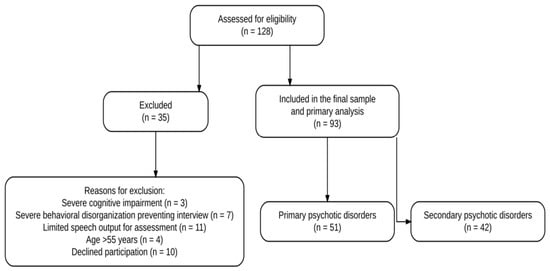
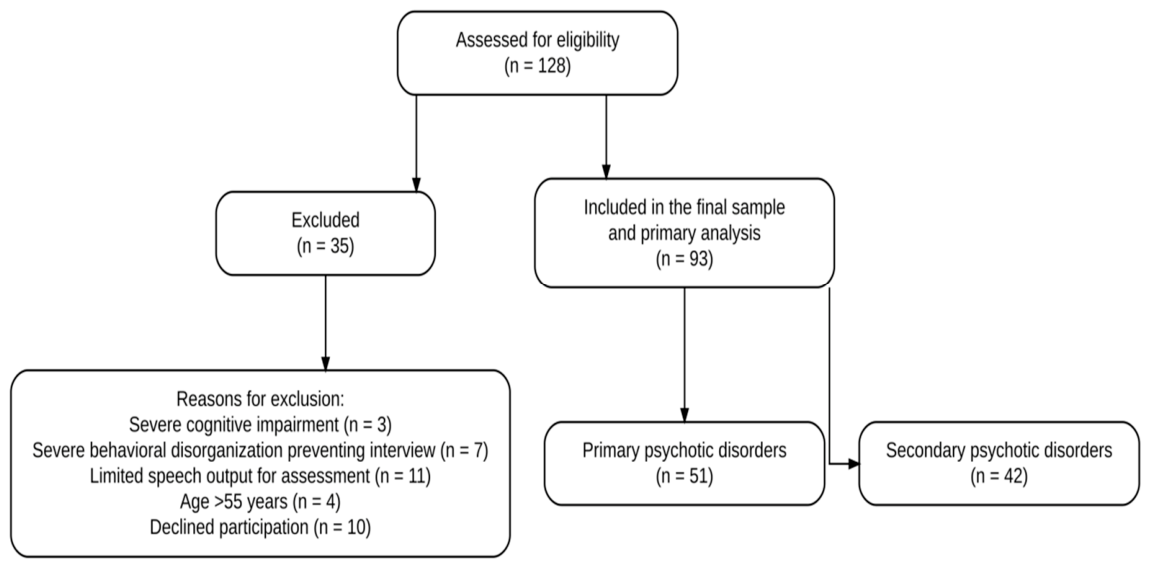
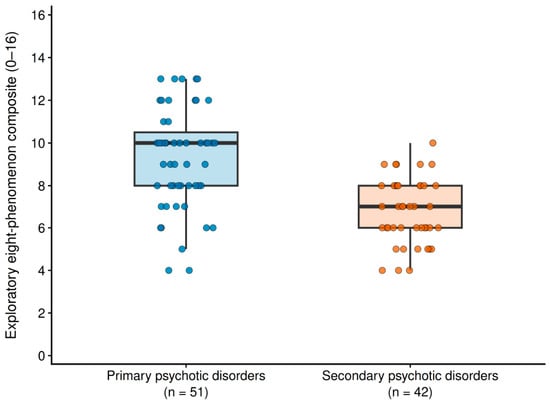
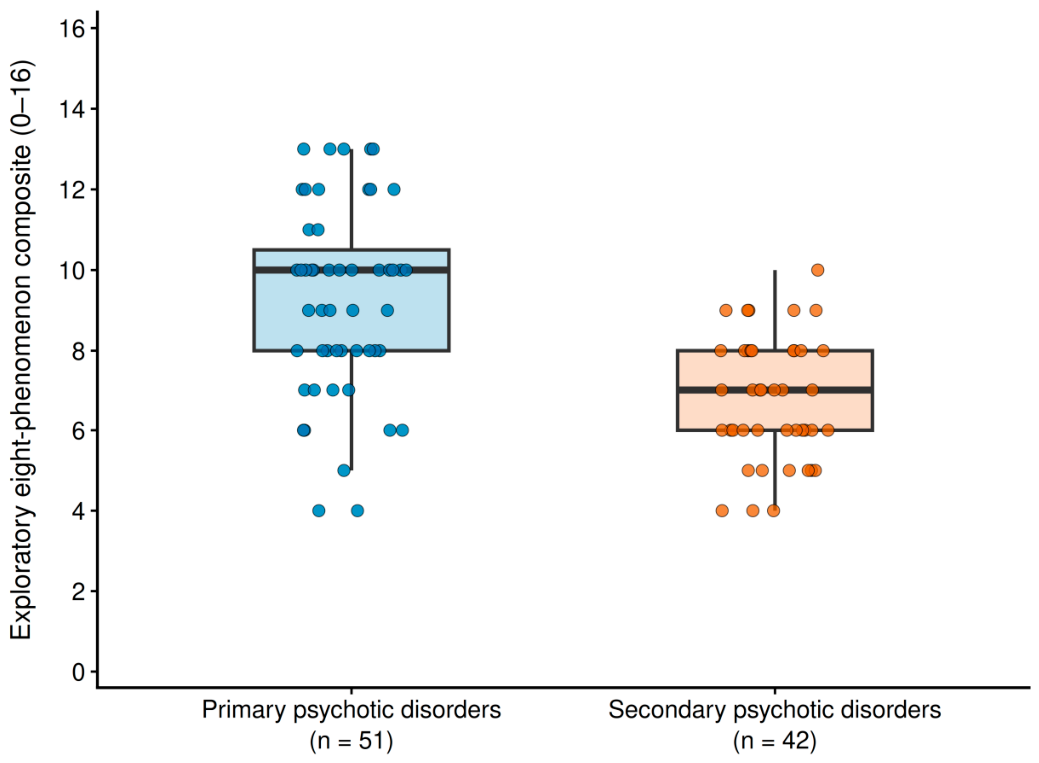

Disclaimer/Publisher’s Note: The statements, opinions and data contained in all publications are solely those of the individual author(s) and contributor(s) and not of MDPI and/or the editor(s). MDPI and/or the editor(s) disclaim responsibility for any injury to people or property resulting from any ideas, methods, instructions or products referred to in the content. |
© 2026 by the authors. Licensee MDPI, Basel, Switzerland. This article is an open access article distributed under the terms and conditions of the Creative Commons Attribution (CC BY) license.