


Abstract
Sustainable marine economic development depends on the balanced integration of economic, social, and environmental dimensions. However, empirical evidence on the current degree of coordination among these dimensions remains limited, particularly in maritime countries. This study assesses the Coupling Coordination Degree (CCD) among these three dimensions of sustainable marine economic development in 15 Indonesian coastal provinces selected based on a proportion of coastal villages exceeding the national average and availability of complete 2024 data. Using subsystem performance scores derived from a previously published Grey Relational Analysis (GRA) index, the study evaluates how balanced the current coordination state is across provinces. The findings show that higher coordination is associated not only with higher subsystem performance but also with the relative balance among dimensions. Provinces with relatively balanced development tend to achieve higher coordination, whereas strong performance in a single dimension does not necessarily lead to a well-coordinated development system. Conversely, high coordination may also arise from uniformly low performance across all dimensions, indicating that coordination and development performance represent distinct characteristics of sustainability rather than interchangeable concepts. These findings demonstrate that CCD complements conventional performance-based assessments by capturing the degree of integration among multiple development dimensions. The study contributes to the sustainable marine development literature by providing a more comprehensive framework for evaluating multidimensional sustainability and offers insights for designing integrated, place-based blue economy policies that better align economic growth, social inclusion, and environmental conservation.
1. Introduction
As the world’s largest archipelagic nation, Indonesia has substantial marine economic potential. Its waters cover roughly two-thirds of the national territory [1], and more recent national sources report a coastline of approximately 108,000 km [2]. These geographic advantages make the marine economy a key pillar of Indonesia’s development strategy, supporting economic growth while helping to reduce regional disparities [3,4].
However, realizing sustainable marine economic development remains challenging, particularly in balancing economic expansion, the well-being of coastal communities, and environmental protection. Growth in marine-based activities has increased pressure on coastal and marine ecosystems, contributing to coastal degradation, mangrove loss, marine pollution, and broader ecosystem damage [5]. National data indicate that Indonesia’s mangrove area has declined over the past five years [6], reflecting the mounting ecological impacts of marine resource use. At the same time, poverty persists in many coastal communities. According to BPS data, in 2022, the extreme poverty rate in coastal areas reached 4.19%, slightly above the national average of 4.0%, while about 1.3 million people—12.5% of Indonesia’s 10.86 million poor population—lived in coastal areas. Together, these trends highlight ongoing imbalances between economic development, social welfare, and environmental conservation, reinforcing the need for a more integrated and sustainable approach to marine economic development.
Previous studies have assessed sustainable marine economic development using diverse methods (e.g., Hirai & Comim [7], Fang et al. [8], Ni & Quan [9], Sun et al. [10] and Ding & Tabeta [11]). These approaches provide useful information regarding the performance or overall sustainability level of each individual dimension. However, performance-based assessments do not necessarily reveal how the economic, social, and environmental dimensions interact, nor whether relatively strong performance in one dimension is matched by comparable performance in the others. Consequently, these approaches offer only limited insight into the extent to which these dimensions are coordinated within an integrated development system. This distinction is crucial for sustainable marine economic development, given that economic expansion can occur alongside social inequality or environmental degradation. Therefore, an analytical framework is needed that can complement dimension-specific performance assessments by explicitly examining the interlinkages and coordination among the three dimensions.
Although the blue economy has become a leading paradigm for marine economic development worldwide and a key pathway toward the Sustainable Development Goals (SDGs), many maritime countries still struggle to balance economic growth, social well-being, and marine ecosystem sustainability [12]. This underscores that marine development success should not be judged by economic growth alone, but by the ability to advance economic, social, and environmental goals simultaneously [7]. Economic gains should therefore translate into improved social welfare while safeguarding the long-term health of coastal and marine ecosystems [13]. Sustainable marine economic development can thus be understood as a multidimensional system in which economic, social, and environmental dimensions are integrated to deliver inclusive and sustainable outcomes [14,15]. Because these dimensions are interdependent, changes in one dimension may affect the conditions and performance of the others.
From a systems theory perspective, the interdependence among these dimensions can be examined through the concepts of coupling and coordination. Coupling refers to the intensity of interdependence between interconnected subsystems, whereas coordination concerns whether such interactions are accompanied by relatively balanced development. Thus, strong coupling does not necessarily imply strong coordination, as subsystems may interact intensely while remaining at low or uneven levels of development. The Coupling Coordination Degree (CCD) framework accommodates this distinction by combining the coupling degree (C), representing the intensity of interaction between subsystems, with a comprehensive development index (T) representing the overall development level of those subsystems. Consequently, the resulting coordination degree (D) indicates whether interactions among economic, social, and environmental subsystems are accompanied by relatively balanced development. This theoretical distinction makes the CCD an appropriate method to complement conventional, performance-based assessments of sustainable marine economic development.
The Coupling Coordination Degree (CCD) approach is increasingly used in sustainable development research to examine interactions and coordination within complex systems. Grounded in systems theory, the CCD model evaluates whether subsystems develop in a balanced, coordinated, and mutually supportive manner. Unlike conventional approaches that mainly assess individual dimensions, CCD explicitly captures dynamic linkages and synergies among interconnected subsystems, making it well suited to multidimensional development analysis. Prior research has shown CCD’s usefulness in studying coordination in areas such as urbanization, economy–ecology relationships, regional development, and marine development [16,17,18,19,20,21]. These strengths make CCD particularly appropriate for evaluating coordination among the economic, social, and environmental dimensions of sustainable marine economic development.
Despite its wider adoption, CCD has seldom been applied to sustainable marine economic development, especially in archipelagic countries such as Indonesia. Existing work tends to be sector-specific or treats marine economic development, regional development, and environmental sustainability as separate strands of research [17,18,19,20,22]. Consequently, limited attention has been given to assessing how economic growth, social welfare, and marine environmental quality are coordinated within a single analytical framework. This gap is especially important in Indonesia, where provincial differences in resource endowments, socio-economic conditions, and environmental characteristics can generate highly uneven coordination patterns. Addressing this challenge requires an integrated assessment that captures interactions and synergies across the three dimensions.
This study investigates coordination among the economic, social, and environmental dimensions of sustainable marine economic development across Indonesia’s coastal provinces. Building on the multidimensional sustainability index developed by Putri et al. [23] using Grey Relational Analysis (GRA), this study extends their work by applying the Coupling Coordination Degree (CCD) model to evaluate interaction, coordination, and synergy among the three dimensions. By moving beyond performance-only assessments, the study offers a systemic perspective on the extent to which sustainable marine development is achieved through balanced multidimensional progress. The findings contribute to the literature by broadening CCD applications to sustainable marine economic development in an archipelagic setting and by advancing approaches to multidimensional sustainability assessment. They also provide evidence to support place-based policy design and stronger marine governance aimed at promoting more balanced and sustainable marine economic development in Indonesia.
2. Literature Review
Sustainable development conceptualizes economic growth, social well-being, and environmental protection as three interdependent and mutually reinforcing dimensions that collectively support long-term development [7,24,25]. Thus, development outcomes are determined not only by the performance of each dimension but also by the extent to which these dimensions are effectively balanced and integrated, ensuring that the benefits of development are shared equitably among present and future generations [26]. From this perspective, sustainable development goes beyond the pursuit of long-term economic growth and instead represents a holistic process that aligns economic prosperity, social well-being, and environmental sustainability within an integrated and interconnected system [27].
In the marine context, sustainable marine economic development has emerged as a development paradigm that positions marine resources as a strategic driver of economic growth while protecting ecological sustainability and improving the well-being of coastal communities. The concept of the blue economy has evolved as a practical manifestation of sustainable development in the marine sector, aiming to drive economic growth, create jobs, and improve social welfare without compromising the health and resilience of marine ecosystems [28]. Furthermore, Hoa [15] emphasizes that sustainable marine economic development must be pursued in harmony with social goals and environmental protection. Thus, the success of marine economic development should not be judged solely by its contribution to economic growth, but also by its ability to conserve marine ecosystems while improving the livelihoods and well-being of coastal communities.
Numerous studies have shown that the marine sector plays a crucial role in driving economic growth [8,29,30]. However, overexploitation of marine resources can lead to ecosystem degradation, biodiversity loss, and increased social vulnerability among coastal communities. Consequently, sustainable marine economic development requires a multidimensional approach that recognizes the interdependence of economic, social, and environmental dimensions. However, the implementation of a blue economy often faces challenges arising from conflicting interests across sectors and the dominance of short-term economic growth priorities [31]. These challenges underscore the need for a holistic development framework that effectively integrates economic growth, sustainable resource management, and environmental protection to ensure the long-term sustainability of marine ecosystems and the well-being of coastal communities [10,14,32].
From a systems theory perspective, sustainable marine economic development can be understood as a dynamic system comprising interconnected economic, social, and environmental subsystems that continuously interact and influence each other. Changes in one subsystem will inevitably have a ripple effect across other subsystems, underscoring the need for an integrated and system-based approach to marine development. The economic subsystem focuses on the growth, productivity, and competitiveness of marine industries, where high-quality economic development depends on achieving the right balance between economic expansion and environmental sustainability [33,34,35]. The social subsystem encompasses the well-being of coastal communities, equitable development, and improved quality of life. Social equity and inclusiveness are crucial to ensure that the benefits of marine economic activities are distributed fairly among stakeholders, particularly vulnerable coastal populations [36,37]. Meanwhile, the environmental subsystem reflects the health and resilience of marine ecosystems, which are the ecological foundation of sustainable marine development. Overexploitation of resources, marine pollution, and climate change pose significant threats to ecological integrity [38,39]. For example, empirical studies show that regions with healthier ecological systems tend to exhibit stronger coordination across development dimensions, highlighting the crucial role of ecological integrity in achieving sustainable marine economic development [19,40].
Coupling coordination theory distinguishes between interaction and coordination. The coupling degree (C) reflects the strength of association among subsystems. However, strong interaction alone does not necessarily imply desirable development: a region may exhibit strong interaction because all subsystems are jointly underdeveloped, or because pressure in one subsystem strongly constrains the others. The coupling coordination degree (D or CCD) therefore combines C with the composite development level (T). Conceptually, C captures interdependence, T captures performance, and D captures the degree to which interaction and performance jointly produce a coordinated sustainability state.
This theoretical distinction is important for interpreting CCD results. A province with high C but low T should not be interpreted as a high-performing blue economy region; it should be understood as a region with strong subsystem interaction but limited development performance. Conversely, a province with high T but imbalanced subsystem scores may still have a lower CCD because one dimension is lagging behind the others. Thus, CCD adds analytical value by identifying whether sustainability performance is supported by balanced multidimensional integration.
Given these interdependencies, the Coupling Coordination Degree (CCD) model provides a framework for examining the relationships among multiple subsystems. Coupling theory describes that the degree considers whether these interacting subsystems achieve a relatively harmonious level of development. In the context of economic–environmental relations, An et al. [41] argue that the CCD model can determine whether economic growth is accompanied by improvements in environmental quality or is achieved through unsustainable resource exploitation. This capability makes this approach particularly suitable for evaluating sustainable marine economic development, given that marine-based industries fundamentally depend on the health and resilience of marine ecosystems. Similarly, Z. Li et al. [42] show that achieving high-quality development requires effective coordination between resource and environmental carrying capacity and development quality. Such coordination can only be achieved when all subsystems develop in a balanced manner, while differences in the development of a single subsystem will weaken overall coordination and reduce the effectiveness of the system.
Nevertheless, the CCD framework has several methodological limitations that need to be considered when interpreting the results. First, the comprehensive development index (T), which contributes to the calculation of the degree of coordination, is sensitive to the weighting scheme assigned to its constituent subsystems. Consequently, different weighting strategies could influence the magnitude and ranking of CCD values. Second, a high level of coupling (C) does not necessarily indicate a high level of coordinated development. Since C primarily reflects the degree of interaction between subsystems, strong coupling can coexist with a relatively low level of comprehensive development, thereby resulting in a relatively low level of coordination (D). Thus, C and D capture distinct aspects of subsystem relationships and should not be interpreted interchangeably. Third, CCD results depend on the subsystem indices used as inputs, including the selection of indicators, data sources, normalization procedures, and weighting schemes. As a result, CCD values should be interpreted in the context of the underlying indicator and weighting framework, rather than as a completely independent or absolute measure of sustainable development.
These methodological considerations are highly relevant to the present study. The three subsystem indices used in the CCD model are derived from a prior GRA reported by Putri et al. [23], using the same indicator framework and weighting specifications. This study applies equal weights to the economic, social, and environmental dimensions to maintain consistency with that previous analysis. However, equal weighting does not eliminate the potential sensitivity of T and the resulting CCD values to alternative weighting schemes. Therefore, the CCD values and rankings reported here are interpreted as conditional on the specified indicator and equal-weight framework. Furthermore, C and D are interpreted separately, with D serving as the primary basis for assessing the level of coordination among the three dimensions. Accordingly, the CCD results are interpreted as a measure of coordination among the economic, social, and environmental dimensions within the specified indicator and weighting framework.
In the context of the marine economy, Y. Zhang [18] employed the Coupling Coordination Degree (CCD) model to examine the relationship between marine industries and regional development, as well as their impact on marine economic development. The findings highlight the need to optimize the marine industry structure, strengthen technological innovation, enhance interregional cooperation, and promote environmental protection alongside the sustainable use of marine resources. Similarly, J. Zhang [20] applied sustainable development theory and systems theory in conjunction with the CCD model to evaluate the coordination between marine economic development and the marine ecological environment. The results revealed a gradual decline in marine environmental conditions despite fluctuating upward trends in the coordination between economic development and ecological sustainability in the eastern and southern marine economic regions. Based on these findings, the study emphasized the importance of strengthening environmental protection, advancing green development strategies, increasing investment in technological innovation, and accelerating the application of marine science and technology. Collectively, these studies demonstrate that achieving sustainable marine economic development depends not only on economic growth but also on maintaining a balanced and coordinated relationship between the economic and ecological systems.
Based on existing literature, coupling theory provides a more comprehensive framework for investigating sustainable marine economic development than conventional approaches that examine economic, social, or environmental dimensions separately. By applying Coupling Coordination Degree (CCD) analysis, researchers can evaluate the degree of synergy among economic, social, and environmental subsystems while identifying disparities in the development levels of the three dimensions. This system-oriented perspective allows for a more comprehensive understanding of the interactions and trade-offs among development dimensions, thus providing a stronger scientific basis for designing integrated policies that simultaneously promote economic growth, social well-being, and environmental sustainability.
Previous studies have applied the Coupling Coordination Degree (CCD) framework to examine the coordination between economic development and ecological sustainability. For instance, research in the Yellow River Basin has evaluated the coordination between economic development and ecological systems [41], as well as the interlinkages among resource, economic, and ecological systems. In a marine context, Y. Zhang [18] analyzed the coupling relationship between marine industries and regional development, while Yang and Zhao [17] investigated the coordination between marine economic development and the marine ecological environment. Other studies have focused on marine industry agglomeration and ecological systems. Overall, these studies demonstrate the utility of the CCD in assessing the interdependence between development activities and environmental sustainability. However, existing literature has predominantly emphasized economic–environmental relationships or coordination specific to marine industries, whereas attention to the simultaneous coordination of economic, social, and environmental dimensions—as an integrated framework for sustainable marine economic development—remains relatively limited. This gap is particularly relevant for Indonesia, given the significant disparities in economic capacity, social conditions, and environmental characteristics among the country’s coastal and archipelagic provinces. Therefore, this study applies the CCD model to evaluate coordination among economic, social, and environmental dimensions within the context of sustainable marine economic development across selected Indonesian coastal provinces. In doing so, it extends the scope of CCD application, which has often emphasized economic–environmental or marine industry-related relationships—toward a more integrated, multidimensional assessment of sustainable marine economic development.
Despite these advances, empirical applications of the Coupling Coordination Degree (CCD) model to sustainable marine economic development remain relatively limited in the Indonesian context. Existing studies largely focus on the coordination between economic and environmental systems or on urban development systems [17,18,22], with relatively little attention paid to the complex interactions that characterize marine economic development. However, the diverse geographic, ecological, and socio-economic characteristics of Indonesia’s coastal and archipelagic regions require an analytical framework capable of assessing the relationships among marine economic development, coastal community well-being, and marine ecosystem sustainability. Addressing this gap is crucial for generating context-specific evidence to support integrated and sustainable marine development policies in archipelagic countries.
Therefore, this study aims to evaluate the coordination linkages between the economic, social, and environmental dimensions of sustainable marine economic development across coastal provinces in Indonesia using the Coupling Coordination Degree (CCD) model. By addressing the limited empirical evidence from island developing countries, this study provides a comprehensive assessment of regional coordination patterns and identifies gaps in the development of these three dimensions of sustainability. These findings are expected to enrich the literature on sustainable marine economic development and provide an empirical basis for designing integrated policies that promote an inclusive, resilient, and environmentally sustainable marine economy in Indonesia.
3. Materials and Methods
This study employs the Coupling Coordination Degree (CCD) model to assess the interaction and coordination among the economic, social, and environmental dimensions of sustainable marine economic development. In coupling theory, “coupling” refers to the degree of interconnection among two or more interacting systems. The coupling degree (C) characterizes the extent of interdependence among subsystems [22,43,44,45].
However, the coupling degree captures only the strength of interactions and does not adequately reflect each subsystem’s development level or the effectiveness of coordinated development [22,44,46]. As a result, a high coupling degree does not necessarily imply strong coordination, since intense interactions may also occur when subsystems remain at relatively low development levels. To overcome this limitation, the CCD model combines information on both interaction intensity and subsystem development, enabling a more comprehensive evaluation of coordinated development across interrelated subsystems [47].
The CCD model has been widely used to quantify relationships among subsystems in development research, including studies of marine economic development, environmental–ecological systems, and socio-economic systems. For sustainable marine economic development, an effective assessment framework should capture not only the interactions among economic, social, and environmental dimensions, but also their respective development levels. Accordingly, the CCD model is well suited to assess the current degree of coordination and balance among these three dimensions within the sustainable marine economic development system.
In this study, the coupling degree (C) is computed using the revised formulation proposed by Mingkai et al. [44], Xie et al. [45] and Wang et al. [48]. This revised formulation is adopted because the conventional coupling model may have limited validity when applied to multidimensional development data, particularly when subsystem values exhibit relatively low variation. Under such conditions, the conventional formulation can produce C values that are concentrated close to 1, reducing its ability to effectively discriminate differences in the degree of interaction among subsystems. This limitation is particularly relevant to social indicators, which often exhibit relatively low variability across regions and may therefore weaken the discriminatory capacity of the conventional coupling measure. The revised formulation addresses this issue by improving the differentiation of coupling values and providing a more reliable representation of the interaction among multiple subsystems Wang et al. [48]. Relative to the conventional linkage model, this revised approach provides a more robust measure of interactions among multiple subsystems and has been widely adopted in recent sustainable development research. The linkage among the economic, social, and environmental dimensions is calculated as follows:
where C denotes the coupling degree, with values ranging from 0 to 1, representing the strength of the interaction between the economic, social, and environmental dimensions. A higher value of C indicates a stronger degree of interdependence among the three dimensions [44]. Following Wang et al. [48], the subsystem indices are sorted in ascending order, so that U1, U2, and U3 represent the minimum, median, and maximum values of Ui, respectively.
Coupling Coordination Degree (CCD) was calculated according to the following equation [44,45,48,49]:
Here, (D) denotes the Coupling Coordination Degree (CCD), ranging from 0 to 1. (T) represents the overall performance of marine economic development, integrating the economic, social, and environmental dimensions [23]. The three subsystems are assigned equal weights (α1 = α2 = α3 = 0.33). In this study, equal weighting α1 = α2 = α3 = 0.33 is applied to the economic, social, and environmental dimensions. This specification follows the weighting approach adopted in our previous study, Putri et al. [23], from which the subsystem performance indices used in the present study were derived. The equal-weight specification is also conceptually consistent with the multidimensional nature of sustainable marine economic development, in which economic performance, social well-being, and environmental sustainability are considered equally important dimensions of sustainability. Equal weighting is justified because the blue economy concept treats economic growth, social inclusion, and environmental conservation as co-equal pillars; privileging one dimension ex ante would contradict the multidimensional sustainability framework. Because the coupling coordination degree (D) is mathematically derived from the coupling degree (C) and the comprehensive development index (T), C and D are not treated as independent variables in subsequent correlation analyses. Accordingly, any statistical association between C and D is not interpreted as an independent empirical relationship because C is explicitly incorporated into the calculation of D. Higher **D** values indicate stronger coordination and a more balanced development among the three dimensions, reflecting greater synergy in sustainable marine economic development [45,46].
For interpretation, absolute CCD thresholds are used as the primary basis for classifying coordination levels. Using the established thresholds, CCD values between 0.60 and 0.70 indicate primary coordination, whereas values between 0.70 and 0.80 indicate intermediate coordination [47]. Since the observed CCD values range from 0.614 to 0.765, none of the sampled provinces is classified as weakly coordinated in absolute terms. For comparative purposes, provinces are additionally grouped into three relative ranking groups: ranks 1–5 represent relatively higher coordination, ranks 6–10 represent intermediate relative positions, and ranks 11–15 represent relatively lower positions within the sample. These ranking groups describe relative positions only and are not interpreted as absolute coordination categories.
This study adopts the subsystem index developed by Putri et al. [23], which assesses sustainable marine economic development in 15 Indonesian coastal provinces using Grey Relational Analysis (GRA) and secondary data from 2024. Based on Putri et al. [23], the selection of the 15 provinces analyzed was based on those having a percentage of coastal villages exceeding the national average (15.94%) according to PODES 2024. The index captures economic, social, and environmental dimensions and is used as the input for the Coupling Coordination Degree (CCD) analysis.
The subsystem development scores used as inputs to the Coupling Coordination Degree (CCD) model were obtained from Putri et al. [23], which developed a sustainability assessment of marine economic development using the Grey Relational Analysis (GRA) approach. While the previous study focused on measuring the performance of the economic, social, and environmental subsystems, the present study uses these established subsystem scores to examine their degree of coupling and coordination. Thus, the analytical contribution of this study lies in assessing the interdependence and coordination among the subsystems rather than reconstructing the sustainability index.
For transparency, Table 1 reports the indicator system, expected orientation, main data source, and standardization logic used to construct the input subsystem indices. Positive indicators were standardized so that higher values indicate better sustainable marine development performance; negative indicators were standardized inversely so that higher normalized values indicate lower sustainability risk. The GRA coefficients and final subsystem scores from Putri et al. [23] were then used as direct inputs to the CCD model in this article.
Table 1.
Indicator system used to derive the GRA subsystem scores employed as CCD inputs.
To facilitate interpretation of the ECO, SOS, and ENV subsystem configurations, the subsystem scores were classified into three relative performance levels based on their distribution across the 15 provinces. A subsystem was classified as High (H) when its score exceeded the mean plus one standard deviation (), Medium (M) when its score fell within the range of the mean minus one standard deviation and the mean plus one standard deviation (), and Low (L) when its score was below the mean minus one standard deviation (). These thresholds were applied consistently to the ECO, SOS, and ENV subsystem scores.
Descriptive statistics were calculated for all variables used in the analysis to provide an overview of their distribution and cross-provincial variation. The minimum, maximum, mean, and standard deviation were examined for each variable before the construction of the subsystem scores. These statistics provide an initial assessment of the magnitude and variability of the economic, social, and environmental indicators across the 15 provinces and help contextualize the subsequent standardization and coupling coordination analysis. Table 2 presents the descriptive statistical analysis.
Table 2.
Descriptive statistics on the subsystem indices and comprehensive development index.
To assess the sensitivity of the CCD results to the specification of the coupling formulation, the results obtained using the revised coupling formula were compared with those generated using the conventional cubic-root formulation. The comparison was conducted using the CCD values, provincial rankings, and Spearman rank correlation coefficient. Data processing and statistical analysis in this study were conducted using Microsoft Excel 365 (Microsoft Corporation, Redmond, WA, USA).
4. Results
Table 3 provides the results of the Coupling Coordination Degree among provinces in Indonesia. Based on the CCD classification presented in Table 1, the five provinces exhibiting strong coordination were Southeast Sulawesi (0.765), Bangka Belitung Islands (0.764), South Sulawesi (0.757), North Maluku (0.721), and Bali (0.712). These provinces demonstrated a relatively higher level of development coordination among the economic, social, and environmental dimensions of sustainable marine economic development. A relatively high CCD value indicates that the interactions among these three dimensions are more balanced and mutually reinforcing, indicating that economic development has gone hand in hand with improving social welfare and environmental sustainability. This finding is consistent with Hoa [15], who argues that sustainable marine economic development requires a harmonious integration of economic growth, social objectives, and environmental protection.
Table 3.
Coupling Coordination Degree for 15 Provinces in Indonesia.
The Coupling Coordination Degree (CCD) reflects the extent to which economic, social, and environmental dimensions interact and develop in a coordinated manner in sustainable marine economic development. A higher CCD value indicates a more balanced and harmonious development among the three dimensions, reflecting stronger synergy and a higher level of coordinated development. Consequently, the CCD provides an effective measure for evaluating the overall coordination performance of sustainable marine economic development across regions.
Southeast Sulawesi recorded the highest overall performance, demonstrating both the highest Coordination Coupling Degree (CCD) and a high Coupling Degree (C). Its high coupling degree (0.972) indicates strong interdependence between the economic, social, and environmental dimensions. This is reflected in the relatively balanced performance of the three subsystems, with development indices of 0.618 for the economic dimension, 0.592 for the social dimension, and 0.597 for the environmental dimension. Although these subsystem scores are not the highest among all provinces, the relatively even distribution contributes to a high level of coordinated development. This finding suggests that achieving sustainable marine economic development does not depend solely on maximizing performance in a single dimension, but rather on maintaining a balance between economic growth, social welfare, and environmental sustainability. In other words, the balance among the three dimensions appears to be more influential in determining the level of coordination than exceptional performance in any individual subsystem.
Southeast Sulawesi possesses substantial marine fisheries resources, with an estimated marine fishery potential exceeding 1.5 million tons annually due to its location within Indonesia’s Fisheries Management Areas (WPPNRI) 714 and 715 [50]. This strong marine resource base provides favorable conditions for marine economic development and is associated with relatively balanced performance across the economic, social, and environmental dimensions. As a result, although the overall development levels of the individual dimensions are moderate rather than exceptional, their balanced distribution contributes to a high level of coupling coordination. This finding reinforces the importance of maintaining equilibrium among the three sustainability dimensions, suggesting that balanced development is more critical for achieving high coordination than maximizing the performance of any single dimension.
The Bangka Belitung Islands exhibit a similar balanced development pattern. The province recorded a subsystem index of 0.665 for the economic dimension, 0.582 for the social dimension, and 0.635 for the environmental dimension, indicating a more equitable distribution of development across these three dimensions compared to that observed in most other provinces. This balanced performance resulted in a composite development index (T) of 0.628 and a Coordination Coupling Degree (CCD) of 0.764, placing the province among the provinces with strong coordination.
In contrast, South Sulawesi exhibited a different development pattern. This province achieved the highest economic subsystem index (0.715) and a relatively high social subsystem index (0.668), while its environmental subsystem index remained relatively moderate (0.567). This imbalance reduced the Coupling Degree (C) to 0.881, reflecting weaker interactions among the three dimensions compared to those observed in Southeast Sulawesi and the Bangka Belitung Islands. However, its relatively high composite development index (T = 0.650) compensates for the lower level of interconnectedness, allowing the province to maintain CCD in the strong coordination category.
An interesting pattern was observed in Bali, which recorded the highest social subsystem index (0.838) and the highest performance in sustainable marine economic development (T = 0.669) among all provinces, yet its Coupling Degree (C) remained relatively low at 0.759. These results indicate that the province’s overall development is characterized by imbalances among the three dimensions of sustainability, particularly the economic (0.579) and environmental (0.589) dimensions, both of which remain at moderate levels. Consequently, the outstanding performance in the social dimension is not accompanied by comparable progress in the economic and environmental dimensions.
Consequently, Bali’s coordination level is lower than that of Southeast Sulawesi and the Bangka Belitung Islands, despite achieving a higher overall development index. From the perspective of the theory of coupling coordination, these findings suggest that differences in the development of individual subsystems can weaken the overall system’s synergy and reduce the level of coordinated development. This interpretation is consistent with the findings of Lai et al. [51], who identified subsystem imbalance as a key obstacle to improving coordination in sustainable development.
The moderate coordination group consists of North Sulawesi, Riau Islands, Maluku, Papua, and Gorontalo, indicating provinces with significant development potential but with coordination between the economic, social, and environmental dimensions that has not yet reached optimal levels. Maluku, for example, recorded a relatively high economic subsystem index (0.637), while the social (0.520) and environmental (0.491) subsystem indices were relatively lower, resulting in a Coupling Coordination Degree (CCD) of 0.682. These results indicate that the province’s relatively strong economic performance has not been accompanied by comparable improvements in social welfare and environmental sustainability. Consequently, the imbalance between these three dimensions continues to limit the overall level of coordinated development. This finding is consistent with Peng et al. [52], who reported that regions experiencing rapid economic expansion often face lagging environmental performance, thus limiting improvements in overall system coordination.
The findings for Maluku are consistent with those reported by Putri et al. [23], who found that the province performed strongly in the economic dimension but lagged behind in the social and environmental dimensions. Maluku possesses abundant marine resources, as its waters encompass three Indonesian Fisheries Management Areas (WPPNRI 714, 715, and 718), providing substantial opportunities for marine-based economic activities [53]. This resource endowment is reflected in the province’s Fisherman’s exchange rate, which reached 114.24 in 2024, the highest among all Indonesian provinces [54]. The high Fisherman’s exchange rate indicates that marine resource utilization contributes positively to the economic well-being of fishers. However, this area is not immune to overfishing activities, which have resulted in a decline in the catches of local small-scale fishermen [55] and damage to the marine ecosystem. This contrast between strong economic performance and comparatively weaker environmental conditions may help explain why the province achieved only a moderate level of coupling coordination despite its considerable marine economic potential.
The relatively strong economic performance in Maluku has not been matched by comparable improvements in the social dimension. This disparity may be attributed, in part, to the province’s archipelagic geography, where dispersed islands present persistent challenges for the provision of basic infrastructure and public services, including education, healthcare, and transportation. Consequently, the economic benefits generated by marine-based activities may not be distributed evenly across coastal communities. Moreover, many coastal households in Maluku continue to rely on small-scale fisheries, which are highly vulnerable to external shocks such as climate change [56]. These conditions suggest that economic growth derived from the marine sector has not yet translated into equivalent gains in social resilience.
The comparatively lower environmental performance may also reflect increasing pressure on coastal and marine ecosystems associated with intensive resource utilization. Given the province’s high dependence on fisheries, continued economic expansion without effective ecosystem-based management may increase the risk of overexploitation and environmental degradation. This imbalance between economic development and environmental sustainability further constrains the province’s overall level of coupling coordination.
These findings indicate that Maluku’s strong economic performance has not yet been accompanied by comparable progress in the social and environmental dimensions. From a sustainable development perspective, this pattern reflects a trade-off between these three dimensions, whereby improvements in the economic subsystem are not matched by equivalent gains in the well-being of coastal communities and the condition of marine and coastal ecosystems. This imbalance limits the overall level of coordination, highlighting that sustainable marine economic development depends not only on economic growth but also on the simultaneous advancement of social development and environmental sustainability.
The weak coordination group, consisting of East Nusa Tenggara, Central Sulawesi, West Sulawesi, West Papua, and West Nusa Tenggara, represents provinces where sustainable marine economic development is still characterized by substantial gaps across the economic, social, and environmental dimensions. Compared to the strong and moderate coordination groups, these provinces exhibit lower levels of synchronization among the three subsystems, resulting in weaker overall linkage coordination.
West Nusa Tenggara provides a representative example of this development pattern. This province recorded a relatively high social subsystem index (0.740), while the economic (0.457) and environmental (0.436) subsystem indices remained significantly lower, resulting in the lowest Linkage Coordination Degree (CCD) score (0.614) among the provinces studied. This pattern indicates that improvements in the social dimension have not been accompanied by comparable progress in marine economic development and environmental sustainability. Consequently, the marked imbalance among the three dimensions limits the province’s overall level of development coordination.
West Papua exhibits contrasting development patterns. The province recorded a relatively high environmental subsystem index (0.620), indicating that its marine and coastal ecosystems are relatively well-maintained. However, its relatively low economic subsystem index (0.401) limits overall coordination. These findings suggest that strong environmental performance has not been accompanied by adequate economic development to improve the well-being of coastal communities. Consequently, the primary challenge for sustainable marine economic development in eastern Indonesia lies not only in maintaining environmental sustainability but also in strengthening inclusive marine-based economic development that can generate broader socio-economic benefits.
From a regional perspective, the study results indicate substantial regional disparities in the level of coordination degree for sustainable marine economic development across Indonesia’s provinces. Provinces in the Sulawesi region are predominantly classified as having strong and moderate coordination, while provinces in Papua and Nusa Tenggara are more frequently represented in the weak coordination group. This spatial pattern suggests that marine resource abundance alone is not sufficient to achieve a high level of coordinated development. Instead, sustainable marine economic development appears to depend on the extent to which economic growth, social development, and environmental sustainability are promoted in a balanced and integrated manner.
5. Discussion
5.1. Comparison with Previous Studies and Interpretation of Coordination Patterns
Overall, the results show that all 15 Indonesian provinces exhibit relatively high Coupling Degree (C) values (0.693–0.972). This indicates strong interconnections among the economic, social, and environmental dimensions of sustainable marine economic development, highlighting their interrelated nature within an integrated development system. However, the high coupling values should be interpreted as evidence of strong interconnection among the three dimensions rather than as evidence of causal effects or changes over time. The consistently high coupling across provinces further indicates that sustainable marine economic development cannot be adequately characterized by isolated sectoral performance alone but should be considered in relation to the interconnections among its economic, social, and environmental dimensions.
The observed CCD values across the 15 Indonesian coastal provinces (0.614–0.765) can be contextualized against previous multidimensional and marine-related CCD applications. A study of the marine economic–ecological–social system across 11 coastal regions of China classified CCD values of 0.60–0.70 as moderate coordination and 0.70–0.80 as intermediate coordination, providing a closely comparable three-dimensional framework to the present study [19]. This study provides a particularly relevant reference because, similar to the present research, it considers multiple dimensions of marine sustainable development rather than focusing exclusively on economic–environmental interactions. The Indonesian results, therefore, indicate a primary-to-intermediate level of coordination under the absolute thresholds adopted in this study. However, direct numerical comparisons should be interpreted cautiously because CCD values are sensitive to differences in indicator selection, normalization procedures, weighting schemes, subsystem construction, and model specifications across studies.
These findings align with key sustainable development principles emphasizing that long-term progress requires the balanced integration of economic growth, social inclusion, and environmental protection [24]. Barbier and Burgess [25] similarly contend that sustainability depends on the simultaneous advancement of all three dimensions rather than progress in only one. Extending this view, the present study shows that such interdependencies are widespread across Indonesia’s provinces, although the extent to which they translate into coordinated development varies considerably.
Despite uniformly high C values, the Coupling Coordination Degree (CCD) differs markedly (0.614–0.765). This contrast suggests that strong interdependence does not automatically produce well-coordinated, balanced development. Instead, the provinces display a pattern of strong linkages but uneven coordination: subsystem interactions are consistently strong, yet their effectiveness in generating coordinated outcomes varies substantially. These results imply that coupling strength alone is insufficient to ensure sustainable marine economic development. Coordinated development depends more on how evenly the economic, social, and environmental dimensions are developed and balanced across provinces. This interpretation is consistent with Shi et al. [57], who argue that high linkage does not necessarily yield optimal coordination because outcomes are shaped by spatial heterogeneity and regional differences in the capacity to manage subsystem interactions.
Figure 1 illustrates the provincial distribution of the Coupling Degree (C) and the Coupling Coordination Degree (CCD) of the economic, social, and environmental dimensions of sustainable marine economic development in Indonesia. The study highlights that the coupling degree alone is insufficient to comprehensively evaluate the level of sustainable development, as a high level of interaction between subsystems does not necessarily correspond to a high level of development coordination. While the coupling degree only reflects the intensity of interaction between economic, social, and environmental subsystems, the CCD combines the intensity of interaction and the level of development of subsystems, thus providing a more comprehensive assessment of balanced and coordinated development [16,18,43,47,48].
Figure 1.
Provincial distribution of coupling degree (C) and coupling coordination degree (CCD) of the economic, social, and environmental dimensions of sustainable marine economic development in Indonesia. Note: The colors indicate the relative group of CCD: dark blue = relatively strong coordination, orange = relatively moderate coordination, and green = relatively weak coordination.
As shown in Figure 1, provinces with higher C values generally exhibit higher CCD values. Southeast Sulawesi, the Bangka Belitung Islands, and South Sulawesi fall into the high-C, high-CCD group, reflecting strong cross-dimensional linkages accompanied by relatively higher coordination levels. In contrast, West Nusa Tenggara, West Sulawesi, and West Papua show relatively low C and CCD values, suggesting weaker interactions among dimensions and associated with relatively lower levels of development coordination.
The coupling degree (C) and coupling coordination degree (D) represent related but distinct aspects of the relationship among the three subsystems. Because D is mathematically derived from both C and the comprehensive development index (T), according to , any association between C and D is expected by construction and should not be interpreted as an independent empirical relationship. The coupling degree (C) reflects the strength of interaction or interdependence among the economic, social, and environmental subsystems, whereas the coupling coordination degree (D) additionally incorporates their comprehensive development level through T. Consequently, a high C does not necessarily imply a high D when the overall development level of the subsystems is relatively low. In this study, C is therefore interpreted as an indicator of subsystem interaction, while D is used as the primary measure of coordination among the three dimensions.
These findings indicate that a high coupling degree does not automatically result in a high level of coupling coordination, as the latter also depends on relative development and the balance between dimensions. The cases of West Papua and East Nusa Tenggara illustrate this pattern, where relatively high levels of linkage are not matched by proportionately high levels of coordination.
Figure 2 shows that provinces with higher sustainable marine economic development performance tend to exhibit higher CCD values. Provinces with high performance—such as Bali, South Sulawesi, Bangka Belitung Islands, and Southeast Sulawesi—tend to exhibit higher CCDs compared to provinces with low performance, such as West Nusa Tenggara, Central Sulawesi, and West Papua. These findings indicate that the level of coordination is associated not only with the strength of interlinkages among development dimensions but also with the overall development performance of the subsystems.
Figure 2.
Provincial distribution of sustainable marine economic development performance (T) and the coupling coordination degree (CCD) across the 15 provinces of Indonesia. Note: The colors indicate the relative group of CCD: dark blue = relatively strong coordination, orange = relatively moderate coordination, and green = relatively weak coordination.
As a practical expression of the blue economy, sustainable marine economic development requires that economic growth occur alongside improved social welfare and ecosystem protection. Hoa [15] stresses that marine economic development must align with social objectives and environmental safeguards. Therefore, success should be assessed not merely through economic gains, but also through the capacity to conserve marine ecosystems and enhance the well-being of coastal communities.
5.2. Regional Context and Structural Interpretation of Coordination Patterns
Figure 3 reveals relative strong coordination patterns in sustainable marine economic development performance across several Indonesian provinces. Southeast Sulawesi and North Maluku show the same M–M–M pattern across the economic, social, and environmental dimensions. The resulting high coordination level (CCD) suggests that these three dimensions are relatively balanced and interact strongly. However, although coordination is high, overall performance remains at a medium level, indicating that strong dimensional integration does not necessarily translate into optimal outcomes.
Figure 3.
Pathway Coupling Coordination Degree with Relative Strong Coordination. Note L = Low (x < − SD), M = Medium ( − SD ≤ x < + SD); H = High (x ≥ + SD).
The Bangka Belitung Islands and South Sulawesi display different patterns—H–M–H and H–H–M—where one dimension lags the others, producing a medium level of coupling. Even so, both provinces achieve high overall performance. This implies that strong results in two dimensions can elevate aggregate performance even when inter-dimensional balance has not been fully realized; in other words, high overall performance may occur without balanced progress across dimensions.
Bali, characterized by an M–H–M pattern, shows a low degree of coupling but high overall performance (T), placing it among regions classified as strongly coordinated. This indicates that outstanding achievement in one dimension can raise overall performance even when integration among dimensions is weak. Overall, these results suggest that high marine economic development performance has not yet been implemented in a harmonized way across the economic, social, and environmental dimensions.
Taking together, the identified patterns show that relative strong coordination can arise under multiple configurations, but the most desirable coordination pattern would be one in which all three dimensions achieve relatively high and balanced performance simultaneously. This reinforces the core principle of sustainable marine economic development: success depends not only on the scale of achievement, but also on the quality of interactions among economic, social, and environmental dimensions in supporting long-term sustainability.
Figure 4 illustrates the relative moderate coordination group, which comprises three patterns. North Sulawesi and Gorontalo exhibit an M–H–M pattern, yielding a medium coupling degree and medium marine economic development performance. The Riau Islands and Papua show an M–M–M pattern, while Maluku displays an H–H–M pattern. Although these provinces follow different patterns, all fall within the same coupling degree category (medium), indicating that linkages and balance across development dimensions are not yet optimal, but also not weak.
Figure 4.
Pathway Coupling Coordination Degree with Relative Moderate Coordination. Note: L = Low (x < − SD); M = Medium ( − SD ≤ x < + SD); H = High (x ≥ + SD).
Moderate marine economic development performance corresponds to a medium level of coordination (CCD). This suggests that sustainable marine economic development in these provinces reflects some integration across dimensions, but the coordination and overall development quality remain moderate. More even improvements across all dimensions are therefore required to strengthen inter-dimensional linkages, enhance overall performance, and move this group toward stronger coordination.
Figure 5 presents the relative weak coordination group. East Nusa Tenggara has an M–M–M pattern and Central Sulawesi an L–M–M pattern, both producing a medium coupling degree. However, their sustainable marine economic development performance is low, placing them in the weak coordination category. This indicates that while the development dimensions are interconnected, development outcomes remain insufficient to generate higher coordination.
Figure 5.
Pathway of Coupling Coordination Degree with Relative Weak Coordination. Note: L = Low (); M = Medium ( − SD ≤ x < + SD); H = High ().
Meanwhile, West Sulawesi, West Nusa Tenggara, and West Papua—where marine economic development performance falls into the moderate category—exhibit low-to-moderate levels of coupling coordination. This pattern indicates that relatively good marine economic performance does not automatically result in balanced development across economic, social, and environmental dimensions. Consequently, the relatively weak coordination in these provinces should not be viewed merely as an imbalance between dimensions but must also be considered within the broader structural context of regional development in Indonesia. Historically, development in eastern Indonesia has faced structural obstacles due to remote geographic locations, low population density, inadequate infrastructure, and relatively high transportation costs compared to major economic centers in western Indonesia [58]. These factors can limit the integration of peripheral regions with key markets and growth centers, thereby affecting their ability to transform natural resource potential into broader economic opportunities. The mere availability of marine resources does not guarantee high and balanced marine economic development if supporting infrastructure, market access, and downstream productive capacity remain limited.
Differences in institutional capacity and local development capabilities may further shape these disparities [59,60], particularly in coordinating infrastructure provision, marine resource management, and the delivery of public services. Sustainable marine economic development requires coordination among economic activities, local livelihoods, and the protection of marine and coastal ecosystems [61]. The World Bank’s Oceans for Prosperity framework emphasizes that Indonesia’s blue economy requires an integrated, cross-sectoral approach linking fisheries and coastal tourism with healthy marine ecosystems, equitable economic opportunities, and resilient coastal livelihoods. In this context, the relatively low levels of coupling coordination in West Nusa Tenggara and West Papua may reflect not only differences in the capacity to utilize marine resources but also limited synchronization among resource-based economic activities, supporting infrastructure, social benefits, and environmental governance. These contextual factors may help explain why an improvement in one dimension of development does not automatically result in a proportional improvement in another. Therefore, strengthening coordination and linkages requires not only enhancing overall marine economic performance but also reducing structural and institutional disparities, so that economic gains can be translated into broader social benefits while maintaining environmental sustainability.
5.3. Policy Implications
Overall, the study shows that Indonesia’s sustainable marine economic development has reached a stage where inter-dimensional linkages are generally strong, but coordination remains suboptimal. High CD values in most provinces reflect robust connections among economic, social, and environmental dimensions. However, variation in CCD values points to persistent imbalances across dimensions, which remain a key challenge for sustainable marine economic development in Indonesia.
The findings further indicate that a one-size-fits-all strategy is ineffective across Indonesia’s diverse provinces. Provinces with strong coordination need policies that emphasize innovation and greater value added in the marine economy. Provinces with moderate coordination should prioritize stronger integration among the dimensions of sustainability. Provinces with weak coordination require more fundamental interventions, including simultaneous improvements in economic, social, and environmental capacities. A region-based approach is therefore essential to help each province progress toward more balanced, coordinated, and sustainable development.
Policy recommendations should be differentiated by coordination pattern. For relatively strong coordination provinces such as Southeast Sulawesi, Bangka Belitung Islands, South Sulawesi, North Maluku, and Bali, policy should focus on maintaining balance while preventing environmental degradation from future marine economic expansion. Instruments may include ecosystem-based fisheries management, mangrove and coastal conservation, blue tourism standards, and monitoring systems that keep economic growth aligned with social and environmental safeguards.
For relatively moderate coordination provinces such as North Sulawesi, Riau Islands, Maluku, Papua, and Gorontalo, policy should target the lagging subsystem. In Maluku, this means strengthening social infrastructure and environmental governance to complement strong fishery-based economic potential. In Riau Islands, the priority is to ensure that marine-based economic connectivity and tourism generate benefits for coastal communities while protecting marine ecosystems. In Papua and Gorontalo, coordinated development requires stronger market access, service delivery, and cross-sector planning.
For relatively lower coordination provinces such as East Nusa Tenggara, Central Sulawesi, West Sulawesi, West Papua, and West Nusa Tenggara, policy should address the structural constraints that prevent subsystem alignment. Priority measures include inter-island logistics, cold-chain infrastructure, community-based fisheries institutions, targeted coastal livelihood programs, digital market access, disaster-risk-sensitive marine planning, and stronger environmental monitoring. In eastern archipelagic provinces, blue economy policies must be adapted to scattered-island geography rather than designed as if all coastal provinces have the same spatial and institutional capacity.
5.4. Limitations and Robustness of the CCD Approach
Table 4 compares the CCD results obtained using the traditional coupling formulation and the revised formulation. The comprehensive development index (T) remains the same for both formulations because the revision pertains to the specification of the coupling component (C) rather than the calculation of the overall development level. Conversely, the revised formulation yields systematically lower C values compared to the conventional formulation, which in turn results in lower absolute CCD values (D) across the 15 provinces.
Table 4.
Robustness test comparing traditional method with revised method.
Despite the differences in magnitude, both formulations yield a generally consistent ranking of provinces. The Spearman rank correlation between the provincial rankings derived from the conventional formulation and the revised formulation is 0.771 (p = 0.001), indicating a strong and statistically significant positive relationship. This suggests that the primary spatial pattern of relative coordination is quite robust regarding the choice of coupling formulation, even though the rankings of some provinces underwent noticeable changes.
These differences in ranking also demonstrate that the revised formulation has a substantial methodological impact, rather than merely replicating conventional results. For instance, Southeast Sulawesi moved from fourth place under the conventional formulation to first place under the revised one, whereas Bali shifted from first to fifth place. West Nusa Tenggara moved from eleventh to fifteenth place, while Papua’s position improved from thirteenth to ninth. These changes indicate that the revised formulation alters the sensitivity of the coupling measure to disparities among the scores of the three subsystems.
Crucially, this robustness test does not imply that the two formulations yield identical CCD values. Instead, it demonstrates that the absolute magnitudes and—to some extent—the provincial rankings are sensitive to the mathematical specification of the coupling component, even though a substantial degree of relative consistency is maintained. Therefore, the revised formulation should be viewed as a methodological refinement affecting the measurement of coupling intensity, rather than as an entirely different CCD framework. This robustness analysis also underscores the importance of explicitly stating the coupling formulation used when comparing CCD results across studies.
Finally, because the study uses a cross-sectional dataset for 2024, the results represent the current coordination status of the selected provinces and should not be interpreted as evidence of temporal evolution or causal relationships. In addition, CCD results depend on the construction of the subsystem indices and weighting scheme. These limitations should be considered when interpreting the absolute CCD values and comparing them across studies. In the present study, equal weighting was retained to maintain consistency with the subsystem indices used in the analysis. Nevertheless, the choice of weighting scheme may affect the comprehensive development index (T) and, consequently, the resulting CCD values. Therefore, the absolute CCD values and provincial rankings should be interpreted as conditional on the adopted weighting scheme and subsystem construction.
6. Conclusions
This study evaluates the current coordination state among the economic, social, and environmental dimensions of sustainable marine economic development in 15 selected Indonesian coastal provinces using the Coupling Coordination Degree model. The findings show that CCD complements conventional performance-based indices by distinguishing overall subsystem performance from cross-dimensional coordination. A province may perform well in one dimension but still have lower coordination if the other dimensions lag behind. Conversely, a province with moderate scores across all dimensions may achieve a relatively high CCD when the subsystems are balanced.
Five provinces—Southeast Sulawesi, Bangka Belitung Islands, South Sulawesi, North Maluku, and Bali—record the highest coordination levels within the observed provincial group, whereas East Nusa Tenggara, Central Sulawesi, West Sulawesi, West Papua, and West Nusa Tenggara record comparatively lower CCD values. These differences indicate that the sustainability challenge is not simply a matter of strengthening individual economic, social, or environmental performance, but of improving the alignment among them. A province may exhibit strong interconnection among its subsystems while still experiencing relatively lower coordination when performance across the three dimensions is uneven.
Importantly, the CCD should be interpreted as a measure of the degree of coordination among the economic, social, and environmental dimensions rather than as a direct measure of the absolute level of development. A higher CCD indicates that the three dimensions are more closely coordinated at the observed time point, but it does not necessarily mean that a province has achieved a higher overall level of development. For example, a province with moderate levels across all three dimensions may exhibit a higher CCD than a province with a high economic level but substantially lower social or environmental levels. Thus, the CCD provides information on the balance and coordination among dimensions, complementing rather than replacing assessments of their individual performance.
The main contribution of this study is not to claim that CCD is an indispensable decision tool in all settings, but to demonstrate precisely what it adds over simpler composite indices. Composite indices summarize performance; CCD diagnoses whether the dimensions of performance are aligned. In the Indonesian blue economy context, this distinction helps policymakers identify whether marine economic growth, coastal community welfare, and environmental conservation are currently moving in a coordinated direction.
The policy implication is that blue economy governance should be place-based and differentiated. Provinces with relatively strong coordination should maintain balance and prevent future ecological pressure. Provinces with moderate coordination should strengthen their lagging subsystem. Provinces with lower relative coordination require integrated interventions addressing logistics, market access, social services, fisheries governance, and ecosystem protection. Future research should extend the dataset to multiple years, incorporate formal spatial econometric tests, and analyze the institutional and fiscal factors shaping marine coordination gaps across Indonesia’s archipelagic provinces.
Author Contributions
D.Z.P. initiated the research; collected, processed, and interpreted the data; and wrote the manuscript. A.F. contributed to the interpretation of the data and provided critical interpretation and manuscript writing. H.R. contributed to the design, computation, interpretation, and manuscript writing. B.J. supervised the work and provided additional comments on the results and interpretations. All authors have read and agreed to the published version of the manuscript.
Funding
This research was supported by The Center for Financing and Assessment of Higher Education (PPAPT), Indonesian Education Scholarship Program (BPI), Ministry of Higher Education, Science, and Technology of the Republic of Indonesia (Kemendiktisaintek RI), and the Indonesia Endowment Funds for Education (LPDP RI) for supporting the doctoral study at IPB University under the Indonesian Education Scholarship scheme (Scholarship ID: 202209091409; Contract Number: 00929/J5.2.3/BPI.06/9/2022, dated 9 September 2022).
Data Availability Statement
The data supporting the findings of this study are available within the article.
Acknowledgments
The author sincerely thanks Universitas Negeri Padang for providing the facilities and resources required to conduct this research. During the manuscript writing process, the author was assisted by Google Translate and Grammarly (web-based versions) to improve the language. The authors have reviewed and edited the output and take full responsibility for the final content.
Conflicts of Interest
The authors declare no conflicts of interest.
References
- BPS. Statistik Sumber Daya Laut Dan Pesisir 2024; Badan Pusat Statistik: Jakarta, Indonesia, 2024; Volume 21. [Google Scholar]
- Kusdiantoro; Supratomo, R.T.; Marpaung, E.S.; Chairiyanti; Muslim, M.B.; Damayanti, L.P.A.; Sembodo, P.A.; Putri, T.A. Laporan Kinerja Direktorat Jenderal Pengelolaan Kelautan Dan Ruang Laut Triwulan II Tahun 2024; KKP: Jakarta, Indonesia, 2025. [Google Scholar]
- Kementerian PPN/Bappenas. Rencana Pembangunan Jangka Menengah Nasional 2020–2024; Kementerian PPN/Bappenas: Jakarta, Indonesia, 2024. [Google Scholar]
- KKP. Laporan Kinerja Kementerian Kelautan Dan Perikanan Tahun 2025; KKP: Jakarta, Indonesia, 2026. [Google Scholar]
- Gao, S.; Zhao, L.; Sun, H.; Liu, W. Comprehensive Evaluation and Main Influencing Factors of Sustainable Development of Marine Economy Based on GRA and LWCI Models. J. Coast. Res. 2020, 104, 566–574. [Google Scholar] [CrossRef] [Scilit]
- BPS. Statistik Sumber Daya Laut Dan Pesisir 2023; Badan Pusat Statistik: Jakarta, Indonesia, 2023; Volume 20. [Google Scholar]
- Hirai, T.; Comim, F. Measuring the Sustainable Development Goals: A Poset Analysis. Ecol. Indic. 2022, 145, 109605. [Google Scholar] [CrossRef] [Scilit]
- Fang, X.; Zhang, Y.; Yang, J.; Zhan, G. An Evaluation of Marine Economy Sustainable Development and the Ramifications of Digital Technologies in China Coastal Regions. Econ. Anal. Policy 2024, 82, 554–570. [Google Scholar] [CrossRef] [Scilit]
- Ni, X.; Quan, Y. Measuring the Sustainable Development of Marine Economy Based on the Entropy Value Method: A Case Study in the Yangtze River Delta, China. Sustainability 2023, 15, 6719. [Google Scholar] [CrossRef] [Scilit]
- Sun, J.; Miao, J.; Mu, H.; Xu, J.; Zhai, N. Sustainable Development in Marine Economy: Assessing Carrying Capacity of Shandong Province in China. Ocean Coast. Manag. 2022, 216, 105981. [Google Scholar] [CrossRef] [Scilit]
- Ding, Y.; Tabeta, S. A Comprehensive Index for Assessing the Sustainable Blue Economy: A Japanese Application. Ocean Coast. Manag. 2024, 258, 107401. [Google Scholar] [CrossRef] [Scilit]
- Kementerian PPN/Bappenas. Peta Jalan Ekonomi Biru Indonesia Edisi 2; Kemeterian Perencanaan Pembangunan Nasional/Badan Perencanaan Pembangunan Nasional (BAPPENAS): Jakarta, Indonesia, 2024. [Google Scholar]
- Liang, J.; Yin, Z.; Yang, J.; Li, Y.; Xu, M.; Li, J.; Yang, M.; Niu, L. Bibliometrics and Visualization Analysis of Research in the Field of Sustainable Development of the Blue Economy (2006–2021). Front. Mar. Sci. 2022, 9, 936612. [Google Scholar] [CrossRef] [Scilit]
- Yang, M.; Wang, J. Marine High-Tech Enterprise Ecosystem Based on Sustainable Development. Sustain. Comput. Inform. Syst. 2020, 28, 100399. [Google Scholar] [CrossRef] [Scilit]
- Hoa, L.N. Sustainable Development of Marine Economy in Da Nang City—From Perception to Reality. IOP Conf. Ser. Earth Environ. Sci. 2022, 1028, 012007. [Google Scholar] [CrossRef] [Scilit]
- Liu, S.; Wang, J. Coupling Coordination between Marine S & T Innovation and the High-Quality Development of the Marine Economy: A Case Study of China’s Coastal Provinces. Sustainability 2022, 14, 7373. [Google Scholar] [CrossRef] [Scilit]
- Yang, H.; Zhao, X. The Coupling Relationship between Marine Industry Agglomeration and Ecological Environment System from the Perspective of Ecological Environment. J. Sea Res. 2024, 198, 102485. [Google Scholar] [CrossRef] [Scilit]
- Zhang, Y. Impact of the Coupling Relationship between Marine Industry and Regional Development on the Marine Economy. J. Sea Res. 2024, 198, 102486. [Google Scholar] [CrossRef] [Scilit]
- Cheng, J.; Zhang, X.; Gao, Q. Analysis of the Spatio-Temporal Changes and Driving Factors of the Marine Economic–Ecological–Social Coupling Coordination: A Case Study of 11 Coastal Regions in China. Ecol. Indic. 2023, 153, 110392. [Google Scholar] [CrossRef] [Scilit]
- Zhang, J. Marine Ecology and Economy Harmonization under the Green Water and Mountains Strategy. J. Sea Res. 2024, 198, 102480. [Google Scholar] [CrossRef] [Scilit]
- Kang, S.; Jia, X.; Zhao, Y.; Luo, M.; Wang, H.; Zhao, M. The Coupling Coordination Relationship Between Urbanization and the Eco-Environment in Resource-Based Cities, Loess Plateau, China. ISPRS Int. J. Geo-Inf. 2024, 13, 437. [Google Scholar] [CrossRef] [Scilit]
- Sui, G.; Wang, H.; Cai, S.; Cui, W. Coupling Coordination Analysis of Resources, Economy, and Ecology in the Yellow River Basin. Ecol. Indic. 2023, 156, 111133. [Google Scholar] [CrossRef] [Scilit]
- Putri, D.Z.; Fauzi, A.; Juanda, B.; Rahma, H. Grey Relational Analysis of Sustainable Marine Economic Development Performance in Indonesia. Sustainability 2026, 18, 4624. [Google Scholar] [CrossRef] [Scilit]
- Purvis, B.; Mao, Y.; Robinson, D. Three Pillars of Sustainability: In Search of Conceptual Origins. Sustain. Sci. 2019, 14, 681–695. [Google Scholar] [CrossRef] [Scilit]
- Barbier, E.B.; Burgess, J.C. The Sustainable Development Goals and the Systems Approach to Sustainability The Sustainable Development Goals and the Systems Approach to Sustainability. Econ. Open-Assesssment E-J. 2017, 11, 20170028. [Google Scholar] [CrossRef] [Scilit]
- Ansong, J.; Gissi, E.; Calado, H. An Approach to Ecosystem-Based Management in Maritime Spatial Planning Process. Ocean Coast. Manag. 2017, 141, 65–81. [Google Scholar] [CrossRef] [Scilit]
- Fauzi, A. Teknik Analisis Keberlanjutan; PT Gramedia Pustaka Utama: Jakarta, Indonesia, 2019. [Google Scholar]
- Giraud, J.P.; Lafitte, A.; Fosse, J. Blue Economy: Economic Activities and Sustainable Development; Plan Bleu: Marseille, France, 2017. [Google Scholar]
- Ji, J.; Chi, Y.; Yin, X. Research on the Driving Effect of Marine Economy on the High-Quality Development of Regional Economy—Evidence from China’s Coastal Areas. Reg. Stud. Mar. Sci. 2024, 74, 103550. [Google Scholar] [CrossRef] [Scilit]
- Jacobsen, K.I.; Lester, S.E.; Halpern, B.S. A Global Synthesis of the Economic Multiplier Effects of Marine Sectors. Mar. Policy 2014, 44, 273–278. [Google Scholar] [CrossRef] [Scilit]
- Zhou, G.; Gao, J.; Zhang, R.; Yang, Z.; Zhang, S.; Wang, L.; Su, Y.; Huan, Y.; Liang, T. A New Perspective for Enhancing Social and Ecological Systems Coordination in Ecological Restoration. Ecol. Process. 2025, 14, 20. [Google Scholar] [CrossRef] [Scilit]
- Li, G.; Li, X. Countermeasures for Sustainable Development of Regional Marine Economy under Resource and Environment Constraints. J. Coast. Res. 2020, 108, 308–311. [Google Scholar] [CrossRef] [Scilit]
- Ye, F.; He, Y.; Yi, Y.; Quan, Y.; Deng, Y. Promotion of Environmental Regulation on the Decoupling of Marine Economic Growth from Marine Environmental Pollution—Based on Interprovincial Data in China. J. Environ. Plan. Manag. 2022, 65, 1456–1482. [Google Scholar] [CrossRef] [Scilit]
- Ma, J.; Wu, Z.; Guo, M.; Hu, Q. Dynamic Relationship between Marine Fisheries Economic Development, Environmental Protection and Fisheries Technological Progress—A Case of Coastal Provinces in China. Ocean Coast. Manag. 2024, 247, 106885. [Google Scholar] [CrossRef] [Scilit]
- Ding, M.; Wang, Y.; Yue, Q.; Wang, Y. Analysis of the Synergistic Effects in China’s Marine Economy-Technology-Environment System. Environ. Dev. Sustain. 2025, 1–33. [Google Scholar] [CrossRef] [Scilit]
- Cisneros-Montemayor, A.M.; Moreno-Báez, M.; Voyer, M.; Allison, E.H.; Cheung, W.W.L.; Hessing-Lewis, M.; Oyinlola, M.A.; Singh, G.G.; Swartz, W.; Ota, Y. Social Equity and Benefits as the Nexus of a Transformative Blue Economy: A Sectoral Review of Implications. Mar. Policy 2019, 109, 103702. [Google Scholar] [CrossRef] [Scilit]
- Gollan, N.; Voyer, M.; Jordan, A.; Barclay, K. Maximising Community Wellbeing: Assessing the Threats to the Benefits Communities Derive from the Marine Estate. Ocean Coast. Manag. 2019, 168, 12–21. [Google Scholar] [CrossRef] [Scilit]
- Lin, X.; Chen, C. Research on Coupled Model of the Marine Energy-Economic-Environment System. J. Coast. Res. 2020, 106, 89–92. [Google Scholar] [CrossRef] [Scilit]
- Singh, G.G.; Hilmi, N.; Bernhardt, J.R.; Cisneros, A.M.; Madeline, M.; Yoshitaka, C.; Sevil, O.; Jason, A.; Cottrell, R.; Djoundourian, S.; et al. Climate Impacts on the Ocean Are Making the Sustainable Development Goals a Moving Target Travelling Away from Us. People Nat. 2019, 1, 317–330. [Google Scholar] [CrossRef] [Scilit]
- Xiao, J.; Guo, S. Analysis on the Coordinated Development of Marine Economy and Ecological Environment Coupling in Guangdong Province. J. Phys. Conf. Ser. 2021, 1774, 012011. [Google Scholar] [CrossRef] [Scilit]
- An, S.; Zhang, S.; Hou, H.; Zhang, Y.; Xu, H.; Liang, J. Coupling Coordination Analysis of the Ecology and Economy in the Yellow River Basin under the Background of High-Quality Development. Land 2022, 11, 1235. [Google Scholar] [CrossRef] [Scilit]
- Li, Z.; Chen, Y.; Zhang, L.; Wang, W.; Wu, J. Coupling Coordination and Spatial-Temporal Characteristics of Resource and Environmental Carrying Capacity and High-Quality Development. Front. Environ. Sci. 2022, 10, 971508. [Google Scholar] [CrossRef] [Scilit]
- Zhang, Y.; Zhu, T.; Guo, H.; Yang, X. Analysis of the Coupling Coordination Degree of the Society-Economy-Resource-Environment System in Urban Areas: Case Study of the Jingjinji Urban Agglomeration, China. Ecol. Indic. 2023, 146, 109851. [Google Scholar] [CrossRef] [Scilit]
- Zhang, M.; Chen, X.; Yang, G. Coupling Coordination Degree and Influencing Factors of Green Science and Technology Innovation Efficiency and Digital Economy Level: Evidence from Provincial Panel Data in China. Front. Environ. Sci. 2023, 11, 1104078. [Google Scholar] [CrossRef] [Scilit]
- Xie, Q.; Wang, Y.; Zhang, Y. Study on the Coupling Coordination Characteristics and Influencing Factors of Ecological Environmental Civilization and Resident Public Health in China—Based on a Modified Coupling Coordination Model. PLoS ONE 2024, 19, 0315373. [Google Scholar] [CrossRef] [Scilit] [PubMed]
- Wang, C.; Deng, P.; Liu, D.; Chen, J. A Study on the Degree of Coordination Between Regional Marine Innovation Capacity and Marine Economic Resilience in China. Sustainability 2025, 17, 3797. [Google Scholar] [CrossRef] [Scilit]
- Deng, M.; Chen, J.; Tao, F.; Zhu, J.; Wang, M. On the Coupling and Coordination Development between Environment and Economy: A Case Study in the Yangtze River Delta of China. Int. J. Environ. Res. Public Health 2022, 19, 586. [Google Scholar] [CrossRef] [Scilit] [PubMed]
- Wang, S.; Kong, W.; Ren, L. Domestic Coupling Coordination Degree of the Model Error and Correction. J. Nat. Resour. 2021, 36, 793–810. [Google Scholar] [CrossRef] [Scilit]
- Xu, X.; Wang, M.; Wang, M.; Yang, Y.; Wang, Y. The Coupling Coordination Degree of Economic, Social and Ecological Resilience of Urban Agglomerations in China. Int. J. Environ. Res. Public Health 2023, 20, 413. [Google Scholar] [CrossRef] [Scilit] [PubMed]
- BPS. Analisis Isu Terkini Provinsi Sulawesi Tenggara 2024; BPS: Jakarta, Indonesia, 2024. [Google Scholar]
- Lai, Z.; Ge, D.; Xia., H.; Yue, Y.; Wang, Z. Coupling Coordination between Environment, Economy and Tourism: A Case Study of China. PLoS ONE 2020, 15, 0228426. [Google Scholar] [CrossRef] [Scilit] [PubMed]
- Peng, D.; Mu, Y.; Zhu, Y. Evaluating the Level of Coordinated Development of Fisheries Economic Growth and Environmental Quality in Selected Chinese Regions. Environ. Impact Assess. Rev. 2021, 89, 106605. [Google Scholar] [CrossRef] [Scilit]
- DKP. Renstra Dinas Kelautan Dan Perikanan Tahun 2019–2024; Dinas Kelautan dan Perikanan Provinsi Maluku: Maluku, Indonesia, 2019. [Google Scholar]
- BPS. Statistik Nilai Tukar Petani Provinsi Maluku 2024; Maluku, BPS: Jakarta, Indonesia, 2024. [Google Scholar]
- Sangaji, J.; Kusumastanto, T.; Simanjuntak, S.M.H. Analisis Depresiasi Dan Kebijakan Pengelolaan Sumberdaya Ikan Layang Di Wilayah Perairan Kota Ambon. J. Agric. Resour. Environ. Econ. 2014, 1, 43–60. [Google Scholar] [CrossRef] [Scilit]
- Pelu, F. Dampak Perubahan Iklim Global Terhadap Kerentanan Sosial Ekonomi Masyarakat Pesisir Di Maluku. J. Akad. Ekon. Manajemen. 2024, 1, 635–643. [Google Scholar]
- Shi, T.; Yang, S.; Zang, W.; Zhou, Q. Coupling Coordination Degree Measurement and Spatiotemporal Heterogeneity between Economic Development and Ecological Environment----Empirical Evidence from Tropical and Subtropical Regions of China. J. Clean. Prod. 2020, 244, 118739. [Google Scholar] [CrossRef] [Scilit]
- Deichmann, U.; Kaiser, K.; Lall, S.V.; Shalizi, Z. Agglomeration, Transport, and Regional Development; The World Bank: Washington, DC, USA, 2005; pp. 1–39. [Google Scholar]
- Eryanto, H.; Marsofiyati, M.; Adha, M.A.; Manik, T.; Ali, Y.; Sumardi, N.A. Enhancing Coastal Public Welfare through Government Support, Service Access, Local Institutions, and Local Economic Development. Soc. Sci. Humanit. Open 2026, 13, 103054. [Google Scholar] [CrossRef] [Scilit]
- Nuraini; Satria, A.; Wahyuni, E.S.; Bengen, D.G. Strengthening Marine Ecotourism Management ’ s Institutional Performance in Raja Ampat, Indonesia. Soc. Sci. Humanit. 2021, 29, 1809–1829. [Google Scholar] [CrossRef] [Scilit]
- Yang, J.H.; Yang, J.Y.; Chang, Y. Toward Sustainable Development in the Ocean: A Framework for Blue Economy Marine Spatial Planning. Sustain. Dev. 2026, 34, 456–469. [Google Scholar] [CrossRef] [Scilit]
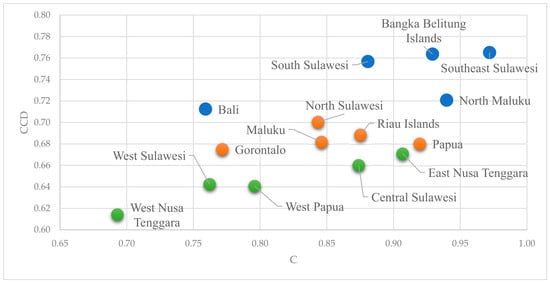
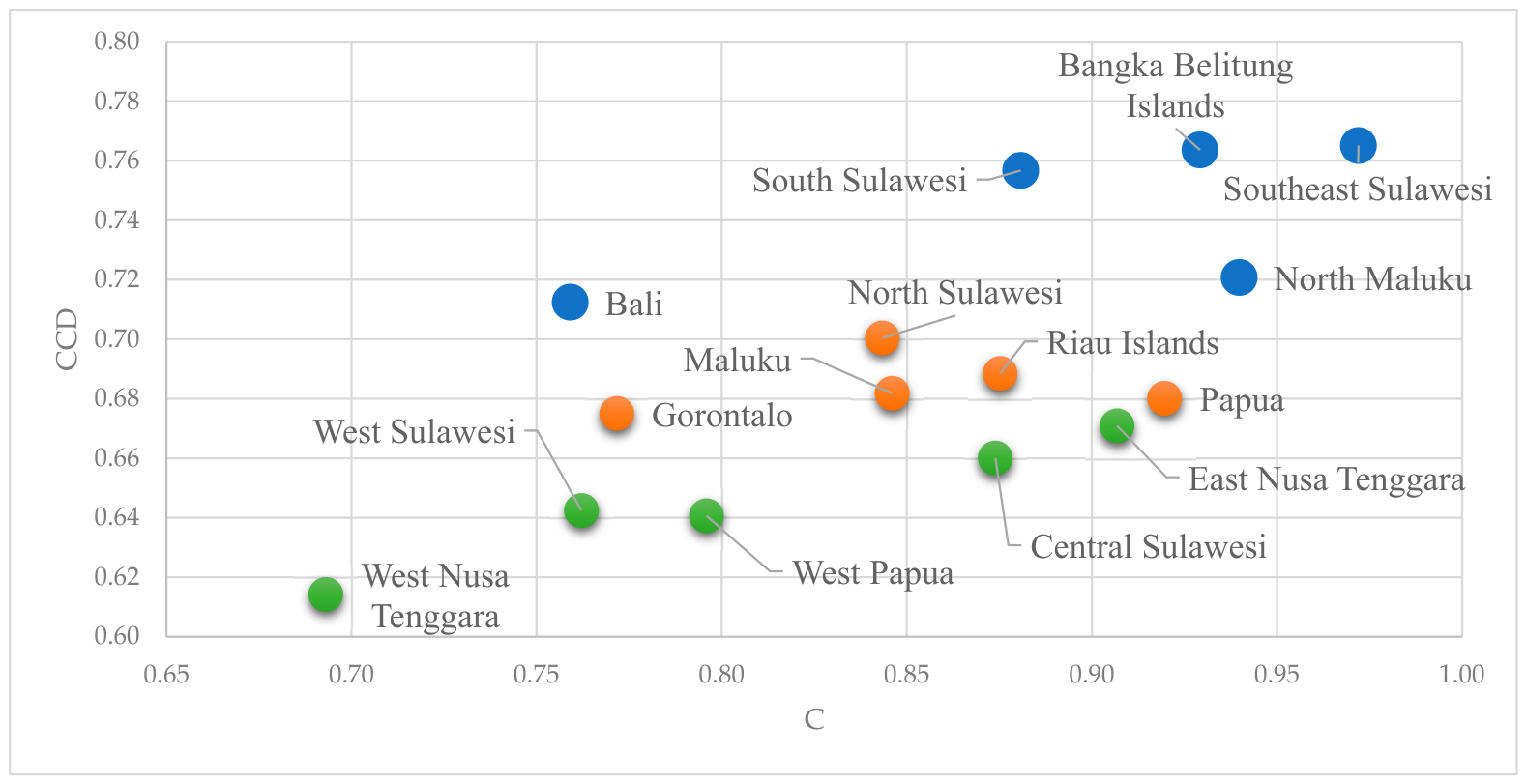
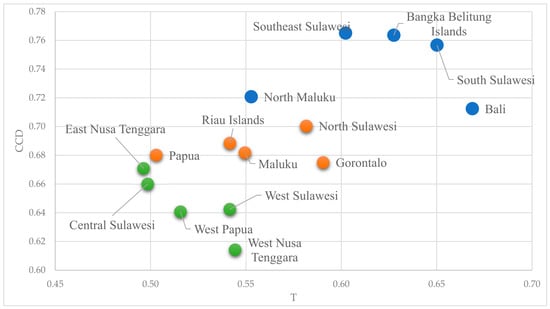
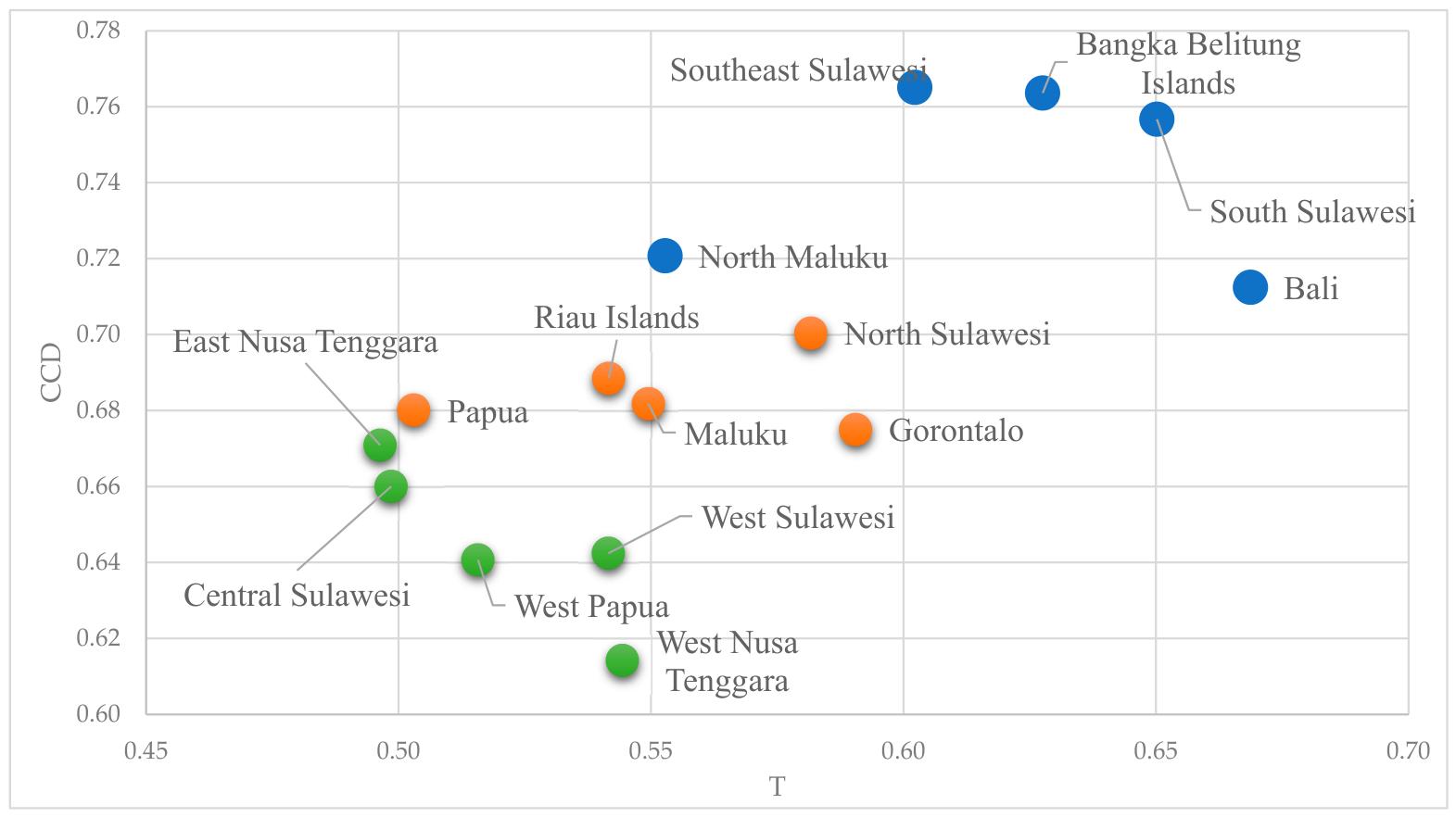
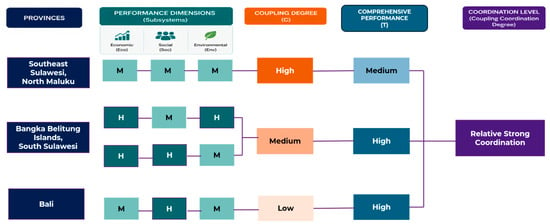
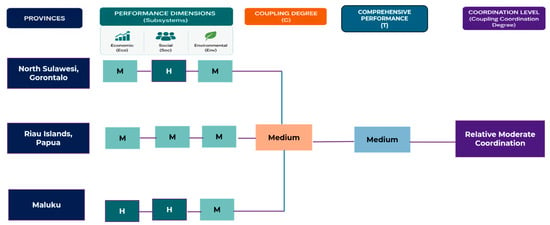
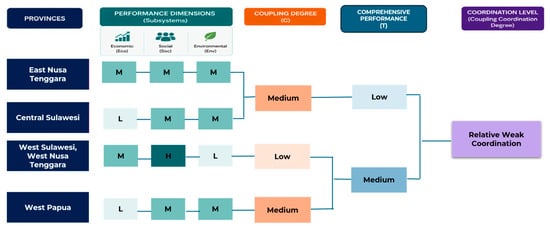
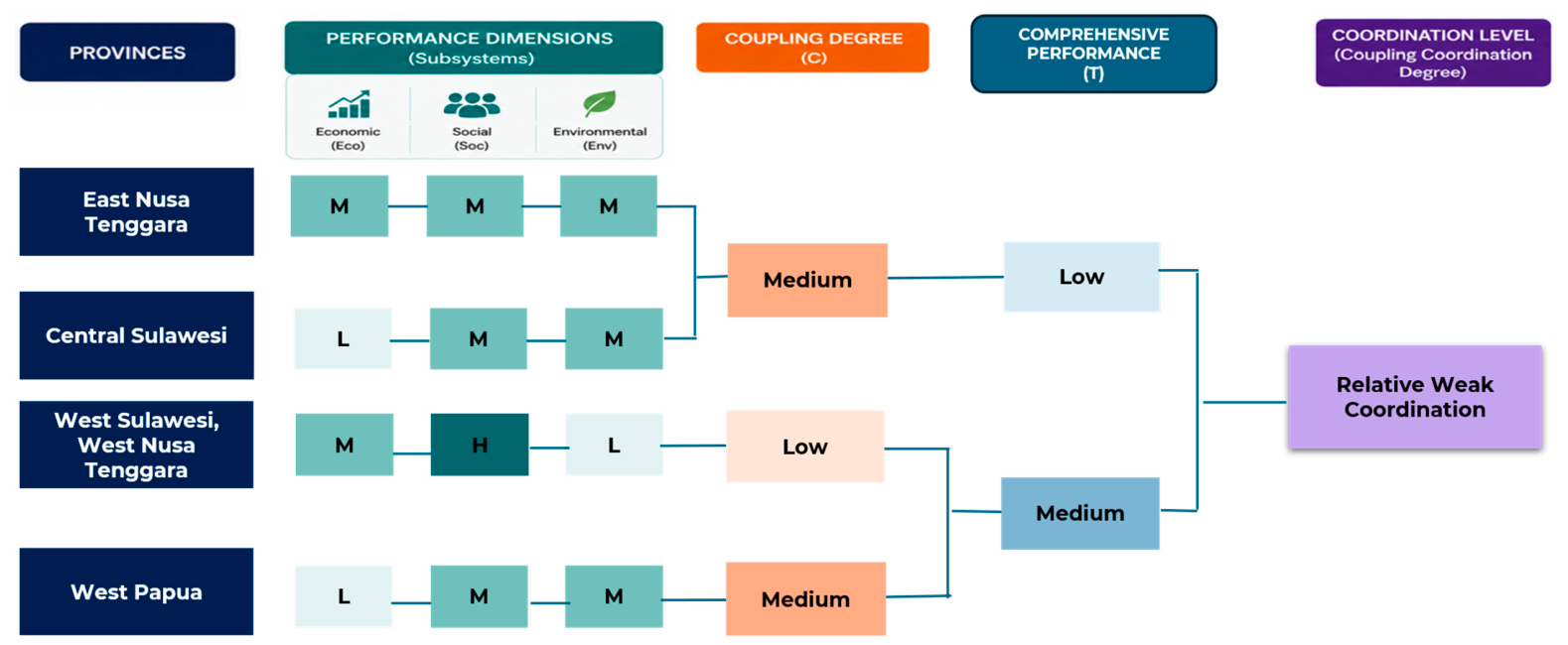

Disclaimer/Publisher’s Note: The statements, opinions and data contained in all publications are solely those of the individual author(s) and contributor(s) and not of MDPI and/or the editor(s). MDPI and/or the editor(s) disclaim responsibility for any injury to people or property resulting from any ideas, methods, instructions or products referred to in the content. |
© 2026 by the authors. Licensee MDPI, Basel, Switzerland. This article is an open access article distributed under the terms and conditions of the Creative Commons Attribution (CC BY) license.