


Abstract
This paper introduces a computationally efficient optimization framework for the day-ahead scheduling of battery energy storage systems (BESS) in active distribution networks (ADNs), in an attempt to address the critical challenge of reconciling economic objectives with battery lifespan preservation and AC network feasibility. Unlike existing approaches that separately handle active and reactive power dispatch or rely on linearized power flow approximations, the proposed methodology simultaneously optimizes both BESS active and reactive power setpoints using a Chu and Beasley Genetic Algorithm (CBGA) while explicitly quantifying degradation costs through a rainflow counting-based aging model that accounts for the depth of discharge, the average state of charge, and temperature effects. Each candidate dispatch plan is evaluated via a multi-period AC power flow solver based on the matrix successive approximations (AC-MSA) method, ensuring the rigorous enforcement of voltage and current constraints. The framework is validated on modified 33- and 69-bus ADNs under both deterministic conditions and a scenario-based robustness evaluation comprising 100 demand and photovoltaic generation profiles representative of Colombian grid conditions. The optimization itself is deterministic; the scenarios are used exclusively for the ex post evaluation of the resulting schedule. The framework is benchmarked against five metaheuristics: the adaptive JAYA algorithm (AJAYA), the parallel genetic algorithm (PGA), the multiverse optimizer (MVO), particle swarm optimization (PSO), and differential evolution (DE). Numerical results show that the CBGA achieved the lowest observed objective values among the compared methods under the tested configurations, with low dispersion across independent runs (standard deviations below 0.06%) and processing times under 0.05 h for a 24 h horizon. The margin over the closest competitors (AJAYA and MVO) is below 0.1% in the 33-bus deterministic case, so the comparison should be interpreted as an empirical ranking under a common experimental protocol rather than as a statistically established superiority. The proposed approach offers a practical decision-support tool that allows distribution system operators and BESS owners to strike an optimal balance between short-term operational revenues and long-term asset service life, thereby enhancing the economic viability of BESS investments in increasingly renewable-rich distribution networks.
1. Introduction
1.1. General Context and Motivation
The global energy landscape is undergoing a fundamental and accelerating transformation, driven by ambitious decarbonization targets, rapid technological innovations, and the unprecedented proliferation of distributed energy resources (DERs) [1]. Traditional distribution networks—historically conceived as passive systems designed for unidirectional power flow from centralized generation to end-users—are progressively evolving into active distribution networks (ADNs), which are characterized by bidirectional power exchanges, high levels of distributed generation (DG), and flexible demand-side participation [2,3]. This transition is particularly pronounced in developing economies such as Colombia, where aggressive renewable energy integration targets are fundamentally reshaping the electricity sector, with photovoltaic systems (PVs) emerging as the dominant DG technology [4].
Within this evolving paradigm, battery energy storage systems (BESS) have emerged as indispensable assets, providing the operational flexibility required to mitigate the inherent variability of renewable generation, enhance grid reliability and resilience, and reduce operational expenditure [5,6]. Nevertheless, the effective deployment and operation of BESS in ADNs entails significant technical and economic challenges that extend well beyond simple energy arbitrage strategies. BESS can simultaneously deliver multiple grid services, including voltage support through reactive power injection, peak load shaving, load shifting, and frequency regulation, all of which must be judiciously coordinated while observing converter power capabilities, state of charge (SoC) constraints, and battery lifetime preservation considerations [7,8].
From a practical standpoint, the framework proposed herein reconciles the perspectives of two key stakeholders: the distribution system operator (DSO) and the BESS owner. The DSO is primarily concerned with the reliable and efficient operation of the network: maintaining voltage magnitudes within regulatory limits, keeping branch currents below their thermal ratings, and minimizing the cost of serving the load. These concerns are represented in the proposed model by the network security constraints and by the cost component regarding conventional generation, which reflects the cost of energy purchased from the upstream grid at a time-varying price. Although the DSO does not directly bear the battery degradation cost, it benefits from the operational flexibility provided by the BESS, particularly the ability to shift active power in time and inject or absorb reactive power for voltage support. The BESS owner, by contrast, is primarily concerned with the economic viability of the investment. The owner earns revenue from energy arbitrage opportunities created by the time-varying purchase and sell-back prices, and from any ancillary services of the BESS. These revenues must be sufficient to cover the capital cost of the battery, the operation and maintenance (O&M) cost, and the cost of degradation caused by cycling and calendar aging. In the proposed framework, the O&M cost is proportional to the absolute energy exchanged by the battery, and the degradation cost translates the loss of battery life into a monetary value through the replacement cost.
The interaction between the two stakeholders is mediated by the electricity purchase and sell-back prices. In our formulation, the energy cost coefficient represents the price at which energy is purchased from the upstream grid, and the same coefficient is used symmetrically for energy sold back to the grid, reflecting the current regulatory framework in Colombia, where net metering and net billing schemes compensate the exported energy at a regulated tariff rather than at a market-clearing price. In markets where the sell-back price differs from the purchase price, the objective function can be readily adapted by introducing a separate coefficient for exports. Concerning PV curtailment, the formulation assumes that all the available PV energy is injected into the grid, which is consistent with the maximum power point tracking (MPPT) operation assumed throughout the paper, so that no explicit curtailment cost is included. Finally, our proposal focuses on energy arbitrage and does not model participation in ancillary service markets such as frequency regulation or reserve provision, which is consistent with the day-ahead scheduling scope our work and with the current market structure of Colombia.
Despite the widely recognized potential of BESS to enhance ADN operation and facilitate the energy transition, four critical research gaps continue to hinder their optimal utilization. First, the vast majority of existing BESS scheduling approaches focus predominantly on active power dispatch, treating reactive power management as a secondary or entirely independent variable [9]. This decoupled treatment fundamentally fails to exploit the full capabilities of modern grid-forming and grid-following BESS converters, which have the inherent ability to independently control both active and reactive power within their apparent power limits [10]. Second, battery degradation—arguably the primary economic driver influencing BESS investment and operational decisions—is frequently oversimplified in operational models, often represented as a linear function of energy throughput or simplistic cycle counting, without adequately capturing the complex interdependencies between depth-of-discharge, state-of-charge, operating temperature, and calendar aging effects [11,12]. Third, the predominant BESS scheduling formulations continue to rely on linearized or approximated power flow models, such as DC power flow or second-order cone programming relaxations, which may fail to fully capture the AC network physics essential for accurate operational assessment [10,13]. This limitation is particularly problematic for distribution networks characterized by high R/X ratios, where active and reactive power flows exhibit strong coupling and voltage-constrained operation is critical to system security and power quality [14]. Fourth, the evaluation of operational uncertainty—which stems from load variability, renewable generation intermittence, and market price fluctuations—remains a formidable challenge, especially when simultaneously considering comprehensive cost models and full AC feasibility constraints [15,16]. In this work, uncertainty is addressed through a scenario-based robustness evaluation rather than through explicit stochastic, robust, or chance-constrained optimization, as clarified in Section 2.
These research gaps are particularly salient in the context of Colombian distribution networks, where evolving regulatory frameworks are progressively accommodating high levels of DG, and where the economic viability of BESS projects critically depends on optimizing both operational revenues and lifetime costs [11]. The absence of a unified optimization framework that simultaneously addresses coordinated active/reactive dispatch, degradation-aware operation, full AC power flow feasibility, and scenario-based robustness evaluations under uncertainty represents a significant barrier to the practical and cost-effective deployment of BESS in ADNs. Addressing these limitations constitutes the central motivation and primary contribution of our work.
1.2. Literature Review and Positioning of the Proposed Work
The optimization of BESS scheduling in distribution networks has attracted considerable research interest over the past decade, encompassing multiple problem formulations and solution methodologies [17]. Early investigations primarily addressed energy arbitrage and peak shaving applications through deterministic optimization frameworks, with mixed-integer linear programming (MILP) emerging as the predominant approach for determining optimal charge/discharge trajectories [18,19]. While these pioneering studies yielded valuable operational insights, they typically relied on linearized power flow approximations and often overlooked the reactive power capabilities inherent to BESS converters [13,20]. Subsequent research progressively expanded the scope to incorporate renewable generation integration, addressing economic dispatch objectives and operating costs minimization. Notably, the authors of [21] formulated a day-ahead scheduling framework for BESS and PVs using a second-order cone programming relaxation of the AC power flow, demonstrating substantial reductions in operating costs while effectively maintaining voltage constraints. The treatment of uncertainty has evolved similarly, with robust optimization [22], stochastic programming [23], and model predictive control [24] being employed to mitigate the impacts of forecasting errors.
The economic modeling of battery degradation has increasingly received systematic attention, with proposed approaches spanning from empirical cycle-counting models [25] to sophisticated physics-based electro-thermal aging frameworks [26]. The rainflow counting method [27] has become a standard technique for identifying stress cycles in battery SoC trajectories [28]. However, most scheduling models that employ rainflow counting either rely on linearized power flow formulations or compute degradation costs as a post-processing step instead of integrating them directly within the optimization objective [11]. The application of metaheuristic algorithms to BESS scheduling has been extensively investigated, motivated by the inherent non-convexity and mixed-integer nature of the problem. Genetic algorithms (GAs) [29], particle swarm optimization (PSO) [30], and the multi-verse optimizer (MVO) [31] have demonstrated notable success in handling nonlinear constraints.
Recent research has also explored emerging paradigms for BESS and DER scheduling. In the area of multi-objective BESS scheduling, the work by ref. [32] proposed an adaptive weighted multi-objective optimization framework for battery storage in virtual power plant-controlled networks integrating electric vehicles (EVs) and PVs, explicitly balancing network impacts and consumer costs. This work demonstrates that multi-objective formulations can capture the trade-offs between conflicting objectives, but also that scalarization weights are difficult to tune and may obscure the true Pareto frontier. In contrast, our framework embeds the degradation cost directly into a single objective function, which preserves the transparency of the economic trade-off while maintaining the AC feasibility of the resulting schedule.
In the area of digital-twin-assisted energy management, the authors of ref. [33] provided a comprehensive review of digital twin applications in microgrids, proposing a system-level conceptual framework for coordinated control and demonstrating a grid-connected PV-BESS-EV microgrid where the digital twin acts as a BESS-EV controller. A study by ref. [34] further proposed a governance framework for intelligent digital twin systems in battery storage, aligning standards, market incentives, and cybersecurity considerations. These contributions illustrate the growing role of digital twins in real-time control and monitoring, and they position our day-ahead scheduling framework as complementary: it provides the optimal reference schedule that a digital twin-based control layer could track in real time.
In the area of energy management assisted by artificial intelligence (AI), the authors of ref. [35] provided a systematic review of grid-scale BESS and AI-driven intelligent optimization for techno-economic and environmental benefits, covering machine learning, predictive modeling, deep learning, and reinforcement learning for operational efficiency and control precision. The work by ref. [36] proposed a hierarchical predictive-adaptive control framework for SoC balancing in mini-grids using deep reinforcement learning, demonstrating its potential for real-time BESS control. The authors of ref. [16] further developed a future trajectory representation-aided DRL approach for real-time BESS dispatch in distribution networks. While these DRL-based approaches offer fast inference and can adapt to changing conditions, their training requires large volumes of high-fidelity data, and the reward function must balance multiple objectives through scalarization weights that are difficult to tune. Instead, our framework explicitly solves the day-ahead optimization, providing a transparent, reproducible, and constraint-aware reference schedule that can be used either directly or as a benchmark against which DRL policies can be evaluated.
In the area of hybrid deep learning for PV power forecasting, the authors of ref. [37] proposed a CEEMDAN-CNN-BiLSTM-SDQN framework that integrates multi-scale decomposition with adaptive reinforcement learning compensation for real-time error correction. Moreover, the work by ref. [38] introduced a dual signal decomposition and optimized hybrid deep learning framework for PV power forecasting. The aforementioned approaches significantly improve the accuracy of day-ahead PV forecasts and could be integrated as inputs to our scheduling framework. This would help to reduce uncertainty, which is handled through scenario-based robustness evaluations.
As for virtual power plants with high renewable integration, the authors of ref. [39] presented an optimal dispatch framework that considers DERs under uncertainty using distributionally robust chance-constrained optimization. The study by ref. [40] designed green power clouds for intelligent virtual power plants, addressing carbon footprints during power aggregation. These contributions position our day-ahead scheduling framework within the broader context of intelligent virtual power plan architectures, as our contribution complements cloud-level coordination by providing a high-fidelity day-ahead dispatch layer with degradation awareness and AC feasibility.
When it comes to the dynamic operation and control of microgrids, the study by ref. [41] introduced a configuration and scheduling framework for hybrid energy storage systems using variational mode decomposition and DRL, reporting cost reductions of 12.1% compared to unoptimized benchmarks. This work demonstrates the potential of combining signal decomposition with DRL for dynamic operation; our framework is complementary since it addresses the day-ahead planning layer with an explicit degradation model and full AC feasibility.
Finally, the work by ref. [42] presented a resilient and privacy-preserving multi-agent optimization and control framework for networks of BESS under cyberattacks, specifically addressing false data injection and privacy preservation in VPP settings. This work highlights the importance of cybersecurity in BESS scheduling and identifies a direction for future extensions of our framework.
More broadly, the growing complexity of modern distribution systems has motivated the development of learning-based control and optimization approaches that can adapt to changing operating conditions. For example, recent work on disturbance-rejection control for grid-tied power-electronic converters has demonstrated the potential of on-policy machine learning to handle parameter mismatch and distorted grid voltage conditions [43]. These developments illustrate the broader trend towards intelligent, data-driven control in power electronics, and they provide useful context for positioning the deterministic and reproducible day-ahead scheduling framework proposed herein, which is complementary to such learning-based approaches.
1.3. Novelty and Distinction from Existing Approaches
To clarify the novelty of the present contribution, the proposed (Chu & Beasley Genetic Algorithm) CBGA-based framework was compared against the six main solution paradigms that have been applied to BESS scheduling: GAs, MVO, parallel GAs, model predictive control (MPC), convex optimization (CO), and DRL. The comparison is structured around four dimensions that are critical to the fidelity and practical relevance of a BESS scheduling framework: (i) the handling of battery degradation, (ii) the representation of AC network physics, (iii) the coordination between active and reactive power dispatch, and (iv) the handling of operational uncertainty.
1.3.1. Methods Based on Genetic Algorithms
Existing GA-based approaches either rely on linearized or DC power-flow models, treat the battery degradation cost as a post-processing metric, or optimize active and reactive power sequentially in two decoupled stages [29]. The proposed CBGA framework differs in three fundamental aspects: the degradation cost—computed through a rainflow-counting model—is embedded directly in the fitness function; the AC feasibility of each candidate dispatch is verified through a fully nonlinear power flow solver; and the chromosome encodes active and reactive power setpoints jointly, a ensuring fully coordinated dispatch.
1.3.2. Multiverse Optimizer
While MVO has demonstrated competitive exploration capabilities [31], its application to BESS scheduling has typically been limited to objective functions that prioritize operating costs and energy losses without incorporating a nonlinear degradation model. The proposed framework advances beyond these contributions by explicitly penalizing degradation, enforcing the apparent power coupling constraint, and validating the resulting schedules through a rigorous AC power flow evaluation.
1.3.3. Parallel Genetic Algorithms
While parallelization accelerates evaluation, it does not alter the underlying formulation of the problem [44]. The novelty of the proposed framework is therefore not the parallelization of the search itself, although the implementation does exploit parallel evaluation, but the integration of a degradation-aware objective with AC-feasible constraints inside a single coordinated optimization loop.
1.3.4. Model Predictive Control
MPC-based formulations typically rely on linearized or simplified models of the network and the battery to preserve computational tractability [24]. As a consequence, the degradation model is often reduced to a linear throughput-based cost, and the AC feasibility of the resulting trajectory is verified a posteriori. The proposed framework, in contrast, is designed for the day-ahead stage, where a more accurate degradation model and a full AC power-flow evaluation can be afforded. Therefore, the two approaches are complementary.
1.3.5. Convex Optimization
Convex relaxations provide global optimality guarantees only for the relaxed problem, and the solution must be projected back onto the feasible set of the original non-convex problem, which may yield suboptimal or even infeasible schedules in networks with high R/X ratios and tight voltage constraints [21]. The rainflow counting operator is also inherently non-convex and non-differentiable. Our proposed framework addresses both limitations by operating directly on the original non-convex problem.
1.3.6. Deep Reinforcement Learning
DRL-based dispatchers can learn control policies without requiring an explicit model of the network or the battery, and they can be trained offline to provide near-instantaneous decisions [16,45,46]. However, their training requires large volumes of high-fidelity data, and the reward function must balance multiple objectives through scalarization weights that are difficult to tune. Instead, the proposed framework solves the day-ahead optimization explicitly, providing a transparent, reproducible, and constraint-aware reference schedule that can be used either directly or as a benchmark against which DRL policies can be evaluated.
1.3.7. Summary of Novelty
The novelty of this work lies in the simultaneous combination of four elements that, to the best of the authors’ knowledge, have not been integrated into a single optimization framework: (i) a rainflow counting degradation model embedded directly in the objective function; (ii) a full multi-period AC power flow solver used as a feasibility oracle for every candidate dispatch; (iii) a coordinated encoding of active and reactive power setpoints that respects the apparent power coupling constraint; and (iv) a CBGA whose elitist strategy, adaptive mutation, and feasibility repair mechanisms are specifically tailored to the structure of the resulting mixed-integer non-convex problem.
It should be emphasized that the optimization problem itself is deterministic. Uncertainty is not embedded in the optimization formulation; instead, the 100 demand and PV scenarios are used only for the ex post evaluation of the deterministic schedule’s robustness.
Table 1 compares the proposed framework against representative BESS scheduling studies across five key dimensions: battery degradation modeling, AC power flow fidelity, active/reactive power coordination, uncertainty handling, and solution methodology. As shown, prior works predominantly rely on simplified or linearized degradation and network models, omit P/Q coordination, and treat uncertainty deterministically. In contrast, the proposed framework uniquely combines Rainflow-based degradation, full nonlinear AC physics, explicit P/Q coordination, and scenario-based uncertainty evaluation, solved via a CBGA—distinguishing it from all reviewed approaches.
Table 1.
Comparison of the proposed framework with representative studies on BESS scheduling.
1.4. Relevance to Emerging Applications
The day-ahead scheduling framework proposed in this work exists within a broader ecosystem of emerging applications in modern distribution systems, including net-zero microgrids, virtual power plants with high renewable penetration, and intelligent energy management platforms. Recent studies have advanced several of these areas. In the domain of fault diagnosis and reliability enhancement, neural network-based algorithms have been developed to improve fault detection and sustainability in PVs [47]. Regarding net-zero energy solutions, integrated microgrid and microalgae hybrid systems have been proposed and assessed for their technical and economic feasibility [48]. As for dynamic operation and control, hybrid microgrid power systems have been analyzed under transient conditions [49]. Finally, in the realm of PV power forecasting, volatility-aware adaptive hybrid deep learning frameworks have been shown to improve short-term forecast accuracy [50].
These contributions highlight the fact that the reliable and economical operation of future distribution networks depends on the coordinated integration of forecasting, fault diagnosis, dynamic control, and optimal scheduling. The framework proposed in this work contributes to this ecosystem by providing a high-fidelity day-ahead scheduling layer that is degradation-aware, AC-feasible, and capable of coordinating the active and reactive power dispatch. It is complementary to fault diagnosis and dynamic control layers, which operate on faster timescales and under contingency conditions. The proposed framework is designed for normal operating conditions; its extension to contingency-constrained operation will be discussed in Section 6.
1.5. Contributions, Scope and Limitations
This section presents the optimization framework for the cost-resilient day-ahead management of BESS in ADNs. The proposed solution combines the CBGA with a multi-period AC power flow solver based on the AC-MSA method [51]. CBGA determines the optimal hourly active and reactive power dispatch of the BESS units, while AC-MSA evaluates the network operating conditions for each candidate solution.
1.5.1. Contributions
The main contributions of this work are twofold. First, a comprehensive multi-component objective function is formulated that simultaneously minimizes conventional generation costs, operation and maintenance costs for PV and BESS, and a detailed battery degradation cost encompassing both cycling and calendar aging. The degradation model employs rainflow counting to identify SoC cycles and incorporates stress factors for the depth of discharge (DoD), the average SoC, and temperature. Unlike most existing approaches, our methodology enables the simultaneous optimization of active and reactive power setpoints, fully accounting for converter apparent power limits, thereby allowing BESS units to contribute to voltage regulation while performing energy management. Second, each candidate dispatch solution is evaluated through a multi-period AC power flow based on the matrix successive approximations method (AC-MSA), which simultaneously solves all hourly operating points, ensuring the rigorous enforcement of power balance equations, voltage magnitude bounds, and branch current thermal limits—avoiding the inaccuracies associated with linearized power flow models. The methodology was validated under both deterministic and uncertainty scenarios using 100 demand and PV generation profiles representative of Colombian grid conditions, with the proposed CBGA benchmarked against five metaheuristics on modified 33- and 69-node ADNs. Across the tested configurations and 30 independent runs per algorithm, the CBGA obtained the lowest mean objective values, with standard deviations below 0.06% and processing times under 0.05 h for a 24 h horizon. Given that the margin over the closest competitors is small in some cases, the results are reported as an empirical ranking under a common experimental protocol rather than as a claim of universal superiority.
1.5.2. Scope
This study focuses on the day-ahead scheduling of BESS units in radial or weakly meshed ADNs under time-varying load and PV generation, and validation is carried out on modified 33- and 69-node benchmark systems using data tailored to Colombian distribution contexts.
1.5.3. Modeling Limitations
Several modeling simplifications merit consideration. Concerning PV generation, the methodology assumes MPPT-only operation, excluding voltage regulation capabilities. While this aligns with Colombia’s current operational practices, the framework can be readily extended to incorporate reactive power control from PV inverters. Battery temperature is held constant at 25 °C, the standard reference condition in lithium-ion aging studies and manufacturer datasheets [52,53,54,55]. This simplification decouples thermal dynamics from the electrical optimization and remains valid for the low-to-moderate C-rates of day-ahead energy management, but would need to be relaxed for applications involving sustained high C-rates or pronounced thermal variations, where an electro-thermal co-optimization would be required. The BESS converter capability is modeled through a constant apparent-power limit, and charging and discharging efficiencies are assumed constant. In practice, the feasible active/reactive power region is shaped by converter current limits, SoC-dependent power limits, and load-dependent efficiency curves; moreover, grid codes impose specific reactive-power support requirements. These effects are not captured in our formulation.
A further limitation concerns the robustness of the reported economic benefits with respect to the degradation coefficients. The degradation cost is a central component of the objective function and depends on a set of empirical coefficients calibrated for LFP cells at 25 °C. This work performed no sensitivity analysis with respect to these coefficients. Consequently, the economic benefits reported in Section 5—including the daily cost reductions of 2.15% and 2.90% for the 33- and 69-bus networks—depend on the adopted coefficient set. While the ranking of the compared algorithms is expected to be preserved under small perturbations of the coefficients, this expectation has not been quantitatively verified. A one-at-a-time sensitivity analysis varying each coefficient by and is identified as the natural next step, together with the extension to battery chemistry-specific parameterizations.
1.5.4. Resilience Scope
The framework proposed in this work addresses day-ahead scheduling under normal operating conditions. It does not incorporate fault scenarios—such as feeder outages, DER failures, converter malfunctions, bus faults, communication failures, or line contingencies—into the optimization problem. Consequently, the following aspects are outside the scope of the present work: (i) the explicit modeling of fault types; (ii) the incorporation of fault events into the optimization constraints or objective; (iii) the specification of fault durations and operational assumptions under degraded conditions; (iv) the re-dispatch of the schedule after a disturbance; (v) quantitative comparisons between normal and fault conditions; and (vi) resilience metrics such as the critical load served, the restoration time, or the post-contingency cost. These aspects are essential for a full assessment of system resilience and should be a priority for future work. Our framework provides the normal-conditions reference schedule that a real-time control layer or a contingency-constrained extension would build upon.
1.5.5. Scalability and Validation Limits
The reported computation times correspond to the analyzed benchmark systems and are not intended as a general scalability claim. Since the chromosome length grows with the number of controllable BESS units and the scheduling horizon while the per-evaluation cost grows with the number of network nodes, the behavior of the CBGA on utility-scale feeders comprising thousands of nodes has not been demonstrated. Hybridization with decomposition-based strategies or surrogate-assisted evaluation would be required for such systems. The validation is also limited to two modified benchmark feeders with fixed BESS locations, PV penetration levels, and load profiles; a systematic study on larger or real distribution feeders has not been conducted. With regard to uncertainty, the robustness of the deterministic schedule was evaluated across 100 scenarios derived from historical data, rather than through explicit stochastic optimization or chance-constrained programming [56]. Finally, the model abstracts away communication delays, cybersecurity aspects, and the discrete nature of BESS switching, since the primary emphasis lies on optimal setpoint calculation rather than real-time implementation.
1.6. Document Structure
The remainder of this paper is structured as follows. Section 2 formulates the optimization problem, detailing the objective function components—including conventional generation, O&M, and BESS degradation costs—along with DER operation and AC network constraints. Section 3 presents the proposed CBGA-based solution methodology, covering individual encoding, population initialization, the AC-MSA power flow evaluation, a fitness function with penalty-based constraint handling, and the evolutionary operators. Section 4 describes the test systems and the input data used, including network topologies, DER placement, economic parameters, degradation coefficients, and uncertainty scenario generation. Section 5 reports and discusses the simulation results, comparing the proposed CBGA against AJAYA, PGA, MVO, PSO, and DE under deterministic and uncertainty conditions for both networks. In addition, the problem size, computational complexity, and memory requirements of the framework are reported. Finally, Section 6 concludes this work by summarizing the main findings and outlining future research directions.
2. Problem Formulation
Prior to the mathematical formulation, the complete nomenclature used throughout this paper is presented below. Said nomenclature defines every set, index, parameter, variable, and function employed in the optimization model, and it clarifies the distinction between set symbols (calligraphic uppercase letters) and superscripts (Roman or abbreviated labels).
A radial or weakly meshed ADN was considered, represented by the undirected graph , where is the set of nodes (indexed by k and m) and is the set of branches. The scheduling horizon was discretized into intervals of equal duration .
The network integrates three types of DERs: conventional synchronous generators (CGs) denoted by the set , PV units denoted by , and BESS denoted by . For the sake of clarity, , , and represents the subsets of these resources connected to node .
2.1. Assumptions and Modeling Premises
The following premises underpin the proposed scheduling model:
Assumption 1
(PV operation). Following prevailing Colombian grid codes, all PV units operate in MPPT mode, injecting only active power into the grid [11]. Consequently, their reactive power output is identically zero, and their active power profile is an exogenous parameter dictated by solar irradiance.
Assumption 2
(BESS converter). Battery converters are the only controllable DERs capable of coordinated active and reactive power dispatch. Their apparent power capability is limited by the converter rating [57].
Assumption 3
(Temperature). Battery temperature is assumed constant over the scheduling horizon and equal to the nominal cell temperature K (25 °C) [58]. This value corresponds to the standard reference condition adopted in lithium-ion battery aging studies and in manufacturer datasheets, and it decouples thermal dynamics from the electrical optimization, as discussed in Remark 3.
2.2. Decision Variables and Compact Problem Statement
Let be the vector of decision variables encompassing:
- CG dispatch: , for , ;
- BESS dispatch: , for , ;
- Network states: nodal voltage magnitudes and angles for , .
In the above, P and Q denote active and reactive power, respectively, and the subscript indicates that the corresponding variable is time-varying over the scheduling horizon. The superscripts cg and B refer to CGs and BESS, respectively, and are distinct from the set symbols and defined earlier. The objective function is the total daily operating cost to be minimized, expressed in USD/day.
The day-ahead optimal scheduling problem was formulated as a constrained non-convex optimization program:
subject to the DER operational envelopes, the AC power flow equations, and network security limits, as detailed in the following subsections.
The optimization problem defined in Equation (1) is deterministic: the decision variables are computed using the mean demand, the mean PV generation, and the mean energy-cost profiles. The 100 scenarios introduced in Section 4 are not embedded in the optimization loop; they are used exclusively after the optimal dispatch has been obtained in order to evaluate its robustness. A stochastic, robust, or chance-constrained reformulation was not pursued because the cost of evaluating multiple scenarios within each CBGA fitness call would be prohibitive for day-ahead scheduling.
2.3. Objective Function Components
2.3.1. Conventional Generation Cost
The cost associated with active power production from CGs is linearized over the dispatch period:
where [USD/kWh] is a time- and technology-dependent production coefficient.
2.3.2. Operation and Maintenance Cost
The O&M cost aggregates the variable maintenance costs of PVs and BESS:
2.3.3. BESS Degradation Cost
The degradation cost captures the irreversible capacity loss due to cycling and calendar aging:
where is the nominal energy capacity, and is the investment cost per unit of energy. The daily degradation factor is the sum of cycling and calendar components:
- Cycling degradation.
Let be the discrete SoC trajectory of battery b. The cycling degradation relies on the rainflow counting algorithm, denoted as a mapping that returns a set of half-cycles , where is the number of identified half-cycles, is the DoD of cycle r, and is its occurrence count. Micro-cycles with are discarded. The stress factors for the DoD, average SoC, and temperature, respectively, are
with being the average SoC over the cycle interval and by Assumption 3. The total cycling degradation is
- Calendar aging.
Even without cycling, the battery degrades over time as a function of the average SoC and temperature:
where = 86,400 s, and the averaged stress factors are
with and .
Remark 1.
The degradation model renders a non-convex, non-differentiable function of the SoC trajectory due to the rainflow counting operator . This implicit mapping is handled externally in our solution framework.
Remark 2.
While the adopted empirical stress-factor model offers a practical balance between physical interpretability and computational efficiency for day-ahead scheduling, the literature presents richer alternatives, including semi-empirical impedance-based aging models [59,60], full electrochemical-thermal simulations, and machine-learning approaches [45,46]. Our choice was justified by the need for repeated, rapid evaluations within the CBGA loop; future work may explore surrogate-assisted or hybrid degradation models to further improve accuracy without compromising tractability.
Remark 3.
The nominal cell temperature is fixed at K (25 °C). This choice is not arbitrary: 25 °C is the standard reference condition that has been consistently adopted in lithium-ion aging characterization, including model-based optimal experimental design studies with real-world data [52], model-based aging data analyses [53], experimental aging models for automotive cells [54], and coupled electrochemical-thermal aging frameworks [55]. For the LFP chemistry relevant to stationary storage, manufacturer datasheets typically rate cycle life at 25 °C ambient, and the reported optimal operating window for minimizing degradation ranges from 10 to 30 °C, with 25 °C representing the midpoint of this interval. Because the temperature stress factors in (8) and in (12) are reduced to 1 at , the isothermal premise effectively removes the temperature-dependent acceleration term from the degradation model, leaving the aging cost governed solely by the DoD, the average SoC, and calendar aging. This simplification is justified for the low-to-moderate C-rates characteristic of the day-ahead energy management application considered herein. For applications involving sustained high C-rates, such as fast charging or high-power grid services, thermal spikes would need to be captured explicitly, and a full electro-thermal co-optimization would be required to preserve the non-linear temperature-aging coupling.
Remark 4.
The degradation model adopted in this work is a well-established empirical stress factor formulation whose coefficients have been calibrated and validated in the existing literature for LFP cells, the dominant chemistry in stationary storage applications. The rainflow-counting algorithm is the standard technique for identifying stress cycles in SoC trajectories, and the coefficients used in Equations (6)–(10) are taken from published degradation studies on this chemistry. The temperature is fixed at the reference value K (25 °C), which is the standard reference condition in lithium-ion aging characterization. At this temperature, the temperature stress factors are reduced to 1, and the model becomes insensitive to .
However, it must be acknowledged that the coefficients , , , , and are empirical and carry a non-negligible uncertainty. Because the degradation cost enters the objective function linearly through the replacement cost, a relative perturbation of these coefficients translates into a proportional perturbation of the degradation cost component and may, in principle, modify the optimal dispatch and the relative ranking of the compared algorithms. A systematic one-at-a-time sensitivity analysis—varying the coefficients by and and re-optimizing the dispatch—would be required to quantify the resulting changes in the total operating cost, the degradation cost, and the BESS dispatch, as well as to confirm that the main conclusions remain robust under reasonable parameter uncertainty. Such an analysis was conducted in this work and is explicitly identified as a limitation of the reported economic benefits (Section 5), which should therefore be interpreted as conditional on the adopted coefficient set. The ranking of the dispatch strategies should be understood as valid within the parameter regime represented by these coefficients. A systematic sensitivity analysis of degradation parameters, temperature uncertainty, and battery chemistry dependence was identified as a priority for future work.
2.4. DER Operational Constraints
2.4.1. Conventional Generators
The active and reactive power outputs of each CG are bounded by their technical limits:
2.4.2. Photovoltaic Generators
As per Assumption 1, PV active power is exogenously fixed and reactive power is null:
where is the normalized irradiance profile.
Remark 5.
The exogeneity of implies that PV units do not participate in the optimization as decision variables; they act as stochastic, non-dispatchable injections that perturb the nodal power balance.
2.4.3. Battery Energy Storage Systems
For each BESS , the active power is bounded by charging and discharging limits:
where negative values denote charging and positive values denote discharging. The reactive power capability is bounded by
The apparent power of the converter imposes a coupling constraint:
Remark 6.
The apparent-power constraint in Equation (19) captures the fundamental coupling between the active and reactive power dispatch but represents a simplified view of the converter capability. In practice, the feasible region is shaped by the converter’s current limit, which imposes a circular constraint in the P-Q plane, and by grid-code requirements that prioritize reactive current injection in the face of voltage disturbances [10,21,61]. The maximum charge and discharge power also depends on the SoC: as the battery approaches its upper or lower SoC limits, the terminal voltage approaches the cutoff thresholds and the allowable power decreases, yielding a convex capability region that can be approximated by linear inequalities in scheduling problems [13]. In addition, the round-trip efficiency of the power conversion system is load-dependent and lower at partial load than under a nominal operation [7,24]. Finally, grid codes require BESS units to provide reactive-power support within a specified power factor range, as well as to remain connected during voltage disturbances [6,7]. Our formulation abstracts these effects into a constant apparent power limit and constant efficiencies. This simplification is justified for the analyzed day-ahead scheduling problem, where the primary objective is to establish an economic and energetic dispatch instead of verifying converter-level feasibility under disturbances.
SoC dynamics are governed by the difference equation:
with and representing the self-discharge loss per interval. The effective efficiency is piecewise-defined:
where and denote the round-trip charging and discharging efficiencies. Finally, the operational SoC limits and daily cyclic boundary conditions are enforced:
2.5. AC Network Constraints
The steady-state operation of the ADN is governed by the AC power flow equations. Let and be the voltage magnitude and angle at node k, and let be the -th element of the nodal admittance matrix. For each node k and period h, the net injected active and reactive powers are as follows:
where and are the active and reactive load demands. The power balance is enforced via
Remark 7.
The network security limits are imposed through voltage magnitude bounds and branch current thermal ratings:
Lastly, the current magnitude is derived from the voltage difference and the branch admittance:
where .
3. Proposed Methodology
This section presents the optimization framework for the cost-resilient day-ahead management of BESS in ADNs. The proposed solution combines the CBGA with a multi-period AC power flow solver based on the AC-MSA method [51]. CBGA is employed to determine the optimal hourly active and reactive power dispatch of the BESS units, while AC-MSA evaluates the network operating conditions for each candidate solution.
The optimization problem minimizes a comprehensive cost function that simultaneously accounts for operational expenditure, maintenance costs, and battery aging costs while strictly enforcing the power balance equations, network limits, and BESS technical constraints over a 24 h horizon with time-varying load and generation profiles. The overall workflow is illustrated in Figure 1, and each stage is described in detail in the following subsections.
Figure 1.
Flowchart of the proposed CBGA-based optimization framework for cost-resilient day-ahead BESS dispatch in ADNs.
3.1. Input Data Definition
The optimization process starts with the collection of all relevant input data for the day-ahead scheduling problem:
- Load demand: hourly active and reactive power consumption for each load bus over the scheduling horizon .
- PV generation: hourly active power forecasts for each PV generator.
- Network data: line impedances, transformer data, topology, and nominal voltage.
- Electricity prices: time-varying energy purchase and (if applicable) sell-back prices.
- BESS parameters: energy capacity, rated power, charging/discharging efficiencies, initial and final SoC limits, and maximum allowable DoD.
- BESS economic and aging data: investment cost, replacement cost, degradation model coefficients, maintenance cost, and cycle-life parameters.
- System operating limits: voltage magnitude bounds, branch current ratings, and BESS converter capacity.
All input data are organized in matrix form to allow for efficient processing within the multi-period AC-MSA formulation.
3.2. Individual Encoding
In the CBGA, each individual (chromosome) represents a complete day-ahead dispatch plan for all BESS units. The i-th individual is thus encoded as a real-valued vector:
where and are the active and reactive power injections (positive for discharge, negative for charge) of BESS during period . The length of the chromosome is .
3.3. Generating the Initial Population
An initial population of individuals is randomly generated within the feasible bounds of each decision variable:
where and are the lower and upper limits of the j-th variable and is a uniformly distributed random number in . Each generated chromosome is then checked for SoC feasibility and adjusted if necessary.
3.4. Evaluation via the AC-MSA Power Flow
Every candidate solution must be assessed in terms of its impact on the network. The hourly BESS injections are incorporated into the nodal complex power balance as follows:
where is the complex load, is the PV active power, and is the set of BESS units connected to node i.
To accelerate the evaluation of the complete 24 h horizon, AC-MSA simultaneously solves all hourly operating points in matrix form. The net power injections for all demand nodes and periods are assembled into a matrix . The voltage matrix is iteratively updated as follows:
where and are sub-matrices of the nodal admittance matrix, is the slack-bus voltage matrix replicated for all periods, ∘ denotes the Hadamard product, and the overline indicates complex conjugation. The iteration proceeds until
with being a prescribed tolerance (e.g., ).
Remark 8.
The AC-MSA iteration in Equation (33) is mathematically equivalent to the fixed-point form of the standard nonlinear AC power flow equations. Consequently, any solution satisfying the convergence criterion in (34) also satisfies the full nonlinear power balance equations within the specified tolerance. This method has been validated against conventional nonlinear AC power flow solvers in prior work [51], where agreement in nodal voltage magnitudes and angles was confirmed across multiple operating points in radial and weakly meshed distribution systems.
After convergence, the branch currents, power losses, and all network state variables are obtained for every hour. These results are then used to compute the fitness function and verify constraint satisfaction.
3.5. Fitness Function and Constraint Handling
The objective is to minimize the total daily cost, which comprises the costs of operation (energy exchange with the grid), maintenance, and battery aging:
where is the net cost of energy bought from or sold to the upstream grid, is the proportional maintenance cost, and is the degradation cost derived from the cycle-counting model.
The following constraints must be satisfied:
- Power balance: ensured by the AC-MSA solution.
- BESS limits:
- State of charge:
- Network voltage and current limits:
To handle infeasible solutions, a penalty term is added to the objective function:
where , is the allowable deviation, and , are large positive penalty coefficients. Thus, the fitness (adaptation) value is
CBGA minimizes , thus driving the search towards both economically efficient and technically feasible solutions.
3.6. CBGA Operators
Our genetic algorithm employs the following evolutionary operators:
3.6.1. Selection
A binary tournament selection is used: two individuals are randomly chosen from the population, and the one with better fitness is selected as a parent.
3.6.2. Crossover
A uniform crossover is applied: for each gene j, with probability , the offspring inherits the gene from parent 1; otherwise, it inherits it from parent 2. The crossover probability is typically set between 0.7 and 0.9.
3.6.3. Mutation
After crossover, each gene of the offspring is mutated with a small probability (typically ). The mutation adds a random perturbation drawn from a Gaussian distribution with a zero mean and a standard deviation that decreases with the generation number:
where k is the current generation, is the maximum number of generations, and and are the initial and final mutation step sizes, respectively.
3.6.4. Feasibility Repair
After crossover and mutation, any variable that violates its bounds is clipped to the nearest limit. Additionally, the SoC trajectory of each BESS is recomputed from the proposed power schedule. If the SoC limits or the final SoC condition are violated, the active power profile is adjusted using a greedy repair heuristic.
3.7. Complete CBGA Algorithm
The complete pseudocode of the proposed CBGA-based optimization framework is presented in Algorithm 1. This algorithm takes the network data, the load and PV profiles, the BESS parameters, and the economic and degradation coefficients as input and returns the optimal day-ahead dispatch for all BESS units.
| Algorithm 1 Complete CBGA-based optimization algorithm for day-ahead BESS dispatch |
| Input: Network topology and line parameters; load and PV profiles; BESS parameters (capacity, rated power, efficiencies, SoC limits); economic and degradation coefficients; CBGA parameters (, , , , , , , , ). |
| Output: Optimal hourly active and reactive power setpoints , for all and . |
|
3.8. Stopping Criterion and Final Solution
CBGA iterates for a maximum number of generations or until the best fitness value remains unchanged for a predefined number of consecutive generations. At the end of the process, the individual with the lowest is selected as the optimal dispatch schedule.
The complete algorithm is summarized in Algorithm 1 and in the flowchart of Figure 1. The performance of the proposed methodology is evaluated in the next section through several case studies.
Remark 9.
The computational performance of the CBGA reported in this work is closely linked to the studied benchmark systems. In the proposed formulation, the search dimension is , which depends on the number of controllable BESS units rather than on the number of network nodes, while the cost of each fitness evaluation is governed by the multi-period AC power flow solution and therefore scales with network size. For utility-scale systems comprising thousands of nodes, both effects must be considered: the search space grows with the number of controllable devices, and the per-evaluation cost grows with the network dimension. In this case, decomposition-based, surrogate-assisted, or hierarchical extensions of the proposed framework would be required.
4. Test Systems Description
The proposed optimization framework was validated using two modified ADNs comprising 33 and 69 buses. Both networks incorporate photovoltaic distributed generation (PV-DG) units operating in MPPT mode, along with BESS that provide the active and reactive power flexibility required to satisfy operational constraints.
The validation procedure was structured in three stages. First, the 33-bus network was assessed under deterministic conditions, using average daily profiles for demand, solar irradiance, and electricity prices derived from data on the city of Medellín, Colombia. Second, the impact of operational uncertainty was incorporated by generating 100 representative scenarios for both demand and PV generation. Third, the 69-bus network was employed to evaluate the scalability of the proposed approach under the same uncertainty framework.
All computational experiments were conducted using MATLAB R2024a on a high-performance workstation equipped with an Intel Core i9-14900HX processor (24 cores, 32 threads, up to 5.8 GHz), 32 GB of DDR5-5600 RAM, and an NVIDIA GeForce RTX 4090 GPU with 16 GB of GDDR6 memory, running a 64-bit version of the Windows 11 operating system. The optimization algorithms were implemented in parallel to exploit the multi-core architecture.
4.1. 33-Bus Active Distribution Network
The first test system is a modified 33-bus radial distribution network featuring 32 lines, three PV-DGs, and three BESS. The nominal voltage is 12.66 kV, and the base power is 1 MVA, following the configuration reported in [31]. Figure 2 presents the single-line diagram of this network.
Figure 2.
Single-line diagram of the 33-bus ADN.
The PV-DG units are located at buses 13, 25, and 30, with rated capacities of 1125 kW, 1320 kW, and 999 kW, respectively. These generators operate exclusively in MPPT mode. The operational flexibility of the network is provided by the BESS units installed at buses 6, 14, and 31. The combined energy capacity of these storage systems amounts to 4500 kWh, while the total inverter rating reaches 1025 kVA.
Table 2 summarizes the key parameters of the 33-bus test system.
Table 2.
Primary parameters of the modified 33-bus ADN.
In addition, Table 3 presents the coefficients employed for estimating BESS degradation.
Table 3.
Coefficients for the battery degradation model.
Two operating scenarios were analyzed for this network. The first scenario corresponds to a deterministic case employing a single average daily profile for demand, PV generation, and variable operating costs, as illustrated in Figure 3.
Figure 3.
Daily profiles employed in the deterministic analysis: demand, PV generation, and variable energy cost.
The second scenario incorporates uncertainty through 100 demand and 100 PV generation profiles. The input data for this scenario are depicted in Figure 4.
Figure 4.
Uncertainty curves based on 100 scenarios for the 33-bus grid: (a) active power demand and (b) PV generation.
These 100 demand and PV generation scenarios were generated through a Monte Carlo procedure applied to historical data representative of Colombian distribution systems. For each hour of the day, the demand profiles were obtained by perturbing the mean active and reactive power curves with Gaussian noise, whose standard deviation was calibrated from historical load variability at that hour. The PV generation profiles were obtained analogously by perturbing the normalized irradiance profile with Gaussian noise. Here, the standard deviation reflects the expected forecast error for the region. This procedure yields 100 statistically independent scenarios that span the plausible range of operating conditions around the mean. These scenarios are not used to reformulate the optimization problem as a stochastic, robust, or chance-constrained program; they are used exclusively for the ex post robustness evaluation of the deterministic dispatch obtained with the mean profiles. The same procedure was applied to generate the scenarios used for the 69-bus network.
4.2. 69-Bus Active Distribution Network
To assess the scalability and robustness of the proposed methodology under more demanding conditions, the 69-bus ADN illustrated in Figure 5 was employed as a larger benchmark.
Figure 5.
Single-line diagram of the 69-bus ADN.
This test system corresponds to a modified 69-bus radial network operating at 12.66 kV, with a base power of 100 kVA. The PV-DG units are located at buses 16, 61, and 64, with rated capacities of 1320 kW, 1125 kW, and 999 kW, respectively. The operational flexibility of the 69-bus network is provided by three BESS units installed at buses 17, 62, and 63, with energy capacities of 2000 kWh, 1000 kWh, and 1500 kWh, as well as converter ratings of 400 kVA, 250 kVA, and 375 kVA. The SoC limits, the initial and final SoC values, the efficiency parameters, the economic coefficients, the uncertainty scenarios, and the battery degradation parameters were identical to those used for the 33-bus network, ensuring that the comparison focuses on the effects of network size and topology.
For the 69-bus ADN, uncertainty was represented by 100 active power demand profiles, 100 reactive power demand profiles, and 100 PV generation profiles. The resulting uncertainty scenarios are presented in Figure 6.
Figure 6.
Uncertainty curves based on 100 scenarios for the 69-bus grid: (a) active power demand, (b) reactive power demand, and (c) PV generation.
5. Simulation Results
This section presents a comprehensive evaluation of the proposed CBGA-based methodology for minimizing operating costs in ADNs while ensuring full compliance with all technical and operational constraints. The analysis is conducted in two stages. First, the modified 33-bus ADN is assessed under both deterministic and uncertainty-based operating conditions. Second, the scalability and robustness of the proposed framework are validated using the larger 69-bus ADN under uncertainty scenarios.
5.1. Compared Algorithms and Parameter Settings
The performance of the proposed CBGA methodology was benchmarked against five well-established optimization approaches commonly employed in DER operation problems involving ADNs. The first of them is AJAYA, a metaphor-less metaheuristic that balances attraction towards the best solution and repulsion from the worst solution through adaptive coefficients. The second is the parallel population-based genetic algorithm (PGA, as explained above), a parallel implementation of the classical GA. The third is MVO, a metaheuristic inspired by the multiverse theory, and the fourth is PSO, a population-based metaheuristic inspired by the social behavior of bird flocks. The fifth is DE, a population-based stochastic optimizer based on mutation, crossover, and selection operators. All algorithms were implemented with parallel processing to reduce the computational burden associated with solution evaluation. These benchmarks were selected due to their recent validation in BESS and DER operation problems in AC distribution networks [44].
To ensure a fair comparison, all six metaheuristics were evaluated under a common experimental protocol. Each algorithm was implemented in the same computing environment, used the same fitness function, relied on the same AC-MSA power-flow evaluation routine, and applied the same constraint-handling penalty terms. No fixed wall-clock time was imposed on any algorithm. Instead, each method was allowed to run until its own convergence criterion was met, and both the solution quality and the processing time were reported as outcomes. This design avoids favoring more rapidly converging methods at the expense of solution quality, and it ensures that the comparison reflects the intrinsic search capabilities of each algorithm.
All algorithm parameters were systematically tuned using PSO algorithm [51]. For all methods, the number of decision variables was . The tuned parameters are summarized in Table 4.
Table 4.
Tuned parameters of the optimization methodologies.
All algorithm-specific parameters were tuned using the same PSO meta-tuner, with the same objective function (i.e., the minimization of the average operating cost across independent runs) and the same evaluation budget for each algorithm. The tuned values reported in Table 4 are those that minimized the average operating cost for each algorithm.
To ensure reproducibility, the stochastic nature of the metaheuristics was controlled via a fixed random seed for each independent run. The number of independent runs was set to 30 for each algorithm and each test system. The random seed values, population sizes, iteration counts, and termination criteria are reported in Table 4, and the source code of the proposed methodology and the algorithms used for comparison has been made publicly available.
Finally, it should be emphasized that the comparison focuses on the technical and algorithmic characteristics of the metaheuristics rather than on their application domain. All six algorithms are population-based metaheuristics that operate on the same solution representation, the same search space, and the same fitness landscape. Therefore, the observed differences in performance reflect genuine differences in the search mechanisms rather than in problem formulation, implementation environment, or parameter tuning. A formal non-parametric statistical test across the 30 independent runs (for example, a Wilcoxon signed-rank test) would be required in future works to establish the statistical significance of the differences.
5.1.1. Problem Size, Computational Complexity, and Memory Requirements
To characterize the practical computational behavior of the proposed framework, the problem size, the number of decision variables and constraints, the computational complexity of each component, the memory requirements, and the feasibility of the formulation are reported for larger networks with many BESS units and shorter dispatch intervals.
5.1.2. Problem Size and Number of Decision Variables
The decision variables of the optimization problem are the active and reactive power setpoints of each BESS over the scheduling horizon, which yields a total dimension of . For the benchmark systems studied herein, with three BESS units and a 24 h horizon, . This is the dimension of the CBGA chromosome and, therefore, the dimension of the search space explored by the metaheuristic.
5.1.3. Number of Constraints
The constraints of the optimization problem fall into three groups. First, the AC power flow equations contribute equality constraints. Second, the network security limits contribute inequality constraints for voltage magnitudes and inequality constraints for branch currents. Third, the BESS operational constraints contribute inequality constraints for the active and reactive power limits and the apparent power coupling, plus inequality constraints for the SoC limits and cyclic boundary conditions. For the 33-bus system, the total number of constraints is approximately 3500; for the 69-bus system, it is approximately 7300.
5.1.4. Computational Complexity
The cost of each fitness evaluation is dominated by the AC-MSA power flow solution, which is approximately per iteration, with a small number of iterations required to reach convergence. The number of fitness evaluations performed by CBGA is approximately . Since the CBGA is a metaheuristic, no polynomial bound on the number of evaluations exists in the worst case. In practice, the elitist strategy and the adaptive mutation mechanism ensure convergence within the 10,000 generations configured for this study.
5.1.5. Memory Requirements
The memory footprint of the framework is dominated by the storage of the nodal admittance matrix ( complex values) and the voltage and current matrices over the scheduling horizon ( complex values). For the analyzed benchmark systems, the memory requirement is on the order of a few megabytes. Even for a network with thousands of nodes and a 24 h horizon, the memory requirement would remain on the order of hundreds of megabytes.
5.1.6. Feasibility for Larger Networks with Many BESS Units and Shorter Dispatch Intervals
The structure of the proposed framework is favorable for larger networks because the search dimension grows with the number of controllable BESS units and the number of dispatch intervals, while the per-evaluation cost grows with network dimension. Increasing the number of BESS units or shortening the dispatch intervals increases the search dimension but not the per-evaluation cost, whereas increasing the network size increases the per-evaluation cost but not the search dimension. Both effects can be managed through decomposition, surrogate-assisted evaluation, and large-scale parallelization. For the class of problems addressed in this paper, the framework is computationally feasible, with processing times well within the practical requirements for operational planning.
5.2. Results for the 33-Bus ADN
The 33-bus grid served as the first test system for validating the proposed methodology. Two operating scenarios were examined: a deterministic case using average daily profiles and an uncertainty case incorporating 100 demand and 100 PV generation scenarios.
5.2.1. Deterministic Operating Scenario
Table 5 presents the statistical outcomes obtained by the proposed CBGA and the other methods for the deterministic operation of the 33-bus ADN.
Table 5.
Statistical comparison of the optimization methods for the 33-bus ADN under deterministic conditions.
The proposed CBGA delivers the most favorable best solution, achieving a daily operating cost of $6848.4/day, a reduction of 2.15% (approximately $150.6/day) compared to the base case ($6999.0/day). When benchmarked against the other optimized methods under the common experimental protocol, CBGA achieved the lowest observed best solution: it outperformed AJAYA ($6853.5) by 0.074%, MVO ($6855.1) by 0.098%, PSO ($6861.8) by 0.20%, and PGA ($6864.5) by 0.23%. The margins over AJAYA and MVO are below 0.1% and are therefore numerically negligible; they should be interpreted as a ranking of the best solutions observed under the tested configurations rather than as a statistically established superiority. A formal non-parametric test across the 30 independent runs would be required to establish statistical significance. When evaluating the average solution across independent executions, CBGA also reports the lowest average cost: $6851.0/day, consistently lower than those of AJAYA ($6856.4), MVO ($6857.7), PSO ($6863.2), and PGA ($6865.7).
As for robustness, CBGA exhibits a standard deviation of 0.0265% and a best-average difference of 0.0392%. Although PGA shows a marginally tighter dispersion (STD of 0.0142%), CBGA’s variability translates into economically negligible absolute fluctuations. Finally, our proposal is the most computationally efficient method, requiring only 32.145 s on average, substantially faster than AJAYA (153.57 s), MVO (63.94 s), PSO (57.28 s), and PGA (42.11 s). In summary, under the tested configurations, CBGA provided the lowest observed daily cost, competitive numerical stability, and the lowest computational cost among all evaluated techniques for the 33-bus ADN in the deterministic case. It should be emphasized that these results should be interpreted as an empirical ranking rather than as a proof of statistical dominance.
5.2.2. Scenario-Based Robustness Evaluation for the 33-Node ADN
For the uncertainty scenario, 100 demand and 100 PV generation scenarios were considered. Under these conditions, the network exhibited an average operating cost of 6592 USD/day without BESS operation. The corresponding results are summarized in Table 6.
Table 6.
Statistical results obtained for the 33-bus ADN under uncertainty conditions.
The results confirm the effectiveness of the proposed CBGA methodology when the robustness of the deterministic schedule is evaluated across 100 demand and 100 PV generation scenarios. CBGA achieved the highest observed average operating cost reduction, reaching 156.33 USD/day (2.32%), outperforming AJAYA by 4.61 USD/day (3.04%), PGA by 12.21 USD/day (8.47%), MVO by 5.90 USD/day (3.92%), and PSO by 8.17 USD/day (5.52%). The margins over PGA, MVO, and PSO are larger than in the deterministic case, but the same caveat applies: the comparison reflects the best observed outcomes under the common protocol rather than a formally tested statistical dominance. Additionally, CBGA maintained a very low standard deviation of only 0.0364%, confirming its high degree of repeatability and robustness. Regarding computational performance, CBGA required an average processing time of only 35.68 s, significantly lower than AJAYA (116.00 s), PGA (74.18 s), and PSO (62.47 s), while remaining practically comparable to MVO (36.25 s). Therefore, the proposed methodology provides the best economic performance, outstanding robustness, and competitive computational efficiency under uncertainty conditions for the 33-bus ADN.
5.3. Scenario-Based Robustness Evaluation for the 69-Node ADN
After evaluating the deterministic operation of the 33-bus ADN, the same uncertainty framework—comprising 100 demand and 100 PV generation scenarios—was applied to assess the scalability and robustness of the optimization methodologies on the larger 69-bus network. Under these conditions, the network exhibited an average operating cost of 4104.48 USD/day without BESS operation (base case).
The results confirm the effectiveness of our proposal methodology when applied to a larger 69-node system under variability, as can be seen in Table 7. CBGA achieved the highest average operating cost reduction (118.83 USD/day, 2.90%), outperforming AJAYA by 0.11 USD/day (0.09%), PGA by 8.63 USD/day (7.83%), MVO by 1.98 USD/day (1.69%), and PSO by 5.49 USD/day (4.84%). The margin over AJAYA is very narrow (0.09%) in this larger network, which indicates that the two algorithms reach essentially equivalent solutions on the 69-bus system. The larger margins over PGA, MVO, and PSO indicate that the CBGA achieved lower objective function values under the tested configurations. As in the 33-bus case, these results are reported as an empirical ranking under a common protocol rather than as a statistically established superiority. Additionally, CBGA maintained a remarkably low standard deviation (only 0.0610%), once again confirming its high degree of repeatability and robustness. Regarding computational performance, CBGA required an average processing time of only 58.14 s, drastically lower than AJAYA (139.45 s) and PSO (84.63 s), and also faster than MVO (66.12 s). Although PGA recorded the shortest time (33.86 s), CBGA provides a substantial economic improvement over PGA (8.63 USD/day) with only a moderate increase in processing times. Therefore, under the tested configurations, the proposed CBGA methodology offers the lowest observed operating cost among the compared methods while maintaining a favorable balance between solution quality and computational effort on the 69-bus ADN. The differences relative to AJAYA are within 0.1% and should not be overinterpreted.
Table 7.
Statistical comparison of the optimization methods for the 69-node ADN under uncertainty conditions.
6. Conclusions and Future Work
This paper has addressed the critical research gaps in day-ahead BESS scheduling for ADNs by proposing a novel CBGA-based optimization framework that integrates a comprehensive degradation-aware cost model, coordinated active and reactive power dispatch, full AC power flow feasibility, and scenario-based robustness evaluation under uncertainty within a unified solution methodology. The optimization problem itself is deterministic: uncertainty is treated through the ex post evaluation of the resulting schedule across 100 demand and 100 PV generation scenarios. The proposed approach was validated on modified 33- and 69-bus ADNs under both deterministic and uncertainty scenarios. The numerical results show that, under a common experimental protocol comprising 30 independent runs per algorithm, CBGA achieved the lowest observed objective values among the compared metaheuristics—namely AJAYA, PGA, MVO, PSO, and DE—across the tested scenarios. Because the margin over the closest competitors was below 0.1% in some cases, our comparison constitutes an empirical ranking under the tested configurations rather than a claim of statistical dominance. A formal non-parametric significance test across the independent runs could be performed as future work. Specifically, the CBGA achieved daily cost reductions of 2.15% and 2.90% for the 33- and 69-bus networks, respectively, while maintaining standard deviations below 0.06% across independent executions.
Beyond its superior economic performance, the proposed methodology offers significant practical advantages for distribution system operators and BESS owners. CBGA’s average processing times of 32.15 s (33-bus) and 58.14 s (69-bus) are well within the practical requirements for day-ahead operational planning. By explicitly modeling battery degradation through the rainflow counting method and incorporating it directly into the optimization objective, the proposed approach allows operators to strike a balanced trade-off between short-term operational revenues and long-term asset lifetime. This trade-off is, however, contingent on the adopted degradation coefficients, and its quantitative robustness under coefficient uncertainty is yet to be established (see Remark 4). The simultaneous optimization of the active and reactive power dispatch further enhances the operational flexibility of ADNs, allowing BESS units to provide voltage support while performing energy arbitrage and peak shaving.
The assessment of system robustness under fault conditions represents a natural and important extension of this work. The current framework addresses day-ahead scheduling under normal operating conditions and does not model feeder outages, DER failures, converter malfunctions, bus faults, communication failures, or line contingencies. Future work should therefore (i) define a representative set of fault types and durations; (ii) incorporate contingency constraints into the optimization problem, either through explicit scenario-based constraints or through a security-constrained reformulation; (iii) implement a re-dispatch mechanism that reacts to disturbances throughout the day; (iv) report quantitative comparisons between normal and fault conditions; and (v) define and report resilience metrics such as critical-load served, restoration time, and post-contingency operating cost. This extension would also strengthen the relevance of the framework to emerging applications such as net-zero microgrids, virtual power plants, and intelligent energy-management platforms, where resilience under faults is a first-order requirement.
Several avenues for future research remain open. The framework could be extended to incorporate PV inverter reactive power control and voltage regulation capabilities, in addition to integrating electro-thermal battery models to capture the coupling between electrical dispatch and thermal dynamics. Uncertainty handling, currently performed through scenario-based evaluation, could be enhanced by developing chance-constrained or robust optimization variants. Scalability to utility-scale distribution systems comprising thousands of nodes also remains an open challenge. Promising strategies include the decomposition of the network into weakly coupled sub-areas, the use of surrogate models or machine learning emulators to replace full AC-MSA evaluations within the optimization loop, the exploitation of the radial or weakly meshed structure of distribution networks, and the large-scale parallelization of fitness evaluations.
Moreover, the converter capability model could be refined by incorporating converter current limits, SoC-dependent charge and discharge power curves, and load-dependent efficiency maps. In addition, the reactive-power control modes required by grid codes could be explicitly encoded in the optimization. A systematic one-at-a-time sensitivity analysis of the degradation coefficients ( and ) should be performed to quantify the robustness of the reported economic benefits and confirm that the ranking of the dispatch strategies is preserved. The validation of the proposed framework on larger and real distribution feeders, together with systematic sensitivity analyses on BESS location, PV penetration level, and load profile diversity, represents a natural next step towards practical deployment. Such studies would benefit from the integration of the framework with learning-based approaches, such as those recently developed for the disturbance-rejection control of grid-tied power-electronic converters under parameter mismatch and distorted grid conditions [43]. The integration of advanced PV forecasting methods—such as the CEEMDAN-CNN-BiLSTM-SDQN framework [37] and the dual signal decomposition approach [38]—could reduce the uncertainty treated in the scenario-based robustness evaluation. Furthermore, the extension to real-time scheduling through a multi-timescale hierarchical architecture, the incorporation of cybersecurity considerations such as those addressed by resilient multi-agent BESS optimization [42], and the development of distributed or decomposition-based optimization variants for scalability to large networks represent important directions for future research. Finally, a direct side-by-side benchmark of the AC-MSA solver against Newton–Raphson and backward–forward sweep solvers, validations on real-world distribution feeders, and the incorporation of cyberphysical system considerations constitute essential steps towards practical field implementation. The source code of the proposed methodology has been made publicly available to encourage further research and adoption by the scientific community.
Author Contributions
Conceptualization, D.F.M.-T. and O.D.M.; methodology, D.F.M.-T., O.D.M. and J.C.H.; software, D.F.M.-T. and L.F.G.-N.; validation, O.D.M., J.C.H. and W.G.-G.; formal analysis, D.F.M.-T. and W.G.-G.; investigation, D.F.M.-T. and J.C.H.; writing—original draft, D.F.M.-T.; writing—review and editing, O.D.M., J.C.H., L.F.G.-N. and W.G.-G.; supervision, O.D.M.; funding acquisition, O.D.M. and W.G.-G. All authors have read and agreed to the published version of the manuscript.
Funding
The authors acknowledge the support provided by Thematic Network 723RT0150 Red para la integración a gran escala de energías renovables en sistemas eléctricos (RIBIERSE-CYTED) funded by the 2022 Call for Thematic Networks by the Ibero-American Program of Science and Technology for Development (CYTED in Spanish).
Institutional Review Board Statement
Not applicable.
Informed Consent Statement
Not applicable.
Data Availability Statement
The raw data supporting the conclusions of this article will be made available by the authors on request.
Conflicts of Interest
The authors declare no conflicts of interest.
Nomenclature
| Sets and indices | |
| Set of battery energy storage systems (BESS). | |
| Set of conventional synchronous generators (CGs). | |
| Subsets of conventional generators (CGs), PVs, and BESSs connected at node . | |
| Set of scheduling intervals, , indexed by h. In this work . | |
| Set of branches, , indexed by the pair . | |
| Set of nodes in the distribution network, indexed by k and m. | |
| Set of nodes hosting CGs, . | |
| Set of photovoltaic units (PVs). | |
| Parameters | |
| Duration of each scheduling interval (h). | |
| Charging and discharging efficiencies of BESS b. | |
| Inverse nominal energy capacity of BESS b, (1/kWh). | |
| Battery investment cost per unit of energy (USD/kWh). | |
| Battery replacement cost, (USD). | |
| Operation and maintenance cost coefficients for PV and BESS units (USD/kWh). | |
| Production cost coefficient of the CG at node k during period h (USD/kWh). | |
| Nominal energy capacity of BESS b (kWh). | |
| Normalized solar irradiance profile at period h, . | |
| Conductance and susceptance of branch (p.u.). | |
| Daily operation time (s), = 86,400 s. | |
| Thermal current rating of branch (A). | |
| Depth of discharge aging coefficients. | |
| SoC, temperature, and calendar aging coefficients. | |
| Maximum charging and discharging active power of BESS b (kW). | |
| Active power limits of the CG at node k (kW). | |
| Rated active power of PV unit p (kW). | |
| Active and reactive load demand at node k during period h (kW, kvar). | |
| Minimum and maximum reactive power of BESS b (kvar). | |
| Reactive power limits of the CG at node k (kvar). | |
| Apparent power rating of the BESS b converter (kVA). | |
| Reference SoC and reference cell temperature. | |
| Initial and final SoC of BESS b (p.u.). | |
| Self-discharge loss per interval of BESS b (p.u.). | |
| Minimum and maximum SoC of BESS b (p.u.). | |
| Assumed constant cell temperature (K), K. | |
| Minimum and maximum voltage magnitude at node k (p.u.). | |
| Admittance of branch , (p.u.). | |
| Decision variables | |
| Vector of all decision variables. | |
| Active and reactive power injected by BESS b during period h (kW, kvar). Positive values denote discharge; negative values denote charge. | |
| Active and reactive power injected by the CG at node k during period h (kW, kvar). | |
| State of charge of BESS b at the end of period h (p.u.). | |
| Voltage magnitude (p.u.) and angle (rad) at node k during period h. | |
| Functions and derived quantities | |
| Rainflow counting operator mapping the SoC trajectory to a set of half-cycles. | |
| Fitness (adaptation) value minimized by the CBGA. | |
| Conventional generation cost component (USD/day). | |
| Total daily operating cost (USD/day), the objective function to be minimized. | |
| Battery degradation cost component (USD/day). | |
| DoD, SoC, and temperature stress factors of cycle r. | |
| Operation and maintenance cost component (USD/day). | |
| Cycling and calendar degradation factors of BESS b. | |
| Daily degradation factor of BESS b (p.u./day). | |
| Current magnitude in branch during period h (A). | |
| Net active and reactive power injections at node k during period h (kW, kvar). | |
| Active and reactive power injected by PV unit p during period h (kW, kvar). | |
| Penalty term added to the objective function for constraint violations. | |
| Superscripts | |
| Quantity associated with conventional synchronous generators. | |
| Charging and discharging. | |
| Cycling and calendar components. | |
| Net nodal injection. | |
| Nominal value. | |
| Quantity associated with PVs. | |
| Lower and upper bounds. | |
| B | Quantity associated with battery energy storage systems. |
| d | Load demand. |
| Note on notation. The set symbols , , and denote the sets of CG, PV, and BESS units, respectively. The superscripts cg, PV, and B are used on variables and parameters to identify the device to which they refer. The symbol f denotes a cost function, with subscripts identifying the specific cost component, and fcost denotes the total daily operating cost to be minimized. The symbols P and Q denote active power (kW) and reactive power (kvar), respectively. Any variable carrying the subscript is time-varying over the scheduling horizon; variables without this subscript are time-invariant parameters. | |
References
- ur Rehman, A.; Sanjari, M.J.; Elavarasan, R.M.; Jamal, T. Sustainability-aligned pathways for energy transition: A review of low-carbon energy network solutions. Renew. Sustain. Energy Rev. 2026, 226, 116428. [Google Scholar] [CrossRef] [Scilit]
- Varathan, G.; Belwin Edward, J. A review of uncertainty management approaches for active distribution system planning. Renew. Sustain. Energy Rev. 2024, 205, 114808. [Google Scholar] [CrossRef] [Scilit]
- Saldaña-González, A.E.; Aragüés-Peñalba, M.; Gadelha, V.; Sumper, A. Review of Active Distribution Network Planning: Elements in Optimization Models and Generative AI Applications. Energies 2025, 19, 116. [Google Scholar] [CrossRef] [Scilit]
- Sagastume Gutiérrez, A.; Cabello Eras, J.J.; Otero Meza, D.D. The Energy Transition in Colombia: Government Projections and Realistic Scenarios. Clean Technol. 2025, 7, 96. [Google Scholar] [CrossRef] [Scilit]
- Anil, A.I.A.; Al Muttaki, M.R.; Afrin, S.; Hasan, S. The next generation of energy storage for smart and sustainable power grids: A systematic review. Energy Convers. Manag. X 2026, 30, 101771. [Google Scholar] [CrossRef] [Scilit]
- Hatziargyriou, N.; Joos, G. Aggregation of Battery Energy Storage and Distributed Energy Resources (DER), Including Solar PV. In Distributed Energy Resources in Active Distribution Networks; Springer Nature: Cham, Switzerland, 2025; pp. 1–44. [Google Scholar] [CrossRef] [Scilit]
- Garttan, G.; Alahakoon, S.; Emami, K.; Jayasinghe, S.G. Battery Energy Storage Systems: Energy Market Review, Challenges, and Opportunities in Frequency Control Ancillary Services. Energies 2025, 18, 4174. [Google Scholar] [CrossRef] [Scilit]
- Vega, H.P.; Grisales-Noreña, L.F.; Machuca-Martínez, F.; Montoya, O.D.; Sanin-Villa, D. Cost-oriented scheduling of battery energy storage with wind turbines in distribution microgrids. J. Energy Storage 2026, 167, 122470. [Google Scholar] [CrossRef] [Scilit]
- Memon, F.L.; Ali, A.; Keerio, M.; Talani, R.A.; Abbas, G.; Elrashidi, A.; Touti, E. Probabilistic multi objective planning of battery storage and mixed distributed generation for reliable and efficient grid connected distribution systems. Int. J. Electr. Power Energy Syst. 2026, 174, 111542. [Google Scholar] [CrossRef] [Scilit]
- Garrido-Arévalo, V.M.; Montoya, O.D.; Gil-González, W.; Grisales-Noreña, L.F.; Hernández, J.C. An SDP relaxation in the complex domain for the efficient coordination of BESS and DGs in single-phase distribution grids while considering reactive power capabilities. J. Energy Storage 2024, 90, 111913. [Google Scholar] [CrossRef] [Scilit]
- Grisales-Noreña, L.F.; Sanin-Villa, D.; Montoya, O.D. Parallel Metaheuristic-Based Optimization for Electric Vehicle Charging Station Integration and Sizing in Distribution Systems. Eng. Proc. 2026, 147, 7. [Google Scholar] [CrossRef] [Scilit]
- Ma, Q.; Wei, W.; Mei, S. Health-aware coordinate long-term and short-term operation for BESS in energy and frequency regulation markets. Appl. Energy 2024, 356, 122363. [Google Scholar] [CrossRef] [Scilit]
- Salazar Vanegas, C.E.; Gallego Pareja, L.A.; Gómez Carmona, O. A multi-period MILP model for optimal integration of battery energy storage systems and distributed generation in power distribution systems. Results Eng. 2025, 27, 106806. [Google Scholar] [CrossRef] [Scilit]
- Garces, A. A Linear Three-Phase Load Flow for Power Distribution Systems. IEEE Trans. Power Syst. 2016, 31, 827–828. [Google Scholar] [CrossRef] [Scilit]
- Shang, Y.; Wu, W.; Guo, J.; Ma, Z.; Sheng, W.; Lv, Z.; Fu, C. Stochastic dispatch of energy storage in microgrids: An augmented reinforcement learning approach. Appl. Energy 2020, 261, 114423. [Google Scholar] [CrossRef] [Scilit]
- Zhao, P.; Hu, W.; Cao, D.; Du, J.; Zhang, Z.; Huang, Q.; Chen, Z. Future Trajectory Representation-Aided DRL for Real-Time Battery Energy Storage Dispatch in Distribution Networks. IEEE Trans. Smart Grid 2026, 17, 4066–4081. [Google Scholar] [CrossRef] [Scilit]
- da Silva, D.J.; Belati, E.A.; López-Lezama, J.M. Enhancing Distribution Networks with Optimal BESS Sitting and Operation: A Weekly Horizon Optimization Approach. Sustainability 2024, 16, 7248. [Google Scholar] [CrossRef] [Scilit]
- Gilabert-Torres, C.; Rus-Casas, C.; Jiménez-Castillo, G.; Muñoz-Rodríguez, F.J. Photovoltaic systems with battery storage: A novel and comprehensive scheduling method for high-consumption facilities. J. Energy Storage 2025, 139, 118858. [Google Scholar] [CrossRef] [Scilit]
- Pradana, A.; Haque, M.; Nadarajah, M. A comprehensive framework for harnessing energy arbitrage benefits through an electric vehicle aggregator. J. Energy Storage 2025, 139, 118617. [Google Scholar] [CrossRef] [Scilit]
- Soroudi, A. Power System Optimization Modeling in GAMS; Springer International Publishing: Cham, Switzerland, 2017. [Google Scholar] [CrossRef] [Scilit]
- Montoya, O.D.; Gil-González, W.; Serra, F.M.; Hernández, J.C.; Molina-Cabrera, A. A Second-Order Cone Programming Reformulation of the Economic Dispatch Problem of BESS for Apparent Power Compensation in AC Distribution Networks. Electronics 2020, 9, 1677. [Google Scholar] [CrossRef] [Scilit]
- Wang, Q.; Zhang, X.; Xu, Y.; Yi, Z.; Xu, D. Interpretable Distributionally Robust Optimization for Battery Energy Storage System Planning. J. Mod. Power Syst. Clean Energy 2024, 13, 1664–1676. [Google Scholar] [CrossRef] [Scilit]
- Prasanthi, A.; Shareef, H.; Errouissi, R.; ALAhmad, A.K. Stochastic optimization of energy storage systems in hybrid electric vehicle under uncertainty. J. Energy Storage 2026, 142, 119516. [Google Scholar] [CrossRef] [Scilit]
- Chen, P.; Cui, W.; Liu, H.; Xu, B.; Zhang, L.; Cao, H.; Jin, Y.; Xiao, Q. An Improved MPC-Based Control Method Considering DC Side Voltage Stabilization for Battery Energy Storage Systems. Symmetry 2026, 18, 580. [Google Scholar] [CrossRef] [Scilit]
- Grimaldi, A.; Minuto, F.D.; Perol, A.; Casagrande, S.; Lanzini, A. Techno-economic optimization of utility-scale battery storage integration with a wind farm for wholesale energy arbitrage considering wind curtailment and battery degradation. J. Energy Storage 2025, 112, 115500. [Google Scholar] [CrossRef] [Scilit]
- Massat, S.; Franzelin, T.; Dibbern, D.; Rinderknecht, S. Development and analysis of a battery degradation model for use in mixed-integer linear programming. J. Energy Storage 2026, 150, 120511. [Google Scholar] [CrossRef] [Scilit]
- Shi, Y.; Xu, B.; Tan, Y.; Zhang, B. A Convex Cycle-based Degradation Model for Battery Energy Storage Planning and Operation. In Proceedings of the 2018 Annual American Control Conference (ACC); IEEE: Piscataway, NJ, USA, 2018; pp. 4590–4596. [Google Scholar] [CrossRef] [Scilit]
- Fioriti, D.; Scarpelli, C.; Pellegrino, L.; Lutzemberger, G.; Micolano, E.; Salamone, S. Battery lifetime of electric vehicles by novel rainflow-counting algorithm with temperature and C-rate dynamics: Effects of fast charging, user habits, vehicle-to-grid and climate zones. J. Energy Storage 2023, 59, 106458. [Google Scholar] [CrossRef] [Scilit]
- Ortiz, E.A.; Tello-Maita, J.; Celeita, D.; Marulanda Guerra, A. Advanced Genetic Algorithms for Optimal Battery Siting: A Practical Methodology for Distribution System Operators. Energies 2024, 18, 109. [Google Scholar] [CrossRef] [Scilit]
- Baliyan, A.; Jamil, M.; Rizwan, M. PSO Based Intelligent Approach for Battery Charging & Scheduling Integrated with Solar Photovoltaic Systems. In Proceedings of the 2021 2nd International Conference for Emerging Technology (INCET); IEEE: Piscataway, NJ, USA, 2021; pp. 1–5. [Google Scholar] [CrossRef] [Scilit]
- Sanin-Villa, D.; Figueroa-Saavedra, H.A.; Grisales-Noreña, L.F. Efficient BESS Scheduling in AC Microgrids via Multiverse Optimizer: A Grid-Dependent and Self-Powered Strategy to Minimize Power Losses and CO2 Footprint. Appl. Syst. Innov. 2025, 8, 85. [Google Scholar] [CrossRef] [Scilit]
- Song, H.; Koushkbaghi, S.; Barzegar, A.; Azim, M.I.; Khafaf, N.A.; Jalili, M.; Yu, X.; Meegahapola, L.; Liang, J. Adaptive weighted multi-objective battery storage optimization in virtual power plant-controlled networks integrating electric vehicles and photovoltaics. Appl. Energy 2026, 414, 127812. [Google Scholar] [CrossRef] [Scilit]
- Sifat, M.M.H.; Haque, M.E.; Islam, S.; Ronanki, D.; Kumar, B.K. Digital twin based microgrid control and energy management: Trends, challenges, and future directions. Comput. Electr. Eng. 2026, 134, 111100. [Google Scholar] [CrossRef] [Scilit]
- Hananto, A.L.; Veza, I. Governance Framework for Intelligent Digital Twin Systems in Battery Storage: Aligning Standards, Market Incentives, and Cybersecurity for Decision Support of Digital Twin in BESS. Computers 2025, 14, 365. [Google Scholar] [CrossRef] [Scilit]
- Ketjoy, N.; Muna, Y.B.; Kaewpanha, M.; Chamsa-ard, W.; Suriwong, T.; Termritthikun, C. Grid-Scale Battery Energy Storage and AI-Driven Intelligent Optimization for Techno-Economic and Environmental Benefits: A Systematic Review. Batteries 2026, 12, 31. [Google Scholar] [CrossRef] [Scilit]
- Ioannou, I.; Javaid, S.; Tan, Y.; Vassiliou, V. A Hierarchical Predictive-Adaptive Control Framework for State-of-Charge Balancing in Mini-Grids Using Deep Reinforcement Learning. Electronics 2025, 15, 61. [Google Scholar] [CrossRef] [Scilit]
- Jia, W.; Liu, K.; Xu, J.; Zhu, Y. A CEEMDAN-CNN-BiLSTM-SDQN Framework for Photovoltaic Power Forecasting: Integrating Multi-Scale Decomposition with Adaptive Reinforcement Learning Compensation. Energies 2026, 19, 1649. [Google Scholar] [CrossRef] [Scilit]
- Wang, W.; Zhang, M.; Zhang, Z.; Du, D.; Tang, Z. Enhancing Photovoltaic Power Forecasting via Dual Signal Decomposition and an Optimized Hybrid Deep Learning Framework. Energies 2025, 18, 6159. [Google Scholar] [CrossRef] [Scilit]
- Onsomu, O.N.; Terciyanlı, E.; Yeşilata, B. Optimal Dispatch of a Virtual Power Plant Considering Distributed Energy Resources Under Uncertainty. Energies 2025, 18, 4012. [Google Scholar] [CrossRef] [Scilit]
- Ou, T.C.; Tieng, H.; Tsai, T.H.; Li, Y.Y.; Hung, M.H.; Cheng, F.T. Design of Green Power Clouds for Intelligent Virtual Power Plants. IEEE Trans. Autom. Sci. Eng. 2025, 22, 18051–18062. [Google Scholar] [CrossRef] [Scilit]
- He, Y.; Li, Z.; Wu, X.; Wang, Z.; Liu, H.; Di, X.; Sun, K.; Liu, X. Configuration and Scheduling of Hybrid Energy Storage Systems via Variational Mode Decomposition and Deep Reinforcement Learning. Energy Technol. 2026, 14, e70625. [Google Scholar] [CrossRef] [Scilit]
- Kaheni, M.; Usai, E.; Franceschelli, M. Resilient and Privacy-Preserving Multi-Agent Optimization and Control of a Network of Battery Energy Storage Systems Under Attack. IEEE Trans. Autom. Sci. Eng. 2024, 21, 5320–5332. [Google Scholar] [CrossRef] [Scilit]
- Fathollahi, A.; Gheisarnejad, M.; Sharifzadeh, M.; Laurendeau, E.; Andresen, B.; Al-Haddad, K. On-Policy Machine Learning Based-Disturbance Rejection Control for Grid-Tied PEC9 Inverter Under Parameters Mismatch and Distorted Grid Voltage. IEEE Trans. Emerg. Top. Comput. Intell. 2026, 10, 1025–1037. [Google Scholar] [CrossRef] [Scilit]
- Figueroa-Saavedra, H.A.; Sanin-Villa, D.; Grisales-Noreña, L.F. A Tuned Parallel Population-Based Genetic Algorithm for BESS Operation in AC Microgrids: Minimizing Operational Costs, Power Losses, and Carbon Footprint in Grid-Connected and Islanded Topologies. Electricity 2025, 6, 45. [Google Scholar] [CrossRef] [Scilit]
- Duan, C.; Cao, H.; Liu, F.; Duan, X.; Pu, H.; Luo, J. An interactive prognostics framework for lithium-ion battery remaining useful life based on neural networks and statistical processes. Reliab. Eng. Syst. Saf. 2025, 264, 111434. [Google Scholar] [CrossRef] [Scilit]
- Li, T.; Liu, J.; Thelen, A.; Mishra, A.K.; Yang, X.G.; Wang, Z.; Hu, C. Coupling a capacity fade model with machine learning for early prediction of the battery capacity trajectory. Appl. Energy 2025, 389, 125703. [Google Scholar] [CrossRef] [Scilit]
- Ou, T.C. Algorithm optimization of neural network models for improved fault diagnosis and reliability enhancement in photovoltaic systems: A sustainability approach. J. Clean. Prod. 2026, 558, 148214. [Google Scholar] [CrossRef] [Scilit]
- Ou, T.C.; Luo, S.Y.; Chen, Y.T. Performance and feasibility of integrated microgrid and microalgae hybrid systems for net-zero energy solutions. Energy Convers. Manag. 2026, 356, 121340. [Google Scholar] [CrossRef] [Scilit]
- Ou, T.C.; Hong, C.M. Dynamic operation and control of microgrid hybrid power systems. Energy 2014, 66, 314–323. [Google Scholar] [CrossRef] [Scilit]
- Ou, T.C.; Chen, Y.T. Volatility-aware adaptive hybrid deep learning for short-term photovoltaic power forecasting. Eng. Appl. Artif. Intell. 2026, 182, 115319. [Google Scholar] [CrossRef] [Scilit]
- Grisales-Noreña, L.F.; Rosales-Muñoz, A.A.; Cortés-Caicedo, B.; Montoya, O.D.; Andrade, F. Optimal Operation of PV Sources in DC Grids for Improving Technical, Economical, and Environmental Conditions by Using Vortex Search Algorithm and a Matrix Hourly Power Flow. Mathematics 2022, 11, 93. [Google Scholar] [CrossRef] [Scilit]
- Stroebl, F.; Schaeufl, F.; Bohlen, O.; Palm, H. Model-based optimal experimental design for lithium-ion battery aging: Insights from a comprehensive multi-stage study with real-world data. J. Energy Storage 2026, 142, 119552. [Google Scholar] [CrossRef] [Scilit]
- Hametner, C.; Prochazka, W.; Suljanovic, A.; Jakubek, S. Model based Lithium Ion cell ageing data analysis. In Proceedings of the 2014 IEEE International Conference on Fuzzy Systems (FUZZ-IEEE); IEEE: Piscataway, NJ, USA, 2014; pp. 962–967. [Google Scholar] [CrossRef] [Scilit]
- Milanesi, L.; Scharrer, M.K.; Barater, D. Experimental based Aging Model for Automotive Li-Ion Batteries. In Proceedings of the IECON 2021—47th Annual Conference of the IEEE Industrial Electronics Society; IEEE: Piscataway, NJ, USA, 2021; pp. 1–6. [Google Scholar] [CrossRef] [Scilit]
- Chen, S.; Zhang, Q.; Wang, F.; Wang, D.; He, Z. An electrochemical-thermal-aging effects coupled model for lithium-ion batteries performance simulation and state of health estimation. Appl. Therm. Eng. 2024, 239, 122128. [Google Scholar] [CrossRef] [Scilit]
- Marla, L.; Rikun, A.; Stauffer, G.; Pratsini, E. Robust modeling and planning: Insights from three industrial applications. Oper. Res. Perspect. 2020, 7, 100150. [Google Scholar] [CrossRef] [Scilit]
- Adewuyi, O.B.; Shigenobu, R.; Ooya, K.; Senjyu, T.; Howlader, A.M. Static voltage stability improvement with battery energy storage considering optimal control of active and reactive power injection. Electr. Power Syst. Res. 2019, 172, 303–312. [Google Scholar] [CrossRef] [Scilit]
- Grisales-Noreña, L.F.; Montoya, O.D.; Garrido-Arévalo, V.M. A Parallel Adapted AJAYA-Based BESS Energy Management System Under Energy Uncertainty for Reducing Operating, Maintenance, and Degradation Costs in ADNs. Electricity 2026, 7, 86. [Google Scholar] [CrossRef] [Scilit]
- Yan, Y.; Meng, J.; Song, Z.; Zhang, S.; Pan, Y.; Peng, Q.; Peng, J. A multi-stress universal degradation framework for lithium-ion batteries in diverse energy storage scenarios. J. Energy Storage 2026, 154, 121305. [Google Scholar] [CrossRef] [Scilit]
- Gama, V.A.; De Oliveira, J.G.; De Oliveira, L.W. Enhanced Semi-Empirical Modeling of Lithium-Ion Battery Aging for Bess Applications. In Proceedings of the 2025 16th IEEE International Conference on Industry Applications (INDUSCON); IEEE: Piscataway, NJ, USA, 2025; pp. 130–137. [Google Scholar] [CrossRef] [Scilit]
- Montoya, O.D.; Gil-González, W. Dynamic active and reactive power compensation in distribution networks with batteries: A day-ahead economic dispatch approach. Comput. Electr. Eng. 2020, 85, 106710. [Google Scholar] [CrossRef] [Scilit]
- Alizadeh, A.; Allam, M.A.; Cao, B.; Kamwa, I.; Xu, M. On the application of the branch DistFlow using second-order conic programming in microgrids. Electr. Power Syst. Res. 2025, 245, 111574. [Google Scholar] [CrossRef] [Scilit]
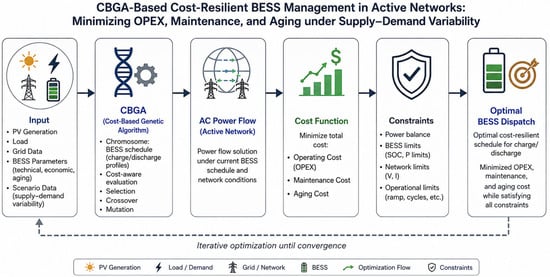
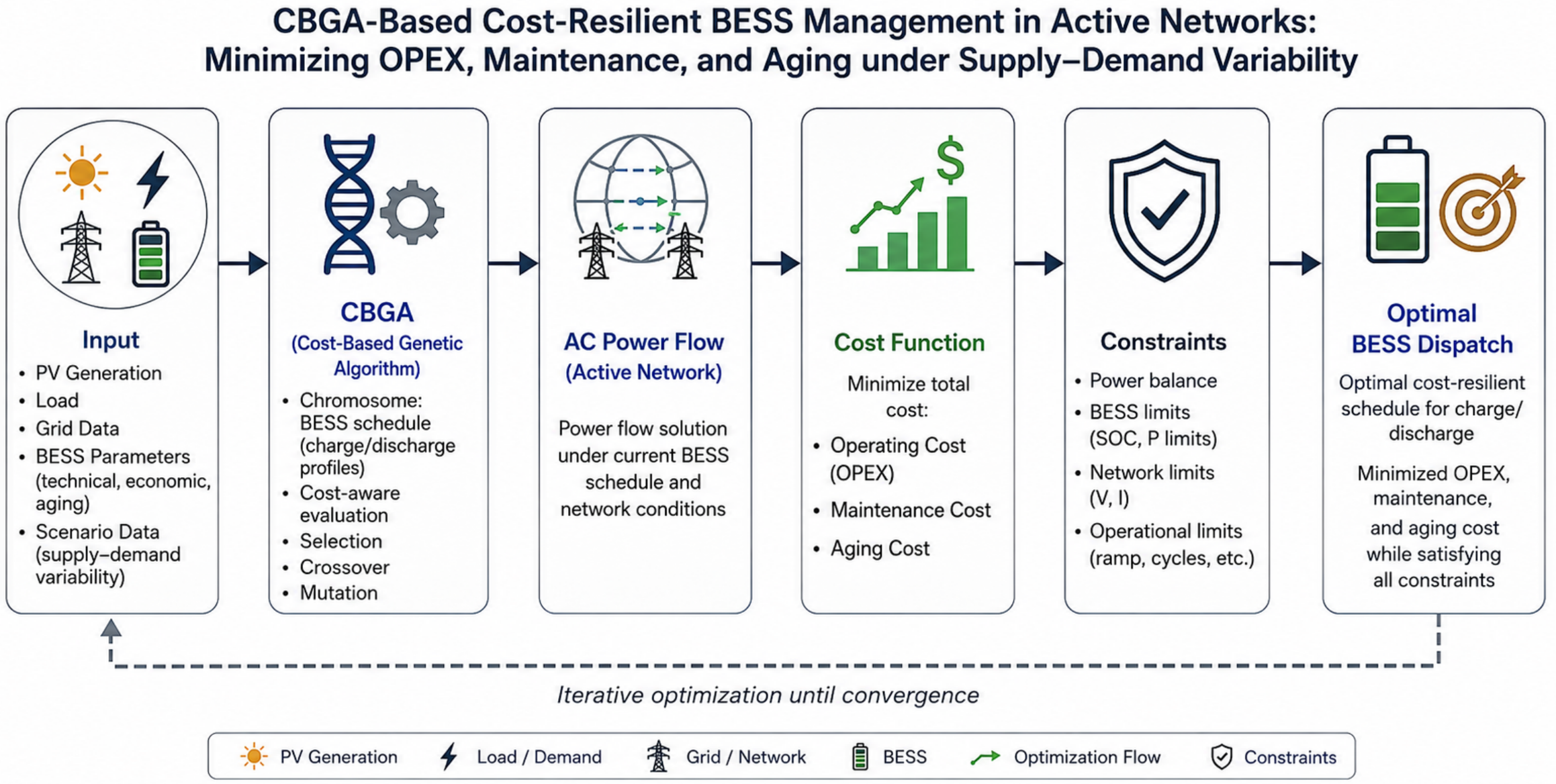
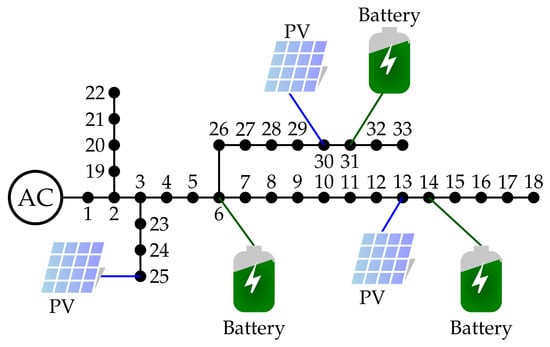
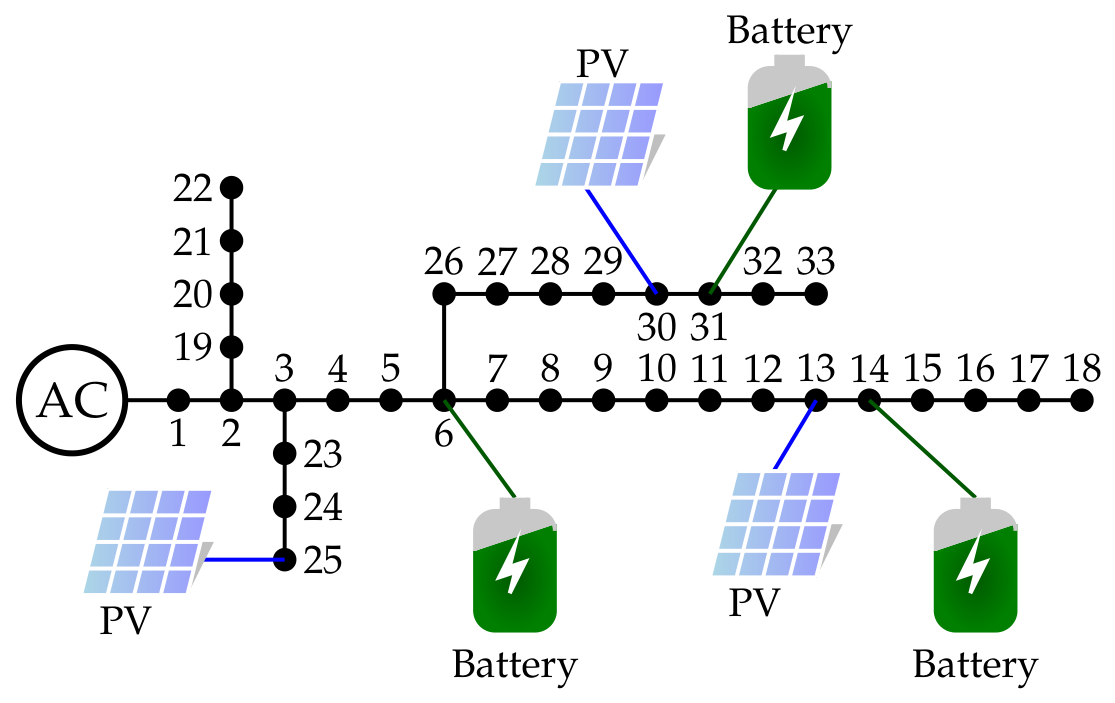
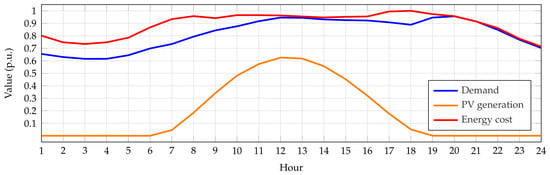
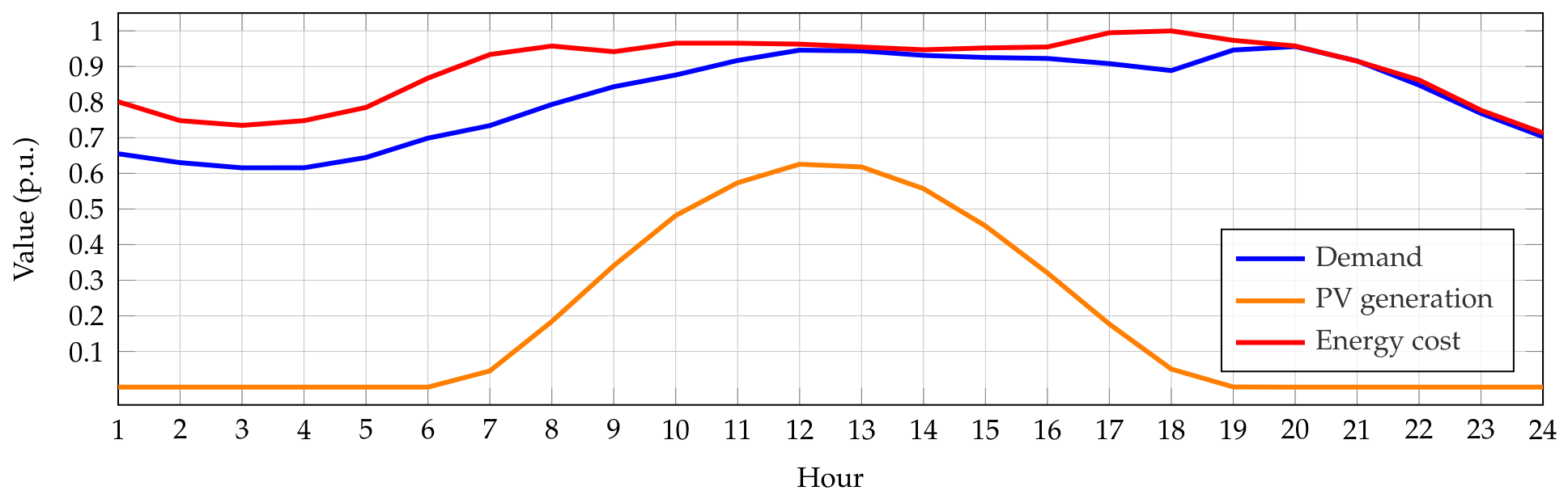
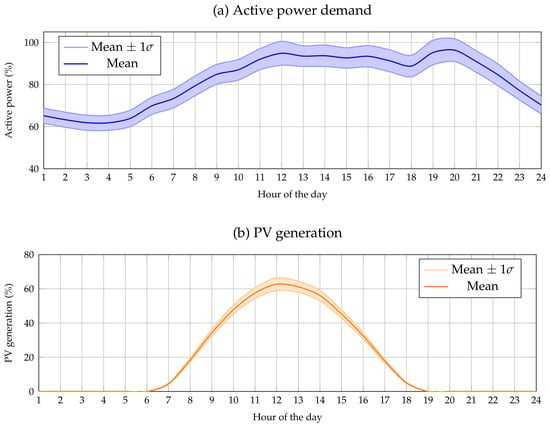
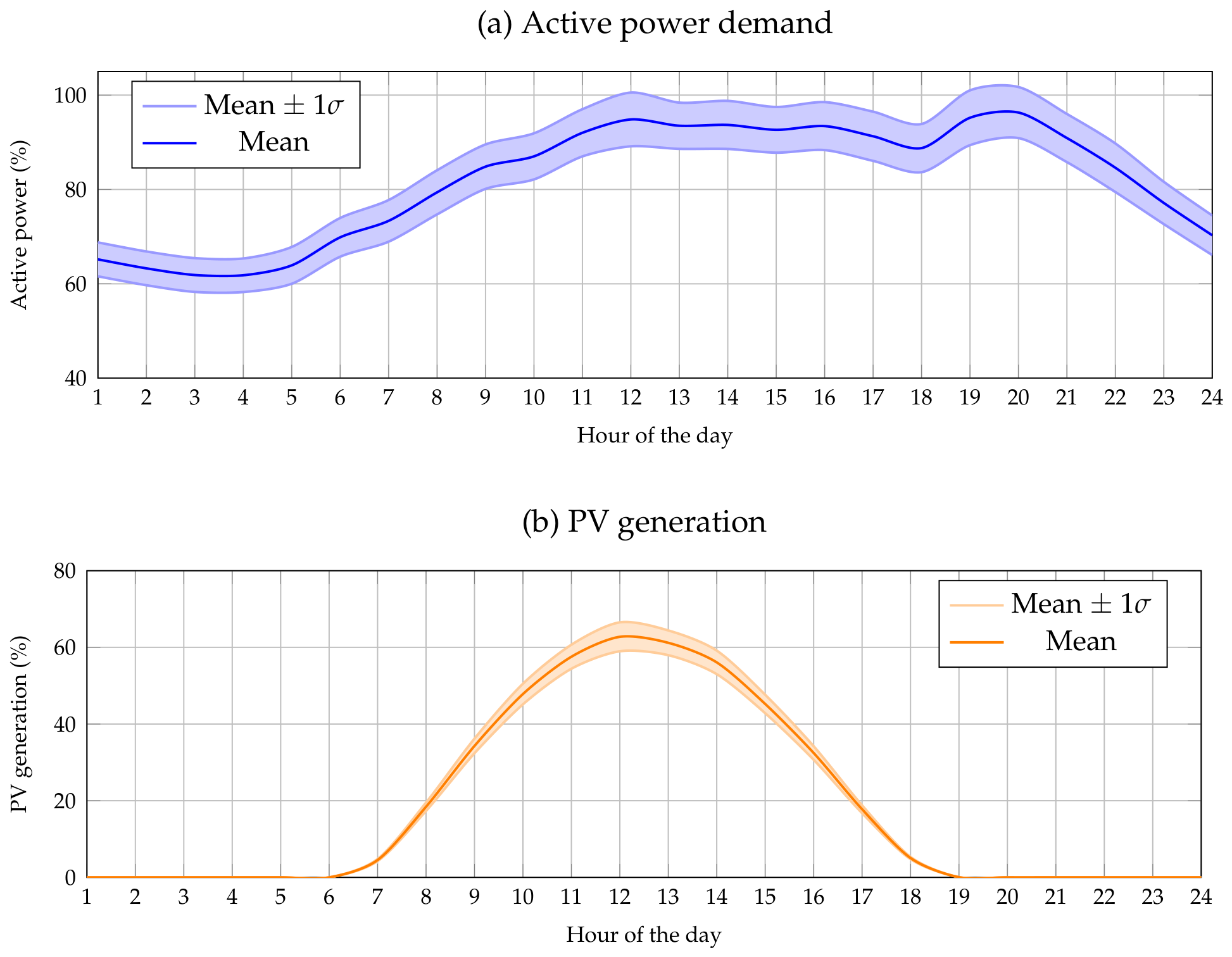
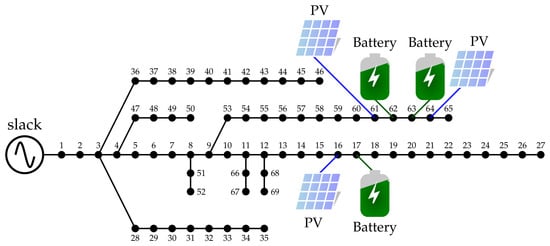
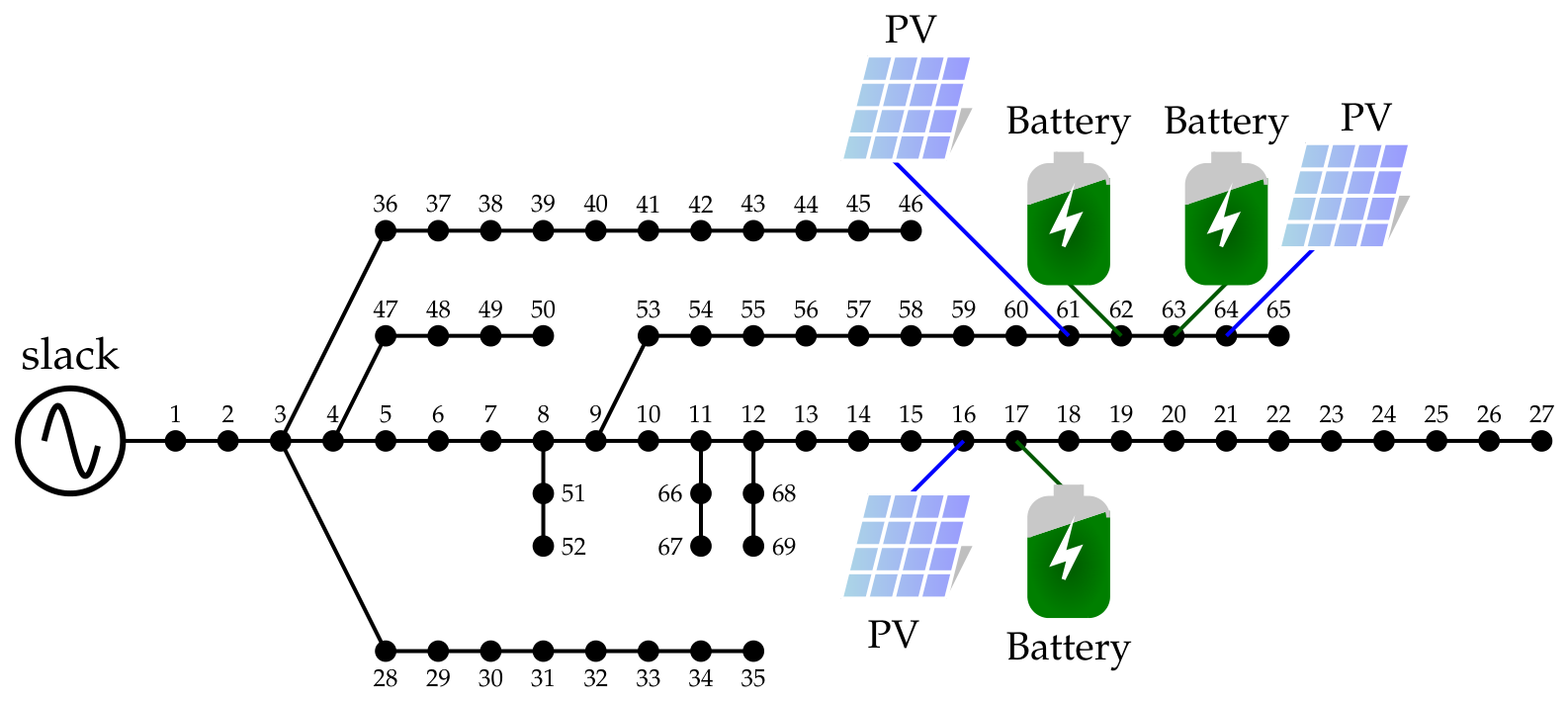
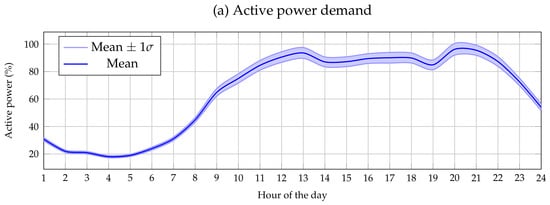
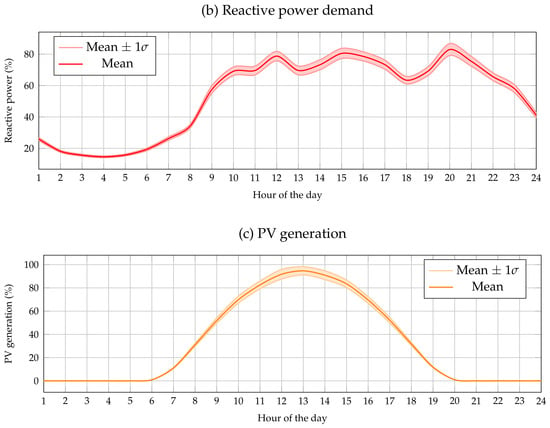
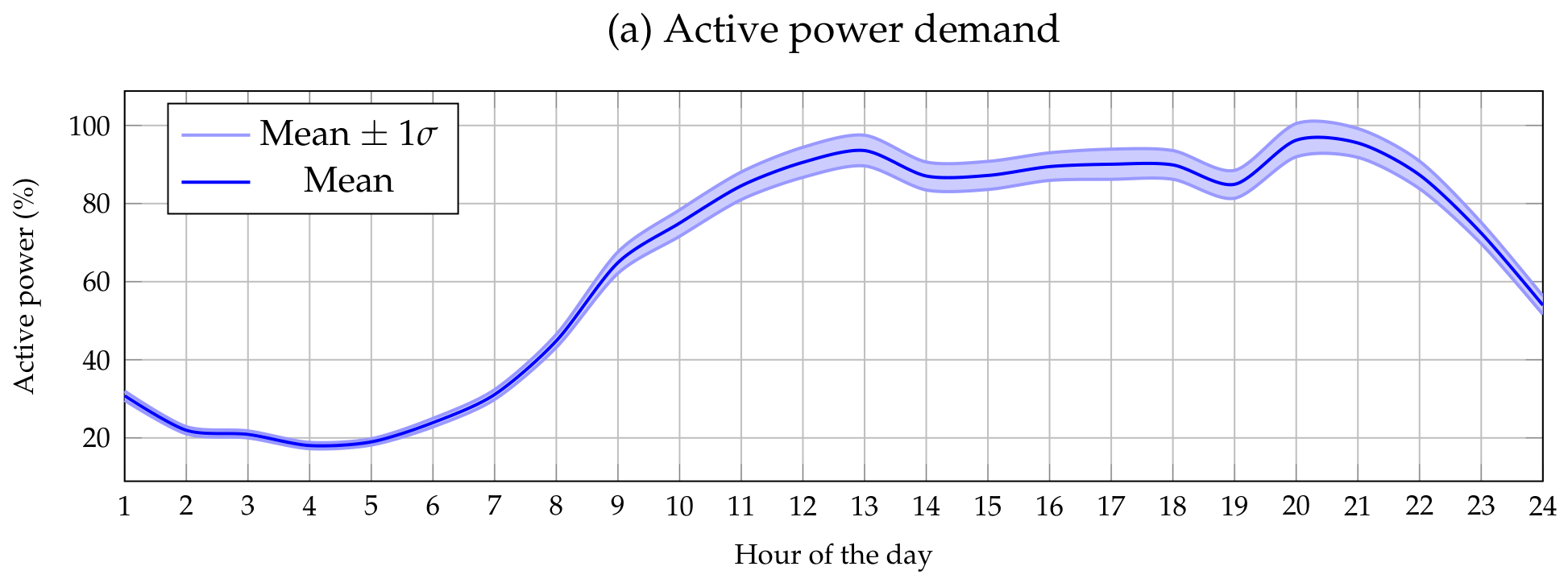
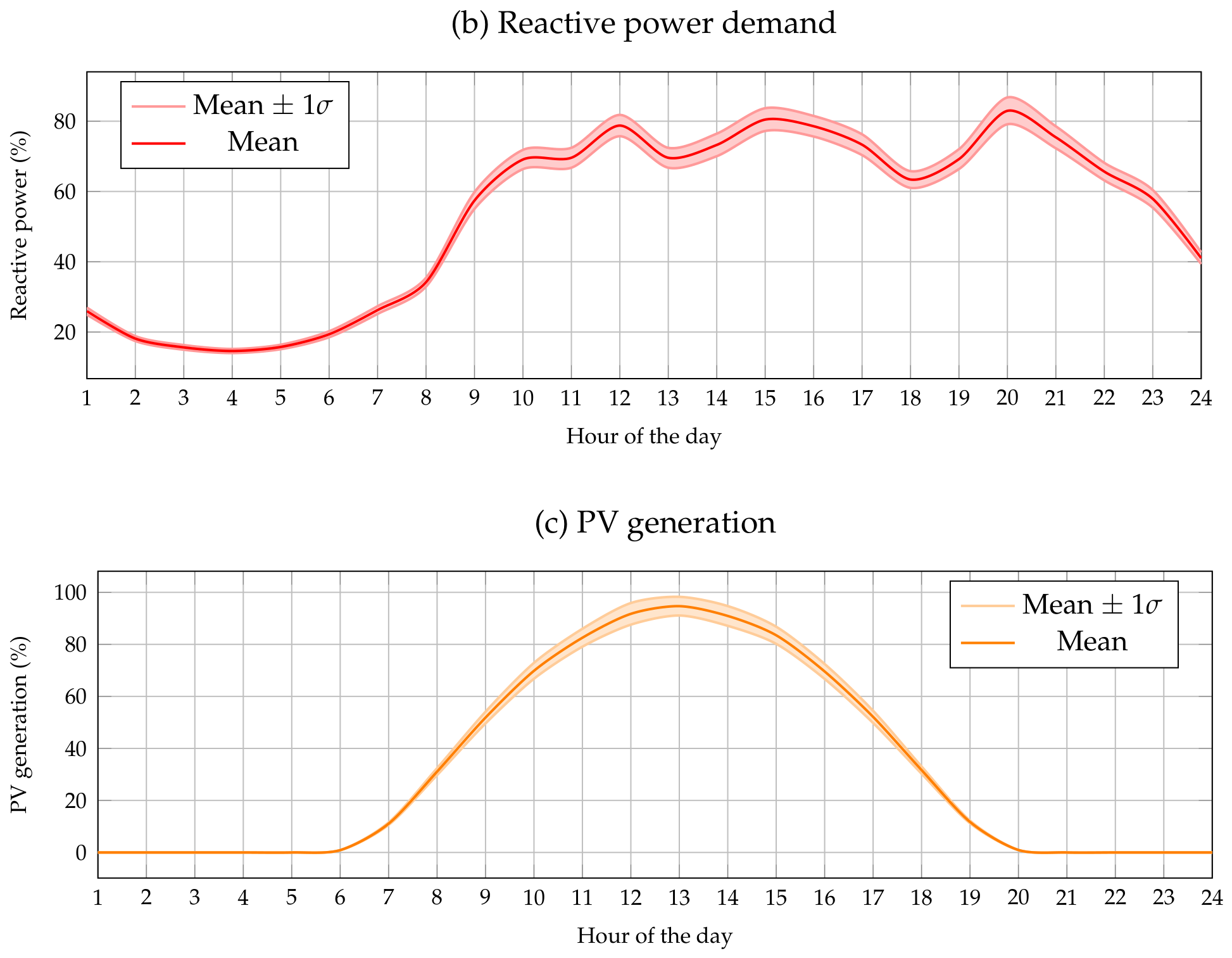

Disclaimer/Publisher’s Note: The statements, opinions and data contained in all publications are solely those of the individual author(s) and contributor(s) and not of MDPI and/or the editor(s). MDPI and/or the editor(s) disclaim responsibility for any injury to people or property resulting from any ideas, methods, instructions or products referred to in the content. |
© 2026 by the authors. Licensee MDPI, Basel, Switzerland. This article is an open access article distributed under the terms and conditions of the Creative Commons Attribution (CC BY) license.