


Abstract
This study examines the influence of straight square (SQ) and taper threaded (TT) tool pin geometries on the friction stir processing (FSP) of pure aluminum-based composites. Both pins had a shoulder-to-pin ratio of 3, with FSP conducted at 2400 rpm, 40 mm/min, and 11.2 kN axial force. Elemental and XRD analyses showed that the TT pin achieved superior reinforcement dispersion and formation of longer intermetallic chains. The TT pin also produced higher tensile strength (84.68 MPa) and elongation (27.92%), with SEM revealing ductile fracture features. The TT pin demonstrated better overall performance and is recommended for pure aluminum-based composite fabrication.
1. Introduction
The success of friction stir processing (FSP) largely depends on the type of base metal and the pin profile used during the process [1,2]. Consequently, studies examining the influence of pin profiles on fabricated composites have long been a common focus in FSP research. To date, various tool pin profiles have been designed, modeled, fabricated, and experimentally evaluated to determine their effectiveness in enhancing composite properties [3,4,5]. The pin is the front tip of the tool that penetrates the workpiece under an applied axial force, generating frictional heat that softens, mixes, and facilitates the flow of the plasticized material as the tool translates [6,7]. Commonly used tool pin profiles in friction stir welding (FSW) and FSP include the plain pentagon pin, plain hexagon pin [8], plain taper pin [9], plain cylindrical pin, triangular pin [10], cylindrical threaded pin, taper threaded pin, straight square pin [11], octagonal pin, and double-cone pin [12]. In both FSW and FSP, continued interest in tool pin design has been driven by the need to improve key structural and mechanical attributes such as material mixing and flow, fatigue strength [13], defect elimination [14], grain refinement, tensile strength, elongation [3], and microhardness [15]. A vast collection of studies has examined the design of various tool pin profiles to enhance weld and processed zone quality and to understand their influence on FSW and FSP response variables. For clarity, key findings from prior research on the effects of different tool probe geometries on weld and processed zone characteristics are summarized in subsections that follow.
Msomi et al. [16] examined the effect of tool pin profiles on the microstructure and mechanical properties of AA6082/AA8011 FSW joints that underwent underwater FSP using cylindrical threaded and fluted triangular pins. The fluted triangular pin produced superior tensile strength, better grain refinement, and fewer defects than the cylindrical threaded pin. Conversely, Azmi et al. [17] found that in AA5083/AA7075 dissimilar joints, the cylindrical threaded pin outperformed the taper threaded and plain taper pins, yielding the highest tensile strength, hardness, and material homogeneity with minimal defects. Welds made with the other pins exhibited excessive flash and kissing bond or tunnel defects. Reza-E-Rabby and Reynolds [18] also reported that threaded pins enhanced tool performance, suppressed in-plane reactions, and improved stir zone (SZ) material transport, effectively eliminating defects. Birdi et al. [19] provided an extensive review of tool pin profiles and their impact on mechanical properties. In FSW of AA6082-O, the taper threaded pin produced joints with higher tensile strength than the triflute pin across all welding speeds. For AA7075-T6, the conical pin outperformed the square pin. Comparative studies involving square, triangular, hexagonal, and pentagonal pins showed that the square pin induced a pulsating stirring effect that enhanced mechanical performance. The researchers concluded that flat-faced pins promote a pulsating stirring action and superior plasticized material flow, benefits not observed in cylindrical, tapered, or threaded designs. When square, pentagon, and hexagon-tapered pins were compared, the pentagon pin achieved the highest tensile properties, while the square pin yielded the lowest. In separate, similar studies, the square pin produced better microstructural tensile strength, elongation, and hardness than cylindrical, tapered, hexagonal, and triangular pins [15,20].
Salari et al. [21] examined the effects of flared triflute, stepped conical threaded, conical threaded, and cylindrical-conical threaded pins on weld morphology, concluding that the stepped conical threaded pin produced the most favorable results. Singh et al. [22] compared taper square, cylindrical, taper cylindrical, and straight square pins and observed that the taper square pin generated the highest joint strength. Likewise, Shine and Jayakumar [3] reported that straight square pins achieved superior hardness, tensile strength, and elongation compared to cylindrical-threaded and taper-threaded pins. In the FSP of AA1050, Ahmed et al. [23] studied the influence of cylindrical, triangular, and square pins on microstructure, mechanical properties, and online feedback parameters such as temperature and spindle torque. They found that pin geometry significantly affects heat generation, processed zone morphology, and mechanical integrity. The cylindrical pin yielded the lowest surface roughness, the highest hardness, and the maximum UTS (79 MPa). Vairis et al. [24] also highlighted that pin size and concentricity with the tool shoulder critically affect weld quality; off-center pins produced poor welds, while larger pins achieved higher tensile strength. Numerical studies by Elsherbiny et al. [12] showed that pin geometry influences thermal profiles, stress distribution, and mechanical performance, with the octagonal pin producing the highest temperatures and stress concentrations among seven tested profiles. In addition to the tool pin geometry, FSP is governed by tool rotational speed, travel speed, axial force, tilt angle, pin geometry, and overall tool dimensions [25]. Rotational speed and axial force generate the necessary frictional heat for softening and plasticizing the work material. The significance of these parameters on the quality of FSPed pure Al-based composites was emphasized by Marazani et al. [26], who successfully employed rotational speeds of 2100–2800 rpm, travel speeds of 20–60 mm/min, tilt angles of 2.5–3°, and an axial force of 11.2 kN when reinforcing AA1100 with stainless steel powder. Few studies have explored stainless steel as a reinforcement for pure aluminum. Kumar et al. [27], for example, processed AA1100 reinforced with SiC at 900 rpm, 45 mm/min, 2° tilt angle, 10 kN axial force, and 0.4 mm plunge depth.
Although a wide variety of tool pin designs have been reported, the straight square and taper threaded pin profiles remain among the most widely adopted, primarily due to their simplicity in design and ease of manufacture. For this reason, these two pin geometries were selected for the present study. The investigation focuses on assessing their influence on elemental incorporation, structural characteristics, tensile performance, and fracture behavior of pure aluminum-based composites. The objective is to identify the pin geometry that produces the most favorable attributes. The findings of this study will assist researchers in selecting an appropriate pin profile design for pure aluminum-based composites. Given the limited studies on stainless steel reinforcement in AA1100, the selection of process parameters in this work was guided by insights from previous related research.
2. Materials and Method
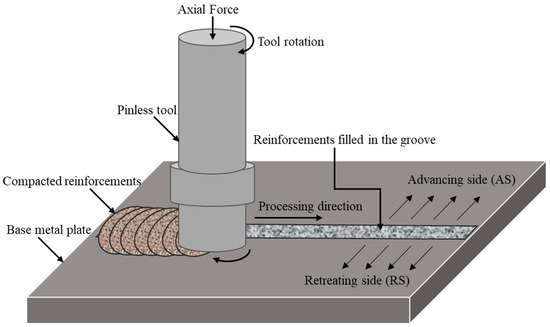
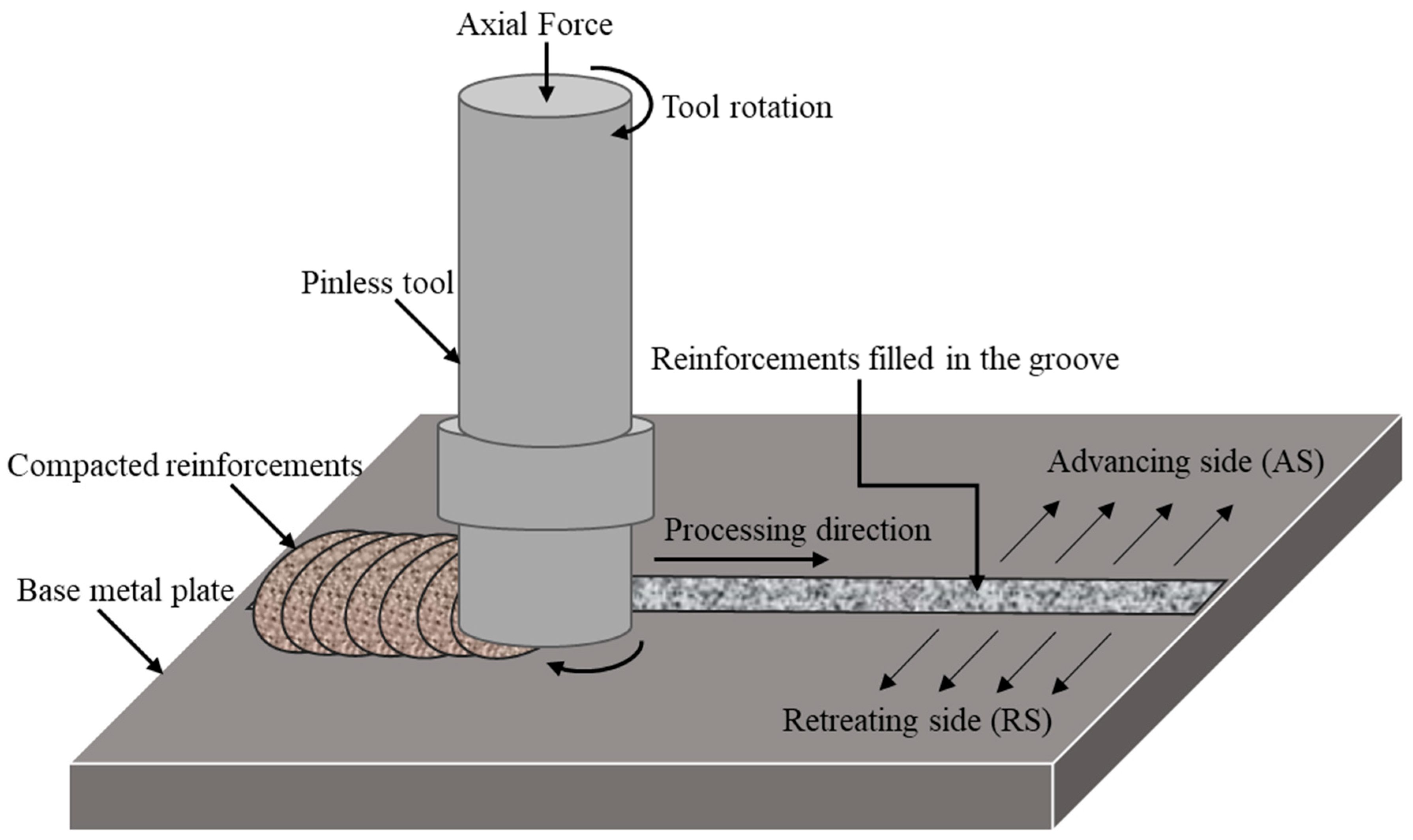
Rectangular slots measuring 2 mm in width, 4 mm in depth, and 200 mm in length were machined onto 6 mm thick AA1100 sheets with an overall length of 220 mm. The 17-4PH SS powder with a weight percentage composition of 73.461 Fe, 3.864 Ni, 16.564 Cr, 3.85 Cu, 0.010 C, 0.953 Mn, 0.038 P, 0.977 Si, 0.264 Nb, and 0.027 S was filled into the grooves and subsequently compacted using a pinless tool, as demonstrated by the schematic diagram shown in Figure 1
Figure 1.
Schematic illustration of the pinless tool reinforcements compaction mechanism in friction stir processing.
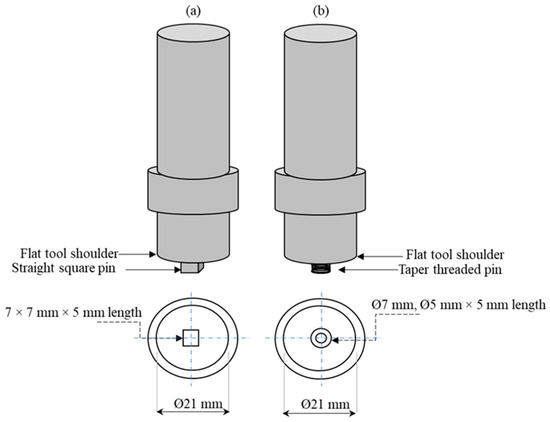
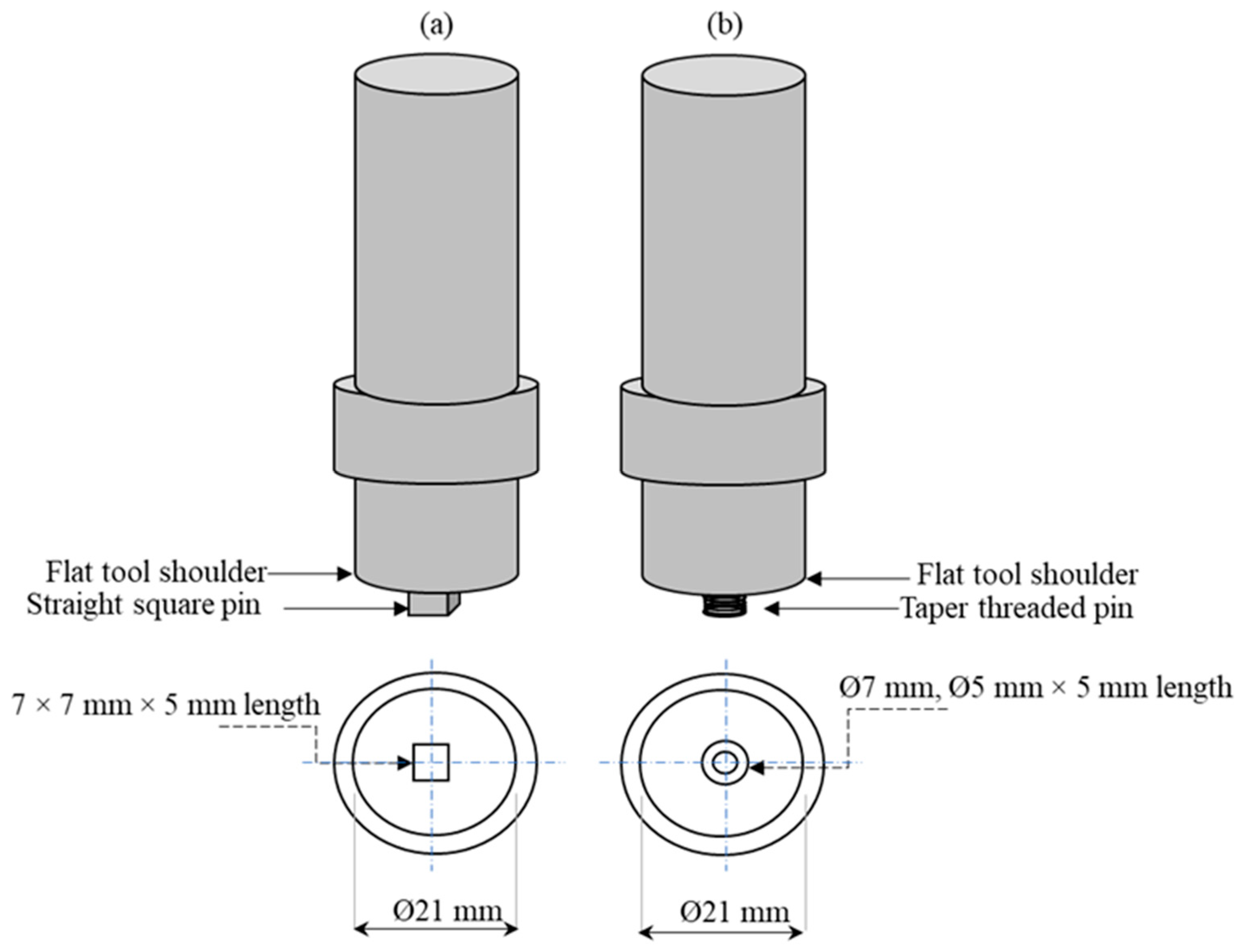
Double-pass friction stir processing with 100% overlap was carried out at a rotational speed of 2400 rpm, a tool tilt angle of 3°, a travel speed of 40 mm/min, a plunge depth of 0.2 mm, a dwell time of 4 s, and an axial force of 11.2 kN, using straight square and taper threaded pin profiles shown in Figure 2. The square pin measured 7 mm per side and 5 mm in length, while the taper-threaded pin had a major diameter of 7 mm, a minor diameter, and a length of 5 mm. Elemental analysis was conducted using a TescanVega3 Scanning Electron Microscope (SEM) that was manufactured by the TESCAN Group, Brno, Czech Republic, equipped with Oxford 1 Aztec Version 2.2 Energy Dispersive X-ray spectroscopy (EDS) software, while phase analysis was carried out using an X’PERT diffractometer (Malvern Panalytical, Almelo, The Netherlands) operated with HighScore Version 3.0 software.
Figure 2.
Schematic representation of the friction stir processing tools, with: (a) a straight square pin profile and (b) a taper-threaded pin profile.
Tensile specimens were prepared in accordance with the ASTM B557M-15 Designation and were cut across the FSPed tracks using a Xenon wire electrical discharge machine (WEDM), manufactured by AGIE (GF Machining Solutions), Switzerland. The tests were conducted at room temperature using a Zwick/Roell Z250 tensile testing machine, manufactured by the ZwickRoell Group, Ulm, Germany, at an extension rate of 5 mm/min. For each pin profile, six specimens were tested to fracture, and the corresponding ultimate tensile strengths and percentage elongations were determined. The specimens were examined for fracture locations and evidence of necking. A high-resolution Zeiss Gemini Plus SEM manufactured by Carl Zeiss Microscopy GmbH, Oberkochen, Germany. was used to analyze the fracture surfaces of the tensile specimens.
3. Results and Discussion
This section presents and discusses the findings derived from the conducted tests and analyses.
3.1. Composite Elemental Constituents
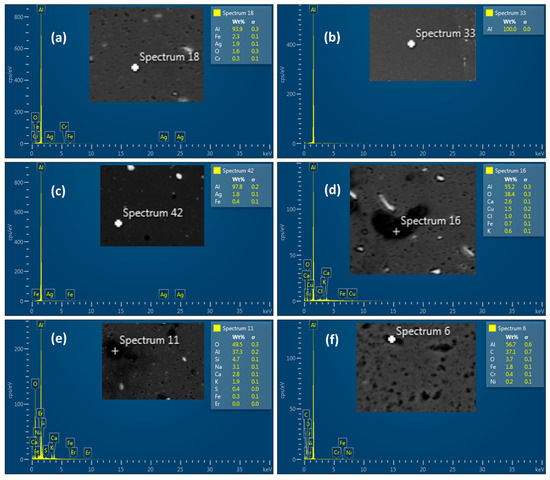
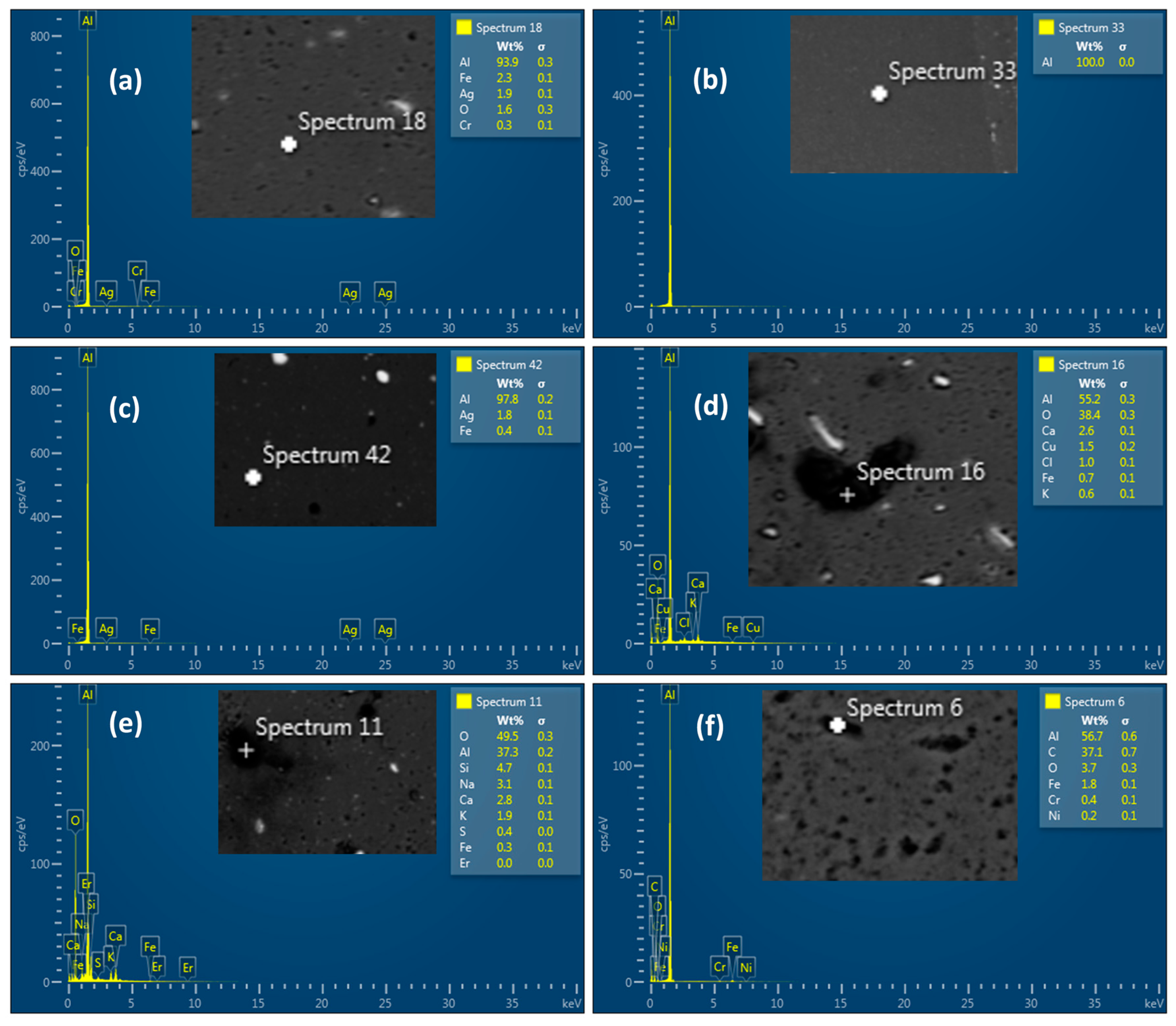
Figure 3a–f shows the EDS patterns of the analyzed composite samples. To verify whether the reinforcements were embedded within the aluminum (Al) matrix, all spectra were taken from the gray regions representing Al. Figure 3a–c show the elemental spectra attained from samples processed with the square pin. The spectra were dominated by Al, with only trace amounts of reinforcement elements detected in Figure 3a–c, while Figure 3b exhibited 100 wt.% Al. This indicates that the square pin was ineffective in distributing reinforcements uniformly within the matrix. Figure 3d–f show the elemental compositions of samples processed using the taper-threaded pin, where Al and most of the reinforcement elements were detected. This confirms that the taper-threaded pin achieved superior impregnation and distribution of reinforcements within the Al matrix.
Figure 3.
Energy dispersive spectroscopy: (a–c) straight-square pin spectra, and (d–f) taper-threaded pin spectra.
3.2. Phase Analysis
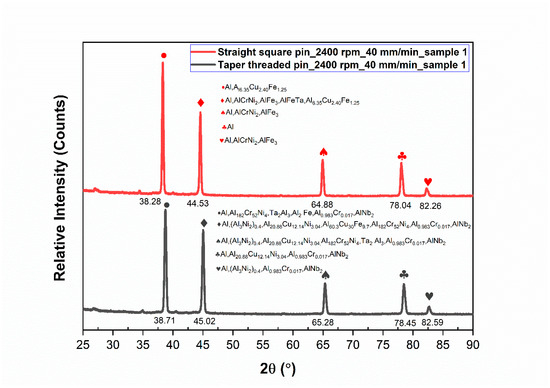
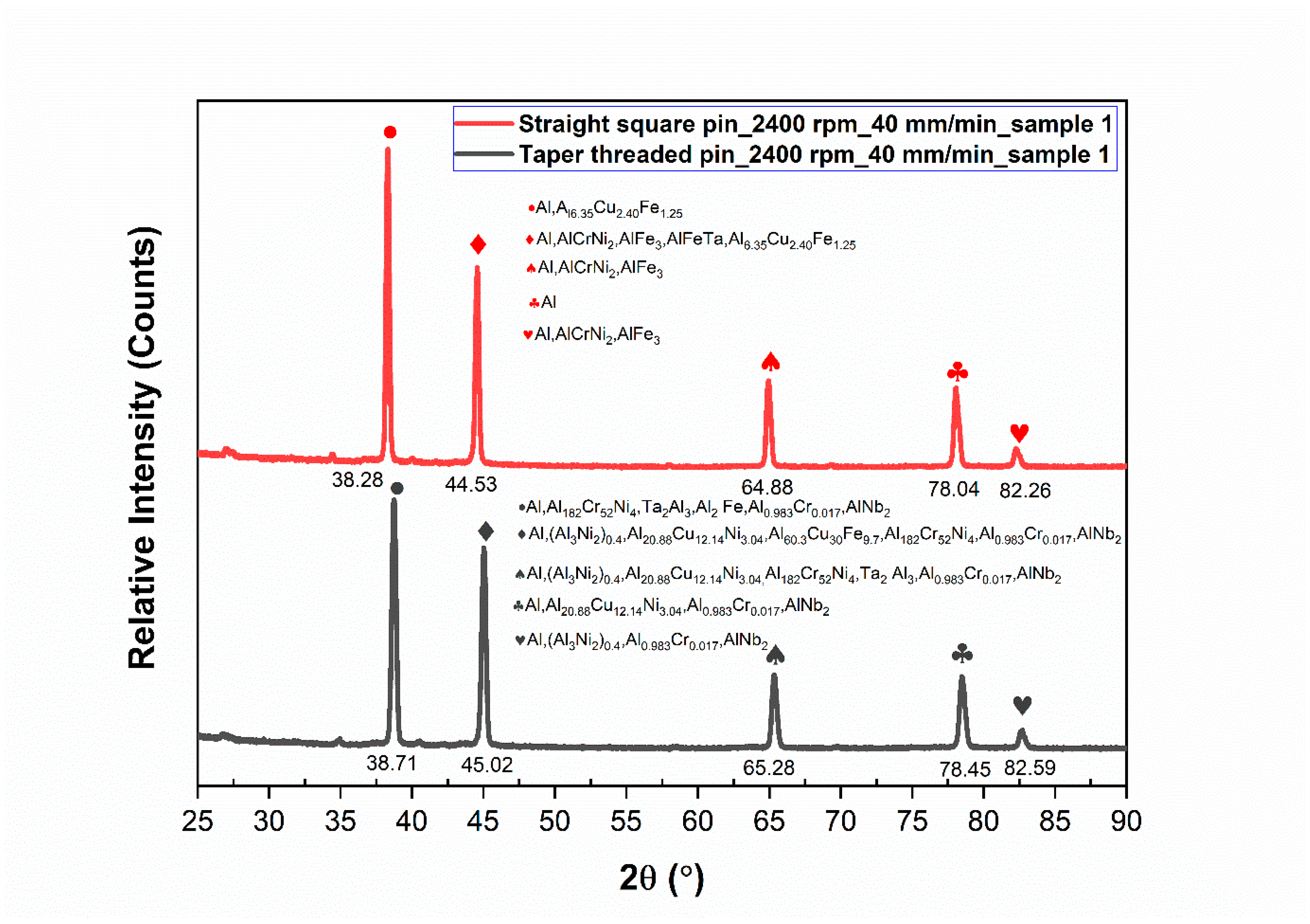
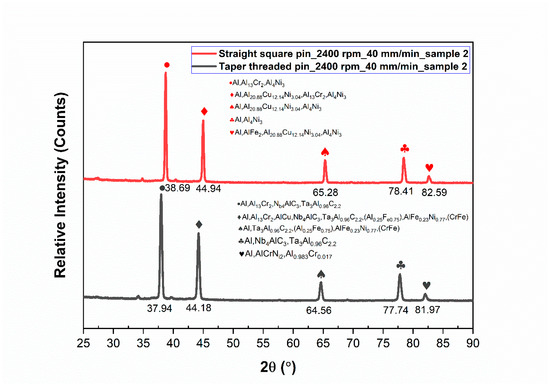
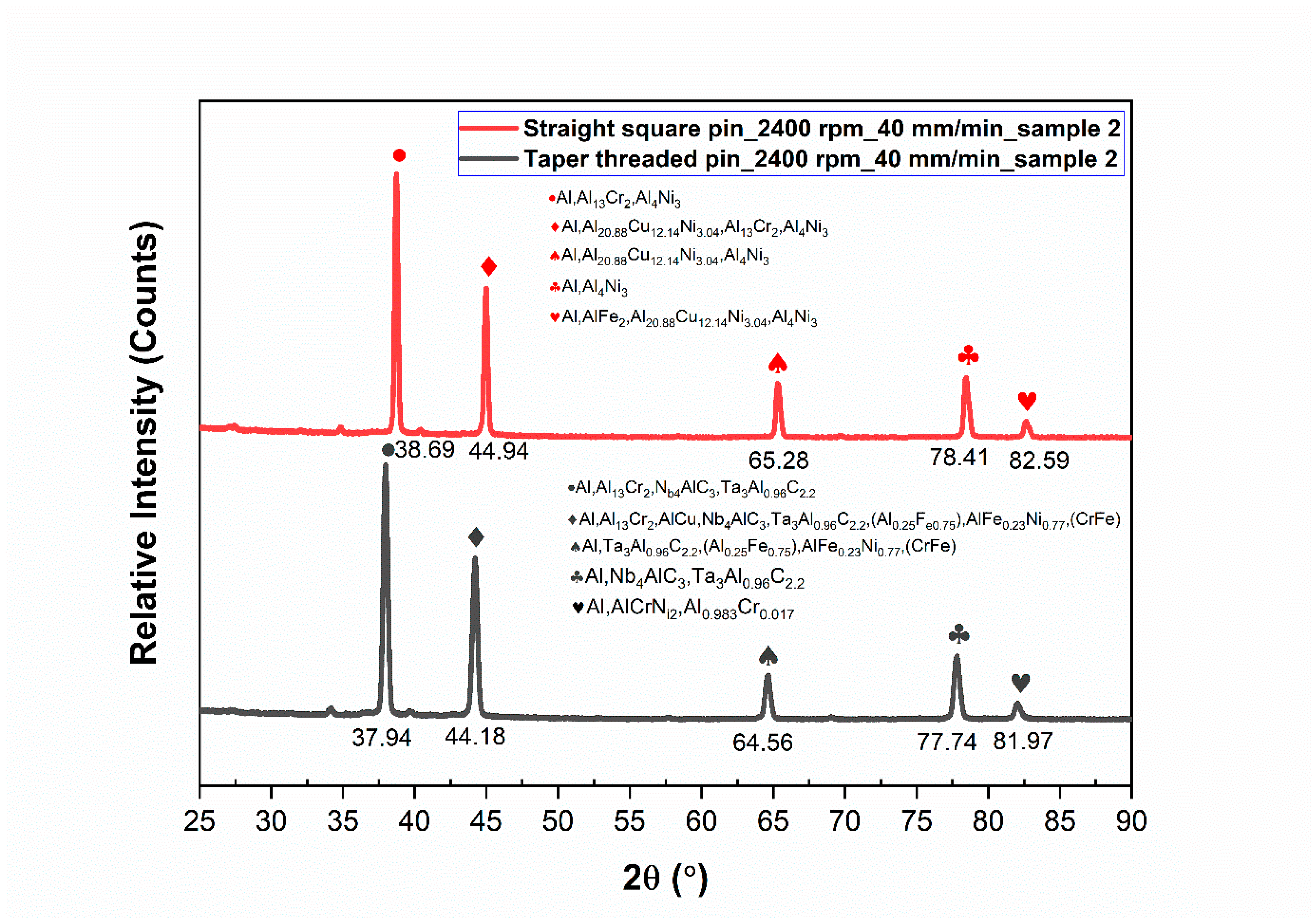
The identified phases also provide insights into the extent of reinforcement impregnation within the Al matrix. Figure 4 and Figure 5 show the XRD patterns of samples fabricated using the two pin profiles, with two samples analyzed for each pin profile. All four diffractograms displayed five distinct peaks within the 37.94–82.59° (2θ) range, with the remaining peaks appearing weak and broadened. As shown in Figure 4, the distinct peaks corresponding to sample 1 of the square pin slightly lagged behind those of sample 1 of the taper-threaded pin, whereas in Figure 5, the peaks of sample 2 produced with the taper-threaded pin marginally trailed those of sample 2 fabricated using the square pin.
Figure 4.
Sample 1 X-ray diffraction patterns for the straight square and taper threaded pin profiles.
Figure 5.
Sample 2 X-ray diffraction patterns for the straight square and taper threaded pin profiles.
All four XRD patterns revealed the presence of multiple groups of long-chained intermetallic compounds formed between Al and the constituent elements of the 17-4PH stainless steel reinforcements. These included Al, AlNi, AlCuFe, AlCuNi, AlCrNi, NbAlC, TaAlC, ACr, AlC, AlFe, AlFeTa, TaAl, AlNb, CrFe, and AlFeNi. Notably, all tantalum-based intermetallic compounds are high-temperature phases formed as a result of the heat generated during the FSP technique. A key observation was that samples processed with the taper-threaded pin exhibited larger and more continuous groups of intermetallic compounds compared to those produced using the square pin. This suggests that the taper-threaded pin facilitated more effective incorporation of the reinforcement phases into the Al matrix than the straight square pin.
3.3. Ultimate Tensile Strength (UTS) and Percentage Elongation
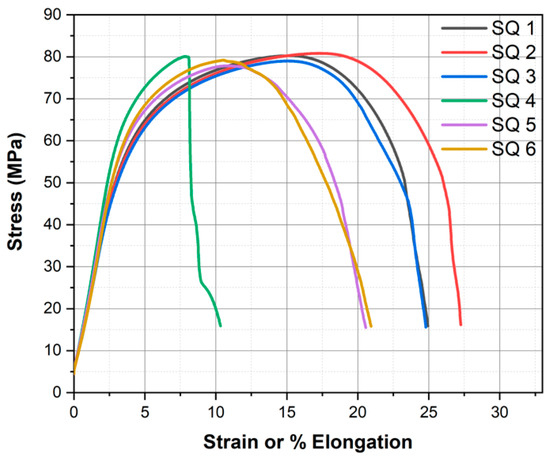
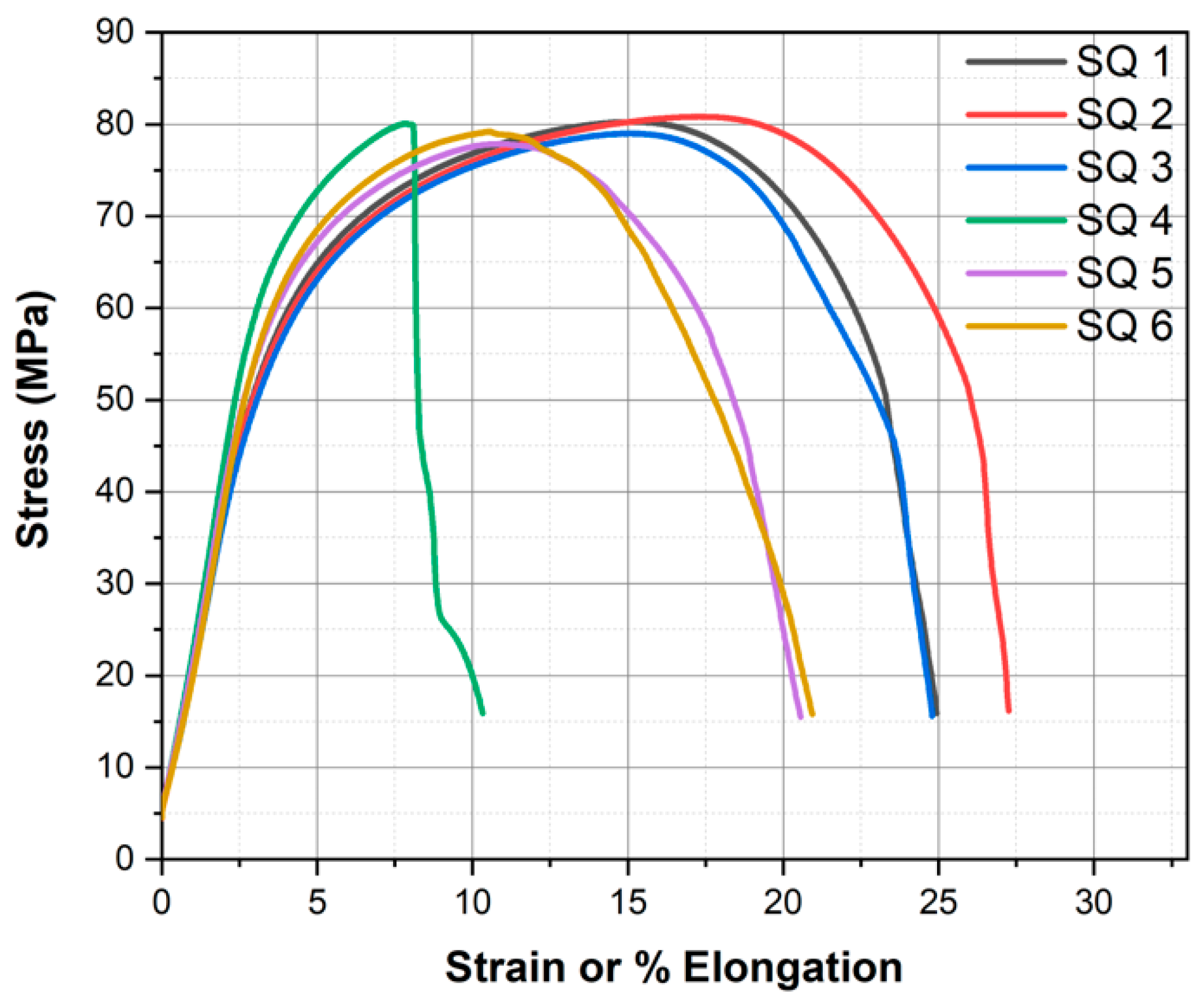
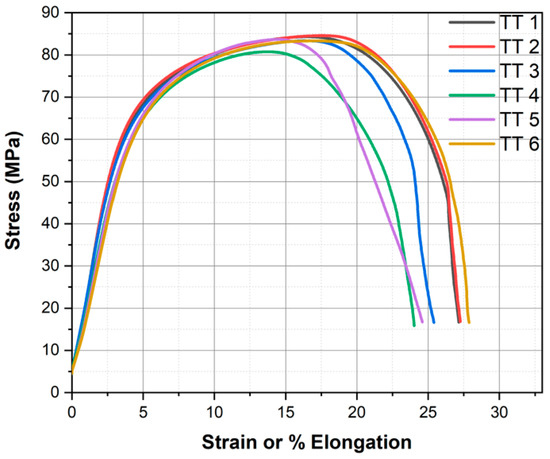
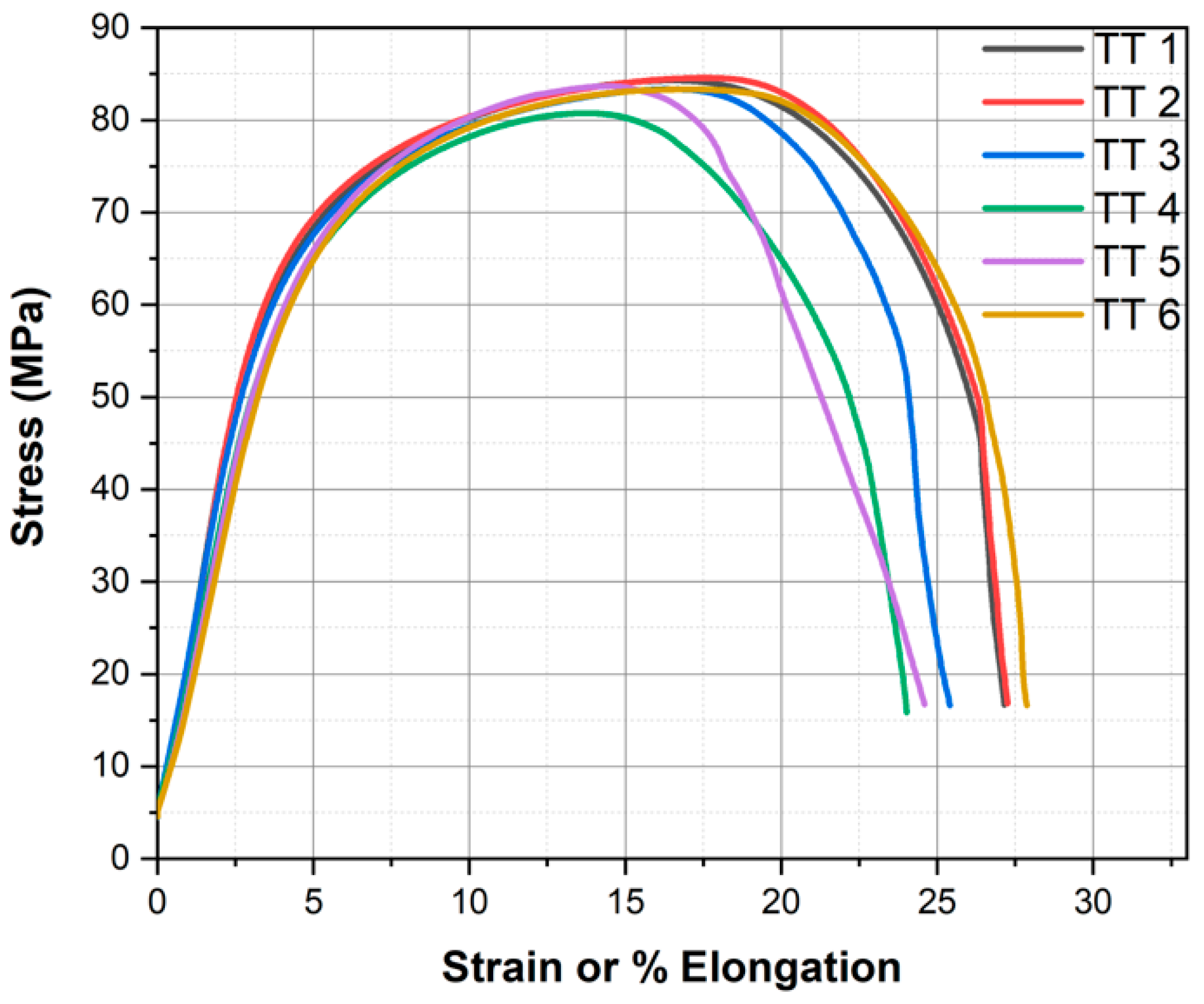
The tensile strength and percentage elongation behaviors of specimens produced using the two pin profiles are presented in Figure 6 and Figure 7. Six tensile test specimens were tested for each pin profile. As shown in Figure 6, the square pin tensile specimens exhibited UTS values ranging from 77.89 MPa to 80.77 MPa, with percentage elongation spanning from 9.06% for the defective specimen to 27.47%. Figure 7 indicates that the taper-threaded pin tensile specimens achieved UTS values between 80.74 MPa and 84.68 MPa and percentage elongation values from 24.02% to 27.92%.
Figure 6.
Stress–strain plots for the straight square pin tensile specimens.
Figure 7.
Stress–strain plots for the taper threaded pin tensile specimens.
Overall, between the two pin profiles, the taper-threaded pin produced higher UTS and percentage elongation compared to the straight square pin. This improvement can be attributed to its superior effectiveness in incorporating the 17-4PH stainless steel reinforcement phases within the Al matrix, as confirmed by the earlier reported findings on elemental and structural analyses.
3.4. Fracture Analysis
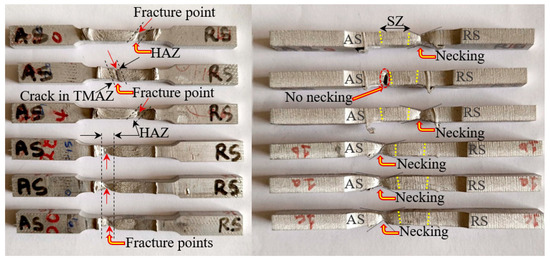
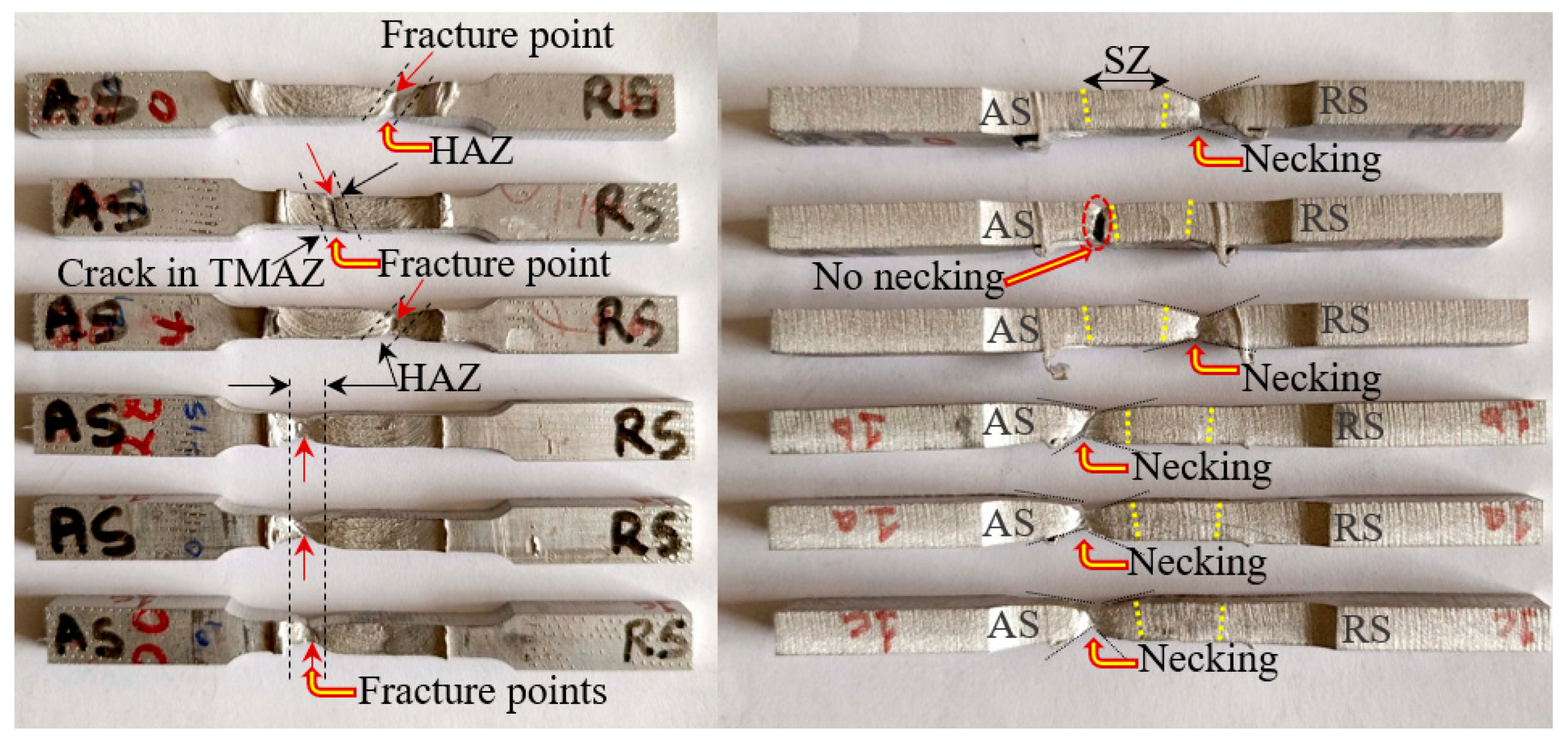
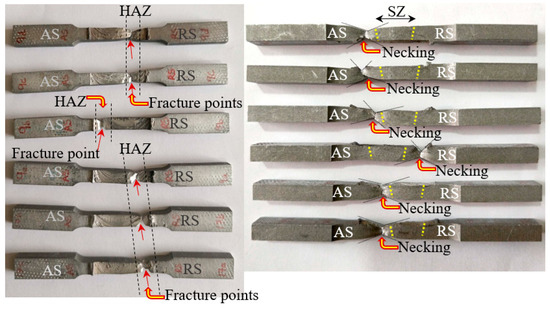
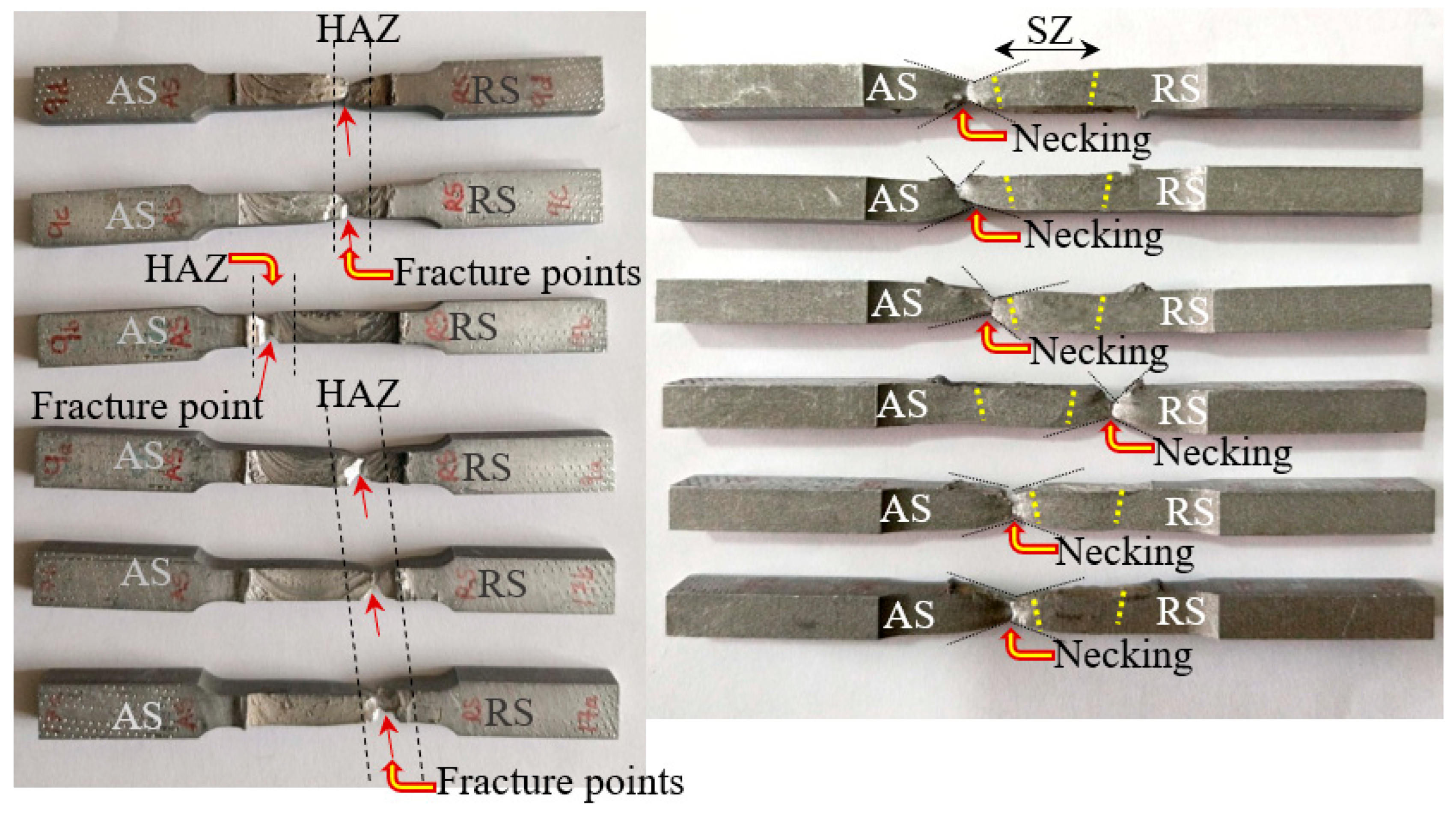
A total of six tensile specimens were tested for each pin profile. Figure 8 and Figure 9 illustrate their respective necking profiles and fracture locations. Prior to testing, the ASTM B557M-15 specimens had a uniform gauge section measuring 6 mm × 6 mm in width and thickness or depth. To determine the extent of necking, the width and thickness at the fracture points were measured, and the results are summarized in Table 1.
Figure 8.
Fracture locations and necking profiles for square pin tensile specimens.
Figure 9.
Fracture locations and necking profiles for taper threaded pin tensile specimens.
Table 1.
Necking dimensions of fractured tensile specimens.
The data show that most specimens underwent significant area reduction (necking) before fracture, except for sample 19a, which exhibited a pre-existing crack near the stir zone–thermo-mechanically affected zone (SZ–TMAZ) interface on the advancing side. Excluding the defective sample 19a, whose cross-sectional area (CSA) decreased to 94.41% of the original, the defect-free square-pin specimens showed CSA reductions ranging from 17.45% to 34.95% at fracture. The taper-threaded pin specimens exhibited similar reductions, ranging from 15.02% to 35.11% of the original CSA. In all cases, the reduction in thickness was greater than that across the width, which may be attributed to dynamic recrystallization and precipitate hardening along the transverse section resulting from the intense stirring action during processing [28].
Three of the square-pin specimens fractured within the heat-affected zone (HAZ) on the advancing side (AS), while two fractured in the HAZ on the retreating side (RS), further confirming that the HAZ is the weakest region [29,30]. As shown in Figure 8, the square-pin specimen that fractured within the thermo-mechanically affected zone (TMAZ) did so due to a pre-existing crack defect, which resulted in negligible necking. This observation aligns with the findings of Mabuwa and Msomi [31], who reported that defects act as preferential sites for fracture initiation. Figure 9 shows the taper-threaded pin specimens, five of which fractured within the HAZ on the RS, while one fractured within the HAZ on the AS. In all cases, pronounced necking occurred prior to fracture, indicating significant plastic deformation before failure.
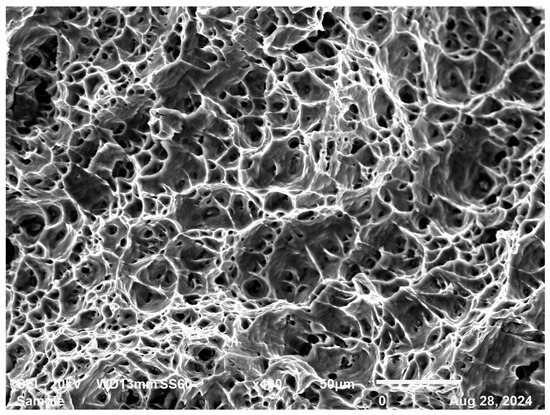
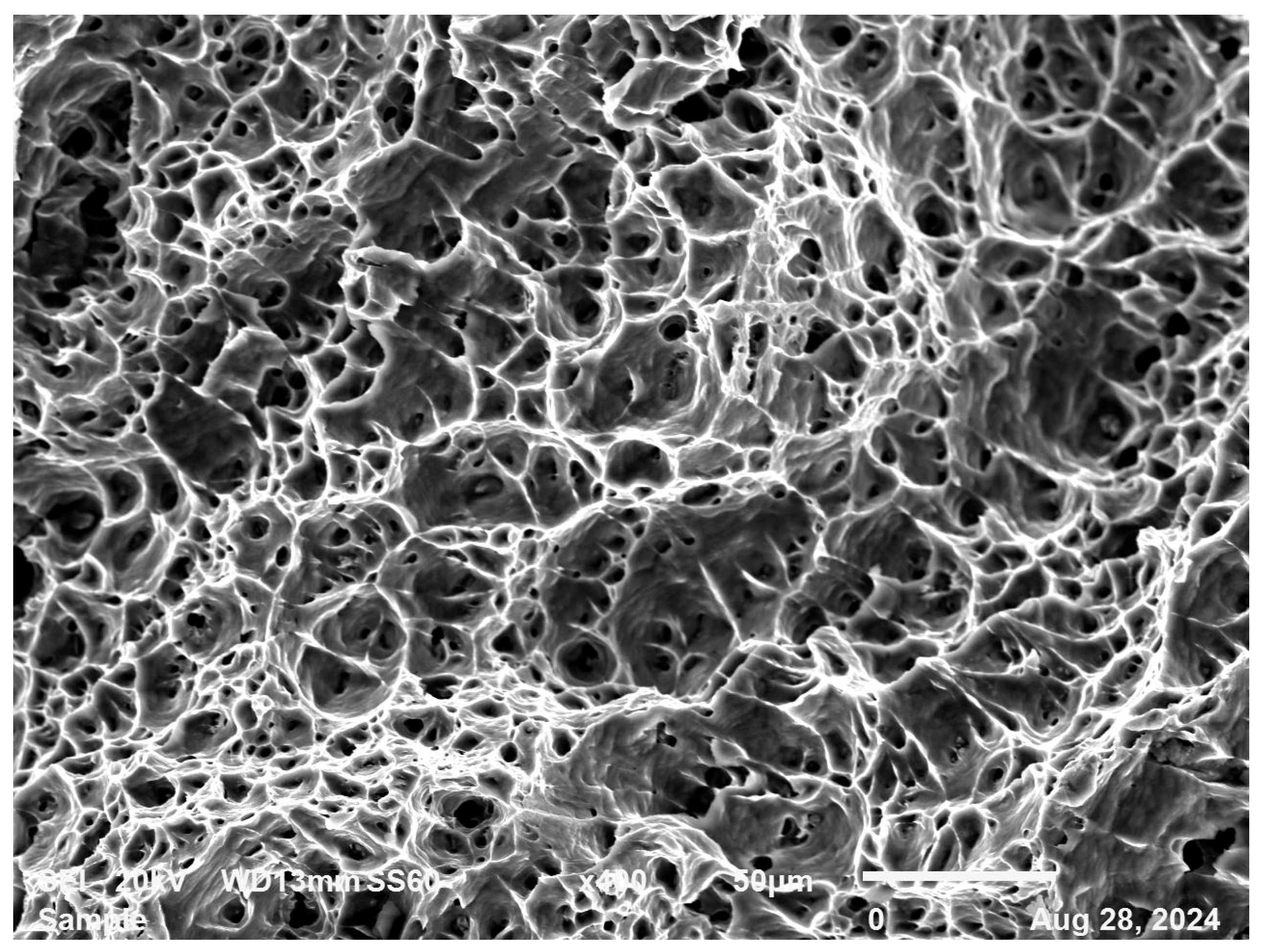
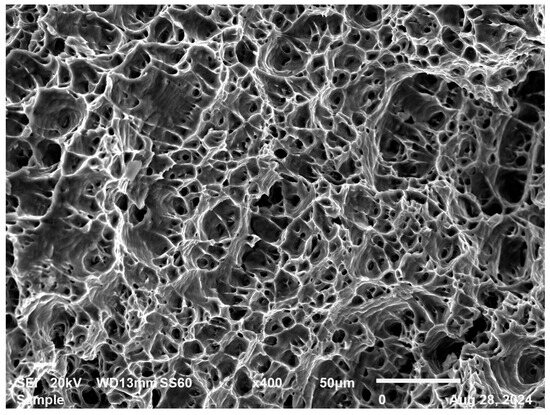
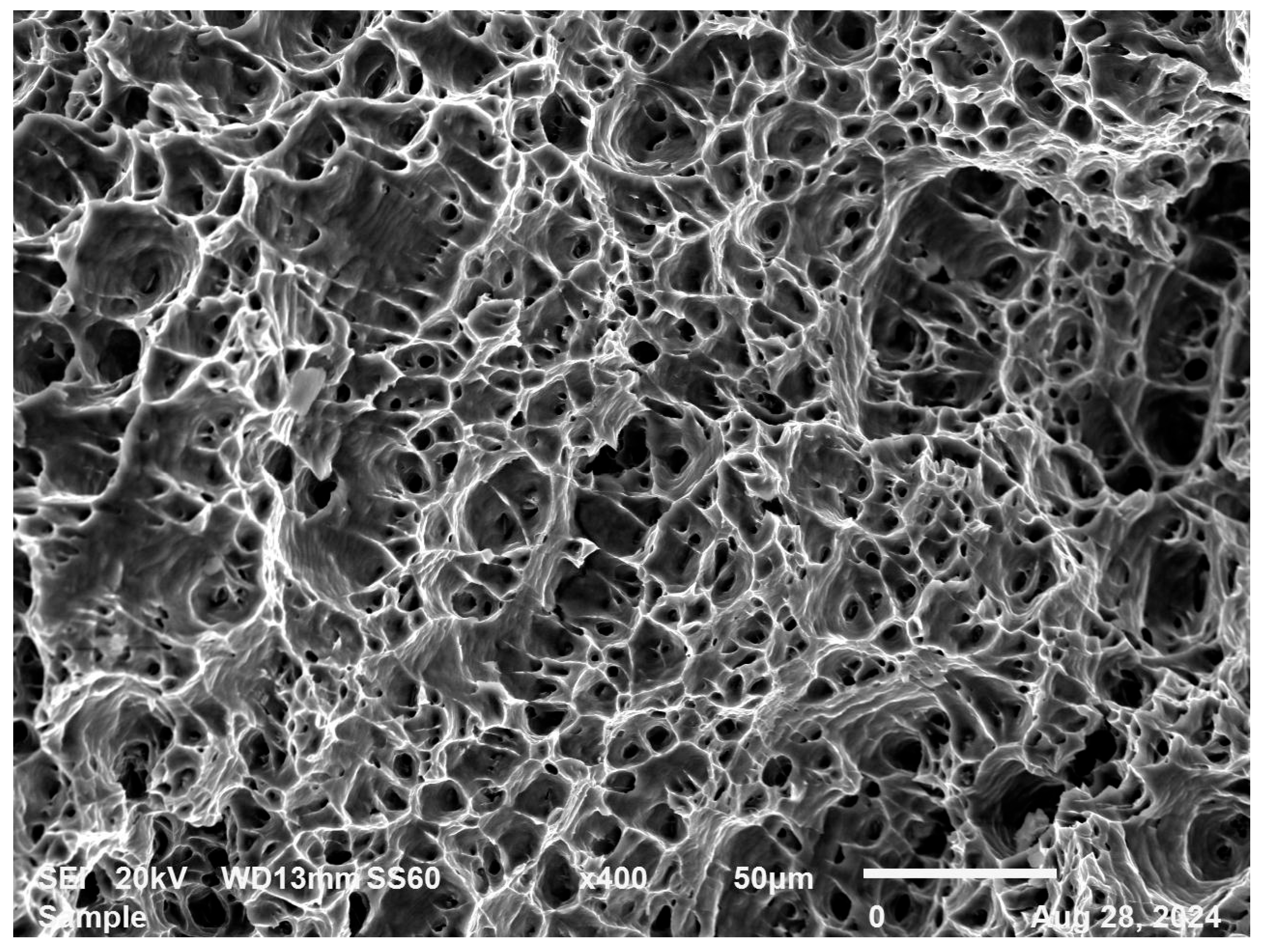
Figure 10 and Figure 11 present the SEM images of the fractured sample 1 tensile specimens processed using the square pin and taper threaded pin, respectively. Both specimens exhibited dimples, cleavage facets, and voids. Microcracks were visible on the fracture surface of the specimen produced with the square pin profile; however, the taper-threaded pin specimen displayed larger stretched cleavage facets. The observed features confirm a ductile failure mechanism. As established by Mabuwa and Msomi [31], ductile failure is typically characterized by equiaxed micro-dimples, torn ridges, micro-voids, transgranular cleavage facets, and well-defined grain boundaries—all of which were evident in the present fractographs. These observations align closely with the findings of Noga et al. [32], who reported that numerous micro-wells on fracture surfaces are indicative of ductile failure. The positioning of reinforcements within these micro-wells may have served as initiation points for crack propagation.
Figure 10.
Sample 1 SEM image of the straight square pin fractured tensile specimen.
Figure 11.
Sample 1 SEM image of the taper-threaded pin fractured tensile specimen.
The nucleation of micro-voids is commonly attributed to the debonding of precipitates in ductile materials, further substantiating the ductile failure mechanism [29]. The presence of dimples also suggests significant plastic deformation prior to fracture, often associated with recrystallization processes [33,34]. Overall, the fracture surfaces for both pin profiles were remarkably similar, indicating that variations in pin geometry did not significantly influence the fracture surface morphology.
4. Conclusions
The following conclusions are drawn from the conducted work:
- The taper-threaded pin achieved a more uniform distribution of 17-4PH stainless steel reinforcement elements within the pure aluminum matrix than the square pin.
- The taper-threaded pin formed larger and longer chains of intermetallic compounds, whereas the square pin produced smaller and shorter ones.
- The taper-threaded pin achieved higher UTS and % elongation compared to the straight square pin.
- The necking profiles of the tensile specimens for each pin profile confirm that fracture occurred after significant plastic deformation.
- For both pin profiles, necking was more prominent through the thickness than the width, attributed to dynamic recrystallization and precipitate hardening caused by intense stirring during processing.
- The HAZ was the weakest point where most fractures were located.
- Pre-existing crack defects act as fracture weak points, negatively affecting necking, UTS, and % elongation.
- Tensile specimens from both pin profiles exhibited ductile fracture behavior, with profile variations having minimal effect on fracture surface morphology.
- Based on these findings, the taper-threaded pin is recommended for fabricating pure aluminum-based composites.
Author Contributions
Conceptualization, T.M.; methodology, T.M.; formal analysis, T.M.; investigation, T.M.; data curation, T.M.; writing—original draft preparation, T.M.; writing—review and editing, T.M., V.M. and S.M.; visualization, T.M.; supervision, V.M. and S.M. All authors have read and agreed to the published version of the manuscript.
Funding
This research received no external funding.
Institutional Review Board Statement
Not applicable.
Informed Consent Statement
Not Applicable.
Data Availability Statement
Data available from the authors upon reasonable request.
Conflicts of Interest
Authors have no conflict of interest to declare.
References
- Shahabuddin, D.V.K. Effect of tool geometry of friction stir welding on mechanical properties of AA 7075 Aluminum alloy. Int. J. Mech. Eng. Technol. 2018, 9, 625–633. [Google Scholar]
- El-Sayed, M.S.; Ibrahim, M.; Abdel-Aziz, A.I. Effect of friction stir processing parameters on mechanical properties of different aluminum alloy plates. Sci. Rep. 2025, 15, 27066. [Google Scholar] [CrossRef] [Scilit]
- Shine, K.; Jayakumar, K. Effect of tool pin profile on the mechanical and microstructural properties of dissimilar friction stir welded AA5083-H111 and AA6061-T6 aluminium alloys. J. Chin. Inst. Eng. 2022, 45, 227–236. [Google Scholar]
- Yaknesh, S.; Sampathkumar, K.; Sevvel, P. Effect of tool pin geometry and process parameters during FSW of dissimilar alloys of Mg. Mater. Res. 2022, 25, e20210508. [Google Scholar] [CrossRef] [Scilit]
- Sharma, S.; Handa, A.; Singh, S. Influencing geometrical parameters of tools in friction stirring technology: A short review. J. Mech. Eng. 2021, 71, 257–290. [Google Scholar] [CrossRef] [Scilit]
- Marazani, T.; Akinlabi, E.T.; Madyira, D.M. Reduction of excessive flash in friction stir processing of AA1100: An experimental observation study. In Advances in Material Sciences and Engineering; Springer: Singapore, 2019; pp. 299–308. [Google Scholar]
- Malik, V.; Kailas, S.V. Understanding the effect of tool geometrical aspects on intensity of mixing and void formation in friction stir process. Proc. Inst. Mech. Eng. Part C J. Mech. Eng. Sci. 2021, 235, 744–757. [Google Scholar] [CrossRef] [Scilit]
- Prasanna, P.; Penchalayya, C.H.; Rao, D.A. Effect of tool pin profiles and heat treatment process in the friction stir welding of AA 6061 aluminium alloy. Am. J. Eng. Res. 2013, 2, 7–15. [Google Scholar]
- Jayaseelan, P.; Christy, T.V.; Vijay, S.J. Effect of Friction Stir Welding Tool on Al–SiC Composites by Varying Tool Pin Profile and Tool Material. Trends Manuf. Eng. Manag. Sel. Proc. ICMechD 2019, 2020, 673–679. [Google Scholar]
- Elmetwally, H.T.; Abdelhafiz, M.A.; El-Sheikh, M.N.; Abdullah, M.E. Effect of friction stir-welding tool pin geometry on the characteristics of Al-Cu joints. Appl. Eng. Lett. J. Eng. Appl. Sci. 2023, 8, 60–69. [Google Scholar]
- Marazani, T.; Akinlabi, E.T.; Madyira, D.M.; Majumdar, J.D.; Pal, S.K. Microstructural, elemental, mechanical and structural attributes of AA1100/17-4 PH stainless steel composites fabricated via friction stir processing. Eng. Solid. Mech. 2021, 9, 391–414. [Google Scholar]
- Elsherbiny, A.A.; Enab, T.A.; Galal, A.M.; Ghattas, M.S. Effect of Tool Geometry on Friction Stir butt-Welding of AA6061-T6 Alloy: Part 1-Numerical Study. MEJ-Mansoura Eng. J. 2019, 44, 10–15. [Google Scholar]
- De Jesus, J.S.; Loureiro, A.; Costa, J.M.; Ferreira, J.M. Effect of tool geometry on friction stir processing and fatigue strength of MIG T welds on Al alloys. J. Mater. Process. Technol. 2014, 214, 2450–2460. [Google Scholar] [CrossRef] [Scilit]
- Venu, B.; Raju, L.S. Influence of tool geometry and effects of plunge depth in friction stir welding of AA2014. Int. J. Innov. Technol. Explor. Eng. 2019, 8, 2077–2079. [Google Scholar]
- Chander, M.S.; Ramakrishna, M.; Rajesh, A. A Review on Impact of Tool pin Geometry on Friction Stir Welding of Aluminum alloys. IOP Conf. Ser. Mater. Sci. Eng. 2020, 981, 042018. [Google Scholar] [CrossRef] [Scilit]
- Msomi, V.; Mabuwa, S.; Muribwathoho, O.; Motshwanedi, S.S. Effect of tool geometry on microstructure and mechanical properties of submerged friction stir processed AA6082/AA8011 joints. Mater. Today Proc. 2021, 46, 638–644. [Google Scholar] [CrossRef] [Scilit]
- Azmi, M.H.; Hasnol, M.Z.; Zaharuddin, M.F.A.; Sharif, S.; Rhee, S. Effect of tool pin profile on friction stir welding of dissimilar materials AA5083 and AA7075 aluminium alloy. Arch. Metall. Mater. 2022, 67, 465–470. [Google Scholar] [CrossRef] [Scilit]
- Reza-E-Rabby, M.; Reynolds, A.P. Effect of tool pin thread forms on friction stir weldability of different aluminum alloys. Procedia Eng. 2014, 90, 637–642. [Google Scholar] [CrossRef] [Scilit]
- Birdi, A.; Procha, A.; Brar, A.S.; Kumar, R.; Kumar, S. Effect of tool pin profile on mechanical characteristics of friction stir welded al alloys: A critical review. Int. Res. J. Nat. Sci. 2019, 1, 15–21. [Google Scholar]
- Deore, H.; Hiwarkar, V. Effect of tool Geometry and process parameters on microstructure and mechanical properties of Dissimilar Friction stir welding of AA6061-AA5052. J. Emerg. Technol. Innov. Res. (JETIR) 2019, 6, 614–621. [Google Scholar]
- Salari, E.; Jahazi, M.; Khodabandeh, A.; Ghasemi-Nanesa, H. Influence of tool geometry and rotational speed on mechanical properties and defect formation in friction stir lap welded 5456 aluminum alloy sheets. Mater. Des. 2014, 58, 381–389. [Google Scholar] [CrossRef] [Scilit]
- Singh, R.; Kumar, S.; Singh, P.K. Effect of welding speed and tool pin geometry on impact strength in friction stir welding of aluminium 6101 T6 Alloy. MATEC Web Conf. 2016, 57, 03005. [Google Scholar] [CrossRef] [Scilit]
- Ahmed, M.M.Z.; El-Sayed Seleman, M.M.; Eid, R.G.; Albaijan, I.; Touileb, K. The influence of Tool pin geometry and speed on the Mechanical properties of the Bobbin Tool Friction stir processed AA1050. Materials 2022, 15, 4684. [Google Scholar] [CrossRef] [Scilit]
- Vairis, A.; Petousis, M.; Mountakis, N.; Tsarouchidou, C.; Vidakis, N. The effect of tool geometry on the strength of FSW aluminum thin sheets. Materials 2022, 15, 8187. [Google Scholar] [CrossRef] [Scilit]
- Prabhakar, D.A.P.; Shettigar, A.K.; Herbert, M.A.; Gc, M.P.; Pimenov, D.Y.; Giasin, K.; Prakash, C. A comprehensive review of friction stir techniques in structural materials and alloys: Challenges and trends. J. Mater. Res. Technol. 2022, 20, 3025–3060. [Google Scholar] [CrossRef] [Scilit]
- Marazani, T.; Jeje, S.O.; Shongwe, M.B.; Malatji, N. Mass flash reduction strategies in friction stir processing of aluminum alloys: A review. Eng. Rep. 2024, 6, e12981. [Google Scholar] [CrossRef] [Scilit]
- Kumar, P.; Nivetha, S.K.; Began Peruvazhuthi, S.; Raman, K.; Vs, S.K. Characterization and analysis of AA1100-SiCp metal matrix composite fabricated through friction stir processing. J. Tribol. 2021, 29, 31–40. [Google Scholar]
- El-Moayed, M.H.; Shash, A.Y.; Rabou, M.A.; El-Sherbiny, M.G. A detailed process design for conventional friction stir welding of aluminum alloys and an overview of related knowledge. Eng. Rep. 2021, 3, e12270. [Google Scholar] [CrossRef] [Scilit]
- Brum, N.; Amavisca, C.; Schroeder, J.G.; Buzzatti, J.; Lemos, G.V.B.; Tolotti, D.; Favaro, M. Influence of process parameters on mechanical properties of friction stir welded 5083-O aluminum alloy. Tecnol. Em Metal. Mater. E Mineração 2021, 18, 1–9. [Google Scholar] [CrossRef] [Scilit]
- Singh, R.; Rizvi, S.A.; Tewari, S.P. Effect of friction stir welding on the tensile properties of AA6063 under different conditions. IJE Trans. A Basics 2017, 30, 597–603. [Google Scholar]
- Mabuwa, S.; Msomi, V. Investigation of the microstructure and mechanical properties in friction stir welded dissimilar aluminium alloy joints via sampling direction. Crystals 2023, 13, 1108. [Google Scholar] [CrossRef] [Scilit]
- Noga, P.; Skrzekut, T.; Wędrychowicz, M.; Węglowski, M.S.; Węglowska, A. Research of friction stir welding (FSW) and electron beam welding (EBW) process for 6082-T6 aluminum alloy. Materials 2023, 16, 4937. [Google Scholar] [CrossRef] [Scilit]
- Shen, Z.; Zhang, M.; Li, D.; Liu, X.; Chen, S.; Hou, W.; Ding, Y.; Sun, Z.; Su, Y.; Li, W. Microstructural characterization and mechanical properties of AlMg alloy fabricated by additive friction stir deposition. Int. J. Adv. Manuf. Technol. 2023, 125, 2733–2741. [Google Scholar] [CrossRef] [Scilit]
- Mabuwa, S.; Msomi, V. Effect of Friction Stir Processing on Gas Tungsten Arc-Welded and Friction Stir-Welded 5083-H111 Aluminium Alloy Joints. Adv. Mater. Sci. Eng. 2019, 2019, 3510236. [Google Scholar] [CrossRef] [Scilit]

Disclaimer/Publisher’s Note: The statements, opinions and data contained in all publications are solely those of the individual author(s) and contributor(s) and not of MDPI and/or the editor(s). MDPI and/or the editor(s) disclaim responsibility for any injury to people or property resulting from any ideas, methods, instructions or products referred to in the content. |
© 2026 by the authors. Licensee MDPI, Basel, Switzerland. This article is an open access article distributed under the terms and conditions of the Creative Commons Attribution (CC BY) license (https://creativecommons.org/licenses/by/4.0/).