Proceeding Paper

Characterization of Spinal Cord Stimulation Electrode for Chronic Implant in Animal Models †
1
Federal Institute for Education, Science and Technology of Rio Grande do Norte (IFRN), Ceará-Mirim 59580-000, Brazil
2
Edmond and Lily Safra International Institute of Neuroscience (ELS-IIN), Macaíba 59280-000, Brazil
3
Department of Materials Engineering, Federal University of Rio Grande do Norte (UFRN), Natal 59072-970, Brazil
4
School of Medicine, State University of Rio Grande do Norte (UERN), Mossoró 59607-360, Brazil
5
Anita Garibaldi Center for Education and Research in Health, Santos Dumont Institute (ISD), Macaíba 59280-000, Brazil
6
Neuron—Neurosurgical Team, Natal Hospital Center, Natal 59020-505, Brazil
*
Author to whom correspondence should be addressed.
Presented at the 3rd International Electronic Conference on Biosensors, 8–21 May 2023; Available online: https://iecb2023.sciforum.net
These authors contributed equally to this work.
Eng. Proc. 2023, 35(1), 34; https://doi.org/10.3390/IECB2023-14579

Published: 8 May 2023
(This article belongs to the Proceedings of The 3rd International Electronic Conference on Biosensors)

Abstract

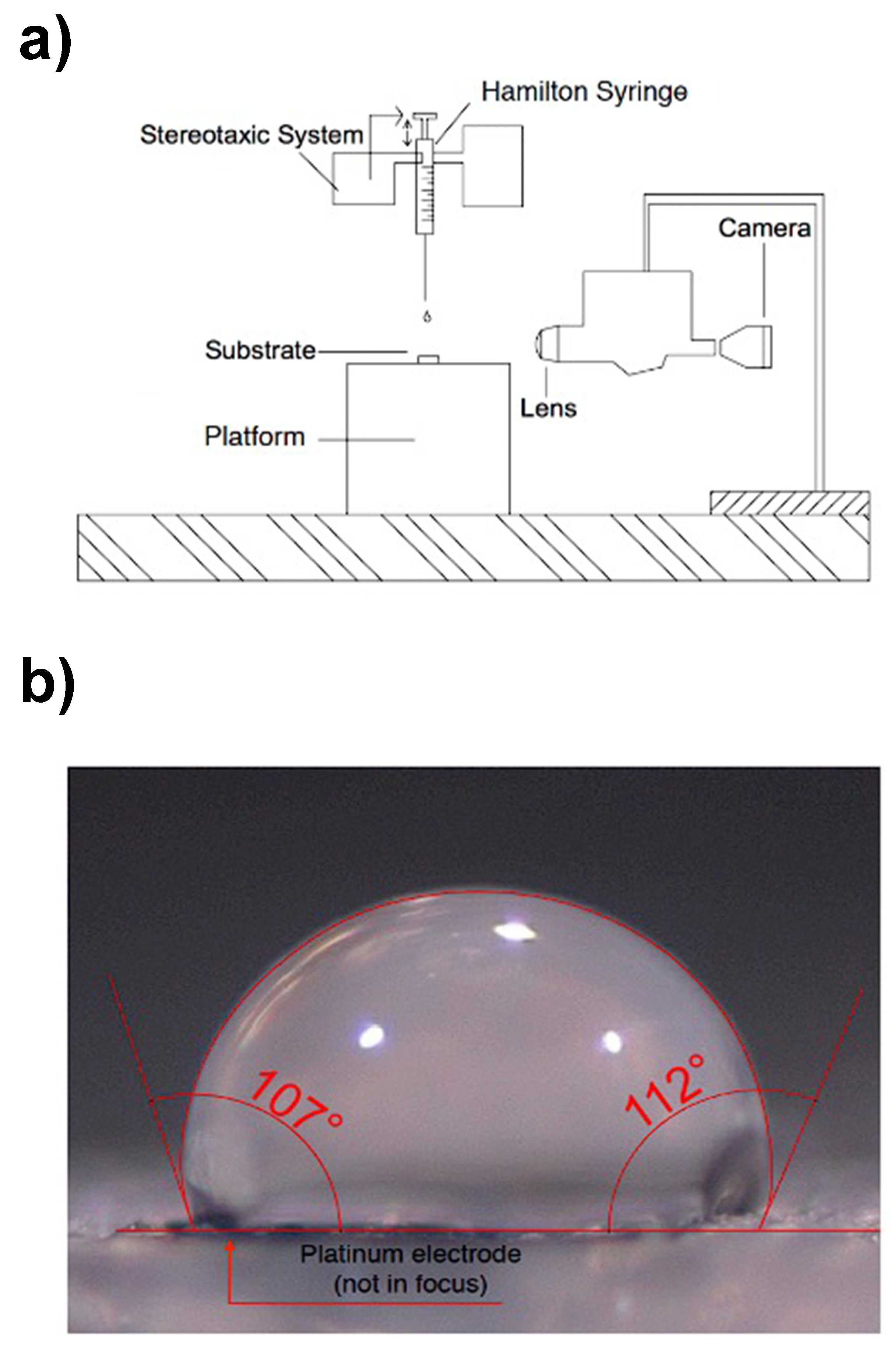
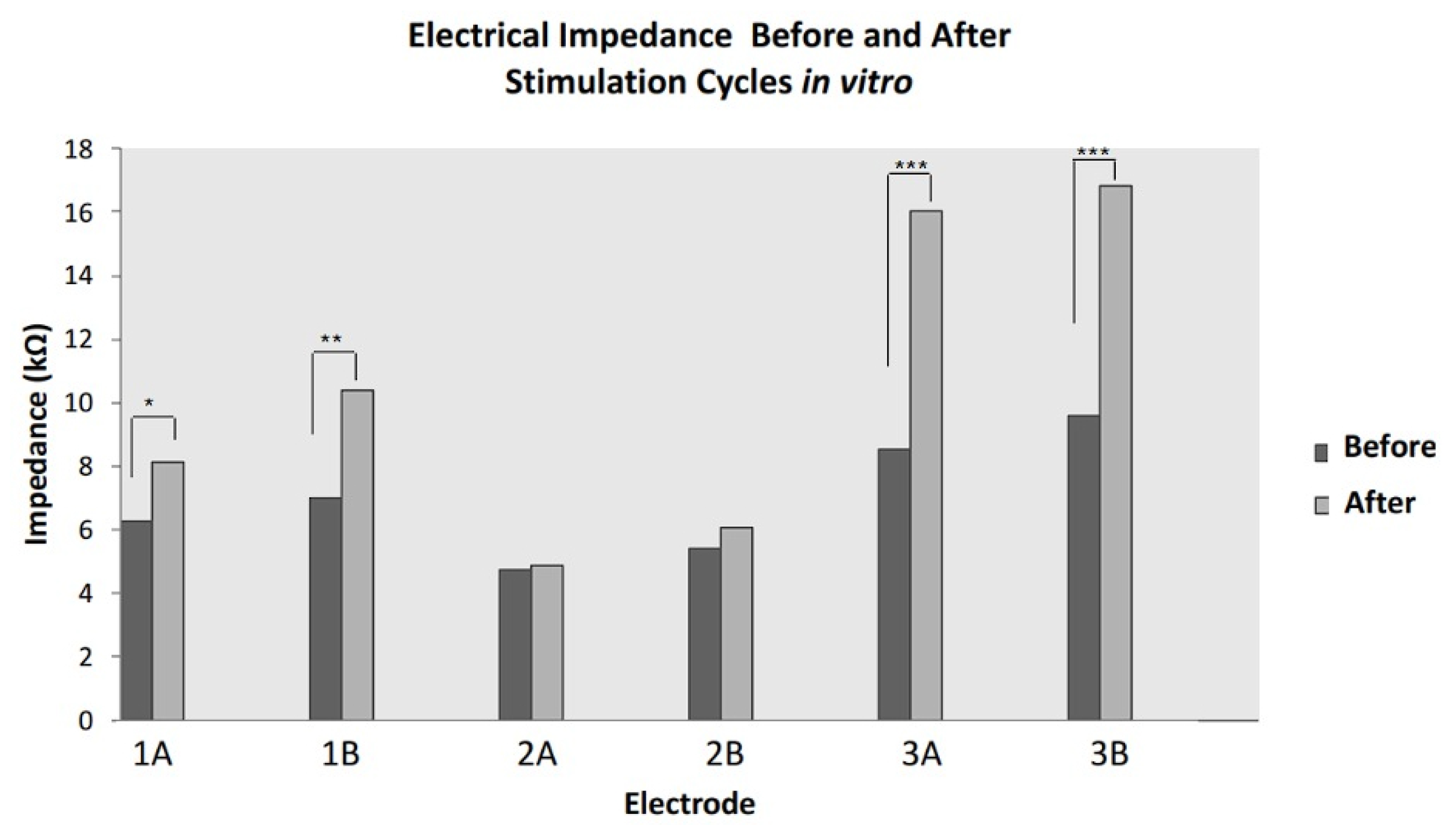
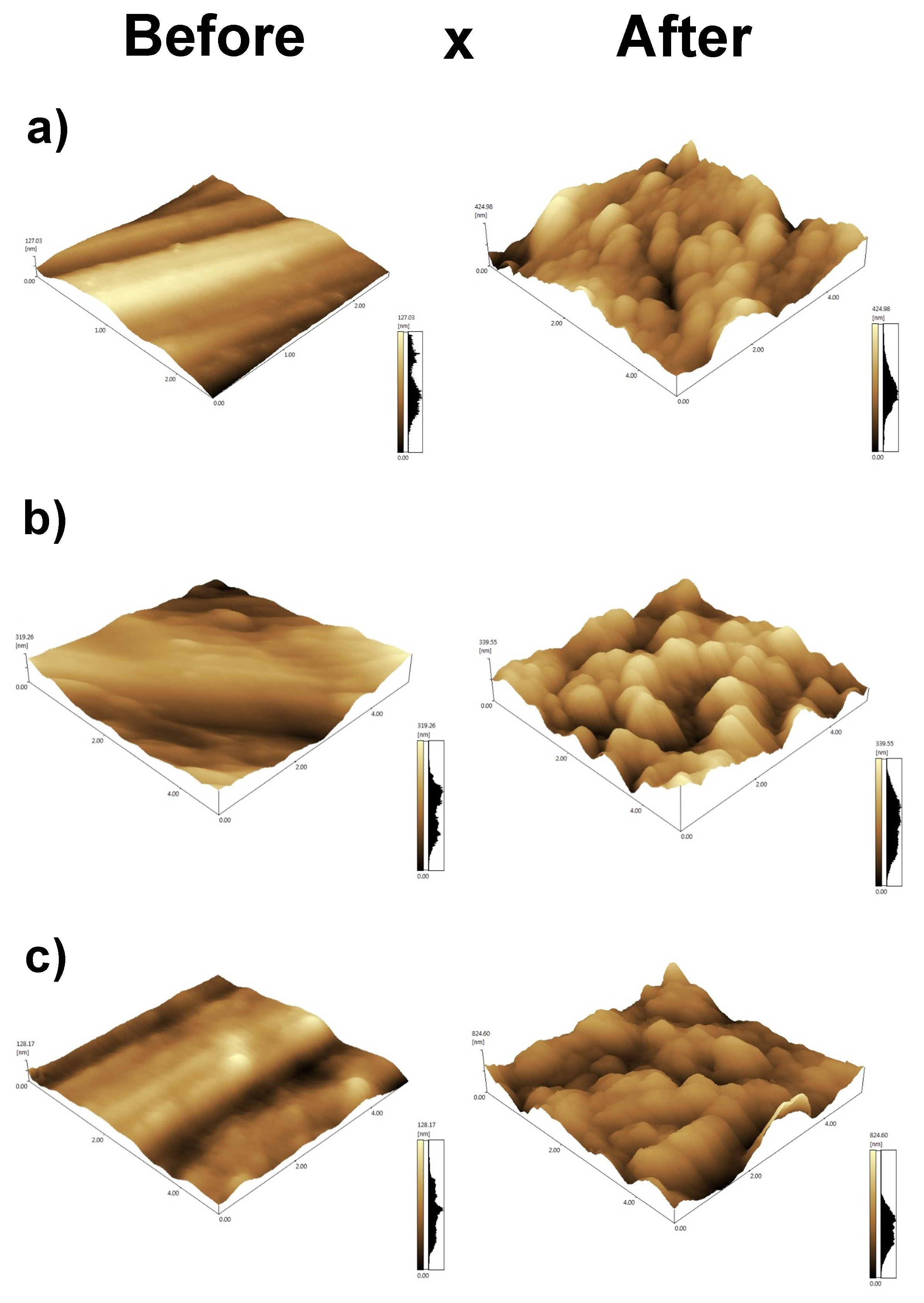
Spinal cord electrical (SCS) stimulation alleviates motor deficits in rodent and primate models of Parkinson’s disease due to a suppression of synchronous corticostriatal low-frequency oscillation. Limited epidural space requires resistant biocompatible microelectrodes to deliver efficiently electrical currents through a metal–cellular interface. Platinum (Pt) microelectrodes may lead to material degradation and topography modification under prolonged electrical stimulation. Thus, microstimulation performance over time can deteriorate and affect the functional recovery produced by SCS. To investigate electrodes commonly implanted in the epidural space of rats, Pt microelectrodes immersed in physiological saline underwent 48 h of electrical stimulation (100 Hz; 1.0, 1.3, and 1.6 mA). A wettability test was performed to characterize the interaction of the contact angle before and after stimulation, and it was found that there was an increase in this angle after the stimulation. An electrical impedance test showed that electrochemical interactions caused an increase in impedance after the stimulation. A roughness analysis also showed an increase in roughness after stimulation. Pt electrodes under chronic electric stimulation are susceptible to degradation, and further studies can improve electrode stability and efficacy as new sensor technologies become available.
Keywords: invasive microelectrode; spinal cord stimulation; platinum; microelectrode; wettability; roughness invasive microelectrode; spinal cord stimulation; platinum; microelectrode; wettability; roughness