


Abstract
The evolution of Industry 4.0 and the emergence of Industry 5.0 are reshaping industrial systems and redefining workforce skill requirements. In this context, engineering education plays a critical role in preparing students to adapt to these changes. However, the alignment between educational approaches and industrial needs remains insufficiently explored. This study conducts a bibliometric analysis of 591 publications from the Scopus and Web of Science databases to examine publication trends, key contributors, and research themes. The findings highlight an existing gap and emphasize the need for additional perspectives to be explored related to the integration of Industry 5.0 concepts into higher education.
1. Introduction
The emergence of Industry 4.0 and Industry 5.0 (I.5) marks an unprecedented phenomenon in the evolution of industrial revolutions, because they appeared approximately 10 years apart [1]. Industry 4.0, characterized by automation, artificial intelligence (AI), machine learning (ML), Big Data, and the Internet of Things (IoT) [2], has driven a shift in educational paradigms, requiring new competencies and adaptive learning methods. More recently, the fifth industrial revolution has emerged, emphasizing human-centric approaches, sustainability, and resilience [3], thereby reshaping educational strategies to integrate both technological advancements and human values. This transition presents new challenges and opportunities for higher education, necessitating a re-evaluation of pedagogical models, curricula, and learning environments because traditional education systems, often based on static knowledge transmission, must evolve toward adaptive, competency-based, and lifelong-learning models. Nevertheless, integrating Industry 5.0 principles into the educational system to meet workforce demands requires a prior investigation into the exact skills and knowledge that must be taught to students. This first problematic was addressed through a literature review using the Scopus database.
The literature analysis reveals that competencies can be grouped into four main categories: human-centric skills (often soft skills), sustainability skills (green pillars), resilience skills, and digital skills.
1.1. Human-Centric and Soft Skills
Human-centricity is a core pillar of I5.0, prioritizing individuals’ interests, needs and expectations and placing them at the heart of the production process [4,5]. A set of non-technical skills is deemed essential.
- Critical Thinking and Complex Problem Solving:
As industrial systems become more autonomous, human intervention is increasingly reserved for complex, unstructured problems that AI cannot resolve. Employees must possess the ability to evaluate conflicting data, navigate ambiguity, and make high-stakes decisions [6,7,8].
- Creativity and Innovation:
Industry 5.0 aims for mass personalization and the creation of unique value. This requires workers to possess “creative heuristics” and the ability to engage in “divergent thinking” to design unique solutions for individual customers [5,8].
- Communication and Collaboration:
With globalized supply chains and interdisciplinary teams, the ability to communicate across cultural and disciplinary boundaries is vital [9].
- Emotional Intelligence and Empathy:
The capacity to recognize and effectively manage one’s own emotions and those of co-workers and clients is increasingly crucial in collaborative environments [4,5].
1.2. Sustainability and Green-Oriented Skills
These skills are vital for aligning industry with planetary limits and societal objectives [7].
- Lifecycle Thinking
Engineers and operators must understand the entire lifecycle of a product, from raw material extraction to disposal. This involves applying the “6R’s policy”: Recognize, Reconsider, Realize, Reduce, Reuse, and Recycle [10].
- Carbon Footprint Analysis and Energy Efficiency
Skills related to estimating and minimizing emission volumes are becoming standard. This involves using data to optimize energy consumption and reduce waste in real time [11].
1.3. Resilience and Adaptability Skills
The post-COVID-19 era has cemented “Resilience” as a core competency. This is not merely organizational resilience but individual resilience.
- Adaptability and Flexibility:
Workers must be flexible and adaptable, able to adjust routines and respond to unexpected changes [5,8]. The analysis showed that educational programs often lack coverage of skills like adaptability and flexibility [7].
- Crisis and Change Management:
This includes crisis and risk management, strategic thinking, and responding proactively to potential problems.
- Decision Making:
The ability to make strategic decisions in a timely manner consistently improves a company’s ability to respond to changes or challenges [5]. Decision empowerment is an identified emergent competence [12].
1.4. Digital and Technological Skills
While human-centricity is the goal, digital fluency is the means.
- Human–Machine Interaction (HMI) and Collaborative Robotics:
Competency in working with collaborative robots (cobots) is paramount. Unlike traditional industrial robots that are caged away from humans, cobots share the workspace. Operators must understand safety protocols, programming interfaces, and the capabilities/limitations of their robotic partners [13].
- Data Literacy and Artificial Intelligence Fluency:
Employees do not need to be data scientists, but they must possess “information technology capability.” This includes understanding how AI makes decisions, interpreting data visualizations, and interacting with digital twins [6].
- Cybersecurity Awareness:
As connectivity increases, so does vulnerability. A “perceived security” mindset and knowledge of basic cybersecurity hygiene are required for all levels of employees, not just IT specialists [5].
After identifying the set of skills required for future engineers to be ready for the 5th industrial revolution, it becomes necessary to examine how this topic has developed within the literature. Accordingly, this study conducts a bibliometric analysis that analyzes publication trends, identifies the most influential authors, and explores keyword co-occurrence networks. Furthermore, the analysis seeks to identify a research gap and highlight promising directions for future studies.
2. Materials and Methods
This research employed a bibliometric analysis methodology, which involves the application of quantitative techniques to bibliometric data [14]. The analysis was conducted in April 2026. The selection of this methodology is justified by its ability to provide a more objective and reliable analysis compared to other approaches [15].
The critical aspect of this study is the data collection phase, which was conducted across two major academic databases: Scopus and the Web of Science (WoS). To ensure comprehensive coverage, the research utilized a robust, multi-stage query that underwent iterative refinement to capture the largest possible range of literature addressing the integration of I.5 into engineering education. The query was organized into three distinct blocks: the first block encompassed keywords related to Industry 5.0, the second focused on engineering education, and the third contained the specific skills identified in the previous section. This methodical approach to query construction guarantees that the resulting dataset is both highly relevant and exhaustive, providing a reliable foundation for the subsequent analysis. Table 1 represents the final query adapted to each database.
Table 1.
Research query.
The review process started with 763 papers, which were reduced to 591 by removing 172 duplicate records.
The principal softwares used in this bibliometric analysis were Zotero 8, a reference management program; VOSviewer 1.6.20, a tool for constructing and visualizing bibliometric networks; and NVIVO 12, a qualitative data analysis program.
3. Results
This section presents a bibliometric analysis of the existing literature related to the research topic, offering a descriptive overview of the aspects previously addressed by other researchers and facilitating the identification of research gaps.
3.1. Documents Analysis
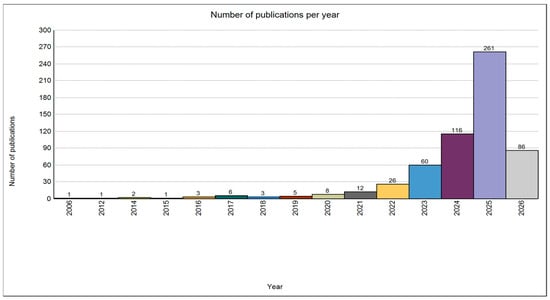
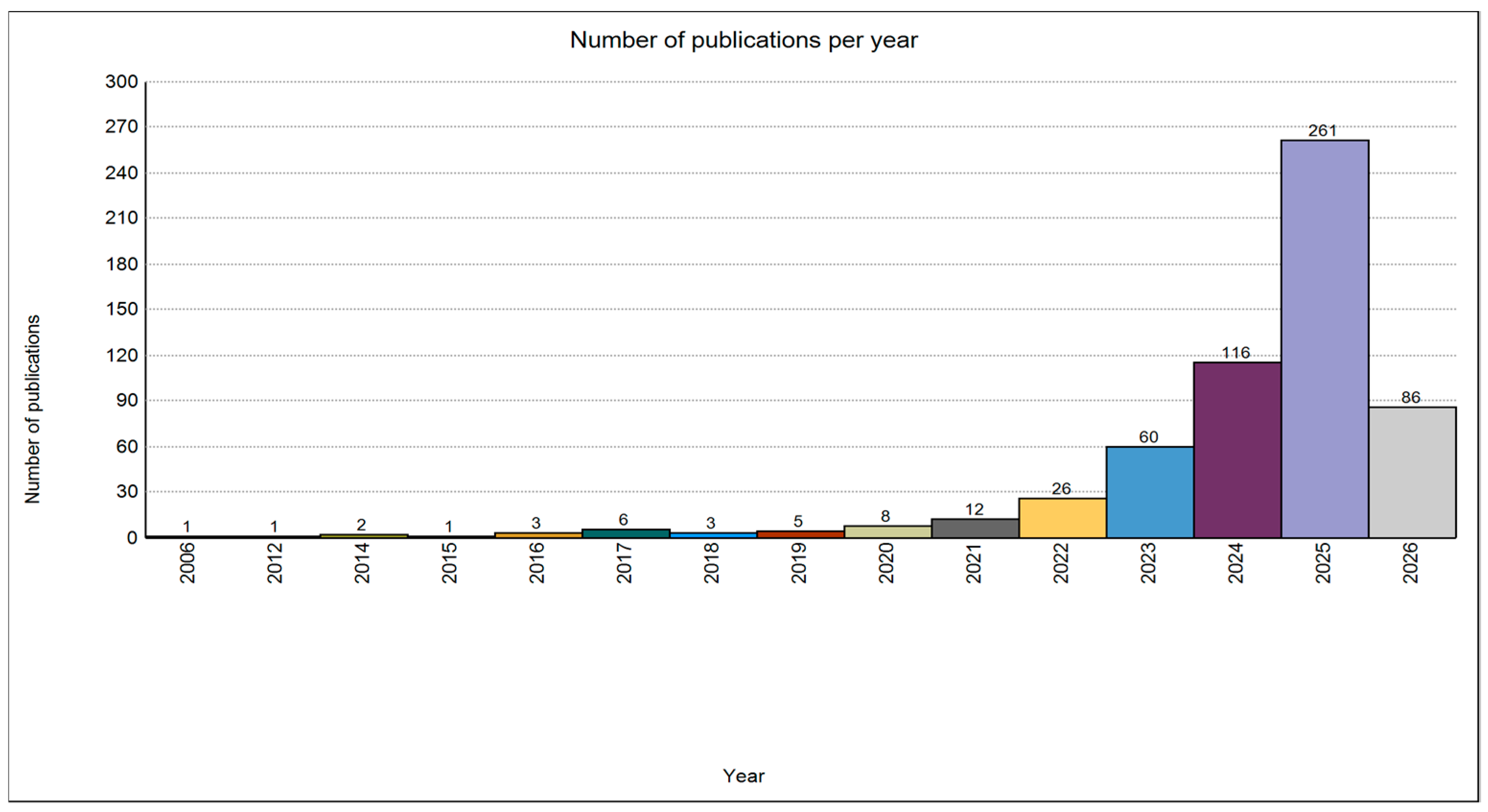
Figure 1 reveals that there is an exponential increase in the number of publications addressing the topic of integrating I.5 into the education system starting from 2021. The annual research output grew steadily from 12 publications in 2021 to 26 publications in 2022, and accelerated rapidly in subsequent years to reach 60 publications in 2023, 116 publications in 2024, and a peak of 261 publications in 2025. While the number of publications for 2026 appears lower, this reflects an incomplete dataset for the ongoing year rather than a decline in research interest.
Figure 1.
Number of publications distributed per year by NVIVO.
3.2. Author Analysis
Table 2 presents the number of documents published by the top eight contributing authors. It shows that Rossi, M., Chakraborty, S., and Galatro, D. are the most active contributors, each having authored eight documents. They are followed by Terzi, S., with seven publications, and Pirola, F. and Leong, W.Y., with six publications each. The remaining authors, Pozzi, R. and Gadekallu, T.R., each authored five publications.
Table 2.
Number of publications per author.
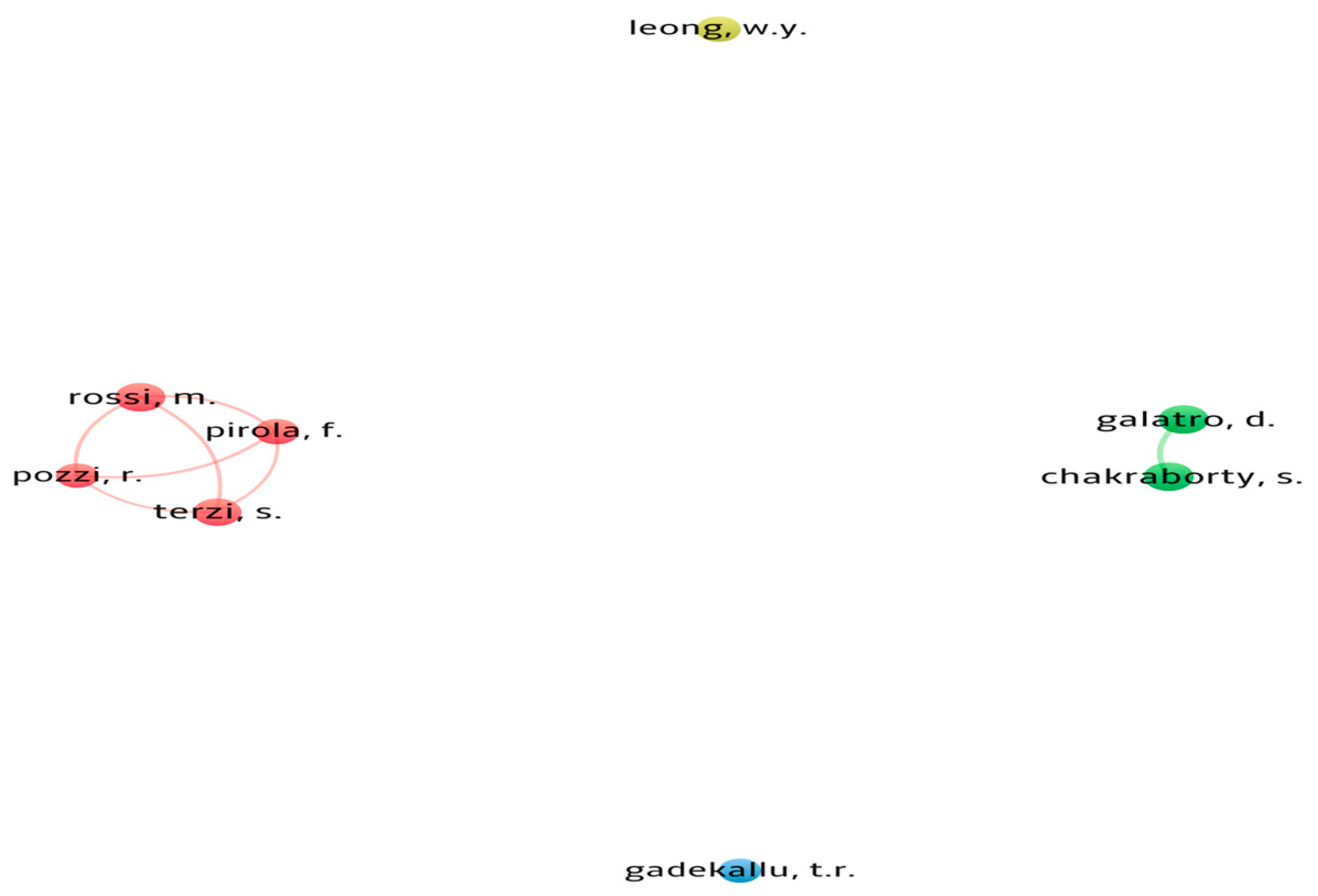
Figure 2 indicates that the authors grouped within the red cluster are actively collaborating on this topic, which may account for their high publication number.
Figure 2.
Co-authorship map by VOSviewer.
3.3. Co-Occurrence Network
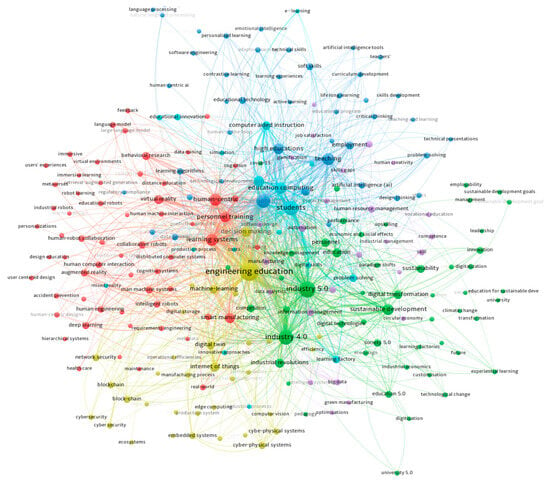
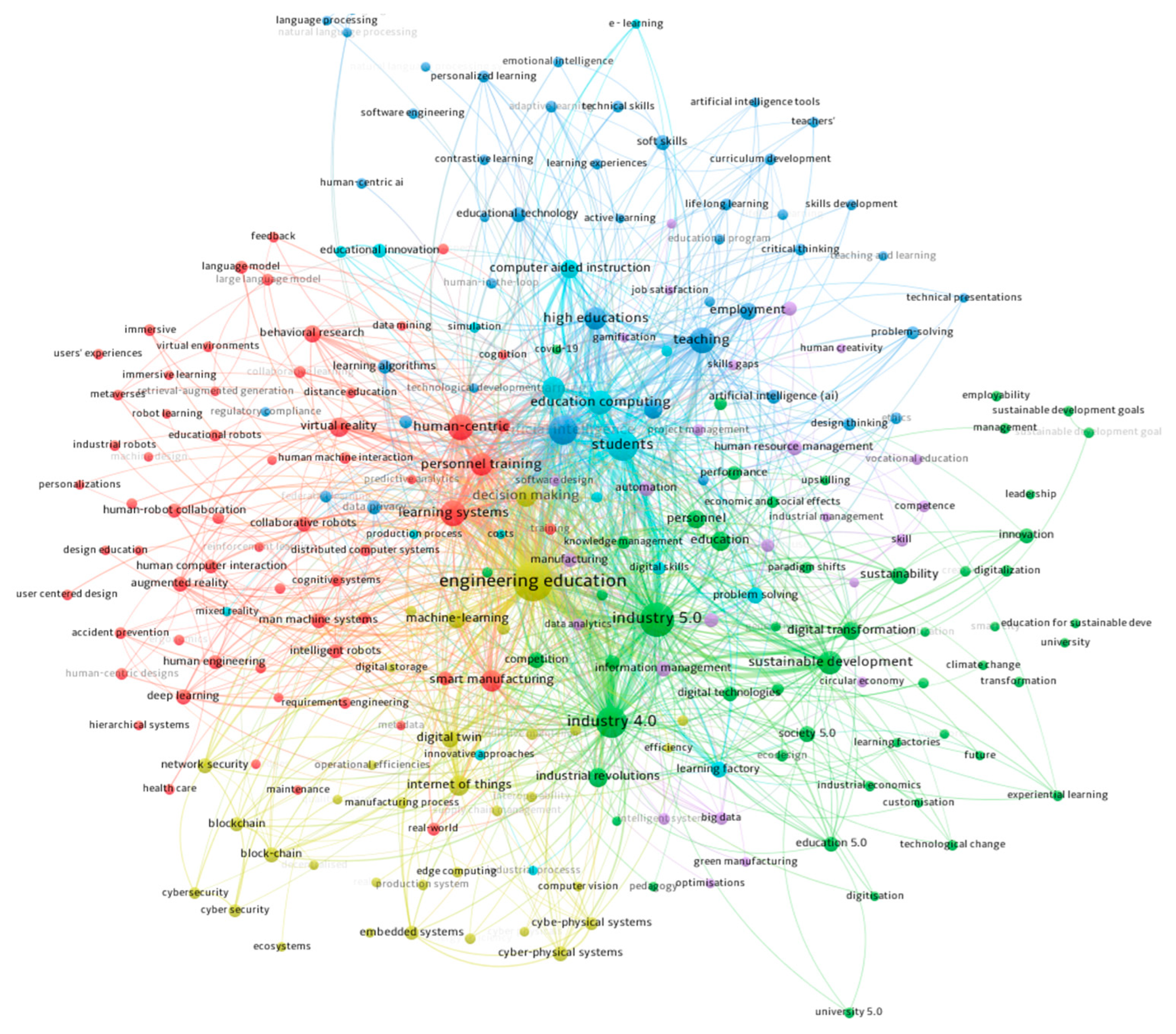
The keyword co-occurrence map in Figure 3 generated using VOSviewer reveals a dense and interconnected structure centered around engineering education and Industry 5.0. These two terms appear as the most prominent nodes, indicating their central role in the research field.
Figure 3.
Network visualization of keywords using VOSviewer.
Other highly connected keywords include artificial intelligence, learning systems, and human-centric, suggesting that the literature is structured around the intersection of technological innovation and human-oriented educational approaches.
The network is organized into several clusters, each representing a thematic area. Among these, two clusters are particularly relevant to this study:
- The red cluster, associated with advanced educational technologies.
- The green cluster, associated with emerging societal and educational paradigms such as Society 5.0 and Education 5.0.
The red cluster groups keywords related to digital and intelligent technologies used in higher education. The most prominent terms include:
- Virtual reality, augmented reality and metaverses.
- Educational robots and human–computer interaction.
These keywords indicate the incorporation of technological tools into educational practices.
The green cluster represents the conceptual and societal dimensions of the research field. The most central keywords include:
- Society 5.0, Education 5.0, and University 5.0.
- Sustainable development and digital transformation.
- Innovation, employability and future.
4. Discussion
The findings indicate a marked increase in interest in our research topic, with the number of publications reaching a peak of 261 documents in 2025. Nevertheless, the overall volume of research remains relatively limited considering the critical importance of this topic. Consequently, the existing literature does not yet fully cover the multifaceted perspectives required to anticipate and address the evolving needs of both the industrial and educational sectors.
Going deeper, the integration of Industry 5.0 into engineering education primarily involves assimilating the set of skills identified in the Introduction. However, a key question remains: How can these skills be effectively taught to engineering students? The keyword co-occurrence map provides a clear indication, particularly within the red cluster, which highlights advanced technologies such as the metaverse, augmented reality, and virtual reality as powerful learning tools. These technologies make it possible to simulate real industrial environments, enabling students to engage in experiential learning and develop the competencies required in human-centered paradigm contexts.
Their use reflects a transition toward more interactive and immersive learning environments, moving beyond traditional approaches in which technologies are addressed primarily at a theoretical level. Instead, students are placed in situations where they interact with and learn alongside intelligent systems. This shift is in line with the principles of Industry 5.0, which emphasize the collaboration between humans and machines. Moreover, integrating advanced technologies into the learning process allows students to develop targeted competencies while simultaneously gaining practical proficiency with the tools themselves, thereby “hitting two birds with one stone.”
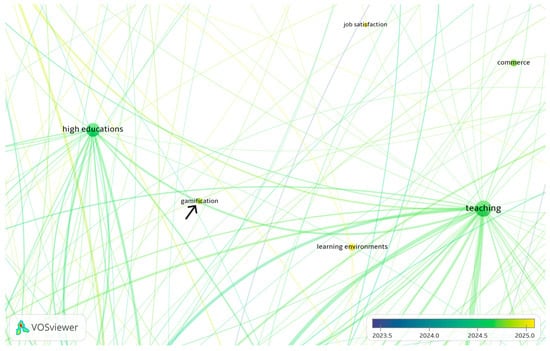
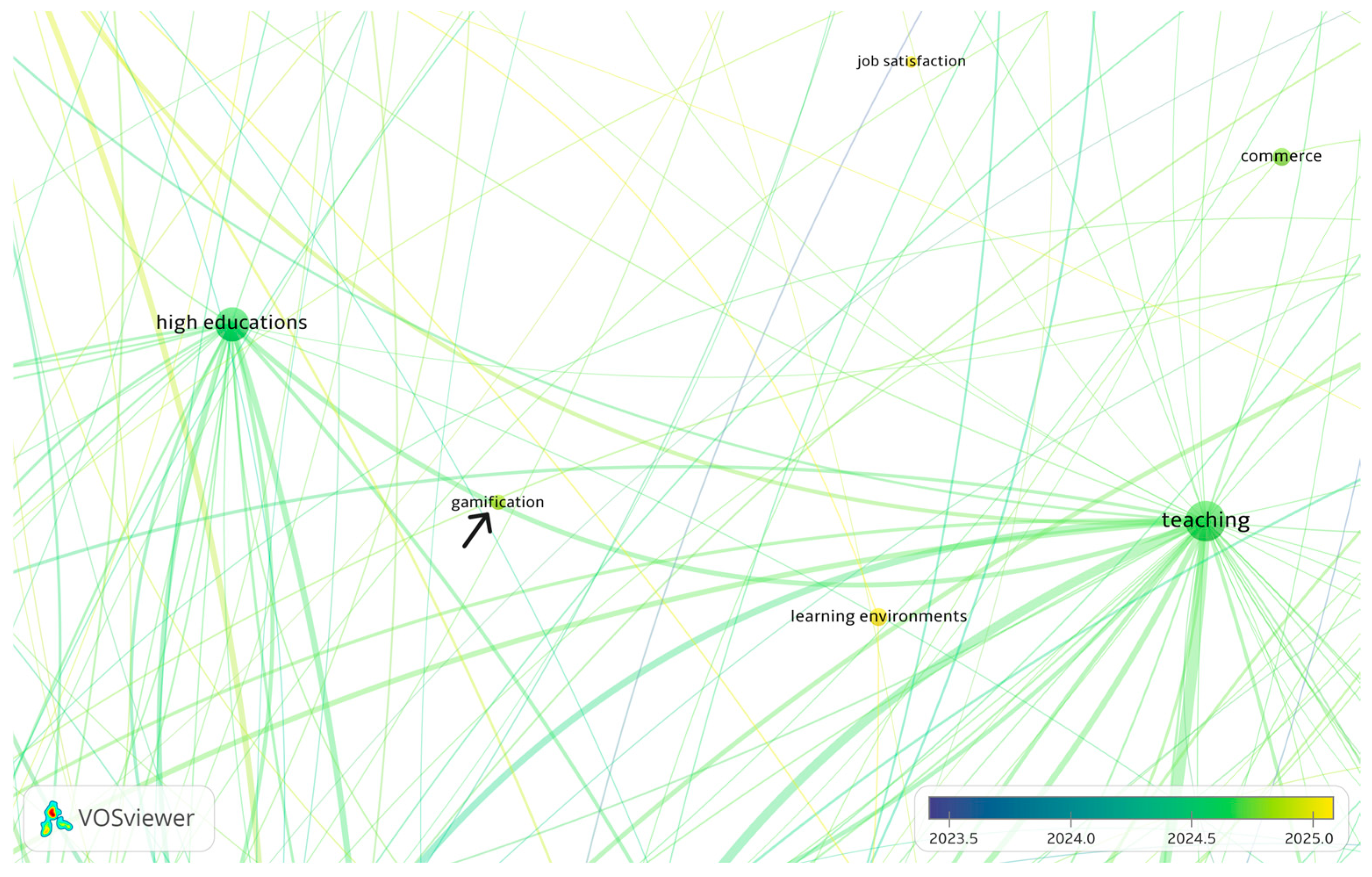
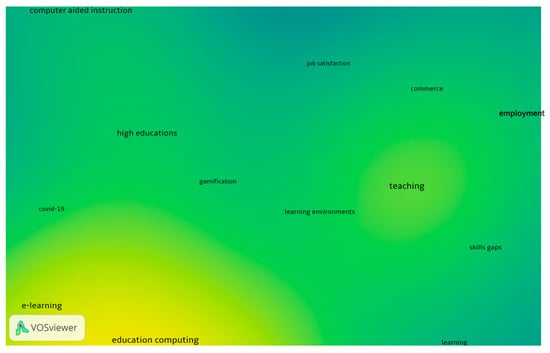
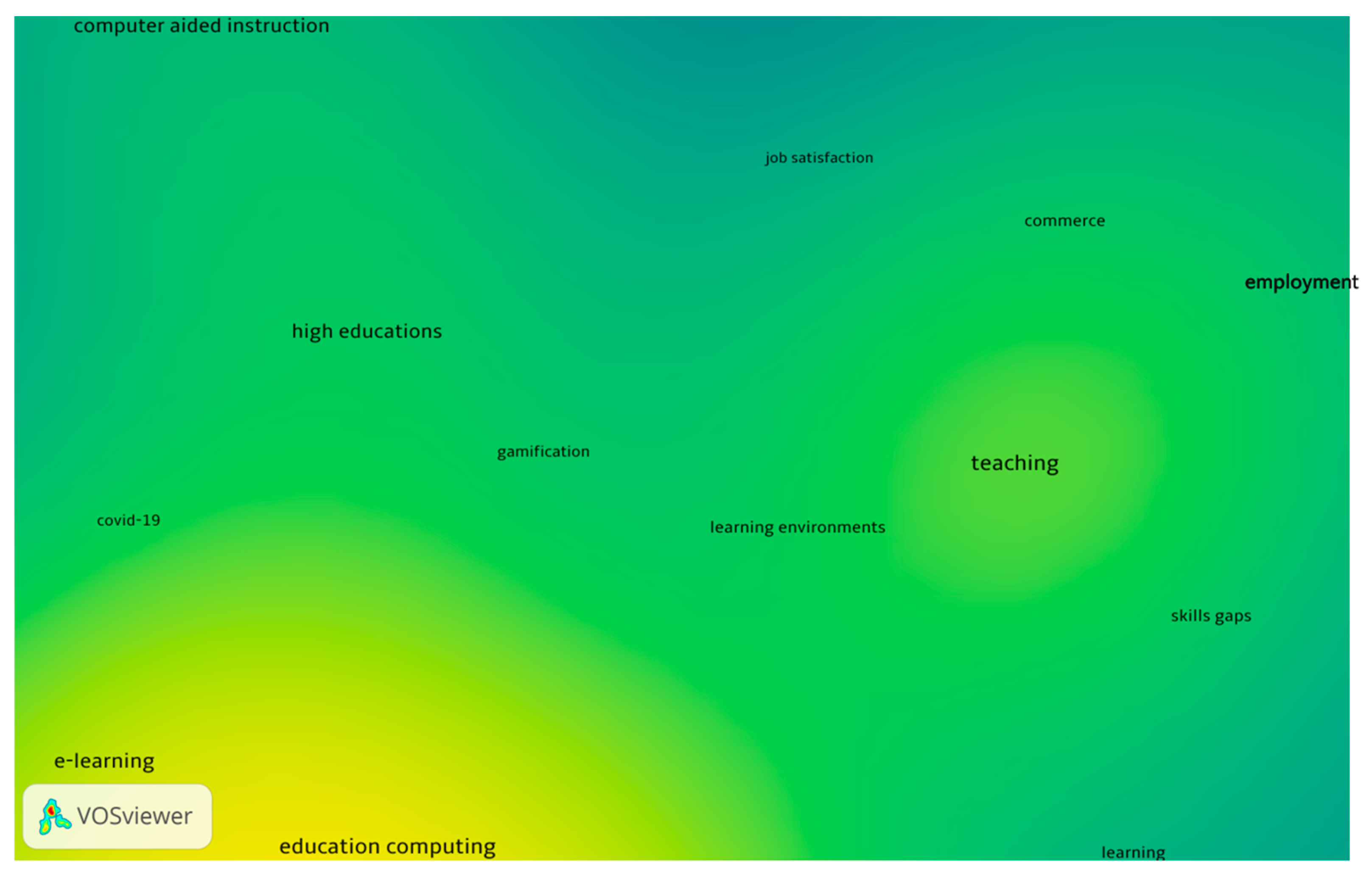
When zooming in on the keywords for a detailed analysis, gamification stood out as a concept that has received surprisingly little attention in the literature. As shown in the overlay visualization (Figure 4), which colors keywords according to their average publication year, gamification appears to be a very recent addition to the field, surfacing only toward the end of 2024. Looking further at the density map in Figure 5, it becomes clear that this concept remains largely underexplored, as it is located in a moderate-to-low-density green area of the map, unlike the surrounding keywords such as e-learning and education computing which fall within the high-density yellow zone.
Figure 4.
Overlay visualization map using VOSviewer.
Figure 5.
Density visualization map using VOSviewer.
In the literature, gamification is defined as the use of game design elements in non-game contexts. The appeal of these game elements motivates learners to engage with gamification systems. They also facilitate the storage of information from sensory information into short-term memory. Receiving feedback during exercises is a kind of rehearsal process that supports the encoding of information into long-term memory [16]. This potential is emphasized in ref. [17], which concludes that gamification is used for the enhancement of graduates’ motivation and engagement while also highlighting beneficial changes in their behavior and attitude towards learning.
Given these advantages, gamification has the potential to become an innovative pedagogical approach for developing both technical and soft competencies. However, the findings of the present bibliometric analysis reveal that this topic is receiving limited attention. In particular, there is a lack of empirical studies investigating how gamification-based learning can be integrated into higher education and how its effectiveness can be evaluated in relation to specific I.5 skills. This points to a significant gap, and addressing it could strengthen engineering education methodologies and advance the field toward the requirements of I.5.
5. Conclusions and Future Directions
Most manufacturing systems are still far from achieving full maturity in Industry 5.0. However, waiting for this paradigm to be fully established in industry before adapting educational systems would not be an effective approach. A more proactive stance is therefore required, where potential challenges are anticipated and addressed in advance to support a smoother transition into Industry 5.0. This explains the growing interest in integrating Industry 5.0 skills into engineering education in recent years.
In this context, integrating Industry 5.0 essentially refers to equipping the future workforce with the required set of competencies. These competencies are generally structured around soft skills, sustainability-oriented skills, resilience capabilities, and digital skills. The results of this study suggest that several technologies could support the development of these competencies, particularly augmented reality, virtual reality, and mixed reality. These tools offer immersive learning environments that allow students to acquire, apply, and test their skills in realistic scenarios while minimizing real-world risks.
At the same time, new conceptual frameworks such as Education 5.0 and Society 5.0 are emerging, reflecting a broader transformation toward more human-centered and technology-enhanced systems. From this perspective, engineering students are not only being trained for Industry 5.0 environments but are also expected to actively contribute to the development of Society 5.0.
As a result, this study identified gamification, also known as serious games, as a promising emerging approach in higher education, highlighting the potential of gamification to make learning more engaging while supporting skill development.
Therefore, future research should focus first on the effectiveness of serious games in enhancing the integration of Industry 5.0 into the educational system. Second, it should develop adaptable frameworks that help universities align curricula and game-based learning approaches with the specific requirements of different engineering disciplines. Additionally, it should investigate stakeholder acceptance, specifically assessing how students and educators respond to these transitions, and identify the training required for teachers unfamiliar with these new technologies. Finally, future work should examine the ethical implications of deploying these systems in education.
Author Contributions
Conceptualization, Z.B. and H.B.; methodology, Z.B. and H.B.; software, Z.B.; validation, H.H., A.B. and A.M.; formal analysis, Z.B. and A.M.; data curation, Z.B. and A.B.; writing—original draft preparation, Z.B.; writing—review and editing, Z.B. and H.H.; visualization, Z.B.; supervision, A.M.; project administration, A.M. All authors have read and agreed to the published version of the manuscript.
Funding
This research received no external funding.
Institutional Review Board Statement
Not applicable.
Informed Consent Statement
Not applicable.
Data Availability Statement
Data is available in the manuscript.
Conflicts of Interest
The authors declare no conflicts of interest.
References
- Ciucu-Durnoi, A.N.; Delcea, C.; Stănescu, A.; Teodorescu, C.A.; Vargas, V.M. Beyond Industry 4.0: Tracing the Path to Industry 5.0 through Bibliometric Analysis. Sustainability 2024, 16, 5251. [Google Scholar] [CrossRef] [Scilit]
- Zineb, B.; Benabdelouahab, A.; Boutracheh, H.; Moumen, A. Exploratory Literature Review of Maturity Models in Industry 4.0 and 5.0. In Proceedings of the 2024 4th International Conference on Innovative Research in Applied Science, Engineering and Technology (IRASET), Fez, Morocco, 16–17 May 2024; IEEE: Piscataway, NJ, USA, 2024; pp. 1–8. [Google Scholar]
- Golovianko, M.; Terziyan, V.; Branytskyi, V.; Malyk, D. Industry 4.0 vs. Industry 5.0: Co-existence, Transition, or a Hybrid. Procedia Comput. Sci. 2023, 217, 102–113. [Google Scholar] [CrossRef] [Scilit]
- Poltronieri, C.F.; Leite, L.R.; Xavier, Y.S.M.; Domingues, J.P.T.; de Toledo, J.C.; de Oliveira, O.J. Toward Industry 5.0: Mapping technologies, competencies, and research opportunities. J. Entrep. Manag. Innov. 2025, 21, 103–129. [Google Scholar] [CrossRef] [Scilit]
- Suganya, G.; Joshua Selvakumar, J.; Varadharajan, P.; Pachiyappan, S. Skill Sets Required to Meet a Human-Centered Industry 5.0: A Systematic Literature Review and Bibliometric Analysis. In Advances in Web Technologies and Engineering; Khan, M.A., Khan, R., Praveen, P., Verma, A.R., Panda, M.K., Eds.; IGI Global: Hershey, PA, USA, 2024; pp. 231–252. ISBN 979-8-3693-0782-3. [Google Scholar]
- Zare, L.; Ben Ali, M.; Rauch, E. Industry 5.0 and SMEs Future Work Competency Fields: A Literature Review. In Latest Advancements in Mechanical Engineering; Concli, F., Maccioni, L., Vidoni, R., Matt, D.T., Eds.; Lecture Notes in Networks and Systems; Springer Nature: Cham, Switzerland, 2024; Volume 1125, pp. 200–208. [Google Scholar]
- Carminati, L.; Lagorio, A.; Cimini, C.; Pirola, F.; Jurczuk, A.; Boucher, X. Integrative skills framework for Industry 5.0: Insights from a systematic literature review and a European survey study. J. Environ. Manag. 2025, 394, 127425. [Google Scholar] [CrossRef] [Scilit] [PubMed]
- Bardales, E.S.; Marin, Y.R.; Caro, O.C.; Rituay, A.M.C.; Fernandez, M.T.; Santos, R.C. Key Competencies for Industry 5.0 in Undergraduate Engineering Students. In Proceedings of the 2024 International Symposium on Accreditation of Engineering and Computing Education (ICACIT); Institute of Electrical and Electronics Engineers Inc.: Piscataway, NJ, USA, 2024. [Google Scholar]
- Ang, H.Q.; Domingo, B. An Innovative and Universal Teaching Model in Engineering Education to Foster Industry 5.0 Skills—EPIC Principles. Educ. Sci. 2025, 15, 1096. [Google Scholar] [CrossRef] [Scilit]
- Alves, J.; Lima, T.M.; Gaspar, P.D. Is Industry 5.0 a Human-Centred Approach? A Systematic Review. Processes 2023, 11, 193. [Google Scholar] [CrossRef] [Scilit]
- Ikenga, G.U.; Van Der Sijde, P. Twenty-First Century Competencies; about Competencies for Industry 5.0 and the Opportunities for Emerging Economies. Sustainability 2024, 16, 7166. [Google Scholar] [CrossRef] [Scilit]
- Papacharalampopoulos, A.; Karagianni, O.M.; Fedeli, M.; Lackner, P.; Aleksandraviciene, G.; Ippolito, M.; Elorza, U.; Schröder, A.J.; Stavropoulos, P. Training for Industry 5.0: Evaluating Effectiveness and Mapping Emerging Competences. Machines 2025, 13, 825. [Google Scholar] [CrossRef] [Scilit]
- Ali, I.; Nguyen, K.; Oh, I. Systematic literature review on Industry 5.0: Current status and future research directions with insights for the Asia Pacific countries. Asia Pac. Bus. Rev. 2026, 32, 865–892. [Google Scholar] [CrossRef] [Scilit]
- El Assad, N.; Dachry, A.; Fouraiji, H.; Dachry, W.; Messaoudi, N. Smart manufacturing paradigms in the context of industry 4.0: Bibliometric analysis. E3S Web Conf. 2025, 601, 00035. [Google Scholar] [CrossRef] [Scilit]
- Aria, M.; Cuccurullo, C. bibliometrix: An R-tool for comprehensive science mapping analysis. J. Informetr. 2017, 11, 959–975. [Google Scholar] [CrossRef] [Scilit]
- Sriviboon, Y.; Jiamsanguanwong, A.; Chutima, P.; Kittithreerapronchai, O. A gamification training system designed according to a mental model structure: A case study of universal robots. Sci. Rep. 2025, 15, 42010. [Google Scholar] [CrossRef] [Scilit] [PubMed]
- Subramaniam, S.; Ghosh, N.; Tabassum, F.; Sigdyal, P. Gamification: An Effective Tool for Talent Management in Industry 5.0. In Emerging Digitalization Trends in Business and Management: A Roadmap to Industry 5.0; Apple Academic Press: Palm Bay, FL, USA, 2025; pp. 205–234. [Google Scholar]


Disclaimer/Publisher’s Note: The statements, opinions and data contained in all publications are solely those of the individual author(s) and contributor(s) and not of MDPI and/or the editor(s). MDPI and/or the editor(s) disclaim responsibility for any injury to people or property resulting from any ideas, methods, instructions or products referred to in the content. |
© 2026 by the authors. Licensee MDPI, Basel, Switzerland. This article is an open access article distributed under the terms and conditions of the Creative Commons Attribution (CC BY) license.