


Abstract
Tourist-flow congestion is now one of the symptoms of overtourism in tourist destinations. With no prior coordination between tourist attractions, museums, and entertainment centers, tourists face a frustrating experience, local residents suffer from stress in their daily lives, security risks increase, and cultural and tourist heritage is damaged. Most recent studies on tourist-flow management have essentially concentrated on centralized platforms for monitoring, flow prediction, forecasting, and dynamic itinerary recommendation. On the other hand, blockchain technology is seen as a revolutionary innovation in the tourism sector, with most of its applications in this field focused on secure payments, direct booking without intermediaries, automation based on smart contracts, data protection, identity management, and tracking, in addition to supporting more sustainable tourism practices for local communities. Despite all this, the application of blockchain in managing tourist flows remains relatively limited. In this paper, we address tourist-flow management not only as a congestion problem, but also as a governance issue, and we survey recent tourist-flow management studies, finding that they focus on four core algorithmic functions: forecasting, real-time sensing, adaptive routing, and allocation/control. Based on these findings, we argue that tourist-flow management should be reframed as a governance problem requiring trust infrastructure, and examine how blockchain technology could address this gap, in order to improve the tourist experience and reduce congestion in smart tourism environments.
1. Introduction
The tourism sector is currently one of the most important sectors, contributing approximately 10 percent of the global GDP (US $10.9 trillion) and providing 357 million jobs worldwide [1]. This sector has witnessed remarkable growth over the past few decades, with international tourist arrivals reaching unprecedented levels before the pandemic and recovering strongly afterward, including 1.4 billion international tourist arrivals recorded in 2024, making a return to pre-pandemic levels [2]. These numbers brought with them a phenomenon that became one of the biggest challenges facing destination managers and local communities, and which researchers have identified as one of the most pressing challenges in the sector: overtourism, with tourist-flow congestion emerging as one of its most visible operational manifestations.
Overtourism is when the number of tourists goes beyond the carrying capacity of a tourist destination, leading to negative impacts on residents’ lives, on the tourist attractions, and on the overall tourist experience [3]. The congestion of tourist flow is one of its most direct manifestations. When, in the case of the destination, visitors focus on the same attractions, museums, or historical sites, the destination becomes overcrowded, making movement more difficult, creating long queues, and putting increasing pressure on infrastructure and heritage sites [4].
Managing tourist flows is complex, especially when independent organizations operate according to their own priorities and interests [5]. This leads to visitors continuing to flock to already crowded sites, while nearby attractions with untapped capacity remain empty. To address these challenges, recent studies have explored real-time monitoring techniques, visitor flow forecasting, congestion detection, and dynamic route recommendation [6]. Despite improving congestion forecasts and supporting operational decision-making, these methods generally rely on centralized architectures in which data collection, analysis, and service coordination are handled by a single platform or control center [7]. Consequently, issues such as limited transparency, poor interoperability, individual vulnerabilities, and the difficulty of coordinating between numerous independent tourist sites remain largely unaddressed. At the same time, blockchain technology has emerged as a promising innovation in the tourism sector [8]. Most applications of this revolutionary technology in tourism have focused on secure payments, direct booking without intermediaries, automation via smart contracts and identity management, data protection, and tracking services [9]. However, despite its promise, this technology’s use in managing tourist flow remains very limited.
To overcome the limitations of previous approaches, tourist-flow management should not be treated as a congestion issue, but rather as a governance issue. Effective congestion management requires more than prediction and monitoring. It necessitates secure and transparent coordination between different tourist sites, reliable processing of visitor data, mechanisms capable of providing timely alerts, redistributing visitors, and making rapid, responsive decisions across all tourist locations. Recent studies have explored the potential of blockchain for enhancing coordination and user experience in smart tourism environments, including frameworks for decentralized tourism services [10], integration approaches for improved visitor experience [11], and comparative analyses of blockchain-enabled tourism systems [12].
In this paper, we survey recent tourist-flow management studies and show that most of them focus on four core algorithmic functions: forecasting, real-time sensing, adaptive routing, and allocation/control. Based on this analysis, we identify a critical coordination gap: while individual algorithms have matured considerably, mechanisms for multi-stakeholder coordination remain largely absent. We argue that blockchain technology, with its properties of immutability, transparency, and smart-contract automation, offers a promising infrastructure for bridging this gap. The remainder of this paper is organized as follows. Section 2 discusses the main limitations of centralized tourist-flow management systems. Section 3 reviews blockchain applications in tourism and their relevance to tourist-flow governance. Section 4 outlines our methodology. Section 5 presents the results. Section 6 discusses the coordination gap and the potential of blockchain. Section 7 presents the proposed conceptual architecture for multi-site coordination. Section 8 concludes with future research directions.
2. Limitations of Centralized Tourist-Flow Management
Managing tourist flows requires more than fixed capacity estimates; it requires demand prediction, real-time monitoring, information sharing, and coordination among multiple stakeholders. In practice, tourist destinations are often managed through centralized systems that fail to satisfy these needs [13].
2.1. Transparency Deficit
In centralized architecture, the platform operator controls all data flows and decision rules [13]. When Site A is marked as full and visitors are redirected to Site B, other stakeholders cannot independently verify whether Site A was truly at capacity or if the redirection served other interests. This opacity weakens trust between participating sites and discourages cooperation. The lack of transparency in centralized systems is one of the most significant known weaknesses of this type of structure [14]. This, in turn, makes it difficult for the parties involved to verify decisions independently and undermines the trust needed for cooperation.
2.2. Interoperability Barriers
Tourist destinations are operated by different independent stakeholders and managed using different information systems [15]. To coordinate between these entities, we need data to be entered into a single central system, which creates challenges in technical integration and institutional resistance from organizations unwilling to relinquish control over their data. This reluctance is not only technical but also strategic: independent operators are unwilling to disclose data outside their own networks because information shared on a common platform could be exploited by competitors [16]. Consequently, coordination that relies on a central intermediary tends to falter.
2.3. Single Points of Failure
A centralized system relies on a single, central authority, which makes it vulnerable to a single point of failure [17]; it is susceptible to various kinds of attacks, technical malfunctions, and data breaches. In case the central platform experiences downtime, security breaches, or operational errors, the entire coordination mechanism fails. Sites cannot independently verify capacity status or coordinate among themselves. Analyses comparing centralized and decentralized structures confirm that reliance on a central authority to perform all operations leads to a concentration of risks and leaves the entire system vulnerable to a single point of compromise [14,18].
2.4. Governance Concentration
To manage tourist flow, many stakeholders need to work together on a single platform. This creates a single point of failure, both technically and institutionally.
All four of these limitations have a common root. The main challenge in coordinating tourist flows across independent sites is not the maturity of the underlying algorithms—forecasting, sensing, and routing methods have already reached a significant level of performance—but the absence of a trust infrastructure that independent and often competing stakeholders are willing to rely on. This cannot be solved by a more powerful centralized platform, as it replicates the same problems of opacity, single point of vulnerability, and data concentration described above. What is needed is an infrastructure that allows coordination without a central authority: a tamper-proof, transparent ledger with rules that are automatically and verifiably enforced for all participants [14,19]. This turns the management of tourist flow into a problem of governance rather than a problem of pure technology, which motivates the examination of blockchain in the following section.
3. Blockchain Applications in Tourism
Over the past decade, blockchain technology has garnered increasing attention in the tourism sector, where it is primarily used in payment processing, reservation systems, loyalty programs, and traveler identity management [20]. Major industry players have adopted the technology: TUI’s BedSwap managed real-time hotel inventory on a private blockchain, while Webjet’s Rez-chain reduced booking errors that previously affected up to 5% of transactions [21]. Recent research has examined NFT-based ticketing systems that prevent counterfeiting and scalping [22], decentralized booking platforms such as Travala that eliminate intermediaries and associated fees [23], and blockchain-based review systems that ensure authentic ratings and combat fraudulent evaluations [24].
From a technical standpoint, blockchain offers immutability, transparency, smart-contract automation, and decentralization, properties that align with the needs of multi-stakeholder tourism coordination [25,26,27,28]. Despite these promising characteristics, the existing corpus of research has concentrated on transactional use cases, processing payments, managing reservations, and exchanging loyalty tokens.
4. Methodology
In this section, we survey recent algorithmic contributions that have helped with managing tourist flow. In January 2026, we used the following query to search the Scopus database:
(“tourist flow” OR “tourism flow” OR “visitor flow”) AND (algorithm* OR system* OR architecture* OR platform* OR framework*)
The search was limited to publications from 2019 to 2025, returning 193 records. After screening for relevance and algorithmic contribution, 122 papers were included for analysis.
5. Results
5.1. Temporal Distribution
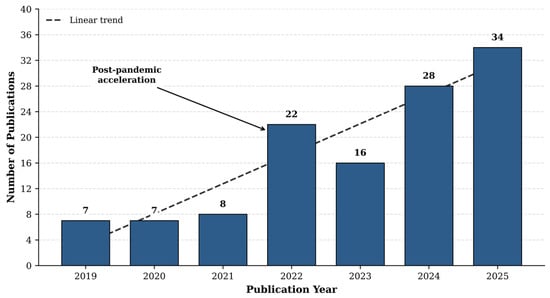
The publication volume has increased over the study period, indicating sustained and growing research interest in algorithmic approaches to tourist-flow management. Figure 1 shows the temporal distribution: 7 papers in 2019, 7 in 2020, 8 in 2021, 22 in 2022, 16 in 2023, 28 in 2024, and 34 in 2025. The acceleration from 2022 onwards coincides with post-pandemic tourism recovery and renewed concerns about overtourism.
Figure 1.
Publication trends (2019–2025, n = 122 papers).
5.2. Domain Classification
We classified each paper into one of five core functional areas; Table 1 summarizes the distribution across the 122 papers.
Table 1.
Distribution by research domain (n = 122).
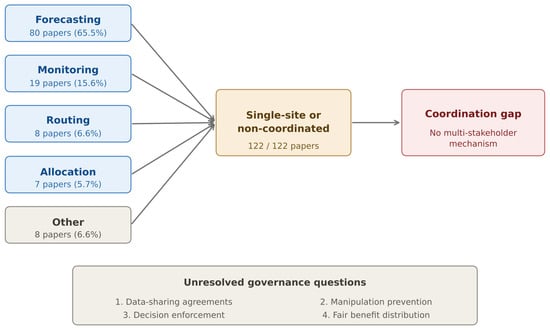
Demand forecasting dominates the research landscape with 80 papers (65.5% of the total), reflecting the maturity of prediction algorithms and a consistent preference for anticipating visitor volumes rather than intervening in them. Real-time monitoring accounts for 15.6% (19 papers), typically relying on Internet-of-Things (IoT) infrastructure deployed at individual sites. Routing and allocation are markedly under-explored, with only eight (6.6%) and seven (5.7%) papers, respectively, and the remaining 6.6% (eight papers) cover spatial analysis, behavioral classification, and simulation studies. Beyond this volumetric distribution, the Coordination column in Table 1 reveals a more striking observation: forecasting papers do not address coordination at all, while monitoring and allocation studies remain confined to a single site, and routing approaches operate at the individual-tourist level rather than across stakeholders. None of the 122 reviewed papers proposes an algorithmic mechanism for multi-stakeholder coordination—a structural absence that frames the coordination gap discussed in Section 6.
5.3. Demand Forecasting
This review yielded three key findings. First, there is a clear shift from using traditional statistical methods like ARIMA or exponential smoothing to deep learning. Between 2019 and 2020, statistical and deep learning methods were equally represented (4 papers each); by 2024–2025, deep learning clearly dominated (18 papers vs. 3 statistical). The hybrid model CNN-LSTM has become the dominant approach [29], combining CNN for spatial feature extraction and LSTM for temporal sequence modeling. For instance, Chen et al. [30] reported a 59.93% reduction in RMSE and a 54.11% reduction in MAPE using a hybrid CNN-BiLSTM model with Boruta feature selection. Second, recent studies are increasingly integrating multiple data sources, such as historical visitor counts, weather data, event calendars, search engine trends like Google Trends and Baidu, social media, and mobile phone data. As a result, prediction accuracy improves with these combined inputs, although system complexity increases as well.
Finally, GNNs (graph neural networks) can illustrate how congestion at one location affects other nearby areas [31]. NLP-inspired models (treating visited locations as words) and reinforcement learning aim to extend prediction from single sites to a system-wide scope. Nevertheless, significant limitations remain, as research on prediction focuses on the accuracy of predictions without addressing how these predictions elicit coordinated responses among various stakeholders.
5.4. Real-Time Monitoring
Modern monitoring systems integrate various sensing technologies, such as infrared-based people counters, Wi-Fi sensors for crowd estimation, and computer vision systems. In controlled environments, Jiang et al. [32] reported up to 95% accuracy in people counting and 99% in direction identification using commodity WiFi in museums, while Wijayanti et al. [33] achieved 94.2% accuracy using YOLOv8-based head detection for outdoor tourist crowd monitoring.
Several studies have developed simulation-based frameworks that combine real-time sensing with predictive modeling [34]. These systems enable “what-if” analyses that allow for the testing of various policies (such as price changes, capacity limits, and operating hours) in a simulation before implementing them in the real world. Museums and archeological sites are the primary users of these applications, as they are controlled indoor environments where it is easy to deploy sensors.
Heritage sites and major museums account for the majority of monitoring system deployments [32,34,35]; these sites share common characteristics, including high visitor traffic, growing concerns about heritage protection, and the institutional capacity to adopt technology. Street-level monitoring in urban areas continues to pose a challenge due to their open nature and privacy concerns [7]. On the other hand, monitoring systems continue to detect congestion at individual locations without notifying nearby tourist attractions of the situation or coordinating responses across the entire system.
5.5. Dynamic Routing
Route guidance is considered the most direct form of intervention in visitor behavior, as it provides personalized recommendations for itineraries, but it remains under-explored.
Recommendations designed to cater to individual preferences end up directing everyone to the same popular sites, thereby exacerbating congestion [36]. Therefore, recommendation providers concerned with sustainability must balance tourists’ desires with the capacity of tourist destinations to bear these consequences, which requires making clear policy choices regarding the prioritization of each party’s interests.
Most guidance studies assume that visitors will follow the recommendations, but compliance is often low. If only a small portion of visitors comply with the suggested routes, the flow redistribution process breaks down. Solving this problem requires incentives such as discounts or priority access, or restrictions such as mandatory reservations. Such mechanisms require a coordination infrastructure that is not available in current systems.
5.6. Visitor Allocation
Allocation involves capacity management and access scheduling, which are the two most direct forms of flow control.
Mean field control models offer a robust framework for modeling tourist-flow dynamics [37]. Equilibrium analysis indicates that when visitors independently strive to minimize personal costs linked to congestion, it culminates in the “tragedy of the commons,” where individual self-interest yields suboptimal collective outcomes, thereby requiring coordination mechanisms.
Time-slot ticketing systems help reduce congestion during peak hours while maintaining daily capacity. For example, the predictive–directive queue management system implemented by the Uffizi Museum (2018–2020) successfully reduced waiting lines on free admission days [35]. However, these systems require strict adherence to specific schedules, which reduces the spontaneity of the visit and overall satisfaction. They also lack identity verification mechanisms to prevent ticket resale and unauthorized transfers. Furthermore, due to their centralized structure, these systems lack transparency in ticket allocation, leaving the public unable to independently verify whether distribution is fair.
5.7. Other Approaches
The remaining papers provide useful supplementary insights but do not directly address tourist-flow management.
Analysis of geotagged images and GPS tracks reveals a high degree of concentration: in most destinations, a small number of tourist attractions receive the majority of visitors, while many other sites remain underutilized [38]. This imbalance in distribution highlights opportunities for coordination, as there is significant capacity at less-visited sites if tourist flows can be redistributed.
Behavioral profiling studies identify distinct tourist segments with different movement patterns and preferences, suggesting that effective coordination must accommodate diverse profiles rather than rely on one-size-fits-all itineraries.
6. Discussion
The survey reveals a clear disparity between how mature the algorithms are and how prepared the coordination is for managing tourist flow. Great progress has been made in forecasting, monitoring, routing, and allocation. Current research shows increasingly accurate and sophisticated methods [29,32,33]. However, these improvements are typically developed and tested in single-site or centrally managed settings [34,35]. Even multi-site studies [31] focus on prediction rather than on coordination mechanisms. Current methods can predict, find, and improve congestion in a specific area, but they do not address how different stakeholders can share data, prevent strategic manipulation, enforce redistribution decisions, or ensure fair participation across all parties.
The main unresolved issue is not algorithmic, but rather a governance problem among stakeholders [15] requiring trust, shared rules, and coordination infrastructure [36,37]. Figure 2 illustrates this coordination gap.
Figure 2.
The coordination gap.
The properties of blockchain directly address each governance challenge identified in the coordination gap: (1) smart contracts enable automated data-sharing agreements without requiring bilateral negotiations; (2) cryptographic verification and transparent ledgers prevent strategic manipulation by making manipulation evident to all participants; (3) automated execution through smart contracts enforces redistribution decisions without relying on voluntary compliance [27]; (4) auditable transaction history enables transparent and fair distribution of benefits among participating sites, directly addressing the limitations of centralized ticketing systems such as the one deployed at the Uffizi Gallery [35]. Table 2 compares centralized and blockchain-based architectures.
Table 2.
Comparison of centralized and decentralized (blockchain) architectures for tourist-flow coordination.
The last three rows of Table 2 point to well-known limitations of public blockchains, and these are the subject of active research. Reported figures illustrate these limitations: in 2023, Ethereum processed only about 20–30 transactions per second, with average fees of roughly 7 USD [39]. Two complementary lines of work address these constraints. Layer-1 approaches modify the core protocol, for example, through sharding or the shift to proof-of-stake, while Layer-2 approaches process transactions off-chain and record only summarized data on the main chain, using rollups, state channels, or sidechains. Recent Layer-2 architectures have been reported to significantly increase throughput, with some advanced designs combining off-chain execution and shard-based protocols exceeding 10,000 transactions per second while preserving the security and decentralization of the base layer. In parallel, smart-contract optimization, transaction batching, and off-chain execution further reduce cost [39]. These advances do not remove the trade-offs entirely, but they show that the throughput, latency, and cost limitations of blockchain are progressively being mitigated and should not be viewed as permanent obstacles.
7. Proposed Conceptual Architecture for Multi-Site Coordination
Although a full implementation lies outside the scope of this survey, the limitations identified in Section 2 and the discussion of the coordination gap above can be addressed through a coordination architecture for multi-site tourist-flow management. Drawing on layered designs proposed for multi-stakeholder blockchain systems [40,41], we identify five logical layers: (a) a data acquisition layer (IoT sensors, ticketing systems, mobile applications) collecting real-time occupancy data; (b) an AI analytics layer running the forecasting and monitoring models reviewed in Section 5 to predict congestion and residual capacity; (c) an oracle layer that aggregates and signs these predictions before transmitting them on-chain; (d) a coordination layer of smart contracts encoding capacity thresholds, redirection policies, and inter-site agreements; (e) a ledger layer recording every decision transparently for all stakeholders. In practice, when a forecasted occupancy exceeds its threshold, a smart contract automatically suspends new bookings for the affected site and redirects tourists toward less congested sites of the same network, with every redirection logged on the shared ledger for verification by the participating institutions. This scenario remains illustrative. Empirical validation through a proof-of-concept and discrete-event simulation are identified as the next steps of this research.
Three technical choices determine feasibility. Since the participating actors are identified institutions rather than anonymous peers, a permissioned or consortium chain (e.g., Hyperledger Fabric, which uses Raft for transaction ordering) is more appropriate than a public one; such lightweight consensus mechanisms deliver low and predictable latency. Public-chain throughput limits (≈20–30 TPS on Ethereum) are also being addressed by Layer-2 advances discussed in Section 6 (>10,000 TPS) [39]. Smart-contract cost, significant on public chains, is largely mitigated on permissioned deployments. Interoperability across heterogeneous stakeholder systems remains an open engineering challenge [41].
8. Conclusions
This paper examines 122 studies from Scopus (2019–2025) regarding algorithms for managing tourist flow. We discovered that research is centered on four primary functions: forecasting (65.5%), monitoring (15.6%), routing (6.6%), and allocation (5.7%). Deep learning has surpassed statistical techniques, IoT monitoring achieves high accuracy in controlled environments, and time-slot systems alleviate peak-hour congestion.
However, there is a blind spot behind these advances. Most papers focus on single-site situations and assume a level of coordination that does not occur in practice. The question is how different attractions would agree to share data, prevent manipulation, make decisions, or fairly share the benefits. The issue is not with the algorithm; it is with governance. We argue that blockchain can help bridge this gap.
Looking ahead, we see four priorities: designing architectures that combine existing algorithms with blockchain coordination, creating incentive mechanisms that align individual and collective interests, testing these ideas through real-world pilots, and developing interoperability standards for diverse tourism actors. As overtourism intensifies worldwide, the coordination gap we identified is no longer just a research question—it is becoming an urgent practical challenge.
Author Contributions
Conceptualization, M.L., A.J. and M.O.; methodology, M.L. and A.B.; formal analysis, M.L.; investigation, M.L.; data curation, M.L.; writing—original draft preparation, M.L.; writing—review and editing, A.B., A.J., M.O. and R.S.; visualization, M.L.; supervision, A.J. and M.O.; project administration, A.J.; funding acquisition, A.J. All authors have read and agreed to the published version of the manuscript.
Funding
This work was supported by the Ministry of Higher Education, Scientific Research and Innovation, the Digital Development Agency (DDA), and the CNRST of Morocco (Alkhawarizmi/2020/32).
Institutional Review Board Statement
Not applicable.
Informed Consent Statement
Not applicable.
Data Availability Statement
No new data was created in this study. The data analyzed were derived from studies indexed in the Scopus database and can be retrieved using the search query and inclusion criteria described in the methodology section of this article.
Conflicts of Interest
The authors declare no conflicts of interest.
References
- World Travel & Tourism Council. Economic Impact Research 2024; WTTC: London, UK, 2024. [Google Scholar]
- UNWTO. World Tourism Barometer; UNWTO: Madrid, Spain, 2024; Volume 22. [Google Scholar]
- Koens, K.; Postma, A.; Papp, B. Is Overtourism Overused? Understanding the Impact of Tourism in a City Context. Sustainability 2018, 10, 4384. [Google Scholar] [CrossRef] [Scilit]
- UNWTO. Tourism Congestion Management at Natural and Cultural Sites: A Guidebook; World Tourism Organization: Madrid, Spain, 2004. [Google Scholar]
- Picaud-Bello, K.; Bohn, T.; Chapon, M.; Loufrani-Fedida, S. Coordinating Service Ecosystems for Innovation: The Case of Tourism Destination Innovation Projects. Ind. Mark. Manag. 2022, 107, 13–27. [Google Scholar] [CrossRef] [Scilit]
- Tong, G. Forecasting Smart Tourism Visitor Flows Leveraging Big Data Technology Assistance. Int. J. E-Collab. 2024, 20, 1–24. [Google Scholar] [CrossRef] [Scilit]
- Zubiaga, M.; Izkara, J.L.; Gandini, A.; Alonso, I.; Saralegui, U. Towards Smarter Management of Overtourism in Historic Centres Through Visitor-Flow Monitoring. Sustainability 2019, 11, 7254. [Google Scholar] [CrossRef] [Scilit]
- Lasaad, M.; Elgountery, Y.; Oualla, M.; Jakimi, A.; Saadane, R. Revolutionizing Urban Travel: Role of Blockchain in Smart Tourism and Smart Cities. In Innovations in Smart Cities Applications Volume 8, SCA 2024; Ahmed, B., Abdelhakim, M., Karaș, B.A., Ben Ahmed, K., Eds.; Springer: Cham, Switzerland, 2025. [Google Scholar] [CrossRef] [Scilit]
- Lasaad, M.; Elgountery, Y.; Jakimi, A.; Oualla, M.; Saadane, R.; Chehri, A. Integrating Blockchain into Smart Tourism: Towards an Enhanced User Experience. In Proceedings of the 2025 8th International Conference on Networking, Intelligent Systems & Security (NISS), Tangier/Chefchaouen, Morocco, 10–11 April 2025; pp. 170–175. [Google Scholar] [CrossRef] [Scilit]
- Balasubramanian, S.; Sethi, J.S.; Ajayan, S.; Shukla, V.; Islam, N.; Manghat, S. An Enabling Framework for Blockchain in Tourism. Inf. Technol. Tour. 2022, 24, 165–179. [Google Scholar] [CrossRef] [Scilit]
- Nam, K.; Dutt, C.S.; Chathoth, P.; Khan, M.S. Blockchain Technology for Smart City and Smart Tourism: Latest Trends and Challenges. Asia Pac. J. Tour. Res. 2021, 26, 454–468. [Google Scholar] [CrossRef] [Scilit]
- Kwok, A.O.J.; Koh, S.G.M.; Xie, P.F.; Wan, P.Y.K. Blockchain Technology Diffusion in the Tourism Industry: Insights from Recent Developments, Current Practices and Industry Experts. Heliyon 2024, 10, e27803. [Google Scholar] [CrossRef] [Scilit] [PubMed]
- He, Z.; Yu, W.; Chen, L. Research and application of tourism management in the IoT industry under the background of sustainable blockchain. Heliyon 2024, 10, e35893. [Google Scholar] [CrossRef] [Scilit] [PubMed]
- Punia, A.; Gulia, P.; Gill, N.S.; Ibeke, E.; Iwendi, C.; Shukla, P.K. A systematic review on blockchain-based access control systems in cloud environment. J. Cloud Comput. 2024, 13, 146. [Google Scholar] [CrossRef] [Scilit]
- Panagiotopoulou, P.; Skoultsos, S. Stakeholders’ Involvement in Sustainable Destination Management: A Systematic Literature Review of Existing Multi-Stakeholder Frameworks and Approaches. Tour. Hosp. 2025, 6, 250. [Google Scholar] [CrossRef] [Scilit]
- Liu, J.; Cui, S.; Gaur, V. Supply chain transparency and blockchain design. Manag. Sci. 2024, 70, 3245–3263. [Google Scholar] [CrossRef] [Scilit]
- Boukhalfa, A.; Lasaad, M.; Benaddi, L.; Jakimi, A.; Hadi, M.Y. Blockchain-Enabled Smart Tourism: Key Benefits and Systemic Comparison with Centralized Models. In Proceedings of the 2025 12th International Conference on Wireless Networks and Mobile Communications (WINCOM), Riyadh, Saudi Arabia, 25–27 November 2025; pp. 1–7. [Google Scholar] [CrossRef] [Scilit]
- Khalil, U.; Malik, O.A.; Uddin, M.; Chen, C.-L. A comparative analysis on blockchain versus centralized authentication architectures for IoT-enabled smart devices in smart cities: A comprehensive review, recent advances, and future research directions. Sensors 2022, 22, 5168. [Google Scholar] [CrossRef] [Scilit] [PubMed]
- Mountije, Y.; Agapito, D.; Ramos, C. Reshaping the future of tourism & hospitality industry through blockchain technology: A systematic literature review. Inf. Technol. Tour. 2025, 27, 317–343. [Google Scholar] [CrossRef] [Scilit]
- Jain, P.; Singh, R.K.; Mishra, R.; Rana, N.P. Emerging dimensions of blockchain application in tourism and hospitality sector: A systematic literature review. J. Hosp. Mark. Manag. 2023, 32, 454–476. [Google Scholar] [CrossRef] [Scilit]
- Tyan, I.; Yagüe, M.I.; Guevara-Plaza, A. Blockchain technology’s potential for sustainable tourism. In Information and Communication Technologies in Tourism 2021; Wörndl, W., Koo, C., Stienmetz, J.L., Eds.; Springer: Cham, Switzerland, 2021. [Google Scholar] [CrossRef] [Scilit]
- Folgieri, R.; Gričar, S.; Baldigara, T. Blockchain and NFTs in Tourism: Trending Paradigm for Sustainable Growth and Digital Transformation. Sustainability 2025, 17, 2976. [Google Scholar] [CrossRef] [Scilit]
- Alonso-Muñoz, S.; González-Sánchez, R.; González-Mendes, S.; García-Muiña, F. The role of blockchain-related technologies in transforming the tourism and hospitality industry: An overview and research guidelines. Int. J. Contemp. Hosp. Manag. 2025, 37, 84–102. [Google Scholar] [CrossRef] [Scilit]
- Bulchand-Gidumal, J.; Melián-González, S. Fighting fake reviews with blockchain-enabled consumer-generated reviews. Curr. Issues Tour. 2024, 27, 739–753. [Google Scholar] [CrossRef] [Scilit]
- Hofmann, F.; Wurster, S.; Ron, E.; Böhmecke-Schwafert, M. The immutability concept of blockchains and benefits of early standardization. In Proceedings of the 2017 ITU Kaleidoscope: Challenges for a Data-Driven Society (ITU K), Nanjing, China, 27–29 November 2017; pp. 1–8. [Google Scholar] [CrossRef] [Scilit]
- Sarnacchiaro, P.; Luongo, S.; Sepe, F.; Della Corte, V. The role of blockchain technology in the tourism industry: Analyzing the factors affecting its adoption. Qual. Quant. 2026, 60, 8185–8212. [Google Scholar] [CrossRef] [Scilit]
- Liu, Y.; He, J.; Li, X.; Chen, J.; Liu, X.; Peng, S.; Cao, H.; Wang, Y. An overview of blockchain smart contract execution mechanism. J. Ind. Inf. Integr. 2024, 41, 100674. [Google Scholar] [CrossRef] [Scilit]
- Morar, C.D.; Popescu, D.E. A Survey of Blockchain Applicability, Challenges, and Key Threats. Computers 2024, 13, 223. [Google Scholar] [CrossRef] [Scilit]
- Lu, W.; Rui, H.; Liang, C.; Jiang, L.; Zhao, S.; Li, K. A method based on GA-CNN-LSTM for daily tourist flow prediction at scenic spots. Entropy 2020, 22, 261. [Google Scholar] [CrossRef] [Scilit] [PubMed]
- Chen, J.; Ying, Z.; Zhang, C.; Baležentis, T. Forecasting tourism demand with search engine data: A hybrid CNN-BiLSTM model based on Boruta feature selection. Inf. Process. Manag. 2024, 61, 103699. [Google Scholar] [CrossRef] [Scilit]
- Terroso-Saenz, F.; Arcas-Túnez, F.; Muñoz, A. Nation-wide touristic flow prediction with Graph Neural Networks and heterogeneous open data. Inf. Fusion 2023, 91, 582–597. [Google Scholar] [CrossRef] [Scilit]
- Jiang, Y.; Zheng, X.; Feng, C. Toward Multi-area Contactless Museum Visitor Counting with Commodity WiFi. J. Comput. Cult. Herit. 2023, 16, 1–26. [Google Scholar] [CrossRef] [Scilit]
- Wijayanti, K.; Mutiara, G.A.; Suryawardani, B.; Ervina, E.; Kusuma, G.P. Non-Intrusive Real-Time Tourist Crowd Monitoring for Overtourism Mitigation using YOLOv8-Based Head Detection and Tracking. J. Robot. Control 2025, 6, 1985–2004. [Google Scholar] [CrossRef] [Scilit]
- Centorrino, P.; Corbetta, A.; Cristiani, E.; Onofri, E. Managing crowded museums: Visitors flow measurement, analysis, modeling, and optimization. J. Comput. Sci. 2021, 53, 101357. [Google Scholar] [CrossRef] [Scilit]
- Attanasio, A.; Maravalle, M.; Muccini, H.; Rossi, F.; Scatena, G.; Tarquini, F. Visitors flow management at Uffizi Gallery in Florence, Italy. Inf. Technol. Tour. 2022, 24, 409–434. [Google Scholar] [CrossRef] [Scilit]
- Merinov, P.; Massimo, D.; Ricci, F. Sustainability Driven Recommender Systems. In Proceedings of the 12th Italian Information Retrieval Workshop (IIR 2022), Milan, Italy, 29–30 June 2022; CEUR Workshop Proceedings, Volume 3177. Available online: https://ceur-ws.org/Vol-3177/paper22.pdf (accessed on 7 November 2026).
- Bagagiolo, F.; Faggian, S.; Maggistro, R.; Pesenti, R. Optimal Control of the Mean Field Equilibrium for a Pedestrian Tourists’ Flow Model. Netw. Spat. Econ. 2022, 22, 243–266. [Google Scholar] [CrossRef] [Scilit]
- Qin, J.; Song, C.; Tang, M.; Zhang, Y.; Wang, J. Exploring the spatial characteristics of inbound tourist flows in China using geotagged photos. Sustainability 2019, 11, 5822. [Google Scholar] [CrossRef] [Scilit]
- Artenie, A.C.; Silaghi, D.L.; Popescu, D.E. Exploring the synergy between Ethereum Layer 2 solutions and machine learning to improve blockchain scalability. Computers 2025, 14, 359. [Google Scholar] [CrossRef] [Scilit]
- Nguyen, D.C.; Pathirana, P.N.; Ding, M.; Seneviratne, A. A cooperative architecture of data offloading and sharing for smart healthcare with blockchain. In Proceedings of the 2021 IEEE International Conference on Blockchain and Cryptocurrency (ICBC2021), Sydney, Australia, 3–6 May 2021; pp. 1–8. [Google Scholar]
- Zhou, Z.; Chen, L.; Zhao, Y.; Yang, X.; Han, Z.; He, Z. Retrieval integrity verification and multi-system data interoperability mechanism of a blockchain oracle for smart healthcare with IoT integration. Sensors 2024, 24, 7487. [Google Scholar] [CrossRef] [Scilit] [PubMed]

Disclaimer/Publisher’s Note: The statements, opinions and data contained in all publications are solely those of the individual author(s) and contributor(s) and not of MDPI and/or the editor(s). MDPI and/or the editor(s) disclaim responsibility for any injury to people or property resulting from any ideas, methods, instructions or products referred to in the content. |
© 2026 by the authors. Licensee MDPI, Basel, Switzerland. This article is an open access article distributed under the terms and conditions of the Creative Commons Attribution (CC BY) license.