


Abstract
Green synthesis is systematically regulated to investigate the effects of biochemical aging on Moringa oleifera seeds during ZnO NP synthesis. Investigations using XRD show that there is a gradual increase in the size of crystallites and coherence of the lattice as a function of time degradation, and SEM shows that initially uniform ZnO NPs gradually combine to form aggregated morphologies that are accompanied by a reduction in the intensity of PL, which is an indication of inhibition of defect-related emissive states. The reduction in organic surface passivation is associated with the measured increase in lattice ordering, as measured by Raman spectroscopy.
1. Introduction
The green synthesis of metal oxide nanoparticles (NPs) has emerged as a viable, ecofriendly alternative to the traditional synthesis routes, demonstrating greater scalability and applicability. Biomolecules that are synthesized through phytochemistry can be used synergistically as reducing agents, ligand complexes, capping agents, and growth modulators [1,2,3]. In seed-mediated synthesis, proteins, peptides, and minor phytochemicals govern metal ion binding, nucleation rate, and defect formation during NP growth, thereby controlling the coordination of metal ions, nucleation rate, and defect formation during the crystallization process [2]. The seeds of the Moringa oleifera plant are especially appealing botanical material sources because of their high protein levels, amphiphilic peptides, and a wide range of surface-active phytochemicals, which can be utilized as a metal-binding agent [4]. All these biochemical components enable the controlled nucleation and growth of ZnO NPs under mild conditions, producing materials with tunable structural and optical properties [5,6,7].
Despite the extensive literature on plant-mediated synthesis of ZnO, there is a significant lack of information on one of the most important variables: the biochemical aging of plant seeds before extraction. The idea of seed aging, as extensively reported in seed physiology, is defined by progressive protein denaturation, lipid peroxidation, and oxidation of amine, carboxyl, and thiol functional groups [8,9]. These molecular changes directly alter the coordination environment of the solution metal ions. As a result, such changes are likely to modify the strength of Zn2+ complexation, supersaturation, and the density of nucleation and growth limitations, even though the synthesis parameters are otherwise similar [10,11]. Overlooking seed aging, however, introduces an unknown chemical bias into green synthesis protocols, which adds to batch-to-batch differences and unreproducible NP characteristics. The biochemical aging of seeds is rarely controlled, even though storage time is known to alter protein integrity, lipid composition, and surface-active functional groups [4,12,13]. During aging, seed proteins undergo denaturation and fragmentations, lipids progressively oxidize, and the availability of metal-binding functional groups decreases [8]. These changes directly affect metal ion complexity strength, nucleation kinetics, and growth confinement during biosynthesis. As a result, NP size, crystallinity, defect density, and surface charge can vary significantly even when synthesis conditions remain unchanged.
ZnO is a material that is sensitive to nucleation processes, as it has a polar crystal structure and a defect-sensitive wurtzite lattice. Differences in precursor salts and growth dynamics are reflected in alterations in crystallite size, lattice strain, oxygen vacancy concentration, and surface charge [9,14], which influence the optical absorption, photoluminescence (PL) response, and charge carrier dynamics of ZnO NPs [15]. In this direction, the chemical changes in the chemistry of extracts from aged seeds may translate into significant changes in defect-related emissions, Raman-active phonon transitions, and surface electrostatic behaviors [16,17], but the current literature usually explains such variations in terms of synthesis temperature, pH, and precursor concentration and rarely considers the biochemical state [1,2,9,14,15].
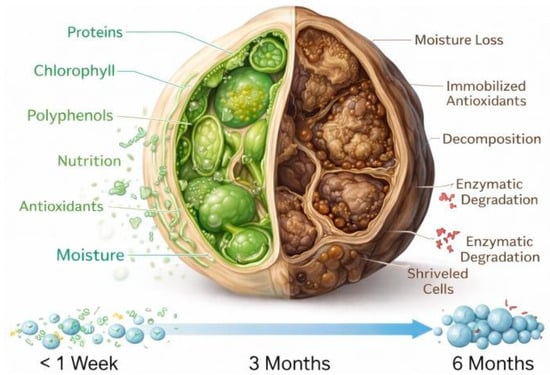
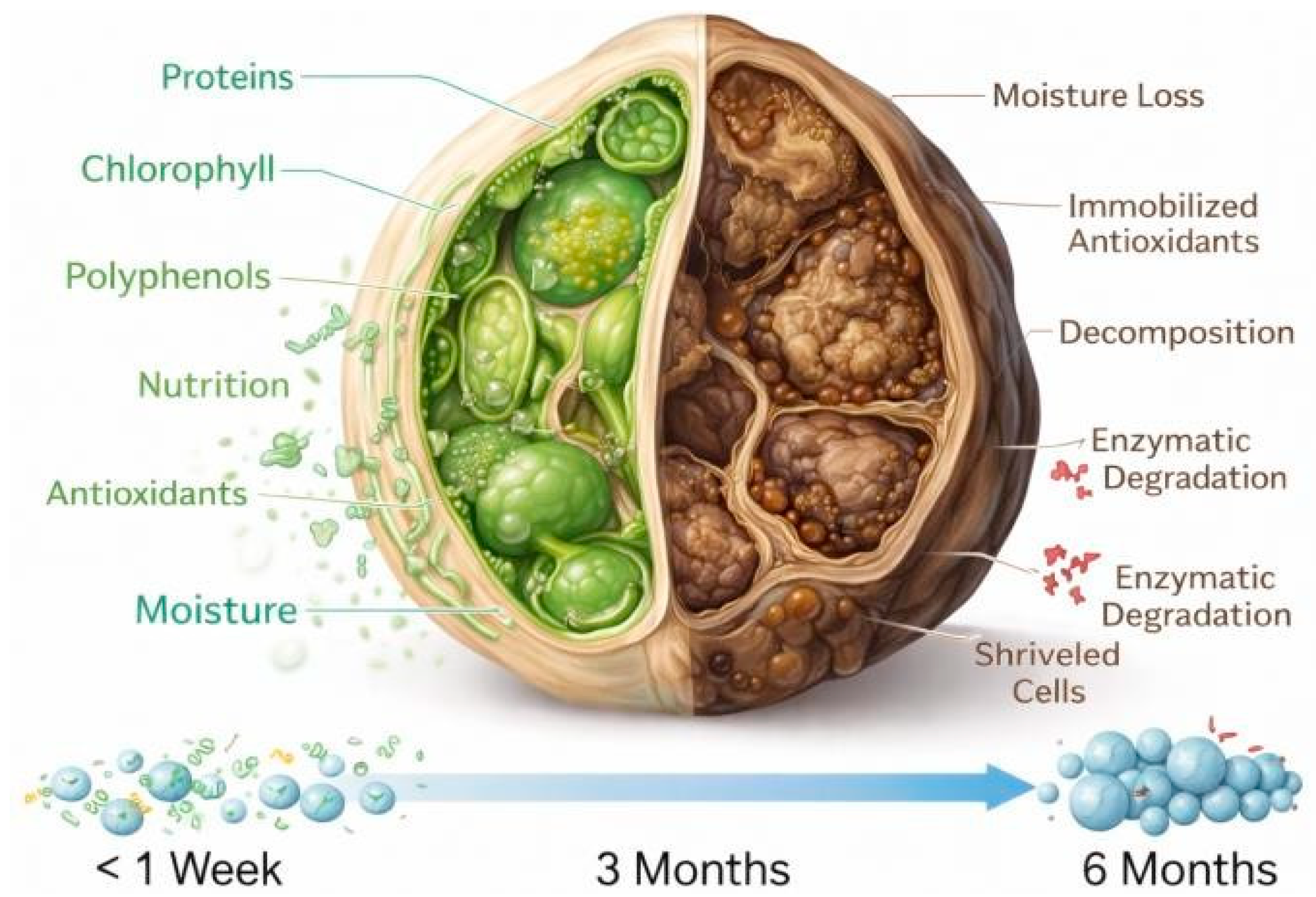
The controlled aging of Moringa oleifera seeds controlled aging dependent biochemical degradation from synthesis variables (Figure 1). Aging can be considered a free parameter that shapes nucleation pathways and defect formation in ZnO NPs. The growth and nucleation correlate to seed biochemistry, metal ion coordination, and crystallization results [11,12,13,18,19]. The suggested framework is elaborated in the current work to illustrate that seed aging serves as a modulator of NP structural, morphological, electronic and optical properties. The approach to aging as a design parameter offers a path to high reproducibility and defect-engineering of ZnO NPs while developing a crucial understanding of crystal growth in the biosynthetic regime. In this work, Moringa oleifera seeds were intentionally aged under controlled conditions to isolate aging as a single variable and evaluate its impact on the structural, optical, and surface properties of ZnO NPs synthesized via a green synthesis route.
Figure 1.
The illustration of aging metabolic changes in Moringa oleifera seeds.
2. Green Synthesis of ZnO NPs from Moringa Oleifera Seed
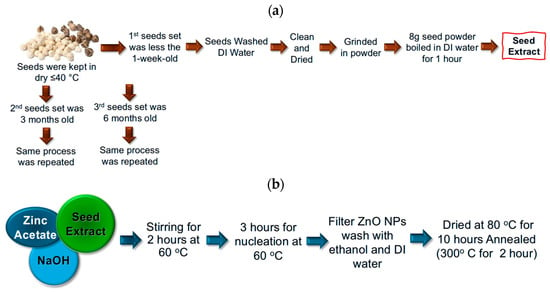
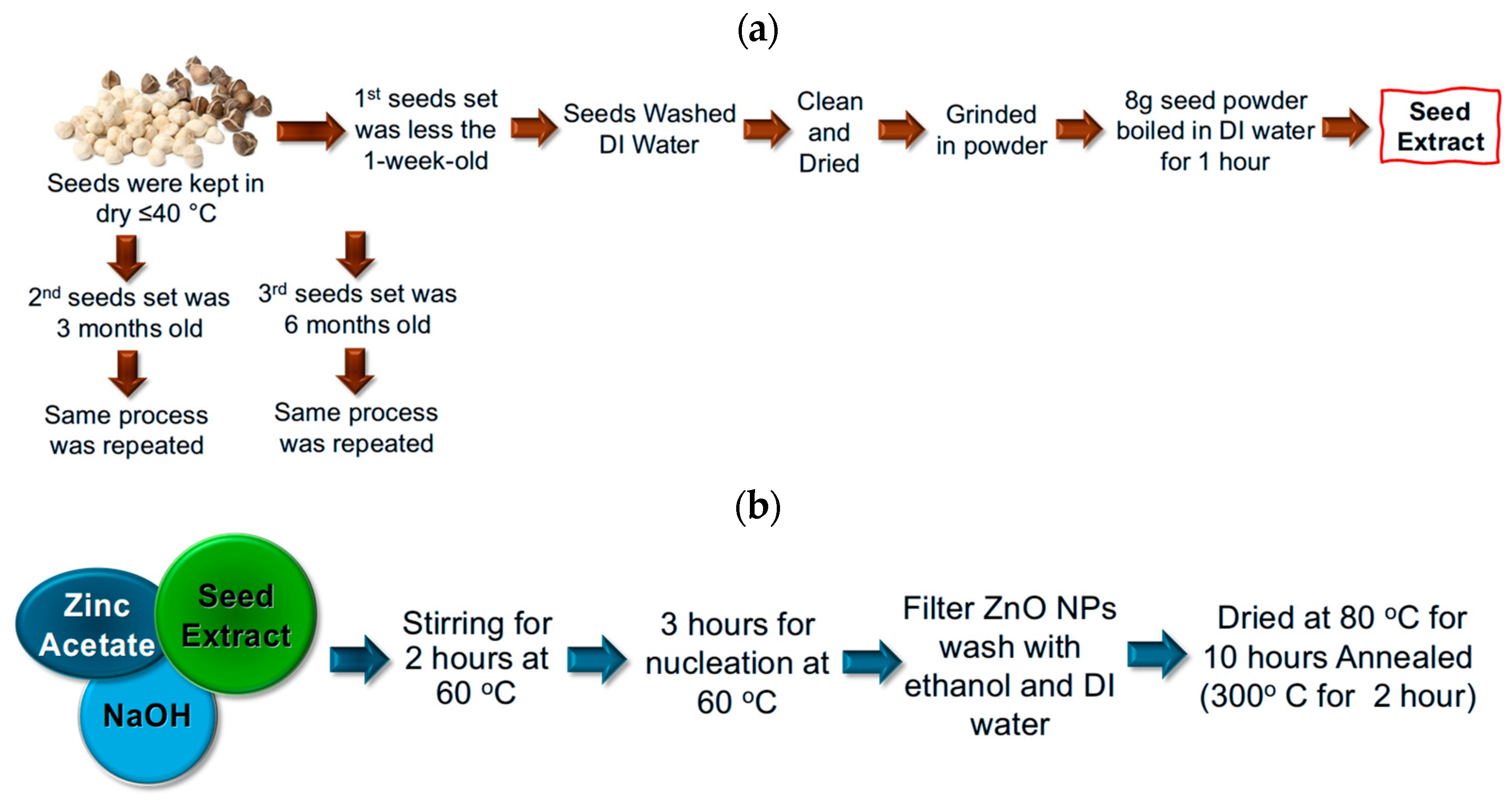
The Moringa oleifera seeds were used as a biogenic starting material for the synthesis of ZnO NPs with an emphasis on analyzing the effects of aging. Aging was considered an independent variable, so seeds were stored under dry conditions at 40 °C for 3 and 6 months. The less-than-one-week-old seeds were used as a control. Deionized water (DW) was used to wash the seeds, followed by air-drying and grinding them into a fine powder. To prepare the seed extract, 8g of the powder was mixed with DW. The mixture was boiled under constant stirring for 1 h in 100 mL of water to dissolve all water-soluble biomolecules. Figure 2a illustrates the aging and seed extraction method. Later, the solution was vacuum filtered over the nylon filter. The same process was repeated for other age groups for seed extraction.
Figure 2.
Schematic of (a) Moringa oleifera seed aging and seed extract method, and (b) synthesis of ZnO NPs.
The synthesis of ZnO NPs was carried out by dissolving a 0.5 molar solution of zinc acetate dihydrate in 100 mL of the respective seed extract and stirring for 1 h to allow the coordination of Zn2+ ions with biomolecules. The solution was added dropwise to an aqueous solution of 5 molar NaOH at room temperature till the pH reached 10. The basic pH results in supersaturation and allows nucleation. The mixture was stirred and then aged at 60 °C for 30 min to promote growth. The resultant precipitate was filtered and washed thoroughly with DW and ethanol to avoid impurities. Later, it was dried at 80 °C and annealed at 300 °C for 2 h to form ZnO NPs (Figure 2b).
3. Results and Discussion
3.1. Scanning Electron Microscopy (SEM)
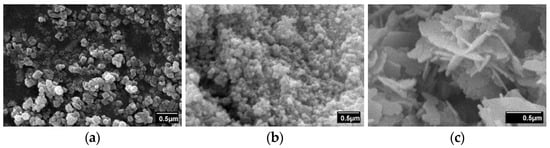
The ZnO NPs synthesized with fresh seed extract (<1 week) exhibit discrete, well-defined NPs with clear boundaries and low agglomeration in Figure 3a. This exhibits a high nucleation density and better growth control. This morphological activity is correlated with extracts containing high concentrations of intact proteins and amphiphilic peptides that effectively bind Zn2+ ions, stabilize nascent nuclei, and prevent coalescence [5,6,7]. On the other hand, in Figure 3b, the 3-month aged seed extract shows the agglomeration of particles and the lack of uniformity in ZnO NPs. The collapse of boundaries and the subsequent loss of interparticle separation indicate decreased efficiency of biomolecule-capping agents, leading to reduced steric and electrostatic stabilization. This weakening may be attributed to the partial oxidation and denaturation of protein functional groups, thus weakening metal–ligand complexation. Figure 3c shows ZnO produced using seeds aged about 6 months, which exhibits increased morphologies, such as plate-like stacking, observed in growth-dominated crystallization. Large-scale biochemical deterioration of seeds reduces control over nucleation, leading to more nuclei, enhanced Ostwald ripening, and anisotropic growth. Taking together, these findings support a systematic shift in the dispersion of nanoscales to aggregate growth units, thereby supporting the hypothesis that seed aging universally shifts ZnO formation between nucleation-dominant and growth-dominant regimes. In turn, age is seen as a key variable in the ecofriendly production of ZnO.
Figure 3.
SEM micrographs of ZnO NPs prepared using (a) fresh seeds and (b) 3-month and (c) 6-month aged Moringa oleifera seed extracts.
3.2. X-Ray Diffraction (XRD)
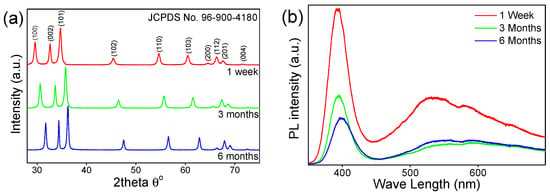
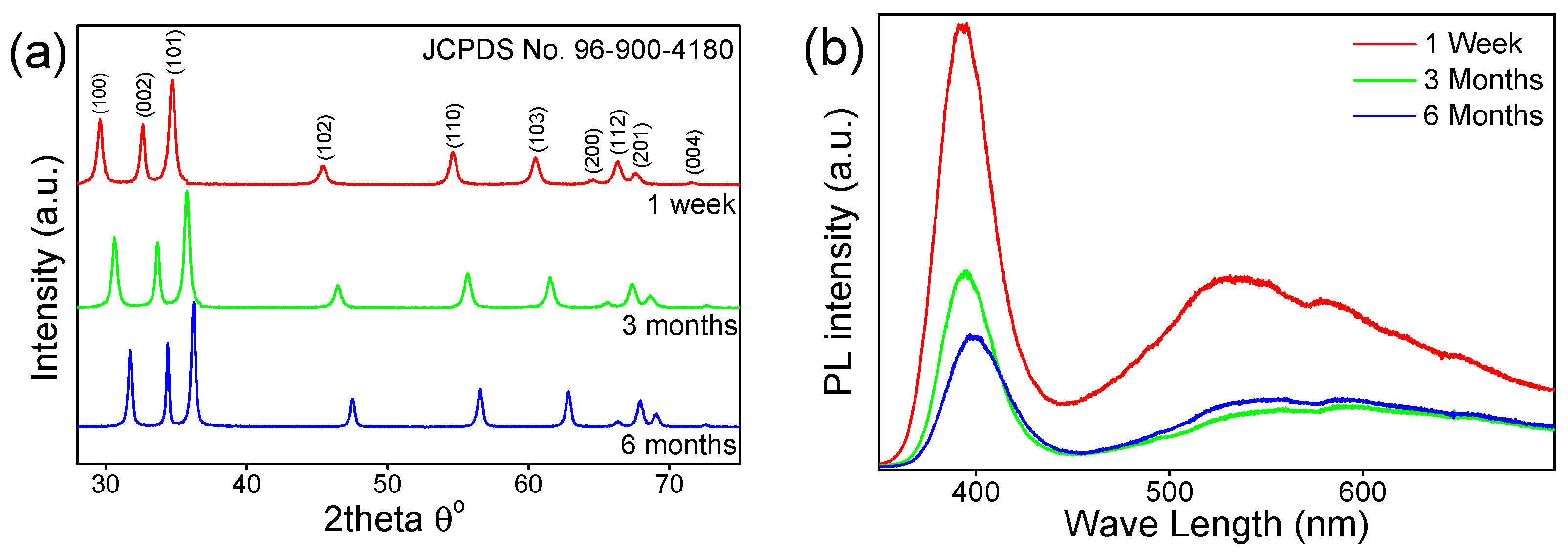
Crystallographic evidence for aging-controlled modulation of ZnO nucleation and growth was provided by XRD patterns. The samples all show reflections of the hexagonal wurtzite structure of ZnO, verifying that they are phase-pure and independent of seed age. ZnO grown with freshly prepared seed extract shows larger diffraction peaks of lower relative intensity in Figure 4a, indicative of a small crystallite size and large micro-strain due to fast nucleation driven by strong biomolecular coordination [10,11,19]. The 3-month-old seeds used to prepare the sample showed a higher-intensity peak and less broadening in Figure 4a, indicating partial removal of growth inhibitors and improved lattice order. On the other hand, ZnO prepared with 6-month-old seeds (sample represented in Figure 4a) showed the steepest and strongest reflections, consistent with increased crystallite size, reduced lattice strain, and growth-controversial crystallization. Minor variations in peak positions also suggest that aging alters lattice parameters, which are linked to changes in defect concentration and internal stress [18,20]. The XRD data support the notion that seed aging is a systematic process in which the aging of biomolecules, proteins, and capping agents leads to controlled growth and nucleation of ZnO NPs, thereby directly regulating crystallinity and defect architecture.
Figure 4.
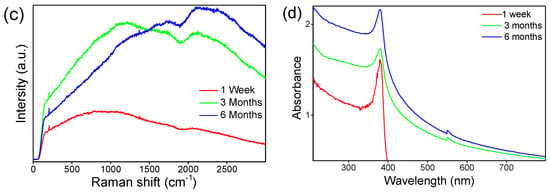
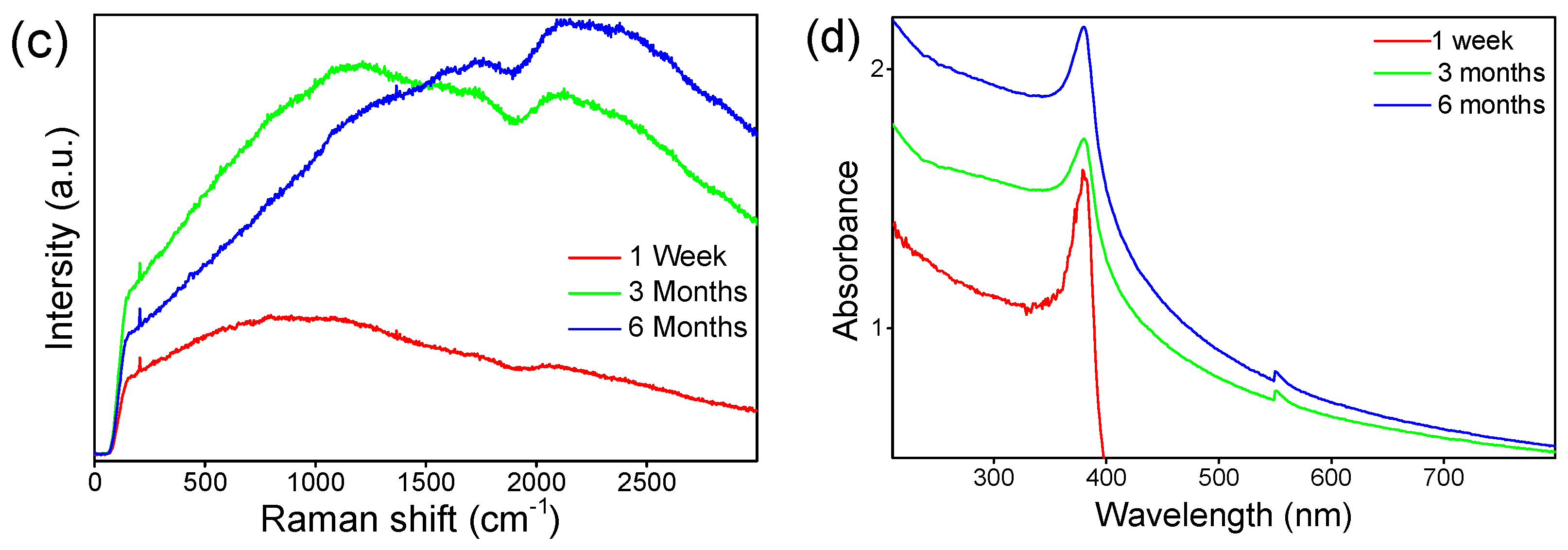
(a) XRD patterns, (b) photoluminescent, (c) Raman, and (d) UV spectral evolution of ZnO NPs synthesized using Moringa oleifera aged seed extracts.
3.3. Photoluminescence (PL) Spectroscopy
PL spectroscopic measurements provide dedicated support for the modulation hypothesis, which argues that the modulation of radiative emission is affected by seed aging. Based on this, radiative emission is expected to decrease gradually and systematically as the seeds grow. The bandgap luminescence of fresh seed material, as shown in Figure 4b, exhibits a broad visible emission band, corresponding to a large population of defect states, e.g., oxygen vacancies and surface-related trap centers. These data support the assumption of fast nucleation in a well-organized biomolecular environment, in which defects in the crystal structure are incorporated under kinetic constraints [20]. Three-month aged seeds, represented in Figure 4b, exhibit reduced PL intensities in the ultraviolet and visible spectral regions, indicating that some defect states are passivated and that the percent crystallinity increases. This attenuation is correlated with a reduction in biomolecular capping activity and, therefore, the release of growth-restricting constraints. ZnO grown with 6-month aged seeds, as denoted in Figure 4b, has the lowest intensity of PL and hence supports the suggestion of a strong prevention of radiative defect states. Widespread biochemical degradation reduces nucleation density, favoring growth-based crystallization pathways and enabling further defect removal during ripening. Taken together, the analyzed progressive loss of PL intensity with the age of the seed, which occurs under biochemical aging conditions, supports the hypothesis that biochemical aging regulates defect formation in ZnO by modulating the synthetic pathway. This regulation alters nucleation due to defects, thereby altering the lattice ordering induced by growth.
3.4. Raman Spectroscopy
The systematic changes in lattice order and defect-related scattering with seed age, as analyzed by Raman spectroscopy, also support the modulation hypothesis based on the aging hypothesis. ZnO that has been synthesized using freshly picked seeds has the reduced Raman intensity shown in Figure 4c, whereas the broadened background is evidence of a strong organic passivation, which quenches phonon coherence and inhibits long-range lattice ordering, which is the result of intensive nucleation and limited crystal growth [10]. The higher Raman intensities of the moderately aged seed sample in Figure 4c, along with partially resolved phonon features, indicate a transitional regime in which reduced biomolecular capping increases crystallinity while defect-related scattering increases. The Raman intensity of ZnO synthesized with highly aged seeds is the highest in Figure 4c, and the spectral features are broader, which can be attributed to improved phonon coherence and crystal growth-dominant crystallization. The large loss of seed biomolecules decreases growth confinement, lowers nucleation density, alters crystallite size, and enhances the lattice contribution to Raman scattering. In concert, the systematic change from a subdued to an amplified Raman response confirms that the process of seed aging transforms the structure of the ZnO to a growth-controlled regime as opposed to the nucleation-limited regime and hence establishes a direct correlation between extract biochemistry, lattice dynamics, and defect expression.
3.5. Ultraviolet–Visible (UV–Vis) Spectroscopy
The UV–Vis spectral changes observed in Figure 4d show a progressive increase in absorbance with seed aging. The rise in crystallinity, with the corresponding increase in the measure of structural dispersion, would be linked to the replacement of nucleation by ZnO NP growth [11,20]. The nondegraded plant extract from fresh Moringa seed extract used in ZnO sample preparation suggests active coordination of the capping agents, proteins, and peptides [10,11,19], suggesting that the mediation is by conserved biomolecules that restrict lattice growth and nucleation. Aging causes biochemical degradation of metal–ligand interactions, surface passivation, and longer lattice relaxation times, with the delocalization of carriers. Eventually, it results in a more coherent spectral response.
The UV spectra indicate low defect states and inhibit non-radiative processes. This is evidenced by the weakened low-energy tail and lower background in the aged samples. All these observations support the assumption that seed aging is an ordered process involving the release of biochemical confinement, leading to orderly growth kinetics and defect-mediated electronic states and, therefore, supporting the hypothesis being proposed. Table 1 presents the overall effect of Moringa oleifera aged seed extracts on ZnO NPs.
Table 1.
Summary of the effects on ZnO NPs synthesized by Moringa oleifera aged seed extracts.
4. Conclusions
Seed aging emerges as a decisive yet unrecognized control parameter in green ZnO NP synthesis. Fresh Moringa oleifera seeds provide a biomolecule-rich environment that promotes strong metal ion complexation, high nucleation density, and stabilization of radiative surface defects, yielding small, defect-active NPs. Progressive aging degrades these biomolecules, weakens growth confinement, and shifts synthesis from biologically regulated nucleation toward inorganic-dominated crystal growth. As a result, ZnO NPs evolve toward larger, more crystalline, and less surface-active structures with diminished radiative defect emission. These findings demonstrate that uncontrolled seed aging can be a primary source of variability in green synthesis and highlight the necessity of defining extract aging windows to achieve reproducible and tunable ZnO nanomaterials.
Author Contributions
M.B., methodology, formal analysis, investigation, data curation, and writing—original draft preparation; S.J., resources, supervision, project administration, and writing—review and editing; M.K., conceptualization and visualization; and M.A.A., validation. All authors have read and agreed to the published version of the manuscript.
Funding
This research received no external funding.
Institutional Review Board Statement
Not applicable.
Informed Consent Statement
Not applicable.
Data Availability Statement
The dataset is available on request from the authors.
Acknowledgments
During the preparation of this manuscript, the authors used version v.1.2.306.1984 of Grammarly pro for language editing and grammar refinement. The authors have reviewed and edited the output and take full responsibility for the content of this publication.
Conflicts of Interest
The authors declare no conflicts of interest.
Abbreviations
The following abbreviations are used in this manuscript:
| NPs | Nanoparticles |
| DW | Deionized water |
| SEM | Scanning electron microscopy |
| XRD | X-ray diffraction |
| PL | Photoluminescence |
| a.u. | Arbitrary unit |
| UV–Vis | Ultraviolet–visible spectroscopy |
References
- Ravitchandiran, A.; Subramania, A.K.; Devi, N.R.; Chandrasekar, N.; Angaiah, S. Green synthesis of metal nanoparticles using plant extracts and their biomedical applications: An overview. J. Iran. Chem. Soc. 2026, 23, 213. [Google Scholar] [CrossRef] [Scilit]
- Aigbe, U.O.; Osibote, O.A. Green synthesis of metal oxide nanoparticles, and their various applications. J. Hazard. Mater. Adv. 2024, 13, 100401. [Google Scholar] [CrossRef] [Scilit]
- Kumari, S.C.; Dhand, V.; Padma, P.N. Green synthesis of metallic nanoparticles: A review. In Nanomaterials; Academic Press: Cambridge, MA, USA, 2021; pp. 259–281. [Google Scholar] [CrossRef] [Scilit]
- Sowbarnika, R.; Ilakiya, T.; Ravanachandar, A.; Sheela, P.; Karthika, P.C.; Madhan, A.; Lavanya, S.; Anbukkarasi, K.; Kumar, V.P. Biosynthesis of ZnO Nanoparticles Using Fresh and Dried Leaf Extracts of Moringa oleifera, Hibiscus sabdariffa, Centella asiatica, and Triticum aestivum for Antimicrobial and Antioxidant Applications. Chem. Phys. Impact 2026, 12, 101059. [Google Scholar] [CrossRef] [Scilit]
- Tabassum, S.; Saeed, M.A.; Debnath, P.; Liza, N.Y.; Khan, S.; Bashar, M.S.; Islam, S.; Ahmed, S.; Hossain, M.S. Green-synthesized ZnO nano-crystallites as an electrochemical sensor for efficient detection of heavy metal. RSC Adv. 2026, 16, 32919–32931. [Google Scholar] [CrossRef] [Scilit] [PubMed]
- Shabaani, M.; Rahaiee, S.; Zare, M.; Jafari, S.M. Green synthesis of ZnO nanoparticles using loquat seed extract; Biological functions and photocatalytic degradation properties. LWT 2020, 134, 110133. [Google Scholar] [CrossRef] [Scilit]
- Rafique, M.; Tahir, R.; Gillani, S.S.A.; Tahir, M.B.; Shakil, M.; Iqbal, T.; Abdellahi, M.O. Plant-mediated green synthesis of zinc oxide nanoparticles from Syzygium Cumini for seed germination and wastewater purification. Int. J. Environ. Anal. Chem. 2022, 102, 23–38. [Google Scholar] [CrossRef] [Scilit]
- Cojocaru, A.; Carbune, R.-V.; Teliban, G.-C.; Stan, T.; Mihalache, G.; Rosca, M.; Rusu, O.-R.; Butnariu, M.; Stoleru, V. Physiological, morphological and chemical changes in pea seeds under different storage conditions. Sci. Rep. 2024, 14, 28191. [Google Scholar] [CrossRef] [Scilit] [PubMed]
- Abdulqodus, A.N.; Abdulrahman, A.F.; Mostafa, S.H.; Kareem, A.A.; Hamad, S.M.; Ahmed, S.M.; Almessiere, M.A.; Shaikhah, D. Green synthesis of ZnO nanoparticles: Effect of pH on morphology and photocatalytic degradation efficiency. Appl. Phys. A 2025, 131, 720. [Google Scholar] [CrossRef] [Scilit]
- José, B.J.A.; Shinde, M.D. Colloidal stability and dielectric behavior of eco-friendly synthesized zinc oxide nanostructures from Moringa seeds. Sci. Rep. 2024, 14, 2310. [Google Scholar] [CrossRef] [Scilit] [PubMed]
- Kalaiyarasi, C.; Poonkothai, M.; Abirami, S.; Alaguprathana, M.; Marraiki, N.; Zaghloul, N.S. Zinc oxide nanoparticles fabrication using Moringa oleifera Lam. seed extract—Impact on phytotoxic, photocatalytic, and antimicrobial activities. Appl. Nanosci. 2023, 13, 2187–2197. [Google Scholar] [CrossRef] [Scilit]
- Naghisharifi, H.; Kolahi, M.; Javaheriyan, M.; Zargar, B. Oxidative stress is the active pathway in canola seed aging, the role of oxidative stress in the development of seedlings grown from aged canola seed. Plant Stress 2024, 11, 100313. [Google Scholar] [CrossRef] [Scilit]
- Ajagun-Ogunleye, M.O.; Ebuehi, O.A.T. Evaluation of the anti-aging and antioxidant action of Ananas sativa and Moringa oleifera in a fruit fly model organism. J. Food Biochem. 2020, 44, e13426. [Google Scholar] [CrossRef] [Scilit] [PubMed]
- Aldeen, T.S.; Mohamed, H.E.A.; Maaza, M. ZnO nanoparticles prepared via a green synthesis approach: Physical properties, photocatalytic and antibacterial activity. J. Phys. Chem. Solids 2022, 160, 110313. [Google Scholar] [CrossRef] [Scilit]
- Swain, M.; Mishra, D.; Sahoo, G. A review on green synthesis of ZnO nanoparticles. Discov. Appl. Sci. 2025, 7, 997. [Google Scholar] [CrossRef] [Scilit]
- Noman, M.T.; Amor, N.; Petru, M. Synthesis and applications of ZnO nanostructures (ZONSs): A review. Crit. Rev. Solid State Mater. Sci. 2022, 47, 99–141. [Google Scholar] [CrossRef] [Scilit]
- Shakitha, K.; Devi, V.M. Eco-Friendly Synthesis of ZnO Nanoparticles Using Moringa oleifera Leaf Extract with Enhanced Antibacterial Activity and In Silico Approach. Sustain. Chem. One World 2026, 9, 100198. [Google Scholar] [CrossRef] [Scilit]
- Akhtar, W.; Nisar, K.; Kayani, S.; Fatima, I.; Sert, T.D.; Gul, F.; Akbar, A.; Kamal, A.; Razak, S.A.; Alwaznah, R. Green synthesis of Rhodobryum roseum-mediated ZnO nanoparticles: A multifunctional evaluation of biomedical activities and agricultural applications. Sci. Rep. 2026, 16, 23220. [Google Scholar] [CrossRef] [Scilit] [PubMed]
- Ram, D.; Kumari, S.; Dharela, R.; Chauhan, G.S. Synthesis and characterization of a moringa gum cross-linked pectin nanogel for antifungal and anticancer activities. J. Biomater. Sci. Polym. Ed. 2026, 37, 882–897. [Google Scholar] [CrossRef] [Scilit] [PubMed]
- Khalid, N.R.; Sabir, M.; Ali, F.; Tahir, M.B.; Javid, M.A.; Niaz, N.A.; Ahmed, R.; Rafique, M.; Imran, M.; Assiri, M.A. Green synthesis and characterizations of bi-functional Mo-doped ZnO nanostructures for antimicrobial and photocatalytic applications. Mater. Chem. Phys. 2023, 296, 127306. [Google Scholar] [CrossRef] [Scilit]

Disclaimer/Publisher’s Note: The statements, opinions and data contained in all publications are solely those of the individual author(s) and contributor(s) and not of MDPI and/or the editor(s). MDPI and/or the editor(s) disclaim responsibility for any injury to people or property resulting from any ideas, methods, instructions or products referred to in the content. |
© 2026 by the authors. Licensee MDPI, Basel, Switzerland. This article is an open access article distributed under the terms and conditions of the Creative Commons Attribution (CC BY) license.