


Abstract
Bridge-type compliant mechanisms are frequently used in precision mechanical applications due to their ability to significantly amplify displacement, their compact form, and their frictionless operation. The performance of these mechanisms depends primarily on their geometric dimensions and the properties of the materials used. While widely adopted, there is a lack of comprehensive studies exploring how these design variables influence multiple performance metrics at once. This work investigates how geometric and material parameters impact amplification ratio, input and output stiffness, maximum stress, natural frequency, and structural mass in bridge-type compliant mechanisms. A dataset of 10,000 physically valid designs was generated using analytical models based on Euler–Bernoulli beam theory and Castigliano’s second theorem. Statistical analyses, correlation studies, and machine-learning methods were employed to determine the most influential design variables. The findings show that bridge spacing, flexure hinge thickness, connecting beam length, and hinge length are the most critical factors for amplification performance, together accounting for approximately 95.6% of the predictive contribution for amplification ratio. In contrast, material properties mainly influence stiffness, mass, and dynamic behavior. These insights offer practical guidance for choosing geometric dimensions and materials to achieve desired engineering outcomes. This study advances efficient design methodologies for precision positioning systems, compliant actuators, and advanced manufacturing applications.
1. Introduction
Compliant mechanisms move and transfer force and energy by flexing their parts rather than using traditional rigid joints. Because they work without friction, have no backlash, are compact, need little maintenance, and are highly accurate, they are widely used in precision engineering, robotics, biomedical devices, MEMS, nano-positioning stages, and advanced manufacturing [1,2,3,4,5]. Unlike traditional mechanical systems, compliant mechanisms are more reliable and simpler to assemble because they require no bearings, hinges, or lubrication.
Bridge-type compliant mechanisms are recognized as highly effective for displacement amplification among various compliant mechanism configurations. Their symmetric, bridge-like structure converts small actuator inputs into substantially amplified output displacements while preserving compactness and high precision [6]. Consequently, bridge-type compliant mechanisms are extensively utilized in piezoelectric-actuated positioning systems, optical alignment devices, micro-manipulation systems, precision manufacturing equipment, and high-resolution motion stages. The performance of these mechanisms depends on complex interactions among geometric dimensions, material properties, stiffness characteristics, stress distributions, and dynamic responses. Therefore, identifying the most influential design parameters is essential to achieve maximum performance.
Traditional approaches to designing and analyzing bridge-type compliant mechanisms have relied on analytical modeling, finite element analysis (FEA), and experimental studies [6,7]. While these methods provide useful insight into mechanism behavior, they often require substantial computational power when evaluating large design spaces with many geometric and material variables. Moreover, most available research focuses mainly on displacement amplification, with limited consideration of other important performance features such as input stiffness, output stiffness, maximum stress, natural frequency, and structural mass. In practice, engineers must assess all these criteria together to ensure functionality, reliability, and structural integrity.
New developments in data-driven engineering, physics-guided surrogate modeling, and artificial intelligence have led to new methods for investigating complex mechanical systems [8,9,10,11]. Machine learning techniques can identify nonlinear relationships in engineering datasets and extract design knowledge from large numbers of simulations and experiments [8,9,10].
Machine-learning-assisted analyses can offer a more detailed understanding of interactions among parameters, sensitivity features, and performance trends than conventional analytical methods can easily achieve. In the context of Industry 4.0, these capabilities have become increasingly important, as intelligent design techniques, digital twins, and model-based control can speed up product development and support data-driven decision-making [12,13].
Although interest in compliant mechanisms and intelligent engineering techniques is growing, few comprehensive studies examine how geometric and material parameters jointly affect the performance characteristics of bridge-type compliant mechanisms. Understanding these relationships is important for developing effective design guidelines and improving mechanism performance in precision fabrication applications.
This study systematically examines how geometric and material parameters affect the amplification ratio, input stiffness, output stiffness, maximum stress, natural frequency, and structural mass of bridge-type compliant mechanisms. We generated a large-scale, physics-based dataset of 10,000 valid design configurations using analytical formulations derived from Euler–Bernoulli beam theory and Castigliano’s second theorem. Subsequently, machine-learning-based feature-importance evaluation was employed to identify dominant design variables and establish engineering design recommendations.
The findings offer valuable insights for designing and developing high-performance compliant mechanisms in precision positioning and advanced manufacturing systems.
Novelty and Key Contributions
Researchers have extensively investigated bridge-type compliant mechanisms through analytical, numerical, and experimental approaches. Most earlier research has concentrated on displacement amplification, stiffness, or optimizing only a few design variables [5,6]. Few studies examine how both geometric dimensions and material choices affect multiple performance aspects at once. Existing work usually focuses on creating or improving mechanisms but offers little practical design insight from large datasets.
This work examines how both geometric and material choices influence several key performance measures of bridge-type compliant mechanisms, using a large dataset based on physics models. Rather than focusing only on the amplification ratio, the study considers amplification, input and output stiffness, maximum stress, natural frequency, and mass together. This gives a clearer picture of the trade-offs between static, dynamic, and structural performance.
This research offers the following main contributions:
- Development of a large-scale physics-based dataset: A dataset containing 10,000 valid bridge-type compliant mechanism configurations was generated using analytical formulations based on Euler–Bernoulli beam theory and Castigliano’s second theorem.
- Studied six key performance measures—amplification ratio, input and output stiffness, maximum stress, natural frequency, and mass—together in one framework.
- Compared how nine geometric variables and different engineering materials affect performance.
- Used correlation analysis and feature importance methods to find which variables matter most for amplification and overall performance.
- Developed practical recommendations to help achieve high amplification, better stiffness, lighter weight, and improved dynamic performance.
- Created a dataset and design knowledge to support future data-driven and digital engineering approaches for compliant mechanisms.
The remainder of this paper is organized as follows. Section 2 presents the analytical modeling approach, Section 3 describes dataset generation and statistical analysis, Section 4 presents the correlation analysis, and Section 5 discusses feature importance. Section 6 provides engineering design recommendations, followed by conclusions and future scope in Section 7 and Section 8, respectively.
2. Analytical Modeling of Bridge-Type Compliant Mechanisms
Bridge-type compliant mechanisms are widely employed in precision positioning and displacement amplification applications because of their compact configuration, frictionless operation, and high amplification capability [6]. Recent experimental investigations of double-bridge compliant XY positioning stages further demonstrate the practical applicability of bridge-type compliant architectures in precision positioning systems [14]. The mechanism converts a small actuator input displacement into a larger output displacement through the elastic deformation of flexible members. Because of these advantages, bridge-type mechanisms are widely used in piezoelectric-actuated stages, micro-manipulation devices, optical alignment systems, and precision manufacturing equipment.
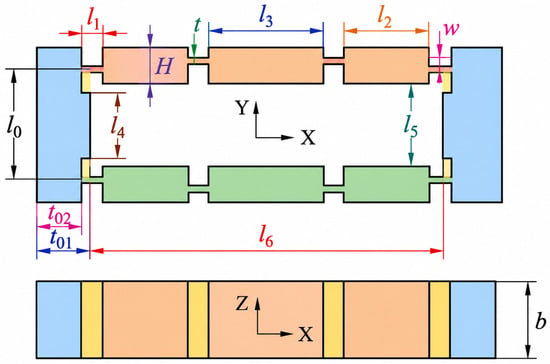
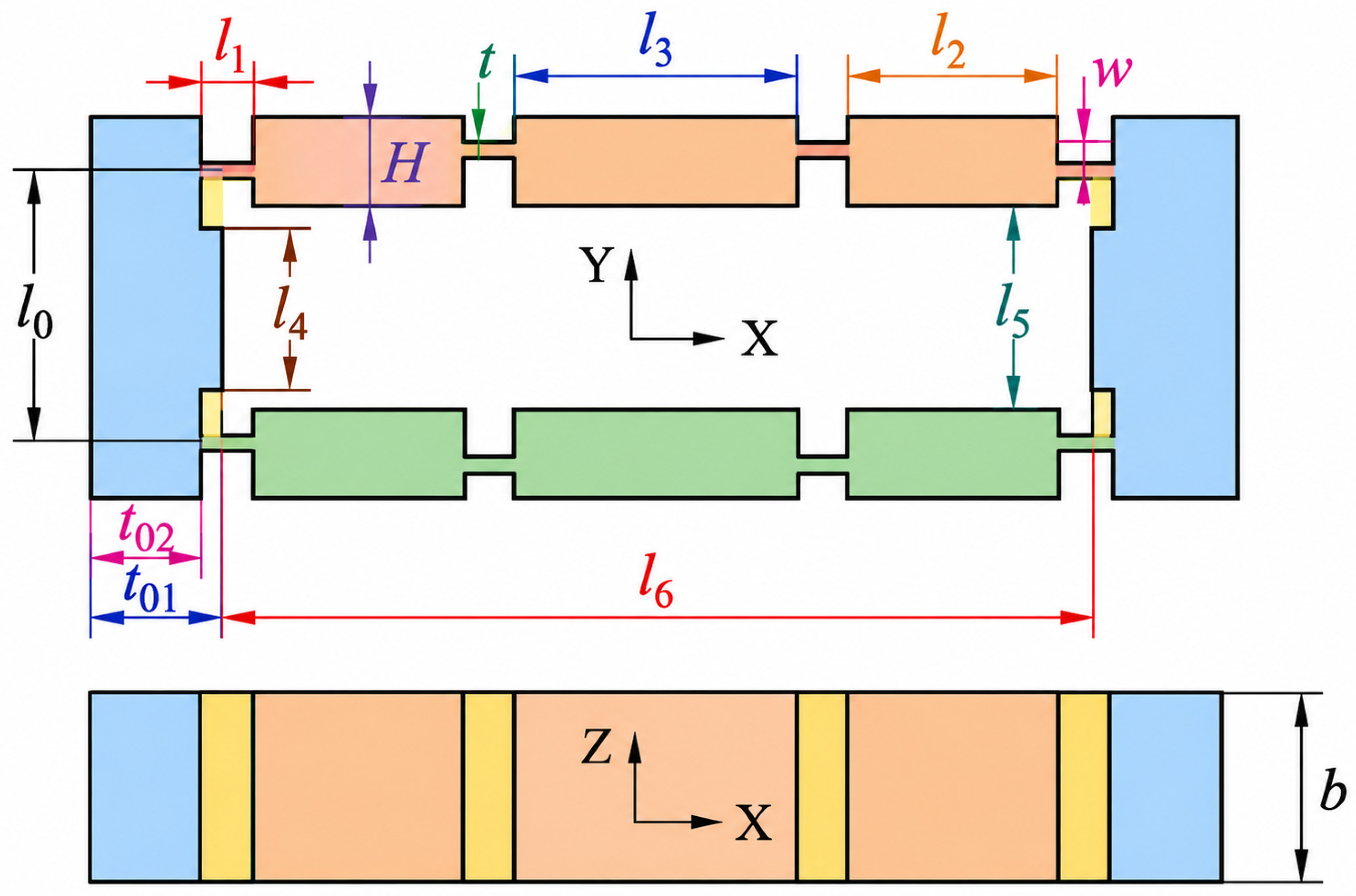
The bridge-type compliant mechanism investigated in this study consists of flexure hinges and connecting beams arranged in a symmetric bridge configuration. The mechanism geometry is defined by nine design parameters, namely input beam length (l0), flexure hinge length (l1), connecting beam length (l2), output beam length (l3), bridge spacing (w), hinge thickness (t), beam height (H), mechanism width (b), and input beam thickness (t0). These geometric variables control the mechanism’s stiffness, movement amplification, stress distribution, and dynamic response.
Figure 1 shows the geometry and design parameters used in this study. The mechanism turns a small actuator movement into a larger output movement by flexing its hinges and connecting beams. Bridge spacing (w) and hinge thickness (t) strongly affect how the mechanism deforms and amplifies movement. Connecting beam length (l2) and the hinge length (l1) affect flexibility and, in turn, the amplification ratio. The other geometric details affect stiffness, strength, and weight.
Figure 1.
Bridge-type compliant mechanism, as shown in the schematic [6].
This study uses an analytical model based on Euler–Bernoulli beam theory and Castigliano’s second theorem, two standard tools for analyzing compliant mechanisms [5,6]. These methods link geometry, material choices, and structural response. Young’s modulus (E) and density (ρ) represent material effects, allowing comparisons across different engineering materials. With this approach, we calculated six performance measures: amplification ratio (AR), input stiffness (Kin), output stiffness (Kout), maximum stress (σmax), natural frequency (f1), and structural mass. These measures describe the mechanism’s static, dynamic, and structural performance and form the basis for building the dataset and running parameter studies.
3. Dataset Generation and Statistical Analysis
We studied how geometry and material choices influence the performance of bridge-type compliant mechanisms by building a large dataset with a physics-based model (see Section 2). We created the dataset by systematically varying geometric dimensions and material properties across practical engineering ranges reported in the literature for compliant amplification mechanisms [6,7]. To cover the design space thoroughly and keep all designs feasible, we used Latin Hypercube Sampling (LHS).
The dataset contains nine geometric variables and two material properties: (E) and density (ρ). For each design, we calculated six key performance measures: amplification ratio (AR), input stiffness (Kin), output stiffness (Kout), maximum stress (σmax), natural frequency (f1), and structural mass. We filtered out unworkable designs by requiring positive stiffness and limiting the amplification ratio to a practical range.
Table 1 lists the geometric design variables and their ranges. These values include configurations for both low and high amplification, and all options remain manufacturable. The wide ranges allow for a variety of mechanism shapes with different structural and dynamic properties.
Table 1.
Design Variables and Their Ranges Used for Dataset Generation.
We generated and analyzed 10,000 valid design configurations. The resulting dataset provides a comprehensive representation of the feasible design space and enables systematic investigation of parameter–performance relationships.
Table 2 presents the descriptive statistics of the generated dataset. The amplification ratio varied from approximately 4 to 40.45, indicating substantial diversity in displacement amplification performance. Similarly, stiffness, stress, frequency, and mass responses varied widely.
Table 2.
Summary Statistics of Generated Performance Responses.
This range shows the dataset includes many types of structural behavior, making it a solid foundation for studying how geometry and materials affect bridge-type compliant mechanisms.
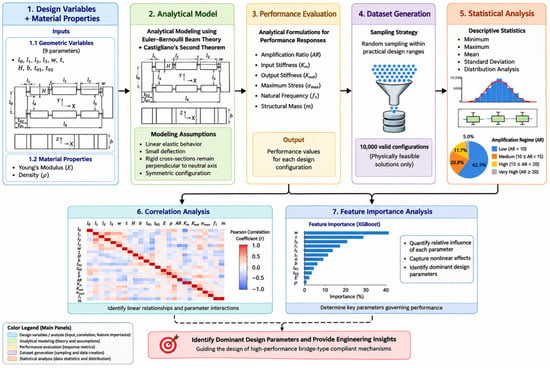
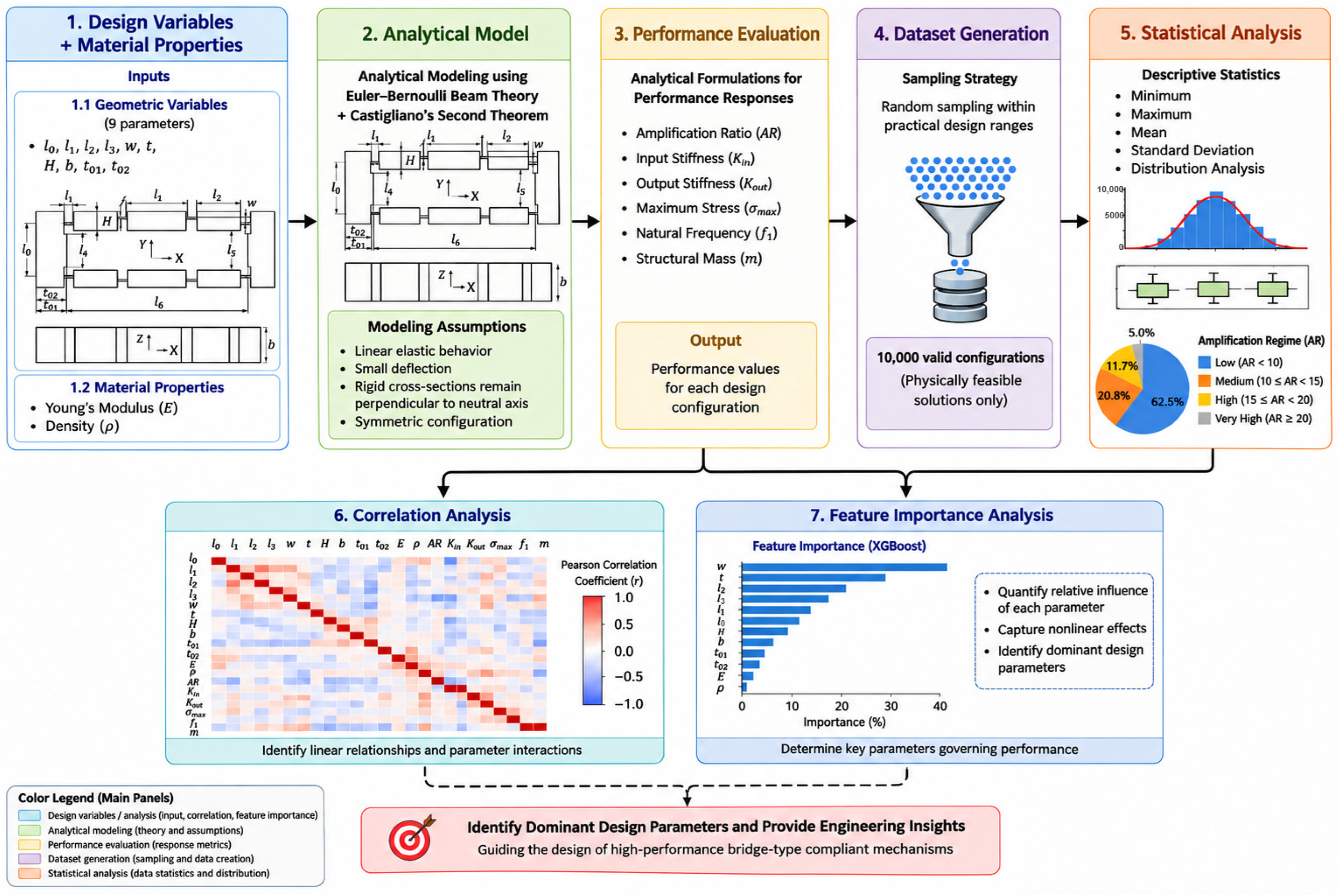
Figure 2 shows the main steps we used. First, we ran the analytical model with different geometric sizes and material choices, using Euler–Bernoulli beam theory and Castigliano’s second theorem. We recorded the performance results in a structured dataset for later analysis. Next, we used statistics and correlation analysis to identify which design choices most affect performance.
Figure 2.
Workflow of Dataset Generation and Statistical Analysis.
4. Correlation Analysis of Design Variables and Performance Characteristics
Knowing how design choices affect performance is key to designing effective bridge-type compliant mechanisms. We used correlation analysis to measure how strongly geometric and material variables relate to performance. This helped us see how different parameters interact and which ones matter most to the mechanism’s performance.
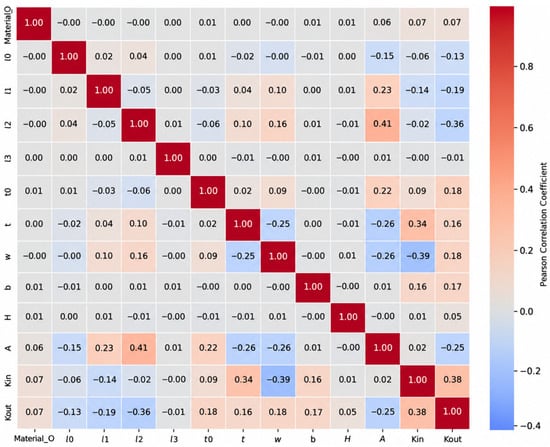
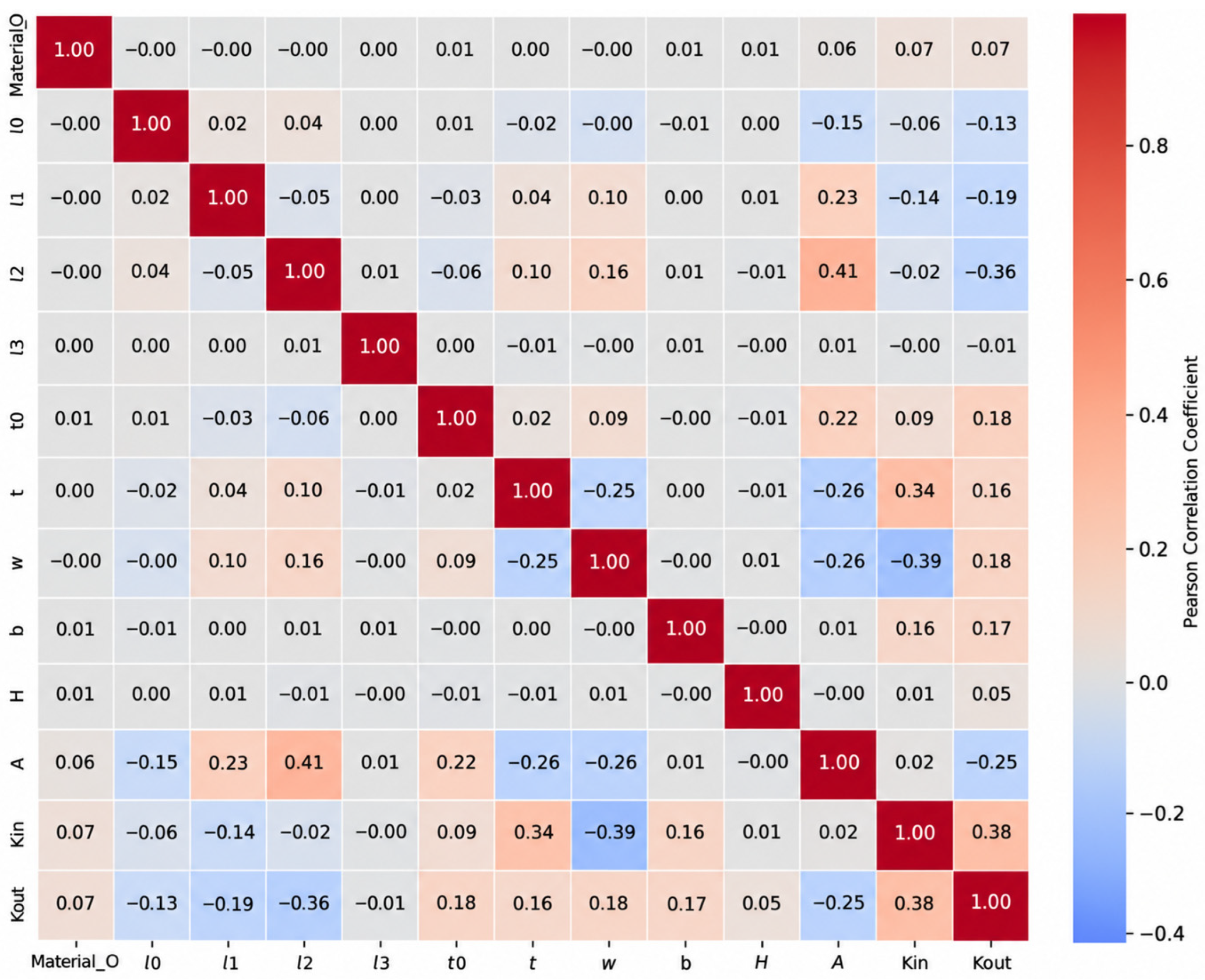
We measured Pearson correlation coefficients between all input and output variables. A positive value means that increasing a design variable increases the performance outcome, while a negative value means the opposite. We used a heatmap to make the correlations easier to interpret.
Figure 3 shows the correlation matrix from our data. Some key trends stand out. Bridge spacing (w) has a strong negative correlation with amplification ratio (AR), so a larger spacing generally lowers amplification. On the other hand, connecting beam length (l2) is positively correlated with amplification ratio, meaning longer beams tend to increase amplification by allowing more flexibility.
Figure 3.
Correlation Matrix of Geometric and Material Parameters with Performance Responses.
Flexure hinge thickness (t) strongly affects both input and output stiffness; thicker hinges make the mechanism stiffer. Thicker hinges also reduce amplification, creating a trade-off between stiffness and amplification. Young’s modulus (E) mainly affects stiffness and natural frequency, while density (ρ) mostly influences structural mass and dynamic behavior.
Table 3 lists the key links between design choices and performance found in our correlation analysis. Geometry mainly controls amplification, while material properties most strongly affect stiffness, mass, and dynamics.
Table 3.
Dominant Correlations Between Design Variables and Performance Responses.
Bridge spacing, hinge thickness, and connecting beam length are especially important to consider when designing these mechanisms. As expected from compliant mechanism theory, more flexibility increases amplification but reduces stiffness and load capacity.
The analysis also points out key engineering trade-offs. Designs with higher amplification often have less stiffness because they are more flexible. Thicker hinges make the mechanism stiffer but lower its amplification. Lightweight materials can improve dynamic response but may make the structure less robust. Designers need to weigh all these factors.
Geometry has the biggest influence on amplification, while material properties mainly affect stiffness, mass, and dynamic behavior.
In summary, the correlation study explains how design variables relate to performance and sets the stage for the next analysis in the following section.
5. Feature Importance Analysis
Correlation analysis shows how design variables and performance are linked, but it does not tell us how much each parameter matters. To identify which geometric and material factors most affect bridge-type compliant mechanisms, we used feature importance analysis. We chose an Extreme Gradient Boosting (XGBoost) regression model [12] because it can handle complex relationships and give clear rankings for each variable.
We focused the feature importance analysis on predicting amplification ratio, one of the main performance measures for these mechanisms. The resulting scores show how much each design choice contributes to predicting amplification.
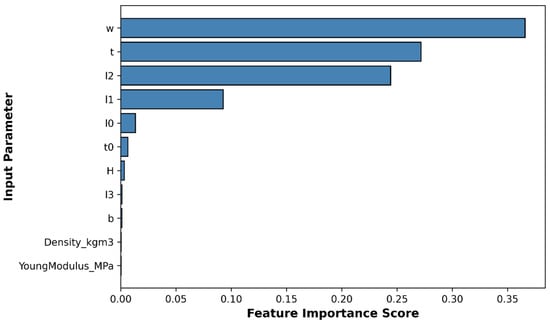
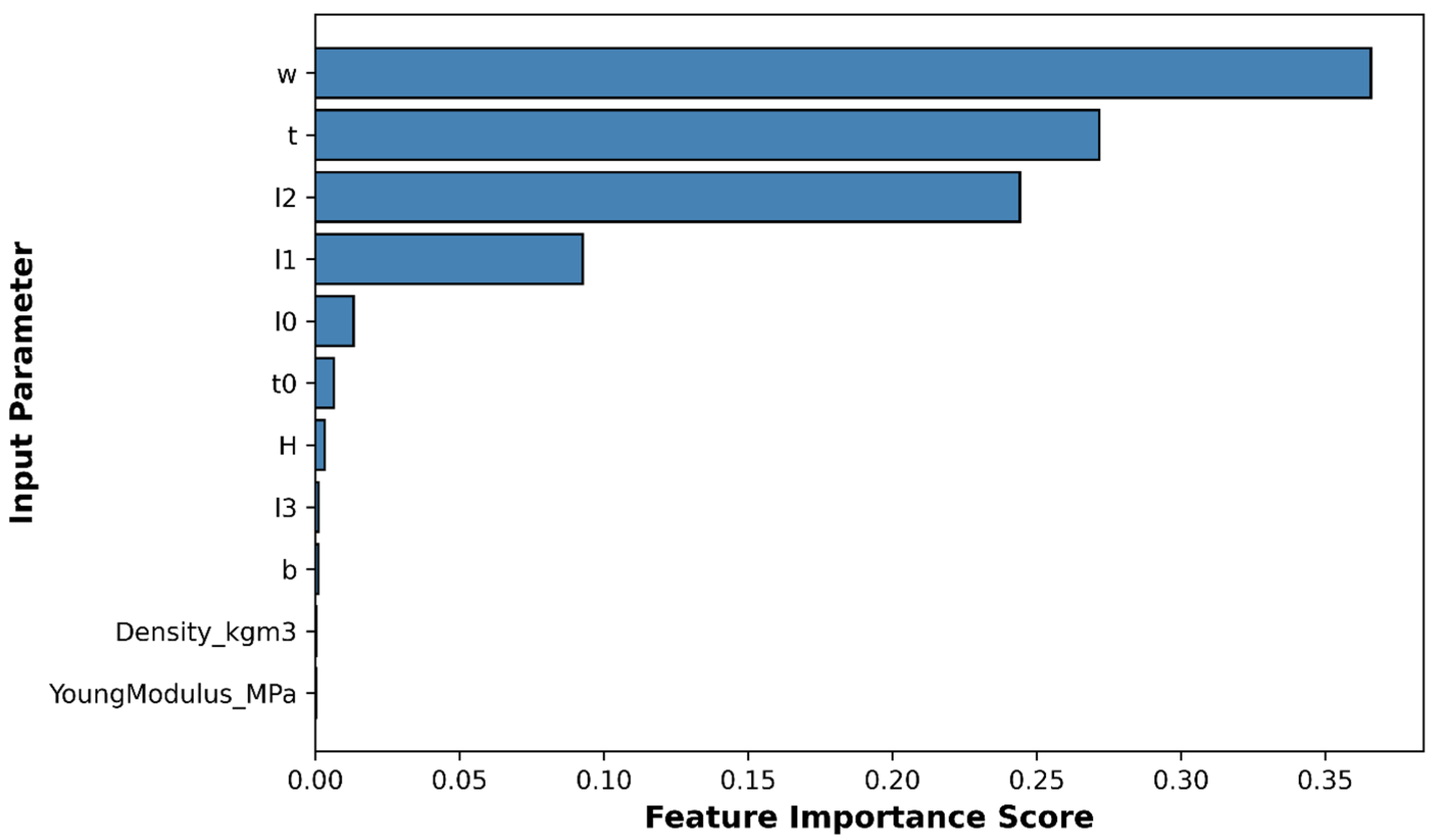
Figure 4 shows the importance ranking from the XGBoost model. The results highlight bridge spacing (w), flexure hinge thickness (t), connecting beam length (l2), and hinge length (l1) as the top factors affecting amplification.
Figure 4.
Feature Importance Ranking of Geometric and Material Parameters for Amplification Ratio Prediction.
Bridge spacing has the biggest effect on amplification. This is because it directly changes how the mechanism bends and transfers force.
Hinge thickness (t) is the second most important factor. Changing hinge thickness affects the mechanism’s flexibility or stiffness, which changes the amplification. Connecting beam length (l2) also matters a lot because it controls how much the mechanism can bend. Hinge length (l1) also demonstrates a noticeable influence, although its effect is less pronounced than that of bridge spacing and hinge thickness.
Table 4 lists how important each design factor is. The four most important geometric factors account for about 95.6% of the total, showing that geometry matters far more than material for amplification. Young’s modulus and density matter much less for amplification in this design space.
Table 4.
Relative Importance and Influence of Design Parameters on the Amplification Ratio.
The feature importance results [12] match what we found in the correlation analysis in Section 4. Both methods highlight bridge spacing, hinge thickness, connecting beam length, and hinge length as the main design variables for amplification. This agreement supports the reliability and practical value of these findings.
For practical design, it makes sense to focus first on bridge spacing and hinge thickness, then on connecting beam length and hinge length. Prioritizing these variables can boost amplification and keep the design process simpler. Furthermore, the identified parameter hierarchy provides valuable guidance for future machine-learning-assisted design and optimization of compliant mechanisms.
6. Engineering Design Recommendations
The earlier statistical, correlation, and feature importance analyses help explain how bridge-type compliant mechanisms work. They clearly show that geometric factors have a much bigger effect on amplification than material properties. In particular, bridge spacing (w), flexure hinge thickness (t), connecting beam length (l2), and hinge length (l1) were identified as the dominant design variables governing mechanism behavior.
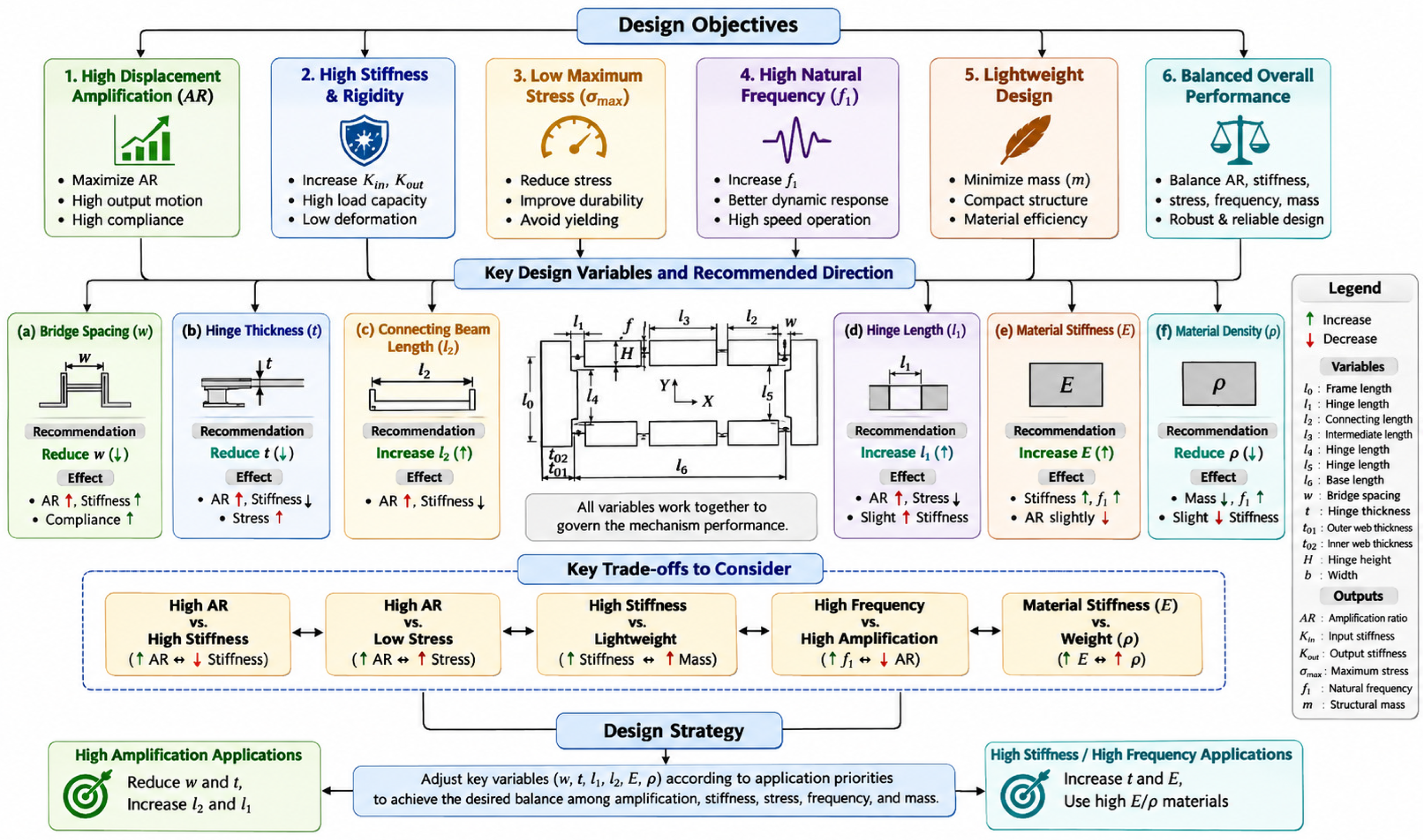
The findings indicate that displacement amplification can be significantly improved by reducing bridge spacing and hinge thickness while increasing the connecting beam length. However, excessive reduction in hinge thickness may increase stress concentrations and reduce structural robustness. Therefore, achieving a balanced design requires simultaneous consideration of amplification capability, stiffness characteristics, stress limitations, dynamic response, and structural mass.
Table 5 provides practical engineering recommendations for achieving specific performance objectives in bridge-type compliant mechanisms. The results indicate that geometry should be the primary focus during the conceptual design stage because geometric parameters dominate amplification behavior. Use material selection to fine-tune stiffness, dynamic response, and mass characteristics to meet application requirements.
Table 5.
Engineering Design Guidelines for Achieving Target Performance Objectives in Bridge-Type Compliant Mechanisms.
Among all investigated variables, bridge spacing and hinge thickness provide the highest design leverage and should therefore be prioritized during early-stage design exploration.
Figure 5 summarizes the recommended design strategy based on this study’s findings. For applications requiring high displacement amplification, designers should prioritize reducing bridge spacing and hinge thickness while increasing connecting beam length.
Figure 5.
Design Strategy Framework for Bridge-Type Compliant Mechanisms.
Conversely, applications requiring higher stiffness and structural rigidity should use thicker hinges and materials with a higher Young’s modulus. Lightweight precision systems can benefit from low-density materials, whereas high-speed positioning systems require materials with a high stiffness-to-density ratio to maximize natural frequency.
The design guidelines presented can help engineers quickly identify suitable configurations without extensive trial and error. These recommendations also provide a useful foundation for future machine-learning-assisted design, digital twin development, and intelligent optimization of compliant mechanisms for precision engineering applications.
7. Conclusions
This study presented a comprehensive investigation of how geometric and material parameters affect the multi-performance characteristics of bridge-type compliant mechanisms. We generated a large-scale, physics-based dataset of 10,000 valid design configurations using analytical formulations derived from Euler–Bernoulli beam theory and Castigliano’s second theorem. We then used the dataset to evaluate six key performance characteristics: amplification ratio, input stiffness, output stiffness, maximum stress, natural frequency, and structural mass.
Statistical analysis showed that our dataset covered a wide range of designs and captured large performance differences. Correlation analysis found clear links between design variables and mechanism behavior. Bridge spacing and hinge thickness both reduce displacement amplification, while longer connecting beams increase amplification. Material properties have less effect on amplification but matter more for stiffness, dynamic response, and mass.
Feature importance analysis confirmed that bridge spacing, hinge thickness, connecting beam length, and hinge length are the main factors for amplification. Together, these geometric variables explain most amplification behavior, showing that geometry matters more than materials. Because the correlation and feature-importance results agree, the findings are reliable and physically meaningful.
Based on these analyses, we recommend focusing on geometry to get high amplification, better stiffness, lighter weight, and improved dynamics. Geometry should be the main focus early in design, while material choice can help adjust stiffness, frequency, and mass as needed for the application.
Overall, this study helps explain how different design choices affect performance. It provides a solid starting point for designing bridge-type compliant mechanisms for precision positioning, actuators, micro-manipulation, and modern manufacturing.
This approach could also be used for other compliant mechanisms and combined with data-driven optimization or digital engineering tools for future precision engineering projects.
8. Future Scope
While this study explains how geometry and material choices affect bridge-type compliant mechanisms, there is still room for more research. First, finite element analysis (FEA) could validate the analytical results and reveal detailed stress patterns that simple models might miss. Second, lab testing of selected designs would help confirm the findings and address real-world manufacturing issues, as seen in recent experiments on double-bridge compliant systems [14].
Future work could use surrogate models and data-driven methods to build fast prediction tools for estimating multiple performance measures from design parameters [11]. The dataset from this study can be used to build surrogate models, optimize designs, and make the design process easier to understand and more efficient. The generated dataset can serve as a valuable foundation for surrogate modeling, design optimization, and explainable artificial intelligence applications in compliant mechanism design. Future investigations should also include prototype fabrication and experimental characterization to validate the analytical and data-driven findings under practical operating conditions.
Finally, the methodology can be extended to other classes of compliant mechanisms, including bridge-type displacement amplifiers with modified topologies, XY precision positioning stages, compliant grippers, and multi-degree-of-freedom compliant systems. Such developments could support the emergence of digital twins, smart manufacturing platforms, and Industry 4.0-enabled design environments for next-generation precision engineering applications [13]. In addition, multi-objective and topology-optimization approaches can simultaneously maximize the amplification ratio, minimize stress and structural mass, and maximize natural frequency [15].
Author Contributions
Conceptualization, V.K., P.D. and S.D.; methodology, V.K., P.D. and S.D.; software, V.K.; validation, V.K., P.D. and S.D.; formal analysis, V.K.; investigation, V.K.; resources, P.D. and S.D.; data curation, V.K.; writing—original draft preparation, V.K.; writing—review and editing, P.D. and S.D.; visualization, V.K.; supervision, P.D. and S.D.; project administration, P.D.; funding acquisition, not applicable. All authors have read and agreed to the published version of the manuscript.
Funding
This research received no external funding.
Institutional Review Board Statement
Not applicable.
Informed Consent Statement
Not applicable.
Data Availability Statement
The original contributions presented in this study are included in the article. Further inquiries can be directed to the corresponding author.
Acknowledgments
During the preparation of this manuscript, the authors used ChatGPT (GPT-6, OpenAI) to assist with preparing and refining schematic figures. The authors have reviewed and edited the AI-generated outputs and take full responsibility for the content of this publication.
Conflicts of Interest
The authors declare no conflicts of interest.
Abbreviations
The following abbreviations are used in this manuscript:
| AR | Amplification Ratio |
| BCM | Bridge-Type Compliant Mechanism |
| CM | Compliant Mechanism |
| E | Young’s Modulus |
| FEA | Finite Element Analysis |
| f1 | First Natural Frequency |
| H | Beam Height |
| Kin | Input Stiffness |
| Kout | Output Stiffness |
| LHS | Latin Hypercube Sampling |
| MEMS | Micro-Electro-Mechanical Systems |
| MPa | Mega Pascal |
| PIML | Physics-Informed Machine Learning |
| ρ | Density |
| σmax | Maximum Stress |
| t | Flexure Hinge Thickness |
| w | Bridge Spacing |
| XGBoost | Extreme Gradient Boosting |
| l0 | Input Beam Length |
| l1 | Flexure Hinge Length |
| l2 | Connecting Beam Length |
| l3 | Output Beam Length |
| t0 | Input Beam Thickness |
| b | Mechanism Width |
References
- Chau, N.L.; Tran, N.T.; Dao, T.P. Design optimization for a compliant mechanism based on computational intelligence method. Neural Comput. Appl. 2021, 33, 9565–9587. [Google Scholar] [CrossRef] [Scilit]
- Wang, J.; Jing, Z.; Xie, Z.; Ning, Z.; Qi, B. Analysis and Optimization of Dynamic and Static Characteristics of the Compliant-Amplifying Mechanisms. Micromachines 2023, 14, 1502. [Google Scholar] [CrossRef] [Scilit] [PubMed]
- Dao, T.P.; Nguyen, T.T.; Dang, X.P. Topology-shape-size optimization design synthesis of compliant grippers for robotic applications: A review. Robot. Comput.-Integr. Manuf. 2025, 92, 103106. [Google Scholar] [CrossRef] [Scilit]
- Muthalif, A.G.A.; Farhan, M.; Bahadur, I. Design strategies and innovations in compliant mechanism-based energy harvesting: A comprehensive review. Results Eng. 2026, 29, 108607. [Google Scholar] [CrossRef] [Scilit]
- Kolate, V.D.; Darade, P.D.; Deshmukh, H.; Patil, S.R. Emerging technologies in displacement amplification of lever and bridge-type compliant mechanism: A review article. J. Phys. Conf. Ser. 2023, 2601, 012021. [Google Scholar] [CrossRef] [Scilit]
- Zhang, Q.; Zhao, J.; Peng, Y.; Pu, H.; Yang, Y. A novel amplification ratio model of a decoupled XY precision positioning stage combined with elastic beam theory and Castigliano’s second theorem considering the exact loading force. Mech. Syst. Signal Process. 2020, 136, 106473. [Google Scholar] [CrossRef] [Scilit]
- Samadikhoshkho, Z.; Saive, E.; Lipsett, M.G. A review of compliant mechanisms for contact robotics applications. Robot. Auton. Syst. 2025, 186, 104902. [Google Scholar] [CrossRef] [Scilit]
- Piccialli, F.; Giampaolo, F.; Camacho, D.; Mei, G. Guest Editorial: Scientific and Physics-Informed Machine Learning for Industrial Applications. IEEE Trans. Ind. Inform. 2023, 19, 2161–2164. [Google Scholar] [CrossRef] [Scilit]
- Zhang, J.; Lei, X.; Chan, P.-W.; Dong, Y. Integrating physics-informed machine learning with resonance effect for structural dynamic performance modeling. J. Build. Eng. 2024, 84, 108627, Correction in J. Build. Eng. 2024, 92, 109703. https://doi.org/10.1016/j.jobe.2024.109703. [Google Scholar] [CrossRef] [Scilit]
- Michaloglou, A.; Papadimitriou, I.; Gialampoukidis, I.; Vrochidis, S.; Kompatsiaris, I. Physics-informed neural networks in materials modeling and design: A review. Arch. Comput. Methods Eng. 2025, 32, 5223–5260. [Google Scholar] [CrossRef] [Scilit]
- Kolate, V.D.; Darade, P.D.; Deshmukh, S.P. Physics-guided digital-twin-ready surrogate framework for predictive design of double-bridge compliant mechanisms in advanced manufacturing systems. Front. Mech. Eng. 2026, 12, 1888696. [Google Scholar] [CrossRef] [Scilit]
- Kolate, V.D.; Chaudhary, M.K.; Mane, S.; Devadhe, M. Digital twin–enabled model predictive control in additive manufacturing: Critical review, research challenges, and future directions. Mater. Manuf. Process. 2026, 41, 1–17. [Google Scholar] [CrossRef] [Scilit]
- Chen, T.; Guestrin, C. XGBoost: A scalable tree boosting system. In Proceedings of the 22nd ACM SIGKDD International Conference on Knowledge Discovery and Data Mining (KDD), San Francisco, CA, USA, 13–17 August 2016; pp. 785–794. [Google Scholar]
- Kolate, V.D.; Darade, P.D.; Deshmukh, S.P. Experimental Validation and Measurement Characterization of a Double-Bridge Compliant XY Precision Positioning Stage with Low Cross-Axis Coupling. Results Eng. 2026, 32, 111987. [Google Scholar] [CrossRef] [Scilit]
- Kolate, V.D.; Darade, P.D.; Yadao, A.; Chaudhary, M.K. Topology optimization of compliant mechanisms for micro/nano manufacturing: From theoretical foundations to emerging research frontiers. Micro Nano Manuf. 2026, 2, 18. [Google Scholar] [CrossRef] [Scilit]

Disclaimer/Publisher’s Note: The statements, opinions and data contained in all publications are solely those of the individual author(s) and contributor(s) and not of MDPI and/or the editor(s). MDPI and/or the editor(s) disclaim responsibility for any injury to people or property resulting from any ideas, methods, instructions or products referred to in the content. |
© 2026 by the authors. Licensee MDPI, Basel, Switzerland. This article is an open access article distributed under the terms and conditions of the Creative Commons Attribution (CC BY) license.