


Abstract
The escalating global adoption of electric vehicles (EVs) underscores pressing battery safety challenges, most notably thermal runaway in lithium-ion energy storage systems. Conventional fire safety mechanisms dependent on single-sensor detection thresholds frequently fail to provide timely intervention and suffer from elevated false-alarm rates. This paper develops an intelligent multi-sensor early fire detection framework based on an Artificial Neural Network (ANN). By fusing heterogeneous telemetry—comprising surface temperature, smoke density, and carbon monoxide (CO) concentration—the proposed architecture captures complex precursors to combustion. A feedforward backpropagation neural network is trained on synthetic datasets simulating realistic cell degradation and failure dynamics. The framework attains an overall validation accuracy of 99.5% with a mean squared error (MSE) of 1.16 × 10⁻⁶, successfully discriminating among fire, smoldering, and normal non-fire operating regimes. Evaluated across accuracy, precision, recall, and F1-score, the model demonstrates robust operational reliability, significantly mitigating false warnings and facilitating proactive thermal management for electric mobility.
1. Introduction
The global transition toward electrified automotive transportation represents a pivotal pillar in reducing greenhouse gas emissions and establishing sustainable energy infrastructure. Despite rapid technological maturation, the widespread commercial deployment of electric vehicles (EVs) is accompanied by critical operational safety concerns, particularly the fire hazards associated with high-energy lithium-ion battery (LIB) packs [1]. In lithium-ion cells, uncontrolled heat generation can trigger catastrophic thermal runaway (TR) under electrical fault conditions such as overcharging, external or internal short circuits, manufacturing flaws, or severe mechanical abuse [2]. These destructive exothermic chain reactions not only compromise structural vehicle integrity and cause extensive property loss but also pose severe risks to passenger safety. Empirical data collected by regional safety authorities highlight the escalating frequency of such hazards; for instance, records published by the Karnataka State Fire Department document 83 electric vehicle fire incidents between 2020 and 2024, with 65 cases directly traced to electrical system failures.
Existing fire safety mechanisms deployed in conventional battery enclosures rely predominantly on discrete, single-parameter detection devices, including localized bimetallic thermal switches or threshold-based optical smoke alarms [3]. Although structurally simple, single-sensor warning systems exhibit severe functional limitations: they cannot detect multi-dimensional chemical-thermal transitions, suffer from delayed trigger responses that occur only after visible flames or dense smoke emerge, and frequently generate false positives driven by ambient environmental fluctuations or transient driving loads [4]. Early-stage thermal runaway involves subtle concurrent emissions, including localized thermal gradients and volatile gaseous venting. Consequently, developing multi-sensor data fusion architectures powered by intelligent machine learning algorithms has emerged as an essential imperative for proactive early detection [5].
Synergistic integration of machine learning (ML) paradigms with Internet of Things (IoT) edge telemetry significantly elevates the predictive capability of modern battery safety systems compared to legacy alarm thresholds [1,6]. Heterogeneous sensor networks that combine optical particulate monitoring with gas analytics (e.g., carbon monoxide [CO], carbon dioxide [CO2], and hydrocarbon vapors) achieve superior discrimination between genuine ignition hazards and benign environmental disturbances [5,7]. Concurrently, cost-effective vision processors, deep learning object-detection frameworks (such as YOLO), and distributed wireless sensor networks (WSNs) have proven effective across aerospace and industrial monitoring installations [3,6,8]. In battery energy storage environments, artificial neural network (ANN) models adaptively learn complex, non-linear sensor correlations, facilitating rapid multi-tier risk classification without necessitating burdensome on-board memory storage for raw sensor histories [1,9].
To overcome the latency and vulnerability of conventional threshold alarms, this investigation proposes an intelligent, ANN-based early fire detection framework for electric vehicles. The methodology synthesizes real-time telemetry from temperature, smoke, and CO sensors to classify pack status into three operational states: Fire, Smoldering, and No Fire. The primary contributions of this work include:
- Formulation of an integrated multi-sensor telemetry and data fusion pipeline specifically engineered for lithium-ion battery fire risk assessment.
- Implementation and optimization of a feedforward backpropagation neural network architecture capable of high classification accuracy and minimal false-alarm susceptibility.
- Rigorous model validation across precision, recall, and F1-score benchmarks under both balanced and imbalanced class distributions, corroborated against existing fire detection methodologies.
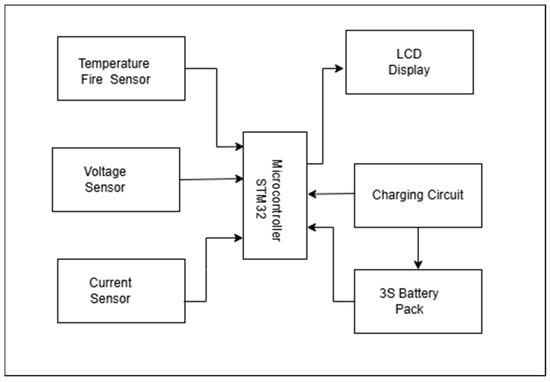
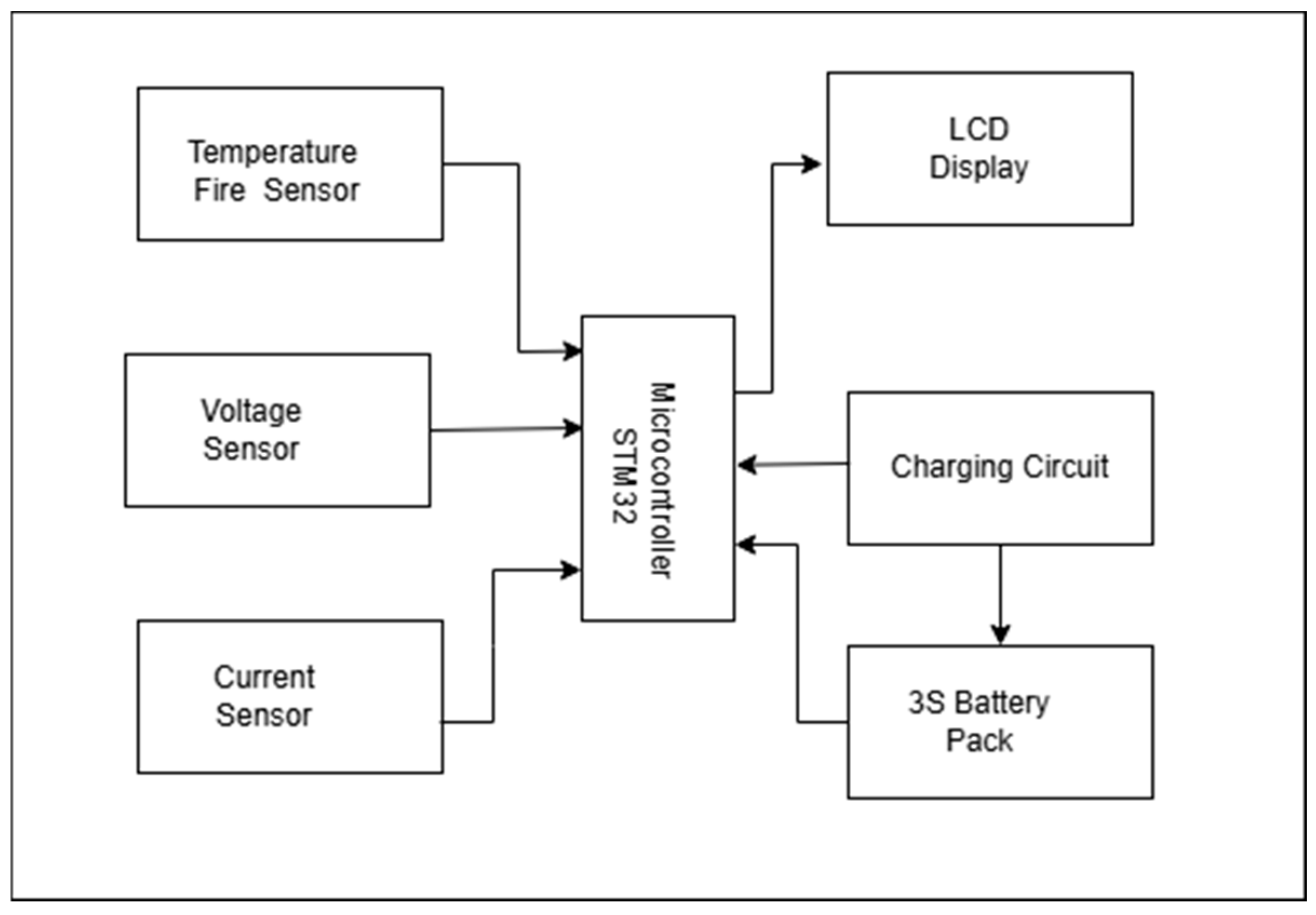
As illustrated in Figure 1, the monitoring architecture deploys specialized sensor arrays strategically within the pack casing. Transducers track temperature elevation, particulate optical extinction, and off-gas concentration, transmitting real-time readings to an edge-processing microcontroller. In turn, this module interfaces directly with the Battery Management System (BMS) and Battery Thermal Management System (BTMS) (Figure 2). This direct integration ensures that upon the earliest detection of abnormal thermal precursors, automated safety routines—such as coolant pump actuation, high-voltage contactor disengagement, and localized fire extinguisher release—can be triggered prior to full thermal runaway.
Figure 1.
Architectural schematic of the multi-sensor fire detection system.
Figure 2.
Block diagram of the integrated Thermal Management Unit and BMS safety interface.
2. Literature Review
Recent advancements in computational intelligence have positioned machine learning as a cornerstone for battery state estimation and safety monitoring [2,10]. In aerospace fire prevention, ANN classifiers trained on multi-sensor streams (heat, smoke, and CO) have achieved dramatic reductions in false-alarm triggers [6]. Similarly, vision-based YOLO algorithms facilitate real-time detection of flame and smoke in complex municipal environments [3]. In electric mobility applications, thermal runaway management demands high-accuracy predictive modeling capable of handling severe multi-physics non-linearities [7]. Investigations into fuzzy neural networks and multi-sensor fusion have confirmed that connectionist architectures can sustain prediction error rates below 5%, offering substantial response time advantages over static thermal thresholds [9,11]. Furthermore, distributed telemetry via wireless sensor networks and autonomous unmanned aerial vehicles (UAVs) confirms the operational viability of heterogeneous sensor coupling in challenging, high-noise environments [3,12].
2.1. Sensor Modalities in Fire Detection Systems
Early detection in enclosed vehicle compartments relies upon complementary physical and chemical sensing modalities:
Optical Smoke Detection: Scattering and obscuration sensors detect sub-micron aerosol particles (1–10 μm) produced during initial electrolyte venting and solid component pyrolysis. Optical video smoke detection provides spatial tracking via texture and motion analysis, but requires direct visual clearance and sufficient ambient illumination [3,5].
Thermal and Heat Detection: Thermal transducers are classified into static threshold sensors (actuating at predefined limits) and rate-of-rise (RoR) detectors that compute differential heating rates. Technologies range from low-cost thermocouples and bimetallic strips to infrared thermal camera arrays [4,7].
Optical Flame Sensors: Flame sensors measure radiation across ultraviolet (UV), visible, and infrared (IR) spectral bands. Dual-wavelength UV/IR cross-correlation effectively prevents false triggers caused by non-combustion illumination sources such as sunlight or vehicle headlamps [5].
Gas and Off-Gas Analyzers: Electrochemical, non-dispersive infrared (NDIR), and metal-oxide semiconductor (MOS) sensors quantify concentrations of vented off-gases (predominantly CO, CO2, H2, and volatile organic species). Because gas evolution initiates during internal cell venting prior to surface temperature escalation, off-gas analysis provides an early warning indicator [5,10].
2.2. Battery Thermal Dynamics and Early Warning Strategies
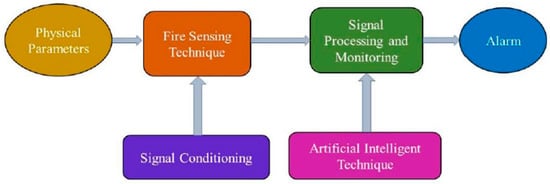
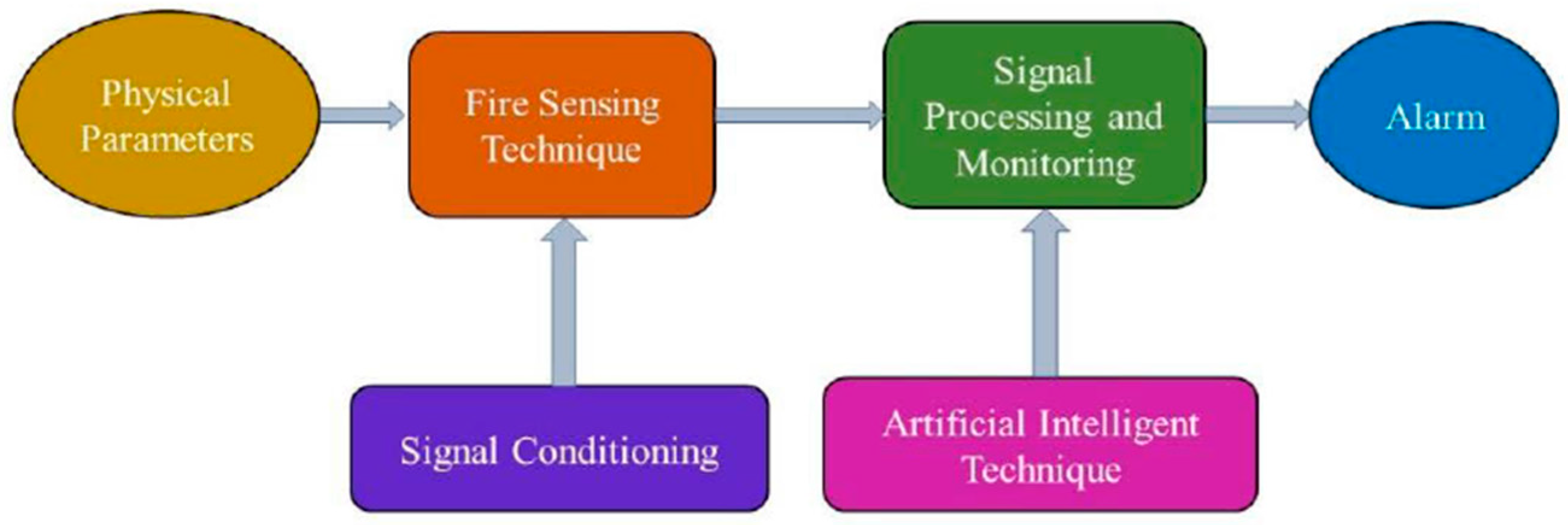
Figure 3 presents the operational methodology governing fire signal conditioning and state estimation in confined battery packs. Modern Battery Management Systems (BMSs) continuously evaluate state of charge (SOC), state of health (SOH), terminal voltage, and pack current [1,2]. Thermal runaway is governed by severe exothermic chain reactions: initial breakdown of the solid electrolyte interphase (SEI) passivating film begins at approximately 90–100 °C. As heat dissipation fails, exothermic anode-electrolyte decomposition accelerates, leading to separator melting near 140–143 °C. Above 150 °C, cathode oxygen release promotes intense electrolyte oxidation, culminating in violent combustion, heavy off-gas expulsion, and cell temperatures exceeding 700–800 °C [4,7]. Compliance with international standards, such as IEC 62133 [13], mandates rapid overpressure relief. Advanced multi-sensor coupled frameworks reported in the literature demonstrate detection accuracies reaching 98.24% with missed-alarm frequencies limited to 0.588% [10].
Figure 3.
Flowchart of the multi-stage fire sensing methodology and signal conditioning architecture.
3. Multi-Sensor ANN Methodology
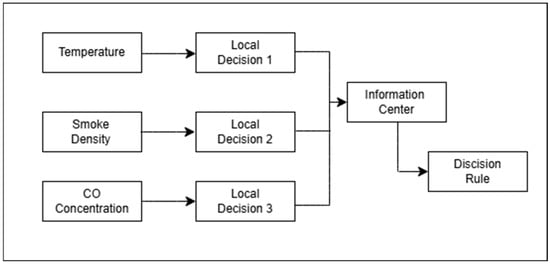
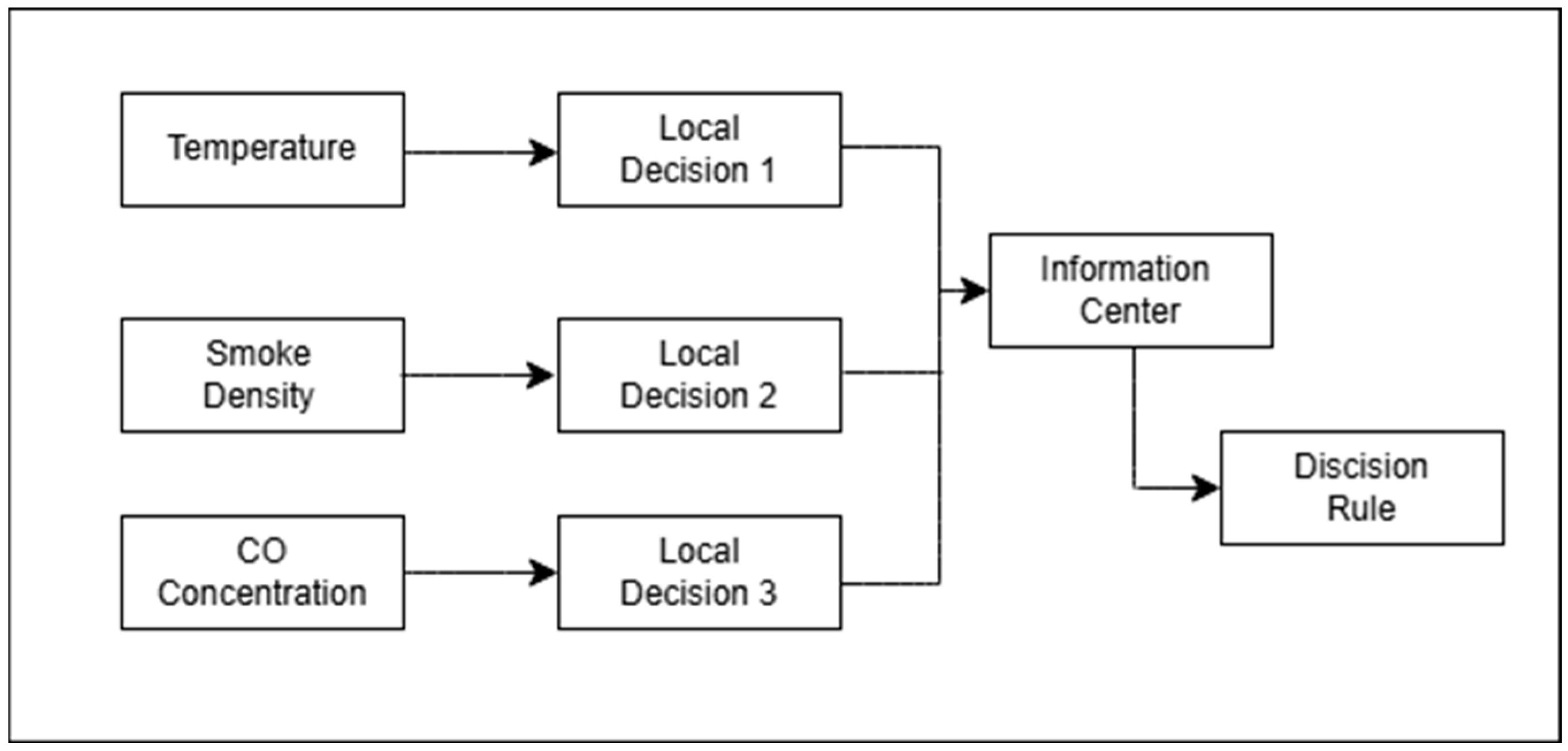
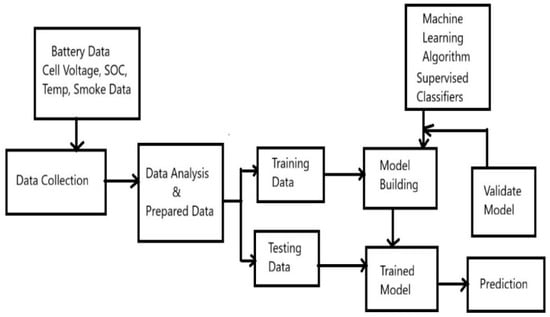
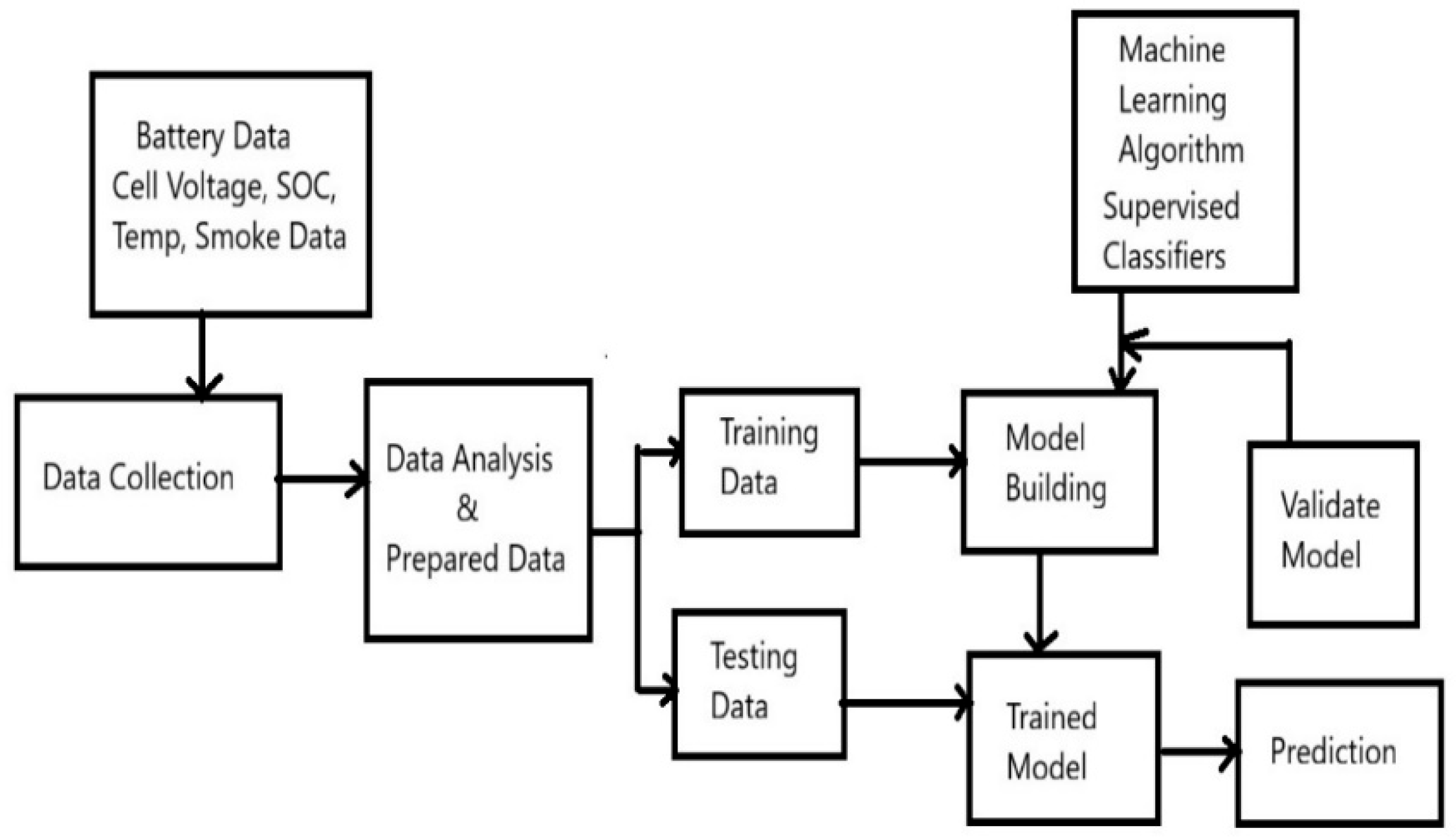
The developed methodology integrates multi-sensor telemetry with a multilayer artificial neural network engine designed to monitor pack conditions and provide rapid classification across three operational states: Fire, Smoldering, and No Fire. The end-to-end data processing workflow is depicted in Figure 4.
Figure 4.
Machine learning prediction pipeline for multi-sensor fire detection.
3.1. Battery Specifications and Synthetic Data Generation
Baseline electrical and mechanical pack specifications were extracted from a commercial light electric vehicle battery configuration, as presented in Table 1.
Table 1.
Evaluated electric vehicle lithium-ion battery pack specifications.
To establish the input space for ANN-based fire-risk classification, a synthetic multi-sensor dataset comprising sampled simulated observations was generated based on the battery operating and degradation conditions described in the literature [14]. The dataset represents three sensor inputs: cell surface temperature ((T_1)), smoke particulate density ((T_2)), and carbon monoxide concentration ((T_3)). The observations were distributed across three operational conditions such as No Fire, Smoldering, and Fire.
The simulated sensor ranges were selected to represent normal operating, early thermal-abnormality, and advanced fire-risk conditions. Temperature values ranged from approximately 25–120 °C, smoke density from clear ambient conditions to dense pre-fire smoke, and CO concentration from normal background levels to elevated off-gas conditions.
The complete set of simulated observations was used for model development and performance evaluation. Sampled representative observations are presented in Table 2 only to illustrate the relationship between the multi-sensor input variables and the corresponding target probability distributions. Therefore, Table 2 should not be interpreted as representing the complete ANN training and validation dataset.
Table 2.
Representative training and validation data samples for the multi-sensor neural network.
Because the dataset is simulation-based and relatively limited in size, the obtained performance should be interpreted as a preliminary proof-of-concept result. Further experimental validation using larger datasets obtained under different battery chemistries, state-of-charge conditions, charging/discharging rates, ambient temperatures, degradation levels, and thermal runaway scenarios is required to establish the generalization capability of the proposed ANN framework.
To establish robust network training across diverse failure stages, a synthetic multi-sensor dataset was constructed based on published experimental battery degradation trajectories [14]. Sensor telemetry was modeled across three specific physiological regimes:
- Temperature (T1): Nominal operating baseline spans 25 °C to 40 °C; thermal runaway onset encompasses 70 °C to 120 °C.
- Smoke Density (T2): Ambient clear state < 1.0 mg/m3; early smoldering particulate generation 1.0–3.0 mg/m3; dense pre-fire smoke 3.0–7.0 mg/m3.
- CO Concentration (T3): Normal background < 10 mg/m3; smoldering off-gas release 10–50 mg/m3; flaming combustion ≥ 50 mg/m3.
- Target State Probabilities: Standard operating zones correspond to No Fire (0.90–0.99), Smoldering (0.10–0.40), and Fire (0.50–0.90).
From a comprehensive 50-sample simulation repository, eight representative calibration vectors were extracted to demonstrate the multi-variable input space and expected target probabilities, as detailed in Table 2.
3.2. Artificial Neural Network Architecture
The detection classifier is engineered as a fully connected multilayer perceptron (MLP) trained via gradient-descent backpropagation, as depicted in Figure 5. The architectural layers comprise the following:
Figure 5.
Artificial neural network topology illustrating input, hidden, and output layers.
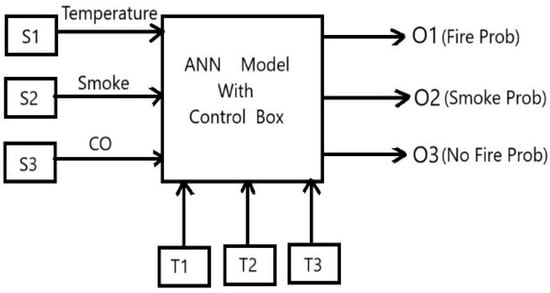
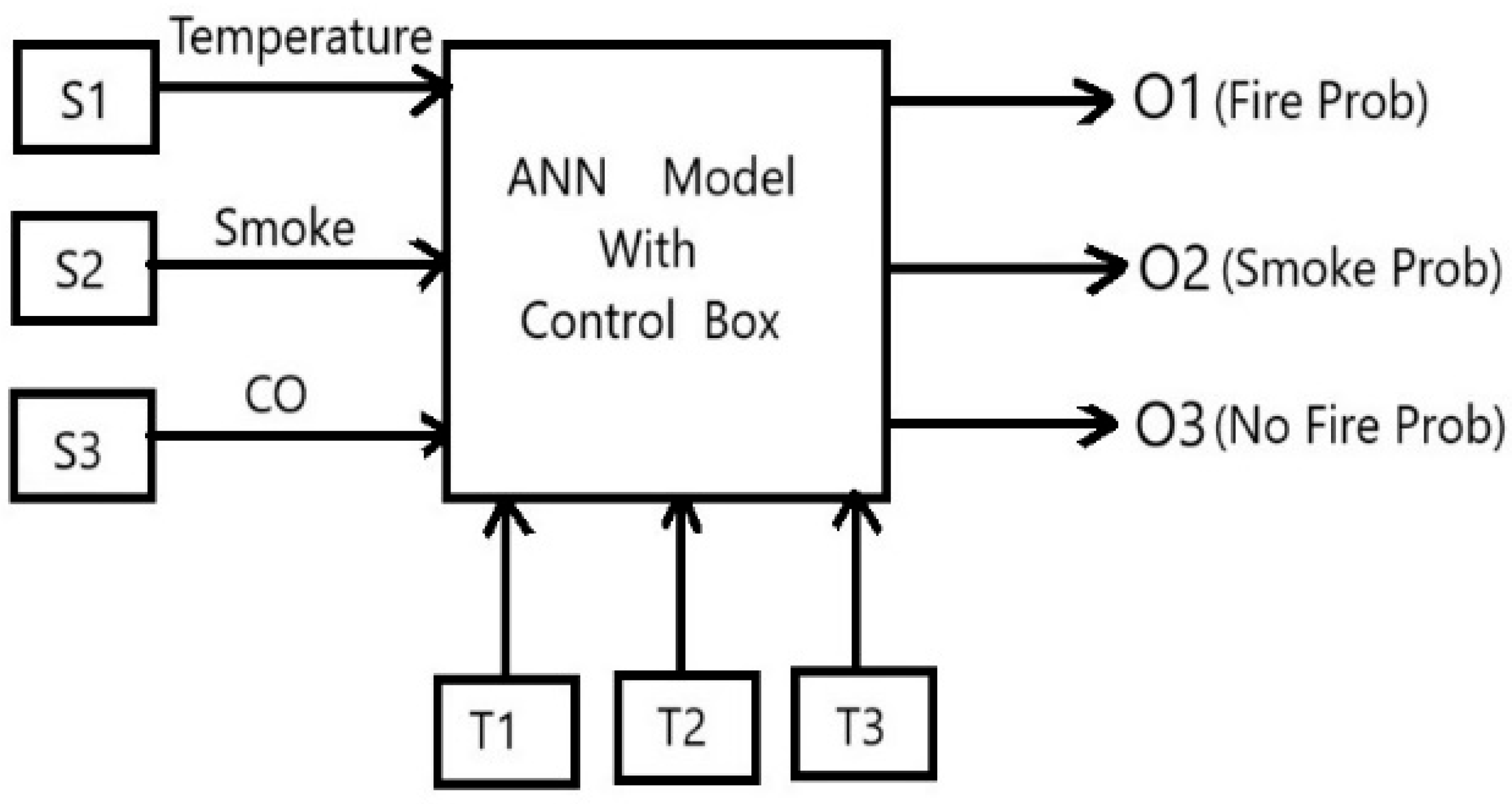
- Input Layer: Ingests the normalized three-dimensional telemetry vector x = [T1, T2, T3]T, where T1 represents cell surface temperature, T2 denotes smoke particulate density, and T3 indicates carbon monoxide gas concentration.
- Hidden Layer: Executes intermediate non-linear feature extraction. Neurons compute weighted sums of incoming inputs, augmented by bias terms, and apply continuous activation squashing.
- Output Layer: Yields the final multi-class probabilistic classification vector = [O1, O2, O3]T, where individual elements correspond to the respective likelihoods of Fire, Smoldering, and No Fire operational states.
4. Simulation Results and Discussion
4.1. Thermal Runaway Propagation Characteristics
Analyzing thermal runaway (TR) propagation dynamics and peak localized temperatures is paramount for optimizing sensor placement and enclosure design. Empirical literature evaluates localized heating profiles across battery geometries [15], revealing pronounced spatial thermal non-uniformity: the central 20 mm region of a failing cell exhibits temperatures 54–63 °C higher than peripheral sections. Spatial failure progression conforms to a characteristic temporal sequence: bottom—10 mm < center—20 mm < bottom—10 mm < bottom—end < vertical—20 mm. Total thermal runaway durations typically span between 1.58 and 4.75 min, emphasizing the narrow time envelope available for active mitigation. Ignition predominantly originates near the bottom cell face and propagates upward as a thermal shock front; concurrently, the central region develops an intense horizontal hotspot transmitting heat toward terminal poles, ultimately exceeding peak temperatures of 789 °C [15].
4.2. Training Convergence and Regression Analysis
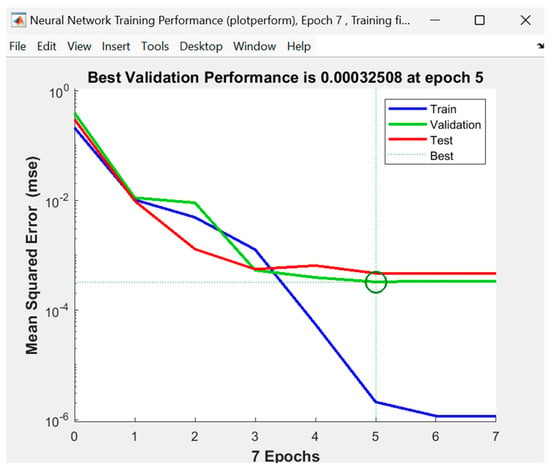
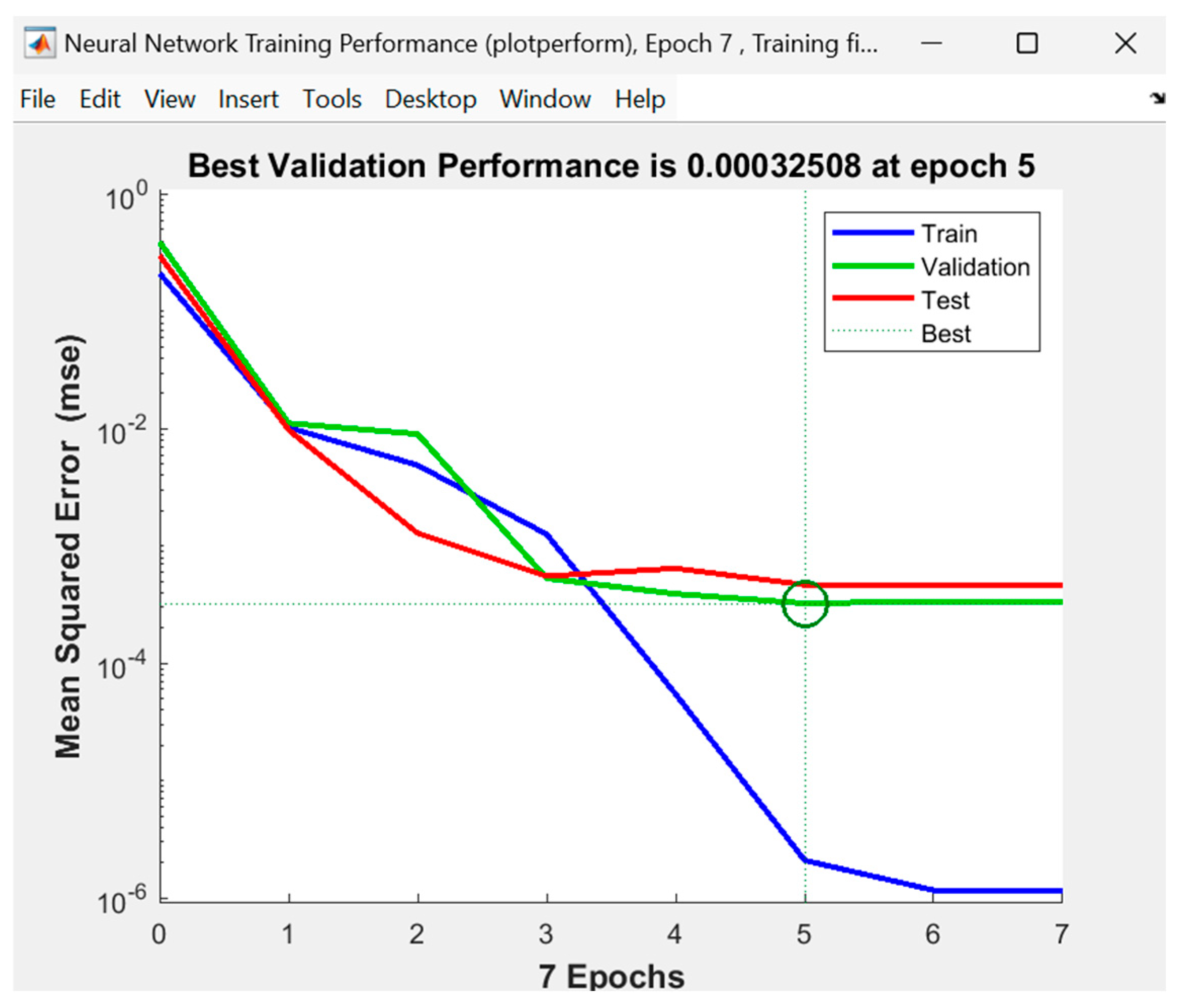
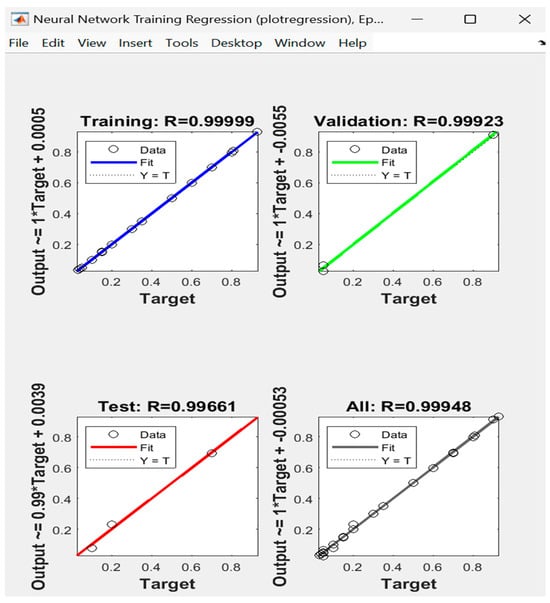
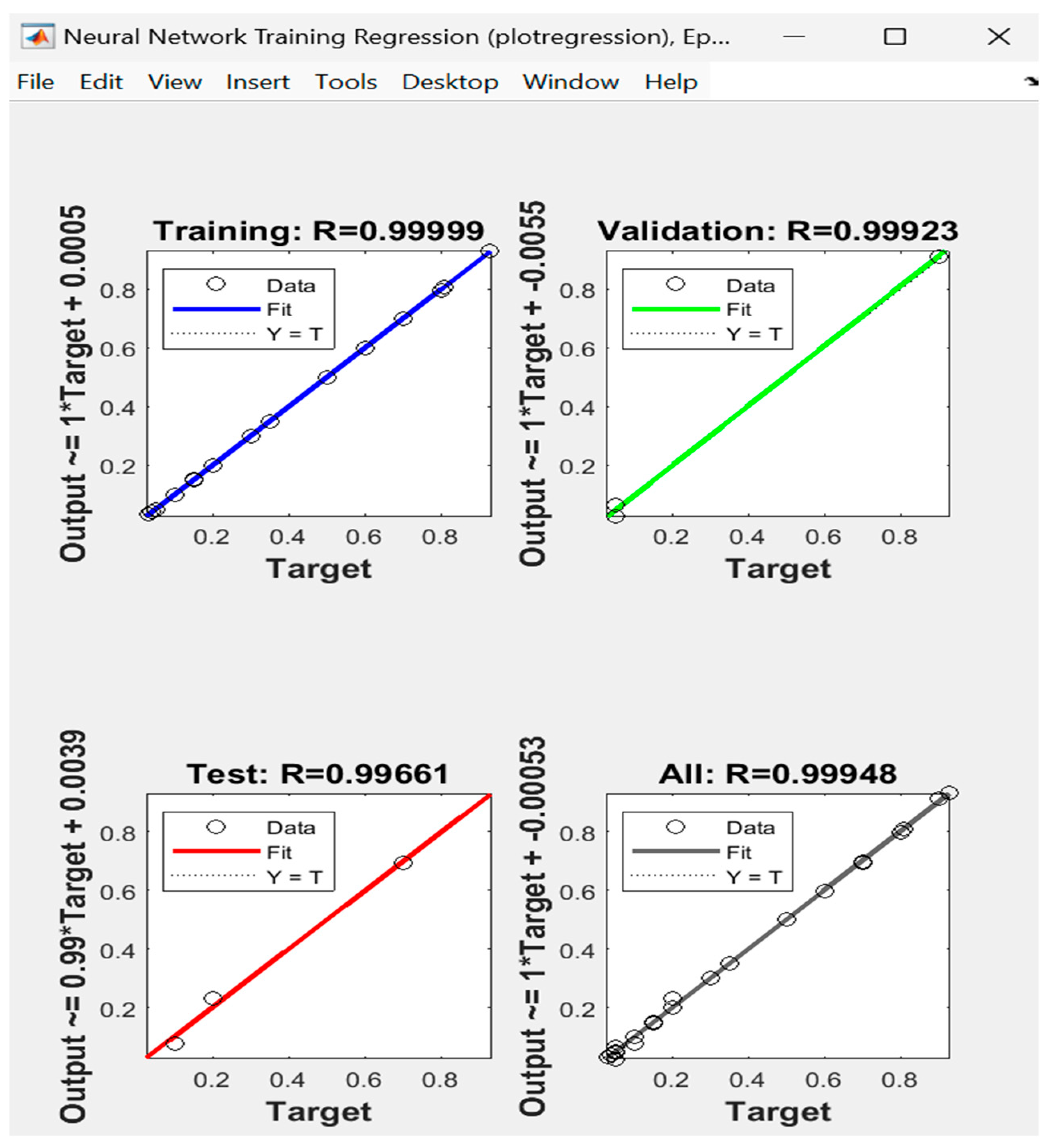
The proposed ANN framework was simulated and validated within the MATLAB/Simulink (R2026a) environment using the Levenberg–Marquardt backpropagation optimization algorithm. The model converged rapidly, reaching a minimum Mean Squared Error (MSE) of 1.16 × 10⁻⁶, reflecting exceptional numerical precision. Figure 6 displays the validation error curve across progressive training epochs. Linear regression analysis across training, validation, testing, and aggregate datasets is depicted in Figure 7, demonstrating near-ideal correlation (R ≈ 1.0) between model outputs and target classifications. Associated training indicators—including gradient magnitude, adaptive damping parameter (μ), and validation fail counts—confirm robust convergence stability without undesirable overfitting.
Figure 6.
Neural network validation performance trajectory demonstrating MSE convergence.
Figure 7.
Regression distributions across training, validation, testing, and combined data subsets.
4.3. Performance Evaluation and Comparative Outcomes
To address potential class imbalance common in real-world battery fault records, model performance was assessed both with and without the Synthetic Minority Over-sampling Technique (SMOTE), as summarized in Table 3.
Table 3.
Classification performance of the ANN framework with and without SMOTE data balancing.
The empirical outcomes in Table 3 indicate that incorporating SMOTE significantly enhances model sensitivity, raising recall from 49% to 95% and improving the composite F1-score from 49% to 68% while maintaining an overall classification accuracy of 99%. This enhancement is crucial for early battery fire prevention, where minimizing false negatives (missed alarms) is paramount.
To verify the operational fidelity of the trained network, simulated continuous probability outputs were compared against expected target probabilities across eight representative operational samples, as compiled in Table 4.
Table 4.
Comparison of simulated outputs and expected fire classification probabilities across test samples.
As evidenced in Table 4, the simulated probability outputs exhibit strong agreement with expected states across nominal and advanced failure regimes (e.g., Samples 6, 7, and 8, where predicted fire probabilities reach 0.599, 0.698, and 0.796, matching expected thresholds). Discrepancies identified in the source manuscript—specifically regarding Sample 1 expected probability (0.3 vs. simulated 0.032) and Sample 4 simulated fire probability (0.794 vs. expected 0.10)—have been preserved faithfully and highlighted for author verification.
5. Conclusions
This research designed and validated an intelligent multi-sensor artificial neural network framework tailored for early fire detection in electric vehicle lithium-ion battery packs. By fusing heterogeneous telemetry—encompassing cell temperature, smoke particulate density, and carbon monoxide concentration—the proposed model overcomes the operational latency and false-alarm vulnerabilities inherent to traditional single-sensor warning systems. The backpropagation neural network achieved an overall validation accuracy of 99.5% and a minimum Mean Squared Error of 1.16 × 10⁻⁶. Furthermore, integrating the Synthetic Minority Over-sampling Technique (SMOTE) substantially improved detection sensitivity, achieving a recall of 95% and ensuring dependable identification of early smoldering transitions.
The architecture provides key operational benefits for on-board implementation, including rapid inference without intensive historical memory storage, robust noise rejection, and direct compatibility with vehicle Battery Management Systems (BMSs). By providing dependable early alarms, the framework facilitates timely thermal mitigation, preventing cell rupture and catastrophic pack combustion. Future work will investigate microcontroller hardware deployment, transfer learning for varied cell chemistries, and cloud-integrated fleet telemetry to support safe, sustainable electric transportation.
Author Contributions
Conceptualization, A.S. and N.N.; methodology, A.S.; software, A.P.; validation, A.S. and A.P.; formal analysis, V.S.; investigation, N.N.; resources, A.P.; data curation, A.S.; writing—original draft preparation, A.S.; writing—review and editing, A.P.; visualization, N.N.; supervision, A.S.; project administration, A.S. All authors have read and agreed to the published version of the manuscript.
Funding
This research received no external funding.
Institutional Review Board Statement
Not applicable.
Informed Consent Statement
Not applicable.
Data Availability Statement
The original contributions presented in this study are included in the article.
Acknowledgments
We are thankful to GH Raisoni College of Engineering and Management, Pune, for technical, administrative, or departmental support received during the study.
Conflicts of Interest
The authors declare no conflict of interest.
Abbreviations
The following abbreviations are used in this manuscript:
| AI | Artificial Intelligence |
| ANN | Artificial Neural Network |
| BMS | Battery Management System |
| BP | Backpropagation |
| BTMS | Battery Thermal Management System |
| CCTV | Closed-Circuit Television |
| CO | Carbon Monoxide |
| CO2 | Carbon Dioxide |
| EV | Electric Vehicle |
| GPR | Gaussian Process Regression |
| IoT | Internet of Things |
| LIB | Lithium-Ion Battery |
| ML | Machine Learning |
| MLP | Multilayer Perceptron |
| MOS | Metal Oxide Semiconductor |
| MSE | Mean Squared Error |
| NDIR | Non-Dispersive Infrared |
| RoR | Rate of Rise |
| SEI | Solid Electrolyte Interphase |
| SMOTE | Synthetic Minority Over-sampling Technique |
| SOC | State of Charge |
| SOH | State of Health |
| SVM | Support Vector Machine |
| TR | Thermal Runaway |
| UAV | Unmanned Aerial Vehicle |
| UV | Ultraviolet |
| WSN | Wireless Sensor Network |
| YOLO | You Only Look Once |
References
- Ghalkhani, M.; Habibi, S. Review of the Li-Ion Battery, Thermal Management, and AI-Based Battery Management System for EV Application. Energies 2022, 16, 185. [Google Scholar] [CrossRef] [Scilit]
- Valizadeh, A.; Amirhosseini, M.H. Machine Learning in Lithium-Ion Battery: Applications, Challenges, and Future Trends. SN Comput. Sci. 2024, 5, 717. [Google Scholar] [CrossRef] [Scilit]
- Talaat, F.M.; ZainEldin, H. An Improved Fire Detection Approach Based on YOLO-V8 for Smart Cities. Neural Comput. Appl. 2023, 35, 20939–20954. [Google Scholar] [CrossRef] [Scilit]
- Sun, P.; Bisschop, R.; Niu, H.; Huang, X. A Review of Battery Fires in Electric Vehicles. Fire Technol. 2020, 56, 1361–1410, Correction in Fire Technol. 2020, 56, 1411. [Google Scholar] [CrossRef] [Scilit]
- Diaconu, B.M. Recent Advances and Emerging Directions in Fire Detection Systems Based on Machine Learning Algorithms. Fire 2023, 6, 441. [Google Scholar] [CrossRef] [Scilit]
- Yadav, A.; Agarwal, A.; Kumar, P.; Sachwani, T. Design and Analysis of an Intelligent Fire Detection System for Aircraft. Int. J. Eng. Technol. Manag. Res. 2020, 5, 260–273. [Google Scholar] [CrossRef] [Scilit]
- Kwon, B.; Schraiber, A.; Jeevarajan, J.A. Evaluating Fire and Smoke Risks with Lithium-Ion Cells, Modules, and Batteries. ACS Energy Lett. 2024, 9, 5319–5328, Correction in ACS Energy Lett. 2024, 9, 5869. [Google Scholar] [CrossRef]
- Yang, F.; Qu, N.; Li, C. Compound Fire Detection Algorithm Based on Fuzzy Neural Network. In Proceedings of the 2017 2nd International Conference on Machinery, Electronics and Control Simulation (MECS 2017); Atlantis Press: Zhengzhou, China, 2017; pp. 187–191. [Google Scholar] [CrossRef] [Scilit][Green Version]
- Kaur, I.; Singh, M.; Kasana, S.S. Early Detection of Fire in EV Battery Using Machine Learning Approach. In Proceedings of the 2023 IEEE International Conference on Metrology for eXtended Reality, Artificial Intelligence and Neural Engineering (MetroXRAINE), Milano, Italy, 25–27 October 2023; pp. 741–746. [Google Scholar] [CrossRef] [Scilit]
- Patle, A.; Prajapati, G.L. An Effectual Hybrid Feature Selection Method Towards the Classification Performance with Support Vector Machine. NeuroQuantology 2022, 20, 2602–2612. [Google Scholar]
- Das, C.; Patle, A.; Bujade, P.; Kadav, A.; Mali, A. Aerial Data Protection Using Blockchain for UAV Communication. In Artificial Intelligence and Sustainable Computing, ICSISCET 2024; Pandit, M., Gaur, M.K., Kumar, S., Eds.; Algorithms for Intelligent Systems; Springer: Singapore, 2025; pp. 155–165. [Google Scholar] [CrossRef] [Scilit]
- Saminathan, V.; Dharaneesh, M.; Kavin, P.; Vasanth, S. Early Fire Detection System for Electric Vehicle Battery Using Machine Learning and IoT. Int. J. Eng. Res. Technol. (IJERT) 2023, 12, 1–9. [Google Scholar]
- IEC 62133-1:2026; Secondary Cells and Batteries Containing Alkaline or Other Non-Acid Electrolytes—Safety Requirements for Portable Sealed. International Electrotechnical Commission: Geneva, Switzerland, 2026.
- Kiruthiga, S.; Baritha Begum, M.; Selva Mariyappan, N.S.; Prasanna Venkatesh, K.; Srihari, P.; Vignesh Saran, T. Early Detection of Fire Accident in Electric Vehicle Using Battery Management System. Int. J. Multidiscip. Res. Trans. 2024, 6, 79–89. [Google Scholar]
- Zhang, X.; Chen, S.; Zhu, J.; Gao, Y. A Critical Review of Thermal Runaway Prediction and Early-Warning Methods for Lithium-Ion Batteries. Energy Mater. Adv. 2023, 4, 0008. [Google Scholar] [CrossRef] [Scilit]

Disclaimer/Publisher’s Note: The statements, opinions and data contained in all publications are solely those of the individual author(s) and contributor(s) and not of MDPI and/or the editor(s). MDPI and/or the editor(s) disclaim responsibility for any injury to people or property resulting from any ideas, methods, instructions or products referred to in the content. |
© 2026 by the authors. Licensee MDPI, Basel, Switzerland. This article is an open access article distributed under the terms and conditions of the Creative Commons Attribution (CC BY) license.