


Abstract
The state-owned company Hrvatske ceste d.o.o. (Croatian Roads Ltd.) manages a network of state roads in Croatia, with a total length of 7455 km, which contains 2143 bridges. A significant share of these bridges consists of smaller ones, predominantly made of reinforced concrete. Many of them are more than 50 years old, without the original design documentation, some of them have already undergone multiple repairs. This paper presents an overview of concrete bridge structures for common spans. Additionally, common practice in bridge management in Croatia is briefly presented, from the perspective of the road administration, encouraging the exploration of principles and standardized solutions for efficient future interventions.
1. Introduction
Small concrete bridges are reconstructed when significant damage is identified (usually if traffic restrictions are required) or when the road section on which they are located is being reconstructed. The basis for reconstruction design typically consists of incomplete design documentation, inspection results, geodetic surveys, and findings from investigative works—usually limited in scope—along with available data on previous repair works. Within the category of small concrete bridges on state roads, there are also 102 masonry arch or vaulted bridge structures, made of brick and stone using traditional, craft-based construction methods, as they are usually repaired using concrete elements.
The designer commonly faces insufficient information regarding materials, foundations, and maintenance history, while at the same time being required to upgrade the bridge to meet contemporary standards (road width, design load and seismic resistance).
Under such circumstances, the designer, together with the road management companies, faces a dilemma regarding the scope of works and the selection of an appropriate solution, which may range from interventions limited to bridge equipment to demolition and complete replacement of the structure.
2. Hrvatske Ceste d.o.o.
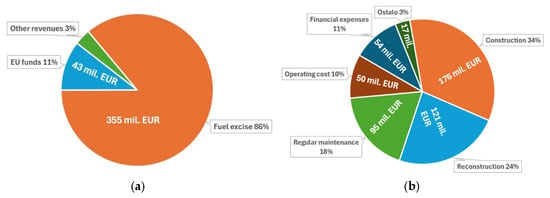
The public road network in Croatia in 2026 comprised 1361 km of motorways, 7455 km of state roads (operated by Hrvatske ceste d.o.o.—Croatian Roads Ltd.), 9327 km of county roads and 8440 km of local roads. Most of the revenue of Hrvatske ceste d.o.o. comes from collected excise duty on energy products amounting to EUR 0.11 per litre, while, in recent years, significant resources for the construction of new roads, as well as for post-earthquake road reconstruction, have been allocated from EU funds. The financial framework of HC operations is presented through investment, cost, and revenue data for 2025 (Figure 1 [1]). Expenditures significantly exceed revenues, and investment projects are ambitious, prompting the search for deficit reduction measures.
Figure 1.
(a) Revenues of Hrvatske ceste d.o.o. in 2025; total value: EUR 412 million euros. (b) Investments and costs of Hrvatske ceste d.o.o. in 2025; total value: EUR 512 million.
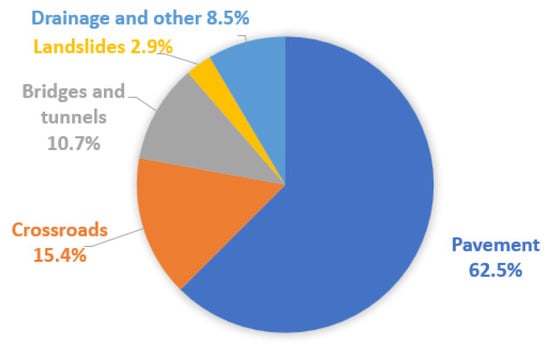
Public attention largely focuses on new state road construction projects, with around 70 projects at various stages of preparation and implementation. However, in addition to new construction, significant resources are continuously invested in the reconstruction of existing roads—around 600 major and minor interventions were in various stages of preparation and implementation in 2025 alone. Reconstruction costs, amounting to EUR 121 million in 2025, are formally divided into five groups (programmes):
- -
- Pavement rehabilitation;
- -
- Crossroads and intersections;
- -
- Structures: bridges and tunnels;
- -
- Landslides;
- -
- Drainage and other road elements (Figure 2).Figure 2. State road reconstruction costs in 2025, with a total value of EUR 121 million, divided into programmes.
In 2025, the bridge and tunnel reconstruction programme amounted to around 10% of the total reconstruction value. It should be noted that in the case of reconstruction of the entire road section, the cost of smaller bridges’ reconstruction within the section is not shown separately. That means that actual cost of bridge repair in 2025 would be more than EUR 13 million.
A stable financing system for state roads aims to enable the maintenance of the existing network, the construction of new sections, and the fulfilment of the company’s financial obligations. Investment in the state road network of the Republic of Croatia (construction and reconstruction) over the ten-year period (2016–2025) amounted to EUR 1.5 billion from own (budgetary) funds, i.e., fuel excise duties, and an additional EUR 564 million in EU project financing, including non-refundable EU funds and national co-financing resources. The difference between expenditures and revenues is covered by new company borrowings backed by state guarantees. Attention is also paid to the fulfilment of financial obligations: at the end of the fiscal year 2025, total long-term loan liabilities amounted to EUR 1588.18 million [1].
3. Existing Bridges
A brief history of small concrete bridges’ design is presented because maintenance activities largely depend on the type of the structure and its age. It should be noted that many older (i.e., 60 years old), conservatively designed bridges perform better than some newer ones.
The first reinforced concrete bridge in Croatia was completed in 1900, during the pioneering days of this construction material [2]. As early as 1929, standardized designs of reinforced concrete beam bridges with spans ranging from 11 to 15 metres existed. The standardized superstructure comprised four longitudinal girders, joined together by six cross-girders (two at supports and four within the span) and deck.
Furthermore, guidelines for small concrete bridges date from 1952, when a handbook on standardized reinforced concrete slab-type culverts was compiled. Types and tables were compiled for slab-type culverts and bridges comprising a 2-to-10 m clear span (Figure 3). Several different slab depths and steel sections were designed for each span. Also, types of abutments and wing walls were designed, as well as types of scaffolding for all span sizes [3].
Figure 3.
The details of standardized reinforced concrete road bridge design—guidelines of 1952.
The first bridge made of reinforced concrete prefabricated elements was completed in 1950, marking the beginning of industrial bridge era. The period of construction of main roads, roughly from 1955 to 1965, was characterized by the refinement of the existing structures, but also by the adoption of new structural types, construction materials and construction techniques.
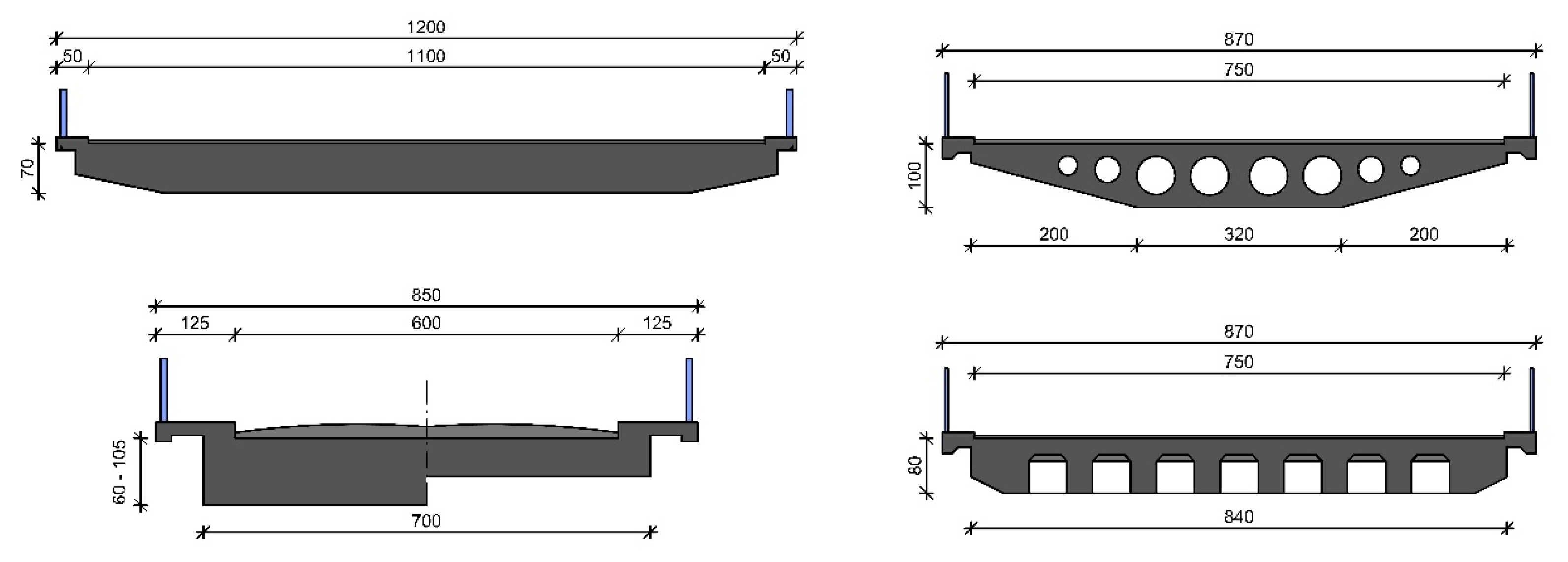
Bridges of that time are characterized by increasingly improved concrete placement and the use of higher-strength concrete compared with previous periods. More stringent control of the water/cement ratio was introduced. Typical slab-type bridges were built using scaffolding from the ground level until the beginning of the 1970s. Superstructures were often designed as voided slabs. Reinforced concrete bridges of the period had spans reaching up to 30 m (Figure 4).
Figure 4.
Cross-sections of some reinforced concrete continuous girder bridges comprising small and medium-sized spans from the 1960s: solid, waffled and hollow-core slabs, and slabs of varying depth.
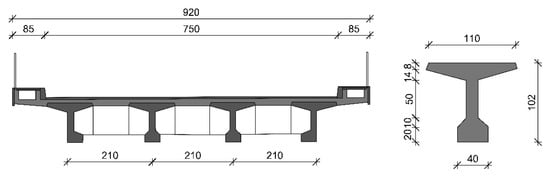
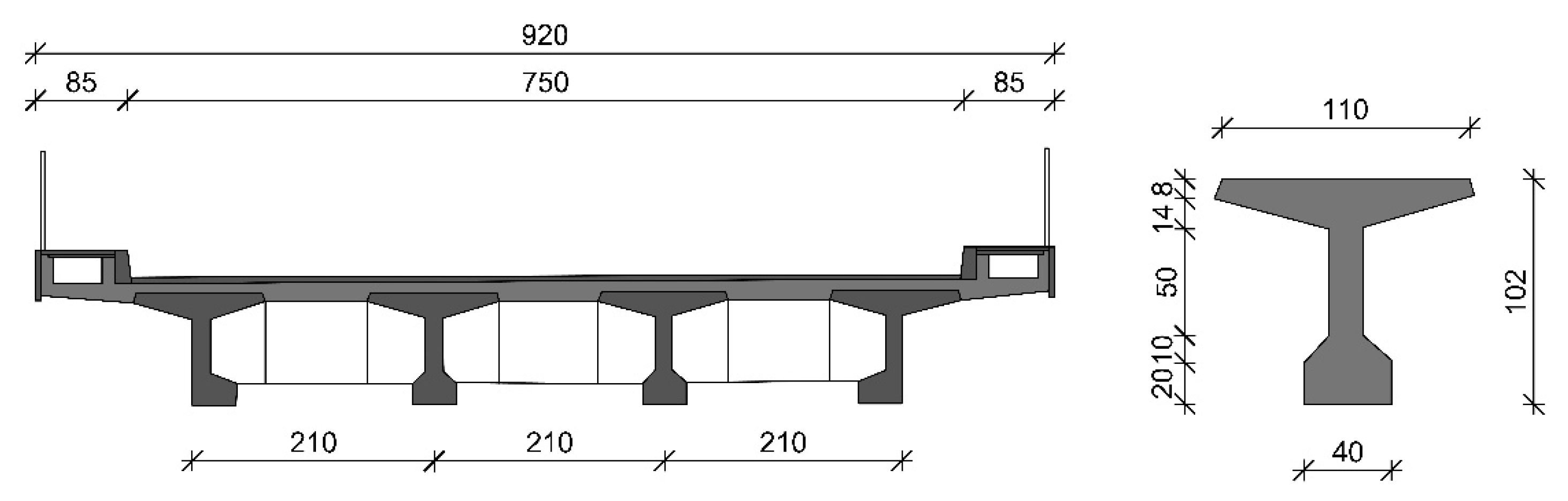
First, prestressed concrete bridges are of various overall lengths, although they all comprise a superstructure constructed using 25 m long prefabricated prestressed concrete girders. Typical cross-sections comprise four main longitudinal girders each, joined together by five cross-girders. A 16 cm deep deck has been concreted on top. The girders were prestressed using 20 cables, post-tensioned, using wire cables (Figure 5).
Figure 5.
Cross-section of one of the first prestressed concrete bridges in Croatia (1964).
The construction period from 1965 to 1981 is characterized by the introduction of prefabricated concrete elements for small spans. Serial construction of smaller slab-type bridges using prefabricated elements was organized in 1971, while beam bridges made of prestressed girders coupled together into grillage structure became common. Bridge designers of that time somehow brushed aside efforts to make the structures durable as they strived towards long spans and slender structures in order to make transport and lifting of girders easier (the weight of girders varied between 16.7 and 90 tons). This primarily applies to inadequate attention to details and execution of minimum concrete cover. As for issues in construction phase, poor deck waterproofing and drainage details should be mentioned.
By the end of that period, material degradation in the maritime environment became the main issue affecting bridges closer to the Adriatic coastline. This fact provided a strong incentive for gaining deeper insights into the durability of concrete structures.
It is customary that these types of bridges are constructed by assembling prestressed concrete girders into a grillage system, concreting cross-girders in situ, followed by concreting or the assembly of deck. The first bridge where grillage type individual spans were transformed into girders across three spans by tensioning cables at supports was completed in 1971, although this design became widely used 30 years later.
This period also brought a significant development in the detailing of concrete structures. Elastomeric bearings and expansion joints were executed in longer concrete bridges.
In the period between 1981 and 1991, investment in new infrastructure was reduced, while concern for maintenance and bridge durability in general was increased. The creation of a Cadastre of bridges in Croatia was mandated, while systematic inspections of road structures started, leading to discoveries of alarming degradation of several structures.
Structural analysis performed using computers, together with a better understanding of long-term effects in concrete, gave rise to the development of different superstructure details. Namely, joining spans of grillage type at supports was developed in detail, different degrees of prestressing were applied, and the number of cross-girders was reduced and some were even left out. The concrete and reinforced concrete regulations of 1987 increased the required thickness of concrete cover; however, they were not always sufficiently enforced. More attention was given to bridge furniture details.
The superstructures of many smaller concrete bridges were executed as voided slabs using cardboard or metal ducts measuring 45 to 50 centimetres in diameter. An important novelty was the installation of bearings, expansion joints and other equipment on smaller structures.
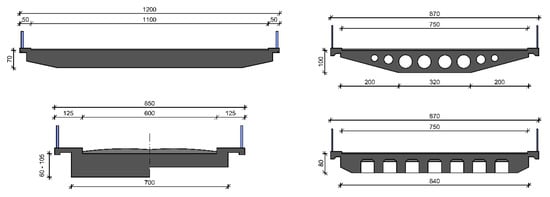
Several large construction companies had catalogues of prefabricated bridge girders for spans from 10 to 35 m (Figure 6).
Figure 6.
Standardized flyover elements manufactured in Croatia in the 1990s.
The application of adhesive prestressing of elements has become customary. Full prestressing was rarely used, and limited prestressing was more frequent, while partial prestressing was slowly introduced.
During the Croatian Homeland War (1991–1995), over a hundred road bridges were either destroyed or damaged. Their reconstruction was completed during the ten-year period following the end of the war [4,5].
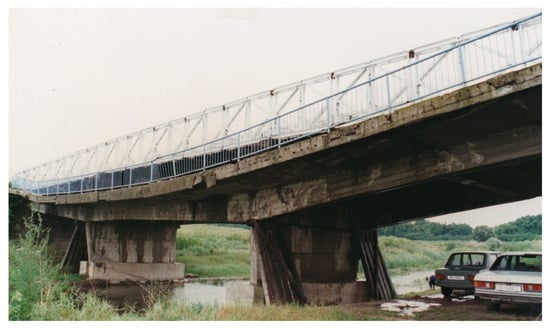
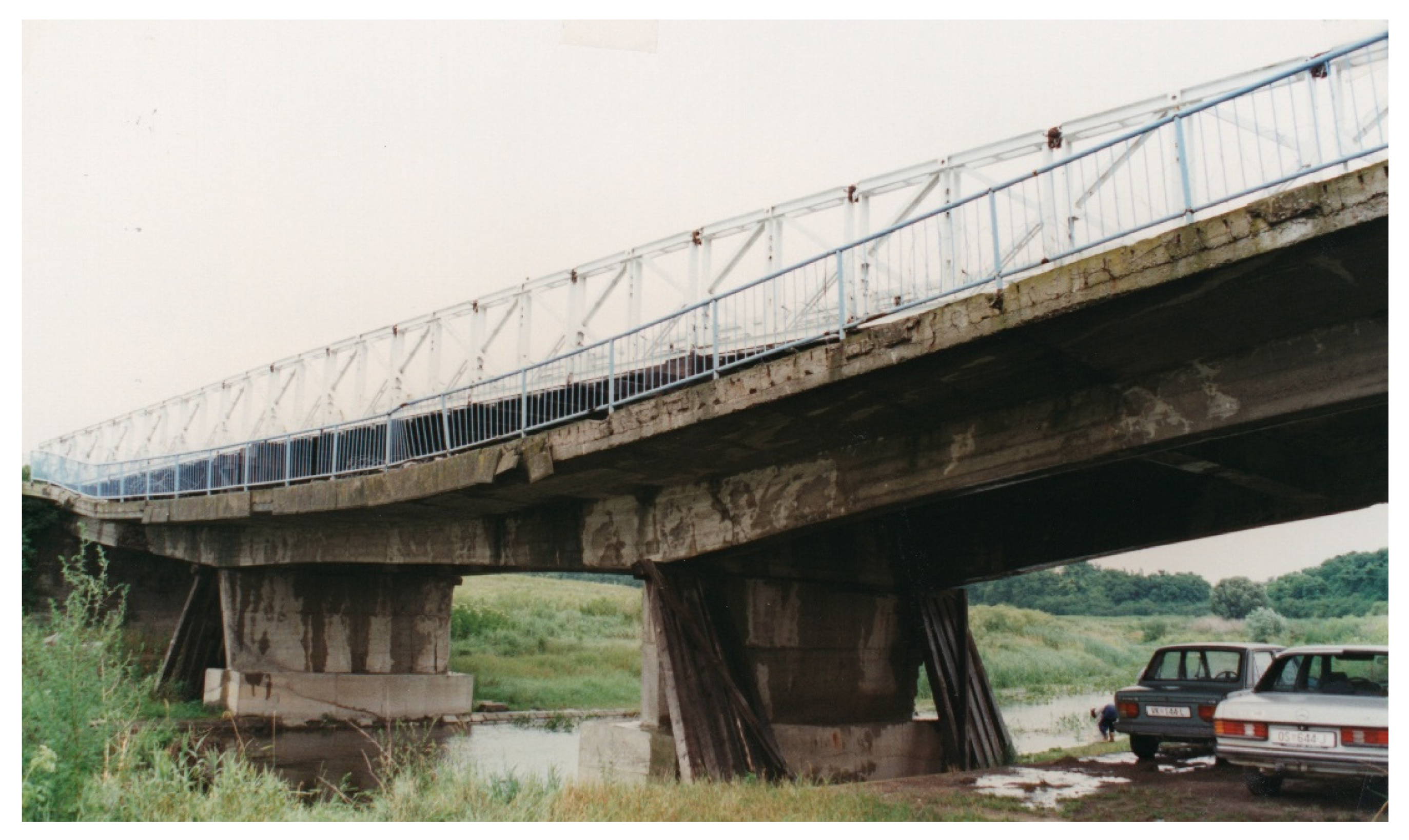
Most of the severe damage and nearly all destruction of the structures were caused by activation of explosive charges positioned within or attached to various structural elements. The explosive charges were mainly placed on piers or abutments, thus causing the collapse of one or more spans of the superstructure. Interestingly, a considerable number of bridges (not fewer than eights) remained usable, at least as far as wartime use is concerned, even after their demolition using explosives had been attempted (Figure 7). War experience confirms extraordinary resilience of concrete bridges with small-to-medium spans.
Figure 7.
Severely damaged three-span concrete bridge: both piers were partially blasted, yet the superstructure, theoretically in a state of total collapse, kept its integrity, and even some of its load-bearing capacity (a war bridge, Bailey-type, was later added on top).
Numerous bridges were damaged by direct hits of one or more artillery missiles, yet only one bridge has been destroyed exclusively by artillery shots [2]. Some urgently improvised repairs of concrete bridges suggest that, in special circumstances, concrete bridge elements can be repaired even when they appear to be destroyed.
Reconstruction started immediately after the end of hostilities, and all small and medium-sized bridges were restored in the early years after the war, most of them on existing foundations. The superstructures were modified to comply with the new codes for actions on structures, and some were widened.
In current bridge-building practice, reinforced or prestressed concrete structures are predominant for small spans (up to 30 m). For small spans, cast-in-place solid slabs are constructed. Only a few prestressed slabs were built due to cost effectiveness. The use of cored (voided) slabs is abandoned. Reinforced slab bridges with a span up to 18 m are deemed acceptable (previously, spans of 20–22 m were constructed).
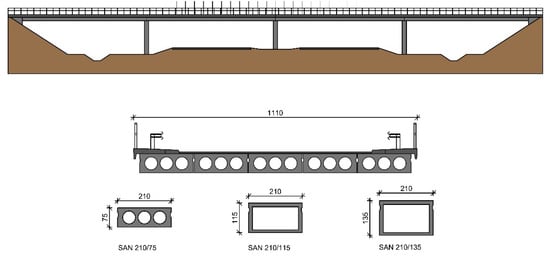
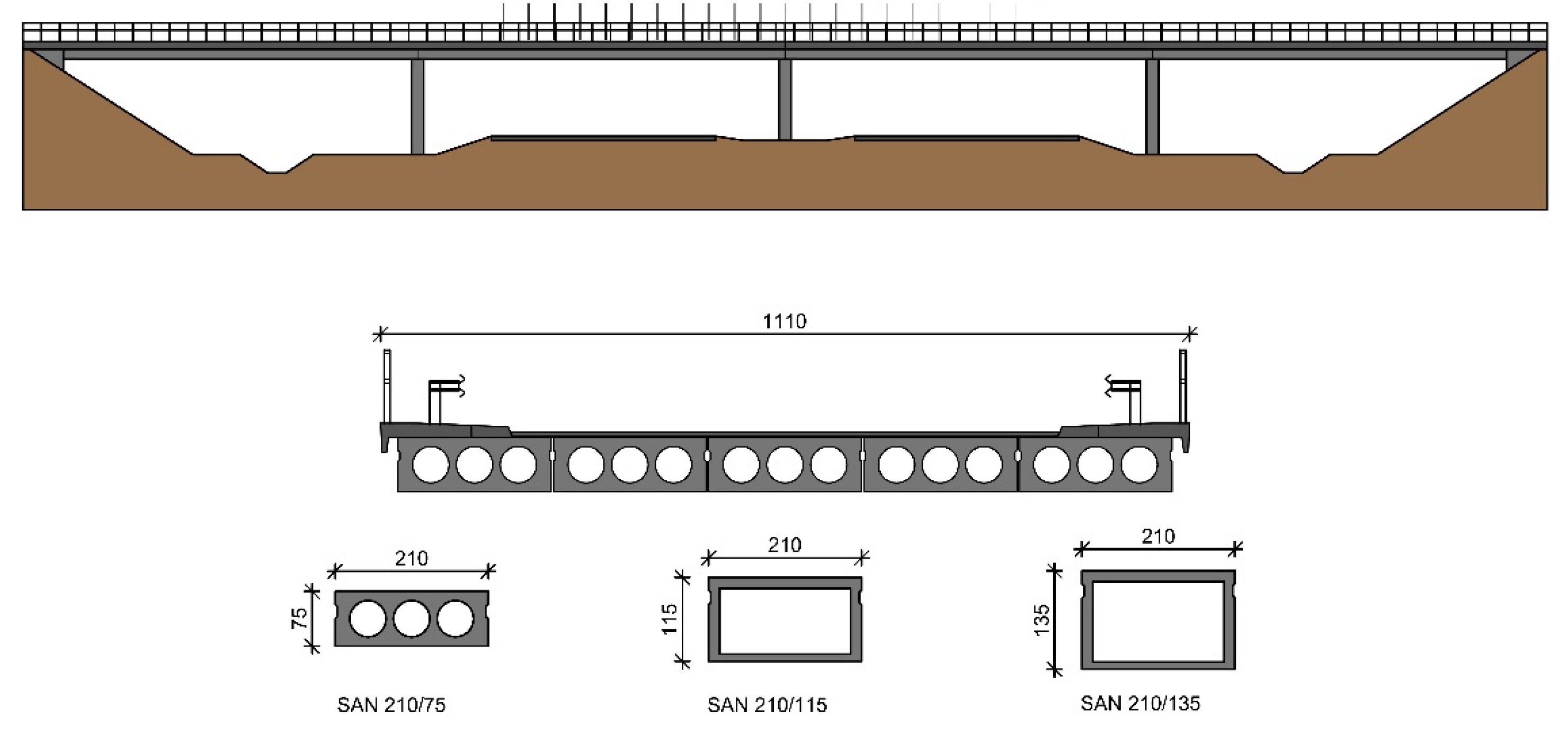
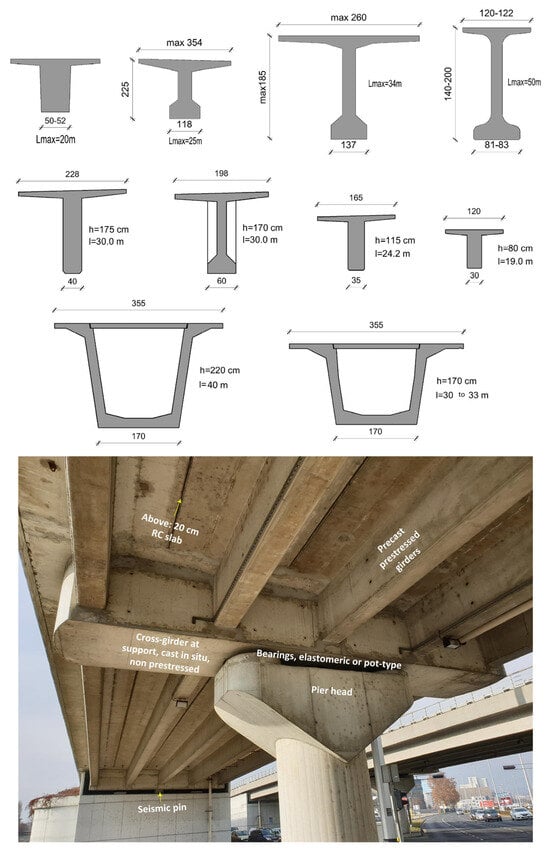
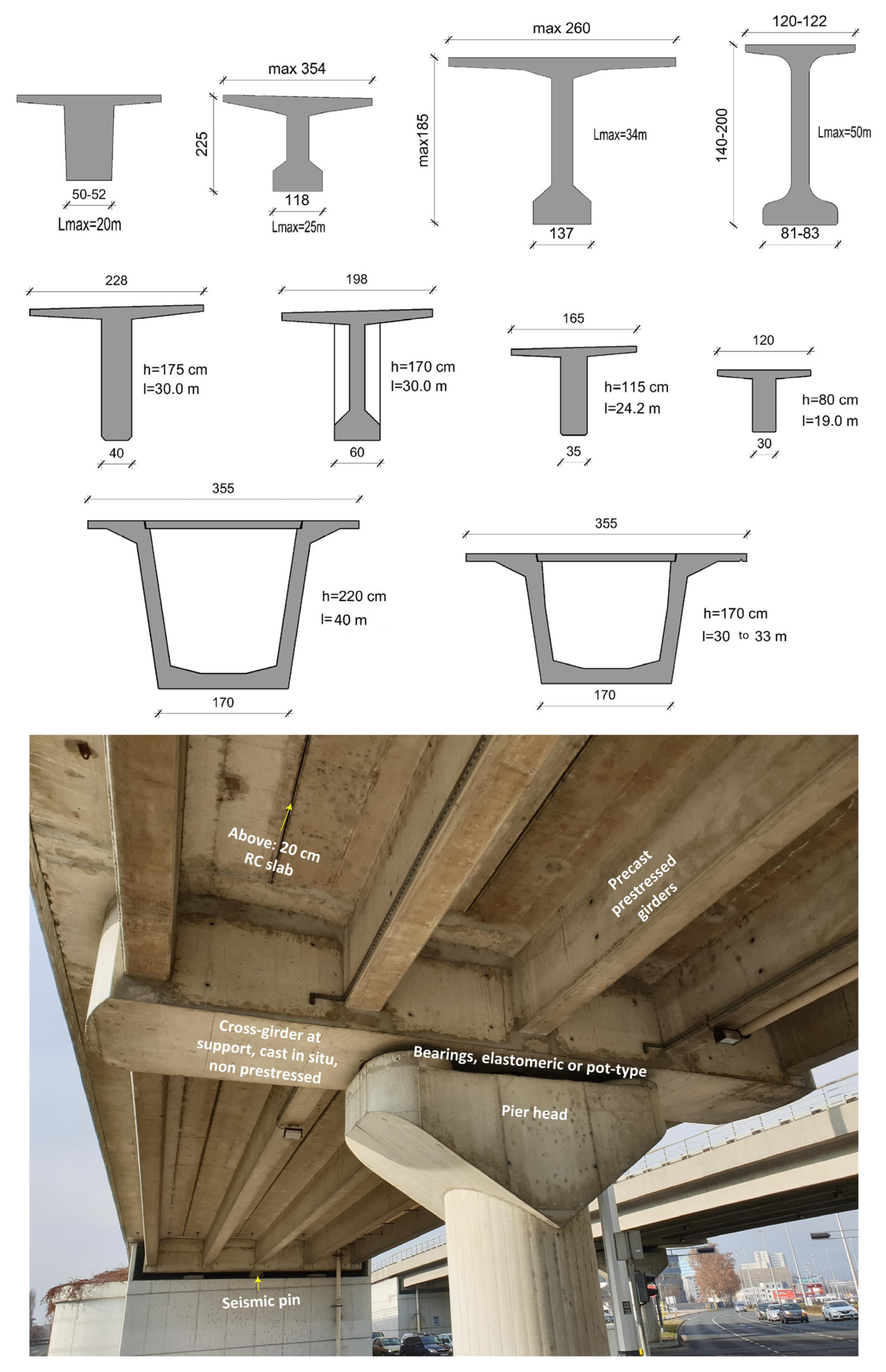
For longer spans, most frequently used structures are grillages composed of pre-cast prestressed concrete girders coupled with cast-in-place deck slab and transversal girders on supports. The increased cost of labour and lack of skilful workers once again demands a larger portion of prefabricated elements in bridges. Such cross-sections successfully combine advantages of the pre-casting and monolithic construction (Figure 8) [6].
Figure 8.
Cross-sections of prestressed beam bridge girders used in Croatia and their assembly.
Both pre-tensioning and post-tensioning are used, leaving the final choice to the contractors. The span lengths of such structures vary mostly between 30 and 40 m.
Certain doubts about the durability of such structures arise from bad experience with the deterioration at the connection between longitudinal spans over piers. The standard practice of joining the pre-cast girders at central supports was to utilize the continuous separated deck slab, thus eliminating the deck joints. But the durability aspect of this solution is questionable. For this reason, continuity slabs were replaced by structures with full continuity achieved over solid cross-girders.
Economics have always been a factor in determining the form of a structure. Knowing the contemporary local constraints and opportunities, the designer can decide which bridge is the most economical for ordinary spans. The question is whether the designer is aware of current construction market restraints.
On 29 December 2020, a 6.4-magnitude earthquake occurred in the Sisak-Moslavina county of Croatia. Several bridges were damaged by the earthquake, mainly larger bridges across the Sava and Kupa rivers. Only 3 out of 102 smaller concrete bridges in Sisak-Moslavina County were damaged, and there was no need for their temporary closure; thus, it may be concluded that the damages were not grave.
4. Bridge Management on State Roads
Hrvatske ceste d.o.o. organize bridge inspections and procure investigation works, repair design and repair works. The bridge management system (BMS), named HRMOS, has been applied on state road bridges since 1995. HRMOS contains a rating system indicating the relative health of a bridge, as well as future maintenance needs, on an integer-value scale from 0 to 5, where 0 stands for no damage and 5 stands for significant damage.
Each bridge is divided into 13 major parts for condition assessment: roadway, expansion joint, sidewalk, railing, embankment, wing walls, abutments, piers, bearings, deck, girders, riverbed and other. Elements are rated separately, as is the complete bridge.
Most decisions relating to bridge maintenance rely on assessments based on visual inspections conducted by trained engineers using prescribed procedures [7].
Processes causing deterioration of bridges mostly start without visible signs and are manifested only at a later phase through occurrences visible on the surface. During inspections, engineers have to observe, register and recognize signs that are significant for assessing condition, i.e., the indications or manifestations of processes leading to damage. Bridge condition is rated through interpretation of damages that have been identified and registered, and then these ratings are combined into a single rating valid for the entire structure. Bridge maintenance activities and costs are planned by setting priorities and anticipating the future life of the structure, within budget constraints. Decisions on reconstruction or replacement are currently being made bearing in mind the longevity of the process of issuing the construction permit. Whenever possible, bridge rehabilitation is recommended. Nevertheless, Croatian Roads are developing RAMS—Road Asset Management system—which will comprise feasibility assessment protocol as an aid in the decision-making process.
Bridge deficiencies are often less visible for users than, for example, damages on the pavement. Faced with limited resources, the authorities must prioritize the work. It is generally accepted that the only rational way to prioritize the repair works is to determine the inherent risk levels in structures so that those at greatest risk can be dealt with first.
The legal framework for inspections is provided in the Public Roads Act, while the Ordinance on Maintenance of Public Roads (which is the by-law of the Public Roads Act) prescribes a list of works in regular and periodic road maintenance, the scope of maintenance works and the time frame for certain works, including bridge inspections. Annual inspections are conducted every year, while main inspections are conducted at least once every five years.
A Maintenance Programme is developed and operationalised through yearly maintenance plans adopted by companies and authorities in charge of the maintenance of individual road categories. An annual maintenance plan includes the situation at the beginning of the planning period, and it determines the level of maintenance priorities and planned investments.
Bridge condition assessment procedures are based on the classification of damage into several categories covering comparable occurrences so that reports and subsequent analyses can be uniform and so that the situation can be reduced to several types to which cost-estimate items relating to repair can be associated. Thus, the following requirements must be met by individual damage categories:
- -
- Each category must be clearly recognizable according to the physical properties of the deterioration process and according to the functional properties of the structural element;
- -
- Each category must be associated with one or more bridge-maintenance or bridge-repair procedures.
As in some cases, in which there are no warning signs in the early phases of deterioration, visual inspections are sometimes insufficient for proper evaluation. However, as relevant testing is complex and expensive, most bridges of smaller size and significance are still evaluated through visual inspections only. The correlation between such evaluations and the real condition is greatly dependent on the experience and engineering judgement of the inspector.
5. Bridge Repairs
Engineers of Hrvatske ceste d.o.o. perform regular bridge inspections. Special inspections, repair design services and repair works are contracted through public procurement. Designers are given liberty to choose repair methods and materials, which are approved by the manager’s expert. However, some recommendations are given through an official manual called the General Technical Requirements for Roadworks (GTR) [8]. The GTR contains the description of works, construction methods, quality conformance requirements for material and works, and methods of measurement for the work delivered. For project-specific issues, Special Technical Requirements may be developed by design engineers and may be included in the contract.
The current edition contains 15 volumes, among them one on concrete structures and one on bridges, comprising chapters on reconstruction works. In the volume on construction materials, there is a chapter on repair materials, relying on EN 1504 [9], a European-standard series that sets rules for the products and systems used to protect and repair damaged concrete structures.
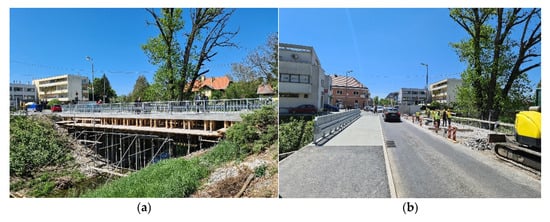
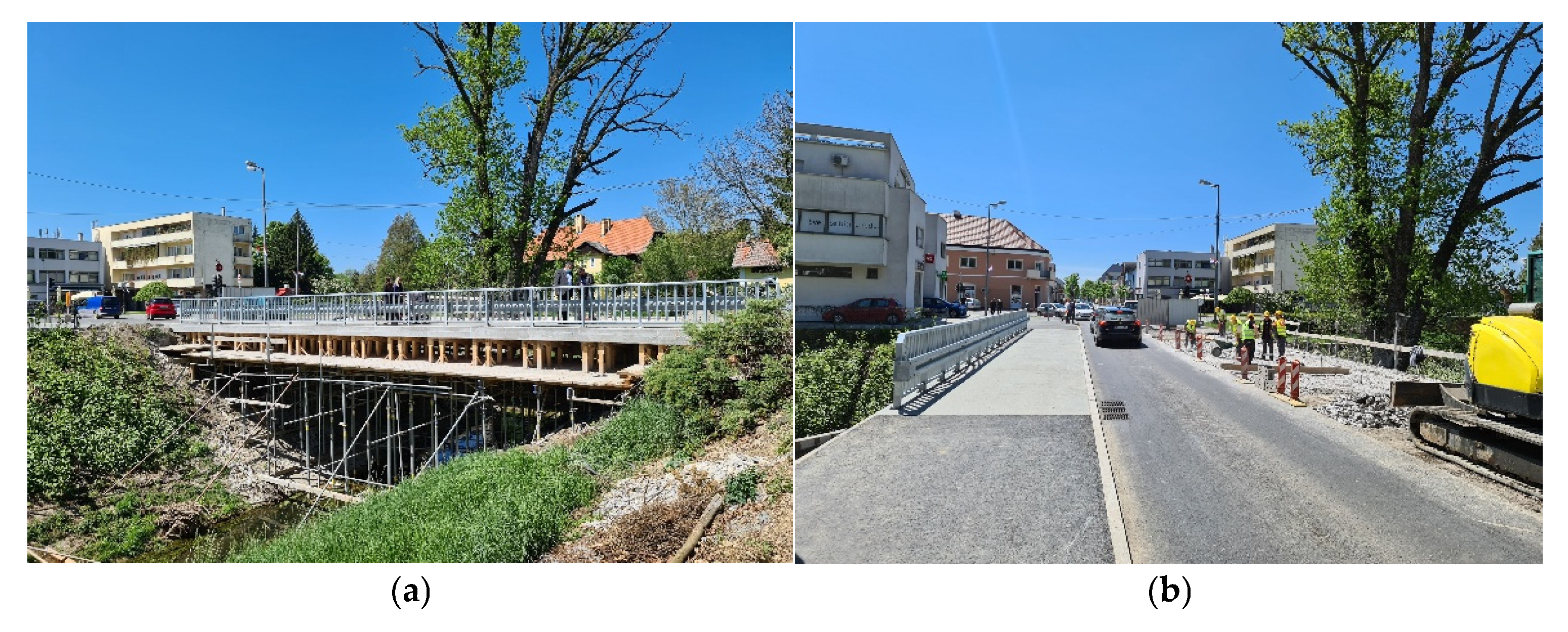
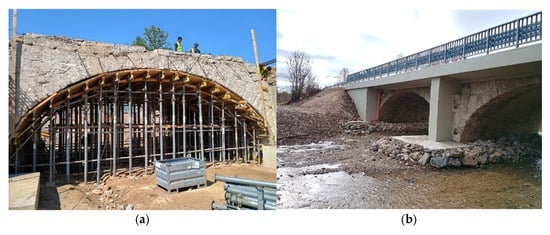
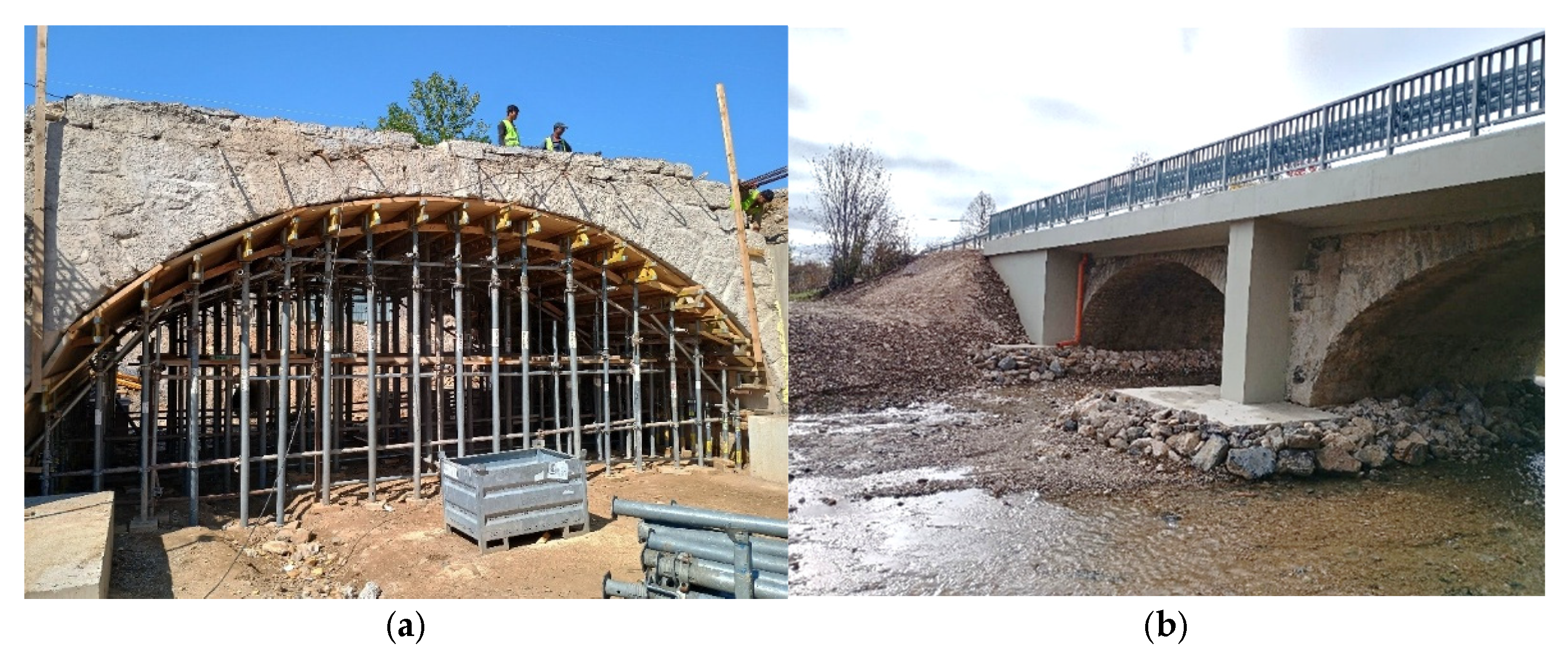
One of the most commonly used methods for concrete repair is reprofiling concrete elements with repair mortar. The main steps in reprofiling are the removal of the damaged concrete, surface preparation, and application of the repair mortar (Figure 9). Another common repair method comprises added structural elements cast in formwork next to existing ones (Figure 10). The common procedure for removing damaged concrete and preparing the surface is hydro-demolition, a method proven to be better in terms of quality of repair compared to impact methods or sandblasting [10].
Figure 9.
(a) Widening of the concrete bridge in order to increase the footpath; (b) reconstruction works organized without stopping the traffic across the bridge.
Figure 10.
(a) Stone arch bridge prepared for widening and strengthening; (b) reconstructed bridge with additional elements and a new concrete deck slab.
When considering current repair practices, it should be noted that, in several cases, the durability of repaired concrete structures is much shorter than expected. There are many reasons for that, but it can be concluded that, in many cases, the bond between the existing concrete and the repair material affects durability. The durability of the repair depends on the type, thickness, and properties of the repair mortar, but these become irrelevant if the surface preparation failed. Bridge repairs are often performed in adverse weather conditions and under the pressure of deadlines, meaning that designer’s prescriptions are poorly met. Horizontal surfaces, such as a bridge deck, are easier to repair than vertical surfaces, such as piers.
6. Conclusions
It can be said that small concrete bridges, which account for most structures on state roads, are very resilient towards seismic events or other natural hazards or events. Damages to concrete structures can be attributed to improper design, construction errors, lack of maintenance, and environmental conditions.
One of the major challenges in bridge management is to ensure uniform and objective condition assessment. This still depends largely on the experience and judgement of the bridge inspector. Condition ratings assigned during routine bridge inspections, based on visual inspection, do not identify the deterioration process or the extent of deterioration.
The reconstruction of the damaged bridge may be an even more demanding engineering task than the design of a completely new bridge. In the case of a major reconstruction, the designer usually faces the challenge of strengthening the superstructure in such a manner as to resist increased design live loads. Another issue is the concern for existing foundations: a reconstructed superstructure should not be much heavier than the old superstructure.
On many occasions, reconstruction design prescribes widening of the roadway.
Bridge repair design requires knowledge of structural design, material properties, and construction and repair technology. Repair technologies are well developed but sensitive to errors in execution. As road network managers, we should examine already repaired bridges and develop recommendations aimed at standardizing practical solutions for common repair works and bridge elements.
Author Contributions
Conceptualization, G.P.; methodology, G.P.; validation, D.T. and G.H.K.; formal analysis, D.T.; investigation, G.H.K.; resources, G.H.K.; data curation, D.T.; writing—original draft preparation, G.P.; writing—review and editing, G.H.K. All authors have read and agreed to the published version of the manuscript.
Funding
This research received no external funding.
Institutional Review Board Statement
Not applicable.
Informed Consent Statement
Not applicable.
Data Availability Statement
The original contributions presented in this study are included in the article. Further inquiries can be directed to the corresponding author.
Conflicts of Interest
Authors Goran Puž and Danijel Tenžera were employed by the Croatian Roads Ltd. The remaining author declares that the research was conducted in the absence of any commercial or financial relationships that could be construed as a potential conflict of interest.
References
- Puž, G.; Budimir, I. Sustainable Planning of State Road Network Development in Croatia. In Road and Rail Infrastructure IX; Lakušić, S., Vranešević, K., Eds.; University of Zagreb: Zagreb, Croatia, 2026; pp. 207–214. [Google Scholar]
- Radić, J.; Puž, G.; Žderić, Ž. A Time to Break Down and a Time to Build Up, Road Bridges in Homeland War—Destruction and Postwar Reconstruction; Hrvatska akademija znanosti i umjetnosti: Zagreb, Croatia, 2007. [Google Scholar]
- Vukuša, R. Armirano Betonski Pločasti Cestovni Propusti Otvora 2–10 m, Tipovi i Tabele za Projektiranje; IPZ: Zagreb, Croatia, 1952. [Google Scholar]
- Kršinić, N. Sustav za upravljanje i gospodarenje mostovima u Republici Hrvatskoj. In Zamah Graditeljstva—Temelj Razvitka Hrvatske, Proceedings of the IV Congress; Društvo Hrvatskih Građevinskih Konstruktora (DHGK): Cavtat, Croatia, 1996; pp. 87–94. [Google Scholar]
- Nagy, Z. Obnova ratom oštećenih i srušenih mostova na cestovnoj mreži Republike Hrvatske. In Zamah Graditeljstva—Temelj Razvitka Hrvatske, Proceedings of the IV Congress; Društvo Hrvatskih Građevinskih Konstruktora (DHGK): Cavtat, Croatia, 1996; pp. 103–108. [Google Scholar]
- Puž, G. Bridges of Croatia—An Overview; Hrvatske ceste d.o.o.: Zagreb, Croatia, 2019. [Google Scholar]
- Puž, G.; Radić, J.; Tenžera, D. Visual inspection in evaluation of bridge condition. Gradevinar 2012, 64, 717–726. [Google Scholar] [CrossRef] [Scilit]
- Hrvatske ceste d.o.o. General Technical Requirements for Roadworks; Dragovan, T., Ed.; Hrvatske ceste d.o.o.: Zagreb, Croatia, 2024. [Google Scholar]
- HRN EN 1504-10:2017; Products and Systems for the Protection and Repair of Concrete Structures—Definitions, Requirements, Quality Control and Evaluation of Conformity—Part 10: Site Application of Products and Systems and Quality Control of the Works. HZN: Zagreb, Croatia, 2017.
- Skazlić, M.; Borovina, B.; Gabrijel, I. Optimised technology for repair of vertical surface of concrete bridge elements. Organ. Technol. Manag. Constr. 2023, 15, 233–242. [Google Scholar] [CrossRef] [Scilit]
Disclaimer/Publisher’s Note: The statements, opinions and data contained in all publications are solely those of the individual author(s) and contributor(s) and not of MDPI and/or the editor(s). MDPI and/or the editor(s) disclaim responsibility for any injury to people or property resulting from any ideas, methods, instructions or products referred to in the content. |
© 2026 by the authors. Licensee MDPI, Basel, Switzerland. This article is an open access article distributed under the terms and conditions of the Creative Commons Attribution (CC BY) license.