


Abstract
Water scarcity is a global crisis in sub-Saharan Africa, particularly in Senegal, due to climate change and population growth. Faced with this challenge, seawater desalination has emerged as an essential solution. To provide a more suitable solution, a Computational Fluid Dynamics (CFD)-based numerical study of a triple-effect solar desalination system was conducted. The methodology adopted relies on a series of calculations of the mass and energy balances associated with each effect. An analysis of the dynamics of water vapor across the different effects was performed using Ansys Fluent software. The results obtained highlight the role of water vapor pressure and temperature in freshwater production. Computational Fluid Dynamics analysis shows a temperature profile of 52 °C in the first effect, dropping to 34.5 °C in the third effect.
1. Introduction
Water is a natural resource essential to the survival of living beings and to sustainable development. But what about the availability of this resource, often referred to as blue gold? While it covers nearly three-quarters of the Earth’s surface, 97.2% of this is saltwater, and only 2.8% is freshwater. However, 2.1% of this freshwater is trapped in ice sheets, leaving only 0.7% of freshwater truly accessible [1]. Furthermore, it is important to emphasize that this quantity is unevenly distributed around the world. Consequently, a significant water shortage will occur globally by 2050, due to the combined effects of economic growth, population expansion, and climate change. With its growing population, Senegal is far from immune to this crisis and faces an increasingly worrying water shortage. Given the current standard of living and the imperatives of the ecological transition, it is crucial to promote seawater desalination methods that are both economically viable and environmentally sound, in order to sustainably meet freshwater needs. From this perspective, solar distillation appears to be the best alternative, thanks to its long-term economic efficiency and ecological nature. Solar distillation is a technique that uses solar energy to separate fresh water from contaminants or salts [2]. Indeed, under the effect of heat, seawater or brackish water heats up and evaporates [3]. This results in the condensation of water vapor through cooling, leaving behind salts and other impurities. This condensate is collected and used as a substitute for natural fresh water. Now, several desalination technologies have been developed worldwide, but their main drawback is their energy consumption and reliance on fossil fuels. Therefore, the use of renewable energy sources in desalination processes is encouraged, especially in countries with abundant solar irradiance. Solar thermal energy is available in abundance in a country like Senegal, where direct solar radiation is on average 1950 kWh/m2 per year [4]. There are different methods in the desalination process for producing fresh water using solar energy resources. One of the best uses of solar thermal energy is solar distillation, a simple technique that makes use of solar energy [5]. Solar thermal desalination provides a sustainable method of producing freshwater in remote areas with limited access to electricity and drinkable water. Many numerical methods have been developed for a better understanding of the MED. A.S. El-Shafay et al. [6] simulated a single-slope desalination system using the finite element method, and they used RSM to plot curves and investigate the best problem conditions. A. Kumar and A.Maurya [7] carried out a new shape solar still, namely a pyramidal solar still, and presented its experimental analysis and CFD modeling. Their objective is to anticipate the performance of a pyramidal solar still using a CFD model, as it allows us to modify, at any time, the input parameters, in order to simulate different situations of use. A floating wick is used by Gorge Ni et al. [8] to reject salt from water. To better interpret the results, they used CFD analysis. Castillo Téllez, M. et al. use ANSYS Fluent 2023 R1 software to simulate heat transfer and fluid flow within the solar still [9]. In this paper, a numerical analysis using CFD was conducted to evaluate the effects on the system’s behaviour.
2. Materials and Methods
2.1. System Description
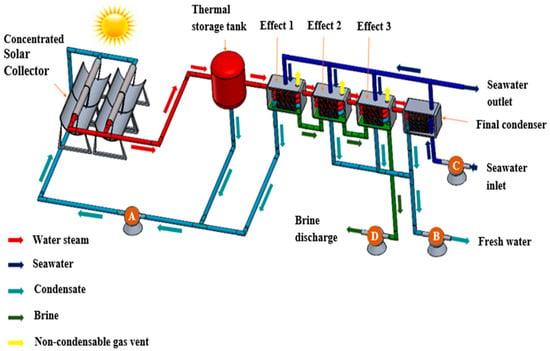
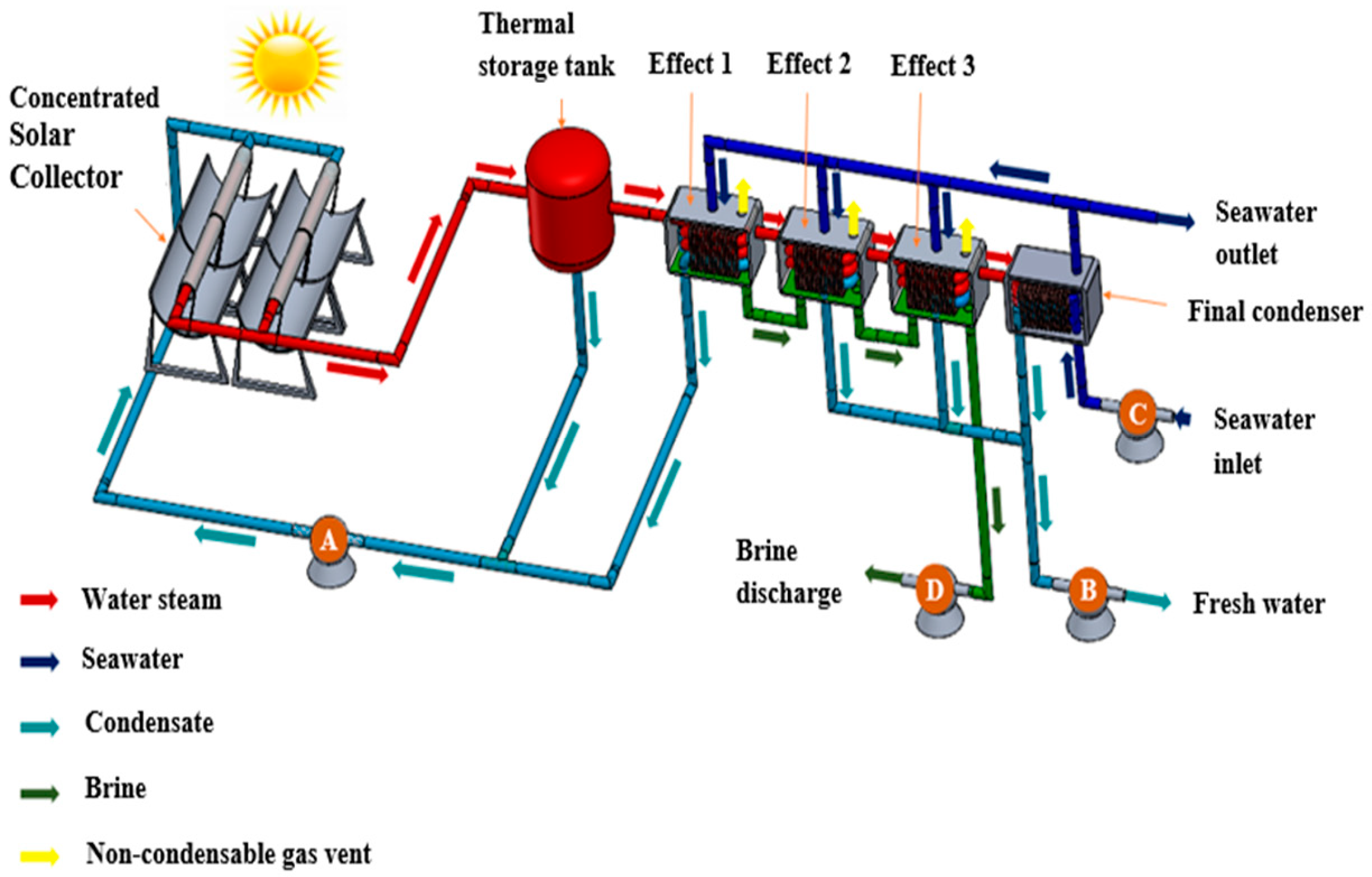
Using SolidWorks (version 2020) 3D design software, the model designed is that of a three-effect solar distiller coupled with concentrating solar collectors, used as an external energy source. As shown in Figure 1, the system consists of a concentrating solar thermal field, a hot storage tank from which steam is generated and directed to the first effect, three evaporators in series, four pumps A, B, C, and D, and an end condenser (or final condenser) where the steam from effect 3 is cooled and condensed by heat exchange with seawater.
Figure 1.
Structure of the 3-effect solar distillation model.
To better address the problem, the mathematical model used in this study is based on determining the mass, salinity, and energy balances for each component of the MED system’s distillation unit [10,11]. Since the system involves fluids at different temperatures and phases, mass and energy balances for each component must be established. Some assumptions were considered, namely:
- Seawater distribution across the effects is uniform;
- The operating regime is steady-state;
- Seawater temperature and salinity are known;
- Heating steam temperature is known;
- Distilled water is salt-free.
2.2. Mass, Salinity and Energy Balances in Effect 1
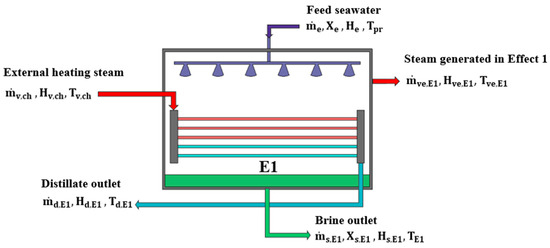
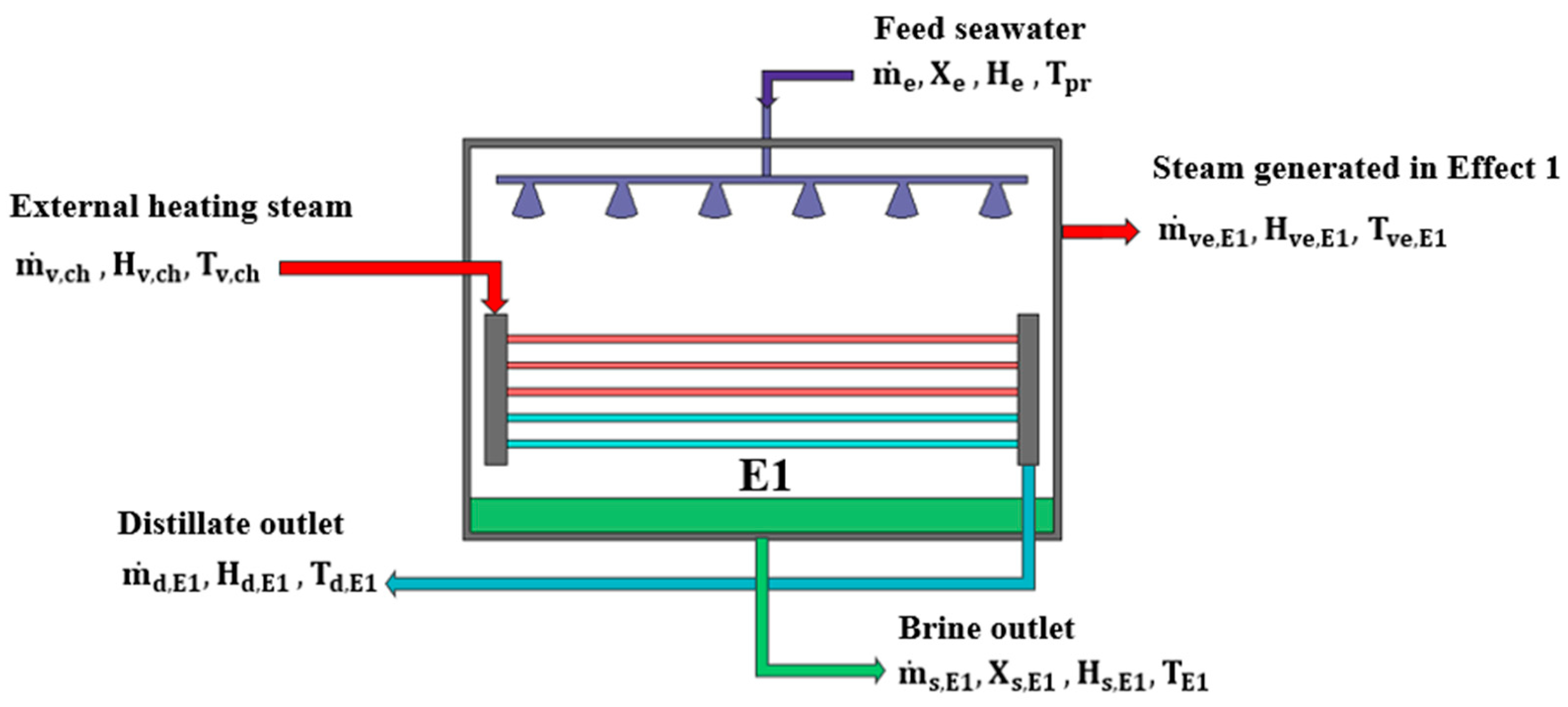
Figure 2 shows the mass, salinity and energy balances observed in the first effect.
Figure 2.
Diagram of effect 1.
- Mass balance
The mass flux of seawater entering the first effect corresponds to the sum of the mass fluxes of brine and steam generated within this effect. Thus, the mass balance of the first effect is established as follows:
- : Mass flow rate of seawater entering the effect (kg/s);
- : Mass flow rate of brine exiting effect 1 (kg/s);
- : Mass flow rate of water vapor generated in effect 1 (kg/s).
- Salinity balance
The salinity balance in this first effect is
- : Salinity of the seawater entering the effect (ppm);
- : Salinity of the brine leaving effect 1 (ppm).
- Energy balance
The enthalpy balance at the first effect is governed by Equation 3, taking into account all input and output fluxes
- : Mass flow rate of the heating steam (kg/s);
- : Specific enthalpy of the heating steam at temperature (kJ/kg);
- : Temperature of the heating steam (°C);
- : Specific enthalpy of the seawater entering the effect at temperature (kJ/kg);
- : Pre-heated temperature of the salt water (°C);
- : Specific enthalpy of the steam generated in effect 1 at temperature (kJ/kg);
- : Temperature of the water vapor generated in effect 1 (°C);
- : Specific enthalpy of the brine exiting effect 1 at temperature (kJ/kg);
- : Temperature of effect 1 (°C);
- : Mass flow rate of the distillate exiting effect 1 (kg/s);
- : Specific enthalpy of the distillate exiting effect 1 at temperature (kJ/kg);
- : Temperature of the distillate exiting effect 1 (°C).
2.3. Mass, Salinity and Energy Balances in Effect 2
It should be noted that the mass, energy and salinity balance of effect two is identical to that of effect one.
2.4. Mass, Salinity and Energy Balances in Effect 3 Coupled to the Final Condenser
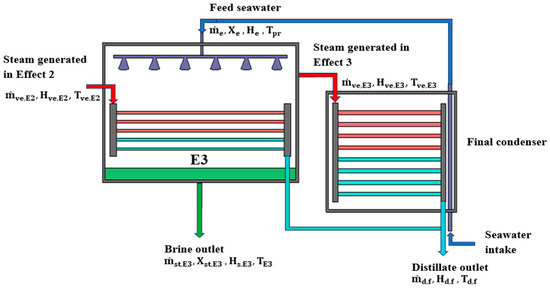
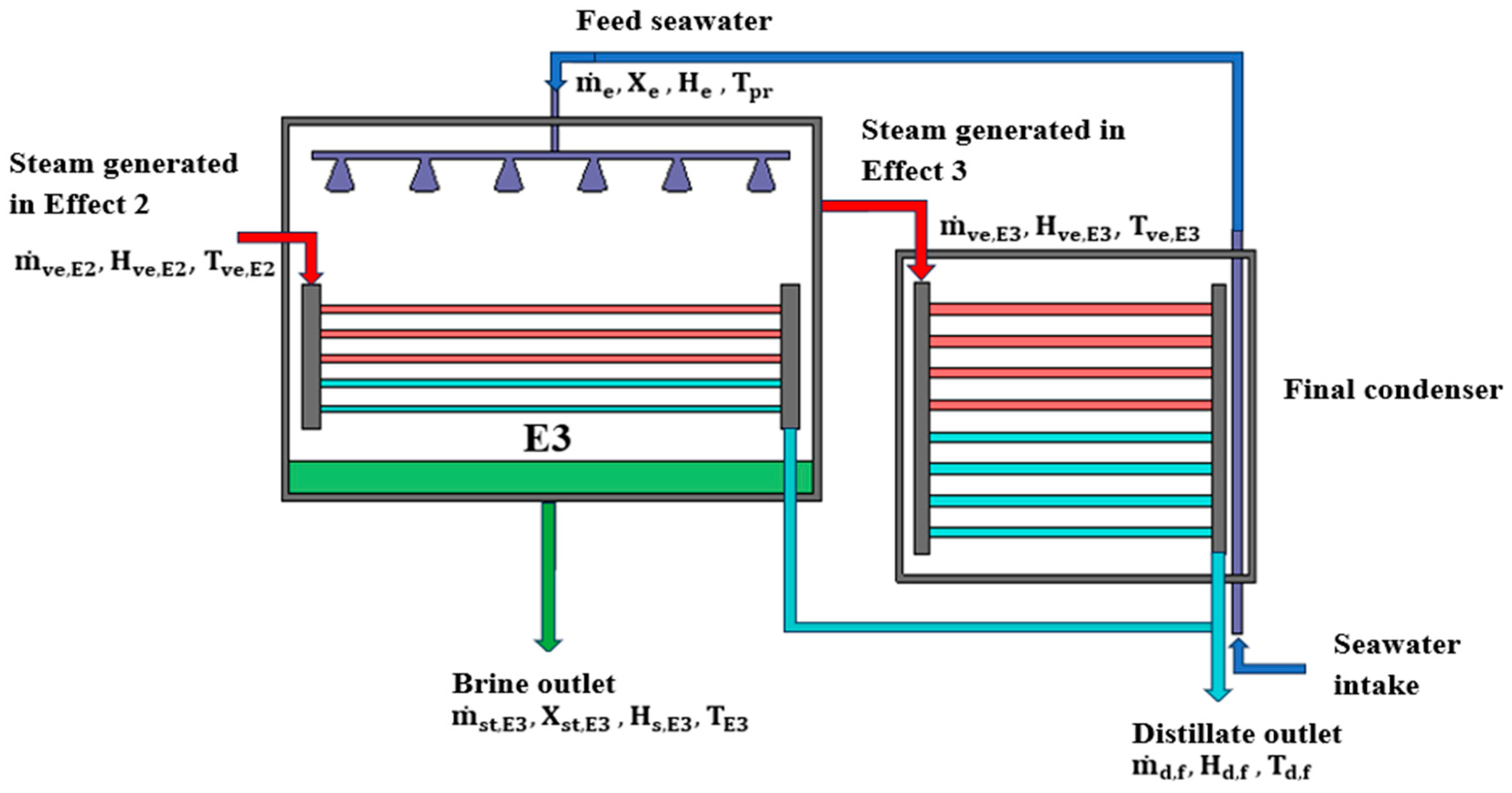
Figure 3 shows the mass, salinity and energy balances at the third effect, combined with the final condenser.
Figure 3.
Diagram of effect 3 coupled to the final condenser.
- Mass balance
As in effect 2, the mass balance in this evaporator is defined by
- : Total mass flow rate of brine exiting effect 3 (kg/s);
- : Mass flow rate of water vapor generated in effect 3 (kg/s).
- Salinity balance
The salinity balance is
- : Total salinity of the brine exiting effect 3 (ppm).
- Energy balance
The energy balance in this last part is governed by the following relationship
- : Specific enthalpy of the water vapor generated in effect 3 at temperature (kJ/kg);
- : Temperature of the water vapor generated in effect 3 (°C);
- : Specific enthalpy of the brine exiting effect 3 at temperature (kJ/kg);
- : Temperature of effect 3 (°C);
- : Mass flow rate of the final distillate (kg/s);
- : Specific enthalpy of the final distillate at temperature (kJ/kg);
- : Temperature of the final distillate (°C);
- : Mass flow rate of the distillate exiting effect 3 (kg/s);
- : Specific enthalpy of the distillate exiting effect 3 at temperature (kJ/kg);
- : Temperature of the distillate exiting effect 3 (°C);
- : Mass flow rate of the distillate exiting the final condenser (kg/s);
- : Specific enthalpy of the distillate exiting the final condenser at temperature (kJ/kg).
3. Results and Discussion
Ansys Fluent is a simulation tool applied to computational fluid dynamics, widely used to model fluid flow and heat transfer.
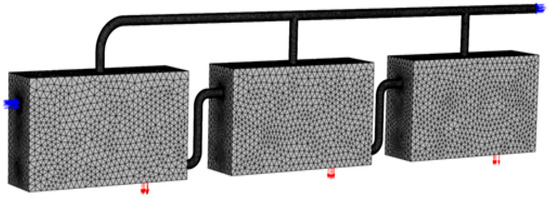
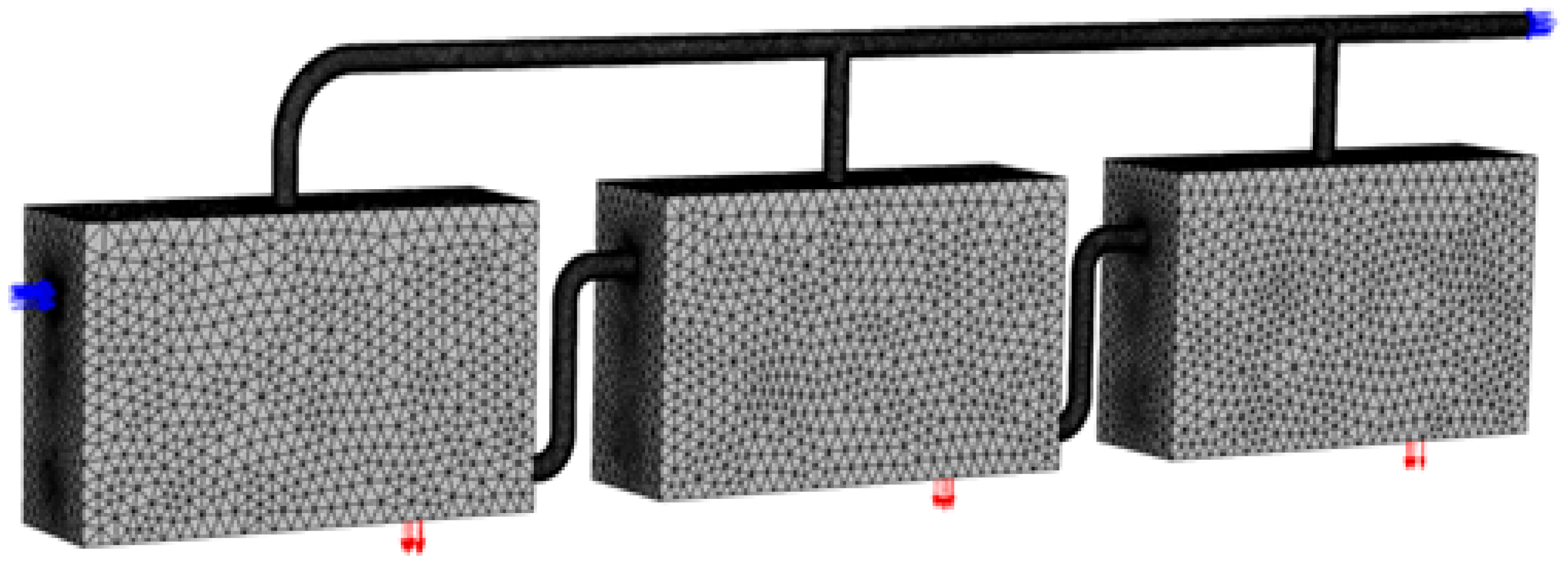
The mesh scheme of the three-effect distillation system is shown in Figure 4.
Figure 4.
Mesh diagram.
Figure 4 is a geometric representation of the effects. This is an important step for validating the simulation results.
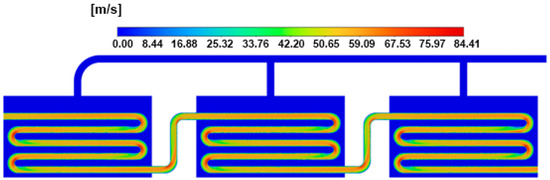
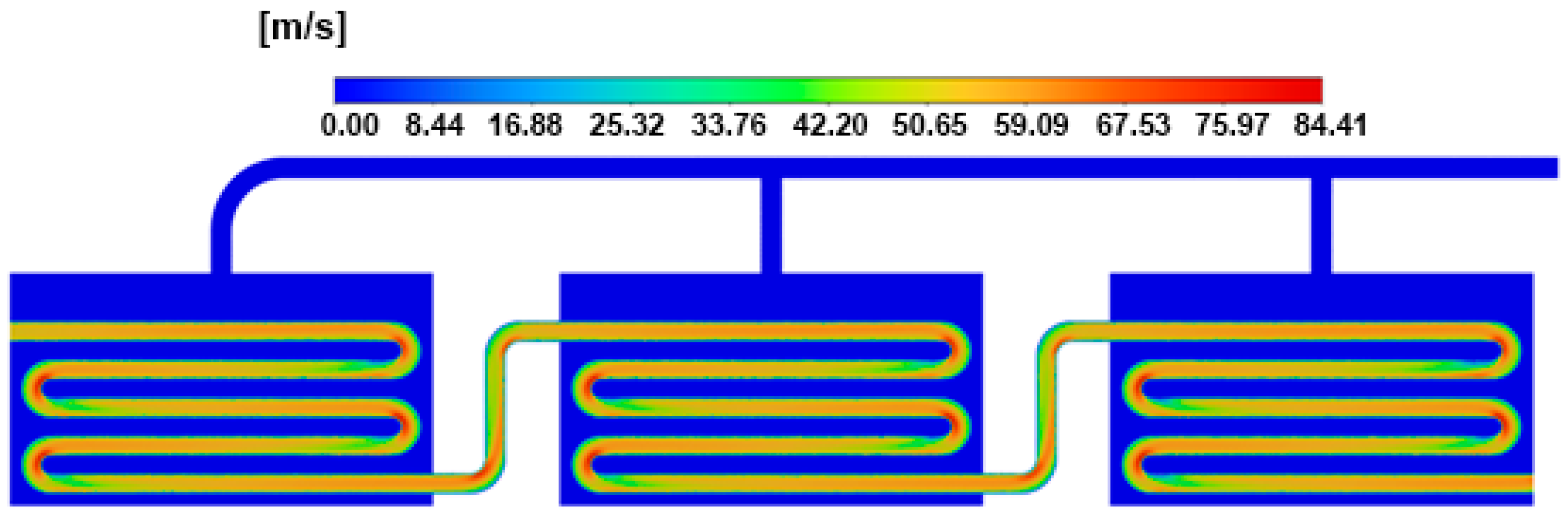
Figure 5 shows the water vapor flow velocity profile in each effect.
Figure 5.
Evolution of the water vapor velocity.
It shows that this speed is almost constant from the first to the third effect, around 50.65 m/s. This constancy can be explained, on the one hand, by a constant cross-section of the heat exchanger pipes and, on the other hand, by maintaining the cells (effects) at controlled pressures, slightly lower than those of the previous effect, thus allowing a stabilization of the water vapor flow.
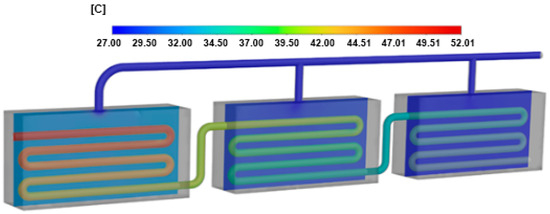
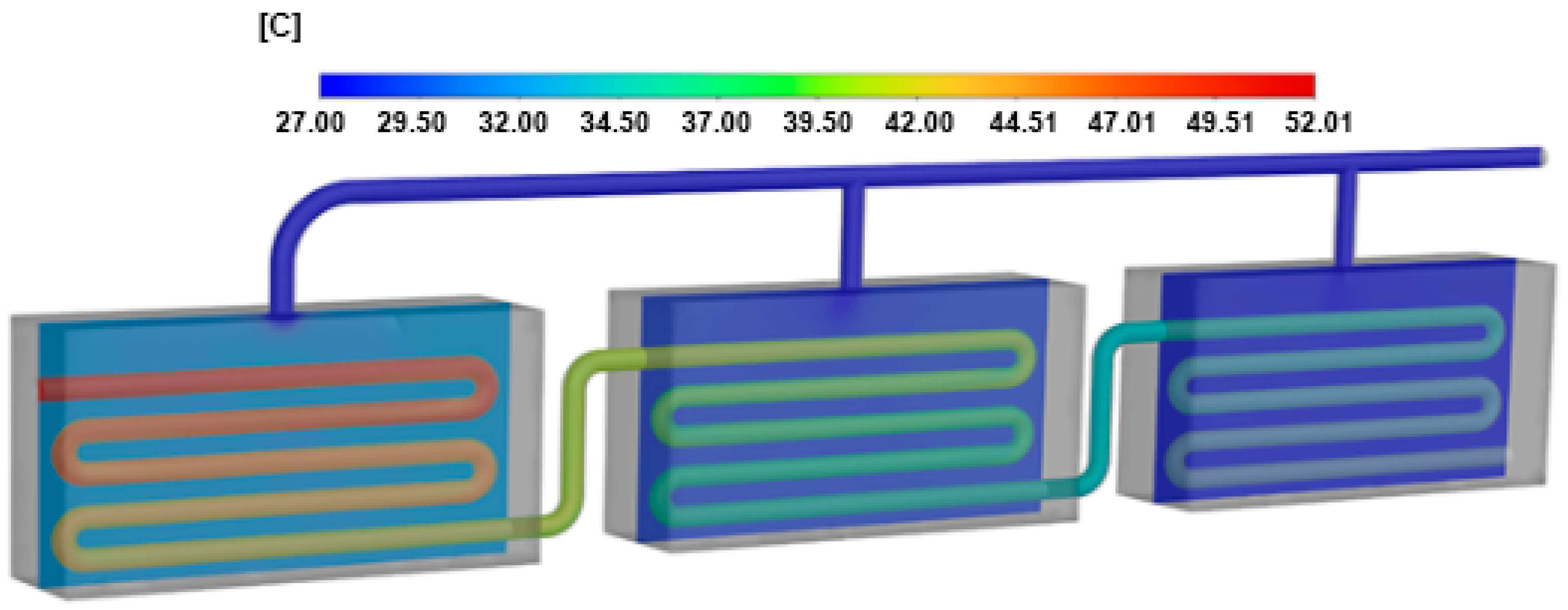
Figure 6 shows the profile of the variation in water vapor temperature obtained at the three effects.
Figure 6.
Water vapor temperature profile.
A decreasing temperature gradient is observed, ranging from 52 °C in the first effect to 34.5 °C in the third evaporator. This temperature decrease results in a progressive reduction in pressure at the effects, leading to a continuous decrease in the evaporation temperature of the seawater and, consequently, in the temperature of the water vapor generated. Similarly, this decrease is also linked to the vapor circulation velocity within the effects.
4. Conclusions
The results show that, with a nearly constant velocity of approximately 50.65 m/s from the first to the third effect, the temperature varies from 52 °C to 34.5 °C. These analyses clearly demonstrate that freshwater production in a multi-effect desalination plant depends heavily on the temperature of the vapor generated in each effect, as it is this vapor that forms fresh water upon condensation. This finding opens up a promising avenue for identifying the parameters that need to be optimized to enhance the productivity of the multi-effect desalination system. It would also be interesting to examine the influence of the inlet temperature and pressure in the first effect.
Author Contributions
Conceptualization, S.T.; methodology, S.T.; software, S.T., S.D., O.D., A.M. and M.S.; validation, S.T. and A.M.; formal analysis, S.T. and S.D.; investigation, S.T. and S.D.; resources, S.T., S.D., O.D. and M.S.; data curation, S.D. and M.S.; writing—original draft preparation, S.T.; writing—review and editing, S.T., S.D. and O.D.; visualization, S.T., S.D., O.D. and M.S.; supervision, S.T. and A.M.; project administration, S.T. and A.M.; funding acquisition, S.T. All authors have read and agreed to the published version of the manuscript.
Funding
This research received no external funding.
Institutional Review Board Statement
The study was conducted in accordance with the Declaration of Helsinki, and approved by the Institutional Review Board (or Ethics Committee) of Assane SECK university of Ziguinchor, Senegal.
Informed Consent Statement
Not applicable.
Data Availability Statement
Data available in a publicly accessible repository. The results are not confidential; the essential information is provided in the document and in works deposited at the UASZ library (Ziguinchor, Senegal). https://uasz.sn/presentation-de-la-buasz/ (accessed on 12 October 2026).
Acknowledgments
This research is supported by the LCPM laboratory, Assane Seck University of Ziguinchor, Senegal.
Conflicts of Interest
The authors declare no conflicts of interest.
References
- Oskouie, A.G.; Soufi, M.D.; Khashehchi, M.; Gorjian, S.; Kermani, A.M. Numerical modeling of the greenhouse effluent desalination process using solar energy by a multi-effect method with HYSYS software. Results Eng. 2025, 27, 105892. [Google Scholar] [CrossRef] [Scilit]
- Abed, A.F.; Alshukri, M.J.; Rasheed, R.H.; Al-Ansari, L.S.; Alsayah, A.M.; Khaled, M. Numerical simulation of pyramid solar stills with finned absorbers: Enhancing thermal efficiency for sustainable desalination. Case Stud. Therm. Eng. 2025, 74, 106730. [Google Scholar] [CrossRef] [Scilit]
- Thiao, S.; Mar, A.; Drame, O.; Youm, I. Experimental and numerical study of a double slope solar still for brine water or sea water treatment in remote area. In Proceedings of the 13th European Conference on Renewable Energy Systems (ECRES 2025), Perugia, Italy, 26–27 May 2025; pp. 47–53. [Google Scholar]
- Thiao, S.; Drame, O.; Mar, A.; Ndiaye, L.G.; Youm, I. Experimental and Numerical CFD Analysis of a Solar Dryer with Integration of Basalt Thermal Bed for Heat Storage. Int. J. Sustain. Green Energy 2025, 14, 20–31. [Google Scholar] [CrossRef] [Scilit]
- Sae-heng Pisitsungkakarn, S.; Thomrungpiyathan, T. Evaluation of thermal efficiency in ethanol distillation by solar concentrating parabolic collector. Case Stud. Therm. Eng. 2025, 66, 105779. [Google Scholar] [CrossRef] [Scilit]
- El-Shafay, A.S.; Abidi, A.; Vaziri, R.; Karimipour, A. Numerical simulation and geometric optimization of a desalination system using solar energy using two-phase mixing method with alumina nanoparticles. Case Stud. Therm. Eng. 2024, 59, 104560. [Google Scholar] [CrossRef] [Scilit]
- Kumar, A.; Maurya, A. Experimental analysis and CFD modelling for pyramidal solar still. Mater. Today Proc. 2022, 62, 2173–2178. [Google Scholar] [CrossRef] [Scilit]
- Ni, G.; Zandavi, S.H.; Javid, S.M.; Boriskina, S.V.; Cooper, T.A.; Chen, G. A salt-rejecting floating solar still for low-cost desalination. Energy Environ. Sci. 2018, 11, 1510–1519. [Google Scholar] [CrossRef] [Scilit]
- Castillo Téllez, M.; Castillo-Téllez, B.; Mex Álvarez, D.C.; García-Valladares, O.; Domínguez Niño, A.; Mejía-Pérez, G.A. Solar Distillation as a Sustainable STEM Tool: Bridging Theory and Practice. Sustainability 2025, 17, 594. [Google Scholar] [CrossRef] [Scilit]
- Bibi, W.; Asif, M.; Iqbal, F.; Rabbi, J. Hybrid vacuum membrane distillation-multi effect distillation (VMD-MED) system for reducing specific energy consumption in desalination. Desalin. Water Treat. 2024, 17, 100064. [Google Scholar] [CrossRef] [Scilit]
- Aly, S.; Jawad, J.; Manzoor, H.; Simson, S.; Lawler, J.; Mabrouk, A.N. Pilot testing of a novel integrated Multi Effect Distillation—Absorber compressor (MED-AB) technology for high performance seawater desalination. Desalination 2022, 521, 115388. [Google Scholar] [CrossRef] [Scilit]
Disclaimer/Publisher’s Note: The statements, opinions and data contained in all publications are solely those of the individual author(s) and contributor(s) and not of MDPI and/or the editor(s). MDPI and/or the editor(s) disclaim responsibility for any injury to people or property resulting from any ideas, methods, instructions or products referred to in the content. |
© 2026 by the authors. Licensee MDPI, Basel, Switzerland. This article is an open access article distributed under the terms and conditions of the Creative Commons Attribution (CC BY) license.