


Abstract
The transition toward low-carbon energy systems requires sustainable integration of nuclear power and renewable energy technologies. Nuclear-renewable hybrid energy systems (NR-HES) combine the reliable baseload generation of nuclear reactors with the flexibility of renewable sources such as solar, wind, and hydroelectric power. These integrated systems have the potential to enhance energy security, reduce greenhouse gas emissions, and improve grid stability. However, lifecycle sustainability and waste management remain key challenges, particularly regarding nuclear fuel waste, renewable component disposal, and resource consumption across the entire energy system lifecycle. This study investigates lifecycle sustainability in nuclear-renewable integrated energy systems using life cycle assessment (LCA) and sustainability metrics. The research evaluates environmental impacts across the stages of resource extraction, infrastructure construction, energy generation, and decommissioning. Additionally, the study explores waste management strategies such as nuclear fuel reprocessing, geological disposal, and recycling of renewable infrastructure components. Results demonstrate that integrated nuclear-renewable systems can significantly reduce lifecycle carbon emissions while improving long-term resource efficiency and energy sustainability.
1. Introduction
The global transition toward low-carbon energy systems has intensified due to increasing concerns about climate change and environmental sustainability. Fossil fuel-based energy systems remain the primary contributors to global greenhouse gas emissions, prompting governments and industries to seek cleaner and more sustainable alternatives [1]. Renewable energy technologies such as solar photovoltaic (PV), wind turbines, and hydropower have become widely adopted due to their minimal operational emissions and abundant natural resources [2]. However, renewable energy systems are inherently intermittent and depend heavily on environmental conditions such as sunlight availability and wind speed.
Nuclear power represents another low-carbon energy source capable of providing stable and reliable baseload electricity generation [3]. Unlike renewable sources, nuclear reactors can operate continuously for extended periods without interruption, making them an essential component of many national energy infrastructures. As a result, integrating nuclear power with renewable energy technologies has become an attractive strategy for achieving stable and sustainable energy systems.
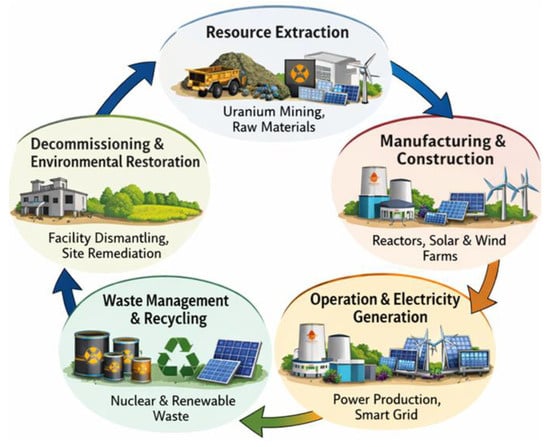
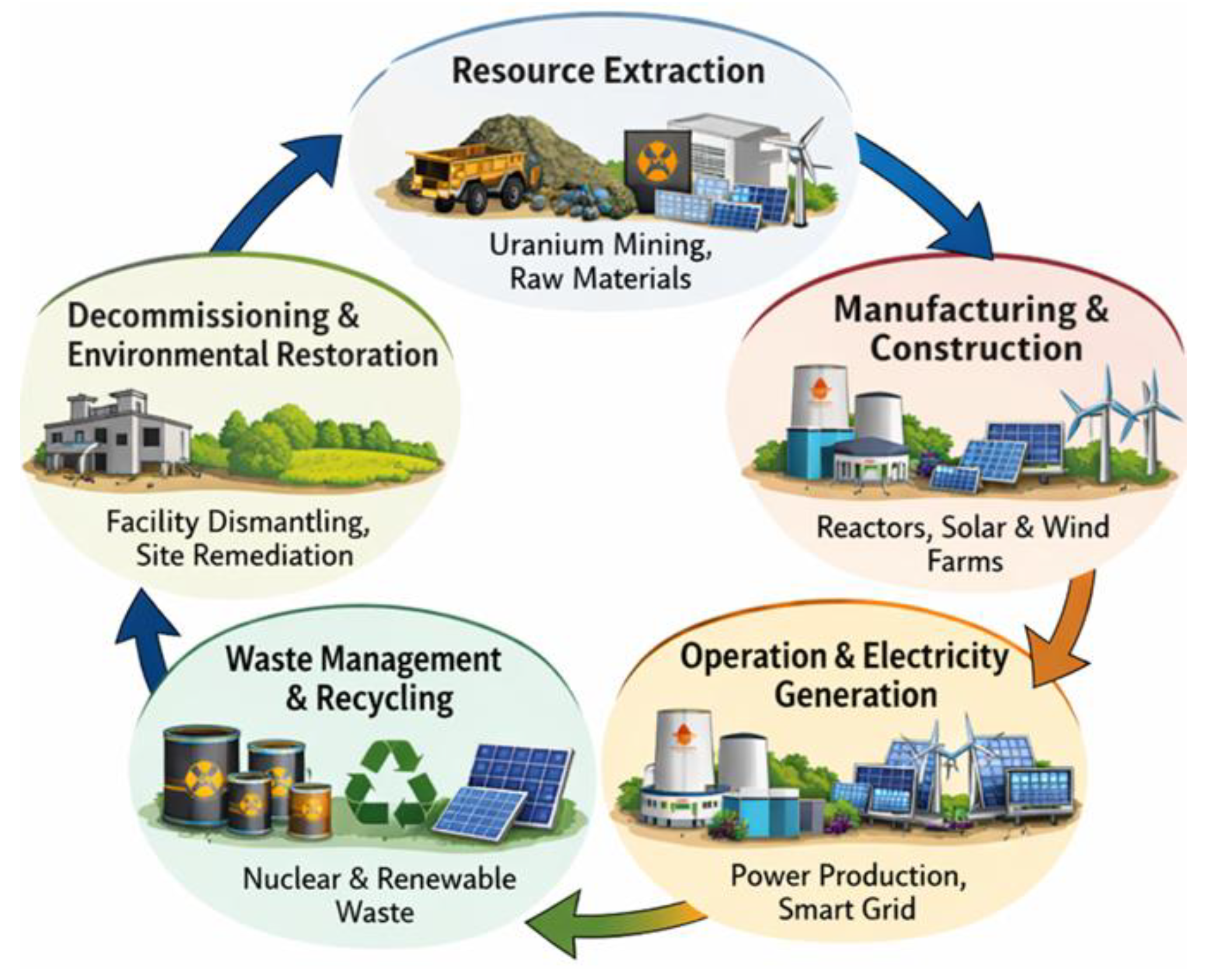
Nuclear-renewable hybrid energy systems combine the advantages of both energy technologies by utilizing nuclear power for baseload generation and renewable sources for supplementary electricity production [4], Figure 1. Nevertheless, evaluating the sustainability of such integrated systems requires comprehensive lifecycle assessment. Lifecycle sustainability analysis examines environmental impacts throughout all stages of an energy system, including resource extraction, infrastructure construction, operation, waste management, and decommissioning [5]. This study focuses on evaluating lifecycle sustainability and waste management strategies in nuclear-renewable integrated energy systems.
Figure 1.
Lifecycle Framework of Nuclear-Renewable Integrated Energy Systems.
2. Literature Review
Numerous studies have examined the environmental impacts and sustainability performance of nuclear and renewable energy systems individually. Life cycle assessment (LCA) has become the most widely used analytical tool for evaluating environmental impacts across the entire lifecycle of energy technologies [5]. LCA considers various lifecycle stages, including raw material extraction, infrastructure manufacturing, energy generation, and waste disposal.
Research indicates that renewable energy technologies such as solar and wind have significantly lower lifecycle carbon emissions compared with fossil fuel power plants [2]. However, renewable energy infrastructure requires substantial material inputs including metals, rare earth elements, and composite materials. These materials must eventually be recycled or disposed of at the end of their operational lifecycle.
Nuclear power plants also exhibit very low lifecycle greenhouse gas emissions due to the absence of direct carbon emissions during operation [3]. Nevertheless, nuclear energy systems generate radioactive waste that requires long-term management and safe storage [6]. High-level radioactive waste from nuclear fuel cycles can remain hazardous for thousands of years, making waste management a critical component of nuclear sustainability.
Recent research has explored nuclear-renewable hybrid energy systems as a strategy to enhance energy system resilience and sustainability [4]. These hybrid systems can improve grid stability while reducing dependence on fossil fuel backup generation. Despite these advantages, relatively few studies have evaluated the lifecycle sustainability and waste management challenges associated with such integrated energy systems.
3. Methodology
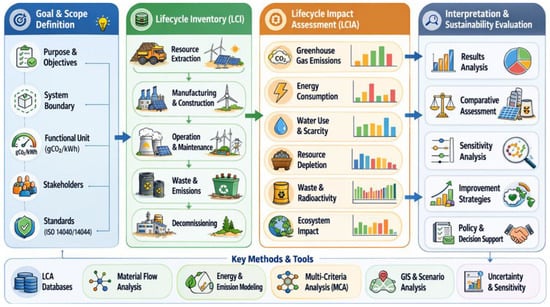
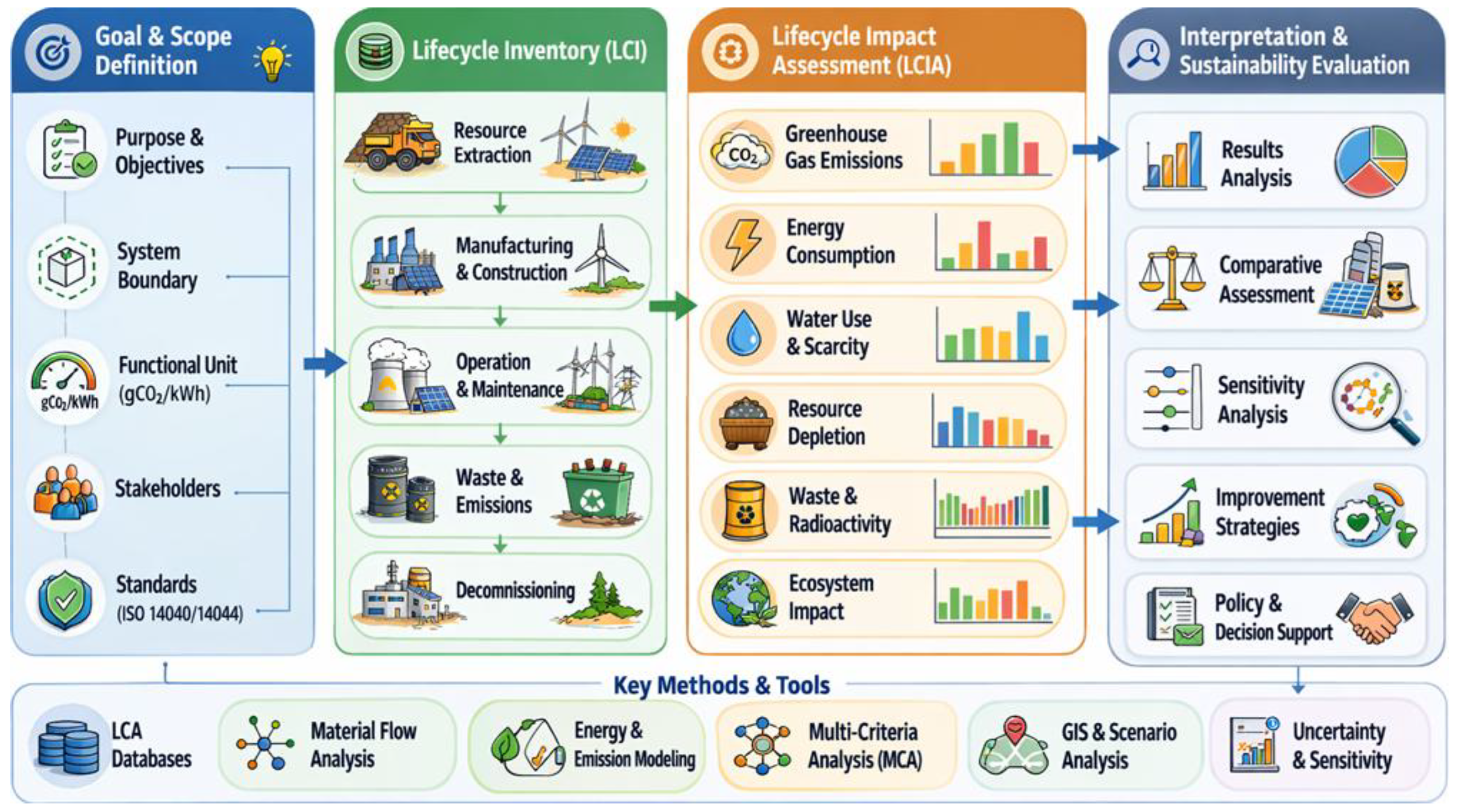
This study adopts a lifecycle sustainability assessment framework to evaluate environmental impacts and waste management strategies in nuclear-renewable integrated energy systems, Figure 2. The methodology combines life cycle assessment (LCA), lifecycle cost analysis, and waste management evaluation.
Figure 2.
Lifecycle Sustainability Assessment Methodology for Nuclear-Renewable Energy Systems.
The LCA methodology follows ISO 14040 [5] and ISO 14044 [7] standards, which define four key phases: goal and scope definition, lifecycle inventory analysis, lifecycle impact assessment, and interpretation [5], Table 1. The system boundary is defined as a cradle-to-grave lifecycle covering the following stages:
Table 1.
Lifecycle Sustainability Assessment Indicators.
- (a)
- Uranium mining and nuclear fuel enrichment;
- (b)
- Manufacturing of renewable energy infrastructure such as solar panels and wind turbines;
- (c)
- Construction of nuclear reactors and renewable energy facilities;
- (d)
- Electricity generation and system operation;
- (e)
- Waste management and recycling processes;
- (f)
- System decommissioning and infrastructure dismantling.
Lifecycle inventory data were obtained from energy databases and peer-reviewed literature sources [1,2,3,4,5,6]. Environmental indicators evaluated in this study include lifecycle greenhouse gas emissions, energy efficiency, water consumption, and waste generation.
Waste management analysis focuses on three major nuclear waste strategies: direct geological disposal of spent nuclear fuel, nuclear fuel recycling and reprocessing, and advanced partitioning and transmutation technologies [6]. Renewable infrastructure waste management is evaluated using circular economy strategies such as photovoltaic module recycling and wind turbine blade material recovery. A multi-criteria sustainability model is applied to compare environmental performance among different energy systems.
4. Results
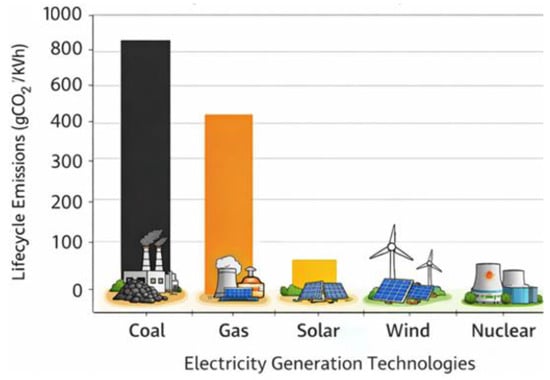
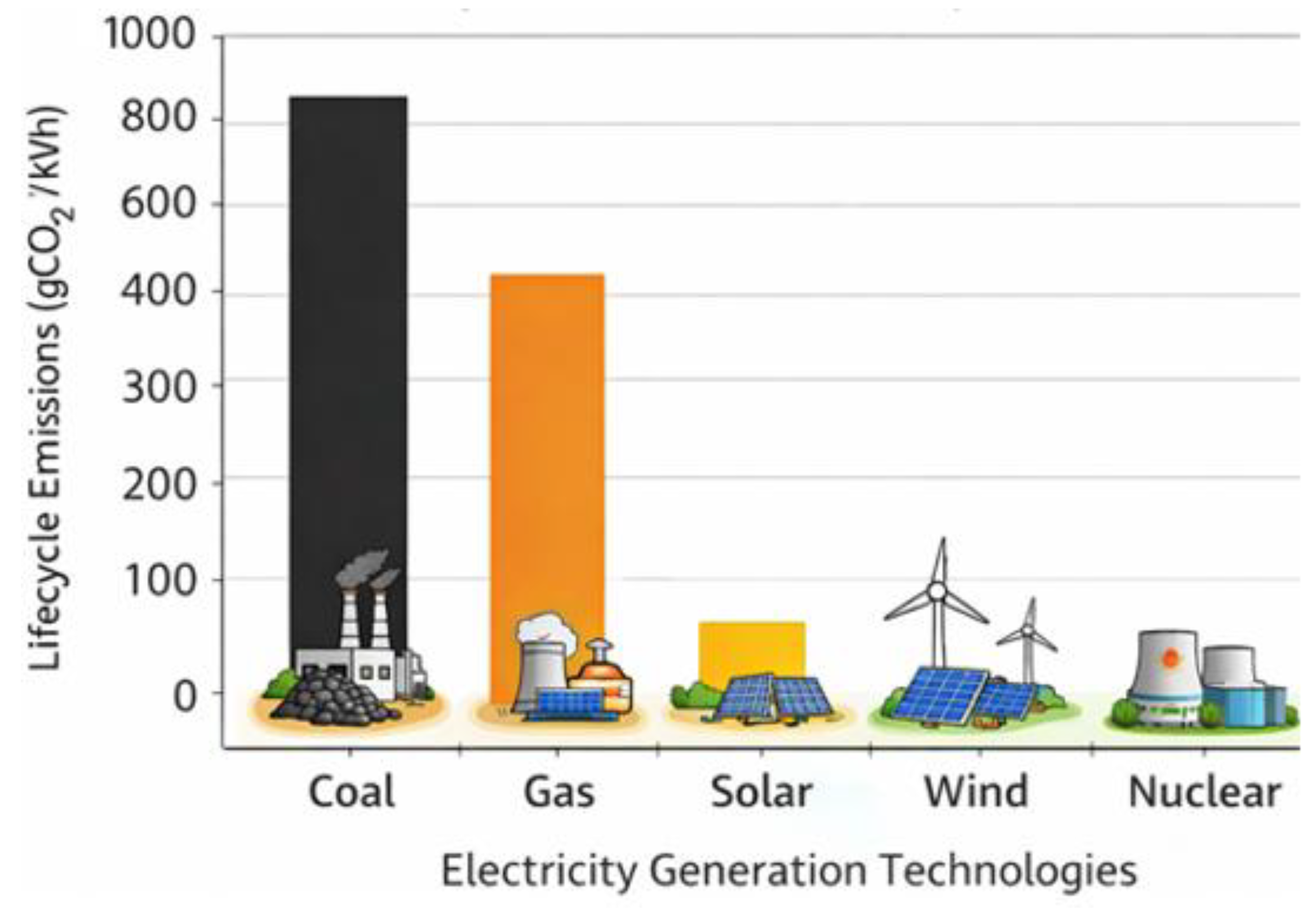
The results of the lifecycle sustainability analysis demonstrate that nuclear-renewable hybrid energy systems significantly reduce environmental impacts compared with conventional fossil-fuel-based electricity generation, Figure 3. Nuclear energy provides stable baseload electricity with very low operational carbon emissions, while renewable energy sources contribute additional clean electricity during favorable environmental conditions.
Figure 3.
Lifecycle Carbon Emissions Comparison of Electricity Generation Technologies.
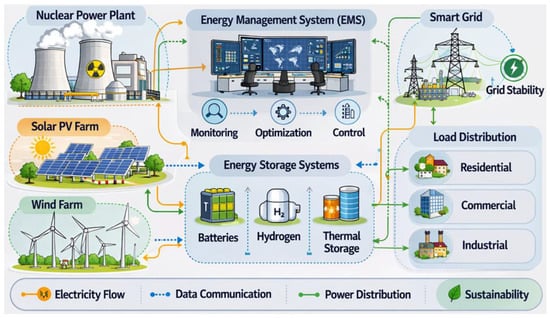
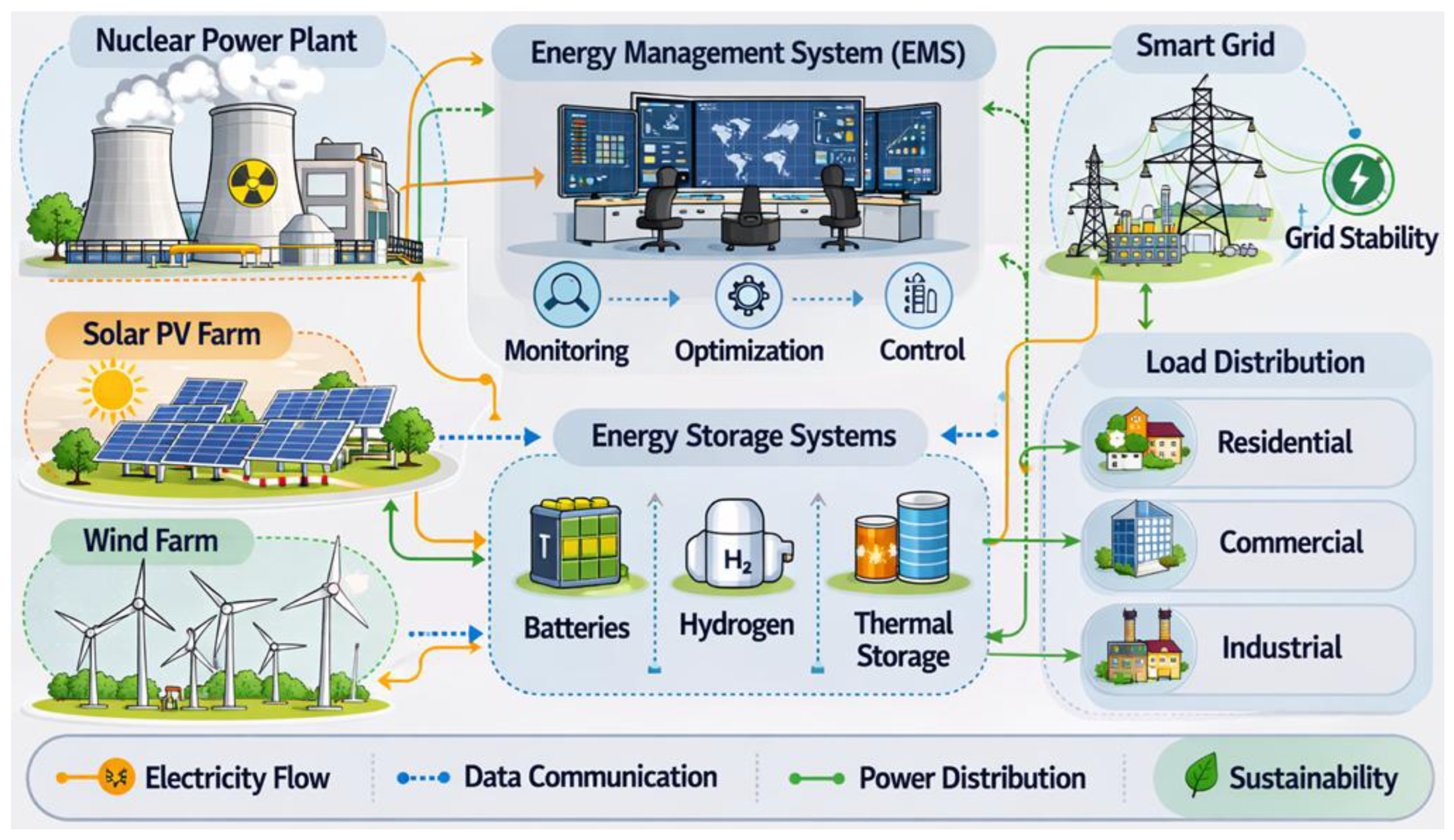
The analysis indicates that hybrid nuclear-renewable systems achieve lifecycle carbon emissions between 15 and 30 gCO2/kWh, which is substantially lower than fossil fuel systems, Table 2. Nuclear reactors contribute consistent low-carbon energy output while renewable technologies reduce reliance on fossil-fuel backup generation, Figure 4.
Table 2.
Lifecycle Carbon Emissions of Electricity Generation Technologies.
Figure 4.
Integrated Nuclear-Renewable Hybrid Energy System Architecture.
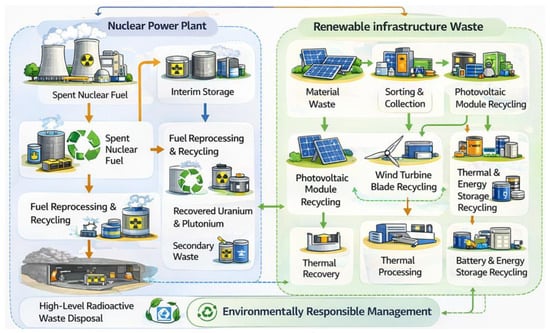
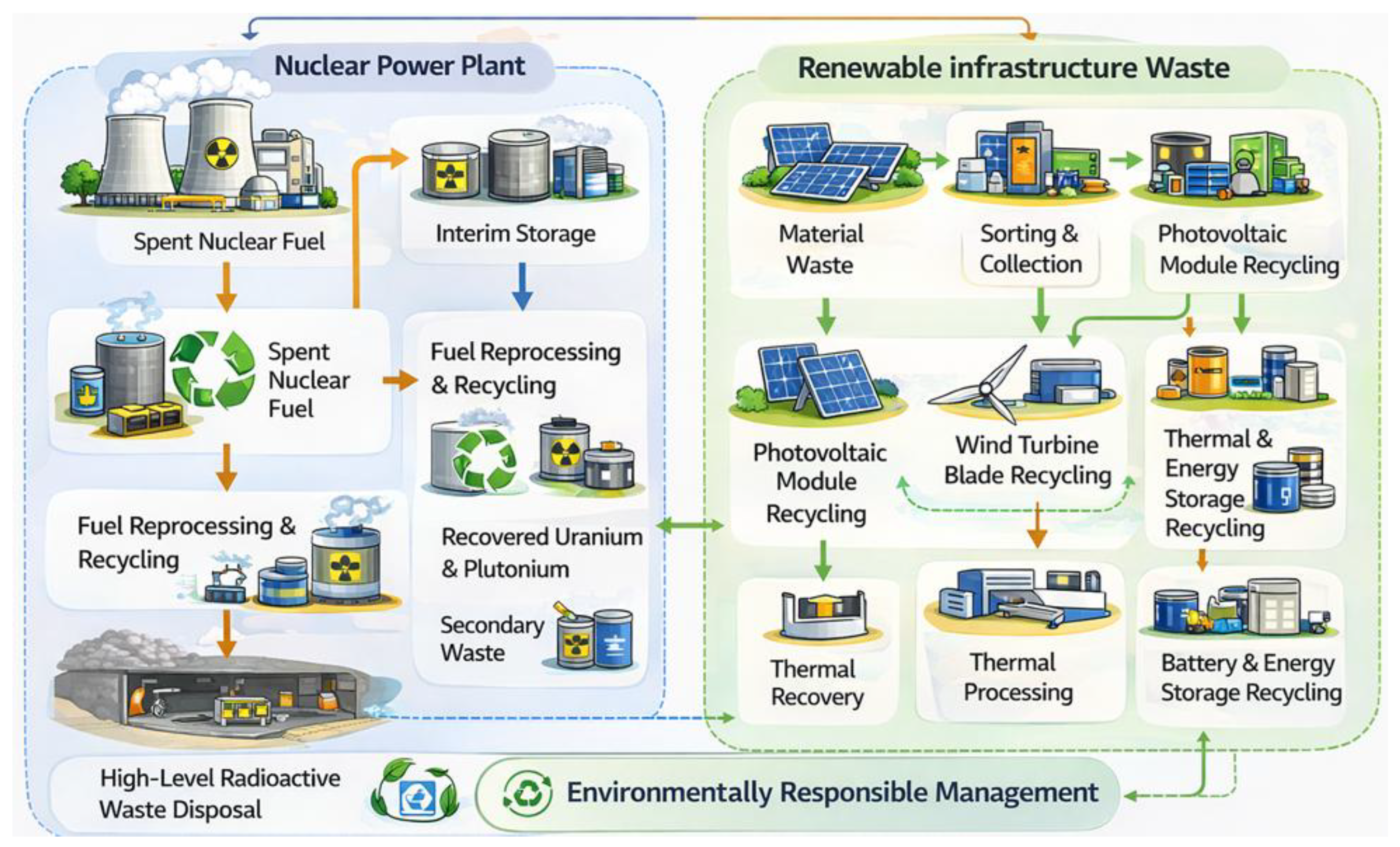
Waste management results reveal that although nuclear waste is highly radioactive, the total volume produced is relatively small compared with other industrial waste streams. Deep geological repositories remain the most widely accepted solution for long-term nuclear waste storage [6]. Additionally, advanced nuclear fuel recycling technologies can significantly reduce waste volume while improving fuel utilization efficiency, Figure 5.
Figure 5.
Nuclear and Renewable Waste Management Workflow.
Renewable infrastructure waste presents additional sustainability challenges, particularly regarding photovoltaic panel disposal and wind turbine blade recycling. However, emerging recycling technologies and circular economy strategies can recover valuable materials and reduce environmental impacts [2].
5. Conclusions
This study examined lifecycle sustainability and waste management strategies in nuclear-renewable integrated energy systems using a comprehensive lifecycle assessment framework. The findings indicate that combining nuclear and renewable energy technologies significantly improves environmental sustainability while reducing lifecycle greenhouse gas emissions.
Hybrid nuclear-renewable systems provide reliable electricity generation while minimizing dependence on fossil fuel backup power plants. Although nuclear energy produces radioactive waste, effective management strategies such as deep geological disposal and advanced fuel recycling technologies can mitigate long-term environmental risks.
In addition, renewable infrastructure recycling strategies contribute to circular economy principles and reduce resource depletion. Overall, nuclear-renewable integrated energy systems represent a promising pathway toward achieving global decarbonization and sustainable energy development. Future research should focus on advanced waste treatment technologies, improved lifecycle monitoring methods, and integrated policy frameworks to support the large-scale deployment of nuclear-renewable hybrid energy infrastructures.
Funding
This research received no external funding.
Institutional Review Board Statement
Not applicable.
Informed Consent Statement
Not applicable.
Data Availability Statement
The data that support the findings of this study are available upon request.
Acknowledgments
During the preparation of this manuscript/study, the author used ChatGPT 5o for the purpose of generating images. The authors have reviewed and edited the output and take full responsibility for the content of this publication.
Conflicts of Interest
The author declares no conflicts of interest.
References
- IPCC. Climate Change 2022: Mitigation of Climate Change; Cambridge University Press: Cambridge, UK, 2022. [Google Scholar]
- IRENA. Renewable Power Generation Costs in 2023; International Renewable Energy Agency: Abu Dhabi, United Arab Emirates, 2024. [Google Scholar]
- World Nuclear Association. The Role of Nuclear Energy in Low-Carbon Energy Systems; World Nuclear Association: London, UK, 2023. [Google Scholar]
- Ruth, M.; Zinaman, O.; Antkowiak, M.; Boardman, R.; Cherry, R.; Bazilian, M. Nuclear-Renewable Hybrid Energy Systems: Opportunities and Challenges. Energy Policy 2014, 73, 735–744. [Google Scholar]
- ISO 14040:2006; Environmental Management—Life Cycle Assessment—Principles and Framework. International Organization for Standardization: Geneva, Switzerland, 2006.
- IAEA. Management of Radioactive Waste from Nuclear Power Plants; International Atomic Energy Agency: Vienna, Austria, 2022. [Google Scholar]
- ISO 14044:2006; Environmental Management—Life Cycle Assessment—Requirements and Guidelines. International Organization for Standardization: Geneva, Switzerland, 2006. Available online: https://www.iso.org/standard/38498.html (accessed on 1 October 2026).

Disclaimer/Publisher’s Note: The statements, opinions and data contained in all publications are solely those of the individual author(s) and contributor(s) and not of MDPI and/or the editor(s). MDPI and/or the editor(s) disclaim responsibility for any injury to people or property resulting from any ideas, methods, instructions or products referred to in the content. |
© 2026 by the author. Licensee MDPI, Basel, Switzerland. This article is an open access article distributed under the terms and conditions of the Creative Commons Attribution (CC BY) license.