


Abstract
Four Al-Mg-Si alloys, three of them with additions of scandium or scandium and zirconium, were cast, homogenised at 550 °C, and precipitation hardened at 175 °C. For the alloy with the highest Sc content, significant discontinuous precipitation of Al3Sc took place during cooling after casting. Homogenisation for 1 h led to the formation of Al3Sc or Al3(Sc,Zr) dispersoids. The Al3(Sc,Zr) dispersoids were found in higher number densities than the Al3Sc dispersoids, and the latter were not stable for longer homogenisation times. TEM observations indicate that the Al3Sc or Al3(Sc,Zr) dispersoids are not preferred nucleation sites for metastable (Mg,Si) particles. The precipitation hardening behaviour of the Al-Mg-Si alloys was not altered by the Sc or Sc+Zr additions.
1. Introduction
The 6xxx series of aluminium alloys (Al-Mg-Si) is of great technological importance and is by far the most used aluminium alloy type used for extrusion [1]. The alloys are heat-treatable; strength is achieved through the precipitation of fine particles. A common way of denoting the precipitation sequence is
although in reality it is somewhat more complex [2]. The highest strength is normally achieved when the β″ precipitates are predominant. When designing thermal or thermomechanical process routes for 6xxx alloys, the most critical step is normally the cooling rate from the solutionising temperature to the pre-ageing or ageing temperature. The lower the cooling rate, the more Mg and Si will precipitate as coarse metastable (Mg,Si) particles and/or as the equilibrium phase β (Mg2Si). Thus, when reaching the age-hardening temperature, less Mg and Si are available for precipitation of the strengthening β″ particles. The tendency for this phenomenon to occur is usually referred to as “quench sensitivity”.
SSSS → GP zones → β″ → β′ → β (Mg2Si)
The 6xxx alloys of higher strength normally have a minor addition of Cr or Mn, which form dispersoids during the homogenisation heat treatment. Such dispersoids are normally used to control the microstructure of the alloy during thermomechanical processing. Both Cr and Mn form phases with Al and Si, with an incoherent particle/matrix interface [3]. It has been observed that non-hardening (Mg,Si) particles tend to nucleate on such interfaces, and it has been demonstrated that the quench sensitivity of 6xxx alloys, for example, during cooling after extrusion, increases with the number density of incoherent dispersoids [4]. One might say that Cr and Mn additions have a “double negative influence” on the age hardening potential of the alloy: first, a depletion of Si during the formation of the dispersoids, then a depletion of both Mg and Si due to the formation of coarse (Mg,Si) and/or β particles on the incoherent dispersoid/matrix interface.
A tempting way of getting around this problem would be to substitute Mn and Cr with elements that can form dispersoids with coherent particle/matrix interfaces. Coherent interfaces are expected to be less effective nucleation sites. There are several elements that can form coherent dispersoids in Al alloys. Among these, Sc has proved to serve as an excellent dispersoid-forming element in several alloy systems [5]. Sc forms a trialuminide (Al3Sc) with the cubic L12 structure. A combined addition of Sc and Zr gives a higher number density of dispersoids than adding Sc alone [6]. The Sc+Zr dispersoids consist of an Al3Sc core and an Al3(Sc,Zr) shell [7], and at high temperatures, these dispersoids coarsen at a much slower rate than pure Al3Sc dispersoids do.
2. Materials and Methods
Four alloys with the baseline composition Al 0.8 wt.% Mg 0.7 wt.% Si and with various additions of Sc and Zr were used in this investigation. The alloys were prepared from 99.999% pure aluminium, and Al-10 wt.% Si, Al-35 wt.% Mg, Al-2 wt.% Sc, and Al-1.8 wt.% Zr master alloys, which were melted in an inert gas atmosphere. The alloys were cast in graphite moulds with a 12 × 22 mm rectangular cross-section and a depth of approximately 100 mm. After solidification, the moulds were immediately split open, and the hot metal bars were water quenched. The time from pouring the melt until the metal had reached room temperature was approx. 10–15 s. The Mg, Si, and Zr contents of the alloys were checked in an optical emission spectrograph. No Sc standard was available for the spectrograph; thus, the Sc level was measured by standardless EDS in an SEM. The measured specimen compositions and the specimen names used throughout this paper are shown in Table 1. The as-cast material was studied both in a light microscope and in a TEM.
Table 1.
Measured chemical composition of the investigated alloys.
To characterise the reactions taking place during homogenisation treatment, specimens of the various alloys were kept at 550 °C in an air furnace for various periods of time and quenched in water. The resulting microstructure was investigated in a TEM. The age-hardening response at 175 °C was also investigated. Here, as-cast specimens were encapsulated in quartz ampoules, solution heat-treated for 1 h at 550 °C in a liquid lead bath, water quenched, kept at room temperature for 5 min, and finally age-hardened in an oil bath. The ageing response was followed by Rockwell hardness measurements. For the as-quenched specimens, all hardness measurements were done within 30 min after the water quench. Specimens age-hardened for 24 h, corresponding to approx. maximum hardness, were studied in TEM.
3. Results and Discussion
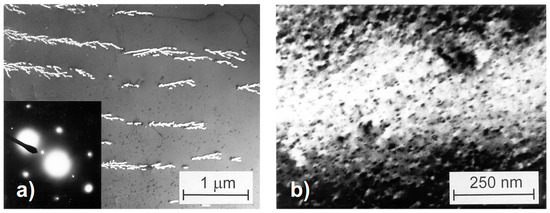
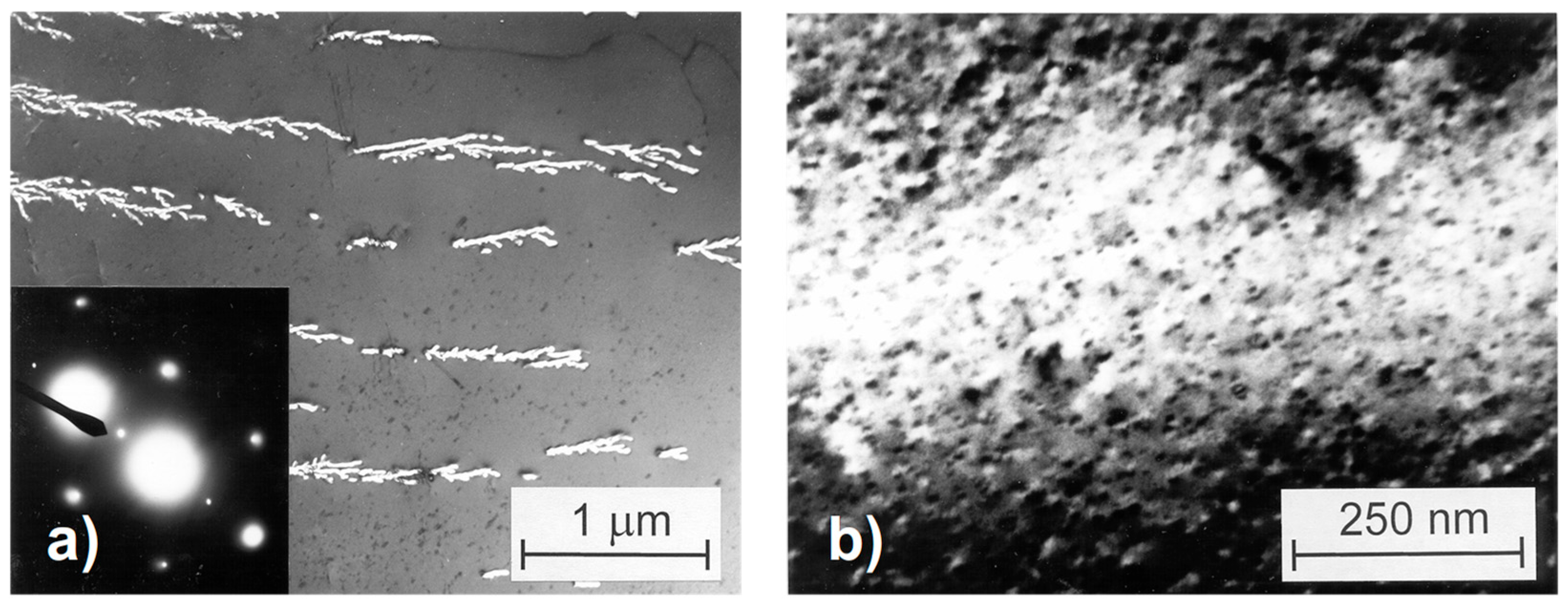
The grain structure consisted mainly of large, columnar grains running from the sides towards the centre of the specimens. Light microscopy and TEM investigations of the as-cast alloys revealed that “droplets” of Al-Si and Al-Mg2Si-Si eutectic formed between dendrite arms and between grains. The Sc and Zr additions did not appear to have any effect on the type or amount of eutectic formed after solidification; however, no quantitative measurements were done on this. No Sc- or Zr-containing particles were observed in the as-cast structure except in the 0.4Sc alloy. For this alloy, significant discontinuous precipitation of Al3Sc had taken place during cooling of the bars. In some areas of the as-cast 0.4Sc alloy, one could also find a dense distribution of Al3Sc precipitates that are not attributed to discontinuous precipitation, but that rather have formed by nucleation and growth. Figure 1 shows examples of Al3Sc precipitation in the as-cast 0.4Sc alloy. Consulting C-curves for precipitation available in the literature [8], one finds that some precipitation is expected to take place within the present timeframe of cooling after casting.
Figure 1.
TEM images of precipitation in the as-cast 0.4Sc alloy. (a) Dark-field image using an L12 superstructure reflection (insert) from the Al3Sc phase, showing characteristic patterns of discontinuous precipitation. (b) Area with high density of Al3Sc particles.
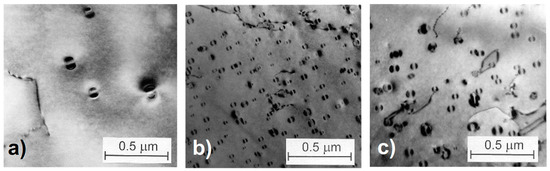
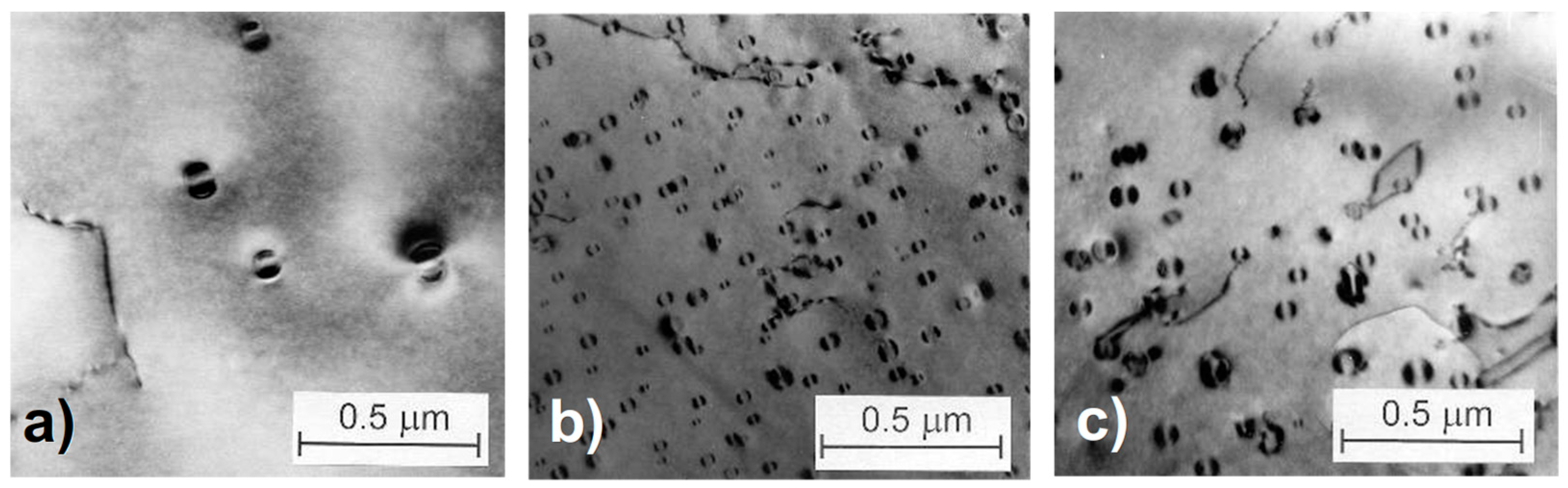
Homogenisation at 550 °C for up to 24 h considerably reduced, but did not completely dissolve the eutectic formed during casting. In TEM, Al3Sc dispersoids were found in the 0.2Sc and the 0.4Sc alloy after homogenisation for 1 h, but not for homogenisation times of 8 h or 24 h. This indicates that the Al3Sc phase may be metastable for this alloy composition and temperature. In the Sc+Zr alloy, however, the Al3(Sc,Zr) dispersoid density after 1 h was much higher than in the other alloys and remained so after 8 h (24 h homogenisation was not applied for this alloy). Figure 2 illustrates the relative difference in dispersoid density between the 0.2Sc and the Sc+Zr alloy. These findings align well with recent work on the effect of Sc and Sc+Zr on the microstructure of an extruded 6xxx alloy, where Sc alone had no particular effect on the recrystallisation resistance, whereas Sc+Zr gave a fibrous microstructure [9].
Figure 2.
TEM images of dispersoid distribution after homogenisation at 550 °C. (a) 0.2Sc homogenised for 1 h, (b) Sc+Zr homogenised for 1 h, (c) Sc+Zr homogenised for 8 h.
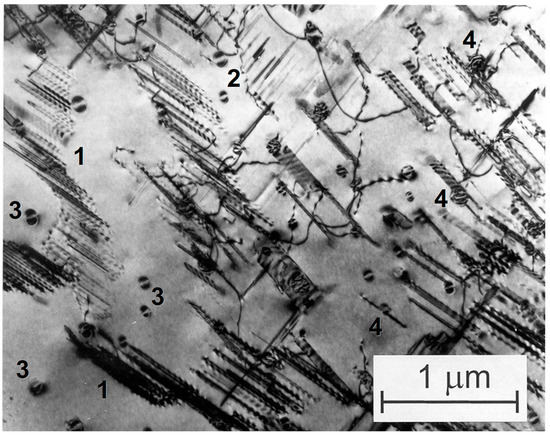
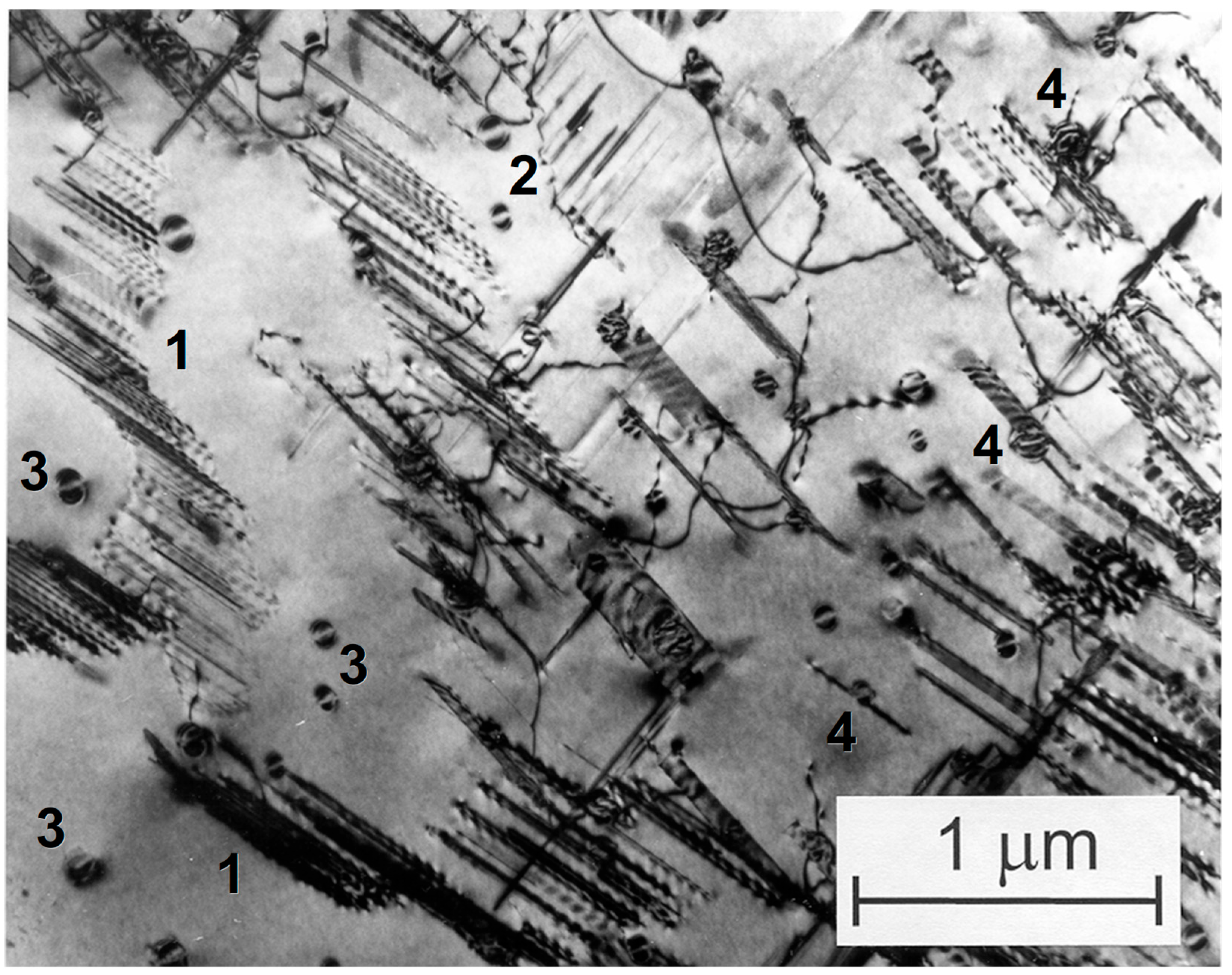
The specimens of Figure 2 were water-quenched after homogenisation, and therefore no (Mg,Si) phases have formed. Another specimen of the 0.2Sc alloy was slowly cooled after 1 h homogenisation; the time from 550 °C to room temperature was approx. 1.5 h. This leads to extensive formation of metastable (Mg,Si) phases, which can be seen as long needle- or lath-shaped particles in Figure 3. Some of the (Mg,Si) particles, examples of which are indicated with the number 1, run through the specimen thickness and form an almost continuous wall. These particles have probably formed on a dislocation outside the specimen volume. In one location, indicated by the number 2, one also finds a dislocation where (Mg,Si) particles have nucleated. The spherical particles are Al3Sc dispersoids. For many of them, examples indicated by the number 3, it is evident that they are not nucleation sites for the (Mg,Si) particles, whereas for others, examples indicated by the number 4, it may be disputed whether or not they are nucleation sites. However, it is fair to state that the Al3Sc dispersoids are not preferred nucleation sites for the metastable (Mg,Si) particles. Thus, the present observation indicates that the quench sensitivity of the Al-Mg-Si alloys may be reduced by using Sc or Sc+Zr as a dispersoid former rather than Mn or Cr, as hypothesised in the introduction.
Figure 3.
TEM image of the 0.2Sc alloy, homogenised at 550 °C for 1 h and slowly cooled to room temperature. The spherical particles are Al3Sc dispersoids grown at the homogenisation temperature, and the needle-shaped particles are metastable (Mg,Si) particles formed during cooling. The numbered locations are discussed in the text.
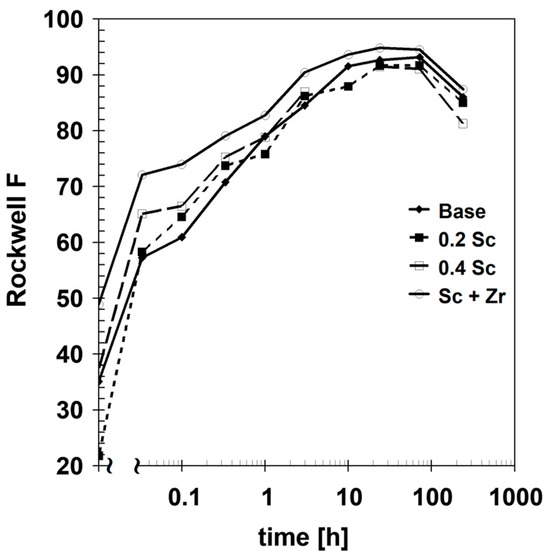
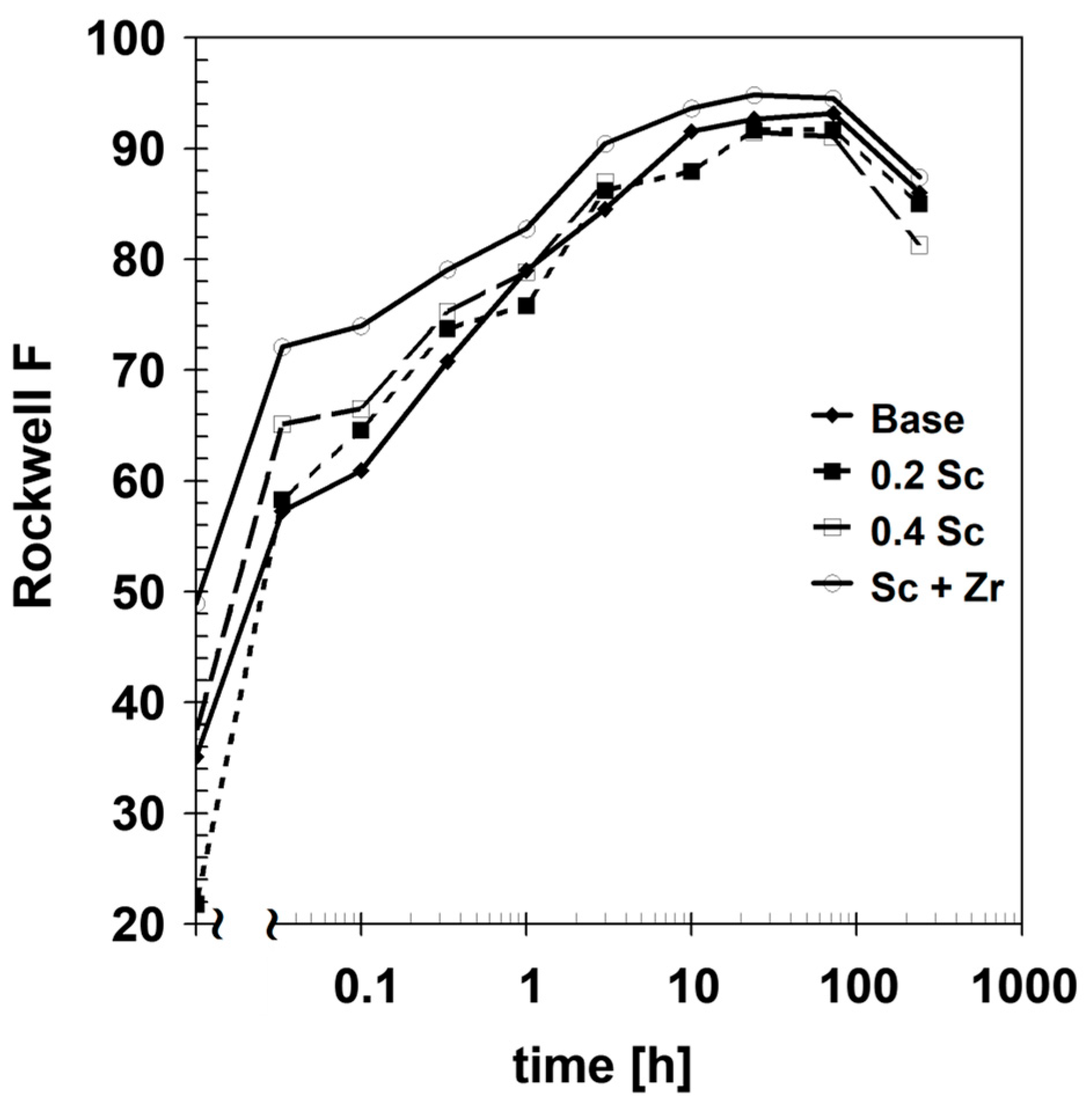
The results from the age-hardening experiment are shown in Figure 4. The hardness of the as-quenched specimens increases somewhat with increasing Sc content. This reflects the strength increase from the dispersoids formed in the alloys. With increasing age-hardening time, as precipitate strengthening from β″ becomes the dominating hardening mechanism, the hardness curves for all the alloys converge towards the same shape. Maximum hardness is achieved after 1–3 days at 175 °C, and after 10 days, all the alloys are significantly overaged.
Figure 4.
Hardness development during precipitation heat treatment of the alloys of Table 1.
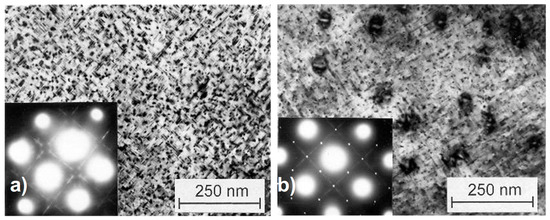
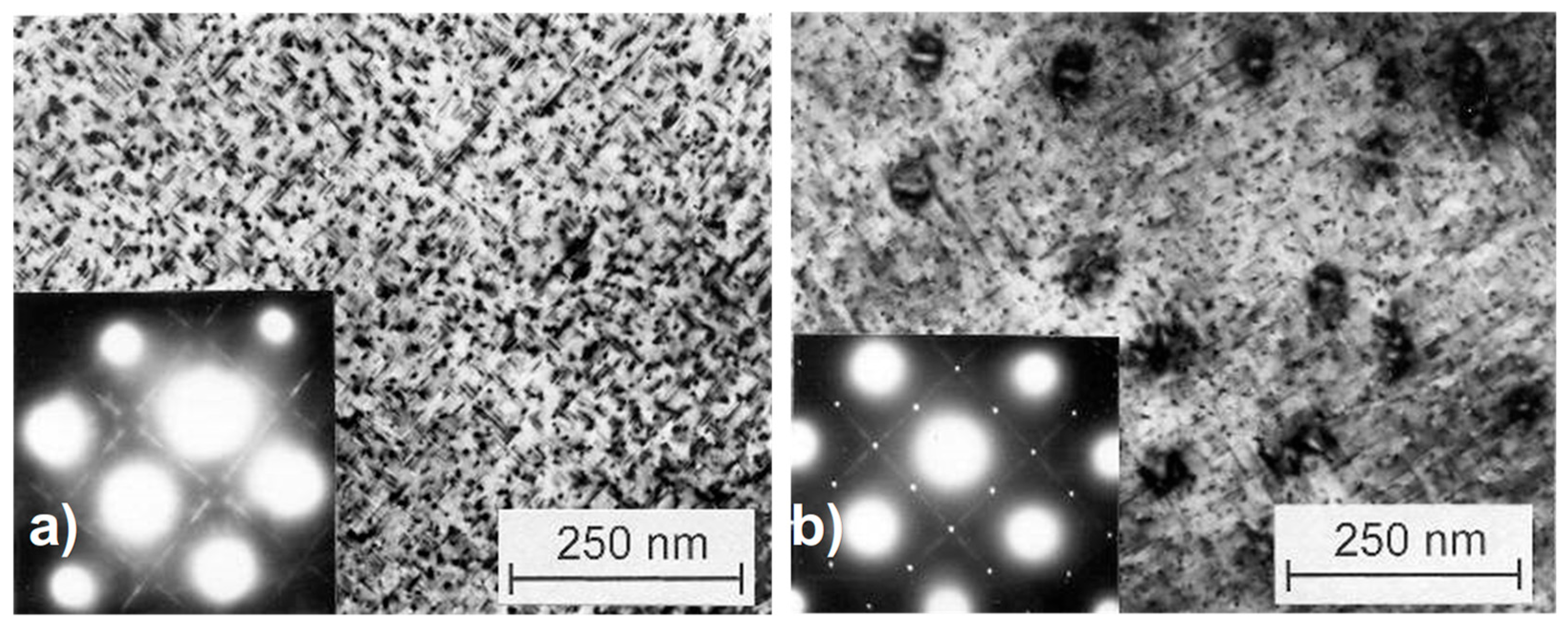
In the literature, there are examples of Sc influencing [10] as well as not influencing [11,12] the precipitation hardening in 6xxx alloys. For the present investigation, the addition of Sc or Sc+Zr does not appear to have any effect on the precipitation hardening kinetics of the alloys; alternatively, the investigation is not accurate enough to reveal any such differences. The apparent lack of Sc-influence on β″ precipitation is sustained by TEM observations of the precipitate structure in the peak-aged alloys, as shown in Figure 5. Comparing the precipitates of the Base alloy with the Sc+Zr alloy, the precipitate sizes and number densities are comparable in the two alloys. In the Sc+Zr alloy, one also observes that the precipitate distribution adjacent to the Al3(Sc,Zr) dispersoids does not differ from that elsewhere in the specimen.
Figure 5.
TEM images of precipitation in the peak-aged (a) base alloy and (b) Sc+Zr alloy, viewed along the <100> zone axis. The inserts show the diffraction patterns, showing characteristic streaks for β″ precipitates, and in the Sc+Zr alloy, also superlattice reflection spots from the Al3(Sc,Zr) dispersoids.
4. Conclusions
Addition of 0.4 wt.% Sc to the investigated Al-Mg-Si alloy leads to considerable precipitation, predominantly discontinuous, of Al3Sc during cooling after casting. For an addition of 0.2 wt.% Sc, no precipitation was observed to take place under the present cooling conditions. Homogenisation at 550 °C for 1 h led to the formation of Al3Sc or Al3(Sc,Zr) dispersoids. The Al3(Sc,Zr) dispersoids were found in higher number densities than the Al3Sc dispersoids. For longer homogenisation times, no dispersoids were found in the alloys with only Sc addition, whereas in the Sc+Zr alloy, the dispersoids prevailed. TEM-observations of specimens slowly cooled after homogenisation indicate that the Al3Sc or Al3(Sc,Zr) dispersoids are not preferred nucleation sites for metastable (Mg,Si) particles. The precipitation hardening behaviour of the Al-Mg-Si alloys at 175 °C was apparently not altered by the Sc or Sc+Zr addition.
Funding
This research received no external funding.
Institutional Review Board Statement
Not applicable.
Informed Consent Statement
Not applicable.
Data Availability Statement
The original contributions presented in this study are included in the article. Further inquiries can be directed to the author.
Acknowledgments
The experimental work of this paper was conducted in the period 1995–1998 under the supervision of E.A. Starke, Jr. at the University of Virginia, Charlottesville, USA, and of N. Ryum at NTNU, Trondheim, Norway, to whom the author is deeply grateful.
Conflicts of Interest
The author is employed by Hydro Aluminium. The author declares that the research was conducted in the absence of any commercial or financial relationships that could be construed as a potential conflict of interest.
Abbreviations
The following abbreviations are used in this manuscript:
| EDS | Energy dispersive X-ray spectroscopy |
| SEM | Scanning electron microscopy |
| SSSS | Supersaturated solid solution |
| TEM | Transmission electron microscopy |
References
- Reiso, O. Extrusion of AlMgSi Alloys. Mater. Forum 2004, 28, 32–46. [Google Scholar]
- Marioara, C.D.; Nordmark, H.; Andersen, S.J.; Holmestad, R. Post-β″ phases and their influence on microstructure and hardness in 6xxx Al-Mg-Si alloys. J. Mater. Sci. 2006, 41, 471–478. [Google Scholar] [CrossRef] [Scilit]
- Lodgaard, L.; Ryum, N. Precipitation of dispersoids containing Mn and/or Cr in Al–Mg–Si alloys. Mater. Sci. Eng. A 2000, 283, 144–152. [Google Scholar] [CrossRef] [Scilit]
- Lohne, O.; Dons, A.L. Quench sensitivity in AlMgSi-alloys containing Mn or Cr. Scand. J. Metall. 1983, 12, 34–36. [Google Scholar]
- Røyset, J.; Ryum, N. Scandium in aluminium alloys. Int. Mater. Rev. 2005, 50, 19–44. [Google Scholar] [CrossRef] [Scilit]
- Yelagin, V.I.; Zakharov, V.V.; Pavlenko, S.G.; Rostova, T.D. Influence of zirconium additions on ageing of Al-Sc alloys. Phys. Met. Metall. 1985, 60, 88–92. [Google Scholar]
- Forbord, B.; Lefebvre, W.; Danoix, F.; Hallem, H.; Marthinsen, K. Three dimensional atom probe investigation on the formation of Al3(Sc,Zr)-dispersoids in aluminium alloys. Scr. Mater. 2004, 51, 333–337. [Google Scholar] [CrossRef] [Scilit]
- Zakharov, V.V. Stability of the solid solution of scandium in aluminum. Met. Sci. Heat Treat. 1997, 39, 61–66. [Google Scholar] [CrossRef] [Scilit]
- Rometsch, P.; Fourmann, J. Potential for Using Scandium in Extrusion Alloys. In Proceedings of the 13th International Aluminum Extrusion Technology & Exposition (ET ’24), Orlando, FL, USA, 30 April–2 May 2024. [Google Scholar]
- Kwon, E.P.; Woo, K.D.; Kim, S.H.; Kang, D.S.; Lee, K.J.; Jeon, J.Y. The effect of an addition of Sc and Zr on the precipitation behavior of AA6061 alloy. Met. Mater. Int. 2010, 16, 701–707. [Google Scholar] [CrossRef] [Scilit]
- Kharakterova, M.L.; Eskin, D.G.; Rokhlin, L.L. Effect of scandium and zirconium on structure and age hardening of the Al-Mg-Si alloys. Russ. Metall. 1997, 1, 104–109. [Google Scholar]
- Vedani, M.; Angella, G.; Bassani, P.; Ripamonti, D.; Tuissi, A. DSC analysis of strengthening precipitates in ultrafine Al–Mg–Si alloys. J. Therm. Anal. Calorim. 2007, 87, 277–284. [Google Scholar] [CrossRef] [Scilit]

Disclaimer/Publisher’s Note: The statements, opinions and data contained in all publications are solely those of the individual author(s) and contributor(s) and not of MDPI and/or the editor(s). MDPI and/or the editor(s) disclaim responsibility for any injury to people or property resulting from any ideas, methods, instructions or products referred to in the content. |
© 2026 by the author. Licensee MDPI, Basel, Switzerland. This article is an open access article distributed under the terms and conditions of the Creative Commons Attribution (CC BY) license.