1. Introduction
Industrial equipment monitoring and information-management systems have long been investigated in domains where assets are distributed, hazardous, or difficult to inspect directly, including subsea production, oil/gas separation, barcode-based identification, platform surface-equipment management, and production-information management [
1,
2,
3,
4,
5]. These developments anticipate the broader Industry 4.0 integration of machinery, supply chains, and logistics [
6], as well as remote monitoring architectures [
7], distributed data backup and recovery mechanisms [
8], and integrity-authentication methods for data and imagery [
9].
The digital transformation of manufacturing has changed the way industrial assets are identified, monitored, maintained, and integrated into production and supply-chain processes. Industry 4.0 combines cyber–physical systems, cloud services, the Industrial Internet of Things (IIoT), machine learning, and data-driven decision support to improve equipment availability, safety, and operational efficiency [
10,
11]. In this context, predictive and condition-based maintenance increasingly rely on continuous information flows, sensor data, and intelligent models that estimate degradation, faults, and remaining useful life [
12,
13,
14].
Recent research emphasizes that smart-maintenance architectures must integrate heterogeneous data sources while preserving reliability, interpretability, cybersecurity, and usability in real industrial settings [
15,
16]. Digital twins and IIoT platforms offer important opportunities for real-time monitoring and predictive maintenance, but their implementation still faces challenges related to connectivity, computational complexity, data variety, interoperability, and the secure exchange of industrial information [
17,
18,
19]. These limitations are especially important in hazardous or connectivity-constrained environments, including ATEX areas, where maintenance personnel may need immediate access to technical instructions, asset records, and safety information even when cloud services cannot be reached.
Barcode and automatic-identification technologies remain attractive in these settings because they are inexpensive, robust, and easy to deploy. However, a single barcode format may be insufficient when the application simultaneously requires high storage capacity, compact representation, error tolerance, selective disclosure, and offline access. Moreover, industrial digitalization must account for integrity, confidentiality, accountability, and responsible data governance. These concerns are consistent with recent work on digital quality, blockchain-supported responsibility, and trustworthy data environments [
20,
21].
This paper proposes an “SSS” marker that combines QR Code, Data Matrix, and PDF417 technologies through a dedicated distributed encoding logic. The marker is integrated with a cloud-based industrial equipment management system developed by Tre Esse Srl. The contribution is threefold: (i) it provides a combined marker for offline storage and structured retrieval of maintenance information; (ii) it introduces integrity and confidentiality mechanisms based on distributed and encrypted encoding; and (iii) it links offline markers to an online system for asset records, operator activities, maintenance history, and plant reliability assessment.
2. ‘SSS’ as a New Marker for Industrial Equipment
Automatic-identification technologies are widely used in industrial and logistics applications because they provide a practical interface between physical assets and digital information systems [
3,
10]. Among two-dimensional barcode technologies, QR Code is widely adopted due to its accessibility and storage capacity, thanks in part to the presence of applications for recent smartphones and the considerable amount of information they can accommodate. Data Matrix symbols provide a compact solution for small-footprint storage and are mainly used in postal shipping or in logistics for warehouse management. PDF417 provides comparatively high redundancy and error tolerance and is used in applications such as transport documents and identification systems.
Having its own encoding mechanism that combines the potential of each type of barcode can enable the following objectives:
encrypt data where confidentiality is required by leveraging distributed encoding across multiple 2D barcodes;
pursue publicly accessible information/training purposes by exploiting error tolerance, minimization, and storage capacity of each 2D barcode.
This approach thus enables:
Considering the scenario of industrial plants, the need is to make available to users:
Confidentiality then becomes a critically important requirement to be pursued. For online access, confidentiality to information is ensured by accessing the cloud with robust credentials and OTPs. However, in relation to hazardous environments (e.g., ATEX) where network connectivity cannot be leveraged, the offline approach via distributed barcodes becomes of paramount importance. A private-key encryption performed in a marker may not be very robust; in addition, it requires more space for encryption. Making use of an encoding that combines multiple barcodes, taking advantage of the capability of a QRCode (S), with the miniaturization of a Datamatrix (S) and the error tolerance of a PDF 417 (S) is now a viable option for pursuing integrity purposes.
To examine the storage-capacity potential of an ‘SSS’ marker, let us consider the combination of PDF 417 + Datamatrix + QRCode. A PDF 417 has a maximum storage capacity of 1108 bytes, a QRCode has a maximum storage capacity of 2953 bytes and a Datamatrix of 1500 bytes. It follows that:
The combination of the above three barcodes results in the marker ‘SSS’ where the order and combination is specific to each information/purpose to be pursued. Information security is given by a distributed and dynamic encoding that exploits the potential of individual barcodes together with a combination and encryption logic. For this reason, the ‘SSS’ marker represents a possible solution not found in the literature to ensure secure and integrated fruition even off-line.
3. An ‘SSS’ Marker for the Pursuit of the Integrity Goal
The goal of information integrity is of considerable importance in ensuring "off-line" fruition of an information. As the size of a Barcode2D increases, however, its level of error tolerance decreases, thus becoming unreadable. In this respect, the ‘SSS’ approach can be a viable solution.
Suppose we consider spare parts (publicly accessible documents) related to a field device making pH measurements. The following is the procedure to be pursued:
verify integrity;
check power supply;
(if portable) check internal battery efficiency status;
perform cleaning pH probe and solution container using distilled water;
prepare 3 certified buffer solutions (pH 4, 7, 9);
(if not compensated) check temperature is in the range of 20 to 25 degrees or check pH value against measured temperature;
for each buffer clean the probe with distilled water.
The simplest way of applying the ‘SSS’ marker off-line is to combine such information, replicated in a QRCode + PDF 417 + Datamatrix, into a marker.
Figure 1 shows an example of this configuration for integrity-oriented offline fruition.
A second mode of application may involve distributing complex text into 3 different barcodes, allowing them to be read sequentially. In fact, if 3 QRCodes were used, the scanning device would have considerable difficulty in selecting a specific QRCode. By taking advantage of the different type of 2D barcode, it is therefore possible to acquire the entire information from an ‘SSS’ marker through a defined sequence. The following is an additional complex spare parts information sequence related to a pH meter instrument.
5826300 ----- AC Power/USB Adapter Kit, 115 VAC
5834100 ----- AC Power/USB Adapter Kit, 230 VAC
1938004 ----- Batteries, Alkaline AA
9245500 ----- Battery cover
5188400 ----- Battery Contact, dual fixed
5188800 ----- Battery Contact, dual spring
5924000 ----- Cable, USB 6 ft (1.8 m), Type A male, Type B male
5825800 ----- Field Kit (includes Protective Glove Kit for meter and five 120-mL sample cups)
8505500 ----- Field Case for 2 probes with up to 5 m cables (10 m total). Includes empty case, insert for meter and probe storage, 4 containers for sample collection.
8505501 ----- Field Case for 3 probes with up to 5 m cables (15 m total). Includes empty case, insert for meter and probe storage, 4 containers for sample collection.
8505600 ----- Field Case for 2 probes with greater than 5 m cables (30 m total). Includes empty case, insert for meter with protective glove.
LZV582 ----- Keyboard (QWERTY), USB type
LQV161.99.10000 ----- Printer, USB Thermal Printer Kit, DPU-S445, 100–240 V
5836000 ----- Printer Paper for DPU-S445, thermal, 5/pk
5818400 ----- Probe Clips, color coded (5 colors, 2 clips of each color), 10/pk
5828610 ----- Probe Depth Marker (rugged cables)
5829400 ----- Probe Holder, standard (fits on protective glove)
5828700 ----- Protective Glove Kit for meter
8508850 ----- Universal Probe Stand for standard IntelliCAL Probes
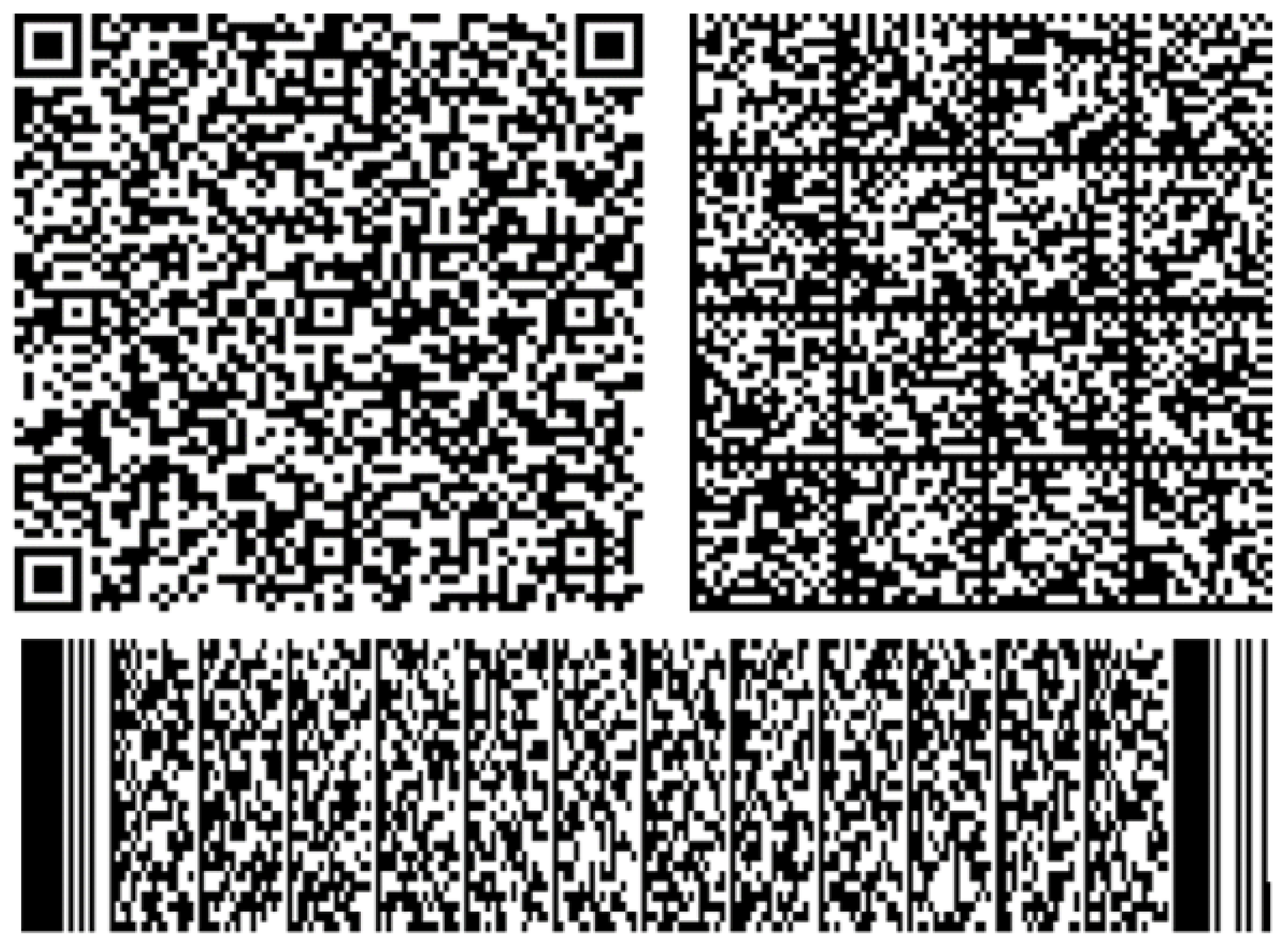
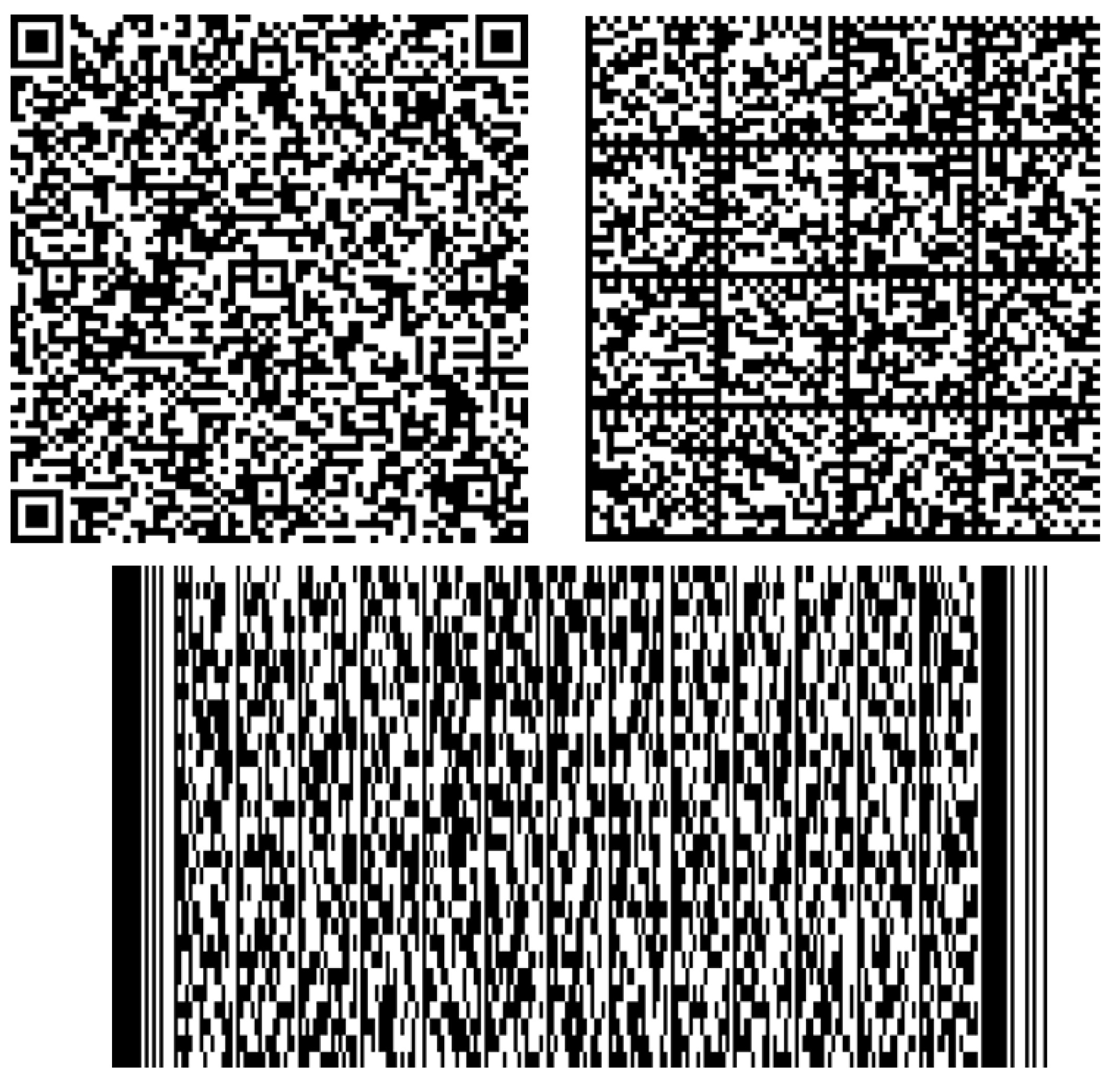
Figure 2 illustrates an ‘SSS’ marker whose storage capacity is increased by combining the three barcode technologies.
The ‘SSS’ marker representation can follow different types of layouts, in a linear or surface representation manner.
This approach is of considerable importance in order to make use of off-line images/schemas, taking advantage of base64 encoding, which is normally difficult to apply to a single barcode. For simplicity we consider the industrial equipment shown in
Figure 3 to be encoded alphanumerically via ‘base64’ and made usable via an ‘SSS’ marker.
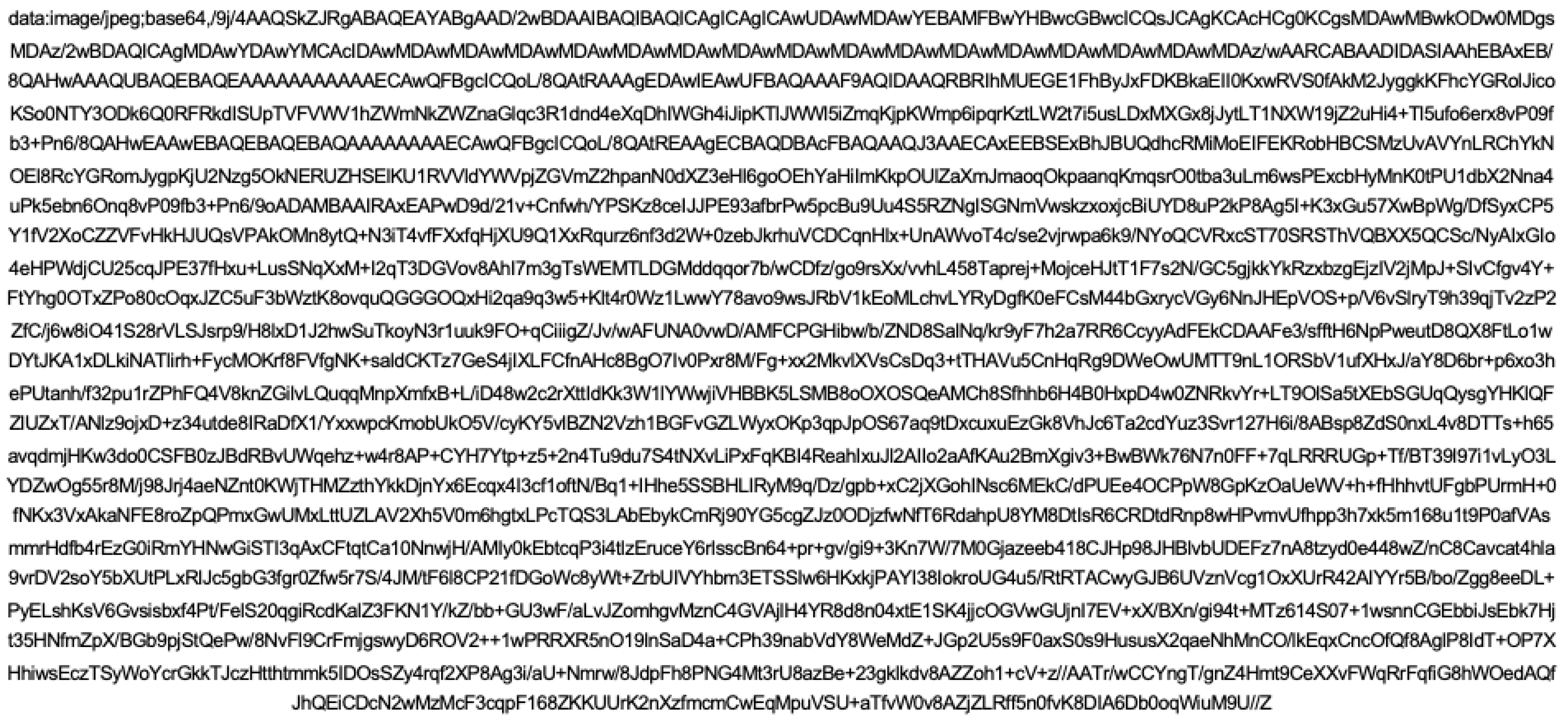
The base-64 encoding of the image considered is a string of 3267 characters, as shown in
Figure 4.
To be able to store such a string in a barcode 2D we would have to have a QRCode of considerable size, which is impractical in a field application. Therefore, a distributed storage in an ‘SSS’ marker is carried out through the simple linear representation shown in
Figure 5.
4. An ‘SSS’ Marker for Pursuing the Goal of Confidentiality
The potential in terms of information storage of the ‘SSS’ marker makes it possible to design information storage applications while respecting confidentiality, with particular reference to elements subject to industrial secrecy.
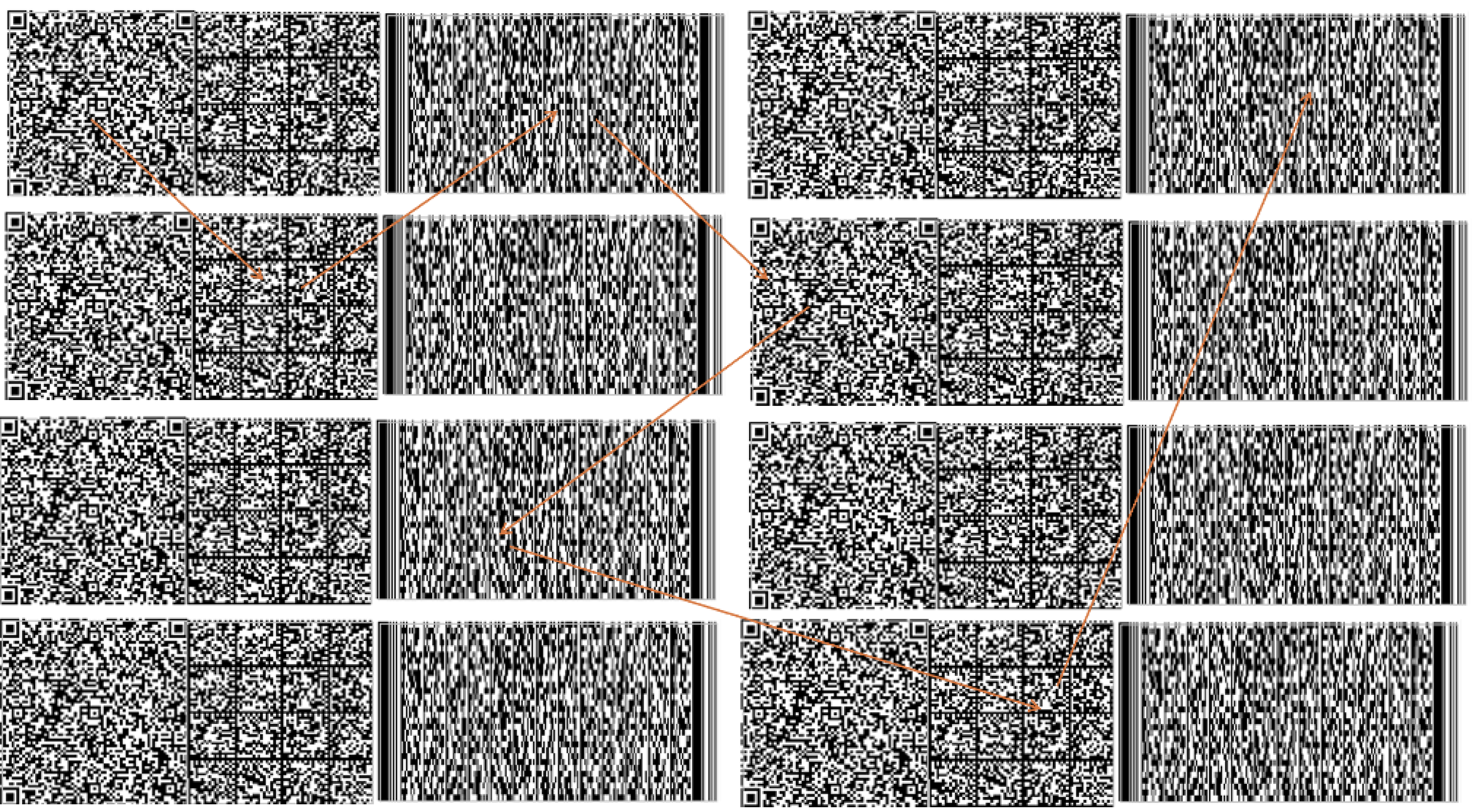
This is the case of configuration parameters or procedures with instructions on access modes. In this context, the ‘SSS’ marker exploits a grid combination, where multiple sequences of encrypted information are distributed and must be decoded by acquiring the entire information through a specific pattern known to the operator.
Figure 6 illustrates this confidentiality-oriented grid arrangement and the corresponding decoding pathway.
Therefore, to pursue the goal of confidentiality, it is possible to work on the following variables in the grid:
This approach shows the high potential of ‘SSS’ marker in off-line perspective pursuing confidentiality and integrity.
5. An Innovative Information System for Industrial Plant Management Using ‘SSS’ Markers
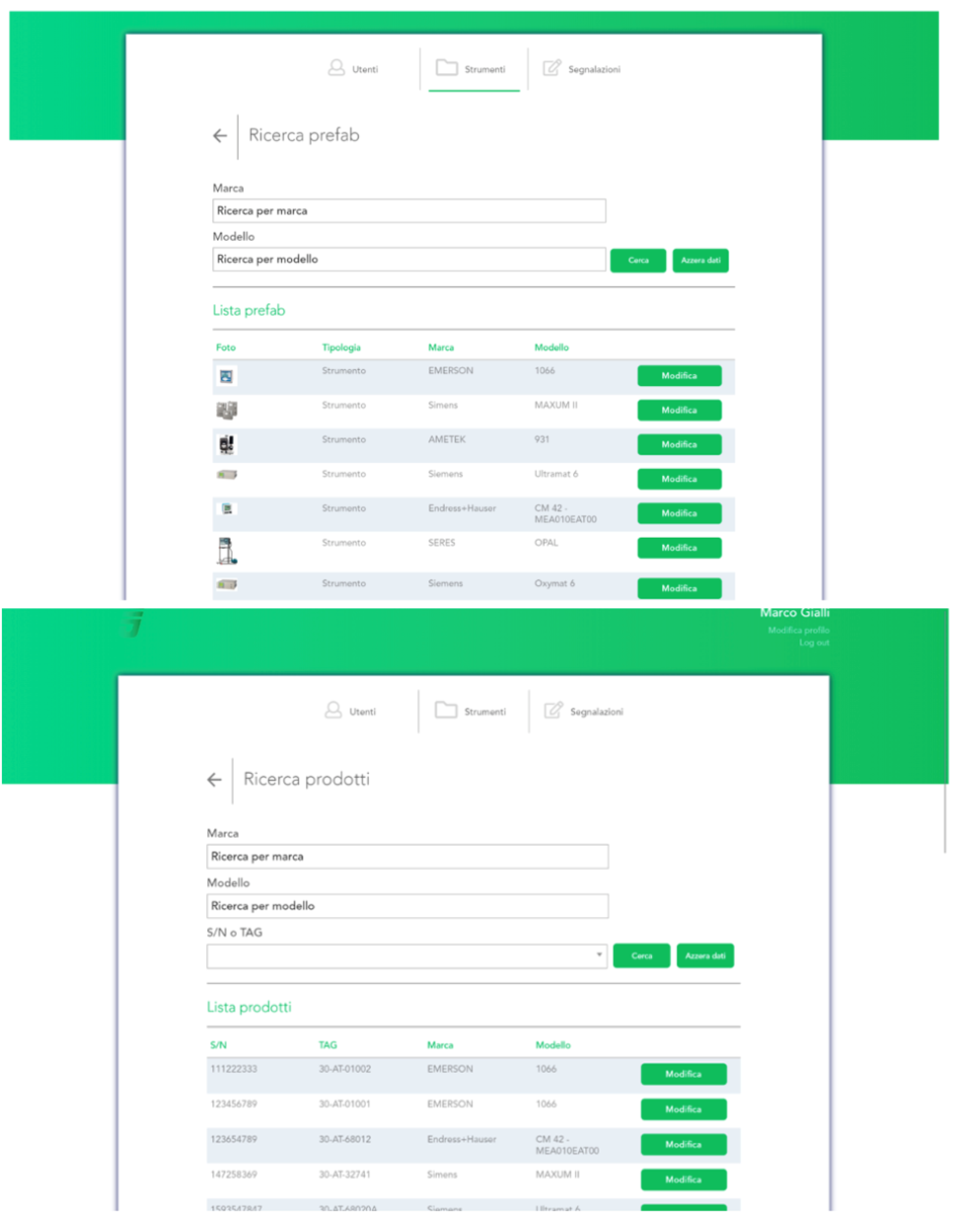
The system conceived, designed, and developed by Tre Esse features an online dashboard for the creation of the knowledge base from the creation of individual sheets related to each category of equipment, called ‘prefabs’. Each ‘prefab’ has information of a general nature (e.g., spare parts).
Figure 7 shows the management cloud dashboard used to structure this knowledge base.
A cloud information instance associated with a type of ‘prefab’ is then created for each piece of equipment, with the possibility of creating an “SSS” marker for the corresponding cloud access. Each piece of equipment in addition to having its own ‘prefab’ information also has information of a specific nature. For each general or specific information it is possible to generate an off-line ‘SSS’ marker that follows the integrity criteria and eventual level of confidentiality to be pursued.
For each piece of equipment, it is possible to make a record of maintenance/signaling information directly in the cloud via IoT in non-ATEX environments. Each user can make or receive the association of one or more equipment present in the field, on which they can perform related verification and maintenance activities.
In ATEX environments, the information is read from special “SSS” markers on the equipment and is updated by printing and affixing new ‘SSS’ markers.
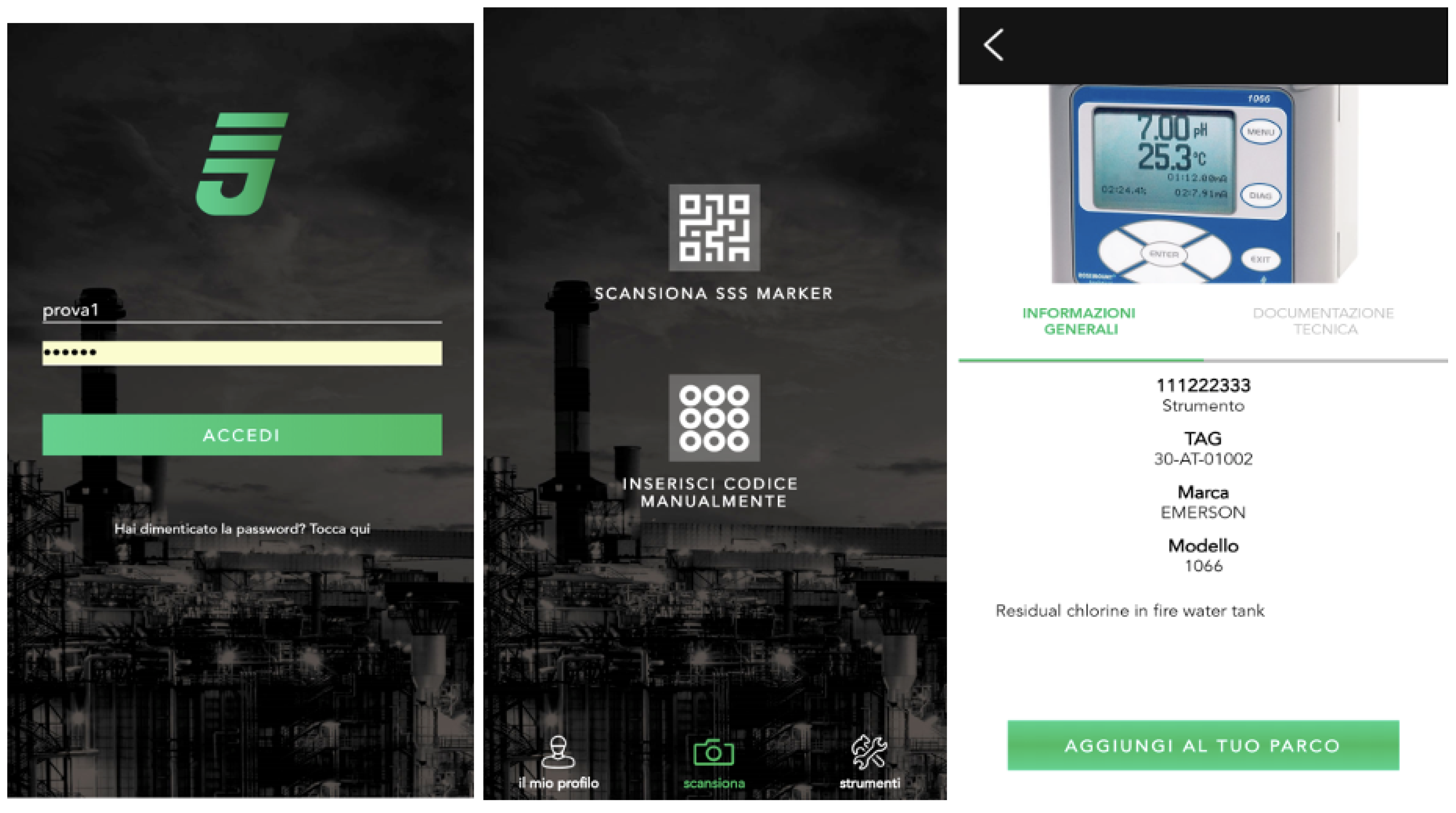
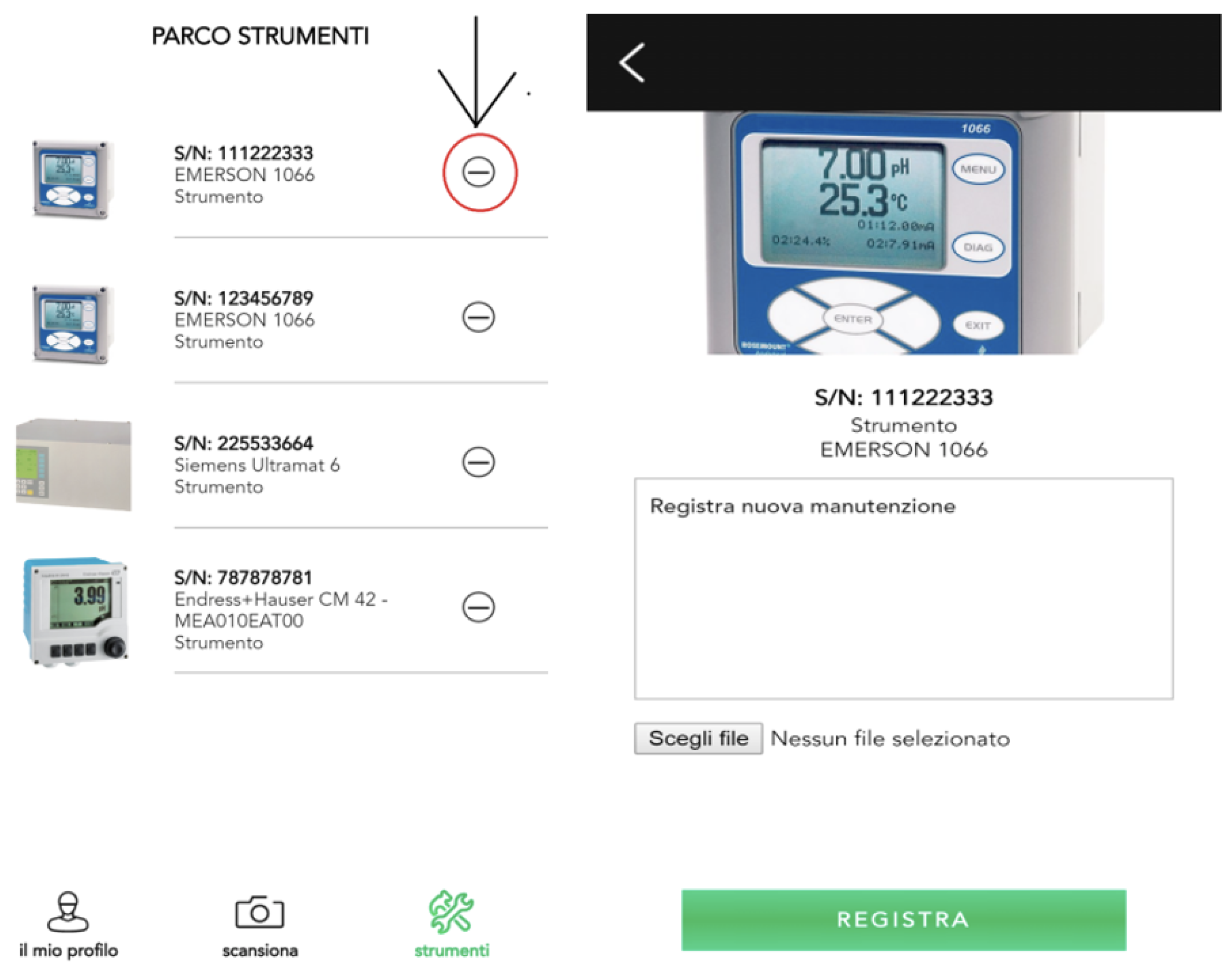
Figure 8 shows screenshots of the application workflow, while
Figure 9 shows the application area related to the tool park associated with a user.
For each piece of equipment, we also monitor its status, days of operation, record all extraordinary and routine maintenance. These variables appropriately weighted by the system allow for the establishment of the equipment reliability index (IAT), determined by type of ‘prefab’ based on the knowledge base structured through the established know-how of company personnel.
The IAT parameter is calculated as the inverse of IAC (incidence relative to the individual plant) given by life time (days from first activation and operation) together with the assessment of routine and extraordinary maintenance.
The incidence index for equipment
i is expressed as
where
represents operating lifetime,
is the temporal component associated with the equipment record,
denotes ordinary-maintenance events, and
denotes extraordinary-maintenance events. The weights
,
, and
are determined according to equipment type and the maintenance knowledge base. The plant reliability index is then defined as the inverse of the aggregate incidence:
A higher value of indicates a more reliable plant, whereas increases in weighted age or maintenance incidence reduce the index.
This index can also transparently reveal the level of efficiency of the service provided by the maintenance company. This is with a view to synergistic work performance to the client aimed at a high service rating of the company. This information is then constantly monitored and interwoven in the cloud with others from related devices in order to continuously improve the service provided. Thus, the system also allows for visualization by a commissioning user of the plant’s reliability index, related trends over time, future forecasts, and comparison with contractual requirements and mandatory regulations for the purpose of greater accountability on plant issues and for improved company quality standards. This information can be coded off-line through the use of ‘SSS’ markers structured according to the area of affixation and the objectives of confidentiality and integrity to be pursued.
6. Conclusions
This study presented an integrated approach to industrial asset management based on the combined use of a cloud information system and an innovative “SSS” marker. By combining QR Code, Data Matrix, and PDF417 technologies, the marker supports greater storage flexibility than a single barcode and allows information to be distributed according to application-specific integrity and confidentiality requirements. The proposed architecture connects equipment identification, technical documentation, operator training, maintenance recording, and reliability assessment within a common workflow.
The main practical contribution concerns industrial contexts in which network access is intermittent, restricted, or unavailable. In ATEX environments, essential information can remain accessible through offline markers, while updated records can be synchronized with the cloud platform when connectivity is available. The distributed encoding logic also provides a basis for separating public, operational, and confidential content. This complements current IIoT and predictive-maintenance approaches, which generally depend on continuous sensing and connectivity [
11,
14,
16].
The present work is an application-oriented methodological proposal and therefore has limitations. The reliability weights used in Equations (
2) and (
3) require calibration for each equipment class, and the security of the distributed encoding mechanism should be evaluated through formal threat modelling and controlled field tests. Future research will focus on experimental validation in industrial plants, comparison with single-code identification systems, usability assessment with maintenance operators, and integration with sensor-based predictive models and digital twins [
17,
18]. Further developments may also include cryptographic key management, automated marker regeneration, and explainable maintenance alerts. These extensions would support a more complete and trustworthy Maintenance 4.0 framework while preserving the distinctive offline functionality of the proposed system.
Author Contributions
Conceptualization, R.R., E.M., V.S., G.P. and M.G.; methodology, R.R., E.M., V.S., G.P. and M.G.; software, R.R., E.M., V.S., G.P. and M.G.; validation, R.R., E.M., V.S., G.P. and M.G.; formal analysis, R.R., E.M., V.S., G.P. and M.G.; investigation, R.R., E.M., V.S., G.P. and M.G.; resources, R.R., E.M., V.S., G.P. and M.G.; data curation, R.R., E.M., V.S., G.P. and M.G.; writing—original draft preparation, R.R., E.M., V.S., G.P. and M.G.; writing—review and editing, R.R., E.M., V.S., G.P. and M.G. All authors have read and agreed to the published version of the manuscript.
Funding
This research received no external funding.
Institutional Review Board Statement
Not applicable.
Informed Consent Statement
Not applicable.
Data Availability Statement
No new data were created or analyzed in this study. Data sharing is not applicable to this article.
Conflicts of Interest
The authors declare no conflict of interest.
References
- Edison, D.M.; Marton, F.S.; Ucovich, J.N. Remote Monitoring and Controlling System for Subsea Oil/Gas Production Equipment. U.S. Patent US4138669A, 6 February 1979. [Google Scholar]
- Houot, J.J. Apparatus for Oil/Gas Separation at an Underwater Well-Head. U.S. Patent US4982794A, 2 February 1988. [Google Scholar]
- Kiliccote, H. Method and System for Creating and Using Barcodes. U.S. Patent US8534567B2, 17 September 2013. [Google Scholar]
- Piovesan, C.M.; Kozman, J.B. Method, System and Apparatus for Intelligent Management of Oil and Gas Platform Surface Equipment. U.S. Patent US8676721B2, 18 March 2014. [Google Scholar]
- Sherwin, R.; McDaniel, R.; Dickerson, R. Method and System for Oil and Gas Production Information and Management. U.S. Patent US20020035551A1, 20 September 2000. [Google Scholar] [CrossRef] [Scilit]
- Sinitò, D.; Santarcangelo, V.; Stanco, F.; Giacalone, M. Industry 4.0: Machinery integration with supply chain and logistics in compliance with Italian regulations. MethodsX 2023, 11, 102269. [Google Scholar] [CrossRef] [Scilit] [PubMed]
- Ure, R.; Kazemi, R.; Molson, C.; Mcintosh, H. System, Method and Apparatus for Remote Monitoring. U.S. Patent US20150097949A1, 9 April 2015. [Google Scholar] [CrossRef] [Scilit]
- Zhang, Y.; Xu, C.; Muntean, G.M. A novel distributed data backup and recovery method for software-defined WAN controllers. In Proceedings of the 2021 IEEE Global Communications Conference (GLOBECOM), Madrid, Spain, 7–11 December 2021; pp. 1–6. [Google Scholar]
- Xu, D.; Ren, N.; Zhu, C. Integrity authentication based on blockchain and perceptual hash for remote-sensing imagery. Remote Sens. 2023, 15, 4860. [Google Scholar] [CrossRef] [Scilit]
- Visconti, P.; Rausa, G.; Del-Valle-Soto, C.; Velázquez, R.; Cafagna, D.; De Fazio, R. Machine learning and IoT-based solutions in industrial applications for smart manufacturing: A critical review. Future Internet 2024, 16, 394. [Google Scholar] [CrossRef] [Scilit]
- Bányai, T.; Bányai, À. Real-time maintenance optimization with Industrial Internet of Things. Appl. Sci. 2025, 15, 5640. [Google Scholar] [CrossRef] [Scilit]
- Ucar, A.; Karakose, M.; Kırımça, N. Artificial intelligence for predictive maintenance applications: Key components, trustworthiness, and future trends. Appl. Sci. 2024, 14, 898. [Google Scholar] [CrossRef] [Scilit]
- Mallioris, P.; Aivazidou, E.; Bechtsis, D. Predictive maintenance in Industry 4.0: A systematic multi-sector mapping. CIRP J. Manuf. Sci. Technol. 2024, 50, 80–103. [Google Scholar] [CrossRef] [Scilit]
- Tsallis, C.; Papageorgas, P.; Piromalis, D.; Munteanu, R.A. Application-wise review of machine learning-based predictive maintenance: Trends, challenges, and future directions. Appl. Sci. 2025, 15, 4898. [Google Scholar] [CrossRef] [Scilit]
- Azari, M.S.; Flammini, F.; Santini, S.; Caporuscio, M. A systematic literature review on transfer learning for predictive maintenance in Industry 4.0. IEEE Access 2023, 11, 12887–12910. [Google Scholar] [CrossRef] [Scilit]
- Nunes, P.; Santos, J.; Rocha, E. Challenges in predictive maintenance—A review. CIRP J. Manuf. Sci. Technol. 2023, 40, 53–67. [Google Scholar] [CrossRef] [Scilit]
- van Dinter, R.; Tekinerdogan, B.; Catal, C. Predictive maintenance using digital twins: A systematic literature review. Inf. Softw. Technol. 2022, 151, 107008. [Google Scholar] [CrossRef] [Scilit]
- Khan, T.; Khan, U.; Khan, A.; Mollan, C.; Morkvenaite-Vilkonciene, I.; Pandey, V. Data-driven digital twin framework for predictive maintenance of smart manufacturing systems. Machines 2025, 13, 481. [Google Scholar] [CrossRef] [Scilit]
- Javaid, M.; Haleem, A.; Suman, R. Digital Twin applications toward Industry 4.0: A review. Cogn. Robot. 2023, 3, 71–92. [Google Scholar] [CrossRef] [Scilit]
- Giacalone, M.; Santarcangelo, V.; Massa, E.; Crisafulli, S.G.; Piscopo, G. The ethical metaverse: Quality, tokens, and social responsibility in blockchain environments. Qual. Quant. 2026, 429–446. [Google Scholar] [CrossRef] [Scilit]
- Giacalone, M.; Sinitò, D.C.; Calciano, M.V.; Santarcangelo, V. A novel Big Data approach for record and represent compliance in the COVID-19 era. Big Data Res. 2022, 27, 100290. [Google Scholar] [CrossRef] [Scilit]
| Disclaimer/Publisher’s Note: The statements, opinions and data contained in all publications are solely those of the individual author(s) and contributor(s) and not of MDPI and/or the editor(s). MDPI and/or the editor(s) disclaim responsibility for any injury to people or property resulting from any ideas, methods, instructions or products referred to in the content. |



 and
and