


Abstract
The present study investigates the physicochemical degradation and wear metal evolution of low-viscosity SAE 0W-20 engine oil during the first service interval of a modern gasoline internal combustion engine. Two oil samples were analyzed: fresh lubricant and used oil collected after approximately 13,000 km of vehicle operation. The analysis included determination of kinematic viscosity at 100 °C (ASTM D445), total base number (ASTM D2896), FT-IR spectroscopic indicators of chemical degradation (ASTM E2412), and elemental analysis of wear and additive metals using ICP-OES (ASTM D5185). The results show a viscosity reduction from 8.5 to 7.01 mm2/s and a decrease in the alkalinity reserve to 3.7 mgKOH/g, indicating progressive lubricant aging. FT-IR analysis revealed moderate oxidation, nitration, and sulfation processes, while elemental analysis identified Cu, Fe, and Al as the dominant wear metals. The observed changes correspond primarily to normal oil aging and engine running-in processes. The results demonstrate the effectiveness of combined oil analysis techniques for monitoring lubricant degradation and early engine wear.
1. Introduction
The continuously increasing number of vehicles worldwide and the rapid expansion of road transportation in recent years meet the ever-growing societal demand for mobility. Internal combustion engines (ICEs) remain the dominant power units for a wide range of transportation applications, particularly in passenger cars, commercial vehicles, and heavy-duty machinery. Despite the increasing development of electrified propulsion systems, ICE-powered vehicles still constitute the majority of the global vehicle fleet due to their high energy density, established infrastructure, and technological maturity. As a result of the large number of vehicles in operation, continuous research efforts are focused on improving engine efficiency and reducing harmful exhaust emissions [1,2,3,4,5]. These optimization activities include advancements in combustion strategies, fuel formulations, lubrication systems, and engine component design. Improving the tribological performance of engine components and lubricants plays a crucial role in reducing mechanical losses, enhancing durability, and contributing to overall engine efficiency.
Engine lubricating oils perform several essential functions in internal combustion engines, including the reduction in friction and wear between moving components, removal of heat from highly loaded zones, sealing of combustion gases between piston rings and cylinder liners, corrosion protection, and suspension of contaminants generated during operation. The effectiveness of these functions depends strongly on the physicochemical properties of the lubricant, which evolve continuously during engine operation due to thermal, mechanical, and chemical stresses [6].
Modern engine oils are complex formulations made of a base oil and a carefully engineered additive package. The base oil provides the fundamental lubricating properties, while additives enhance performance by improving oxidation stability, protecting surfaces from wear, neutralizing acidic combustion products, and maintaining engine cleanliness. During service, both the base oil and additives undergo degradation processes that gradually modify the lubricant’s chemical composition and tribological performance [7].
Among the various lubricant properties, viscosity is widely recognized as one of the most important parameters influencing lubrication performance. Viscosity represents the internal resistance of a fluid to flow and determines the capability of the oil to form a hydrodynamic film separating interacting surfaces. When the viscosity is sufficient, a stable lubricating film develops in components such as crankshaft bearings, camshaft interfaces, and piston–cylinder contacts, preventing direct metal-to-metal interaction and significantly reducing friction and wear. However, if viscosity becomes too low, the lubricating film may collapse, leading to increased asperity contact and accelerated component degradation [8].
In contemporary engine design, viscosity grades are standardized according to the SAE J300 classification system, which defines performance requirements at both low and high temperatures. Low-viscosity oils such as SAE 0W-20 have become increasingly common in modern gasoline engines due to their ability to reduce hydrodynamic friction losses and improve fuel economy. Several experimental studies have demonstrated that reducing lubricant viscosity can lead to measurable improvements in mechanical efficiency and fuel consumption. However, the reduced viscosity also decreases the thickness of the lubricating film, which may increase the sensitivity of the lubrication regime to contamination, additive depletion, and degradation processes [9].
During engine operation, lubricants are subjected to high temperatures, mechanical shear, and exposure to combustion products. These conditions lead to progressive oil aging, which manifests through several physicochemical changes such as viscosity variation, additive depletion, oxidation, contamination, and accumulation of wear particles. Monitoring these changes provides valuable information about both lubricant performance and engine operating conditions [10].
One important parameter related to lubricant aging is the alkalinity reserve of the oil, commonly expressed as the total base number (TBN) or alkalinity number. This parameter characterizes the ability of the lubricant to neutralize acidic products generated during combustion and oxidation processes. Detergent additives based on calcium and magnesium compounds are responsible for maintaining this alkalinity reserve. As these additives react with acidic species during engine operation, the alkalinity gradually decreases. Monitoring the alkaline number therefore provides insight into the remaining protective capability of the lubricant and its resistance to corrosive degradation [11].
In addition to chemical degradation, the lubricant is also affected by contamination originating from various sources. Water contamination may occur due to condensation inside the crankcase or through external leakage. Even small amounts of water can accelerate oxidation reactions, reduce lubrication efficiency, and promote corrosion of metallic surfaces. Water content is therefore commonly monitored as an indicator of lubricant contamination and potential engine operating issues [12].
Another important contaminant in engine oil is soot or carbonaceous material produced during incomplete combustion. These particles are transported into the lubricant through blow-by gases and become suspended in the oil by dispersant additives. Increasing soot concentration can significantly alter the rheological behavior of the lubricant, leading to viscosity increase, abrasive wear, and deposit formation in engine components. The accumulation of carbon-based contaminants is therefore an important indicator of lubricant degradation and engine operating conditions [13].
Chemical degradation of engine oil during service is often evaluated through spectroscopic indicators such as oxidation, nitration, and sulfation. Oxidation occurs when lubricant molecules react with oxygen at elevated temperatures, forming oxygen-containing compounds such as aldehydes, ketones, and carboxylic acids. These reactions may lead to viscosity increase, sludge formation, and depletion of antioxidant additives. Nitration results from reactions between lubricant molecules and nitrogen oxides produced during combustion, particularly in high-temperature regions of the engine. Sulfation processes originate from sulfur-containing combustion products interacting with the lubricant. The monitoring of oxidation (COx), nitration (NOx), and sulfation (SOx) indices therefore provides valuable information regarding the chemical aging mechanisms of the oil during service [14].
In addition to chemical degradation products, engine oil contains metallic particles originating from wear of internal components. The analysis of wear metals in used oil is widely applied as a diagnostic tool for evaluating engine condition and identifying potential mechanical problems. Different elements are associated with wear of specific engine components. For example, iron is typically related to wear of cylinder liners, camshafts, and other steel components, while aluminum may originate from piston skirts or aluminum-based engine structures. Copper is often associated with bronze bushings or bearing alloys, and chromium may indicate wear of surface-hardened components such as piston rings [15].
In addition to wear metals, certain elements detected in used oil may indicate contamination from external sources. Silicon is commonly associated with the ingress of airborne dust through the intake system or inadequate air filtration. Because silica particles are highly abrasive, elevated silicon concentrations in engine oil may significantly accelerate wear processes within the engine. Sodium may indicate contamination from coolant leaks, as sodium compounds are frequently present in antifreeze formulations. The presence of such elements in lubricant analysis can therefore provide early warning of mechanical or sealing failures in engine systems [16].
A significant portion of the elemental composition of engine oil originates from the additive package itself. Modern lubricant formulations contain a variety of metallic additives designed to enhance performance and durability. Calcium and magnesium compounds are commonly used as detergent additives that neutralize acidic combustion products and prevent deposit formation. Zinc and phosphorus are typically present in the form of zinc dialkyldithiophosphate (ZDDP), one of the most widely used anti-wear additives in engine lubrication. Under high pressure and temperature conditions, ZDDP decomposes to form protective tribofilms on metal surfaces, reducing adhesive wear and surface damage. Monitoring the concentration of these additive elements provides insight into additive depletion and lubricant aging during service [17].
Because engine oil simultaneously undergoes chemical degradation, contamination, and additive depletion during operation, a comprehensive oil analysis typically includes several complementary parameters. These include viscosity, alkalinity reserve, contamination indicators, spectroscopic degradation indices, wear metals, and additive elements. Together, these parameters provide a detailed picture of lubricant condition and engine performance during the service interval.
Low-viscosity oils such as SAE 0W-20 are particularly relevant in this context because they are widely used in modern gasoline engines designed for improved fuel efficiency. However, the reduced viscosity of these lubricants may make them more sensitive to contamination and degradation processes, particularly during extended service intervals. Understanding the evolution of lubricant properties during the first oil service interval of a new engine is therefore important for evaluating lubricant performance and early-stage wear behavior.
The present study investigates the aging behavior of a low-viscosity SAE 0W-20 engine oil during its first service interval in a gasoline engine. The analysis compares the physicochemical properties of the fresh lubricant with those measured after approximately 13,000 km of vehicle operation. Particular attention is given to viscosity changes, alkalinity variation, contamination indicators, spectroscopic degradation indices, and the evolution of wear and additive elements in the lubricant.
By examining these parameters, the study aims to provide insight into lubricant degradation mechanisms and early engine wear processes during the initial operating period. Such information is valuable for understanding the performance of low-viscosity lubricants in modern engines and for optimizing maintenance strategies and oil change intervals.
2. Material and Methods
2.1. Engine Oil and Sampling Procedure
The present study investigates the physicochemical degradation and wear metal evolution of a low-viscosity SAE 0W-20 engine oil during the first service interval of a modern gasoline internal combustion engine. Two oil samples were analyzed: a fresh oil sample (unused lubricant) and a used oil sample collected after approximately 13,000 km of vehicle operation.
The tested lubricant belongs to the class of ultra-low-viscosity engine oils designed to reduce hydrodynamic friction losses and improve fuel economy in modern gasoline engines. Such oils typically contain a highly refined synthetic base oil combined with an advanced additive package consisting of detergents, dispersants, antioxidants, anti-wear additives, viscosity modifiers, and corrosion inhibitors.
The fresh oil sample was collected directly from a sealed container prior to engine operation in order to establish the baseline physicochemical properties of the lubricant. The used oil sample was collected during the first scheduled oil change of the vehicle after approximately 13,000 km of operation under normal driving conditions.
Sampling of the used lubricant was performed immediately after engine shutdown while the oil was still warm in order to ensure homogeneous suspension of contaminants and wear particles.
Prior to analysis, the samples were visually inspected to identify potential contamination or phase separation. All measurements were performed under controlled laboratory conditions in accordance with standardized test procedures.
To evaluate the degradation behaviour of the lubricant during service, several complementary analytical methods were employed. These methods include viscosity measurement, determination of the alkalinity reserve, infrared spectroscopic analysis of chemical degradation products, and elemental analysis of wear metals and additive elements.
2.2. Determination of Kinematic Viscosity
The viscosity of the engine oil samples was determined according to ASTM D445, which is the standard test method for determining the kinematic viscosity of transparent and opaque liquids. The measurement procedure is based on determining the time required for a fixed volume of liquid to flow through a calibrated capillary viscometer under the influence of gravity.
Viscosity measurements were performed at 100 °C, which is the standard reference temperature for engine oil characterization according to the SAE viscosity classification system. Prior to testing, the samples were thermostatically conditioned in a temperature-controlled bath to ensure stable measurement conditions.
Various conventional and sensor-based techniques can be used to evaluate engine oil viscosity [18]. In the present study, the viscosity of the engine oil samples was determined according to ASTM D445.
2.3. Determination of Total Base Number
The alkalinity reserve of the lubricant was evaluated through determination of the total base number according to ASTM D2896.
TBN represents the amount of basic substances present in the lubricant that are capable of neutralizing acidic products generated during combustion and oxidation processes. These basic components are typically provided by detergent additives containing calcium or magnesium compounds.
The ASTM D2896 method determines TBN through potentiometric titration using a strong acid solution. During the test, a known quantity of oil sample is dissolved in a suitable solvent mixture and titrated with a standardized acid solution until the endpoint is reached. The endpoint is determined by monitoring the change in electrode potential.
The total base number is expressed in units of milligrams of potassium hydroxide per gram of oil (mg KOH/g).
A decrease in TBN during engine operation indicates consumption of detergent additives and progressive depletion of the oil’s neutralization capacity. Monitoring the alkalinity reserve therefore provides valuable information regarding lubricant degradation and remaining service life.
2.4. Infrared Spectroscopic Analysis of Oil Degradation
Chemical degradation processes occurring in the lubricant during service were investigated using Fourier-Transform Infrared Spectroscopy (FT-IR) according to ASTM E2412.
FT-IR spectroscopy is widely used in lubricant condition monitoring because it enables rapid identification of chemical functional groups present in the oil. Changes in the infrared absorption spectrum can be correlated with oxidation, nitration, sulfation, and contamination processes occurring during engine operation.
Specific spectral regions corresponding to characteristic chemical bonds were analyzed in order to evaluate degradation processes in the lubricant. In particular, the following indicators were monitored:
- Oxidation index (COx)—associated with carbonyl compounds formed during oxidation of the base oil.
- Nitration index (NOx)—related to reactions between lubricant molecules and nitrogen oxides generated during combustion.
- Sulfation index (SOx)—associated with sulfur-containing combustion products interacting with the lubricant.
- Water contamination—detected through absorption bands associated with O–H stretching vibrations.
The FT-IR method enables rapid identification of degradation trends by comparing the spectral characteristics of the fresh and used oil samples. In this study, the spectroscopic indices were used to assess the chemical aging mechanisms occurring during the first service interval.
2.5. Elemental Analysis of Wear Metals and Additives
The concentration of metallic elements present in the engine oil samples was determined according to ASTM D5185, which specifies the use of inductively coupled plasma optical emission spectrometry (ICP-OES) for multi-element analysis of lubricants.
This analytical technique allows simultaneous detection of both wear metals originating from engine components and metallic elements associated with lubricant additives.
Wear metals originate from mechanical interaction between engine components and provide information regarding wear processes occurring during operation. Typical elements include:
- Iron (Fe)—associated with wear of cylinder liners, camshafts, gears, and other steel components.
- Aluminum (Al)—typically related to wear of piston skirts or aluminum engine structures.
- Copper (Cu)—associated with bronze bushings and bearing materials.
- Chromium (Cr)—may indicate wear of surface-hardened components such as piston rings.
Certain metallic elements originate from the lubricant additive package. Monitoring their concentration provides information regarding additive depletion during service. Typical additive elements include:
- Calcium (Ca)—detergent additive responsible for neutralizing acidic combustion products.
- Magnesium (Mg)—detergent and dispersant additive.
- Zn (Zinc) and Phosphorus (P)—present in anti-wear additives such as zinc dialkyldithiophosphate (ZDDP).
Some elements detected in used oil may indicate contamination from external sources or engine malfunction. These may include:
- Silicon (Si)—typically associated with dust contamination entering through the intake system.
- Sodium (Na)—may indicate coolant contamination.
The concentrations of these elements were measured in parts per million (ppm) and compared between the fresh and used oil samples to evaluate the evolution of wear processes and additive depletion during the first service interval.
2.6. Data Analysis
The obtained experimental results were analyzed by comparing the physicochemical parameters of the fresh and used oil samples. The analysis focused on identifying changes in viscosity, alkalinity reserve, chemical degradation indicators, and elemental composition.
Particular attention was given to correlations between lubricant degradation indicators and wear metal concentrations, as these parameters provide insight into the tribological behavior of engine components during the early stages of engine operation.
The combination of viscosity measurements, spectroscopic analysis, alkalinity determination, and elemental analysis provides a comprehensive characterization of lubricant aging processes and allows evaluation of the condition of both the lubricant and the engine during the investigated service interval.
3. Results and Discussion
3.1. Changes in Kinematic Viscosity and Alkalinity of the Engine Oil
The physicochemical condition of the investigated SAE 0W-20 engine oil was evaluated by comparing the properties of the fresh lubricant with those of the oil sample collected after 13,000 km of operation in a new gasoline engine. Among the most important indicators of lubricant degradation are the kinematic viscosity at 100 °C and the total base number. The measured kinematic viscosity decreased from 8.5 mm2/s for the fresh oil to 7.01 mm2/s after 13,000 km, corresponding to a reduction of approximately 17.5%.
The observed decrease in kinematic viscosity is consistent with trends reported in the literature for in-service engine oils. However, unlike studies where viscosity reduction is primarily driven by fuel dilution, no measurable fuel contamination was detected in the present case. This suggests that the viscosity loss is mainly associated with shear degradation and early service aging mechanisms. Similar correlations between fuel contamination and viscosity reduction have been reported by Sejkorová et al. [10], where fuel presence was identified as a dominant factor influencing viscosity decrease. Therefore, the present results represent a milder degradation scenario characteristic of the first service interval of a new engine rather than contamination-driven deterioration.
Several mechanisms may contribute to this change. The most significant factor is typically the mechanical shear degradation of viscosity index improvers, which are polymer additives responsible for maintaining viscosity stability across a wide temperature range. Under the high shear stresses present in the lubrication films of bearings, piston rings, and valve train components, these polymer chains may break down, leading to permanent viscosity loss.
Another potential contributor to viscosity reduction is fuel dilution, which may occur when unburned fuel enters the crankcase during cold starts or incomplete combustion events. However, the analysis performed in the present study detected no measurable fuel contamination, suggesting that viscosity reduction is primarily associated with mechanical shear of polymer additives rather than dilution effects.
In addition to viscosity, the alkaline reserve of the oil, expressed as the total base number, also decreased during engine operation. The measured TBN value of the used oil was 3.7 mgKOH/g, indicating a significant reduction compared to typical fresh values for oils of this class, which are usually between 7 and 9 mgKOH/g.
The depletion of the alkaline reserve is associated with the neutralization of acidic compounds formed during combustion and lubricant oxidation. Detergent additives such as calcium sulfonates and magnesium compounds react with these acids to prevent corrosion of engine components. As these reactions proceed, the concentration of alkaline additives gradually decreases, which explains the observed reduction in TBN.
Despite this decrease, the measured value suggests that the lubricant still retains a portion of its neutralizing capacity, indicating that the oil had not yet reached a critically degraded state after the investigated service interval.
3.2. FT-IR Indicators of Chemical Degradation
The chemical degradation of the lubricant was evaluated using FT-IR according to ASTM E2412. The method allows the monitoring of oxidation, nitration, and sulfation processes occurring in the oil during engine operation. In addition, the presence of contaminants such as water, soot (carbon), glycol, and fuel can be detected.
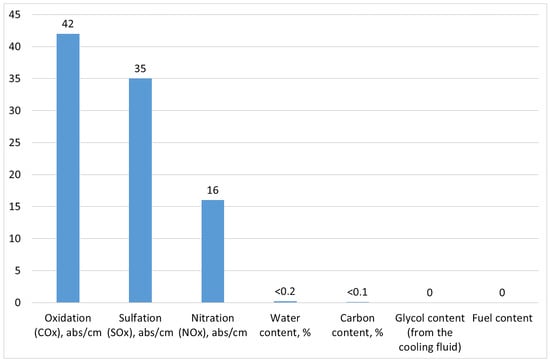
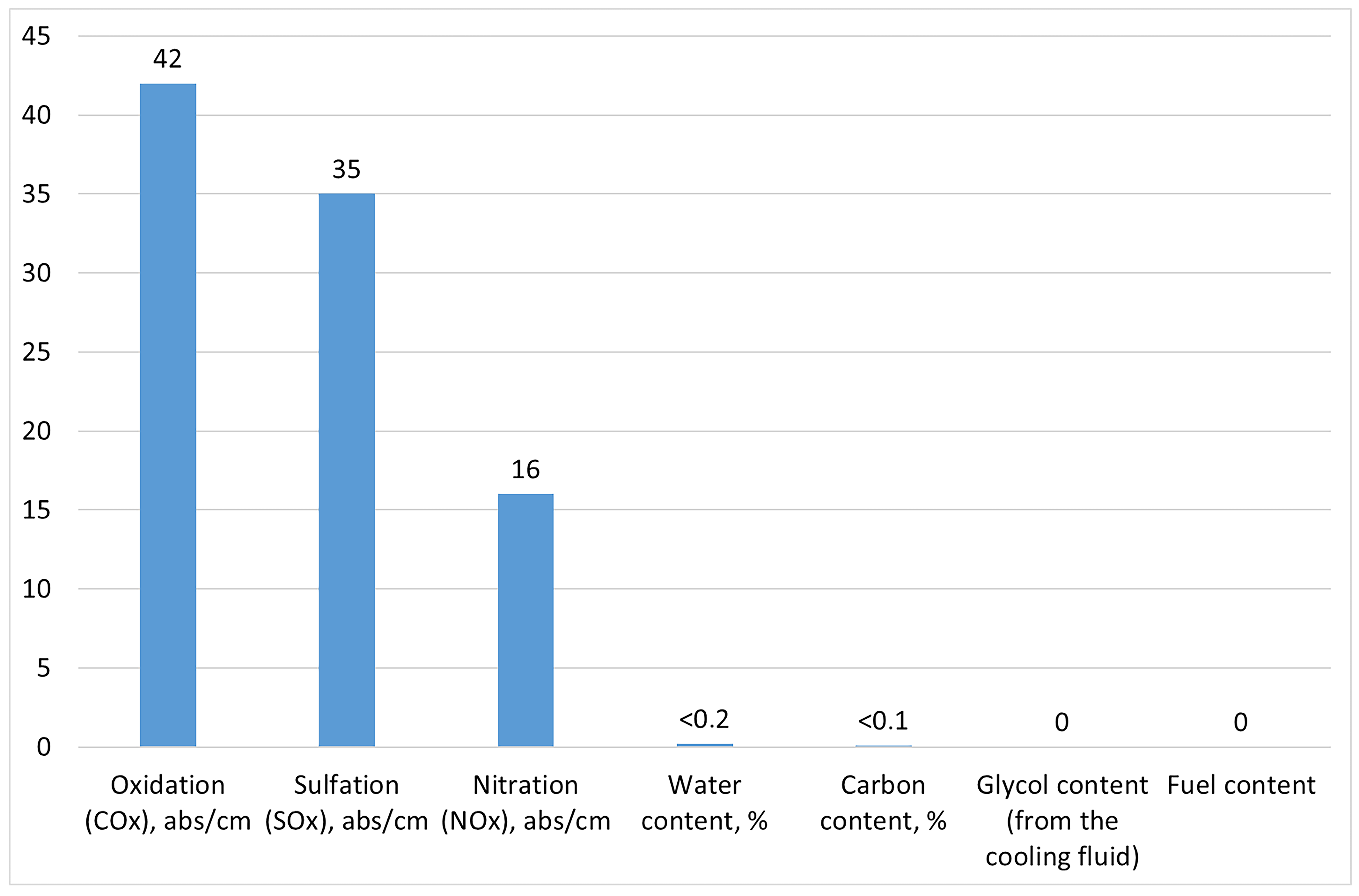
The measured FT-IR indicators of degradation and contamination for the used oil sample are summarized in Figure 1.
Figure 1.
FT-IR indicators of chemical degradation and contamination in the used engine oil after 13,000 km of operation determined according to ASTM E2412.
The oxidation index reflects the formation of oxygen-containing compounds such as ketones, aldehydes, esters, and carboxylic acids produced during thermal degradation of the base oil and additives. Oxidation is strongly influenced by temperature, oxygen availability, and the catalytic activity of metal particles present in the oil.
The measured oxidation value indicates a moderate level of oxidative degradation, which is expected after extended engine operation but does not suggest severe lubricant deterioration.
Nitration processes occur when nitrogen oxides generated during combustion react with hydrocarbon molecules in the lubricant. These reactions are particularly significant in engines operating under high temperature and load conditions. The measured nitration index (16 abs/cm) suggests a moderate interaction between combustion gases and the lubricant film.
Sulfation, indicated by the SOx value of 35 abs/cm, is typically associated with sulfur-containing compounds originating from fuel combustion or additive decomposition. Sulfation products contribute to the formation of acidic species in the oil, which explains the observed depletion of alkaline additives and the reduction in the TBN value.
The FT-IR results obtained in this study are in good agreement with previously reported degradation pathways of engine oils. Oxidation, nitration, and sulfation are widely recognized as key indicators of lubricant aging and have been shown to correlate strongly with each other under real operating conditions. The moderate levels of these parameters observed in the present work indicate ongoing but not critical degradation, which is consistent with the relatively short service interval. Similar relationships between these degradation products have been reported in previous studies, confirming their reliability as indicators of oil condition and chemical aging processes [10].
Additional contamination indicators were evaluated using FT-IR analysis. The water content of the oil remained below 0.2%, indicating that no significant water contamination occurred during engine operation. Water contamination in engine oils may originate from condensation, coolant leaks, or incomplete combustion processes.
The carbon content was measured at below 0.1%, suggesting minimal soot accumulation in the lubricant. This observation is consistent with the operation of a modern gasoline engine equipped with efficient combustion control systems.
Furthermore, the analysis detected no measurable glycol contamination, indicating that the cooling system remained properly sealed and that coolant leakage into the lubrication system did not occur.
Similarly, no fuel dilution was detected, which confirms that the reduction in viscosity is primarily associated with mechanical degradation of viscosity modifiers rather than contamination by unburned fuel.
Overall, the FT-IR results indicate that the oil has undergone typical chemical aging processes, including oxidation, nitration, and sulfation, during the 13,000 km service interval.
3.3. Wear Metal Analysis
The presence of metallic elements in used engine oil provides valuable information regarding the wear condition of various engine components. The concentrations of wear metals were determined using ICP-OES according to ASTM D5185.
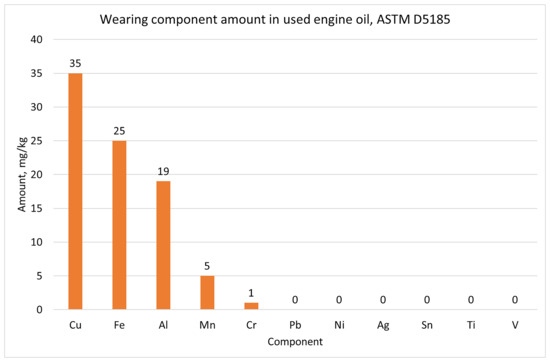
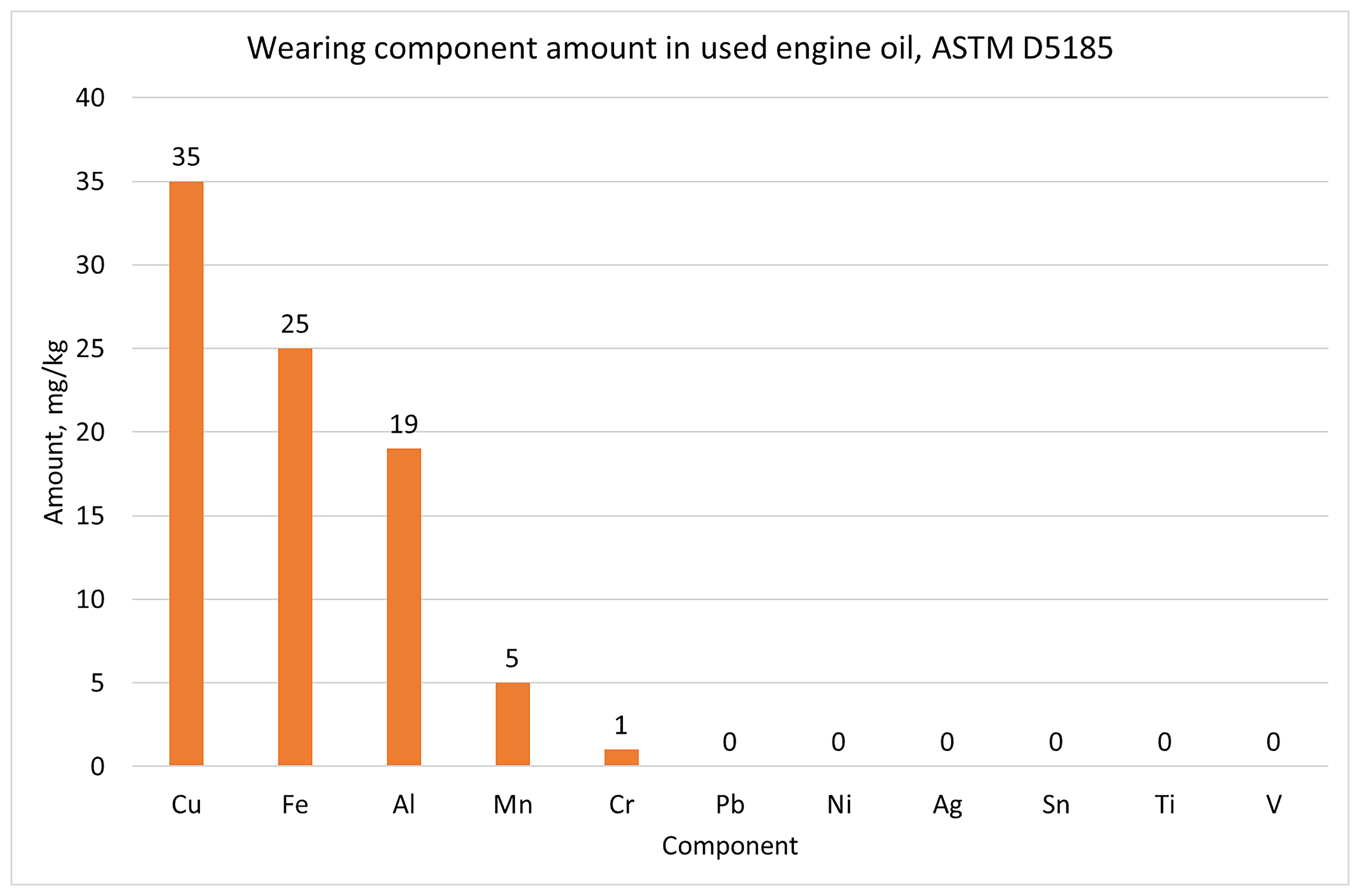
Figure 2 illustrates the concentrations of the detected wear metals in the used oil sample.
Figure 2.
Concentrations of wear metals detected in the used engine oil after 13,000 km of operation, determined according to ASTM D5185.
The analysis revealed the presence of several characteristic wear metals, including copper, iron, aluminum, manganese, and chromium.
The highest concentration was observed for copper (35 mg/kg). Copper may originate from several engine components, including bronze bushings, bearings, oil coolers, and certain alloys used in engine assemblies. In new engines, elevated copper levels may also be associated with the leaching of copper from newly manufactured components or protective coatings applied during assembly.
Iron was detected at 25 mg/kg, which is typical for wear of ferrous components such as cylinder liners, camshafts, crankshaft surfaces, and valve train elements. The measured concentration indicates moderate wear of steel components during the early operating period.
Aluminum was present at 19 mg/kg, which is generally associated with wear of aluminum alloy components such as pistons or engine housings. During the break-in phase of a new engine, aluminum wear particles are often generated as the contact surfaces adapt to each other.
The wear metal distribution observed in the present study is also consistent with findings reported in the literature for early-stage engine operation. The predominance of copper, iron, and aluminum is typically associated with the running-in phase of new engines, where initial surface adaptation leads to increased wear particle generation. Previous studies have demonstrated that such wear patterns are characteristic of normal engine break-in behavior rather than abnormal wear. Therefore, the obtained results confirm that the analyzed oil sample reflects typical early operational conditions rather than accelerated or abnormal degradation [19].
Minor concentrations of manganese (5 mg/kg) and chromium (1 mg/kg) were also detected. Chromium is typically associated with wear of hardened or plated components such as piston rings, while manganese may originate from alloyed steel components.
The absence of elements such as lead, tin, nickel, titanium, and vanadium indicates that no significant wear occurred in components containing these materials, particularly bearing alloys.
Overall, the wear metal profile corresponds to normal running-in wear of a new engine, rather than abnormal mechanical deterioration.
3.4. Contamination Elements
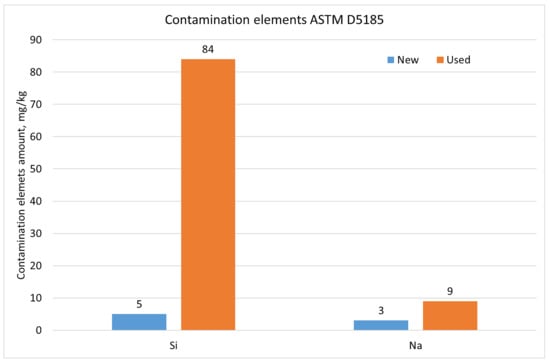
Contamination elements provide important information about the ingress of external particles into the lubrication system. In the present study, the concentrations of silicon and sodium were analysed and compared between the fresh and used oil samples.
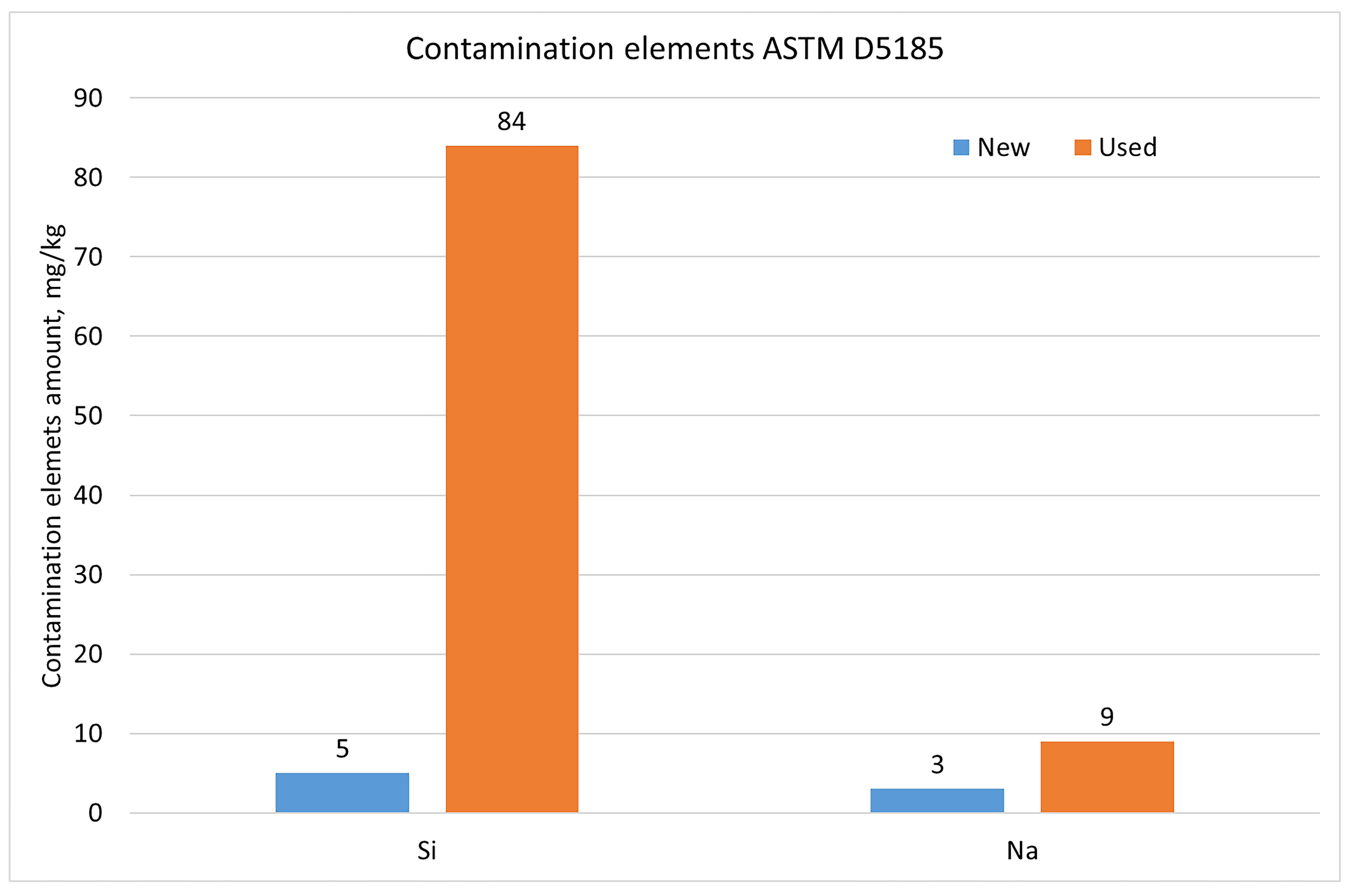
Figure 3 presents the measured contamination element concentrations.
Figure 3.
Concentrations of contamination elements (Si and Na) in fresh and used engine oil determined according to ASTM D5185.
The silicon concentration increased significantly from 5 mg/kg in the fresh oil to 84 mg/kg in the used oil. Silicon is typically associated with dust or sand particles entering the engine through the air intake system. Another possible source of silicon during the early operational period is the presence of silicone-based sealants used during engine assembly.
The relatively high silicon concentration observed after 13,000 km suggests that either residual assembly materials or small quantities of airborne dust have entered the lubrication system. However, since the iron wear level remains moderate, the silicon contamination does not appear to have caused severe abrasive wear.
Sodium increased from 3 mg/kg in the fresh oil to 9 mg/kg in the used oil. Sodium can originate from detergent additives or from contamination by coolant fluids. Since the FT-IR analysis did not detect any glycol content, the increase in sodium is most likely associated with additive chemistry rather than coolant leakage.
3.5. Evolution of Additive Elements
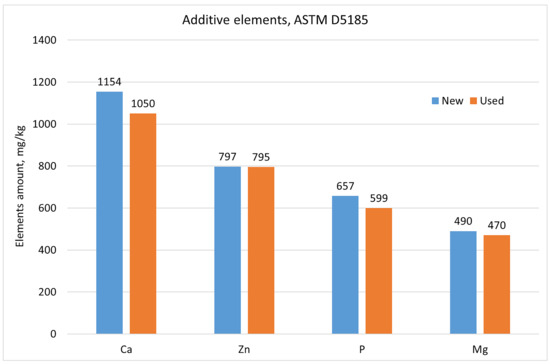
The additive composition of the oil was evaluated by analyzing the concentrations of calcium, zinc, phosphorus, and magnesium. These elements form part of the detergent, anti-wear, and antioxidant additive packages commonly used in modern engine oils.
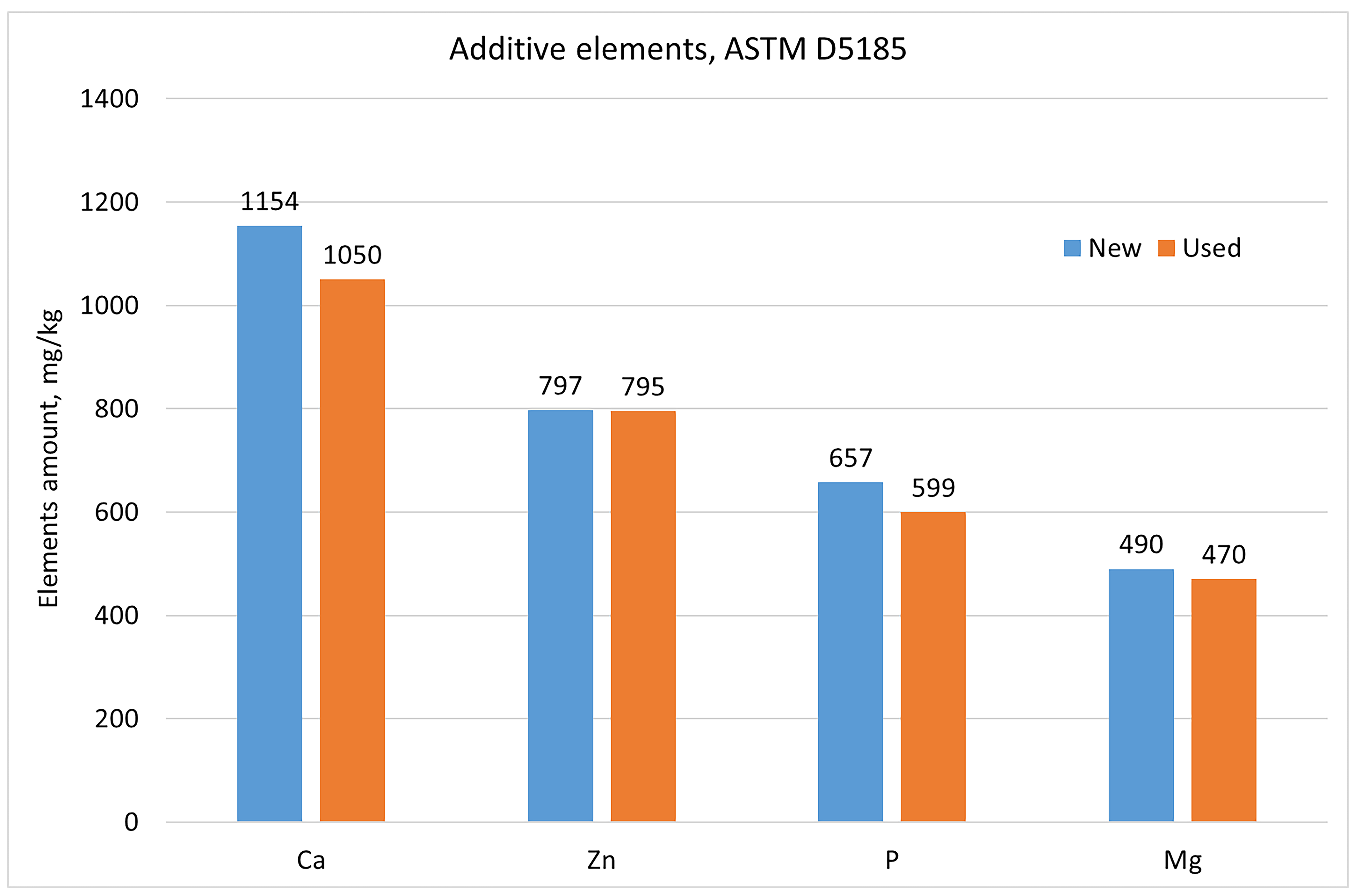
The results are presented in Figure 4.
Figure 4.
Concentrations of major additive elements in fresh and used engine oil determined according to ASTM D5185.
Calcium, which acts primarily as a detergent additive, decreased from 1154 mg/kg to 1050 mg/kg, corresponding to a reduction of approximately 9%. Calcium-based detergents neutralize acidic combustion products and help maintain engine cleanliness by preventing deposit formation.
Zinc and phosphorus are key components of ZDDP additives, which provide anti-wear protection and antioxidant properties. The measured concentrations of these elements showed only minor changes (Zn: 797 → 795 mg/kg; P: 657 → 599 mg/kg), indicating that the anti-wear additive system remained largely intact after the investigated service interval.
Magnesium also showed a moderate decrease from 490 mg/kg to 470 mg/kg, reflecting gradual consumption of detergent additives during engine operation.
The relatively small reduction in additive elements suggests that the oil still retains a significant portion of its protective additive package.
Overall, the obtained results are in good agreement with previously published studies on engine oil degradation and wear processes under real operating conditions [10,17,19]. While many literature sources emphasize the dominant role of contamination—particularly fuel dilution—in accelerating oil degradation, the present study demonstrates that even in the absence of such contamination, measurable physicochemical changes occur during the first service interval. The combination of moderate viscosity reduction, detectable oxidation products, additive depletion, and increased wear metal content confirms that early-stage oil degradation is governed by a complex interaction of thermal, mechanical, and tribological factors. This highlights the importance of analyzing real operating conditions, especially for modern low-viscosity oils such as SAE 0W-20, which remain less extensively studied in comparison to higher viscosity grades.
It should be noted that the present study is based on the analysis of two samples—fresh and used oil—which limits the possibility for statistical evaluation of variability and repeatability. The results should therefore be interpreted as indicative of the general trends in oil degradation during the first service interval rather than as statistically generalized conclusions. Nevertheless, the use of standardized laboratory methods ensures the reliability and comparability of the obtained data.
4. Conclusions
This study investigated the physicochemical degradation and wear metal evolution of SAE 0W-20 engine oil during the first 13,000 km of operation of a new gasoline engine. The analysis included measurements of viscosity, alkaline reserve, FT-IR degradation indicators, wear metals, contamination elements, and additive concentrations according to standardized oil analysis methods.
The results show that the kinematic viscosity at 100 °C decreased from 8.5 mm2/s to 7.01 mm2/s, corresponding to a reduction of approximately 17.5%. This viscosity decrease is primarily attributed to mechanical shear degradation of viscosity index improvers rather than fuel dilution, as no measurable fuel contamination was detected in the oil sample.
The total base number decreased to 3.7 mgKOH/g, indicating partial depletion of the alkaline reserve due to neutralization of acidic products generated during combustion and lubricant oxidation. FT-IR analysis confirmed the presence of typical degradation processes, including oxidation (COx = 42 abs/cm), sulfation (SOx = 35 abs/cm), and nitration (NOx = 16 abs/cm).
Wear metal analysis revealed the presence of Cu (35 mg/kg), Fe (25 mg/kg), and Al (19 mg/kg) as the dominant elements in the used oil. These elements are typically associated with wear of bearings, steel engine components, and aluminum piston assemblies. The observed wear metal concentrations are characteristic of the running-in period of a new engine rather than abnormal mechanical wear.
The contamination analysis showed a significant increase in silicon concentration (5 → 84 mg/kg), most likely associated with residual assembly materials or minor dust ingress into the intake system. Sodium increased moderately from 3 to 9 mg/kg, while no glycol contamination was detected, confirming the integrity of the cooling system.
The additive elements Ca, Zn, P, and Mg exhibited only moderate reductions, indicating that the detergent and anti-wear additive systems remained largely intact after the investigated service interval.
Overall, the obtained results indicate that the investigated SAE 0W-20 engine oil maintains adequate lubrication and protective properties after 13,000 km of operation, while the observed changes in physicochemical parameters and wear metals correspond to normal oil aging and engine running-in processes.
The presented results demonstrate the effectiveness of combined oil analysis techniques for monitoring lubricant degradation and engine condition during the early service life of internal combustion engines.
Author Contributions
Conceptualization, A.T.; methodology, A.T., Y.S. and P.M.; software, Y.S. and P.M.; validation, Y.S. and P.M.; formal analysis, A.T.; investigation, A.T.; resources, A.T. and P.M.; data curation, A.T.; writing—original draft preparation, A.T.; writing—review and editing, Y.S. and P.M.; visualization, A.T.; supervision, A.T.; project administration, A.T.; funding acquisition, A.T., Y.S. and P.M. All authors have read and agreed to the published version of the manuscript.
Funding
This research was funded by the European Regional Development Fund within the OP “Research, Innovation and Digitalization Programme for Intelligent Transformation 2021–2027”, Project № BG16RFPR002-1.014-0005 Center of competence “Smart Mechatronics, Eco- and Energy Saving Systems and Technologies”.
Institutional Review Board Statement
Not applicable.
Informed Consent Statement
Not applicable.
Data Availability Statement
Data are contained within the article.
Conflicts of Interest
The authors declare no conflicts of interest.
Abbreviations
The following abbreviations are used in this manuscript:
| ICE | Internal combustion engine |
| SAE | Society of automotive engineers |
| TBN | Total base number |
| ZDDP | Zinc dialkyldithiophosphate |
| ASTM | American society for testing and materials |
| FT-IR | Fourier-transform infrared spectroscopy |
| ICP-OES | Inductively coupled plasma optical emission spectrometry |
| ppm | parts per million |
References
- Ambarev, K.; Nikolov, V. Experimental Study of Toxic Components in the Exhaust Gases During the Operation of a Car Engine with Gasoline and LPG. Vide. Tehnologija. Resur.—Environ. Technol. Resour. 2023, 3, 20–23. [Google Scholar] [CrossRef] [Scilit]
- Damyanov, I.; Miletiev, R.; Valkovski, T. Research and analysis of the real-time interaction between performance and smoke emission of a diesel vehicle. Eng. Proc. 2025, 100, 34. [Google Scholar] [CrossRef] [Scilit]
- Punov, P.; Milkov, M.; Danel, Q.; Perilhon, C.; Podevin, P.; Evtimov, T. Optimization of automotive Rankine cycle waste heat recovery under various engine operating condition. AIP Conf. Proc. 2017, 23, 020074. [Google Scholar] [CrossRef] [Scilit]
- Dimitrov, E. Study of compressed natural gas impact on spark ignition engine performance. AIP Conf. Proc. 2024, 10, 030001. [Google Scholar] [CrossRef] [Scilit]
- Mladenov, G.; Damyanov, I.; Saliev, D.; Iontchev, E. Design of measurement system for vehicle emissions in real road conditions. In Proceedings of the 30th National Conference with International Participation “Telecom 2022”, Sofia, Bulgaria, 27–28 October 2022; pp. 1–4. [Google Scholar] [CrossRef] [Scilit]
- Wolak, A.; Zając, G.; Fijorek, K.; Janocha, P.; Matwijczuk, A. Experimental Investigation of the Viscosity Parameters Ranges—Case Study of Engine Oils in the Selected Viscosity Grade. Energies 2020, 13, 3152. [Google Scholar] [CrossRef] [Scilit]
- Stachowiak, G.W.; Batchelor, A.W. Engineering Tribology, 4th ed.; Elsevier: Amsterdam, The Netherlands, 2014. [Google Scholar]
- SAE International. SAE J300 Engine Oil Viscosity Classification; SAE International: Warrendale, PA, USA, 2024. [Google Scholar]
- Zhang, Y.; Ma, Z.; Feng, Y.; Diao, Z.; Liu, Z. The Effects of Ultra-Low Viscosity Engine Oil on Mechanical Efficiency and Fuel Economy. Energies 2021, 14, 2320. [Google Scholar] [CrossRef] [Scilit]
- Sejkorová, M.; Hurtová, I.; Jílek, P.; Novák, M.; Voltr, O. Study of the Effect of Physicochemical Degradation and Contamination of Motor Oils on Their Lubricity. Coatings 2021, 11, 60. [Google Scholar] [CrossRef] [Scilit]
- Felix, C.; Kasameyer, R. Real-Time Viscosity Tracks Oil Condition; Cambridge Viscosity: Boston, MA, USA, 2016. [Google Scholar]
- Mortier, R.; Fox, M.; Orszulik, S. Chemistry and Technology of Lubricants, 3rd ed.; Springer: Berlin/Heidelberg, Germany, 2010. [Google Scholar]
- Spikes, H. The History and Mechanisms of ZDDP; Tribology Letters: New York, NY, USA, 2004. [Google Scholar]
- Rudnick, L. Lubricant Additives: Chemistry and Applications, 3rd ed.; CRC Press: Boca Raton, FL, USA, 2003. [Google Scholar]
- Dyson, C.J.; Priest, M.; Lee, P.M. The Flow of Lubricant as a Mist in the Piston Assembly and Crankcase of a Fired Gasoline Engine. Tribol. Lett. 2023, 71, 12. [Google Scholar] [CrossRef] [Scilit]
- Green, D.A.; Lewis, R. The effects of soot-contaminated engine oil on wear and friction: A review. Proc. Inst. Mech. Eng. Part D J. Automob. Eng. 2008, 222, 1669–1689. [Google Scholar] [CrossRef] [Scilit]
- Kaminski, P. Experimental Investigation into the Effects of Fuel Dilution on the Change in Chemical Properties of Lubricating Oil Used in Fuel Injection Pump of Pielstick PA4 V185 Marine Diesel Engine. Lubricants 2022, 10, 162. [Google Scholar] [CrossRef] [Scilit]
- Mitev, P.; Tashev, A.; Stoyanov, Y. Design and Construction of an Engine Oil Viscosity Meter with Electronic Control. In Proceedings of the Engineering Proceedings, Plovdiv, Bulgaria, 15–17 May 2025. [Google Scholar]
- Ahmad, N.; Abdelbary, K.; Younis, S. Chemical Analysis of Engine Oils as an Indicator to Estimate the Rate of Wear. Egypt. J. Chem. 2018, 61, 581–590. [Google Scholar] [CrossRef] [Scilit]
Disclaimer/Publisher’s Note: The statements, opinions and data contained in all publications are solely those of the individual author(s) and contributor(s) and not of MDPI and/or the editor(s). MDPI and/or the editor(s) disclaim responsibility for any injury to people or property resulting from any ideas, methods, instructions or products referred to in the content. |
© 2026 by the authors. Licensee MDPI, Basel, Switzerland. This article is an open access article distributed under the terms and conditions of the Creative Commons Attribution (CC BY) license.