


Abstract
This paper describes the design, fabrication, and successful evaluation of a wristband developed for alerting users in critical situations. The target group is single people, especially the elderly, but also people with various disabilities. A low-cost wristband, which, when these people fall, immediately triggers a Wi-Fi-connected alert system on the gadgets of the staff or the person belonging to them. The system is implemented as a wearable forearm sleeve that integrates multiple sensors and electronic components, capable of sending instant alerts to family members or caregivers via the Blynk application.
1. On the Vulnerability Related to Special Persons
A special category represents the solitary persons and also special needs persons; in both cases, high supervision is mandatory. For cases where home care is not possible or does not offer sufficient guarantees regarding the safety of the vulnerable person, institutionalization remains a necessary option. Specialized centers provide a controlled and adapted environment, where beneficiaries can receive medical assistance, psychological and permanent social support [1]. In this sense, the population census is a fundamental tool in the planning and implementation of public policies, especially in the context of caring for single, elderly or special needs people. Modern censuses go beyond collecting raw data, but also include specialized modules dedicated to people with disabilities or chronic health conditions. This allows for a true map of a community’s health needs and for efficient and equitable allocation of resources [2,3].
Falls are one of the most common causes of injury, premature institutionalization, and long-term disability among older adults globally. According to data from the Centers for Disease Control and Prevention (CDC), approximately 3 million people over the age of 65 require emergency treatment each year for fall-related injuries, with the average cost of treatment for these cases reaching approximately $30,000 [4].
2. Proposed Solution
To provide more efficient remote assistance to people who are alone and/or have special needs, in recent years, smart wearable devices, such as smart watches or bracelets, have experienced strong development, but the adoption rate remains low [4,5].
To address these major impediments, the research focused on developing an intelligent alerting system, focused on the real needs of vulnerable users. The proposed solution consisted of creating a wearable device in the form of a sleeve, equipped with medical sensors and wireless communication modules, capable of continuously monitoring vital parameters and automatically detecting potentially critical events (significant falls or variations in physiological functions) [5]. The solution to wearing the system as a bracelet on your hand, instead of being worn on your hip, is much more practical, both from the point of view of putting it on/taking it off, and because access is faster in case of emergency. For this reason, one of the requirements imposed on the developed system is that such monitoring devices must be customizable, minimize discomfort, and allow easy integration into the user’s daily routine. Another condition that was imposed, still in the design stage, was that their use be supported by trained personnel and rigorous ethical protocols, to ensure data protection and respect for the dignity of the person [6,7].
The device is designed to be worn on the forearm, being fixed in an elastic textile sleeve, equipped with a Velcro fastening system. The electronic components are integrated in a rigid ABS plastic housing, which ensures both mechanical protection and stability during wear. To verify that the device meets the requirements of biomechanical comfort, a simplified analysis of the forces acting on the forearm during use was performed [7,8].
Fall detection is achieved by means of an inertial sensor (MPU6050) that measures acceleration and rotation on three axes. The system monitors sudden variations in these values in real time and, if the acceleration exceeds a preset threshold, automatically generates a fall alert. In parallel, vital signs are monitored using the MAX30100 sensor, capable of measuring both heart rate and blood oxygen saturation. The data is collected and averaged to eliminate any momentary fluctuations, and any deviation from normal physiological ranges causes an alert to be sent. The DHT22 sensor also monitors body temperature, and exceeding a critical thermal threshold is treated as an emergency.
The bracelet is also equipped with a physical alert button, which can be manually activated by the user to request help, even in the absence of automatic detection. The alerts generated are transmitted both locally, through an acoustic buzzer, and to a mobile application configured on the caregiver’s phone. Communication with the application is carried out via a Wi-Fi network, using the Blynk platform (2024 version), which offers a real-time monitoring interface and push notifications. Thus, the device represents an effective means of remote intervention for caregivers or relatives [8].
To avoid the sleeve from moving on the wearer’s hand, it was made of an elastic, antiperspirant, breathable material, but with adhesion properties on the subject’s skin.
Inside the elastic textile structure (neoprene), the device integrates an ESP32 microcontroller, centrally located to optimize the length of the connections. The MAX30100 sensor, responsible for measuring pulse and oxygen saturation, is positioned in direct contact with the skin to ensure data accuracy. In proximity, the DHT22 sensor monitors body temperature and ambient humidity, being placed in an area with controlled exposure. For the detection of sudden movements or falls, the MPU6050 sensor is mounted in a stable mechanical point, so that its measurements are not affected by vibrations or slips. On the outer side of the sleeve is the alert button, positioned to be easily operated by the user, even in conditions of panic or motor difficulty. Nearby is the passive buzzer, placed so that the acoustic signals generated are effectively perceived by both the user and the people around them. The layout of the components was designed to ensure the correct functioning of each module and the physical protection of the assembly during wear. The general design of the sleeve was designed to provide comfort, ergonomics, and resistance in daily use, and can be easily put on and adjusted using elastic bands and the Velcro fastening system [8].
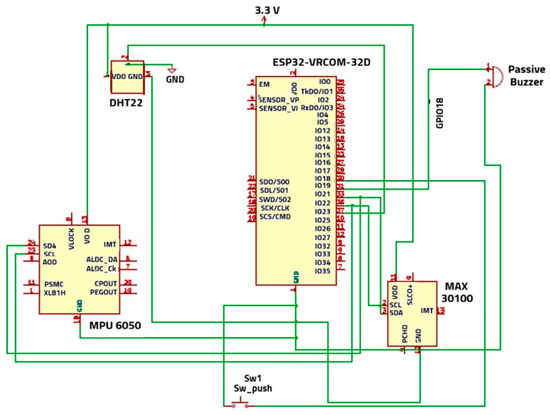
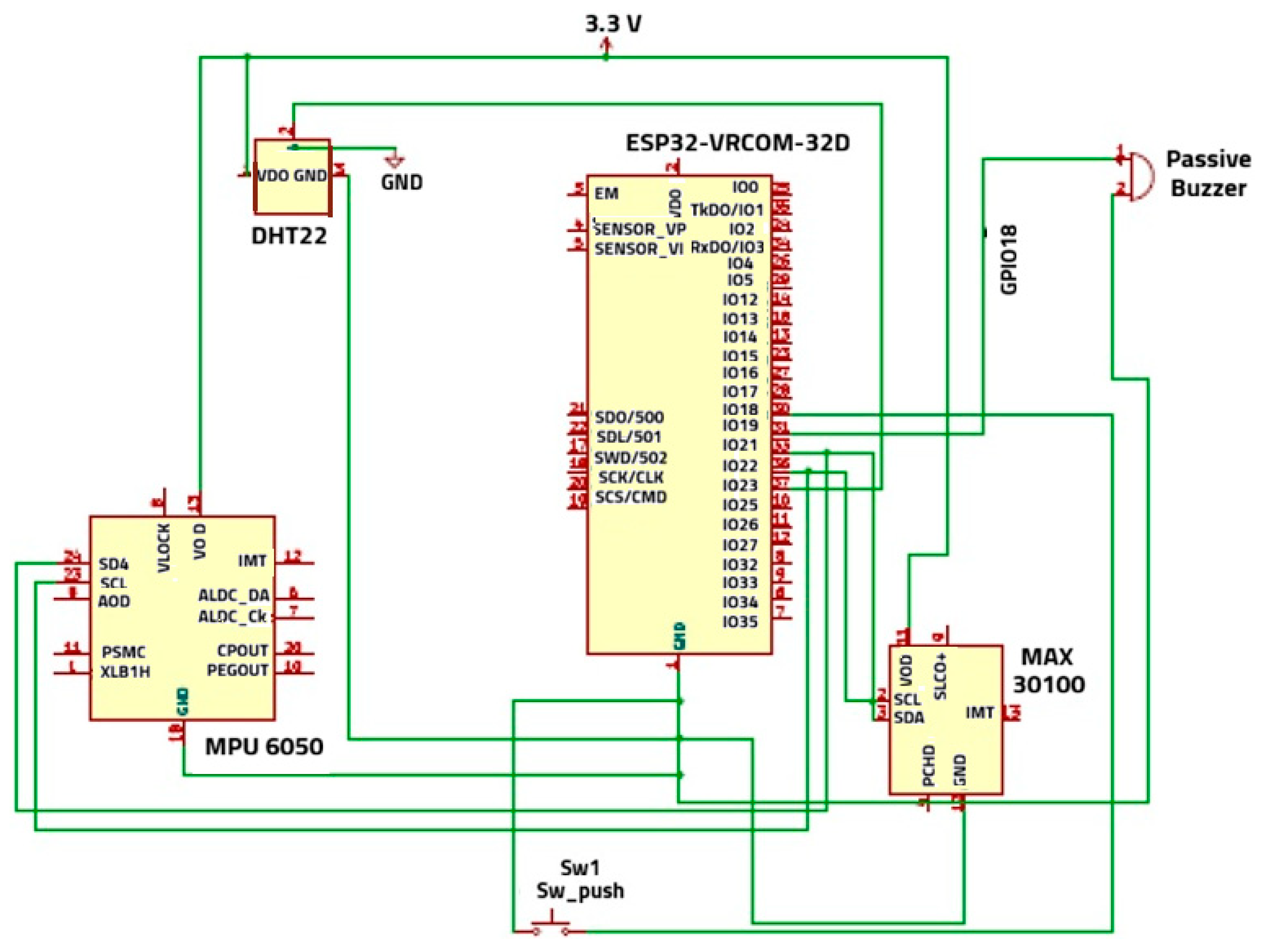
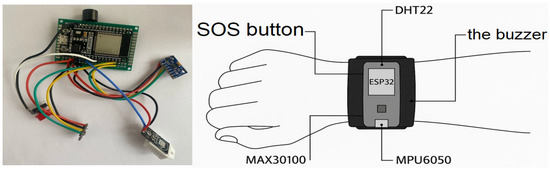
The hardware system design uses an MPU6050 sensor for motion and fall detection that communicates with an ESP32 microcontroller via the I2C bus. Another sensor, the MAX30100, is connected to the same bus to measure pulse and oxygen saturation. The I2C interface was chosen for its efficiency in bidirectional communication and for the possibility of connecting multiple devices using only two common wires [8,9]. The block diagram of the hardware control system is shown in Figure 1:
Figure 1.
Electrical diagram of a monitoring and alerting device [8].
A LiPo battery with a capacity of 1200 mAh and a nominal voltage of 3.7 V is used to power the system. The estimation of the total current consumed is based on the technical specifications of the components in continuous operation. The total autonomy can be ensured through the relation (1):
where At is the autonomy in hours, Cb is the battery capacity (mAh), and Ib is the total current consumed (mA). For an estimated current of 86 mA and the battery capacity of 1200 mAh, the total autonomy is 13.95 h. This value indicates that the device can operate for approximately 14 h in continuous mode. By using energy-saving strategies (deep sleep modes, intermittent sampling), the autonomy can be extended up to 20 h, according to recent studies in the field of IoT [9].
At = Cb/Ib
To ensure correct and autonomous operation of the alerting device, a software system was developed capable of managing all data received from the sensors in real time, processing this information, and triggering alerts based on certain critical conditions. The program was implemented using the Arduino IDE platform, (2023 version), and communication with the Blynk mobile application is done via the Wi-Fi connection integrated in the ESP32 microcontroller. When the device is initialized, the necessary libraries for each sensor are loaded, then the connection to the Wi-Fi network is established, and the unique token for connecting to the Blynk account is configured. To illustrate how the data from the physiological sensors is processed, below is a code fragment from the main loop () function. This sequence is responsible for updating the values received from the MAX30100 sensor, which measures heart rate and blood oxygen saturation.
For the system implementation, the sensor selection process for the smart alert device took into account the fulfillment of all functional requirements: measuring physiological parameters, detecting falls, and transmitting relevant signals to the monitoring application. The sensors were chosen following rigorous technical documentation, taking into account compatibility with the ESP32 microcontroller, reliability in use, energy consumption, and acquisition cost. The device integrates three essential sensors, each with a specific role: GY-MAX30100 for pulse and SpO2 measuring, MPU6050 accelerometer, and DHT22 for temperature and humidity measuring [8].
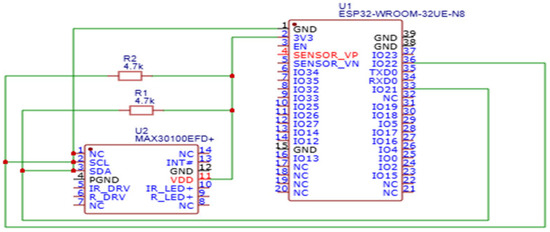
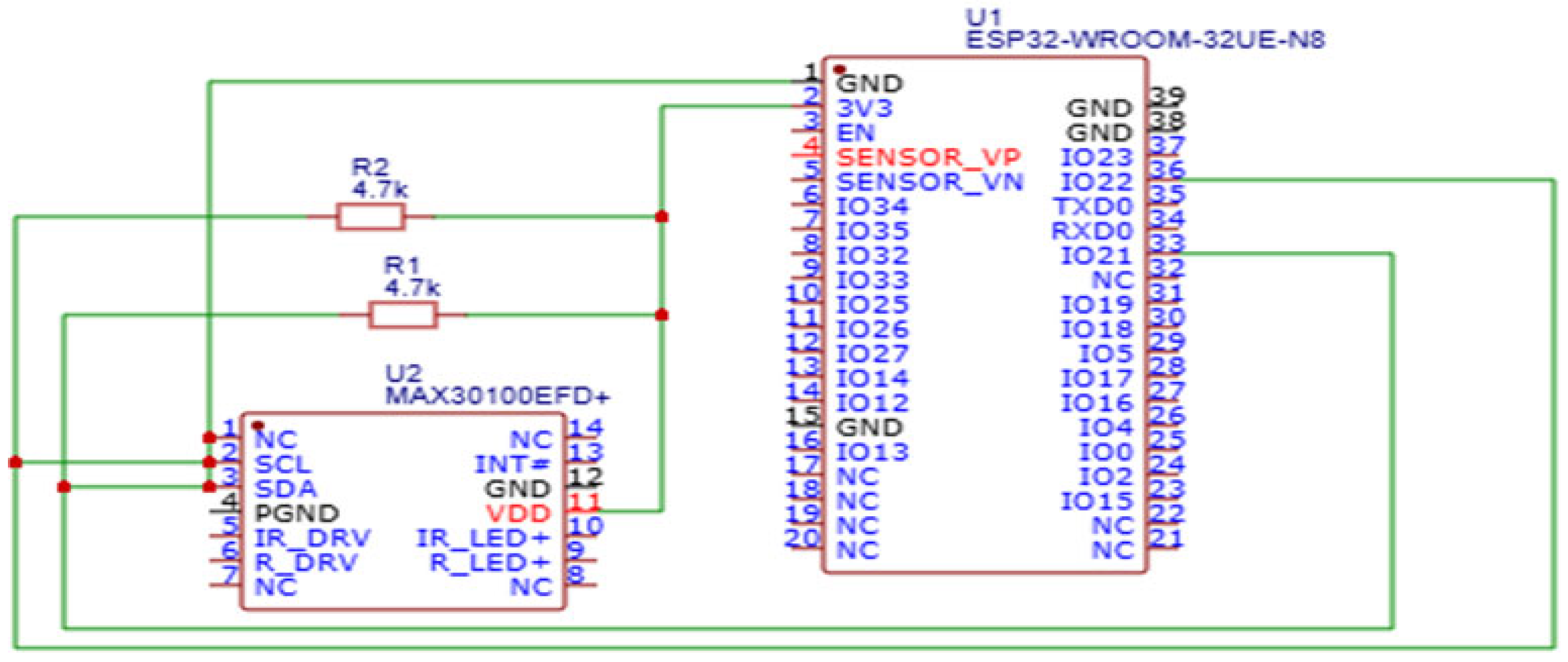
To ensure the correct functioning of the electronic components used in the project, the first practical stage consisted of testing the sensors individually on a breadboard. This approach allowed for the verification of each module separately, before making the final connections and integrating it into a portable assembly. For each sensor, connections were made to the ESP32 board, with a 3.3V power supply. Communication with the more complex sensors (MAX30100 and MPU6050) was done via the I2C bus, using 4.7kΩ pull-up resistors to stabilize the signal. The DHT22 temperature sensor was connected to an individual digital pin, and auxiliary components, such as the SOS button and passive buzzer, were tested on separate digital pins [8].
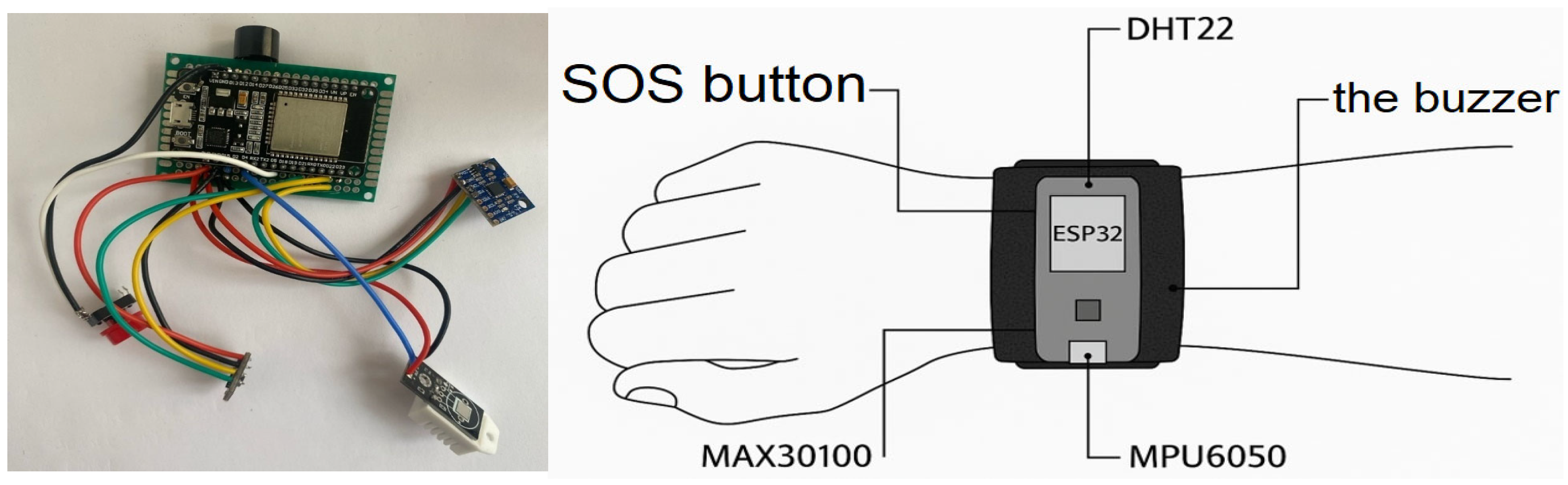
Figure 2 shows the logic diagram of the setup used for individual testing of the MAX30100 sensor, connected to the ESP32 microcontroller. This step was performed using a graphical simulation platform.
Figure 2.
MAX30100 sensor test schematic [4,8].
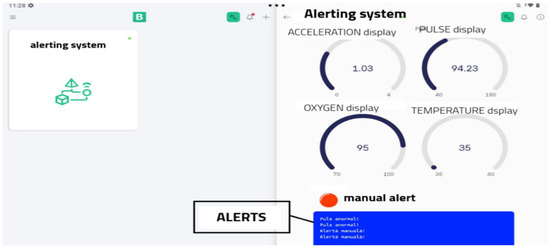
After functionally validating the circuit on the breadboard, the next step was to analyze and determine how the electronic components could be efficiently arranged in a portable form. Given the actual dimensions of the sensors and the ESP32 board, as well as the need to maintain direct skin contact for the MAX30100 sensor, a sleeve solution was adopted. The MPU6050 was positioned close to the wrist to detect natural forearm movements (including falls); the DHT22 was placed on the top to provide accurate temperature readings; the SOS button was fixed in an area accessible by the thumb, allowing alerts to be activated without removing the sleeve; the buzzer was integrated into the exterior so that the sound signal was perceptible (Figure 3).
Figure 3.
Final realization of the circuit and arrangement of components on the sleeve [8,9].
To avoid moisture from entering the command and control system, it was provided in a hermetic, well-sealed housing, which was subsequently inserted into an impermeable material inside the sleeve. After verifying the functionality on the breadboard and determining the positioning of each module, we moved on to the actual integration of the circuit into the final configuration, ready for assembly in the portable sleeve [8].
3. Experimental Setup
After completing the connections and soldering the components on the prototype board, it was necessary to verify that the ESP32 microcontroller communicates correctly with both the integrated sensors and the mobile application developed through the Blynk platform. To begin with, the modules connected via the I2C bus were tested individually. By running some test sequences in the Arduino IDE, it was confirmed that the MAX30100 and MPU6050 sensors are correctly recognized and send valid data. The pulse and oxygen saturation values were displayed on the serial monitor, and the acceleration on the three axes was observed in real time to identify the sensor’s reactions in case of simulated movements or falls. Also, the DHT22 sensor provided constant temperature and humidity values, without errors or significant fluctuations.
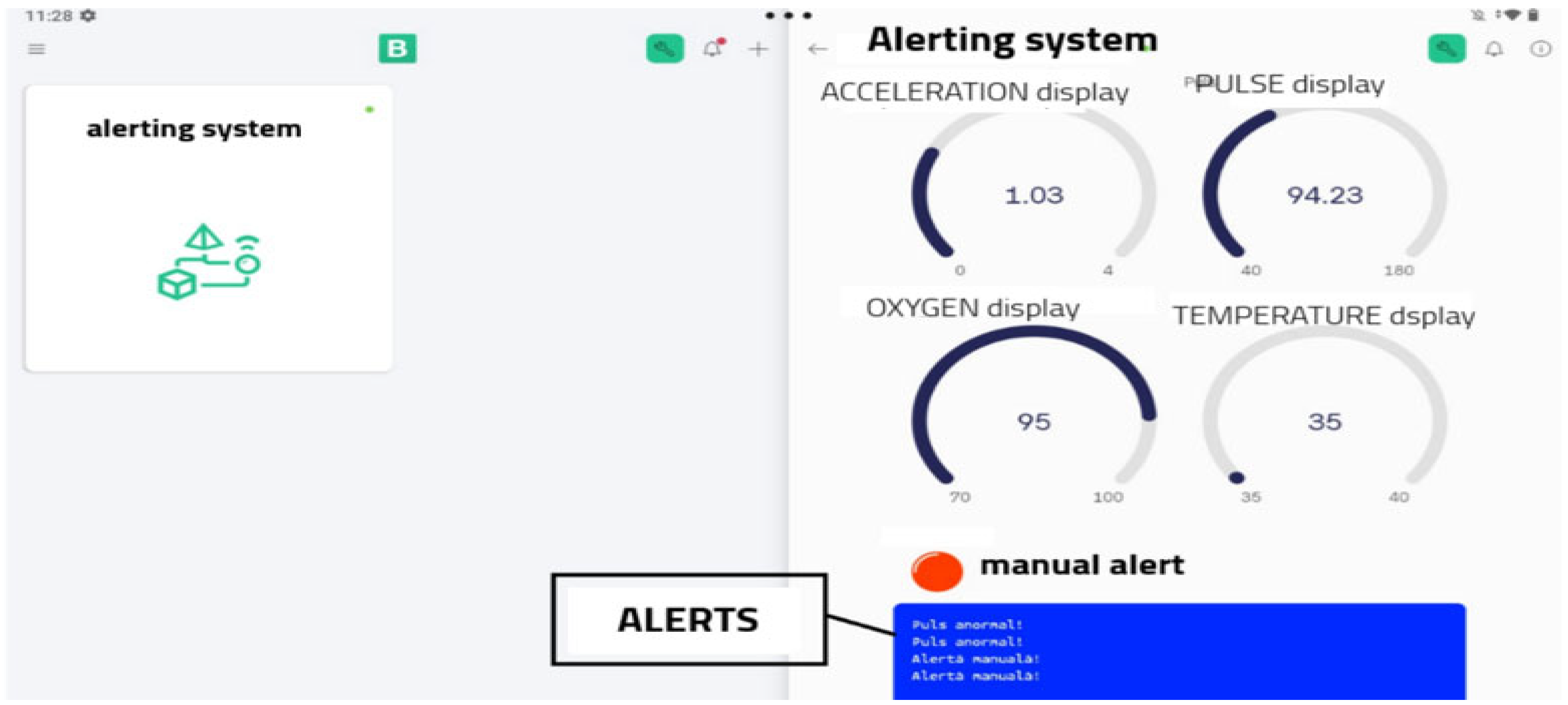
After validating the operation of the sensors, the communication between the ESP32 and the Blynk mobile application was tested. The board was connected to the local Wi-Fi network, and widgets corresponding to each parameter were created in the application on the phone. The system successfully transmitted, in real time, the data collected from the sensors to the phone, with an average delay of less than one second (Figure 4). The information was clearly displayed in the Blynk interface, and the user could view: heart rate and oxygen saturation measured by the MAX30100; temperature recorded by the DHT22; notifications or alert values [8].
Figure 4.
Screenshot from the Blynk app showing parameters [8,9].
4. Conclusions
To verify the overall performance of the device in realistic conditions, simulations were conducted with two volunteers selected from the target group. They wore the cuff for periods of 30–60 min, during which the following scenarios were tested: simulated fall (by dropping the arm in a sudden movement); artificially increased heart rate (by light physical exercise); high body temperature (by placing the device on a moderate heat source); pressing the SOS button. In all cases, the system reacted promptly, sending notifications to the mobile application and activating the audible buzzer. The volunteers reported that the device was comfortable to wear and easy to understand, and the Blynk interface was considered intuitive.
Another key aspect highlighted by the open-ended responses is the desire for an easily accessible mechanism—such as an SOS button—that works independently of a mobile phone. Thus, the need for an autonomous system that does not depend on complex technological actions on the part of the user is clearly outlined. The data obtained through this opinion research confirm the practical utility and acceptability of the developed solution (Table 1). The proposed system manages to respond to a real problem, expressed directly by potential beneficiaries, and the identified directions—comfort, simplicity, economic accessibility, and automatic response—are perfectly integrated into the designed solution [8,9].
Table 1.
Subjects’ perception of the use of the alert system [1].
Future directions for this research include improving the software interface by introducing a signal filter so that the microcontroller only considers accelerations greater than 0.9 g associated with hand movement amplitudes greater than 100 mm. This could avoid false-positive errors, in which hand tremors in people with Parkinson’s disease could be considered a fall. Another future direction of research concerns solving a problem that may arise, namely, possible interruptions of the Wi-Fi network. To compensate for such a syncope, an alert system could be foreseen in the future that could be activated on the owner’s phone if, for several minutes, the flow of transferred data were interrupted [8].
Author Contributions
Administration, validation and supervision, B.B.; conceptualization and methodology, C.D.; investigation, writing review and editing, I.S. All authors have read and agreed to the published version of the manuscript.
Funding
This research received no external fundings.
Institutional Review Board Statement
Not applicable.
Informed Consent Statement
Informed consent was obtained from all subjects involved in the study.
Data Availability Statement
The data presented in this study are available upon request from the corresponding author.
Conflicts of Interest
The authors declare no conflicts of interest.
References
- The Lancet Digital Health. Wearable health data privacy. Lancet Digit Health 2023, 5, e174. [Google Scholar] [CrossRef] [Scilit] [PubMed]
- Bolton, L. Preventing Fall Injury. Wounds 2019, 31, 269–271. [Google Scholar] [PubMed]
- Huhn, S.; Axt, M.; Gunga, H.C.; Maggioni, M.A.; Munga, S.; Obor, D.; Sié, A.; Boudo, V.; Bunker, A.; Sauerborn, R.; et al. The Impact of Wearable Technologies in Health Research: Scoping Review. JMIR Mhealth Uhealth 2022, 10, e34384. [Google Scholar] [CrossRef] [Scilit] [PubMed] [PubMed Central]
- Lette, M.; Stoop, A.; Nijpels, G.; Baan, C.; de Bruin, S.; van Hout, H. Safety risks among frail older people living at home in the Netherlands—A cross-sectional study in a routine primary care sample. Health Soc. Care Community 2020, 30, e469–e477. [Google Scholar] [CrossRef] [Scilit] [PubMed] [PubMed Central]
- Borg, C.; Hallberg, I.R.; Blomqvist, K. Life satisfaction among older people (65+) with reduced self-care capacity: The relationship to social, health and financial aspects. J. Clin. Nurs. 2006, 15, 607–618. [Google Scholar] [CrossRef] [Scilit] [PubMed]
- Adão Martins, N.R.; Annaheim, S.; Spengler, C.M.; Rossi, R.M. Fatigue Monitoring Through Wearables: A State-of-the-Art Review. Front. Physiol. 2021, 12, 790292. [Google Scholar] [CrossRef] [Scilit] [PubMed] [PubMed Central]
- Beduk, T.; Beduk, D.; Hasan, M.R.; Guler Celik, E.; Kosel, J.; Narang, J.; Salama, K.N.; Timur, S. Smartphone-Based Multiplexed Biosensing Tools for Health Monitoring. Biosensors 2022, 12, 583. [Google Scholar] [CrossRef] [Scilit] [PubMed] [PubMed Central]
- Pancescu, D. Sistem Inteligent de Alertare Pentru Situații de Urgență in Cazul Persoanelor Singure Și/Sau cu Nevoi Speciale. Diploma Thesis, Transylvania University of Brasov, Brasov, Romania, June 2025. [Google Scholar]
- Kim, Y.M. Battery management system for wearable healthcare device. In Proceedings of the 36th International Conference on Consumer Electronics(ICCE 2018), Las Vegas, NV, USA, 12–14 January 2018. [Google Scholar]

Disclaimer/Publisher’s Note: The statements, opinions and data contained in all publications are solely those of the individual author(s) and contributor(s) and not of MDPI and/or the editor(s). MDPI and/or the editor(s) disclaim responsibility for any injury to people or property resulting from any ideas, methods, instructions or products referred to in the content. |
© 2026 by the authors. Licensee MDPI, Basel, Switzerland. This article is an open access article distributed under the terms and conditions of the Creative Commons Attribution (CC BY) license.