


Abstract
Neurodegenerative diseases are a group of diseases characterized by the progressive loss of neurons and the deterioration of neuronal connections, resulting in impaired cognitive, motor and sensory functions. Common features of these diseases include pathological protein aggregation, synaptic dysfunction, abnormalities of the neuronal cytoskeleton and inflammatory processes. Development of an intelligent and portable system for automatic drug administration, especially intended for patients with neurodegenerative diseases, such as Alzheimer’s disease. The device allows the configuration of administration times via a mobile application and communicates with the user via Bluetooth connection. The interface is intuitively designed, and the LCD display provides reminders and informative messages, facilitating treatment compliance. The development methodology included the design and implementation of the hardware component (component selection, circuit design and assembly) and the software component (microcontroller programming, development of control algorithms and communication interfaces). The proposed system contributes to increasing therapeutic compliance and improving the quality of life of patients.
1. Introduction
Neurodegenerative diseases constitute a complex and heterogeneous group of conditions characterized by the progressive and irreversible degeneration of neurons, resulting in impairment of cognitive, motor and sensory functions [1]. These pathologies are associated, in most cases, with the abnormal accumulation of structurally modified proteins, which cause synaptic disruptions, neuronal network dysfunctions, metabolic disorders and chronic inflammatory processes [2]. Despite significant progress in understanding the pathophysiological mechanisms involved, the ethology of these conditions remains incompletely elucidated, and curative therapeutic options are still limited [3]. Within this pathological spectrum, dementias represent a major category, being defined as clinical syndromes characterized by the progressive deterioration of higher cortical functions, including memory, thinking, language and orientation capacity. They lead to a significant reduction in functional autonomy and impairment of the ability to carry out daily activities. Among the different forms of dementia, Alzheimer’s disease is the most common, representing the main cause of cognitive decline in the elderly population [4].
Alzheimer’s disease is a progressive neurodegenerative disorder, characterized by global cognitive impairment and behavioral disorders, having as a biological substrate the formation of β-amyloid plaques and neurofibrillary tangles. The risk factors involved include aging, genetic predisposition and various comorbidities. The evolution of the disease is slow but inevitably progressive, leading to the loss of patient independence and the need for continuous care [5]. The novelty of the proposed system does not lie in the individual hardware or software components, but in their functional integration into unified IoMT architecture. The system introduces a closed-loop approach that combines automated drug delivery with real-time confirmation of drug administration, ensuring improved adherence monitoring. Furthermore, the proposed solution emphasizes accessibility, low cost, and ease of use, being specifically designed for patients with neurodegenerative disorders and their caregivers, thus addressing the practical limitations identified in existing systems.
In the absence of curative therapies, current strategies focus on symptomatic management and slowing disease progression, with the aim of maintaining an optimal quality of life. Thus, neurodegenerative diseases, especially Alzheimer’s disease, represent a major challenge for both health systems and society [6].
2. Materials and Methods
The proposed device represents a portable, intelligent system for automatic administration of medications at preset times by the care assistant or doctor, via mobile phone and Bluetooth connection. The system is easy to use and has an intuitive and friendly interface for everyone, thanks to the LCD screen that displays messages and reminders to patients regarding medication administration. The project objectives aim to adapt to the behavioral profile of the population with neurodegenerative disorders, especially individuals diagnosed with Alzheimer’s dementia, in whom memory loss is the dominant clinical manifestation, accompanied by deterioration of judgment and decision-making processes [7].
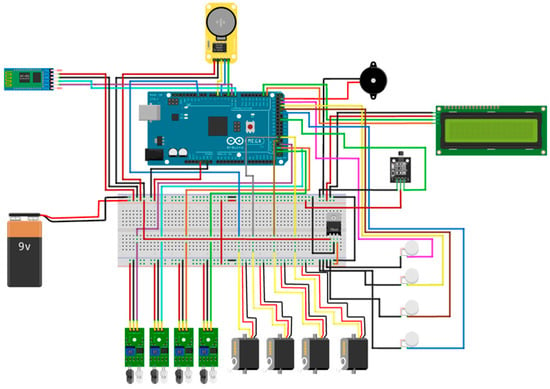
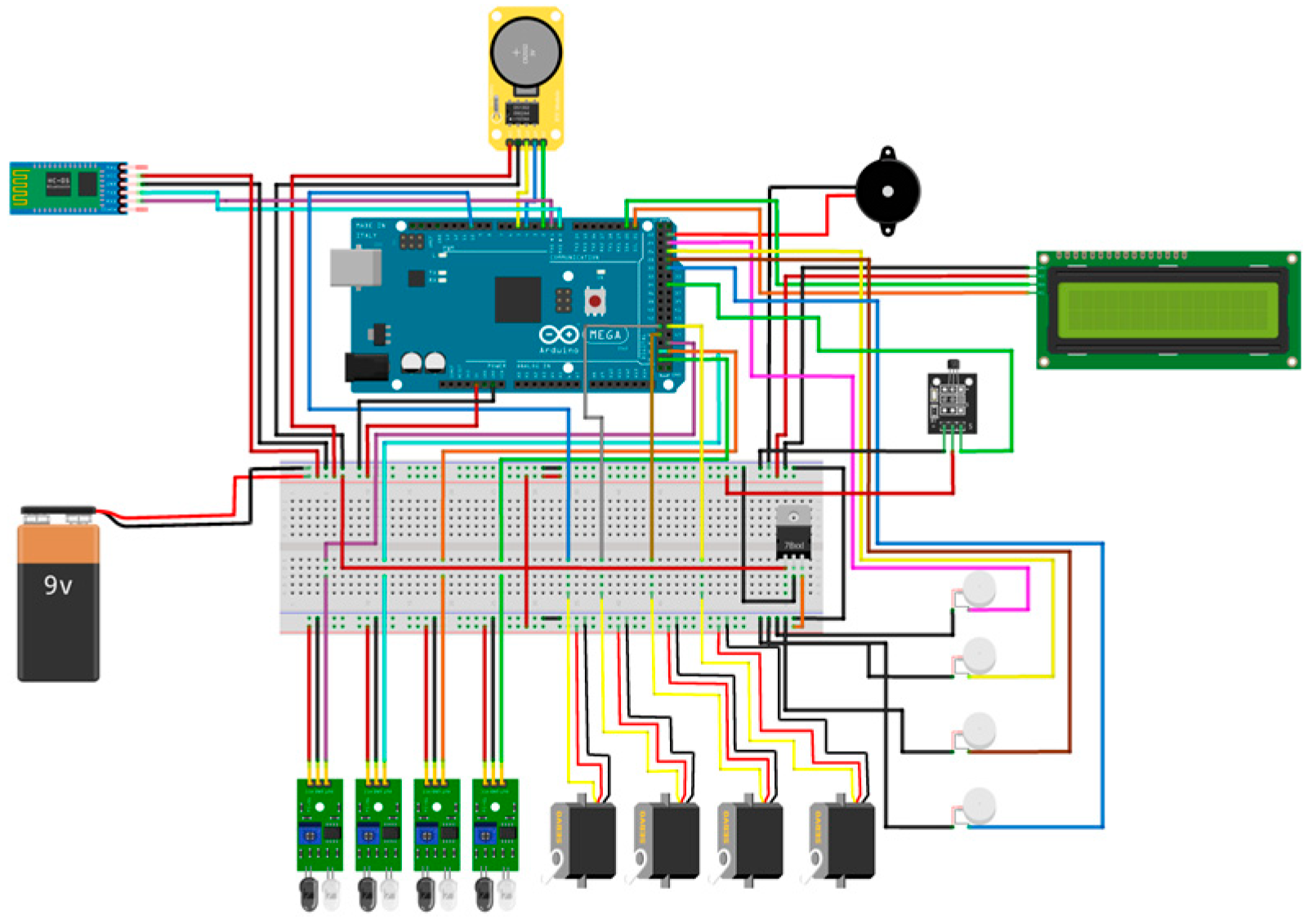
In the process of designing and developing the device, the methodology adopted was structured on two main work directions, namely: the development of the hardware component that includes the selection of the components to be used, the design of the electrical circuit and the actual physical assembly and the development of the software component, divided into microcontroller programming, implementation of system control algorithms, and development of communication interfaces Wiring diagram of the proposed medication adherence system (Figure 1). Red wires indicate the power supply (+5 V), black wires indicate ground (GND), and the remaining-colored wires represent signal connections between the Arduino Uno and the peripheral modules.
Figure 1.
System connection diagram.
The operating logic of the system can be divided into 3 main mechanisms.
Release of drugs from the compartments in which they are stored. At the present time, the servomotor corresponding to each compartment changes its position, having a slot attached that allows the drug to fall through an opening. At the same time, a vibration motor acts, moving the container, avoiding overlapping pills or blocking them. The closing of the operation of the motors is conditioned by the release of a pill and its detection by an optical sensor [8]. This component is also responsible for the operation of a counter that, after entering the initial number of pills in the compartment, will alert the user about reaching the minimum threshold of tablets required.
Patient Alerting—It is carried out through messages displayed on the LCD and sound signals generated by the buzzer, which are conditioned this time by the magnetic sensor located at the base of the housing that will detect the presence or absence of the magnet attached to a container that the patient picks up at the moment of administration [9].
Setting the Dosing Times—takes place using an application installed on the mobile phone of the caregiver or family members responsible for the patient. With an easy-to-use interface, accessible even to non-technical users, the application has a natural navigation flow and is efficient in setting and sending the data necessary for the system to function. Restricted access to the patient solves the problem of unwanted changes to the values leading to failure to fulfill the intended purpose of the device and even serious problems for the patient.
The prototype was built using an Arduino Mega2560 (Arduino SA, Ivrea, Italy), an HC-05 Bluetooth module (Guangzhou HC Information Technology Co., Ltd., Guangzhou, China), a 16 × 2 LCD display, four SG90 micro servo motors (TowerPro, Taipei, Taiwan), four TTP223 capacitive touch sensors (TONTEK Design Technology Ltd., Hsinchu, Taiwan), an active buzzer, LEDs, resistors, and a solderless breadboard. The microcontroller was programmed using Arduino IDE version 2.x (Arduino SA, Ivrea, Italy). The circuit diagram was designed using Fritzing version 0.9.8 (Friends of Fritzing Foundation, Berlin, Germany).
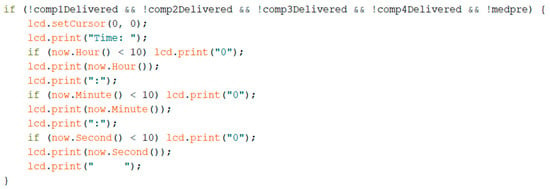
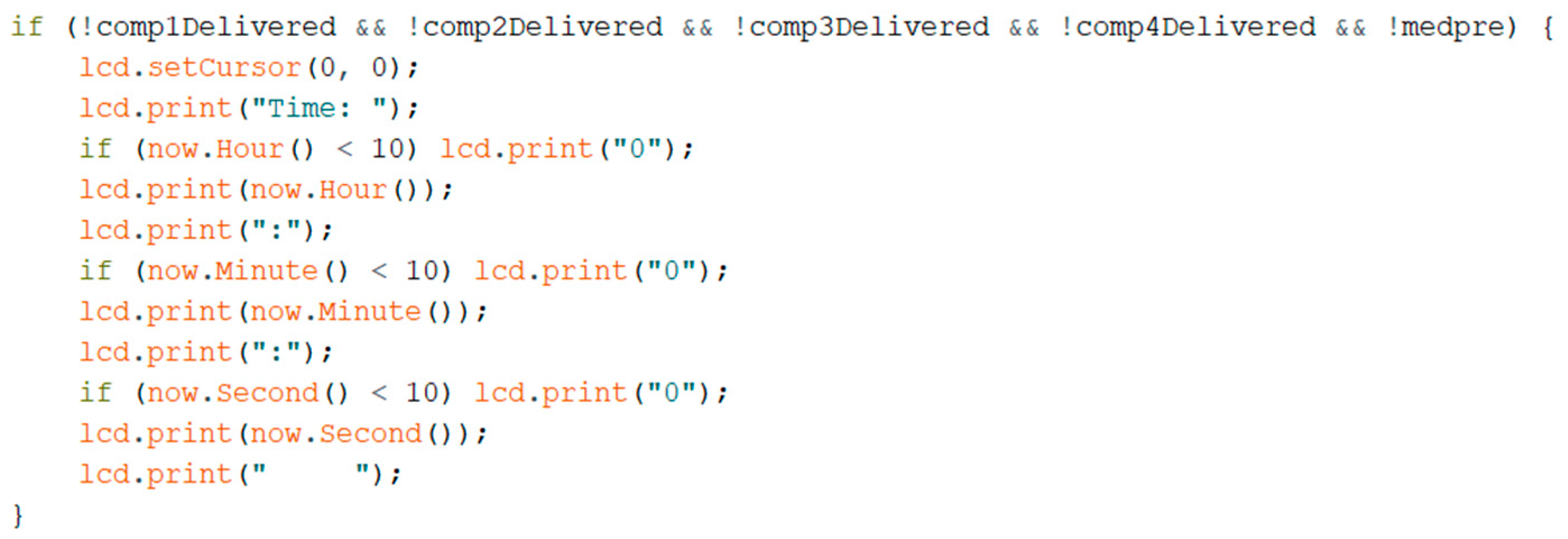
The software architecture of the system is built on two elements: a code for programming the Arduino microcontroller, which assigns commands to all components, and a user interface module, materialized in the form of a mobile application, which provides monitoring and configuration facilities for the medication administration program [10]. To control the opening times of the motors, a set of variables corresponding to the hour and minute values at which the opening is desired was initialized. Since 3-time intervals can be set for each motor, 6 different variables were used for each. The numerical values corresponding to the desired hours were not set in the code but were assigned to the variables—the initial value was 99—so that the system would allow opening only after the user entered the time values in the mobile application and sent them via the Bluetooth protocol. In the case of the time display sequence, the variables “now.Hour()”, “now.Minute()” and “now.Second()” are variables corresponding to the hour, minute and second, with values taken from the Clock RTC module. The sequence of time information displayed on the LCD screen is illustrated in Figure 2.
Figure 2.
Time display sequence on the LCD screen.
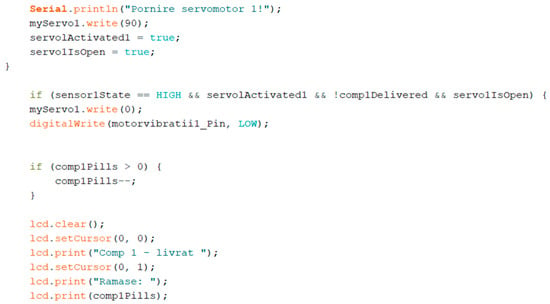
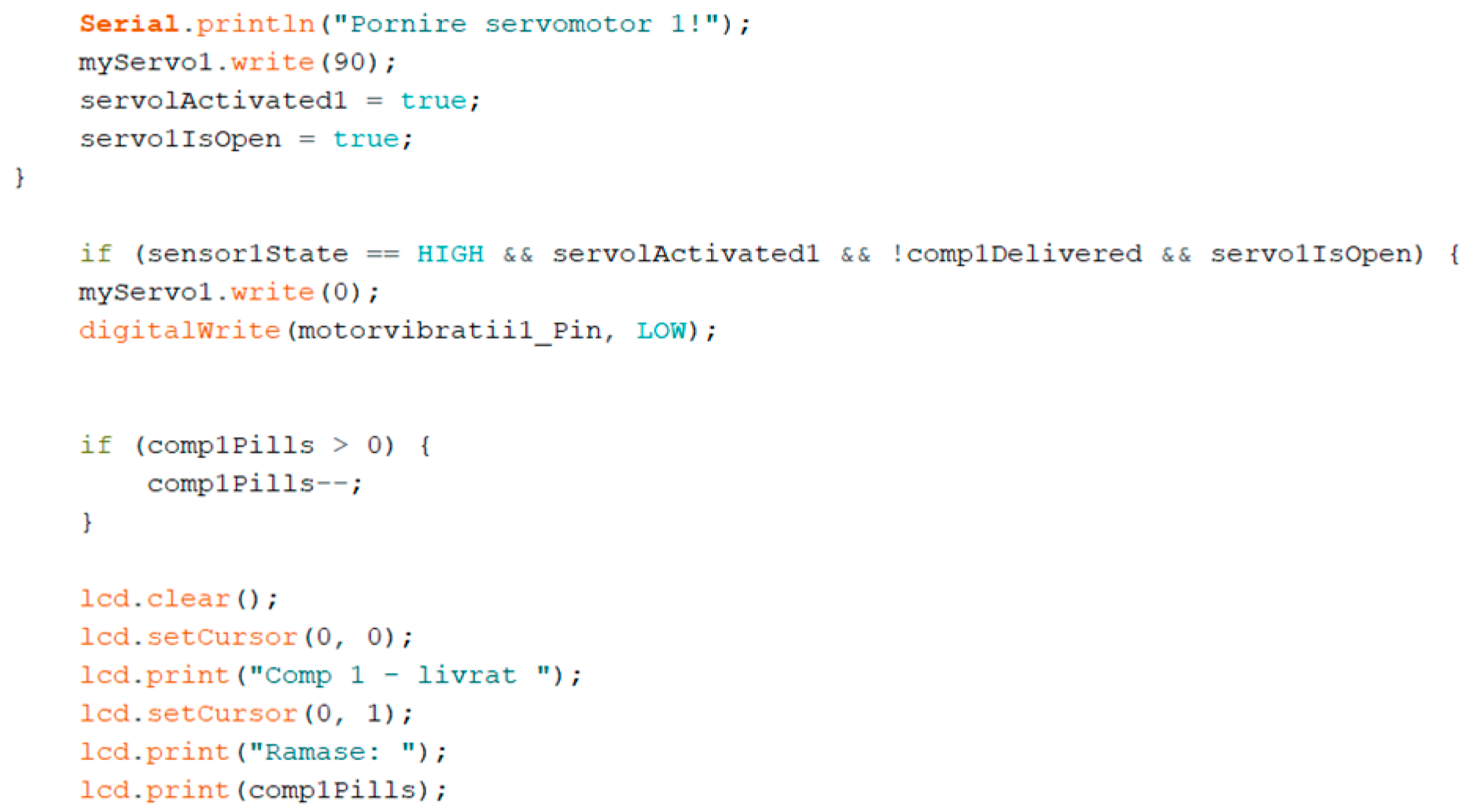
The code fragment in Figure 3 aims to open the servomotor and the vibration motor, corresponding to the same compartment, at the previously preset time. If the conditions are met, the servomotor changes its position to 90 degrees, and the vibration motor operation is simultaneously activated [11]. These actions are conditioned by the detection state of the IR sensor used for that compartment. Thus, when the detection of a pill released from the compartment is performed, the two motors will return to their initial state.
Figure 3.
Sequence corresponding to the delivery of the drug from compartment.
After delivering the medicine and closing the related motors, the program checks if the initial number of pills is greater than 0, and if the condition is true, it allows the counter to be activated [12]. The LCD screen maintains communication with the user by displaying the message corresponding to the delivery of the pill from the compartment and the number of those remaining.
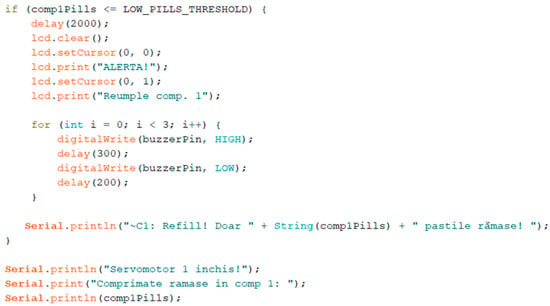
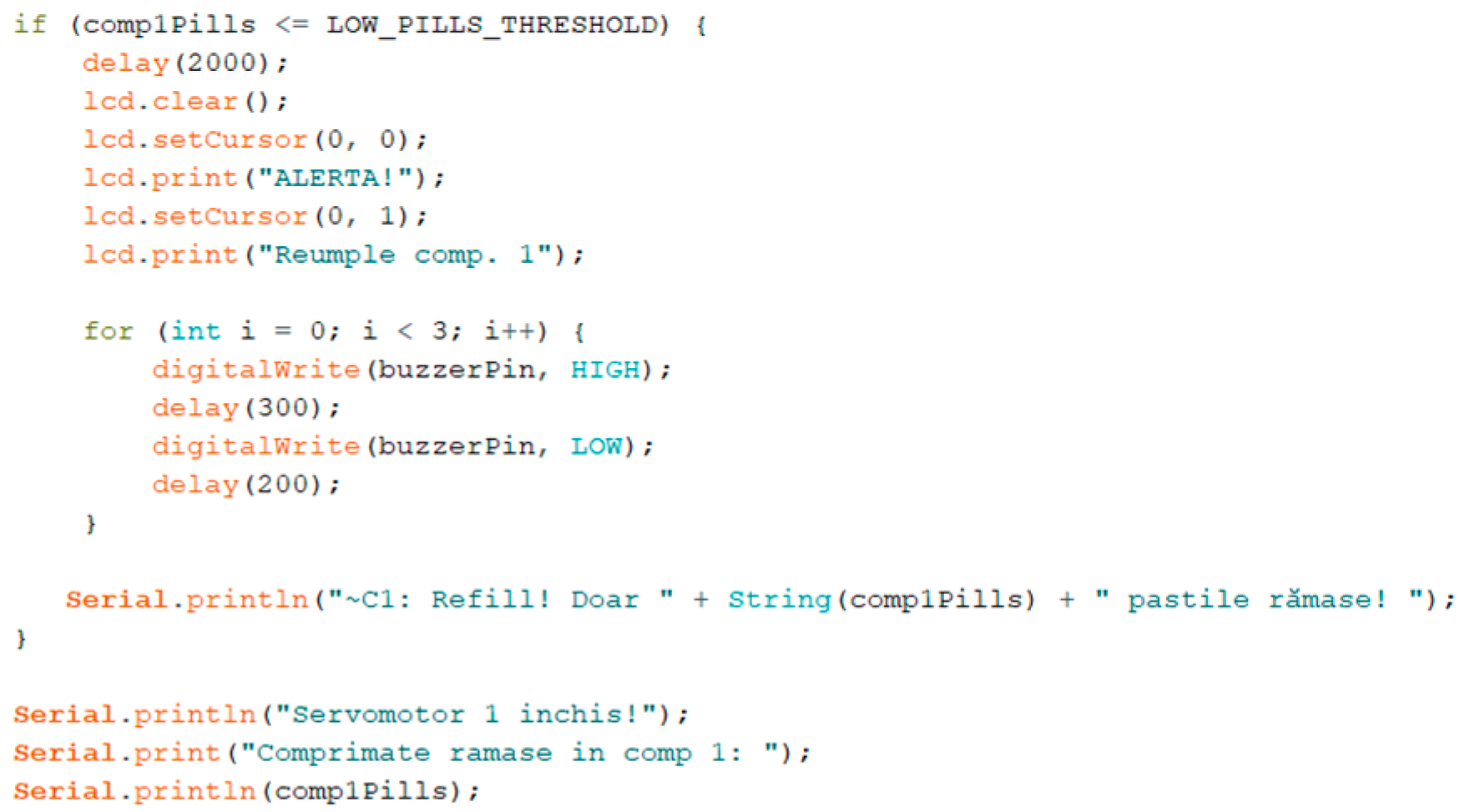
The constant “targetSecond” has the value 0 and is used to prevent the motors from reopening if the minute remains the set one. Thus, the motors will open only if the condition regarding the second is also true. The sequence of alerts generated after dispensing medication, prompting the user to replenish the medicine stock in compartment 1, is illustrated in Figure 4. The constant LOW_PILLS_THRESHOLD defines the upper threshold from which the system triggers refill alerts, activating only when the number of tablets drops to or below this value. Since the constant was initialized with the value 5, the alerts will start when the number of pills is less than or equal to 5 if the condition is true. The program displays the message “ALERT! Refill comp. 1” on the LCD screen and activates an intermittent sound signal generated by the buzzer. By connecting the Bluetooth module to the serial pins, sending a message to the serial terminal also performs the sending via the HC-05 Bluetooth module. Thus, the mobile application receives the message and displays it as a notification, alerting the patient care manager about the refilling of the compartment.
Figure 4.
Alert sequence regarding replenishment of the stock of medicines in compartment1 after the operation.
The system uses a HALL-type magnetic sensor to detect the uptake of the released drug that operates in an inverse output logic. When the sensor state is LOW, the program interprets the presence of a magnetic field in its proximity and triggers visual confirmation on the LCD, displaying the message “Administer the drug!” and the audible confirmation by activating the intermittent signals of the buzzer. This is valid until the sensor goes into the HIGH state and no longer detects the magnetic field, displaying the message “Drug taken” and interrupting the sound signals from the buzzer.
Software Architecture of Mobile Application
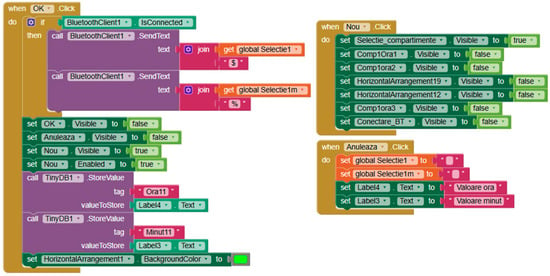
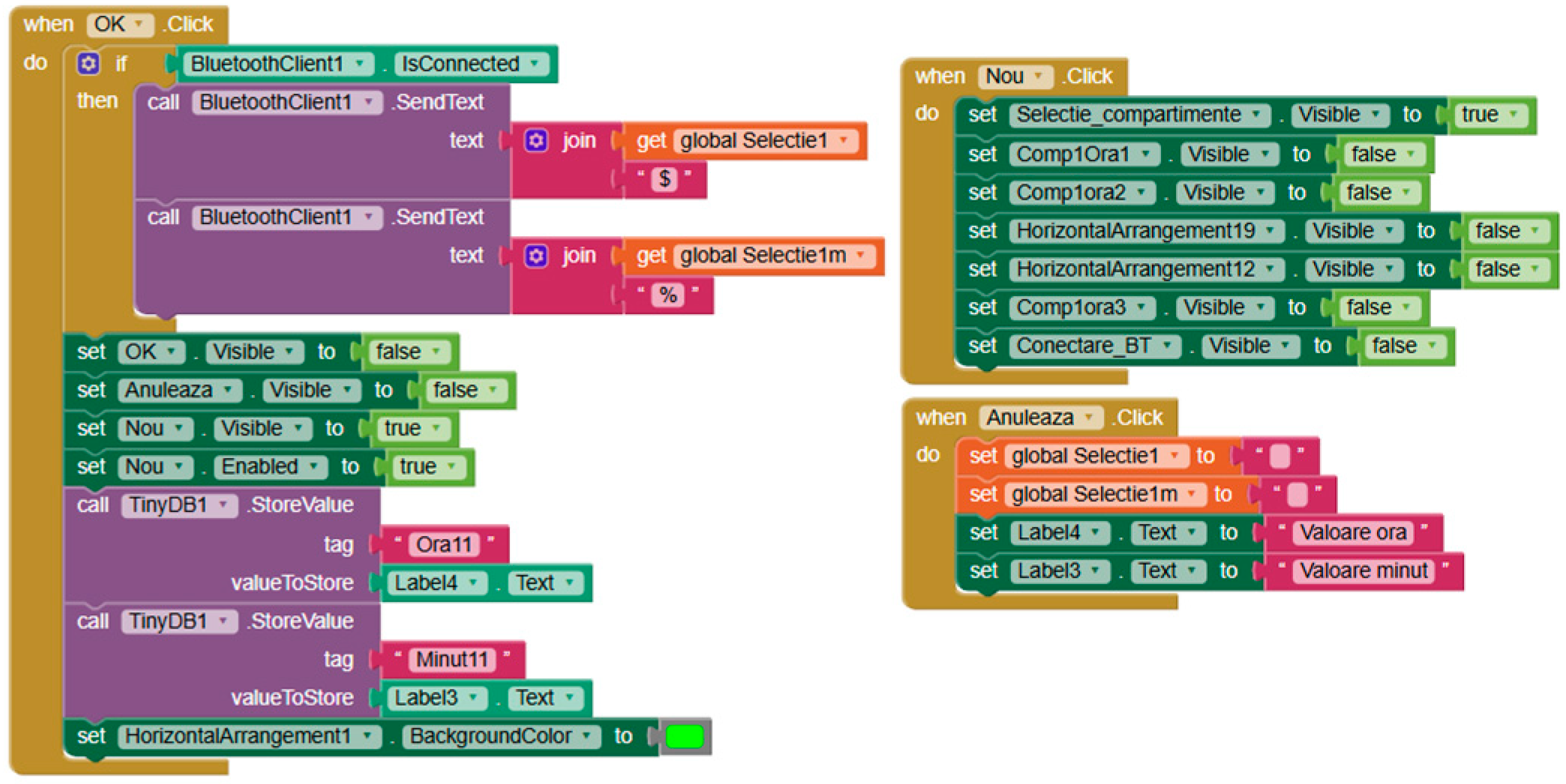
To achieve remote control and monitoring of the system, it was necessary to develop a mobile application that would allow wireless communication with the microcontroller via Bluetooth protocol. The Mit App Inventor environment was used to develop the application, which allows for the use of command blocks to create a functional and intuitive user interface. The connection between the mobile phone and the Bluetooth module is made through the application, as it is not possible to identify the module from the phone’s Bluetooth menu (see Figure 5). The developed application allows the management of medication administration through an interactive interface connected to a microcontroller-based system. Initially, a selection list is generated with the available Bluetooth devices, allowing the user to establish the desired connection. Depending on its status, the application displays a corresponding message (“Status: CONNECTED” or “Status: DISCONNECTED”).
Figure 5.
The command blocks correspond to the buttons for managing the sending of data and resetting the values.
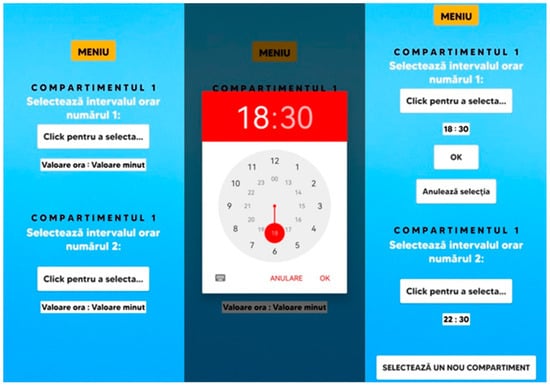
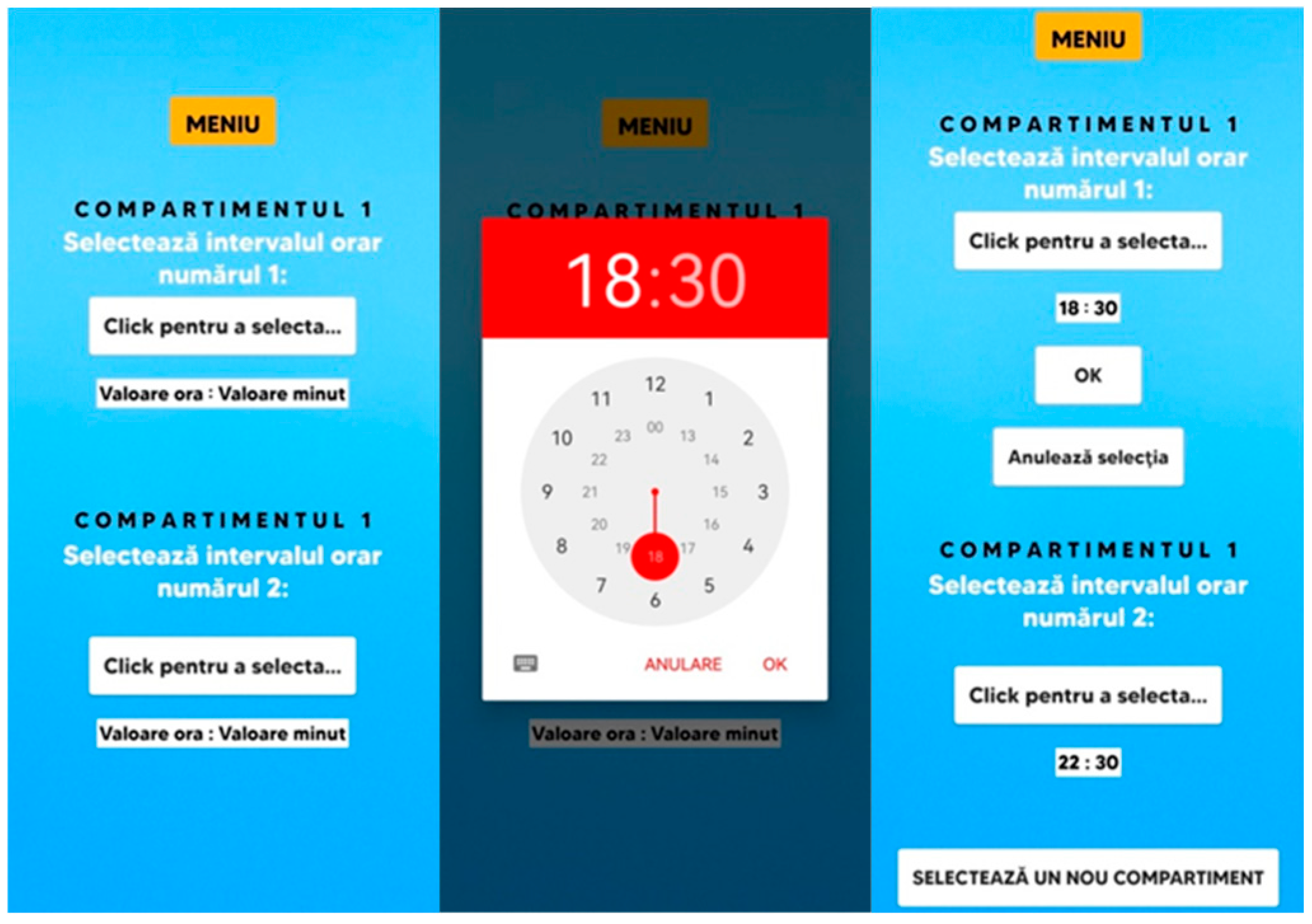
The medication administration configuration is done by selecting a compartment, followed by choosing the number of daily administrations (between 1 and 3). Depending on the option chosen, the application displays a specific interface for setting the times corresponding to each compartment. This mechanism is implemented for all four available compartments. The selection of the administration time is done using a “TimePicker” module, the values being stored in dedicated variables for the hour and minute and displayed in the interface. After configuration, the user can choose between three options: confirming the data “OK”, initiating a new selection “New” or canceling the operation “Cancel”. The validated data is transmitted to the microcontroller via Bluetooth and is saved locally in a “TinyDB” database, ensuring the persistence of the information.
The protocol for receiving data from Arduino and displaying it begins by initializing a global variable “receivedText” with the value 0. A Clock block is used for the conditioning sequence, which functions as a polling mechanism to ensure continuous monitoring of the Bluetooth connection, real-time data reception and avoiding delays. At the level of processing the received data, the program conditions the presence of a defining character (“~”) to identify the text, and subsequently the “call Notifier1” function is called, which will display a dialog box alert with the title “ATTENTION!” and with the possibility of confirmation and closing via an “Ok” button.
3. Results and Discussion
The servomotors used in the system have a variable current consumption (10–360 mA), which can generate fluctuations in the supply voltage, affecting performance, control accuracy and operating stability. To prevent these effects, an LM7805 voltage stabilizer was integrated, capable of providing a constant voltage of 5 V.
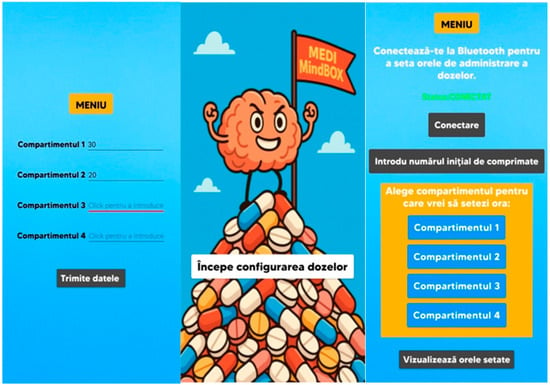
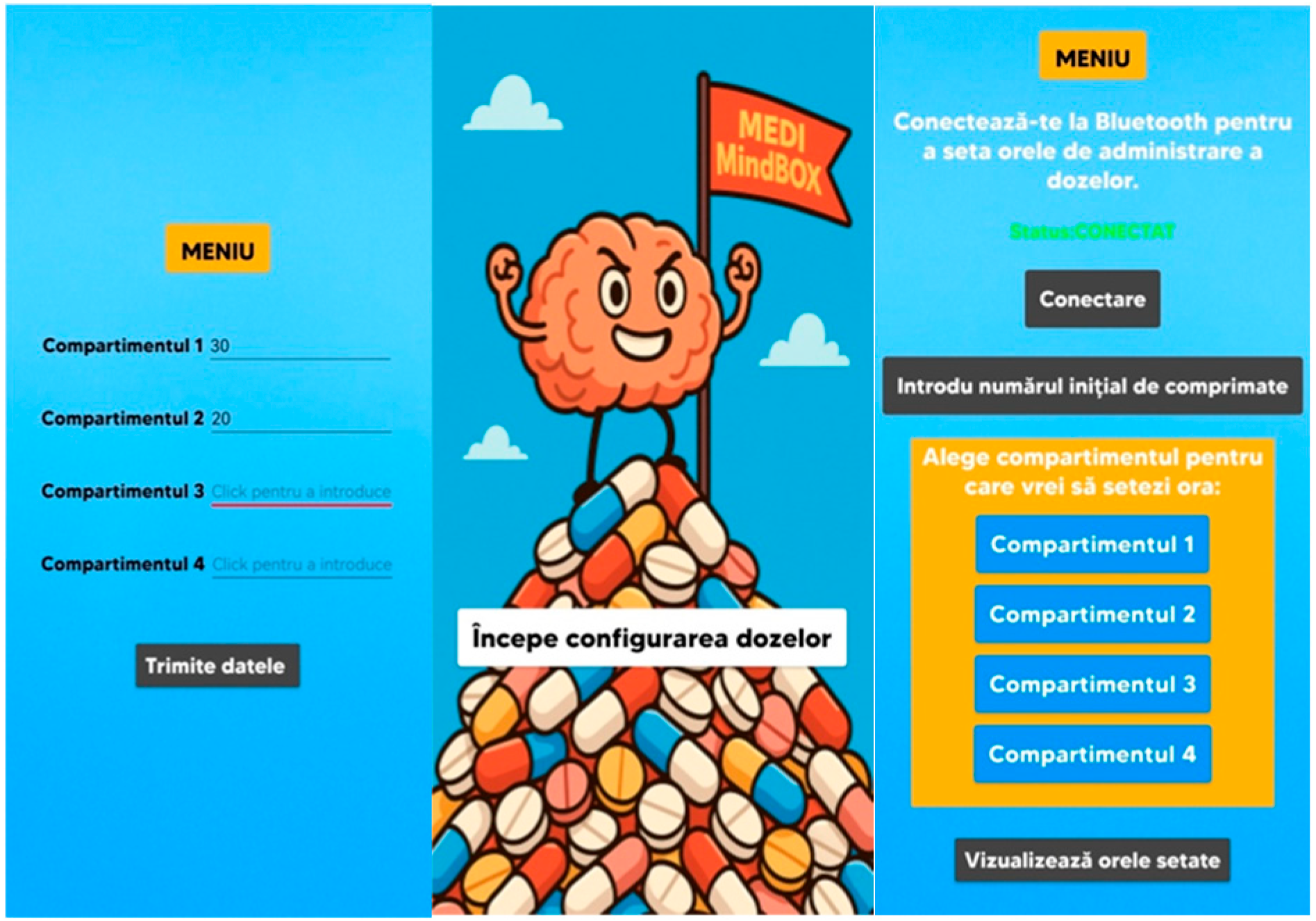
The system validation began with testing the drug release mechanism, analyzing both the mechanical and control components. Initially, the tests were performed on a single servomotor–vibration motor, IR sensor assembly, later expanding to multiple operating scenarios. Initial phase, without using a Clock module, the activation times were set manually to evaluate the consistency of the system response. The tests revealed correct operation, with the servomotors respecting the preset angles and activation order, without errors, even under repeated demand conditions. The application initialization interface and the screen for entering the initial number of tablets are shown in Figure 6.
Figure 6.
Application initialization and initial number of tablets input interfaces.
The notification and feedback system was evaluated, with the LCD display correctly presenting the relevant information, and the IR and magnetic sensors accurately detecting the release and retrieval of drugs. The data was transmitted in real time to the control unit, confirming the efficient and reliable operation of the entire system.
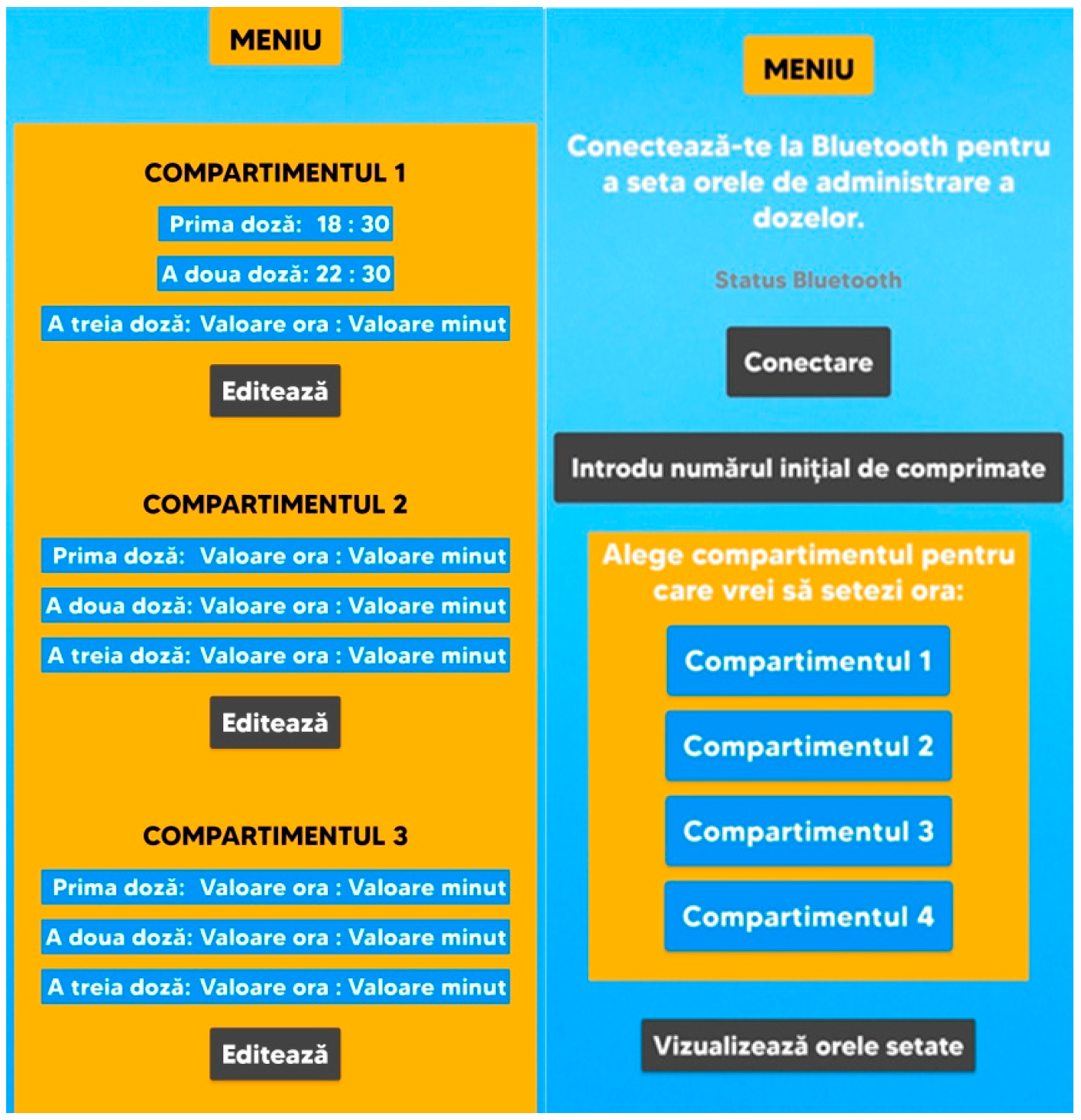
The main objective of the mobile application development was to simplify the process of configuring medication administration times, eliminating the need for direct intervention on the device’s hardware components. Given that the application is intended for both medical personnel and family members, the interface was designed with an emphasis on accessibility and ease of use, using an intuitive design, large buttons and clearly highlighted visual elements. Upon initialization, the application displays a main screen with a friendly interface, which allows access to the administration times configuration mode. After the application is initialized, the user can configure the medication administration schedule using the interface shown in Figure 7.
Figure 7.
Interface for selecting the administration times menu.
Connection to the device is achieved through a dedicated button “Connect”, and the connection status is visually indicated by changing the text color (green for active connection, red for inactive connection). An essential step in the configuration is the entry of the initial number of tablets, achieved by accessing a specific menu. For each compartment, the user enters the values into a text box that automatically activates a numeric keyboard, preventing the entry of invalid characters. Confirmation of the data is done through a “pop-up” message, which remains displayed until it is validated by pressing the “OK” button.
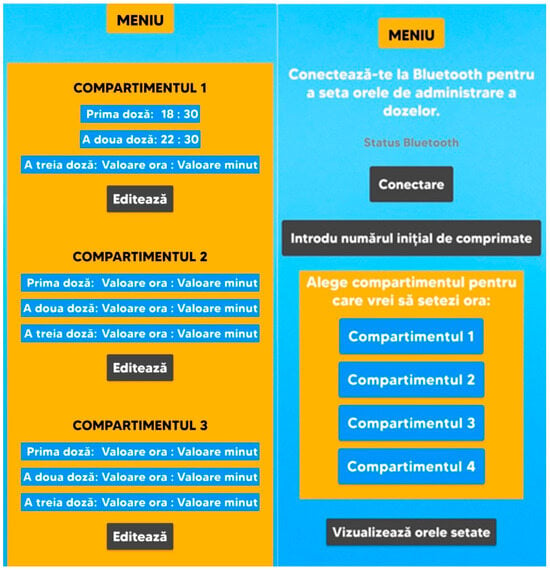
To ensure a more rigorous evaluation of the proposed system, several quantitative performance indicators were defined and measured during the experimental tests. The accuracy of drug delivery reached approximately 98%, calculated as the ratio of correctly delivered doses to the total scheduled deliveries. The average response time of the system, defined as the delay between the scheduled delivery time and the actual activation of the delivery mechanism, was 1.2 ± 0.3 s. The reliability of the detection subsystem was also evaluated, with the IR sensor achieving a detection accuracy of 97% for pill delivery, while the Hall sensor confirmed drug retrieval with an accuracy of 96%. Bluetooth communication between the mobile application and the microcontroller demonstrated high stability, with a successful data transmission rate of over 99% within a range of 5–10 m. Compared to existing IoMT-based medication adherence systems reported in the literature, the proposed solution offers several practical advantages. Many existing systems focus exclusively on scheduled delivery without confirming actual medication intake. In contrast, the current system integrates both delivery and intake validation through complementary detection mechanisms. Figure 8. User interface for viewing the previously configured medication administration times.
Figure 8.
Interface corresponding to the menu for viewing previously set times.
Compared to existing IoMT-based medication adherence systems reported in the literature, the proposed solution provides several practical advantages. Many existing systems focus exclusively on scheduled dispensing without confirming actual drug intake. In contrast, the present system integrates both dispensing and intake validation through complementary sensing mechanisms. Additionally, while commercial solutions often involve higher implementation costs and complex infrastructures, the proposed system is based on low-cost, widely available components, making it suitable for deployment in resource-constrained environments. The modular architecture and the use of a mobile application for configuration further enhance usability and adaptability compared to more rigid existing solutions.
4. Conclusions
In the context of the continuous increase in the incidence of neurodegenerative diseases globally, they represent a major priority in the health field, both from the perspective of developing curative solutions and palliative strategies aimed at improving the quality of life of patients. Among these, dementias, especially Alzheimer’s disease, are characterized by the progressive and irreversible deterioration of higher cortical functions, affecting memory, thinking, orientation and perception of reality. These changes lead to the loss of patient autonomy and the emergence of significant problems, such as therapeutic non-adherence, which requires continuous monitoring and assistance. Automated drug administration systems have become an effective solution for increasing therapeutic compliance, replacing traditional manual methods. The need to develop these systems is supported by demographic and epidemiological factors, such as population aging, increasing medical costs, staff shortages and the demonstrated efficiency of automated solutions. Despite the promising results, the current study presents several limitations. The system validation was performed in a controlled experimental environment, without large-scale clinical testing involving patients. Additionally, the number of test scenarios was limited, and long-term reliability was not extensively evaluated. These aspects may affect the generalizability of the results and highlight the need for further validation in real-world conditions.
The proposed solution consists of an intelligent medication administration system, designed to improve accessibility and safety of use. It is distinguished by an intuitive interface, high portability and the integration of warning and verification mechanisms that guide the patient in the correct administration of the treatment. In addition, the low production cost and the use of standardized components facilitate implementation in environments with limited resources and ensure rapid maintenance. The possibility of customization through 3D printing technology, as well as the integration of a mobile application for remote configuration and updates, contribute to the adaptability and efficiency of the proposed system.
Future work will focus on extending the system capabilities by integrating artificial intelligence algorithms for predicting medication adherence and identifying behavioral patterns. Adaptive scheduling mechanisms based on patient-specific data and real-time monitoring will also be explored. Future research will include clinical validation studies involving patients and caregivers, as well as large-scale testing to assess system usability, reliability, and long-term impact in real-world healthcare scenarios. The main contribution of this work lies in the development of a low-cost, integrated IoMT prototype that combines automated drug dispensing with intake validation, providing a practical solution for improving medication adherence in neurodegenerative diseases.
Author Contributions
Conceptualization, R.F. and C.-P.C.; methodology, C.L.; software, R.F.; validation, C.-P.C., R.-G.C. and D.-I.A.; formal analysis, D.-I.A.; investigation, R.F.; resources, M.M. and O.C.A.; data curation, C.L.; writing—original draft preparation, R.F.; writing—review and editing, R.F.; visualization, C.-P.C.; supervision, C.-P.C.; project administration, C.-P.C. All authors have read and agreed to the published version of the manuscript.
Funding
This study was supported by the Erasmus+ project Hybrid Healthcare-Advancing Hybrid Management and Digital Technology in Healthcare Education (Project No. 2024-1-CZ01-KA220-HED-000251650), co-funded by the European Union. The funder had no role in the design of the study; in the collection, analyses, or interpretation of data; in the writing of the manuscript; or in the decision to publish the results.
Institutional Review Board Statement
Not applicable.
Informed Consent Statement
Informed consent was obtained from all subjects involved in the study. Written informed consent has been obtained from the patient(s) to publish this paper.
Data Availability Statement
Data sharing is not applicable to this article.
Conflicts of Interest
The authors declare no conflicts of interest.
References
- Dugger, B.N.; Dickson, D.W. Pathology of Neurodegenerative Diseases. Cold Spring Harb. Perspect. Biol. 2017, 9, a028035. [Google Scholar] [CrossRef] [Scilit] [PubMed] [PubMed Central]
- Wilson, D.M., 3rd; Cookson, M.R.; Van Den Bosch, L.; Zetterberg, H.; Holtzman, D.M.; Dewachter, I. Hallmarks of neurodegenerative diseases. Cell 2023, 186, 693–714. [Google Scholar] [CrossRef] [Scilit] [PubMed]
- Kovacs, G.G. Chapter 21—Concepts and classification of neurodegenerative diseases. In Handbook of Clinical Neurology; Kovacs, G.G., Alafuzoff, I., Eds.; Elsevier: Amsterdam, The Netherlands, 2018; Volume 145, pp. 301–307. [Google Scholar]
- Aisen, P.S.; Davis, K.L. Neurodegenerative Disorders, The Search for Disease—Modifyng Treatment of Alzheimer’s Disease. Annu. Rev. Pharmacol. Toxicol. 1997, 6, 500–513. [Google Scholar]
- Dănăilă, L.; Gheorghe, M.; Patru, P. Boala Alzheimer; Editura Militară: Bucureşti, Romania, 1996; pp. 9–197. [Google Scholar]
- Blass, P.J.; Poirier, J. Pathophysiology of Alzheimer Syndrome. In Clinical Diagnosis and Management of Alzheimer’s Disease; Dunitz, M., Ed.; CRC Press: London, UK, 1996. [Google Scholar]
- Ferri, C.P.; Prince, M.; Brayne, C.; Brodaty, H.; Fratiglioni, L.; Ganguli, M.; Hall, K.; Hasegawa, K.; Hendrie, H.; Huang, Y.; et al. Global prevalence of dementia: A Delphi consensus study. Lancet 2005, 366, 2112–2117. [Google Scholar] [CrossRef] [Scilit] [PubMed]
- Hardy, J.; Selkoe, D.J. The amyloid hypothesis of Alzheimer’s disease: Progress and problems on the road to therapeutics. Science 2002, 297, 353–356, Erratum in Science 2002, 297, 2209. [Google Scholar] [CrossRef] [Scilit] [PubMed]
- Moruzzi, E. Genetics in Alzheimer’s disease. Rom. J. Med. Pract. 2014, 9, 214–218. [Google Scholar]
- Goate, A.; Chartier-Harlin, M.C.; Mullan, M.; Brown, J.; Crawford, F.; Fidani, L.; Giuffra, L.; Haynes, A.; Irving, N.; James, L.; et al. Segregation of a missense mutation in the amyloid precursor protein gene with familial Alzheimer’s disease. Nature 1991, 349, 704–706. [Google Scholar] [CrossRef] [Scilit] [PubMed]
- Bertram, L.; Tanzi, R.E. The genetic epidemiology of neurodegenerative disease. J. Clin. Investig. 2005, 115, 1449–1457. [Google Scholar] [CrossRef] [Scilit] [PubMed] [PubMed Central]
- Fortea, J.; Zaman, S.H.; Hartley, S.; Rafii, M.S.; Head, E.; Carmona-Iragui, M. Alzheimer’s disease associated with Down syndrome: A genetic form of dementia. Lancet Neurol. 2021, 20, 930–942. [Google Scholar] [CrossRef] [Scilit] [PubMed] [PubMed Central]
Disclaimer/Publisher’s Note: The statements, opinions and data contained in all publications are solely those of the individual author(s) and contributor(s) and not of MDPI and/or the editor(s). MDPI and/or the editor(s) disclaim responsibility for any injury to people or property resulting from any ideas, methods, instructions or products referred to in the content. |
© 2026 by the authors. Licensee MDPI, Basel, Switzerland. This article is an open access article distributed under the terms and conditions of the Creative Commons Attribution (CC BY) license.