


Abstract
Hybrid solar–thermal energy harvesting systems are an important advancement in renewable energy technology, enabling simultaneous production of electrical power and useful thermal energy within a single compact platform. However, their performance is often limited by poor heat transfer and inefficient mass transport of working fluids, leading to photovoltaic thermal degradation and significant exergy losses. This study aims to optimize heat and mass transport processes in a hybrid solar–thermal mechanical system to enhance energy recovery and ensure long-term operational reliability. A three-dimensional numerical model based on the finite volume method (FVM) was developed using the governing equations of continuity, momentum, and energy conservation. A Multi-Objective Genetic Algorithm (MOGA) was employed to determine optimal microchannel geometries by analyzing variable cross-section effects on flow behavior and thermal boundary layer disruption. At the Reynolds number of 2000, the optimized configuration increases the average Nusselt number by 43.5% compared to a smooth channel. Consequently, the photovoltaic operating temperature decreases by 12.6 °C, improving electrical efficiency by 9.3%. The system achieves a maximum thermal efficiency and net energy gain of 76.8%, while maintaining an acceptable 16.3% increase in pumping power. The results confirm that optimizing mass transport is essential for effective thermal regulation and improved energy conversion performance, providing a strong foundation for high-efficiency solar collector design.
1. Introduction
The increasing global demand for clean and sustainable energy has accelerated the development of hybrid solar–thermal energy harvesting technologies capable of simultaneously generating electrical and thermal energy within a unified system. These systems have advantages in terms of their energy utilization efficiency and less negative environmental effects than conventional standalone PV and/or thermal collectors [1]. Poor heat transfer, thermal regulation and mass transport in hybrid solar–thermal systems, however, often restrict the overall system performance, causing PV overheating and high exergy loss [2]. In recent years, focus has been placed on enhancing thermal energy harvesting performance through advanced optimization strategies and Intelligent Thermal Management Systems. Deep learning-assisted solar absorber optimization has been proven to have a high potential for achieving substantial thermal efficiency improvements in industrial energy harvesting environments [3]. In the same manner, optimization of the photovoltaic thermal (PVT) collectors based on fi-enhanced geometry, significant enhancements in heat dissipation and cooling [4] have been demonstrated. In present-day renewable energy applications, waste thermal energy from hybrid thermal energy harvesting technologies is efficiently recovered and utilized for hybrid electric vehicle applications and smart industrial system applications [5].
New thermal intermediate and storage media and technologies have also been demonstrated as feasible solutions for improving hybrid solar system performance. It has been reported that MXene nanofluids can greatly enhance the efficiency of photothermal conversion and MXene-based thermo-mechanical switching systems can improve thermal transport efficiency [6]. Moreover, multi-source hybrid energy harvesting has been proven to generate reliable energy from several energy sources including solar energy, thermal energy, RF and piezoelectric energy for portable electronics [7]. The confinement of the phase change material for direct extraction and storage of solar–thermal energy has also boosted the thermal stability and retrospective energy storage capability [8]. Recently, solar hybrid roads have been investigated as elements of hybrid solar infrastructure, and molecular solar thermal storage devices have also been developed [9,10] to broaden the application range of renewable thermal energy harvesting technologies. Although numerous advancements have been made, few studies have tried to perform the simultaneous optimization of both heat and mass transport processes in hybrid solar–thermal mechanical systems with multi-objective numerical optimization methods (Table 1).
Table 1.
Previous work conducted on Optimization Heat and Mass Transport in Mechanical Devices for Hybrid Solar–Thermal Energy Harvesting.
2. Materials and Methods
2.1. Materials
A hybrid PV/T solar–thermal system with a variable microchannel heat exchanger was analyzed. Monocrystalline silicon was used for the photovoltaic layer, aluminum alloy for the absorber plate and microchannels, and water as the cooling fluid. The numerical domain included the PV layer, absorber, cooling channels, and insulation. A solar irradiation of 1000 W/m2, an ambient temperature of 25 °C, and a Reynolds number range of 500–2000 was considered. The material properties used in the numerical model are summarized in Table 2. Since the present study is based entirely on numerical modeling, no specific commercial material supplier was required for the computational analysis.
Table 2.
Thermo-physical properties of the working fluid and the materials of the collector.
Software and Numerical Implementation: The three-dimensional (3-D) computational fluid dynamics (CFD) simulations were performed using ANSYS Fluent 2024 R2 (ANSYS, Inc., Canonsburg, PA, USA). MATLAB R2024a (MathWorks, Natick, MA, USA) was used for numerical data processing, performance evaluation, and optimization analysis. Python 3.12 (Python Software Foundation, Wilmington, DE, USA) was used for data processing, visualization, and supporting computational analysis. Spatial discretization was performed using the finite volume method (FVM) and the SIMPLE algorithm was implemented for the pressure velocity coupling. To obtain more numerical accuracy, second order discretization schemes were used.
2.1.1. Photovoltaic and Absorber Materials
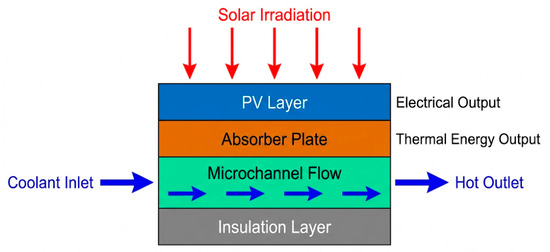
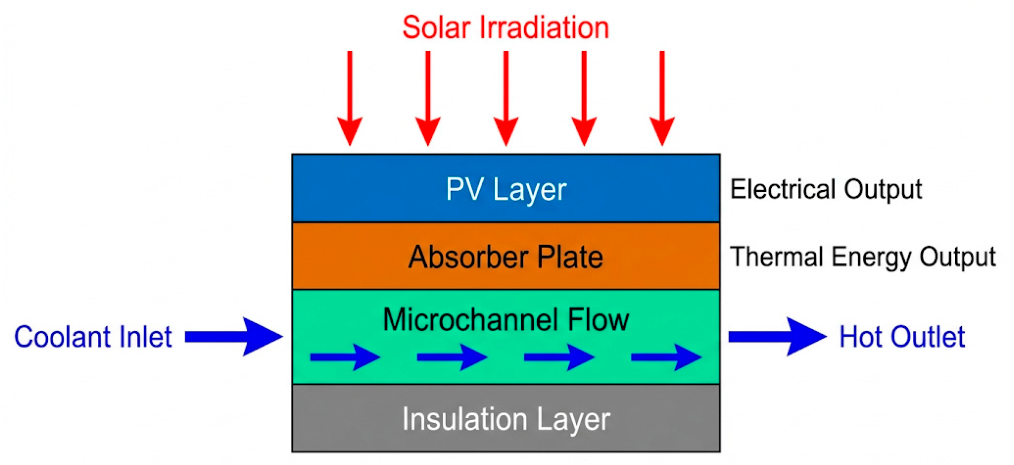
The PV module was formed from optically active (crystalline silicon) cells connected to a thermally absorbing aluminum plate using one or more thermal bonding layers. The thermal conductivity of aluminum enhanced the heat dissipation from PV surface to the cooling liquid. To reduce the heat losses to the surroundings, insulation materials were also included under the absorber plate. Figure 1 shows the schematic diagram of the hybrid solar–thermal PV/T system.
Figure 1.
The hybrid solar–thermal PV/T system schematic diagram.
2.1.2. Microchannel Cooling Configuration
The geometry of a variable cross-section design of microchannel was designed to achieve a better thermal boundary layer disruption and have higher convective heat transfer characteristics. Hydraulic diameter and channel aspect ratio were optimized with Multi-Objective Genetic Algorithm (MOGA) for maximum heat transfer efficiency with reasonable pressure drop penalties.
2.1.3. Working Fluid Properties
The thermo-physical properties of the cooling medium as a model parameter have been considered as temperature dependent incompressible water. To accurately and precisely simulate heat and mass transport behavior under different conditions, different properties of the fluid such as density, viscosity, thermal conductivity and specific heat capacity were also input into the numerical solver. Table 2 lists the thermo-physical properties of the working fluid and the materials of the collector.
2.1.4. Numerical Computational Domain
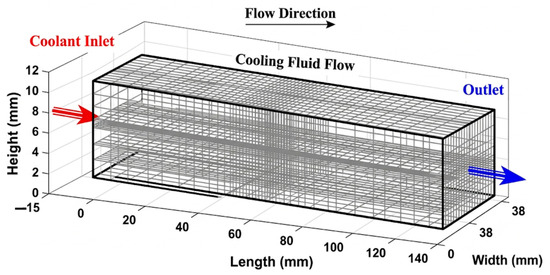
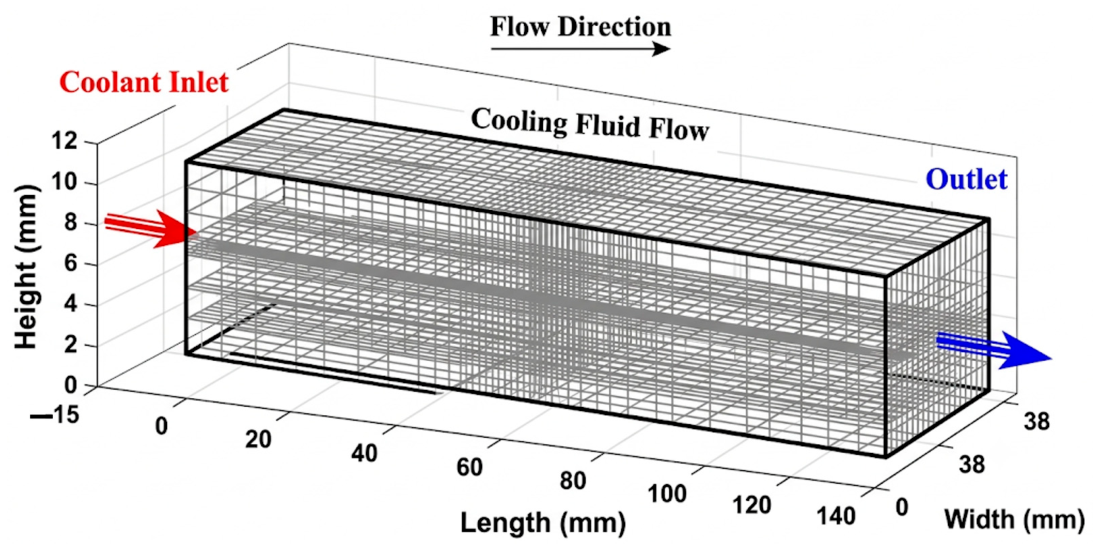
Using finite volume discretization methods, a 3D computational fluid dynamics (CFD) domain has been set up. Because of the numerical stability and convergence issues of the solutions close to the walls of the microchannel and thermal boundary zone, structured mesh generation was adopted. Figure 2 shows the computational domain and mesh structure used for the microchannel collector.
Figure 2.
The computational domain and the mesh structure for the microchannel collector are 3D.
2.2. Methods
Three-dimensional (3-D) numerical simulations based on the finite volume method (FVM) were employed to analyze the thermo-fluid transport behavior inside the hybrid solar–thermal system. The solution of the governing equations for continuity, momentum and energy conservation was carried out for turbulent steady-state flow. The SIMPLE algorithm was used to obtain pressure–velocity coupling, and second-order schemes were used in numerical calculations to achieve high accuracy.
The optimization was performed using a Multi-Objective Genetic Algorithm (MOGA) to find the best microchannel configuration that increases the heat transfer enhancement as much as possible, while reducing frictional pressure losses as much as possible. The goals of the objective functions were: Nusselt number enhancement, PV system temperature reduction, thermal efficiency enhancement, and pumping power requirement.
2.2.1. Governing Equations
The equations of continuity, momentum and energy flow for a fluid flow inside a microchannel system were solved using a numerical method (Table 3).
Table 3.
Boundary conditions and numerical simulation parameters.
- Continuity Equation
- Momentum Equation
- Energy Equation
2.2.2. Optimization Procedure
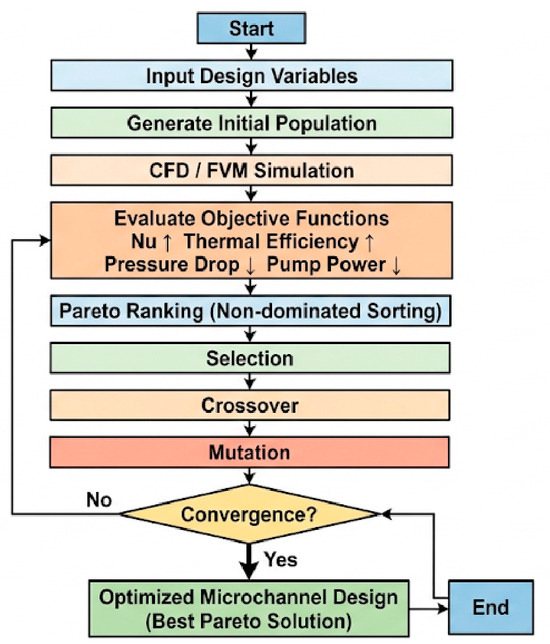
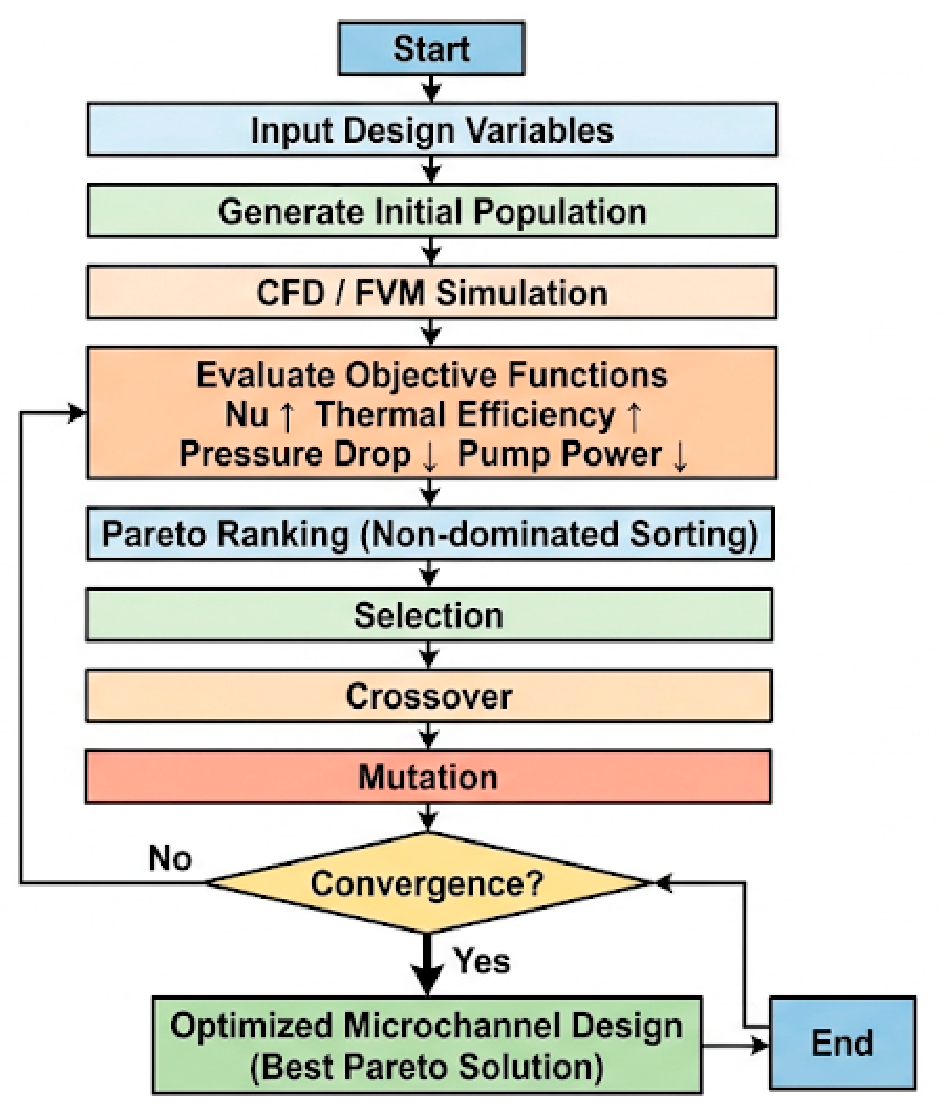
The Multi-Objective Genetic Algorithm optimization procedure was performed by varying the hydraulic diameter, channel spacing, and cross-sectional geometry parameters. The optimization criteria included maximizing the Nusselt number and thermal efficiency while minimizing pressure drop and pumping power consumption. Numerical convergence was achieved when residual errors fell below 10−6 for all governing equations. Figure 3 shows the flowchart of the Multi-Objective Genetic Algorithm optimization process.
Figure 3.
Flowchart of the Multi-Objective Genetic Algorithm (MOGA) optimization process.
Reynolds Number
Nusselt Number
2.2.3. Software and Computational Tools
ANSYS Fluent 2024 R2 (ANSYS, Inc., Canonsburg, PA, USA) was used to perform the three-dimensional CFD simulations based on the finite volume method. MATLAB R2024a (MathWorks, Natick, MA, USA) was used for numerical analysis, data processing, and optimization calculations. Python 3.12 (Python Software Foundation, Wilmington, DE, USA) was used for data processing and graphical visualization.
3. Results and Discussion
3.1. Results
The optimized hybrid system was able to make significant improvements in terms of thermal performance, heat transfer, reducing PV temperature and increasing energy efficiency.
3.1.1. Ohmic Heat Generation by Electric Field Distributed Power in Optimized Microchannels
The optimized microchannel geometry has achieved a substantial increase in convective heat transfer performance, enhanced the mixing of fluid and effective disruption of thermal boundary layers, and thus enhanced the heat extraction of thermal energy from the PV surface.
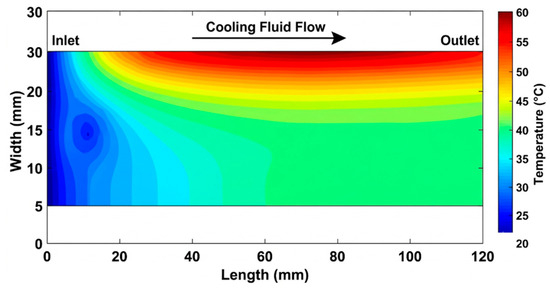
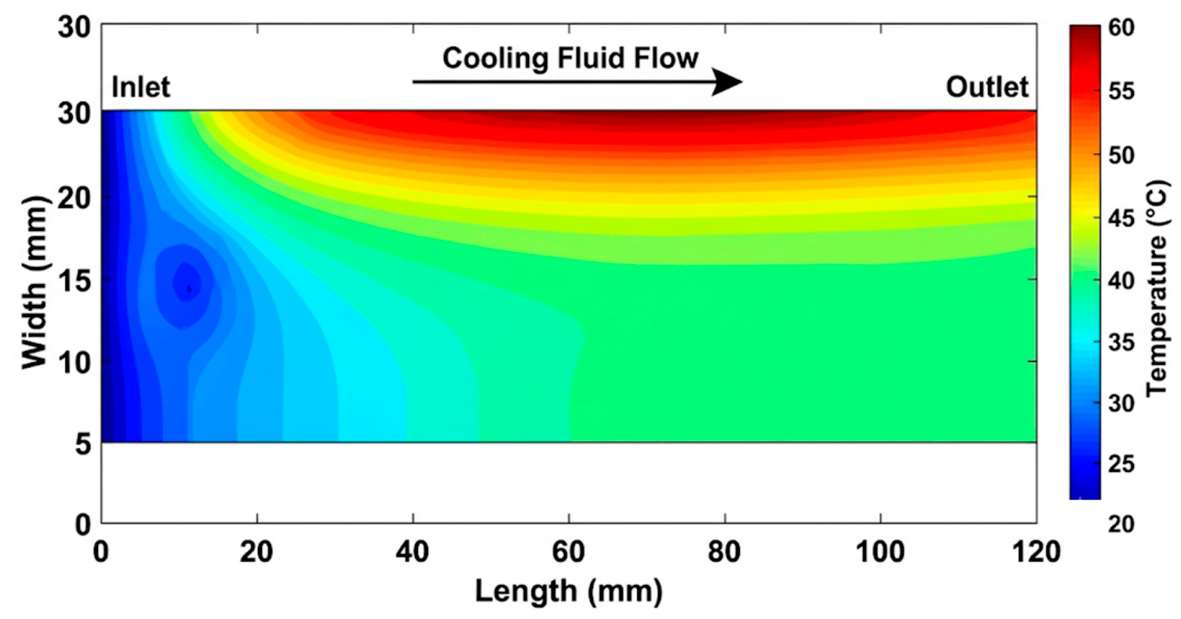
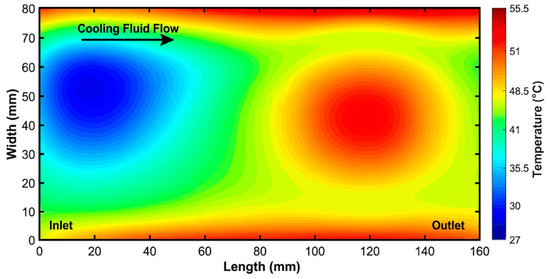
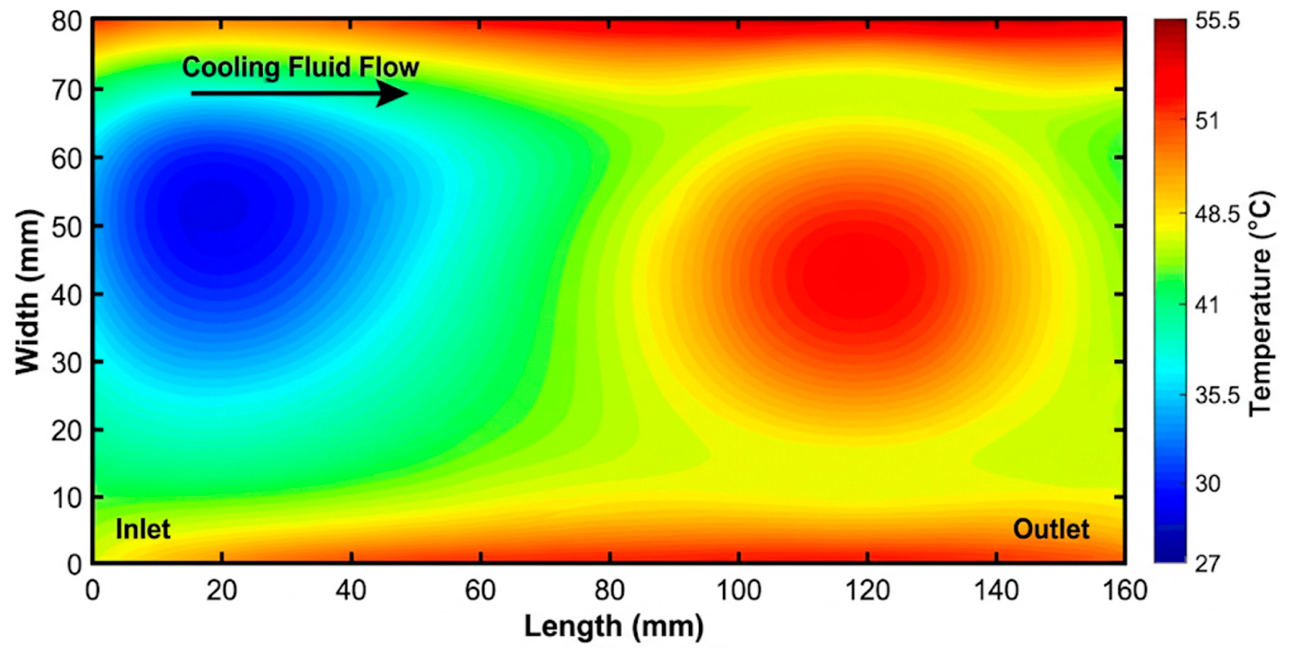
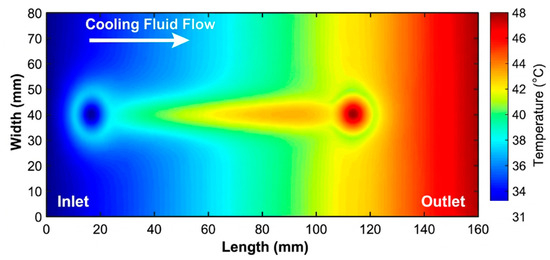
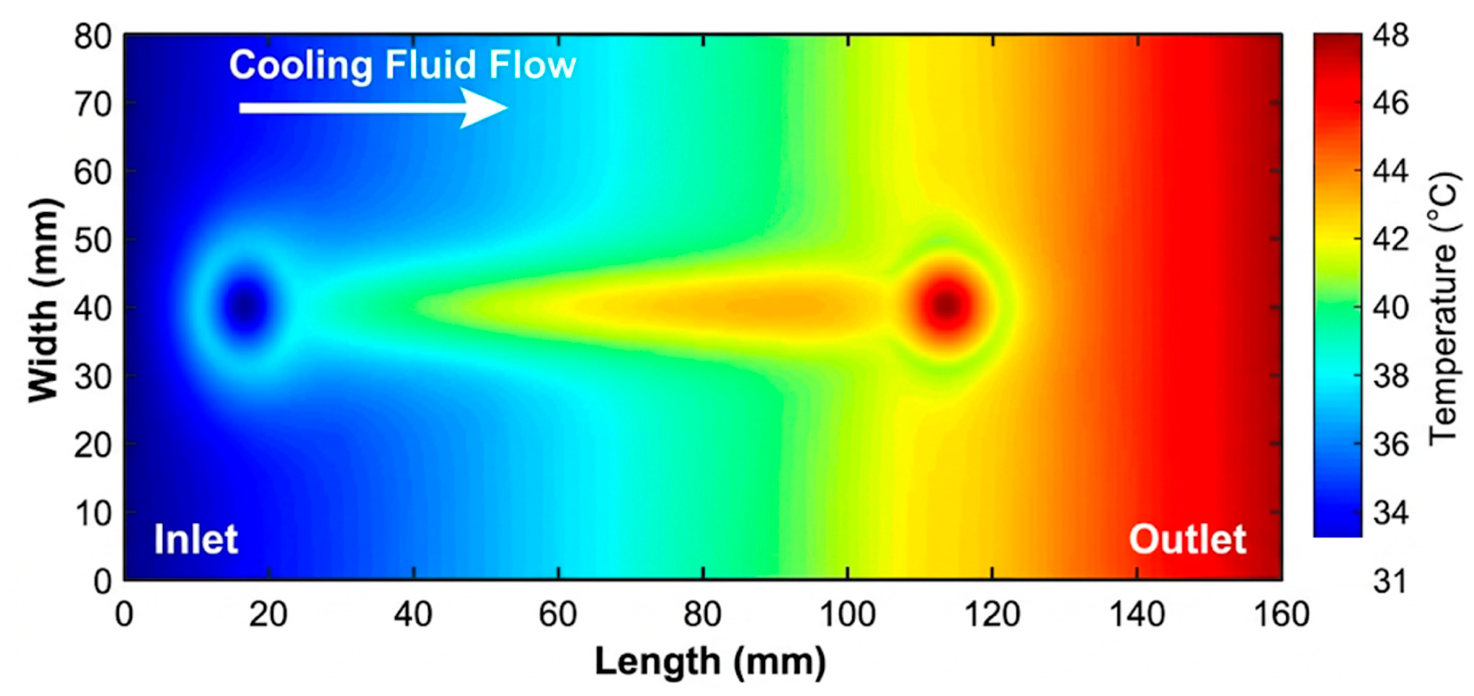
Figure 4 illustrates the temperature distribution within the optimized microchannel collector. In the temperature field a gradual increase is observed in the direction of the flow of the working fluid. The reason for this behavior is that the working fluid continuously takes up heat from the photovoltaic absorber surface in the direction of the oxygen flow. A local low-temperature zone appears close to the inlet where the coolant inlet temperature is the highest and the heat absorbed by the coolant is at its greatest. There is a thermal boundary layer which forms as the coolant flows through the channel, after which the temperature of the fluid rises to the outlet gradually. The optimized variable cross-section microchannel achieves a more effective heat extraction capability and a reduced average PV operating temperature, due to the strong convective heat transfer and disruption of the thermal boundary layer.
Figure 4.
Distribution of temperature in optimized microchannel geometry.
3.1.2. Finite Tape of Nusselt Number Enhancement Due to Reynolds Number Variation
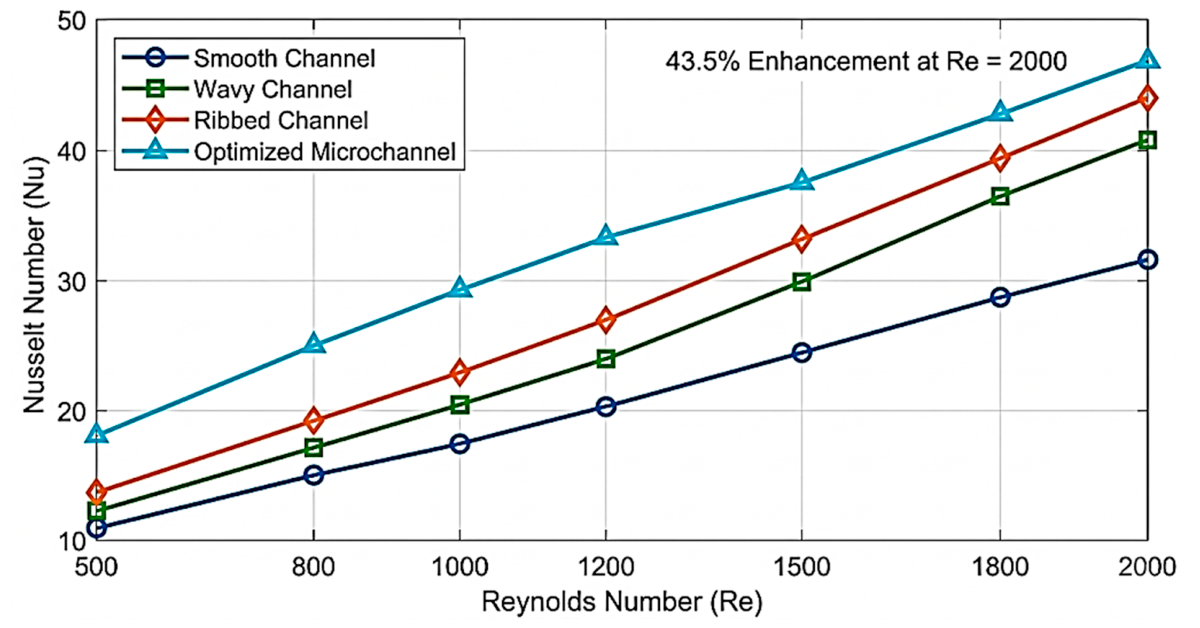
The system presented by the Reynolds number of 2000 showed a significant improvement in the value of the Nusselt number of 43.5% relative to the smooth channel system, which enhances the transport efficiency of the thermal energy being generated in the hybrid solar–thermal system and the convective heat transfer capabilities of the system (Table 4).
Table 4.
Nusselt Number Variation with Reynolds Number for Smooth and Optimized Microchannel Geometries.
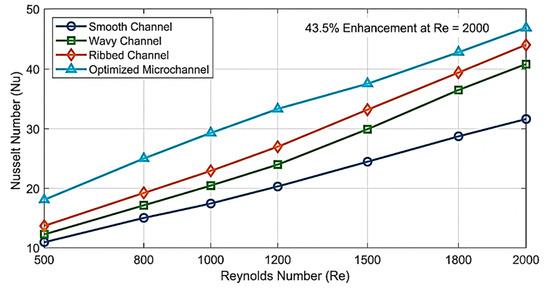
Figure 5 shows the change in Nusselt number mean with the Reynolds number for various microchannel geometries. The effects of increasing the Reynolds number are seen to significantly improve convective heat transfer, which results in thinner thermal boundary layers and better fluid mixing in the flow. The optimized microchannel configuration in all the studied cases gives a maximum enhancement about 43.5% in the Nusselt number when the Reynolds number of the flow is 2000 higher than that of the conventional smooth channel. This points to the fact that the optimization methodology proposed here can achieve effective heat transfer enhancement without unacceptable hydraulic losses.
Figure 5.
Variation in Nusselt number with Reynolds number for various channel shapes.
3.1.3. PV Cooling and Surface Temperature Reducing
Surface temperature of the PV decreased markedly as the performance of cooling is improved, which led to better electric generation and less thermal loss, contributing to higher operability stability of PV energy collecting system.
Figure 6 shows the surface temperature distribution of the photovoltaic module under optimized cooling conditions. Local heating and flow effect created slight non-uniformity in the temperature of the PV cells, but the optimized cooling configuration makes the maximum cell operating temperature and the overall temperature gradient across the PV surface significantly lower. This optimized thermal management facilitates better heat extraction from the critical areas and reduces the probability of thermal hotspots, reducing electrical losses due to poor performance and increasing cell efficiency, and reliability of operation.
Figure 6.
Temperature distribution in a PV system using PV cooling with optimized cooling conditions.
3.1.4. The Overall Thermo-Economy and Use of Pump Power Trade-Off Were Studied
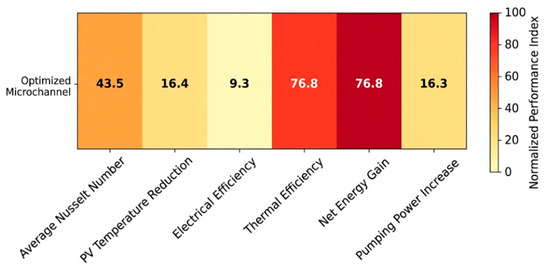
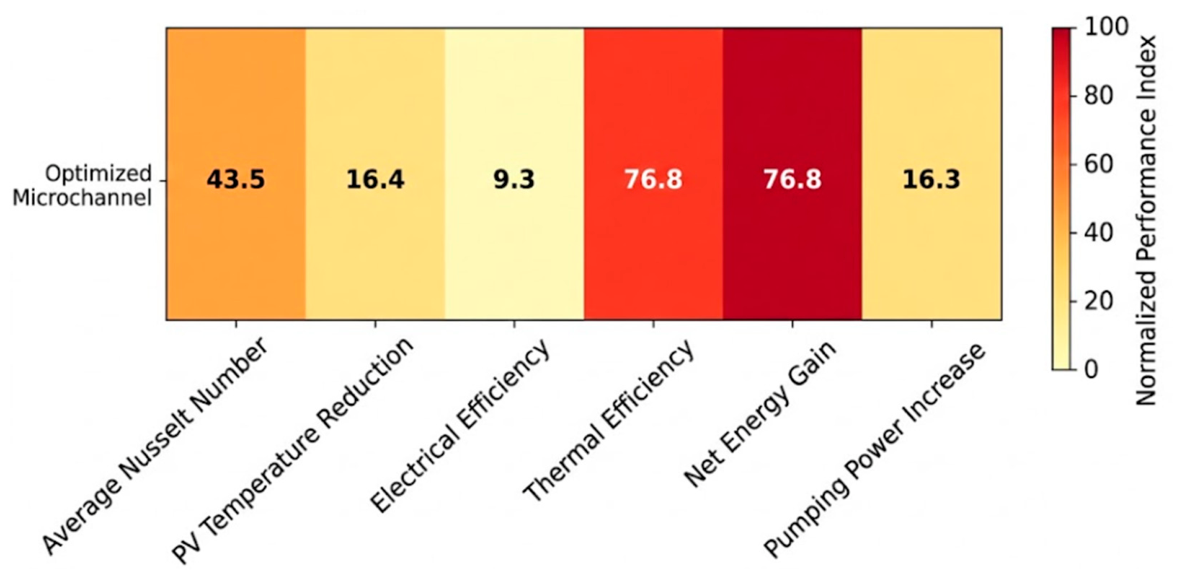
The maximum thermal efficiency and net energy gain of the hybrid system was 76.8% with only a 16.3% increment in pumping power which can be considered as the acceptable compromise between the enhancement of the thermal efficiency and hydraulic losses in the optimized micro-channel configuration of the solar thermal energy system.
The maximum thermal efficiency and net energy gain of the hybrid system was 76.8%, with only a 16.3% increase in pumping power, which can be considered an acceptable compromise between the enhancement of thermal efficiency and hydraulic losses in the optimized microchannel configuration of the solar thermal energy system. The thermo-hydraulic performance and pumping-power trade-off of the optimized microchannel configuration are illustrated in Figure 7. The comparative performance of the smooth and optimized microchannel geometry is presented in Table 5.
Figure 7.
Thermo-Hydraulic Performance and Pumping-Power Trade-Off of the Optimized Microchannel Configuration.
Table 5.
Comparisons of smooth and optimized microchannel geometries with respect to their performance.
3.1.5. Thermal Regulation: Electrical Efficiency Improvement
In conclusion, electrical efficiency of 9.3% was achieved by optimizing the mass transport and the heat dissipation in the microchannel-based hybrid solar–thermal system, which successfully reduced the operating temperature of the PVs, confirming their effective thermal regulation.
Figure 8 shows the reduction in photovoltaic operating temperature achieved through optimized microchannel cooling. Such reduction in cell temperature directly enhances electrical conversion efficiency as the PV performance strongly depends on temperature. The optimized thermal management strategy reduces the operating temperatures by around 12.6% on average, thus increasing electrical efficiency by 9.3%. Additionally, the lower temperature gradients are found to reduce thermally induced stresses from differential thermal expansion and enhance the long-term structural reliability and durability of the PV module.
Figure 8.
Reduction of PV temperature to improve electrical efficiency.
3.2. Discussion
The numerical results clearly show that optimization of the microchannel geometry leads to significant improvement of the heat and mass transport in hybrid PVs–TCs. The change in Nusselt number (Nu) is observed as an increase in enhanced convective cooling causing more uniform heat removal from the photovoltaic surface and a significant reduction in operating temperature of the PV surface. As a result, the electrical efficiency is boosted and there is a simultaneous increase in the thermal energy recovery. The cost of the optimized design is a modest additional increase in pumping power, but it is still deemed to be acceptable in comparison to the significant increase in thermal performance. Furthermore, this temperature gradient reduction is anticipated to lower the stress caused by thermal gradient phenomena and increase the mechanical reliability of the PV module over a PV module’s lifetime. To conclude, the proposed Multi-Objective Genetic Algorithm offers a reliable way to achieve an optimal design compounded by a desired heat transfer enhancement, hydraulic performance and energy conversion efficiency, which highlights its potential applications for advanced hybrid solar–thermal energy harvesting systems.
Author Contributions
Conceptualization, H.U.; methodology, H.U. and Q.L.Z.Q.; software, H.U.; validation, H.U.; formal analysis, H.U.; investigation, H.U.; resources, Q.L.Z.Q.; data curation, H.U. and M.R.A.; writing—original draft preparation, H.U., Q.L.Z.Q. and M.R.A.; writing—review and editing, H.U. and M.R.A.; visualization, H.U.; supervision, M.R.A.; project administration, Q.L.Z.Q.; funding acquisition, H.U. All authors have read and agreed to the published version of the manuscript.
Funding
This research received no external funding.
Institutional Review Board Statement
Not applicable.
Informed Consent Statement
Not applicable.
Data Availability Statement
The data that support the findings of this study are available from the corresponding author upon reasonable request.
Conflicts of Interest
The authors declare that there are no conflicts of interest regarding the publication of this manuscript.
References
- Nayal, M.; Sharma, A.K.; Jain, S.; Singh, V.P. Optimization techniques of solar thermal and hybrid energy systems. In Highly Efficient Thermal Renewable Energy Systems; CRC Press: Boca Raton, FL, USA, 2024; pp. 104–120. [Google Scholar]
- Alamayreh, M.I.; Alahmer, A. Design a solar harvester system capturing light and thermal energy coupled with a novel direct thermal energy storage and nanoparticles. Int. J. Thermofluids 2023, 18, 100328. [Google Scholar] [CrossRef] [Scilit]
- Armghan, A.; Logeshwaran, J.; Raja, S.; Aliqab, K.; Alsharari, M.; Patel, S.K. Performance optimization of energy-efficient solar absorbers for thermal energy harvesting in modern industrial environments using a solar deep learning model. Heliyon 2024, 10, e26371. [Google Scholar] [CrossRef] [Scilit] [PubMed]
- Prasetyo, S.D.; Arifin, Z.; Prabowo, A.R.; Budiana, E.P.; Rosli, M.A.M.; Alfaiz, N.F.; Bangun, W.B. Optimization of Photovoltaic Thermal Collectors Using Fins: A Review of Strategies for Enhanced Solar Energy Harvesting. Math. Model. Eng. Probl. 2023, 10, 1235–1248. [Google Scholar] [CrossRef] [Scilit]
- Rausa, G.; Calabrese, M.; Velazquez, R.; Del-Valle-Soto, C.; Fazio, R.D.; Visconti, P. Mechanical, Thermal, and Environmental Energy Harvesting Solutions in Fully Electric and Hybrid Vehicles: Innovative Approaches and Commercial Systems. Energies 2025, 18, 1970. [Google Scholar] [CrossRef] [Scilit]
- Zhou, Y.; Yu, W.; Li, Y.; Lei, Q.; Xie, H. Power generation device via solar collector coupled with a shape-memory alloy thermo-mechanical switch utilizing MXene nanofluid as high-efficiency photothermal conversion working medium. Energy Convers. Manag. 2024, 302, 118092. [Google Scholar] [CrossRef] [Scilit]
- Noohi, M.; Mirvakili, A. Design and implementation of a hybrid piezoelectric, radio frequency, solar, and thermal energy-harvesting system for portable medical devices. Int. J. Circuit Theory Appl. 2024, 52, 5589–5609. [Google Scholar] [CrossRef] [Scilit]
- Li, X.; Liu, Y.; Xu, Y.; Tao, P.; Deng, T. Solid–liquid phase change composite materials for direct solar–thermal energy harvesting and storage. Acc. Mater. Res. 2023, 4, 484–495. [Google Scholar] [CrossRef] [Scilit]
- Vizzari, D.; Dumoulin, J.; Chailleux, E.; Gennesseaux, E.; Lavaud, S.; Bouron, S.; Manceau, J.L. Thermal behavior of a novel solar hybrid road for energy harvesting. J. Test. Eval. 2023, 51, 2282–2295. [Google Scholar] [CrossRef] [Scilit]
- Wang, Z.; Hölzel, H.; Fernandez, L.; Aslam, A.S.; Baronas, P.; Orrego-Hernández, J.; Ghasemi, S.; Campoy-Quiles, M.; Moth-Poulsen, K. Hybrid solar energy device for simultaneous electric power generation and molecular solar thermal energy storage. Joule 2024, 8, 2607–2622. [Google Scholar] [CrossRef] [Scilit]
- Gürbüz, H.; Demirtürk, S.; Akçay, H.; Topalcı, Ü. Thermal stabilization and energy harvesting in a solar PV/T-PCM-TEG hybrid system: A case study on the design of system components. Energy Convers. Manag. 2023, 294, 117536. [Google Scholar] [CrossRef] [Scilit]
- Faisal, M.; Badruddin, I.A.; Loganathan, K.; Aiyaz, M.; Zedan, A.S.A.H. Radiative Sakiadis flow of dissipative tetra-hybrid nanofluid with Brownian and thermophoretic diffusions of nanoparticles: Applications in solar thermal energy. J. Therm. Anal. Calorim. 2025, 150, 22517–22531. [Google Scholar] [CrossRef] [Scilit]
- Yadav, D.; Awasthi, M.K.; Kumar, A. (Eds.) Next Generation Renewable Thermal Energy Harvesting, Conversion and Storage Technologies; Elsevier: Amsterdam, The Netherlands, 2025. [Google Scholar]
- Karthik, K.; Madhukesh, J.K.; Kiran, S.; Nagaraja, K.V.; Prasannakumara, B.C.; Fehmi, G. Impacts of thermophoretic deposition and thermal radiation on heat and mass transfer analysis of ternary nanofluid flow across a wedge. Int. J. Model. Simul. 2025, 45, 1688–1700. [Google Scholar] [CrossRef] [Scilit]
- Yousefi, E.; Nourian, A.; Nikkhoo, A.; Abbas Nejad, A. A comprehensive review of hybrid low-power energy harvesting thermoelectric generator/phase change material/foam systems and applications. J. Therm. Anal. Calorim. 2024, 149, 12469–12487. [Google Scholar] [CrossRef] [Scilit]
- Alzahmi, A.; Alswat, M.; El-Askary, W.A.; Ramzy, K. Harvesting waste-heat energy of shell and tube heat exchanger used for desalination purposes using thermoelectric power generation modules: Numerical studies. Int. Commun. Heat Mass Transf. 2024, 156, 107569. [Google Scholar] [CrossRef] [Scilit]

Disclaimer/Publisher’s Note: The statements, opinions and data contained in all publications are solely those of the individual author(s) and contributor(s) and not of MDPI and/or the editor(s). MDPI and/or the editor(s) disclaim responsibility for any injury to people or property resulting from any ideas, methods, instructions or products referred to in the content. |
© 2026 by the authors. Licensee MDPI, Basel, Switzerland. This article is an open access article distributed under the terms and conditions of the Creative Commons Attribution (CC BY) license.