


Abstract
The Kuntary gas field, located in the Qaidam Basin’s Qiantai structural zone (eastern segment of the Altyn Tagh foothills), features a basement reservoir with burial depth exceeding 7000 m. Actual drilling data reveal a pore pressure gradient of 1.65 and bottomhole temperatures surpassing 200 °C, classifying it as a typical ultra-deep (>6000 m), overpressured (>1.6), and abnormally high-temperature gas reservoir. During 2017–2024, significant exploration breakthroughs were achieved in this block, with three vertical wells yielding industrial gas flows exceeding 100,000 cubic meters per day through testing and production trials, demonstrating substantial hydrocarbon development potential. To achieve cost-effective and high-efficiency development objectives for the Kuntary block, key drilling challenges—complex pressure regimes, abnormally high temperatures, and poor drillability—were systematically addressed through integrated technological innovations. These include casing program optimization, customized polycrystalline diamond compact (PDC) bit selection, high-temperature-resistant drilling tools, advanced wellbore pressure management, and ultra-high-temperature drilling/completion fluid systems. A technical framework combining “four-stage casing program + customized PDC bits + high-temperature-resistant drilling tools + precision pressure control + ultra-high-temperature drilling/completion fluids” was established and successfully applied to Wells K2-3 and K2-4. Field data demonstrate remarkable improvements: drilling durations were reduced to 164.21 days for 7170 m (K2-3) and 231.22 days for 7429 m (K2-4), representing 48.05% and 26.84% reductions compared to offset wells, respectively. Concurrently, the rate of penetration (ROP) increased to 5.68 m/h (K2-3) and 5.45 m/h (K2-4), reflecting 98.20% and 98.28% enhancements over conventional methods. Operational complexities were effectively mitigated, significantly improving drilling efficiency for ultra-deep basement reservoirs in the Kuntary block. These advancements have accelerated regional exploration and development progress, providing critical technical references for similar ultra-deep hydrocarbon resources globally.
1. Introduction
From 2017 to 2024, five wells were drilled in the Kuntary gas field, with three vertical wells achieving industrial gas flows exceeding 100,000 cubic meters per day during testing and production trials [1], demonstrating substantial hydrocarbon development potential. The formation, subjected to superimposed effects of high temperature, high pressure, and high stress, presents complex geological conditions that are challenging to predict accurately. Drilling operations face multiple technical bottlenecks, characterized by low rate of penetration (ROP), prolonged drilling cycles, and high non-productive time (NPT), which severely constrain cost-effective and high-efficiency development of the gas field. This study systematically investigates key technologies—including casing program optimization, customized tool development, high-temperature drilling fluid optimization, and ROP enhancement processes—based on regional geological characteristics and offset well data. An integrated drilling and completion technical template for ultra-deep wells in Kuntary was established, providing theoretical and engineering references for similar ultra-deep basement reservoirs globally.
2. Geological Characteristics
Vertically, the Kuntary gas field comprises ten formations from the Quaternary to the basement: Quaternary Qigequan Formation (Q1+2); Neogene Shizigou Formation (N23); Upper Youshashan Formation (N22); Lower Youshashan Formation (N21); Paleogene Upper Ganchaigou Formation (N1); Lower Ganchaigou Formation (E32, E31); Lulehe Formation (E1+2); Jurassic Dameigou Formation (J1); Basement. The lithology of Q1+2-E1+2 strata is dominated by brown-red mudstone, while N23-N1 features interbedded mudstone and conglomerate. The basement (gneiss, granitic gneiss, quartz schist) serves as the primary drilling target, with chaotic dip angles. Rock mechanics parameters derived from core experiments and logging interpretation include Young’s modulus 41.4 GPa, Poisson’s ratio 0.23, uniaxial compressive strength 121.84 MPa, and tensile strength 11.56 MPa [2].
The pore pressure profile exhibits a vertically transitional pattern: normal pressure in N21 and above, pressure uplift in middle E32, abnormally high pressure at J1 base, and pressure reduction in the basement. Multiple pressure systems coexist in the E32-J1 interval, with a maximum pressure coefficient of 1.88 due to high-pressure aquifers and gas-bearing water zones. The geothermal gradient reaches 2.82 °C/100 m, resulting in basement temperatures near 200 °C.
3. Drilling Challenges
High Risk of Drill String Failure in Large Boreholes. In the Kuntary block, nine drill string failures occurred in Φ444.5 mm boreholes across four wells. Notably, Well K2-X1 experienced five failures during the second casing run, requiring 27 trips and accumulating 15.94 days of NPT.
Frequent Lost Circulation Events. Lost circulation primarily occurs in the J1 base and basement weathered zone, where poor formation integrity and low fracture pressure (FP) hinder drilling continuity. Offset well statistics show: J1 formation: 12 losses, 691.42 m3 fluid loss; Basement: 7 losses, 472.25 m3 fluid loss. Conventional lost circulation materials (LCMs) exhibit poor fracture sealing efficiency in these zones.
Low ROP in Deep Formations. In Well K2-2, acoustic transit time drops below 200 μs/m at 6650 m, indicating increasingly compact lithology. Conventional bits struggle to penetrate the Jurassic (average ROP 1.48 m/h) and basement (average ROP 0.97 m/h) formations. Bit wear, cutter damage, and limited bit life (average footage 33.64 m) severely constrain drilling efficiency [3] (Table 1).
Table 1.
Statistical Analysis of Rate of Penetration (ROP) in Basement Formations, Kuntary Block.
Under extreme high-temperature conditions (>200 °C), conventional drilling fluid polymers undergo chain scission, leading to colloidal stability maintenance challenges and drastic increases in high-temperature high-pressure (HTHP) fluid loss. Cement slurries exhibit abnormal thickening time, post-setting strength degradation, and thermal stress-induced shrinkage/cracking due to large temperature differentials (ΔT > 150 °C), compromising cementing integrity [4]. Current drilling and completion fluid systems fail to meet operational requirements in ultra-deep environments.
4. Key Drilling Technologies
4.1. Casing Program Design
From 2018 to 2021, five ultra-deep wells were drilled in the Kuntary block, with the casing program evolving through three stages: “standard five-stage → non-standard five-stage → optimized four-stage”. To accelerate the cost-effective development of ultra-deep gas reservoirs, analysis of offset well data revealed stable pressure regimes and high fracture pressure (FP) above E32, with no signs of hydrocarbon. Actual drilling fluid densities (1.25–1.68 g/cm3) confirmed no critical casing points. Compared to Well Kun2-2, the surface casing depth was optimized from 1500 m to 500 m in Wells K2-3 and K2-4 to isolate salt gypsum formations and establish wellhead stability, reducing Φ444.5 mm large-hole failure risks [5]. This optimization saved an average of ¥835,000 per well in casing and cement costs.
4.2. Customized Bit Selection
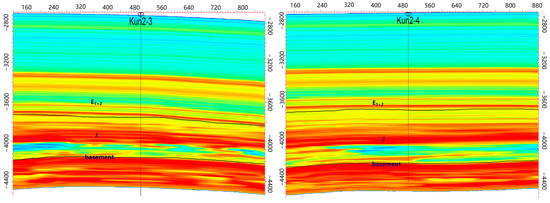
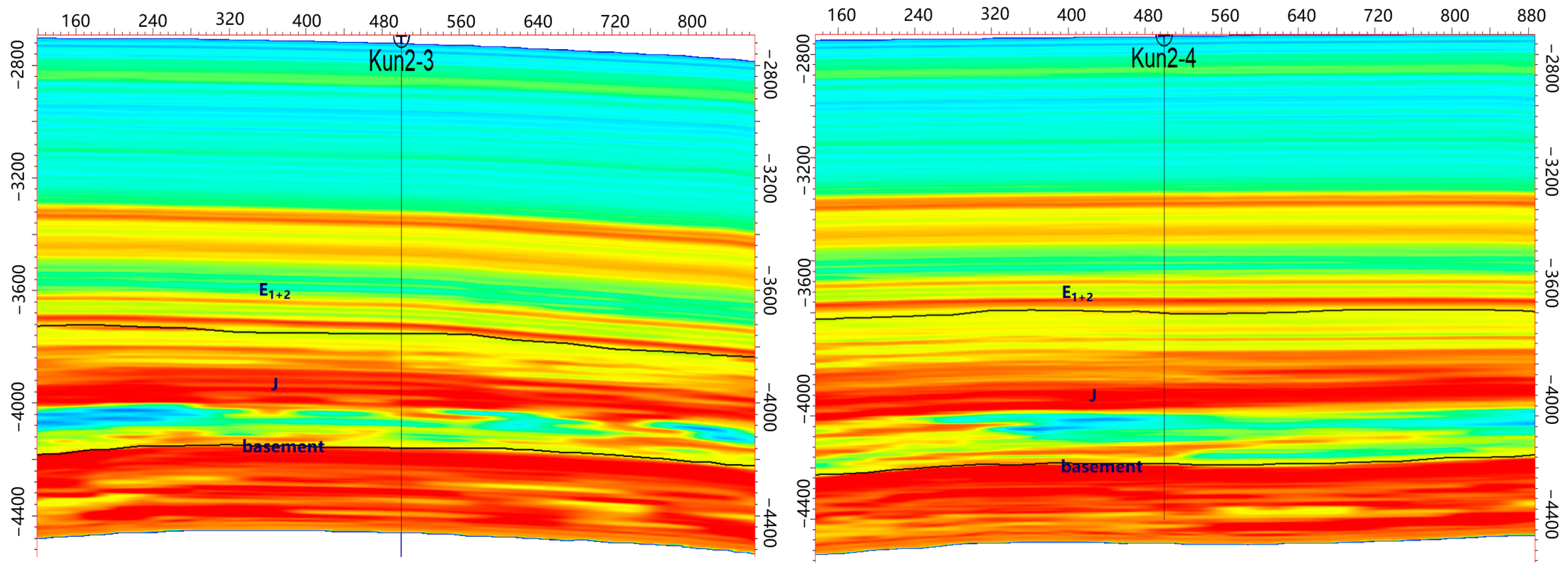
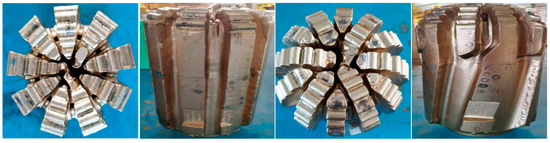
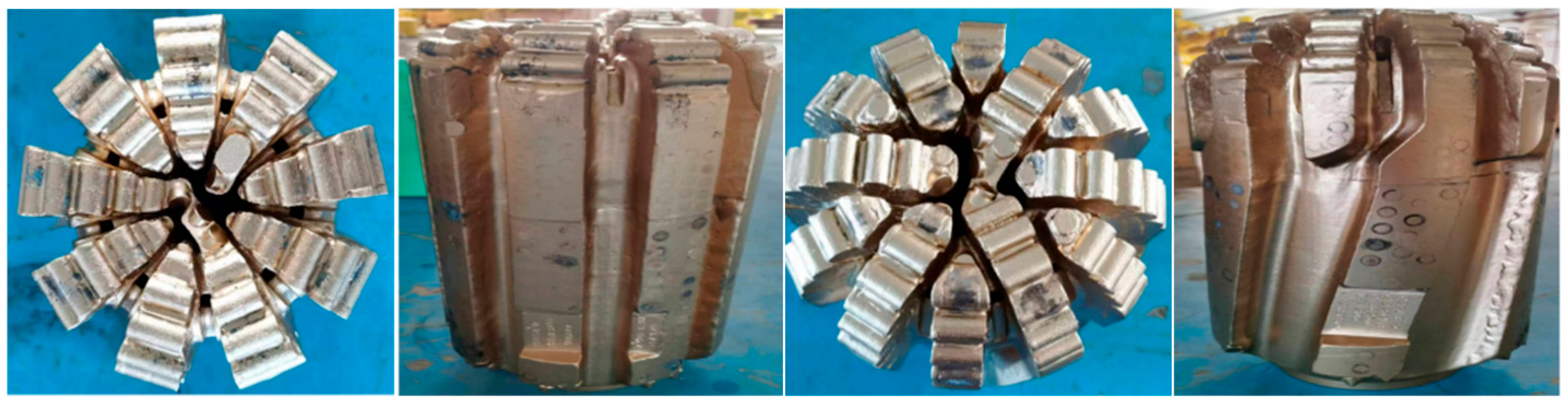
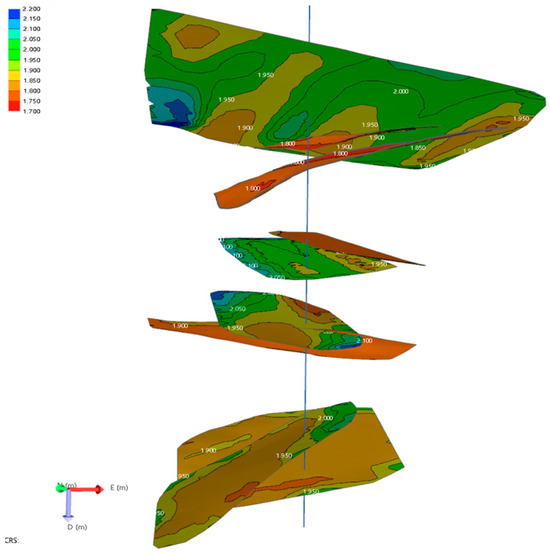
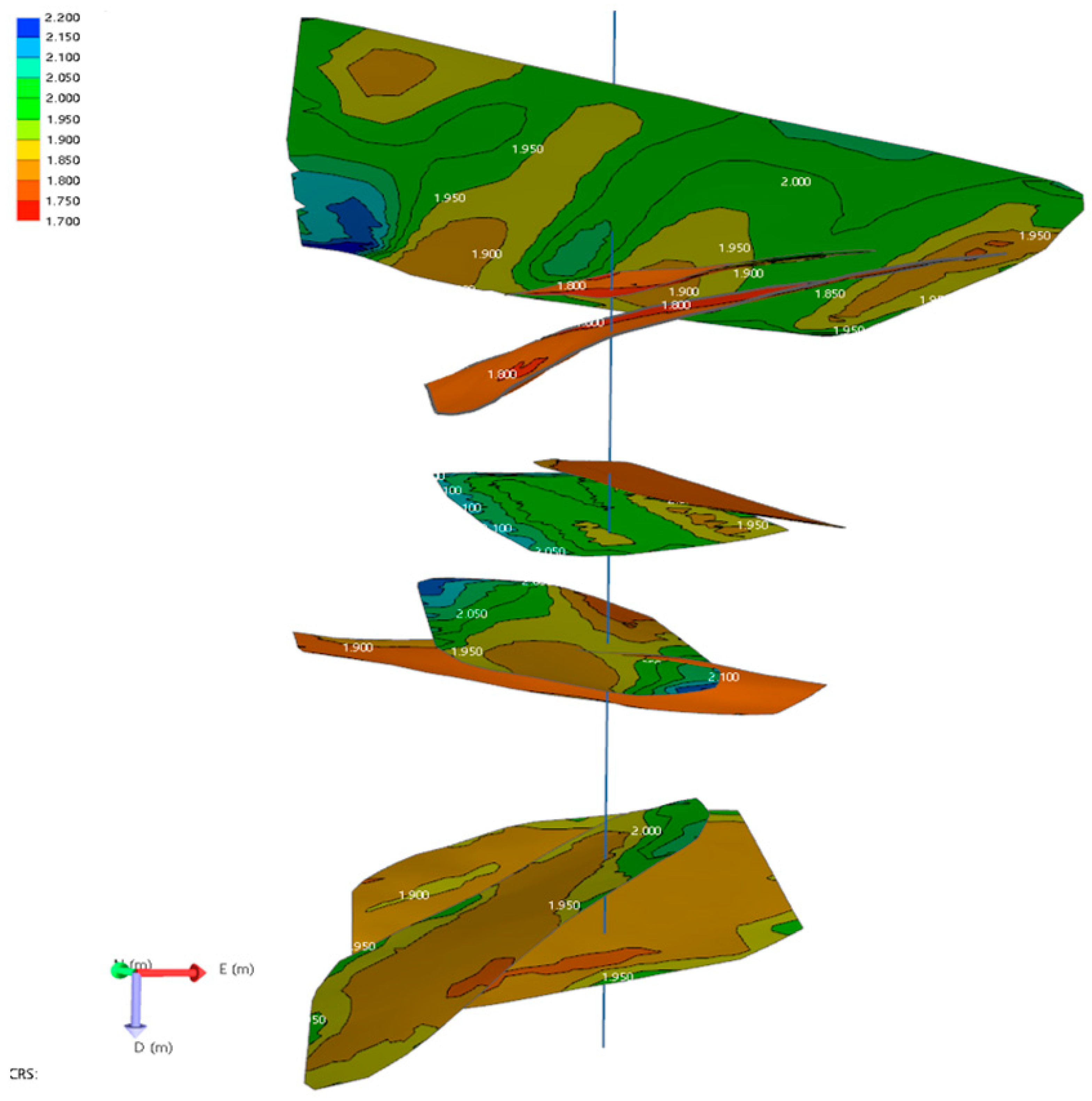
Formation drillability was quantified through ROP, specific pressure, RPM, hydraulic power, and mud parameters, resulting in a 3D drillability model: Q1+2-N1—low abrasiveness, drillability grade 4–6; E32—increasing compaction, grade 5–7; E31-J1—high compressive strength, grade 7–8; Basement—high hardness/abrasion, grade 8–10 (Figure 1). Based on IADC bit selection standards and offset experience [6], bit-rock compatibility was achieved: N1-Middle E32—SV519TAU single-row bit (max footage 1968 m) for enhanced aggressiveness; lower E32-J—SV516TALXU double-row bit (max footage 1086 m) for abrasion-resistance; lower J1—SV613TALXUZ ultra-durable bit for rapid drilling through J1-basement interface; Basement—impregnated diamond bit + turbine for high-speed penetration. Structural optimizations improved bit performance: blade count increased from 9 to 12 (Figure 2), and crown volume expanded by 15%. Dual-step wear-resistant stabilizers and V-shaped cutter embedment enhanced thermal stability [7]. The E1335M impregnated bit was selected for granitic gneiss with >30% quartz content, achieving 1.31 m/h ROP in Well K2-3 (35% improvement over offset wells).
Figure 1.
3D drillability extreme modeling: wells Kun2-3 and Kun2-4.
Figure 2.
Comparison of impregnated diamond bits: pre- and post-optimization (Kun2-X1).
4.3. Stage-Specific ROP Optimization
Φ444.5 mm Large-Hole Section: Stress analysis in Well K2-2 revealed abnormal torsional stress peaks at 465.99 m, 1052.6 m, etc., with ≤3% deviation between simulated and actual failure points [8] (Figure 3). A high-stiffness “10/9/8-inch drill collar + Φ440 mm stabilizer” assembly was recommended to locate a neutral point within drill collars [9] and reduce torque fluctuations with high WOB (227–306 kN) and low RPM [10].
Figure 3.
Stress risk point simulation in Well Kun2-X1.
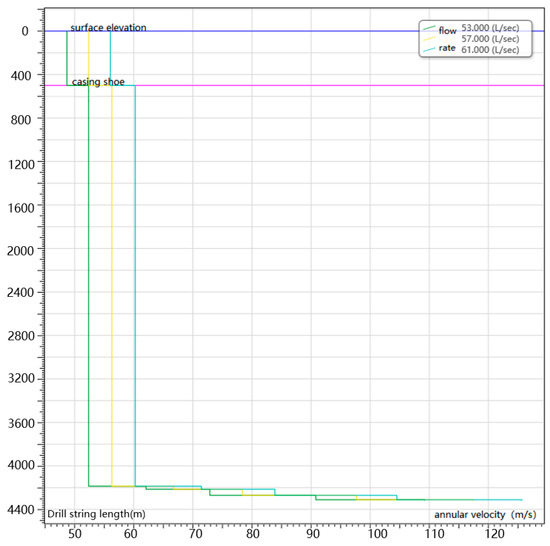
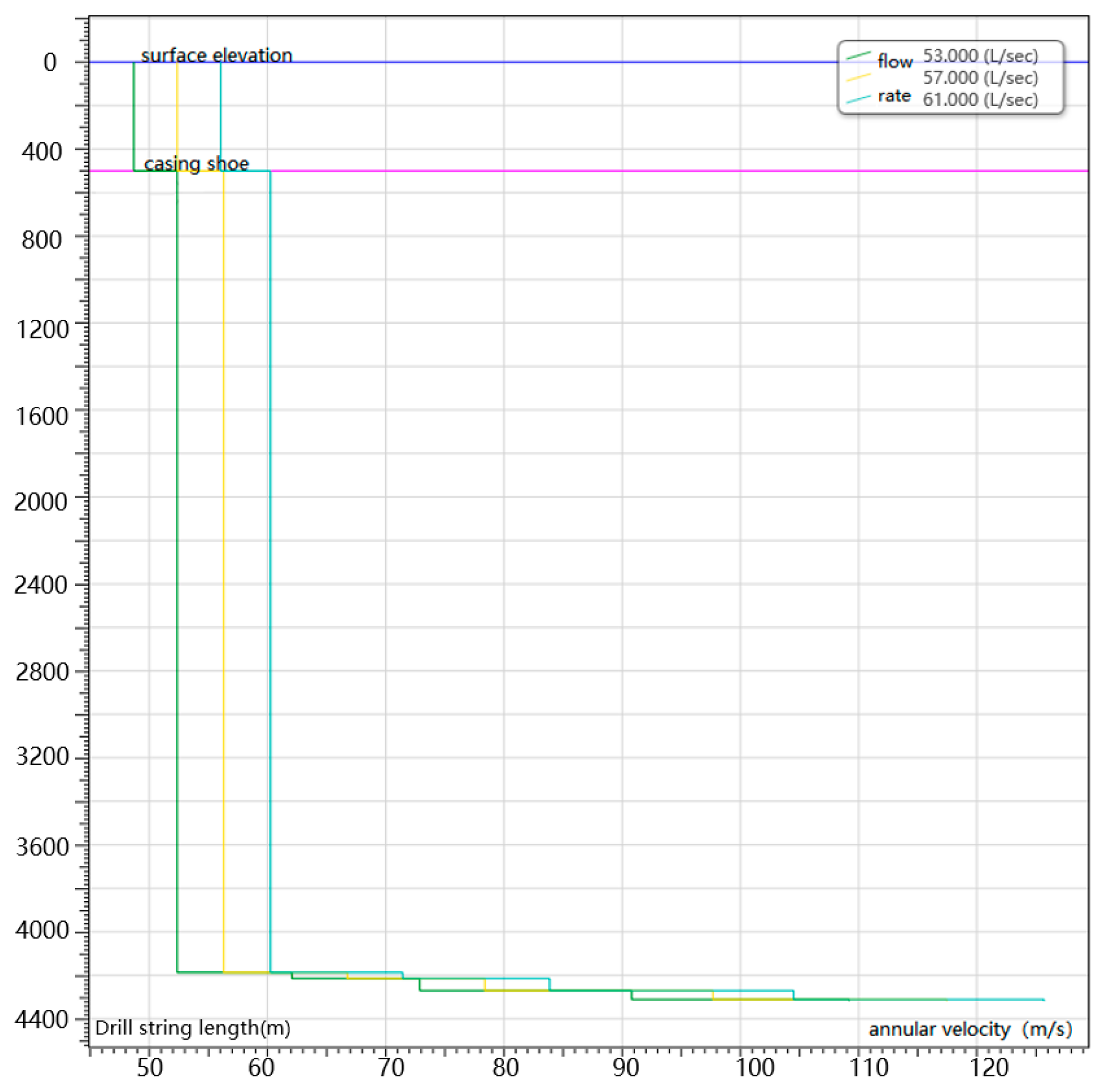
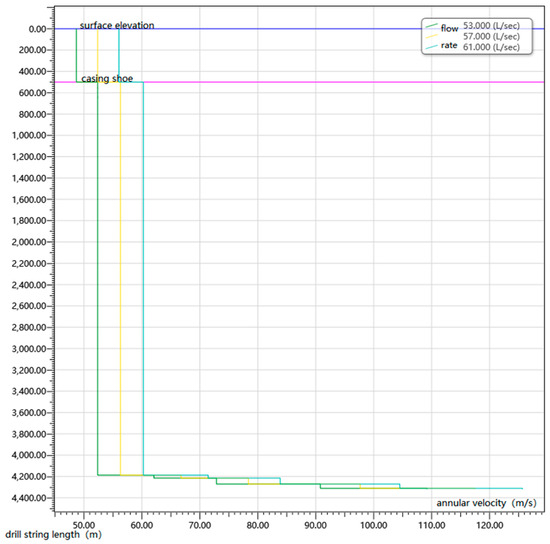
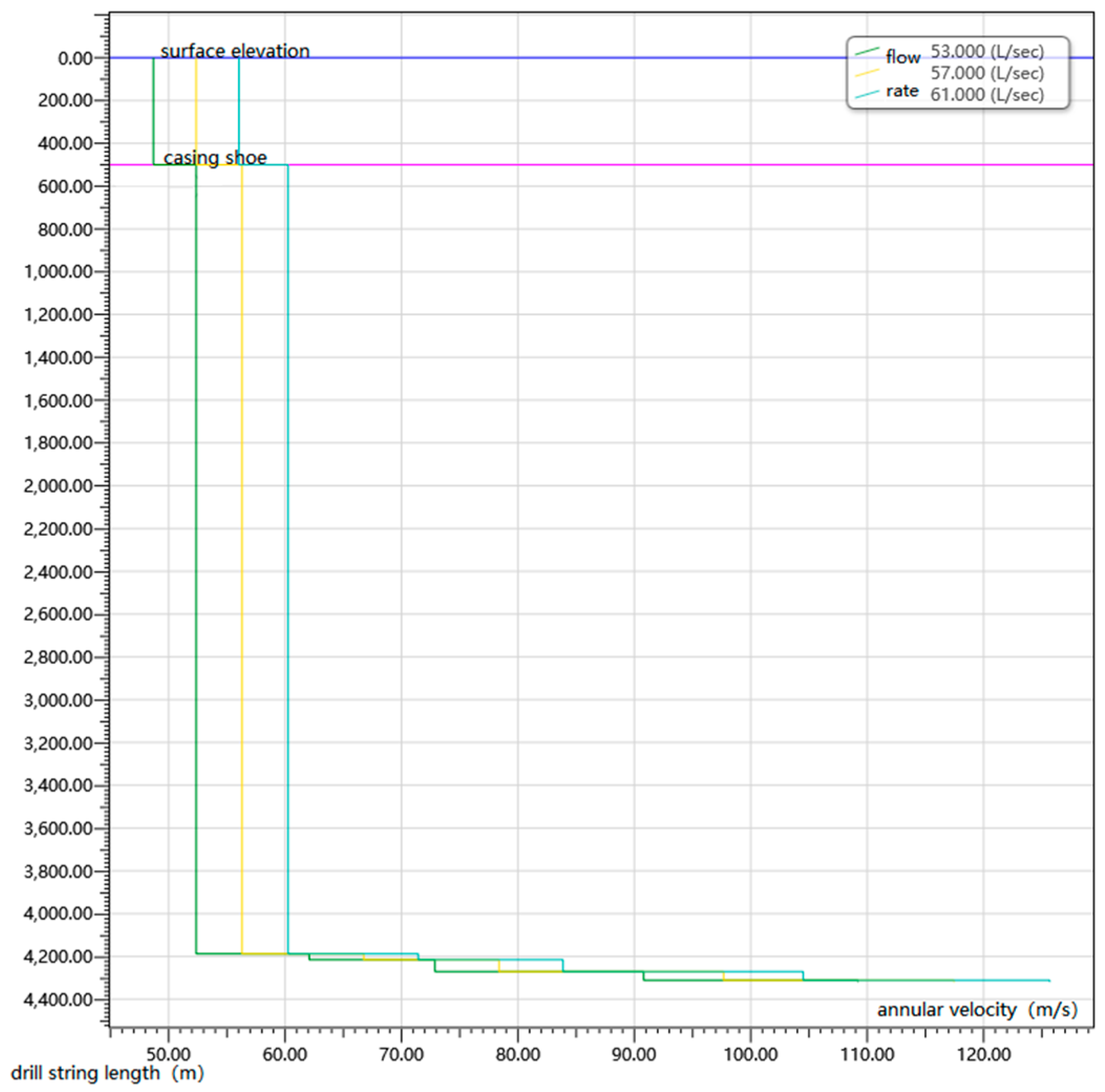
Φ311.2 mm Second Section: Hydraulic jetting was optimized with Upper N1 (≤3800 m): SV519TALXU + high-torque motor + reamer for 1.00 m/s annular velocity [11]; Lower N1-J1 (3800–4420 m) (Figure 4): SV516ALU + sinusoidal/helical buckling analysis for 60–150 kN WOB [12] (Figure 5).
Figure 4.
Annular return velocity simulation at 4320 m depth (mud density: 1.60 g/cm3).
Figure 5.
Drill string configuration trend prediction (N1 below section; WOB: 60–150 kN)—original stabilizer position vs. stabilizer raised by one drill collar.
Φ215.9 mm Third Section: For Jurassic instability, the drilling fluid comprised of organic salt concentration ≥30%, NFA-25/QS-2 sealants, yield point 10–15 Pa [13], and the drill string was as follows: SV516TALXU/SV613TALXUZ + 180 °C motor at 30–35 L/s flow rate [14].
Φ149.2 mm Fourth Section: For basement fractured zones (Figure 6) (fracture width 100–1000 μm), the following conditions were applied. MPD: Automated backpressure control to maintain ECD within 1.80 g/cm3 safety window [15]; Lost Circulation Materials (LCMs): Bridging agents + ultra-fine calcium carbonate; Drill String: SV613TALXUZ + 200 °C motor for J1; turbine + impregnated bit for basement (Table 2).
Figure 6.
Fracture stability analysis during drilling in Well Kun2-3.
Table 2.
Optimized ROP design for the Kuntary block.
4.4. High-Temperature Drilling Fluid System
A polyamine–organic salt system was developed for 220 °C conditions, comprising the following: additives—30% KCl/organic salt, 1% AMPS + 2% Redu240 (HTHP filter loss control); sealants—2% RH220 + 3% SOLETX, 0.5% Devis thinner, 0.2% sodium sulfite. Field tests confirmed superior inhibition/lubrication and 20 °C cooling efficiency (Table 3).
Table 3.
Table of 220 °C ultra-high temperature aging test for ultra-high-temperature-resistant polyamine organic salt drilling fluid.
4.5. High-Temperature Cementing System
A 210 °C-resistant cement system was formulated with cement slurry (JH-HP cement + high-temperature retarder, 1.75 g/cm3 preflush + 1.80 g/cm3 spacer) and hardware comprising ≥200 °C-rated hangers (120 MPa seal) and ≥220 °C floats/shoes. This system achieved 99.56% cementing quality in Well K2-3 (Φ127 mm production liner) (Table 4 and Table 5).
Table 4.
Test data sheet of fourth spud lead cement slurry.
Table 5.
Test data sheet of fourth spud tail cement slurry.
5. Field Application Results
The integrated “four-stage casing + customized PDC bits + HT tools + MPD + ultra-HT fluids” template achieved the following: Well K2-3—164.21 days/7170 m (48.05% reduction vs. offset); Well K2-4—231.22 days/7429 m (26.84% reduction vs. offset); ROP—5.68 m/h (K2-3) and 5.45 m/h (K2-4) (98.20–98.28% improvement). These results validated technical reliability and economic viability for ultra-deep basement development.
6. Conclusions and Recommendations
The four-stage casing program reduces large-hole risks by isolating shallow unstable zones (stage 1), avoiding E32 high-pressure aquifers (stage 2), drilling semi-weathered zones (stage 3), and targeting reservoirs (stage 4).
The 220 °C polyamine–organic salt fluid maintains rheological stability under HT conditions, suppressing shale hydration with a 0.4+ mud yield ratio. The 210 °C cement system ensures 24–48 h compressive strength ≥15 MPa.
The integrated technical template provides a reference for global ultra-deep reservoir development, achieving 35–98% ROP improvements through formation-specific bit-rock compatibility.
Author Contributions
Conceptualization, Z.T. and B.L.; methodology, Z.T.; validation, T.H. and D.Q.; formal analysis, Z.T.; investigation, T.H., D.Q. and L.J.; resources, B.L.; data curation, L.J.; writing—original draft preparation, Z.T.; writing—review and editing, B.L.; visualization, L.J.; supervision, Z.T.; project administration, B.L.; funding acquisition, Z.T. All authors have read and agreed to the published version of the manuscript.
Funding
This research received no external funding.
Institutional Review Board Statement
Not applicable.
Informed Consent Statement
Not applicable.
Data Availability Statement
The data presented in this study are available on request from the corresponding author. The data are not publicly available due to commercial confidentiality restrictions on oilfield production data.
Conflicts of Interest
Authors Zheng Tang, Bo Ling, Tian Hao, Dong Quan, and Lang Jing were employed by the company China National Petroleum Corporation (CNPC) Qinghai Oilfield Branch, Dunhuang, China. The authors declare that the research was conducted in the absence of any commercial or financial relationships that could be construed as a potential conflict of interest.
References
- Sun, X.J.; Ma, F.; Bai, Y.D.; Wang, B.; Guan, B.; Luo, N.; Wei, S.K. Differential Enrichment Factors of Basement Gas Reservoirs in the Altun Mountain Piedmont Belt, Qaidam Basin. Xinjiang Pet. Geol. 2020, 41, 394–401. [Google Scholar]
- Cao, H.; Zhang, G.Q.; Xu, L.; Li, Z.; Wang, H. Ultra-Deep High-Pressure Basement Reservoir Characteristics and Favorable Zone Selection: A Case Study of Kun2 Block in Kuntary Gas Field, Qaidam Basin. Reserv. Eval. Dev. 2025, 15, 425–433. [Google Scholar] [CrossRef]
- Gao, H.X.; Li, Z.X.; Hu, Y.F. Key ROP Enhancement Technologies for YuanShen-1 Ultra-Deep Well Drilling. Pet. Drill. Tech. 2024, 52, 28–33. [Google Scholar] [CrossRef]
- Ding, Z.W.; Yang, Q.; Li, C.Q.; Li, B.; Xu, M.; Zhou, C.Y. Single-Trip Cementing Technology for Multi-Pressure Systems in Ultra-Deep Wells. Drill. Prod. Technol. 2021, 44, 31–35. [Google Scholar]
- Song, Z.C.; Zhai, W.B.; Deng, C.S.; Xu, Y.; Xu, X.; Wang, X.; Wen, T. Casing Program Optimization for Ultra-Deep Wells in Fuman Oilfield and Its Application. Drill. Prod. Technol. 2022, 45, 36–41. [Google Scholar]
- Feng, L.; Mu, Y.J.; Yang, D.M.; Zhou, X.Y.; Tang, F.Z. Optimal Drilling Techniques for Large-Hole Sections in MaShen-1 Deep Well. Oil Drill. Prod. Technol. 2016, 38, 577–582. [Google Scholar]
- Chen, L.L.; Li, W.Z.; Guo, J.H.; Li, K.; Cai, Z.X.; Wu, J.; Xu, W.N.; Zhu, X.H. Bit Selection for Large-Hole Sections in 10,000-Meter Ultra-Deep Wells. Pet. Explor. Dev. 2025, 52, 715–723. [Google Scholar]
- Zheng, Z.G.; Li, H.S.; Zhao, H.Y.; Wen, H.Y.; Sun, D.F. Key Drilling Technologies for Deep Wells in Matambo Block, Colombia. Pet. Drill. Tech. 2018, 46, 30–37. [Google Scholar]
- Zheng, S.Q.; Luo, L.Y.; Chen, Z.Y.; Pu, H.K.; Xian, W.H.; Lai, Y. Optimal Fast Drilling Technology for Φ444.5 mm Borehole in Well Wutan-1. Drill. Prod. Technol. 2018, 41, 13–16. [Google Scholar]
- Hu, D.L.; Ou, B.; Zhang, D.P.; Xiao, G.Y.; Yan, Y.C.; Yi, S.Y. Drilling Optimization Design for ChuanShen-1 Ultra-Deep Well. Drill. Prod. Technol. 2020, 43, 34–37. [Google Scholar]
- Zhang, B.; Cao, X.Y.; Zhou, T.M.; Liu, Y.B.; Xia, H. Current Status and Development Trends of Drilling Equipment for Deep and Ultra-Deep Wells. Drill. Prod. Technol. 2024, 47, 141–151. [Google Scholar]
- Sun, J.S.; Liu, W.; Wang, Q.; Huang, H.C.; Ji, G.D. Challenges and Development Prospects of Drilling and Completion Technologies for 10,000-Meter Ultra-Deep Reservoirs. Drill. Prod. Technol. 2024, 47, 1–9. [Google Scholar]
- Fan, X.Y.; Meng, C.; Zhang, Q.G.; Ma, T.S.; Li, Z.Z.; Wang, X.D.; Zhang, J.Z.; Zhao, P.F.; Deng, J.; Zhou, G.Q. Research Progress on Wellbore Instability Theory and Control Technologies for Ultra-Deep Formations. Nat. Gas. Ind. 2024, 44, 159–176. [Google Scholar]
- Wei, Z.H.; An, Y.P. Optimal Drilling Techniques for Large-Hole Sections Above Target Zones in Shunnan Area. Drill. Prod. Technol. 2016, 39, 11–13+100. [Google Scholar]
- Li, Z.L.; Zuo, X.; Qiao, H.T.; Li, S. Research Progress and Prospects of Whole-Process Fine Managed Pressure Drilling and Completion Technology. Drill. Prod. Technol. 2024, 47, 120–131. [Google Scholar]

Disclaimer/Publisher’s Note: The statements, opinions and data contained in all publications are solely those of the individual author(s) and contributor(s) and not of MDPI and/or the editor(s). MDPI and/or the editor(s) disclaim responsibility for any injury to people or property resulting from any ideas, methods, instructions or products referred to in the content. |
© 2026 by the authors. Licensee MDPI, Basel, Switzerland. This article is an open access article distributed under the terms and conditions of the Creative Commons Attribution (CC BY) license.