


Abstract
Because antimony trisulfide (Sb2S3) is abundant on Earth, non-toxic, and naturally has a low lattice thermal conductivity, it has garnered increasing interest as a possible thermoelectric material. One factor contributing to its anisotropic transport behavior is the orthorhombic structure in which Sb2S3 crystallizes, which is made up of one-dimensional (Sb4S4)n ribbons. For thermoelectric energy conversion, its comparatively broad band gap (~1.5–1.7 eV) leads to a high Seebeck coefficient, usually in the 200–600 μV/K range. However, due to its inherently low carrier mobility, pristine Sb2S3 exhibits poor electrical conductivity, thereby restricting its power factor. Recent research indicates that composite engineering, nanostructuring, and doping (e.g., with elements such as Ln, As, Se, Ni, Zn, and Fe) can enhance the dimensionless figure of merit (ZT) by increasing carrier concentration while suppressing phonon transport. ZT values in bulk Sb2S3 range from 0.1 to 0.2 to approximately 0.5 in optimized nanostructured or doped systems. Higher ZT values (>1) are expected to be possible with advanced band engineering and defect management. According to these results, Sb2S3 is a promising mid-temperature thermoelectric material that can be used for waste-heat recovery and possibly integrated into hybrid photovoltaic–thermoelectric systems.
1. Introduction
The growing demand for sustainable energy conversion technologies has driven significant research into thermoelectric (TE) materials, which can directly convert heat into electricity based on the Seebeck effect. The efficiency of such materials is governed by the dimensionless figure of merit, ZT =, where μ is the thermal conductivity, T is the absolute temperature, S is the Seebeck coefficient, and σ is the electrical conductivity. An intricate balance between thermal and electronic transport characteristics must be optimized in order to reach a high ZT [1].
Although Bi2Te3 and PbTe, two traditional high-performance thermoelectrics, have outstanding ZT values, they have disadvantages such as toxicity, unavailability, and high cost. This has spurred research on substitute materials that are abundant on Earth, environmentally safe, and architecturally adaptable. Among these alternatives, antimony trisulfide (Sb2S3) has emerged as a promising candidate due to its intrinsically low lattice thermal conductivity, low toxicity, and natural abundance [2,3].
The crystal structure of Sb2S3 is orthorhombic and is made up of one-dimensional ribbons of (Sb4S6)n units that are bound together by weak van der Waals forces [4,5].
Different optical and transport properties arise from this anisotropic crystal structure. Due to its substantial Seebeck coefficient, which frequently exceeds 200 μV/K, and its moderate band gap of approximately 1.5 to 1.7 eV, Sb2S3 is a desirable material for thermoelectric energy conversion applications. However, the intrinsic poor electrical conductivity of Sb2S3, primarily caused by limited carrier mobility, reduces the power factor and consequently diminishes its thermoelectric performance [6].
Doping, nanostructuring, and composite engineering are some of the strategies that recent research has focused on to overcome these limitations and enhance carrier transport while further reducing thermal conductivity. Experimental observations have shown ZT values of 0.1–0.2 for bulk Sb2S3 and up to ~0.5 in doped or nanostructured systems; however, theoretical predictions suggest that ZT > 1 might be achieved with ideal band engineering [7].
2. Electronic Band Structure and Density of States
The electrical band structure and density of states (DOS) of Sb2S3 were calculated after its structural optimization. These calculations reveal the nature of the band gap and the distribution of electronic states in the valence and conduction bands, providing important information on the material’s electronic properties. By determining the contribution of the electronic states to the overall electronic behavior of Sb2S3, the DOS analysis enhances the band structure results.
The HSE06 hybrid exchange-correlation functional was used to increase the accuracy of the computed electronic structure. To further enhance the accuracy of the electronic structure, a scissor correction was applied, bringing the calculated band gap into close agreement with the reported experimental value of approximately 1.75 eV. This revised electronic structure offers a solid foundation for analyzing Sb2S3’s potential for thermoelectric applications and discussing its electronic characteristics.
3. Methodology of the Systematic Literature Review
3.1. Structural Optimization
The crystal structure of Sb2S3 was first optimized using density functional theory (DFT) calculations. The PBEsol (Perdew–Burke–Ernzerhof revised for solids) exchange–correlation functional was employed because it provides improved accuracy for structural parameters in solid-state materials [8].
To properly describe the weak interactions between the quasi-one-dimensional (Sb4S6)_n ribbons present in the orthorhombic structure of Sb2S3, van der Waals interactions were included using the DFT-D3 correction method. This correction is important because standard DFT functionals often underestimate dispersion forces between layers or ribbon-like structures.
3.2. Electronic Structure Calculations
After obtaining the optimized crystal structure, the electronic properties of Sb2S3 were investigated by calculating the electronic band structure and the density of states (DOS).
However, it is well known that conventional DFT calculations tend to underestimate the band gap of semiconductors. To overcome this limitation, a scissor correction was applied to adjust the calculated band gap to match the experimental value of approximately 1.75 eV [9].
3.3. Calculation of Transport Properties
The thermoelectric transport properties were evaluated using the semi-classical Boltzmann transport theory as implemented in the BoltzTraP2 code.
This method solves the Boltzmann transport equation under the constant relaxation time approximation (CRTA) to determine important transport coefficients such as:
- Seebeck coefficient (S);
- Electrical conductivity divided by relaxation time (σ/τ) [10].
The lattice thermal conductivity (K_latt) was not directly calculated in this study. Instead, representative values reported in previous experimental and theoretical studies were adopted from the scientific literature. This approach allows a reasonable estimation of the thermoelectric figure of merit (ZT) while maintaining computational efficiency.
The most cited studies highlight the promising thermoelectric potential of Sb2S3 due to its favorable electronic properties, high Seebeck coefficient, and low lattice thermal conductivity. These studies also demonstrate that doping and nanostructuring strategies can significantly improve electrical transport and reduce thermal conductivity, thereby enhancing the thermoelectric figure of merit. These findings provide valuable perspectives for future research aimed at optimizing Sb2S3-based thermoelectric materials [11].
4. Journal Allocation and Co-Citation Analysis
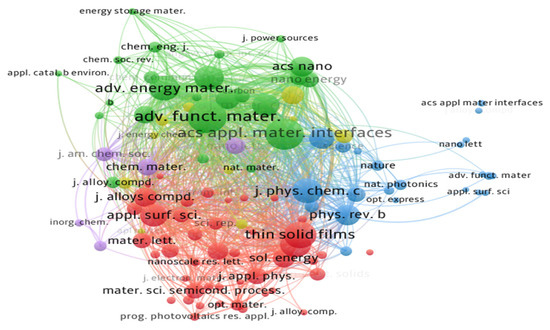
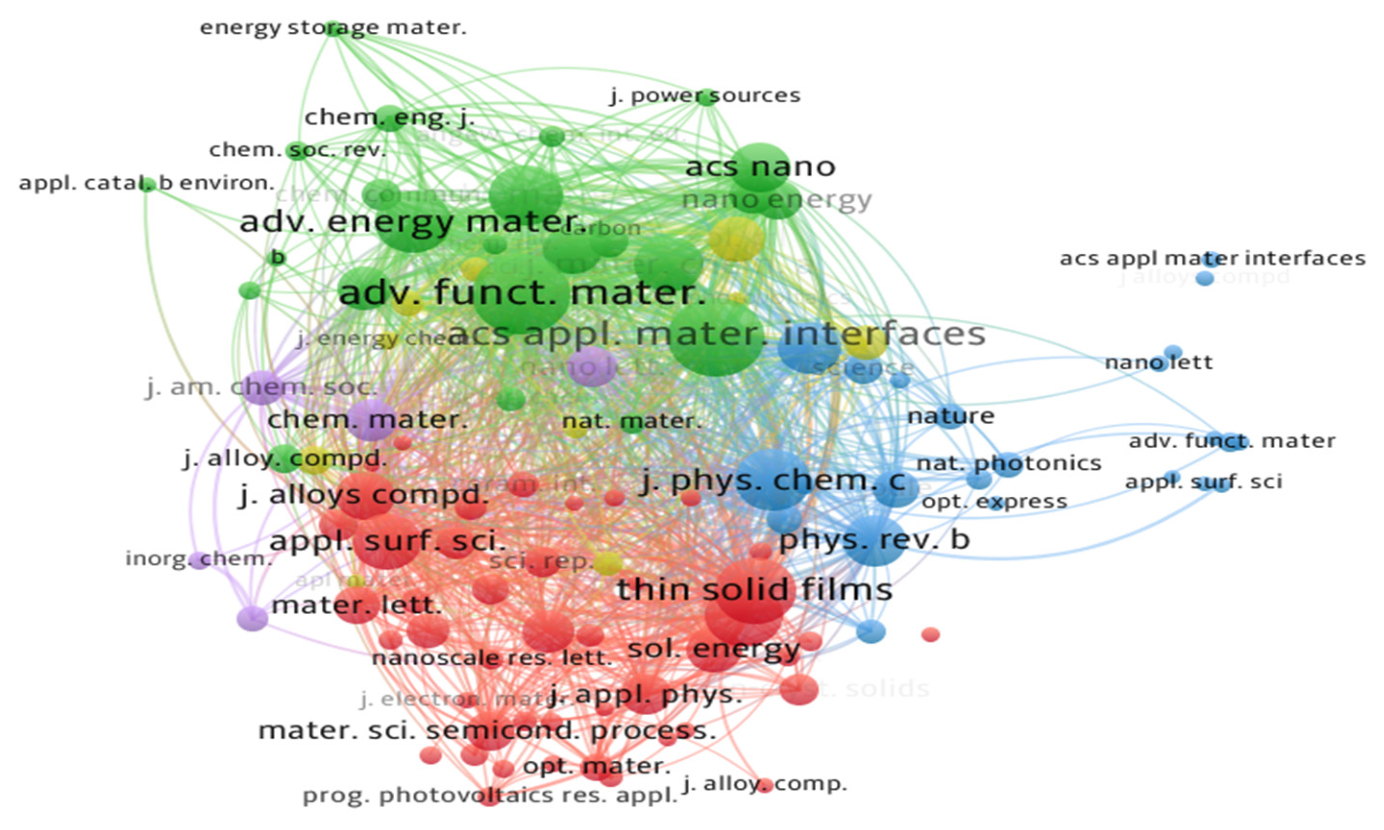
A network of 46 items and 1025 linkages was created from the 285 references by identifying the journals that were mentioned more than 50 times, as shown in Figure 1. Three interconnected clusters comprise the majority of the papers that impacted Sb2S3 research. Operations research comes first (OR).
Figure 1.
Mapping of journals co-cited in Sb2S3 research based on bibliometric network analysis, including Total Link Strength (TLS). The map was generated by the authors using he bibliometric analysis was performed using VOSviewer version 1.6.20 ased on the selected reference dataset.
The minimum citation threshold required for a source to appear in Table 1 was defined in the bibliometric analysis. Among the 2435 sources identified in the dataset, 109 sources met the minimum citation requirement and were therefore included in the analysis.
Table 1.
Summary of countries/regions contributing to Sb2S3 research. Created by the authors.
For each of these sources, the Total Link Strength (TLS) was calculated in order to evaluate the strength of the co-citation relationships with other sources in the network. The TLS represents the total strength of the citation connections between a given source and other sources within the bibliometric network.
The sources with the highest TLS values indicate the most influential journals contributing to the development of Sb2S3 research. Table 1 therefore presents the selected sources along with their citation counts and corresponding TLS values.
As shown in Figure 1, several highly influential journals appear in the bibliometric analysis of Sb2S3 research. Among them, Advanced Functional Materials (Adv. Funct. Mater.) and Advanced Energy Materials (Adv. Energy Mater.) present the highest Total Link Strength (TLS) values, indicating strong citation connections within the scientific network. Other important journals such as Solar Energy Materials and Solar Cells, Journal of Materials Chemistry A, Thin Solid Films, and Nanoscale also contribute significantly to the dissemination of research on advanced materials and energy-related technologies. The prominence of these journals reflects the strong relationship between Sb2S3 studies and the broader fields of materials science, nanotechnology, and renewable energy applications.
5. Collaboration Analysis of Countries and Organizations
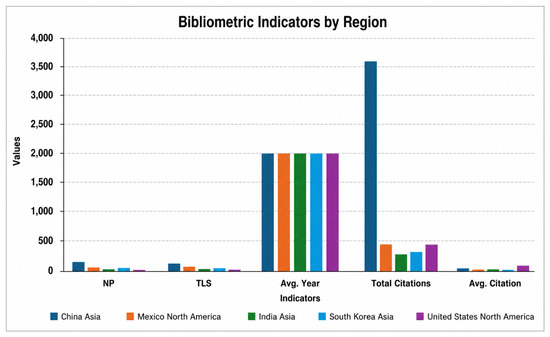
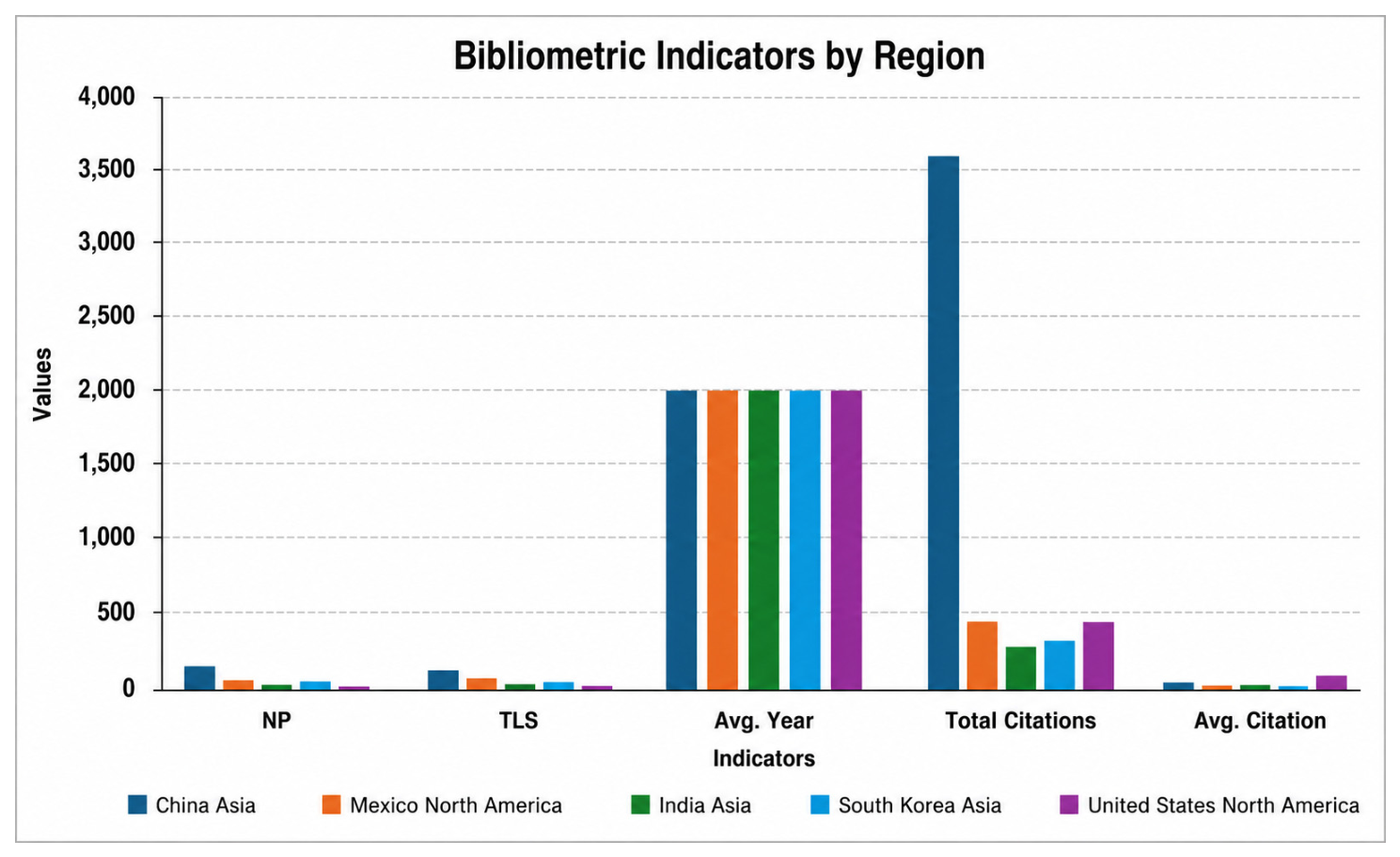
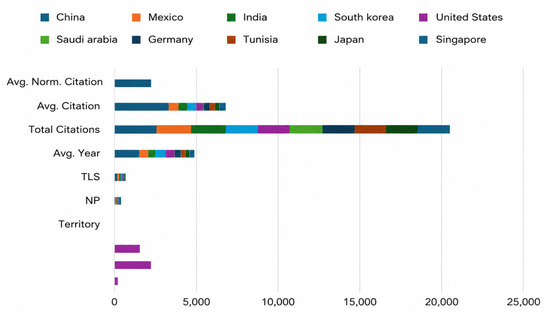
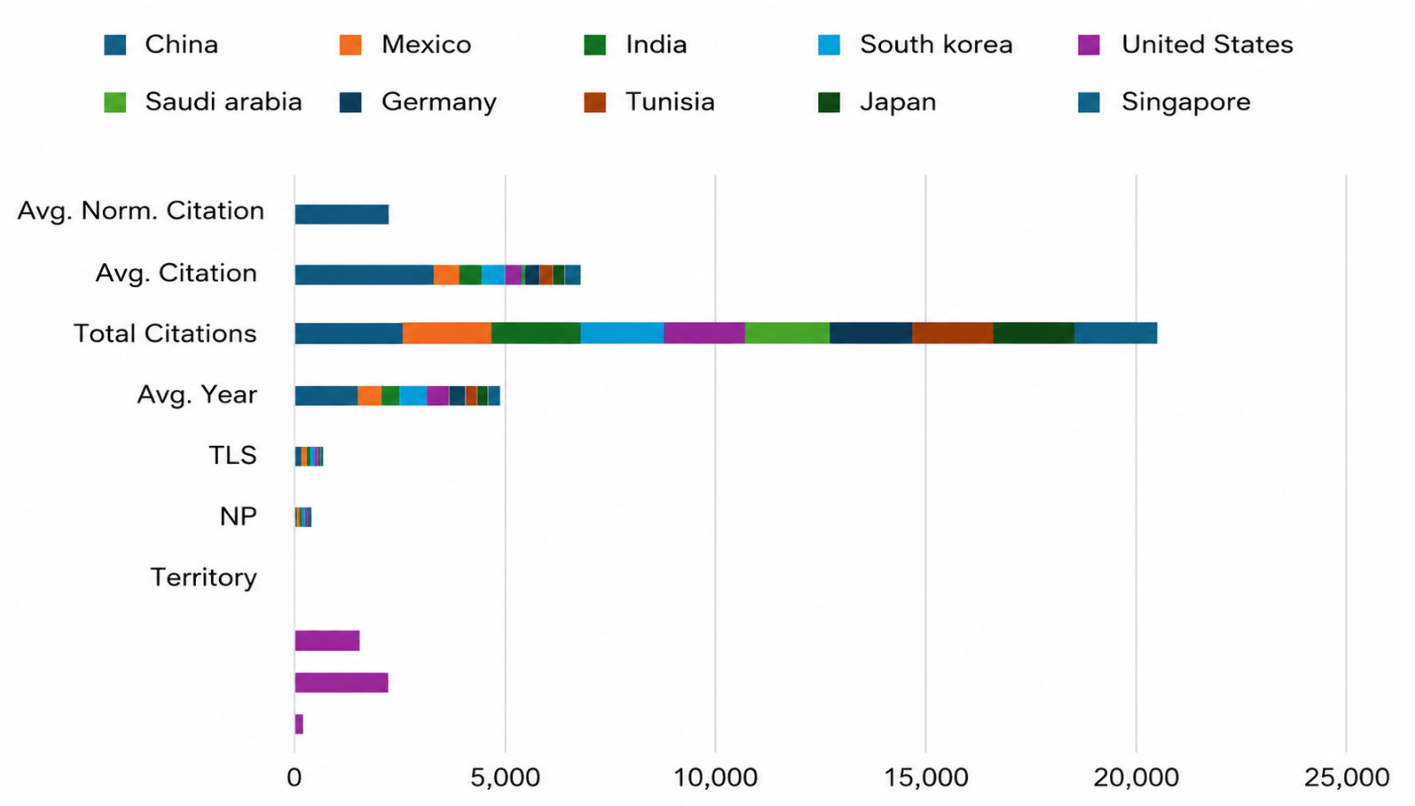
In addition to the nations or areas that are actively researching Sb2S3, Table 2 and Figure 2 displays five indicators: average citation year, total citations, average citations per country/region, average normalized citation, number of publications (NP), and TLS. The average normalized citation was calculated by dividing the total number of citations by the average number of citations produced yearly.
Table 2.
Summaries of countries/regions active in Sb2S3 research. Created by the authors.
Figure 2.
Presents the distribution of countries/regions active in Sb2S3 research.
Table 2 presents the most active countries involved in Sb2S3 research based on bibliometric indicators such as the number of publications, total link strength (TLS), and citation metrics. China clearly dominates the scientific production with 160 publications and the highest total link strength, indicating strong collaboration networks and a significant influence in the development of Sb2S3 research.
This leading position can be explained by the large investments in materials science and energy-related research, as well as the presence of numerous research institutions working on semiconductor and thermoelectric materials.
Mexico ranks second with 33 publications and a relatively high total link strength, suggesting active participation in collaborative research networks. The country’s contribution may be associated with growing research programs in renewable energy and materials science.
India also contributes to Sb2S3 research with 18 publications and a moderate level of collaboration strength. The increasing interest in semiconductor materials and thermoelectric applications in emerging research institutions may explain this contribution.
Overall, the differences in publication output among countries may be attributed to variations in research funding, availability of specialized laboratories, and the level of international scientific collaboration in the field of advanced functional materials and energy technologies.
5.1. Collaboration Analysis of Countries
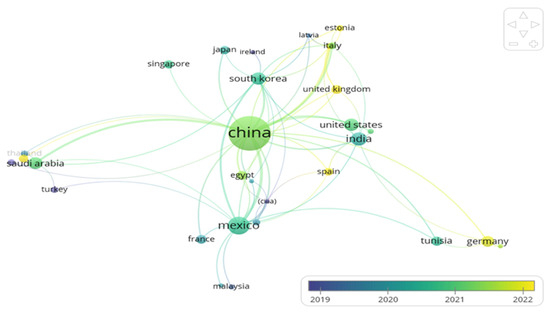
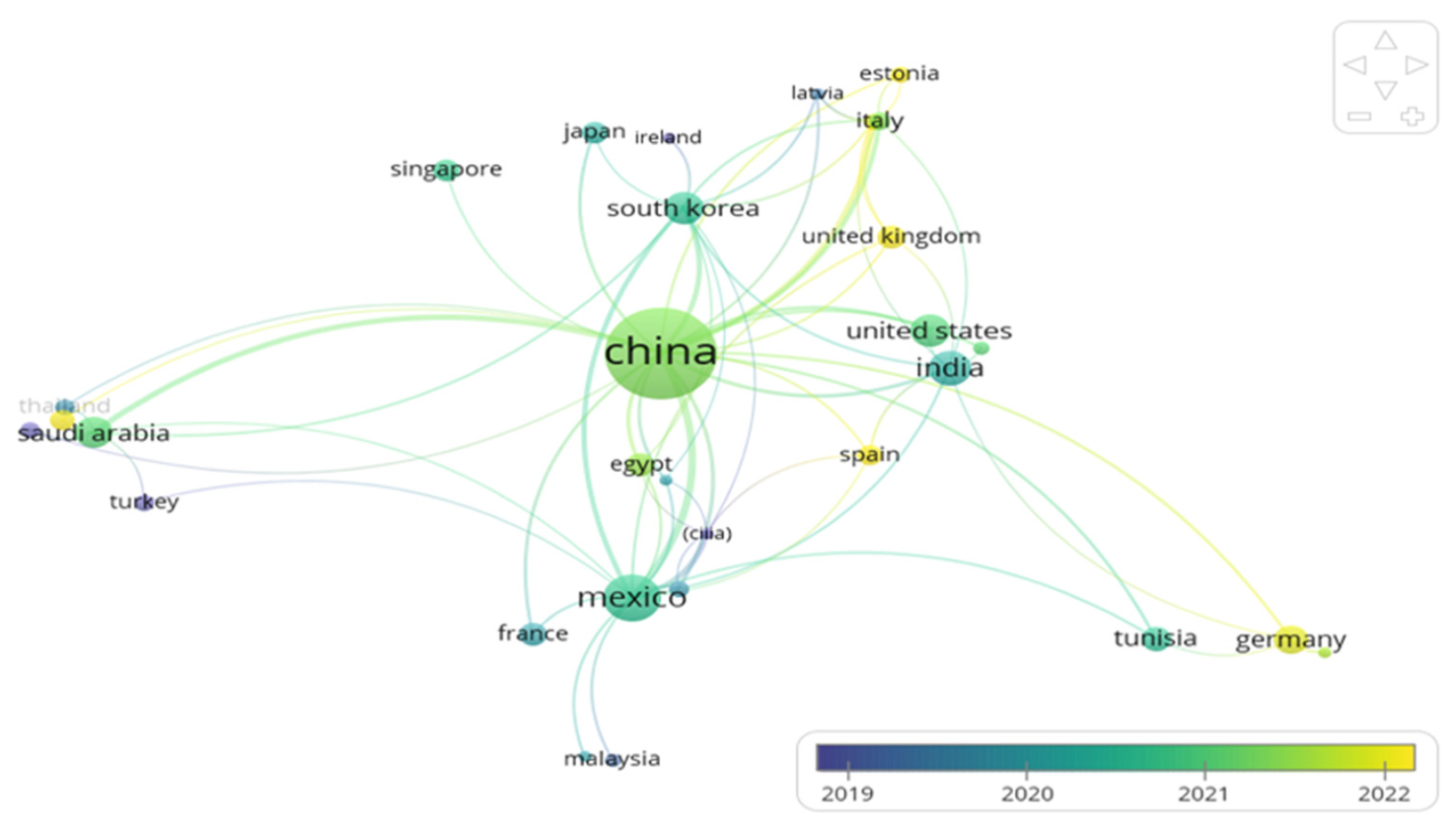
The network of national and regional cooperation is shown in (Figure 3). For every nation, at least two documents and ten citations were required. The chart titled “Summaries of countries/regions active in Sb2S3 research” compares the research performance of different countries involved in Sb2S3 research. Among the parameters shown are the number of publications (NP), total citations, average citations, average normalized citations, average publication year, and total link strength (TLS). China has a very high total number of citations and the highest overall research productivity and citation effect when compared to other countries.
Figure 3.
Research on Sb2S3 benefits from country and area mapping. The map was generated by the authors using VOSviewer based on the selected reference dataset.
5.2. Structural Optimization Countries and Regions Contribute to Sb2S3 Research
Many studies have been conducted on Sb2S3, especially in North America, Europe, and Asia (Figure 4). Mainland China has the most publications, whereas the United States has the most citations overall. Despite having fewer publications, some countries and regions, such as Taiwan, Singapore, Hong Kong, and Italy, have high average normalized citation counts that amply illustrate their significant influence [27].
Figure 4.
Diagram mapping the countries/regions contributing to Sb2S3 research. Created by the authors.
Furthermore, the fact that most of the documents supplied by these nations/regions were published in the previous three years indicates that they are actively supporting Sb2S3. The UK, Spain, the Netherlands, and Italy are some of these communities. Secondly, international cooperation is lacking.
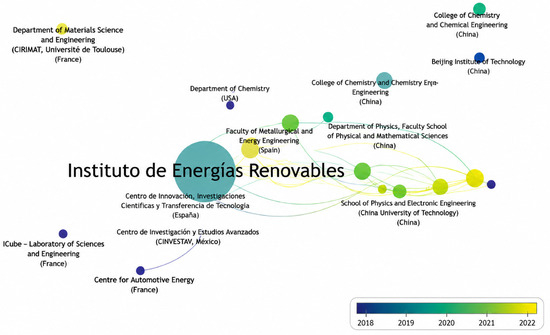
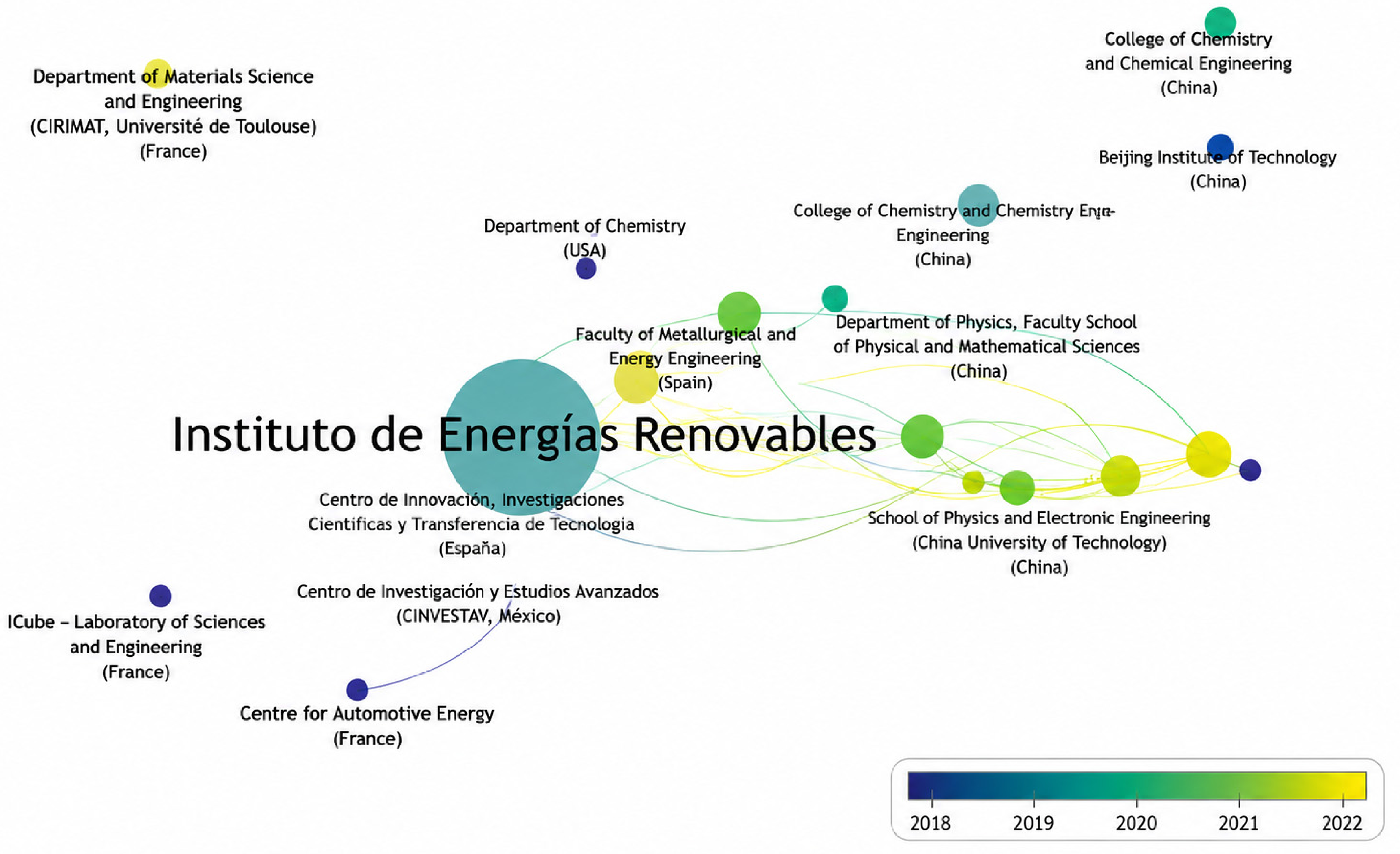
The network of 22 items and 22 relationships, created from the 693 organizations that contributed to Sb2S3 research with more than five documents and more than 20 citations, is shown in (Figure 4). A closer look at the organizations that fund Sb2S3 research indicates several scientific procedures where relationship strength, academic significance, and productivity are all important. These figures indicate a crucial role in structuring the research network, where scientific collaboration is more significant than the quantity of publications [12]. With seven publications, 146 citations, and a total link strength of 1464, the affiliated university’s Institute of Energies holds the top spot. This company makes a significant contribution to the growth of Sb2S3 knowledge, as demonstrated by its exceptional integration into international partnerships and high scientific output.
The Key Laboratory of Artificial Micro has 190 citations from just three publications, an average of more than 60 citations per work, and a strong link strength of 1167, indicating a quality-driven profile. In the same vein, the Hefei National Research Center for Physics contributed two publications that have 857 and 155 citations, respectively, indicating the significant scientific impact of its work.
5.3. Organization Collaboration Analysis
The system of international collaboration. A country had to have ten citations and at least two documents. The Department of Electronic Engineering and the Division of Materials Science each provide two and four documents, respectively, with a combined total of 102 citations and a link strength of 1002 [28]. Despite having a smaller influence than the most frequently listed organizations, their contribution demonstrates a balance between productivity and recognition, making them noteworthy contributors [29].
With only 71 citations and a link strength of 807, the Facultad de Ingeniería Mecánica y Eléctrica created five documents. Despite the relatively high output volume, the average effect per publication is lower than at similar institutions. Finally, two articles from the Key Laboratory of Modern Power Systems have 106 citations and an 804-link strength, indicating a small but acknowledged contribution to the network [30].
The quantitative study identifies two primary institutional profiles overall. On the one hand, companies with very high network connectivity (total link strength > 1000) offer structure even when they do not publish much.
The relevance and caliber of their study are, however, validated by the large number of citations generated by each publication from institutions with significant scientific influence [31]. Therefore, both the inherent value of publications and the density of international relationships impact the scientific environment around Sb2S3 and are crucial for the development of this material’s applications in photonics and renewable energy [32,33,34].
Sb2S3 has been the subject of extensive investigation, particularly in North America, Europe, and Asia (Table 2). Though the United States has the most overall citations, mainland China has the most publications. Other nations and areas, like Taiwan, Singapore, Hong Kong, and Italy, have fewer publications, but nevertheless maintain high average normalized citation counts that clearly demonstrate their considerable influence.
Additionally, it is clear that these countries/regions are actively supporting Sb2S3 because the majority of the documents they have contributed were published within the last three years. These communities include the UK, Spain, the Netherlands, and Italy. Second, there is little international cooperation (Figure 5).
Figure 5.
Presents the bibliometric network of research institutions contributing to Sb2S3 research, generated using VOSviewer version 1.6.20.
6. Influential Research Highlights
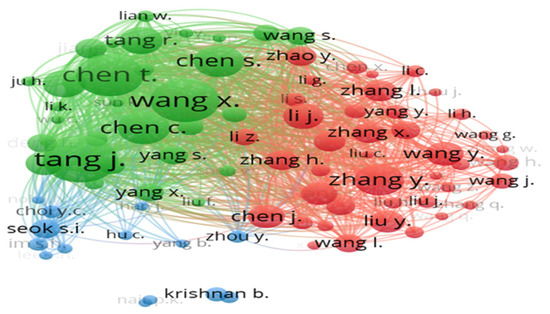
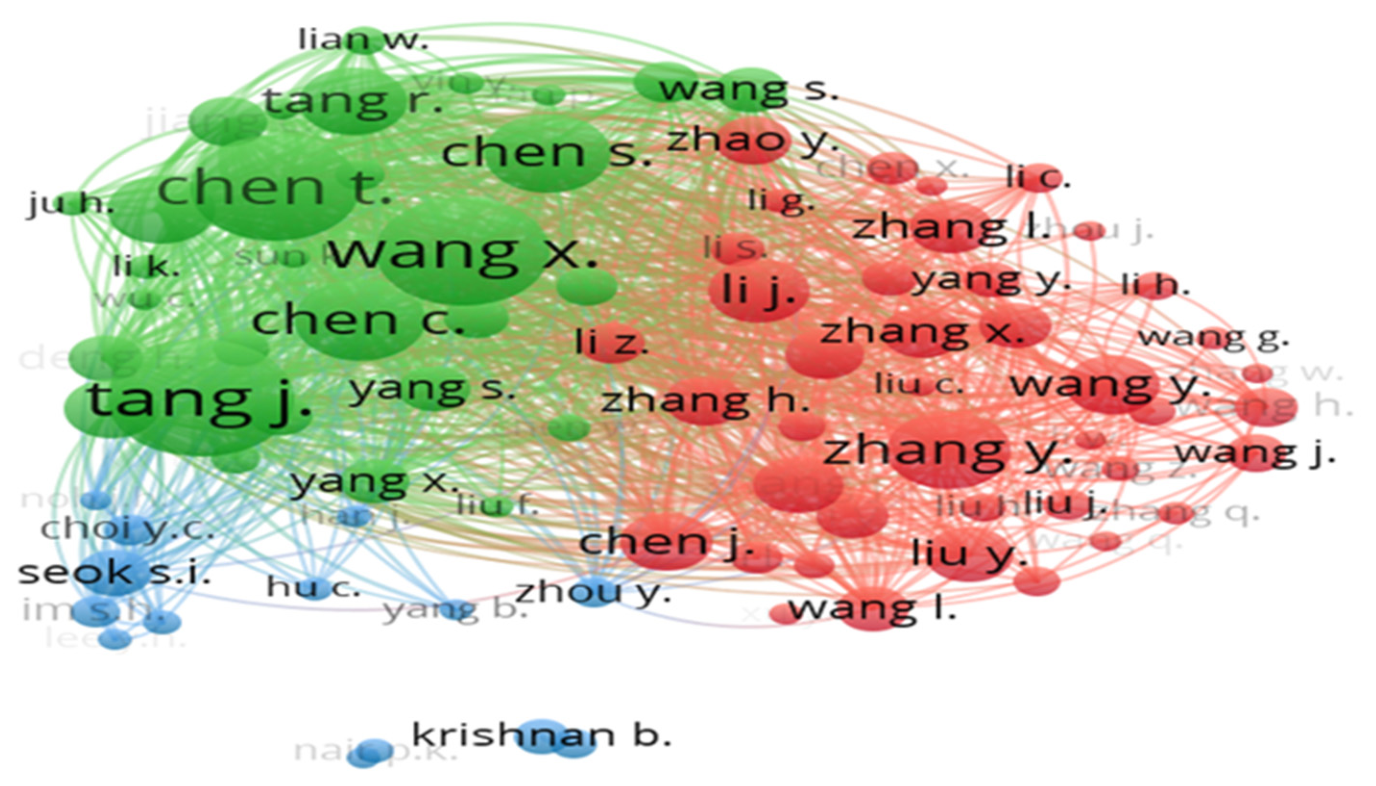
The analysis of the most important writers in the field of Sb2S3, according to citation counts and Total Link Strength (TLS), identifies the scientists who have had a major impact on this field of study (Figure 6).
Figure 6.
Presents the mapping of the global collaboration network among organizations.
Tang J. is at the top of the list, with 470 citations and a TLS of 41,163, highlighting his significant influence and pivotal involvement in Sb2S3 research. Chen T., who has 425 citations and a TLS of 40,847, which indicates deep integration within global collaborative networks, comes after him. Wang X. is one of the leading figures; his 437 citations and 36,269 TLS indicate his scholarly contribution and impact on related publications.
Chen S. is another notable author who is a part of highly linked and active research teams. (319 citations, 30,990 TLS) and Chen C. (331 citations, 29,779 TLS). Tang R. (273 citations, 27,629 TLS) and Zhu C. (276 citations, 27,966 TLS) are also highly esteemed, demonstrating their ongoing involvement in fundamental and practical research on Sb2S3.
Song H. (237 citations, 22,792 TLS) and Li J. (257 citations, 22,656 TLS) round out the top ten and show the diversity of important researchers in the field. Zhang Y. (312 citations, 23,378 TLS) is another significant contributor who is probably involved in thin-film and photovoltaic device research.
A number of authors, including Jiang C. (198 citations, 21,438 TLS), Zhang J. (226 citations, 18,797 TLS), Chen J. (233 citations, 17,973 TLS), and Wang S. (186 citations, 17,839 TLS), are regular contributors to the worldwide research network outside of this core group.
Last but not least, writers like Zhao Y. (192 citations, 17,813 TLS), Deng H. (187 citations, 17,812 TLS), Liu X. (203 citations, 17,582 TLS), and Zhang L. (212 citations, 17,000 TLS) attest to the fact that Sb2S3 research depends on a wide range of worldwide, multidisciplinary researchers.
In summary, this author mapping shows that Sb2S3 research is dominated by a few important scientific leaders (Tang, Chen, and Wang), despite being supported by a large, complex network of contributors.
The high citation counts demonstrate the scientific importance and relevance of their work, and the strength of collaborative ties shows how research on this promising material for photovoltaic and optoelectronic applications is collaborative and global.
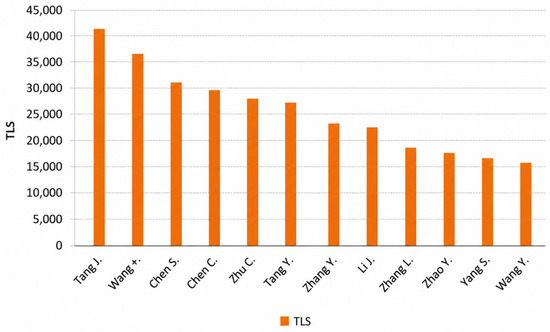
Based on their Total Link Strength (TLS), the most significant research articles in the Sb2S3 field are shown in Table 3. The initial author’s name and reference number on each label on the horizontal axis correspond to a publication. The vertical axis displays TLS values, which indicate the degree to which each publication is connected to others through citations and bibliometric linkages. The TLS values are shown by the orange bars, indicating that the impact was assessed using this metric. According to the Figure 7, the publication by Tang J. has the most influence, followed by those by Wang X. and Chen S. [35]. The following articles reveal lower but still significant TLS values. Overall, the graphic identifies and analyses. The TLS values are shown by the orange bars, indicating that the impact was assessed using this metric. According to the figure, the publication by Tang J. has the most influence, followed by those by Wang X. and Chen S. The following articles reveal lower but still significant TLS values. Overall, the chart identifies and contrasts the main papers that play a central role in Sb2S3 research.
Table 3.
Characteristics of the most influential studies on Sb2S3, including their main findings. Created by the authors.
Figure 7.
Presents the global collaboration network among organizations contributing to Sb2S3 research, as revealed by the bibliometric analysis.
7. Systematic Review Methodology
Numerous recent studies have examined the thermoelectric performance of Sb2S3 materials, demonstrating that the material modification procedures have a significant impact on the dimensionless figure of merit (ZT).
Doping with elements such as Se, Ni, Zn, and Fe has been reported to increase carrier concentration and improve electrical conductivity. As a result, moderate improvements in the thermoelectric performance have been observed. In some cases, ZT values approaching 0.4–0.5 have been reported in doped Sb2S3 systems, indicating that carrier engineering can play a crucial role in optimizing transport properties.
Overall, the comparison of published results indicates that balanced control over carrier concentration, electronic band structure, and phonon transport is necessary to optimize Sb2S3 thermoelectric materials. Future research on advanced band engineering, defect control, and hybrid nanostructures may lead to higher thermoelectric efficiencies for Sb2S3-based materials.
8. Conclusions
Antimony trisulfide (Sb2S3) has emerged as a promising thermoelectric material due to its low lattice thermal conductivity, low toxicity, anisotropic crystal structure, and natural abundance. It is appropriate for energy conversion applications due to its substantial Seebeck coefficient (>200 μV/K) and moderate band gap (1.5–1.7 eV). The primary drawback, which lowers the power factor and, in turn, the total ZT performance, is still its low electrical conductivity.
Recent developments demonstrate that methods including composite engineering, doping, and nanostructuring can improve carrier transport while further reducing thermal conductivity. Theoretically, ZT > 1 might be made possible by optimal band engineering, although experimental findings show ZT values of 0.1–0.2 in bulk Sb2S3 and up to ~0.5 in doped or nanostructured systems.
In summary, Sb2S3 combines significant technological potential with environmental sustainability, making it a viable material for mid-temperature waste-heat recovery and hybrid photovoltaic–thermoelectric systems.
One of its main strengths is its intrinsically low lattice thermal conductivity, which originates from its complex orthorhombic crystal structure and the strong anisotropic bonding between atoms. This anisotropy enhances phonon scattering processes, effectively reducing heat transport through the lattice and contributing to improved thermoelectric performance. In addition, Sb2S3 is composed of relatively abundant, low-toxicity elements, making it an environmentally sustainable alternative to traditional thermoelectric materials that often contain hazardous elements such as lead or tellurium [38].
In recent years, significant research efforts have been devoted to overcoming this limitation through various material engineering strategies. Approaches such as chemical doping, composite formation, defect engineering, and nanostructuring have shown encouraging results in improving carrier transport properties while simultaneously suppressing lattice thermal conductivity through enhanced phonon scattering mechanisms. Moreover, band structure engineering, particularly the optimization of the electronic density of states near the Fermi level, has been proposed as an effective strategy to improve the balance between electrical conductivity and the Seebeck coefficient.
In summary, although further improvements in electrical conductivity are still necessary, Sb2S3 represents a promising, environmentally friendly thermoelectric material with significant potential for mid-temperature waste-heat recovery and integrated energy conversion technologies. Continued research focusing on advanced doping strategies, nanostructuring techniques, and electrical band engineering is anticipated to increase Sb2S3’s thermoelectric performance and broaden its uses in sustainable energy technologies.
Author Contributions
Conceptualization, S.H. and K.N.; methodology, S.H.; software, S.H.; validation, S.H. and K.N.; formal analysis, S.H.; investigation, S.H.; resources, K.N.; data curation, S.H.; writing—original draft preparation, S.H.; writing—review and editing, S.H. and K.N.; visualization, S.H.; supervision, K.N.; project administration, K.N. All authors have read and agreed to the published version of the manuscript.
Funding
This research received no external funding.
Institutional Review Board Statement
Not applicable.
Informed Consent Statement
Not applicable.
Data Availability Statement
The original contributions presented in this study are included in the article. Further inquiries can be directed to the corresponding author.
Conflicts of Interest
The authors declare no conflict of interest.
Abbreviations
| Sb2S3 | Antimony trisulfide |
| ZT | Dimensionless thermoelectric figure of merit |
| S | Seebeck coefficient |
| σ | Electrical conductivity |
| κ | Thermal conductivity |
| TLS | Total Link Strength |
| DOS | Density of states |
| DFT | Density Functional Theory |
| CRTA | Constant Relaxation Time Approximation |
References
- Singh, R.; Dogra, S.; Dixit, S.; Vatin, N.I.; Bhardwaj, R.; Sundramoorthy, A.K.; Perera, H.C.S.; Patole, S.P.; Mishra, R.K.; Arya, S. Advancements in thermoelectric materials for efficient waste heat recovery and renewable energy generation. Hybrid Adv. 2024, 5, 100176. [Google Scholar] [CrossRef] [Scilit]
- Ibn-Mohammed, T.; Koh, S.C.L.; Mustapha, K.B.; Smith, L.; Acquaye, A.; Iyasara, A.C.; Hussain, F.; Morley, N.; Sinclair, D.C.; Randall, C.A.; et al. Techno-environmental analysis of material substitution in thermoelectric modules: Non-oxide (bismuth telluride alloys) vs. oxide-based (lanthanum-doped strontium titanate and calcium cobaltite) materials. Energy Convers. Manag. X 2023, 19, 100395. [Google Scholar] [CrossRef] [Scilit]
- Kimberly, T.Q.; Ciesielski, K.M.; Qi, X.; Toberer, E.S.; Kauzlarich, S.M. High thermoelectric performance in 2D Sb2Te3 and Bi2Te3 nanoplate composites enabled by energy carrier filtering and low thermal conductivity. ACS Appl. Electron. Mater. 2024, 6, 2816–2825. [Google Scholar] [CrossRef] [Scilit] [PubMed]
- Kassem, M.; Benmore, C.; Tverjanovich, A.; Usuki, T.; Khomenko, M.; Fontanari, D.; Sokolov, A.; Ohara, K.; Bokova, M.; Kohara, S. Glassy and liquid Sb2S3: Insight into the structure and dynamics of a promising functional material. J. Mater. Chem. C 2023, 11, 4654–4673. [Google Scholar] [CrossRef] [Scilit]
- Gutiérrez, Y.; Ovvyan, A.P.; Santos, G.; Juan, D.; Rosales, S.A.; Junquera, J.; García-Fernández, P.; Dicorato, S.; Giangregorio, M.M.; Dilonardo, E.; et al. Interlaboratory study on interplay between structure, dielectric function, and amorphous-to-crystalline phase change for photonics. iScience 2022, 25, 104377. [Google Scholar] [CrossRef] [Scilit] [PubMed]
- Rudenko, A.N.; Katsnelson, M.I. Anisotropic effects in two-dimensional materials. 2D Mater. 2024, 11, 4. [Google Scholar] [CrossRef] [Scilit]
- Das, S.; Singha, P.; Daou, R.; Lebedev, O.I.; Hébert, S.; Maignan, A.; Banerjee, A. Improvement of thermoelectric performance in Sb2Te3/Te composites. Phys. Rev. Mater. 2022, 6, 035401. [Google Scholar] [CrossRef] [Scilit]
- Benaissa, M.; Ouahrani, T.; Hatada, K.; Yoshikawa, K.; Sébilleau, D. Simple approach to more efficient density functional theory simulations. Comput. Condens. Matter 2025, 42, e01012. [Google Scholar] [CrossRef] [Scilit]
- Benslimane, A.; Kouidri, S.; Rached, H.; Elkeurti, M.; Meliani, S.; Moussa, M. Electronic structures and optical responses of Sb2S3, Ag2S, AgSbS2, and Ag3SbS3 compounds: An assessment of DFT calculations. Indian J. Phys. 2023, 98, 955–966. [Google Scholar] [CrossRef] [Scilit]
- Zhang, C.; Bu, G.; Sajib, M.S.J.; Meng, L.; Xu, S.; Zheng, S.; Zhang, L.; Wei, T. PXLink: A simulation program of polymer crosslinking to study of polyamide membrane. Comput. Phys. Commun. 2023, 291, 108840. [Google Scholar] [CrossRef] [Scilit]
- Nanthini, S.; Veluswamy, P.; Shankar, H. Sn-doped Sb2S3: P-type transition and Seebeck coefficient enhancement toward wearable thermoelectrics. J. Mater. Sci. 2026, 61, 7633–7654. [Google Scholar] [CrossRef] [Scilit]
- Razzaq, S.; Malik, A.K.; Raza, B.; Khattak, H.A.; Moscoso Zegarra, G.W.; Zelada, Y.D. Research collaboration influence analysis using dynamic co-authorship and citation networks. Int. J. Interact. Multimed. Artif. Intell. 2022, 7, 103–116. [Google Scholar] [CrossRef] [Scilit]
- Margaritescu, Ș.; Tudorache, C. Advancing the knowledge economy in the energy sector: A bibliometric study of global research dynamics. Proc. Int. Conf. Bus. Excell. 2025, 19, 4868–4878. [Google Scholar] [CrossRef] [Scilit]
- Chettouh Hammas, N. Influence du taux d’oxygénation et du photovieillissement sur l’activité antioxydante des cellules de la peau. Thèse de Doctorat, Université d’Orléans, Orléans, France, 2022. Available online: https://theses.hal.science/tel-04860565v1 (accessed on 26 July 2026).
- Gilshtein, E.; Gupta, H.M.; Enevoldsen, A.M.P.; Besleaga, C.; Galca, A.C.; Canulescu, S. Superstrate structured Sb2S3 thin-film solar cells by magnetron sputtering of Sb and post-sulfurization. SSRN Prepr. 2025. [Google Scholar] [CrossRef] [Scilit]
- Ranga, A.G. Study of Electrical Characteristics of Hydrothermally Grown Antimony Sulfide (Sb2S3) Absorber for Sb2S3/CdS Solar Cells and the Impact of Inorganic Hole Transport Layer. Master’s Thesis, Youngstown State University, Youngstown, OH, USA, 2025. Available online: https://etd.ohiolink.edu/acprod/odb_etd/ws/send_file/send?accession=ysu1754586590894138&disposition=inline (accessed on 26 July 2026).
- Wu, Y.; Wang, S.; Zhen, L.; Laporte, G. Integrating operations research into green logistics: A review. Front. Eng. Manag. 2023, 10, 517–533. [Google Scholar] [CrossRef] [Scilit]
- Dei Tos, I.; Simbula, A.; Guerrero, J.; Dong, T.; Subramaniam, S.; de La Fuente, B.; Jose, V.; Kuang, Y.; Aernouts, T.; Naghavi, N.; et al. Updating carrier dynamics and interface engineering in Sb2S3: Toward efficient photoanode for water oxidation. ChemSusChem 2025, 18, e202402764. [Google Scholar] [CrossRef] [Scilit] [PubMed]
- Almelhem, M.; Süle, E.; Buics, L. The role of blockchain and IoT in reverse logistics: The impacts on environmental and economical sustainability—A structured literature review. Chem. Eng. Trans. 2023, 107, 433–438. [Google Scholar] [CrossRef]
- Pasini, S.; Foti, G.; Parisini, A.; Spoltore, D.; Fornari, R.; Bosio, A.; Marchionna, S. Innovative and sustainable solar cells based on abundant elements on the Earth crust. EPJ Web Conf. 2024, 310, 00007. [Google Scholar] [CrossRef] [Scilit]
- Masruhah, A.N.R.; Diantoro, M.; Yogihati, C.I.; Pujiarti, H.; Pahlevi, R.A.; Meevasana, W. Enhanced thermoelectric performance of CoSb3 based incorporated with reduced graphene oxide. E3S Web Conf. 2024, 473, 03002. [Google Scholar] [CrossRef] [Scilit]
- Wehbi, Z.; Taher, R.; Faraj, J.; Castelain, C.; Khaled, M. Hybrid thermoelectric generators–renewable energy systems: A short review on recent developments. Energy Rep. 2022, 8, 1361–1370. [Google Scholar] [CrossRef] [Scilit]
- Yao, S.; Tang, Y.; Yi, C.; Xiao, Y. Research hotspots and trend exploration on the clinical translational outcome of simulation-based medical education: A 10-year scientific bibliometric analysis from 2011 to 2021. Front. Med. 2022, 8, 1361–1370. [Google Scholar] [CrossRef] [Scilit] [PubMed]
- Li, Z.; Ng, K.C.; Anderson, S.; Jaugstetter, M.; Salmeron, M.; Martin, M.C.; Bechtel, H.A.; Gilbert Corder, S.N. Electrochemical dynamics of imidazolium ionic liquids at graphene electrodes for energy storage applications. Nano Energy 2026, 151, 111785. [Google Scholar] [CrossRef] [Scilit]
- Bhardwaj, S.; Pandey, S.K. Signatures of Hund’s metal physics in single-layered 3d transition metal oxide, Sr2CoO4. arXiv 2025. [Google Scholar] [CrossRef] [Scilit]
- Loi, M.; Bryan, N. Celebrating the 2025 Applied Physics Letters Rising Stars Collection and Rising Star Award. Appl. Phys. Lett. 2026, 128, 080401. [Google Scholar] [CrossRef] [Scilit]
- Sun, W.; Li, R. Long-term variations of global antimony (Sb) deposition fluxes and their responses to China’s clean air actions. J. Hazard. Mater. 2025, 497, 139743. [Google Scholar] [CrossRef] [Scilit] [PubMed]
- Velez-Estevez, A.; García-Sánchez, P.; Moral-Munoz, J.; Cobo, M. Why do papers from international collaborations get more citations? A bibliometric analysis of Library and Information Science papers. Scientometrics 2022, 127, 7517–7555. [Google Scholar] [CrossRef] [Scilit]
- Bellani, S.; Bartolotta, A.; Agresti, A.; Calogero, G.; Grancini, G.; di Carlo, A.; Kymakis, E.; Bonaccorso, F. Solution-processed two-dimensional materials for next-generation photovoltaics. Chem. Soc. Rev. 2021, 50, 11870–11965. [Google Scholar] [CrossRef] [Scilit] [PubMed]
- Azadparvar, M.; Aliabad, H.A.R.; Özdemir, E.G. Optoelectronic and thermoelectric properties of Sb2S3 under hydrostatic pressure for energy conversion. Optoelectron. Adv. 2023, 17, 335–344. [Google Scholar] [CrossRef] [Scilit]
- Simonetti, A.; Albano, A.; Tumminello, M.; di Matteo, T. Statistically validated network for analysing textual data. Appl. Netw. Sci. 2025, 10, 42–65. [Google Scholar] [CrossRef] [Scilit]
- Rafiq, Q.; Hayat, S.S.; Azam, S. Ab-initio investigation of electrical, optical and thermoelectric properties of Sb2S3 by Ag, Au, and Cu doping. Res. Sq. 2025, 99, 2771–2783. [Google Scholar] [CrossRef] [Scilit] [PubMed]
- Rashid, F.L.; Hashim, A.; Dulaimi, A.; Hadi, A.; Ibrahim, H.; Al-Obaidi, M.A.; Ameen, A. Enhancement of polyacrylic acid/silicon carbide nanocomposites’ optical properties for potential application in renewable energy. J. Compos. Sci. 2024, 8, 123. [Google Scholar] [CrossRef] [Scilit]
- Biegański, A.; Perestjuk, M.; Armand, R.; della Torre, A.; Laprais, C.; Saint-Girons, G.; Reboud, V.; Hartmann, J.M.; Tortai, J.H.; Moreau, A.; et al. Sb2S3 as a low-loss phase-change material for mid-IR photonics. Opt. Mater. Express 2024, 14, 862–870. [Google Scholar] [CrossRef] [Scilit]
- Shea, J.E.; Hartland, G.V.; Messinger, J.P. A review of 2025 at The Journal of Physical Chemistry C. J. Phys. Chem. C 2026, 130, 1–2. [Google Scholar] [CrossRef] [Scilit]
- Du, J.; Yang, C.; Zhu, B.; Tian, C.; Shi, J.; Xia, C. Anion-engineered chalcogenide perovskites Ba2HfCh4: From light emitters to photovoltaics. J. Mater. Chem. A 2026, 14, 14556–14566. [Google Scholar] [CrossRef] [Scilit]
- Yan, M.; Wei, Z.; Gong, Z.; Johannessen, B.; Ye, G.; He, G.; Liu, J.; Zhao, S.; Cui, C.; Fei, H. Sb2S3-templated synthesis of sulfur-doped Sb-N-C with hierarchical architecture and high metal loading for H2O2 electrosynthesis. Nat. Commun. 2023, 14, 36078. [Google Scholar] [CrossRef] [Scilit] [PubMed]
- Lian, W.; Wang, Z.; Tang, J. Revealing composition and structure dependent deep defects in Sb2S3 for high-efficiency solar cells. Nat. Commun. 2021, 12, 3266. [Google Scholar] [CrossRef] [Scilit] [PubMed]

Disclaimer/Publisher’s Note: The statements, opinions and data contained in all publications are solely those of the individual author(s) and contributor(s) and not of MDPI and/or the editor(s). MDPI and/or the editor(s) disclaim responsibility for any injury to people or property resulting from any ideas, methods, instructions or products referred to in the content. |
© 2026 by the authors. Licensee MDPI, Basel, Switzerland. This article is an open access article distributed under the terms and conditions of the Creative Commons Attribution (CC BY) license.