Proceeding Paper

Dynamic PI-Classification and UML Generation for Automotive Manual Intelligence †
1
Information Technology and Project Management, Technical Communication Laboratory, Center of Language Research, The University of Aizu, Aizuwakamatsu 965-0028, Fukushima, Japan
2
Technical Communication Laboratory, Center of Language Research, The University of Aizu, Aizuwakamatsu 965-0028, Fukushima, Japan
*
Author to whom correspondence should be addressed.
Presented at the 8th International Global Conference Series on ICT Integration in Technical Education & Smart Society, Aizuwakamatsu City, Japan, 20–26 January 2026.
Eng. Proc. 2026, 143(1), 45; https://doi.org/10.3390/engproc2026143045

Published: 20 July 2026

Abstract

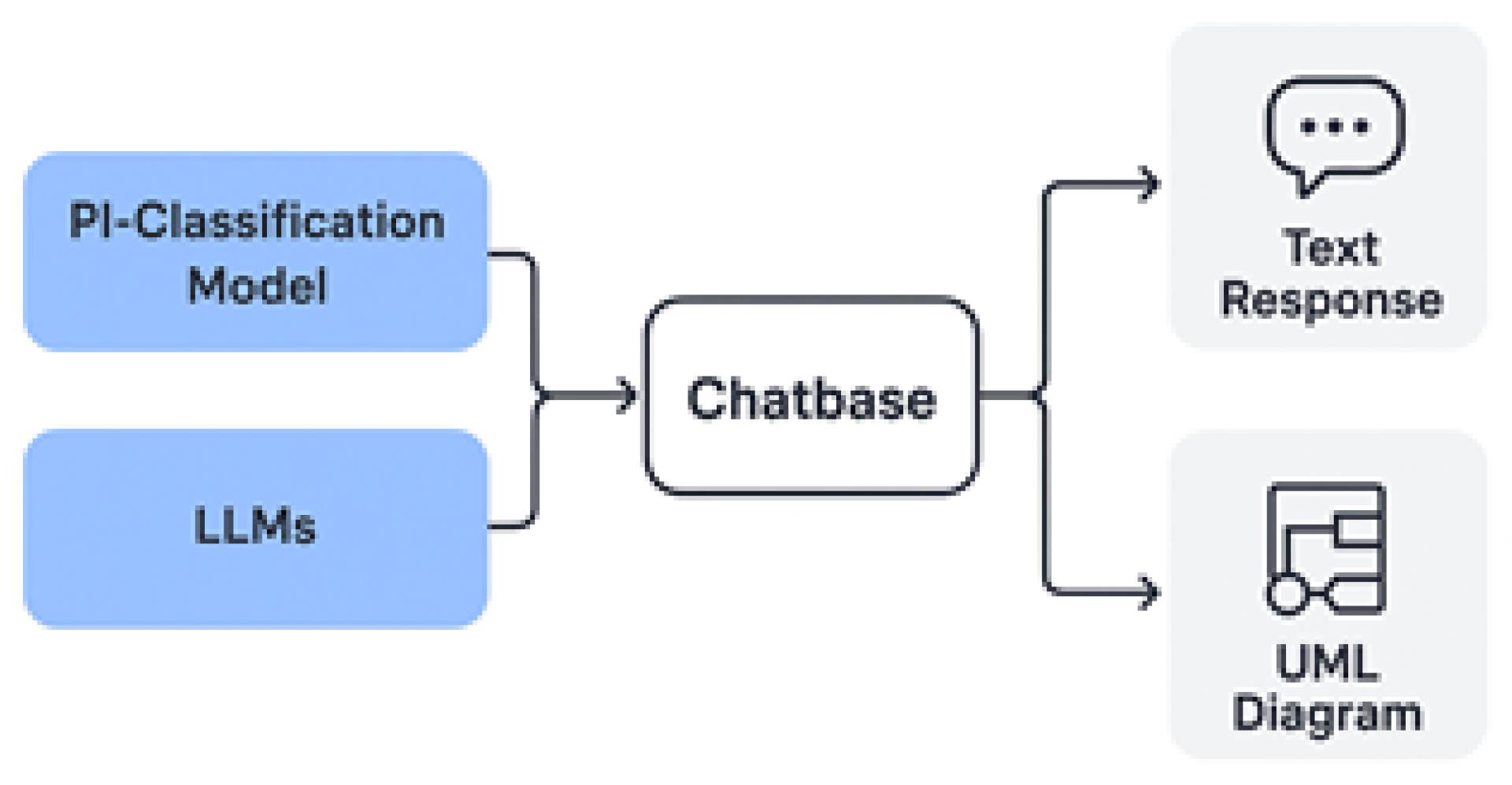
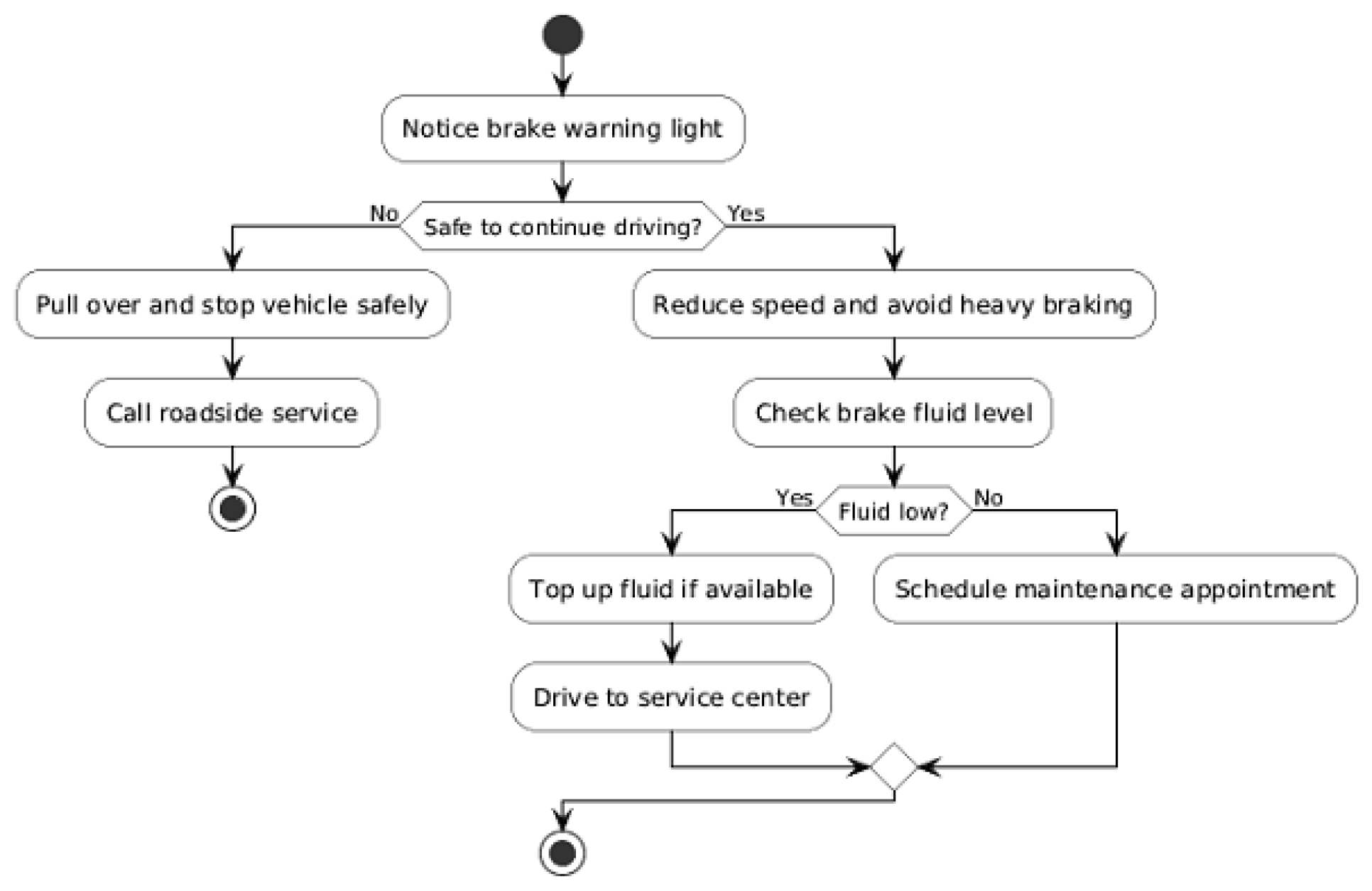
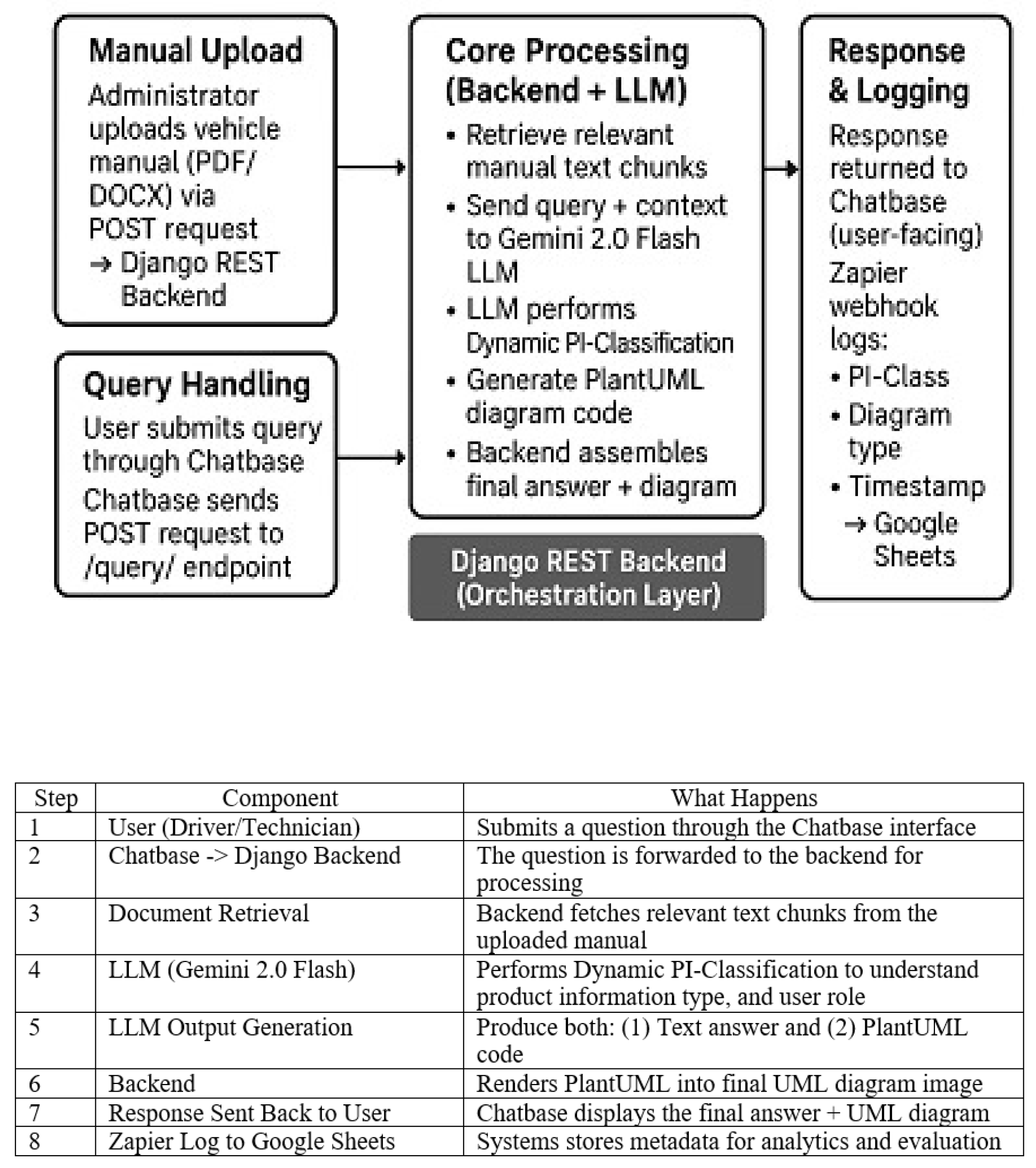
As industries transition to Industry 4.0 and 5.0, the reliance on intelligent information systems continues to grow. However, many technical manuals remain static, text-based documents that are difficult to search, interpret, and apply in real-world operational contexts. This paper presents Smart Manual Assistant, an automated conversational system that transforms complex automotive manuals into interactive, role-adaptable knowledge resources. The core of the system leverages a Large Language Model (LLM) to dynamically generate PI-Class metadata, organizing content according to key intrinsic and extrinsic product and information attributes. This structured metadata enables precise content classification and supports context-aware responses tailored to different user types, including drivers and service technicians. A key contribution of the system is its dual-output response mechanism. Alongside natural language explanations, the assistant automatically generates PlantUML code and the corresponding visual diagrams (e.g., activity, sequence, and component diagrams). This provides immediate visualizations of system interactions and procedural workflows, significantly improving comprehension and usability. The Smart Manual Assistant implements a complete end-to-end pipeline—from manual ingestion to intelligent, visual, and role-specific guidance. The solution is built using a Django REST backend, a Chatbase-based interface, and Zapier automation for conversation logging to Google Sheets. The results demonstrate a practical framework for transforming static technical documentation into adaptive, data-driven support systems, enhancing accessibility, training efficiency, and real-time decision-making.
Keywords: PI-classification; automotive documentation; UML generation; Large Language Models; semantic information access; Industry 4.0 PI-classification; automotive documentation; UML generation; Large Language Models; semantic information access; Industry 4.0