


Abstract
Rabies remains a significant public health concern, primarily due to unregistered pets and insufficient vaccination monitoring. This study introduces PetVax, a mobile application designed to address rabies cases by facilitating pet registration, vaccination monitoring, and communication between pet owners and local authorities. The primary objectives are to streamline pet record management, enhance vaccination compliance, and improve accessibility to vaccination schedules. The study follows the System Development Life Cycle (SDLC) methodology, including requirements gathering, system design, development, testing, and deployment. PetVax was developed with the use of technology tools such as Flet, Python, and SQlite. The application incorporates features such as pet registration, vaccination reminders, and notifications of upcoming rabies vaccination events, with all data stored in a centralized database for easy retrieval. The results demonstrate improved pet registration accuracy, increased vaccination compliance, and enhanced accessibility to pet health records. The novelty of this research lies in its integration of digital pet health management within a user-friendly platform, ensuring real-time data accessibility for both pet owners and administrators. PetVax significantly contributes to rabies prevention efforts by providing an efficient, scalable solution for local governments and pet owners.
1. Introduction
Rabies is a zoonotic disease that can be prevented through a combination of different measures, such as raising awareness through educational campaigns, responsible pet ownership, enforcement of animal vaccination policies, and eliminating exposure to rabid animals [1]. The deaths from this disease, which mostly affect vulnerable and impoverished groups, are rarely documented. It mostly affects isolated rural populations where efforts to stop the spread of canine to human disease have not been taken. Several local initiatives were implemented to reduce the number of rabies-related deaths. These included the following: giving free routine vaccinations or pre-exposure prophylaxis to high-risk individuals and animal bite victims; mass rabies vaccination; creating a central database for registered and vaccinated dogs; impounding, field controlling, and disposing of unregistered, stray, and unvaccinated dogs; and conducting an information and education campaign on the prevention and control of rabies [1]. Mass animal vaccination is the most effective method for controlling rabies in the community [2]. Rabies continues to be the deadliest infectious disease in the Philippines, taking 250–300 Filipino lives annually. Roughly 33% of deaths from rabies in humans occur in children under 15, with 66% of cases being male. The added expenses of anti-rabies vaccine and immune globulin, medical appointments, and loss of wages are extra challenges for an average Filipino family dealing with a possible rabies exposure. Despite being vaccine-preventable, rabies is the cause of more than 59,000 human deaths each year [2]. The Department of Health (DOH) said 169 human rabies cases have been recorded from January to May 2024, about 13% higher compared to 150 in the same period in 2023. Among the cases reported, 156 or 92% had a history of dog bites, while 10 or 6% of the cases had a history of cat bites, and the remaining three cases reported a history of bites from other animals [3]. The Philippine government aims to reduce rabies incidence through various public health initiatives, including mass vaccination campaigns and public education programs [4]. The province of Guimaras has an estimated 30,000 dog population. In a previous interview, Dr. Marie Jocelyn Te, Rabies Prevention and Control Program medical coordinator of DOH-CHD 6, said they are now focusing on Guimaras because of their increasing animal bite cases, and they were found to have canine-rabies-positive cases [2]. Vaccination is a cornerstone of canine preventive healthcare and one of the most cost-effective ways of maintaining a dog’s health, longevity, and quality of life. Canine vaccination also serves a public health function by forming a barrier against several zoonotic diseases affecting dogs and humans [5]. Challenges persist in achieving widespread vaccination coverage and public compliance with rabies prevention protocols, especially in rural areas [2]. Currently, the infrastructure and resources for administering post-exposure prophylaxis (PEP) remain under strain due to increased consultations related to potential rabies exposures, further complicating the public health response [3]. Inadequate vaccination coverage among pets poses a risk to both animal and human health, highlighting the importance of implementing an effective initiative in addressing rabies cases. Traditional paper-based methods for documenting pet vaccinations often suffer from inefficiencies, data inaccuracies, and lack of centralized information. Furthermore, the lack of a centralized and accessible platform hinders effective coordination among stakeholders and limits the ability to quickly respond to outbreaks or identify areas with low vaccination coverage. This lack of accurate information hinders effective disease control and prevention efforts. Utilizing mobile technology for real-time data collection could enhance rabies surveillance, improving disease management and targeting resources more effectively for eradication [6,7]. The study, “PetVax: Mobile Application for Addressing Rabies Cases”, aims to address these challenges by developing a user-friendly and efficient digital platform for addressing rabies cases in the community by monitoring pets’ rabies vaccination status and notifying pet users about upcoming events and announcements regarding to rabies vaccinations. Through this mobile application, PetVax will provide barangay officials, LGU’s, veterinarians, and pet owners with a centralized system to record, update, and access information on pet details and rabies vaccinations status. Through the implementation of PetVax, the study seeks to promote a more organized approach to pet vaccination management within barangays, enabling identification of at-risk areas with low vaccination coverage and improved coordination between stakeholders involved in pet vaccination programs. By enhancing the transparency and accessibility of pet vaccination data, PetVax aims to contribute to the reduction in rabies cases in the community and enhance public health. By developing and implementing PetVax, this capstone study strives to provide a practical and sustainable solution to manage rabies cases and assure the well-being of the pets and the people of the community.
2. Materials and Methods
The output of the study on PetVax: A Mobile Application for Addressing Rabies Cases will address challenges in pet registration and vaccination monitoring by providing a centralized digital platform that enhances efficiency and accessibility. This system aims to streamline pet vaccination monitoring, improve data accuracy, and ensure better coordination between pet owners and veterinary authorities. By transitioning from manual record-keeping to a mobile-based solution, PetVax offers a more reliable, user-friendly, and proactive approach to rabies prevention and pet health management [8].
2.1. Software Development Life Cycle
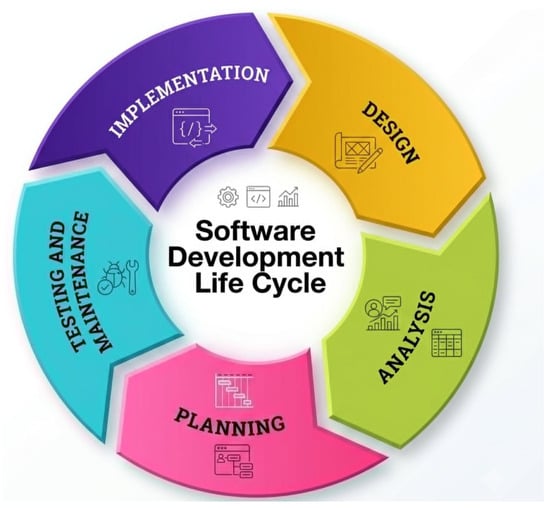
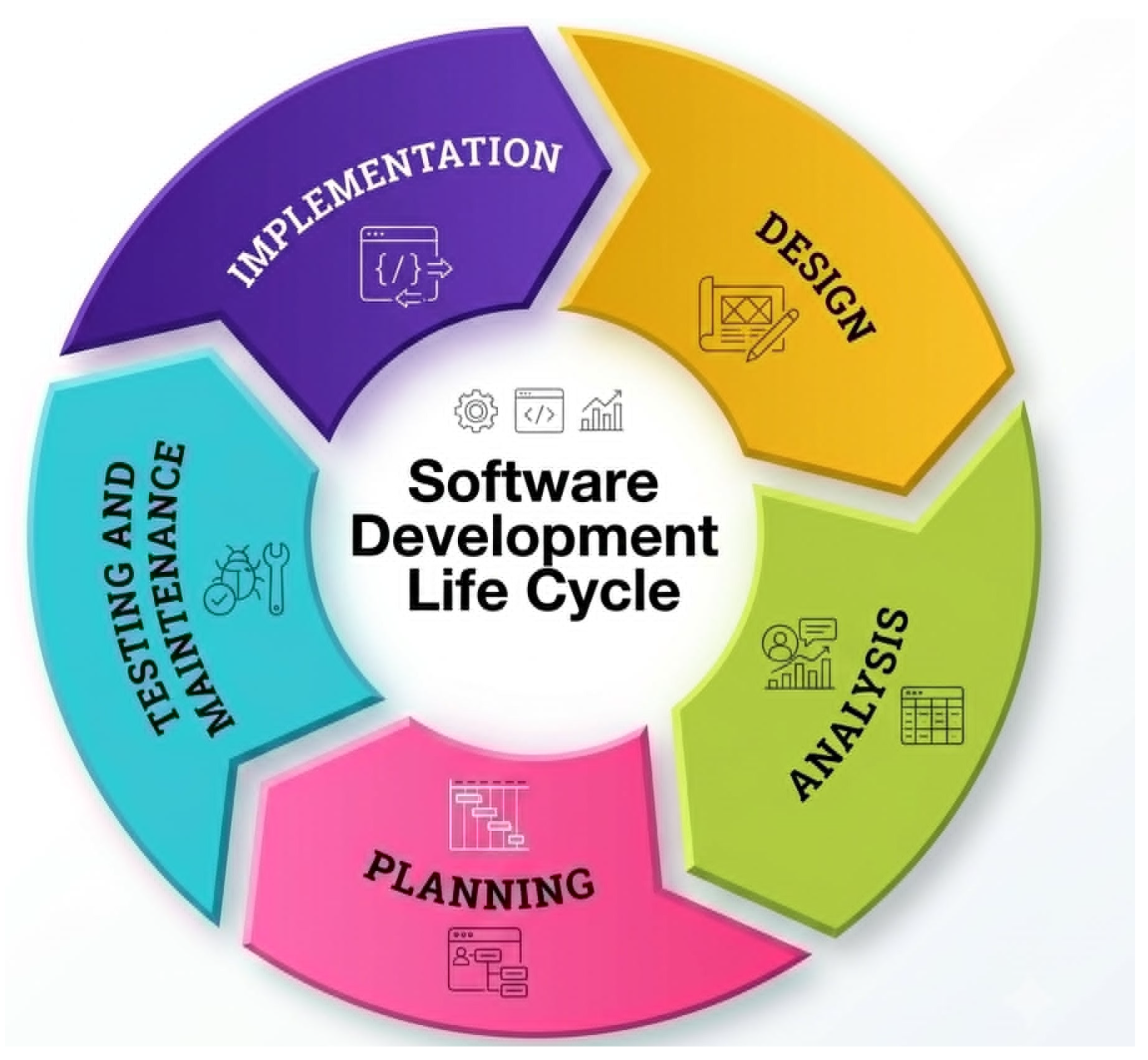
As shown in (Figure 1) Agile model served as the foundation for this project’s development. Phases include planning, analysis, design, implementation, testing, and maintenance are all part of the Software Development Life Cycle (SDLC) [9].
Figure 1.
System development life cycle model.
2.1.1. Planning
In the planning phase, the researchers focused on defining the scope and the objectives of the system. During this phase, the researchers gathered information through conducting an interview with stakeholders from Barangay Salvacion, including the Department of Agriculture and pet owners, to help determine the specific requirements, challenges, and issues related to pet vaccination process.
2.1.2. Analysis
The planning phase is followed by the Analysis Phase. During this phase, the researchers looked further into the system’s requirements to ensure a profound understanding of how the PetVax system will address stakeholder needs. Existing procedures for pet vaccination are also analyzed to identify gaps and inefficiencies.
2.1.3. Design
The design phase converts the system requirements into a blueprint for development. In this phase, the researchers designed the system’s architecture, including the structure of the database and the relationships between entities like pet owners, pets, and vaccination events. Wireframes for key components are also created to visualize the layout and functionality of the system. The researchers chose Flet (Flet v0.26.0, AppVeyor Systems Inc., Vancouver, BC, Canada) as the framework used for developing the system, which ensures a responsive and user-friendly interface. Python (Python 3.13) is utilized for backend logic, handling system operations and data processing [10], while SQLite (SQLite v3.48.1) serves as the database for storing user, pet, and vaccination information [11].
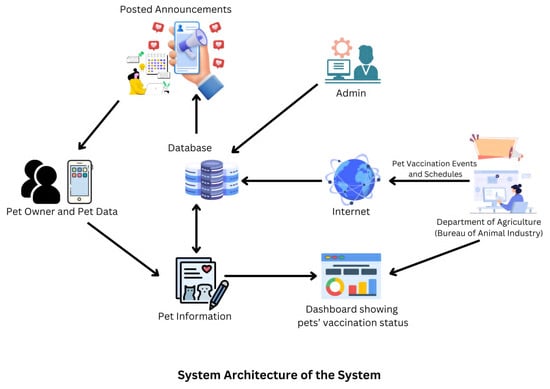
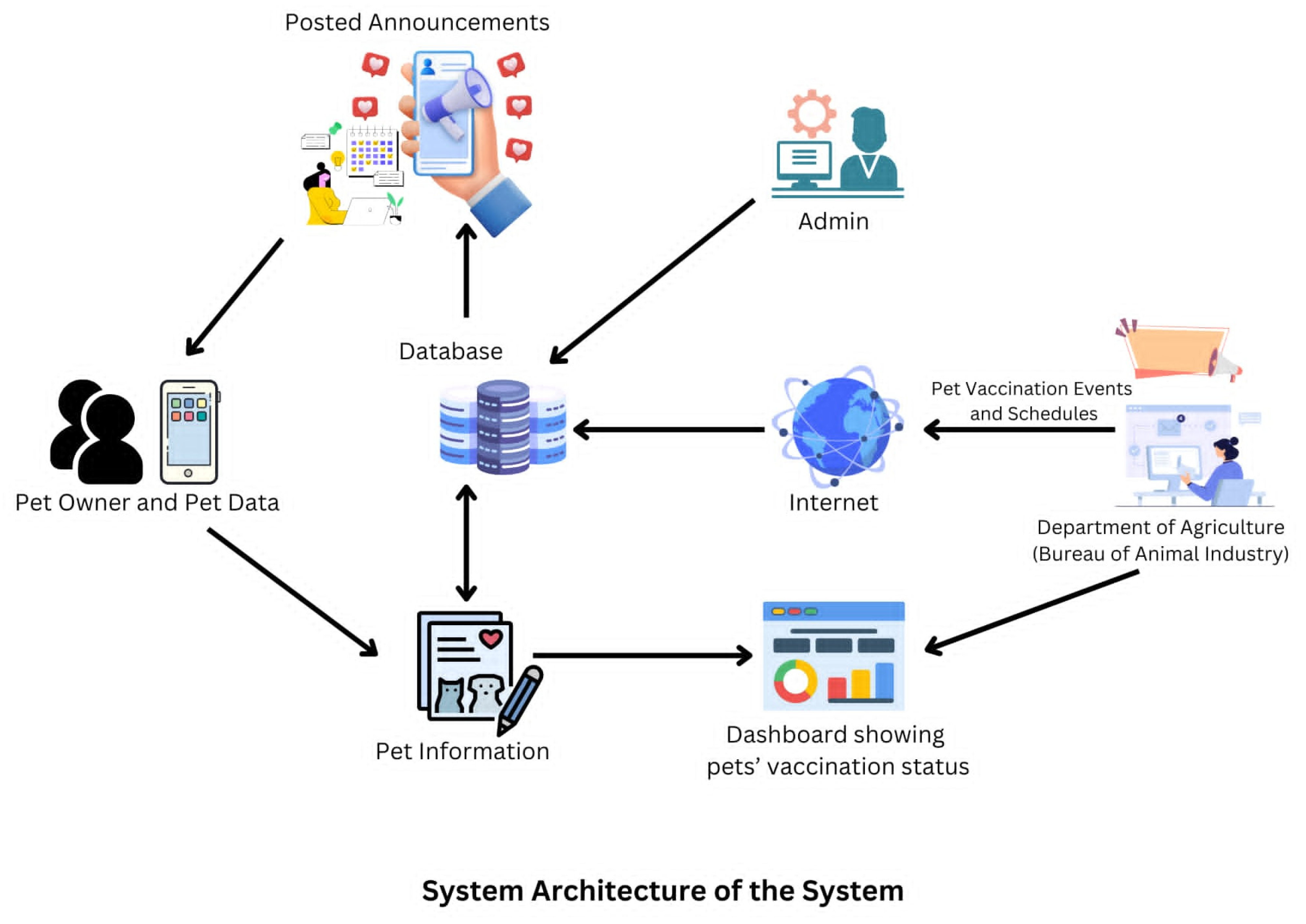
Figure 2 shows the System Architecture of this mobile application was designed to manage pets and monitor pet rabies vaccination status. The architecture consists of the following components: User (Pet Owners), System Administrator, Pet Information, Database, Dashboard, Upcoming Vaccination Events/Announcements, Posted Vaccination Events, Internet, and Server. The user or the pet owners and system administrator will be the major entities of the system. The device to be used is a mobile phone since the system is designed as a mobile application. The user will input his/her personal information such as name, address, and email upon registration. The user will also input the detailed information of its pets such as pet owner name, address, pet name, species, breed, age, gender, and pet vaccination status (the pet vaccination status will determine if the pet is vaccinated or not) for registration. All the data is then uploaded to the database for storage and further processing. After registration, the system tracks and stores details of each registered pet of the pet owner that can be seen on the pet information interface of the user’s mobile application. This information is used to generate a dashboard on the status of pets within the vicinity of the area. The dashboard provides visual data and insights regarding pet rabies vaccination status, which helps the administrators to monitor pet rabies vaccination status. The dashboard is available only to the system administrator. The system administrator can also post upcoming vaccination events/announcements through the system, passing through the internet and the server to facilitate real-time updates and allows users to interact with the system from their mobile devices, and are pushed to users via the mobile app. The pet owners will then be notified of the posted announcements. These announcements are also stored in the database and displayed on the user’s application interface.
Figure 2.
System architecture.
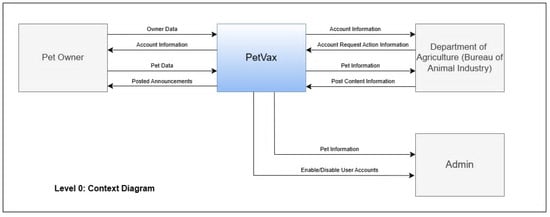
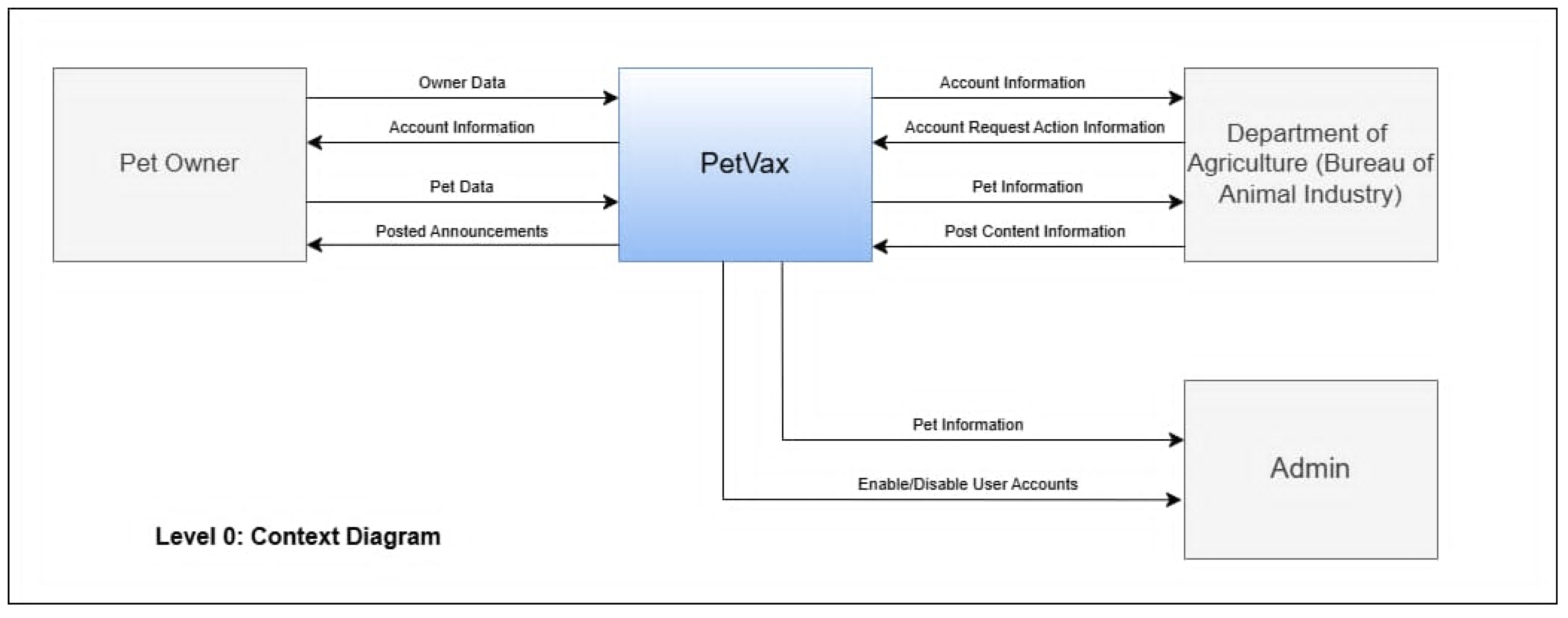
Figure 3 shows the Level 0 Data Flow Diagram of the System. This illustrates the interactions between the system and its external entities: Pet Owners, the Department of Agriculture (Bureau of Animal Industry), and the System Administrator. The pet owner inputs personal and pet information into the system and registers their pets for vaccination monitoring. They also receive updates on their account status and announcements regarding vaccination schedules. The Department of Agriculture manages account registrations, approving or declining pet owner accounts, viewing registered pets, and posting important announcements related to rabies prevention and pet vaccination. Meanwhile, the System Administrator oversees system operations by monitoring registered pets and enabling or disabling user accounts based on system policies. This enhances coordination between pet owners, government agencies, and administrators to improve rabies prevention efforts and promote responsible pet ownership.
Figure 3.
Context diagram.
2.1.4. Implementation
The actual development of the system takes place in the implementation phase. Core features, such as user registration with account verification and admin approval, are developed and integrated with the database. The admin interface is built to allow the Department of Agriculture to post announcements and vaccination events. Once development is complete, the system is prepared for deployment on mobile platforms, ensuring compatibility and accessibility.
2.1.5. Testing and Maintenance
The final phase is the System Testing and Maintenance phase, which guarantees the long-term functionality of the system. This involves monitoring the system for any issues, fixing bugs, and implementing updates in response to user feedback. Additionally, the system is continually improved to remain compatible with emerging technologies and evolving user requirements, ensuring the app’s sustainability and effectiveness.
2.2. Software Specification
This section details the comprehensive technology that utilized as to build, debug and deploy PetVax application. It specifically outlines the software tools, programming languages and frameworks that ensure the system’s functionality and cross-platform compatibility (Table 1).
Table 1.
Technical specifications of the development environment.
3. Results and Discussion
Transitioning from traditional paper-based methods to a digitized system, the application improved the accuracy of pet registration data and increased overall vaccination compliance. The study also found that PetVax enhanced accessibility to pet health records and streamlined communication between pet owners and local authorities, such as the Department of Agriculture—Bureau of Animal Industry. This improved coordination was facilitated by a secure database, an admin dashboard for monitoring vaccinations, and automated notifications for upcoming immunization events.
The application effectively addressed long-standing issues in rabies prevention, including manual record-keeping inefficiencies, lack of data transparency, and poor tracking of vaccination history. By integrating digital pet health management into a user-friendly platform, PetVax provided real-time data accessibility for both pet owners and administrators. The system’s design, which includes features like account verification, admin approval for registrations, and educational information about rabies, ensured a secure and proactive approach to public health. Ultimately, the research highlights the significant contribution of such digital solutions to rabies prevention efforts, offering a scalable and sustainable tool for local governments to promote responsible pet ownership and enhance community health.
3.1. Developed User Interface
3.1.1. Log in and Account Creation
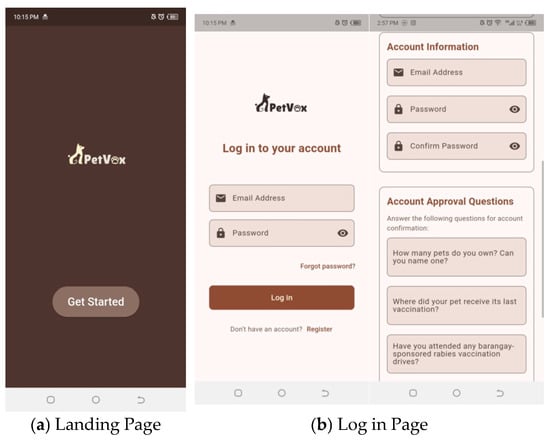
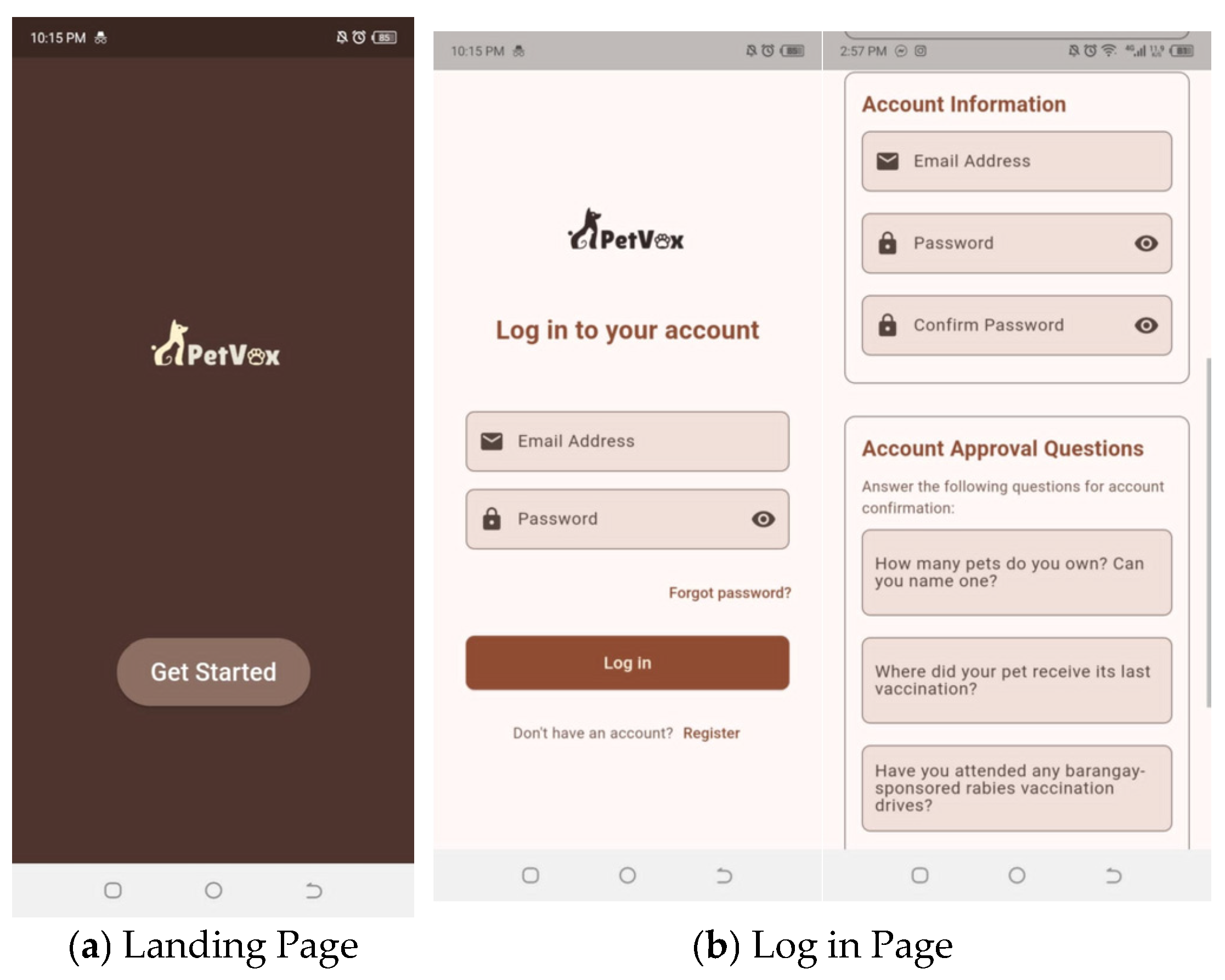
Insert Description between the labels Developed User Interface and Log in and Account Creation: This section illustrates the visual layout and graphical user interface (GUI) developed for the PetVax mobile application. Designed with a strong emphasis on clean visuals, straightforward navigation, and simplicity, the interface ensures a highly intuitive and seamless user experience (Figure 4).
Figure 4.
These PetVax prototype interfaces: (a) the landing page, which serves as the entry point for users to access the application’s features; and (b) the login and registration page, as shown in Figure 4 enables users to access their accounts or submit necessary.
3.1.2. Pet Dashboard
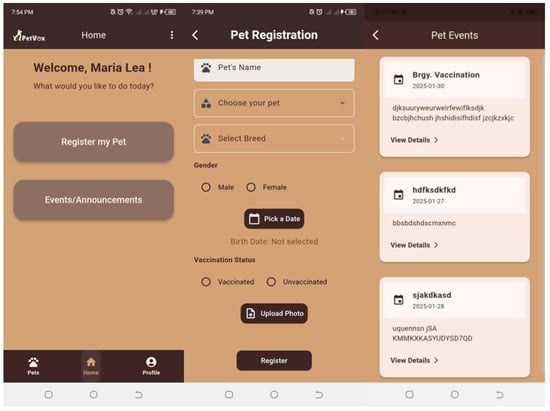
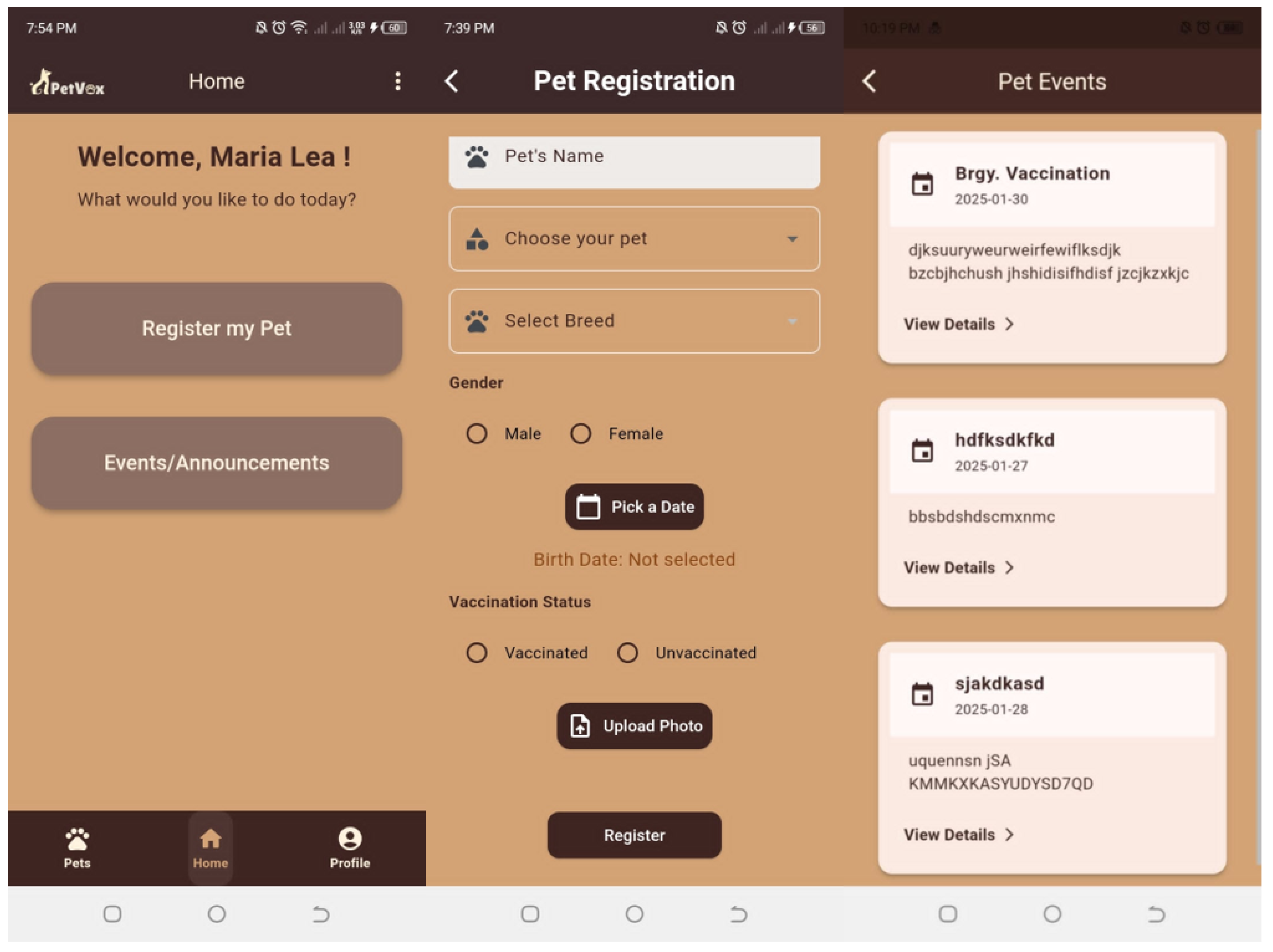
Figure 5 depicts the Home Screen, Pet Registration, and Pet Events Page. The Home Screen greets the user by name and provides quick-access buttons for pet registration and event announcements. The Pet Registration page allows users to input pet details and information such as name, breed, gender, etc. The Pet Events page displays upcoming vaccination events and other pet-related announcements with options to view more details.
Figure 5.
Home Screen, Pet Registration, and Pet Events pages.
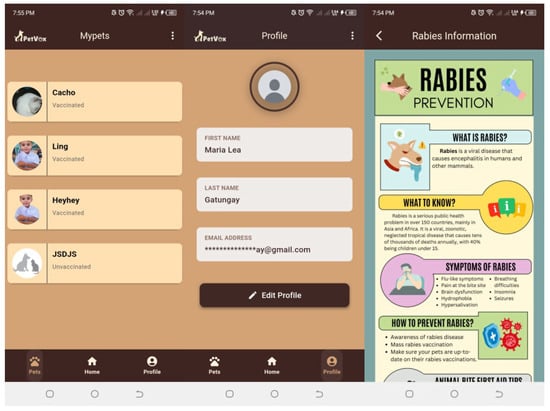
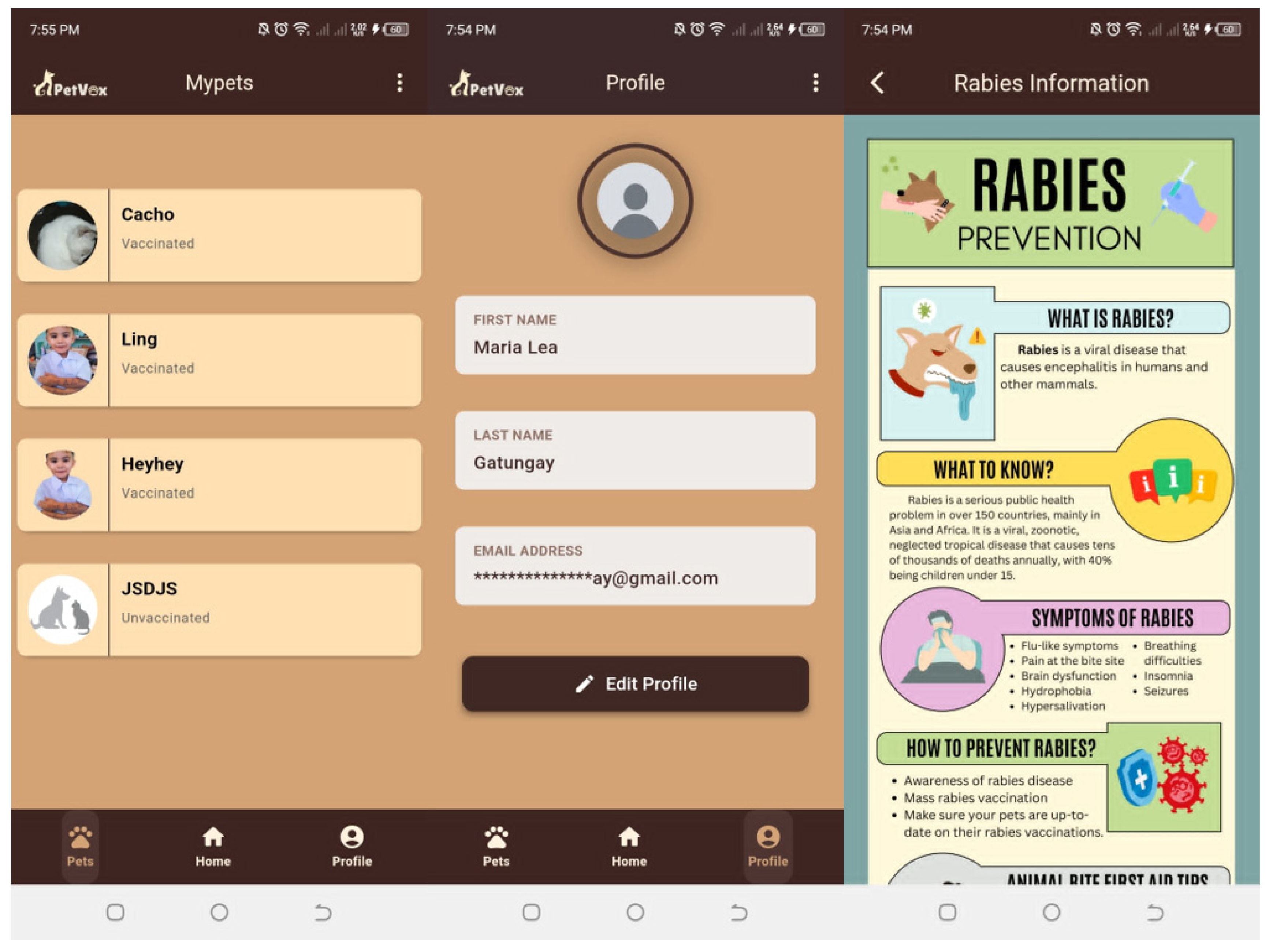
Figure 6 shows the Pets, Profile, and Rabies Information Page. The initial screen, labeled “Mypets,” shows a list of the registered pets, each with their name and vaccination status, showing whether they are “Vaccinated” or “Unvaccinated.” In the second screen, “Profile,” the app shows the user’s details, such as their profile picture, name, etc. The last screen, “Rabies Information,” is an educational page, giving important information regarding rabies.
Figure 6.
User dashboard.
4. Conclusions
Based on the findings of this study, the system successfully achieved its objectives by providing a solution for managing pet registrations and vaccination records while enabling the Department of Agriculture—Bureau of Animal Industry to disseminate important vaccination updates. The system addressed key problems in traditional rabies prevention efforts, such as manual record-keeping, lack of transparency, and inefficient communication with pet owners.
The development and implementation of PetVax highlights the importance of integrating technology into public health initiatives, particularly in rabies prevention and control programs. By having a secure database, automated notifications, and an admin dashboard for monitoring pet vaccinations, the system enhances coordination and efficiency in implementing rabies vaccination campaigns.
The benefit of this system extends not only to the Department of Agriculture but also to the pet owners and the stakeholders of Barangay Salvacion who were part of the study. However, while the system has proven effective in its core functionalities, certain areas, such as scalability, integration with veterinary clinics, and additional security enhancements, could further improve its performance and adoption in larger communities.
Author Contributions
Conceptualization, M.L.E.G. and K.G.L.; methodology, N.S.B. and L.G.G.; software, L.G.G.; validation, M.L.E.G., G.V.B. and L.C.G.; formal analysis, G.V.B.; writing—original draft preparation, M.L.E.G. and P.M.A.G.; writing—review and editing, G.V.B. and M.L.E.G.; supervision, L.C.G.; project administration, L.C.G., M.L.E.G. and G.V.B. All authors have read and agreed to the published version of the manuscript.
Funding
This research received no external funding.
Institutional Review Board Statement
Not applicable.
Informed Consent Statement
Not applicable.
Data Availability Statement
The data presented in this study are available upon request from the corresponding author.
Acknowledgments
The authors would like to thank Guimaras State University and Romblon State University for the support in the conduct of this study. During the preparation of this manuscript/study, the authors used Gemini 3 Flash for the purposes of checking the grammar. The authors have reviewed and edited the output and take full responsibility for the content of this publication.
Conflicts of Interest
The authors declare no conflict of interest.
References
- Ling, M.Y.J.; Halim, A.F.N.A.; Ahmad, D.; Ramly, N.; Hassan, M.R.; Rahim, S.S.S.A.; Jeffree, M.S.; Omar, A.; Hidrus, A. Rabies in Southeast Asia: A systematic review of its incidence, risk factors and mortality. BMJ Open 2023, 13, e066587. [Google Scholar] [CrossRef] [Scilit] [PubMed]
- Acharya, K.P.; Acharya, N.; Phuyal, S.; Upadhyaya, M.; Lasee, S. One-health approach: A best possible way to control rabies. One Health 2020, 10, 100161. [Google Scholar] [CrossRef] [Scilit] [PubMed]
- Duamor, C.T.; Lankester, F.; Mpolya, E.; Ferguson, E.A.; Johnson, P.C.; Wyke, S.; Cleaveland, S.; Hampson, K.; Kreppel, K. Participation in mass dog vaccination campaigns in Tanzania: Benefits of community engagement. Front. Public Health 2022, 10, 971967. [Google Scholar] [CrossRef] [Scilit] [PubMed]
- Okolo, C.A.; Babawarun, O.; Olorunsogo, T.O. Mobile Health (Mhealth) Innovations for Public Health Feedback: A Global Perspective. Int. Med. Sci. Res. J. 2024, 4, 235–246. [Google Scholar] [CrossRef] [Scilit]
- Hong, W. Advances and Opportunities of Mobile Health in the Postpandemic Era: Smartphonization of Wearable Devices and Wearable Deviceization of Smartphones. JMIR mHealth uHealth 2024, 12, e48803. [Google Scholar] [CrossRef] [Scilit] [PubMed]
- Athingo, R.; Tenzin, T.; Coetzer, A.; Hikufe, E.H.; Peter, J.; Hango, L.; Haimbodi, T.; Lipinge, J.; Haufiku, F.; Naunyango, M.; et al. Application of the GARC Data Logger—A custom-developed data collection device—To capture and monitor mass dog vaccination campaigns in Namibia. PLoS Neglected Trop. Dis. 2020, 14, e0008948. [Google Scholar] [CrossRef] [Scilit] [PubMed]
- Monroe, B.; Ludder, F.; Dilius, P.; Crowdis, K.; Lohr, F.; Cleaton, J.; Gamble, L.; Blanton, J.; Etheart, M.; Pieracci, E.G.; et al. Every Dog Has Its Data: Evaluation of a Technology-Aided Canine Rabies Vaccination Campaign to Implement a Microplanning Approach. Front. Public Health 2021, 9, 757668. [Google Scholar] [CrossRef] [Scilit] [PubMed]
- Czupryna, A.M.; Estepho, M.; Lugelo, A.; Bigambo, M.; Sambo, M.; Changalucha, J.; Lushasi, K.S.; Rooyakkers, P.; Hampson, K.; Lankester, F. Testing novel facial recognition technology to identify dogs during vaccination campaigns. Sci. Rep. 2023, 13, 22025. [Google Scholar] [CrossRef] [Scilit] [PubMed]
- McMurtrey, M. A Case Study of the Application of the Systems Development Life Cycle (SDLC) in 21st Century Health Care: Something Old, Something New? J. South. Assoc. Inf. Syst. 2013, 1, 14–25. [Google Scholar] [CrossRef] [Scilit]
- Jayal, A.; Lauria, S.; Tucker, A.; Swift, S. Python for Teaching Introductory Programming: A Quantitative Evaluation. Innov. Teach. Learn. Inf. Comput. Sci. 2011, 10, 86–90. [Google Scholar] [CrossRef] [Scilit]
- Obradovic, N.; Kelec, A.; Dujlovic, I. Performance analysis on Android SQLite database. In Proceedings of the 2019 18th International Symposium INFOTEH-JAHORINA (INFOTEH ’19); IEEE: New York, NY, USA, 2019. [Google Scholar] [CrossRef] [Scilit]

Disclaimer/Publisher’s Note: The statements, opinions and data contained in all publications are solely those of the individual author(s) and contributor(s) and not of MDPI and/or the editor(s). MDPI and/or the editor(s) disclaim responsibility for any injury to people or property resulting from any ideas, methods, instructions or products referred to in the content. |
© 2026 by the authors. Licensee MDPI, Basel, Switzerland. This article is an open access article distributed under the terms and conditions of the Creative Commons Attribution (CC BY) license.