


Abstract
Heraclitus’ phrase “everything flows and nothing remains” perfectly captures the modern era, as conditions are changing at high speed and scientific knowledge is growing exponentially. Academic fields that attract significant attention often experience rapid expansion, driven by the growing global pool of researchers, the increased accessibility of scientific publishing platforms, and the overall rise in scientific output. Literature concerning energy security, a topic as old as fire, has become vital to modern economies due to geopolitical upheaval, adapting traditional considerations to new realities, and the extensive body of literature serves as clear evidence of this fact. Thus, there is a clear need for innovative, scalable, and objective methodologies to systematically assess the existing body of knowledge and prioritize areas for further study. This paper proposes implementing a novel machine learning approach leveraging the BERTopic topic modeling algorithm to conduct a comprehensive and efficient exploratory analysis of energy security literature. The analysis is based on a bibliographic corpus extracted from the Scopus database covering the period 1999–2025, and identifies 14 distinct thematic clusters which indicate that energy security research is undergoing structural transformation, marked by strong emphasis on technology-specific renewable energy transitions, geographic concentration on China and Europe, and increasing integration with climate and sustainability frameworks. While contextual embedding improves semantic coherence, topic interpretation still requires expert validation as model performance is sensitive to hyperparameter configuration, potentially affecting topic stability and reproducibility.
1. Introduction
Energy security has long been a central concern of economic policy despite the lack of a generally accepted definition. In general, the lack of a common definition is a common phenomenon in the social sciences and is not surprising in our case, as the dynamism and complexity of the phenomenon is universally acknowledged [1]. The evolution of the definition reflects this complexity both at the level of international organizations and at the level of states, as the emphasis is placed each time on different parameters, obviously in relation to particular circumstances, priorities, and aspirations. In an attempt to catalog the definitions, Sovacool came up with an impressive collection of 46 definitions [2]. Of course, as he admits himself, many definitions are quite similar to each other. A similar collection of definitions has been made in later work [3]. Although initially it was almost entirely associated with the reliable availability of fossil fuels at affordable prices [4], in the meantime the concept has progressively expanded to encompass a broader set of dimensions. In recent years, energy security has become increasingly interconnected with climate change and geopolitical instability [5].
The absence of a comprehensive definition, covering all or as many dimensions of energy security as possible, represents a significant research gap [6] and the evolution of this concept reflects changing global energy dynamics and emerging challenges. Initially emerging in the 1970s following oil crises [7] as an energy supply issue, it gained momentum by incorporating multiple dimensions which reflected globalization and geopolitical turmoil, environmental concerns, climate change, intense competition for fossil fuels, and technological innovation, transforming energy security into an interdisciplinary field that intersects with social, political, environmental, and production spheres [8,9]. Research on the field of energy security expands in every possible direction, including geopolitical risk, energy market integration, renewable energy deployment, critical raw materials, energy poverty, climate change, and the digital economy. Each year, new research contributes to an already extensive body of work. As a result, navigating the energy security literature has become increasingly challenging, particularly for scholars seeking a comprehensive and systematic understanding of its thematic structure and evolution.
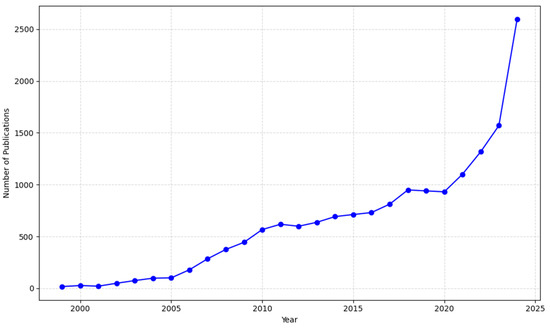
The line graph in Figure 1 illustrates the evolution of academic publications on energy security from 1999 to 2025, based on data retrieved from Scopus. The number of publications remained relatively low and stable throughout the early 2000s, with fewer than 100 articles per year. A noticeable upward trend began around 2006, accelerating significantly after 2010, reflecting growing global interest in energy security as geopolitical, environmental, and economic concerns intensified. The most dramatic surge occurred between 2020 and 2024, with annual publications jumping from around 750 to over 2500, a nearly threefold increase in just four years. It is characteristic that this period coincides with the Russian invasion of Ukraine and is certainly related to it. Russian aggression is a major factor in the existential insecurity that Europe is experiencing, not only in energy but also political and militarily.
Figure 1.
Publications per Year in Energy Security.
In terms of methodology, dealing with such a large and rapidly growing corpora of academic publications by manually screening and processing information and creating thematic classification by hand is time-consuming, potentially subjective, and difficult to scale. To deal with these limitations, Natural Language Processing (NLP) and machine learning techniques provide new opportunities, and topic modeling techniques in particular enable the automated identification of latent thematic structures within large collections of textual documents. The main idea of those techniques is to cluster documents based on semantic similarity.
This study adopts BERTopic, a novel topic modeling framework that combines transformer-based embeddings with dimensionality reduction and density-based clustering. BERTopic is designed to identify latent themes within large collections of text by capturing the semantic meaning of documents and clustering text with the same meaning. In each cluster, BERTopic extracts representative keywords that describe the underlying topic. As we will see, BERTopic has been successfully applied in recent systematic reviews to map complex and heterogeneous research domains, offering interpretable and reproducible results. Despite its growing adoption in other fields, its application to energy security research remains limited. The aim of this paper is to provide a structured and data-driven overview of the energy security literature using BERTopic, by analyzing a large corpus of academic abstracts retrieved from major bibliographic databases. Our goal is to identify dominant research themes and examine their relative importance. Specifically, this paper addresses the following research questions: (a) What are the main thematic clusters that characterize academic literature on energy security? (b) How have these research themes evolved over time? (c) Which structural dimensions, including policy orientation, technological emphasis, or regional scope, are revealed by the topic modeling results?
2. Literature Review
Although relatively new, BERTopic [10] has already been put into action; after all, the true value of a novel technology or methodology can only be measured in practice. This section demonstrates the remarkable breadth of the BERTopic model by reviewing its application in a variety of fields.
In the field of medical science and health care, Alryalat et al. [11] analyzed abstracts from four top-tier medical journals (Lancet, NEJM, JAMA, and BMJ) published between 2020 and 2022 by using BERTopic. In this study, 39 distinct research topics were identified with COVID-19 dominating medical literature followed by cancer treatment. Each journal tended to focus on certain topics. Abd-alrazaq et al. [12] used BERTopic to identify research gaps in COVID-19 literature and identified research gaps in 21 different areas, which were grouped into six principal topics. Li and Hu [13] applied BERTopic to a corpus of scholarly literature and a dataset of public opinion from the social media platform Sina Weibo to understand the differences in focus between academic experts and the general public in the medical field. The analysis revealed that academics and the public concentrate on different topics and exhibit distinct sentiment tendencies, providing valuable insights for science communication and policy.
In a systematic review of the literature on Large Language Models (LLMs) in education, BERTopic was used to identify key research themes and discovered a range of applications including those in teaching and learning, academic assessment, integrity, and, notably, specialized uses within medical education. This showcases the tool’s utility in synthesizing knowledge within rapidly emerging technological domains [14]. Banerjee and Pan [15] used BERTopic alongside LDA and bibliometric analysis, the old way to explore scholarly discourse surrounding linguistic diversity and decolonization in higher education in the Global South. The study reveals that BERTopic proved superior in generating coherent and interpretable topics, by providing a clear map of the key themes in this critical area of education policy research. Kimura [16] successfully identified 16 distinct topics and enabled researchers to track their diversification and prominence over time, revealing how themes like communication, leadership, and trust have evolved while new areas like agile development have emerged. Sánchez-Franco et al. [17] applied the BERTopic model to a dataset of 73,557 Airbnb guest reviews to identify key service features and preferences. The analysis successfully extracted topics from the user-generated content, allowing a comparison of experiences and priorities between guests staying in urban versus coastal destinations, offering valuable insights for hosts and the tourism industry.
Evidence from the field of technology, as BERTopic is being used to map and make sense of the emerging research landscapes, as in the study on Green and Sustainable AI by Raman et al. [18], which employed BERTopic in conjunction with traditional thematic analysis to chart the existing literature, has successfully identified broad thematic clusters, such as “Responsible AI for Sustainable Development,” as well as five specific emerging topics, including “Ethical Eco-Intelligence” and “Sustainable Neural Computing”. This study went beyond clustering by linking these findings to the United Nations Sustainable Development Goals and highlighting areas of focus for responsible innovation. Atzeni [19] applied BERTopic to analyze the interaction between Wi-Fi network technologies and machine learning and how it has developed throughout their lifetime.
Despite its advanced capabilities, BERTopic possesses several limitations that can impact the results of a literature analysis. A primary concern is that the generated clusters are often subject to noise, meaning that several studies assigned to a specific topic may not actually be relevant to that cluster [12]. Furthermore, the model frequently leaves a significant portion of the corpus unclassified, some studies have reported that approximately 20% to 43% of inputted abstracts remained unassigned as outliers [11,20]. As the algorithm typically assigns each document to only one topic, any secondary themes present in the source text are effectively lost. It is important to bear in mind that, while keyword extraction is automated, the final interpretation and labeling of topics requires manual intervention by domain experts, which introduces a degree of subjective bias. Finally, the model is highly sensitive to hyperparameters, such as the minimum cluster size, which often involves a trial-and-error process that can hinder the reproducibility of the research [16,21]. After all, BERTopic is a tool and it must be regarded as such when conducting research analysis.
3. Methodology
How does BERTopic work? Understanding the functionality and limitations of this technology is crucial for understanding its output and evaluating results. The procedure consists of four discrete but subsequent steps. It is important to keep in mind that BERTopic architecture is modular and that is its power and flexibility. This modular pipeline differentiates it from monolithic, probabilistic models of the past and enables its sophisticated, context-aware topic discovery capabilities.
The process begins by converting each document into a high-dimensional numerical vector or, as it is called in technical terminology, embedding. By turning text into numbers, a computer can understand the meaning of text and documents with similar meanings that are put close to one another in a high-dimensional space, providing a rich foundation for topic discovery [16]. This can be achieved with sentence transformers, which are neural network models specifically designed to convert sentences and paragraphs into fixed-length vector embeddings [22]. After conversion, it is crucial, for meaningful results, to reduce the dimensionality of the vectors. The key point of attention is to preserve data structure and the semantic relationships between documents, and this can be achieved with the Uniform Manifold Approximation and Projection (UMAP) algorithm [17,21].
The next step is clustering the reduced embeddings by applying the Hierarchical Density-Based Spatial Clustering of Applications with Noise (HDBSCAN) algorithm. HDBSCAN identifies dense areas in the data, grouping semantically similar documents into clusters that represent distinct topics. A key strength of this algorithm is its ability to identify and label documents that do not belong to any coherent cluster as “outliers”, which helps to avoid improper topic assignment and ensures that the resulting clusters are meaningful and distinct [16,23].
In the final step, a class-based variant of Term Frequency-Inverse Document Frequency, known as c-TF-IDF, is used to identify the most representative keywords for each document cluster. The c-TF-IDF algorithm treats all documents within a single cluster as one large document and compares term frequencies across these aggregated clusters. This highlights words that are not only frequent within a topic but also uniquely characteristic of it, generating a clear and interpretable set of keywords to define each theme [10,16,24].
This methodology presents several key advantages over traditional topic models like LDA. Most notably, BERTopic’s reliance on contextual embeddings allows it to capture deep semantic information that bag-of-words models miss [13,16]. Furthermore, by using the HDBSCAN clustering algorithm, BERTopic does not require researchers to pre-specify the number of topics, allowing the model to discover the natural thematic structure of the data. This feature represents a fundamental methodological shift from “confirmatory” models like LDA, where researchers must impose a thematic structure, to an “exploratory” paradigm where the model discovers the inherent structure of the data organically. Studies, as we already have mentioned, consistently demonstrate that these features result in superior performance, generating topics that are more coherent, interpretable, and meaningful than those produced by LDA [13]. This advanced framework is not only being applied to analyze diverse subjects but is also being used to innovate the very process of scholarly review and the energy security corpus has the potential and is suitable for both applications.
4. Data
Corpus data was retrieved from the Scopus database, one of the most popular and accurate citation databases for academic research, on 15 December 2025. The search engine was queried with the general term “energy security” inside the titles, abstracts, and keywords field. Although the Scopus database offers many download options, the download limit (20,000 records) has forced us, in order to avoid merging files, to narrow the initial search to documents in the English language and document types such as articles, conference papers, books, book chapters, and reviews, which outputs a total of 19,155 records for the period 1999–2025. Table 1 illustrates the distribution of these publications across different document types. Journals and conference papers represent the dominant dissemination channel with 55% and 22%, while book chapters account for 12% and the remaining 11% are reviews and books.
Table 1.
Document types in sample and their percentages.
Initially, the analysis resulted in 45 topics, which is too large to be meaningfully analyzed and interpreted within the scope of a single presentation. The energy security corpus is an excessively large and heterogeneous dataset, and such a large corpus increases noise and dilutes thematic coherence. In order to avoid this, we found that restricting the sample to journal articles improves comparability and quality control, as journal articles generally undergo more rigorous peer review than other document types, ensuring greater methodological consistency and reliability across the dataset. We also applied a citation threshold of more than 10 citations as a proxy for scholarly impact and visibility, allowing the analysis to focus on publications that have demonstrably contributed to the academic debate on energy security. This reduces the influence of marginal, redundant, or very recent papers that may not yet have had time to accumulate citations. The reduced sample of 4569 publications allows for clearer topic extraction, more robust clustering, and more interpretable results, while still retaining a sufficiently large dataset to ensure statistical validity and the representativeness of the field.
5. BERTopic Modeling Results
After running the BERTopic algorithm for the energy security literature corpus, the model identified 14 distinct clusters, labeled from Topics 0 to Topic 13 plus one outlier category labeled Topic −1. In Table 2 we present the topics generated and number of documents on each topic. The complete topic distribution reveals, as expected, significant variation in research attention across different energy security dimensions. Each topic name is generated by BERTopic according to keyword frequency.
Table 2.
BERTopic clusters and topic counts.
A substantial share of documents (29.2%) are assigned to Topic −1, which in BERTopic corresponds to outliers or weakly clustered documents. These topics consists of documents that the algorithm could not assign to a specific topic because they did not belong to a region of a sufficiently high density. This percentage is quite common in empirical research [11,19]. Topic −1 is very important for the algorithm as it prevents improper topic assignments and can be adjusted by the proper setting of the parameters of the algorithm, but usually, as in our case they leave with the default setting of a minimum cluster size of 60 records.
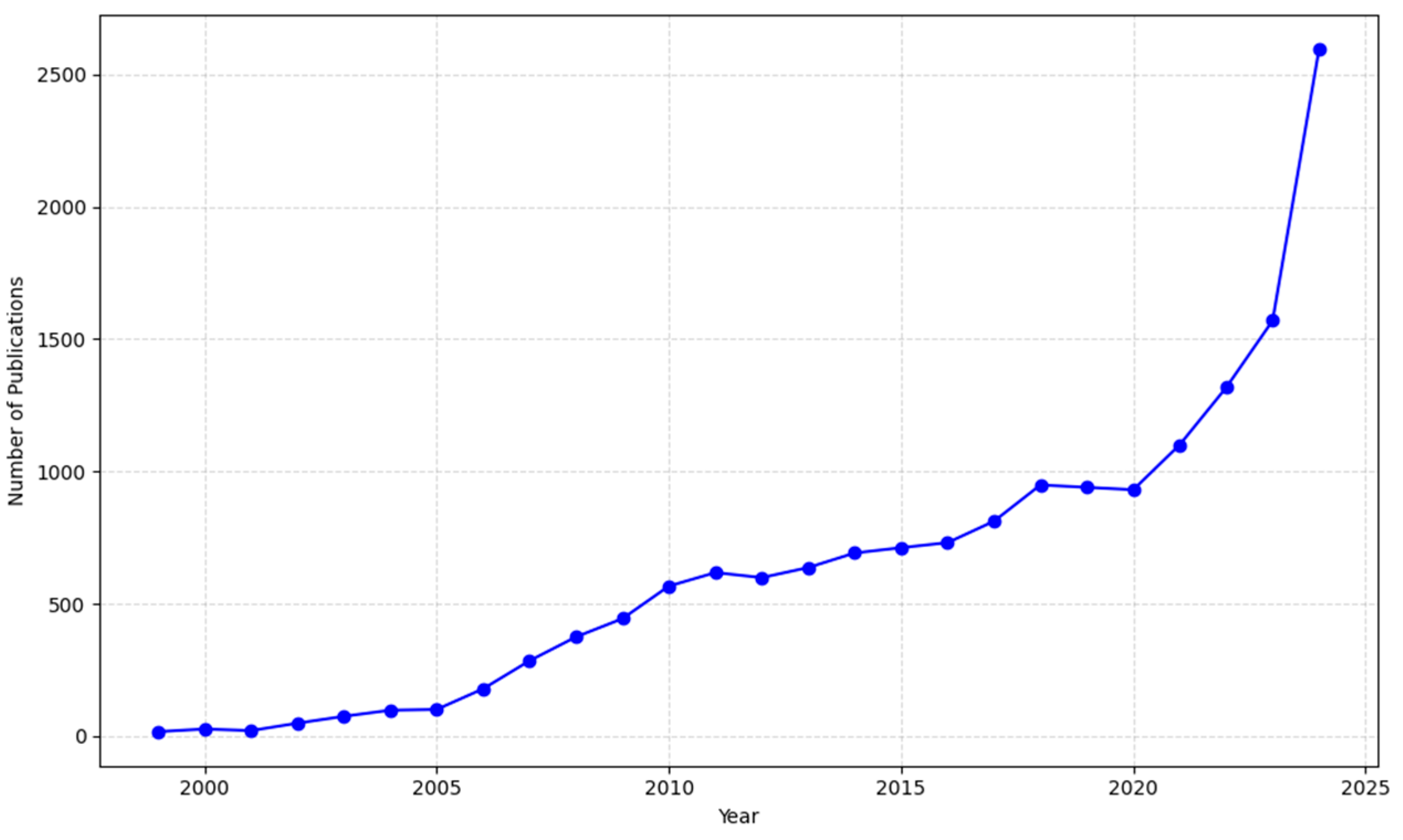
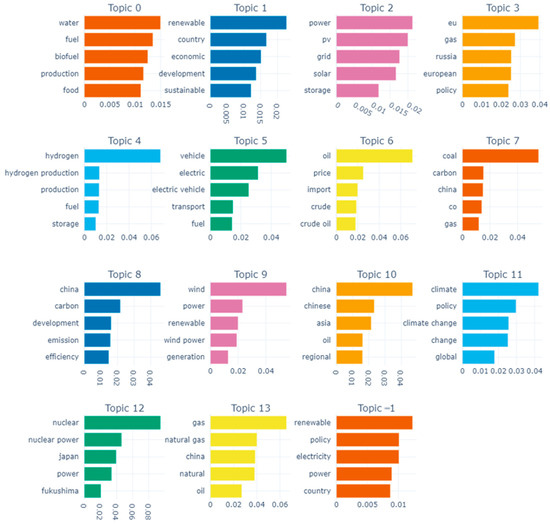
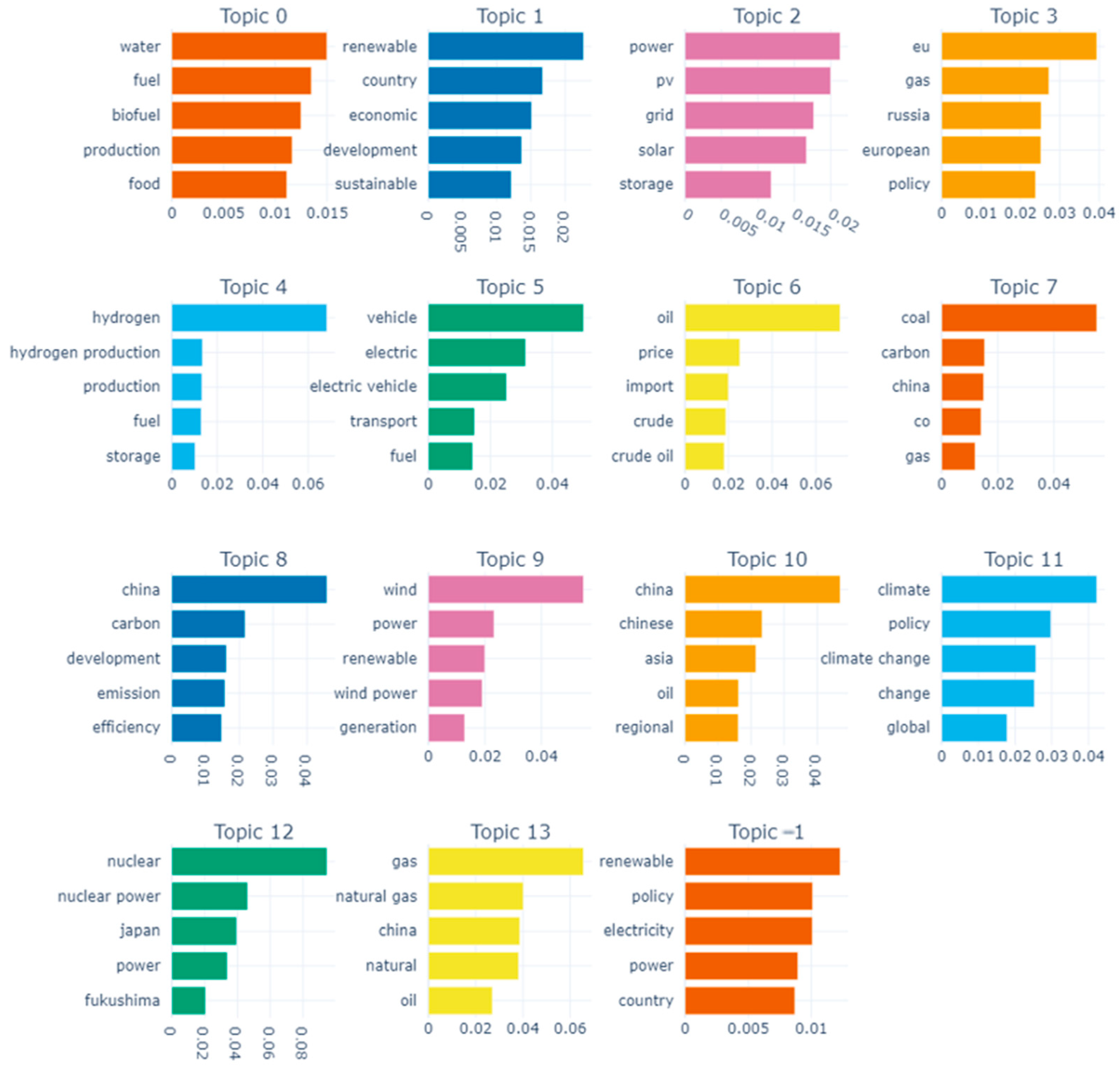
Most of the topics are easily understandable by looking at their most representative terms (Figure 2). The topic labeled “water fuel biofuel production” is the most popular topic and accounts for 22.41%. Research interest also shows a strong focus on the intersection of sustainability and the economy with renewables and economic development accounting for 9.54%, solar PV and grids attracting 5.84% of attention, and an additional 2.67% from wind power highlights the central role of renewable energy sources in achieving energy security. At the same time, traditional energy security concerns still carry significant weight, as geopolitical dependencies and fossil fuel market volatility are visible in topics like EU–Russia gas relations 5.03%, oil imports 3.61%, and China’s reliance on coal and gas which account for 3.41% and 1.38% respectively. A relatively significant portion of attention goes to alternative and, most promising, hydrogen production (4.31%) and nuclear power (1.53%). Finally, the electrification of transport accounts for 3.61%, and climate policy and carbon development account for 2.69% and 2.25%.
Figure 2.
Most relevant terms.
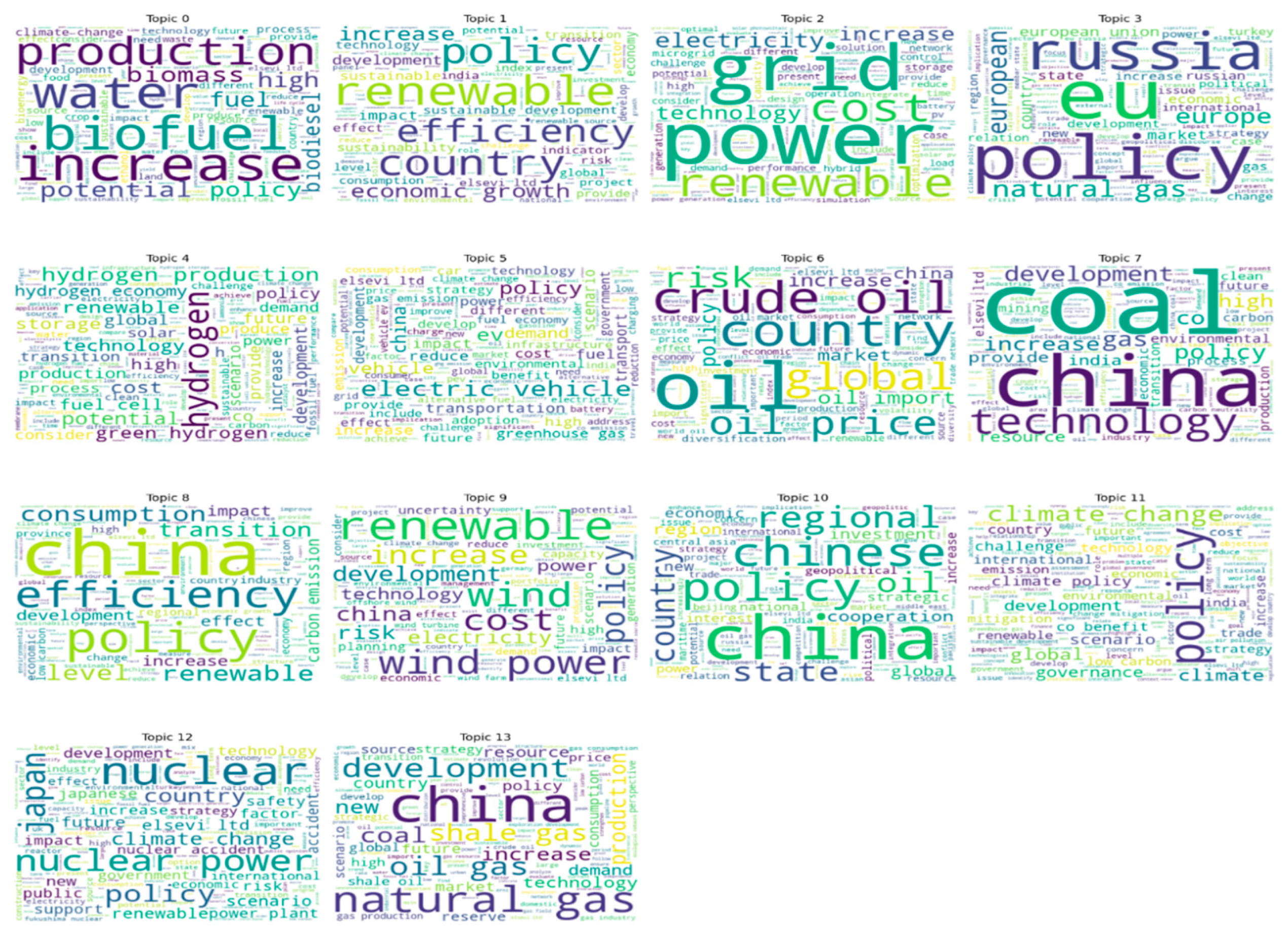
A visualization of the BERTopic model is presented in Figure 2 and Figure 3, which is very useful for understanding the thematic structure of the energy security corpus as it allows us to appreciate the clarity of the obtained results. In Figure 2 each topic is represented by the most representative keywords from which the labels are formed, and most of the topics are easily understandable. Figure 3 is an equivalent word cloud representation.
Figure 3.
Topics, Word cloud representation.
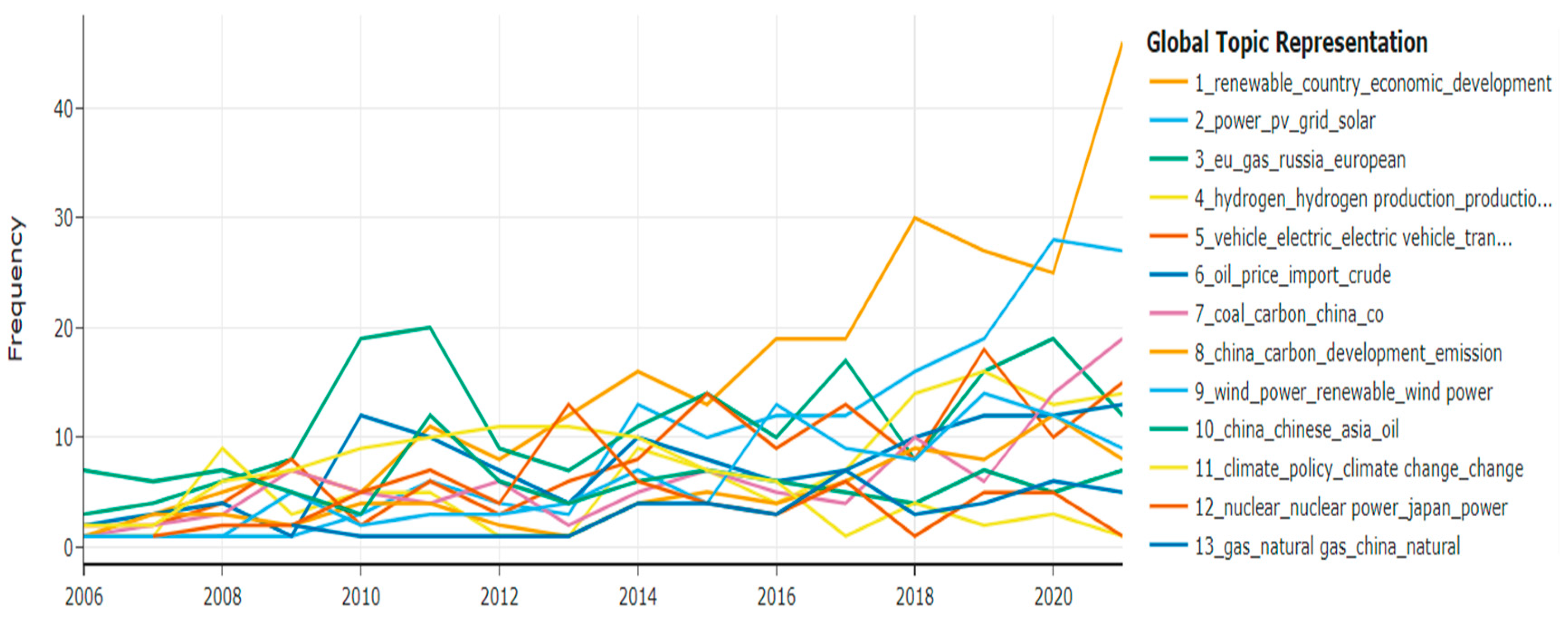
An extremely useful insight into the energy security corpus in relation to the topics and thematic units we examined previously has to do with the evolution of these thematic units over time. BERTopic provides us with this possibility, and a related representation is in Figure 4 below. This figure helps us understand how each thematic unit was shaped over time. The convergence of multiple lines in the latter half of the decade highlights a growing interdisciplinary complexity in the field. Certain topics receive considerable attention, while others gradually lose their significance over time. Some subjects also display seasonal trends, often reflecting changes in economic or political processes.
Figure 4.
Topics over time.
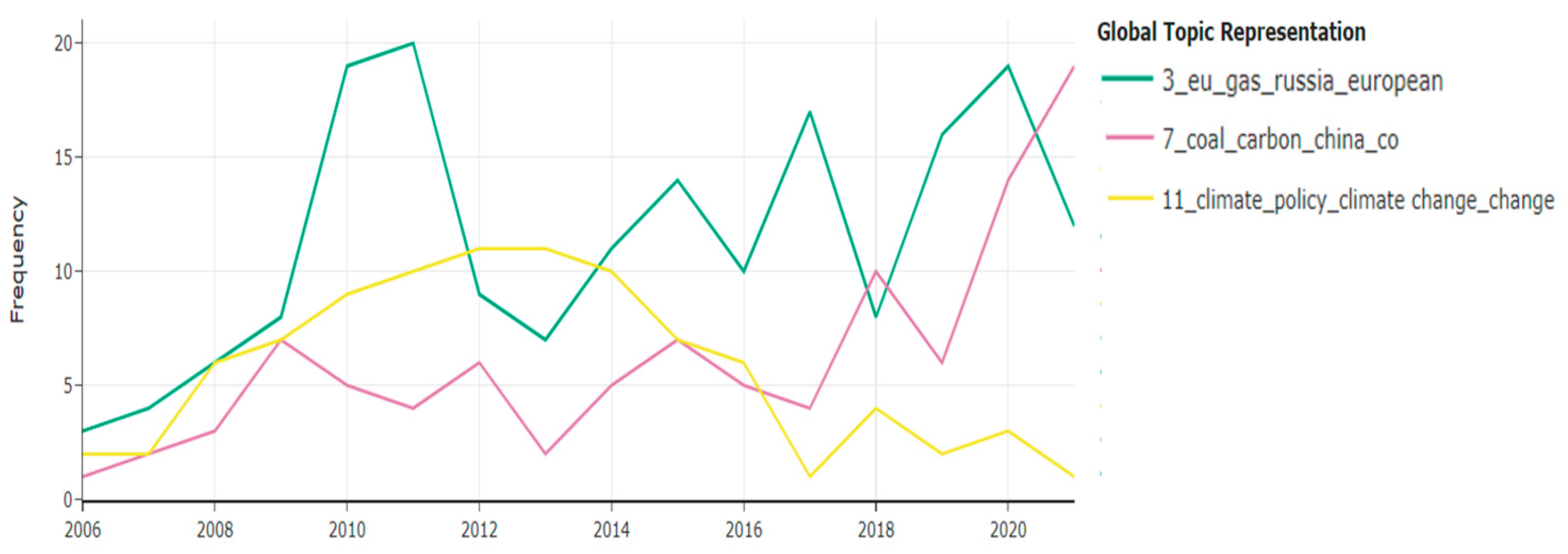
In Figure 5 we isolate some topics in order to better understand the diagram. We have chosen, not randomly, three specific thematic sections. Topic 3 “EU, gas, Russia” (green line) shows significant peaks around 2011 and 2019, likely corresponding to regional supply crises and geopolitical turmoil in EU–Russia relations, initially with the Crimea crisis and then with the Russian invasion of Ukraine. The most prominent trend is the explosive rise of Topic 7 “China, carbon, development, emission” (purple line), which experiences a sharp upward trajectory beginning around 2016 and peaking in 2025. Finally, Topic 11, which relates to climate change and policy (yellow line), is showing less and less relevance to energy security, and especially after 2014 the trend has been declining. It seems that abstract environmental goals are being replaced by more tangible, resource-specific strategies.
Figure 5.
Topics over time (selected topic).
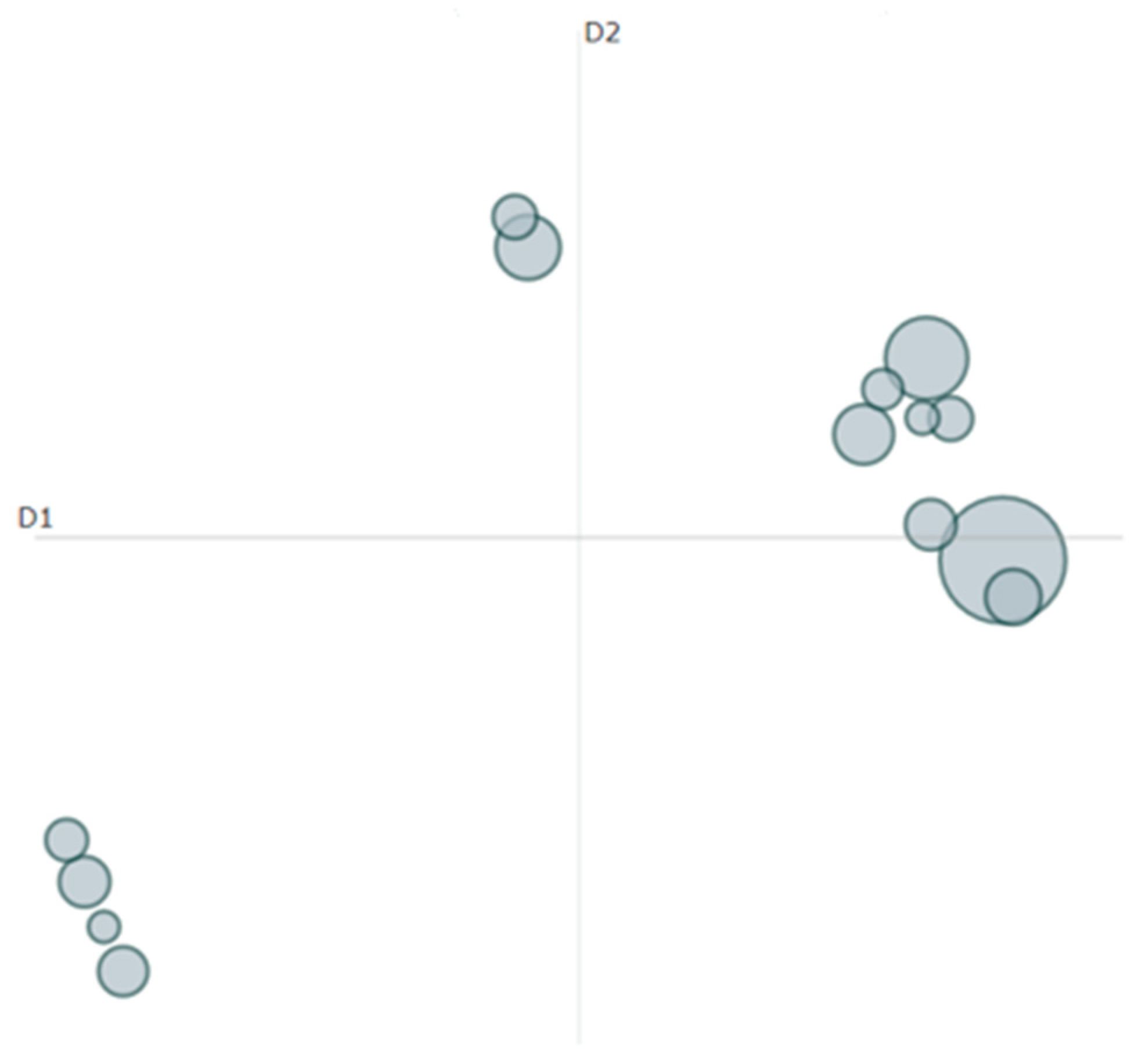
As we suspect from investigating the term appearance, there is not always a clear and absolute thematic separation between the thematic topics as some terms appear in more than one subject area. Despite the confusion that it may cause, the existence of those terms is not necessarily negative as they create the necessary links for the interconnection of these separate topics. By further inspecting those terms and their relative importance in each topic we will be able to shape wider thematic fields, as it is obvious that in many cases there is a relative overlap of concepts or, as we call it, conceptual association. This semantic relationship is presented visually in Figure 6, an Intertopic Distance Map generated via BERTopic. The two-dimensional space (D1 and D2) is derived from a dimensionality reduction in topic embeddings, preserving relative distances to reflect topical similarity. In simple words, topics positioned closer together are semantically more related, while those farther apart represent distinct thematic domains. Based on the Intertopic Distance Map, we categorize topics into general categories, shown in Table 3.
Figure 6.
Intertopic Distance Map.
Table 3.
BERTopic analysis reveals the thematic structure of energy security research.
The inspection of the Intertopic Distance Map reveals four distinct clusters organized around different energy resources, and those have been used to formulate Table 3, which represents the general thematic structure of the energy security corpus; those thematics are renewables, fossil fuels, and geopolitics and policy and transition.
The first thematic cluster, labeled renewables, consists of two distinct topics most technically related to renewable energy sources. Topic 2 (Power, PV, Grid, Solar, Storage) encompassed 267 documents focusing on photovoltaic systems (weight: 0.020), grid integration, energy storage, and microgrid applications. Topic 9 (Wind power, Renewable, Risk) contains 122 documents examining wind energy generation, with “wind power” showing a weight of 0.055. The appearance of “risk” (0.0092) as prominent term in this topic suggests that research attention focuses on the challenges of variable renewable generation, as renewables depend on weather conditions and thus the need for storing energy for use in period of high demand.
Four topics are related to fossil fuels and form the second cluster. Topic 6 (Oil, Price, Import, Crude, Risk) with 165 documents is examining crude oil markets, trade dynamics, and price volatility, with “oil” showing the highest keyword weight (0.071). Topic 7 (Coal, Carbon, China, Mining) with 156 documents addresses coal utilization, carbon management, and mining, particularly for China. Topic 10 (China, Chinese, Asia, Oil) is very similar and allocates 112 documents which focus on China’s role in regional energy cooperation and investment with the terms “Chinese” (0.023) and “Asia” (0.021). Topic 13 (Gas, Natural gas, China, Shale) with 63 documents concentrates on natural gas development and shale gas exploration, again with emphasis on China. The term “gas” has a notably high weight of 0.066, which indicates strong thematic coherence.
The third cluster focuses on geopolitical issues and politics. Topic 1 (Renewable, Economic, Sustainable) with 436 documents represents integrative research linking energy transitions to broader development goals. Topic 11 (Climate, Policy, Governance, Scenario) with 103 documents represents the intersection of energy security and climate governance, with “climate” (0.042) and “policy” (0.030) as dominant terms. The appearance of “governance” (0.017) and “scenario” (0.013) indicate research framing energy security within climate action frameworks and exploring future pathways. Topic 3 (EU, Gas, Russia, Policy) comprising 230 documents addresses European energy security concerns, with “EU” showing the highest keyword weight (0.039). The prominence of “Russia” (0.025), “gas” (0.027), and “policy” (0.024) reflects research examining European dependence on Russian gas supplies. Topic 8 (China, Carbon, Development, Emission) with 123 documents focuses specifically on China’s carbon emissions and efficiency policies, with “China” weighted at 0.046. Topic 12 (Nuclear, Japan, Fukushima, Accident) has 70 documents.
The fourth cluster consists of versatile topics concerning transition. Topic 0 (Water, Biofuel, Biodiesel, Food) is the largest identified cluster, integrating concerns across the water–energy–food nexus. Topic 4 (Hydrogen, Production, Fuel, Green), comprising 197 documents, exhibits the strongest keyword concentration of any topic, with “hydrogen” weighted at 0.068. Topic 5 (Vehicle, Electric, Transport, Policy) contains 165 documents addressing the transportation sector’s energy transition, with “vehicle” (0.050) and “electric” (0.031) showing strong weights. The appearance of “policy” (0.012) alongside technical terms indicates research attention to governance mechanisms supporting electrification.
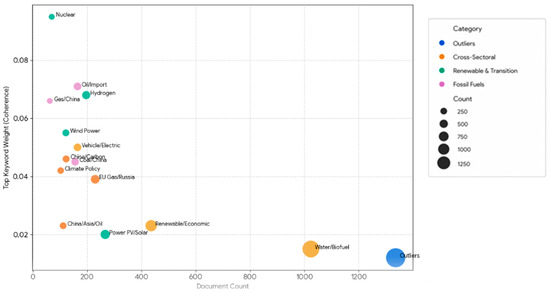
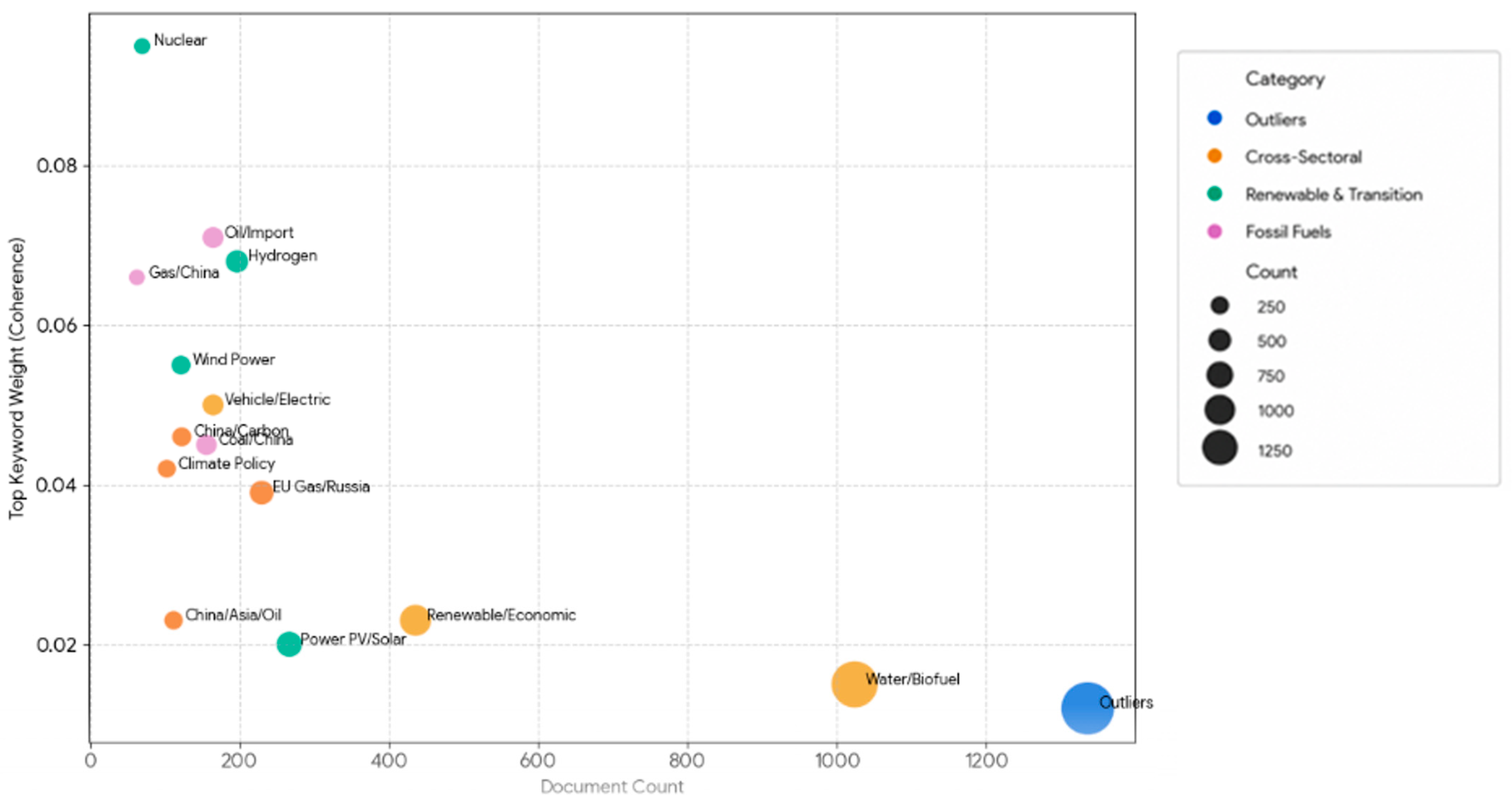
Another way to inspect coherence is in Figure 7, where the generated Coherence vs. Volume scatter plot provides a sophisticated mapping of the energy security landscape, revealing a clear inverse relationship between document frequency and thematic specificity. On the vertical axis, keyword weight serves as a proxy for topic coherence. Topics positioned at the top of the graph, such as Nuclear (Topic 12) and Oil (Topic 6), represent highly specialized domains, with more technical vocabulary, which allows the model to cluster them more precisely despite their relatively lower document counts.
Figure 7.
Coherence vs. Volume scatter plot.
Conversely, as we move toward the right side of the horizontal axis, we encounter the high-volume pillars of the corpus: Biofuels (Topic 0) and Outliers (Topic −1). Their position in the lower-right quadrant indicates that while these subjects dominate the literature in sheer quantity, they are linguistically “diffuse.” This suggests that the discourse surrounding biofuels and general renewable policy is inherently interdisciplinary, often overlapping with economics, food security, and water management. This prevents any single keyword from achieving the dominance seen in the nuclear or hydrogen clusters. Finally, the Geopolitics and Policy topics (color-coded in the mid-range) act as a bridge, maintaining moderate coherence while representing substantial research volume. This visualization effectively indicates that research in energy security follows two major roadmaps, one more technical and focused on technology, and a broad, more systems-level investigation that integrates multiple socio-economic variables.
6. Conclusions
Energy security research has undergone a structural transformation over the past two decades, evolving from a relatively narrow focus on fossil fuel supply reliability into a sprawling, interdisciplinary field encompassing technological innovation, geopolitical rivalry, climate mitigation, economic development, and resource system interconnections. There is no profound reason to believe that this trend will not keep rising, as the dramatic surge in publications between 2020 and 2025 suggests that energy security will remain at the forefront of academic inquiry and policy debate for the next few years. At the moment, the war in Ukraine does not seem to be coming to a sustainable end, despite entering the fourth year of a conflict that changed the shape of European and global history. The world’s need for energy and limited resources are expected to intensify energy competition and exacerbate energy insecurity. Our BERTopic analysis reveals a field that is simultaneously fragmented and divided into specialized technical domains while increasingly recognizing the systemic nature of energy security challenges. As the global energy system undergoes its most significant transformation in a century, scholars face the challenge of producing research that is simultaneously rigorous and relevant, specialized and integrative, theoretically sophisticated and practically useful.
This study demonstrates that machine learning approaches like BERTopic offer powerful tools for navigating and understanding rapidly expanding research domains. As academic knowledge production accelerates across disciplines, such methods will become increasingly essential for systematic review, knowledge synthesis, and identifying productive directions for future inquiry. The energy security field’s evolution exemplifies both the opportunities and challenges of contemporary scholarship in addressing humanity’s most pressing challenges. Ultimately, our analysis suggests that energy security research has successfully evolved to match the complexity of its subject matter. Whether this intellectual diversity represents productive pluralism or problematic fragmentation remains an open question, perhaps one that future research, informed by continued systematic mapping and critical assessment, must address.
The BERTopic analysis, despite considerable heterogeneity, reveals that energy security research is characterized by substantial attention to renewable energy technologies and transitions, with distinct research communities organized around specific technologies rather than generic renewables. In addition, the emerging integration of energy security with climate policy and sustainable development frameworks suggests the focus on climate change remains a major concern. As expected, there is significant geographic concentration, particularly in China and Europe, and important, persistent research on conventional energy security concerns, though at lower volumes than renewable-focused work. The interest in fossil fuels, especially oil and natural gas, remains present and active in academic literature.
Author Contributions
Conceptualization, P.K. and A.A.; methodology, P.K.; software, P.K.; validation, P.K. and A.A.; formal analysis, P.K.; investigation, P.K. and A.A.; resources, P.K.; data curation, P.K.; writing—original draft preparation, P.K.; writing—review and editing, A.A.; visualization, P.K.; supervision, A.A.; project administration, A.A.; funding acquisition, P.K. and A.A. All authors have read and agreed to the published version of the manuscript.
Funding
This research received no external funding.
Institutional Review Board Statement
Not applicable.
Informed Consent Statement
Not applicable.
Data Availability Statement
The data used in this study were obtained from the Scopus database. The search strategy and data collection procedures are described in the manuscript to enable replication of the study.
Conflicts of Interest
The authors declare no conflicts of interest.
References
- Wang, Q.; Zhou, Q. A framework for evaluating global national energy security. Appl. Energy 2017, 188, 19–31. [Google Scholar] [CrossRef] [Scilit]
- Sovacool, B.K. (Ed.) The Routledge Handbook of Energy Security; Routledge: London, UK, 2010. [Google Scholar] [CrossRef] [Scilit]
- Winzer, C. Conceptualizing energy security. Energy Policy 2012, 46, 36–48. [Google Scholar] [CrossRef] [Scilit]
- Yergin, D. Ensuring Energy Security. Foreign Aff. 2006, 85, 69–82. [Google Scholar] [CrossRef] [Scilit]
- Tansel Tugcu, C.; Menegaki, A.N. The impact of renewable energy generation on energy security: Evidence from the G7 countries. Gondwana Res. 2024, 125, 253–265. [Google Scholar] [CrossRef] [Scilit]
- Aisyah, N.; Sasongko, N.; Nasruddin, A.; Ariyadi, H.M. Development of Energy Security Definition and Indexes for Sustainable Future: A Systematic Literature Review. J. Phys. Conf. Ser. 2024, 2828, 012002. [Google Scholar] [CrossRef] [Scilit]
- Kraft, J.; Kraft, A. On the Relationship Between Energy and GNP. J. Energy Dev. 1978, 3, 401–403. [Google Scholar]
- Ang, B.W.; Choong, W.L.; Ng, T.S. Energy security: Definitions, dimensions and indexes. Renew. Sustain. Energy Rev. 2015, 42, 1077–1093. [Google Scholar] [CrossRef] [Scilit]
- Azzuni, A.; Breyer, C. Definitions and dimensions of energy security: A literature review. WIREs Energy Environ. 2018, 7, e268. [Google Scholar] [CrossRef] [Scilit]
- Grootendorst, M. BERTopic: Neural topic modeling with a class-based TF-IDF procedure. arXiv 2022. [Google Scholar] [CrossRef] [Scilit]
- Alryalat, S.A.; Qasem, A.; Albdour, K.; Rawashdeh, B. Assessment of Topics Published in Leading Medical Journals Using Natural Language Processing. High Yield Med. Rev. 2023, 1, 1–8. [Google Scholar] [CrossRef] [Scilit]
- Abd-alrazaq, A. Machine Learning–Based Approach for Identifying Research Gaps: COVID-19 as a Case Study. JMIR Form. Res. 2024, 8, e49411. [Google Scholar] [CrossRef] [Scilit] [PubMed]
- Li, C.; Hu, X. Medical artificial intelligence in scholarly and public perspective: BERTopic-based analysis of topic-sentiment collaborative mining. Data Sci. Informetr. 2025, 5, 33–42. [Google Scholar] [CrossRef] [Scilit]
- Cibu, B.-R.; Crăciun, L.; Molănescu, A.G.; Cotfas, L.-A. Exploring the Educational Applications of Large Language Models: A Systematic Review and Topic Analysis. Electronics 2025, 14, 4683. [Google Scholar] [CrossRef] [Scilit]
- Banerjee, S.; Pan, A. From Colonial Legacies to Linguistic Inclusion: A BERTopic Enhanced Bibliometric Insight Into Global South Higher Education. IEEE Access 2024, 12, 117418–117435. [Google Scholar] [CrossRef] [Scilit]
- Kimura, T. Virtual Teams: A Smart Literature Review of Four Decades of Research. Hum. Behav. Emerg. Technol. 2024, 2024, 8373370. [Google Scholar] [CrossRef] [Scilit]
- Sánchez-Franco, M.J.; Rey-Moreno, M. Do travelers’ reviews depend on the destination? An analysis in coastal and urban peer-to-peer lodgings. Psychol. Mark. 2022, 39, 441–459. [Google Scholar] [CrossRef] [Scilit]
- Raman, R.; Pattnaik, D.; Lathabai, H.H.; Kumar, C.; Govindan, K.; Nedungadi, P. Green and sustainable AI research: An integrated thematic and topic modeling analysis. J. Big Data 2024, 11, 55. [Google Scholar] [CrossRef] [Scilit]
- Atzeni, D.; Bacciu, D.; Mazzei, D.; Prencipe, G. A Systematic Review of Wi-Fi and Machine Learning Integration with Topic Modeling Techniques. Sensors 2022, 22, 4925. [Google Scholar] [CrossRef] [Scilit] [PubMed]
- Kukushkin, K.; Ryabov, Y.; Borovkov, A. Digital Twins: A Systematic Literature Review Based on Data Analysis and Topic Modeling. Data 2022, 7, 173. [Google Scholar] [CrossRef] [Scilit]
- Gana, B.; Leiva-Araos, A.; Allende-Cid, H.; García, J. Leveraging LLMs for Efficient Topic Reviews. Appl. Sci. 2024, 14, 7675. [Google Scholar] [CrossRef] [Scilit]
- Reimers, N.; Gurevych, I. Sentence-BERT: Sentence Embeddings using Siamese BERT-Networks. arXiv 2019. [Google Scholar] [CrossRef] [Scilit]
- Galli, C.; Cusano, C.; Meleti, M.; Donos, N.; Calciolari, E. Topic Modeling for Faster Literature Screening Using Transformer-Based Embeddings. Metrics 2024, 1, 2. [Google Scholar] [CrossRef] [Scilit]
- Xia, H.; Muskat, B.; Karl, M.; Li, G.; Law, R. Destination competitiveness research over the past three decades: A computational literature review using topic modelling. J. Travel Tour. Mark. 2024, 41, 726–742. [Google Scholar] [CrossRef] [Scilit]

Disclaimer/Publisher’s Note: The statements, opinions and data contained in all publications are solely those of the individual author(s) and contributor(s) and not of MDPI and/or the editor(s). MDPI and/or the editor(s) disclaim responsibility for any injury to people or property resulting from any ideas, methods, instructions or products referred to in the content. |
© 2026 by the authors. Licensee MDPI, Basel, Switzerland. This article is an open access article distributed under the terms and conditions of the Creative Commons Attribution (CC BY) license.