


Abstract
Crab traps are commonly used tools in both commercial and recreational fisheries to capture crabs through baited enclosures. However, the existing conventional designs often suffer from reduced catch efficiency, high bycatch rates, and rapid bait deterioration, which undermine their effectiveness and environmental sustainability. This study evaluated the effectiveness of an innovative crab trap setup incorporating an attractor device, designed not only to enhance crab catch rates but also to serve as a localized laboratory simulator for Outcome-Based Education (OBE) in Industrial Arts. Utilizing a developmental research design, this study was conducted in Barangay Caloc-an, Magallanes, Agusan del Norte. The research involved commercial and recreational crab fishermen, as well as electrical and electronics experts, to assist in setting up and evaluating the innovative crab trap device. The key variables examined included the type of attractor device used, the dispersal rate of the liquid bait, and the trap’s overall effectiveness in capturing crabs. Four different bait dispersal intervals were tested: 40 min, 30 min, 10 min, and 30 s. Results showed that shorter dispersal intervals significantly increased catch rates, with the 30 s interval yielding the highest and most consistent results. The developmental research framework enabled iterative testing and refinement of the trap system, allowing for continuous improvement of its components. Importantly, this study’s broader educational aim was to provide students with a practical, culturally relevant, and outcome-focused learning experience, where technical skills and scientific inquiry are applied in real-world contexts. The crab trap device served not only as a fishing tool but also as a simulated laboratory apparatus for Industrial Arts instruction, fostering skill development and engagement. Overall, this study contributes valuable insights into both fisheries management and educational innovation, demonstrating that a well-designed crab trap device can support more effective and sustainable fishing practices while also enhancing Industrial Arts education through hands-on, localized learning experiences.
1. Introduction
Crab traps are widely used tools in both commercial and recreational fisheries, designed to efficiently capture crabs using baited enclosures. These traps typically consist of baited enclosures that attract crabs and guide them through funnel-shaped entrances into the trap, where escape becomes difficult. Traditional traps, however, often face challenges such as low catch efficiency, high rates of bycatch, and rapid bait degradation, which reduce their effectiveness and environmental sustainability [1]. To address these issues, modern innovations have introduced attractor devices—such as LED lights, chemical scent diffusers, and structural enhancements—to lure target species more effectively while minimizing harm to non-target organisms [2]. These enhancements are particularly relevant in improving selectivity and reducing ecological disturbance, aligning well with sustainable fishing practices.
Recent studies show that attractor devices can significantly improve crab catch rates by increasing the lure’s range and maintaining the crab’s interest for longer durations [3]. For example, bait dispersal systems with shorter release intervals have proven more effective in drawing crabs to traps more consistently [4]. Visual cues, such as flashing blue or green LEDs, have also shown promise in turbid water environments by increasing trap visibility [5]. Despite these advancements, the field lacks localized tools for training and testing trap designs, particularly in educational settings. This is where outcome-based laboratory simulators can play a crucial role by bridging the gap between theory and practice through hands-on learning experiences.
The development of a localized laboratory simulator for an innovative crab trap setup offers a unique educational solution. It provides learners, especially students in Industrial Arts and fisheries technology, with a controlled environment to test different trap configurations, bait types, and attractor technologies. This approach supports Outcome-Based Education by allowing students to assess the effectiveness of each variable in real time, facilitating critical thinking and innovation. Moreover, such a simulator promotes community engagement, especially in coastal areas like Barangay Caloc-an, Magallanes, where crab fishing is a key livelihood. By equipping learners with practical, research-based knowledge, the simulator enhances both educational quality and community resilience in resource-dependent regions.
This study aligns with several United Nations Sustainable Development Goals (SDGs), particularly SDG 4 (Quality Education), SDG 9 (Industry, Innovation and Infrastructure), SDG 12 (Responsible Consumption and Production), and SDG 14 (Life Below Water). By integrating real-world ecological challenges into the curriculum, the simulator promotes lifelong learning and skill development. It encourages sustainable fishing practices by minimizing bycatch and resource waste and fosters marine conservation through evidence-based innovations. In doing so, this study not only advances academic understanding but also contributes to environmental stewardship and sustainable livelihood development in coastal communities.
2. Methodology
The researchers employed a developmental research method to design and refine an innovative crab trap setup with an attractor device. This setup was intended to enhance crab catch rates and serve as a localized laboratory simulator for Industrial Arts education. The developed device included a 12v DC battery, a timer, a water pump, recycled plastic bottles, nylon, a fuse, a green screen net, a tubular acrylic cable tie for connecting wires, and a hose. The automated crab trap system consisted of a 12-volt battery-powered mechanism that controlled the timer, the pump, and other electronic components. The timer coordinated the activation of the pump, bait deployment, and scent release to ensure optimal attractor performance. The pump generated water currents to draw crabs into the trap, refreshed the water, and facilitated scent dispersion to maximize attraction. This study was conducted in Barangay Caloc-an, Magallanes, Agusan del Norte, within the Caraga Region of the Philippines, a coastal area known for its rich marine biodiversity and active crab fishing industry. The participants of this study were Industrial Arts students. The Industrial Arts education curriculum includes courses in Agri-Fishery, which inspired the researchers to develop this innovation.
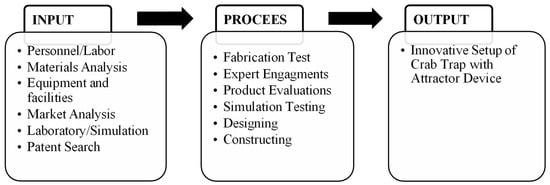
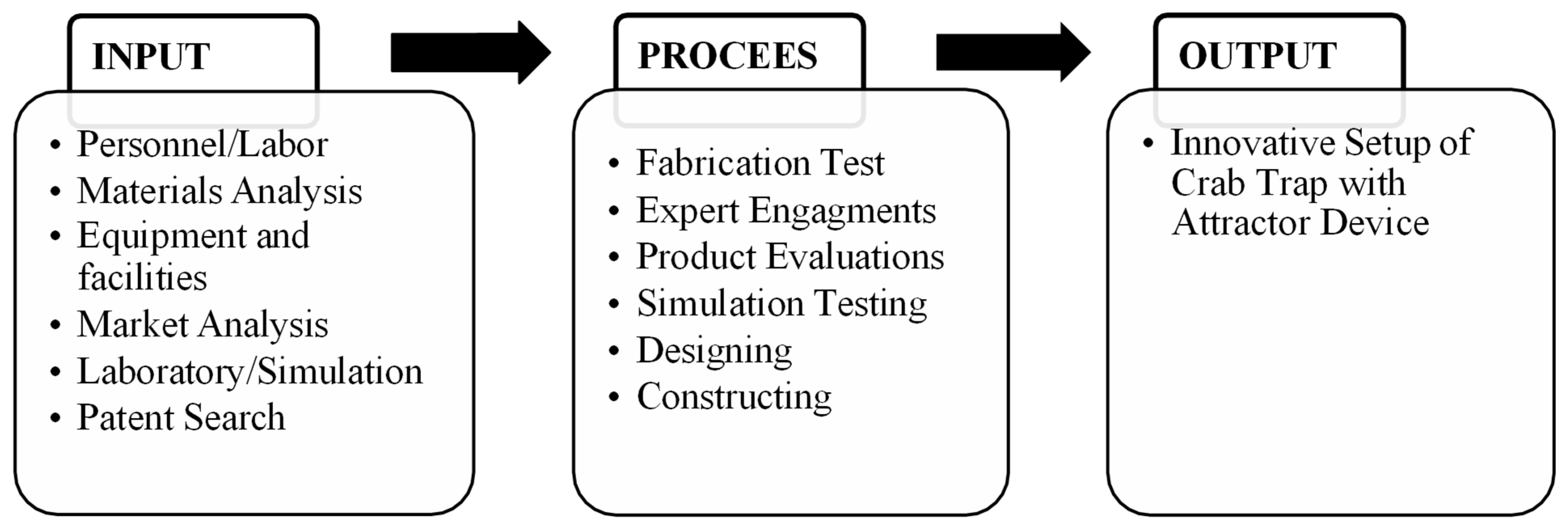
Figure 1 shows the project development process for constructing the innovative crab trap with attractor device, illustrating the inputs, processes, and expected output of the study.
Figure 1.
Project development process in constructing the project.
Figure 2 shows the overall picture and detailed views of the innovative crab trap with attractor device, illustrating its structural design, dimensions, and component layout.
Figure 2.
Overall picture of the project.
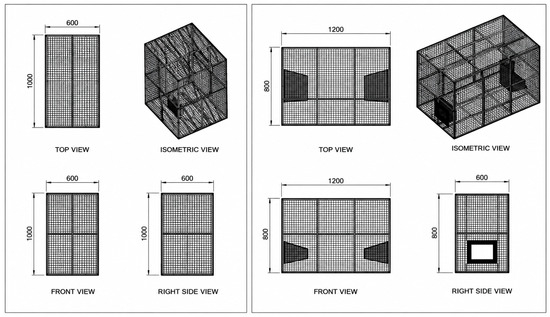
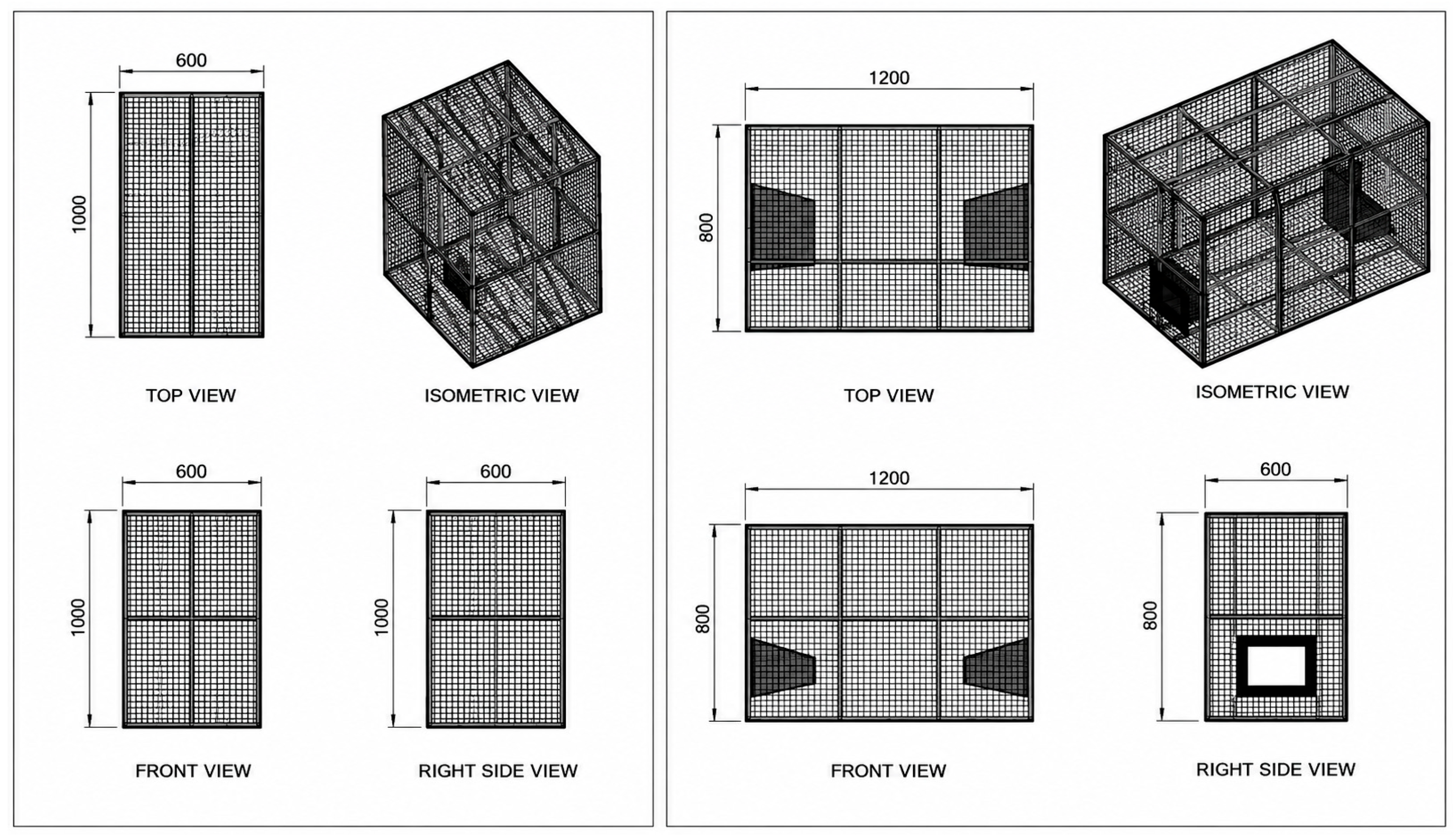
Figure 3 shows the orthographic views of the innovative crab trap with attractor device, illustrating its dimensions and overall structural design.
Figure 3.
Orthographic view of the project.
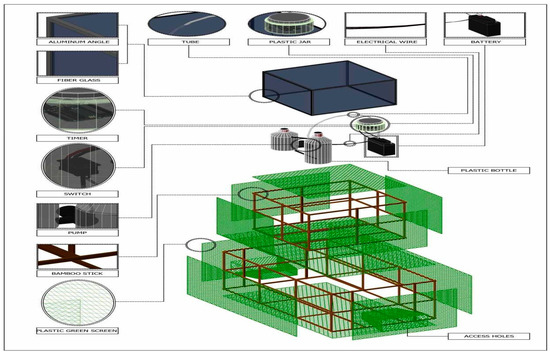
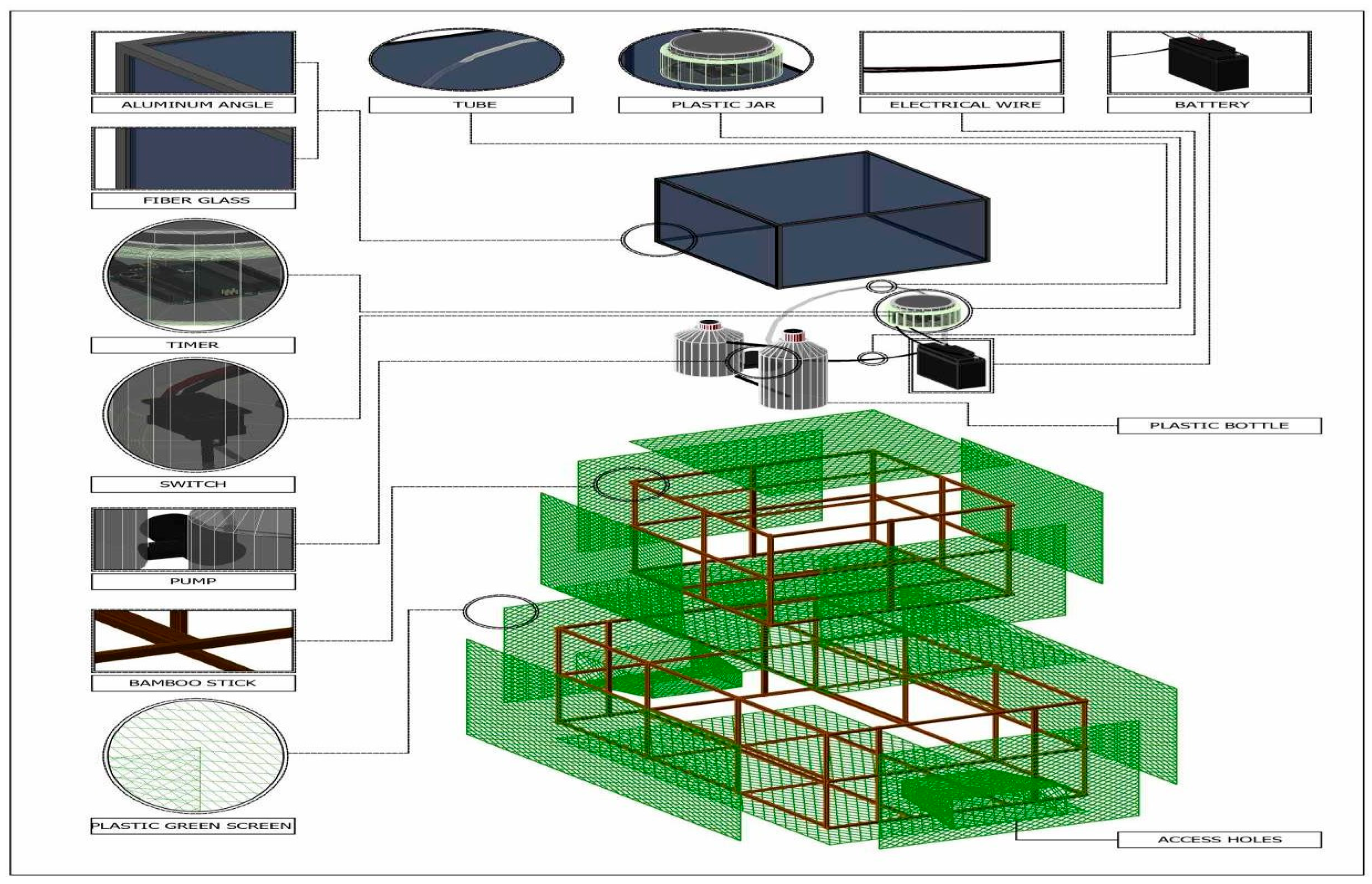
Figure 4 shows the exploded view of the innovative crab trap with attractor device, highlighting the major components, materials, and their assembly within the mechanism.
Figure 4.
Exploded view of the mechanism.
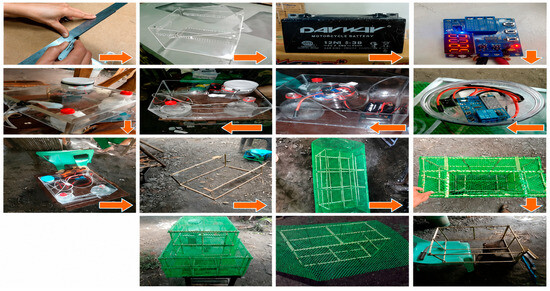
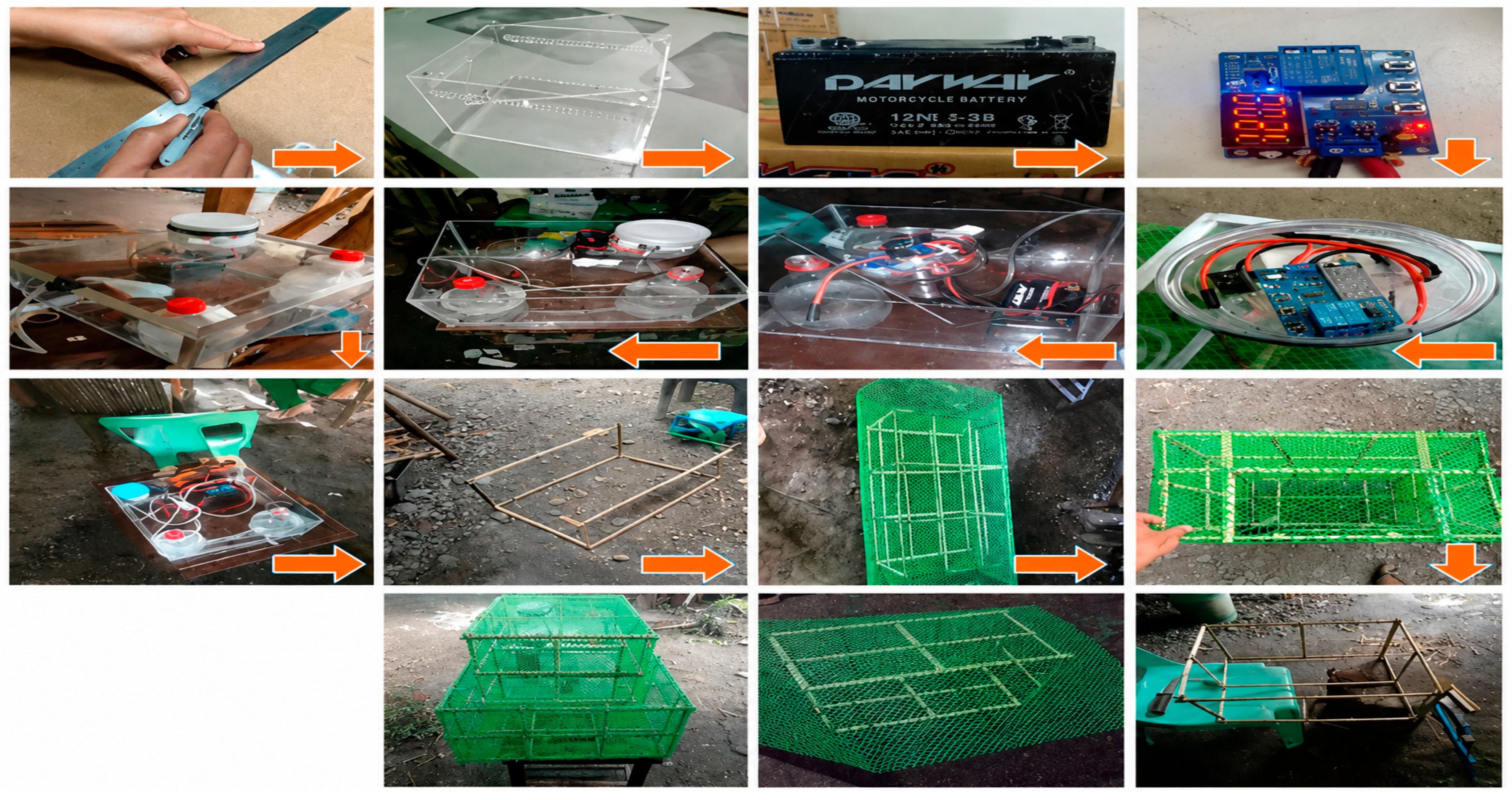
Figure 5 shows the project development process of the innovative crab trap with attractor device, highlighting the major stages from material preparation and fabrication to final assembly.
Figure 5.
Project development.
3. Results and Discussion
This section presents the final output of an innovative crab trap device with an attractor. All required materials were carefully assembled and all the components were properly installed and functional.
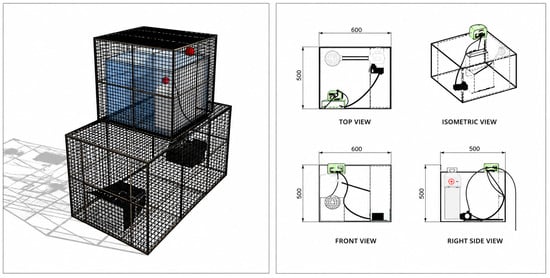
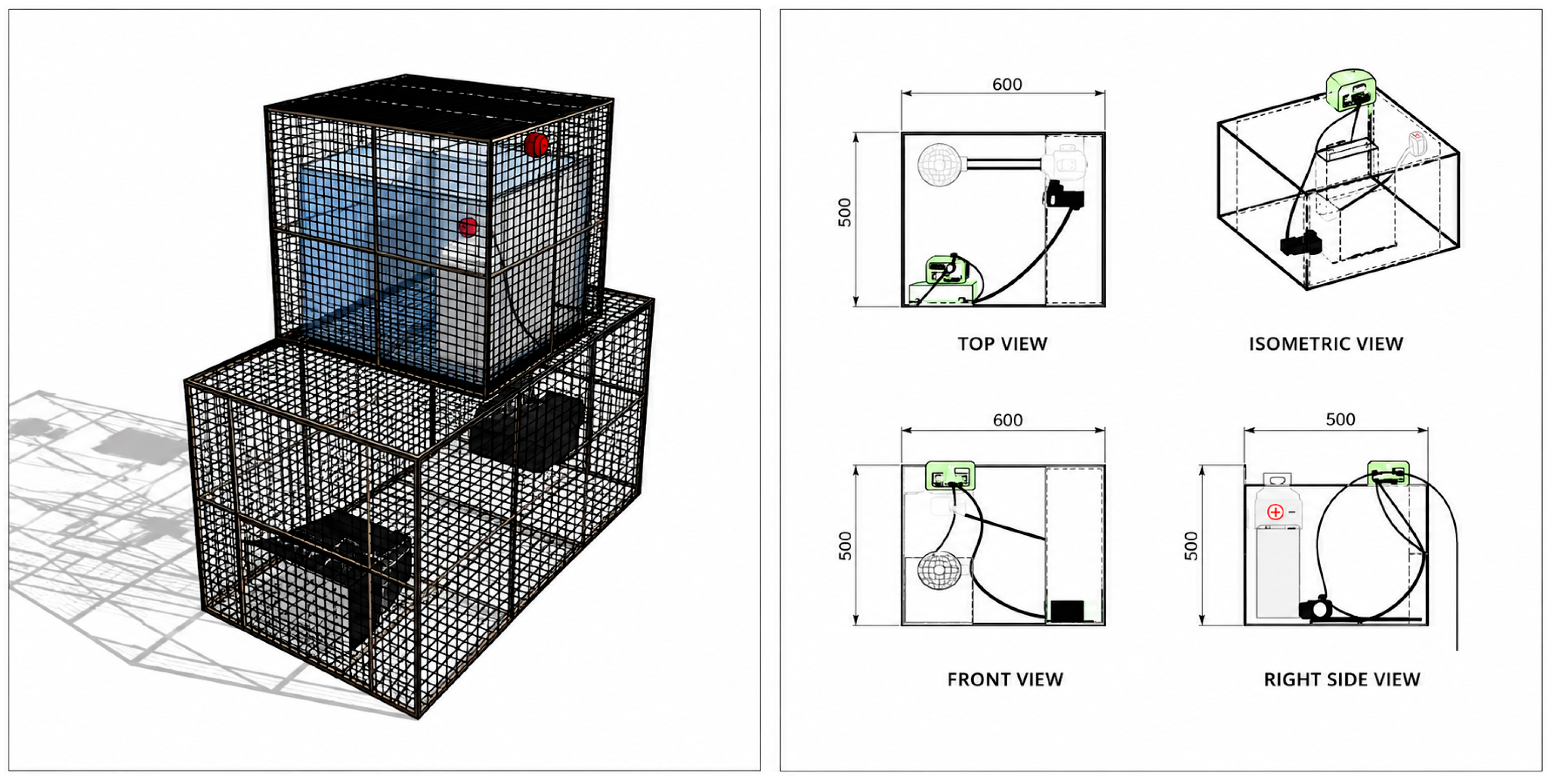
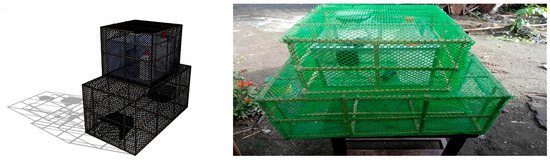
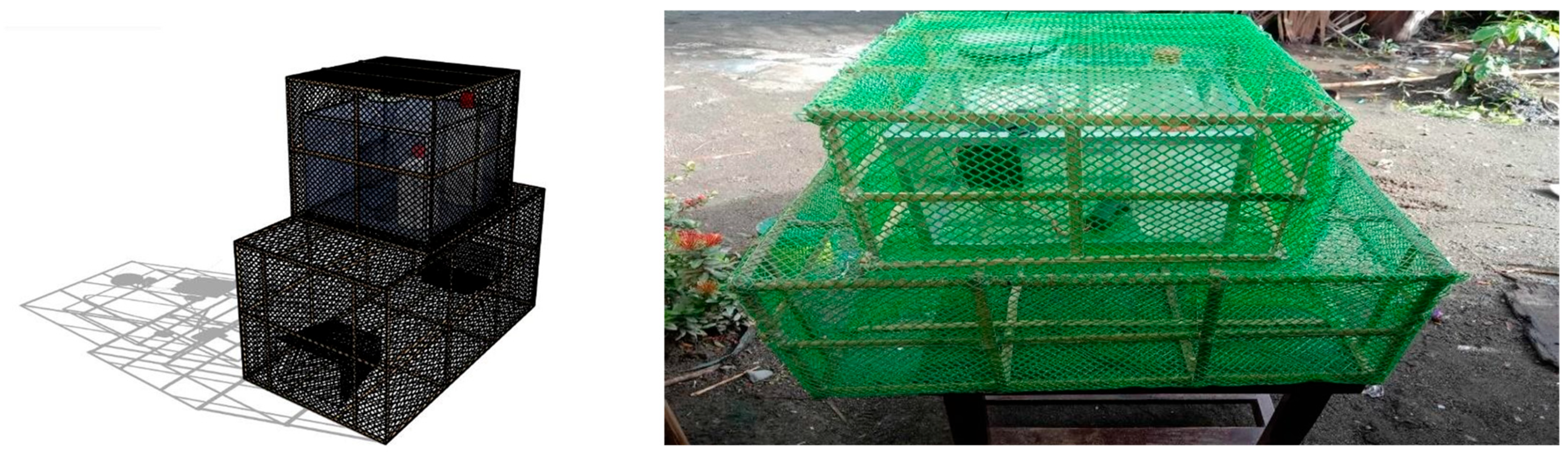
The project’s design, as illustrated in Figure 6, provides an overall view of the innovative crab trap with attractor device. The figure visually depicts the complete structure and arrangement of the project components outlined in the study titled Philippine Land Crab Trap Get Access Arrow and Artificial Lights Improve the Catchability of Snow Crab (CHINOECETES OPILIO) Trap. The construction and assembly of the trap were carried out by electrical and electronic experts, who subjected the product to rigorous material testing and fitting adjustments to achieve the desired functionality and performance of the final product.
Figure 6.
Pictorial drawing and actual image of the project.
The trial results in simulation A suggest that the dispersion rate of the liquid bait applied over 40 min may not be an effective way to attract targets (Table 1). Over three trials, each lasting 4 h, the catch rate was very low. Specifically, only one trial resulted in a single catch, while the other two trials yielded no catches. In each trial, the time rate was consistently set at 4 h, and the dispersion rate of the liquid was maintained at 40 min per trial. Despite this consistency, the catch rate varied across the trials. In Trial 1, there was a catch rate of one piece, indicating that the setup successfully attracted and caught a target item once. However, in Trials 2 and 3, no catch was recorded (the catch rate was 0), indicating that no target items were caught during these trials. These findings suggest that a 40 min dispersal interval may not provide sufficient bait scent concentration in the water to effectively attract crabs toward the trap. The catch rate varied, showing limited success in attracting and catching the target items. Further investigation and adjustments may be needed to improve the effectiveness of the setup and achieve a higher and more consistent catch rate across all trials. In aquatic environments, crabs mainly use olfactory cues to identify food sources. Crabs are attracted to the trap due to the odor plume produced by the chemical attractants released from the bait. However, as the bait scent decreases over time, this odor plume’s effectiveness diminishes [6]. Crabs are less likely to locate the trap when the dispersal interval is too long as the scent concentration may decrease before the next release. Similar to this, studies on baited crab traps show that bait exposure and availability have a major impact on catch performance because more individuals are drawn to the trap area due to stronger bait signals [7]. Therefore, insufficient bait dispersion frequency could be the cause of simulation A’s poor catch results. Further experimentation could explore the optimal dispersal rate to maximize catch rates further.
Table 1.
Simulation A with a 40 min dispersion rate of the liquid bait.
Table 2 presents the results of simulation B, where the dispersion rate of the liquid bait was set to 30 min. Over three trials, each lasting 4 h, the catch rates were higher and more consistent compared to those in simulation A. In simulation B, the catch rates were one piece in both Trial 1 and Trial 2 and zero in Trial 3. Table 2 shows the actual number of crabs caught during Trial B. After comparing these results to those in Table 1 from simulation A, where the dispersion rate of the liquid bait was 40 min, we see that there is a notable improvement in simulation B. In simulation A, the catch rates were one piece, zero piece, and zero piece across three trials. In contrast, simulation B achieved catch rates of one piece, one piece, and zero piece, indicating a more effective and consistent performance with the 30 min bait dispersal rate. The increased catch rate and consistency observed in simulation B suggest that reducing the dispersion rate of the liquid bait from 40 min to 30 min enhances the bait’s effectiveness in attracting the target items. This adjustment resulted in more reliable and higher catch rates across all trials. Therefore, it can be concluded that the shorter dispersal interval of 30 min is more effective for this setup, leading to improved outcomes compared to the 40 min interval used in simulation A. Further fine-tuning of the bait dispersal strategy could potentially yield even better results. More frequent bait release may improve the distribution of chemical cues in the surrounding water, increasing the probability that crabs will detect the trap. According to fisheries research, baited traps rely heavily on chemical stimuli released into the water, which form a scent plume that guides crustaceans toward the bait source [8]. However, the presence of a zero catch in Trial 3 suggests that a 30 min dispersal interval may still not be sufficient to maintain a continuous scent plume strong enough to attract crabs consistently. Similar studies on crab trap fisheries emphasize that catch efficiency improves when bait availability and release are optimized to maintain a consistent attractant signal [9]. Further experimentation could explore the optimal dispersal rate to maximize catch rates further.
Table 2.
Simulation B with a 30 min dispersion rate of the liquid bait.
Table 3 presents the results of simulation C, where the dispersion rate of the liquid bait was further reduced to 10 min. Over three trials, each lasting 4 h, the catch rates improved significantly compared to previous trials. In Trial C, the catch rate was three pieces in Trial 1 and two pieces in both Trial 2 and Trial 3. Table 3 shows the actual number of crabs caught during simulation C. When comparing these results to those in Table 2 from simulation B, where the dispersion rate of the liquid bait was 30 min, there is a noticeable enhancement in the catch rates. Simulation C achieved higher catch rates, indicating more effective performance with the 10 min bait dispersal rate. The data from simulation C suggests that reducing the dispersion rate of the liquid bait to 10 min significantly increases the effectiveness of the bait in attracting and catching the target items. This shorter dispersal interval led to consistently higher catch rates across all trials compared to the 30 min interval used in simulation B. Thus, it can be concluded that a 10 min bait dispersal rate optimizes the setup’s performance, achieving better and more consistent results than the longer intervals of 30 min in simulation B and 40 min in simulation A. Further experimentation could explore the optimal dispersal rate to maximize catch rates further. Frequent bait releases create a stronger and more continuous scent plume, which explains the improvement in catch rate. According to studies, the crustacean behavior indicates that crabs follow chemical trails released by bait, often moving against the current to locate the food source [10].
Table 3.
Simulation C with a 10 min dispersion rate of the liquid bait.
Table 4 presents the results of simulation D, where the dispersion rate of the liquid bait was drastically reduced to 30 s. Over three trials, each lasting 4 h, the catch rates showed a substantial increase. In simulation D, the catch rates were six pieces in Trial 1 and four pieces in both Trial 2 and Trial 3. When comparing these results to those in Table 3 from simulation C, where the dispersion rate of the liquid bait was 10 min, there is a significant improvement in the catch rates. In simulation C, the catch rates were three pieces, two pieces, and two pieces across three trials. In contrast, simulation D achieved much higher catch rates, indicating that the 30 s bait dispersal rate is more effective. The data from simulation D suggests that reducing the dispersion rate of the liquid bait to 30 s greatly enhances the effectiveness of the bait in attracting and catching the target items. This very short dispersal interval led to consistently higher catch rates across all trials compared to the 10 min interval used in simulation C. Thus, it can be concluded that a 30 s bait dispersal rate yields the optimal performance for the setup, achieving superior and more consistent results than the longer intervals of 10 min in simulation C, 30 min in simulation B, and 40 min in simulation A. Simulation D produced the highest catch rates among all treatments, with six crabs caught in Trial 1 and four crabs captured in both Trials 2 and 3. The results indicate that the rapid and continuous dispersal of the liquid bait significantly increased the trap’s ability to attract crabs. In this simulation, the high catch rates observed may be attributed to the formation of a high and continuous odor plume that continuously signals the presence of food. Trap fisheries have shown that trap performance is strongly influenced by bait exposure and scent intensity, as stronger chemical signals can attract more crabs to the trap area [7]. Further testing should explore the balance between bait consumption and dispersal rates to ensure sustainability and cost-effectiveness.
Table 4.
Simulation D with a 30 s dispersion rate of the liquid bait.
4. Conclusions
This study successfully developed and tested an innovative crab trap with an attractor device, demonstrating its effectiveness in enhancing crab-catching efficiency and serving as a localized laboratory simulator for Outcome-Based Education (OBE) in Industrial Arts. The results showed that shorter bait dispersal intervals significantly increased catch rates, with the 30 s interval yielding the highest and most consistent results. This optimization benefits fisheries management, sustainability, and profitability, particularly for local crab fishermen who rely on efficient trapping methods. Additionally, this study highlights the educational value of integrating technology with hands-on learning, allowing students to apply scientific and technical skills in real-world problem-solving. While the system enhances catch productivity, further research should explore bait consumption efficiency, the ecological impact, and long-term sustainability to balance economic gains with environmental responsibility. Ultimately, this study contributes valuable insights into fisheries innovation and Industrial Arts education, bridging technology, environmental awareness, and economic development.
5. Recommendations
For future studies and long-term application, it is recommended that the innovative crab trap device undergoes extended field testing in various coastal environments such as mangrove areas, estuaries, and open coastal waters to determine its durability, reliability, and effectiveness under different environmental conditions. Further research should evaluate the energy efficiency and sustainability of the 12-volt battery system, including the potential integration of renewable energy sources such as solar panels to prolong operational time and reduce maintenance costs. In addition, future studies should optimize bait consumption by analyzing the cost-effectiveness of the 30 s dispersal interval and testing other dispersal rates to balance bait usage and catch efficiency. Researchers should also investigate the ecological impact of the device, particularly its effect on bycatch and local crab populations, to ensure that the innovation supports sustainable fishing practices. Moreover, incorporating smart monitoring technologies such as sensors or underwater cameras may enhance data collection and allow real-time monitoring of trap performance. Comparative studies between the developed device and conventional crab traps are also recommended to provide stronger empirical evidence of its effectiveness. Finally, further development should focus on improving material durability for long-term exposure to marine environments and expanding the device’s role as a localized laboratory simulator that enhances hands-on learning, technical skill development, and innovation among Industrial Arts students and local fishing communities.
Author Contributions
Conceptualization, C.T.T.J., A.S.J., R.G.M., R.A.B., J.Q. and R.A.V.; methodology, C.T.T.J., R.A.B., J.Q. and R.A.V.; validation, formal analysis, investigation, resources, and writing, R.A.B., J.Q. and R.A.V.; original draft preparation, C.T.T.J.; writing—review and editing, C.T.T.J. and R.G.M.; visualization C.T.T.J., R.A.B., J.Q. and R.A.V.; supervision, C.T.T.J.; project administration, C.T.T.J., R.A.B., J.Q. and R.A.V. All authors have read and agreed to the published version of the manuscript.
Funding
This research received no external funding.
Institutional Review Board Statement
Not applicable.
Informed Consent Statement
Not applicable.
Data Availability Statement
The data presented in this study are available upon request from the corresponding author at cerelo.tabat@csucc.edu.ph.
Acknowledgments
The researchers would like to thank the Research Development and Innovation and Extension Office for its financial support and for the application of its scholarly works.
Conflicts of Interest
The authors declare no conflicts of interest.
References
- Suuronen, P. Mortality of Fish Escaping Trawl Gears; Food and Agriculture Organization of the United Nations: Rome, Italy, 2005; FAO Fisheries Technical Paper No. 478. [Google Scholar]
- He, W.; Zhao, X.; Ge, S.; Wu, K. Food attractants for field population monitoring of Spodoptera exigua (Hübner). Crop Prot. 2021, 145, 105616. [Google Scholar] [CrossRef] [Scilit]
- Zhang, J.; Pei, Z.; He, P.; Shi, J. Effect of escape vents on retention and size selectivity of crab pots for swimming crab Portunus trituberculatus in the East China Sea. Aquac. Fish. 2020, 6, 340–347. [Google Scholar] [CrossRef] [Scilit]
- Punt, A.E.; Hobday, D. Management strategy evaluation for rock lobster, Jasus edwardsii, off Victoria, Australia: Accounting for uncertainty in stock structure. N. Z. J. Mar. Freshw. Res. 2009, 43, 485–509. [Google Scholar] [CrossRef] [Scilit]
- Cerbule, K.; Herrmann, B.; Grimaldo, E.; Grimsmo, L.; Vollstad, J. The effect of white and green LED-lights on the catch efficiency of the Barents Sea snow crab (Chionoecetes opilio) pot fishery. PLoS ONE 2021, 16, e0258272. [Google Scholar] [CrossRef] [Scilit] [PubMed]
- Thomsen, J.; Melzner, F. Moderate seawater acidification does not elicit long-term metabolic depression in the blue mussel Mytilus edulis. Mar. Biol. 2010, 157, 2667–2676. [Google Scholar] [CrossRef] [Scilit]
- Miller, G.E. The assessment of clinical skills/competence/performance. Acad. Med. 1990, 65, S63–S67. [Google Scholar] [CrossRef] [Scilit] [PubMed]
- Archdale, M.V.; Añasco, C.P.; Hiromori, S. Comparative fishing trials for invasive swimming crabs Charybdis japonica and Portunus pelagicus using collapsible pots. Fish. Res. 2006, 82, 50–55. [Google Scholar] [CrossRef] [Scilit]
- Vu, N.K.; Nguyen, K.Q.; Nguyen, L.T. The Effect of Bait Types on Catch Performance in the Vietnamese Swimming Crab Trap Fishery. J. Mar. Sci. Technol. 2025, 33, 5. [Google Scholar] [CrossRef] [Scilit]
- Cyr, C.; Sainte-Marie, B. Catch of Japanese crab traps in relation to bait quantity and shielding. Fish. Res. 1995, 24, 129–139. [Google Scholar] [CrossRef] [Scilit]

Disclaimer/Publisher’s Note: The statements, opinions and data contained in all publications are solely those of the individual author(s) and contributor(s) and not of MDPI and/or the editor(s). MDPI and/or the editor(s) disclaim responsibility for any injury to people or property resulting from any ideas, methods, instructions or products referred to in the content. |
© 2026 by the authors. Licensee MDPI, Basel, Switzerland. This article is an open access article distributed under the terms and conditions of the Creative Commons Attribution (CC BY) license.