


Abstract
This study examines the effectiveness of an innovative solar-electric paddy winnowing machine titled “Synergy of Solar and Electric Power”. Conducted in the agricultural hubs of Barangay Tagbongabong and Barangay Lemon in the Philippines, the project utilized a multi-stakeholder collaboration involving small-scale farmers, students, faculty, and technical experts. Findings revealed significant improvements in operational efficiency and reduced labor requirements. Modularity and Ergonomics received the highest evaluation ratings (3.64), highlighting a user-centric design. The study concludes that this hybrid system provides a practical, eco-friendly solution for advancing sustainable agricultural mechanization in resource-limited settings.
1. Introduction
In Southeast Asian rice-producing regions like the Philippines, small-scale farmers frequently struggle with high operational costs and limited access to modern machinery. While winnowing is critical for separating grains from impurities, it remains traditionally labor-intensive and inefficient. Previous research has explored solar-powered winnowing to improve capacity—ranging from 320–367 kg/h cleaners [1] to crop-specific optimizations using airflow modeling [2] and centrifugal methods [3].
Recent innovations have introduced automated PLC controls [4] and negative-pressure systems [5], but these often exceed the financial reach of small-scale laborers. Gaps remain in creating truly accessible, hybrid-powered systems that are portable enough for varied rural terrains. This project addresses these needs by synthesizing a dual-power design with a three-stage output system—pure grain, mixed grain, and chaff—specifically tailored for affordability and local maintenance.
2. Methodology
The study employed a developmental research design aimed at ensuring both functionality and sustainability within small-scale agricultural settings. To evaluate the prototype, a diverse group of 30 participants was engaged, including welding and electrical technology students, technical experts, and local farmers. This developmental process followed an Input–Process–Output (IPO) model, which facilitated several critical refinements to the initial concept during the build phase.
Specifically, early challenges with the feed controller and hopper stability were addressed through reinforced mechanical adjustments to ensure structural integrity. Furthermore, the three-stage separation system was precisely aligned to guarantee the accurate sorting of clean grain, mixed grain, and husk. A core focus on accessibility led to the selection of components based on local market availability, a design decision that ultimately earned the highest rating of 3.73 in expert evaluations. The resulting final prototype features a 20 kg hopper capacity and incorporates a specialized “mini storage” compartment to house the battery and inverter, effectively allowing the machine to serve as a versatile, portable power source for the community.
3. Results and Discussion
This outlines the project’s analysis, design, development, and assembly procedures, along with the required materials, tools, equipment, and bill of materials. It also presents the evaluation results from experts and welding students, assessing the design’s durability, usability, aesthetics, functionality, modularity, and ergonomics.
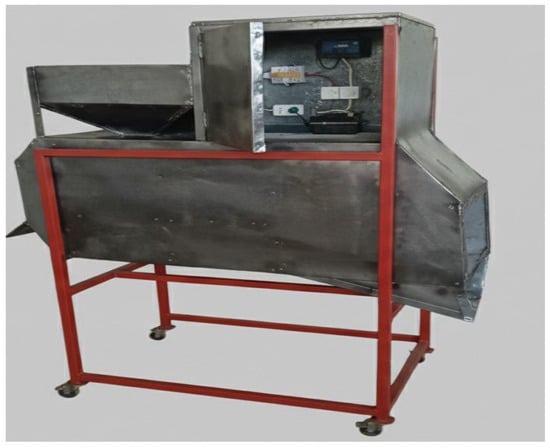
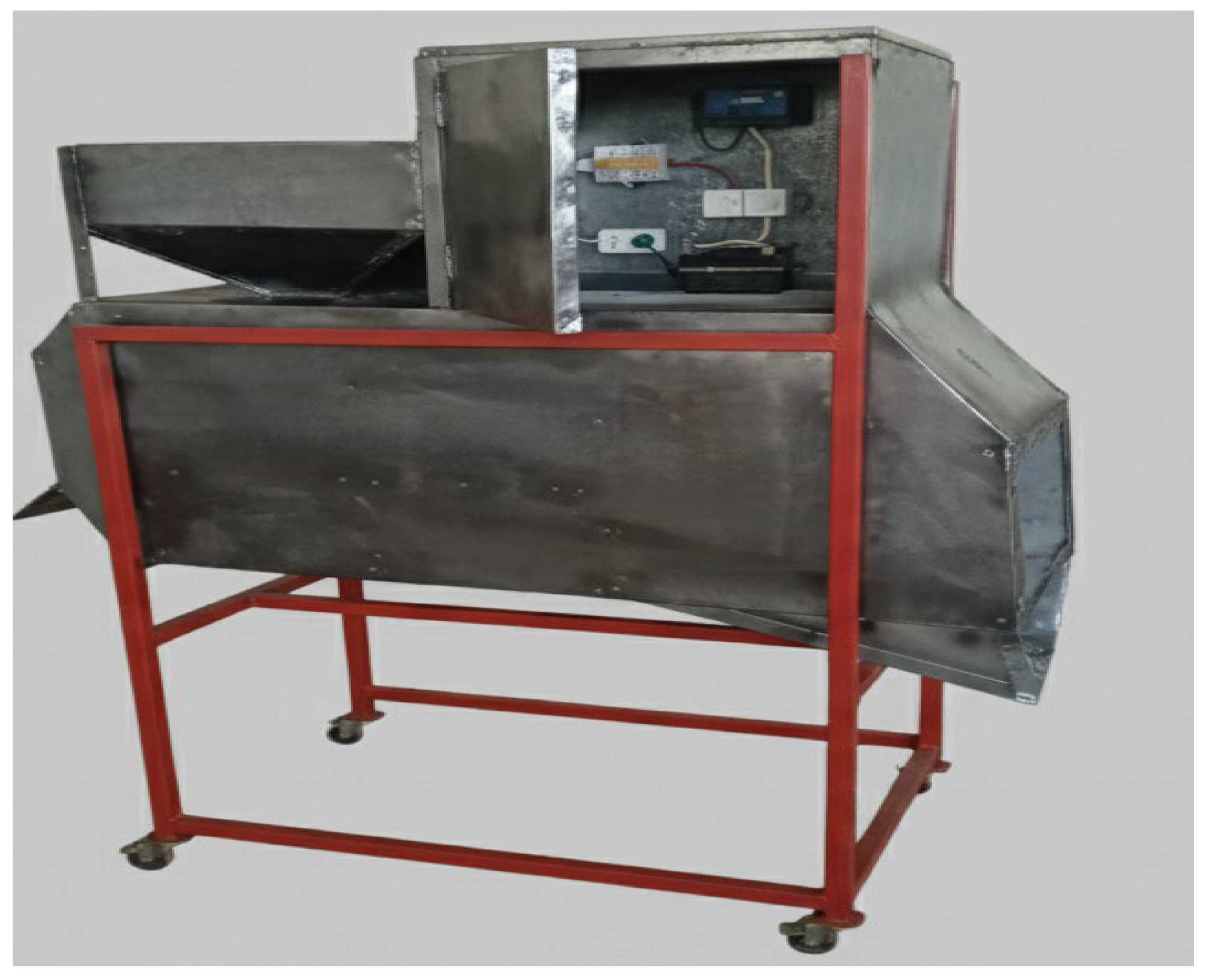
Figure 1 illustrates the developed project: a lightweight, portable winnowing machine powered by both solar and electric energy, making it suitable for areas with unreliable electricity. Solar energy is harnessed through photovoltaic panels and stored in batteries to operate the unit. The machine features a compact storage compartment and is designed for easy mobility across varied terrain. A key innovation is its three-stage output separation system, which efficiently sorts clean grain, mixed grain, and husk, significantly reducing manual labor and improving productivity for small-scale farmers. During development, challenges were encountered in securing the feed controller and hopper, as well as aligning the three output outlets for accurate separation. These issues were resolved through iterative adjustments and mechanical refinements, resulting in a functional and reliable prototype. The project culminated in the successful creation of the Synergy of Solar and Electric Power: Designing a Sustainable Paddy Winnowing Machine for Small-Scale Farmers.
Figure 1.
Actual view of the developed Product.
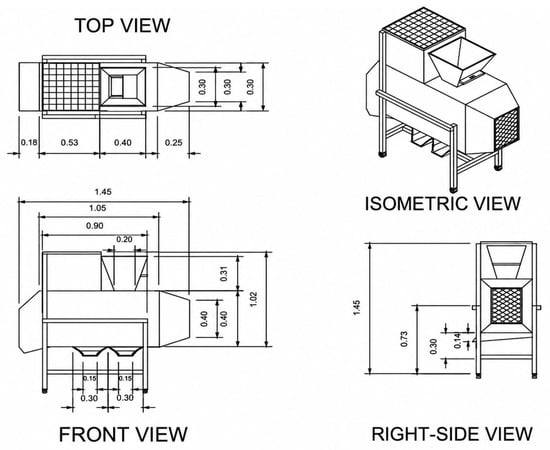
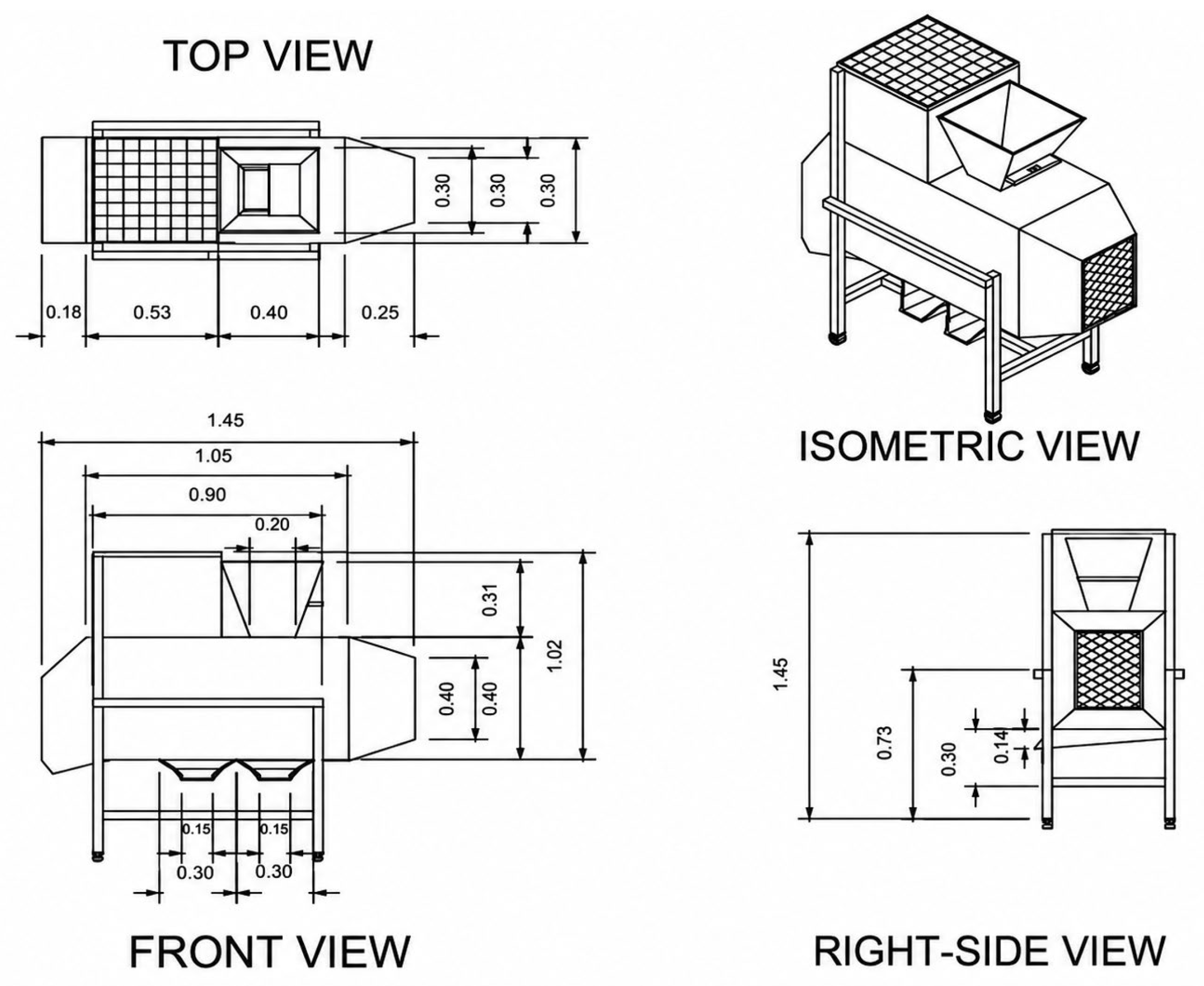
Figure 2 Represents the orthographic view of the Synergy of Solar and Electric Power winnowing machine, depicting its length, width, and height.
Figure 2.
Orthographic View of the Project.
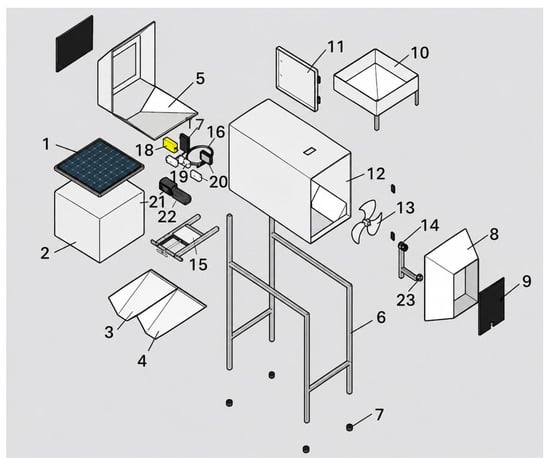
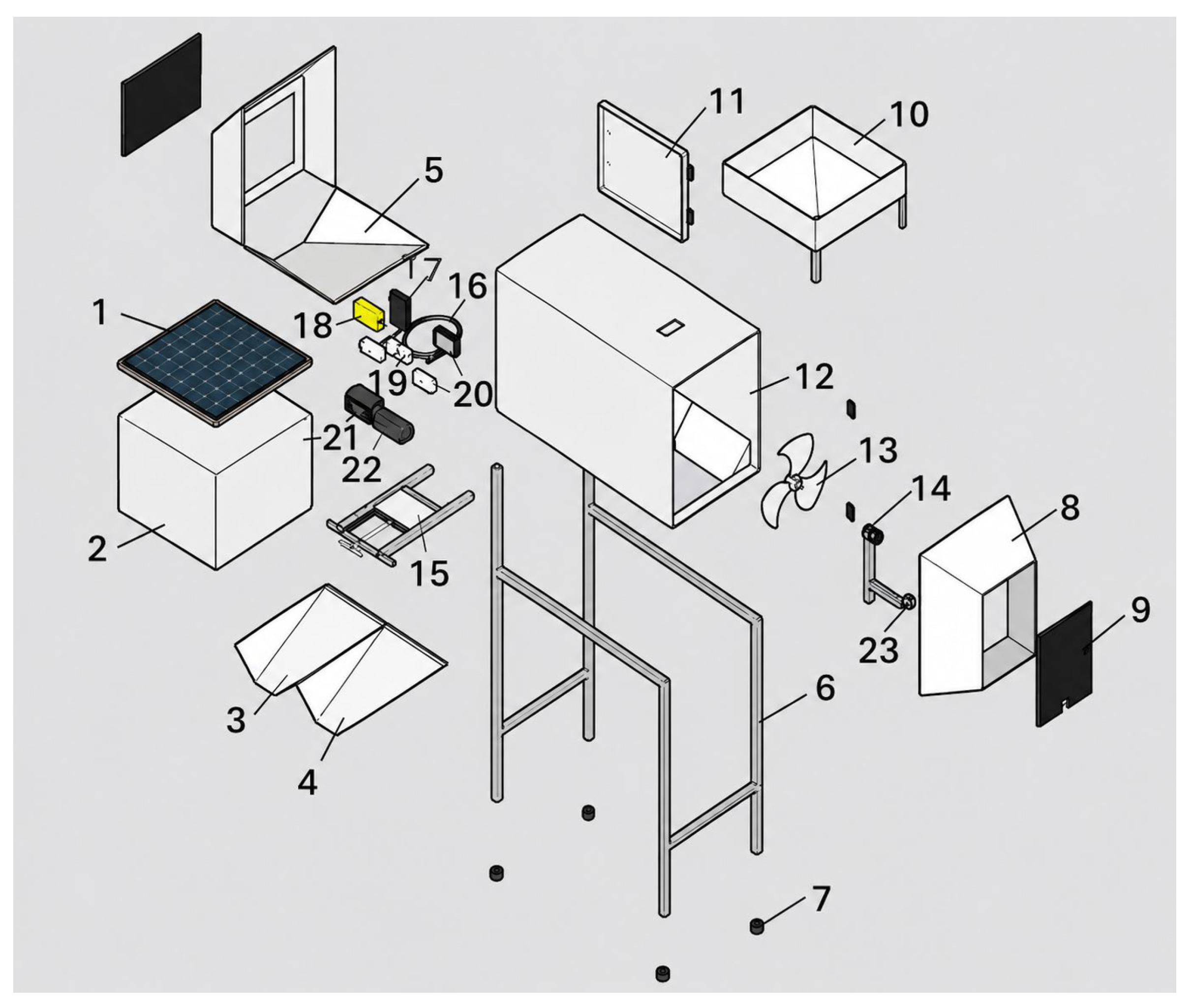
Figure 3 presents the exploded view of the Synergy of Solar and Electric Power: Designing a Sustainable Paddy Winnowing Machine for Small-Scale Farmers.
Figure 3.
Exploded View of the Project.
The Synergy of Solar and Electric Power winnowing machine consists of multiple components, each performing specific functions determined by the required performance. lists the parts of the project along with their corresponding functions.
The mechanical and electrical architecture of the hybrid winnower, as detailed in Table 1, is designed to maximize operational efficiency through a synchronized multi-stage system. The process begins at the hopper and feed regulator, which manage the intake of harvested paddy into the main body for consistent processing. Central to the machine’s functionality is the separation mechanism, where an electric motor drives the fan blades to generate a regulated airflow—directed by the screen metal—to sort materials based on weight. This results in a graduated three-stage output where clean grains, broken grains, and lightweight chaff are discharged through distinct outlets.
Table 1.
Parts of the project and its functions.
Powering this operation is a sophisticated hybrid energy system that integrates a solar panel, solar charger controller, and battery for sustainable use, complemented by an electric outlet and inverter for AC-powered versatility and backup reliability. All critical electronic components are housed within a protective mini storage unit to prevent environmental damage. This entire assembly is supported by a robust frame and equipped with wheels, ensuring that the machine is not only a functional post-harvest tool but also highly mobile for varied rural terrains.
Trial and Error
1 Sack = 49 kilos
Table 2 presents the performance of the winnowing machine in processing one sack of rice (49 kg) at three speed settings (1, 2, and 3). This assessment aimed to evaluate the machine’s efficiency in separating rice grains from husks across varying operational speeds.
Table 2.
One Sack Computation (Per Speed).
Table 3 Illustrates the relationship between the machine’s speed settings and the number of rice sacks successfully winnowed, showing how operational speed influences cleaning and separation performance.
Table 3.
Overall Computation.
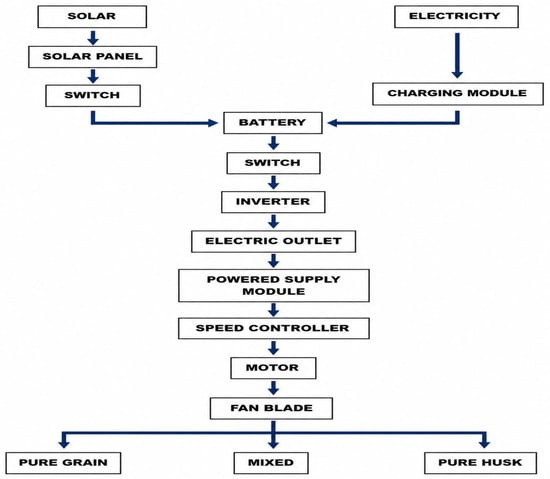
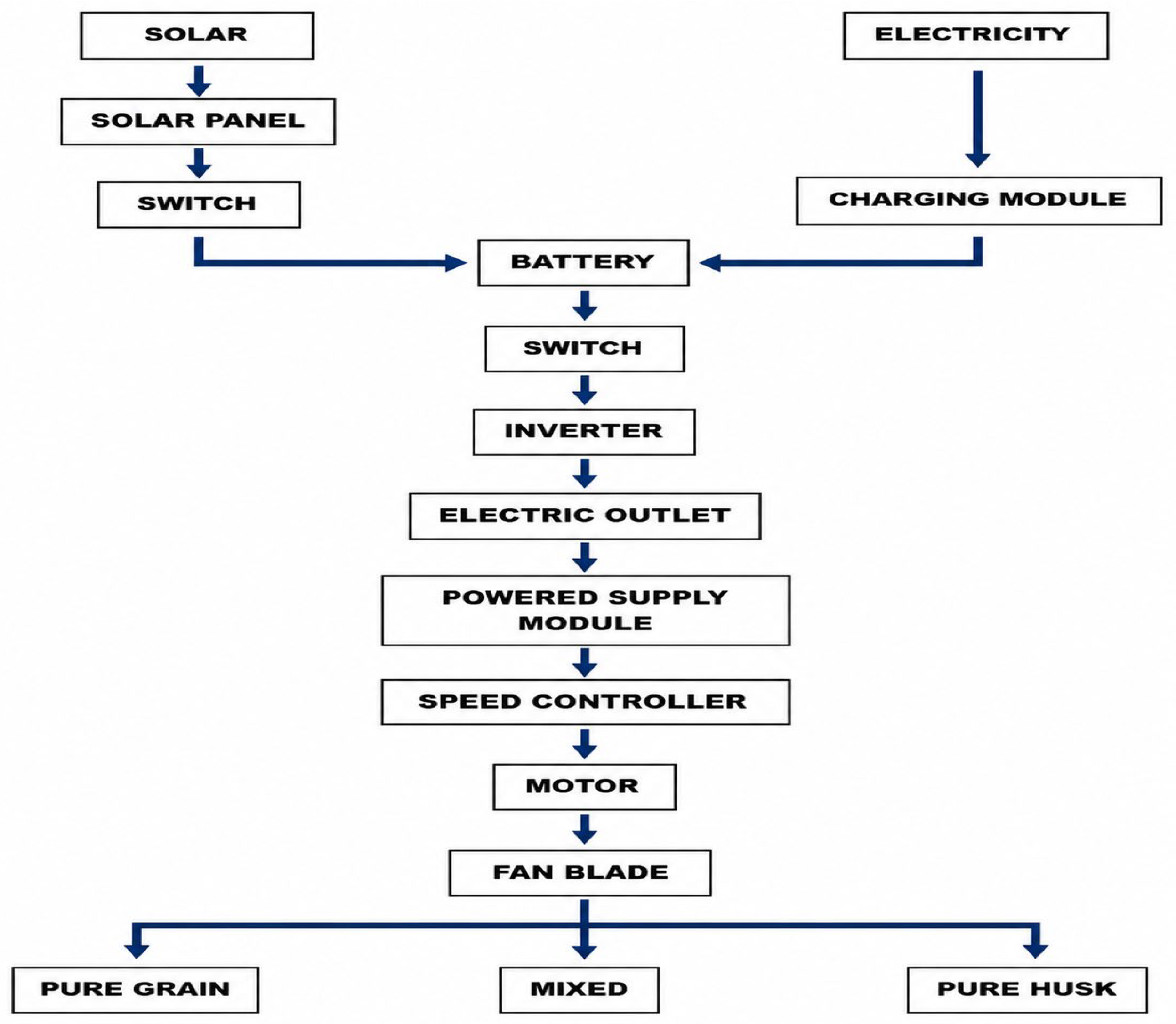
Figure 4 presents the hybrid-powered winnowing machine, which operates using both solar and electric energy. Solar power is captured through a photovoltaic panel and stored in a battery, while an alternative charging module allows operation through a standard electrical source. This dual-power system ensures reliable functionality even in areas with inconsistent electricity, making it suitable for rural agricultural settings.
Figure 4.
Block Diagram.
Once charged, the battery supplies power through a system switch to an inverter, which converts DC to AC to run the motor. The energy then passes through the power supply module and speed controller, enabling users to adjust airflow for optimal winnowing performance. The motor drives the fan blade, generating airflow for grain separation. The machine features a three-stage output system that delivers pure grain, mixed grain and husk, and husk only. This configuration improves efficiency, reduces manual labor, and enhances productivity for small-scale farmers through its portable and sustainable design.
Evaluation of the Synergy of Solar and Electric Power: Designing A Sustainable Paddy Winnowing Machine for Small-Scale Farmers.
Table 4 presents the end users’ evaluation of the product in terms of design, construction, and material availability, yielding an overall mean of 3.62 (SD = 0.04), interpreted as Strongly Agree. This indicates a highly positive assessment of the machine’s design and material selection.
Table 4.
End Users’ Evaluation of Product Development in Terms of Design.
The highest mean score (3.73) was given to the availability of materials in the local market, reflecting the product’s practicality and ease of sourcing. Durability, accessibility of parts, and suitability for laboratory fabrication followed with mean scores of 3.70, demonstrating strong user confidence in the product’s long-term use and adaptability. The lowest mean score (3.43) pertained to simplicity of technical quality, though it still rated as Strongly Agree, suggesting only a minor area for improvement.
The results indicate strong alignment with user expectations, particularly regarding accessibility, sustainability, and ease of fabrication. The product’s portability, safety, and replicability make it viable for both educational and community applications, supporting broader implementation and future development.
Table 5 presents the end users’ evaluation of the product’s functionality, yielding an overall mean of 3.58 (SD = 0.05), interpreted as Strongly Agree. This reflects a highly favorable assessment of the machine’s performance and operational reliability.
Table 5.
End Users’ Evaluation of Product Development in Terms of Functionality.
The highest mean score of 3.73 was recorded for the product’s ability to accomplish specified tasks and respond promptly during operation, indicating its effectiveness in delivering expected outcomes. The lowest mean score of 3.50, related to the completeness and quality of specific functions, still falls within the Strongly Agree range, suggesting consistent functionality with minor opportunities for refinement.
The results indicate that the product performs reliably, meets operational objectives, and provides efficient, user-friendly operation suitable for both educational and community applications. These findings align with [6], who emphasized the role of timely system response in reliability, and [7], who underscored the importance of aligning product performance with user expectations in educational tools.
Table 6 presents the end users’ evaluation of the product’s usability, yielding an overall mean of 3.61 (SD = 0.04), interpreted as Strongly Agree. This indicates that users found the machine highly usable, efficient, and supportive of both instructional and practical applications. The highest mean score of 3.77 was given to the machine’s ease of operation and hazard-free control, emphasizing its user-friendly and safety-oriented design. A score of 3.73 for error prevention reflects the product’s intuitive interface and ability to minimize user mistakes. The lowest mean score of 3.43, related to the application of theories and principles, still falls within the Strongly Agree range, suggesting effective theoretical integration with slight potential for enhancement.
Table 6.
End Users’ Evaluation of Product Development in Terms of Usability.
The findings indicate that the product is well-suited for educational use, offering safe, efficient, and intuitive interaction while fostering active learning and skill development. Its high usability ratings highlight its value as a teaching tool, demonstration unit, or practical prototype. These results align with [8], who noted the positive impact of user-friendly educational tools on engagement and safety, and [9], who emphasized the role of intuitive design in reducing errors and improving training outcomes.
Table 7 presents the end users’ evaluation of the product’s aesthetics, yielding an overall mean of 3.56 (SD = 0.03), interpreted as Strongly Agree. This indicates that users found the product visually appealing, well-proportioned, and thoughtfully designed. The highest mean score of 3.73 corresponded to visual proportionality, reflecting strong appreciation for the balanced placement of design elements such as shape, size, and component arrangement. The lowest mean score of 3.43, related to the aesthetic contribution of the materials used, suggests that while the product’s appearance was positively received, further refinement in material selection or finishing could enhance its visual quality.
Table 7.
End Users’ Evaluation of Product Development in Terms of Aesthetics.
The findings demonstrate that the product effectively integrates aesthetic appeal with functional design, contributing to user satisfaction and suitability for educational or public display. Features such as the electric components and solar integration not only improve performance but also enhance visual interest. These results align with [10], who emphasized the influence of balanced layout on aesthetic engagement, and [11], who highlighted that even though the machine is an industrial tool, the users found the initial visual presence of the solar-hybrid system appealing.
Table 8 presents the end users’ evaluation of the product’s modularity, with an overall mean of 3.64 (SD = 0.04), interpreted as Strongly Agree. This indicates that users perceive the product as highly modular, allowing for easy assembly, disassembly, modification, and maintenance. The highest mean score of 3.77 was attributed to the ability to repair defective parts independently without affecting the rest of the system, reflecting strong confidence in component functionality. The lowest mean score of 3.43, related to module assembly, still falls within Strongly Agree, suggesting minor improvements could further streamline the assembly process.
Table 8.
End Users’ Evaluation of Product Development in Terms of Modularity.
The results highlight the product’s flexibility and ease of modification, making it suitable for educational, prototyping, and multi-context applications. Its modular design facilitates part replacement, maintenance, and reuse without compromising overall performance, ensuring long-term usability, cost-efficiency, and adaptability. These findings align with [12], who demonstrated that modular systems allow independent repairs without affecting functionality, and [13], who found that component-based modular construction enhances system flexibility and reduces maintenance requirements.
Table 9 presents the end users’ evaluation of the product’s ergonomics, yielding an overall mean of 3.64 (SD = 0.04), interpreted as Strongly Agree. This indicates a strong consensus that the product is ergonomically designed and comfortable to use. The highest mean score of 3.77 was recorded for the product’s ability to support efficient and safe operation, highlighting its ergonomic effectiveness in promoting productivity and user safety. The lowest mean score of 3.43, related to fixed and adjustable height, still falls within Strongly Agree, suggesting this feature is acceptable but could be further enhanced to improve user comfort.
Table 9.
End Users’ Evaluation of Product Development in Terms of Ergonomics.
These findings underscore that the product facilitates natural body movement, minimizes physical strain, and promotes safe, consistent operation, making it suitable for long-term use in agricultural and rural settings. Its portability, user-friendliness, and dual solar/electric power options enhance adaptability and inclusivity in real-world conditions. These ergonomic benefits are supported by [14], who demonstrated that height-adjustable devices reduce discomfort and improve task accuracy, and by [15], who found that adjustable tools significantly lower ergonomic risk during repetitive tasks.
4. Conclusions
Based on the evaluation results from experts and end users, the study concludes that the project successfully introduced a novel and practical paddy winnowing machine for small-scale farmers. By integrating solar and electric power and utilizing locally sourced materials, the design is affordable, sustainable, and easily replicable, offering an accessible and eco-friendly post-harvest solution for rural communities. The working prototype demonstrated the feasibility of a hybrid-powered system, providing efficient grain-husk separation with multi-stage output, mini storage, and portability, making it suitable for off-grid and low-resource settings and serving as a reliable, energy-efficient alternative to manual winnowing. Positive evaluations confirmed the machine’s ergonomic, safe, and user-friendly design, enhancing operator comfort and productivity, while its consistent performance underscores its reliability and potential for broader adoption, contributing significantly to sustainable agriculture and rural development.
5. Recommendation
The researchers recommend the “Synergy” winnower to various stakeholders for its significant potential in advancing sustainable agricultural mechanization. The school administration and faculty can utilize these findings to assess the feasibility of integrating such green-energy projects into technical-vocational curricula, providing students with a grounded, hands-on model for socially relevant engineering. Local government units and agricultural extension offices can adopt this prototype as a blueprint for community-centered technology, perhaps by establishing “shared-use” programs or micro-financing initiatives that make the machine accessible to the most resource-limited farmers. Furthermore, the farming community can utilize the machine not only for efficient post-harvest processing but also as a portable power source for other essential tools, maximizing its utility throughout the year. Finally, future researchers can build upon this study by conducting longitudinal durability tests under varied environmental conditions, refining the machine’s aesthetic finish, and developing interchangeable components that would allow the system to process a wider diversity of local crops such as corn or mung beans.
Author Contributions
Conceptualization, A.S.J., M.A.T.A., J.G.M., and J.R.T., methodology, A.S.J., M.A.T.A., and C.T.T., validation, formal analysis, investigation, resources, writing, A.S.J., M.A.T.A., J.G.M., and J.R.T., original draft preparation, A.S.J., J.R.D.L.S., and C.T.T.; writing—review and editing, A.S.J., J.R.T., C.T.T., and J.R.D.L.S., visualization, A.S.J., M.A.T.A., J.G.M., and J.R.T., supervision, A.S.J., C.T.T., J.R.D.L.S. and R.G.E., project administration, A.S.J., M.A.T.A., J.G.M., and J.R.T. All authors have read and agreed to the published version of the manuscript.
Funding
This research received no external funding.
Institutional Review Board Statement
Not applicable.
Informed Consent Statement
Not applicable.
Data Availability Statement
The data presented in this study are available on request from the corresponding author at asjavier@csucc.edu.ph.
Acknowledgments
The researcher would like to thank the Research Development and Innovation and Extension Office for its financial support and application of its scholarly works.
Conflicts of Interest
The authors declare no conflicts of interest.
References
- Ghritalahre, B.; Kolhe, K.; Chandra, U.; Yadav, S. Development and testing of solar operated paddy winnower. Res. J. Pharmacogn. Phytochem. 2019, 8, 1368–1370. [Google Scholar]
- Zhao, J.; Sugirbay, A.; Liu, F.; Chen, Y.; Hu, G.; Zhang, E.; Chen, J. Parameter optimization of winnowing equipment for machine-harvested Lycium barbarum L. Span. J. Agric. Res. 2019, 17, e0203. [Google Scholar] [CrossRef] [Scilit]
- Nguyen, H.-B.; Pham, D.-L.; Nguyen, V.-L. A Study on the Breaking and Winnowing Machine for Cocoa Beans at Small Industrial Scale in Vietnam. Int. J. Adv. Sci. Eng. Inf. Technol. 2019, 9, 329. [Google Scholar] [CrossRef] [Scilit]
- Wu, Z.; Huang, Y.; Ouyang, T.; Luo, K.; Qin, K.; Sun, Y.; Cao, C. Design and Test of Precise Regulation System for Process Parameters of Double-Layer Tea Winnowing Machine. Agriculture 2022, 12, 1584. [Google Scholar] [CrossRef] [Scilit]
- Hu, G.-Y.; Chen, X.-D.; Dong, Y.-L.; Liu, G.; Zhou, J.-P. Optimization and experiments on working parameters of winnowing machine for walnut shell and kernel mixture. Food Mach. 2023, 39, 14. [Google Scholar] [CrossRef]
- Prince, M. The Role of Technology in Improving Operational Efficiency. Am. J. IR 4.0 Beyond 2024, 3, 28–36. [Google Scholar] [CrossRef] [Scilit]
- Bhattacherjee, A. Understanding Information Systems Continuance: An Expectation-Confirmation Model. MIS Q. 2001, 25, 3. [Google Scholar] [CrossRef] [Scilit]
- Alabbas, A.; Alomar, K. A Weighted Composite Metric for Evaluating User Experience in Educational Chatbots: Balancing Usability, Engagement, and Effectiveness. Future Internet 2025, 17, 64. [Google Scholar] [CrossRef] [Scilit]
- Lindström, G.; Farooq, O.; Jane, K. Intuitive Design Tools: Developing User-Friendly Interfaces for Automated Design Tools. Available online: https://www.researchgate.net/publication/384399616_Intuitive_Design_Tools_Developing_user-friendly_interfaces_for_automated_design_tools (accessed on 14 October 2025).
- Shi, A.; Huo, F.; Hou, G. Effects of Design Aesthetics on the Perceived Value of a Product. Front. Psychol. 2021, 12, 12. [Google Scholar] [CrossRef] [Scilit] [PubMed]
- Crilly, N.; Moultrie, J.; Clarkson, P.J. Seeing things: Consumer response to the visual domain in product design. Des. Stud. 2004, 25, 547–577. [Google Scholar] [CrossRef] [Scilit]
- Gershenson, J.K.; Prasad, G.J.; Zhang, Y. Product modularity: Definitions and benefits. J. Eng. Des. 2003, 14, 295–313. [Google Scholar] [CrossRef] [Scilit]
- Armitage, J.; Robinson, P.; Chunge, M. Modular construction and component-based bridge design to minimise waste. IABSE Rep. 2024, 120, 1100–1107. [Google Scholar] [CrossRef] [Scilit]
- Ghadimi, H.; Garosi, E.; Laybidi, M.I.; Ghasemi, M.S. Ergonomic Design and Assessment of an Adjustable Laptop Stand Used in the Typing Task. Med. J. Islam. Repub. Iran 2023, 37, 139. [Google Scholar] [CrossRef] [Scilit] [PubMed]
- Garosi, E.; Sheikh, F.; Goodarzi, M. Ergonomic Interventions in Risk Reduction. In Protection and Prevention Approaches in Occupational Health and Safety; IntechOpen eBooks: London, UK, 2025. [Google Scholar] [CrossRef] [Scilit]

Disclaimer/Publisher’s Note: The statements, opinions and data contained in all publications are solely those of the individual author(s) and contributor(s) and not of MDPI and/or the editor(s). MDPI and/or the editor(s) disclaim responsibility for any injury to people or property resulting from any ideas, methods, instructions or products referred to in the content. |
© 2026 by the authors. Licensee MDPI, Basel, Switzerland. This article is an open access article distributed under the terms and conditions of the Creative Commons Attribution (CC BY) license.