


Abstract
This study aims to investigate the combustion characteristics, thermal distribution, and nitrogen oxide (NOx) formation of two radiant tube designs—conventional and staged combustion—under air–fuel ratios of 1:10 and 1:11. A three-dimensional numerical model was developed in ANSYS Fluent 2023 R1 to compare flame temperature, wall temperature gradients, and pollutant emissions. The results reveal that flame temperature is the dominant factor in NOx formation. The conventional tube, with flame temperatures around 1800 °C, shows decreasing NOx emissions as the air–fuel ratio increases (corresponding to lower flame temperatures). In contrast, the staged combustion tube exhibits flame temperatures exceeding 1900 °C, where the thermal mechanism dominates, leading to a sharp increase in NOx emissions far above the conventional design. These findings highlight that in staged combustion systems, inadequate consideration of flame temperature and mixing characteristics may cause NOx control to fail or even reverse.
1. Introduction
Radiant tubes are widely employed in industrial heating furnaces to provide efficient and stable heat transfer through indirect combustion. With increasingly stringent requirements on energy efficiency and environmental regulations, achieving low nitrogen oxide (NOx) emissions while ensuring thermal efficiency and structural durability has become a critical challenge in burner design. Conventional radiant tubes offer advantages such as structural simplicity and operational stability, yet their combustion characteristics are highly sensitive to operating conditions, limiting further improvements in emission control. In contrast, staged combustion radiant tubes have recently attracted attention due to their potential for improved flame uniformity and pollutant reduction. However, changes in flame temperature distribution and flow field structure may shift the dominant NOx formation mechanism, potentially leading to adverse emission outcomes under certain conditions.
To address these concerns, numerical simulations were conducted to compare the combustion characteristics, NOx formation behavior, and thermal strain responses of conventional and staged combustion radiant tubes across different air–fuel ratios. The results provide an understanding of how structural design and operating conditions jointly influence pollutant control and material reliability, offering guidance for the optimization of radiant tube technologies toward cleaner and more durable industrial heating applications.
2. Related Studies
NOx formation is primarily influenced by flame temperature, residence time, and oxygen concentration [1,2], with flame temperature being the dominant factor. When the flame temperature of CH4 combustion exceeds approximately 1800 °C, the governing mechanism shifts from fuel-bound to thermal NOx, leading to a sharp rise in emissions with increasing oxygen supply [3]. Conventional radiant tubes, with their relatively simple combustion structures and axially concentrated flames, offer advantages in controlling thermal strain and extending material lifetime but provide limited benefits for pollutant suppression [4]. By contrast, staged combustion designs introduce primary and secondary air streams [5] to improve flame stability and enhance combustion uniformity and have been widely recognized for their potential in energy savings and emission reduction [6,7,8]. However, without proper control of flame temperature and mixing characteristics, staged designs fail to achieve NOx mitigation or even exacerbate emissions. Recent research has also suggested that adjusting reaction rates to reduce peak flame temperatures may be an effective approach to improving NOx performance in staged combustion systems [9].
3. Methods
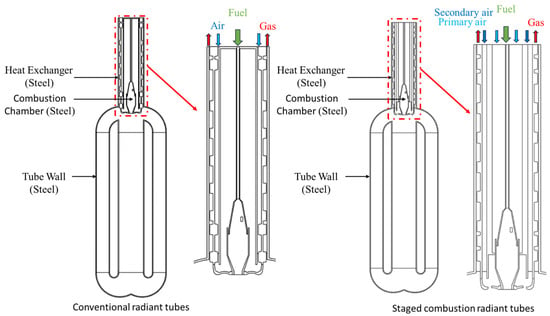
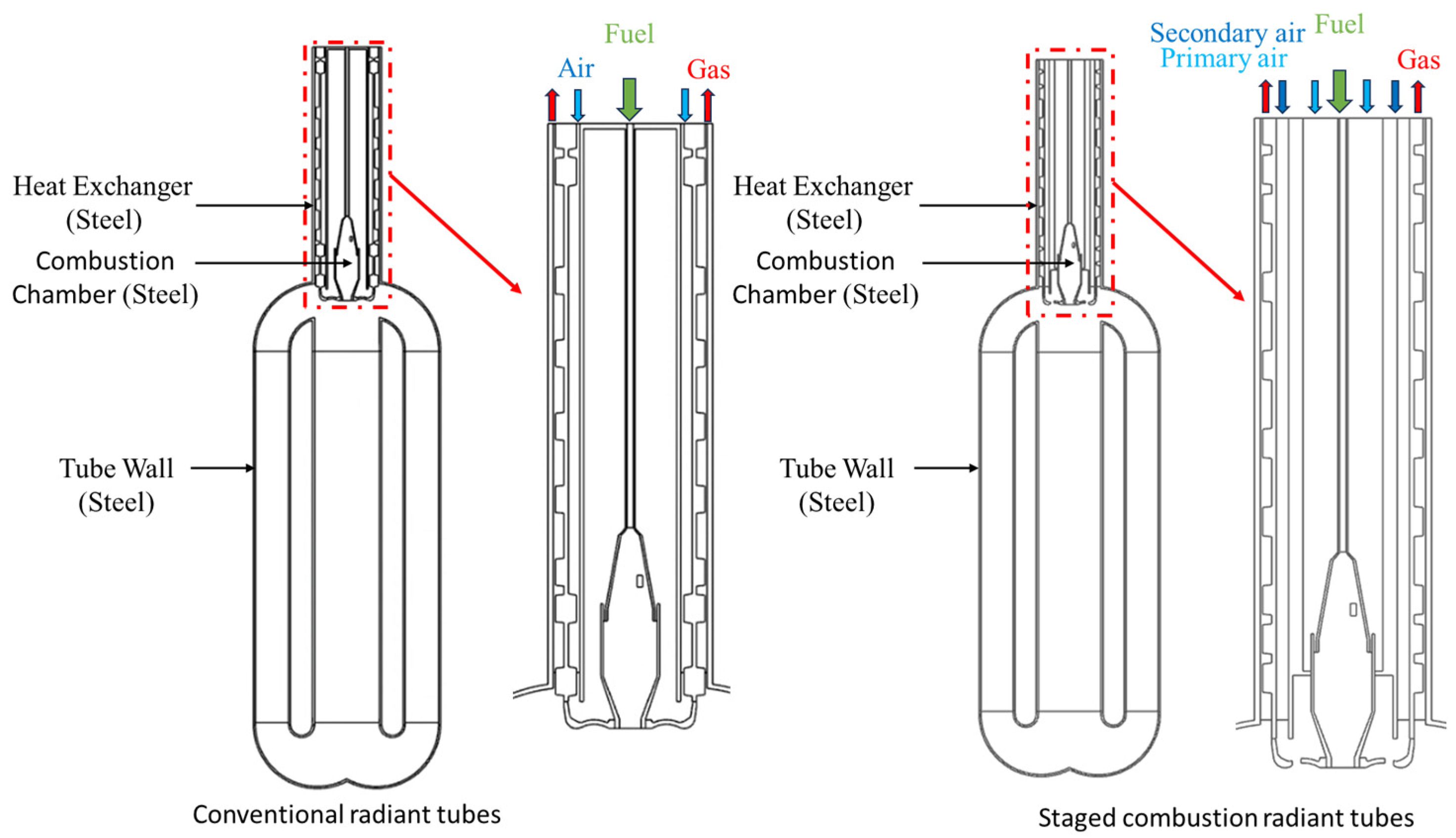
To investigate the differences in combustion behavior and pollutant formation between radiant tubes of different structural designs, numerical models were established for both a conventional radiant tube and a staged combustion radiant tube. The conventional radiant tube employs a single fuel–air mixture supply for combustion, whereas the staged combustion radiant tube incorporates a segmented air supply structure, as illustrated in Figure 1. This design separates the airflow into primary and secondary streams to enhance flame stability, optimize combustion efficiency, and suppress pollutant formation.
Figure 1.
Radiant tube structure. The arrows indicate the flow directions of fuel, primary air, and secondary air. The dashed boxes highlight the burner region and mixing zone.
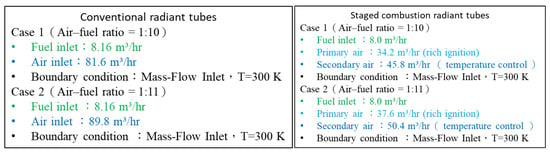
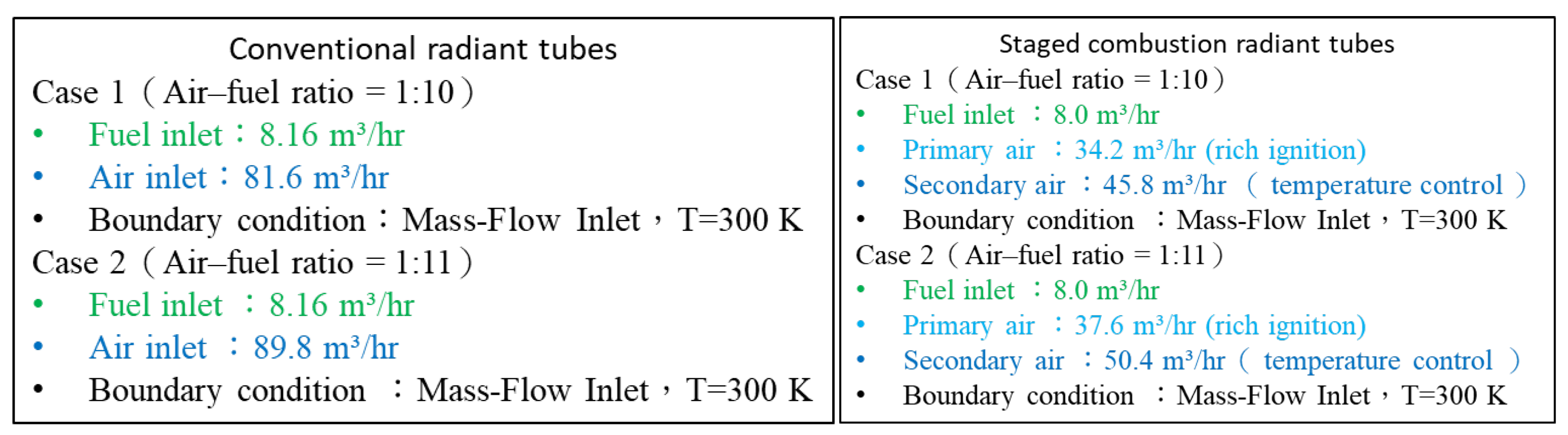
The simulation boundary conditions, as illustrated in Figure 2, include two air–fuel ratios: 1:10 and 1:11. For the conventional radiant tube, fuel and air are injected simultaneously at the burner inlet to achieve complete premixed combustion. In contrast, the staged combustion radiant tube adopts a segmented air supply design, where fuel and primary air are introduced through the central port to form the main combustion zone, while secondary air is injected through a porous structure surrounding the nozzle to supplement combustion and regulate flame temperature distribution. For instance, under an air–fuel ratio of 1:11, the total air supply is 88 m3/h with a fuel flow of 8 m3/h. The primary airflow is set to 37.6 m3/h, which, when mixed with the fuel, yields an equivalence ratio of approximately 1.4 in the main combustion zone, enabling rich combustion for stable ignition and high flame generation. The secondary air supply of 50.4 m3/h then adjusts the overall equivalence ratio to about 0.9, thereby lowering flame temperature and effectively suppressing NOx emissions.
Figure 2.
Simulation boundary conditions. Different colors indicate the types of inlet streams, including fuel inlet, air inlet, primary air, and secondary air.
A three-dimensional numerical model was developed using ANSYS Fluent 2023 R1, incorporating appropriate turbulence models, combustion models, and NOx formation mechanisms. Simulations were conducted to analyze flame temperature distribution, pollutant concentration fields, and wall temperature gradients under different air–fuel ratios. The results were used to evaluate the potential advantages of staged combustion design in terms of energy efficiency and pollutant reduction.
4. Results
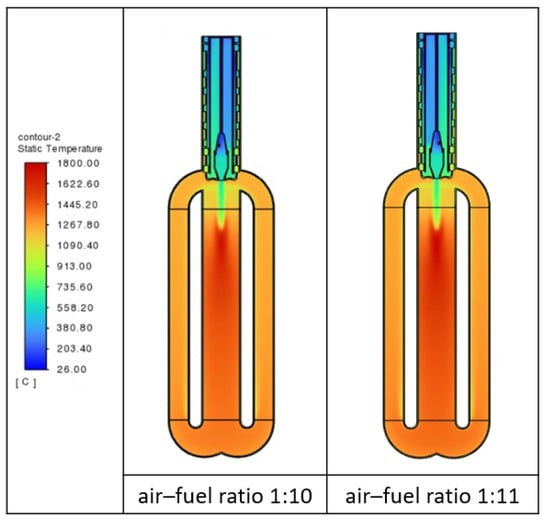
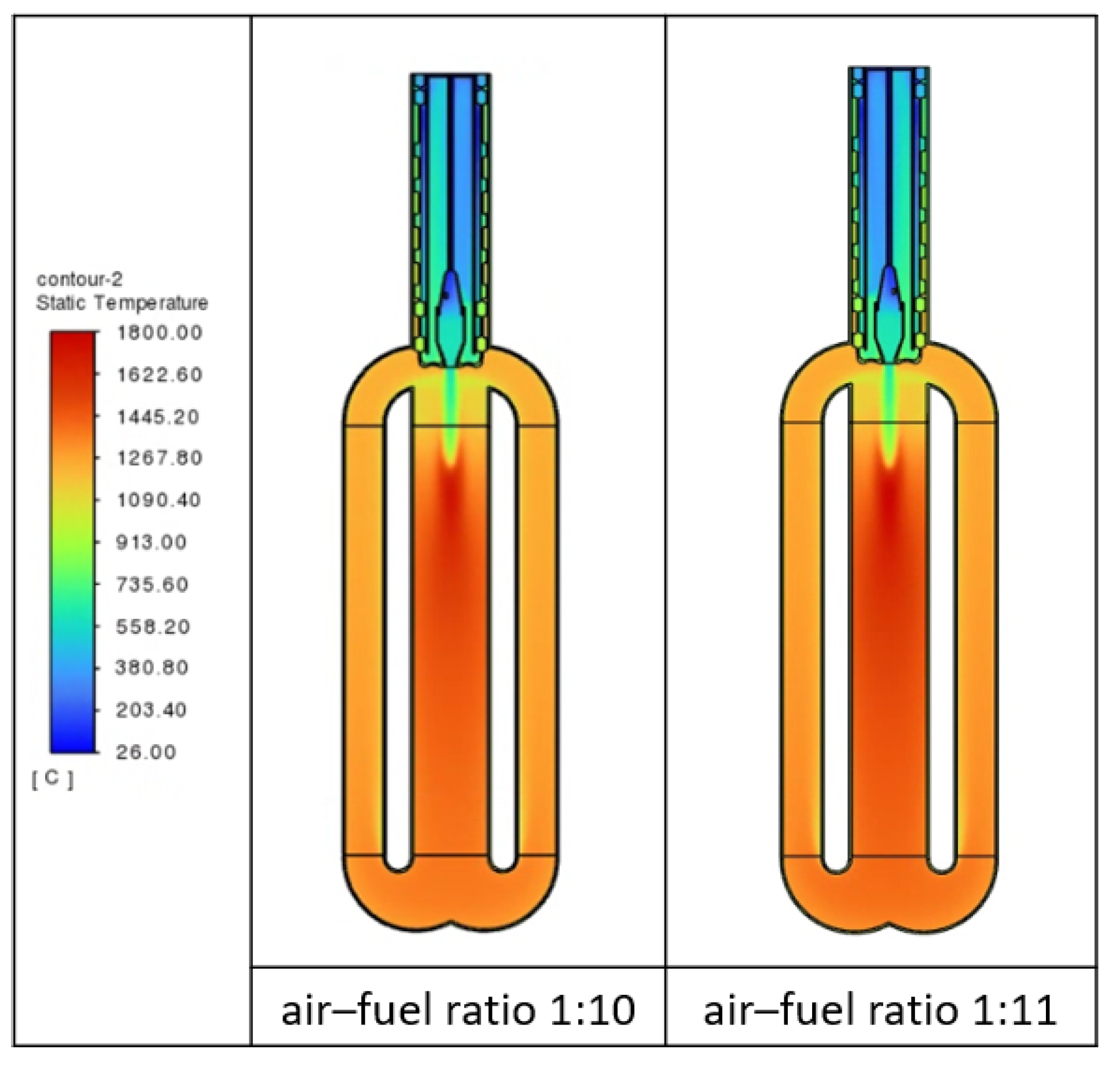
As shown in the flow field distribution of Figure 3 and Table 1, the flame temperature of the conventional double-P radiant tube is approximately 1700 °C, with a concentrated and relatively confined high-temperature region. When the air–fuel ratio increases from 1:10 to 1:11, the flame temperature slightly decreases, leading to a reduction in the overall wall temperature. Consequently, the temperature difference in the straight section decreases from 82.72 to 77.75 °C, indicating a more uniform wall temperature distribution.
Figure 3.
Temperature distribution of the flow field in the cross-section of the conventional radiant tube.
Table 1.
Wall temperature distribution of the conventional radiant tube.
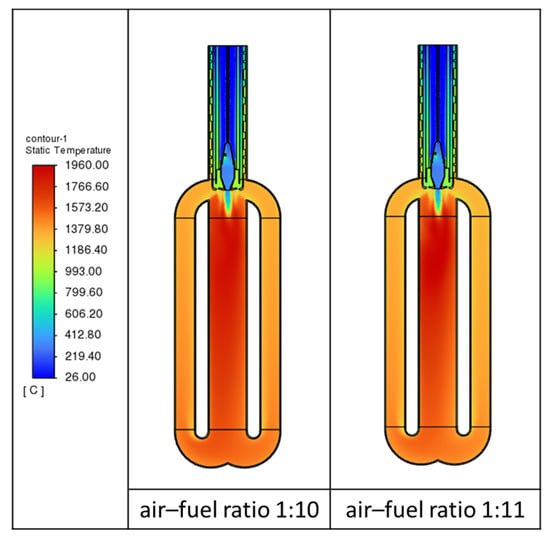
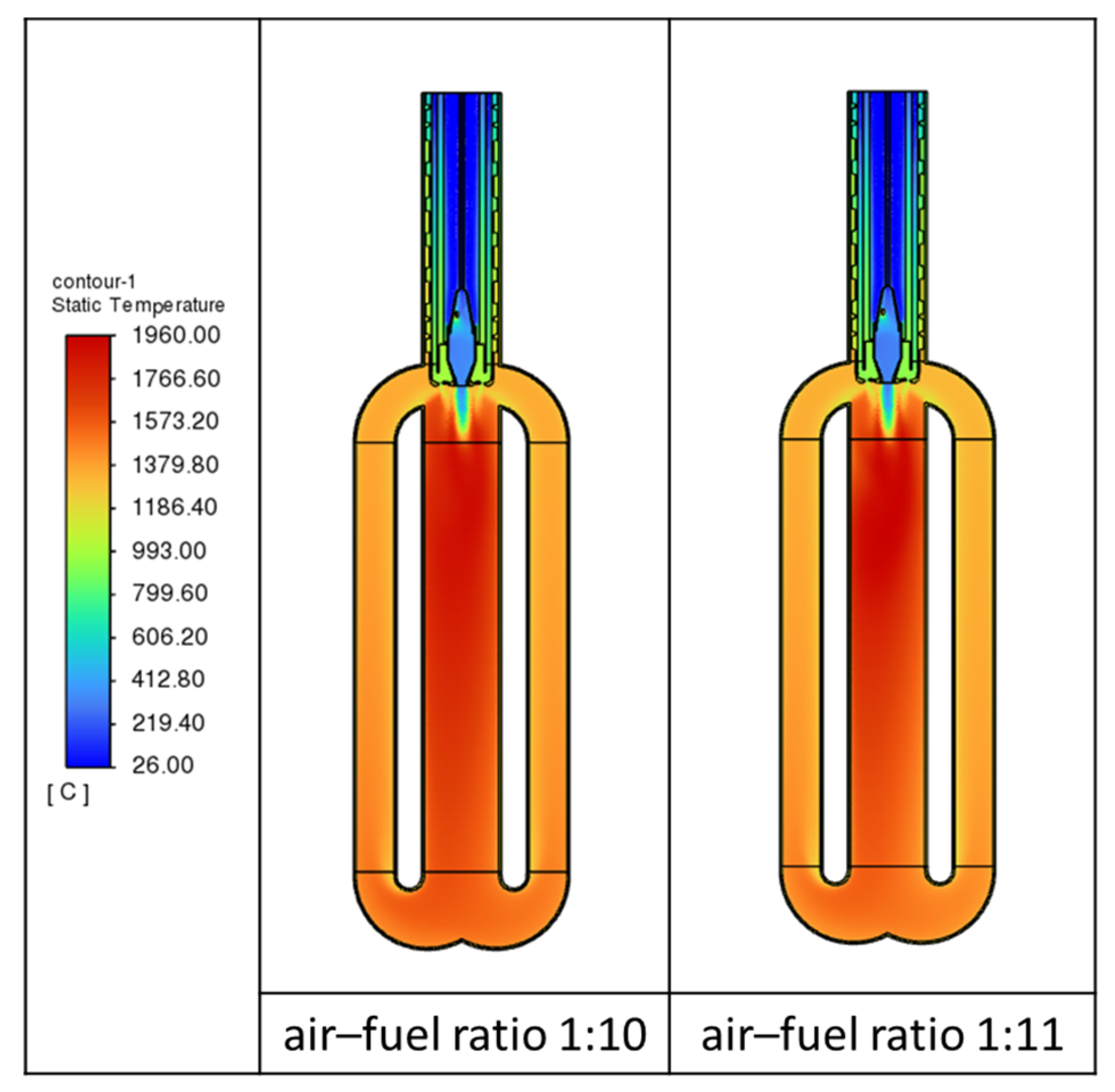
In comparison with the conventional radiant tube, Figure 4 and Table 2 show that the staged combustion design exhibits a significantly higher flame temperature and a wider high-temperature region. Although the overall trend of wall temperature variation is generally consistent, the straight-section temperature difference is smaller, indicating a more uniform temperature distribution. The maximum flame temperature of the staged combustion tube reaches approximately 1944 °C.
Figure 4.
Temperature distribution of the flow field in the cross-section of the staged combustion radiant tube.
Table 2.
Wall temperature distribution of the staged combustion radiant tube.
As shown in Table 3, the NOx emissions of the staged combustion design are significantly higher than those of the conventional radiant tube, and the trend is opposite. The flow field distribution indicates that the staged combustion tube exhibits both higher flame temperatures and a larger high-temperature region compared with the conventional design, with peak values exceeding 1900 °C. According to the literature [3], when the flame temperature of CH4 combustion exceeds approximately 1800 °C, NOx formation is dominated entirely by the thermal mechanism. Under such conditions, NOx increases sharply with additional oxygen supply, and the reaction rate rises exponentially with temperature. Therefore, when the air–fuel ratio increases, the combined effect of excess oxygen and the expanded high-temperature region in the staged design leads to a rapid increase in NOx emissions, ultimately far exceeding those of the conventional radiant tube.
Table 3.
NOx emissions of radiant tubes.
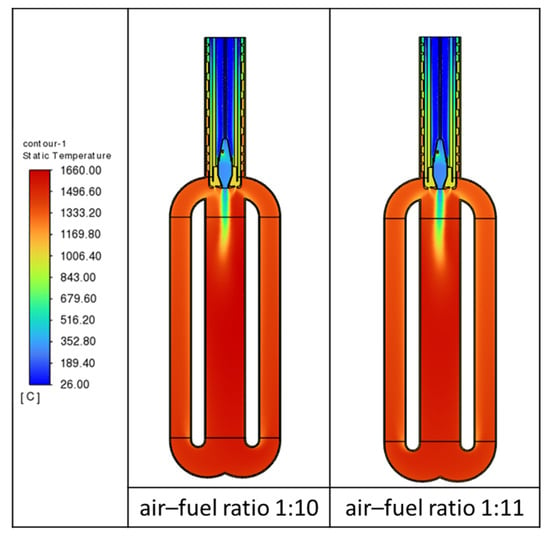
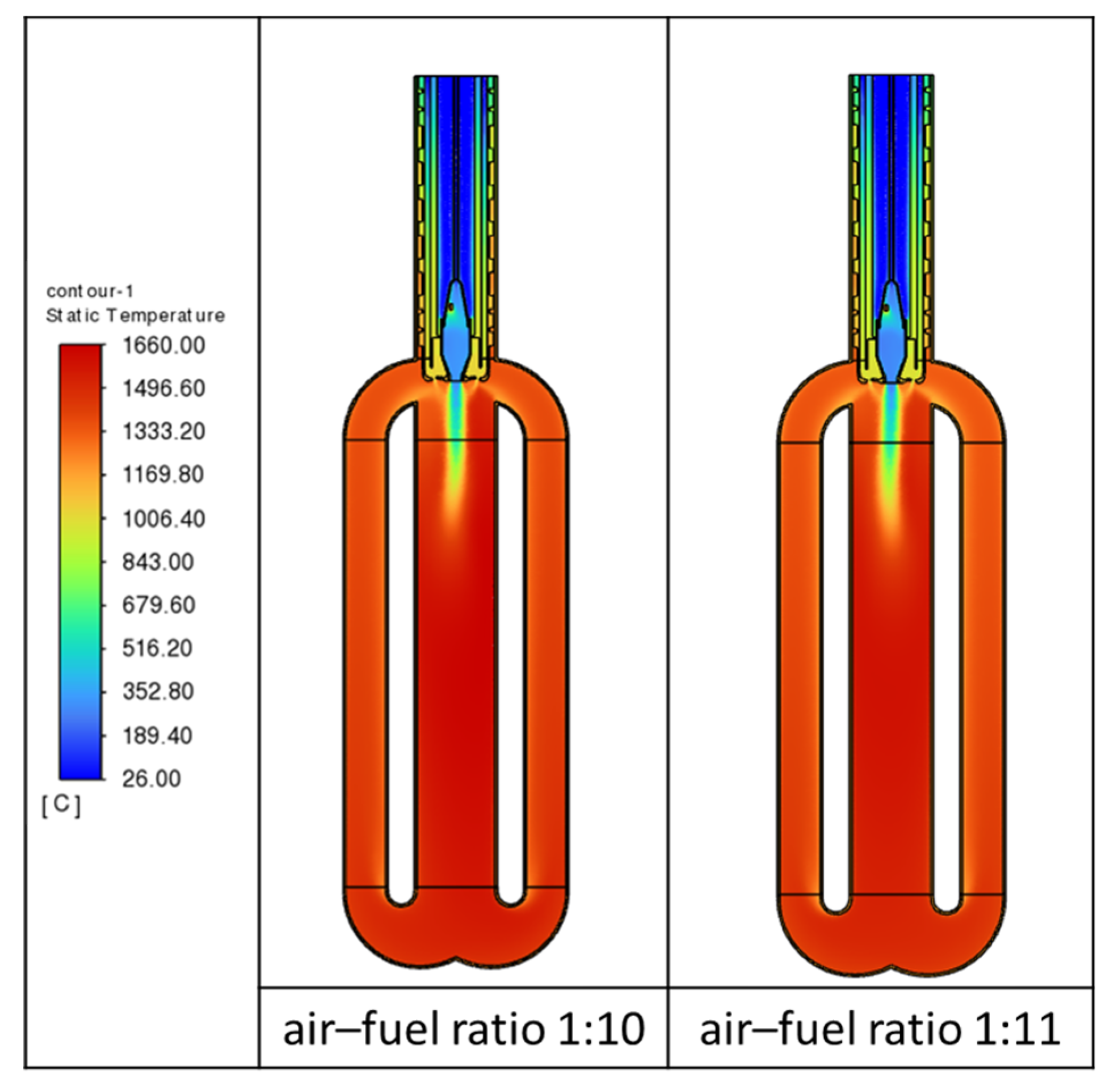
Preliminary simulation results revealed that, under the staged combustion configuration, the main combustion zone of the double-P radiant tube exhibited excessively high flame temperatures exceeding 1900 °C, which shortens material lifetime and increases NOx emissions. To effectively control the flame temperature within a more desirable range (approximately 1600–1700 °C), we investigated the influence of adjusting the reaction rate parameters of the staged double-P radiant tube on combustion behavior.
The simulations employed the built-in non-premixed combustion model in Fluent, with parameter adjustments performed by modifying the pre-exponential factor (mixing-controlled rate constant, A) in the mixing-controlled reaction rate expression. The effects on flame temperature distribution and internal heat transfer behavior of the radiant tube were compared. The results show that as the A value decreases, the reaction rate is suppressed, leading to reduced heat release intensity and a noticeable decline in flame temperature. When the A value was reduced from the original 4 to 0.35, the flame temperature in the main combustion zone was effectively controlled below 1700 °C, as illustrated in Figure 5.
Figure 5.
Cross-sectional flow field temperature distribution of the radiant tube after reaction rate suppression.
However, compared with the condition before reaction rate adjustment, the flame structure changes significantly. The high-temperature gas region expands, and the heat flow extends toward both sides of the radiant tube. As a result, the overall flow field inside the tube remains at a higher temperature, leading to an increase in the average internal temperature. This phenomenon indicates that although reducing the reaction rate can effectively control the peak flame temperature and prevent local overheating, excessive reaction delay may shift the heat release zone toward the middle and downstream sections of the radiant tube, thereby increasing the straight-section wall temperature difference, as shown in Table 4.
Table 4.
Wall temperature distribution of the radiant tube after reaction rate suppression.
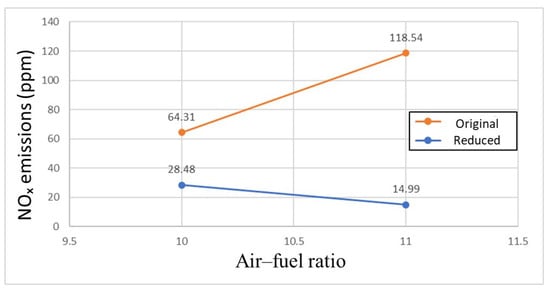
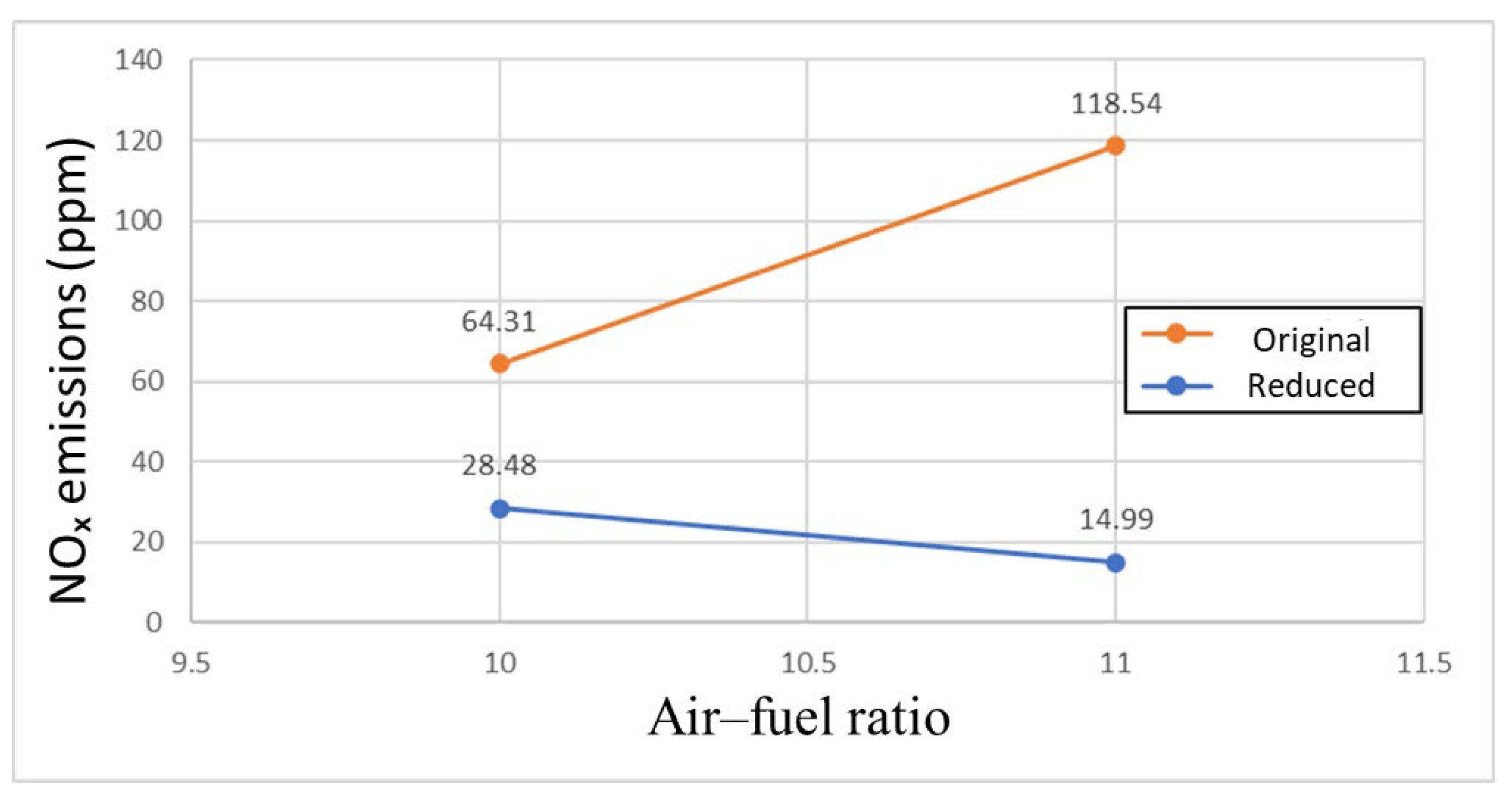
After further reducing the reaction rate to control flame temperature, the simulation results in Figure 6 under the same air–fuel ratio conditions show that NOx concentrations decreased significantly to 28.48 and 14.99 ppm, confirming the strong effectiveness of temperature control in reducing NOx formation. It was also observed that the NOx concentration at an air–fuel ratio of 1:10 was higher than at 1:11, restoring the trend where higher air–fuel ratios correspond to lower NOx emissions. This is because, when the flame temperature decreases to around 1660 °C, the dominant NOx formation mechanism shifts to a fuel-dependent pathway, which is negatively correlated with oxygen concentration and mixing uniformity. Under these conditions, increasing the air proportion helps suppress NOx generation, resulting in lower emissions at an air–fuel ratio of 1:11. Overall, even with staged combustion designs, if operating conditions do not adequately consider temperature and mixing characteristics, NOx control may fail or even reverse due to mechanism transitions.
Figure 6.
NOx emissions under different air–fuel ratios.
5. Conclusions
In the conventional radiant tube with relatively low flame temperatures (around 1800 °C), NOx formation is governed by flame temperature and decreases as the air–fuel ratio increases (i.e., as the flame temperature decreases). In contrast, the staged combustion radiant tube reaches flame temperatures exceeding 1900 °C, where NOx formation is fully dominated by the thermal mechanism. As a result, increasing the air–fuel ratio causes a sharp rise in NOx emissions, sometimes exceeding those of the conventional tube by more than an order of magnitude. Although the staged design achieves the smallest wall temperature difference, it is accompanied by the highest NOx emissions. This is further verified by the reduced reaction rate scenario, where the flame temperature was lowered to about 1700 °C; under this condition, the trend of NOx decreasing with increasing air–fuel ratio matches that of the conventional tube. However, due to delayed reactions and the significant expansion of the high-temperature flame zone, the NOx level, while substantially reduced, remains higher than that of the conventional design. Even with staged combustion designs, if operating conditions do not adequately account for flame temperature and mixing characteristics, NOx control may fail or even reverse due to changes in the dominant formation mechanism.
Author Contributions
Conceptualization, C.-C.W. and C.-H.T.; methodology, T.-J.C. and C.-H.T.; software, C.-C.L.; validation, C.-C.L. and T.-J.C.; formal analysis, T.-J.C.; investigation, C.-C.L.; resources, C.-C.W.; data curation, C.-C.L.; writing—original draft preparation, C.-C.L.; writing—review and editing, T.-J.C.; visualization, C.-C.L.; supervision, T.-J.C.; project administration, C.-C.W.; funding acquisition, C.-C.W. All authors have read and agreed to the published version of the manuscript.
Funding
This research received no external funding.
Institutional Review Board Statement
Not applicable.
Informed Consent Statement
Not applicable.
Data Availability Statement
All relevant data are included in the paper.
Conflicts of Interest
The authors declare that they have no conflicts of interest.
References
- Feng, J.; Jiang, M.; Cao, Y.; Chen, Y.; Wu, Q.; Xiang, S. Numerical investigation on the low NOx emission of W-shaped radiant tubes. Chin. J. Eng. 2014, 36, 1094–1100. [Google Scholar]
- Gao, Q.; Pang, Y.; Sun, Q.; Liu, D.; Zhang, Z. Numerical analysis of the heat transfer of radiant tubes and the slab heating characteristics in an industrial heat treatment furnace with pulse combustion. Int. J. Therm. Sci. 2021, 161, 106757. [Google Scholar] [CrossRef] [Scilit]
- Wang, Z.C.; Yang, X.Y. NOx Formation Mechanism and Emission Prediction in Turbulent Combustion: A Review. Appl. Sci. 2024, 14, 6104. [Google Scholar] [CrossRef] [Scilit]
- Fan, H.; Feng, J.; Xie, K.; Bai, W.; Zhao, Y.; Li, W.; Gao, J.; Liu, C.; Yan, D.; Zhao, H. Experimental study of operating parameters on the performance of a novel U-type radiant tube with dual flue gas self-circulation structures. Appl. Therm. Eng. 2022, 207, 118206. [Google Scholar] [CrossRef] [Scilit]
- Wang, Y.; Zhou, Y.; Bai, N.; Han, J. Experimental investigation of the characteristics of NOx emissions with multiple deep air-staged combustion of lean coal. Fuel 2020, 280, 118416. [Google Scholar] [CrossRef] [Scilit]
- Scribano, G.; Solero, G.; Coghe, A. Pollutant emissions reduction and performance optimization of an industrial radiant tube burner. Exp. Therm. Fluid Sci. 2006, 30, 605–612. [Google Scholar] [CrossRef] [Scilit]
- Cheng, S.; Yong, H.; Wu, C. Decreasing of Nox Emission in Fired-natural Gas Radiant-tube with Regenerative Combustor. J. Chongqing Univ. 2008, 31, 271–275. [Google Scholar]
- Zhou, W.; Su, F.; Zhang, L.; Li, T. Enhanced NOx reduction performance in the I-type radiant tube by combining a novel triple air-staging with flue gas recirculation. Case Stud. Therm. Eng. 2022, 39, 102380. [Google Scholar] [CrossRef] [Scilit]
- Jones, J.M.; Mason, P.E.; Williams, A. A compilation of data on the radiant emissivity of some materials at high temperatures. J. Energy Inst. 2019, 92, 523–534. [Google Scholar] [CrossRef] [Scilit]

Disclaimer/Publisher’s Note: The statements, opinions and data contained in all publications are solely those of the individual author(s) and contributor(s) and not of MDPI and/or the editor(s). MDPI and/or the editor(s) disclaim responsibility for any injury to people or property resulting from any ideas, methods, instructions or products referred to in the content. |
© 2026 by the authors. Licensee MDPI, Basel, Switzerland. This article is an open access article distributed under the terms and conditions of the Creative Commons Attribution (CC BY) license.