Evaluation of Dual-Wavelength LED Light Irradiation of the Skull for Alleviating Neck and Shoulder Pain and Improving Heart-Rate Variability †
Abstract
1. Introduction
2. Materials and Methods
2.1. Device Specification
2.2. Experimental Protocol
- Pre-treatment Assessment: Participants were informed about the procedure and instructed to report any discomfort. After a 10 min seated rest, pain intensity was assessed using the 11-point Numeric Rating Scale (NRS), where 0 = no pain and 10 = the worst imaginable pain.
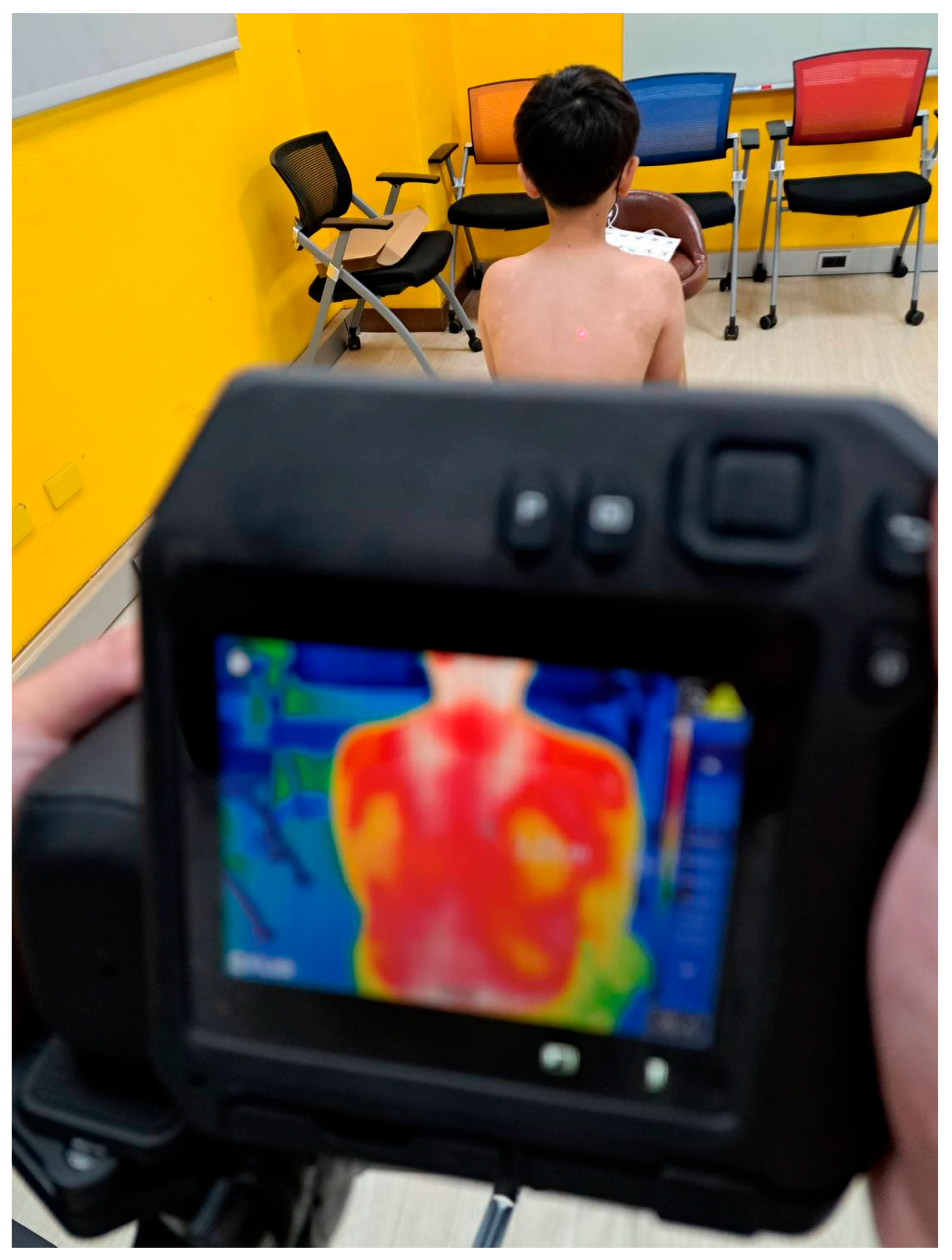
- Baseline Data Collection: Paraspinal muscle temperature was measured using a thermal imager (TeIedyne FLIR LLC, FLIR T530, Portland, OR, USA, Figure 2).
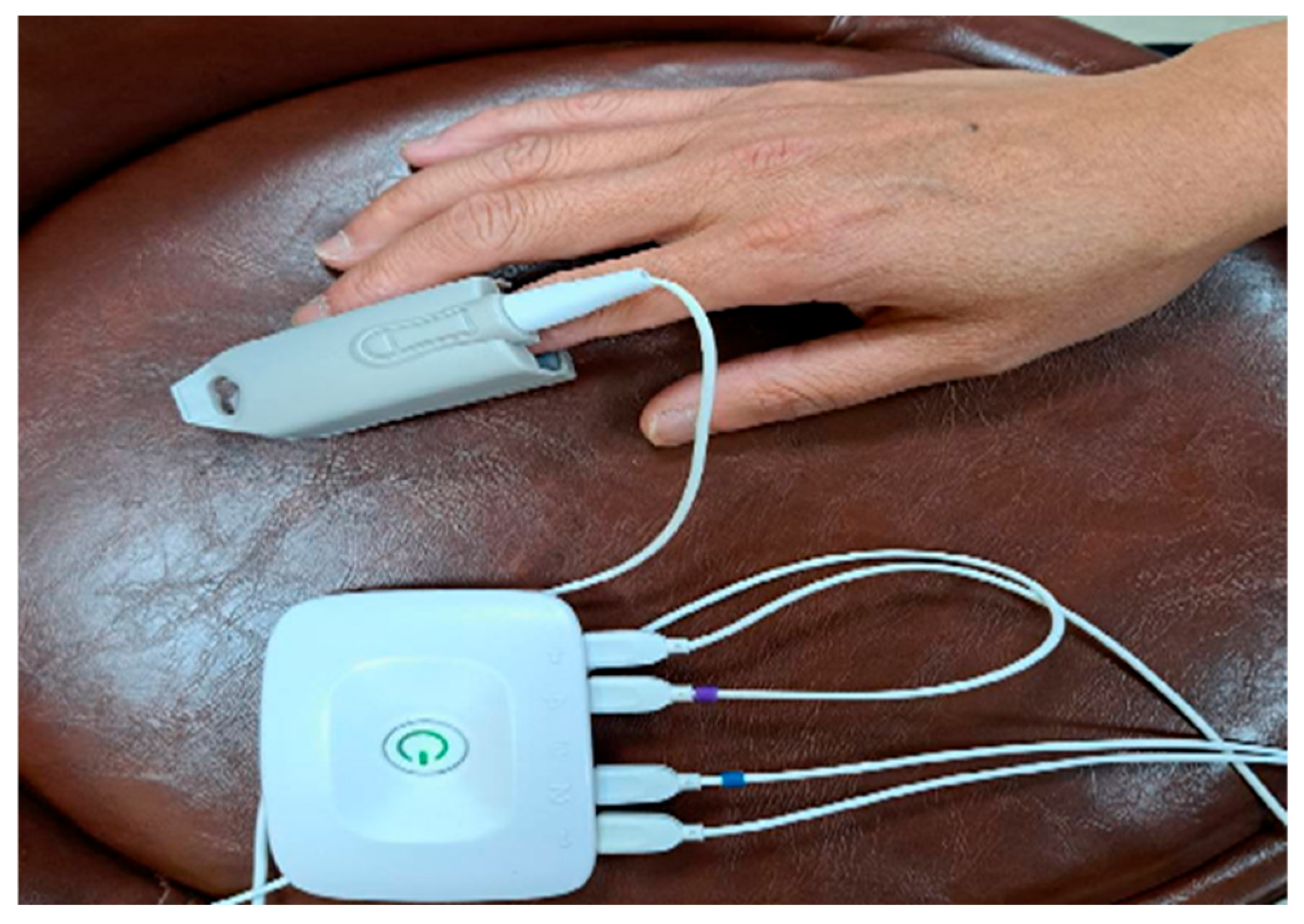
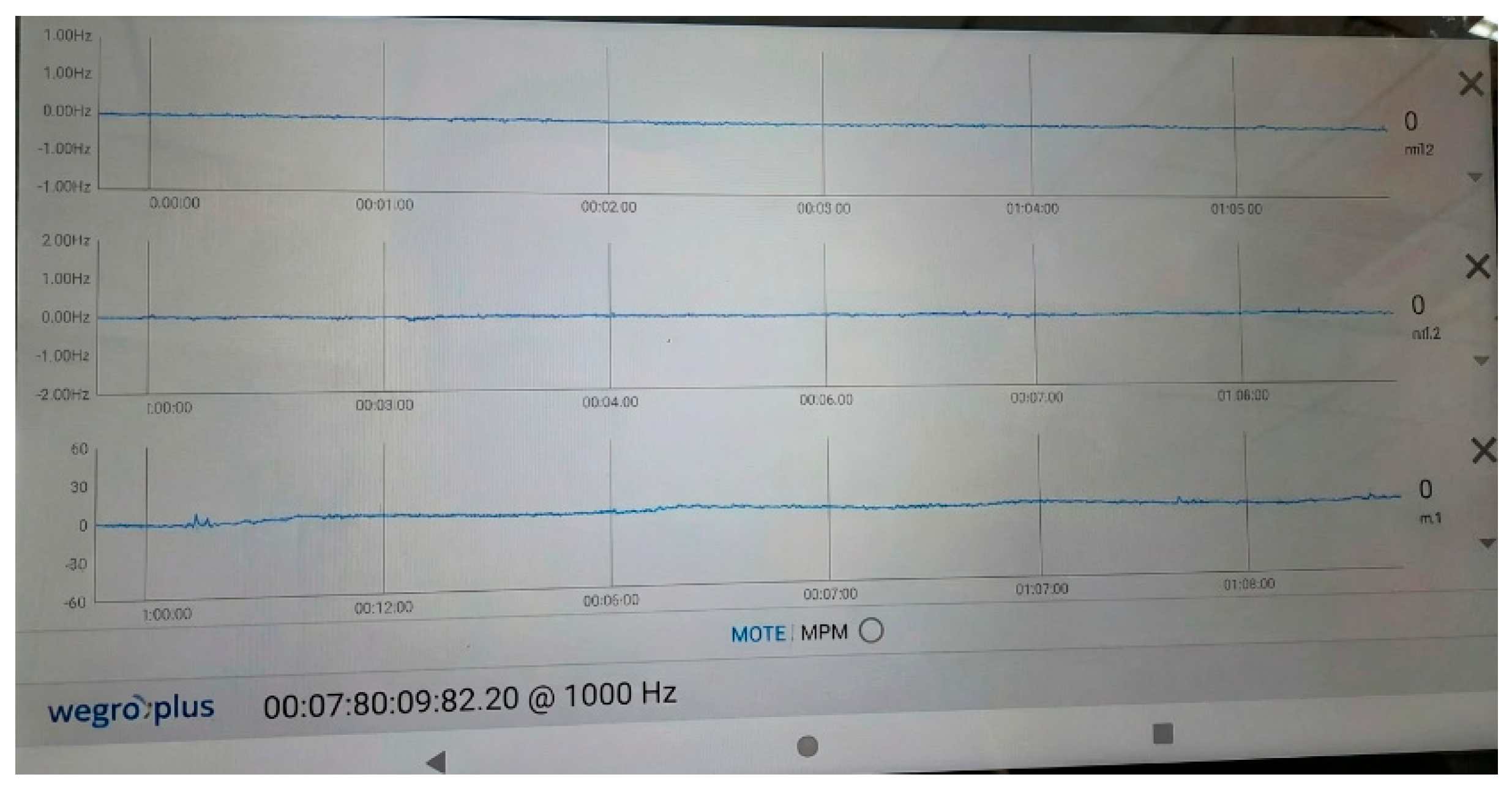
- Fingertip Photoplethysmography (PPG) sensor attachment for HRV monitoring: A fingertip PPG sensor (PLUX BVP Blood Volume Pulse Sensor, Brand: PLUX Model: Biosignalsplux BVP Finger clip sensor, Manufacturer PLUX Wireless Biosignals, S.A., Lisbon, Portugal) was attached to acquire HRV signals for 5 min (Figure 3).
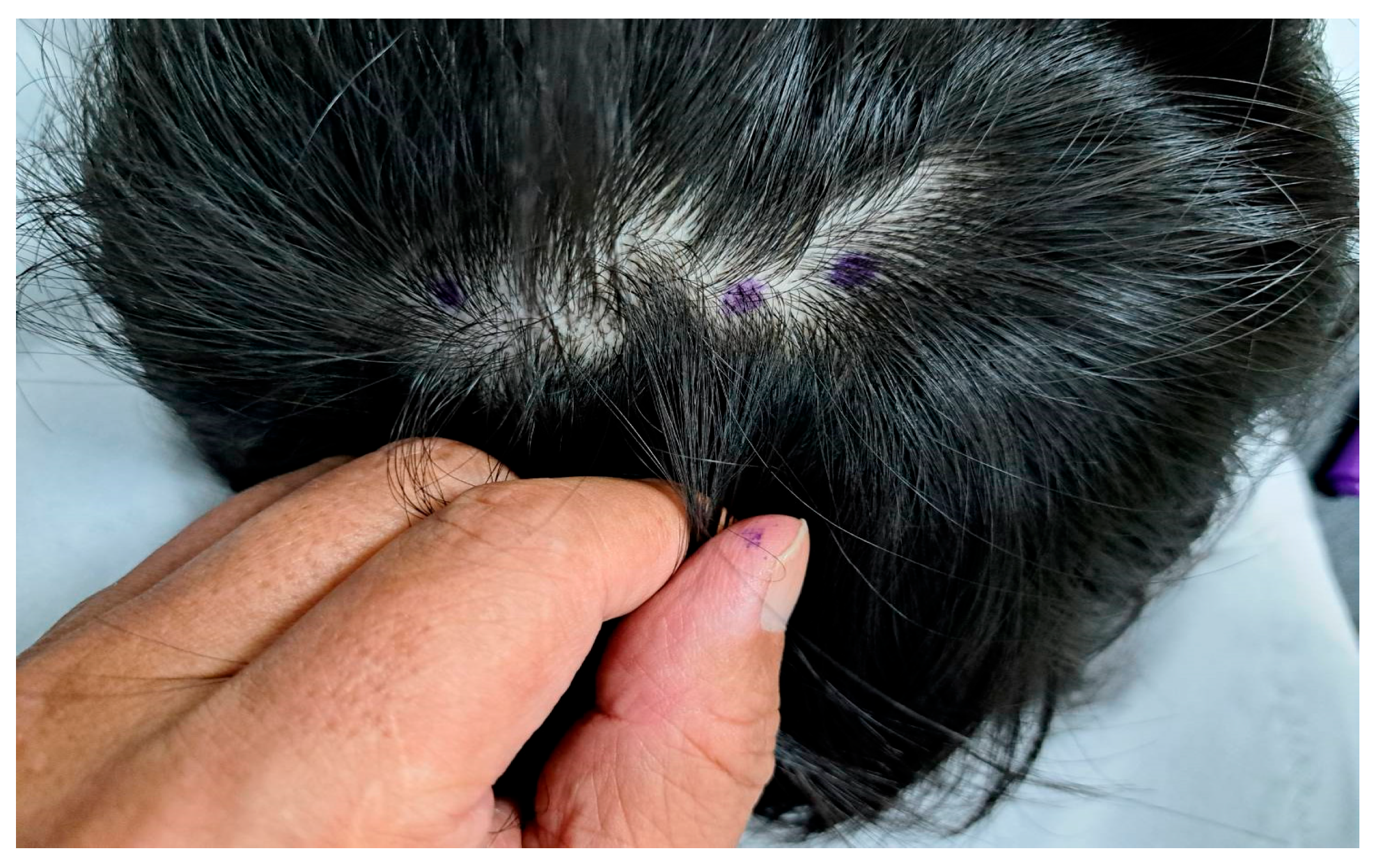
- Cranial marking: With the intersection of the sagittal and lambdoid sutures used as the reference location, the irradiation points were marked by moving approximately 2.7 cm toward the coronal suture bilaterally (Figure 4).
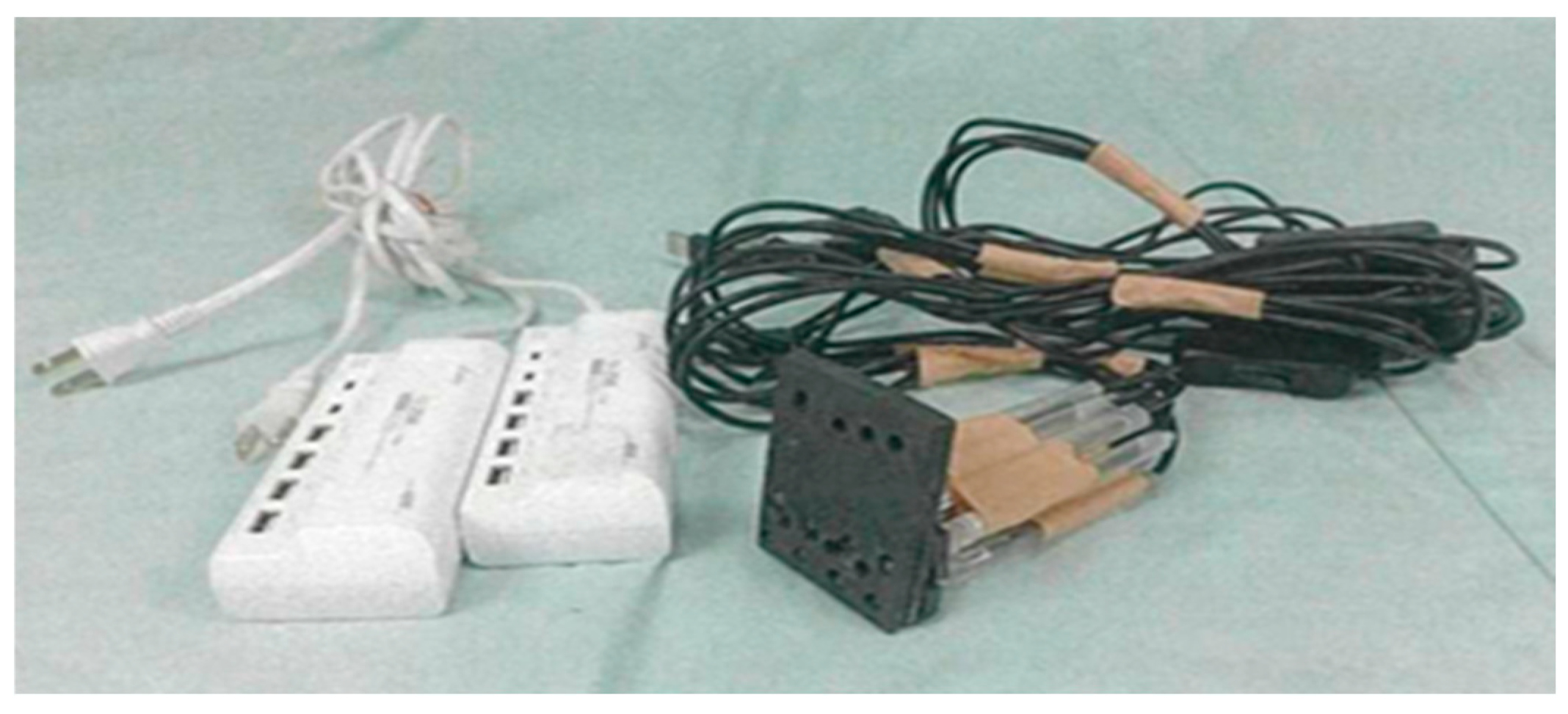
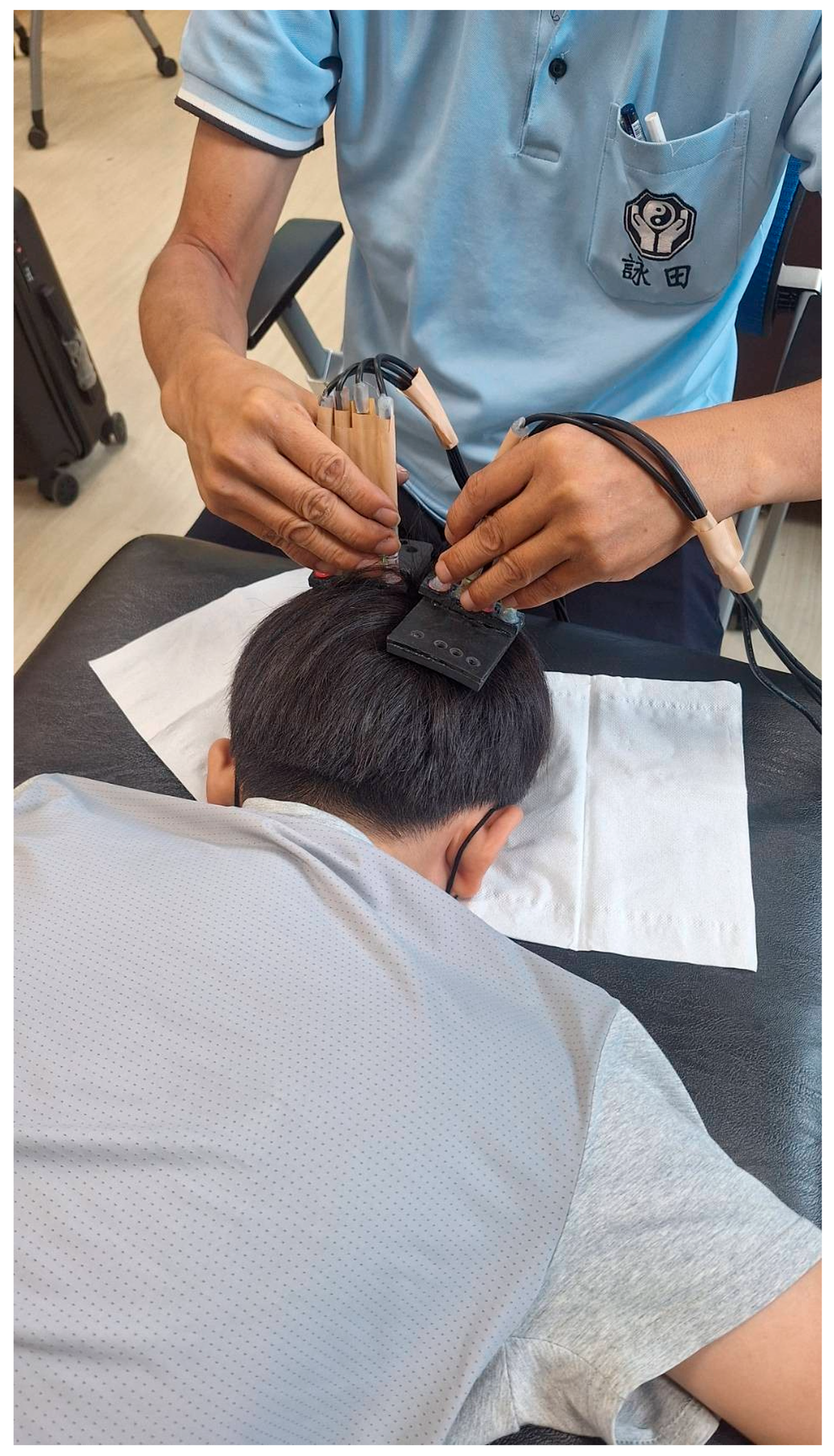
- Dual-wavelength irradiation: Modules were positioned on both sides of the skull for 15 min of irradiation (Figure 5).
- Post-treatment Assessment: NRS rating, thermography, and HRV measurements were repeated, following the same procedures as baseline.
2.3. Data Analysis
3. Results and Discussion
- Subject A: −3.6 points (p < 0.01), analgesic duration: 5 days.
- Subject B: −1.5 points (p > 0.05), duration: 1 day.
- Subject C: −2.0 points (p > 0.05), duration: 2 days.
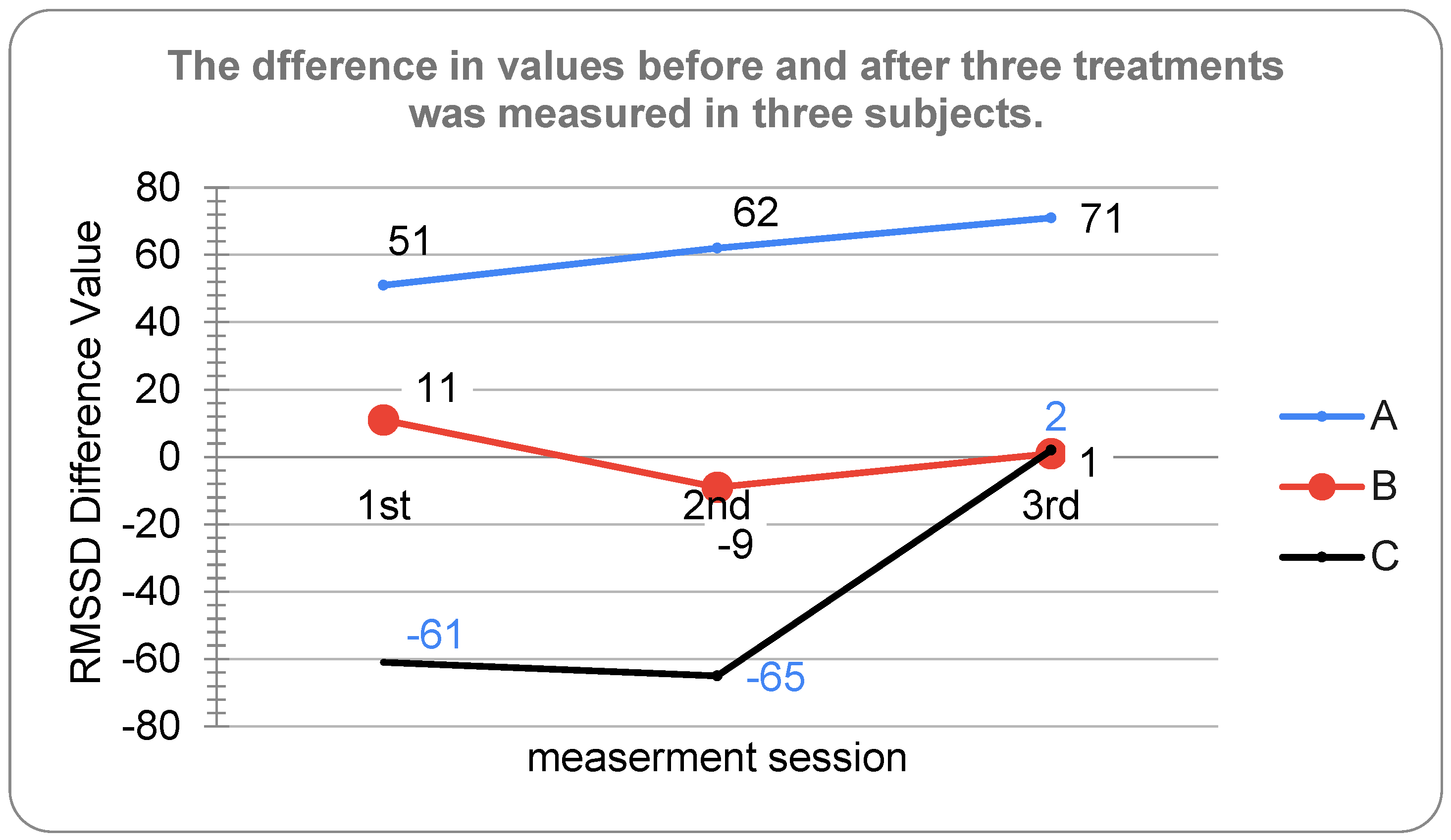
- Subject A: significant parasympathetic enhancement (ΔHRV: +51, +62, +71 ms; mean +61.3 ms).
- Subject B: mild improvement (ΔHRV: +11, −9, 1 ms; mean +1.0 ms).
- Subject C: predominantly negative response (ΔHRV: −61, −65, +2 ms; mean −41.3 ms), suggesting impaired modulation.
4. Conclusions
Author Contributions
Funding
Institutional Review Board Statement
Informed Consent Statement
Data Availability Statement
Acknowledgments
Conflicts of Interest
References
- Medical News. 2015, Q3, Issue 86, P10, Keelung Hospital, Ministry of Health and Wel-fare. Available online: https://www.kln.mohw.gov.tw/public/medi_news/f0c4f1dfb338c56dea209dfa6104bfa0.pdf (accessed on 7 September 2025).
- Hernández-Bule, M.L.; Naharro-Rodríguez, J.; Bacci, S.; Fernández-Guarino, M. Unlocking the Power of Light on the Skin: A Comprehensive Review on Photobiomodulation. Int. J. Mol. Sci. 2024, 25, 4483. [Google Scholar] [CrossRef] [PubMed]
- Naeser, M.A.; Zafonte, R.; Krengel, M.H.; Martin, P.I.; Frazier, J.; Hamblin, M.R.; Knight, J.A.; Meehan, W.P., 3rd; Baker, E.H. Significant improvements in cognitive performance post-transcranial, red/near-infrared light-emitting diode treatments in chronic, mild traumatic brain injury: Open-protocol study. J. Neurotrauma 2014, 31, 1008–1017. [Google Scholar] [CrossRef] [PubMed]
- Chow, R.T.; Johnson, M.I.; Lopes-Martins, R.A.B.; Bjordal, J.M. Efficacy of low-level laser therapy in the management of neck pain: A systematic review and meta-analysis of randomised placebo or active-treatment controlled trials. Meta-Anal. Lancet 2009, 374, 1897–1908. [Google Scholar] [CrossRef] [PubMed]
- Mineroff, J.; Austin, E.; Feit, E.; Ho, A.; Lowe, B.; Marson, J.; Mojeski, J.; Wechter, T.; Nguyen, J.K.; Jagdeo, J. Male facial rejuvenation using a combination 633, 830, and 1072 nm LED face mask. Arch. Dermatol. Res. 2023, 315, 2605–2611. [Google Scholar] [CrossRef] [PubMed]
- Fekri, A.; Jahan, A.; Salimi, M.M.; Oskouei, A.E. Short-term effects of transcranial near-infrared photobiomodulation on motor performance in healthy human subjects: An experimental singleblind randomized clinical trial. J. Lasers Med. Sci. 2019, 10, 317. [Google Scholar] [CrossRef] [PubMed]
- Ibrahim, I.A.; Emad, T.; Hamdy, A.M.; Hemaid, A.; Sakr, A.M.; Naci, B. Infrared thermography in the diagnosis of myofascial trigger points: A comprehensive review of emerging techniques and challenges. Fenerbahçe Univ. J. Health Sci. 2024, 4, 567–580. [Google Scholar] [CrossRef]
- Fernández-de-Las-Peñas, C.; Ge, H.Y.; Alonso-Blanco, C.; González-Iglesias, J.; Arendt-Nielsen, L. Referred pain areas of active myofascial trigger points in head, neck, and shoulder muscles, in chronic tension type headache. J. Bodyw. Mov. Ther. 2010, 14, 391–396. [Google Scholar] [CrossRef]
- Cheng, C.-L. Craniosacral Therapy—Cranial Part; Yongtian Yixue: Tainan, Taiwan, 2020; ISBN 9789574376155. [Google Scholar]
- IEC 62471:2006; Photobiological Safety of Lamps and Lamp Systems. IEC: Geneva, Switzerland, 2006.
- CNS 15592:2012; Photobiological Safety of Lamps and Lamp Systems. Chinese National Standards: Taipei, Taiwan, 2012.



| Subject | Mean Difference | Sample Size (N) | Duration (Days) |
|---|---|---|---|
| A | –3.6 | 3 | 5 |
| B | –1.5 | 3 | 1 |
| C | –2.0 | 3 | 2 |
| Subject | Mean ΔTemp (°C) | Standard Deviation (°C) | Sample Size |
|---|---|---|---|
| A | +1.68 | 0.661 | 9 |
| B | +0.27 | 0.654 | 9 |
| C | −0.06 | 0.133 | 9 |
Disclaimer/Publisher’s Note: The statements, opinions and data contained in all publications are solely those of the individual author(s) and contributor(s) and not of MDPI and/or the editor(s). MDPI and/or the editor(s) disclaim responsibility for any injury to people or property resulting from any ideas, methods, instructions or products referred to in the content. |
© 2026 by the authors. Licensee MDPI, Basel, Switzerland. This article is an open access article distributed under the terms and conditions of the Creative Commons Attribution (CC BY) license.
Share and Cite
Wang, Y.-S.; Wang, C.-Y.; Lee, C.-Y.; Huang, K.-N.; Cheng, C.-L. Evaluation of Dual-Wavelength LED Light Irradiation of the Skull for Alleviating Neck and Shoulder Pain and Improving Heart-Rate Variability. Eng. Proc. 2026, 129, 23. https://doi.org/10.3390/engproc2026129023
Wang Y-S, Wang C-Y, Lee C-Y, Huang K-N, Cheng C-L. Evaluation of Dual-Wavelength LED Light Irradiation of the Skull for Alleviating Neck and Shoulder Pain and Improving Heart-Rate Variability. Engineering Proceedings. 2026; 129(1):23. https://doi.org/10.3390/engproc2026129023
Chicago/Turabian StyleWang, Yi-Sheng, Chih-Yu Wang, Chang-Yin Lee, Ke-Nung Huang, and Chih-Lung Cheng. 2026. "Evaluation of Dual-Wavelength LED Light Irradiation of the Skull for Alleviating Neck and Shoulder Pain and Improving Heart-Rate Variability" Engineering Proceedings 129, no. 1: 23. https://doi.org/10.3390/engproc2026129023
APA StyleWang, Y.-S., Wang, C.-Y., Lee, C.-Y., Huang, K.-N., & Cheng, C.-L. (2026). Evaluation of Dual-Wavelength LED Light Irradiation of the Skull for Alleviating Neck and Shoulder Pain and Improving Heart-Rate Variability. Engineering Proceedings, 129(1), 23. https://doi.org/10.3390/engproc2026129023